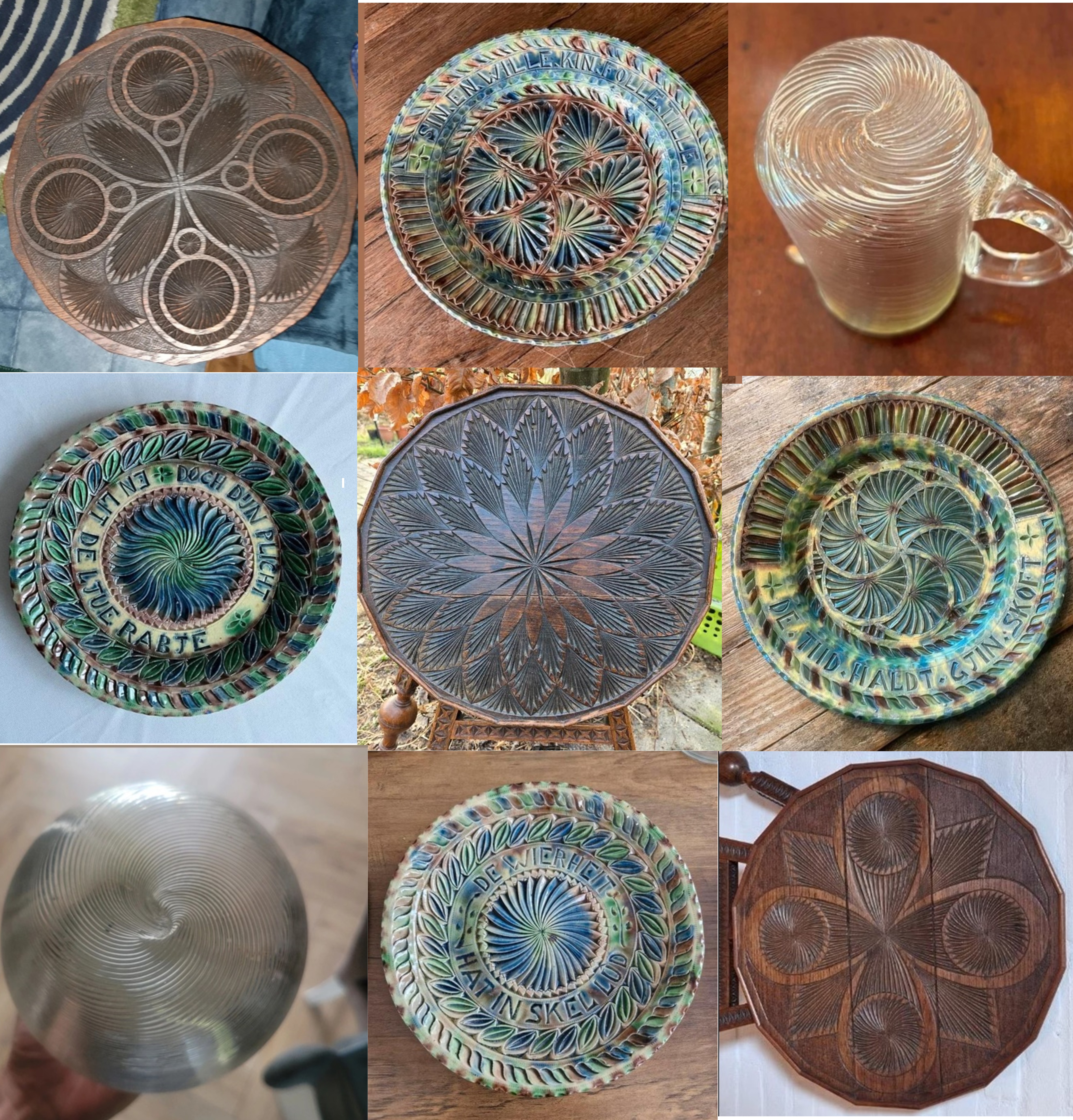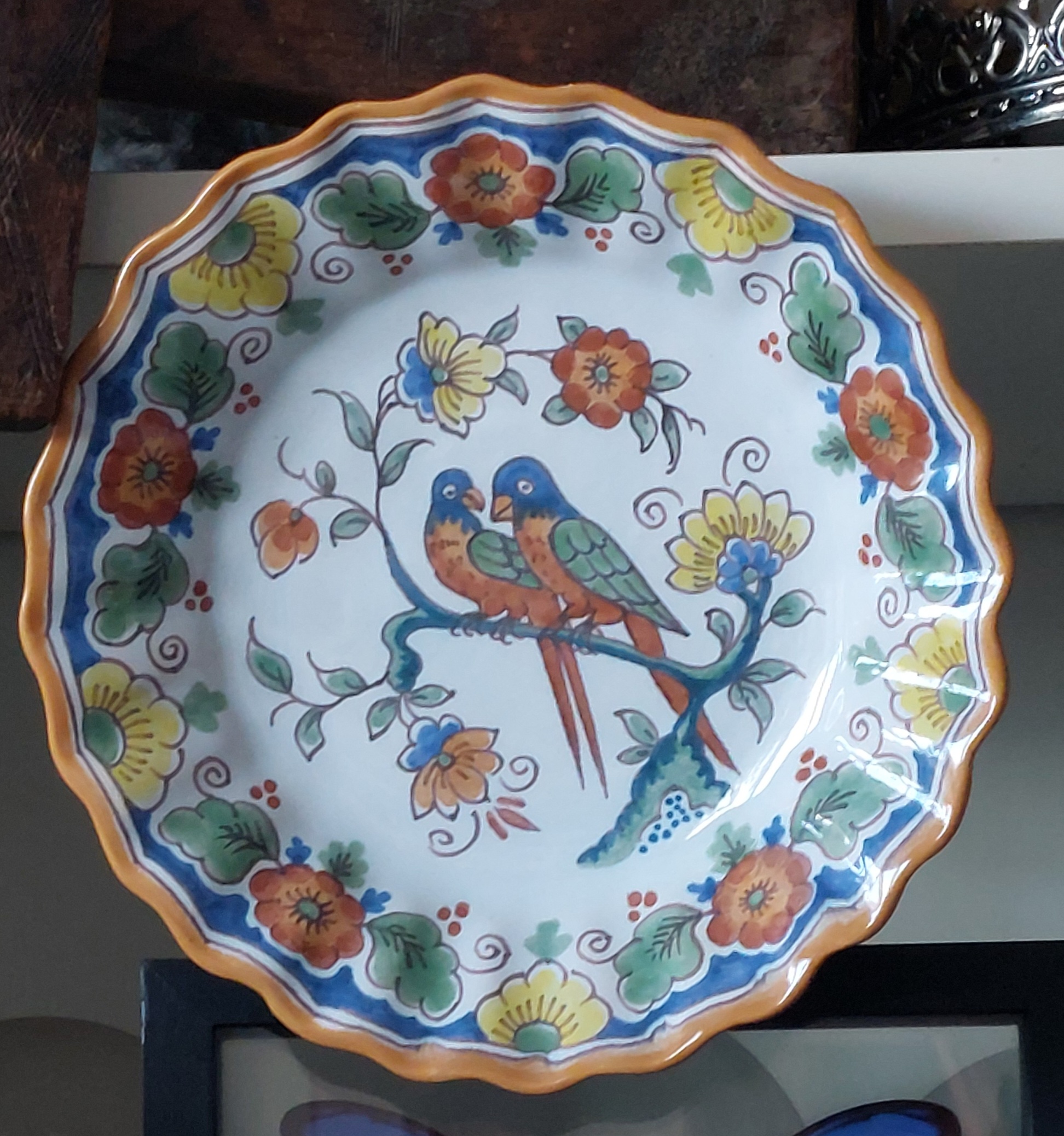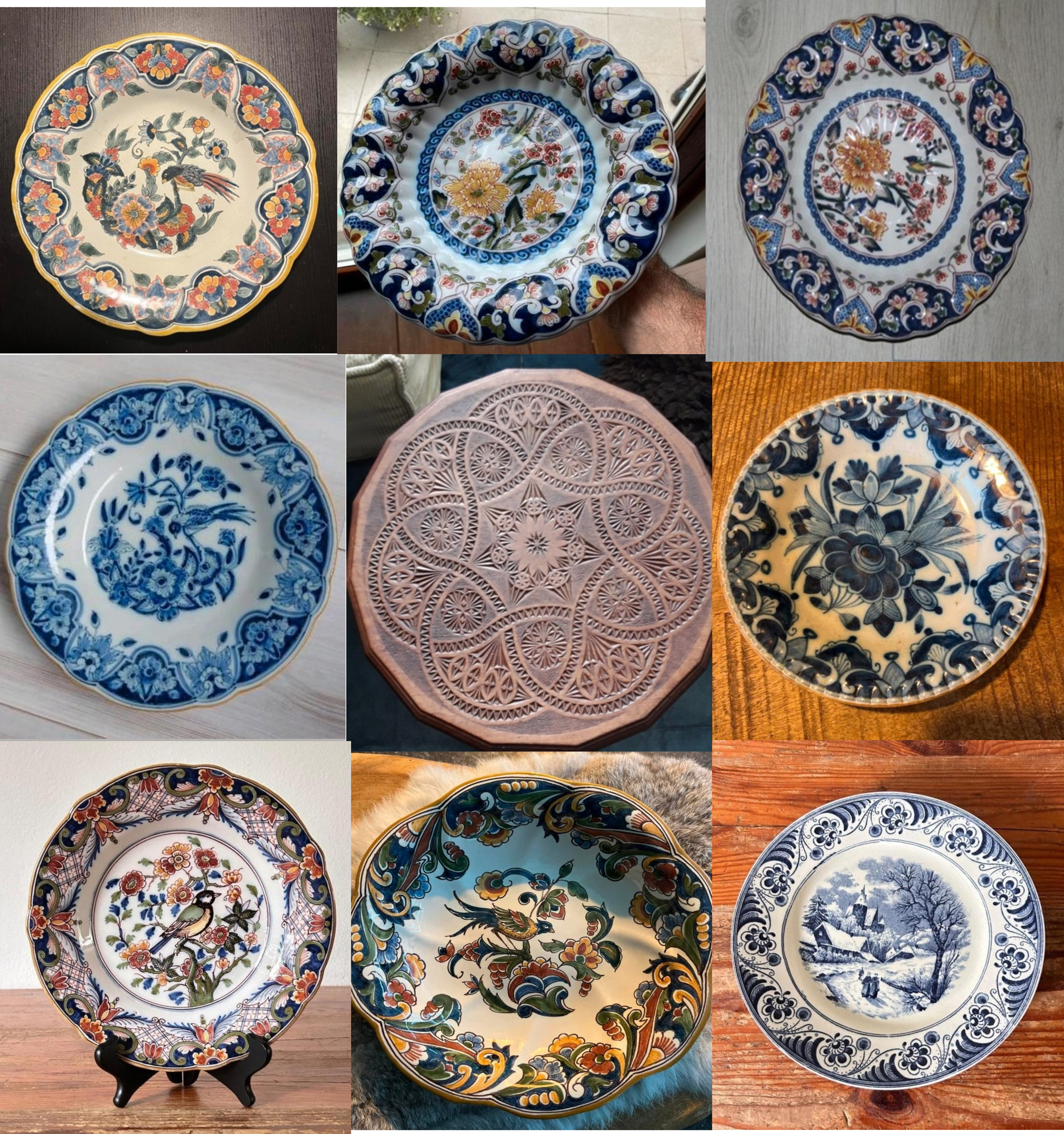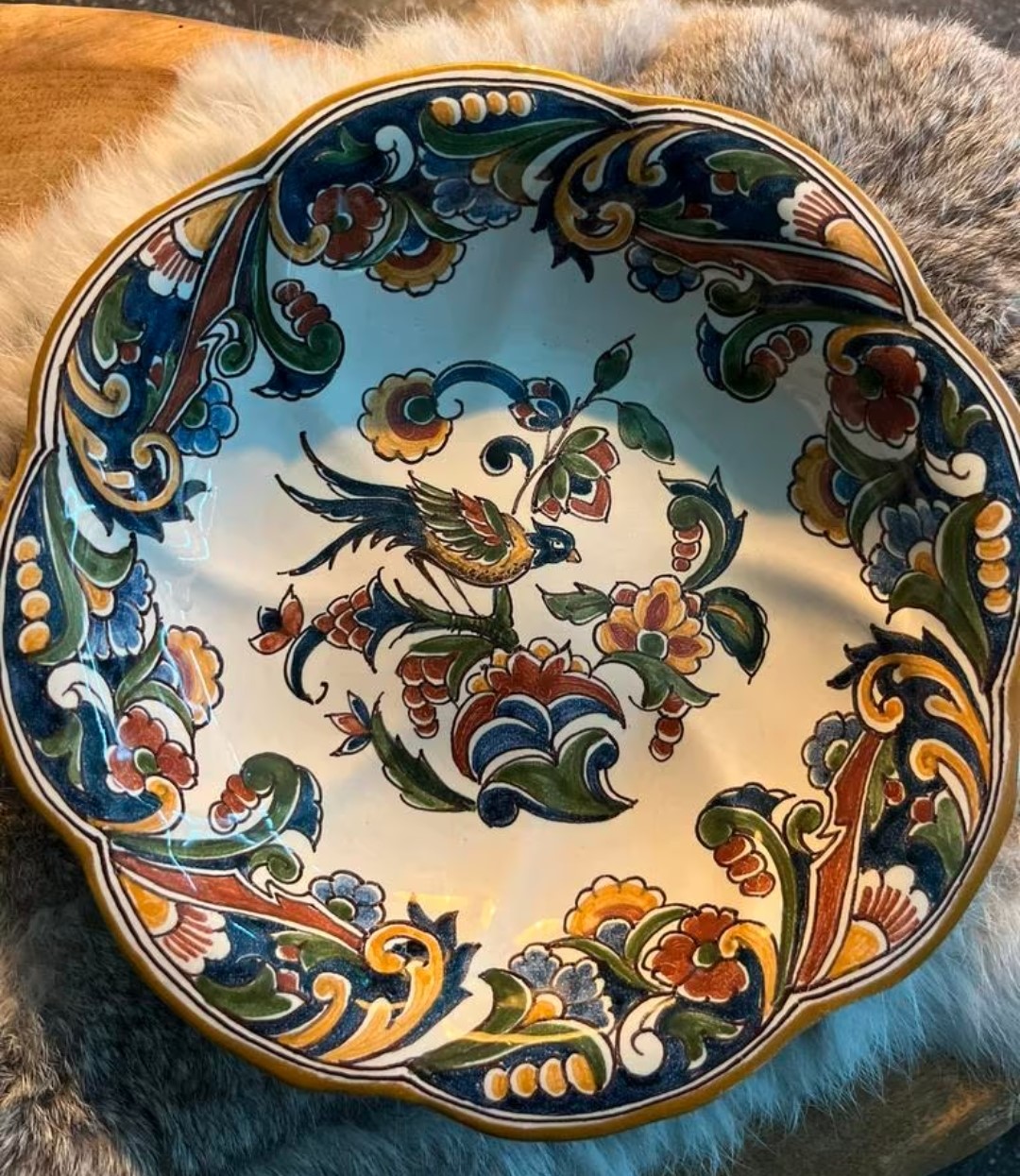
The Frisian Heart against the machine

For J.D.P  and Paul -14 November 2025

In construction….
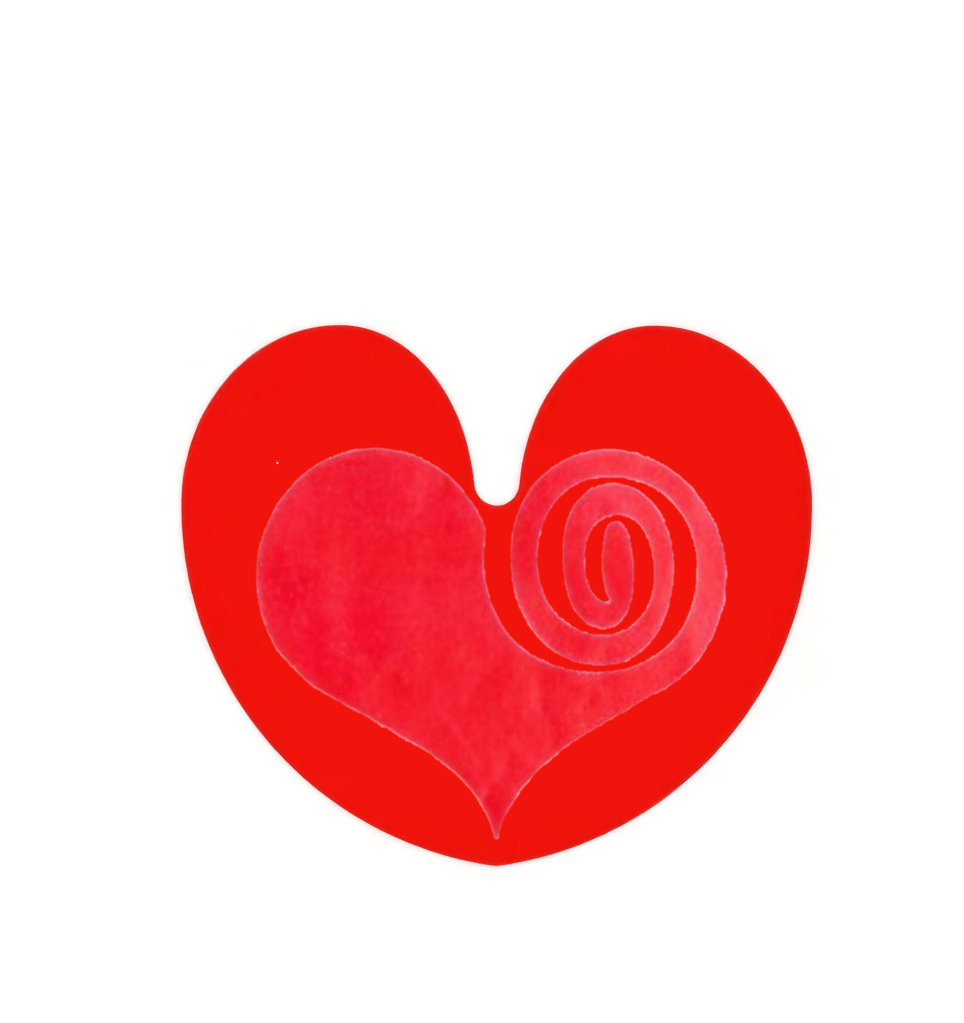
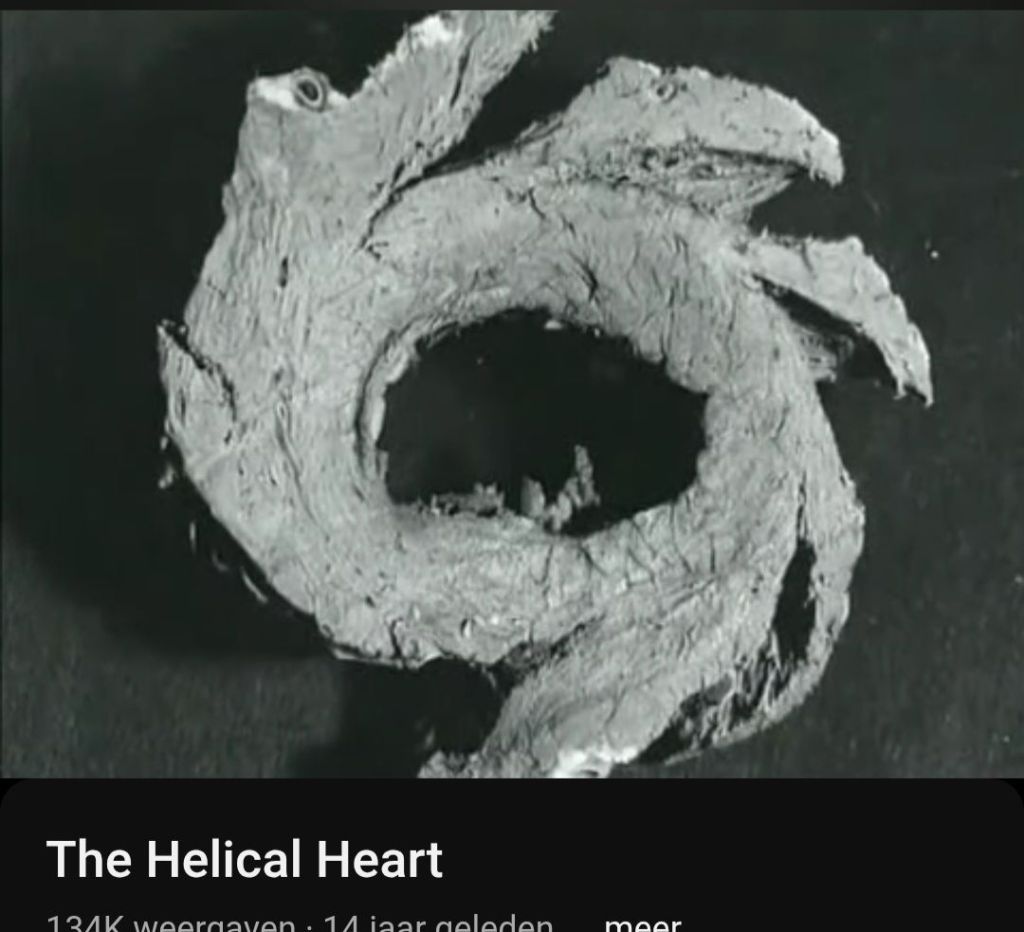
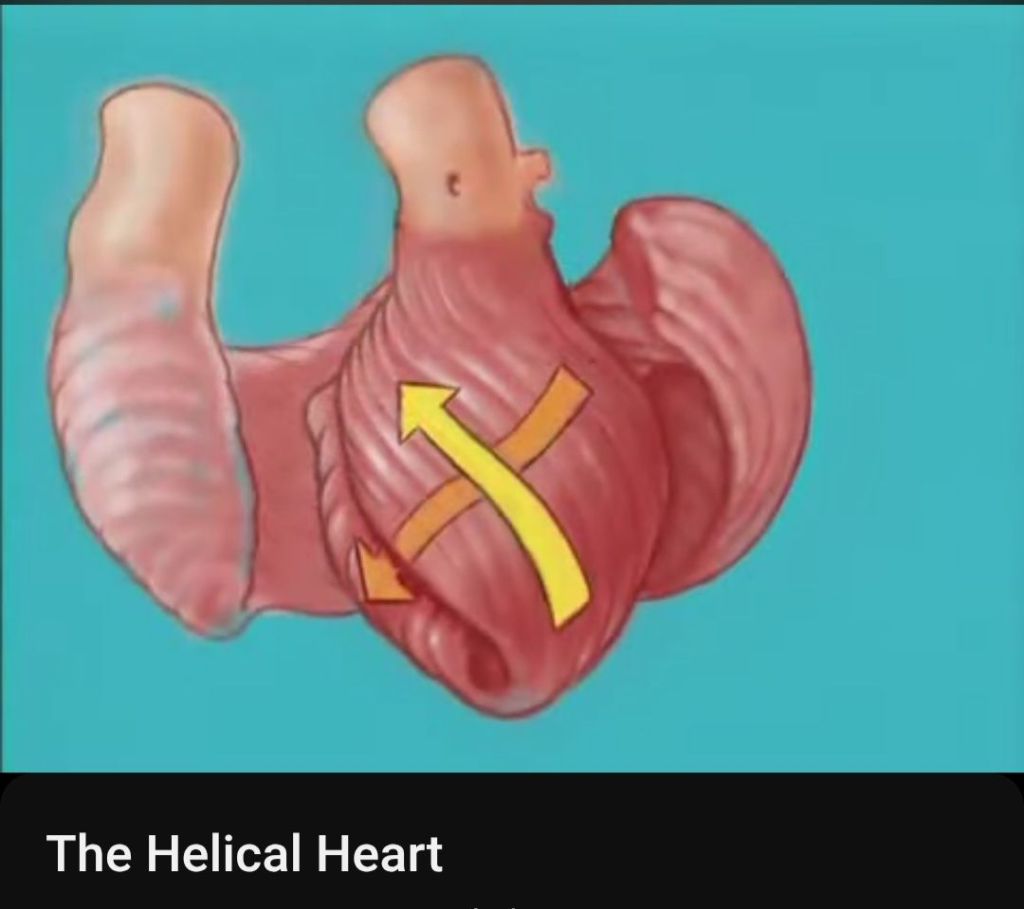
The term “Frisian heart” refer often  to two distinct yet related concepts: the symbolic heart
seen on the Frisian flag and the genetic heart condition prevalent among those of Frisian
ancestry.

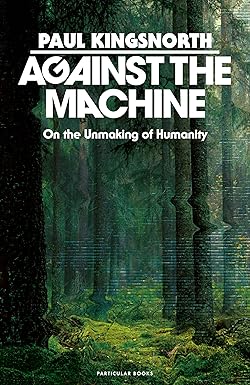
The  machine, is the term used by novelist, poet, and essayist Paul Kingsnorth to  present how a force that’s hard to name, but which we all feel, is reshaping what it means to be human. A wholly original―and terrifying―account of the technological-cultural matrix enveloping all of us. With insight into the spiritual and economic roots of techno-capitalism, Kingsnorth reveals how the Machine, in the name of progress, has choked Western civilization, is destroying the Earth itself, and is reshaping us in its image. From the First Industrial Revolution to the rise of artificial intelligence, he shows how the hollowing out of humanity has been a long game―and how your very soul is at stake.

See more on Against the Machine: On the Unmaking of Humanity


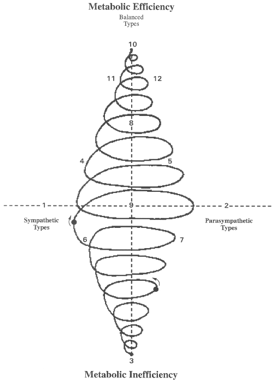
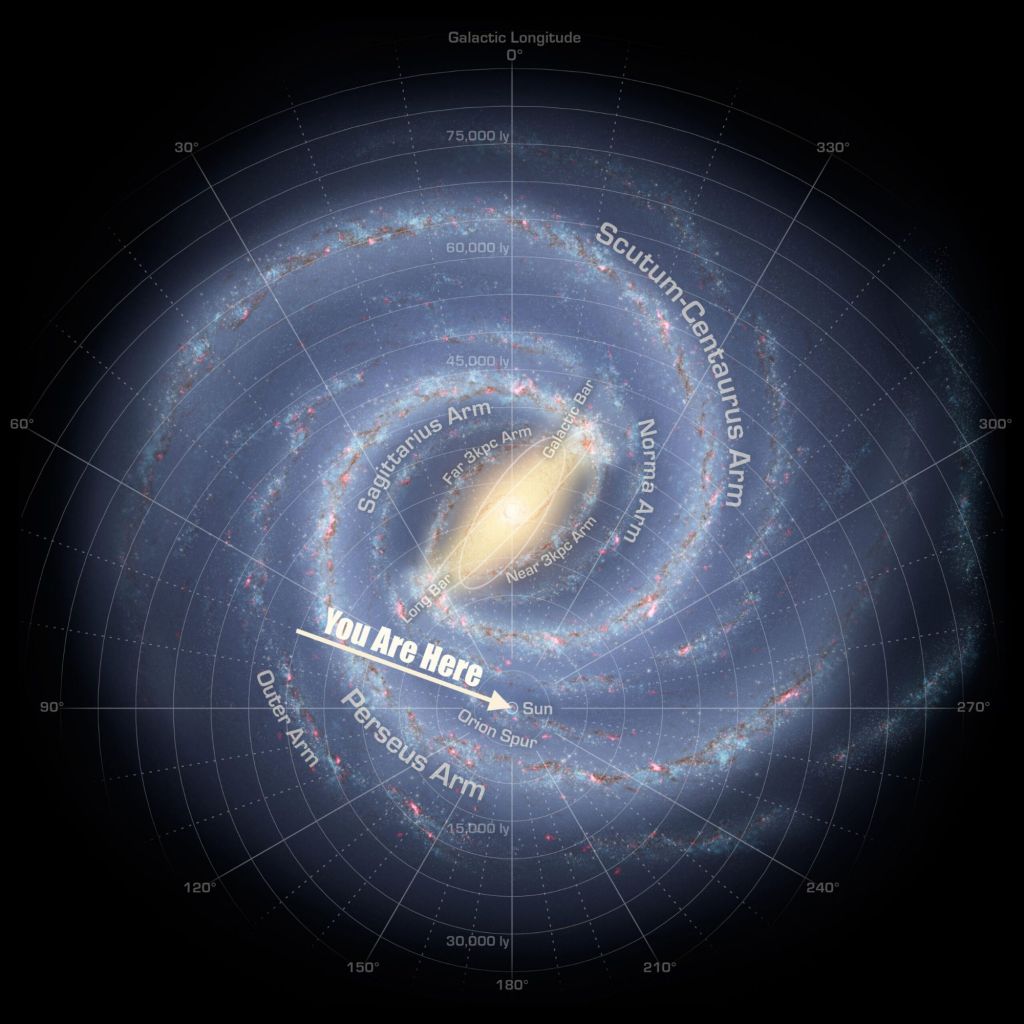
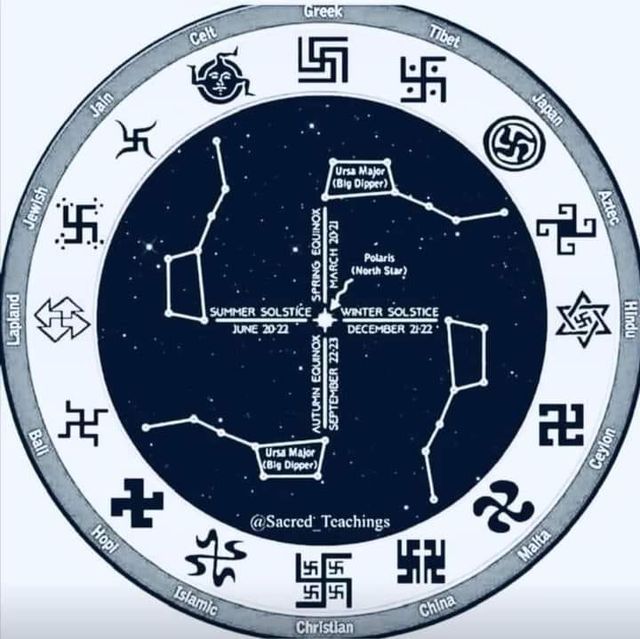
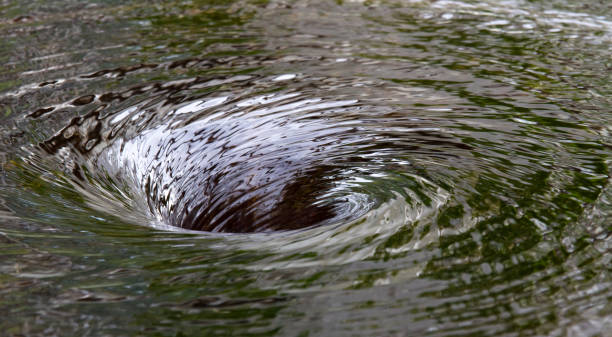
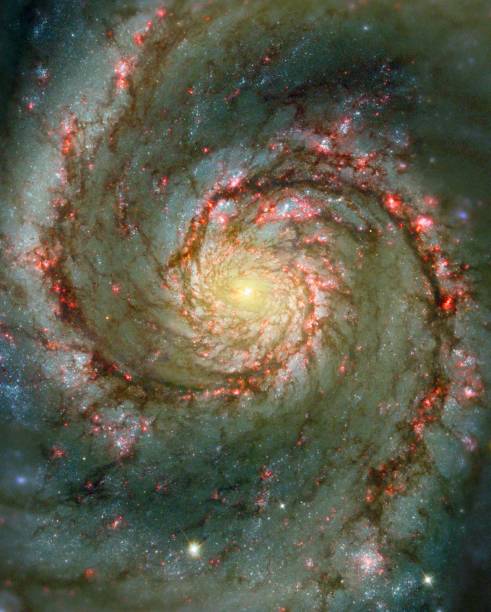
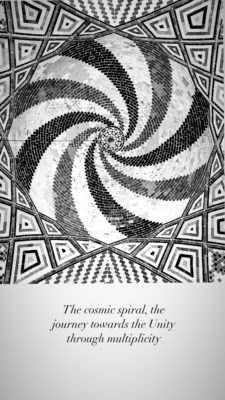
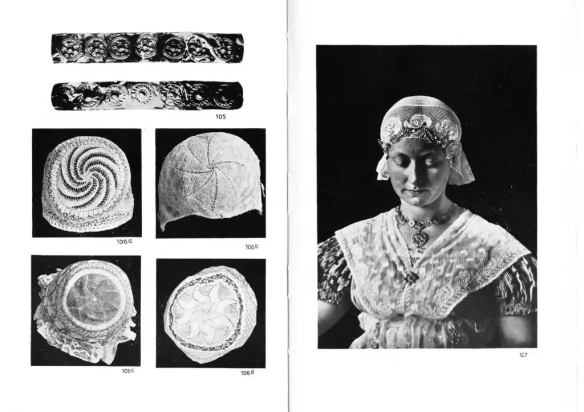
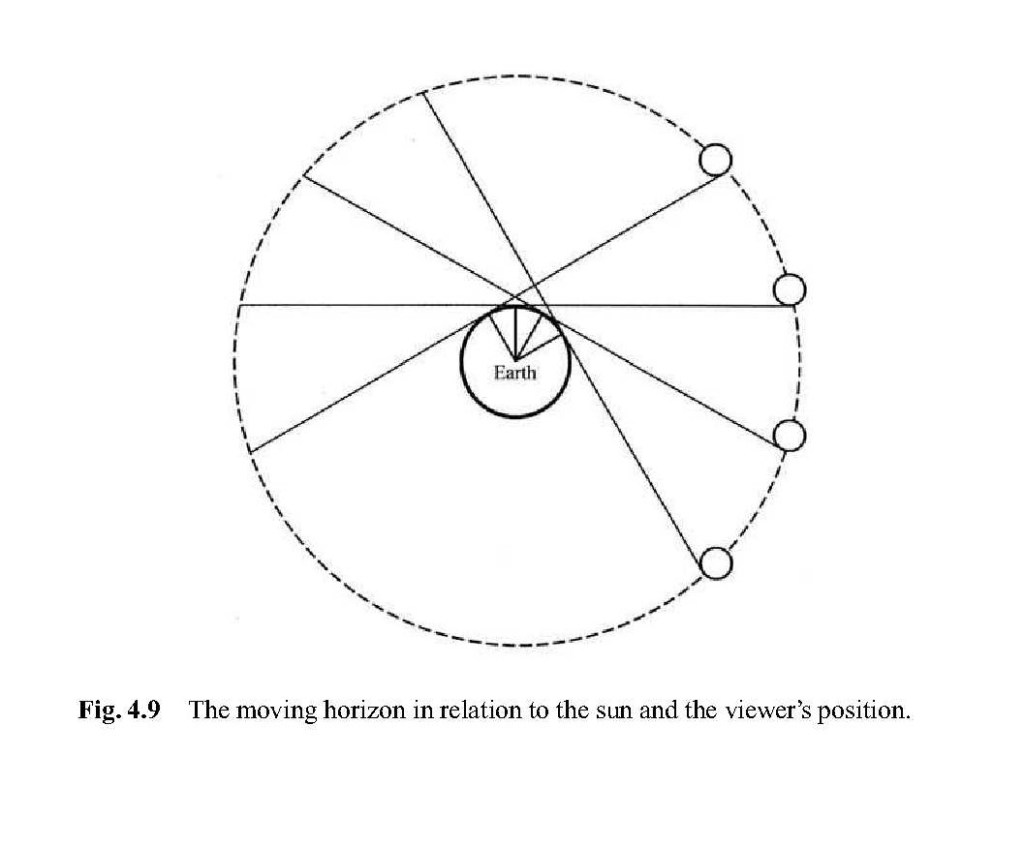
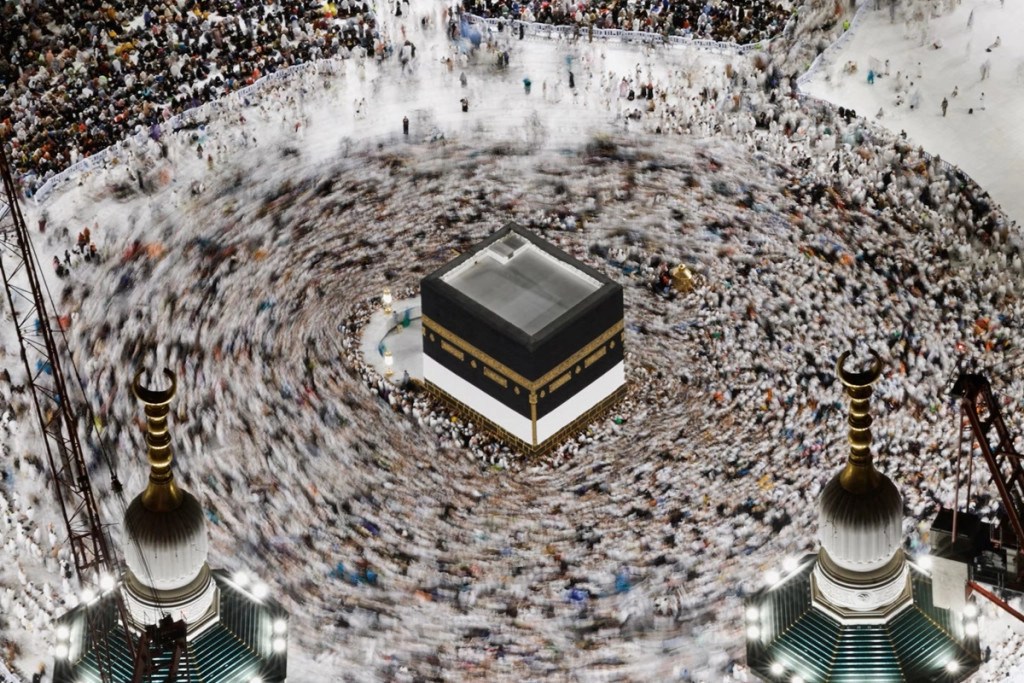
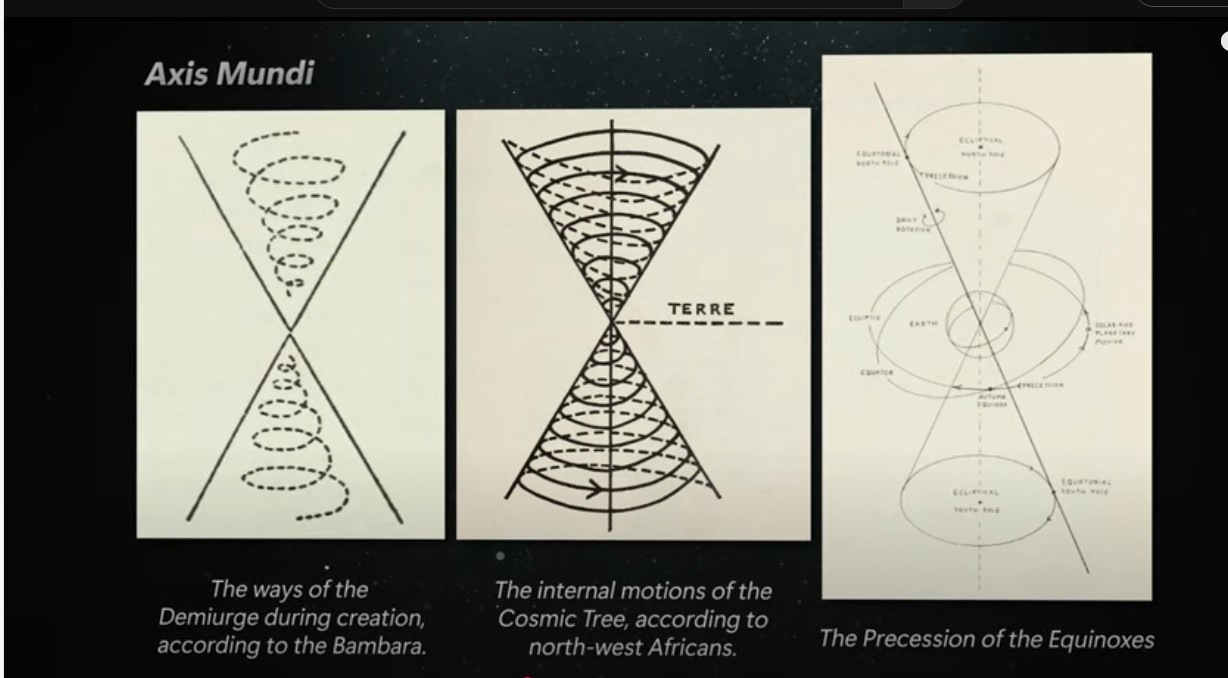
“Everything is whirling.” The first time that we heard the master the Grandsheikh Sultan Muhammad Nazim al Haqqani an-Naqshbandi say these words, we did not understand them. It would take years to see the truth hidden in that deceptively simple teaching. “Our soul is whirling in a completely different dimension, but even here every atom is whirling,” he says. He expands on the idea, pointing to the rotation of the earth itself, that of the moon trapped in orbit around it, and the two spinning around the sun. “Even the Milky Way is turning,”

Waht is generally saidin the time of the machins::
Symbol on the Frisian Flag
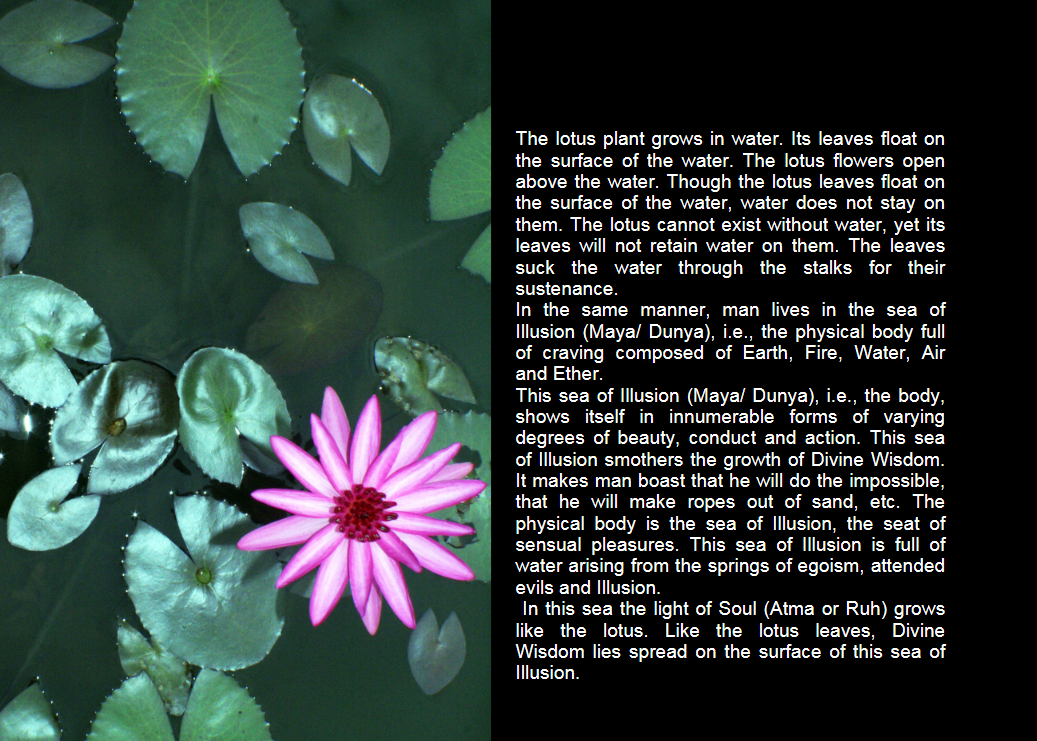
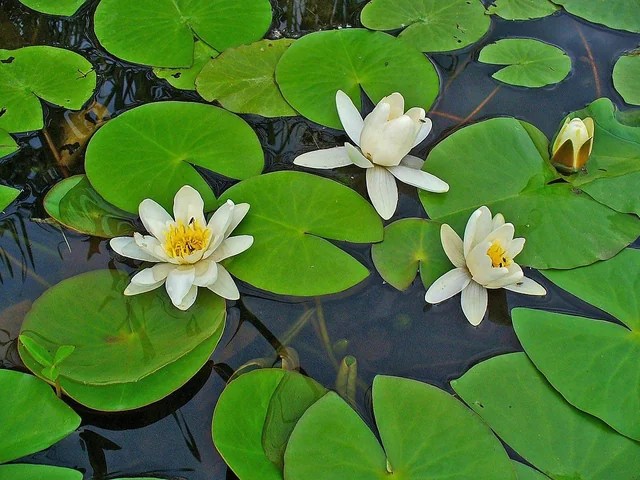
The Frisian flag, official in Friesland (Fryslân), features seven red, heart-shaped symbols called “pompeblêden” that actually represent leaves of the yellow water lily native to the region. These seven symbols are arranged diagonally across white stripes and are deeply associated with the region’s historic maritime territories. While commonly interpreted as hearts, they are not intended as romantic or anatomical symbols but carry cultural significance tied to Frisian history and identity.
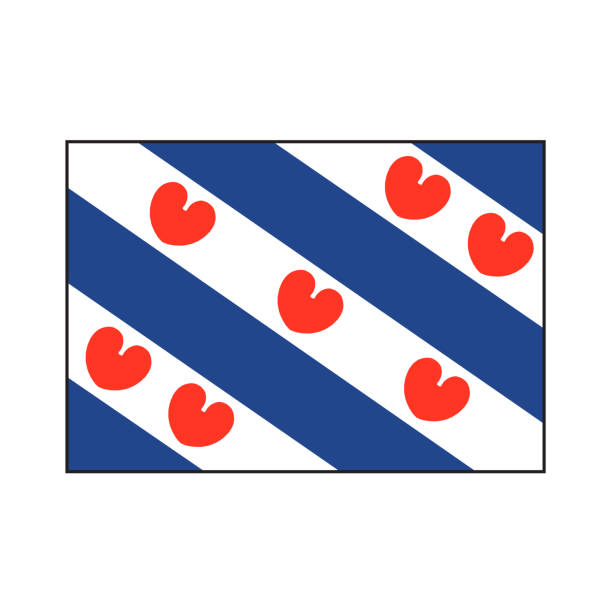
Friesland province flag rectangle vector button in the Netherlands or Holland in Western Europe
Made with Frisian Heart


Genetic Heart Condition: PLN Mutation
There is also a specific hereditary heart condition linked to Frisian descent—the PLN
(phospholamban) gene mutation. This genetic variant, first appearing in a Frisian ancestor
about 700 years ago, causes a form of cardiomyopathy leading to heart rhythm disorders,
potential heart failure, and even sudden cardiac death in undiagnosed cases. Symptoms can include reduced stamina, palpitations, arrhythmias, and cardiac arrest. It is estimated that 1 in 1,400 to 1,500 people in Friesland and nearby regions carry the mutation, with about 10,000–15,000 carriers in the Netherlands. The PLN mutation is passed down in families and is regarded as a “founder mutation,” with all modern carriers tracing their ancestry to Friesland.
Summary Table
Both meanings connect to Friesland’s distinctive cultural and genetic legacy: one in symbolic
art, the other in hereditary health. If referring to medical risk within Frisian families, genetic
counseling and screening for the PLN mutation is recommended. If referring to symbolism, the “Frisian heart” represents historical pride rooted in centuries-old maritime identit

Origin and meaning of the Frisian pompeblêden

The Frisian pompeblêden—widely recognized as heart-shaped symbols on the flag of Friesland— actually represent stylized leaves of the yellow water lily native to the region, not hearts as often mistaken by outsiders

Apophis can also be fruitfully compared metaphorically with the heart, especially in symbolic and mythic terms relating to the struggle between order and chaos within the core of life and consciousness.

Origin
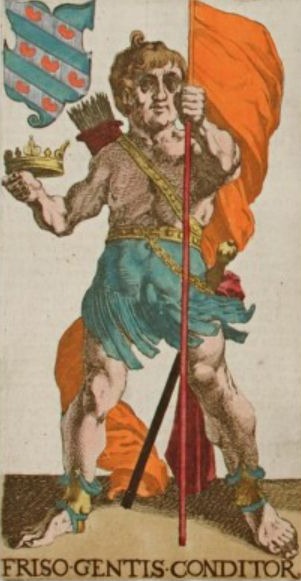
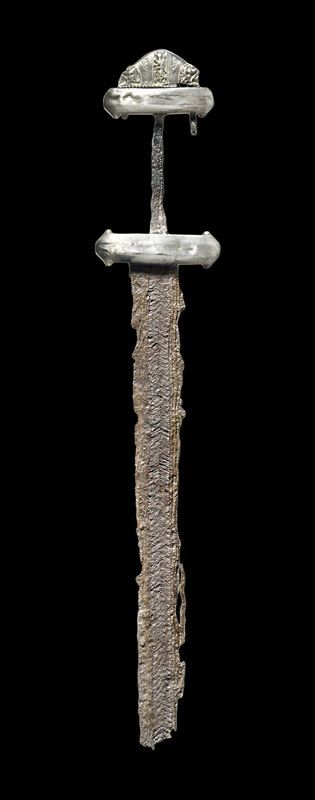
The tradition of using pompeblêden dates back at least to the Middle Ages. According to Frisian legend, the symbol originated with Friso, the legendary ancestor of the Frisians, who supposedly carried a weapon adorned with seven red leaves from the yellow water lily when settling the area.Medieval sources and heraldic documentation show the motif takes inspiration from coastal and maritime symbolism found in the Frisian region and neighboring parts of Scandinavia and Germany, most notably associated with water, lilies, and marshes. Early references can be found in epic poems and coats of arms from the 13th century, with Scandian and German cities using similar seeblatt (lake leaf) designs as the Fleur de Lys
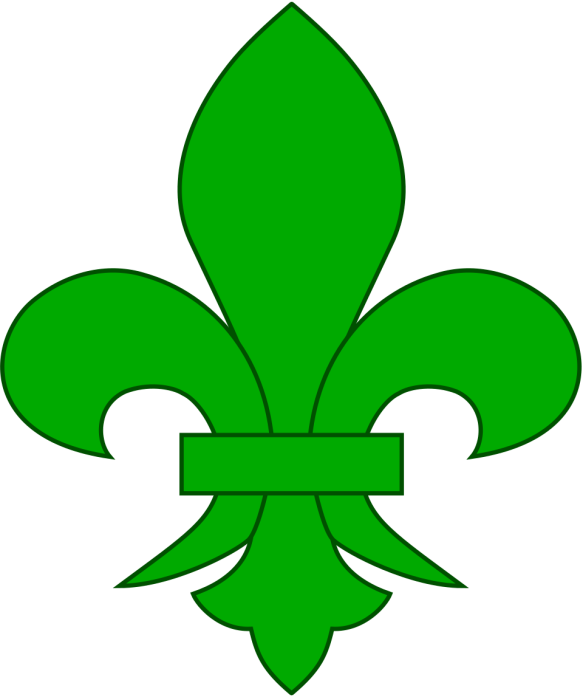
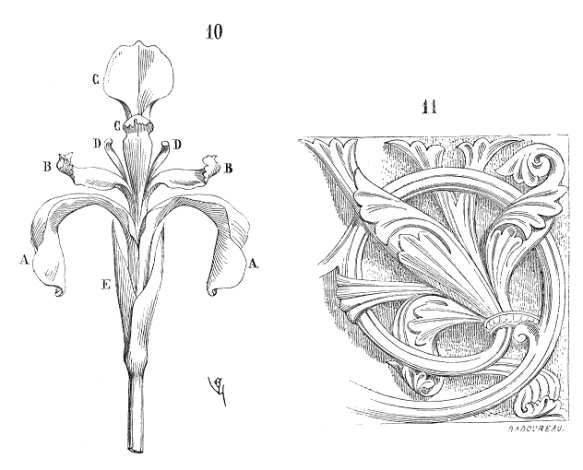
.


Meaning
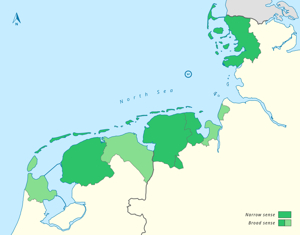
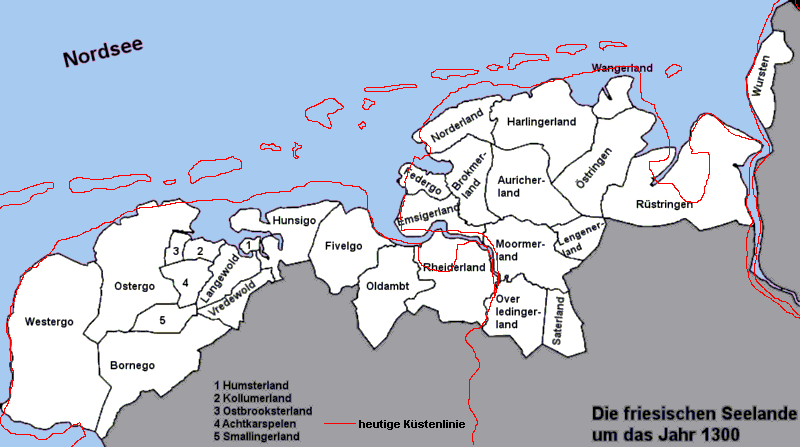
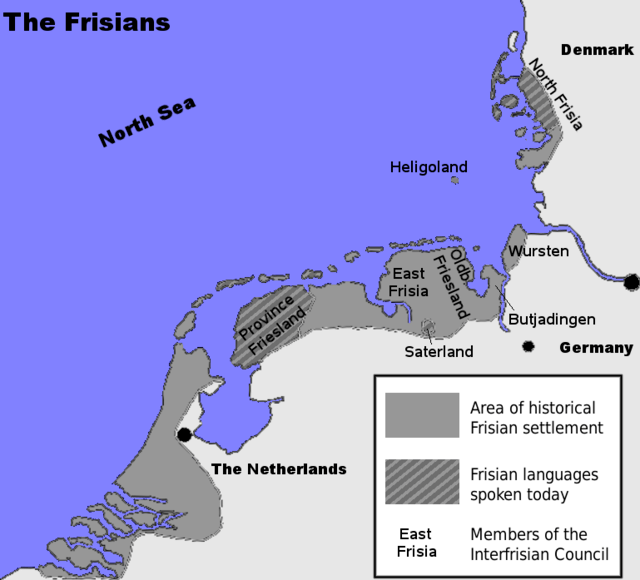
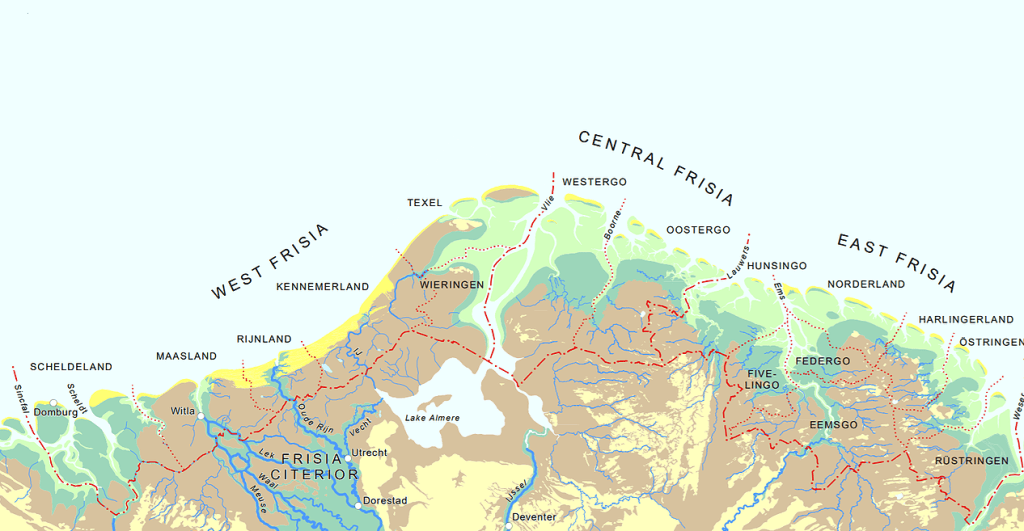
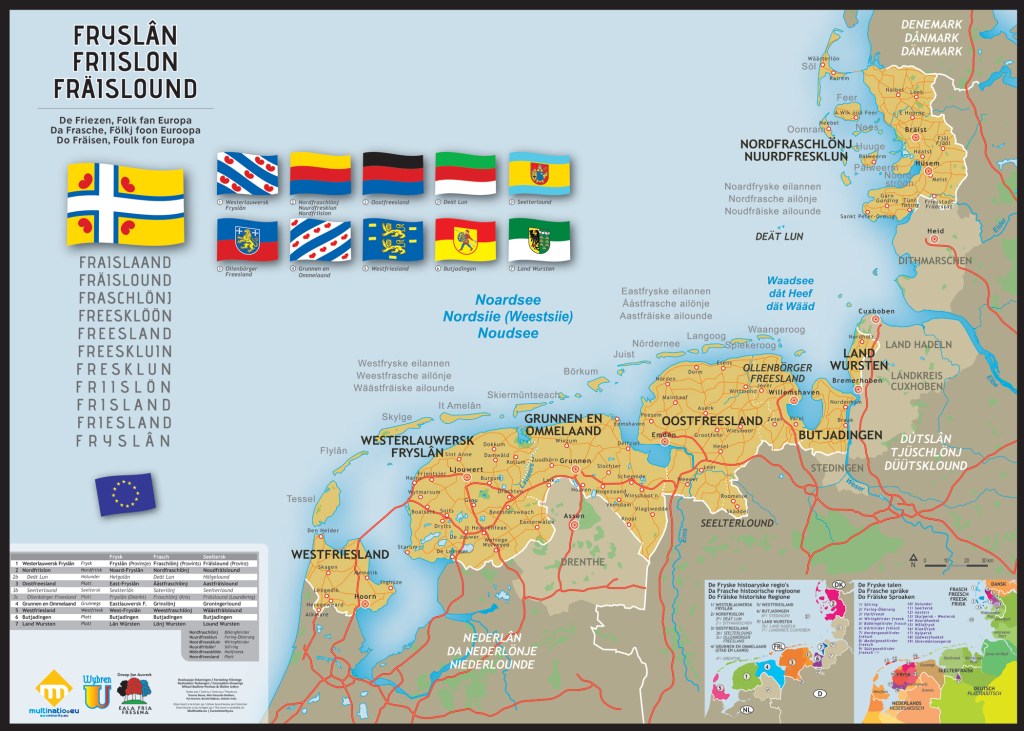
The seven pompeblêden on the flag refer symbolically to the “seven Frisian sea countries”:
independent territorial regions stretching from Alkmaar in the Netherlands to the Weser in
Germany, united historically in defense against external threats like the Vikings and Normans. While legend describes seven actual regions or the seven sons of Friso, historians note there may never have been exactly seven administrative units; in regional tradition, “seven” means “many” or “a large number”. The water lily leaves thus symbolize both the maritime nature of Friesland and its historical unity and autonomy across numerous independent districts.
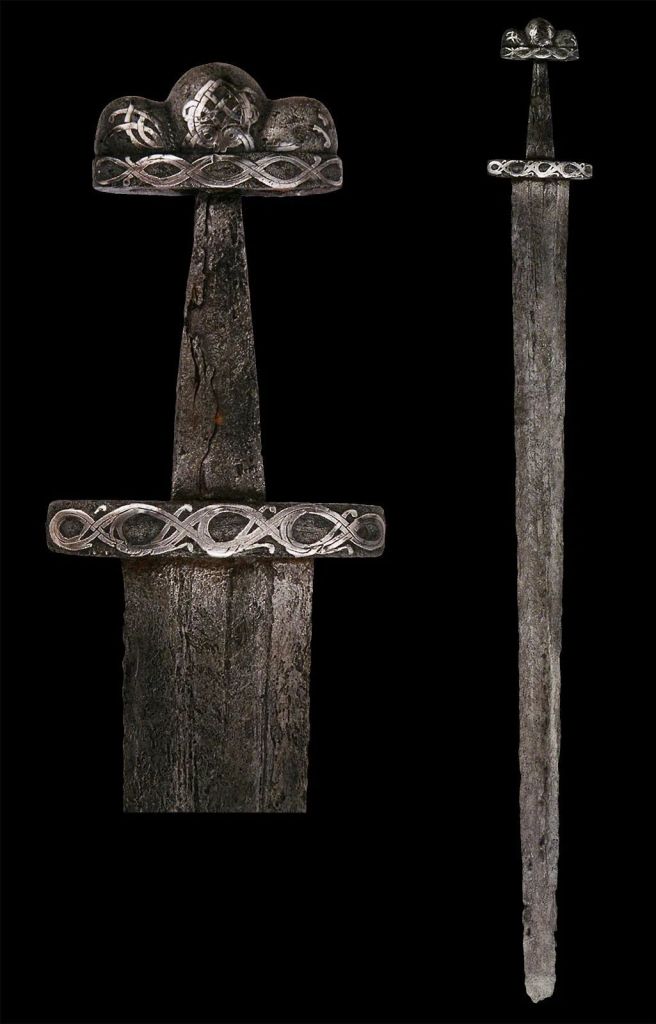
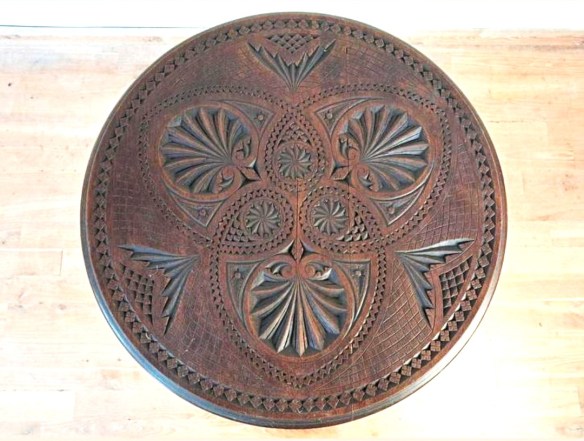
  • But outside that we have much more Traditional wisdom  about it but totally ignored by he machine or modern universities:

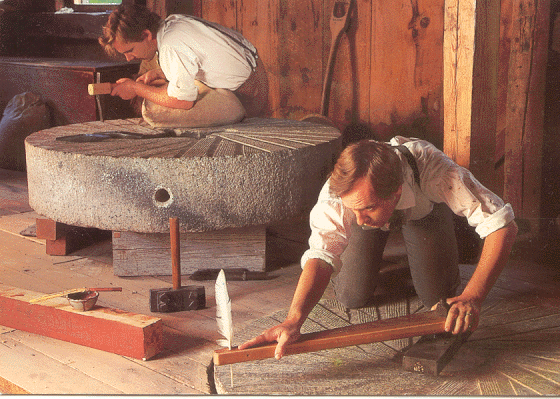
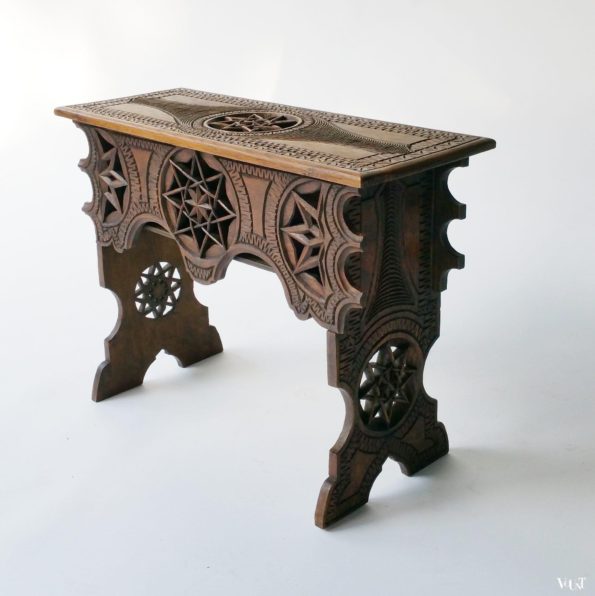
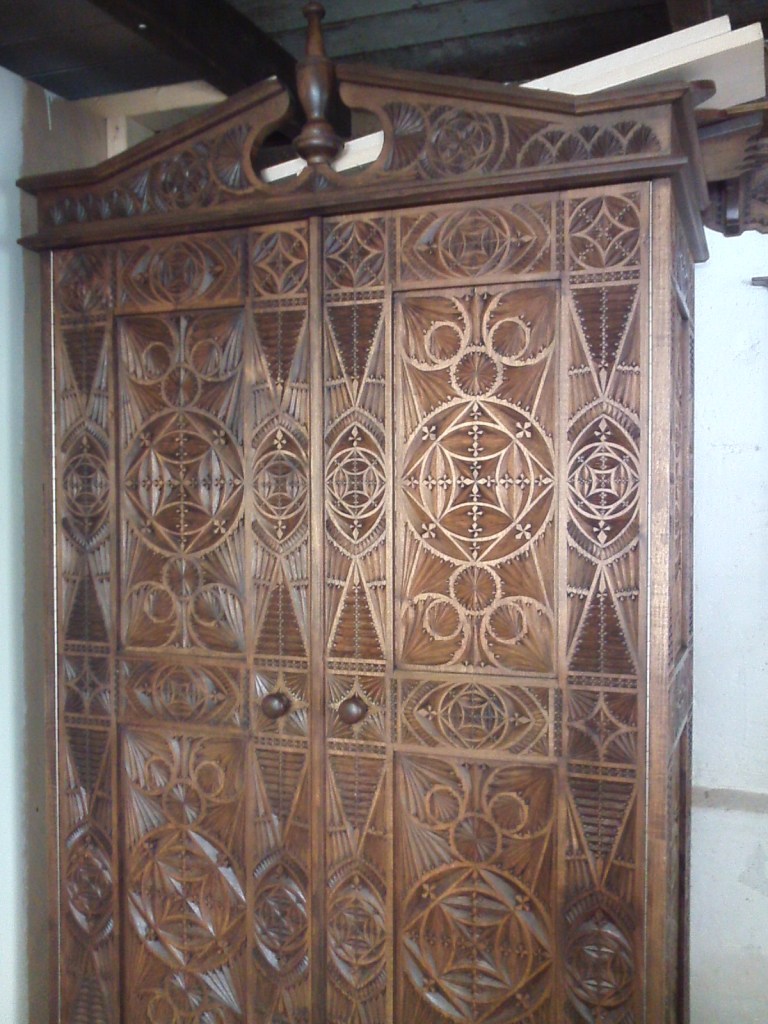
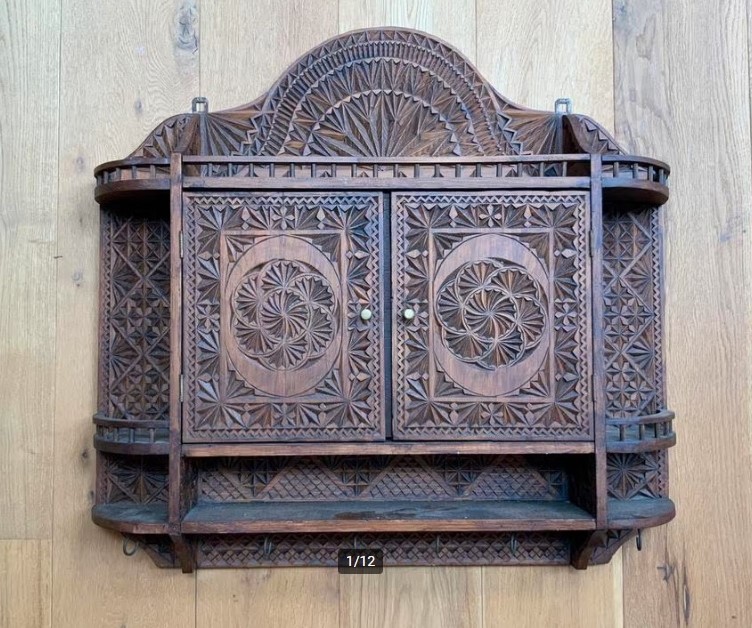
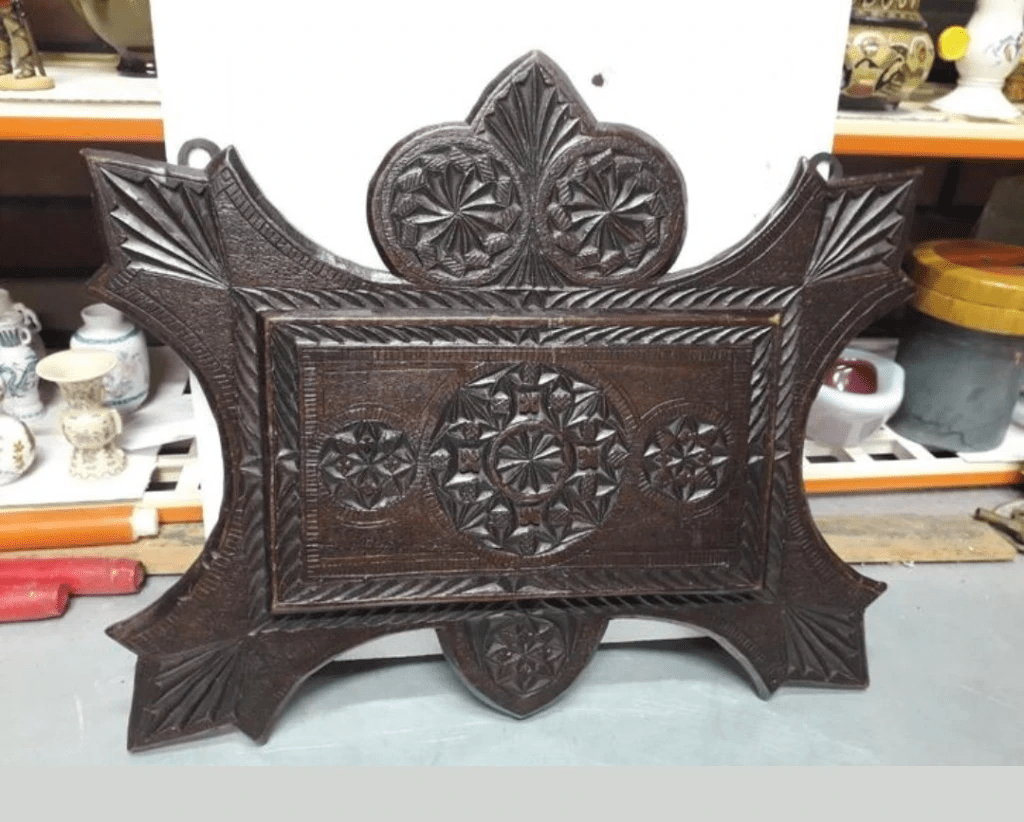
Craft as Sacred Knowledge

René Guénon viewed traditional craft not as utilitarian labor but as a means of cosmic participation. The traditional craftsman, for Guénon, was engaged in work that reflected the divine order:
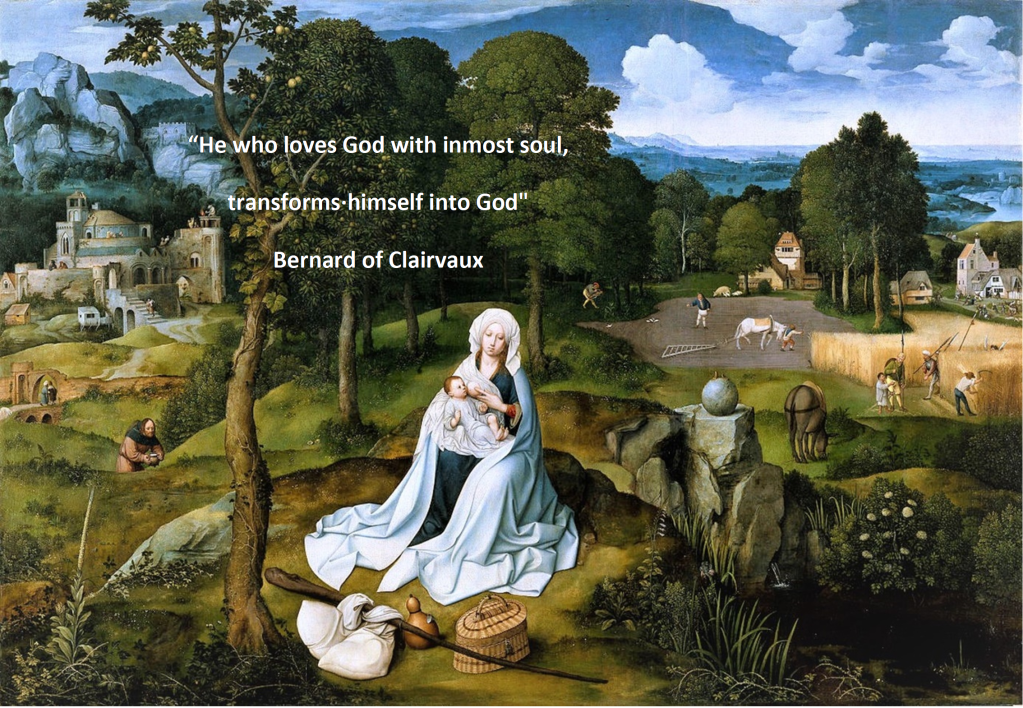
A craft is not merely a technique, but a transmission of a traditional knowledge, the application of principles that are ultimately metaphysical.”
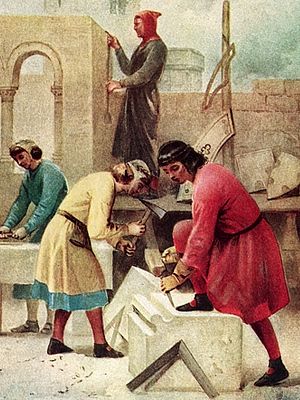
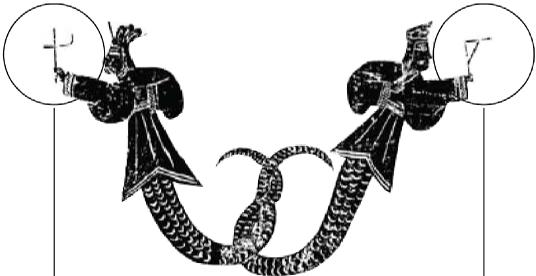
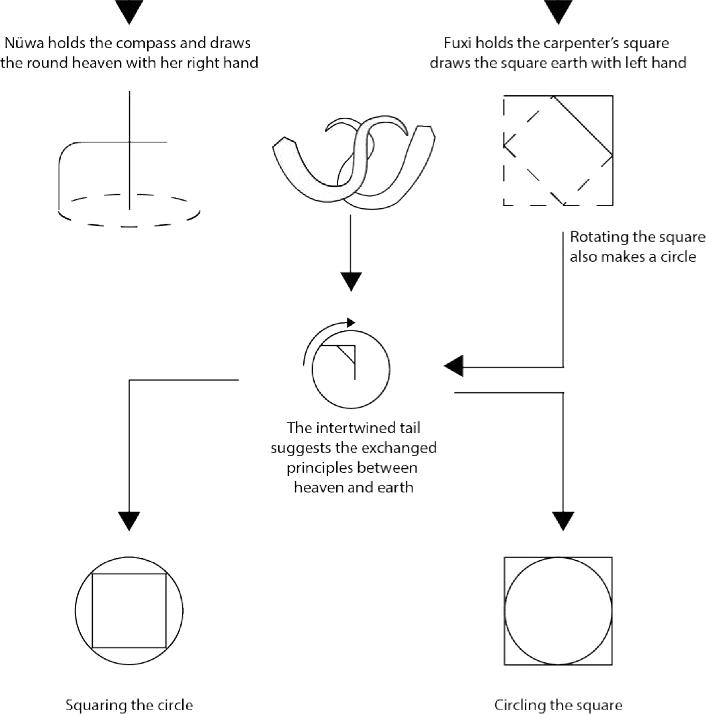
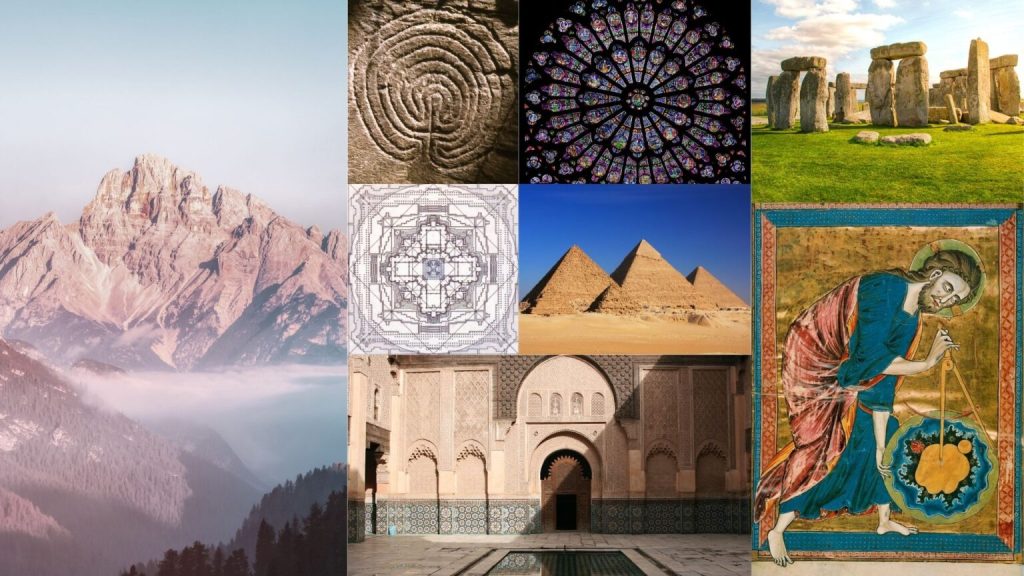
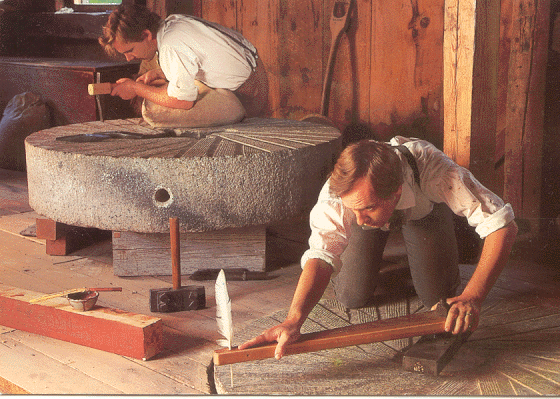
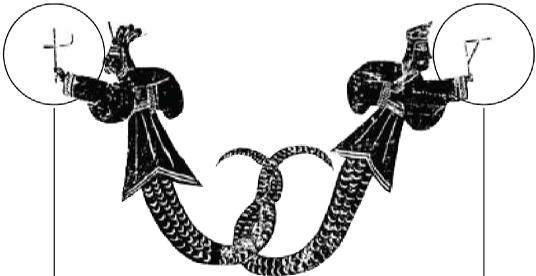
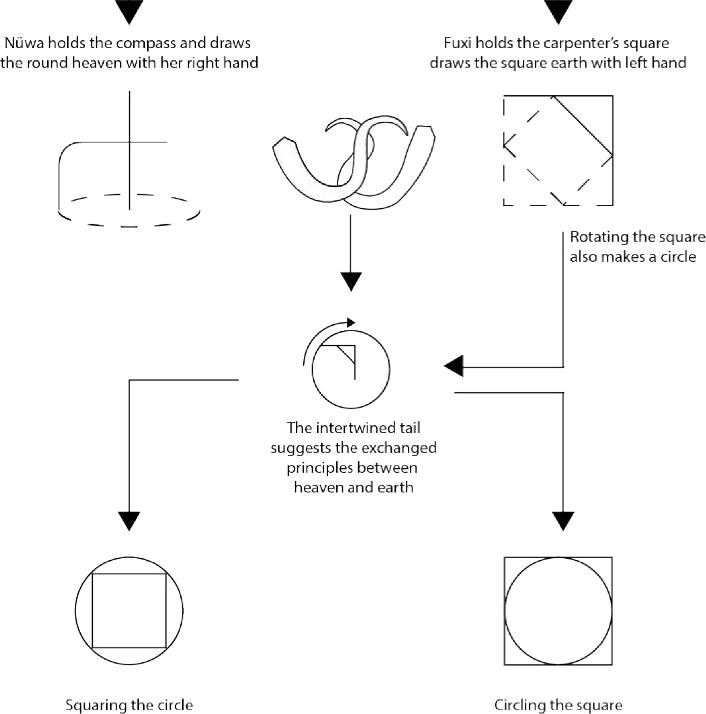
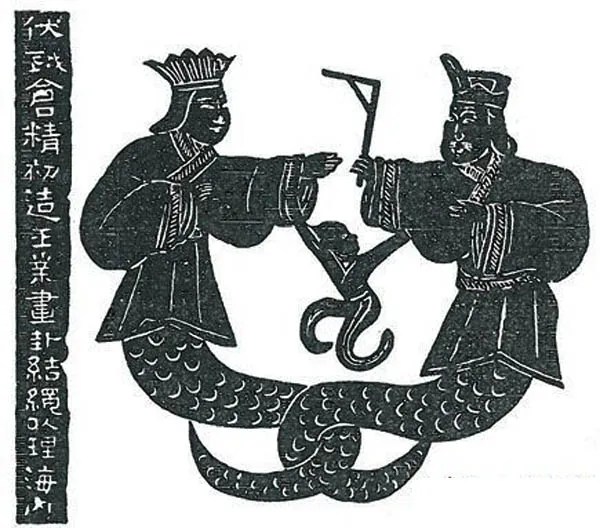
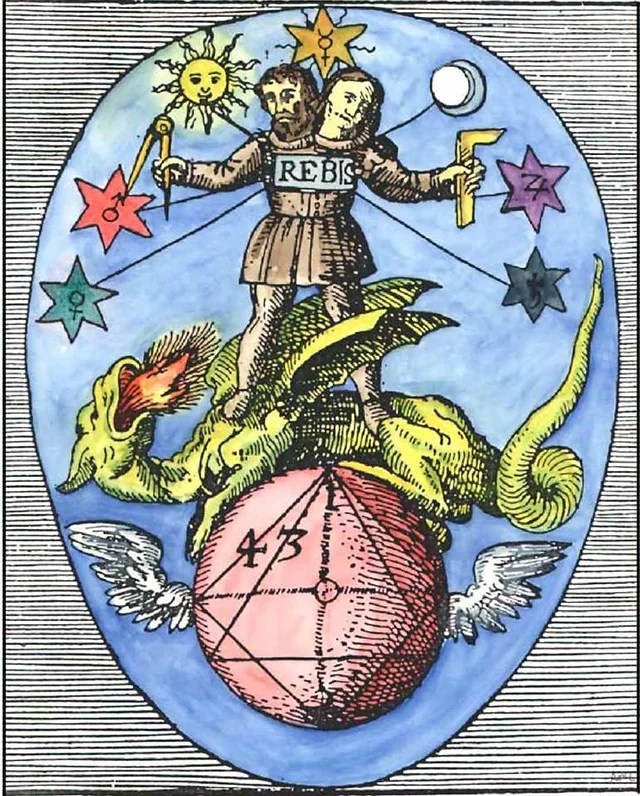
In traditional civilizations, there was no division between the sacred and the secular in labor. Every craft, from carpentry to stonemasonry, was infused with symbolic meaning. The tools themselves—like the compass, the square, or the chisel—served as metaphors for universal truths. The craftsman, through repeated and intentional action, participated in the divine act of creation.

Work and contemplation were not separate in traditional societies. A craftsman worked not just with his hands but also with an awareness of the symbolic and spiritual meaning of his work.

The tool, the material, and the process had symbolic dimensions. For instance, in masonry or metalwork, the transformation of raw material symbolized the transformation of the soul.

Initiation and Guilds

Guénon emphasized the role of initiatic craft guilds—especially in the West, such as medieval masonry guilds—which preserved esoteric teachings and transmitted initiatic knowledge through symbols, rituals, and oral transmission.

These guilds were structured hierarchically and transmitted cosmological knowledge embedded in tools, geometry, architecture, and ritual.

The compass and square, for example, symbolized heaven and earth or spirit and matter.

The architecture of temples or cathedrals followed sacred geometry, aligning physical structures with cosmic principles.

Degeneration in Modernity

Guénon argued that in modern times, the loss of sacred and symbolic understanding has led to the degeneration of crafts into mere technical skills, disconnected from their metaphysical roots.

This reflects his larger thesis: modernity is a descent into materialism, fragmentation, and loss of spiritual orientation””. The disappearance of guilds, desacralization of labor, and mass industrialization exemplify this decline.

Read Here: The Arts and their Traditional Conception

Art That Expresses Truth

Ananda Coomaraswamy, deeply rooted in both Eastern and Western traditions, emphasized that the traditional artist or craftsman was not creating to express individuality, but to reveal the timeless: “The traditional craftsman did not ‘express himself,’ he expressed truths.”

Coomaraswamy rejected the modern cult of originality and innovation. For him, traditional art and craft were “vehicles for eternal wisdom“. The form was not arbitrary—it was a symbolic expression of metaphysical principles, passed down through sacred traditions. Every detail, from proportions to ornamentation, had a purpose that reached beyond aesthetics.

“Work is for the sake of the work done, and not for the profit therefrom.”

In this sense, “work was prayer “—a form of contemplation, a discipline of the soul.

Read here: Primitive Mentality: The myth is not my own, I had it from my mother.

Beauty as a Path to the Divine

Frithjof Schuon* extended these insights by focusing on the spiritual essence of traditional art. For Schuon, beauty itself was a reflection of the Divine:
“The beauty of a traditional object reflects the eternal archetypes; it speaks in silence to the soul.”

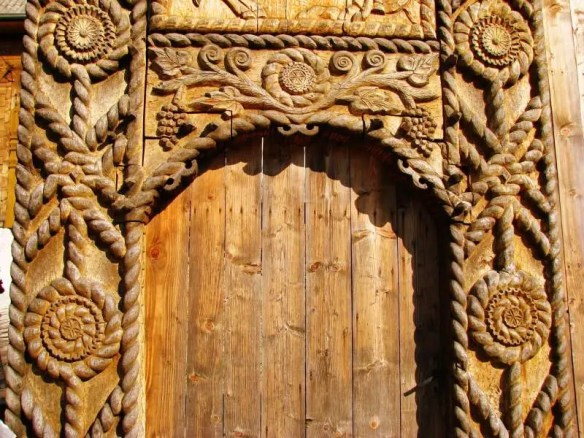
Craftsmanship, when aligned with traditional forms, becomes a contemplative path. Whether it’s a sacred icon, a hand-carved door, or a woven textile, its power lies in its “participation in the eternal “. For Schuon, even in a world that has largely lost its traditional frameworks, the sacred can still be accessed through ” form, beauty, and right intention:

“A sacred form, however simple, is a vessel of grace.”

A Living Tradition


What unites Guénon, Coomaraswamy, and Schuon is the belief that “”true craft is never arbitrary”. It arises within a living tradition, where every gesture, pattern, and proportion reflects a metaphysical reality. In contrast, modern craftsmanship—stripped of symbolism and spiritual orientation—becomes hollow, reduced to commerce or self-expression.

Their critique is not simply nostalgic. It is a call to recover the sacred dimension of human making—to reintegrate craft into a vision of life that is oriented toward the transcendent.

To make with the hands, in the traditional sense, is to align oneself with the cosmos. Craft, then, becomes more than labor—it becomes liturgy. The Traditionalist vision invites us to see again with sacred eyes: to recognize that a pot, a wall, a song, or a loom, when shaped by truth and beauty, can become a path toward the eternal.

Made for use versus made for sale, creation versus production. Human being valued versus machine being valued.. When the human being is valued, there is integrity in the work. There is dignity in the freedom to work for purpose, and satisfaction knowing the effort is respected. When the human being is removed from the actual creation or building of the thing itself, the spirit of the work, whatever it is, is disconnected if not all together removed making the being servile to the method of production.
The ‘maker’ thus becomes a salesperson for something they have had manufactured for them to sell as their own to make an individual profit. The purpose is then not the benefit or betterment of humanity, but the betterment and advancement of oneself. And this
form applies now to almost all forms of artistic creation be it painting, dance, music, fashion,
design, architecture, interior design and so on; they all have become templated ideas easily
reproduced without much prerequisite of fundamental knowledge or originality.

Read here: Why Exhibit Works of Art?

For more info about Craft and Sacred Architecture read:
An Hermeneutic Exploration of René Guénon’s Symbolism of the Cross Applied to Sacred Architecture.
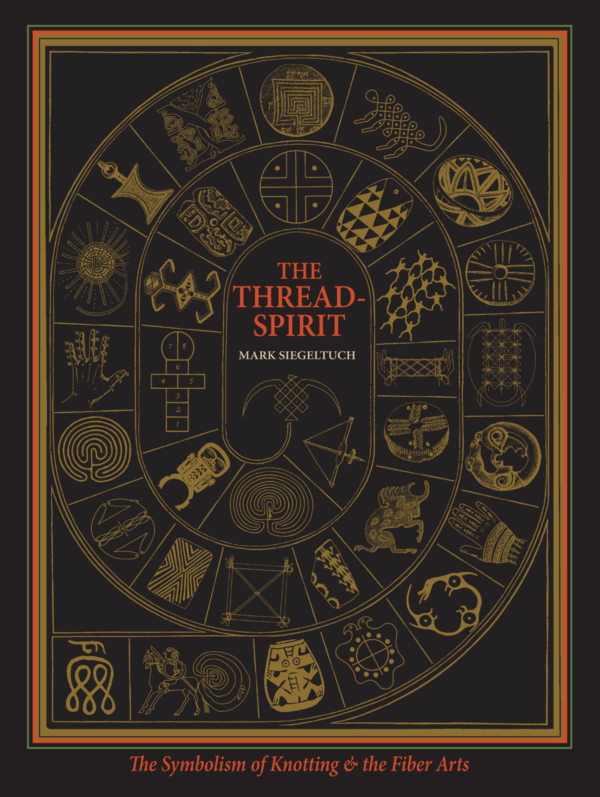
The Thread-Spirit Doctrine:An Ancient Metaphor in Religion and Metaphysics with
Prehistoric Roots
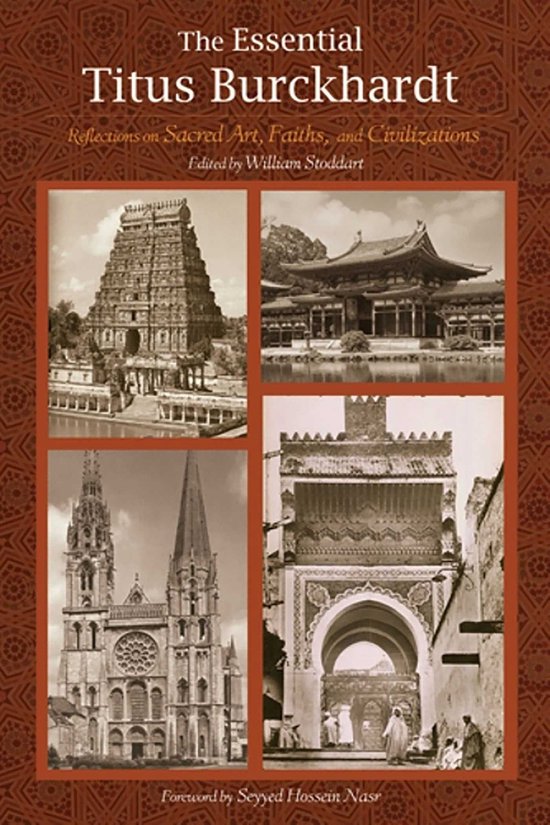
The Essential Titus Burckhardt: Reflections on Sacred Art, Faiths, and Civilizations
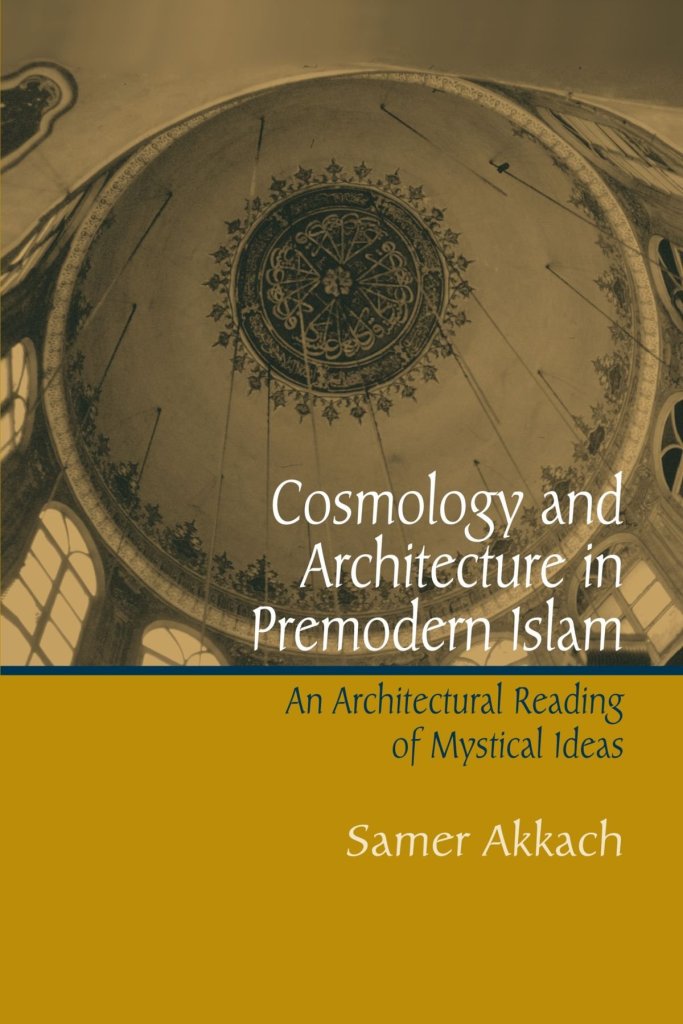
Cosmology_and_architecture_in_premodern Islam
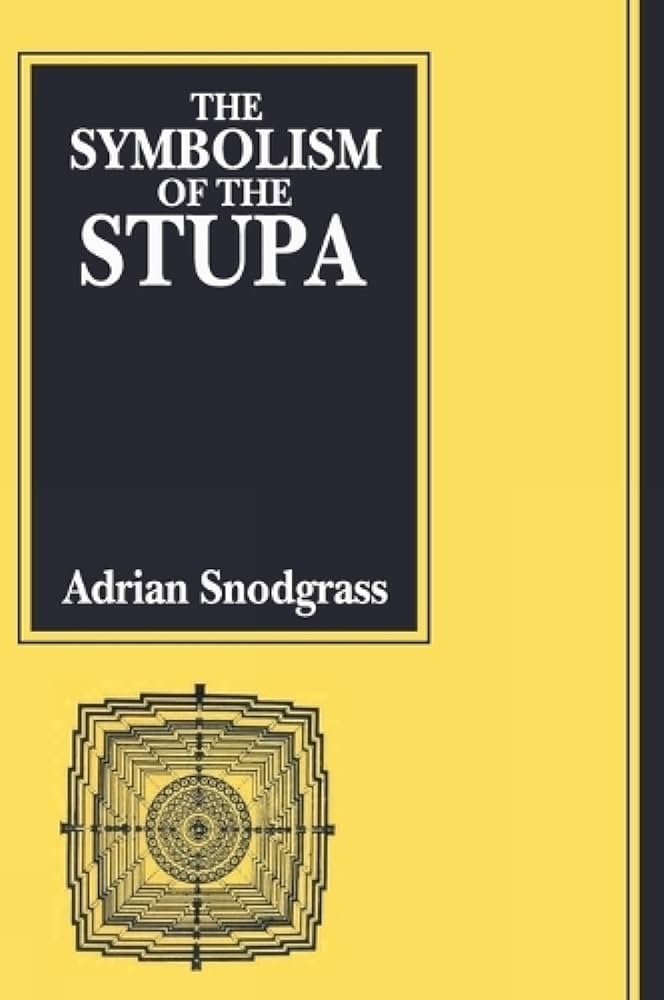
Symbolism-of-the-stupa

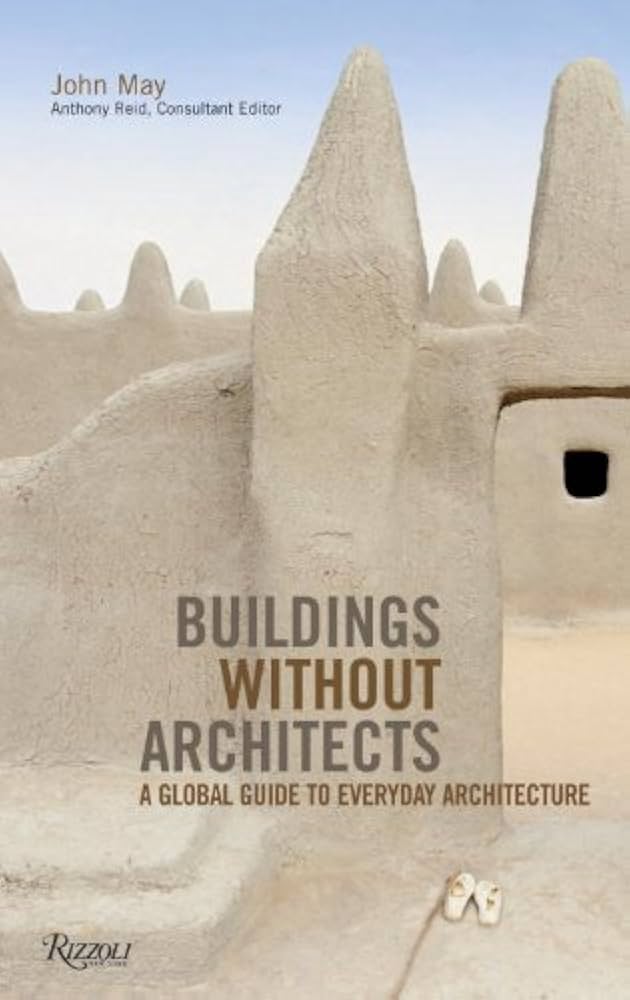
Buildings Without Architects:

Buildings Without Architects is a wonderfully informative reference on vernacular styles, from adobe pueblos and Pennsylvania barns to Mongolian gers and European wooden churches. This small but comprehensive book documents the rich cultural past of vernacular building styles. It offers inspiration for home woodworking enthusiasts as well as architects, conservationists, and anyone interested in energy-efficient building and sustainability.
The variety and ingenuity of the world’s vernacular building traditions are richly illustrated, and the materials and techniques are explored. With examples from every continent, the book documents the diverse methods people have used to create shelter from locally available natural materials, and shows the impressively handmade finished products through diagrams, cross-sections, and photographs. Unlike modern buildings that rely on industrially produced materials and specialized tools and techniques, the everyday architecture featured here represents a rapidly disappearing genre of handcrafted and beautifully composed structures that are irretrievably “of their place.” These structures are the work of unsung and often anonymous builders that combine artistic beauty, practical form, and necessity. Read Here

==================
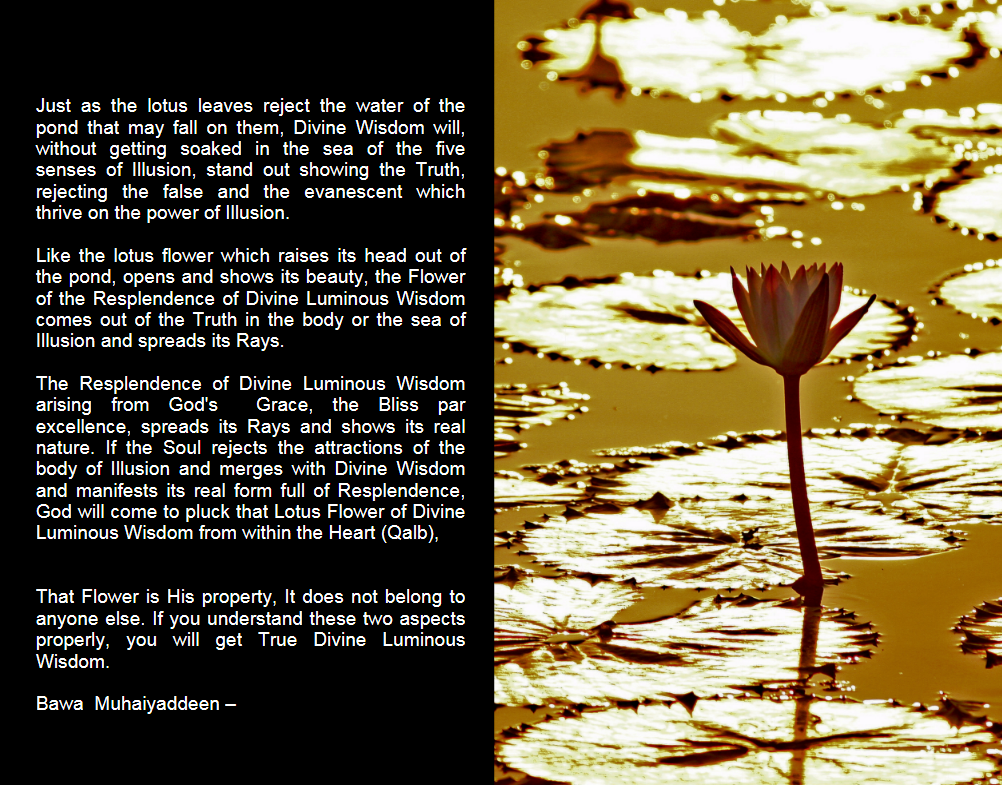
That Flower is His property, It does not belong to anyone else. If you understand these two aspects properly, you will get True Divine Luminous Wisdom,

Bawa Muhaiyaddeen —
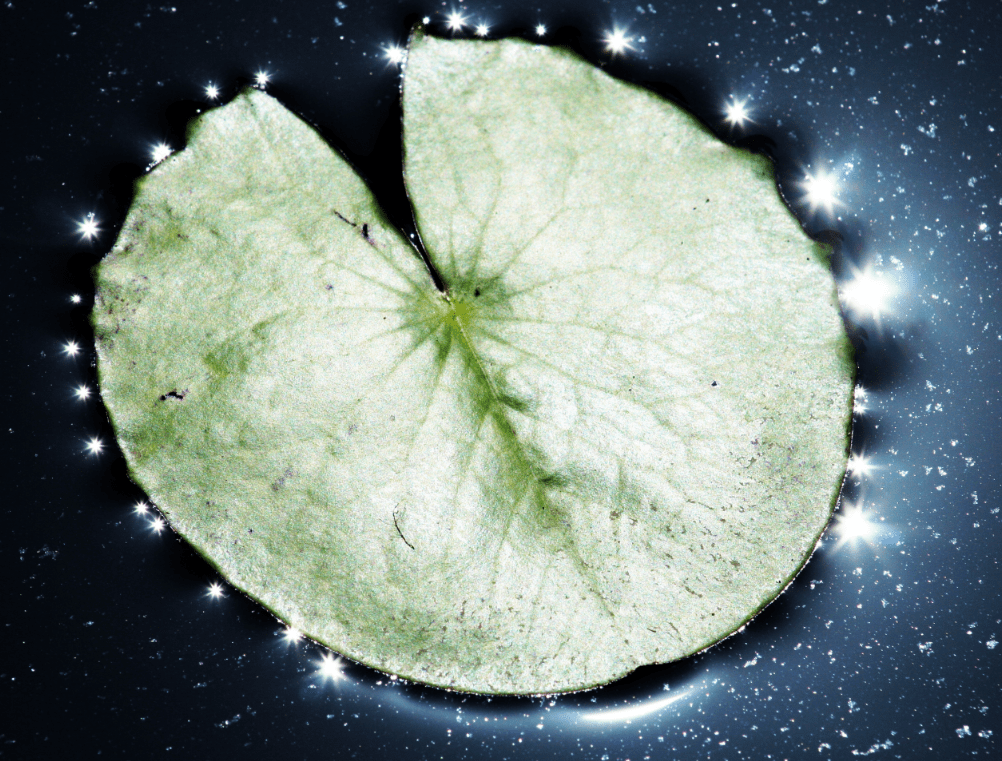
More than four others – Frisian Folkstale

At that time there lived in the Grinzer Pein (Friesland) a young man who was called out  that he was not afraid of anything. When a ferry had to be dug, he got a job there. He joined the team with twenty westerners. Those twenty westerners were as lazy as duckweed. They wanted him to do the work, so he got into trouble with them. Then they said, “If you don’t work, we’ll cut you in pieces.” But the young man laughed and said, “You should try that first.” And then those twenty westerners came up to him with open knives , but he knocked them down one by one, for he was not afraid. And that same evening, near the new ferry, one of the Westerners was found cut into strips. But that joung man had not done that, his own comrades wanted to get rid of that westerner. And because the young servant  had fought with him, they thought, he will be blamed.

That turned out to be the case, because the nineteen westerners testified that he must have been the murderer of their comrade. He went to court, and because he would not confess, he was put on the rack, but he maintained his innocence, for he was not afraid of anything, not even the pain. Desesperate, they called a wizard, a real wizard. He had to scare him so he confessed. The wizard had him tied on a chair; then he was powerless. But they had tortured him so much that he could hardly speak.

And then he was given a cup of warm milk to drink. The magician looked straight at him and said, ‘Look at the ground in front of you!’ And then the young man noticed that his ten toes had turned into ten snakes. They grew out of his toes, they grew bigger and bigger and came closer and closer to his head. But he made those snakes drink one by one from the hot milk from the cup he had in his hands. The snakes writhed together again and fell asleep at his feet.

The wizard asked, “Aren’t you scared yet?” But he replied, “You haven’t got any of those beasts yet, because my cup isn’t empty yet.” Then the wizard turned the boy’s hair into flames and said that he would be consumed by these flames. But the young man asked: ‘Do you have tobacco in your pocket? I don’t have any tobacco with me, but my pipe does. Stop it in front of me for a moment, so I can at least light it on the flames and don’t have to use a match’.

And the third was that the sorcerer sat before him and said: If you will not confess, you will be sent to hell. ‘But the young servant laughed, for he was not afraid. The wizard looked straight at him and then the young man noticed that his body was turning into a skeleton. The magician said:

“Aren’t you scared yet? Remember – this is how you go to hell and stay there!” “Oh,” he said, “why should I be afraid? Such an old charnel house as I am now – there is no one in hell who knows me.” And he did not bow the neck.

However, he was sentenced to death. The executioner appeared and he was to be cut into four. He was already on the block to be chopped in four, then they asked him if he wasn’t scared yet. “No,” he said, “why should I be afraid? Our father always said I was worth more than four others. And if you cut me in four here, you’ll be dealing with not one, but four men in a minute.’ And he was not quartered, but they took him back to the cell.

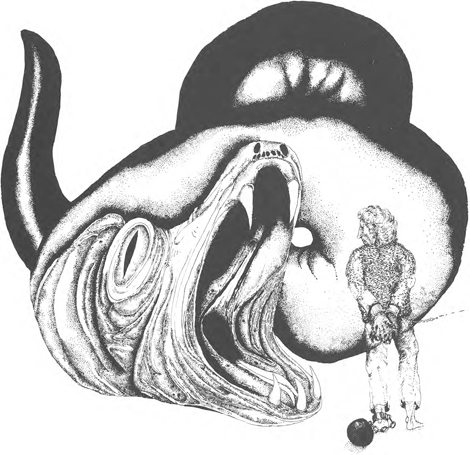
That same night the devil came to him and left nothing to frighten him. He told him the most horrible stories and transformed himself into the most horrible forms. The devil became an old woman, with teeth as large and as sharp as razors, and threatened to bite his throat. The devil became a dragon with seven heads that spewed fire at him. He became a very large snake, with a mouth so wide that it could eat it in one sitting. But the young servant was not afraid. Only when the devil finally asked him if he felt any fear at all did he say, “No, I don’t, but you do!

And he began to tease him so furiously, he made such hideous noises, and he drew such crooked faces, that even the devil became frightened and threw himself to the ground and blew the retreat.The judges came to the conclusion that a person that even the devil fears can never be a murderer. And he was acquitted…The judges came to the conclusion that a person that even the devil fears can never be a murderer. And he was acquitted…
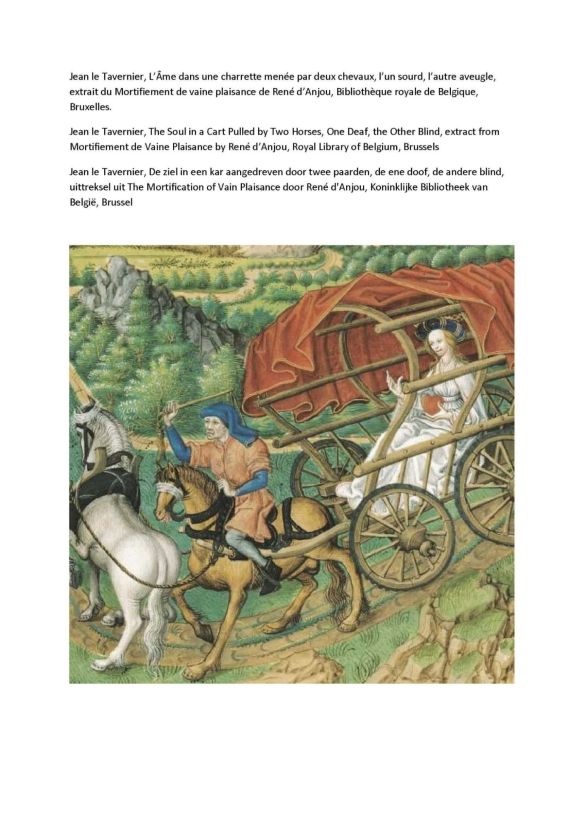
=================================================================
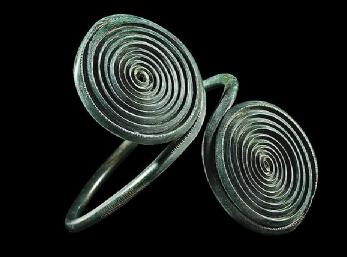
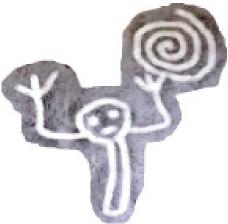
  –  Spiral

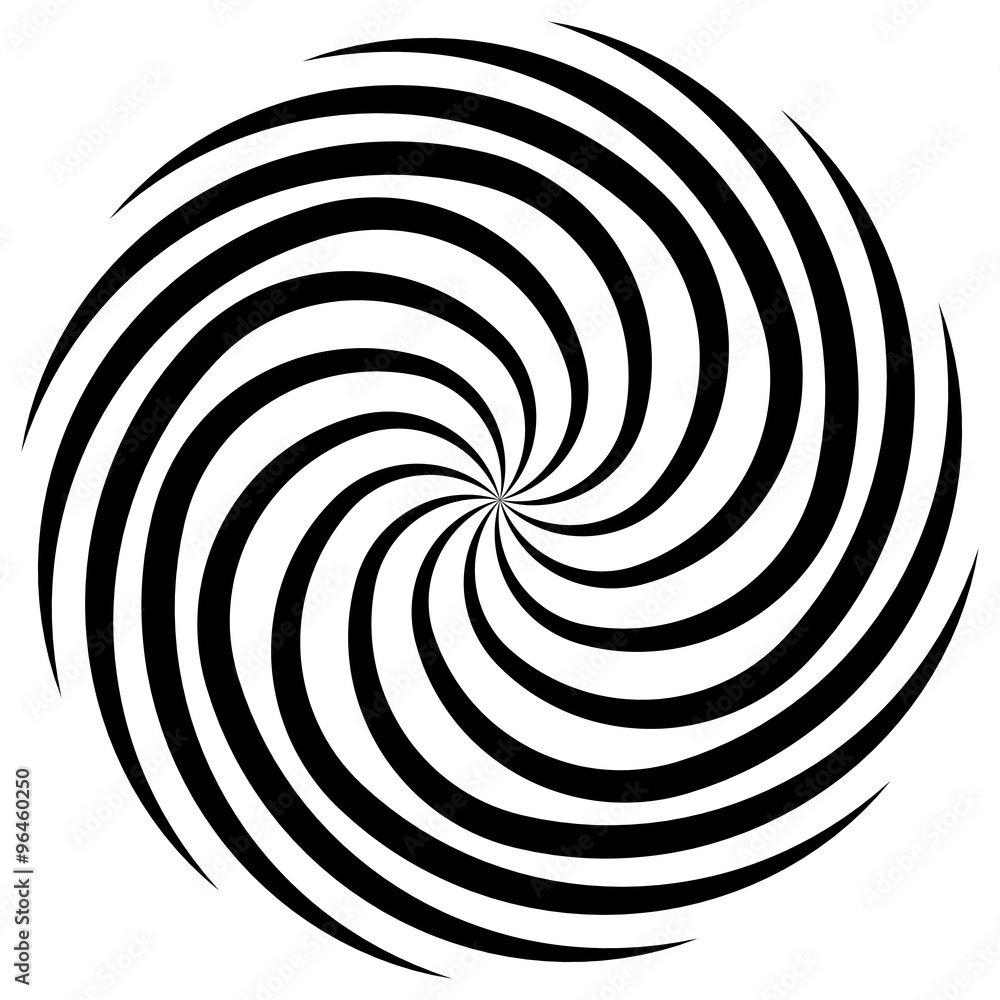
Spirals have been found in the form of pictographs or petroglyphs in most countries and cultures throughout the world. A simple design, it’s possibly the most common rock art motif in Colombia,appearing more times in the form of a petroglyph than a pictograph.
The white man Goes into his church house and talks about Jesus; The Indian Goes into his teepee and talks to Jesus. J.S. Slotkin

The shaman´s role in society
The role of the shaman in hunter-gatherer and horticultural societies has been written in detail by many authors (e.g.Vitebsky 1995). Generally speaking, the shaman is the tribal religious leader-healer who acquires supernatural powers, including power songs, from animals, birds, or reptiles during an initiation when he goes on a vision quest by entering a trance.
The shaman’s role encompasses tribal issues that are serious and need to be resolved. A community may be starving from lack of animals, crop failure due to flooding, freezing conditions, an extended drought or a tribal member may be very sick. The shaman is consulted to find the cause of illness and cure it. He may determine that the community has done something to cause an unbalanced cosmos, the soul has been stolen from a person or an evil object has entered the body of a person causing them to be sick.
Everyday illnesses and problems are resolved using chants, magical prayers, and incense. Using secret herbal potions, dances, power songs and rituals, the shaman summons his spirit helpers during a trance where he dies, is reborn, then battles and defeats hostile spirits causing the problem. He may suck a foreign object directly from the body of the ill patient to cleanse it of impurities or blow tobacco smoke on the patient.

During his spirit journey the shaman may fly up to the sky world or down to the underworld to plead with the spirit causing the problem, ask advice from deceased ancestors, physically battle evil spirits or win debates to gain concessions. The flight is usually upward to the heavens. When the shaman triumphs, h air or isolates him in a container or place where he can’t cause any more trouble.
After returning from this alternate reality, many researchers believe that shamans, or people under their direction, painted or engraved their visions, or symbols relating to them, on rocks One author wrote “It is probably extremely significant that the designs in many of the aspects of modern Indian artistry in the northwest Amazon are similar to or the same as those found in many of the rock engravings… Studies have indicated that these designs…are suggested by visions experienced during the
intoxication produced by caapi (Banisteriopsis Caapi),… There is no reason to doubt that the ancient artisans who made these rock-engravings had used the same drugs and had the same experiences as the natives of today” (Schultes 1988:80) (Figure 3b). These shamans enter the spirit world through a tunnel or spiral vortex portal and many believe that they actually pass through the stone surface at rock art site.
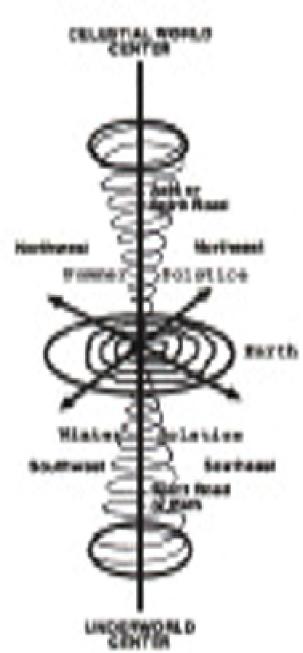
Trance stages
Modern studies of the brain have found that its main function is to make images. Under normal circumstances, external stimuli gathered by our sensory organs (eyes, ears, nose, skin, etc.) are received by the brain and processed.
The food we eat is the energy source used by the brain to perform its function. If external stimuli are blocked (e.g. isolation), or the food source is blocked or changed, in the case of toxins, or absent in the case of starvation, the brain reacts only to internal stimulation, and “abnormal” images are created.
These images, and those caused by physical pressure on the retina, are generally called entoptic phenomena and are composed of “phosphenes” (visual effects produced by mechanical pressure on the eye or electrical stimulation of the brain) and “form constants” (specific geometric shapes originating from other parts of the optic system away form the eye).
The brain may cut off reception of some external stimuli when its “normal” food source is not available and rely more heavily on internal stimulation. In the case of dreaming, for instance, the brain continues to do its job of making images using available stimuli to create a different “reality.”
The word Reality is difficult to define since each of us perceives the same material world in a similar, but slightly different way. One person may look at a tree and focus on the leaves, while another would concentrate on the bark. An artist may look at the general form of the tree or carefully note the root system or branches.
Altered Reality or Trance is a term used to describe a state where the brain has created images when its normal process has been interrupted by toxins, fatigue, starvation or a super-saturation of stimuli such as drumming, chanting, or dancing.

Spiral Symbolism

Clottes and Lewis-Williams (Clottes and Lewis-Williams 18) feel strongly that the three stages of a shamanic trance are universal and are an integral part of the human nervous system. One investigator has shown that the group of psychoactive drugs known as hallucinogens commonly used by shamans owe their activity to a very few types of chemical substances that act in a specific way upon a definite part of the central nervous system. Hallucinogens produce effects such as deep changes in the sphere of experience, in perception of reality, even of space and time and in consciousness of self.
Depersonalization may occur.
The trance state is short-lived, and lasts only until the causative substance is changed through digestion or excreted from the body. The effects of different hallucinogens vary according to the way they are prepared, the setting in which they are taken, the amount ingested, the number and kinds of additives, and the purposes for which they are used, as well as the ceremonial control exercised by the shaman. But all hallucinogens have similar trance STAGES as opposed to mood modifying psychoactive drugs such as analgesics and euphorics, sedatives and tranquilizers, and hypnotics (Schultes 13,14).
Therefore, apparently all trances induced by hallucinogenic plants have a transitional stage where shamans pass through a similar spiral or vortex tunnel. Waiká Indian shamans have stated that the most important part of their trance state is the transportation of their soul to other worlds (Schultes170). This implies that the spiral tunnel of the transition between stages 2 and 3 plays an important part of shamanic alternate reality visions and may have been recorded in rock art symbolizing the transitional stage, just as geometric shapes in rock art could be images from Stage 1, and realistic or floating animals in rock art could be created from Stage 3 images.
Anthropologists have proved that some Indians (e.g. Colombian Barasana shamans), reproduce geometric patterns in the sand that represent visions seen during their trances and paint their visions on the walls of their huts (Waimaja shamans). Interpretation of these design motifs is believed to be culture bound but, on the other hand, what is actually seen and recorded is controlled by specific biochemical effects of the active principles in the plant (Schultes 124).
Physiologically speaking, spirals seen during trances are caused by capillary circulation. The Tunnel Effect arises partly from the foveal cones and environing rods being smaller and more closely arranged than those of the periphery and in consequence the geometric figures perceived are likely to be smaller in the center than at the periphery (Marshall 300)

SEE;The colombian rock art spiral. A shamanic tunnel
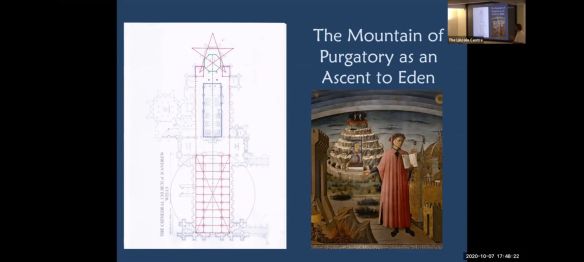
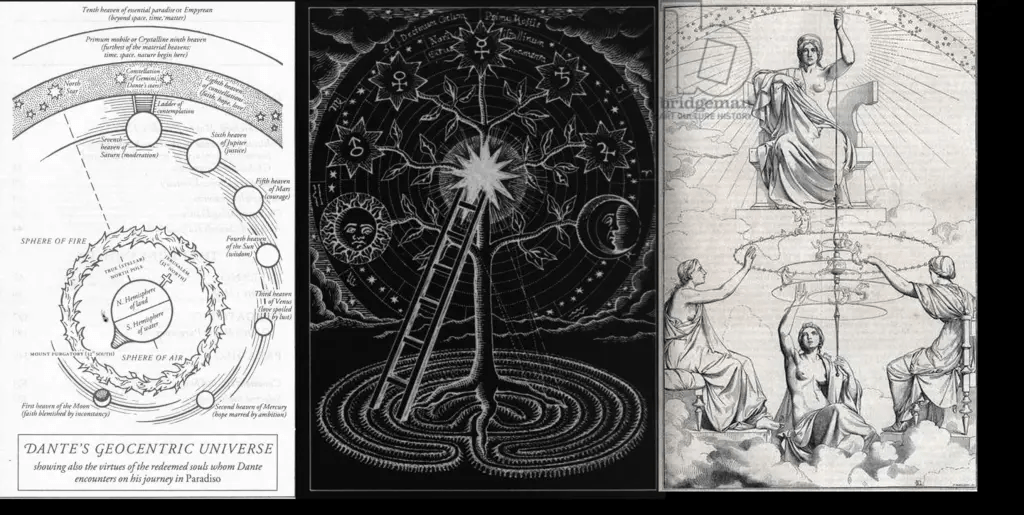
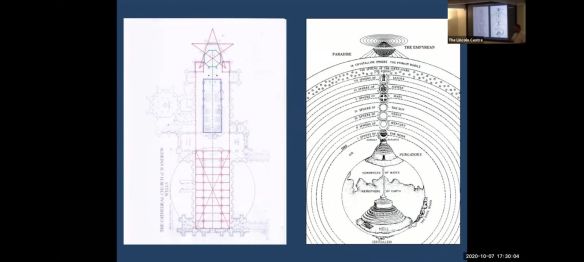
  • Tom Bree – Dante’s Journey In Gothic Cathedral Design

The eastward journey through a cathedral forms a symbolic ascent climbing towards the place of the rising sun. However for the soul to return to its heavenly origin a certain lightness and buoyancy is required as attested to by the image of St Michael in which he weighs human souls on judgement day.

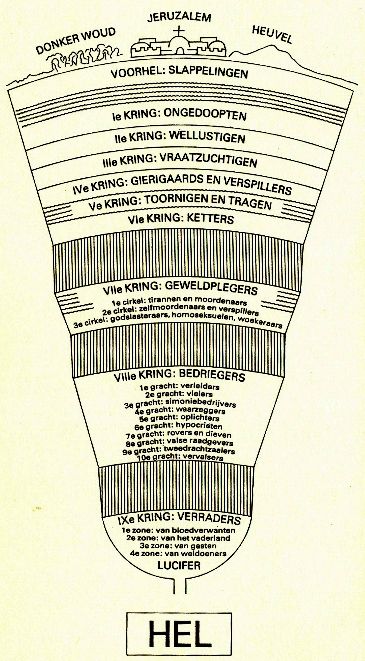
Within Dante’s poem, Commedia, such a preparation for ascent requires him to first descend to the Inferno so as to face the very lowest reaches of the soul’s potential. Only then can he slowly begin his rise back upwards, first to the surface of the earth followed then by an ascent to Eden which lies at the summit of the Mountain of Purgatory. Finally he ascends through the heavens to the Empyrean where he becomes reunited with the soul’s divine origin.

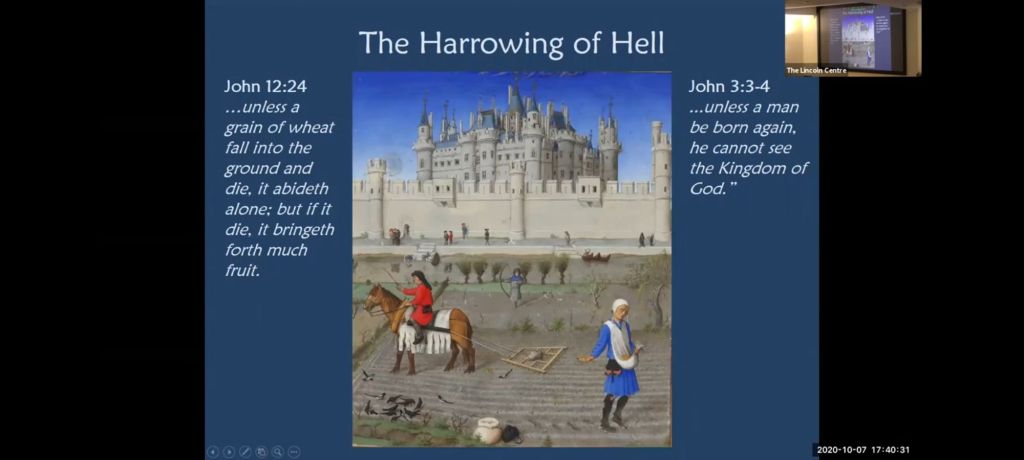
Dante’s journey is made in emulation of Christ because he descends to the inferno from Jerusalem on the afternoon of Good Friday and then re-ascends to the surface of the earth again on the morning of Easter Sunday. In this way he personally re-encounters the Harrowing of Hell which is Christ’s necessary descent into the underworld prior to His Resurrection on Easter Sunday and eventual ascent into heaven 40 days thereafter.

This illustrated talk will demonstrate how the three stages that characterise Dante’s journey are also present in the design of the ground plan of the first English Gothic cathedral. In this sense the beginning of the journey through Wells Cathedral is actually one of descent and only then can there subsequently be an eastward ascent towards the rising of the Bright Morning Star.

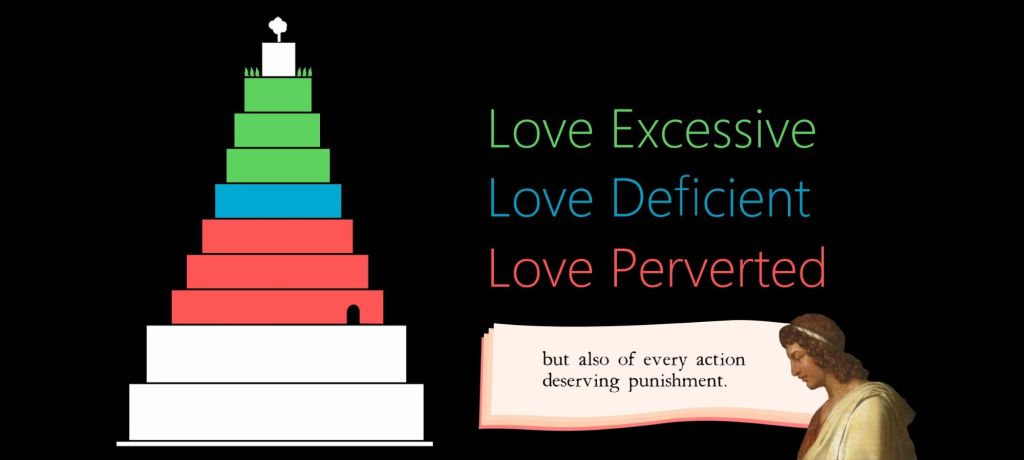
IN Purgatory, time and process are all-important. The souls are hastening to complete their purgation, and their cry is always, “Lose no time! Pray that my time be shortened! Hinder me not!”—so eager are they to speed their progress from circle to circle up the height. Into this realm, Virgil could not go without Dante; he is still his companion but no longer in the strict sense his guide. […] The journey takes us up the Mountain, past the souls of the excommunicate and the late-repentant who are anxiously waiting to begin their purification, up the three steps through St. Peter’s Gate, up by the seven cornices where the stain of the seven Capital Sins is cleansed away, till we come to the bird-haunted forest at the summit. And here Dante meets Beatrice.

LITERALLY, the [“enchanted”] Wood [i.e. the Garden] is the Earthly Paradise—the Garden of Innocence from which Adam and Eve were driven, through their own fault, at the Fall. It is the original starting-point of mankind. That is the crux of the matter; it is a starting-point. It is the point from which Man ought to have started his journey to God—from which every individual man would start now, but for the legacy of original sin, which has exiled him and obliges him to start as best he can from the wilderness, and sometimes from the Dark Wood which is sin’s deadly substitute for that other. It is also the point to which every man must return, in order to make his fresh start. It is reached by way of the Mountain of Ascent. Some —those who have kept in the right way—are able to take “the short way up the Hill—del bel monte it corto andar”; others who, like Dante, have gone so far out of the way that they cannot pass the Beasts, can only come to it by the long way that leads through Hell and up the Purgatorial path on the other side of the world, which is also the road taken by the blessed Dead. They come to the Earthly Paradise, but they do not stay there. Once there, once purged and restored to the lost innocence of their original nature, they start again, where Adam started, on the road that Adam should have taken. All the journey, all the toil, all the passing through the little and the greater death, is done that man may come back to his true beginning, to the original starting-place from which he may “leap to the stars”.

See The Cosmos in Stone: the Ascent of the Soul and Cosmology in Sufism
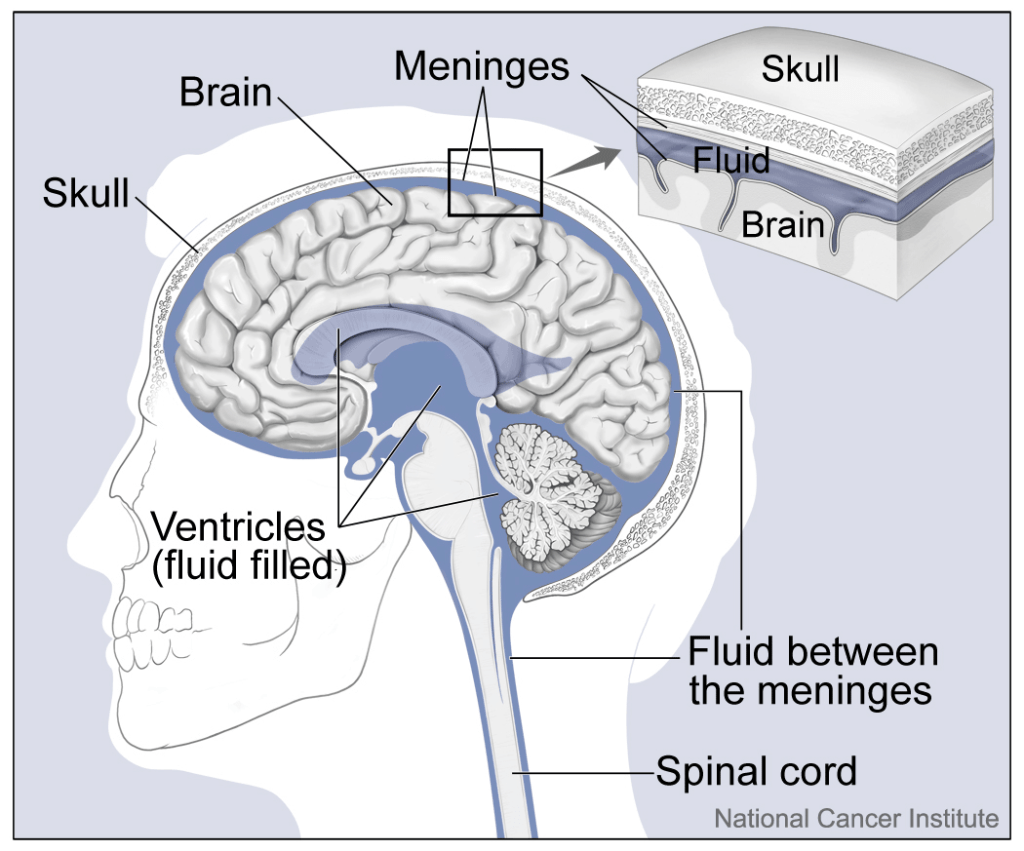
Brain , gut…and the Heart

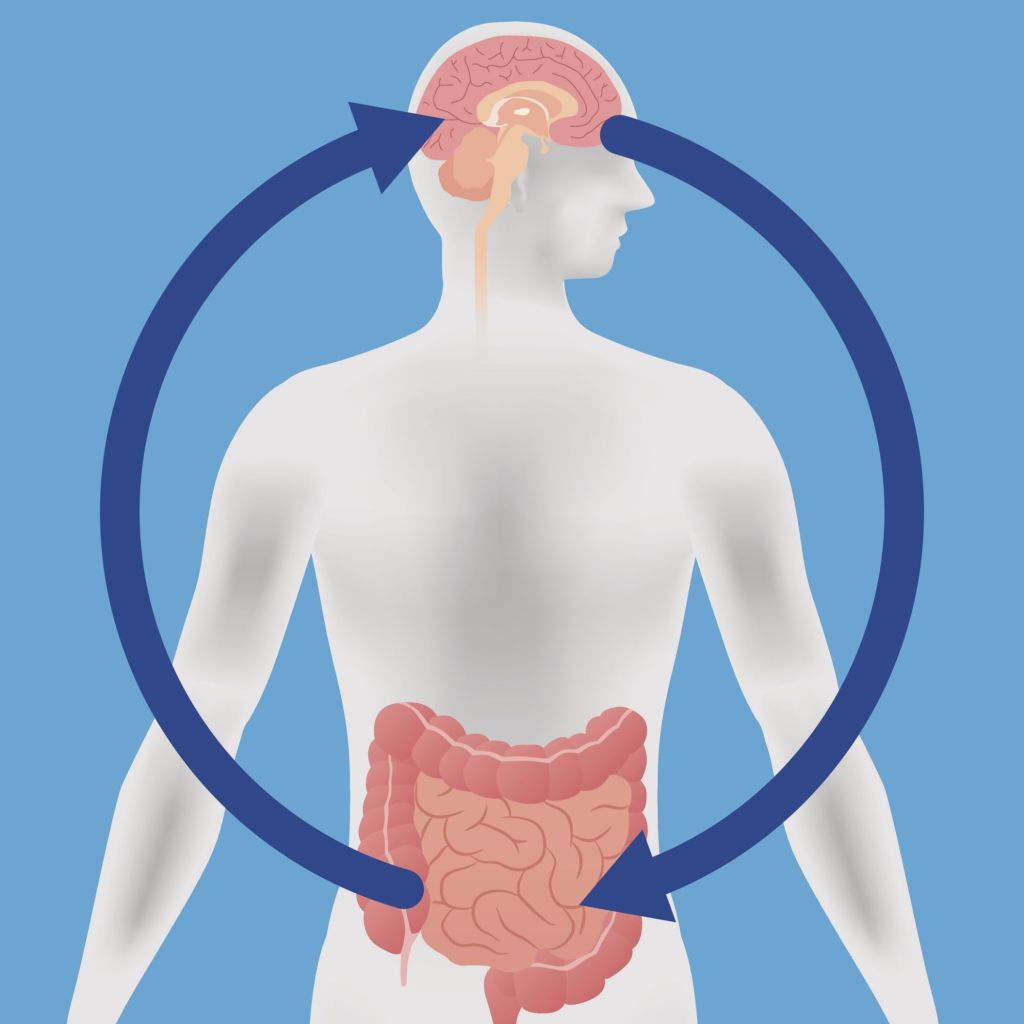
Although it can’t compose poetry or solve equations, this extensive network uses the same chemicals and cells as the brain to help us digest and to alert the brain when something is amiss. Gut and brain are in constant communication.

“There is immense crosstalk between these two large nerve centers,” says Braden Kuo, MD, MMSc ’04, co-executive director of the Center for Neurointestinal Health at Massachusetts General Hospital (MGH) and assistant professor of medicine at Harvard Medical School. “This crosstalk affects how we feel and perceive gastrointestinal (GI) symptoms and impacts our quality of life.”
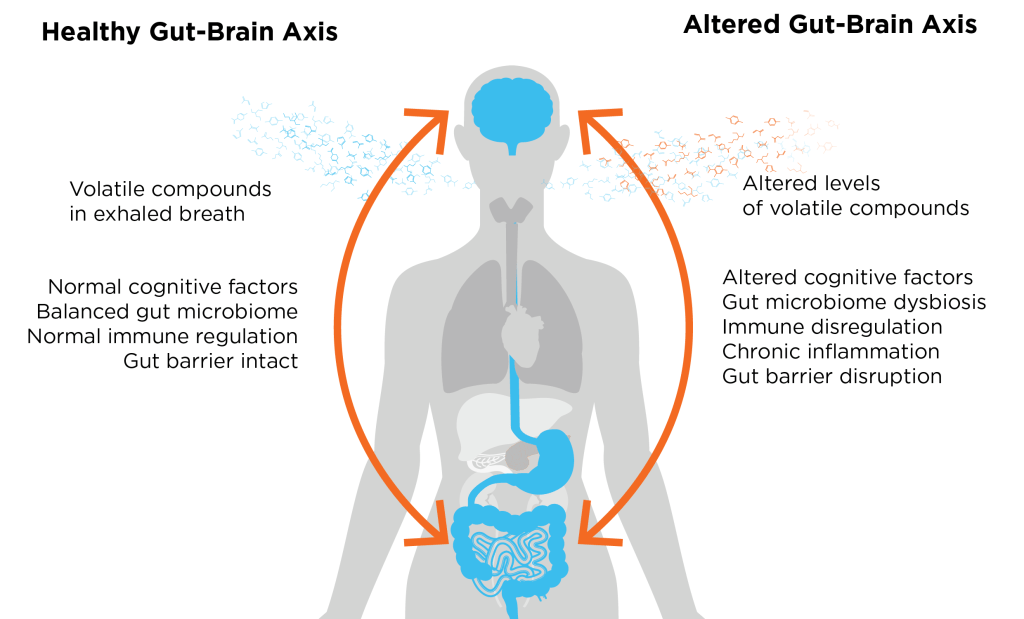

Normally, when we see something tasty, the brain signals the gut to prepare for incoming food. When we feel anxious or stressed, we might experience these as abdominal pain, diarrhea, nausea, or “butterflies.” Messages travel from gut to brain, too. This helps explain why, when we eat something that makes us sick, we instinctively avoid the food and even the place we found it.These everyday activities can go awry when gut nerves are damaged or malfunction. The Center for Neurointestinal Health treats patients with life-altering conditions such as chronic constipation, extreme bloating, and irritable bowel syndrome (IBS). Center physician-scientists also contribute to the exciting basic, clinical, and translational research happening across HMS to understand the gut-brain connection.

Messages travel from gut to brain, too. This helps explain why, when we eat something that makes us sick, we instinctively avoid the food and even the place we found it.
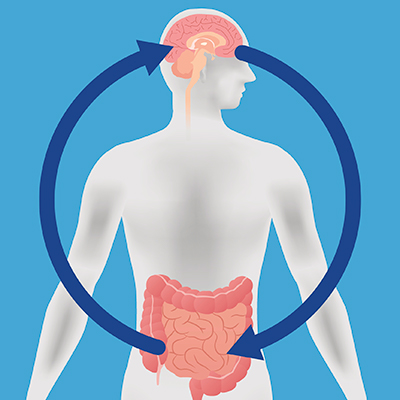
diagram of a human silhouette with arrows in a circle going from the brain to the gut and then an arrow going from the gut to the brain.

For example, Kuo and colleagues are measuring brain activity in patients with chronic nausea using functional MRI, which detects blood-flow changes. Their discovery that nausea and pain involve similar nerve centers has prompted new treatment plans for certain patients, potentially improving their quality of life.

Center researchers are also investigating how the trillions of bacteria in the gut (the gut microbiome) interact with the enteric nervous system (a component of the autonomic nervous system) and ultimately with the central nervous system, notes center co-leader Allan M. Goldstein, MD ’93, Marshall K. Bartlett Professor of Surgery at HMS and chief of pediatric surgery at MGH. “Increasing evidence is showing that bacteria in the gut, and the byproducts they produce, affect mood, cognition, and behavior.”

HMS Instructor in Medicine Kyle Staller, MD ’09, MPH ’15, is studying how abnormal body image and eating disorders in adolescents influence the likelihood of developing IBS and other GI problems in adulthood. These patients, he says, typically perceive normal digestion sensations, like the gut’s expansion with food and stool, as abnormal and may seek a doctor’s help for bloating.

Kuo has also co-led a pilot study that found the “relaxation response,” a state of deep rest induced by practices such as meditation and yoga, helped relieve symptoms in some patients with IBS and inflammatory bowel disease.

With the brain and gut so intertwined, it makes sense for clinicians treating gastrointestinal disorders to include cognitive approaches such as talk therapy, hypnosis, or relaxation response in their recommendations, and for clinicians treating cognitive symptoms to consider what’s happening in the patient’s gut.
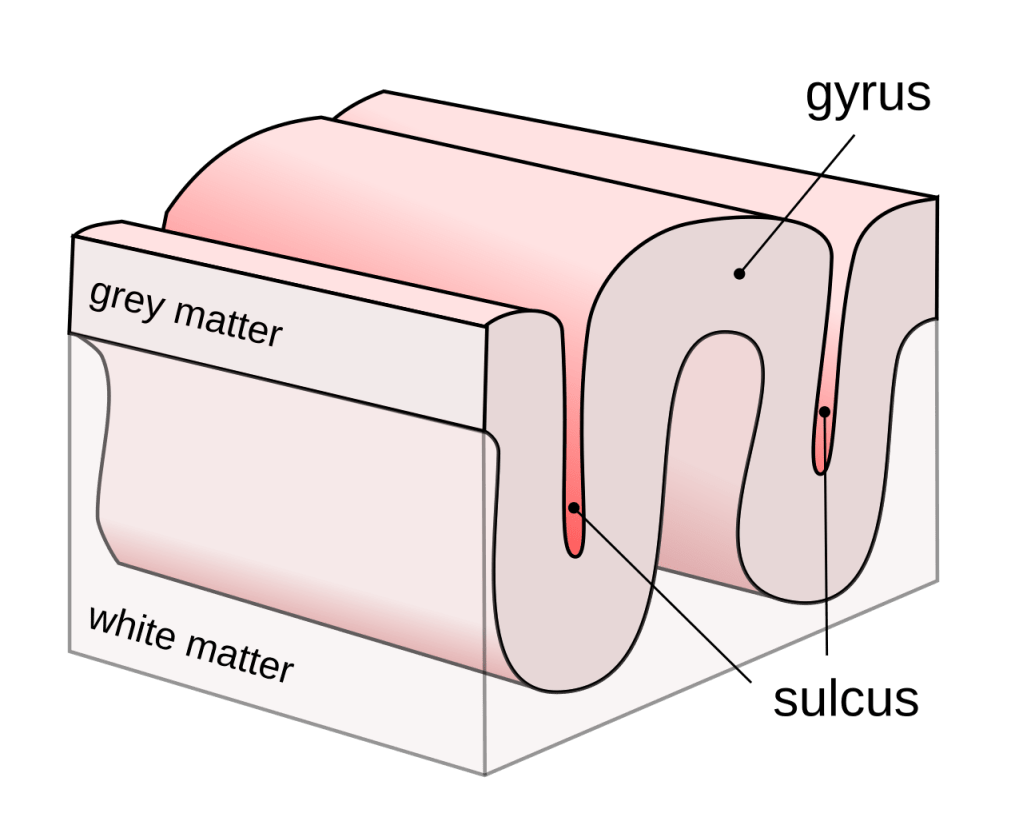
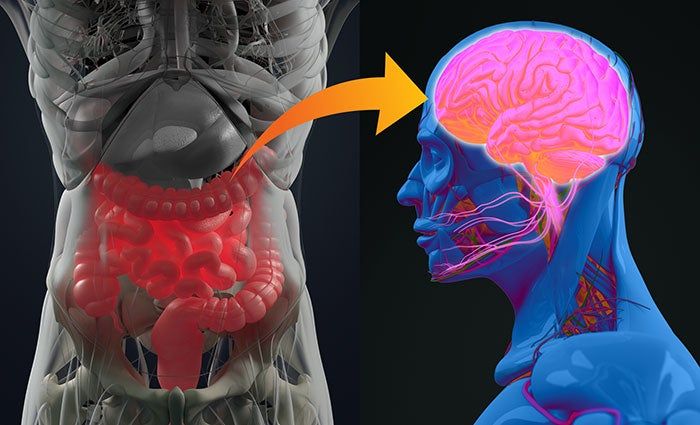
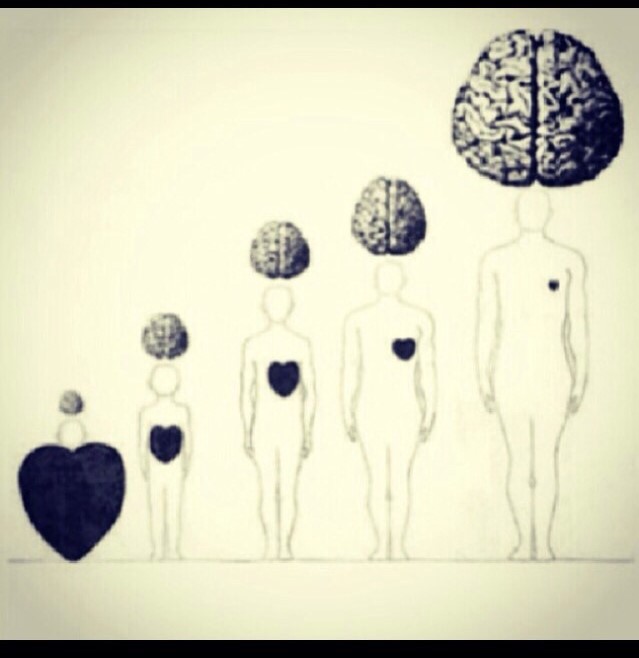
  • From the pont of view of traditional wisdom, the brain is seen as an adverary to fight against for spiritual grow to reach the Heart

The secularity of the society in which we live must share considerable blame in the erosion of spiritual powers of all traditions, since our society has become a parody of social interaction lacking even an aspect of civility. Believing in nothing, we have preempted the role of the higher spiritual forces by acknowledging no greater good than what we can feel and touch.” Vine Deloria Jr

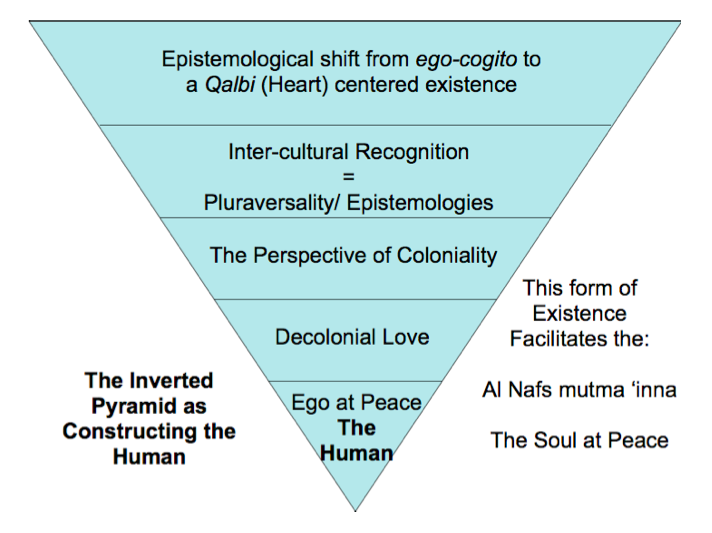
The perspective of modernity where Western Man as the egolatrous being is placed at the top of existence for all others to look towards for recognition.
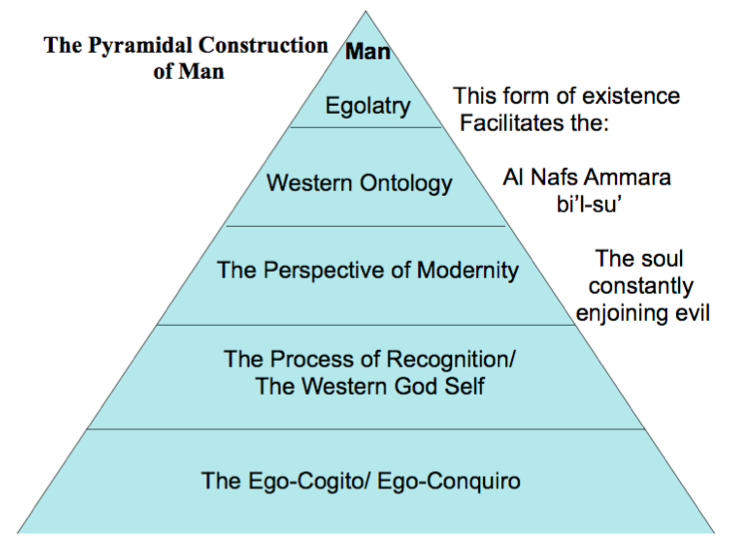
1-HB4iHuvHa-ABmwikmBp9Zg

The pyramidal construction of Man from an Islamic perspective shifts our understanding of the seriousness of placing the egolatrous Man above God in constructing reality, while simultaneously allowing us to imagine what would be necessary in creating a transmodern critique in constructing the Human.
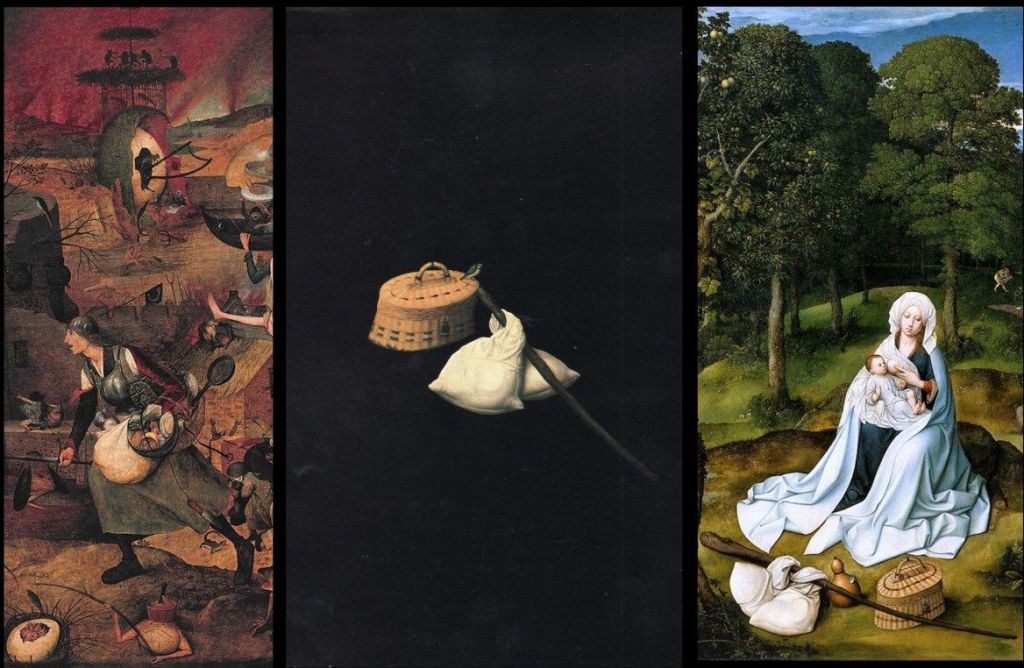
We are not the first generation to know that we are destroying the world, many communities and civilisations collapsed before us.  But  we could be the last that can do anything about it, not with the vanity of  earthly knowledge and so called democratic solidarity and wisdom here on earth  , but with asking humbly the help of Divine Wisdom so realising in us the image of the man who painfully transcends his material ego: The birth of his soul. It is a test. It’s time to decide!

To start our Migration to the Spiritual Land of Peace ,  we look  at an old text  known as papyrus 3024 from the Berlin Museum, known  as “Man arguing with his Soul” or the “Rebel in the Soul” we can perhaps study one of the earliest accounts of the confrontation with the ego.

 – Rebel in the Soul: An ancient Egyptian dialogue between a Man and his Soul

andThe Rebel in The Soul: The Wisdom of Ordinariness
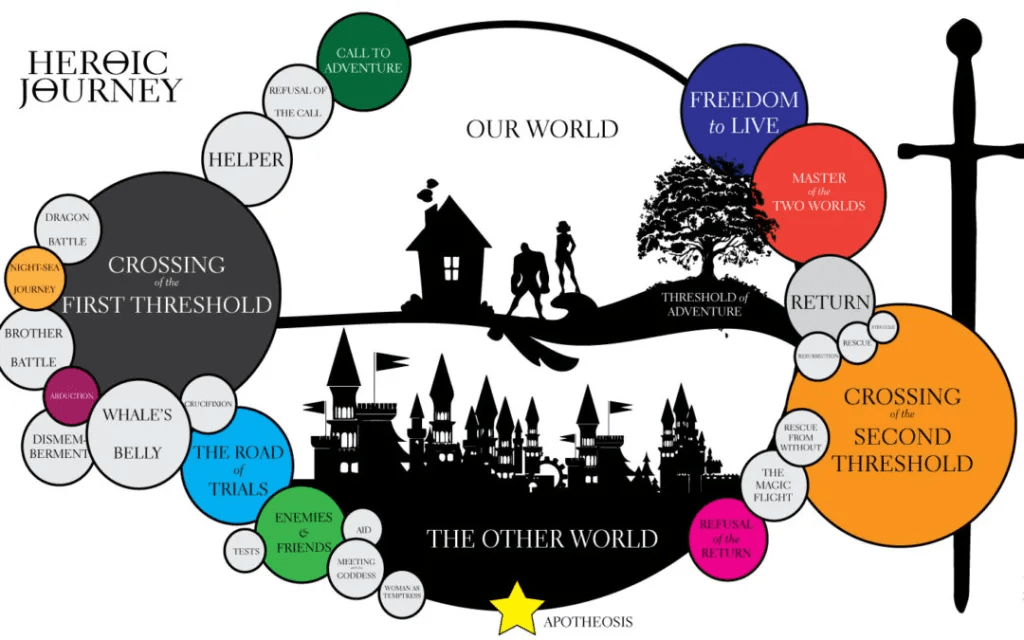
See alsoThe Dragon Slayer: on becoming an adult
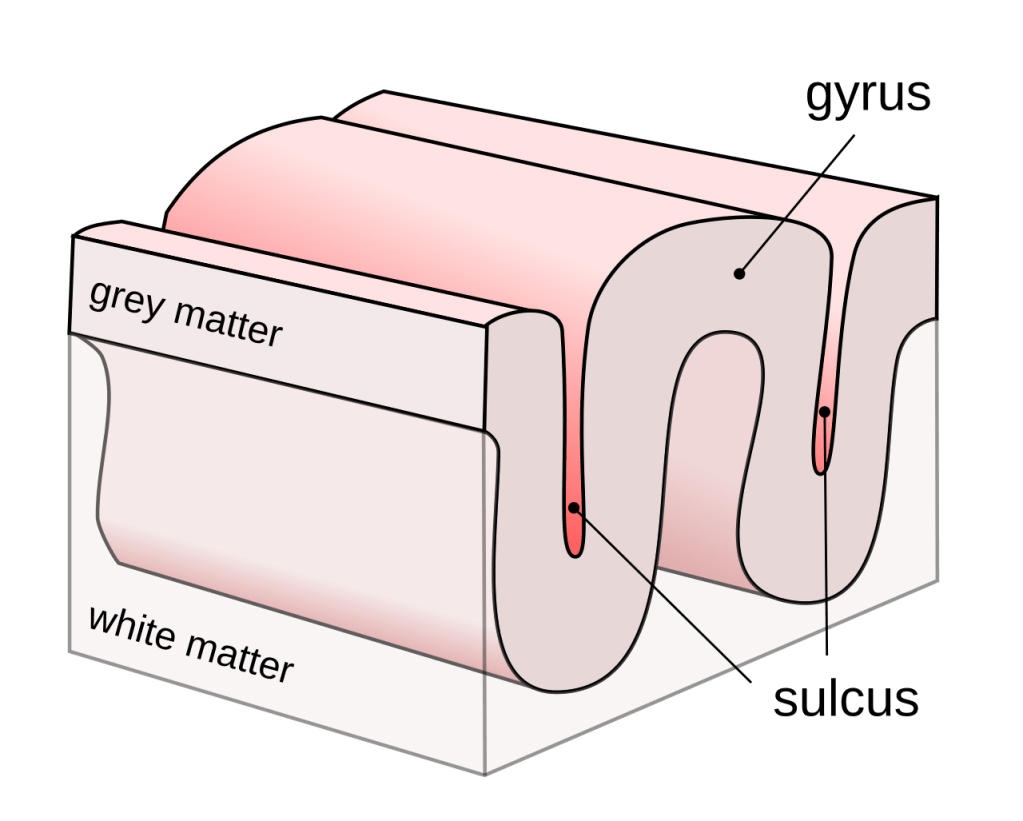
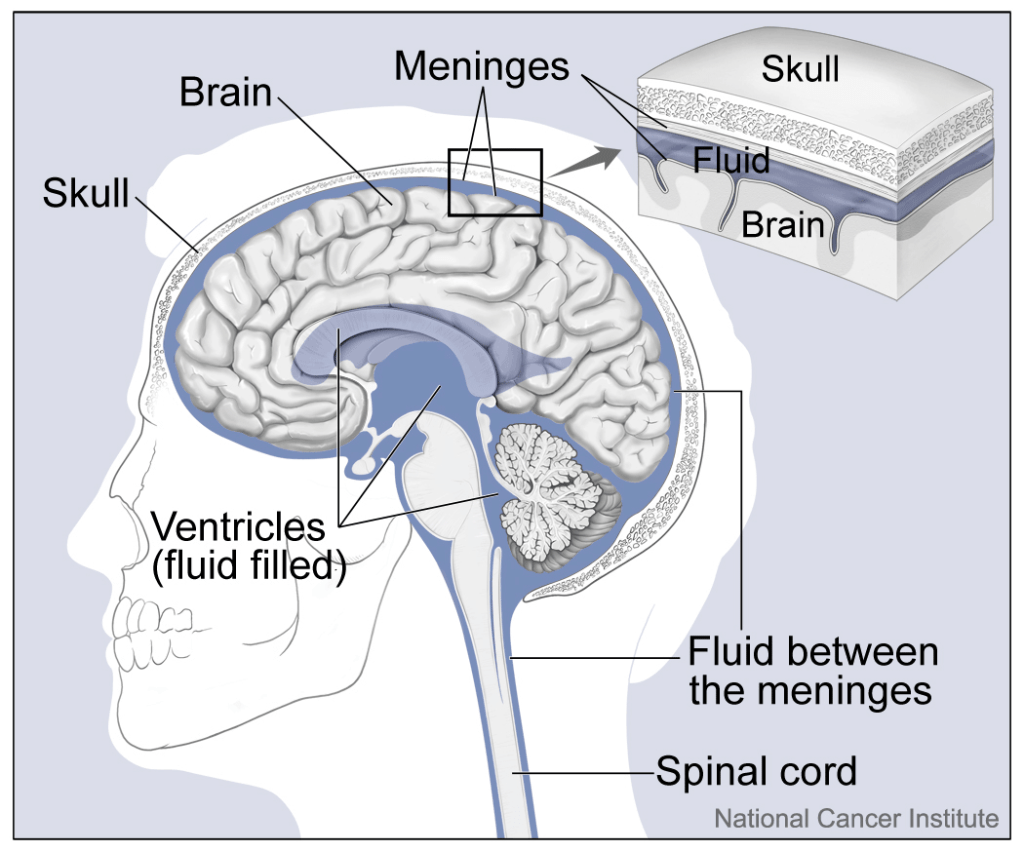
brain


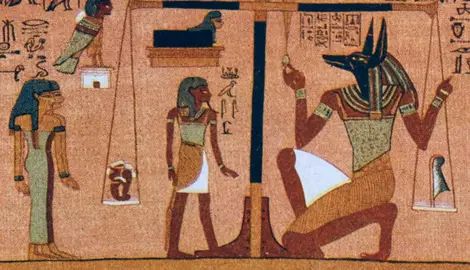
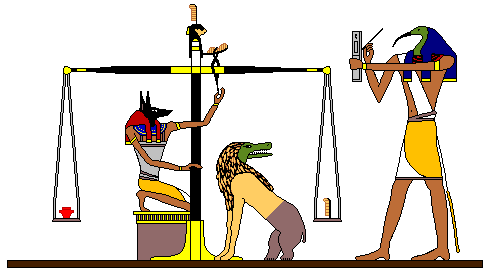
The Weighing of the Heart Ceremony & Its Role in the Egyptian Afterlife
The Weighing of the Heart ceremony was an essential step in passing from the world of the living to the realm of the dead in ancient Egypt.

One of the most famous scenes surviving from ancient Egyptian art is the Weighing of the Heart Ceremony, during which the heart of the deceased was weighed against the feather of Ma’at. If the heart was lighter than the feather, they passed into ancient Egypt’s paradisical afterlife. If it was heavier than the feather, they were devoured by the monster Ammit and resigned to oblivion. This belief was so important to Egyptian culture from at least the New Kingdom onwards that it was immortalized in Egypt’s most common literary text, the Book of the Dead.
manas (Sanskrit: मनस्, “mind”) from the root man, “to think” or “mind” — is the recording faculty; receives impressions gathered by the sense from the outside world. It is bound to the senses and yields vijnana (information) rather than jnana (wisdom) or vidya (understanding). That faculty which coordinates sensory impressions before they are presented to the consciousness. Relates to the mind; that which distinguishes man from the animals. One of the inner instruments that receive information from the external world with the help of the senses and present it to the higher faculty of buddhi (intellect). manas is one of the four parts of the antahkarana (“inner conscience” or “the manifest mind”) and the other three parts are buddhi (the intellect), chitta (the memory) and ahankara (the ego).


Characteristics of Manas
The perceiving faculty that receives the messages of the senses.
The instinctive mind, ruler of motor and sensory organs.
The seat of desire.
Is termed the undisciplined mind.
Is fraught with contradictions: doubt, faith, lack of faith, shame, desire, fear, steadfastness, lack of steadfastness.
This particular faculty is characterized by doubt and volition.
The mental faculty, that which distinguishes the human from mere animal.
The individualizing principle; that which enables the individual to know that he or she exists, feels and knows.
manas itself is mortal, goes to pieces at death — insofar as its lower parts are concerned.
Divided into two parts
buddhi manas (higher mind)
kama manas (lower mind), refers to lower mind; kama meaning “desire.”
For René Guénon, it is an “instrument of sensation” corresponds to an “entry”, and “an instrument of action” to an “exit” which “executes”, between the two, manas examines. Manas, as an internal sense, includes reason, memory and imagination; the sentimental dimension being it intermediate between this direction and the bodily element [3]. René Guénon remarks that manas, the “mind” or “internal sense”, to which the “self-consciousness” (ahaṃkāra) is inherent, is in the Hindu tradition a characteristic of human individuality that differentiates it from other beings in the living world. He notes that the root of this Sanskrit word is found in the Latin mens, the English mind, mental etc. This root man or men is often used in words used to designate the human being himself. Manas is situated between the five “faculties of sensation” and the five “instruments of action” [4]. “The five instruments of sensation are: the ears or hearing (shrotra), the skin or touch (tvak), the eyes or sight (chakshus), the tongue or taste (rasa), the nose or the smell (ghrana) […] The five instruments of action are: the organs of excretion (payu), the generating organs (upastha), the hands (pani), the feet (pada), and finally the voice or the organ of speech (vach) […] The manas must be regarded as the eleventh ”

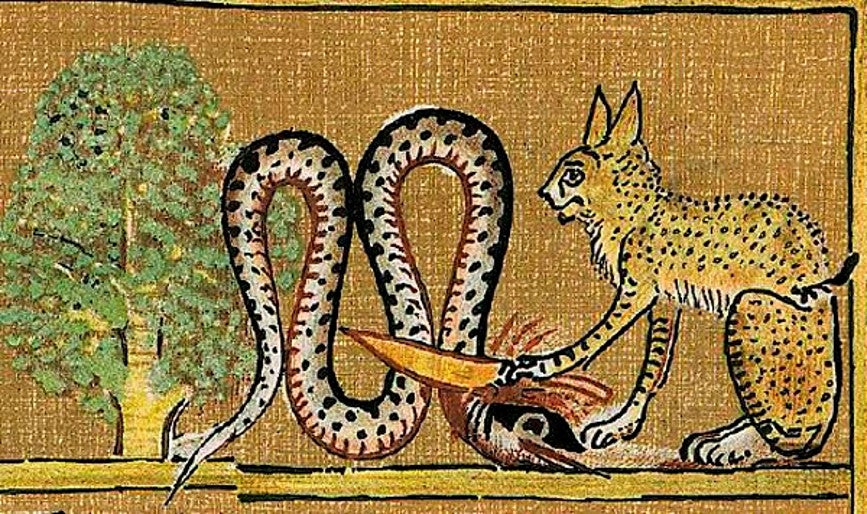
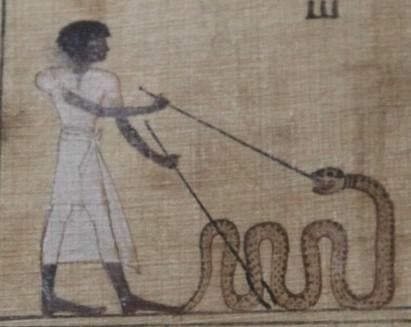
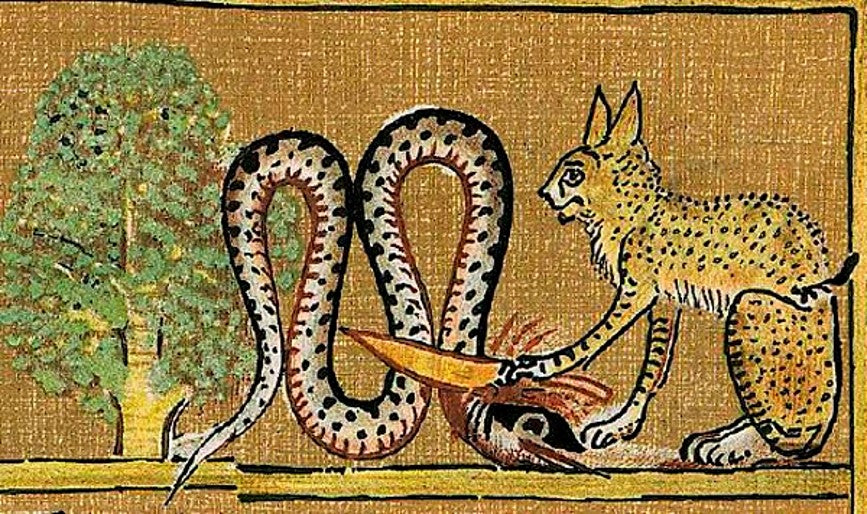
apophis god serpent

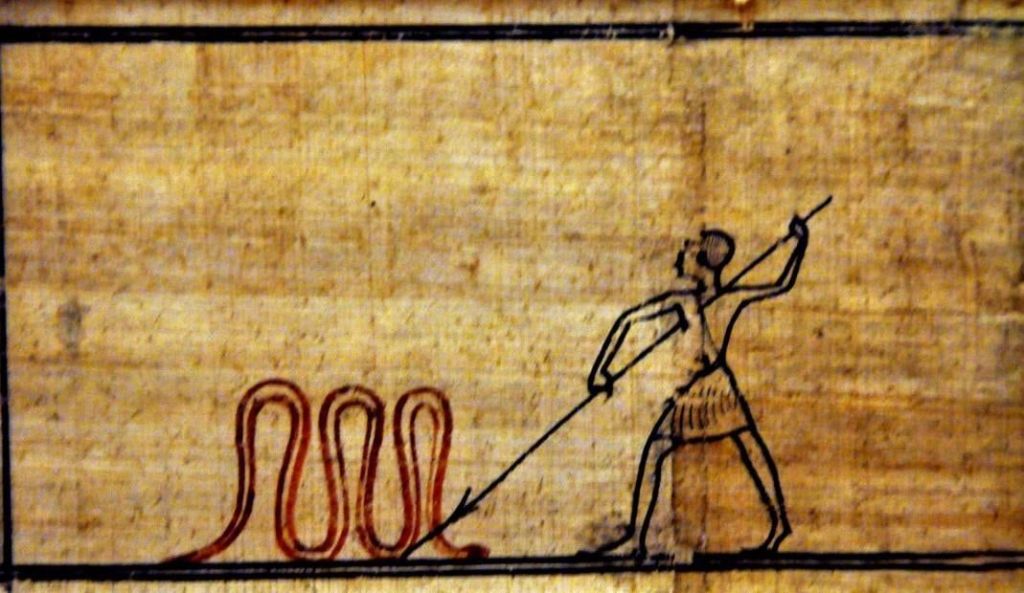
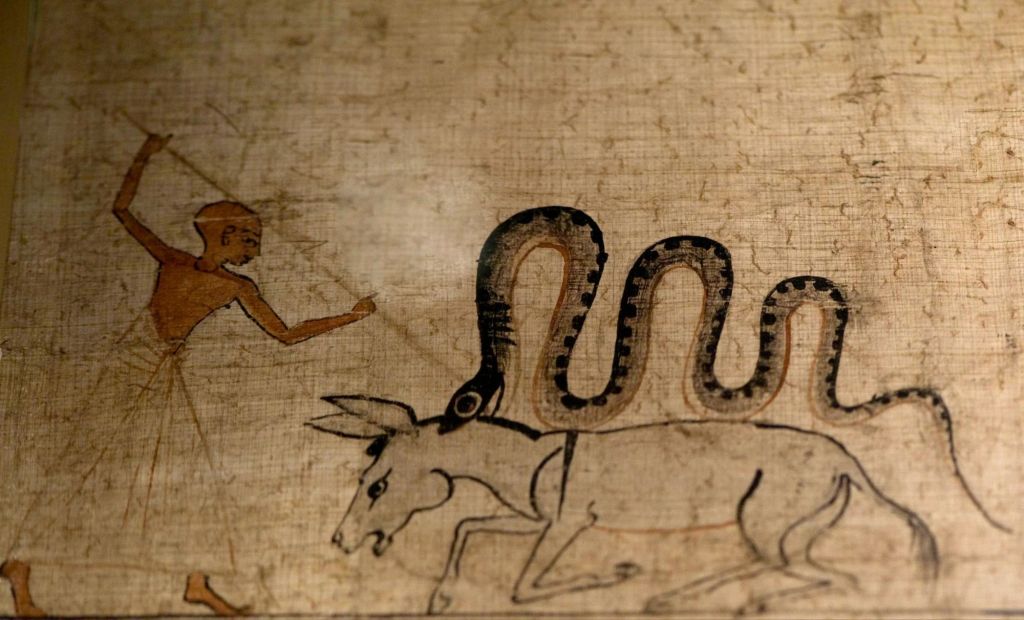
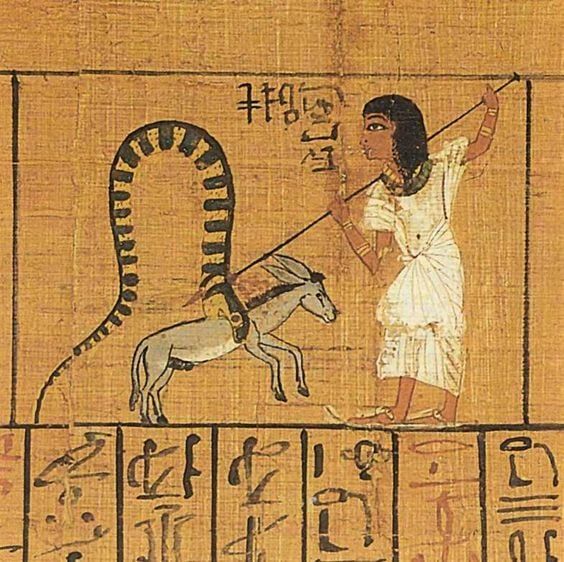
Apophis (also called Apep) is a giant serpent deity in ancient Egyptian mythology, representing chaos, darkness, and destruction, and is the primordial enemy of the sun god Ra. Every night, as Ra’s solar barge traverses the underworld, Apophis attempts to devour it and prevent the sun’s rise, threatening to plunge the world into darkness.

Apophis’s myth exemplifies ancient Egypt’s deep concern with the cosmic struggle between light and darkness, order and chaos, embodied in the nightly contests of sun and serpent.​

What myths explain Apophis’s origin and role

Apophis’s origin and role in Egyptian mythology are explained by several creation myths and ritual traditions, each emphasizing his identity as the primordial enemy of order and the sun god Ra.​

Unlike other deities, Apophis was not worshipped but was ritually repelled, emphasizing his role as an immortal and fearsome force of destruction whose existence continually challenges cosmic harmony. Egyptians enacted rituals to weaken him, symbolically defeating chaos and reaffirming the triumph of order with each sunrise.​

Symbolic and Ritual Significance

Comparison with Other Near Eastern Chaos Serpents

Other chaos serpents appear in ancient Near Eastern mythologies with similar symbolic functions but differing visual and narrative contexts:

  • Tiamat (Babylonian): Portrayed as a primordial sea dragon or multi-headed serpent, Tiamat is both chaos and creation. Following her defeat by Marduk, Tiamat’s corpse becomes the fabric of the cosmos—her skin forms the sky, her tail creates the Milky Way, and her body parts shape rivers and mountains. Tiamat’s imagery is more ambiguous, evolving from watery chaos to explicit dragon motifs especially in later texts and art.​
  • Lotan/Leviathan (Canaanite/Hebrew): Lotan and Leviathan are sea monsters or serpents with seven heads. They are shown battling storm gods (Hadad/Baal in Ugaritic myth; Yahweh in Hebrew texts), serving as metaphors for the containment of cosmic disorder. Leviathan’s depiction often carries connotations of monstrous power and is referenced allegorically as Babylon or other enemies. Lotan is sometimes associated with rivers and rain—his defeat symbolizes the restoration of balance.​
  • Vritra (Vedic): Although not as prominent visually as Apophis, Vritra is a serpent or dragon holding back the waters and sunlight, slain by Indra in a cosmic duel akin to Apophis’s nightly battles with Ra.

Table: Apophis vs. Other Chaos Serpents

NameCultureForm/DepictionSymbolismOpponent(s)Apophis (Apep)EgyptianColossal serpent, flint head, coiled, under attackChaos, darkness, destructionRa, Set, gods​​TiamatBabylonianSea dragon, multi-headed serpent, ambiguous formsPrimordial chaos, sea, creationMarduk​Lotan/LeviathanCanaanite/HebrewMonster serpent, many-headed, river associationsCosmic disorder, enemy powerHadad/Baal, Yahweh​VritraVedicSerpent, dragonWaters withheld, darknessIndra

Apophis’s iconography and mythic role are echoed in—but distinct from—other Near Eastern chaos serpents, sharing the theme of cosmic conflict where order must eternally battle the serpentine force of chaos.​

Apophis as a mythic figure can be metaphorically compared to the brain’s function in terms of representing the challenge between order and chaos within a complex system.

Comparison: Apophis and the Brain

  • Apophis as Chaos: Apophis embodies primordial chaos, darkness, and the threat of destruction to cosmic order, continuously challenging the stability and function of the universe (through the sun god Ra). This can be likened to intrusive, chaotic elements that challenge an orderly system.​
  • Conflict and Balance: Just as Apophis is the unstoppable force of chaos requiring constant vigilance and defense by ordered cosmic forces, the brain must constantly manage internal and external “chaotic” stimuli—such as stress, emotional turmoil, or neurological disruptions—by employing regulatory mechanisms (e.g., the prefrontal cortex mediating emotional responses).
  • Cycle of Threat and Recovery: Apophis’s nightly assault and defeat symbolize the recurring cycles of disruption and restoration of order—analogous to how the brain manages repeated challenges like stress, illness, or trauma, restoring equilibrium.

Mythic Symbolism in Cognitive Terms

  • Apophis can be viewed as a symbol of disruptive neural or psychological forces (e.g., fear, anxiety, or disorder) that threaten the “light” of consciousness and rationality.
  • The gods defending Ra are akin to neural networks or regulatory brain centers that maintain mental and physiological order.
  • The persistent nature of Apophis’s threat reflects how challenges to brain regulation are ongoing and require active coping and resilience.

This metaphor highlights the ancient conception that cosmic order requires constant defense against chaos, much like brain function necessitates continual regulation against disorder to sustain life and consciousness.

Comparison: Apophis and the Heart

  • Apophis as Threat to Life: Apophis represents chaos, darkness, and destruction seeking to devour the sun and plunge the cosmos into disorder and death. Similarly, the heart is the vital organ that sustains life through circulation; any disruption to its rhythm or function threatens life itself.​
  • Heart as Center of Vital Order: Symbolically and physiologically, the heart governs the flow of life-force (blood, energy) and symbolizes emotional and spiritual centers in many traditions. It embodies balance, vitality, and the sustaining power of order in an organism.
  • Chaos Versus Harmony: Apophis’s role as a constant menace can be likened to factors that threaten the heart’s harmony—stress, fear, anxiety, or physical illness that disrupt the heart’s steady beating. In mythic terms, Apophis represents those disruptive forces that must be kept at bay to maintain the living order and vitality sustained by the heart.
  • Duality in Symbolism: Just as Apophis’s chaotic nature opposes the sun’s ordered life-giving light, the heart symbolizes the sustenance of life and emotional equilibrium—undermined by chaotic emotional states or physical dangers. Apophis’s repeated defeats mirror the resilience of the heart to overcome threats and maintain steady rhythm.
  • Emotional and Spiritual Dimensions: In esoteric symbolism and many religious traditions, the heart is the seat of virtues, love, and divine spirit, while Apophis personifies the dark, destructive unconscious forces that challenge these qualities.
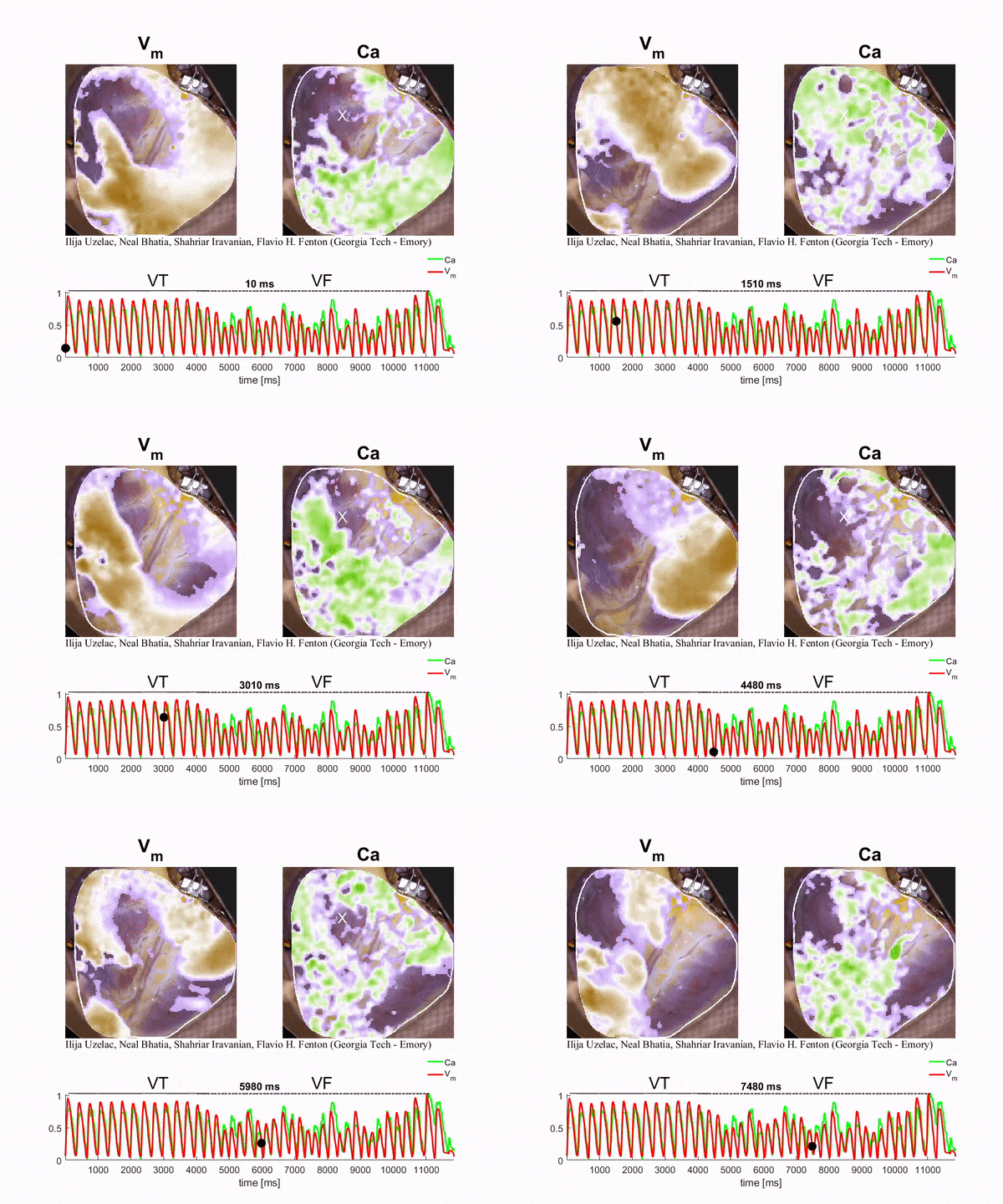
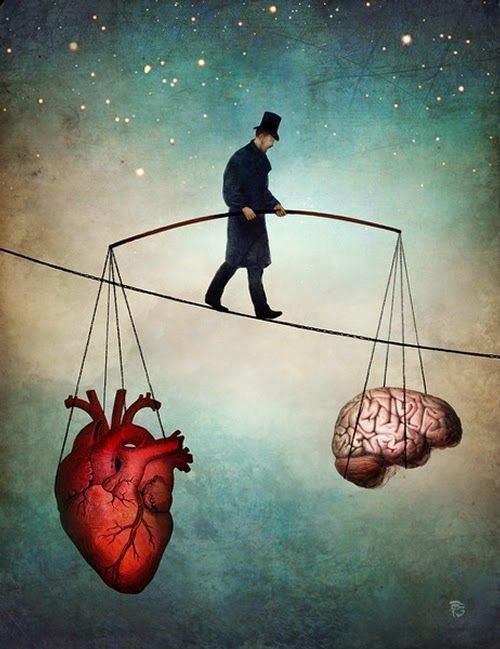
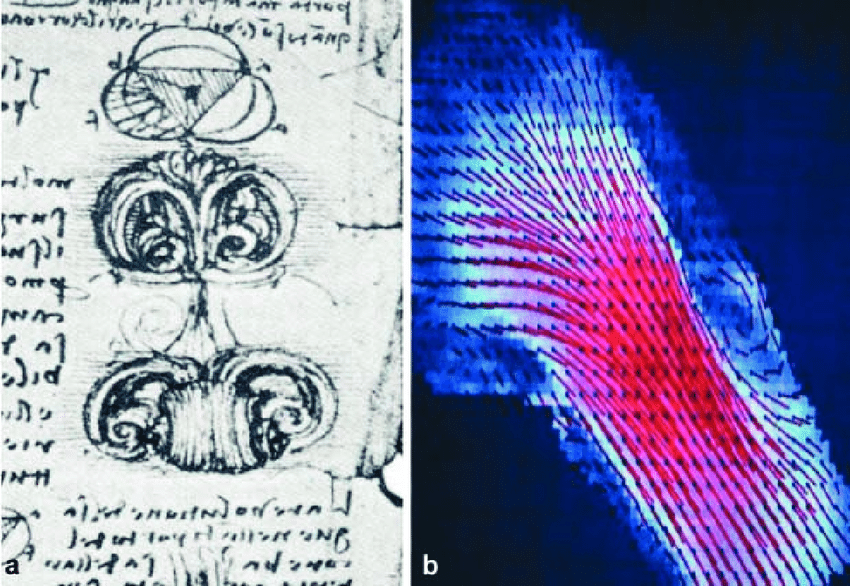
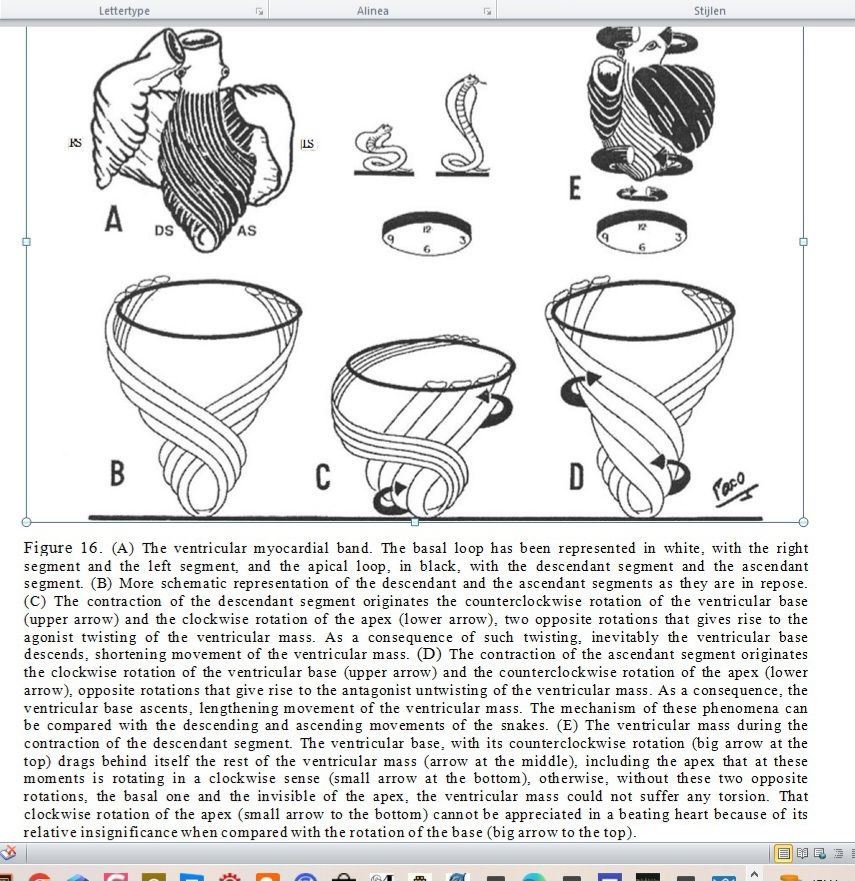
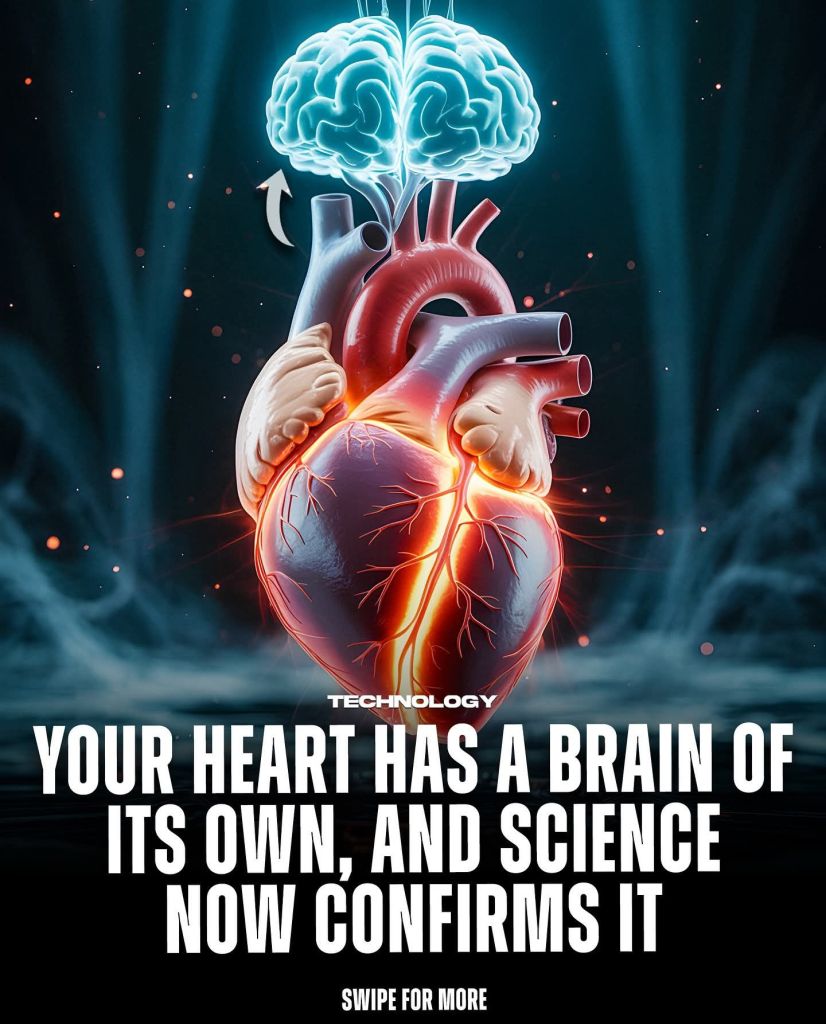
The heart has long been thought to be controlled solely by the autonomic nervous system, which transmits signals from the brain. The heart’s neural network, which is embedded in the superficial layers of the heart wall, has been considered a simple structure that relays the signals from the brain. However, recent research suggests that it has a more advanced function than that.

The heart has long been thought to be controlled solely by the autonomic nervous system, which transmits signals from the brain. The heart’s neural network, which is embedded in the superficial layers of the heart wall, has been considered a simple structure that relays the signals from the brain. However, recent research suggests that it has a more advanced function than that.heart connect to virtues neuron
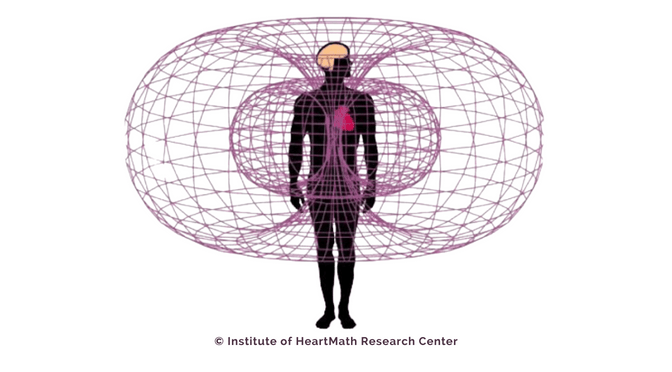
There is emerging evidence that the heart is intimately connected to the formation and experience of virtues at a neural level, influencing moral emotions, decision-making, and cognition via heart-brain interactions and specialized neural networks.


Heart-Brain Neural Networks
The heart possesses an intrinsic cardiac nervous system (ICNS) composed of about 40,000 sensory neurites, which communicate with the brain through afferent signals carried mainly by the vagus nerve. This feedback influences brain processes that shape emotional responses, mood regulation, and even higher cognitive functions such as decision-making and short-term/long-term memory, suggesting that the heart’s neural activity participates in virtue-related cognition.

Virtue and Moral Emotion Processing
Neuroscience has demonstrated that moral emotions and virtues activate specific brain areas, notably the default mode network (DMN), orbitofrontal cortex, and related regions associated with moral cognition and prosocial behaviors. Heart-generated signals can modulate these regions, for instance by heartbeat-evoked responses (HERs), strengthening the link between physiological states and neural processing of moral virtues.

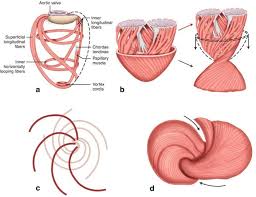
The heart’s neural feedback may play a subtle role in decision-making, intuition, and emotional adaptation—qualities central to virtue ethics. Cardiac neural input can affect the robustness and connectivity of brain networks linked to compassion, moral indignation, and other virtuous responses, suggesting a bidirectional system where the heart shapes cognition and moral self.


Clinical and Philosophical Perspectives
This heart-brain connection opens new pathways for understanding not only cardiovascular disease treatment but also how emotional intelligence and moral development can be holistically cultivated. Virtue ethics grounded in both neuroscience and classic philosophy now considers heart-neuron networks as integral for moral flourishing and character.

In summary, the heart’s neural system, through communication with the brain, is increasingly recognized as foundational to the realization and neural embodiment of human virtues, offering a bridge between physiology, emotion, and ethics.

– Prunning the brain with the wisdom of the Heart

Posted on 

During infancy, billions of brain cells form connections with one another, blooming like a tree. Like a gardener trimming the excess branches, synaptic pruning clears away unneeded connections. Too much or too little pruning can contribute to a range of psychiatric disorders.

An inside look reveals the adult brain prunes its own branches

 / Karen Ring

Did you know that when you’re born, your brain contains around 100 billion nerve cells? This is impressive considering that these nerve cells, also called neurons, are already connected to each other through an intricate, complex neural network that is essential for brain function.

Here’s how the brain does it. During development, neural stem cells produce neurons that navigate their way through the brain. Once at their destination, neurons set up shop and send out long extensions called axons and branched extensions called dendrites that allow them to form what are called synaptic connections through which they can communicate through electrical and chemical signals.

Studies of early brain development revealed that neurons in the developing brain go on overdrive and make more synaptic connections than they need. Between birth and early adulthood, the brain carefully prunes away weak or unnecessary connections, and by your mid-twenties, your brain has eliminated almost half of the synaptic connections you started out with as a baby.

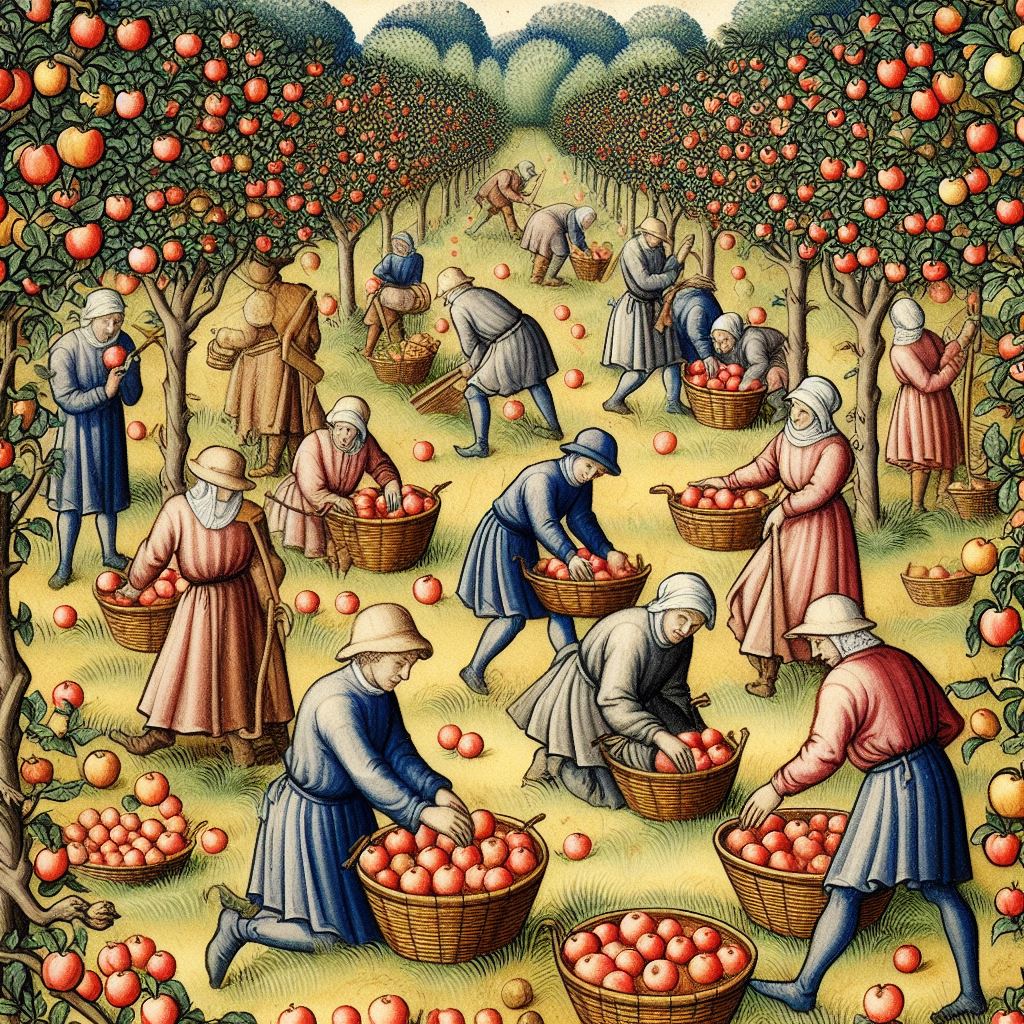
This synaptic pruning process allows the brain to fine-tune its neural network and strengthen the connections between neurons that are important for brain function. It’s similar to how a gardener prunes away excess branches on fro0uit trees so that the resulting branches can produce healthier and better tasting fruit.

The brain can make new neurons

It was thought that by adulthood, this process of pruning excess connections between neurons was over. However, a new study from the Salk Institute offers visual proof that synaptic pruning occurs during adulthood similarly to how it does during development. The work was published today in the journal Nature Neuroscience, and it was funded in part by CIRM.

The study was led by senior author and Salk Professor Rusty Gage. Gage is well known for his earlier work on adult neurogenesis. In the late 90’s, he discovered that the adult brain can in fact make new neurons, a notion that overturned the central dogma that the brain doesn’t contain stem cells and that we’re born with all the neurons we will ever have.

There are two main areas of the adult brain that harbor neural stem cells that can generate new neurons. One area is called the dentate gyrus, which is located in the memory forming area of the brain called the hippocampus. Gage and his team were curious to know whether the new neurons generated from stem cells in the dentate gyrus also experienced the same synaptic overgrowth and pruning that the neurons in the developing brain did.

Pruning the Adult Brain

They developed a special microscope technique that allowed them to visually image the development of new neurons from stem cells in the dentate gyrus of the mouse brain. Every day, they would image the growing neurons and monitor how many dendritic branches they sent out.
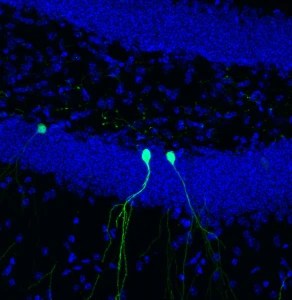
Newly generated neurons (green) send out branched dendritic extensions to make connections with other neurons. (Image credit: Salk Institute) After observing the neurons for a few weeks, they were amazed to discover that these new neurons behaved similarly to neurons in the developing brain. They sent out dozens of dendritic branches and formed synaptic connections with other neurons, some of which were eventually pruned away over time.

This phenomenon was observed more readily when they made the mice exercise, which stimulated the stem cells in the dentate gyrus to divide and produce more neurons. These exercise-induced neurons robustly sent out dendritic branches only to have them pruned back later.

First author on the paper, Tiago Gonçalves commented on their observations:

“What was really surprising was that the cells that initially grew faster and became bigger were pruned back so that, in the end, they resembled all the other cells.”

Rusty Gage was also surprised by their findings but explained that developing neurons, no matter if they are in the developing or adult brain, have evolved this process in order to establish the best connections.

“We were surprised by the extent of the pruning we saw. The results suggest that there is significant biological pressure to maintain or retain the dendrite tree of these neurons.”
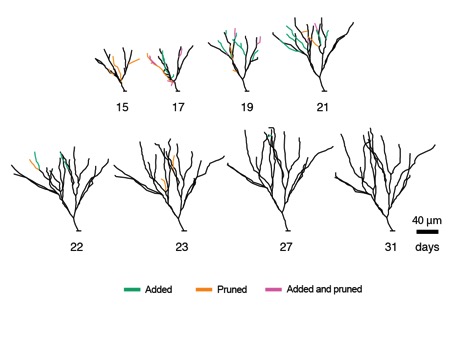
A diagram showing how the adult brain prunes back the dendritic branches of newly developing neurons over time. (Image credit: Salk Institute).

Potential new insights into brain disorders

This study is important because it increases our understanding of how neurons develop in the adult brain. Such knowledge can help scientists gain a better understanding of what goes wrong in brain disorders such as autism, schizophrenia, and epilepsy, where defects in how neurons form synaptic connections or how these connections are pruned are to blame.

Gonçalves also mentioned that this study raises another important question related to the regenerative medicine applications of stem cells for neurological disease.

“This also has big repercussions for regenerative medicine. Could we replace cells in this area of the brain with new stem cells and would they develop in the same way? We don’t know yet.”


Related Links: Adult brain prunes branched connections of new neurons

– Growth and pruning: the brain of a child

Groeien en snoeien: de hersenen van een kind

Translated by Rumia Bose

This post is a revised version of “Growth and pruning” published on 9-11-2017

A newborn baby is well-equipped to eat and sleep, but not much more than this. It cannot speak, can hardly see at all, and has but minimal voluntary controlled movements of its arms and legs. All this changes quite quickly. At one year of age, a child can see a lot, can direct the use of its arms and legs remarkably well, and makes its first attempts to walk and talk.
Previously it was believed that, at birth, the brain was ready for all these tasks (nature), and that the child only had to learn through experience (nurture). The brains of a newborn are however prepared for the tasks to come, but still need to grow. By adulthood they are two or three times as big. That growth is controlled by the genes and by experience, the interaction with the environment. The genes are most important in the first year of life; from here onwards the environment becomes increasingly important1.

Critical periods

A newborn baby can very quickly identify its mother; soon after that it also recognises her facial expressions. There are critical periods for everything a child learns. In this period he has to acquire the basic skills for that function. After the first year the critical period for basic visual functions – such as depth vision, colours and movement – are laid down in the brain. But if you were to leave a baby in the dark for its first year, then it would never learn to see well.

Human Brain Development
Fig. 1 Critical periods for development of basic skills.

The more complicated the cognitive function, the longer it takes before it is fully developed, and the longer the critical period lasts. The critical period takes longest for executive functions such as goal-directed planning and impulse suppression. This lasts till beyond the first twenty years. These functions are essential for rational thinking and the modulation of urges and risky behaviour, and all these are therefore only fully established when one is past the age of twenty.

Growth….

What happens in a child’s brain during critical periods? At first the brain cells or neurones have few dendrites in the part of the cerebral cortex that accounts for that particular function. When the critical period starts, the dendritic trees grow and the number of interneuron connections increase. This is the time of growth. Later the number of interneuron connections reduces drastically. That is the period of pruning2.

Fig. 2 Increase and pruning of neuronal connections in an area of the cortex.
Source: Gilmore JH, Knickmeyer RC, Gao W (2018): Imaging structural and functional brain development in early childhood. Nature Reviews Neuroscience 19:123-137.

During the period of growth of interneurone connections, the child learns all sorts of new skills, such as facial recognition. Learning and the growth of the cortex go hand in hand. Learning to see is facilitated by this growth, and the growth occurs as the child learns. A requirement for the latter is that the child is presented with new visual information. For instance, seeing the mother’s face often, but also other colourful moving objects.
The basic structure of the brain with the basic functions has been formed around the second year of life. This is especially the case for areas involved in perception or locomotion, such as the visual and motor cortex. The frontal cortex-which is of importance for rational thinking-takes a lot longer. The critical periods therefore correspond to the age at which growth and pruning takes place in the relevant areas of the cortex.

… and pruning

After a while the connections that are of little or no use are cleared away. The most important effect of this clearing is that the pruned cortex works far more efficiently. In order to recognise mother’s face quickly, all impressions that are somewhat similar have to be examined. Clearing away unimportant impressions results in a shorter search.
It is thought that the advantage of this process of growth and pruning is that it allows for a more flexible adjustment to the specific environment than a fully-programmed brain at birth, as seen in simpler forms of animal life, such as insects. The growth allows for fast, extensive and directed learning, while the subsequent pruning makes way for the most efficient application of what has been learnt.

Learning at a later age

All of this seems to suggest that the child can only acquire various skills such as seeing or language in its first years of life. This is naturally not true. Learning a language after five years of age is possible, of course, but it needs more effort, and one can almost never speak the language with the authentic native accents. Top musicians almost always start learning to play their instrument(s) of choice at a very young age3. The critical periods are especially important in learning basic skills, and not for learning subtle variations on a theme.
The critical period can even be “reopened” at a later age. Someone who has lost the ability to speak as a result of cerebral haemorrhage can learn to speak again if the damage is not too extensive. The lost skills of speech are then laid down in other areas of the cortex, mostly those adjacent to the damaged area4. This takes more effort than learning in childhood, but is essentially based on the same process of growth and pruning of neurones and interneuron connections.

  • Bonsai Trees in Your Head: How the Pavlovian System Sculpts Goal-Directed Choices by Pruning Decision Trees

abstract

When planning a series of actions, it is usually infeasible to consider all potential future sequences; instead, one must prune the decision tree. Provably optimal pruning is, however, still computationally ruinous and the specific approximations humans employ remain unknown. We designed a new sequential reinforcement-based task and showed that human subjects adopted a simple pruning strategy: during mental evaluation of a sequence of choices, they curtailed any further evaluation of a sequence as soon as they encountered a large loss. This pruning strategy was Pavlovian: it was reflexively evoked by large losses and persisted even when overwhelmingly counterproductive. It was also evident above and beyond loss aversion. We found that the tendency towards Pavlovian pruning was selectively predicted by the degree to which subjects exhibited sub-clinical mood disturbance, in accordance with theories that ascribe Pavlovian behavioural inhibition, via serotonin, a role in mood disorders. We conclude that Pavlovian behavioural inhibition shapes highly flexible, goal-directed choices in a manner that may be important for theories of decision-making in mood disorders.
  • The Heart: Threshold Between Two Worlds

Excerpted from The Knowing Heart, A Sufi Path of Transformation

Anyone who has probed the inner life to a certain extent, who has sat in silence long enough to experience the stillness of the mind behind its apparent noise, is faced with a mystery. Apart from all the outer attractions of life in the world, there exists at the heart of human consciousness something else, something quite satisfying and beautiful in itself, a beauty without features. The mystery is not so much that these two dimensions exist–an outer world and the mystery of the inner world–but that the human being is suspended between them–as a space in which both meet. It is as if the human being is the meeting point, the threshold between two worlds. Anyone who has explored this inwardness to a certain degree will know that it holds a great beauty and power. In fact, to be unaware of this mystery of inwardness is to be incomplete.

According to the great formulator of Sufi psychology, Al-Ghazalli:

There is nothing closer to you than yourself. If you don’t know your self, how will you know others? You might say, “I know myself,” but you are mistaken…. The only thing you know about your self is your physical appearance. The only thing you know about your inside (batin, your unconscious) is that when you are hungry you eat, when you are angry, you fight, and when you are consumed by passion, you make love. In this regard you are equal to any animal. You have to seek the reality within yourself…. What are you? Where have you come from and where are you going. What is your role in the world? Why have you been created? Where does your happiness life? If you would like to know yourself, you should know that you are created by two things. One is your body and your outer appearance (zahir) which you can see with your eyes. The other is your inner forces (batin). This is the part you cannot see, but you can know with your insight. The reality of your existence is in your inwardness (batin, unconscious). Everything is a servant of your inward heart.

In Sufism, “knowing” can be arranged in seven stages. These stages offer a comprehensive view of the various faculties of knowledge within which the heart comprises the sixth level of knowing:

1. Hearing about something, knowing what it is called. “Having a child is called ‘motherhood.’”

2. Knowing through the perception of the senses. “I have seen a mother and child with my own eyes.”

3. Knowing “about” something. “This is how it happens and what it is like to be a mother.”

4. Knowing through understanding and being able to apply that understanding. “I have a Ph.D. in mothering and my studies show…”

5. Knowing through doing or being something. “I am a mother.”

6. Knowing through the subconscious faculties of the heart. “It’s difficult to put into words everything a mother experiences and feels.”

7. Knowing through Spirit alone. This is much more difficult to describe and perhaps it’s foolhardy to try, but it may be something like this: “I am not a mother, but in the moment when all separation dissolves, I am you.”

The outer world of physical existence is perceived through the physical senses, through a nervous system that has been refined and purified by nature over millions of years. We can only stand in awe of this body’s perceptive ability.

On the other hand, the mystery of the inner world is perceived through other even subtler senses. It is these “senses” that allow us to experience qualities like yearning, hope, intimacy, or to perceive significance, beauty, and our participation in the unity.

When our awareness is turned away from the world of the senses, and away from the field of conventional human thoughts and emotions, we may find that we can sense an inner world of spiritual qualities, independent of the outer world.

Our modern languages lack precision when it comes to describing or naming that which can grasp the qualities and essence of this inner world. Perhaps the best word we have for that which can grasp the unseen world of qualities is “heart.” And what we understand by the word “heart” is an intelligence other than intellect, a knowing that operates at a subconscious level. The sacred traditions have sometimes delineated this subconscious knowing into various modes of knowing. What are known in some Sufi schools as the latifas (literally, the subtleties, al-lataif) are subtle subconscious faculties that allow us to know spiritual realities beyond what the senses or intellect can offer. This knowing is called subconscious, because what can be admitted into consciousness is necessarily limited and partial.

These latifas are sometimes worked on by carrying the energy of zhikr (remembrance) to precise locations in the chest and head in order to energize and activate these faculties. Once activated, they support and irradiate each other.

The five spiritual senses are connected.
They’ve grown from one root.
As one grows strong, the others strengthen, too:
each one becomes a cupbearer to the rest.
Seeing with the eye increases speech;
speech increases discernment in the eye.
As sight deepens, it awakens every sense,
so that perception of the spiritual
becomes familiar to them all.
When one sense grows into freedom,
all the other senses change as well.
When one sense perceives the hidden,
the invisible world becomes apparent to the whole.

[Rumi, Mathnawi II, 3236-3241]

According to one model, the heart is understood as the totality of subtle, subconscious faculties; according to another model, it is the subtlest faculty of them all, sharing in all the knowledge of the others. Essentially, however, we can consider the heart a mostly subconscious knowing of spiritual realities or qualities.

A Universe of Qualities

The heart is the perceiver of qualities. What we mean by qualities are the modifiers of the things. If we say for instance that a certain book has a particular number of pages on a certain subject by a particular author, we have described its distinguishing outer characteristics. If we say, however, that the book is inspiring, depressing, boring, fascinating, profound, trivial, or humorous, we are describing qualities. Although qualities seem to be subjective and have their reality in an invisible world, they are more essential, more valuable, because they determine our relationship to a thing. Qualities modify things. But where do qualities originate if not in an inner world? And is that inner world completely subjective, contained within the individual brain? Or are qualities, somehow, the objective features of another “world,” another state of being?

The answer of the tradition is that Absolute Reality–which cannot be described or compared to anything–possesses qualities, or attributes. All of material existence manifests these qualities, but the qualities are prior to their manifestation in forms. Forms manifest the qualities of an inner world. A cosmic creativity is overflowing with its qualities which eventually result in the world of material existence.

The human being is an instrument of that cosmic creativity. The human heart is the mirror in which divine qualities and significances may appear. And the world is the mirror in which these qualities are reflected and known more clearly. The cosmic creativity manifests itself in and through the human heart which has the capacity for interpreting the forms and events of material existence.

From the point of view of the human being, qualities are projected on things, recognized in the outer world. Things lose or gain importance for us as they are qualified by qualities whose immediate source is the human heart, but whose ultimate source is the divine treasury. A cheap, mass-produced teddy-bear becomes an object of love because it has been qualified by the affection of a child’s heart.

This subject may seem elusive because we are so conditioned to project qualities onto the things and events of the world that we overlook that everything of true significance is happening within us. Furthermore, the qualities that we experience in relation to the outer, material world also have a reality beyond both ourselves and the things of outer world. That which becomes the object of our affection, for instance, is receiving a projection of the capacity for affection contained within the individual heart. Affection, itself, is a quality that exists in Reality itself and transcends both the heart and the object of affection. Another way of saying it is that we live in an affectionate universe and we know this through the relationship between the individual heart and the object of its affection.

A mature enlightenment is seeing all these projections for what they are: the heart, because of its nearness to the divine treasury, is primary; the world is the shadow. We need not then withdraw these qualities into ourselves, because the mirror of the world receiving the projection of the heart has received the qualities of the divine source. This divine source, the heart, and outer existence together form a unified Whole.

Between Ego and Spirit, Fragmentation and Wholeness

The heart could be called the child of the marriage of self and spirit. The heart occupies a position intermediate between ego and God. It becomes a point of contact between the two. Like a transformer, it receives the spiritualizing energy of the spirit and conveys it to the self. Like the physical heart it is the center of the individual psyche. If it is dominated by the demands of the ego-self, the heart is dead; it is not a heart at all. If it is receptive to spirit, then it can receive the qualities of spirit and distribute these according to its capacity to every aspect of the human being, and from the human being to the rest of creation. If it is receptive to spirit, a heart is sensitive, living, awake, whole. It becomes the treasury of God’s qualities.

In this, behold, there is indeed a reminder for everyone whose heart is wide-awake–that is who lends ear with conscious mind. [Qur’an 50:37]
It is through the heart that the completion of the human psyche is attained. The heart always has an object of love; it is always attracted to some sign of beauty. Whatever the heart holds its attention on, it will acquire its qualities. Those qualities are as much within the heart as within the thing that awakens those qualities in the heart. The situation is like two mirrors facing each other, while the original reflection comes from a third source. But one of these mirrors, the human heart, has some choice as to what it will reflect. Rumi said, “If your thought is a rose, you are the rose garden. If your thought is a thorn, you are kindling for the bath stove.”1 Being between the attractions of the physical world and the ego, on the one hand, and spirit and its qualities on the other, the heart is pulled from different sides. Rumi addressed this issue in a conversation recorded and presented in Fihi ma fihi2 (Herein is what is herein):

All desires, affections, loves, and fondnesses people have for all sorts of things, such as fathers, mothers, friends, the heavens and the earth, gardens, pavilions, works, knowledge, food, and drink–one should realize that every desire is a desire for food, and such things are all “veils.” When one passes beyond this world and sees that King without these “veils,” then one will realize that all those things were “veils” and “coverings” and that what they were seeking was in reality one thing. All problems will then be solved. All the heart’s questions and difficulties will be answered, and everything will become clear. God’s reply is not such that He must answer each and every problem individually. With one answer all problems are solved.3

There are countless attractions in the world of multiplicity. Whatever we give our attention to, whatever we hold in this space of our presence, its qualities will become our qualities. If we give the heart to multiplicity, the heart will be fragmented and dispersed. If we give the heart to spiritual unity, the heart will be unified.

Ultimately what the heart desires is unity in which it finds peace.

Truly, in the remembrance of God hearts find peace.

The ego desires multiplicity and suffers the fragmentation caused by the conflicting attractions of the world. Rabi’a, perhaps the greatest woman saint of the Sufi tradition, said, “I am fully qualified to work as a doorkeeper, and for this reason: What is inside me, I don’t let out. What is outside me, I don’t let in. If someone comes in, he goes right out again– He has nothing to do with me at all. I am a doorkeeper of the heart, not a lump of wet clay.”4 We can assume the responsibility of being the doorkeeper of our own heart, choosing what we wish to keep within the intimate space of our own being.

Purity of Heart

The heart is our deepest knowing. Sometimes that deepest knowing is veiled, or confused by more superficial levels of the mind: by opinions, by desires, by social conditioning, and most of all by fear. Like a mirror it may become obscured the veils of conditioned thought, by the soot of emotions, by the corrosion of negative attitudes. In fact we easily confuse the ego with the heart. Sometimes, in the name of following our hearts, we actually follow the desires and fears of the ego.

The heart may be sensitive or insensitive, awake or asleep, healthy or sick, whole or broken, open or closed. In other words, its perceptive ability will depend on its capacity and condition.

Both spirit and the world compete to win the prize of the human heart. As Junayd said, “The heart of the friend of God is the site of God’s mystery, and God does not reveal his mysteries in the heart of one who is preoccupied with the world.”5 The traditional teachers agree that one of the consequences of preoccupation with the world is the death of the heart. If the heart assumes the qualities of whatever attracts it, its attraction to the dense matter of the world only results at best in a limited reflection of the divine reality. At worst, the heart’s involvement with the purely physical aspects of existence results in the familiar compulsions of ego: sex, wealth, and power.

In The Alchemy of Happiness, Al-Ghazzali describes the human being in the following metaphor:

The body is like a country. The artisans are like the hands, feet, and various parts of the body. Passion is like the tax collector. Anger or rage is like the sheriff. The heart is the king. Intellect is the prime minister. Passion, like a tax collector using any means, tries to extract everything. Rage and anger are severe, harsh and punishing like the police and want to destroy or kill. The ruler not only needs to control passion and rage, but also the intellect and must keep a balance among all these forces. If the intellect becomes dominated by passion or anger, the country will be in ruin and the ruler will be destroyed.

Rumi echoes the same theme when he describes the role of Conscious Reason in keeping a balance among our various desires:

God has given you Conscious Reason
as an instrument for polishing the heart until its surface reflects.
But you, prayerless, have bound the polisher
and freed the two hands of sensuality.
If you can restrain sensuality, you will free the polisher….
Until now you have made the water turbid, but no more.
Do not stir it up, let the water become clear enough
for the moon and stars to be reflected in it.
For the human being is like the water of a river:
when muddied you cannot see the bottom.
The river is full of jewels and pearls.
Do not cloud the water that was pure and free.
[Mathnawi IV, 2475-2477, 2480-2482]

The attractions of the outer world are only a small distraction compared to the promptings of egoism which distract us from within. Bayazid Bistami said, “The contraction of the heart comes with the expansion of the ego, and vice versa.”

When our hearts soften at the remembrance of God [39:23], the ego acquires the qualities of servanthood and humility in relation to the Divine Majesty, and the heart becomes sensitive and expansive–expansive enough, in fact, to contain the whole universe.6

The healthy heart requires the nourishment of spiritual foods. When the heart is healthy, its desires will be healthy. Muhammad said, “The heart of the faithful is the throne of the Merciful.” When the heart has nourished itself only on the desires of physical existence, it is deprived of life-giving nourishment, and its own desires become less sound, more sickly.

Sufi wisdom offers several traditional cures for an ailing heart. One of these is the contemplating the meanings of the revealed Holy Books and the words of the saints, since these perform an action upon the heart, removing its illusions, healing its ills, restoring its strength.

Another cure for the heart is keeping one’s stomach empty. Muhammad said that an excess of food hardens the heart. Fasting is the opposite of the addictions, subtle and not so subtle, with which he numb ourselves to the heart’s pain. When through fasting we expose the heart’s pain to ourselves, we become more emotionally vulnerable and honest. Only then can the heart can be healed.
Keeping a night vigil until dawn is a practice that is unfamiliar outside of Islamic culture, but it has been a mainstay of the Sufis. It has been said that in the early hours before the dawn “the angels draw near to the earth,” and our prayers can better be answered. Another explanation is that in these early morning hours the activity of the world has been reduced to its minimum, the psychic atmosphere has become still, and we are more able to reach the depths of concentration upon our own unconscious.

Finally, keeping the company of those who are conscious of God can restore faith and health to the heart. “The best among you are those who when seen remind you of God.”7

It is only a matter of degree to move from the ailing heart to the purified heart. This eventual purification could be understood to proceed through four primary activities or stages:

Liberating ourselves from the psychological distortions and complexes that prevent us from forming a healthy, integrated individuality.

Freeing ourselves from the slavery to the attractions of the world, all of which are secondary reflections of the qualities within the heart. Through seeing these attractions as veils over our one essential yearning, the veils fall away and the naked reality remains.

Transcending the subtlest veil which is the self and its selfishness.

Devoting oneself and one’s attention to God; living in and through God, Reality, Love.

The first three of these are virtually impossible without the fourth. Without the power of Love, we can only love our egos and the world. Without the Center, we suffer fragmentation, dispersion in the multiplicity.

By living in and through the Center we become still and at peace. Then all the things of the world will run after us. But if while sitting, we are engaged with the attractions of the world, we are not sitting but running after the world. The Prophet Muhammad said, “Make all your cares into a single care, and God will attend to all your cares.” The real friends of God are not occupied with power, self-importance or acquisition, because they are with God.

Moses said, “O Lord, are you close enough for me to whisper in your ear or so distant that I should shout?”

And God said, “I am behind you, before you, at your right and at your left. O Moses, I am sitting next to my servant whenever he remembers me, and I am with him when he calls me.”8

Ali Ibn Abu Talib, may God be pleased with him, was once asked if he had ever seen God. “How could I worship what I have not seen?,” Ali said. “Our eyes cannot see God directly, but the heart can see God through the realities of faith.”

Those who turn toward their own heart may enter the world of spiritual qualities, and they may find there the source of every quality that they projected onto the outer world. And all that they are looking for may truly be within themselves.

It is they on whose hearts He has inscribed faith, and whom He has strengthened with inspiration from Himself. [Qur’an 58:22]

Outer and Inner

There must be a reason for our being embodied in this world other than to escape it. The perspective of Sufism is always a non-dual wholeness.

If the human heart is a space in which two worlds meet, in which two kinds of senses operate, then it is possible to be in both worlds simultaneously: the world of the senses and the world of inner spiritual qualities. Our humanness would consist, then, in that presence, that receptivity to what is offered both by the senses and the spiritual qualities, and finding our right relationship to the outer and the inner dimensions.

In this life, no pleasure is entirely physical or spiritual, outer or inner. The most outer, material pleasures would mean nothing if there were not some quality of anticipation, association, personal relationship. Likewise for a living human being, the most spiritual pleasure is nevertheless experienced through the mediation of the human nervous system. We experience the spiritual qualities as states of relaxation, of heart expansion, of coming alive.

The word for heart in Arabic is qalb and literally means that which fluctuates; the heart expands and contracts, and even in its purified condition passes through many states. The Prophet said, “The hearts of the children of Adam are as if between the two fingers of the Infinitely Compassionate. He turns each however He wishes. O God, O Turner of hearts, tour our hearts toward obedience to You.”

Ibn ‘Arabi says:

God made the heart the locus of this longing to bring actualization of this reality near to the human being, since there is fluctuation in the heart. If this longing were in the rational faculty, the person might seem to be in a constant state. But since it is in the heart, fluctuation comes upon him always. For the heart is between the two fingers of the Compassionate, so its situation is not to remain in a single state. And so it is within this fluctuation, witnessing the way the fingers cause it to fluctuate. [II 532.30]

The heart as the locus of longing experiences constant expansion and contraction, but if the heart is awake, it begins to grasp the Divine Reality through all these changes of state, through the intoxication of expansion and through the aridity of contraction. The heart is always occupied with some object of longing through which it is coming to know the essential Beauty, the longing behind all longings.

The goblet is the lover’s heart, not his reason or sense perception. For the heart fluctuates from state to state, just as God–who is the Beloved–is “Each day upon some task” [55:29]. So the lover undergoes constant variation in the object of his love in keeping with the constant variation of the Beloved in His acts. The lover is like the clear and pure glass goblet which undergoes constant variation according to the variations of the liquid within it. The color of the lover is the color of the Beloved. This belongs only to the heart, since reason comes from the world of delimitation; that is why it is called reason, a word derived from “fetter.” …[L]ove has many diverse and mutually opposed properties. Hence nothing receives these properties except that which has the capacity to fluctuate along with love in those properties. This belongs only to the heart…. The wine is precisely what becomes actualized in the cup. And we have explained that the cup is identical with the locus of manifestation, the wine is identical with the Manifest within it, and the drinking is that which is actualized from the Self-discloser if His locus of self-disclosure.9[II 113.33]

The heart is not an accessory to life. It is not a switch to be turned on or off, a box to be open or closed. The fathoming of the human heart and the disclosure of spiritual qualities within it is the work of all life, art, spirituality. Our purpose in life is to know the heart without the veils of our fears, preoccupations, desires, and strategies. A human being with a heart is the hologram of the seen and unseen universes. If we have seen such a person we have seen everything. Everything is a part of him or her who has fully known the reflection of the Infinite within the heart. If we keep the mystery of spirit, “God,” present in our hearts, that “God” will become our reality. This Essence will become our essence. This Power will become our power. God’s wholeness is our wholeness.
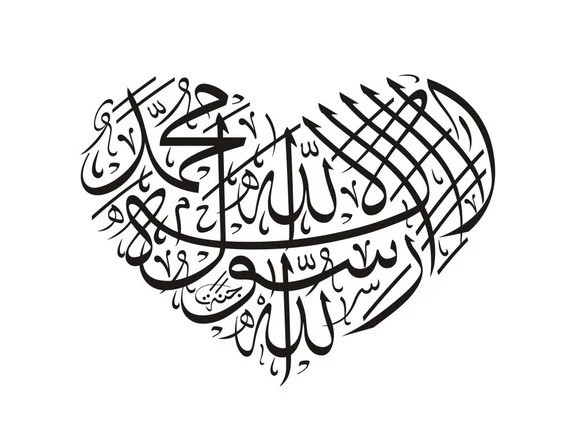
The heart can be understood as the center of the unconscious, the potential integrative power at our core. It is the point at which the individual human being is closest to the Divine Reality, to Wholeness. The heart is the center of our motivation and our knowing, possessing a depth and strength of will that the personality lacks. The heart may even know what the conscious mind denies. When we say that the heart has an integrative power, we are not talking in abstract, metaphorical, or merely intellectual terms. The realization and purification of the heart both opens a doorway to the Infinite, and also results in a restructuring of neural pathways, a refinement and reorganization of our entire nervous system without which we are not completely human.

Living from the Heart

We have proposed that the heart includes a spectrum of subconscious faculties for knowing reality immediately and qualitatively. In other words, the heart is intuitive. The heart, however, is obscured, or “veiled” from its intuitive knowing by most of our habitual thoughts and emotions, particularly in so far as these are derived from the false self.

In the condition we find ourselves, life presents us with so many ambiguous situations. How can we know whether we are following the concealed desire of the false self or the guidance of the heart? We cannot afford to sentimentalize the heart, which is not only tender but fierce, which is both in submission and in absolute freedom at the same time.

Reason, which is the wise and skillful use of the conscious mind, can be used to clear the mirror of the heart from the distortions of compulsion, defensiveness, and illusion. To some extent this is the work of a true psychotherapy, a process which is a “healing of the soul.” While the effects of past wounds can be mitigated by bringing contents into consciousness and psychotherapy, an authentic spirituality can awaken the healing forces of humbleness, gratitude, and love. For these qualities, however, to be authentic and spontaneous, and not merely the outcome of a moral obligation, it is necessary to live from the heart. The complete healing of the soul is possible through the soul’s contact with Wholeness through the heart.

Purity of the heart refers to the heart’s overall soundness and health. The heart, if it is truly a heart, is in contact with Spirit, but to achieve this rapport with Spirit it must be renovated and made receptive all the way down to the subconscious levels. Only then can it reliably respond to the spiritual qualities within are reflected within itself.

Living from the heart is responding to the inner guidance of Love and Wisdom in the heart. This guidance may appear to be irrational and even counter to one’s own apparent self-interests. That is its beauty and power. It does not come cheap. It does not depend on emotion. It submits faithfully, spontaneously and joyfully to the requirements of the moment. It knows no fear and always submits to the Wholeness.

– Qalb

In Islamic philosophy, the qalb (Arabic: قلب), or heart, is the origin of intentional activities, the cause behind all humans’ intuitive deeds. While the brain handles the physical impressions, qalb (the heart) is responsible for deep understanding within the sadr (the chest).[1] Heart and brain work together, but it is the heart where true knowledge can be received.

In Islamic thought, the heart is not the seat of feelings and emotions,[2] but of rūḥ (Arabic: روح): the immortal cognition, the rational soul.[3]

Qalb (قَلْب) literally means to turn about. So what is the connection between “turn about” and “the heart”? When something turns about, it does not remain the same and so does our heart. Our feelings and thoughts change all the time and that is why it is called Qalb (قَلْب).

In the Quran, the word qalb is used more than 130 times.[citation needed]

Stages of taming qalb

Qalb also refers to the second among the six purities or Lataif-e-sitta in Sufi philosophy. To attend Tasfiya-e-Qalb, the Salik needs to achieve the following sixteen goals.

  1. Zuhd or abstention from evil
  2. Taqwa or God-consciousness
  3. War’ a or attempt to get away from things that are not related to Allah.
  4. Tawakkul or being content with whatever Allah gives
  5. Sabır or patience regarding whatever Allah Subhanahu wa ta’âlâ does
  6. Şukr or gratefulness for whatever Allah gives
  7. Raza or seeking the happiness of Allah
  8. Khauf or fear of Allah’s wrath
  9. Rija or hope of Allah’s blessing
  10. Yaqeen or complete faith in Allah
  11. Ikhlas or purity of intention
  12. Sidq or bearing the truth of Allah
  13. Muraqabah or total focus on Allah
  14. Khulq or humbleness for Allah
  15. Dhikr or remembrance of Allah
  16. Khuloot or isolation from everyone except Allah
—————————————————–

HEALING OF THE HEART WITH THE MEDICINE OF ZIKR, -Lecture by Sultan ul Awliya Shaykh Muhammad Nazim Adil Al Haqqani Q.S (Alyaa Rehma), Lecture dated 01.07.1983, Lefke, Cyprus

Dit delen:

– The Vision of Heavenly Harmony
Biological life is now thought to have appeared on this planet not long after its formation. It seems that the bacterial reeds for the process may have flown in on the tail of a cornet or meteor. Speculation is again rife about life under the surface of Mars, on jupiter’s icy moon Europa and indeed anywhere the sacred substance of liquid water is known to exist.
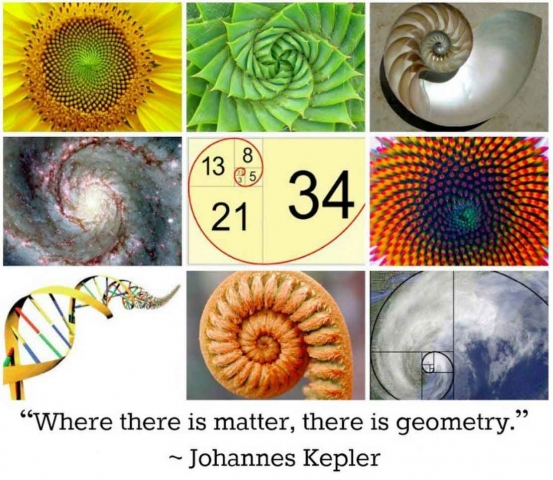
(Earth Matters) Plant growth is governed by the Fibonacci sequence, which can be understood as a law of accumulation. The role of the Fibonacci sequence in the growth of plants is an intriguing example of the unifying order behind all creation. These patterns exist at all levels and permeate the universe, reminding us that the same swirling energy is shaping, sunflowers, whirlpools, spinning galaxies, and our own DNA.

The science of the cosmos has changed irnmeasurably since the (Greek and medieval vision of circles of planetary spheres. But with great cosmic schemes out of fashion, and with dragons and unicorns dismissed, the Earth has become a modern mystery.

No modem theory exists to explain the miracle of conscious life nor the cosmic “coincidences” which surround our planet. Why do the Sun and Moon appear the same size in the sky? There are ancient answers to such questions, however, and these invoke liberal arts like music and geometry. See Geometry of Human Life ,Geometry of pants, and Geometry of zoology

This suggests there is fundamental relationships between space, time and life which have not yet been understood or forgotten. These days we scan the skies listening for intelligent radio signals and looking for remote planets a little like our own. Meanwhile, our closest planetary neighbours are making the most exquisite patterns around us, in space and in time and no scientist has yet explained why. Is it all just a coincidence or do the patterns perhaps explain the scientists’s educated ignorance without wisdom?

– Dance of Planets:

Ujjwal Suryakant Rane from India says :” A picture is worth a thousand words and an animation? . . . probably as many pictures! That’s what this channel uses – graphics and animation – to deliver core concepts in Physics, Math, Engineering and Astronomy. Such geometric/graphical approach results in an intuitive and deeper understanding, that is retained better. Used in classrooms and in one to one sessions at levels ranging from middle school to engineering, this approach yielded success in both India and the United States over a period of 24 years.

I f you want to learn more look here

  • The kiss of Venus

Venus and Earth form a beautiful Spirograph pattern with their orbits. The pattern of Venus around the Earth portrays a 5-petalled rose when viewed from the geocentric position. This beautiful pattern reveals the essence of Venus in her role of celestial guardian of love and beauty to those of us here on Earth. Have a look…
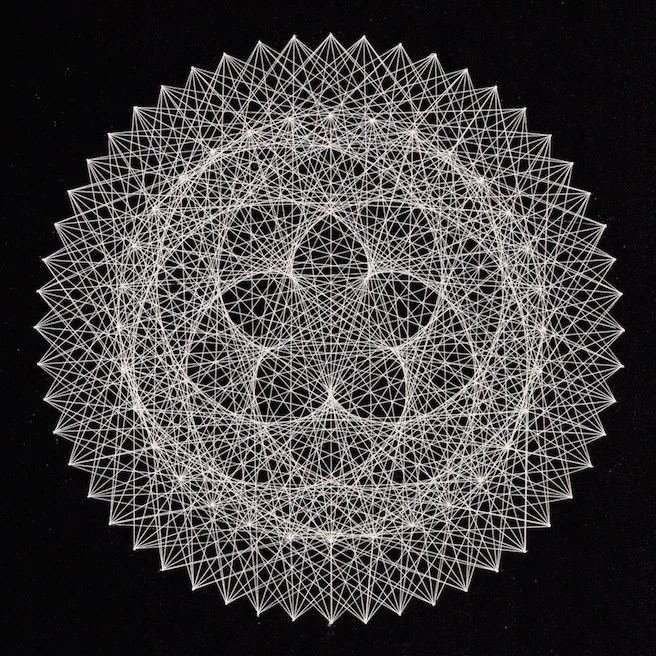
Other than the Sun and Moon, the brightest point in the sky is Venus, morning and evening star. She is our closest neighbour, ldssing us every 584 days as she passes between us and the Sun. Each time one of these kisses occurs the Sun, Venus and the Earth line up two-fifths of a circle further around the starry zodiacal circle so pentagram of conjunctions is drawn. Seen from Earth the Sun moves round the zodiac white Venus whirls around the Sun drawing an astonishing pattern over exactly eight years (99.9%) (01 thirteen Venusian-years (99_9%)). Small loops are made when Venus in her dazzling kiss seerns briefly to reverse direction against the background Stars (shown below as seen from Earth).
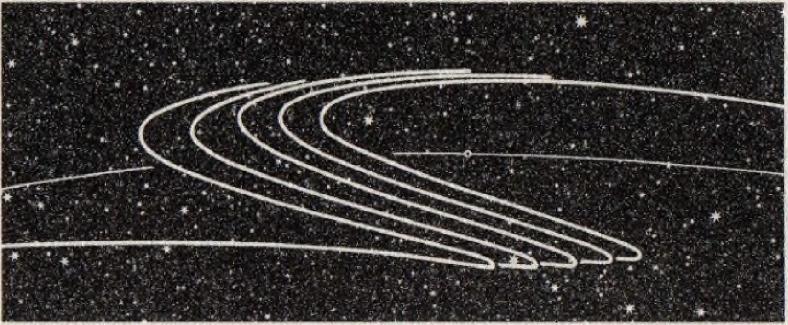
Notice the Fibonnacci numbers we have just met, 5, 8 and 13. The periods of Earth and Venus are also loosely related as 1.618:1 (99.6%). This `phi’-fold nature of Venus and Earth’s dance extends to their closest and furthest distances from each other. Opposite we see Venus’ perigee and apogee defined by two pentagrams, 2.618:1 (99.9%). All these diagrams also apply to Venus’ experience of Earth.
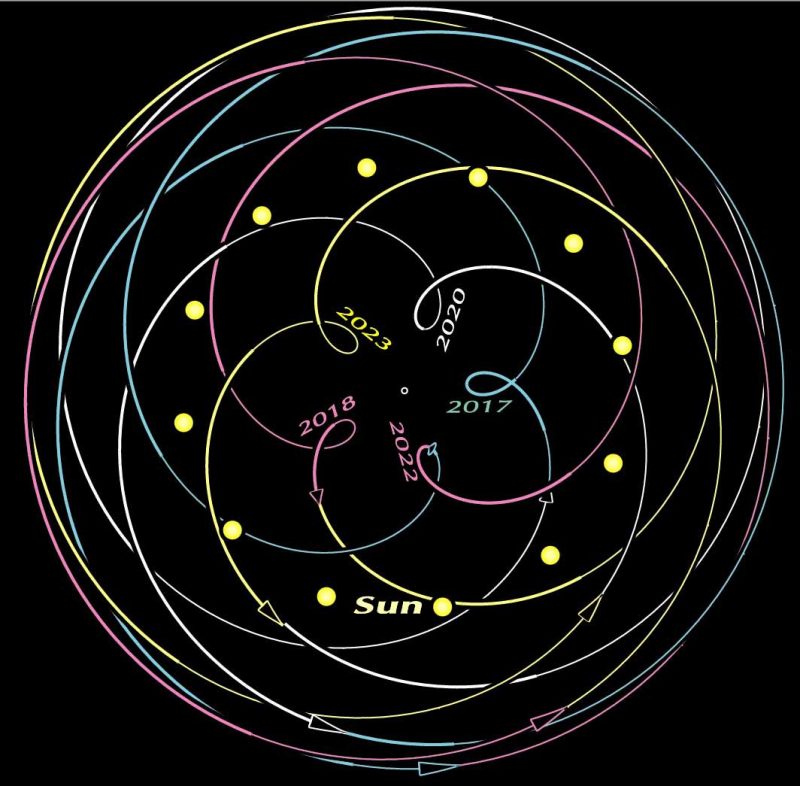
If you want more look Here
Modern astronomers peer at distant galaxies, but know that they have lost track of human meaning. We are here concerned with what is seen and experienced within our local region of space; and have argued that, using modern observations to four or even five-figure accuracy, we are in some way re-gaining a Pythagorean/Platonic view. Twenty-five centuries ago, Greeks took the word Kosmos which meant beauty, as in ‘cosmetic’, and applied it to the universe. Heracleitos the ancient Greek philosopher wrote, in that century:
‘For those who are awake the cosmos is one and common, but those who sleep turn away each into a private world. We should not speak and act like sleeping men.’
Herakleitos lived circa 545BC to 485BC – exactly at the time Greek civilisation began to rise towards its Golden Age. But Herakleitos was not a great statesman or soldier or sculptor; he looked at the world without wanting to change it or bring it under his control or make beautiful stone images of it. He simply wanted to understand it. So he thought about it: how things come to be and how things pass away…and he saw that nothing is really separate at all – all matter, everywhere, simply changes form, in an endless cycle of transformation. What we experience as individual forms are but fleeting interlocking brush strokes in a picture too big for our normal human vision to grasp. Herakleitos, though, did grasp this mystic vision of unity. And he intuitively understood that every brush stroke in the picture can only occur if there is an underlying unseen pattern. This pattern he called the Logos. Observing that human problems and failures are caused by living separately, and thus out of harmony with Logos to the attention of all. The methods he chose were the methods anyone might resort to when describing something previously unknown: similes, riddles, metaphors, aphorisms, allegories and…when those failed, browbeating and exasperated criticism! Herakleitos’ own words are the starting place as the reader is taken on a voyage of discovery through philosophy and physics, through time and space, through human behaviour and consciousness – to arrive at a new vision of the nature of reality.. Look here Herakleitos : Logos Made Manifest

Read here: Heraclitus on Logos Language, Rationality and the Real; and DE BETEKENIS VAN LOGOS BIJ HERAKLEITOS VOLGENS DE TRADITIE ( Dutch)

The Logos of the Greek is the same as the Viritas of Hildegard of Bingen: the greening power of the Divine:
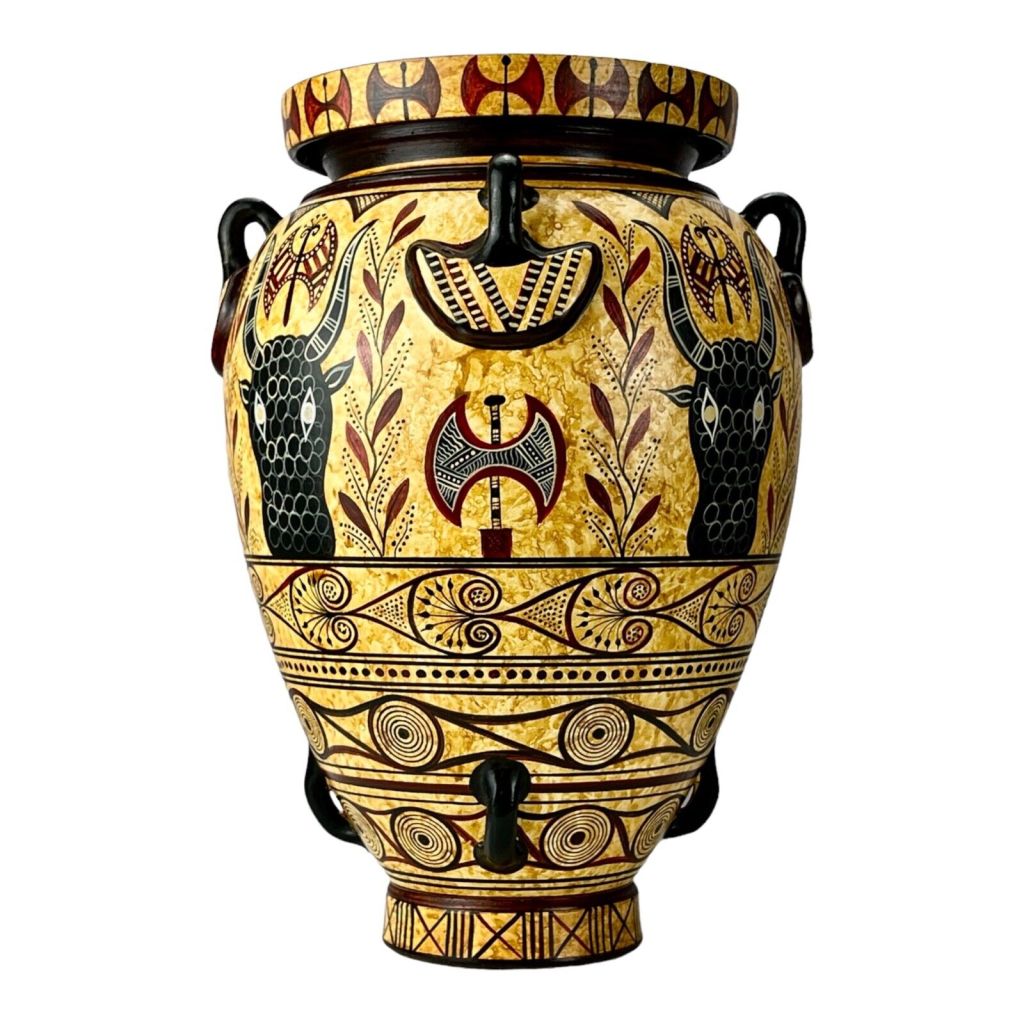


An acclaimed geometer explores the fundamental connections between space, time, and life that have not yet been fully understood.

A most unusual guide to the solar system, A Little Book of Coincidence suggests that there may be fundamental relationships between space, time, and life that have not yet been fully understood. From the observations of Ptolemy and Kepler to the Harmony of the Spheres and the hidden structure of the solar system, John Martineau reveals the exquisite orbital patterns of the planets and the mathematical relationships that govern them. A table shows the relative measurements of each planet in eighteen categories, and three pages show the beautiful dance patterns of thirty six pairs of planets and moons. Read Here
The essential pocket guide to the marriage of the Sun and the Moon. Read here
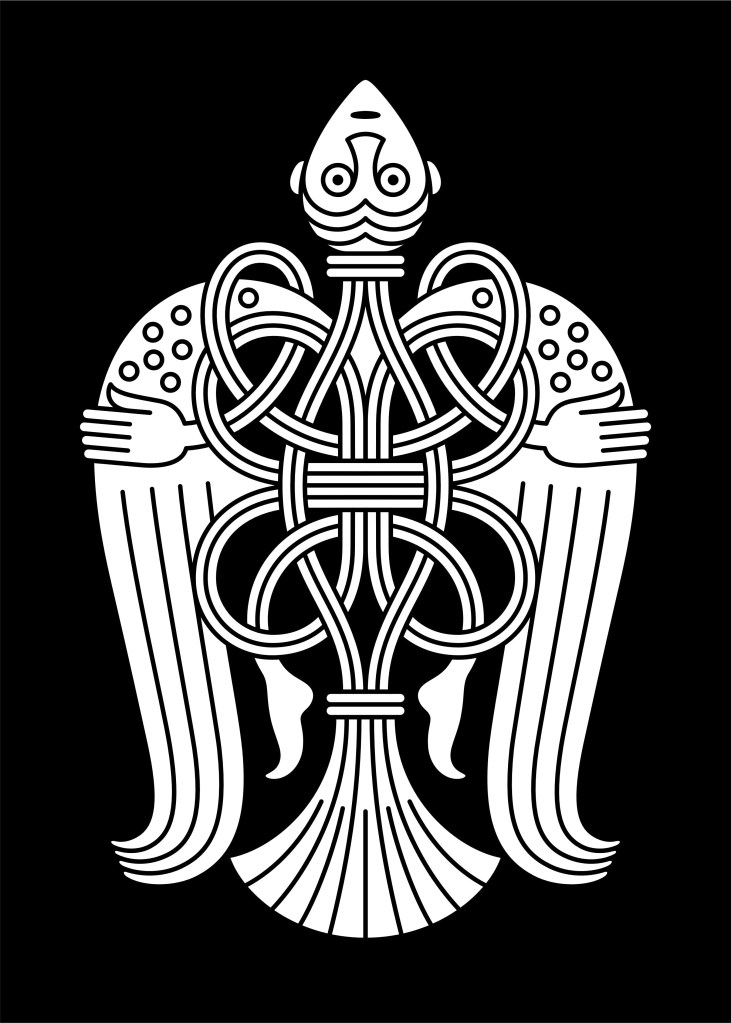
The principles of the universal order are traced through the religiophilosophical reasoning of how Being emerged from non-Being, and how original Unity gave birth to an inexhaustible multiplicity. Here explore specifically the generative “move” from unity to triplicity and quadrature, seen as a central cosmogonic paradigm of simultaneous proliferation and synthesis. The move is explored in a variety of contexts and manifestations.

The first trace of this move unfolds the metaphysial order, which is then traced in the cosmic order, which is in turn traced in the architectural order.

Spatially, the move refers to the deployment of space from a central point along the three axes of what the French philosopher and metaphysician René Guénon describes as the “threedimensional cross.” This study shows how this conception formed the cornerstone of spatial sensibility in premodern Islam. It also shows how the manifold manifestations and interrelatedness of this primary spatial order unfold a complex web of meanings and intricate patterns of correspondence that at once govern the world and materialize the order inscribed in the divine exemplar…. Read more here: Cosmology in Sufism and Islam
The classic study of the cosmological principles found in the patterns of Islamic art and how they relate to sacred geometry and the perennial philosophy. Read here

  • Frisian Heart , epitrochoid, mill, craft

An example of an epitrochoid appears in Dürer’s work Instruction in measurement with compasses and straight edge(1525). He called them spider lines because the lines he used to construct the curves looked like a spider.

These curves were studied by la Hire, Desargues, Leibniz, Newton and many

Epitrochoids are geometric curves traced by a point on a smaller circle rolling around the outside of a larger fixed circle. In the Middle Ages, these curves emerged in Ptolemaic astronomy as mathematical models for planetary motion, particularly in explaining retrograde loops via epicycles on deferents.
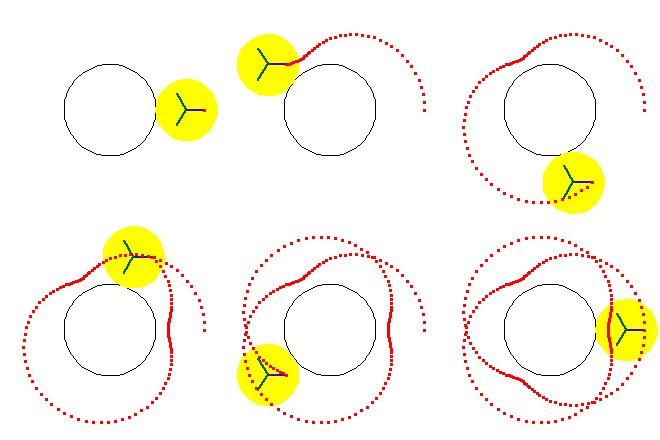
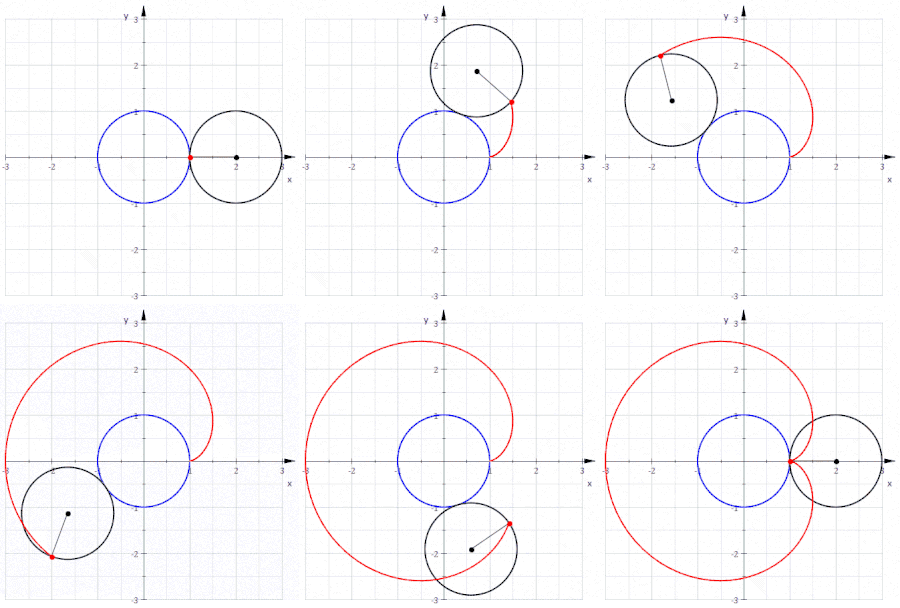
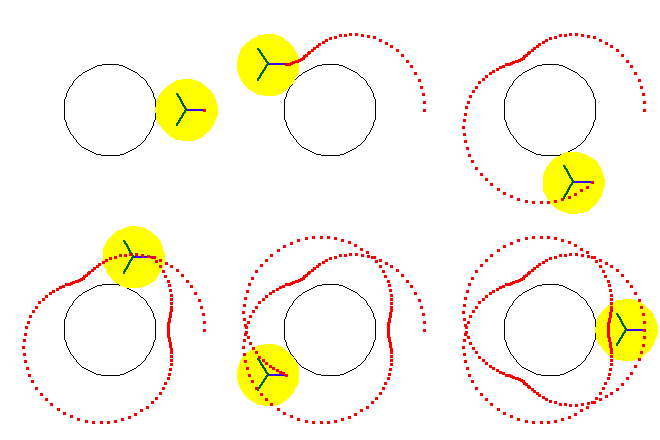
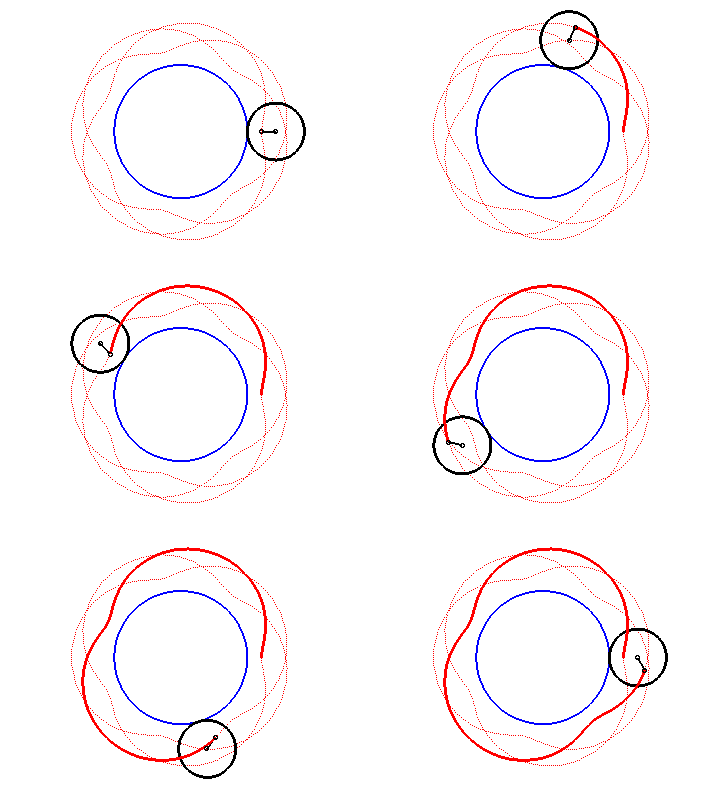
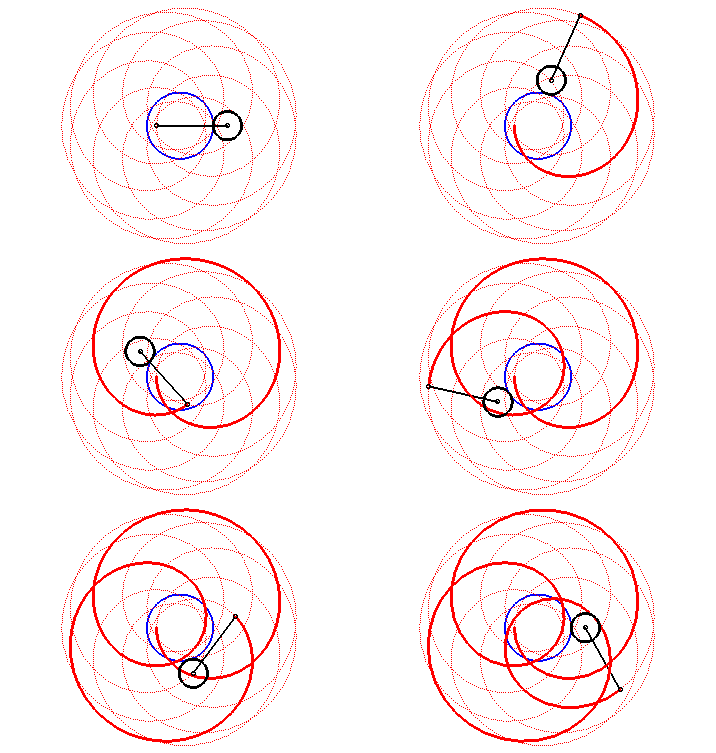
Around 210 BCE, Apollonius of Perga formalized epicycles—small orbits on larger deferents—that produce epitrochoid-like paths to model planets’ apparent retrograde motion from Earth’s geocentric view. Ptolemy’s 2nd-century CE Almagest refined this system, influencing medieval Islamic and European scholars like Al-Battani and Sacrobosco.

Epitrochoid shapes found limited but notable applications outside astronomy in medieval contexts, primarily in mechanical devices and mathematical modeling rather than widespread practical use. Their geometric properties—curves generated by a point on a rolling circle outside a fixed one—influenced early engineering and artisanal designs, though explicit references remain scarce before the Renaissance.

Mechanical Devices
The Antikythera mechanism (c. 100 BCE, known through medieval copies and study) incorporated epicyclic gears producing epitrochoid paths to simulate planetary positions and predict eclipses, extending beyond pure astronomy into calendrical computation. Medieval Islamic scholars like Al-Biruni adapted similar gear trains for astrolabes, where epitrochoid-like motions calibrated dials for timekeeping and navigation.

Geometry and Crafts
In pure mathematics, epitrochoids appeared in studies of roulettes by medieval European and Islamic geometers, such as in Campanus of Novara’s 13th-century work on cycloids, inspiring symbolic knotwork and tracery in Gothic rose windows that mimicked looped curves. Craftsmen used rudimentary compasses to approximate epitrochoids for ornamental metalwork and tile patterns in mosques, evoking infinite loops akin to your interest in sacred knots.

Engineering Precursors
Water wheels and early millsas we find it in Frieland and i
n medieval monasteries employed epicyclic motion for irregular grinding paths, prefiguring epitrochoids in cam designs, though formalized later in clockworks by Richard of Wallingford (c. 1320s). These applications bridged astronomy’s legacy to practical mechanics, emphasizing uniform circularity as a divine principle.

See The wisdom of Frisian Craftmanship and The Frisian Thread of Wisdom
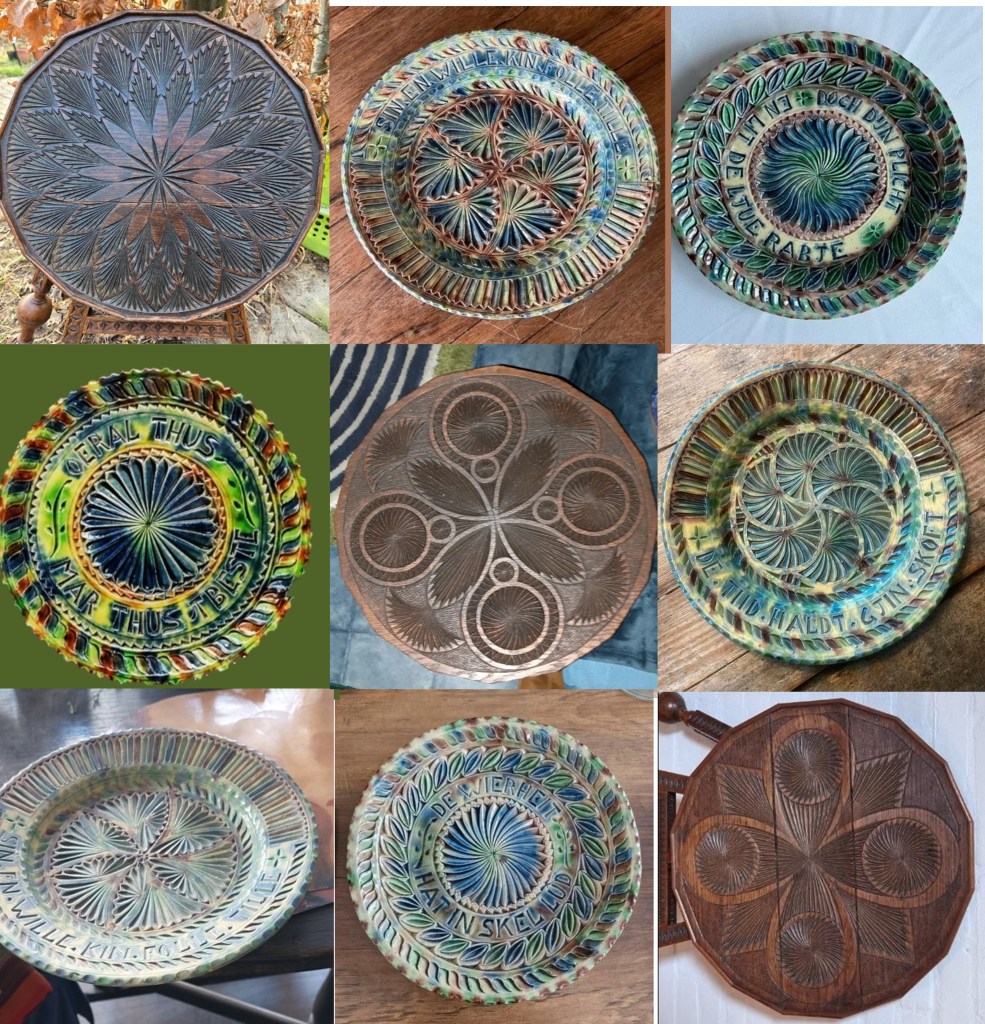
– Prometheus, Narcissus and AI (artificial intelligence)

The ancient Greek myths of Prometheus and Narcissus appear to have been resurrected in Renaissance thought, and for this reason they share a common impulse with humanism, which defines the human individual by what is horizontal and relative rather than what is vertical and Absolute.
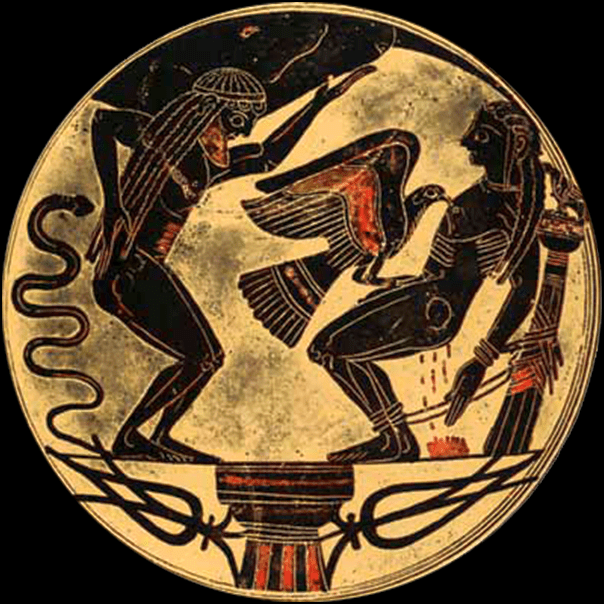
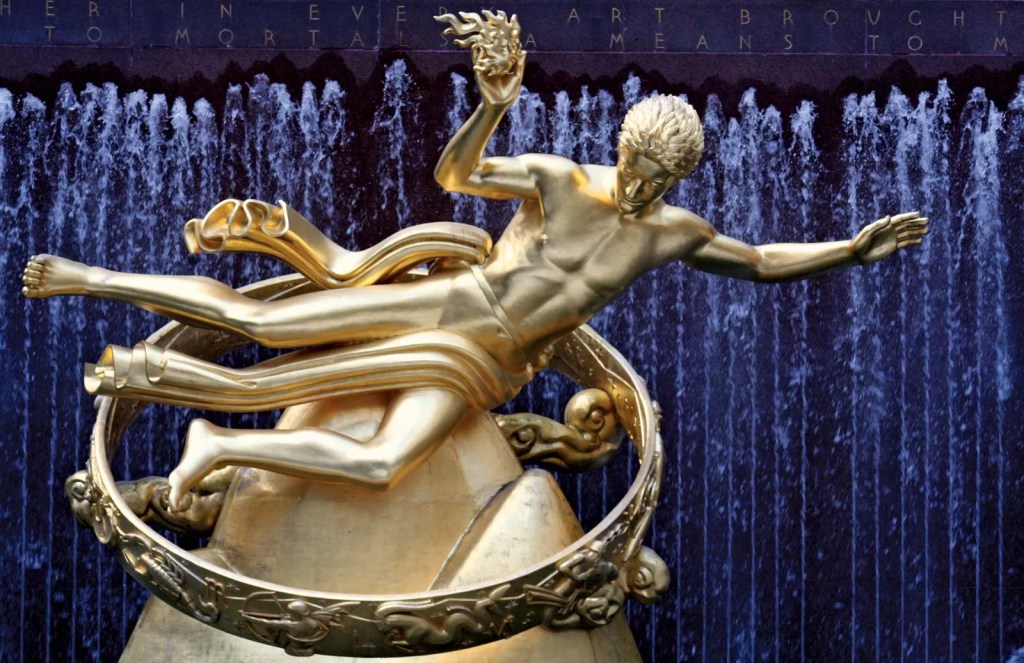
These two myths provide an instrumental allegory of the New Age Movement and the Human Potential Movement as they bring to light the inner workings of the human psyche in a way that is congruent with the teachings of all times and places. We recall that it was Prometheus who
revolted against the Heavens to steal fire from Zeus, and Narcissus who became self- possessed with his own egoity through his reflection in the forest pool.

These two impulses—the first, a rebellion against all norms, including spiritual authority, and the second, an all-consuming self-absorption that imprisons the individual within their own self-image to the degree that it negates the very existence of the other—are expressions of the inversion of the human condition that have become everyday diagnosable criteria. As a result it has been declared that: “Modern [and postmodern] Western man understands himself according to the paradigm of Prometheus, a creature of Earth who has rebelled against Heaven” (Nasr & Jahanbegloo 2010:xix). Coupled with the following observation, one can see their significant roles in shaping the contemporary milieu: “Self-absorption defines the moral climate of contemporary society . . . . Narcissism has become one of the central themes of American culture” (Lasch 1978:25). Few would argue that rebelliousness and self-absorption are two defining characteristics of the New Age and the Human Potential Movement—if not the globalizing West as a whole.
The emergence of the Human Potential Movement is inseparable from the New Age Movement, as both emerged during the milieu of the 1960s counterculture. Some hold them to be synonymous with one other, yet this is not entirely the case as they do appear to have noticeable diff erences. The passage of time has been a testimony to their deep-rooted effect upon the collective psyche, one which is still palpable today. What is interesting is that both of these movements… Read here :Prometheus and Narcissus in the Shadows of the Human Potential Movement by Samuel Bendeck Sotillos
Technological arrogance brought about our Fall
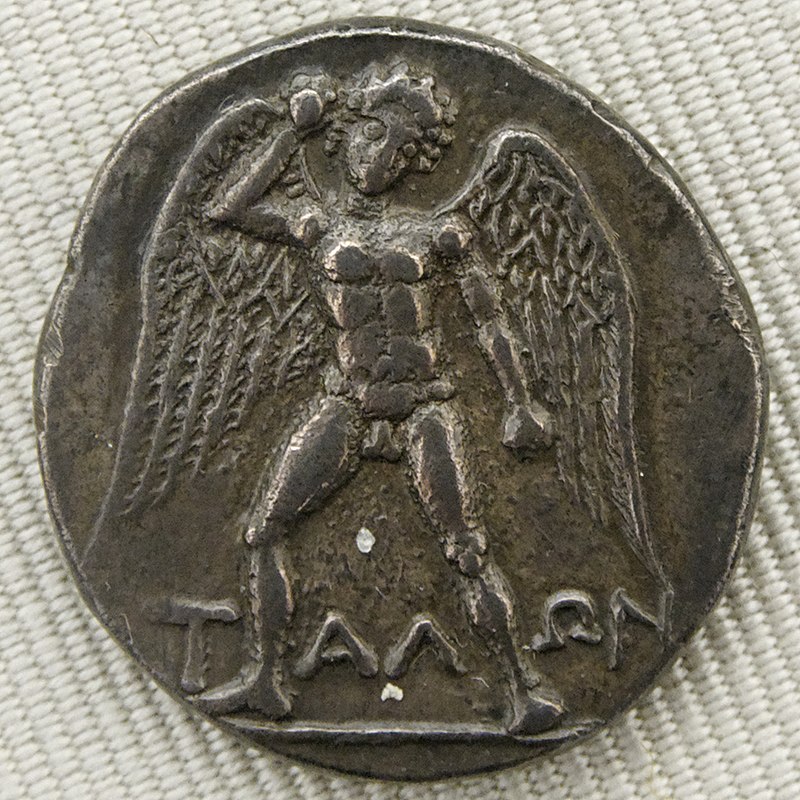
Silver didrachma from Crete depicting Talos, a mythical intelligent automaton (c. 300 BC)

Why are the countries of the West sliding toward electronically enhanced totalitarianism? Was it inevitable that government employees and corporate technicians wielding digital and psychological tools would promote a false conspiracy theory to cripple a sitting American president, and suppress and discredit news to aid a favoured candidate? Or that public health officials in Europe and the English-speaking world would use what may have been the deliberate release of a Chinese bioweapon to infringe civil liberties and hijack representative democracy?

Many factors have contributed to this predicament. But the ultimate cause lies in human intelligence, the germ and sap of the great hard oak that is, or was, the West (it’s old now, and growing soft with rot). That intelligence is a curse as well as a blessing was clear enough to the ancient Greeks and Hebrews, whose oldest legends drew vital meaning from the black earth, the primordial fundament of early human experience.
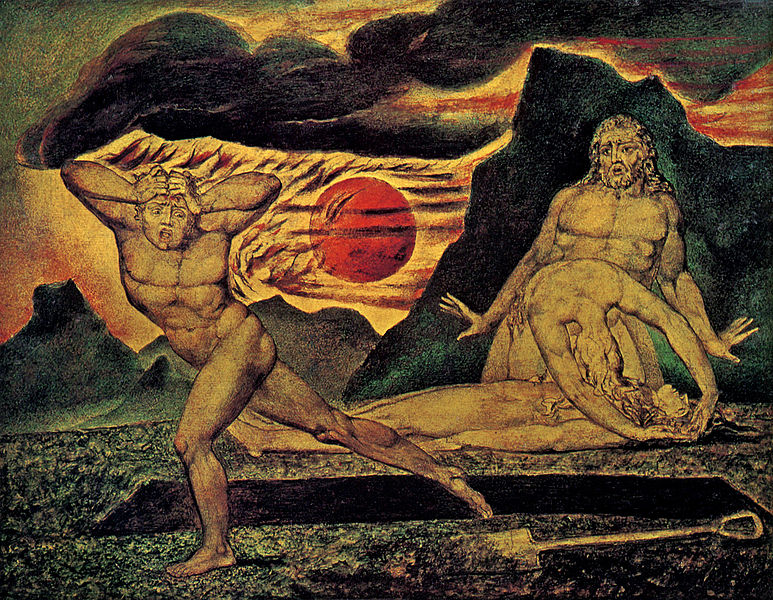
The Body of Abel Found by Adam and Eve

The origin myths of Genesis and Hesiod explain how the first human beings, wanting more, broke with God or the gods. It was a kind of primitive artificial intelligence that caused this quarrel: the combination of art and artifice that has always characterised the schemes of the human mind. Impelled not just by need, but by ungoverned desires, we came to rely on cunning deception and the use of tools to imitate things and living beings — skills that have always been essential, for example, in hunting, fishing, and warfare. The myths also teach that each advance — fossil-fuel power plants, for example, or the free-for-all of the internet — produces real or perceived problems that invite increasingly large-scale scientific and political “solutions”.

Seen in this light, recent developments such as the rush of American and European governments to transition to clean energy and electric vehicles, the emerging threat of a stealthy, two-pronged attack by electronic as well as biological viruses, the extensive manipulations or “nudges” of post-modern technocracy, and the employment of AI for the purpose of “information warfare”, are entirely unsurprising.

Hesiod tells a story from the Golden Age, before poverty, sickness and death came into the world, and gods and men (there were no women then) feasted together. The Titan Prometheus was the priestly master of ceremonies, in charge of dividing and distributing meat to the two parties, mortals and immortals. This office suited his presumably impartial nature: he was a god, but a philanthropic one with a recognisably human mind. In fact, he is not easily distinguished from man himself. Prometheus means Forethought, yet he saw only what was visible in the blaze of his cleverness. This is why, in myth, his brother Epimetheus — Afterthought — follows him through the dark like a comet’s tail of foolishness, constantly spoiling his work with unintended consequences. Read more here

The effect of TV – the ‘message’ of TV – is quite independent of the programme. That is, there is a huge technology involved in TV which surrounds you, physically, and the effect of that huge service environment on you, personally, is vast. The effect of the programme is incidental.

Our conventional response to all media, namely that it is how they are used that counts, is the numb stance of the technological idiot. For the ‘content’ of a medium is like the juicy piece of meat carried by the burglar to distract the watchdog of the mind.  This is like the voice of the literate man, floundering in a milieu of ads, who boasts, ‘Personally, I pay no attention to ads.’  The effects of technology do not occur at the level of opinions or concepts, but alter sense ratios or patterns of perception steadily and without any resistance.  As Blake knew, we become what we behold.

https://www.youtube.com/embed/UoCrx0scCkM?version=3&rel=1&showsearch=0&showinfo=1&iv_load_policy=1&fs=1&hl=nl&autohide=2&wmode=transparentA great man. The dialogue gets more poignant as time goes on and the more questions are asked. We have the great privilege of looking back at his words now in the light of an entirely new medium; the internet. Bear in mind he said all of this before the internet was a medium that existed. read here
Marshall McLuhan is widely regarded as the father of communications and media studies and a prophet of the information age. The above article is an excerpt from his book Understanding Media: The Extensions of Man. To find out more about his work, please click here.

look also: Prometheus, Narcissus and AI (artificial intelligence)
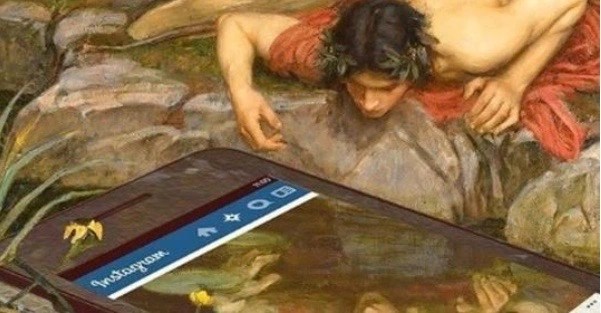
  • Conclusion: All the world is awhirl but the machine is against it
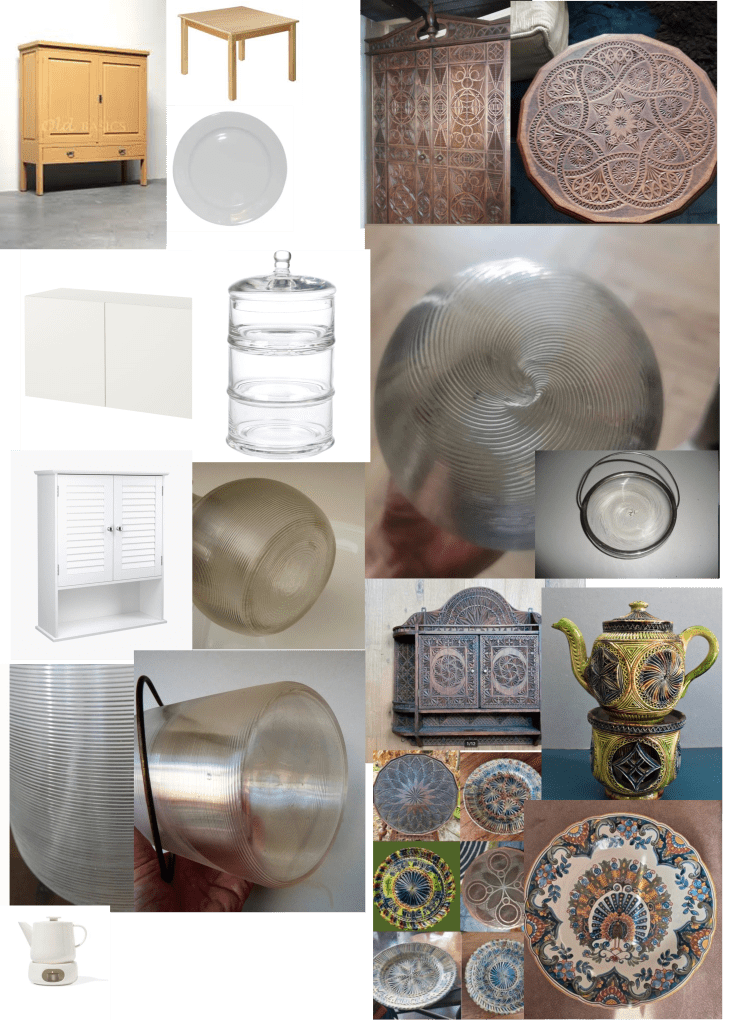
Modern  production without  hrart -soul  / craftmanship  with heart- soul
Made by Frisian  Heart
Made by machine  without heart/soul
Modern Art without Heart – soul
Frisian Craft  with heart – so
u
Speculative Freemasonry  keep specuate and building moderniy
Operative  craftnanship forms and transforns human in  building with the Heart   all spiritual buildings inthe world
Buildings  with Heart- Sou

At the heart of his whirling practice is the seeking of the divine. Explaining one of the key tenets of Sufism he says: “In the Sufi way we are not speaking, but we try to listen to our hearts.” He believes this is something that all religions have in common, and that buried under our grasping for material wealth and worldly success, everyone has the spark of the divine, the ability to love unconditionally and fully. “You look to our essence, and you will see all love leads to one unity,” he says.

Though he says his religion acknowledges only one God – Allah – he believes that every religion has something in common which is the belief that every human being is beloved to God. When we look in the mirror, we recognize our reflection is an illusion, similarly the physical body itself is a reflection of our spiritual, secret selves. The goal of the practice is to connect once again with the sacred spirit within. “Nobody needs to learn how to whirl,” he says, “you are already whirling.”
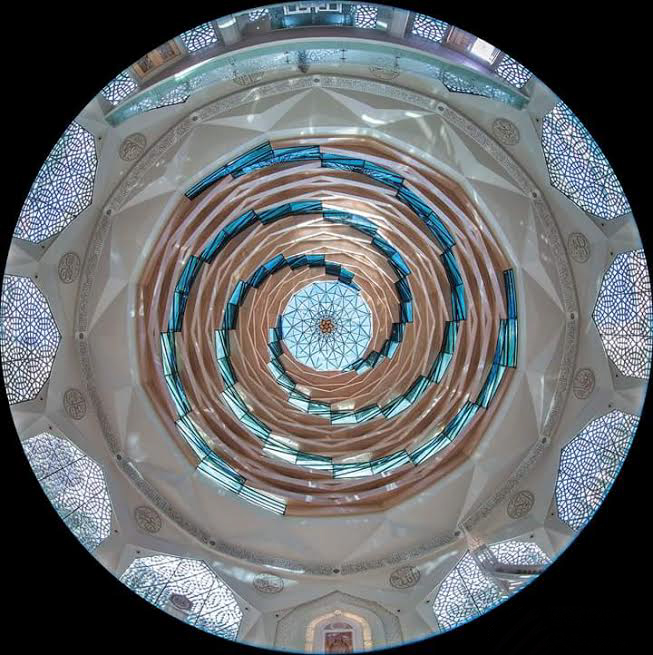
the act of whirling is a request for connection and love with the divine, but even as the whirler receives this love, he gives it away, freely and joyfully. The notion will resonate with those familiar with the Buddhist practice of Metta Bhavana or loving kindness. This love is his religion’s response to all the turmoil in the world. He says such practices, like honey, are both nourishing to the spirit and profoundly healing. He describes the veils that prevent us from seeing clearly, and says that whirling is a door, an active form of meditation, that allows a pure connection with God. He describes what he feels when he is whirling both as being embraced by a divine presence, and as the self simply melting away.
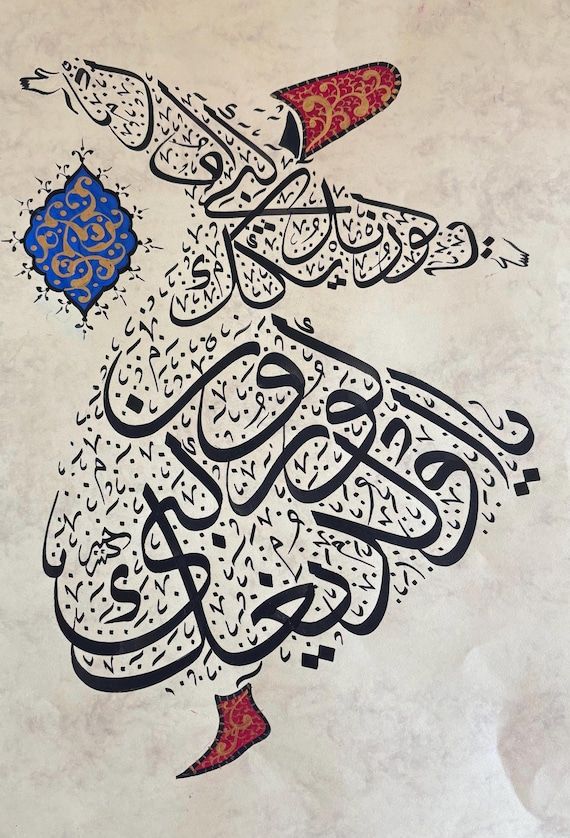
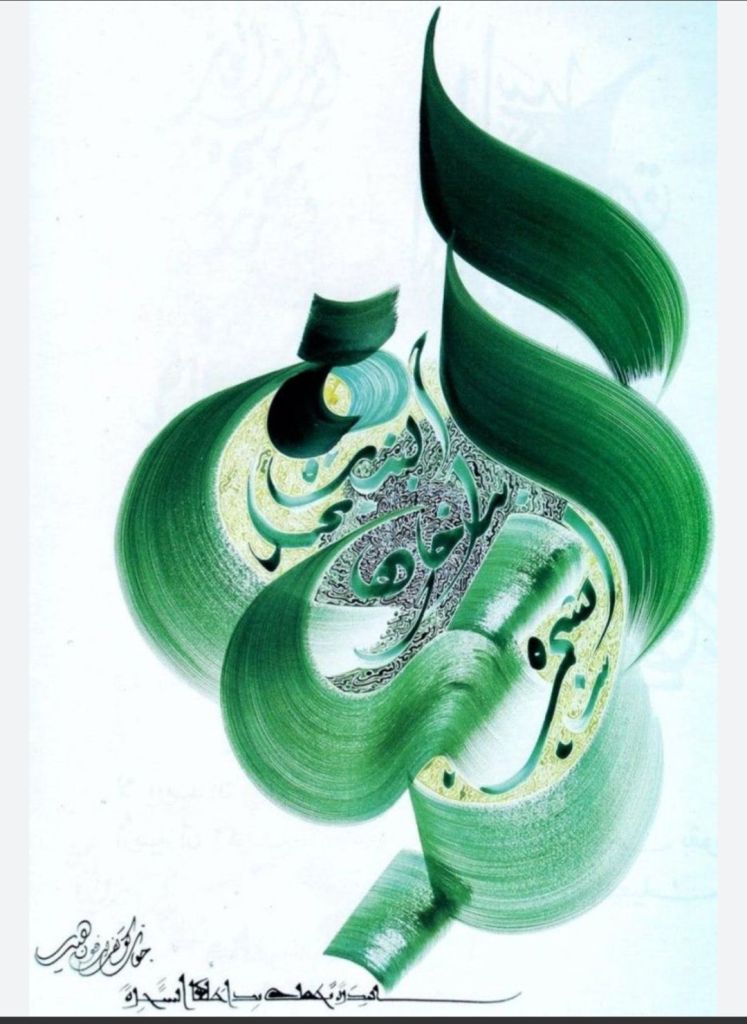
In traditional civilizations, there was no division between the sacred and the secular in labor. Every craft, from carpentry to stonemasonry, was infused with symbolic meaning. The tools themselves—like the compass, the square, or the chisel—served as metaphors for universal truths. The craftsman, through repeated and intentional action, participated in the divine act of creation.

Work and contemplation were not separate in traditional societies. A craftsman worked not just with his hands but also with an awareness of the symbolic and spiritual meaning of his work.

The tool, the material, and the process had symbolic dimensions. For instance, in masonry or metalwork, the transformation of raw material symbolized the transformation of the soul.

Initiation and Guilds

Guénon emphasized the role of initiatic craft guilds—especially in the West, such as medieval masonry guilds—which preserved esoteric teachings and transmitted initiatic knowledge through symbols, rituals, and oral transmission.

These guilds were structured hierarchically and transmitted cosmological knowledge embedded in tools, geometry, architecture, and ritual.

The compass and square, for example, symbolized heaven and earth or spirit and matter.

The architecture of temples or cathedrals followed sacred geometry, aligning physical structures with cosmic principles.

Degeneration in Modernity

Guénon argued that in modern times, the loss of sacred and symbolic understanding has led to the degeneration of crafts into mere technical skills, disconnected from their metaphysical roots.

This reflects his larger thesis: modernity is a descent into materialism, fragmentation, and loss of spiritual orientation””. The disappearance of guilds, desacralization of labor, and mass industrialization exemplify this decline.

The Frisian Heart reprent this wisdom with all his craftmanship. Concious or unconcious they kept their craftmaship , the Frisian Freedom and the “Thing” a very long time in life

If we are open to the whirling of life , we have to accept or recognize that we are ignorant  of our own ignorance . without the guiding principle of the One , we shall collapse as the machine  shall sure do very soon.

It shall  become an desastrous apocalypse  and not a joyfull  Revelation. see Perspectives on the End of Times

But if we listen  to the wisdom of the past , we see that the Frisian  Heart can help us  to live a sincere and loving life, in little communities,  listening to the Nature and the One God , becoming a real  humanbeing using fully the potential   given by God.

In summary, the heart’s neural system or the Frisian Heart, through communication with the brain, is increasingly recognized as foundational to the realization and neural embodiment of human virtues, offering a bridge between physiology, emotion, and ethics.
  •  To be the child of God is to be loved, liked, and completely cared for.
  • So how can you live in response to God’s word? How can you get out of the mindset of an orphan? You must have faith that God is who he says he is and believe he will do what he’s promised to do. Romans 10:17 says that “faith comes from hearing, and hearing through the word of Christ.” You have heard the word of the Lord today. You are his child. He promises to provide for you. So have faith! Faith isn’t something you just conjure up. It’s a response to God’s faithfulness. God has and will be faithful to you. Allow his word to stir up faith within you today. Live in response to his promises and allow the peace and joy of being God’s child to lay an unshakable foundation for you today.
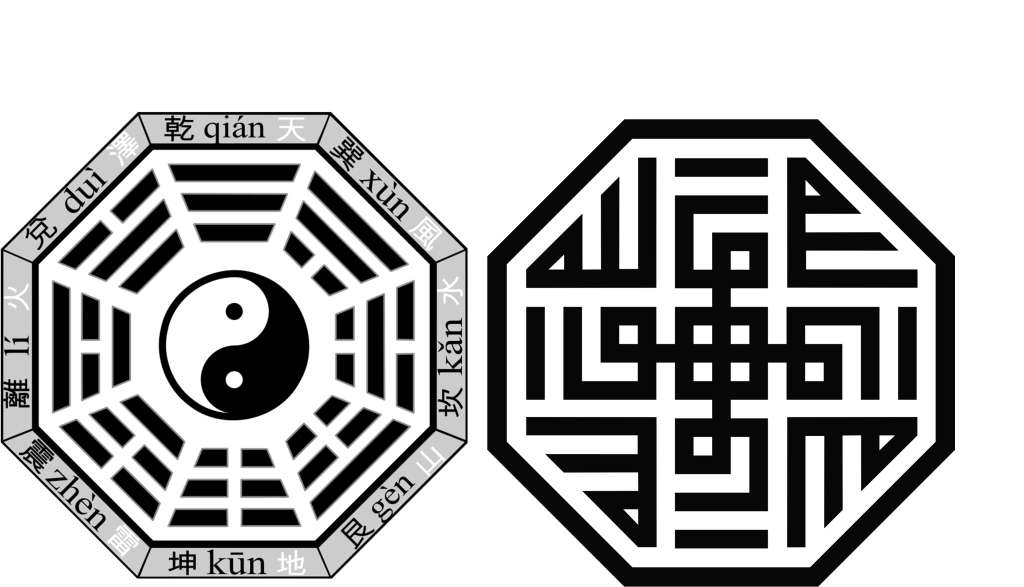
Goethe and his poem “Hegir” : Hijra

FROM Goethe, the “refugee” and his Message for our times

when one speaks of the Hijra one is not merely speaking of a journey from Mecca to Medina, or the starting point of a calendar;  but one is  also speaking of a new start for humanity. And Johann Wolfgang von Goethe make his Hijra, his emigration and take refuge in Islam. He became a “Refugee”.

The Hijra is symbolic of changing those conditions that cause problems and that clash with ideals and beliefs, as well as the search for new opportunities.

In this caravan poem, Goethe gives us a picture of the restless nomad existence which early Arabian poetry had enabled him to envision.

The whole “West-East Divan” is shot through with something of this nomadic restlessness. Already in the first great poem entitled “Hegir” the poet alludes to Arabian life and traditions. He is a True Pelgrim. He turns to the wisdom of the Sufis as Hafiz.

His own “Hedschra” is an inteliectual emigration to a simpler state of existence which seems to him to be purer and righter than his own immediate world. Thus he calls out to himself:

“Hegira”

North and South and West are quaking,

Thrones are cracking, empires shaking;

Let us free toward the East

Where as patriarchs we’ll feast:

There in loving, drinking, singing

Youth from Khidr’s well is springing.

Seeing rightly, seeing purely,

There I’ll penetrate most surely,

To the origin of nations,

When on earth the generation

Heard God’s words with human senses,

Heedless of their formal tenses.

When to fathers they gave honours

And rejected foreign manners;

I’ll rejoice in youth’s demotion:

Wider faith, narrower notion–

Words weighed then as value’s token

Since the word was one that’s spoken.

With the herdsmen I’ll go questing,

In oasis freshness resting,

Roam in caravans wide ranging

Coffee, shawls, and musk exchanging;

Every track my footstep traes

Through the sands to market-places.

On the mountain’s desolation

Hafis, you give consolation

When our guide, afraid of capture

High upon his mule in rapture

Sings, to set the stars a-blazing,

Startled thieves with dread amazing.

You at wells and inns I’ll ponder,

Holy Hafis, thinking fonder

When my love unveiled caresses,

Strewing fragrant amber tresses.

Yes, the poet’s whispered yearning

Even starts the Huris burning.

If your envy this despises,

Of belittles precious prizes,

Think awhile that poet’s diction

Is no commonplace of fiction,

Hovering soft in heaven’s portal

Life it seeks that is immortal.

 What the Emigration Demands of Us

Starting from a narrow family-tribal environment Prophet Muhammad (pbuh) underwent 13 years of hardship and torment in Meccan society; with the immigration (Hijra) to Medina, a new stage began. This stage, if one takes into consideration the time that it took all religions to spread, is the starting point of one of the fastest religious developments in recorded history. In this sense, when one speaks of the Hijra one is not merely speaking of a journey from Mecca to Medina, or the starting point of a calendar; one is speaking of a new start for humanity.

The Hijra is symbolic of changing those conditions that cause problems and that clash with ideals and beliefs, as well as the search for new opportunities.

The Hijra, as is expressed in a variety of verses, was extrication from a difficult and stressful situation with the aim to widen the belief and the ideals, and a search for new possibilities and new places. From this aspect, the Hijra is not something that was realized as part of a certain process or a completed historical event in the life of Muslims. The Hijra is symbolic of changing those conditions that cause problems and that clash with ideals and beliefs, as well as the search for new opportunities. Thus, the Hijra, which includes certain preconditions, is a moral duty and responsibility for every individual.

Prophet Muhammad placed the Hijra in the minds and hearts of the Islamic community with a hadith (Prophetic tradition) that expresses two basic interconnected matters.

The first is a general principle which, in particular, is considered to be one of the reference points in the evaluation of laws for Islamic jurists. This principle is connected to intentions in behavioral values, as it is the intention that gives behavior direction. As we know the Hijrawas the first and most important social movement of the young Islamic society.

As is to be expected with all social movements, it is only natural that there were people who had different intentions when participating in the emigration led by Prophet Muhammad. Prophet Muhammad drew attention to this situation and stated that those who performed the same action received different responses, each according to their intention. The matter expressed in the hadiths is concerned with a Meccan Muslim who had joined the emigration and come to Medina to marry the woman he loved. The ruling that Prophet Muhammad gave concerning this person can be considered to be a universal principle compulsory for all Muslims to take into account when performing an action.

Prophet Muhammad said: “Actions are according to intentions, whoever emigrates to Allah and His Prophet, that emigration is to Allah and His Prophet, whoever emigrates to marry a woman, his emigration is to marry a woman...” The idea of actions and behavior being judged according to intention is the clearest and most immutable rule that stands against those who desire to hide their personal or prosaic intents behind ideals and virtues.

The most important principle to learn from the Hijra is the constant observation of intention. In particular, Sufis consider the constant observation and control of intent to be a basic principle for attaining ikhlas (sincerity). From this aspect, Sufism can be considered to be a total investigation and interrogation of intention.

In other words, the thing that determines the value of a person’s action is the intention, and nothing else. In this direction, the most important principle to learn from the Hijra is the constant observation of intention. In particular, Sufis consider the constant observation and control of intent to be a basic principle for attaining ikhlas (sincerity). From this aspect, Sufism can be considered to be a total investigation and interrogation of intention.

There is another dimension to the hadiths; in particular, this aspect is widely interpreted by the Sufis. In the above hadith, Prophet Muhammad said “Whoever emigrates to Allah and the Prophet.” The Sufis carefully emphasize the phrase “Emigration to Allah and His Prophet.” What does emigration to Allah mean? Here, while speaking the emigration to Medina, the direction is changed and the Prophet speaks of “emigration to Allah and His Prophet”. This approach alone gives the possibility that the Hijra is something that every Muslim can repeat over and over again. While the emigration to Medina was a historical event, emigration to Allah and His Prophet is not limited by history or location, and thus is always possible.

In this sense Hijra gains a meaning that is parallel to the Sufi term of tawba, adding a wider interpretation to the Hijra. The general meaning of tawba (repentance) means “to repent of a sin and to decide not to repeat the sin.” The Sufis have added a special meaning to this general definition; tawba has come to mean “turning” and is thought of as an action. But, what are people turning to? To find the answer to this question we need to contemplate the question of where do people go when they sin and why they are considered to have left somewhere. When people sin, they distance themselves from Allah and they are left with their nafs. Sufis see the nafs and its desires as something that straitens people and limits them. In contrast to this, repentance turns people back to Allah; that is, it turns them to the wide expanse of the divine after the straits of the nafs and its desires. In this situation tawba and hijra take on the same meaning. Thus, for Sufis, the Hijra is the action that every person constantly experiences, internally and externally. People emigrate from bad actions and evil morals to virtues and good behavior. In this situation the emigration is towards Allah, and in response Allah turns to us.

Thus, there are two important principles or duties that the Hijra demands of us.

The first is to constantly control our intentions; we must establish our “personal place and stance”. Everyone is responsible only for their own intentions and actions, and it is these same intentions and actions that will save them.

The second principle is to remove the connection of the Hijra with actual places and times. Hijra is a turning and a change in the mind, belief, action or morals; everybody can do this at any time and in any place.

See more info : Seven Levels of Beings
14 january: The Feast of the Ass

  • Feast of the Ass

The Feast of the Ass (LatinFestum Asinorum, asinaria festaFrenchFête de l’âne) was a medievalChristian feast observed on 14 January, celebrating the Flight into Egypt. It was celebrated primarily in France, as a by-product of the Feast of Fools celebrating the donkey-related stories in the Bible, in particular the donkey bearing the Holy Family into Egypt after Jesus’s birth.[1]

This feast mLord of Misruleay represent a Christian adaptation of the pagan feastCervulus, integrating it with the donkey in the nativity story.[2] In connection with the biblical stories, the celebration was first observed in the 11th century, inspired by the pseudo-Augustinian Sermo contra Judaeos c. 6th century.

In the second half of the 15th century, the feast disappeared gradually, along with the Feast of Fools, which was stamped out around the same time. It was not considered as objectionable as the Feast of Fools. Read more Here

here the concert René Clemencic – La Fête de L’ Âne : Procession (IV)

  • Lord of Misrule

In England, the Lord of Misrule – known in Scotland as the Abbot of Unreason and in France as the Prince des Sots – was an officer appointed by lot during Christmastide to preside over thttps://www.youtube.com/watch?v=lOJ0OrqyiZohe Feast of Fools. The Lord of Misrule was generally a peasant or sub-deacon appointed to be in charge of Christmas revelries, which often included drunkenness and wild partying. In the spirit of misrule, identified by the grinning masks in the corners, medieval floor tiles from the Derby Black Friary show a triumphant hunting hare mounted on a dog.

The Church in England held a similar festival involving a boy bishop.[1] This custom was abolished by Henry VIII in 1541, restored by the Catholic Mary I and again abolished by Protestant Elizabeth I, though here and there it lingered on for some time longer.[2] On the Continent it was suppressed by the Council of Basel in 1431, but was revived in some places from time to time, even as late as the eighteenth century. In the Tudor period, the Lord of Misrule (sometimes called the Abbot of Misrule or the King of Misrule)[1] is mentioned a number of times by contemporary documents referring to revels both at court and among the ordinary people.[3][4][5]

In the spirit of misrule, identified by the grinning masks in the corners, medieval floor tiles from the Derby Black Friary show a triumphant hunting hare mounted on a dog.

Boy bishop is the title of a tradition in the Middle Ages, whereby a boy was chosen, for example among cathedral choristers, to parody the adult Bishop, commonly on the feast of Holy Innocents on 28 December. This tradition links with others, such as the Feast of Fools and the Feast of Asses.

The commemoration of the massacre of the Holy Innocents, traditionally regarded as the first Christian martyrs, if unknowingly so,[20][b] first appears as a feast of the Western church in the Leonine Sacramentary, dating from about 485. The earliest commemorations were connected with the Feast of the Epiphany, 6 January: Prudentius mentions the Innocents in his hymn on the Epiphany. Leo in his homilies on the Epiphany speaks of the Innocents. Fulgentius of Ruspe (6th century) gives a homily De Epiphania, deque Innocentum nece et muneribus magorum (“On Epiphany, and on the murder of the Innocents and the gifts of the Magi”).[c]

Today, the date of Holy Innocents’ Day, also called the Feast of the Holy Innocents or Childermas or Children’s Mass, varies. It is 27 December for West Syrians (Syriac Orthodox ChurchSyro-Malankara Catholic Church, and Maronite Church) and 10 January for East Syrians (Chaldeans and Syro-Malabar Catholic Church), while 28 December is the date in the Church of England (Festival),[21] the Lutheran Church and the Roman Rite of the Catholic Church. In these latter Western Christian denominations, Childermas is the fourth day of Christmastide.[22] The Eastern Orthodox Church celebrates the feast on 29 December.[23]

From the time of CharlemagneSicarius of Bethlehem was venerated at Brantôme, Dordogne as one of the purported victims of the Massacre.[24]

In the Roman Rite, the 1960 Code of Rubrics prescribed the use of the red vestments for martyrs in place of the violet vestments previously prescribed on the feast of the Holy Innocents. The feast continued to outrank the Sunday within the Octave of Christmas until the 1969 motu proprio Mysterii Paschalis replaced this Sunday with the feast of the Holy Family.

In the Middle Ages, especially north of the Alps, the day was a festival of inversion involving role reversal between children and adults such as teachers and priests, with boy bishops presiding over some church services.[25] Bonnie Blackburn and Leofranc Holford-Strevens suggest that this was a Christianized version of the Roman annual feast of the Saturnalia (when even slaves played “masters” for a day). In some regions, such as medieval England and France, it was said to be an unlucky day, when no new project should be started.[26]

There was a medieval custom of refraining where possible from work on the day of the week on which the feast of “Innocents Day” had fallen for the whole of the following year until the next Innocents Day. Philippe de Commynes, the minister of King Louis XI of France tells in his memoirs how the king observed this custom, and describes the trepidation he felt when he had to inform the king of an emergency on the day.[27]

In SpainHispanic America, and the Philippines,[28] December 28 is still a day for pranksequivalent to April Fool’s Day in many countries. Pranks (bromas) are also known as inocentadas and their victims are called inocentes; alternatively, the pranksters are the “inocentes” and the victims should not be angry at them, since they could not have committed any sin. One of the more famous of these traditions is the annual “Els Enfarinats” festival of Ibi in Alacant, where the inocentadas dress up in full military dress and incite a flour fight.[29]

Massacre of the Innocents (Bruegel):

See also Bruegel Tales of Winter – The Art of Snow and Ice

Bruegel: an Interpreter of Ultimate Reality and Meaning

  • Tudor Lord of isrule: How Edward VI Resurrected a Raucous Christmas Tradition

Antiquary John Stowe wrote of the popular Medieval tradition of the Lord of Misrule, explaining that:

“In the feast of Christmas, there was in the King’s house, wheresoever he was lodged, a Lord of Misrule, or Master of merry disports, and the like had ye in the house of every noble man of honour, or good worship, were he spiritual or temporal.”

He went on to explain that the Mayor of London and his sheriff also had their Lords of Misrule and that these lords would begin their ‘rule’ and organise “the rarest pastimes to delight the beholders” on All Hallows Eve (Hallowe’en) and end their rule on the day after Candlemas Day, at the beginning of February. The revelry, Stowe explained, consisted of “fine and subtle disguisings, maskes and mummeries, with playing at cards for counters, nails and points in every house, more for pastimes than for gain.”

Oxford and Cambridge universities, and Lincoln’s Inn, would also appoint Lords of Misrule, as would the royal court, although their ‘rule’ tended to be limited to the 12 days of Christmas. Henry VII, the first Tudor monarch, continued the Medieval tradition, electing a Lord of Misrule for every Christmas of his reign. His son, Henry VIII, also embraced the tradition, going so far as to appoint a separate Lord of Misrule for the young Princess Mary’s household at Christmas, 1525. However, it was in the reign of Henry VIII’s son, the boy king Edward VI, that the tradition reached its zenith under the patronage of John Dudley, Duke of Northumberland, who was Lord President of the Privy Council from 1550 to 1553. The tradition had declined in the latter years of Henry VIII’s reign – an ambassador to Edward VI’s court remarked in January 1552 that a Lord of Misrule had not been appointed for “15 or 16 years” – but it was resurrected with great gusto at the royal court in the Christmas seasons of 1551-1552 and 1552-1553, the final Christmases of Edward’s reign.

Portrait miniature of Edward by an unknown artist, c. 1543–46

While the king’s uncle, Edward Seymour, Duke of Somerset and former Lord Protector, languished in the Tower of London awaiting execution as a traitor to the crown, the Duke of Northumberland sought to distract and divert both king and court with a programme of entertainment and revelry for the 12 days of Christmas. In December 1551, Northumberland appointed George Ferrers, a lawyer, courtier, MP, former servant of Somerset and a poet of some renown, as Lord of Misrule. Sir Thomas Cawarden, Master of the Revels, was informed of the appointment and asked to do all he could to aid Ferrers. Cawarden, who may well have felt slighted by the appointment of Ferrers instead of himself, had to be spurred into action by letters of complaint from both Northumberland and Ferrers regarding his inaction and the quality of items he had provided. In Cawarden’s defence, he was expected to provide a long list of apparel and items at very short notice indeed.

Although the Revels Accounts in the Loseley Manuscript are incomplete, they do show that the revels of these two Christmas seasons took the tradition of Lord of Misrule to new heights. Never before had the Lord of Misrule entered the City of London in a huge and elaborate procession that mimicked the procession of a monarch. Ferrers demanded a large retinue which, in January 1553, included no fewer than six councillors, a ‘dizard’ (talkative fool), jugglers, tumblers, a divine, a philosopher, an astronomer, a poet, a physician, an apothecary, a master of requests, a civilian, friars, two gentleman ushers and “suche other” as he needed. The fools included the “Lord Misrule’s ape”, his “heir apparent” and children.
Both of Edward VI’s final Christmases were spent at Greenwich Palace, the 15th century abode situated on the bank of the River Thames. Ferrers made his entry to the royal court at the palace under a canopy, presumably like a royal canopy of estate, and in one piece of pageantry at court he appeared “out of the moon”.

On 2 January 1552, Ferrers presided over a drunken mask at court for which he was furnished with eight “visars” (perhaps vizards or masks), eight swords and daggers, headpieces decorated with serpents and clubs that were full of “pykes” (spikes). The Christmas festivities also included the “Tryumphe of Horsemen”, in which 18 answerers ran six courses each against the Earl of Warwick, Henry Sidney, Sir Henry Gates and Sir Henry Neville as challengers. “Rich hangings” from the “King’s timber houses” were cut up and used for 12 bards for the challengers’ great horses, and caparisons and trappings for their eight light horses. A mock Midsummer Night festival was held that night and the furnishing of “as many Counterfett harnesses & weapons as ye may spare and hobby horsses” suggests that the entertainment included a mock joust. According to the Revels Accounts, other entertainment over the Christmas period included a mask of “Greek worthyes”, a mask of apes, a mask of bagpipes, a mask of cats and “a mask of medyoxes, being half man, half deathe.”

Two masked revellers by Jacob de Gheyn, circa 1595. Courtesy of the Rijksmuseum

On the night of 3 January 1552, there was a mock midsummer that required six hobby horses to be supplied, and then on 4 January the Lord of Misrule made his entry into the City of London. WR Streitberger points out that this entry was not only a parody of traditional royal entries into the capital but also “partly a burlesque of the power vested in royalty to dispense justice”. Diarist and merchant Henry Machyn gives a detailed contemporary account of Ferrers’ entry, writing of how Ferrers landed at Tower Wharf with a great number of young knights and gentlemen on horseback, “every man having a baldric of yellow and green about their necks”. They went first to Tower Hill, accompanied by a procession consisting of a standard of yellow and green silk with St George, guns and squibs, trumpet players, bagpipe players, flautists and other musicians, morris dancers, and the Lord of Misrule’s councillors in “gownes of chanabulle lyned with blue taffata and capes of the same”. Then came the Lord of Misrule, apparelled in a fur-trimmed cloth of gold gown, 50 men of the guard dressed in red and white, and a cart carrying a pillory, gibbet and stocks. The procession then made its way to the Cross at Cheapside where a great scaffold had been erected. There, a proclamation was made of Ferrers’ “progeny”, his “great household” and his “dignity”, before a beheading took place. Thankfully, it was a symbolic beheading; the ‘head’ of a hogshead of wine was “smitten out” for everyone to drink. After that, the Lord of Misrule enjoyed a sumptuous feast with the Lord Mayor before visiting the Lord Treasurer at Austin Friars and then taking a barge back from Tower Wharf to Greenwich.

As well as the pillory, gibbet and stocks described by Machyn as being part of the Lord of Misrule’s entry into London, the Revels Accounts list joints for a pair of stocks with hasps and staples, locks for the pillory and stocks, keys, manacles with a hanging locks, a “hedding ax” and “hedding block”. As well as symbolising the power of the monarch – or the Lord of Misrule at Christmas – to dispense justice, these items and the scaffold at Cheapside my well have alluded to the forthcoming execution of the Duke of Somerset.

On Twelfth Night 1552, a tourney was held during the day, and that evening, following a play performed by the King’s Players, there was a contest or feat of arms between Youth and Riches, with them arguing over which of them was better. It is thought to have been devised by Sir Thomas Chaloner, the statesman and poet. Sir Anthony Browne, Lord Fitzwater, Ambrose Dudley, Sir William Cobham and two other men fought on Youth’s side against Lord Fitzwarren, Sir Robert Stafford and four others on the side of Riches. “All these fought two to two at barriers in the hall. Then came in two apparelled like Almains [Germans]. The Earl of Ormonde and Jacques Granado, and two came in like friars, but the Almains would not suffer them to pass till they had fought. The friars were Mr Drury and Thomas Cobham.” It is not clear whether this contest between Germans (Protestants) and Catholic friars was, in fact, devised to ridicule the Catholic Church. This mock combat was followed by a mask of men and a mask of women, and then a banquet of 120 dishes. “This was the end of Christmas”, is how the account ends.

Two masked musicians perform for a noblewoman, by Jacob de Gheyn, circa 1595. Courtesy of the Rijksmuseum

The allusion to the Duke of Somerset’s scheduled execution was not the only controversial element of the Lord of Misrule’s programme of entertainment that year. Jehan Scheyfve, the imperial ambassador, recorded what he obviously saw as an anti-papist display. According to Scheyfve, a procession of mock priests and bishops “paraded through the Court, and carried, under an infamous tabernacle, a representation of the holy sacrament in its monstrance, which they wetted and perfumed in most strange fashion, with great ridicule of the ecclesiastical estate”. He wasn’t the only one upset about this affront to the Catholic Church; he wrote that “Not a few Englishmen were highly scandalised by this behaviour; and the French and Venetian ambassadors, who were at Court at the time, showed clearly enough that the spectacle was repugnant to them”. One can only assume, however, that the king was happy with this procession and the programme of festivities, for, as historian Jennifer Loach points out, the Revels Accounts show that the king took an active involvement in directing the entertainment and that changes were often made as “declared and commaunded by his highenes or his pryvie counsell” in order “to serve the kinge and his counsells pleasure and determinacion”. The King’s Printer, Richard Grafton, in writing about how well Ferrers was received at court as the Lord of Misrule, commented that he was “very well liked… But best of al by the yong king himselfe, as appered by his princely liberalitie in rewarding that service.” Ferrers was rewarded for his service with a payment of £50 from Northumberland and in September 1552 was appointed as Lord of Misrule for the 1552-1553 Christmas season.

The Christmas season of 1552-1553 began on with Ferrers sending his “solemn ambassador” to court, accompanied by a herald, trumpeter, “an orator speaking in a straunge language” and an interpreter. The ambassador’s mission was to speak to the king and ask for an audience for the Lord of Misrule. This audience was granted and the next day, Ferrers travelled to court along the Thames in the king’s brigantine, which was decorated in blue and white, escorted by other vessels and boys dressed as Turks and playing drums. At Greenwich, he was met by Sir George Howard, the Lord of Misrule’s Master of the Horse, who had come with a horse for Ferrers and who was accompanied by four pages of honour carrying Ferrers’ headpiece, shield, sword and axe. Ferrers writes of how he had taken Hydra, the serpent with seven heads, as his coat of arms, a holly bush as his crest and ‘Semper ferians’ (always keeping the holiday) as his motto.

Entertainments over Christmas and New Year included a pageant in which Ferrers emerged from “vastum vacuum” (a vast airy space), which must have been some kind of pageant car; a feat of arms; a mock midsummer show and joust of hobby horses, presumably like the previous year; a day of hunting and hawking, and masks of “covetus men with longe noses”, “women of Diana hunting”, “babions faces of tinsel black and tawny”, “pollenders”, “matrons” as well as soldiers.

University of Leicester Special Collections. ‘Lord of Misrule’ from: William Sandys, Christmastide: its History, Festivities and Carols, (London, [1852], SCM 12913.Ferrers ordered five different suits of apparel via Cawarden for the festive season: one to wear on both his entry to court and his entry into London, two for the next “hallowed daies”, another for New Year and a final one for Twelfth Night. He also ordered a fool’s coat and hood for John Smith, who was playing the Lord of Misrule’s “heir apparent”, a hunting costume consisting of a coat of cloth of gold decorated with red and green checkerwork, a cloth of gold hat decorated with green leaves, and six sets of outfits complete with horns for his attendants. Other items included “Irish apparel” for both a man and woman, costumes for members of his retinue, maces for his sergeant-at-arms, and hobby horses, one of which he ordered to be made with three heads.

Henry Machyn records the Lord of Misrule’s entry into London on 4 January 1553, writing that he was met at Tower Wharf by the Sheriff’s Lord of Misrule, who took a sword and bore it before Ferrers, who was dressed in royal purple velvet furred with ermine, his “robe braided with spangulls of selver full”. Ferrers was accompanied by a large retinue dressed in a livery of blue and white. As well as musicians, fools and morris dancers, there were once again gaolers armed with a pillory, stocks, an axe, shackles and bolts, and prisoners, presumably actors, who were “fast by the leges and sum by the nekes”. They processed through Gracechurch Street and Cornhill, and once again made their way to a scaffold. After a proclamation had been made, Ferrers gave the Sheriff’s Lord of Misrule a gown of gold and silver before knighting him. The two Lords of Misrule toasted each other and as they proceeded onwards, Ferrers’ cofferer distributed silver and gold. The day ended with a feast at the Lord Mayor’s home, a visit to the Sheriff’s house and a banquet course at the Lord Treasurer’s house.
Twelfth Night was celebrated with “The Triumph of Cupid, Venus and Mars”, which, according to Cawarden’s correspondence, was a play devised by Sir George Howard, who was also Master of the Henchmen. Enid Welsford believes that this play was an imitation of the Italian ‘trionfi’, a triumphal procession, and it appears that Venus did indeed enter in a triumphal chariot accompanied by a mask of ladies followed by the marshal and his band. Venus rescued Cupid from the marshal with some kind of mock combat, and at some point, Mars also made his triumphal entry. Thus ended the Twelve Days of Christmas. Once again, the King was pleased his Lord of Misrule and George Ferrers was granted an estate at Flamstead in Hertfordshire.

Although Sydney Anglo makes the point that few records survive detailing the Lord of Misrule’s entertainments in other years, we know from the accounts of Edward VI’s reign that £500 was spent on the revels of Christmas 1551-1552 and £400 on that of 1552-1553, compared to £150 in 1547-1548 and £11 in 1548-1549. The entertainment of George Ferrers’ time as Lord of Misrule was pageantry at its most lavish. Historian Ronald Hutton concludes that the spectacle of Ferrers’ entries into London, for example, “was one of the most elaborate in Tudor history”. It is a shame that the incomplete records only give us a tantalising glimpse into the revelry.

Return of Spring Sacrifice

Sacrificed ‘Tsar’ or King of Kukerovden, Bulgaria

The ancient custom of sacrificing divine kings is played out in both Bulgarian and Sardinian festivals in the Dionysian mode by distributing virtual fragments of their mutilated bodies over village fields, thus ensuring the return of a fertile spring. The tradition, which associates the sacrifice of the king or his children with a great scarcity of crops, points to the belief that the king is responsible for the weather and harvests. The spilled blood evokes rainfall for the parched earth, essential for collective survival. According to Frazer, when gods are killed, they take on the role of scapegoat, sweeping away disease, death, and sin from the community, and are eaten symbolically in order to be assimilated.

In the carnival enacted in Samugheo, Sardinia, a related character called S’urtzu-Dioniso, symbolizes the god to be sacrificed. He appears as a goat, which according to legend, is how Dionysus often appeared. Under the goat skin is a bladder filled with blood and water. When he is hit and falls, the bladder breaks and red blood soaks the ground. After this sacrifice, new life emerges.


Kukerovden, which translates as ‘Day of the Kukers’, is a Bulgarian mystery play within the festival, in which each player bears a strong symbolic connection to an archetypal aspect of nature. The Neolithic ritual is designed to bind heaven and earth together by telling a human story that echoes the greater, universal drama.

Sacrifice of S’urtzu-Dioniso

The wine-fueled Kukerovden ritual includes a tsar or king and a human couple along with a team of attendant kukeri. In an act of bawdy pantomime, the groom impregnates his bride as the kukeri charge, dance and interact with the crowd, jabbing, thrusting, and chasing girls with their long, red poles. Two kukeri are then yoked to a wooden plow, goaded by the tsar as they ritually till three concentric rings. The tsar scatters grain seeds symbolizing the sowing of fields.

Kukerovden Plow with Male, Female and Tsar

The heated climax occurs when the tsar is struck down with the spindle of destiny. Raising his body announces the arrival of spring. By now the bride, a male disguised with kerchief and comically bulging dress is ready to give birth. When the child pops out, usually represented by an androgynous rag doll, the ceremony is complete.

Maimone Dragging Plow, Sardinia Solo Maimon Dragging Plow

The ritual seems to have originated as an initiation for young Kukeri, historically, boys and young bachelors. Through phallic thrusting and sowing movements. older men would convey the ways of the world and their community. Maimon is the name by which Dionysus is invoked in Sardinia. In Orotell, Maimones mime cultivation by dragging a plow behind them. The deep, indissoluble bond is indicated by ropes that bind the farmers to the yoke. It is no coincidence that Dionysus was especially adored by farmers who considered him the inventor of the plow and the one who had taught men how to lure oxen to ease their labour.

The Koukeri tradition recreates the connection between Nature and Man: earth – woman; ploughing the soil – taking the woman; sowing – inseminating; grain – semen; passing of winter – killing of the Tsar; coming of spring – the Tsar’s resurrection. The Koukeri’s moves bear the signs of sacral code: The stabbings with the red-painted swords represent the phallic copulation moves; the hopping and jumping are to make the wheat grow tall; the body swaying – to make the wheat sway with heavy grain; the rolling on the ground – for Man to take from Earth’s strength; the bells noise – to scare and chase away the evil spirits.

The Koukeri custom was part of the game cycle that prepared the young men for their future roles of husbands and land workers. It was an important rite-of-passage, which gave them the opportunity to learn about and experience life after marriage. A lad, who had not participated in the Koleda, Sourva and Koukeri games, would be considered a “second rate” marriage candidate, and would be put in the same group with the nwith the non-healthy and widowed men. He could only marry a “second rate’ woman – non-healthy, widowed, or one left by her husband.

The main actors of the Koukeri group are: a Tsar (king), a newly wedded couple or an elderly couple, koukeri. They have a chariot or a cart, in which they drive the Tsar around; a plough, with which they ritually till the soil; a wooden pot, full of grain, which the Tsar sows; wooden swords and a club, perceived as phallic symbols; a doll. Despite the regional variances, in the past, the ritual comprised the following sequence of actions: The Koukeri, only young single men, led by the Tsar, a man of respectable age and social standing – prosperous, with a family and children, gathered in the centre of the village, from where, with the musicians in front, they would go to all houses, offering blessings for health, fertility and prosperity. The Bride tries to sweep and clean up the front yard, but does it so clumsily that only causes disorder. The Hosts give the Koukeri food, wine and/ or money, and thank them cordially for the blessings. In turn, the Bride kisses the Host’s hand. After the house rounds have been completed, the Koukeri group, followed by villagers, return to the village square, where they perform their ancient ritual. First, they engage in a battle with the evil spirits by running around, waving arms and swords wildly, and making noise with their bells, thus chasing the evil forces away. The Groom / Old Man use the scuffle to “make love to and inseminate” the Bride / Old Woman. The Koukeri return from the battle and give their Tsar three pieces of bread. Then three circles of ritual ploughing take place. The Tsar walks behind the plough and sows grain, followed by the main group, who are jumping and waving their swords in the air. Upon completion of the tilling, the Tsar blesses the congregation for good health and prosperity, and is then killed by a Kouker. All Koukeri gather above him and resurrect him. The Bride/ Old Woman gives birth to a child, and the Koukeri celebrate with hopping and dancing. During the enactment of the custom, the Koukeri exchange jokes with the spectators. At the end, the Koukeri gather for a dinner with the food and wine, given to them by the villagers. It’s a joyous and elevating event.

In our days, the Koukeri Day is just a festive reminder of times gone by, a merry holiday, whose main importance is to gather people for a joyful celebration of life.

See also The archaic substratum of the end of year celebrations: the traditional significance of the 12 days between Christmas and the Epiphany

The Sardinian version of carnival is called Carrasecare,’meat carried in a cart to be dismembered’. But the term care does not mean meat for butchery, which is always called petta or petza. The term suggests human meat, revealing the arcane function of traditional Sardinia carnivals. Maskers continue to play out the roles, though with different intentions. They are sad events that require a victim or a stand-in effigy to be torn apart, incarnating the deity who had been eaten by Titans, then resurrected by his mother.

Demeter and Dionysus in Kukeri Festival Cart, Bulgaria

The cart also serves as the platform for enacting the consummation of the divine union between the Neolithic Great Mother and her consort-son in Bulgaria. They reappear in Minoan myth as either Demeter or Semele, depending upon the version, as the stand-in for the Great Mother and her consort- son, Dionysus in bull form, representing male virility.
Ensured through these mini-dramas is the fertility of the fields, fruit trees and grape vines, the source of the wine that keeps the excitement of the festivals alive. The magic of these long-repeated rituals seem to be regarded as guarantee for a rich harvest, health and fertility for humans and their domesticated animals with chaos subdued and evil spirits chased away. Read more here

  • Nativity Fast

In Christianity, the Nativity Fast—or Fast of the Prophets in Ethiopian Orthodox Tewahedo Church and Eritrean Orthodox Tewahedo Church—is a period of abstinence and penance practiced by the Eastern Orthodox ChurchOriental Orthodox Church and Catholic Church in preparation for the Nativity of Jesus on December 25.[1] Ethiopian and Eritrean Orthodox Churches commence the season on November 24 and end the season on the day of Ethiopian Christmas, which falls on January 7.

The corresponding Western season of preparation for Christmas, which also has been called the Nativity Fast[2] and St. Martin’s Lent, has taken the name of AdventThe Eastern fast runs for 40 days instead of four (in the Roman Rite) or six weeks (Ambrosian Riteand thematically focuses on proclamation and glorification of the Incarnation of God, whereas the Western Advent focuses on three comings (or advents) of Jesus Christ: his birth, reception of his grace by the faithful, and his Second Coming or Parousia.

The Byzantine fast is observed from November 15 to December 24, inclusively. These dates apply to the Eastern Catholic Churches, and Eastern Orthodox churches which use the Revised Julian calendar, which currently matches the Gregorian calendar. For those Eastern Orthodox churches which still follow the Julian calendar—the Greek Orthodox Patriarchate of Jerusalem, the Russian Orthodox Church, the Serbian Orthodox Church, the Georgian Orthodox Church, the Ukrainian Orthodox Church, the Macedonian Orthodox ChurchMount Athos, the Portuguese Orthodox Church, and all Old Calendarists, as well as some parishes of the Romanian Orthodox Church, of the Polish Orthodox Church, and of the Orthodox Church of America—the Winter Lent does not begin until November 28 (Gregorian) which coincides with November 15 on the Julian calendar. The Ancient Church of the East fasts dawn til dusk from December 1 until December 25 on the Gregorian calendar.

The Three Young Men in the Fiery Furnace, celebrated during the Nativity Fast as a reminder of the grace acquired through fasting (15th century icon of the Novgorod school).
  • January 14 is “Feast of the Ass” Day
  • On January 14, medieval Christians celebrated Feast of the Ass Day, although perhaps not the type of “ass” you may be thinking of!  It actually celebrated the various accounts in the Bible where a donkey (or ass) is mentioned, especially the one that supposedly carried Mary and the baby Jesus to Egypt.

Digging Deeper

Not surprisingly, like many or even most Christian holidays, the Feast of the Ass had its origins in Paganism, being derived from the religious feast called Cervulus.

Flight into Egypt by Gentile da Fabriano

During this bestial-based holy day, a ceremony often took place in which a girl with a baby (or a pregnant girl) was led through a village on a donkey, followed by churchgoers answering the priest with “hee-haws” during the related church service or Mass.  In some accounts, the priest himself would bray. 

Amazingly, this nifty holiday fell out of favor around 1500 along with its sister feast, the Feast of Fools.  Apparently some thought the titles and actions of these two celebrations were less than “Christian.” 

Perhaps they should bring this particular feast back and give people a valid excuse, at least one day a year, to make an “ass” / donkey of themselves and ourselves in church or everywhere else in life outside. 

  • Landscape as an Image of the Pilgrimage of Life :

Look at the donkey in The Rest on the Flight into Egypt of the “Holy Refugees” by Joachim Patinir…

..he is smiling in his heart…

It depends of the sturburness of our Ego, the Donkey.

In the Spiritual Land of Peace, the donkey, our ego is quiet, he submits totally to the “Holy Refugee” and eats the “Greenness” of the spiritual field of the Land watered by the Eternal Water of Life….

Corona or Covid- is like a rehab intervention that breaks the addictive hold of normality. To interrupt a habit is to make it visible; it is to turn it from a compulsion to a choice. The phenomenon follows the template of initiation: separation from normality, followed by a dilemma, breakdown, or ordeal, followed (if it is to be complete) by reintegration and celebration. Now the question arises: Initiation into what? What is the specific nature and purpose of this initiation? The popular name for the pandemic offers a clue: coronavirus. A corona is a crown. “Novel coronavirus pandemic” means “a new coronation for all.”
A Choice or a possible migration to the Spiritual Land of Peace
t

To become a Refugee, a Holy Refugee through an emigration to Sincerity or uprightnees of Love

see:

We are not the first generation to know that we are destroying the world.  But  we could be the last that can do anything about it, not with the vanity of  earthly knowledge and so called democratic solidarity and wisdom here on earth  as the commercial of WWF wants to convince us, but with asking humbly the help of Divine Wisdom so realising in us the image of the man who painfully transcends his material ego: The birth of his soul. It is a test. It’s time to decide! 

  • Treatise on Unification by Ibn al Arabi
    In the name of God, the Merciful, the Compassionate. Blessings
    upon our master, Muhammad, and upon his family and companions. This is a noble treatise in which I have consigned a tremendous discourse.
    From my incompleteness to my completeness, and from my inclination to my equilibrium
    From my grandeur to my beauty, and from my splendour to my majesty
    From my scattering to my gathering, and from my exclusion to my reunion
    From my baseness to my preciousness, and from my stones to my pearls
    From my rising to my setting, and from my days to my nights
    From my luminosity to my darkness, and from my guidance to my straying
    From my perigee to my apogee, and from the base of my lance to its tip

From my waxing to my waning, and from the void of my moon to its crescent
From my pursuit to my flight, and from my steed to my gazelle
From my breeze to my boughs, and from my boughs to my shade
From my shade to my bliss, and from my bliss to my wrath
From my wrath to my likeness, and from my likeness to my impossibility
From my impossibility to my validity, and from my validity to my deficiency.
I am no one in existence but myself, so –
Whom do I treat as foe and whom do I treat as friend?
Whom do I call to aid my heart, pierced by a penetrating arrow,
When the archer is my eyelid, striking my heart without an arrow?
Why defend my station? It matters little to me; what do I care?
For I am in love with none other than myself, and my very separation is my union.
Do not blame me for my passion. I am inconsolable over the one who has fled me.

In this book I never cease addressing myself about myself and returning in it to myself from myself.
From my heaven to my earth, from my exemplary practice to my religious duty,

From my pact to my perjury, from my length to my breadth.


From The Universal Tree and the Four Birds by Muhyiddin Ibn Arabi,

7 January : Ethiopian Christmas and Orthodox Theophany

Ethiopian Christmas is celebrated on 7 January (Tahsas 29 in the Ethiopian calendar) as the day of Jesus’ birth, alongside the RussianGreekEritrean and Serbian Orthodox Churches. It is also celebrated by Protestant and Catholic denominations in the country.

Ethiopian Orthodox Christians are expected to fast for 43 days, a period known as Tsome Nebiyat or the Fast of the Prophets. Fasting also includes abstaining from all animal products and psychoactive substances, including meat and alcohol. Starting on 25 November, the fast believed to be “cleansing the body of sin” as they await the birth of Jesus.

Nativity Fast

Ethiopian and Eritrean Orthodox Churches commence the season on November 24 and end the season on the day of Ethiopian Christmas, which falls on January 7. The corresponding Western season of preparation for Christmas, which also has been called the Nativity Fast[2] and St. Martin’s Lent, has taken the name of Advent. The Eastern fast runs for 40 days instead of four (in the Roman Rite) or six weeks (Ambrosian Rite) and thematically focuses on proclamation and glorification of the Incarnation of God, whereas the Western Advent focuses on three comings (or advents) of Jesus Christ: his birth, reception of his grace by the faithful, and his Second Coming or Parousia.

The Fight Between Carnival and Lent

The Byzantine fast is observed from November 15 to December 24, inclusively. These dates apply to the Eastern Catholic Churches, and Eastern Orthodox churches which use the Revised Julian calendar, which currently matches the Gregorian calendar

It is also known as the Feast of Theophany, a cornerstone in Orthodox Christianity. It’s a time when the air buzzes with anticipation, as believers prepare to commemorate a pivotal moment in Christian faith: the baptism of Jesus Christ.

The Significance of Theophany in Orthodox Christianity

This feast is far more than a mere commemoration; it’s a celebration of Jesus Christ’s baptism in the Jordan River. This event marks the manifestation of God as the Holy Trinity to the world — Father, Son, and Holy Spirit — providing a profound revelation of Divine truth that resonates with believers.

Theophany stands as a pivotal point where heaven meets earth. During the liturgical services, especially through the Great Blessing of the Waters. This ritual is not only about purification but also signifies the sanctification of the entire creation. Orthodox theology teaches that when the waters are blessed, they become a means of spiritual renewal, symbolizing the washing away of sins.

Indeed, every aspect of Theophany is imbued with deep symbolism which adherents internalize and reflect upon. The icons depicting the feast portray the voice of God the Father proclaiming Jesus as His beloved Son, the Holy Spirit descending as a dove, and the figures of angels in awe. These are not just static images but invitations for us to contemplate the mystery of God becoming manifest in the world.

Orthodox Christians believe that participating in Theophany services invokes a renewal of their own baptismal vows. The prayers and hymns are designed to draw us closer to the heart of our faith, a personal call to embrace the transformative teachings of the gospel. It’s during Theophany that we reaffirm our commitment to live a life in accordance with Christ’s example.

By observing Theophany, we are reminded of the unity between the cosmic and the personal elements of faith. The feast illustrates that salvation history is not confined to the past but is an ongoing narrative that continues within the life of every believer. Through this understanding, we grasp the scope of God’s redemptive work, which is both intimate and universal.

The Roots of Theophany in Christian Tradition

The history of Theophany stretches back to the earliest days of Christianity. In the Christian tradition, the feast commemorates not only Christ’s baptism but also His first public manifestation to the world. Theophany’s origins are tightly interwoven with the liturgical traditions that emerged in the early Church.

Liturgical records from as early as the 4th century detail the observance of the feast, illustrating its ancient roots and enduring importance. It was considered a major feast, sometimes even correlated with the celebration of Easter, accentuating its significance in the context of Christian redemptive events.

In the Eastern Orthodox Church, Theophany is often referred to as ‘Epiphany,’ a term that signifies a divine revelation. The feast is deeply rooted in the scriptural accounts of the Gospels, particularly in the works of Matthew, Mark, and Luke. These texts detail the event of Jesus’s baptism by John the Baptist at the Jordan River, marking it as an occasion where the Heavens opened and the Holy Spirit descended like a dove upon Jesus, while a voice from Heaven proclaimed Him as the beloved Son.

Celebrated on January 6th, this feast not only observes the baptism but also Christ’s first miracle at the wedding of Cana, which occurs shortly thereafter according to the Gospel of John. This dual focus on baptism and miracle underscores the multifaceted nature of divine manifestation and the profound mystery of God’s presence.

Orthodox Christians recognize this event as a cornerstone of their faith, as it reveals the Trinity — Father, Son, and Holy Spirit — to the world, and establishes the foundation for the sacrament of baptism. By looking at the roots of Theophany and its establishment in the early Christian Church, one gains a deeper appreciation for its central place in Orthodox ritual and doctrine. It continues to resonate through centuries as a powerful expression of faith, an acknowledgement of the divine mystery, and a call to a life transformed by the recognition of Jesus Christ’s divinity.

The Baptism of Jesus Christ: A Pivotal Moment

In the rich tapestry of Orthodox Christianity, the Feast of Theophany stands out, particularly for its commemoration of the baptism of Jesus Christ. This moment in the Jordan River signifies far more than a mere ritual. It marks the beginning of Christ’s public ministry and the divine approval of his mission on Earth. When I reflect upon this event, I’m moved by its profound significance, encapsulated in the voice from heaven declaring Jesus as the beloved Son.

Scripture recounts this pivotal moment with poignant clarity. As Saint John the Baptist lowers Jesus into the waters, the heavens open, and the Holy Spirit descends like a dove — a scene capturing the full revelation of God’s triune nature.

Beyond its doctrinal import, the baptism also symbolizes a model for personal transformation. In Orthodox tradition, followers re-commit to spiritual renewal, mirroring the purifying act that Jesus himself underwent. This moment beckons the faithful to embody Christ’s virtues and fosters a profound connection to his journey.

Moreover, the baptism induces a ripple effect throughout the liturgical year. It’s not merely an isolated event but a gateway to the subsequent narratives of Christ’s life and teachings. Each year, we are reminded of the seasons that follow — each echoing the resonant themes introduced by the baptism.

As the story of the baptism unfolds, the multifaceted themes interwoven in the Theophany celebration emerge starkly. Through liturgy and iconography, the Orthodox Church encapsulates the transformative power of water, the inauguration of Christ’s ministry, and a life led by example. These threads bind the observance, not only to the past but also to our contemporary journey in faith. The baptism of Jesus Christ remains an enduring call to renew and deepen our spiritual lives in alignment with the core precepts of Orthodoxy.

The Symbolism of Water in Theophany

Water plays a central role in Theophany, symbolizing purity, life, and transformation. It’s perceived not only as a physical substance but also as a spiritual one, carrying profound connotations within Orthodox Christianity. During Theophany, water is blessed and believed to take on holy properties, becoming a conduit for sanctification and an emblem of divine grace.

As I delve into the scriptures, it’s clear that water carries a duality of destruction and regeneration. In the Old Testament, it is seen in the great flood that cleanses the world of sin, and in the New Testament, it appears as the waters of the Jordan River where Jesus was baptized. This baptismal water signifies a new beginning, washing away the old self and refreshing the spirit akin to the rebirth of Creation after the deluge.

The practice of blessing bodies of water during Theophany also holds symbolic weight. Orthodox Christians often gather at rivers, lakes, or seas, where the blessing is performed. This ritual signifies the sanctification of nature and is a reminder of the participation of all creation in the redeeming act of Christ’s baptism.

Moreover, theophany water is used throughout the year for various sanctifying purposes, reinforcing its significance far beyond the feast day:

  • Blessing homes
  • Healing purposes
  • During other sacraments and rituals

In baptism, the symbolism of water reaches its zenith. It represents a tomb and a womb simultaneously — a tomb for dying to sin and a womb for giving birth to new life in Christ. Orthodox faithful view their own baptism as a personal participation in Jesus’ baptism. They’re reminded that through the waters, they’re initiated into the faith, emerging as changed individuals ready to embark on their spiritual journey.

In the liturgy, the use of water serves as a material and mystical link between the physical and the divine. The blessing of the waters during Theophany is a vivid enactment of divine incarnation and sanctification, encapsulating the essence of God’s closeness and the transformative power of His presence in the world.

The Sacred Rituals of Theophany

Theophany isn’t just a day for reflection; it’s marked by a rich tapestry of sacred rituals that engage the faithful in a profound spiritual journey. Among these, the Great Blessing of the Waters stands out as a pivotal moment. This ceremony is performed twice: once on the eve and then on the day of Theophany itself. During this ritual, the priest proceed to sprinkle holy water, a sign of divine presence, on the congregation, symbolizing the washing away of sins.

In many Orthodox communities, there’s a tradition of throwing a cross into a body of water. The bravest among the faithful dive in — regardless of the chilling temperatures — to retrieve it. This act of retrieving the cross signifies Christ’s baptism and serves as a public declaration of faith.

I’m also intrigued by house blessings, a practice where the sanctified waters from Theophany are used to bless and protect the homes of parishioners. A priest typically visits homes with a container of Theophany water, sprinkling each room while reciting prayers. This custom underlines the belief that God’s grace permeates every aspect of our lives.

These rituals aren’t simple ceremonies; they’re acts that bind the community together. They root Orthodox Christians in their faith, allowing them to participate physically in the mysteries of Theophany. Each droplet of water becomes a symbol of the Holy Spirit’s renewing power — connecting the earthly with the heavenly.

Clearly, Theophany’s rich liturgy and communal practices go beyond mere remembrance. They’re about engaging with faith at the deepest levels, where holy water isn’t just a symbol — it’s a living, breathing testament to belief, renewal, and the enduring promise of sanctification.

Conclusion

The Feast of Theophany holds a profound place in Orthodox Christianity, not just as a historical commemoration but as a living, communal experience. Through the Great Blessing of the Waters and other cherished rituals,we are reminded of the depth of our faith and the transformative power of God’s presence. As the holy water touches our lives, we’re renewed and united in the divine mystery. Theophany isn’t simply an event to remember — it’s an invitation to step into a renewed life, a moment where heaven touches earth and sanctifies our journey.

Note:Ablution – ritual of Purity in Islam

Wuduʾ (Arabic: الوضوء, romanizedal-wuḍūʼlit.‘ablution’ [wuˈdˤuːʔ] ) is the Islamic procedure for cleansing parts of the body, a type of ritual purification, or ablution. The steps of wudu are washing the hands, rinsing the mouth and nose, washing the face, then the forearms, then wiping the head, the ears, then washing or wiping the feet, while doing them in order without any big breaks between them.

Wudu is an important part of ritual purity in Islam that is governed by fiqh,[1] which specifies hygienical jurisprudence and defines the rituals that constitute it. Ritual purity is called tahara.

Wudu is typically performed before Salah or reading the Quran.

Wudu is often translated as “partial ablution”, as opposed to ghusl, which translates to “full ablution”, where the whole body is washed. An alternative to wudu is tayammum or “dry ablution“, which uses clean sand in place of water due to complete water scarcity or if one is suffering from moisture-induced skin inflammation or illness or other harmful effects on the person.

Qur’an 2:222 says “For God loves those who turn to Him constantly and He loves those who keep themselves pure and clean.”[2:222]

Qur’an 5:6 says “O believers! When you rise up for prayer, wash your faces and your hands up to the elbows, wipe your heads, and wash your feet up to the ankles. And if you are in a state of full impurity, then take a full bath. But if you are ill, on a journey, or have relieved yourselves, or have been intimate with your wives and cannot find water, then purify yourselves with clean earth by wiping your faces and hands. It is not Allah’s Will to burden you, but to purify you and complete His favor upon you, so perhaps you will be grateful.”

The Blessing Of The Waters – A Perennial New Beginning

  • Each year at Theophany we perform the service of the Great blessing of the waters. With this holy water or Agiasmos, as we call it, the priest blesses the people and their homes in a “pilgrimage” through their homes lasting sometimes more than a month. For the modern person that, has lost any sense of the sacred under the influence of the protestant theology and the secular society, all this seems a rather odd habit to say at least.
Timkat in Ethiopia or Epiphany

But even for the secular man the water has tremendous importance. According to the evolution theory life has started in the water. It is also an essential component of the life cycle, without it nothing can grow or live. Man himself is made 50-65% from water and although one can survive weeks without food, without this essential liquid man surely dies in a matter of days.

So how do we respond to the raised eyebrow of the secular man when we bring the Holy Water into discussion?

The first and obvious answer lays the very meaning of Theophany that incorporates the Baptism of our Lord Jesus Christ in the River Jordan. The entrance of the Lord Himself into the water and all the events that followed, the flowing back of the river and the revelation of the Holy Trinity should be for us a good enough explanation.

But there is more to add because this is not the first time when water plays a central role in the Holy Scripture. Since the beginning of times water was used by God in various occasions. At the very creation of the world we read that “the earth was without form, and void; and darkness was upon the face of the deep. And the Spirit of God moved upon the face of the waters.” (Gen 1:2). We remember the Great Flood that prevailed upon the earth drowning a mankind that was already sinking into un-repented sin. We see Moses parting the Red see with his staff so the people of Israel can be freed from the slavery of the Egyptian Pharaoh, while the pagan armies are destroyed by the same waters. We also acknowledge water as part of the purification rituals of the Mosaic Law.

The complete meaning of the importance of the water however is fully revealed in the water of Baptism. The key is the hymn we sing as we joyfully walk around the table with the Gospel at the end of the service: As many of you have been baptized in Christ you have put on Christ. As we are baptized in the water by a thrice immersion in the name of the Holy Trinity, we become Christ like. By dying as sinners in the water like in a tomb – three times, like three days – we are able thereafter to rise like Christ into incorruption, as members of the Church now and citizens in potentiality of the Kingdom of Heaven. Christ the New Adam, through the water of Baptism, is re-creating us in the Spirit, giving us again the choice that our forefathers failed so lamentably: a life in grace or a life in sin.

We recognize here the creation power of Genesis, the wrath of the Lord during the Flood and the liberating power of the Red Sea commanded by the wood of the Cross.

“Creation, Fall and Redemption, Life and Death, Resurrection and Life Eternal: all the essential dimensions, the entire content of the Christian faith, are thus united and hold together”

Through the descent of the Holy Spirit during Baptism and in the similar way during the Great Blessing of the Waters, the water regains its full potential and is transformed in a vehicle of renewal, a vehicle of change leading everything it touches toward the meeting with our Lord Jesus Christ.

This is possible because the Sacrament of Baptism is not to be understood as separated from Communion and Holy Liturgy, although the current liturgical practice does not really help in this respect, but the two should be considered as they really are: intimately linked. As Fr. Alexander Schmemann accurately states:

“Baptism is a personal Pascha and a personal Pentecost, as the integration into the laos, the people of God, as a passage from an old life into a new one and finally as an epiphany of the Kingdom of God.”

The Holy Communion is the earnest of the very goal of the Christian life: the Kingdom of Heaven. Each person that enters through baptism into the body of the Church starts living for the fulfillment of this promise, which is pre-tasted during the Holy Liturgy in the partaking of the Eucharist. The water of baptism makes all of this to happen by giving back to man his original potential.

Each year at Theophany we take part again and again in the reactivation of the spiritual properties of water by witnessing the river Jordan running backwards to its source, to its origins, symbolically reverting our lives to our true sacred roots. The Agiasmos consecrated at Theophany has the power to take us back were we belong, to renew into us the true Spirit of God and, paradoxically, instead of extinguishing, fueling the flame of our faith.

This Holy Water however does not work magically without our participation, but it demands involvement and requires a renewal of our dedication to Christ and His Church. It is for us a remembrance and a reaffirmation of our baptismal vows, it is a perennial new beginning that we embark in every time we use it. Without this understanding the sprinkling of Agiasmos is nothing else but an unwanted cold shower, devoid of any true significance.

Let us therefore receive the water of Baptism in our homes in the hope that the New Year will bring us closer to Christ and to one another. Let us all pray that the Holy Spirit that fills all things will also fill our lives with His peace and grace and that at the end of our lives we will be found worthy to join the rightful flock at the right hand of the Father.

Three Kings Day

Epiphany , Epiphany or Epiphany of the Lord ( Solemnitas Epiphaniae Domini in Latin ) is a Christian holiday celebrated annually on January 6 ( or on the first Sunday after January 1 – see below ) commemorating the Biblical event ( Matt. 2:1-18) of the wise men from the East who saw a rising star and went out to seek the King of the Jews. They arrived in Bethlehem and found Jesus , the newborn King of the Jews. This probably alludes to the vision of Balaam, the seer in Moab who saw a star rising out of Jacob ( Numbers 24:17).

The three wise men were given names. In Greek they were Apellius, Amerius and Damascus, in Hebrew Galgalat, Malgalat and Sarathin, but they became known by their Latinized Persian names Caspar , Melchior and Balthasar . They are said to have been 20, 40 and 60 years old respectively, numbers symbolizing the life periods of the adult.

In the Catholic liturgy in Belgium and the Netherlands, the feast of the Epiphany of the Lord is celebrated on the first Sunday after January 1. In many southern European countries, Epiphany is a holiday and Epiphany is celebrated on the day itself. The Epiphany of the Lord is the first of three feasts, together with the Baptism of the Lord and the Presentation of the Lord in the Temple ( February 2 ), that belong to the Christmas cycle , the time of Jesus’ childhood and youth.

Read more here: Three Kings: Uses in different countries

example :The Netherlands

Carrying a star on a stick, singing from house to house. Originally, choirboys would have done this to collect money and food for the poor. Epiphany was a charity festival. From the 17th century, the ‘common people’ took up the star themselves. With impudent songs, children and adults would scrape together a festive meal. In Amsterdam, ‘star singers’ disappeared at the beginning of the 19th century. Image by Bernard Picart from 1732, Museum Catharijneconvent

In some parts of the Netherlands, children walk in groups of three dressed up with a crown along the doors on the evening before Epiphany; one of them has a blackened face. They carry lanterns and sing. A well-known song goes:

Three cooonings, three cooonings,give me a new (h)ood.My old one is worn out,my mother may not eat it again.My father has the money,counted down on the counter.

Originally the last sentence read: “counted on the [russel] grid.” Counting on the grid here means: not having money or not being able to keep track of it. [ 6 ] This version is still sung in Flanders.

The last two lines also read: “My father has no money, isn’t that a bad situation?”

As a reward for singing, they receive food, sweets and money . The lanterns are a remnant of an old pagan custom, in which torches were carried to drive away evil spirits. The sweets that are handed out originate from pagan sacrificial meals. The Germans were not allowed to eat legumes (their staple food) during the twelve nights of the New Year’s festivities and the ‘holy bean’ marked the end of that fasting period.

In the house, Epiphany was celebrated with food, drink and song. Jan Steen depicted this in the painting The Feast of the Three Kings .

Galette à la frangipane (crème d’amande et crème pâtissière).

The king’s bread or king’s cake that is baked is well-known; a brown bean or coin is hidden in it and the person who finds it is “king(in)” that day. A custom is that the person who is the king may be the boss in the house that day. The bean in the cake is also derived from pagan customs.

The king’s letter was also known , both in the home and at a large official party. One could grab from a barrel of papers and the one who drew the king’s letter was treated by everyone and was the boss. Letters were also drawn for the position of councillor, steward, secretary, singer, musician, cook, porter, cupbearer and fool and foolish woman. According to a legend, King Francis I of France heard about such a king’s letter for the first time in 1521, he declared war on the ‘king’ and went there, but was received with snowballs , apples and eggs . A drunken man even threw a piece of burning wood , but King Francis saw how foolish he had made a fool of himself and refused to prosecute the man.

In the past, it was common practice to leave the Christmas tree up until Epiphany. According to tradition, taking down the tree before Epiphany would bring bad luck. Nowadays, however, most Christmas trees are taken down before Epiphany. [ 7 ] In the past, it was also common practice not to put the Epiphany figures in the nativity scene right away, but only on January 6, at Epiphany. The figures were moved a step closer to the nativity scene every day, because they were still ‘on their way’ and would not reach the scene until January 6. [ 8 ] [ 9 ]

At churches or in the church porch a play was performed around Epiphany with Mary , Joseph , the baby Jesus , the donkey , the ox , Herod and the Three Wise Men. In Protestant areas this also happened inside the church.

Three Kings procession on camels through Eindhoven, January 5, 1955

In Maastricht (organised by the parish of Our Lady Star of the Sea ) and ‘s-Hertogenbosch (by the ‘s-Hertogenbosch Three Kings Foundation), live Three Kings processions pass through the city centre every year. Fully costumed, the kings ride through the city on camels and horses. The procession also includes shepherds with donkeys and sheep and of course Mary and Joseph with the baby Jesus. Children (whether or not in costume) are invited to walk along with lanterns. The service concludes in the basilica, during which the Kings offer their gifts to the baby Jesus and traditional Three Kings songs are sung. In ‘s-Hertogenbosch, a new tradition was added in 2015: the fourth gift. Children could bring toys that still looked new, to be collected in St. John’s Cathedral and donated to children who were less fortunate.

In Enkhuizen, among other places, the Three Kings Star was known. A fragile object made of paper and wood that was carried along the houses on Epiphany. With the star on the stick, the bearer sang a song and collected small amounts. The Zuiderzee Museum has recordings of songs, eyewitness accounts, photos of the owner in action and two stars, one of which has been restored to its former glory.

In the 21st century, the tradition of Epiphany is considered lost in the Netherlands. [ 10 ] However, the tradition still lives on in Maastricht, ‘s-Hertogenbosch, Tilburg and Lierop. In 2012, the Brabant Epiphany singing was added to the Intangible Cultural Heritage of the Netherlands . [ 11 ] In addition, the Heemkundekring Tilborch is committed to keeping the festival alive. According to Ineke Strouken, director of the Dutch Centre for Folk Culture, about Epiphany as intangible heritage: ‘It is dynamic heritage that must be given space to grow with the times and acquire new meanings.’

Op 5 januari is de Glöckötåg (Glöcklertag). ’s Avonds om ca. 17:00 uur vindt op het centrale plein een symbolisch gevecht plaats tussen de „Glöckler“ (die de lente voorstellen) met de Bärigln (Pelzperchten, die de winter voorstelt). Middernacht is de strijd voorbij en controleert de Percht of het huis wel schoon is, 5 januari 2015

See also 14 january: The Feast of the Ass

As a Dry Leaf

How does Sheikh Nazim use the dry leaf image in his talks

Sheikh Nazim uses the “dry leaf” image to teach complete surrender of the seeker to Allah’s will through the guidance of the Prophet and the spiritual master.

## Image of surrender

He describes the ideal murid as “a dry leaf in the wind,” moved entirely by the “wind” of divine inspiration coming through the guide, with no inner resistance or objection.  Even if that leaf is blown into fire, it does not complain, symbolizing a heart that accepts every divine decree while saying inwardly, “My Lord is right, I am wrong.”

## Inner and outer obedience

In his talks he explains that this surrender must be both inward and outward: not only outward obedience in actions, but also the absence of hidden complaints, spiritual objections, or ego-based criticism toward Allah, the Prophet, or the shaykh.  He presents this state as the peak of good manners on the path and as a condition for rapid spiritual progress, contrasting it with the scattered state of those who still follow their ego.

Well, the Thing is…

By Frisia Coast Trail

The heart of Western democracies is the joint assembly of Parliament, Cabinet, and High Councils of State. Its Celtic-Germanic origin is the thing, also called tingding, or þing in other writings. Today, national assemblies in Scandinavian countries still refer to this ancient tradition. For example, the parliaments of the Faroes Løgting, of Greenland Landsting, of Iceland Alþingi, and of Norway Storting. However, the oldest written attestation of the thing institution comes from a band of Frisian mercenaries in the Roman Imperial Army deployed in Britannia. This was in the third century AD. So, almost 2,000 years ago! Thanks to them, we know that North-Western political arenas can boast of an old and quite successful tradition — and no need to look covetously at the ἐκκλησία (ekklèsia), the assembly of ancient Greek, for understanding western democracies, as nearly all historians do.

The thing is, criticism of our modern assemblies and their ability to build representative consensus is on the rise. According to the THING Project — an international collaboration supported in part by the European Union — the story of the thing serves as a reminder of humanity’s age-old need for robust legal systems and open debate. It also underscores the importance of resolving conflicts without resorting to violence — a lesson that feels especially urgent in an era of accelerating internationalization and globalization.

In this spirit, we will close this blog post with five concrete recommendations for the thing of today: how to strengthen its role and performance within our democracies, how politicians and bureaucrats can reconnect with citizens and pressing social issues, and how to finally cultivate the new administrative culture so long desired yet never achieved.

But before turning to the future of the contemporary thing, we first take a step back — something those in power are often reluctant to do. If that is not your interest, feel free to scroll straight to the end. Our own backward glance focuses, for good reason, on early-medieval Frisia.

1. The Matter of Things

1.1. Frisians introducing the thing to the world

When the Romans arrived in the northwest of continental Europe around the start of the common era, they observed how the local tribes governed themselves. The Roman historian Tacitus offers some of the earliest descriptions of these assemblies, particularly in the river lands of the Netherlands. In his Historiae (ca. AD 100–110), he recounts the Batavian revolt of AD 69, where the leader of the Batavii, Julius Civilis, convened the nobles and the fiercest warriors of his people in a sacred grove.

When he saw that darkness and merriment had inflamed their hearts, he [Julius Civilis] addressed them. Starting with a reference to the glory and renown of their nation, he went on to catalogue the wrongs, the depredations and all the other woes of slavery. The alliance, he said, was no longer observed on the old terms: they were treated as chattels. (…) He received wide support for his words. Barbaric rites and ancestral oaths followed which bounded everyone together.Historiae, Tacitus

artist impression of the Germanic thing, after a detail of Column of Marcus Aurelius (between 176-193)

By the way, the Cananefates — a tribe living in the area of present-day city of The Hague — and the Frisians from north of the River Rhine also joined the revolt against Rome. The Frisians attacked the Roman limes (‘border’) fortresses along the River Rhine with a naval fleet. A band of Frisians and Chauci pushed even far upstream, reaching Tolbiacum, the site of today’s town of Zülpich in Germany, not far from the city of Bonn. There, the warriors met a rather ignoble end: the local people invited them to a lavish banquet with plenty of wine, and once the drunken Frisians and Chauci had fallen asleep, the doors were barred and the hall was set on fire. If you think such reckless military behaviour is a thing of the past, just consider the steady decline of European defence budgets over the last fifty years.

Concerning the thing Tacitus also wrote:

On matters of minor importance only the chiefs deliberate, on major affairs, the whole community; but, even where the commons have the decision, the case is carefully considered in advance by the chiefs. Except in case of accident or emergency they assembly on fixed days (…) When the mass so decide, they take their seats fully armed. Silence is then demanded by the priests, who on that occasion have also the power to enforce obedience. Then such hearing is given to the king or chief, as age, rank, military distinction or eloquence can secure; but is rather their prestige as counsellors than their authority that tells. If a proposal displeases them, the people roar out their dissent; if they approve, they clash their spears. No form of approval can carry more honour than praise expressed by arms.Germania, Tacitus

Tacitus either did not know or chose not to mention the native name for the assemblies of the Germanic tribes. Instead, he used the Roman term concilium. Fortunately, as noted in the introduction to this blog post, the Frisians themselves preserved the original word for us. In the third century, a Roman auxiliary unit of Frisian mercenaries was stationed along Hadrian’s Wall in Britannia, near the fort of Vindolanda at the ancient Frisian settlement of Verovicum, located at Chapel Hill — today known as Housesteads. There, the Frisians erected a buff sandstone altar and inscribed upon it these legendary, if still somewhat enigmatic, words (De Kort et al 2023, Mees 2023):

DEO MARTI THINCSO ET DUABUS ALAISIAGIS BEDE ET FIMMILENE ET N AUG GERM CIVES TUIHANTI VSLM

stone pillar AD 222-235

“to the god Mars Thincso and the two Alaisiagae, Beda and Fimmilena, and to the Divinity of the Emperor the Germans. Tribesmen of Twente fulfilled (their) vow, willingly, deservedly” (after Mees 2023)

The name Tuihanti refers to the present-day region of Twente in the eastern Netherlands. Historians, however, have often interpreted the Tuihanti tribesmen as Frisians (Nijdam 2021). Another explanation is that the cives Tuihanti had simply become members of the Frisian unit stationed at Housesteads (Mees 2023). Supporting the Frisian connection is a second sandstone altar dedicated by the cuneus Frisiorum (the Frisian cavalry unit), which happens to be the most elaborate inscription from Roman Britain in the UK. In addition, pottery of distinctly Frisian material culture has been unearthed at Chapel Hill, Housesteads — closely resembling pottery found in the north of the province of Noord Holland, part of the Frisii’s homeland at the time, including the Wadden Sea island of Texel (Mees 2023).

Furthermore, the part of the inscription reading Deo Mars Thincso (also Mars Thincsus) translates as “god Mars of the Thing.” Thincso derives from the Proto-Germanic word þingą, rendered in the Old Frisian language as thing (Mees 2023). Mars Thincsus must be understood as Tîwas, the god who presided over war, embodied law and order, and served as protector of the thing. In this sense, he had much in common with the deities Dios, Zeus, and Theus (Schuyf 2019). The god Tîwas — also known as Tîwes, Teiwaz, Tiwaz, or Tuw — was, in early Germanic times, a supreme idol. In Scandinavia he was worshipped as Tyr. The rune ᛏ in the Anglo-Frisian futhorc alphabet is named tir after this god, a word that also signified ‘glory’ in the Old English language.

Might it be more than coincidence that in the province of Friesland a relatively large number of small statues of the god Mars have been unearthed — eight in total, compared with only six in the rest of the Netherlands? Could this be linked to the central role of the thing in Frisian society? (Visser 2023)

The names of the two idols, Beda and Fimmilena, on the same pillar inscription at Fort Housesteads correspond to the bodthing and fimelthing, both of which are also recorded in medieval Old Frisian law books from around 1100 onward — an astonishing nine centuries later! These terms referred to specific types of people’s assemblies. Perhaps the distinction was as follows: the ‘fixed thing‘ was under the protection of the god Thincsus, the ‘extraordinary thing‘ under Beda, and the ‘informative or non-decision-making thing‘ under Fimmilena (Iversen 2013).

One theory suggests that the Alsaisiagae gods — Beda and Fimmilena — represent early forms of the valkyries. Beda embodied storms, Fimmilena symbolized wind and movement, and Mars Thincsus oversaw the sky and weather, much like his Norse counterpart Teiwaz. The bodthing may have been either a commanded or a requested assembly (Mees 2023).

It is fascinating that this pillar not only attests to Frisian presence in Roman Britain but also provides the oldest written evidence of the (word) thing. Hear, hear! A hidden gem from the obscure Frisians and Twentenaren (‘people of the region of Twente’). Truly, such democratic dudes, those Frisian mercenary soldiers. Moreover — we insist — it is high time for peripheral Frisia to join the THING Project, too. One cannot help but wonder whether these thing-worshiping soldiers at the frontier ever reached consensus on the strategy before going into battle, and whether that was the real reason Hadrian’s Wall eventually fell to the wild Scots 

For more on these ancient soldiers of fortune, see our blog post Frisian Mercenaries in the Roman Army: Fighting for Honour and Glory.

The Proto-Germanic form of the word thing is þingsō or þingą, derived from þengaz or þinhaz, meaning ‘certain time.’ In the Gothic language, þeihs simply meant ‘time’ (Mees 2023). Thus, the thing originally denoted a specific, fixed time on the lunar calendar when the people gathered, giving rise to its meaning as a folkmoot (compare Old English folcgemōt), assembly, or court of justice. Indeed, the right time — as well as the right place — was essential for a thing assembly (Sanmark 2017).

Interestingly, the German and Dutch words for Tuesday — Dienstag and dinsdag — literally mean ‘thing-day.’ Remarkably, Tuesday remains the central day for the Dutch parliament to convene, or in the Dutch language, te vergaderen (‘to gather/ meet/ discuss’). Unlike in German and Dutch, English, Frisian, and the Scandinavian languages preserve the connection to the patron god of the thing: Tuesday (Tíwes dæg in Old English), tiisdei in Frisian, and ti(r)sdag in Scandinavian languages, all named after the god Tîwas or Tyr. As said, the god Tyr was the protector of the thing.

In Dutch, expressions such as in geding zijn (‘being inside the thing, being disputed’), een geding aanspannen (‘filing a thing, starting a lawsuit’), ergens iets op afdingen (‘questioning something or putting it into perspective’), dingstig (‘in dispute’), and even the popular informal phrase dit wordt een dingetje (‘this will become a small thing, that is, an issue’) are still in daily use. Related terms include bedingen (‘to stipulate’) and mededinging (‘competition’) (Rauwerdink 2023). A dading in Belgian law — a legal agreement to resolve a conflict — is another modern trace of this ancient tradition. On the border of Belgium and the Netherlands, the Dinghuis (‘thing house’) in Maastricht is a former late-medieval courthouse. In short, the Dutch verb dingen still carries the sense of ‘to debate’ or ‘to discuss.’

Besides Tacitus‘ record, we have not much information on how the thing functioned during the Roman period. The origin of folksgearkomsten (in the Mid Frisian language) or Volksversammlungen (in the German language) ‘assemblies’ might be in the Late Iron Age, a period of major social transformation. Check our blog post Our Civilization — It All Began with Piracy in which we explain how this social transformation process went, and how important large-scale sea raiding was actually part of it. It is in this early period that in the central river area of the Netherlands, indeed the area of the Batavian uprising mentioned by Tacitus earlier this blog post, regional cult places emerge, indicating the manifestation of ethnic groups. Archaeological research at Empel and Elst, and very recently at Tiel, all in Central Netherlands has proven ritual feasting at these cult places. These were sanctuaries where the community gathered in public space, and where the members of the community took part in a fundamental activity for the social and biological reproduction of the group (Fernández & Roymans 2015). From this development the thing evolved. Also explaining why thing sites, or Dinghügeln in the German language, regularly can be found at ancient cult sites.

Beyond Tacitus’ account, little is known about how the thing functioned during the Roman period. The origins of folksgearkomsten (in Mid Frisian) or Volksversammlungen (in German) — ‘assemblies’ — likely trace back to the Late Iron Age, a period of major social transformation. For more detail, see our blog post Our Civilization — It All Began with Piracy, which explores this process and the important role of large-scale sea raiding in it.

During this early period, regional cult sites emerged in the central river area of the Netherlands — the same region involved in the Batavian uprising mentioned by Tacitus. Archaeological research at the towns of Empel, Elst, and, more recently, Tiel has revealed ritual feasting at these cult sites. These sanctuaries were public spaces where communities gathered to perform fundamental activities essential for the social and biological reproduction of the group (Fernández & Roymans 2015). From these gatherings, the thing eventually evolved, explaining why thing sites, or Dinghügeln in the German language, are often located at ancient cult locations.

As mentioned, a very recent (2017) and impressive addition to the known cult sites in the central river area is the massive shrine near the town of Tiel. This grave-mound solar calendar, estimated to be around 4,000 years old, has already been dubbed the ‘Stonehenge of the Netherlands.’ The largest mound measures 20 meters in diameter (Neijens 2023).

grave mound solar calendar at Tiel, ca 2,000 BC – by Alexander van de Bunt
1.2. The medieval thing

Starting in the Early Middle Ages, our knowledge of the thing becomes clearer, largely due to the first codified law books of Germanic societies. The medieval thing was a popular assembly in which delegates — primarily so-called freemen — from the relevant region gathered to discuss legal, military, political, and religious matters. In this capacity, the thing played a crucial role in conflict resolution and in preventing prolonged feuds and wars (Sanmark 2009).

The thing site could also be a dangerous place. It was a central venue of gift-giving, where authority was both consolidated and contested (Tys 2018) — a true political arena. To safeguard order during assemblies, a so-called “peace” was proclaimed, referred to in Old Frisian as frede. Comparable terms appear in other early Germanic languages: freoth in Old English and friðu in Old Saxon. The modern Mid Frisian word for peace remains frede.

thing site was regarded as sacred ground, where all participants were considered equal. Crimes committed there, particularly killings during a proclaimed frede, incurred significantly harsher penalties (Sanmark 2009). The same applied to the high-medieval Upstalsboom assemblies in East Frisia, where injuring or killing a delegate en route to the thing was punished more severely. See our blog posts You killed a man? That’ll be 1 weregeld, please and The Treaty of the Upstalsboom. Why solidarity is not the core of a collective for further discussion of penalties and the institution of the (thing) peace. In medieval Scandinavia, the practice was broadly similar: the thing peace was known as griðr or friðr (Sanmark 2017).

The class of freemen — though with regional variations as to who was admitted — belonged to the higher social strata of Germanic society. It is likely that members of the nobiles also participated and held voting rights, whereas serfs or thralls were excluded. Women, too, were generally barred from participation. This exclusion is hardly surprising: even modern democracies only granted women the right to stand for election comparatively recently, in 1918 in Germany and 1919 in the Netherlands. Old boys’ networks, it seems, are remarkably resilient.

There are, however, indications that before Christianization a small number of women — particularly landowners or widows — did participate in thing assemblies and even exercised voting rights (Sanmark 2017). For freemen, by contrast, participation was not only a right but also a duty.

In today’s world, the freemen might be compared first with the early modern regent elite, and more recently with the political and bureaucratic elite. One might even see faint echoes of the thing in institutions such as the British House of Lords and, to a lesser extent, the Dutch Senate — assemblies still marked by grey, distinguished-looking figures with exotic surnames. Admittedly, they are far less warrior-like.

Law Rock in Þingvellir, Iceland by W. G. Collingwood

No doubt Montesquieu would turn in his grave at the thought of the thing uniting all branches of government — administering justice, legislating, and even executing laws — within a single institution. For the Germanic peoples, however, such a concentration of powers was acceptable because the thing, bound to its sacred time and place, was seen as above the need for checks and balances through separation of powers (Corthals 2014). The personal conviction of Johan de Witt, statesman and Grand Pensionary of Holland, in the ‘never-ending gathering’ and commonwealth through consensus as the foundation of the seventeenth-century Dutch Republic (Panhuysen 2005), may in some respects echo this older regional tradition of dialogue.

Thet forma: theth hia gaderkome enes a iera to Upstelesbame a tyesdey anda there pinxstera wika and ma ther eratte alle tha riucht, ther fresa halda skolde. Jef aeng mon eng bethera wiste, theth ma thet lichtere lette and ma theth bethere helde.

The first (law): that they will gather once every year at Upstalsboom on the Tuesday in the week of Pentecost and that they will discuss there all laws that the Frisians must uphold. When someone knows a better law, that they will give up the lesser and uphold the better. (source: the Zeven Overkeuren ‘zeven higher laws’ of the First Hunsinger Codex, early 14th century. Old Frisian language, transl. after Vries 2007)

Decision-making at the thing was (1) conducted under oath, as remains the case today; (2) held in the open air and witnessed by the public, a practice still partly preserved; and (3) sanctioned by the ancestors and the gods. It was, in short, a sacred act. Dutch laws, for example, are still signed with the phrase bij de gratie Gods (‘by the grace of God’), preserving a sacral undertone. This sanctity was not achieved through prayer, but through strict adherence to procedures, prescribed times, and designated locations in order to reach consensus. Likewise, in many countries today, members of parliament continue to take an oath or solemn affirmation upon assuming office.

This sacral, non-rational dimension of law remains relevant even today. At its core lies the conviction that law is just — that it embodies the ‘good.’ Such a norm can no longer be subjected to objective verification, except through collective reasoning and shared conviction. However intangible, and almost sacral in character, this conviction constitutes both the normative foundation and the ultimate safeguard of the democratic legal order, today. No armies can protect it.

Despite its sacral status, the thing was often situated at boundary zones between districts and at some distance from the residences of lawmen and local elites, in order to safeguard its neutrality (Sanmark 2009). With the rise of feudalism and the centralization of power, however, thing sites were frequently (re)located in the vicinity of the residences of local rulers — or, conversely, rulers established their residences near the sites. In either case, the assemblies ceased to be neutral spaces and instead became instruments of royal or feudal authority in the High Middle Ages.

In early-medieval Anglo-Saxon England the people’s assembly was known as mæðel or folcgemо̄t. The thing was usurped by the witana gemо̄t or wiðrædde (Mees 2023), better known as the Witan ‘witness-list’. An assembly of the kingdom’s senior magistrates like bishops, ealdormen and thegns, that functioned as a body for the king in achieving and presenting consensus. A meeting for discussion, consultation and law-making, being the king’s advisors. Contrary to the thing, the Witan did not gather at fixed times and places (Roach 2013). The Witan still had some parallels with the thing. King Edgar of England (944-975) was crowned at the Witan at Pentecost in the year 959. The Tuesday after Pentecost was, for example, also the time for the assembly of the Upstalsboom.

In early-medieval Anglo-Saxon England, the people’s assembly was known as mæðel or folcgemōt. Over time, it was largely supplanted by the witana gemōt or wiðrædde (Mees 2023), better known as the Witan, or ‘council of witnesses.’ This assembly comprised the kingdom’s senior magistrates — bishops, ealdormen, and thegns — and functioned as an advisory body to the king, helping him achieve and present consensus. The Witan served as a forum for discussion, consultation, and law-making, operating as the king’s advisors.

Unlike the thing, the Witan did not meet at fixed times or places (Roach 2013). Nevertheless, it retained certain parallels with the thing. For instance, King Edgar of England (944–975) was crowned at the Witan at Pentecost in 959 — a timing echoing the Upstalsboom thing assembly, which traditionally convened on the Tuesday after Pentecost.

In Mid Frisia and East Frisia — encompassing the coastal regions of what are now the northern Netherlands and north-western Germany — the thing was not usurped by lords, counts, or kings. Feudalism in these areas largely collapsed during the High Middle Ages, allowing the thing to continue functioning without central rulers until roughly the end of the fifteenth century — a situation that was quite exceptional in Western history. The thing, embedded within a formal legal and honor-based society that political Frisia remained part of until the early modern period, continued to serve as the primary arena for law-making, judicial proceedings, and political affairs.

By contrast, in Scandinavia, much of continental Europe, and the British Isles, feudal structures solidified into centrally governed states, concentrating power in the hands of a few, and subordinating the thing to kings and emperors. Until around 1500, therefore, Frisia offered a remarkable window into a political community organized for many centuries without state institutions or centralized authority.

In other words, not only can the Frisians claim the earliest mention of the thing by a bunch of Frisian mercenaries stationed at Hadrian’s Wall in the Late Iron Age, they can also claim the longest continuous functioning of the thing as a classic folkmoot — an institution of self-governance. This period extended roughly from the first century AD until around 1500. Pause for a moment and let the numbers sink in: one-and-a-half millennia of popular political assemblies.

In a sense, this tradition was revived shortly thereafter and continued for another two centuries. By 1588, with the emergence of the Dutch Republic following a remarkable and successful bourgeois revolution, this ancient republican practice was restored — a historical continuity that receives surprisingly little attention from scholars. Of course, with the French Revolution in the late eighteenth century — what historical irony! — this tradition was ultimately curtailed in the Netherlands, as the Dutch Republic gave way to a conventional kingdom.

the Entmoot, and assembly of the Ents, inspired by Lord of the Rings of Tolkien

The location of the assembly itself further reinforced its sacral character. Things were often situated near water, on natural slopes or mounds, or at pre-Christian cult sites, as noted earlier. The idea of the thing as a mound — functioning as an actual or symbolic island surrounded by water — underscored its sacred significance (Sanmark 2017). Research on mound toponyms in Britain shows that the Old Norse haugr predominates in the Danelaw region, while the Old English hlāw is common in the Midlands, and beorg appears specifically in association with thing sites in southern England (Tudor Skinner & Semple 2016). In the Netherlands, the elements beorg or berg can likewise be found in toponyms such as Sommeltjesberg and Schepelenberg, both of which are thought to have functioned as thing sites (see further below).

Near the village of Dunum in the region of Ostfriesland, Germany, the toponym Rabbelsberg, or Radbodsberg (‘Radbod’s mound’), survives — possibly marking the site of an ancient thing. This artificial hill, or tumulus, dates back as much as 4,000 years. According to an East Frisian saga, Rabbelsberg and the nearby loch Hünensloot were formed after a domestic quarrel between two giants. The wife brought food to her husband in the field, but he, displeased, threw the pot away. The impact of the pot on the ground supposedly created both the loch and the mound. Later tradition held that the mound became the burial site of King Radbod of Frisia. Beyond explaining the local geography, the saga also amusingly suggests that even giants could have domestic disputes.

Some Scandinavian thing sites simply carry a mythical or magical atmosphere, like those of Gulating in Norway, Þingvellir ‘assembly plains’ on Iceland, and Tingwal on Orkney. A landscape stressing the sacred proceedings at the thing. The thing site itself was usually enclosed. This could be an enclosure shaped by natural boundaries, whether or not completed with handmade earthen structures. In addition, the thing site could also be marked by stringing a rope or a fence.

See also Must Justice be Blind

In early-medieval the Netherlands, the spot in open air where justice was being dispensed, was encircled with cords, too. In the city of Amsterdam in the early modern period, this space was called De Vierschaar ‘the four part’, referring to the four benches placed in a square where the sworn men were seated to administer justice. Later, after justice was being done inside the town hall, the room was still named De Vierschaar and still accessible to the public through open windows facing the street, i.e., Dam square (Thuijs 2020).

Tingwall, Orkney by Thing Sites

The thing always took place on Tuesdays under a new moon or full moon. Contrary to today, the thing only gathered a few times a year. Furthermore, the thing was moderated by a law-speaker or, later, a priest. Law-speakers were wise men capable of memorizing and reciting the laws (Ahlness 2020). Tasks of the law-speakers during the thing were: guiding the ruling in legal disputes, the administration and the execution of decisions, and to speak on behalf of peoples and communities. The law-speaker developed in Scandinavia into the office of lagmän (Finland), lagmann (Norway), laghman (Denmark), and løgmaður (Faroes). Of course, the United Kingdom still has a Speaker of the House of Commons. In the Netherlands’ parliament, the speaker is called voorzitter, which is a word related to the early-medieval typical Frisian god Fo(r)seti, meaning ‘presiding’. The office of the president of Iceland is named Forseti Íslands. Forseti was a son of the righteous god Baldr and the god of law and justice. The Germanic variant of the idol Maät of the ancient Egyptians but for the living, so to say. Forseti was being worshipped by the Frisians on the island of Heligoland at the North Sea (see further below).

INTERMEZZO


The Woolsack — Another speaker, the Lord Speaker of the House of Lords of the United Kingdom, sits on a red sack of wool, the Woolsack. It is a testimony of how important wool has been for the country between the thirteenth and fifteenth centuries. England, Scotland, and Wales had become the producers of wool in Europe, and their elite earned dazzling amounts of money with it. Today, the sack contains wool from all parts of Britain and the Commonwealth. “Ecclesia, foemina, lana” (‘churches, women, wool’) were the three miracles of England (Joseph Hall, 1574-1656). Read our blog posts Come to the rescue The Rolling Sheep and Haute couture from the salt marshes to understand the importance of sheep and wool in the North Sea region.


In medieval Frisia, the law-speaker was called asega. The component a means ‘law’ and the component sega means ‘to say’. Compare with the modern Dutch verb zeggen meaning ‘to say’. In the late-eighth-century Lex Frisionum (‘law of the Frisans’), written in the Latin language, reference is made to this office, called iudex or sapientes (Nijdam 2021). The asega was not in any way a judge but an authority of law. An expert of justice and of proceedings during the thing. The asega, therefore, had gezag. A Dutch word meaning ‘authority’ and that derives from the verb zeggen meaning ‘to say/speak’. Related to it is, among others, the Dutch word gezeggelijk meaning ‘following/obedient’ (Verbrugge 2025). In other words, the asega was the one who could say or tell (the law) others to follow and to listen — the speaker. As a side remark, interestingly the Old Greek word ἐκκλησία (ekkèlsia) for the ancient parliament stems from the Old Greek verb ἐκκαλέω meaning ‘to call/to summon’.

The Fivelgoer Handschrift ‘Fivelgo manuscript’, dated circa 1450, contains the so-called Asega Law. These are the standard formulas how the thing gathering commenced, written in the Old Frisian language. The first formula for the thing to start, a dialogue between the asega and the skelta ‘judge’, sounded as follows:

Asega, ist thingtid? Alsa hit is.

Asega, hot age wi to dwane in thisse nie iera?

I agen frehe to bonnane […]. Thet agen tha liude to loviane and I agen iuwe bon theron to ledzane.Law-speaker, is it thing time? So it is. Law-speaker, what do we have to do in this new year? You must pronounce peace […]. The people must vow to this and you must proclaim your ban on it (transl. O. Vries).

Interestingly, according to Old Frisian codices, Widukin(d) was the first asega of the Frisians (Vries 2007). Widukind was the late eighth-century leader of the Saxons who revolted against the Frankish expansion. This uprising was joined by the neighbouring Frisians.

In some respects, the old office of the Lord Chancellor in Britain resembled that of the asega, at least until the reforms introduced by the Constitutional Reform Act of 2005. Until then, the Lord Chancellor combined the roles of head of the judiciary and Speaker of the House of Lords. Since the 2005 reform, however, the Lord Chancellor no longer presides over the House of Lords.

At the village of Bernsterburen in the province of Friesland a whalebone staff with a T-shaped handle was found by a Mennonite minister in the year 1881. It is dated around 800 and pretty unique, because it is the only artifact known of this type in and outside the Netherlands. The runic inscription ᛏᚢᛞᚪ ᚫᛚ ᚢᛞᚢᚴI(?)ᛌᚦᚢ ᛏᚢᛞᚪ says: “tuda æwudu (or æludukius þu tuda“. Translated this could be ‘Tuda, witness(es) choose you, Tuda’, or ‘Tuda, witness(es) he made, Tuda’. De personal name Tuda stems from Germanic word þeuð meaning ‘people’. So, if it is not a personal name, it might also address the gathered people at the thing. Therefore, one of the theories is that the staff is a ritual attribute of law speaking. Maybe used by the asega during the thing (Knol & Looijenga 1990, Looijenga 2003, IJssennagger 2012, Looijenga 2023).

whalebone staff of Bernsterburen, ca. 800 — Koninklijke Fries genootschap

Another intriguing artifact is the wooden miniature sword excavated at the village of Arum in the province of Friesland, too, dated eighth century. It carries the runic inscription ᛗᛞᚫ ᛒᚩᛞᚪ to be pronounced as ‘edæ boda,’ meaning something like ‘oath messenger’ (Looijenga 2003). Earlier in this blog post, we discussed the bodthing, the commanded or requested thing. Therefore, we offer another translation, namely ‘oath commanded.’ In the Dutch language still pretty recognisable, namely: geboden eed. We like to imagine that the delegates of the thing had to make an oath on this wooden sword, and the sword lay visibly for everyone in the circle, because real weapons were not allowed at the meetings. Contrary to Looijenga, other scholars argue the inscription cannot be read as an oath since the Old Frisian word for that would have been eth and not edæ (Nijdam, Spiekhout & Van Dijk 2023).

wooden sword, Arum, 8th century

Interestingly, another (piece of a) miniature sword, this time made of whale bone, with two runic inscriptions and found in former Frisia, too, has been preserved, namely that of the terp village of Rasquert in the province of Groningen. One inscription is too eroded to be read anymore. The other inscription Mᚳᚢᛗᚨᛞᚳᛚᚩᚳᚪ reads ekumæðkloka (ek, Umæ ð(i)k loka) which translates as `me Umæ [personal name] write in you’ (Buma 1966). Other say the inscriptions reads edumæditoka but do not know what it means (Nijdam, Spiekhout & Van Dijk 2023).

Besides the asega, the frana played an important part during the thing gatherings. The frana was the substitute of the count or the schout, i.e., local official tasked with administration and law-enforcement, during the high-medieval period, when Frisia was governed through the feudal system for some time, and presided the thing. Later, during the Late Middle Ages when Frisia no longer was governed by feudal lords and all state structures had crumbled, the office of the frana was replaced by the grietman. The republican office of grietman, which was an elected local judge annex governor, rotated each year (Nijdam 2022).

Before the sixth century, in the regions of Austrasia, i.e., Frankish kingdom, Frisia, and Saxony, there existed three levels of assembly. These were: (1) the centena, also called herað or hundred, (2) the pagus, also called þriðjungr or fjórðungr, and (3) the civitas, also called fylki. Between the tenth and twelfth centuries, similar tripartite systems are found in Scandinavia and Iceland of which we have already mentioned the names above (Iversen 2013). The level of the centena was the lowest level of the thing. The mid-level was that of the pagus, in the Germanic speech called a gau. In the province of Friesland the word gau evolved into go. To this day the Dutch speak of gauw. With the emergence of the big European kingdoms, the pagi and its thing transformed into comitati, i.e. shires and counties. The highest level of the thing was that of the civitas.

As is the case in Scandinavia, locating thing sites in the territory of former Frisia is troublesome, too. The thing was an occasional, short open-air venue, with probably only temporarily shelters for the participants, like huts and tents. As a consequence, the thing almost left no traces in the soil to be found through archaeological research today. Nevertheless, a few thing sites have been located and excavated, like the ones on Greenland and Iceland (Sanmark 2009). Thing sites in these countries had more solid ‘shelter facilities’ recognizable for archaeologists, because travel distances for participants to the thing might have been greater and the weather harsher. Demanding more sturdy shelters. For historians, too, it is difficult to get a firm grip, since historical sources almost make no reference to thing assemblies, let alone that old texts give away the coordinates. Besides archaeology, some thing sites can be assumed based on toponyms, like evidently with the components dingting or, in the Middle Dutch speech, dijs. Might the town name Tating on the peninsula of Eiderstedt in the region of Nordfriesland in Germany be a thing site, too?

centena thing

In the case of Frisia, there is almost nothing known about the thing at the centena ‘hundred’ level, also called hundred organisation — in early-medieval England comparable with the hundredal. For West Frisia, the coastal zone from, let’s say, the town of Knokke-Heist in Flanders to the Wadden Sea island of Texel in the province of Noord Holland, it might be possible these local things were combined with the early-medieval cogge districts, and thus the institute of the heercogge ‘war-cog’. Think of the polder ‘Vier Noorder Koggen’ in the region of Westfriesland near the town of Medemblik in the province of Noord Holland. The heercogge or herekoge was a kind of conscription for the inhabitants of a cogge or kogge district, who had the obligation to provide a boat with warriors annex oarsmen in case of seaborn threats (De Graaf 2004, Van der Tuuk 2007, 2012). For more facts worth knowing concerning heercogge, consult the intermezzo ‘Conscription in the Early Middle Ages’ in our blog post A Frontier known as Watery Mess: the Coast of Flanders.

A Germanic moot by Charles Rochussen (1877)

In the southern coastal zone of Norway, district assemblies also dealing with the coastal defence, were called skipreiða or skiplagh in eastern Sweden. More inland in Sweden and Norway, the centena thing was called herað. Besides a military organization it also dealt with other matters relevant for the community (Ødegaard 2013). In modern Sweden it is called härad and in modern Norway herred. In the region of Svealand in Sweden it was called hundari. Its origin, therefore, to deliver a band of hundred warriors (Sanmark 2017).

From research into centena thing sites in the region of Skåne in Sweden we know these were generally located near old roads in sight of execution places, i.e., the gallows, close to but never within the premises of villages, and often on the boundaries of church parishes (Svensson 2015). At the same time, the location of the thing sites of the hundred were not cast in concrete and could be moved from time to time, albeit on average within a radius of no more than 10 kilometers. Communication routes, road and water, and the (changing) geography of power seem to have been decisive for determining the location, like fords through waterways. Rivers and streams, especially, could be holy and symbolize the boundary between the world of the living and the dead. Furthermore, in the case of south-eastern Sweden, the assemblies of the hundred continued to be held in the open air throughout the Middle Ages (Sanmark 2009).

The centena thing had mandate to decide on capital crimes, explaining the visual proximity of the gallows. Hence, cash on the barrel. Because of, among others, presence of gallows on top of Donderberg Hill, next to Grebbeberg Hill near the town of Rhenen in the Central Netherlands, we do not rule out that Grebbeberg Hill might have been an old thing site, too. Possibly even under jurisdiction of Frisian rulers for a while. Read our blog post Don’t believe everything they say about sweet Cunera for more on the fascinating history of Grebbeberg Hill.

A question concerning the execution of the judgement in capital crimes, is whether these were done on a fixed time. In Amsterdam of the early modern period, executions always did take place at noon on Saturdays (Thuijs 2020).

pagus thing

The pagus is considered the oldest building block in the ‘administrative organisation’ of Frisia. The pagi of early-medieval Frisia have been firmly established through historic research, and it shows that its boundaries were often defined by rivers (Nijdam 2021). In total sixteen pagi have been identified (De Langen & Mol 2021). These are from south to north along the North Sea coast the pagi: (1) Scheldeland, i.e., the mouth of the River Scheldt, (2) Maasland, i.e., the mouth of the River Meuse, (3) Rijnland, i.e., the mouth of the River Rhine, (4) Kennemerland, (5) Wieringen, (6) Texel, (7) Westergo, (8) Oostergo, (9) Hunsingo, (10) Fivelingo, (11) Norderland, (12) Federgo, (13) Eemsgo, (14) Harlingerland, (15) Östringen, and (16) Rustringen.

(most of) the pagi of early-medieval Frisia by J.A. Mol

Beside these sixteen pagi, also the four pagi Niftarlake, Flandrenis, Rodanensis and, perhaps, Wasia (Land van Waas) should be included as being part of early-medieval Frisia. In the latter, at least the area of Vier Ambachten in the current region of Zeelandic Flanders, also early-medieval Frisian law was being practiced. Read our blog post A Frontier known as Watery Mess: the Coast of Flanders for more information about the southern sway of the Frisians. For more information about Frisian pagus Nifterlake, i.e., the area of the River Stichtse Vecht in the province of Utrecht; check our blog post Attingahem Bridge, NY. Therefore, twenty pagi in total, and a same number of thing sites existed in Frisia in the Early Middle Ages. The thing of the pagus level gathered three times a year. In Scandinavian countries the regional thing is commonly called althing or alþingi ‘everyone’s gathering’. Of course, always on a Tuesday, too.

Evidence of thing sites in Frisia is basically circumstantial, but the following six sites or places are quite probable (Dijkstra 2011, Nijdam 2021). From south to north these are: the town of Naaldwijk for pagus Maasland, the toponym Luttige Geest at the town of Katwijk for pagus Rijnland, the toponym Schepelenberg at the town of Heemskerk for pagus Kennemerland, the toponym Sommeltjesberg near the village of De Waal for pagus Texel, the town of Franeker for pagus Westergo, and the town of Dokkum for pagus Oostergo. So, six down and fourteen thing sites still to go.

Another thing site might have been at Bruges, of the pagus Flandrensis. From the late tenth century, it is known a placitum generale ‘everyone’s gathering’, also called gouwding, took place here (Henderikx 2021). Another thing site, that of the pagus Scheldeland, must have been on the island of Walcheren in the province of Zeeland. From the Vita sancti Willibrordi ‘life of Saint Willibrord’ written by Abbot Thiofrid of the Abbey of Echternach in 1103, we know that at least early in the twelfth century gouwding meetings were held on the island. Where exactly, we do not know. Maybe near the modern town of Domburg or near portus ‘port town’ Middelburg, but possibly the village of Kats, see below, is a good candidate as well.

When, in the High Middle Ages, the count of Holland asked for the levy of troops, the so-called heervaart, this could only be done at three places: at the modern village of Kats on the island of Noord-Beveland in the province of Zeeland, at the modern village of Katwijk in the province of Zuid-Holland, and on the already mentioned Schepelenberg in the province of Noord-Holland. A heervaart meant that the so-called coggen or koggen, mentioned earlier this blog post, which were territorial units stemming from the Early Middle Ages, had to provide troops for war. Of origin, the heervaart was a scipheervaerde or skiplede, meaning that the (heer)kogge district, which is the name of a ship type of Frisian origin too, had to deliver a boat with armed oarsmen in case of a military threat (De Graaf 2004).

Of course, the etymology of the word kat or cat in the placenames Kats and Katwijk might be interesting. However, it apparently is one of the more hard-to-interpret words (Van Berkel & Samplonius 2018). One explanation might be a ‘driveway’, which would fit a place of gathering.

Lastly, local folklore has it that at Mertsel in the city of Antwerp a thing was located, too, but we have not found any scholarly support for it. The location could be fitting, though, next to the River Scheldt and near the border of two parishes as well.

We have plotted the plausible thing sites (of the pagus level; the althing) of Frisia in a map:

https://www.google.com/maps/d/embed?mid=1SUufkehsO1m38OGyTDT31gvPwjIECx91

civitas thing

The thing of the civitas level, the high level or top-level thing, is quite obscure as well. These meetings probably took place once a year, and probably at Midsummer (Sanmark 2017). Concerning Frisia, based on the late eighth-century administrative distinction of the Lex Frisionum of three regions, it is assumed there was a civitas thing for:

  1. the part of Frisia inter Flehi et Sincfalam, that is, West Frisia between the River Vlie and Sincfala, which is the coastal plain of West Flanders;
  2. the part of Frisia inter Laubachi et Flehum, that is, Mid Frisia (also Central Frisia) between the River Lauwers and the River Vlie, and;
  3. the part of Frisia inter Laubachi et Wisaram, that is, East Frisia between the River Lauwers and the River Weser.

Most laws of these three civitas jurisdictions were similar but with some differences, especially on the height of tariffs for compensation. Check our blog post You killed a man? That’ll be 1 weregeld, please to understand how compensation for committed crimes was organized in the feud-society of high and late-medieval Frisia.

Not of the Frisians but of their ‘cousins’ the Saxons, a relevant account concerning the thing assembly organization has been preserved in the anonymous Vita Lebuini Antiqua ‘the old Life of Saint Lebuinus’ (Sanmark 2017). Saint Albuinus, Apostle of the Frisians, was active in Frisia and Saxony and died around the year 775 at the town of Deventer in the Netherlands. The relevant passage of the account of the Vita is the following:

In olden times the Saxons had no king but appointed rulers over each pagus; and their custom was to hold a general meeting once a year in the centre of Saxony near the river Weser at a place Marclo. There all the leaders used to gather together and they were joined by twelve noblemen from each pagus with as many freemen and serfs. There they confirmed the laws, gave judgement on outstanding cases and by common consent drew up plans for the coming year on which they could act either in peace or war.Vita Lebuini Antiqua

The site Marclo, supposedly near the River Weser, is more than interesting. The etymology of Marclo is mark meaning ‘(border) land, demarcated area’, and lo meaning ‘light, open forest’ (Van Berkel & Samplonius 2018). Furthermore, there is a place name Markelo, called Marclo in old documents, in the Netherlands today. Located in Saxon cultural area, not far from the town of Deventer where Saint Lebuinus died; 25 kilometers as the crow flies. Also, at Markelo you can find the Friezenberg ‘Frisians hill’, a 40 meters-high hill, and the Dingspelersberg. The latter is composed of dincspel ‘thing-jurisdiction’ and berg ‘mound/hill’. An etymology comparable to Dinxperlo, a town a bit more to the south from Markelo. The word dingspel is composed of the words ding and spel, where spel means ‘district’ or ‘jurisdiction’. In the northern Netherlands, there is also the old word kerspel, which referred to the jurisdiction of a parish.

The finish it off, close to the Dingespelersberg lies the Markelerberg or Markelose Berg. In the Late Middle Ages, sovereign rulers of the region, namely the bishop of Utrecht, were still being honoured on this hill called the Marckeberghe then. Markelo, and the Marckeberghe, was a sacral place and part of the cult of the Holy Blood that existed here until the seventeenth century. A sacred stone that received Christ’s blood was part of the cult (Frijhoff website).

Note that there is not much support from historians that Markelo in the Netherlands, previously written as Marclo, is the same Marclo mentioned in the Vita Lebuini Antiqua. This is because Markelo in the Netherlands is too far removed from the River Weser (Van der Tuuk 2024). But with all thing traditions around Markelo, continuing until the seventeenth century, and that it lies within the cultural Saxon territory, can we not consider the possibility that the Vita was not fully accurate and Marclo is simply Markelo?

The Friezenberg near Markelo is not the only Friezenberg in the world. In Germany exists also a Friesenberg, in the Danish language Friserbjerg. It is a town district of Flensburg where a burial mound existed, including a Grenzstein, a stone marking the border between two districts. All elements, including a stone, taken into account, it might have been a thing site as well.

pan-Frisia thing

The question whether there was even an overarching thing for the whole of Frisia in the Early Middle Ages, thus covering even the three civitates West Frisia, Mid Frisia and East Frisia, remains unanswered.

A strong candidate for such a pan-Frisia thing might be Fositesland. Earlier, we already mentioned the god Foseti, meaning ‘the god that presides’. Fositesland ‘president’s land’ is mentioned in the Vita sancti Willibrordi Traiectensis episcopi ‘life of Saint Willibrord bishop of Utrecht’ written by the clergyman from Northumberland, Alcuin of York (circa 735-804). Alcuin described an encounter on Fositesland between Saint Willibrord, Apostle to the Frisians, and the heathen King Radbod of Frisia. An encounter that took place around the year 692. Fositesland was an island located in confinio Fresonum et Danorum ‘between Frisia and Denmark’, according to Alcuin. A bit later, in the year 718, Saint Wulfram visited the island of Heligoland, too. Through a miracle, Saint Wulfram prevented two boys from being sacrificed to pagan gods. Both the account of Willibrord and of Wulfram speak of a holy well located on the island. And, according to the early-eleventh-century chronicler Adam of Bremen, the island of Heligoland was a popular place for hermits. In other words, this remote island at the North Sea with its high cliffs of red rocks, was probably of great religious importance to the Frisians throughout the Early Middle Ages. Indeed, a holy land.

Although commonly Fositesland is identified with the North-Frisian island of Heligoland in the German Bight at the North Sea (Hansen 1856, Halbertsma 2000), this is not fully certain. An island possibly known by the Romans under the name Basileia and known for its amber (Looijenga, Popkema & Slofstra 2017). In fact, today it is two islands that used to be connected to each other, well into the eighteenth century.

Sometimes, the Wadden Sea islands of Ameland and Texel, are considered to be Fositesland (Dykstra 1966, Halbertsma 2000, Brouwers 2013). Frisian folktales tell that the island of Ameland was known as Fostaland or Fosland, after the goddess Fosta, in ancient pagan times. After Christianization, a monastery was founded on the island of Ameland with the name Foswerd. Later, the monastery was relocated to the village of Ferwerd on the mainland (Dykstra 1966). Also, the Oera Linda book, a late nineteenth-century document with a fictional history of Friesland, speaks of the burgh Fåstaburgt and the templum Foste on the island of Ameland. Lastly, on Ameland, near the village of Nes in the center of the island, a little pond carries the names Willibrord dobbe or Fosite bron.

Anyway, geographically speaking, Heligoland’s location is quite central within the Frisian cultural area in the Early Middle Ages. Other names for the island are HelgolandHellgeland, and, of course, deät Lun or deat Lünn ‘the land’ in Halunder language, i.e., the native Frisian speech.

That a pan-Frisia thing would take place there, is speculation since no reference to assemblies is made in historic texts. With the high, red cliffs and free-standing stack called Lange Anna ‘tall Anna’, and being an mound surrounded by water, it does meet the requirements of being an imaginative and sacred site, for sure. The name Heligoland meaning ‘hillige lân‘ or ‘heiligen Land‘ or ‘holy land’ has parallels with thing assembly sites in Scandinavia. Helgøya ‘holy island’ in the Lake Mjøsa in Norway is a former thing site, and there are a number of other thing sites named holy island as well (Sanmark 2017).

Gatherings of modest numbers of Frisians from the various Frisian lands, including those from the regions Land Wursten and Landwürden in Germany, take place on the island of Heligoland every three year, nowadays. At first, these folkloric gatherings were named Sternfahrt der Friesen ‘rally of Frisians’ but since 1998 the event is known as Friesendroapen ‘Frisians-moot’.

Note that in the Early Middle Ages the island of Heligoland was a much bigger island and that much of the island has been washed away by the sea in the meantime. The maps below illustrate that the island of Heligoland used to be much bigger. According to sagas in the region of Nordfriesland the island lost much land after a punishment of god for lewd behaviour. When Saint Ursula and her 11,000 virgins landed on the island in the fourth century, the pagan islanders violated the women’s honour. Not only much land was washed away, but the island was also turned into stone (Muuß 1933).

island of Heligoland, region Nordfriesland, by Inezia Tours

North Sea island of Heligoland in 1648, 1719 and today

It is only in the High Middle Ages we are certain that a thing for pan-Frisia exists. Established somewhere around the year 1200. This imaginative thing site was near the modern town of Aurich in the region of Ostfriesland and called Upstalsboom. Not too far from the island of Heligoland in a way. The Upstalsboom thing cannot be much older than 1200 because it is located in a peat land area which were only commercially exploited during the High Middle Ages. Too young therefore (Nijdam 2021).

The Upstalsboom thing gathered once a year on the Tuesday after Pentecost, with delegates from all the so-called Seven Sealands. The Seven Sealands were divided into four fardingdela. The thing of the fardingdela was called the liodthing. A regional assembly that gathered at fixed times. The extraordinary things were called the bothing, as we have mentioned earlier. Bothing derives from (ge)boden ding or (ge)beden ding meaning ‘commanded’ or ‘requested/asked for’ thing respectively. A people’s assembly for a particular purpose, thus did not take place at fixed times in the year. The fimelthing was the follow-up thing, to discuss the matters that the bothing had not resolved (Mees 2023). Lastly, the four fardingdela ‘quarters’ had twice a year a thing called the lantding. The Old Frisian term fardingdela resembles the Old Icelandic term fjórðungar for regional districts.

The above is, by the way, a different explanation of the name bodthing from the one offered earlier this blog post (Iversen 2013), where it is connected with the idol Bede or Beda found on the stone pillar of Frisian mercenaries in the Roman Army at Hadrian’s Wall defending Britannia against the Picts and the Scots.

Upstalboom

The Upstalsboom assembly was primarily an effort to combine forces against the surrounding feudal powers that posed a growing threat. Frisia was in essence just a loose collection of small, lord-free, farmer republics and, therefore, had a hard time organizing their guerrilla, militia defence. Whilst their surroundings possessed a knighthood and professional mercenary armies. Read more about this history in our blog post The Treaty of Upstalsboom. Why solidarity is not the core of a collective and why the whole Upstalsboom treaty failed. To get an idea of the medieval Frisian guerrilla warfare, check our blog post Guerrilla in the Polder. The Battle of Vroonen in 1297.

2. Other Thingies

There are indications thing gatherings were also moments for religious festivals, regional market and circuses or games, although some scholars doubt whether markets were that prominent (Mehler 2015). On the other hand, close links can be observed between thing sites, pre-Christian cult sites, medieval churches, games, and markets. The Þingvellir on Iceland is the biggest market of the year. Furthermore, horse races and horse fights were popular everywhere during the thing in the Viking Age (Ødegaard 2018). In Norway a seasonal meeting called skeið survived well into the seventeenth century, and horse racing and fighting without saddles was still popular (Loftsgarden et al 2019). But also think of wrestling and ritually slaughtering of wild boar (Sanmark 2017).

In other words, thing gatherings were also important events for creating collective memories and for social cohesion. Therefore, be suspicious when it comes to so-called medieval seend or see churches ‘ecclesiastical courts’ within a parish because they are strong candidates for being a former thing site. Within Frisia, the boundaries of parishes show likeness with those of the pagi. Like the pagi, parishes are often situated in river basins as well (De Langen & Mol 2021). An old and important settlement of former West Frisia is Medemblik where also a seend church was located. One of the oldest settlements in the area, proven from the second half of the seventh century. Might there have been a former thing site?

early-fourteenth-century mural, church Den Andel, province Groningen. The warrior left holds a so-called ‘cletsie’ which was a leaping pole annex spear. A typical weapon of the peoples living along the Wadden Sea coast.

The fact that thing sites, churches, religious activities, trade, and games happened together might also offer a different perspective on the high-medieval church murals of fighters in the churches of the villages of Stedum, Westerwijtwerd, and Woldendorp, and the horse-fighters in the church of the village of Den Andel, all located in the province of Groningen, thus former Frisia. Traditionally, these fighters are associated with dual fighters. Fighters, known as kempa in the Old Frisian language, were hired by parties who were having a legal dispute to perform an ordeal. In Scandinavia these fights were called a holmgangHólmr means ‘island’ and ganga ‘to go/walk’ (Van der Tuuk 2025). In other words: going to the arena, to the dohyō or boxing ring.

But we humble hikers ask ourselves, are these murals really depicting kempa — which is very tempting since we learn of their existence in medieval legal texts, and we humans like straightforward one-plus-one reasonings — or are they perhaps impressions of games and circuses during the thing event near churches? Similar to the fighting and horse games that the southern Scandinavians had during the regional thing gatherings.

3. Things That Matter

Most of the Middle Ages, Frisia did not have any lord or central ruler. Nevertheless, the pagi and its thing were stable and kept functioning all the way through from the early to the late medieval periods. Even during times when Danish and Frankish rulers stirred things up temporarily, the thing kept doing its thing. These assemblies, to put it differently, proved to be the core of the (political) community (Nijdam 2021).

In West Frisia, the coastal area from the region of West Flanders to the province of Noord Holland, where counts and feudalism did gain control over the area in the course of the Middle Ages, it was for long practice that a new count would be present at the thing to receive the trust of the people, often after negotiations between the people and the new count about the mutual rights and duties. During the gathering at the thing, the new count swore to uphold and defend the rights and obligations of all his subjects. In return the subjects swore loyalty and pay taxes (Dijkstra 2011).

In the early fourteenth century, mention is made of the ceremonial journey of the Count of Holland through the province of Friesland to assert and establish his rule, too. It started at a spot called Suijtvinde near the town of Stavoren and continued from there to the places called Kempenesse and Aldenam, maybe the village of Arum, to the town of Franeker (Janse 1993). To this day, scholars have not been able to identify Suijtvinde, Kempenesse, and Aldenam. That the journey started at Stavoren and ended at Franeker seems evident. The latter town, spelled before as Fronakre, translates to ‘acre of vroon or frana‘, with vroon or frana meaning ‘lord’ (compare the village of Vroonen in the region of Westfriesland), and is, as we have seen, a possible thing site as well. In addition, it is located in the centre of Mid Frisia. Stavoren was an important town, both for trade and religion, since ancient times and the administrative centre of pagus Sudergo.

A similar practice, by the way, existed in Sweden; a ritual called Eriksgata. The word Eriksgata derives from einriker ‘absolute king’ and gata ‘journey, road’. The new king would travel through the country along important thing sites to receive his mandate (Sanmark 2017).

However, today parliaments broadly are being portrayed as stamping machines of the ruling parties, and their members as yes-men of those who hold power. In addition, the political art of consensus building of the thing is more and more being replaced by the vote and rule of the majority, regardless of the minority. Therefore, as promised at the start of this blog post, we would not only observe the past but also make some recommendations for the future. For this, it is finally the right time and place to briefly step into the political arena of the thing, if all the gods and our ancestors allow us.

Learning from an at least 2,000-years-old tradition of the thing, after those Frisian mercenaries in the Roman Army wrote about it, the following five advices are given to the Members of the present thing, and who are: Members of Parliament, Speakers of the House of Representatives, Presidents, (Prime) Ministers, (Under) Secretaries, and (High) Councils of State.

  1. Frequency — Concerning the national thing, the civitas level, limit the number of meetings per year and, of course, only on Tuesdays. Less assembling helps the thing to focus on broad outlines and less on what is on the news the evening before. It also helps to limit unnecessary legislation which partially is born out of political profile desire. Appreciate the little things, too. Realize there are namely things at the regional and local level, too, capable of taking care of issues. That is, if you let them have the powers to do so (Knoop 2022). If the traditional three times per year for the national thing feels as if the stretch is too large, reduce the number of meetings drastically anyway.
  2. Oath — Remind the members of the thing of the fact that they work and speak under oath and have, or at least ought to have, some personal honour. Be aware of the thriteen-centuries-old Frisian runic inscription ᛗᛞᚫ ᛒᚩᛞᚪ(edæ boda) carved in the wooden sword of Arum meaning ‘de geboden eed / the oath commanded’. In addition, reconsider whether violating oaths and perjury shouldn’t have more attention and greater consequences as well. We understand, many Members of the modern thing often can’t recall events in their memory due to their busy agendas, and because of for being in office so long. But it is still worth a try, we think.
  3. Transparency — Essential for the medieval thing was that the meetings and debates occurred in open air. Of course, this is still practiced because people can watch the meetings on the web or on the public tribunes. However, much debate that should take place during the public thing occurs in back rooms instead, combined with a dominant party discipline. Current initiatives for a more open and transparent government are praiseworthy, but they should also be developed by the thing for the thing. Limit yourself! Just as backroom deals must be avoided, communicating (simultaneously during the assembly of the thing), or better formulated, yelling at and insulting each other over Twitter/X or any other social media platform must be banned, too (Bouma 2024). In addition, as we have seen in this blog post, the location of thing must be neutral. Using social media platforms during the gathering of thing violates the neutrality of the location and hence of the meeting.
  4. Shelf life — The thing was an important institute to prevent that too much power would accumulate with few. This has derailed completely, even within democracies, as everyone knows today. Consider therefore to formulate rules concerning the maximum number of terms for the Members to participate in the thing (Elzinga 2021). Every product has a maximum shelf life, whether this is canned tuna, tomatoes, packaged chicken, or politicians, officials, and administrators. Make sure it is a serious reduction concerning the standing practice. A positive side effect is that Members do not have to dig too deep into their memory anymore, which helps to strengthen the effectiveness of the oath (see advice 2).
  5. Internet participation — Study on a different interpretation of the concept ‘The Internet of Things’. It might open new ways in consensus building through gathering. It might help the thing! Think of initiatives like Citizen’s Assemblies, the Sortition Foundation and the guidebook of the UN Democracy Fund (Talmadge 2023). And, instead, Members of the thing should refrain from producing fact-free opinions on the social media, and solely utter them at the thing (see also under advice 3). In the province of Friesland they came up with the internet consultation Stim fan Fryslân ‘voice of Friesland’ and in the Netherlands, focussing on climate and environment, with Bureau Burgerberaad ‘bureau citizen deliberations’.

Note 1 — We suggest that the original pillar (or at the very least a replica thereof) dedicated to the thing erected by the band of Frisian mercenaries, possibly including tribesmen from the region of Twente, at Housesteads at Hadrian’s Wall in the third century AD, will be relocated to Het Binnenhof in the city of The Hague in the Netherlands. Het Binnenhof is the ground where parliaments and governments of the Netherlands have gathered for the last four to five centuries. And, in accordance with ancient traditions, the former gallows named ‘t Groene Zoodje ‘the green turf’ is located near the thing site Het Binnenhof at Plaats Sq. in the city of The Hague.

Imagine, the almost 2,000-year-old stone Frisian pillar of fort Housesteads, referring to the people’s assembly of the thing, standing at this spot. How much greater and more symbolic do you want it to be? Moreover, Het Binnenhof also happens to be the oldest house of parliament in the world still in use! It would be a testimony of the ancient roots of democracy in the northwest of Europe upon which the Netherlands stands. Including being one of the first people’s republics in history as well.

Why did we, humble hikers, have to come up with this idea anyway? The Netherlands as birthplace of the thing. A tradition of public consensus building through gathering, historical and archaeological traceable in the central river area from the Late Antiquity, and — uniquely — continuing to function throughout the whole Middle Ages in the former small republics of Frisia in the north of Germany and the Netherlands. How much better than all the statues of former grey statesmen placed on socles, too. And the appreciation of democracy can use a boost. In this we share the worries of the THING project.

If the national parliament in the city of The Hague for some reason does not feel like adopting this pillar and realising this initiative, at least the regional parliaments of the province of Friesland, viz. the Provinsjale Steaten, and of Overijssel, which encompasses the region of Twente, should.

Note 2 — The featured image of this blog post is from the movie The Fantastic Four (2005), with The Thing being the ‘rocky type’ superhero. In 1982 and 2011, movies were released called The Thing. In both movies horrible creatures that must be killed. Of course, this is exactly not what we propose to do. For this reason, out of the three we chose the superhero.

Note 3 — According to tradition, the former, early-medieval circular fortress near the village of Tinnum on the Wadden Sea island of Sylt in the region of Nordfriesland, is also a thing site or Dinghügel as locally referred to.

Look to the Thing Project here

Further reading

  • Ahlness, E.A., The legacy of the Ting: Viking Justice, Egalitarianism, and Modern Scandinavian Regional Governance (2020)
  • Berkel, van G. & Samplonius, K., Nederlandse plaatsnamen verklaard. Reeks Nederlandse plaatsnamen deel 12 (2018)
  • Booth, H., The view from Heligoland (2025)
  • Bouma, J-d, Verlos me van mijn loverboy. Verbied de sociale media (2024)
  • Brouwers, L.L., De vrije heerlijkheid. Amelandgedichten (2013)
  • Buis, A.M. (ed.), De vierde macht. Reflecties op een goede overheid; Pfeijffer, I.L., Over de noodzaak van ambtelijk verzet (2024)
  • Buma, W. J., In runefynst út Rasquert (1966)
  • Clerinx, H., De god met de maretak. Kelten en de Lage Landen (2023)
  • Corthals, J., De ‘Hoge Raad’ en de ‘Nederlanden’. Over straf, rechterschap en maatschappij (2014)
  • Couperus, L., Van oude menschen, de dingen, die voorbij gaan… (1904)
  • Cowie, A., Things: Old Viking Parliaments, Courts And Community Assemblies (2020)
  • Dijkstra, M.F.P., Rondom de mondingen van de Rijn en Maas. Landschap en bewoning tussen de 3e en de 9e eeuw in Zuid-Holland, in het bijzonder de Oude Rijnstreek (2011)
  • Dykstra, W., Uit Frieslands volksleven. Van vroeger en later (1966)
  • Ehlers, C., Between Marklo and Merseburg: Assemblies and their Sites in Saxony from the Beginning of Christianization to the Time of the Ottonian Kings (2016)
  • Elzinga, D.J., Alle politieke bestuurders moeten na acht jaar opstappen (2021)
  • Fernández-Götz, M. & Roymans, N., The Politics of Identity: Late Iron Age Sanctuaries in the Rhineland (2015)
  • Fischer, K., Schmuggler, Spione und Halunder: Was jeder über Helgoland wissen sollte (2023)
  • Frijhoff, W., Markelo, Heilig Bloed (website Meertens Instituut)
  • Graaf, de R., Oorlog om Holland, 1000-1375 (2004)
  • Halbertsma, H., Frieslands oudheid. Het rijk van de Friese koningen, opkomst en ondergang (2000)
  • Hansen, C.P., Chronik der friesischen Uthlande (1856)
  • Henderikx, P.A., Walcheren en de Vita sancti Willibrordi van Thiofried van Echternach (2021)
  • Hunnink, V., Tacitus. In moerassen en donkere wouden. De Romeinen in Germanië (2015)
  • IJssennagger, N.L., Runenstaf van Bernsterburen (2012)
  • Iversen, F., Concilium and Pagus — Revisiting the Early Germanic Thing System of Northern Europe (2013)
  • Janse, A., Grenzen aan de macht. De Friese oorlog van de graven van Holland omstreeks 1400 (1993)
  • Kingma, S., Asega, is it Dingtiid? (2022)
  • Knol, E. & Looijenga, J.H., A Tau staff with runic inscriptions from Bernsterburen (Friesland) (1990)
  • Knoop, B., Steeds meer taken, steeds minder zeggenschap: de lokale democratie staat onder druk (2022)
  • Kort, de J.W., Groenewoudt, B. & Heeren, S. (eds.), Goud voor de goden. Onderzoek naar een cultusplaats uit de vroege middeleeuwen in het natuurgebied Springendal bij Hezingen (gemeente Tubbergen) (2023)
  • Lendering, J., Het Oera Linde-Boek — Aanklacht tegen christelijk fundamentalisme (2019)
  • Lendering, J., The Batavian Revolt (2011)
  • Loftsgarden, K., Ramstad, M. & Stylegar, F.A., The skeid and other assemblies in the Norwegian ‘Mountain Land’ (2017)
  • Looijenga, T., De volstrekte behoefte tot echte kennis van het waar gebeurde (2023)
  • Looijenga, T., Runes around the North Sea and on the Continent AD 150-700: texts & contexts (1997)
  • Looijenga, T., Texts and Contexts of the Oldest Runic Inscriptions (2003)
  • Looijenga, A., Popkema, A. & Slofstra, B. (transl.), Een meelijwekkend volk. Vreemden over Friezen van de oudheid tot de kerstening (2017)
  • Mees, B., The English language before England. An epigraphic account (2023)
  • Mehler, N., Þingvellir: A Place of Assembly and a Market? (2015)
  • Mol, J.A., Galgen in laatmiddeleeuws Friesland (2006)
  • Muuß, R., Nordfriesische Sagen (1933)
  • Nijdam, H., Law and Political Organization of the Early Medieval Frisians (c. AD 600-800) (2021)
  • Nijdam, H., Spiekhout, D. & Dijk, van C., De culturele betekenis van het tweesnijdend zwaard in middeleeuws Frisia (2023)
  • Neijens, S., Oudste zonnekalender van Nederland ontdekt in Tiel (2023)
  • O’Grady, O.J.T., MacDonald, D. & MacDonald, S., Re-evaluating the Scottish Thing: Exploring A Late Norse Period and Medieval Assembly Mound at Dingwall (2016)
  • Ødegaard, M., State Formation, Administrative Areas, and Thing Sites in the Borgarthing Law Province, Southeast Norway (2013)
  • Ødegaard, M., Thing sites, cult, churches, games and markets in Viking and medieval southeast Norway, AD c.800–1600 (2018)
  • Paganheim blog, The Thing Assembly: Cornerstone of Germanic Democratic Governance (2025)
  • Panhuysen, L., De Ware Vrijheid. De levens van Johan en Cornelis de Witt (2005)
  • Rauwerdink, S., Cocratie. Het ding als kloppend hart van de gemeenschap (2023)
  • Renswoude, van O., Het heilige land (2019)
  • Ritsema, A., Heligoland, Past and Present (2007)
  • Roach, L., Kingship and Consent in Anglo-Saxon England, 871-978. Assemblies and the State in the Early Middle Ages (2013)
  • Rüger, J., Heligoland. Britain, Germany, and the struggle for the North Sea (2017)
  • Sanmark, A., Administrative Organisation and State Formation: A Case Study of Assembly Sites in Södermanland, Sweden (2009)
  • Sanmark, A., The case of the Greenlandic assembly sites (2009)
  • Sanmark, A., Viking Law and Order. Places and Rituals of Assembly in the Medieval North (2017)
  • Savelkouls, J., Het Friese Paard (2016)
  • Schuyf, J., Heidense heiligdommen. Zichtbare sporen van een verloren verleden (2019)
  • Semple, S., Sanmark, A., Iversen, F. & Mehler, N., Negotiating the North. Meeting-Places in the Middle Ages in the North Sea Zone (2021)
  • Sicking, L. (ed.), Elke provincie een eigen gouden eeuw. De bloeiperiodes van Nederland 7de-21ste eeuw; Nijdam, H., Friesland. De Gouden Eeuw van het Friese koninkrijk (7de-8ste eeuw) (2024)
  • Siefkes, W., Ostfriesische Sagen und sagenhafte Geschichten (1963)
  • Spiekhout, D., Brugge, ter A. & Stoter, M. (eds.), Vrijheid, Vetes, Vagevuur. De middeleeuwen in het noorden; Nijdam, H., De middeleeuwse Friese samenleving. Vrijheid en recht (2022)
  • Svensson, O., Place Names, Landscape, and Assembly Sites in Skåne, Sweden (2015)
  • Talmadge, E., Citizens’ assemblies: are they the future of democracy? (2023)
  • Things sites.com (website)
  • Teutem, van S., Waarom de Tweede Kamer niet werkt (2022)
  • Thuijs, F., Moord & doodslag. In drie eeuwen rechtsgeschiedenis (2020)
  • Tjeenk Willink, H., Kan de overheid crises aan? Waarom het belangrijk is om groter te denken en kleiner te doen (2021)
  • Tudor Skinner, A. & Semple, S., Assembly Mounds in the Danelaw: Place-name and Archaeological Evidence in the Historic Landscape (2016)
  • Tuuk, van der L., Deense heersers en de Friese kogge in de vroege Middeleeuwen. 2. De koggenorganisatie en de rol van de Deense heersers (2007)
  • Tuuk, van der L., Herekoge in Vredelant (2012)
  • Tuuk, van der L., Ubbi de Fries. Scheldevikingen in het grote heidense leger (2025)
  • Tys, D., Cult, assembly and trade: the dynamics of a ‘central place,’ in Ghent, in the County of Flanders, including its social reproduction and the re-organization of trade, between the 7th and 11th centuries (2018)
  • UN Democracy Fund & NewDemocracy Foundation, Enabling National Initiatives to Take Democracy Beyond Elections (2019)
  • Verbrugge, A., De gezagscrisis. Filosofisch essay over een wankele orde (2023)
  • Verbrugge, A. & Brink, van den, G., Handelingsperspectieven. Rechtsstaat en veiligheid herdenken in tijden van transitie (2024-2025)
  • Visser, A., Wat heeft hij in zijn Mars en wat voerde hij in zijn schild? (2023)
  • Vries, O., Asega, is het dingtijd? De hoogtepunten van de Oudfriese tekstoverlevering (2007)
  • Vries, O., Ferdban. Oudfriese oorkonden en hun verhaal (2021)
  • Vries, O., Instances of direct speech, authentic and imaginary, in Old Frisian (2022)

“Virtue is the correct use of free will.”

“Virtue is the correct use of free will.”

St augustine – “On Grace & Free Will”

A TREATISE ON GRACE AND FREE WILL
BY
AURELIUS AUGUSTIN, BISHOP OF HIPPO

In this treatise Augustin teaches us to beware of maintaining grace by denying free will, or free will by denying grace; for that it is evident from the testimony of Scripture that there is in man a free choice of will; and there are also in the same Scriptures inspired proofs given of that very grace of God without which we can do nothing good. Afterwards, in opposition to the Pelagians, he proves that grace is not bestowed according to our merits. He explains how eternal life, which is rendered to good works, is really of grace. He then goes on to show that the grace which is given to us through our Lord Jesus Christ is neither the knowledge of the law, nor nature, nor simply remission of sins; but that it is grace that makes us fulfil the law, and causes nature to be liberated from the dominion of sin. He demolishes that vain subterfuge of the Pelagians, to the effect that “grace, although it is not bestowed according to the merits of good works, is yet given according to the merits of the antecedent good-will of the man who believes and prays.” He incidentally touches the question, why God commands what he means himself to give, and whether he imposes on us any commands which we are unable to perform. He clearly shows that the love which is indispensable for fulfilling the commandments is only within us from God himself. He points out that God works in men’s hearts to incline their wills however he wills, either to good works according to his mercy, or to evil works in return for their deserving—his judgment, indeed, being sometimes manifest, sometimes hidden, but always righteous. Lastly, he teaches us that a clear example of the gratuitousness of grace, not given in return for our
deserts,(That which is deserved or merited; a just punishment or reward) is supplied to us in the case of those infants which are saved, while others perish though their case is identical with that of the rest. Read here

Read also: Augustine’s Understanding of Time and Eternity

St. Augustine on Human Temporality and Divine Eternity

The City of God and Confessions – St Augustine

AUGUSTINE AND AL-GHAZALI

Saint Augustine and Islam

—————-

See: Rebel in the soul

What does love look like?
It has the hands to help others.
It has the feet to hasten to the poor and needy.
It has eyes to see misery and want.
It has the ears to hear the sighs and sorrows of men.
That is what love looks like.

Saint Augustine

In the 5 circles is written: “Gave van Barmhartigheid“: Gift of Mercy , “Gave van Genade’: Gift of Grace, “Gave des Levens” ( in the heart): Gift of Life, ” Gave van Medelijden”: Gift of Compassion, “Gave van sterkte“: Gift of strength.

– The Body is Like Mary

The Body is Like Mary

The body is like Mary, and each of us has a Jesus inside.
Who is not in labour, holy labour? Every creature is.

See the value of true art, when the earth or a soul is in
the mood to create beauty;

for the witness might then for a moment know, beyond
any doubt, God is really there within,

so innocently drawing life from us with Her umbilical
universe – infinite existence …

though also needing to be born. Yes, God also needs
to be born!

Birth from a hand’s loving touch. Birth from a song,
from a dance, breathing life into this world.

The body is like Mary, and each of us, each of us has
a Christ within.

 – Mevlana Jalaluddin Rumi

Read more Here:The Body is Like Mary

Between the Square and the Compass: The Myth of Fuxi and Nüwa

From:  the metaphysical symbolism of the Chinese tortoise

There are two separate versions of the myth of Nüwa which describe the origin of chaos in the world. (In Chinese, the word for ‘whirlpool’ is wo (渦), which shares the same pronunciation with the word for ‘snail’ (蝸). These characters all have their right side constructed by the word wa (咼), which can be translated as ‘spiral’ or ‘helix’ as noun, and as ‘spin’ or ‘rotate’ when as verb, to describe the ‘helical movement’. This mythical meaning has also been symbolically pictured as compasses in the hand which can be found on many paintings and portraits associated with her.)

The first myth is from Lun Heng and describes how Mount Buzhou was tilted during the battle between Gong Gong and Zhuan Xu for the lordship. However, the battle damaged Mount Buzhou, one of the sky pillars, and the sky’s ties with the earth were severed. This caused the sky to incline to the northwest and, as a result, astral bodies move in a westerly direction, while the rivers of China flow towards the ocean (in the east). In the Huainanzi version, the world was engulfed in a catastrophic deluge and was saved by Nüwa who mended the sky with five magical stones. Both versions include Nüwa cutting of the legs of a tortoise to hold up the sky and repairing the sky with five magical stones. The following text is from the Huainanzi:

The four pillars were broken; the nine provinces were in tatters. Heaven did not completely cover [the earth]; Earth did not hold up [heaven] all the way [its circumference]. Fire blazed out of control and could not be extinguished; water flooded in great expanses and would not recede… Nüwa smelted together five-colored stones1 in order to patch up the azure sky, cut off the legs of the great tortoise to set them up as the four pillars…”

The myth follows a general explanatory pattern. The first example is the four pillars that hold up the sky and fall into a state of disrepair. These four pillars belong to a cosmological belief found across different cultures: that heaven is supported by pillars or on some kind of foundation. According this myth, the pillars are in the form of mountains. The second example is the existence of fire and water in this myth before anything else, which infers the intermingling of Yin and Yang before the introduction of order from the chaos and the separation of heaven and earth. Furthermore, the ‘five colored stones’ actually represent the five elements created by Nüwa to repair the sky (heaven) and replace the broken pillars with the legs of a tortoise. Although the myth contains no images that explicitly illustrate the tortoise supporting the earth like in other cultures, (he world tortoise in Hindu culture holds up four elephants and in turn they supported the world above; Next, the myth “Churning of the milky ocean” depicts Vishnu incarnated as a tortoise as the base supporting the pillar where the asura and devas were wrestling to churn the milk ocean.) we can assume that the tortoise, or at least part of it, does actually support the sky.

Various depiction of Nüwa and Fuxi.

Images of Nüwa usually depict with a partner figure, Fuxi. In many rubbings and images, they are depicted with human upper bodies with serpentine tails If their tails are entwined, it symbolizes the interaction of Yin and Yang, depicting male and female aspects co-existing as complementary pairs rather than polarities. Similar intertwinement can be observed in images of the tortoise and the snake. Nüwa and Fuxi5 appear together holding a compass (gui) and a square respectively (ju). Together, they represent stability and order, and this was exactly what the pair introduced into the world when it was engulfed in turmoil and unrest. Fuxi was known as the sage that taught mankind how to hunt and cook, and, together with Nüwa, he established the four seasons. The introduction of order and harmony in the world was achieved by the use of two special tools, the compass and the square. Nüwa holds the compass while Fuxi holds the square; the tools are correlated with the circular heaven and the square (or rectilinear) figures of Earth and Heaven respectively . Guénon suggests that the opposition of the square and circle suggests a passage from the human state, represented by the earth and can be directly perceived by man, to the supra-human states, represented by heaven. In other words, the tools represent a passage from the domain of the ‘lesser mysteries’ to that of the ‘greater mysteries.’

The compass, being a ‘celestial’ symbol,represents the Yang and the masculine, and therefore should belong to Fuxi (Yang principle) as the symbol of Heaven is circular or spherical. The square, being a ‘terrestrial’ symbol, represents the Yin and the feminine, and therefore should belong to Nüwa (Yin principle).This does not seem to be the case, it is Fuxi who holds the square (Fuxi being male and correlate to yang principle, which is symbolized by Heaven and circle shape) and Nüwa who holds the compass (Nüwa being female and correlate to yin principle, which is symbolized by Earth and square shape). If we were to recall, within the symbol of the yinyang, there is a yin within the yang and the yang within the yin, this is symbolized by entwined serpentine tail. The images showing Nüwa holding the compass are a sign of the world’s stability as she repaired the heavens using it. While the compass is associated with the tangibility of manifestation, and the shape of the square represents the weight of stability. (The compass is used to draw the circle or the sphere. It is intrinsically the primordial form because it is the least ‘specified’ of all, similar to itself in every direction in such a way that in any rotatory movement about its center, all its successive positions are strictly superimposable one on another. Therefore the sphere is considered by Guénon to be the most universal form of all, containing in a certain sense all other forms which will eventually emerge from it by means of differentiations taking place in certain particular directions. Guénon, R. (2001). The Reign of Quantity and the Signs of the Times: Sophia Perennis, p.137.)

The square, held by Fuxi, does indeed belong to him, being the ‘Lord of the Earth’, mentioned by Guénon, whom rules by the square.( The cube or square is opposed to the sphere as being the most ‘arrested’ form of all, and therefore related to the earth as the ‘terminating and final element’ of manifestation in the corporeal state. It is also called the ‘stopping point’ of the cyclical movement. Furthermore, it is in a sense above all that of the ‘solid’ and symbolizes stability as it gains equilibrium of a cube resting on one of its faces and is considered more stable than any other body. Ibid, 138.) He is no longer considered to be related to Nüwa as he is a manifestation of Yin-Yang after being reintegrated into the state of a ‘primordial man’. From this viewpoint, the symbol of the square takes on another meaning, and the two rectilinear arms demonstrate the two squares being joined to form a rectilinear form is interpreted by Guénon as a union of the horizontal and the vertical.134 The Zhou Bi, a mathematical classic attributed to the Duke of Zhou, analyzes the problem of fitting the square within the circle and vice versa.135

Each shape can fit within each other by using two methods. The first method involves ‘circling the square’, which makes a circle within a square, while ‘squaring the circle’ involves making a square within a circle.136 It is further explained in the Zhou Gnomon that rotating a square can make a circle and that joining two try squares can make a square. ‘The square pertains to Earth, and the circle pertains to Heaven. Heaven is circle, and Earth is square.’ This observation, together with the intertwined tails of Nüwa and Fuxi, further suggests that Fuxi, the ‘Primordial Man’, has the potential to assimilate both heaven and earth (Yin and Yang), transcending the ordinary man. By extension, this harmonious unity applies to the earth and heaven as well as Yin and Yang. ( The ‘Primordial Man’ is considered to have passed from the circumference to the center (Buddhism expresses this term anägamī, that is, ‘he who returns not’) to another state of manifestation. In other words, the ‘Primordial Man’ is no longer affected by his conditioned existence despite being in that current state. On the other hand, in the eyes of ordinary men, he is considered as an ‘agent’ or representative of Heaven, which through his actions and influence, is the ‘center’ and the conduit of the ‘activity of Heaven’ itself. Just like the Emperor, without ever leaving the Ming Tang, he controls all the regions of the Empire and regulates the course of the annual cycle, for ‘To be concentrated in non-action, that is the Way of Heaven’.)

From the myth of Pangu and the tale of Nüwa and Fuxi, it can be inferred that the fire and water have a strong connection to the concept of Yin and Yang. In the various depictions of Fuxi and Nüwa, this view is indeed reinforced and in some images, we notice the presence of the tortoise at the bottom and a bird on the top . In all four images the tortoise is situated at the bottom; a plausible reason for this is its strong association with the earth and the Yin principle. Furthermore, anything above the tortoise shell is considered to be ‘Yang’ or heaven, because the shell symbolizes the round, domed shape of heaven. Hence, the tortoise ‘supports’ images that are above it in the realm of heaven.

The myth of Nüwa and Fuxi supports this idea as the legs of the tortoise were cut and used to support the azure sky. It is also widely known that the black tortoise represents the Northern direction; therefore, from the table of correlations , the tortoise belongs to the category of “north” and all things associated with it. Also, what is ‘below’ the tortoise is actually earth and water. From the image, we can infer that where the tortoise is situated represents the northern sector. Directly opposite north is the south and therefore, the bird-like figure is identified as the vermillion bird of the south.

 Visual Analysis 
BirdTortoiseNuwa & Fuxi
AboveBelowLeft & Right
FlyingCrawlingMiddle
LightHeavyBalanced
YangYinFemale/Male Principle
Near HeavenNear EarthMiddle
ActivePassiveCircle & Square
FireWaterMoon & Sun
The relationships between the five elements and various things in the world.

The tortoise therefore assumes the role of an indicator of a larger context; it contains the whole Chinese cosmological view of Yin (earth) and Yang (heaven) symbolized by its plastron and shell respectively, aspects which we will examine more closely in the following chapter. The tortoise is also part of the visual language of our reference, indicating its principles are firmly rooted in the north and its associated aspects. As a macrocosm, the bird and the tortoise both function as indicators of fire and water, heaven and earth, Yang and Yin, as both animals are respectively light and heavy. Together with images of Fuxi and Nüwa, they symbolize the male and female principles under heaven (bird) and atop earth (tortoise). From Zhou Dunyi’s diagram, we can observe the relationships between heaven/earth, fire/water, and male/female.

Relationship between Zhou Dunyi’s diagram and Chinese cosmology including the Nwa and Fuxi myth
along with other various principles.

In summary, we observe the tortoise’s legs replace the pillars supporting the Heaven, Nüwa using the five stones which parallels the five elements that was believed to be the fundamental building blocks that was believed to make up the world between Heaven and Earth. Fuxi and Nüwa instruments, the compass and the square are used to draw order from chaos through the symbol of square and circle that corresponds to Heaven and Earth. In a way, these repeated shapes could be found within the tortoise form – the round dome or circular depending on which view we look at it and the plastron of the tortoise, that corresponds to the four directions on the terrestrial as well as in the celestial sphere.

Stylisation of the 禄 lù or 子 zi grapheme, respectively meaning “prosperity”, “furthering”, “welfare” and “son”, “offspring”. 字 zì, meaning “word” and “symbol”, is a cognate of 子 zi and represents a “son” enshrined under a “roof”. The symbol is ultimately a representation of the north celestial pole (Běijí 北极) and its spinning constellations, and as such it is equivalent to the Eurasian symbol of the swastika, 卍 wàn.

 (a stylised 禄  and/or 子 zi character, meaning respectively “prosperity”, “furthering”, “welfare” and “son”, “offspring”. 字 , meaning “word” and “symbol”, is a cognate of 子 zi and represents a “son” enshrined under a “roof”. Lùxīng (禄星 “Star of Prosperity”) is Mizar (ζ Ursae Majoris) of the Big Dipper or Chariot constellation (within Ursa Major) which rotates around the north celestial pole; it is the second star of the “handle” of the Dipper. Zi was the name of the royal lineage of the Shang dynasty, and is itself a representation of the north celestial pole and its spinning stars (Didier, p. 191 and passim). Likewise to the Eurasian swastika symbols, representations of the supreme God manifesting as the north celestial pole and its Chariot (Assasi, passim; Didier, passim), the lu or zi symbol represents the ordering manifestation of the supreme God of Heaven (Tiān 天) of the Chinese tradition. Luxing is conceived as a member of two clusters of gods, the Sānxīng (三星 “Three Stars”) and the Jiǔhuángshén (九皇神 “Nine God-Kings”). The latter are the seven stars of the Big Dipper plus two less visible ones thwartwise the “handle”, and they are conceived as the ninefold manifestation of the supreme God of Heaven, which in this tradition is called Jiǔhuángdàdì (九皇大帝, “Great Deity of the Nine Kings”) (Cheu, p. 19), Xuántiān Shàngdì (玄天上帝 “Highest Deity of the Dark Heaven”) (DeBernardi, pp. 57–59), or Dòufù (斗父 “Father of the Chariot”). The number nine is for this reason associated with the yang masculine power of the dragon, and celebrated in the Double Ninth Festival and Nine God-Kings Festival (DeBernardi, pp. 57–59). The Big Dipper is the expansion of the supreme principle, governing waxing and life (yang), while the Little Dipper is its reabsorption, governing waning and death (yin) (Cheu, p. 19; DeBernardi, pp. 57–59). The mother of the Jiuhuangshen is Dǒumǔ (斗母 “Mother of the Chariot”), the female aspect of the supreme (Cheu, p. 19; DeBernardi, pp. 57–59). Source#1: Didier, John C. (2009). “In and Outside the Square: The Sky and the Power of Belief in Ancient China and the World, c. 4500 BC – AD 200”. Sino-Platonic Papers. Victor H. Mair (192). Volume II: Representations and Identities of High Powers in Neolithic and Bronze China Source #2: Assasi, Reza (2013). “Swastika: The Forgotten Constellation Representing the Chariot of Mithras”Anthropological Notebooks (Supplement: Šprajc, Ivan; Pehani, Peter, eds. Ancient Cosmologies and Modern Prophets: Proceedings of the 20th Conference of the European Society for Astronomy in Culture). Ljubljana: Slovene Anthropological Society. XIX (2). ISSN 1408-032X. Source#3: Cheu, Hock Tong (1988). The Nine Emperor Gods: A Study of Chi Source#4: DeBernardi, Jean (2007). “Commodifying Blessings: Celebrating the Double-Yang Festival in Penang, Malaysia and Wudang Mountain, China”. In Kitiarsa, Pattana. Religious Commodifications in Asia: Marketing Gods. Routledge. Source #5: Ma Pilar Burillo-Cuadrado (2014). “The Swastika As Representation Of The Sun Of Helios And Mithras”Mediterranean Archaeology and Archaeometry, Vol. 14, No 3, pp. 29-36 Source #6: A reconstruction of Zhū Xī’s religious philosophy inspired by Leibniz :the natural theology of heaven (2014).

Hugh Nibley gave a lecture in 1975 on “Sacred Vestments” which was later transcribed and included in the collected works volume Temple and Cosmos (pgs. 91-132).  The entire paper is fascinating, and highly recommended reading.  One of the things he wrote about were certain Chinese artifacts which had been found depicting two mythological gods, Nüwa and Fuxi, and the tools they hold:
Most challenging are the veils from Taoist-Buddhist tombs at Astana, in Central Asia, originally Nestorian (Christian) country, discovered by Sir Aurel Stein in 1925… We see the king and queen embracing at their wedding, the king holding the square on high, the queen a compass. As it is explained, the instruments are taking the measurements of the universe, at the founding of a new world and a new age. Above the couple’s head is the sun surrounded by twelve disks, meaning the circle of the year or the navel of the universe. Among the stars depicted, Stein and his assistant identified the Big Dipper alone as clearly discernable. As noted above, the garment draped over the coffin and the veil hung on the wall had the same marks; they were placed on the garment as reminders of personal commitment, while on the veil they represent man’s place in the cosmos. (pg. 111-12)…In the underground tomb of Fan Yen-Shih, d. A.D. 689, two painted silk veils show the First Ancestors of the Chinese, their entwined serpect bodies rotating around the invisible vertical axis mundi. Fu Hsi holds the set-square and plumb bob … as he rules the four-cornered earth, while his sister-wife Nü-wa holds the compass pointing up, as she rules the circling heavens. The phrase kuci chü is used by modern Chinese to signify “the way things should be, the moral standard”; it literally means the compass and the square.
Mosaic pavement of a 6th century synagogue at Beth AlphaJezreel Valley, northern Israel. It was discovered in 1928. Signs of the zodiac surround the central chariot of the Sun (a Greek motif), while the corners depict the 4 “turning points” (“tekufot“) of the year, solstices and equinoxes, each named for the month in which it occurs–tequfah of Tishrei, (tequfah of Tevet), tequfah of Ni(san), tequfah of Tamuz.
  • The Millstone in Mythology: A Symbol of Cosmic Order, Justice, and Transformation

In the mythologies of diverse cultures, the millstone appears not merely as a tool of agrarian labor but as a symbol imbued with immense metaphysical weight. Whether functioning as a source of abundance, an agent of justice, or a mechanism of fate, the millstone represents the cyclical and transformative forces that underpin both the human and the cosmic condition. From Norse sagas to African oral traditions and biblical parables, this humble object becomes a metaphor for the profound **interplay between creation, destruction, and moral consequence.

*Grotti’s Mill: Cosmic Power and the Consequences of Exploitation

One of the most striking mythological representations of the millstone occurs in Norse mythology with the tale of Grotti’s Mill, found in the Grottasöngr. This enchanted mill is capable of grinding anything the owner desires—peace, gold, or destruction. When King Frodi acquires the mill and forces two giantesses, Fenja and Menja, to labor ceaselessly, their grinding shifts from prosperity to vengeance. Ultimately, they bring about Frodi’s ruin by unleashing chaos through the mill.

Here, the millstone symbolizes the fragile balance of cosmic order. When treated with respect, it generates peace and wealth; when abused, it yields destruction. The myth functions as a cautionary tale about hubris, greed, and the exploitation of natural or divine forces, reflecting an early understanding of what we might now call ecological or spiritual backlash.

The Sampo: Mythical Mill of Prosperity in the Kalevala

A parallel motif exists in Finnish mythology in the form of the Sampo, a magical artifact described in the *Kalevala*, Finland’s national epic. Often interpreted as a millstone or cosmic mill, the Sampo endlessly produces grain, salt, and gold. Forged by the smith Ilmarinen, it is later stolen and lost at sea, bringing misfortune to the land and its people.

The Sampo, like Grotti’s Mill, symbolizes the source of life and abundance, but also its fragility. Its disappearance suggests that prosperity is not a permanent condition—it must be protected, cultivated, and used wisely. The Sampo functions mythologically as a cosmic center, a generative force whose disruption signals the dissolution of harmony.

Biblical Imagery: Judgment and the Weight of Moral Responsibility

In Christian scripture, the millstone takes on a different, though equally profound, symbolism. In the Gospel of Matthew (18:6), Jesus states,*”If anyone causes one of these little ones…to stumble, it would be better for them to have a large millstone hung around their neck and to be drowned in the depths of the sea. Here, the millstone is a metaphor for divine justice—an inescapable consequence for those who harm the innocent.

The weight and permanence of a millstone suggest the inescapable burden of guilt and the absolute nature of moral law. Unlike the Norse and Finnish mills, which produce external conditions (peace, gold, war), the biblical millstone is internalized—a representation of conscience, consequence, and ultimate accountability.

The Millstone in African and Ancient Mesopotamian Cosmologies

In West African oral traditions, the act of grinding grain—often done by women—carries sacred meaning. The millstone becomes a symbol of female power, ancestral continuity and **transformation**. It is both a domestic object and a spiritual one, representing the conversion of raw nature into nourishing culture. Similar motifs appear in Mesopotamian religion, where goddesses like Nisaba, associated with grain and wisdom, were linked to the act of milling as a divine function.

These traditions emphasize the millstone as a transformative force—a symbol not only of sustenance but of cultural identity, spiritual labor, and the cyclical regeneration of life through the feminine.

Universal Themes: Turning Wheels and Eternal Cycles

Across all these myths, the millstone serves as more than an instrument—it is a rotating axis, evoking imagery of the wheel of time, the cycle of karma, or the eternal return. The turning motion of the mill mirrors the revolutions of the stars, the seasons, and the soul’s journey through time. Whether used to produce food, treasure, or doom, the millstone becomes an agent of cosmic repetition and renewal.

Conclusion: The Millstone as a Symbolic Nexus*

The recurrence of the millstone across global mythologies suggests its function as a symbolic nexus—a point where material labor, metaphysical power, and moral consequence converge. It represents the processes that **grind down, refine, and reveal**: grain into flour, effort into sustenance, action into destiny. Whether in the hands of gods, giants, or mortals, the millstone reflects a core philosophical truth: that all creation involves a turning, a grinding, a cost—and ultimately, a transformation.

  • Spinning Symbolism in Mythology:

The Fates (Greek Mythology)

Clotho, Lachesis, Atropos: The three Moirai (Fates) spin, measure, and cut the thread of life.

Clotho spins the thread (beginning of life). Lachesis measures its length (the life span). Atropos cuts it (death).

Symbolism: Spinning here represents the control over life’s journey — creation, destiny, and inevitable fate.

Spider Goddess Neith (Egyptian Mythology) Neith is a primordial deity associated with weaving the world into existence. Sometimes depicted as weaving reality itself. Symbolism: The act of spinning/weaving equates to cosmic creation — crafting order from chaos.

The Norns (Norse Mythology)

Similar to the Fates, they spin the threads of destiny by Yggdrasil, the World Tree. Represent Urd (Past), Verdandi (Present), Skuld (Future). Symbolism: Spinning reflects how past, present, and future are interwoven, shaping all existence.

Arachne (Greek Mythology)

A mortal woman skilled in weaving who challenges the goddess Athena. Transformed into a spider as punishment for her hubris. Symbolism: Spinning/weaving reflects skill, creation, artistry — but also pride, defiance, and transformation.

Spinning as Broader Symbolism:

Creation — Spinning fibers into thread mirrors crafting reality from raw chaos.

Time & Continuity — Threads represent the continuous flow of life and history.

Fate & Control — The spinner holds power over destinies.

Transformation — Spinning materials into new forms symbolizes metamorphosis.

The spinning wheel and the millstone each carry rich symbolism, both individually and when compared. Here’s a breakdown of what they symbolize and how their meanings contrast or complement one another:

Spinning Wheel – Symbolism

Creation: The act of spinning raw fibers into thread symbolizes creativity and birth

Feminine Energy: Traditionally associated with women’s domestic labor and maternal roles.

Fate and Destiny: In mythology (e.g., the Fates in Greek myth), spinning controls the thread of life.

Time and Continuity: The constant spinning motion mirrors the cycle of time and life’s continuity.

Peace and Patience: Especially in Gandhi’s use, the spinning wheel (charkha) represents nonviolence, self-reliance, and simplicity.

Millstone – Symbolism

Burden or Weight: “A millstone around one’s neck” suggests*a heavy responsibility or punishment. |

Labor and Industry | Symbol of grinding work, sustenance, and survival—essential yet relentless.|

Judgment: In the Bible and other traditions, the millstone can symbolize divine justice.|

Transformation: Represents the breaking down of the raw into the refined (grain into flour).

Foundation: As a fixed element in work, it symbolizes stability and reliability. |

Spinning Wheel vs. Millstone – Symbolic Contrast

Light vs. Heavy: Light, delicate motion | Heavy, grinding force |

Creative vs. Destructive :Constructs thread from chaos | Destroys grain to create nourishment |

Feminine Creation: Womb-like symbolism (thread = life) | Earthy, grounding labor (grain = body/sustenance)|

Destiny vs. Duty:Tied to fate, myth, and spiritual identity | Tied to survival, labor, and physical need |

Together as Symbolic Pair

The spinning wheel and the millstone, when viewed together, can represent two fundamental aspects of human life:

Spinning Wheel = the soul’s journey, creativity, destiny, ideals

Millstone = the body’s needs, labor, sustenance, consequences

They also contrast idealism and practicality, or the lightness of creation with the weight of responsibility.

  • Frisians and Their Connection to Frodi’s Mill

1. Shared Germanic Heritage

The Frisians are part of the wider Germanic cultural and linguistic group, closely related to: The Saxons,The Angles,The Jutes,The Norse (Scandinavians)

This shared heritage means:

  • Many myths and themes—such as magical objects, fate, and heroic cycles—echo across Frisian and Norse traditions.
  • Elements like grinding mills, sea-based legends, and the tension between prosperity and downfall appear in both.

2. The Frisian Sea and Salt Connection

  • prominent sea-faring people, the Frisians share with the Norse a deep mythology tied to the ocean.
  • The “Why the Sea is Salty” folk motif, which evolved from the Frodi’s Mill myth in Norse culture, also appears in various Germanic and North Sea coastal traditions, including Frisian folktales.
  • Some Frisian legends explain natural phenomena like tides, storms, and saltwater through lost magical objects or ancient curses—conceptually similar to the Grotti mill at the bottom of the sea.

3. Frisian Freedom and Frodi’s Tyranny

  • In Frisian identity, the concept of Frisian Freedom (the belief in self-rule and resistance to tyranny) is central.
  • Frodi’s legend is a cautionary tale about greedy, oppressive rulers leading to inevitable downfall—this moral aligns with Frisian traditions that emphasize freedom, justice, and resistance to foreign or unjust rule.
  • Some medieval sources tie Frisians mythologically to heroic, semi-legendary figures like Friso, who stands for liberation and seafaring prowess—traits that mirror opposition to rulers like Frodi in myth.

4. Possible Migration Myths

  • Some medieval chronicles suggest legendary migrations from Troy or the East, connecting Frisians and Danes. Though these are more legendary than historical, they reflect shared myth-making patterns.
  • This link offers a mythological space where Frisian sailors, Norse kings, and magical objects like Grotti could coexist in oral storytelling.

Summary: Is Frodi’s Mill Part of Frisian Myth?

Directly? — No confirmed, native Frisian version of Frodi’s Mill survives in historical records.
 Indirectly? — Yes, through shared mythology, coastal folklore, and cultural exchanges across the North Sea during the Viking Age.

Themes of: Sea legends (salt, sunken treasures)- Resistance to oppression (Frodi’s downfall vs. Frisian Freedom) – Shared Germanic cosmology : All create strong parallels.

  • Hamlet’s Mill:

Hamlet’s Mill: An Essay on Myth & theFrame of Time (first published by Gambit Inc.,
Boston, 1969), later Hamlet’s Mill: An Essay Investigating the Origins of Human
Knowledge and Its Transmission Through Myth, by Giorgio de Santillana, a professor of the
history of science at the Massachusetts Institute of Technology in Cambridge, MA, US, and Hertha von Dechend, a professor of the history of science at Johann Wolfgang Goethe-Universität in Frankfurt, Germany, is a nonfiction work of history of science and comparative mythology, particularly in the subfield of archaeoastronomy. It is primarily about the possibility of a Neolithic era or earlier discovery of axial precession and the transmission of that knowledge in mythology.

The main theses of the book include (1) a late Neolithic or earlier discovery of the precession of the equinoxes,2 an associated long-lived megalith building late Neolithic civilization that made astronomical observations sufficient for that discovery in the Near East,[2] and (3) that the knowledge of this civilization about precession and the associated astrological ages was encoded in mythology, typically in the form of a story relating to a millstone and a young protagonist.

This last thesis gives the book its title, “Hamlet’s Mill”, by reference to the kenning Amlóða kvern recorded in the Old Icelandic Skáldskaparmál.

The authors claim that this mythology is primarily to be interpreted as in terms of archaeoastronomy and they reject, and in fact mock, alternative interpretations in terms of fertility or agriculture.

The book’s project is an examination of the “relics, fragments and allusions that have survived the steep attrition of the ages”. In particular, the book centers on the mytheme of a heavenly mill which rotates around the celestial pole and is associated with the maelstrom and the Milky Way.

The authors argue for the pervasiveness of their hypothetical civilization’s astronomical ideas by selecting and comparing elements of global mythology in light of hypothetical shared astronomical symbolism, especially among heavenly mill myths, heavenly milk-churn myths, celestial succession myths, and flood myths.

Their sources include African myths collected by Marcel Griaule, the Persian epic Shahnameh, the Classical mythology of Plato, Pindar, and Plutarch, the Finnish epic Kalevala, the eddas of Norse mythology,] the Hindu Mahabharata,[ Vedas,] and Upanishads,] Babylonian astrology, and the Sumerian Gilgamesh and King List. Read here

  • WHY THE SEA IS SALTY.
    FROTHI, king of the Northland, owned some magic millstones. Other millstones grind corn, but these would grind out whatever the owner wished, if he knew how to move them. Frothi tried and tried, but they wouldm not stir.
    “Oh, if I could only move the millstones,” he cried, “I would grind out so many good things for my people. They should all be happy and rich.”
    One day King Frothi was told that two strange women were begging at the gate to see him.
    “Let them come in,” he said, and the women were brought before him.
    “We have come from a land that is far away,” they said. “What can I do for you?” asked the king. “We have come to do something for you,” answered the women. “There is only one thing that I wish for,” said the king, “and that is to make the magic millstones grind, but
    you cannot do that.” “Why not?” asked the women. “That is just what we have come to do. That is why we stood at your gate and begged to speak to you.”
    Then the king was a happy man indeed. “Bring in the millstones,” he called. “Quick, quick! Do not wait.” The millstones were brought in, and the women asked, “What shall we grind for you?” “Grind gold and happiness and rest for my people,” cried the king gladly.
    The women touched the magic millstones, and how they did grind! “Gold and happiness and rest for the
     people,” said the women to one another. Those are good wishes.”
    The gold was so bright and yellow that King Frothi could not bear to let it go out of his sight. “Grind more,” he said to the women. “Grind faster. Why did you come to my gate if you did not wish to grind?” “We are so weary,” said the women.
     Will you not let us rest?” “You may rest for as long a time as it needs to say ‘Frothi,’” cried the king, “and no longer. Now you have rested. Grind away. No one should be weary who is grinding out yellow gold.” “He is a wicked king,” said the women. “We will grind for him no more. Mill, grind out hundreds and hundreds of strong warriors to fight Frothi and punish him for his cruel words.” The millstones ground faster and faster. Hundreds of warriors sprang out, and they killed Frothi and all his men.
    “Now I shall be king,” cried the strongest of the warriors. He put the two women and the magic millstones on a ship to go to a far-away land. “Grind, grind,” he called to the women.
    “But we are so weary. Please let us rest,” they begged.
    “Rest? No. Grind on, grind on. Grind salt, if you can grind nothing else.”
    Night came and the weary women were still grinding. “Will you not let us rest?” they asked.
    “No,” cried the cruel warrior. Keep grinding, even if the ship goes to the bottom of the sea.” The women ground, and it was not long before the ship really did go to the bottom, and carried the cruel warrior with it.
     There at the bottom of the sea are the two millstones still grinding salt, for there is no one to say that they must grind no longer. That is why the sea is salty.

Salt in the ocean comes from two sources: runoff from the land and openings in the seafloor.
Rocks on land are the major source of salts dissolved in seawater. Rainwater that falls on land is slightly acidic, so it erodes rocks. This releases ions that are carried away to streams and rivers that eventually feed into the ocean. Many of the dissolved ions are used by organisms in the ocean and are removed from the water. Others are not removed, so their concentrations increase over time.
Another source of salts in the ocean is hydrothermal fluids, which come from vents in the seafloor. Ocean water seeps into cracks in the seafloor and is heated by magma from the Earthʼs core. The heat causes a series of chemical reactions. The water tends to lose oxygen, magnesium, and sulfates, and pick up metals such as iron, zinc, and copper from surrounding rocks. The heated water is released through vents in the seafloor, carrying the metals with it. Some ocean salts come from underwater volcanic eruptions, which directly release minerals into the ocean.
Salt domes also contribute to the ocean’s saltiness. These domes, vast deposits of salt that form over geological timescales, are found underground and undersea around the world. They are common across the continental shelf of the northwestern Gulf of America.
Two of the most prevalent ions in seawater are chloride and sodium. Together, they make up around 85 percent of all dissolved ions in the ocean. Magnesium and sulfate make up another 10 percent of the total. Other ions are found in very small concentrations. The concentration of salt in seawater (salinity) varies with temperature, evaporation, and precipitation. Salinity is generally low at the equator and at the poles, and high at
mid-latitudes. The average salinity is about 35 parts per thousand. Stated in another way, about 3.5 percent of the weight of seawater comes from the dissolved salts.

Earth system models about ocean circulation

This model shows some of the cause and effect relationships among components of the
Earth system related to ocean circulation. While this model does not depict the ocean
circulation patterns that results from atmospheric wind and density differences in water
masses, it summarizes the key concepts involved in explaining this process

Note: The Dupljaja Chariots: Bronze Age Vehicles of the Gods

By  Cogniarchae

Discovery and Context

In northern Serbia, two ceramic chariot models from the Late Bronze Age (ca. 1600–1200 BC) were unearthed in the village of Dupljaja, made in the Dubovac–Žuto Brdo / Garla Mare pottery tradition.

Their rotating wheels and worn surfaces prove active use — ritual or otherwise — and their design shows symbolic intent.

Each chariot bears a human figure — stylized and bird-faced (or with a bird mask). At least one figurine is likely male, with male genitalia under the skirt. Both are adorned with solar symbols such as the swastikas, circles and spirals.

The rich symbolism behind these artefacts has never been fully unraveled. It’s time we changed that.

The Umbrella Canopy — A Royal and Divine Symbol

The canopy marks the rider as sovereign or divine.

This arched canopy on a chariot is non-existent in European Bronze Age art but common in Vedic, Mesopotamian, and Assyrian iconography, where umbrellas signify royalty and divinity.

Vedic texts describe Aśvin-s, Indra, and Arjuna in covered chariots, symbols of prestige and divine authority.

The Dupljaja chariot is among the oldest known depictions of this kind of chariot anywhere in the world.

This Aryan tradition still lives in India, Cambodia, and Thailand through royal processions.

The Way of the Chariots

How chariots conquered the world.

Most historians and archaeologists attribute the introduction of chariots to the Indian subcontinent to Indo-Aryan–speaking groups who arrived during the late 3rd to early 2nd millennium BC.

Here’s the outline of what is known (and debated):

1. Archaeological record

• The earliest direct chariot finds in South Asia come from Sinauli (Uttar Pradesh), dated roughly to 2000–1800 BC. These were burials with solid-disk wheels and a pole for yoking animals. Whether they were true spoked-wheel war chariots or more like carts is still debated.

• True spoked-wheel chariots—lighter, faster vehicles associated with horse warfare—appear in the Near East and Central Asia around 2000 BC, linked to the Sintashta–Petrovka culture in the Eurasian steppe.

2. Linguistic evidence

• Vedic Sanskrit has an Indo-European chariot vocabulary (rathachakraashva, etc.) that closely matches cognates in other ancient Indo-European languages, suggesting a shared steppe origin.

• This points to chariots entering India alongside Indo-Aryan migrants from the north-west, via Central Asia and the Bactria–Margiana Archaeological Complex (BMAC) region.

3. Historical interpretation

• Most scholars see the Indo-Aryan migration (~2000–1500 BC) as the vector for introducing true horse-drawn, spoked-wheel chariots into India.

• Some Indian archaeologists propose that chariots were locally developed or introduced earlier via trade from the Near East, citing the Sinauli finds. This is controversial because those vehicles may have been ox-drawn and solid-wheeled, not the lightweight steppe war chariot.

4. Likely route

Eurasian steppe (Sintashta/Andronovo) → Central Asia/BMAC → north-west India (Punjab/Haryana) → spread into the Vedic cultural sphere.

However, some of the oldest known, Neolithic representations of wheeled vehicles come from Anatolia and the Balkans.

Four-Spoked wheels

One of the earliest form of wheels

With their four-spoked wheels, the Dupljaja chariots occupy a distinct branch on the evolutionary tree of wheel design:

1. Pre-spoke era (before ~2200 BC)

Solid wheels dominate — heavy, disk-shaped, made from planks.
Common in Mesopotamia, Indus Valley, and early Anatolia.
Used for ox-drawn carts, not fast warfare.

2. Early spoked wheels (2200–2000 BC)

First experiments with many spokes (6, 8, sometimes more) appear in the Near East and Caucasus.
Evidence:
Middle Elamite cylinder seals (Iran) — show carts with spoked wheels.
Maikop & Trialeti cultures — solid and possibly proto-spoked examples.
Likely too heavy for true chariot speed.

3. Four-spoke revolution (c. 2000–1900 BC)

Earliest secure archaeological finds:
Sintashta (Russia) – Kurgans 1, 5, and others show two-wheeled chariots with exactly four wooden spokes per wheel.
Krivoye Ozero and Arkaim – similar construction.
Wheels about 80–90 cm in diameter, hubs with axle sleeves, lightweight frames.
Function: Fast, maneuverable, horse-drawn vehicles for warfare and prestige.
Importance: This design dramatically reduced weight and allowed higher speeds.

4. Spread & diversification (1900–1500 BC)

West: Reaches Hittites & Near East (c. 1800 BC) — they often switch to six-spoke wheels for added strength on rough terrain.
South: Passes through BMAC and Indo-Iranian migration routes.
East: By ~1700–1500 BC, Indo-Aryan groups bring light four-spoke chariotsinto the Punjab and upper Ganges region (Rigvedic ratha).

5. Decline of the four-spoke standard

In most regions (including India), six- and eight-spoke wheels become common by the Late Bronze Age.
Reasons: Stronger under stress, especially for heavier loads or rough ground.
Four-spoke wheels remain in ceremonial or specialized uses.

The Third Wheel Mystery

The third wheel is deliberate — and may even hold sacred meaning.

One of the Dupljaja chariots has three wheels. That’s unusual. Real chariots had two, for speed and maneuverability. This model adds a third at the front, between the draught poles. 

This third wheel is not decorative: it rotates and shows wear, but unlike the others, it’s mismatched in material and design — likely reused or added later. It has been suggested that the third wheel was added to prevent the model from tipping over.

However, three-wheeled chariots — though rare — do appear in some of the earliest chariot-related myths. In the Ṛgveda, the gods known as the Aśvin-s — divine twins associated with dawn and healing — are said to ride in a flying three-wheeled chariot (tricakra). 

This chariot is described as “brilliant, rolling lightly on its three wheels,” and “at whose yoking the Dawn was born.” It can move “without horses, without reins,” and is sometimes drawn by birds or compared to a bird in flight. One verse calls it “three-benched, three-wheeled, as quick as thought,” adorned with three metals.

In Sūryā’s Bridal (RV 10.85), the chariot appears at the marriage of the Sun’s daughter, Sūryā — a union rich in themes of renewal and fertility. Here, the third wheel becomes a mystery: the Brahmans know only two, while the third is hidden, known only to those “skilled in highest truths.”

This imagery fits into a much broader Indo-European dawn myth cycle: Uṣas, the Vedic dawn goddess, rides a chariot drawn by red cows or horses, heralding renewal; Eos in Greek myth (and her Roman counterpart Aurora) drives a chariot across the sky, often linked to Venus as the Morning Star.

It also fits the widespread sacred marriage motif, where the union of divine figures brings fertility and cosmic order — from Sūryā’s wedding to the tales of Inanna and DumuziZeus and HeraHathor and Horus, and even in the Ramayana, where Rāvaṇa abducts Sītā in a flying chariot.

So, who is the chariot?

The Pose of Power — Elbows Akimbo / Elibelinde

A Mother Goddess stance — with deep Balkan roots.

The motif predates the Bronze Age, with examples found at Göbekli Tepe and in numerous megalithic cultures worldwide. Its widespread use was likely due to practicality — it is simply the easiest way to carve hands in stone.

The central figure stands hands-on-hips — elbows bent, hands resting on hips — radiating authority and embodied power.

In Neolithic pottery, this pose began to take on a new meaning and most commonly represented the Mother Goddess. Geographically, Dupljaja village lies at the very heart of the Neolithic Vinča culture. Within the Vinča culture (c. 5700–4500 BC), countless figurines — often depicting goddesses or priestesses — share this stance, some even bearing bird-like faces.

Furthermore, this motif is found in traditional Oriental carpet design, in the symbol known as “elibelinde” — literally “hands on hips” — representing womanhoodmarriage, and creation.

The skirts depicted on these designes are very remeniscent of the one that Dupljaja figurines are wearing.

The Many Faces of the Bird-Headed Deity

Avian faces here are not artistic quirks — they carry divine and messenger roles.

Identifying the rider of the Dupljaja chariot is no simple task. Bird-faced deities once flourished across a vast cultural corridor — from ancient Egypt and Mesopotamia, through Cyprus and the Balkans, and as far east as the Indus Valley. Yet their attributes shift with time and place. Sometimes they appear as male, sometimes as female, and sometimes as beings whose gender is deliberately ambiguous.

They may embody the sun or the dawn, act as messengers between worlds, or serve as protectors of kings. In some traditions they preside over fertility and renewal; in others, they guide souls to the afterlife. 

Bird-Headed Males

Take, for example, the Egyptian Horus — a falcon-headed god and one of the most ancient bird-men known to us — here shown in the same commanding pose as the Dupljaja figure.

His roles were many: sky-god, divine protector of the pharaoh, avenger of his father Osiris, and guarantor of order over chaos. Horus was also a god of war and hunting, whose keen falcon eyes saw all from above, yet he could be a patron of kingship and renewal, embodying the daily rebirth of the sun. 

However, Horus was never depicted riding in a chariot in Egyptian art. On the other side of the world, though, the equally ancient Garuda was.

The famous stone chariot at the Hampi temple is dedicated to him, echoing the grand processions in which his image would have been paraded. Garuda’s role was that of a divine mount and loyal servant to Vishnu, a cosmic protector who could traverse heaven and earth with the speed of the wind. He was the slayer of serpents, the enemy of demons, and the unyielding guardian of dharma. 

In Serbian medieval epic poetry, the grey falcon (sivi soko) is a divine messenger and guide between worlds. The same role was attributed to falcons in numerous steppe cultures of Eurasia.

At the same time, the female counterpart of the grey falcon is the titmouse bird (ptica sjenica), equally popular in Serbian epics. I believe this word is a direct cognate of the Sanskrit śyena (“falcon”), which was also one of the names of Garuda. Sjenica would therefore mean “female falcon.”

Bird-Headed Females

There will always be those who claim that all examples of bird-headed deities arose independently, making any search for a common theme pointless.

However, nothing could be further from the truth. As the following image shows, even male and female deities were sometimes depicted with identical iconography — clear evidence that shared motifs did exist.

Astarte was a major goddess of the ancient Levant, especially among the Phoenicians, Canaanites, and later adopted by Egyptians. She sometimes combines avian facial features with the hands-on-hips pose and a chariot.

The above depiction of Astarte is very similar to the Solar Boat depictions from the Scandinavian Bronze Age.

Similarly, in Norse mythology, Freya rides a flying chariot drawn by two great cats. Freya, Inanna, and Astarte are all love-and-war goddesses linked to fertility and the planet Venus, embodying a shared archetype of beauty, power, and cosmic renewal, often depicted with ritual vehicles.

Note: See Mythology, Legends and Fairy Tales of Friesland

Frisian Craftmanship

Sri lanka wedding cloth

———————-

In Slavic tradition, the goddess Vesna embodies youth, renewal, and spring’s triumph over winter’s death-spirit Morana. Particularly among South Slavs and East Slavs, Vesna is celebrated on March 22: villagers fashion clay or dough lark or swallow effigies, which are carried in song through the fields to summon her arrival and fertility.

In Slovenian lore, “vesnas” dwell atop mountains and descend in wooden carts in February, heard only by those attuned to their fate—an image highly resonant with the chariot‑travel motif found in Dupljaja and in Vedic dawn gods.

Hieros Gamos – Spring and Fertility

The Sacred Marriage of Heaven and Earth

Hieros gamos is an ancient ritual or mythic motif of a sacred marriage between a god and a goddess, symbolizing cosmic union, fertility, and the renewal of life.

In Serbia, March 22 holds a special significance. In Serbian Orthodox Christianity, it is celebrated as Mladenci (“the newlyweds”), falling just after the spring equinox. Beneath its Christian veneer, the day preserves a far older tradition — the hieros gamos.

While its official Orthodox meaning commemorates the Forty Martyrs of Sebaste, the older, pre-Christian layer celebrates the union of a newly married couple as a cosmic and agricultural renewal. Timed to the moment when day and night stand in balance and the light begins to grow, it echoes ancient Near Eastern and Indo-European traditions — from Inanna and Dumuzi to Zeus and Hera, or Sūryā and her divine suitors — where such unions ensured fertility and prosperity.

The gifts of honey, bread, and wine offered to the newlyweds recall offerings once meant to bless the land, the household, and the community at the threshold of spring.

The Celestial Twins and the Chariot

The key is in the stars

The Vedic Aśvin-s are not only mythic twins — they are also astronomical figures. The ancients probably identified them with the Gemini constellation, the divine twins. Their chariot, blazing and radiant, maps closely to Auriga, the charioteer constellation just above them in the sky. 

Here’s a thought: the shape of the Dupljaja chariot bears an uncanny resemblance to the Auriga constellation. Could this celestial likeness be the very reason the ancients added a mysterious third wheel to the ritual model?

However, all of these mythological layers only align if the spring equinox occurs somewhere between the constellations of Gemini and Taurus.

This celestial pairing — Gemini (the twins) and Auriga (the chariot) — was especially significant during the spring equinox window of the 6th to 4th millennia BC, when these stars heralded the new year and marked the rebirth of the solar cycle in the ancient sky.

Therefore, this imagery wasn’t just symbolic — it was calendrical. The Aśvin-s, as dawn-riders, may have once functioned as timekeepers, their rising announcing the return of the spring, and the turning of the year.

The same symbolism is clearly present on the Dupljaja chariots.

Moreover, looking at the opposite horizon from Gemini, the ancients would see three birds — Cygnus the Swan, Aquila the Eagle, and Lyra the Vulture.

Final Thoughts

Dupljaja chariot is a microcosm of ancient cosmology.

We may never know the myths that created the Dupljaja chariots, but their Mother Goddess stance, avian features, canopy, tricakra design, and echoes of ritual processions are all familiar.

These motifs existed in a continuum stretching from Neolithic Balkan worship to Vedic dawn hymns, Near Eastern sacred marriages, and Slavic seasonal rites.

My five cents is that what we see here is a Bronze Age echo of a much older Neolithic stellar myth and New Year rites, dating to a time when the spring equinox passed between Gemini and Taurus.

In ancient imagery, chariots usually carried moving objects — stars or planets. However, I don’t believe this was a solar symbol. More likely, these chariots carried the planets – originally Mercury, the ruler of the Gemini, and later Venus, who rules the Taurus. Indeed, Mercury, like the falcon, it is the swiftest of all planets, and its androgynous nature could explain the initial duality of the bird-faced deities.

These chariots were found on a cremation ground, but they were burried there after long and deliberate use. Therefore, I don’t believe that their role was to carry the sould to the afterlife, as some have suggested.

They are not relics of death, but a crafted symbol of hope, and the unbroken wheel of life that renews itself.

Look also: The Horse Sacrifice: a Self-Sacrifice for our Time

and The Androgyne: A Metaphysical, Linguistic and Anthropological View

and The double meaning of the Androgyne

An Introduction to Viking Art

Gelmir is your go-to platform for knowledge and resources about the Viking Age and Early Medieval Scandinavia. We are committed to providing credible, well-researched content and dedicated support for the Viking community. Our mission is clear: to offer an anti-racist, academically grounded perspective on the Viking Age, free from the distortions of white supremacist narratives.

Founded by Connor Benson and Jonas Lau Markussen, Gelmir is a collaborative effort that bridges the gap between academic research and the broader public, making knowledge more accessible and engaging.

We saw a major gap in accessible, trustworthy information about the Viking Age. Many existing platforms are influenced by harmful ideologies, while museums and academic institutions often focus on national narratives that don’t always connect the dots across Scandinavia and Northern Europe.

We aim to:

  • Highlight academic research and museum collections that are often difficult to access due to geographical barriers or institutional limitations.
  • Provide English-language content to make this knowledge available to a global audience.
  • Explore the relevance of Viking Age culture today, particularly its animist perspectives and communal customs, which can offer valuable insights in our modern world.
  • Help people understand their cultural heritage and why it still matters.

Who is Gelmir For?

Gelmir is for everyone—whether you’re new to the world of Vikings or a dedicated expert. Our audience includes:

  • Curious newcomers looking for an accessible introduction to Viking history.
  • Hobbyists and reenactors passionate about bringing the past to life.
  • Academics and researchers eager to share and engage beyond traditional institutions.

We want Gelmir to be a living, evolving space where people can interact, learn, and contribute. We feature spotlight articles on tattoo artists, reenactors, and artisans recreating Viking Age artifacts, as well as in-depth work from historians and archaeologists.

This free guide gives you a clear overview of the Viking Age art styles, from early ornamental forms to the later, more intricate designs. Download here

Verder info: https://gelmir.com/

The Frisian Thread of Wisdom

Celtic knotwork design

Perhaps the most familiar continuous-line drawings are the knotwork designs of Celtic art that were used to decorate metalwork, stone monuments, and manuscripts like the famous Book of Kells. George Bain, who unraveled the methods used in constructing these complex designs, found their astonishing complexity to be based on a few simple geometrical principles.
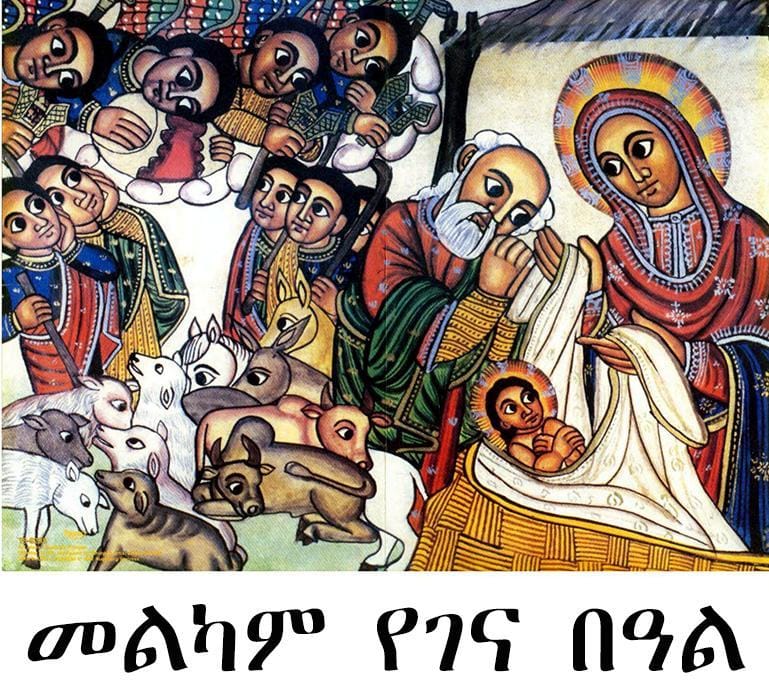
Bain’s research highlighted the connections between Celtic art and its religious, legal, and philosophical contexts. He noted that the use of knots and interlace motifs was often influenced by religious prohibitions on figurative representation, which led to ingenious decorative strategies in manuscripts and sculpture. His work also traced design influences between ancient Mediterranean, Asian, and North-European cultures, helping to clarify the origins and meaning of Celtic visual motifs.

  • Celtic knotwork often symbolizes eternity, the interconnectedness of life, or unbroken spiritual paths, as the lines have no beginning or end.
  • Spirals can represent cosmic forces, spiritual development, or cycles of birth and rebirth, especially in Insular and Pictish traditions.
  • Zoomorphic elements—where knots morph into animal forms—may evoke mythic creatures, protective spirits, or ancestral lineage, blending art with storytelling.

Referring to a page of the “Book of Armagh,” Professor J. O. Westwood wrote, “In a space of about a quarter of an inch superficial, I counted with a magnifying glass no less than one hundred and fifty-eight interlacements of a slender ribbon pattern formed of white lines edged with black ones upon a black ground. No wonder that tradition should allege that these unerring lines should have been traced by angels.” One of the aims of this book is to show that there is nothing marvellous in a design having not a single irregular interlacement. Indeed, a wrong interlacement would be an impossibility to a designer conversant with the methods. One might as well marvel at a piece of knitting that had not a mistake in its looping.

Threshold tracing, Isle of Lewis, Scotland

The continuous line also survived in Scotland, where M. M. Banks documented it in 1935. In some rural areas, housewives traced such patterns in pipe clay on thresholds, the floors of houses, and in dairies and byres. The designs, not all of which were continuous-line drawings, were refreshed each morning and were thought to keep away ghosts or evil spirits. One elderly woman in Galloway said that her grandmother had explained the tradition with a couplet:

Tangled threid and rowan seed

Gar the witches lose (or lowse) their speed

The example in Figure 18 is missing the guiding dots but a Greek vase from the 8th century B.C. with a similar design is not . The extra dots indicate the artist was imitating a design that was no longer understood. The Greeks viewed barbarian art much in the manner of modern decorators and borrowed and adapted freely.

Proto-Corinthian Greek vase, 8th century B.C.

A related motif dating from at least Bronze Age times is the spiral ornament, found in Greece, Rome, Etruria and among Germanic and Celtic peoples. Spiral fibula were used to close garments while a variety of metalwork designs served as arm bands, diadems and the like . Drawn from a single piece of wire, the spiral forms a continuous path ending where it begins, a trait common to the other art forms we have been discussing.

Bronze spiral arm band, 1600 B.C., Migration Period, Europe

The art historian Ananda Coomaraswamy comments on the symbolism of the spiral fibula.

The primary sense of “broach” (= brooch) is that of anything acute, such as a pin, awl or spear, that penetrates a material; the same implement, bent upon itself, fastens or sews things together, as if it were in fact a thread. French fibule, as a surgical term, is in fact suture. It is only when we substitute a soft thread for the stiff wire that a way must be made for it by a needle; and then the thread remaining in the material is the trace, evidence and “clew” to the passage of the needle; just as our own short life is the trace of the unbroken Life whence it originates.

Drawn from a single piece of wire, the spiral fibula forms a continuous path ending where it begins.

The use of a single line to construct a work of art has a long history as we have seen and examples can be found in a wide variety of media.

It is of little importance, in the different forms that the symbolism takes, whether it be a thread in the literal sense, a cord, a chain, or a drawn line such as those already mentioned, or a path made by architectural means as in the case of the labyrinth, a path along which the being has to go from one end to the other in order to reach his goal. What is essential in every case is that the line should be unbroken.

  • Symbolism shapes religious rituals, social identity, and even national icons, allowing communities to share complex ideas through shared visual language.
  • The study of symbolism reveals how societies articulate meaning, bridge material and spiritual worlds, and encode important knowledge through art and tradition.
  • George Bain, known as the father of the Celtic art revival, reached out and maintained contact with Ananda Coomaraswamy in the 1940s. Coomaraswamy, an esteemed art historian and philosopher specializing in Indian and Oriental art, was one of the most respected scholarly figures of that time and had a strong interest in Celtic culture throughout his career.
  • Coomaraswamy admired Bain’s work, and Bain expressed mourning for Coomaraswamy’s passing in the preface to his major book “Celtic Art: The Methods of Construction,” showing a connection that underlined a Celtic-Indian cultural linkage. Their intellectual exchange is regarded as part of a broader cross-cultural dialogue that linked Eastern art traditions and philosophies with Western Celtic revival movement. Core Philosophical Themes in Celtic Tradition
  • Interconnectedness and Eternity: Celtic art, especially knotwork, symbolizes the endless, interconnected nature of existence. The continuous loops without beginning or end reflect eternal life, unity, and the infinite cycle of birth, death, and rebirth.
  • Cycles of Life and Renewal: Many motifs, such as spirals and the triskele (triple spiral), evoke life cycles, cosmic rhythms, and transformation. These represent the soul’s journey through phases of growth, death, and spiritual renewal, aligning human life with natural and cosmic forces.
  • Nature and Spiritual Vitality: Celts believed all elements of nature—rivers, rocks, animals, the sun, and the moon—possess spirit and power. This animistic belief is expressed in symbols that honor natural forces and the sacred balance between earth and the cosmos.
  • Balance and Harmony: The Awen symbol, consisting of three rays, represents spiritual inspiration as well as the balance between opposites such as male/female energies, mind/body, and opposing cosmic forces.
  • Trinity and Triplicity: Triangular and threefold symbols such as the triquetra emphasize important trinities in Celtic belief: life-death-rebirth, body-mind-spirit, or past-present-future. These forms unify spiritual, natural, and philosophical concepts in a single visual.
  • Philosophical Role of Celtic Symbols
  • Symbols were used as tools in rituals, healing, and oral traditions to convey wisdom and cosmic truths.
  • They acted as spiritual maps for meditation and guides for eternal truths embedded in everyday life.
  • Their meanings often combine Christian symbolism with pre-Christian pagan beliefs, showing cultural continuity and transformation.
  • In essence, Celtic traditions and philosophies express a profound spirituality centered on eternal cycles, unity with nature, and the balance of cosmic and human forces, richly encoded in their symbolic art and motifs
  • these motifs and symbolism is still to be seen in Frisian Crafmanship:
Frisian Mandala: “the Thread of Wisdom”

For the Frisian Eternal Knot see The wisdom of Frisian Craftmanship

Ananda Coomaraswamy viewed the motif of two birds, especially twin or entwined birds, as deeply symbolic rather than merely decorative. He connected this symbolism across cultures, noting similarities between Celtic traditions and Indian texts like the Upanishads.

In these traditions, two birds often represent dualities or pairs of opposites—such as soul and body, divine and human, or inner and outer realities—reflecting a metaphysical unity through their relationship. Coomaraswamy saw twin birds as carriers of spiritual meaning, like “psychopomps” (soul guides) or symbols of the soul’s journey and transcendence.

This symbol appears in Celtic art as interlaced bird motifs serving not just as ornament but as a representation of life’s dual nature and spiritual truths, paralleling similar uses

in ancient Indian cosmology and philosophy. Coomaraswamy’s comparative approach highlighted how such motifs are expressions of common archetypes across cultures, embodying spiritual and philosophical ideas through natural imagery.

Ananda Coomaraswamy interpreted the motif of twin birds in myth as a profound symbol of spiritual unity and duality. In a letter to George Bain in 1947, he explained that the two birds often found in traditional design represent the friendship or unity between the “inner and outer man,” meaning the spirit and body within every person. This is also reflected in the Indian Upanishads, where two birds perched on the same tree symbolize the universal self and the individual self—the true self and the ego.

Coomaraswamy elaborated that this symbolism captures the resolution of internal conflict and self-integration, the core goal of true psychology and spiritual development. He quoted the Upanishadic passage: “Two birds, fast bound companions, clasp close the selfsame tree, the tree of life,” indicating the inseparable, complementary nature of these dual aspects.

Thus, the twin birds in Celtic art, far from mere decoration, encapsulate themes of unity, friendship, and the relationship between body and spirit—an archetype that crosses cultural boundaries between Celtic and Indian traditions alike.

The blue tit symbolizes joy, cheerfulness, hope, and positive transformation, along with deeper meanings of love, loyalty, adaptability, and spiritual renewal in various folkloric and spiritual traditions.

Joy and Positivity: The blue tit’s vibrant colors and playful behavior represent happiness,
cheerfulness, and a reminder to embrace joy and positivity even in difficult times.
Love and Loyalty: Folklore often associates blue tits with love, trust, and enduring faithfulness —these birds are monogamous and known for lifelong pair bonding, making them symbols of committed partnership and loyalty.
Hope and Renewal: Encounters with blue tits are viewed as omens of hope, new beginnings, and brighter futures after adversity.
Adaptability and Resourcefulness: Blue tits are known for their intelligence and ability to
thrive in changing environments, symbolizing resilience and making the most of available
resources.
Communication and Self-Expression: The species is vocal and expressive, offering a metaphor for clear communication and encouragement to openly share feelings and truths.
Spiritual Meaning: The blue coloration is often tied to spiritual awakening, divine intelligence,
and healing, while the bird itself might be interpreted as a messenger of spiritual guidance
and connection.

Cultural and Mythic Contexts: In Celtic and European folklore, blue tits represent good luck, honor, and protection—sometimes regarded as carriers of souls or spirits.

In sum, the blue tit in Dutch symbolism embodies themes of love, hope, joy, and spiritual
guidance, carrying a gentle but enduring message of faithfulness and renewal within the
broader tapestry of Dutch folklore and natural tradition.

  • Simorgh

However, historically and mythologically, the Simorgh (or Simurgh) is a legendary Persian bird often associated with divinity, wisdom, and mythical power in Persian literature and Sufism. It is a large, benevolent, mythical bird said to possess great knowledge and spiritual
significance, sometimes seen as a symbol of the unity of all beings or divine intervention.

The Avesta (Zoroastrian holy scripture), specifically the Bahman Yasht and Rashnu Yasht,
where Simurgh is mentioned as Saêna, a divine bird associated with healing, fertility, and
divine blessing, roosting on the cosmic Tree of Life that contains all medicinal plants.
Minooye Kherad (a Zoroastrian wisdom text from the late Sassanid era), which elaborates on Simurgh’s role in healing and seeds of all plants.
The Shahnameh (The Book of Kings) by Ferdowsi, a seminal Persian epic poem from around 1000 years ago, that narrates the Simurgh raising the hero Zal, assisting in the birth of Rostam through surgical knowledge, and healing wounds with magical feathers.
The Conference of the Birds” by Farid ud-Din Attar, a 12th-century Sufi mystical poem,
where the narrative centers on thirty birds searching for the Simurgh, eventually realizing
they themselves embody the Simurgh, symbolizing divine unity and spiritual awakening.
These texts collectively form the core of the spiritual and mystical traditions relating to the
Simurgh as a divine, healing, wise, and unifying figure in Persian and Sufi cosmologies.

The phrase “Simurgh is 30 birds” comes from the famous 12th-century Sufi poem “The
Conference of the Birds” by Farid ud-Din Attar. In this allegorical tale, a gathering of birds
embarks on a spiritual quest to find their king, the Simurgh. The journey involves crossing
seven valleys symbolizing the stages of spiritual growth.
Out of the many birds on this journey, only thirty complete it and reach the Valley of Simurgh.
When they finally meet the Simurgh, they are astonished to discover that the Simurgh itself is none other than their collective selves. The name “Simurgh” is a pun in Persian: “si” means thirty and “morgh” means birds, hence “thirty birds.” This revelation symbolizes the spiritual realization that the divine they sought is actually the true nature of themselves, emphasizing unity and self-realization.

Meaning of the Eternal Knot with the Number 7

The Eternal Knot itself symbolizes: Infinity , the cycle of life and death,The connectedness of everything in the universeThe intertwining of time space , and consciousness

When you combine this with the sacred number 7 , you get a powerful spiritual deepening.


Symbolism of the Number 7

The number 7 is found in almost every spiritual tradition as a number of holiness mysticism , and completion . Some examples:

Tradition / CultureSymbolism of 7
BuddhismSeven Steps of the Buddha after His Birth
HinduismSeven chakras (energy points)
ChristianitySeven days of creation
JudaismSeven-branched candelabra ( Menorah )
IslamSeven heavens, seven rounds around the Kaaba
Nature & CosmosSeven celestial bodies visible to the naked eye

What does an Eternal Knot of 7 mean?

An Eternal Knot with 7 loops or connections represents:

Perfect connection of body, mind and soul
The eternal cycle of transformation and spiritual growth in 7 phases
The coming together of timelessness (knot) and completeness (7)
A balance between the material (the knot is tangible) and the spiritual (the symbolism of 7)

The Eternal Knot , also known as the Infinity Knot , is a powerful symbol found in several spiritual traditions, most notably within Buddhism Hinduism , and Celtic culture . Here is some background information on this fascinating symbol:


Meaning of the Eternal Knot

 General Symbolism :

  • The Eternal Knot consists of an endless loop of lines that have no beginning or end.
  • It symbolizes infinity the eternal cycle of life , and the interconnectedness of all things .

In Buddhism

  • Known as the Shrivatsa or Endless Knot .
  • One of the Eight Lucky Symbols ( Ashtamangala ) in Tibetan Buddhism.
  • Stands for:
    • The Buddha’s infinite wisdom and compassion .
    • The connection between cause and effect (karma).
    • The idea that everything in the universe is interconnected.

In Hinduism

  • The knot is sometimes associated with eternal love life cycles , and immortality .
  • Also a reference to the cyclical nature of existence : birth, death and rebirth.

Celtic Culture

  • Similar knots, such as the Celtic knot , are common in ancient Celtic art.
  • Often represent eternal connectedness life paths , and spiritual growth
Brompton Cemetary
  • Frisian Eternal Knot
  • The Flower of Life and Overlapping circles grid

The Flower of Life is one of the most iconic symbols in sacred geometry, representing the interconnectedness of all life and the fundamental patterns of creation.


What is the Flower of Life?

The Flower of Life is a geometric figure made up of multiple evenly-spaced, overlapping circles arranged in a hexagonal pattern, resembling a flower. The pattern can expand infinitely, symbolizing endless creation and unity.

Basic Structure:

  • Composed of 19 overlapping circles within a larger circle (though the pattern can extend beyond).
  • Forms interlocking petals resembling flowers.
  • The central design often contains the Seed of Life, which is a smaller version made of 7 circles.

Meaning and Symbolism

The Flower of Life is considered a visual expression of:  Unity of all living thingsInterconnectedness of the universeBlueprint for life and creationSacred structure behind nature and reality

Flower of Life in NatureThe pattern reflects: See Geometry of Life – Geometry of Plants – Geometry of Human Life

  • Honeycombs (hexagonal structures)
  • Snowflakes
  • Flower petal arrangements
  • The structure of molecules and atoms

An overlapping circles grid is a geometric pattern of repeating, overlapping circles of an equal radius in two-dimensional space. Commonly, designs are based on circles centered on triangles (with the simple, two circle form named vesica piscis) or on the square lattice pattern of points.

Patterns of seven overlapping circles appear in historical artefacts from the 7th century BC onward; they become a frequently used ornament in the Roman Empire period, and survive into medieval artistic traditions both in Islamic art (girih decorations) and in Gothic art. The name “Flower of Life” is given to the overlapping circles pattern in New Age publications.

Of special interest is the hexafoil or six-petal rosette derived from the “seven overlapping circles” pattern, also known as “Sun of the Alps” from its frequent use in alpine folk art in the 17th and 18th century.

Triangular grid of overlapping circles

This pattern can be extended indefinitely, seen here with hexagonal rings of 1, 7, 19, 37, 61, 91 circles…

The triangular lattice form, with circle radii equal to their separation is called a seven overlapping circles grid.[1] It contains 6 circles intersecting at a point, with a 7th circle centered on that intersection.

Overlapping circles with similar geometrical constructions have been used infrequently in various of the decorative arts since ancient times.

Cultural significance

Near East

The oldest known occurrence of the “overlapping circles” pattern is dated to the 7th or 6th century BCE, found on the threshold of the palace of Assyrian king Aššur-bāni-apli in Dur Šarrukin (now in the Louvre).[2]

The design becomes more widespread in the early centuries of the Common Era. One early example are five patterns of 19 overlapping circles drawn on the granite columns at the Temple of Osiris in AbydosEgypt,[3] and a further five on column opposite the building. They are drawn in red ochre and some are very faint and difficult to distinguish.[4] The patterns are graffiti, and not found in natively Egyptian ornaments. They are mostly dated to the early centuries of the Christian Era[5] although medieval or even modern (early 20th century) origin cannot be ruled out with certainty, as the drawings are not mentioned in the extensive listings of graffiti at the temple compiled by Margaret Murray in 1904.[6]
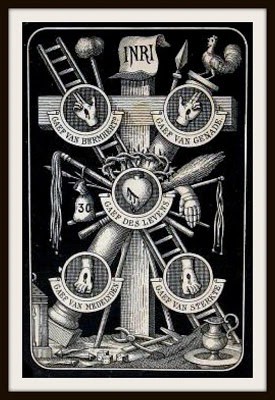
Similar patterns were sometimes used in England as apotropaic marks to keep witches from entering buildings.[7] Consecration crosses indicating points in churches anointed with holy water during a church’s dedication also take the form of overlapping circles.

girih pattern that can be drawn with straightedge and compass

Window cage at Topkapı Palace, using pattern

In Islamic art, the pattern is one of several arrangements of circles (others being used for fourfold or fivefold designs) used to construct grids for Islamic geometric patterns. It is used to design patterns with 6- and 12-pointed stars as well as hexagons in the style called girih. The resulting patterns however characteristically conceal the construction grid, presenting instead a design of interlaced strapwork.[8]

Europe

Patterns of seven overlapping circles are found on Roman mosaics, for example at Herod’s palace in the 1st century BC.

The design is found on one of the silver plaques of the Late Roman hoard of Kaiseraugst (discovered 1961).] It is later found as an ornament in Gothic architecture, and still later in European folk art of the early modern period.

High medieval examples include the Cosmati pavements in Westminster Abbey (13th century).[11] Leonardo da Vinci explicitly discussed the mathematical proportions of the design

See also:The Soul Carved in Wood: Romania’s Sacred Craft

Frisian Craftmanship

https://www.kerfsnede.nl/

Frisian patterns are very comparable to Islamic PatternsThey express the same Thruth “Haqq” in Arabic and these patterns lead to the Truth. All Frisian will agree with Goethe who says:

Stupid that everyone in his case

Is praising his particular opinion!

If Islam means submission to God,

We all live and die in Islam.”

(West-East Divan)

See:Goethe, the “refugee” and his Message for our times

see also Research Goethe Message for the 21st century

 The classic study of the cosmological principles found in the patterns of Islamic art and how they relate to sacred geometry and the perennial philosophy: Is the book Islamic Patterns: An Analytical and Cosmological Approach by Keith Critchlow

For centuries the nature and meaning of Islamic art has been wrongly regarded in the West as mere decoration. In truth, because the portrayal of human and animal forms has always been discouraged on Islamic religious principles that forbid idolatry, the abstract art of Islam represents the sophisticated development of a nonnaturalistic tradition. Through this tradition, Islamic art has maintained its chief aim: the affirmation of unity as expressed in diversity.


In this fascinating study the author explores the idea that unlike medieval Christian art, in which the polarization of such forms and patterns was relegated to a background against which to set sacred images, the geometrical patterns of Islamic art can reveal the intrinsic cosmological laws affecting all creation. Their primary function is to guide the mind from the mundane world of appearances toward its underlying reality.


Numerous drawings connect the art of Islam to the Pythagorean science of mathematics, and through these images we can see how an Earth-centered view of the cosmos provides renewed significance to those number patterns produced by the orbits of the planets.

The author shows the essential philosophical and practical basis of every art creation–whether a tile, carpet, or wall–and how this use of mathematical tessellations affirms the essential unity of all things. An invaluable study for all those interested in sacred art, Islamic Patterns is also a rich source of inspiration for artists and designers. Read here the book

Geometry Summer School 2025: Sacred Architecture & the Cosmos from The King’s Foundation 

Millstone , maelstroms and Frisian craft patterns

A whirlpool is a body of rotating water produced by opposing currents or a current running into an obstacle. Small whirlpools form when a bath or a sink is draining. More powerful ones formed in seas or oceans may be called maelstroms (/ˈmeɪlstrɒm, -rəm/ MAYL-strom, – strəm).One of the earliest uses in English of the Allan Poe in his short story ” Scandinavian word malström or malstrøm was by Edgar A Descent into the Maelström” (1841). The Nordic word itself is derived from the Dutch word maelstrom (pronounced [ˈmaːlstroːm]
ⓘ ; modern spelling maalstroom
), from malen (‘to mill’ or ‘to grind’) and stroom (‘stream’), to form the meaning ‘grinding current’ or literally ‘mill-stream’, in the sense of milling (grinding) grain.

Vortex is the proper term for a whirlpool that has a downdraft. In narrow ocean straits with fast flowing water, whirlpools are often caused by tides. Many stories tell of ships being sucked into a maelstrom, although only smaller craft are actually in danger.] Smaller whirlpools appear at river rapids[] and can be observed downstream of artificial structures such as weirs and dams. Large cataracts, such as Niagara Falls, produce strong whirlpools.

Millstones working
The Truth has a
Fries draadglas
Frisian Mandala: Maelstrom of Wisdom 1
Frisian Mandala: Maelstrom of Wisdom 2

See The wisdom of Frisian Craftmanship

Spinning , Distaff and Frisian Craft

 distaff (/ˈdɪstɑːf//ˈdɪstæf/, also called a rock[is a tool used in spinning. It is designed to hold the unspun fibers, keeping them untangled and thus easing the spinning process. It is most commonly used to hold flax and sometimes wool, but can be used for any type of fibre. Fiber is wrapped around the distaff and tied in place with a piece of ribbon or string. The word comes from Low German dis, meaning a bunch of flax, connected with staff.

As an adjective, the term distaff  is used to describe the female side of a family. The corresponding term for the male side of a family is the “spear” side.

Form

In Western Europe, there were two common forms of distaves, depending on the spinning method. The traditional form is a staff held under one’s arm while using a spindle – see the figure illustration. It is about 3 feet (0.9 m) long, held under the left arm, with the right hand used in drawing the fibres from it.[2] This version is the older of the two, as spindle spinning predates spinning on a wheel.

A distaff can also be mounted as an attachment to a spinning wheel. On a wheel, it is placed next to the bobbin, where it is in easy reach of the spinner. This version is shorter, but otherwise does not differ from the spindle version.

By contrast, the traditional Russian distaff, used both with spinning wheels and with spindles, is L-shaped and consists of a horizontal board, known as the dontse (Russian: донце), and a flat vertical piece, frequently oar-shaped, to the inner side of which the bundle of fibers was tied or pinned. The spinner sat on the dontse, with the vertical piece of the distaff to her left, and drew the fibers out with her left hand. The distaff was often richly carved and painted and was an important element of Russian folk art.[3]

Recently,[when?] handspinners have begun using wrist distaves to hold their fiber; these are made of flexible material, such as braided yarn, and can swing freely from the wrist. A wrist distaff generally consists of a loop with a tail, at the end of which is a tassel, often with beads on each strand. The spinner wraps the roving or tow around the tail and through the loop to keep it out of the way, and to keep it from getting snagged.

Dressing

Dressing a distaff is the act of wrapping the fiber around the distaff. With flax, the wrapping is done by laying the flax fibers down, approximately parallel to each other and the distaff, then carefully rolling the fibers onto the distaff. A ribbon or string is then tied at the top and loosely wrapped around the fibers to keep them in place.

Frigga_in_Myths_of_Northern_Lands_

Read here: Myths of northern lands, narrated with special reference to literature and art by Guerber, Hélène Adeline.

Finnish Distaff
Finnish Distaff
Finnish Distaff
Fusinus Distaff
  • The millstone and sacred Geometry
  • The cosmogenesis of dwelling: ancient (eco)logical practices of divining the constructed world

The disenchantment with scientific progress has awakened a new environmental awareness in our culture so that today we are reconsidering the constructed world with respect to the position of the sun to create sustainable environments. This “new” approach to the design of the constructed world is based on ancient traditions that have been lost due to new technologies that have allowed us to defy nature. These ancient traditions were (eco)logicalthe forces of nature were used to shape the constructed world to create comfortable dwellings that responded to prevailing environmental conditions. The built world was auspicious because it was oriented towards the cosmos: the positions of the sun, the stars and the planets. Human dwelling was considered to be a microcosm of the universe and was associated with spirituality. The act of building itself was a religious rite. Divining the constructed world was a talismanic operation that the ancients used to orient their earthly creations to be “square with the world” and began with the human body at its center and origin. The cosmological origins of building will be demonstrated by considering the ancient practices of Vāstu Śāstra and Feng Shui as a way of reconsidering present-day body-centered (eco)logical approaches to design.

Divining the Constructed World

From the trunk of a gum tree Numbakula fashioned the sacred pole (kauwa-auwa) and, after anointing it with blood, climbed it and disappeared into the sky. This pole represents a cosmic axis (axis mundi), for it is around the sacred pole that territory becomes habitable, hence is transformed into a world.

Mircea Eliade, The Sacred and the Profane1

Divining the constructed world was a talismanic operation that the Ancients used to orient their earthly creations to be “square with the world.” The Ancients constructed according to divine co-ördinating principles to align their built works with the cardinal directions of the earth with respect to the cosmos. This was an (eco)logical operation that intended to embody the divine in an earthly construction that began with the human body at its center and origin. The body marked the beginning and the first point of contact with the heavens through its axis mundi, which in the body is the line of the spine in the erect human figureIn this way, the earthly microcosm could be brought into alignment with the macrocosm of the universe.

Divination is a geomantic procedure. The word geomancy is derived from the Greek geo, literally meaning the earth, and manteia, meaning divination or coming from above. Geomancy is the act of projecting lines onto the earth from the cosmos above through marking the ground and encircling.  This talismanic operation projects regulating lines upon the ground to provide auspicious conditions for the construction of the built environment and to protect the constructed world. This is a “divine” act with heavenly origins.

The divine resources for ancient geomantic procedures included the positions and the paths of the sun, the moon, the stars and the planets. The instrument the Ancients used to take their measurements was the gnomon, literally, interpreter. It was a stick, often in the form of a human figure , which was used to help them interpret their position on earth with respect to the greater universe of the cosmos by being encircled: the intersection of the gnomon’s cast shadow and the circle in the morning and the evening at the summer solstice located solar east and west from which north and south could be determined .  This (eco)logical procedure resulted in built works that considered the environment through solar and stellar orientation.

Two Borneo tribesmen in recent times measuring the sun’s shadow length at summer solstice with a gnomon. Note the human figure atop the gnomon
Precession of the equinoxes
Diagram of the ancient Chinese divisions of the celestial sphere and their relations with the horizon
Millstone at work
The View Near a Black Hole, drawn by April Hobart, CXC: In the center of a swirling whirlpool of hot gas is a black hole. Studies of the bright light emitted by the swirling gas frequently indicate not only that a black hole is present, but also likely attributes. (Photo by: Photo 12/Universal Images Group via Getty Images)
Whirlpool.
The Whirlpool Galaxy, also known as M51 or NGC 5194, is having a close encounter with a nearby companion galaxy, NGC 5195, just off the upper edge of this image.
  • Millstone: The Creation of a New Coalescence Consciousness of Opposites

This study is about the symbolism of Millstone appeared in psychotherapy like sand play therapy with symbol work. Symbols not only deliver meanings but also have numinous power, which produces transformation through powerful energy from emotional experience. Symbols help human’s mentality develop by compromising opposites which cause conflict. This study is to examine the characteristic of Millstone in human history and the symbolic
meaning which appears in mythology and tales and alchemy, and to explain universal and cultural meaning of millstone connected to psychological symbolism. Millstone represents pain through sacrifice of grain, death and the creation of new consciousness as a symbol of the rebirth. Also, it explains the circulation of original nature as a symbol of destiny to overcome by the integration of anima and animus. The millstone described as the symbol of Self in the marriage of mythology represents the coniunctio oppositorum between men and women, a combination of yin and yang. It is the symbol of wholeness integrating conscious and unconscious. Through this study, we consider that millstone is the psychic center of the ego- Self axis and the individuation in the psychotherapy is the process of unceasing transformation of one’s whole personality which experiences the process of balancing, regulating and unifying. Consequently, millstone functions as symbolic intermediation that leads to the center of one’s whole psyche.
Read here

  • The Norns and the “Flap aan de wand” table

The Norns, similar to the Fates, they spin the threads of destiny by Yggdrasil, the World Tree. Represent Urd (Past), Verdandi (Present), Skuld (Future). Symbolism: Spinning reflects how past, present, and future are interwoven, shaping all existence

https://roosjehindeloopen.com/rh-collectie/

The three Norns or three Fates are maybe forgotten but you can find some presence in Wales in the Castel Coch:

We find back the 3 faces of the three Norns on the back “flap on the wall” table and also their distaffs with the 3 legs of the table:

Distaff Shape: A distaff often has a long, slender, spindle-like appearance with a widened or carved top for holding fibers.

Table Legs Resembling Distaff: Many fold-down or wall-mounted flap tables, especially antique or rustic ones, have legs that are turned (wood-turned on a lathe) into spindle shapes:

The faces of the 3 Norns disappear and became knots but the connection piece is always the same in a wave form of a thread:

  • The table legs resemble a distaff, intentionally , it can evoke Aa aesthetic tied to old-world craftsmanship: This resemblance is a practical design choice from woodworking traditions, and it might carry symbolic echoes, especially in cultures where the distaff was a significant household tool.

The Diftaff was very special in the Middelages : “Quenouille” is French for distaff, the tool used in spinning to hold fibers, historically associated with women’s domestic work. It was so uimportant that yopu can find an“Évangiles des Quenouilles”, or The Distaff Gospels, it is a 15th-century French collection of popular beliefs, superstitions, and proverbial wisdom, supposedly gathered from women spinning at their distaffs.

Furniture design echoing the distaff can intentionally reference the domestic, female-centered spaces where knowledge, stories, and traditions were passed down — much like the Distaff Gospels themselves. The work presents itself humorously as “gospels” — not religious scripture, but rather the collected “truths” women exchanged while working, often reflecting folk beliefs, moral lessons, and practical advice.

Why “Distaff Gospels“?

In medieval Europe, spinning at the distaff was a communal and domestic female space, where women exchanged stories, advice, and gossip. The title plays on the contrast between sacred religious texts (gospels) and everyday, earthy wisdom passed between women — elevating domestic knowledge in a playful way.

But the most important pice was the front of the table: the Frisian Eternal Knot or Flower of Life. ( see above)

We can call the tables and another crafts a kind of Frisian Folk Mandalas for the daily use of the Family:

Frisian Mandala: “the Thread of Wisdom”
  • Conclusion

The wisdom of Frisian craft, particularly in clockmaking and other traditional arts from Friesland, reflects deep-rooted values of precision, resilience, respect for tradition, and harmony with nature. Here’s a breakdown of the underlying wisdom embedded in Frisian craftsmanship: Wisdom Reflected in Frisian Craft:

Patience and Precision

Frisian clockmakers were known for their meticulous attention to detail. The delicate mechanisms and ornate decorations took months of steady, focused work, teaching the value of:

Endurance over instant results, Craftsmanship over mass production, Pride in perfecting one’s skill,,Good work cannot be rushed — time is both the master and the measure.

Respect for Time

Frisian clocks, in particular, embody the philosophical relationship with time: Time is cyclical (reflected in moon phases and astronomical elements) – Time governs life, work, and nature’s rhythms – The passing of time demands mindfulness, not haste – The clock reminds owners: Master time, don’t be mastered by it — a reflection of both humility and responsibility.

Connection to Nature

Frisian crafts often incorporate natural elements — woodcarvings, floral designs, or ship motifs — symbolizing: The interconnectedness of humanity and the environment – The rhythm of tides, seasons, and life cycles – Sustainability, using local materials like oak or pine for lasting beauty

Cultural Identity and Storytelling

Frisian craft preserves oral history and regional pride, telling stories through: *Family crests or local symbols on clocks (Scenes of Friesland’s landscapes) in carvings or paintings -* Passing down objects as heirlooms, keeping stories alive across generations – A well-made object carries the soul of its maker and the spirit of its land

Simplicity Meets Elegance

True to Dutch design sensibilities, Frisian craft reflects functional beauty, blending:

Practical engineering (precise clockworks, sturdy furniture) -* Subtle artistry (hand-painted details, symbolic carvings) – Minimal excess, maximum meaning

Legacy of Frisian Wisdom

Even today, the wisdom of Frisian craft is visible in: -Dedication to high standards – Interweaving function with beauty – Honoring tradition while embracing innovation – Living life in harmony with time and nature

Art That Expresses Truth

Ananda Coomaraswamy, deeply rooted in both Eastern and Western traditions, emphasized that the traditional artist or craftsman was not creating to express individuality, but to reveal the timeless:

The traditional craftsman did not ‘express himself,’ he expressed truths.

Coomaraswamy rejected the modern cult of originality and innovation. For him, traditional art and craft were “vehicles for eternal wisdom“. The form was not arbitrary—it was a symbolic expression of metaphysical principles, passed down through sacred traditions. Every detail, from proportions to ornamentation, had a purpose that reached beyond aesthetics.

Work is for the sake of the work done, and not for the profit therefrom.”

In this sense, “work was prayer “—a form of contemplation, a discipline of the soul.

The eternal wisdom formed with Sacred Geometry is universal and is based on the One Truth , “Haqq “in arabic.

  • Craft and Tradition: The Sacred Art of Making

In the modern world, craftsmanship is often reduced to technique, productivity, or personal expression. But in the eyes of Traditionalist thinkers like René Guénon, Ananda Coomaraswamy, and Frithjof Schuon, craft is something far more profound—it is a sacred act rooted in metaphysical principles and spiritual symbolism.

Craft as Sacred Knowledge

René Guénon viewed traditional craft not as utilitarian labor but as a means of cosmic participation. The traditional craftsman, for Guénon, was engaged in work that reflected the divine order:

A craft is not merely a technique, but a transmission of a traditional knowledge, the application of principles that are ultimately metaphysical.”

In traditional civilizations, there was no division between the sacred and the secular in labor. Every craft, from carpentry to stonemasonry, was infused with symbolic meaning. The tools themselves—like the compass, the square, or the chisel—served as metaphors for universal truths. The craftsman, through repeated and intentional action, participated in the divine act of creation.

Work and contemplation were not separate in traditional societies. A craftsman worked not just with his hands but also with an awareness of the symbolic and spiritual meaning of his work.

The tool, the material, and the process had symbolic dimensions. For instance, in masonry or metalwork, the transformation of raw material symbolized the transformation of the soul.

Initiation and Guilds

Guénon emphasized the role of initiatic craft guilds—especially in the West, such as medieval masonry guilds—which preserved esoteric teachings and transmitted initiatic knowledge through symbols, rituals, and oral transmission.

These guilds were structured hierarchically and transmitted cosmological knowledge embedded in tools, geometry, architecture, and ritual.

The compass and square, for example, symbolized heaven and earth or spirit and matter.

The architecture of temples or cathedrals followed sacred geometry, aligning physical structures with cosmic principles.

Degeneration in Modernity

Guénon argued that in modern times, the loss of sacred and symbolic understanding has led to the degeneration of crafts into mere technical skills, disconnected from their metaphysical roots.

This reflects his larger thesis: modernity is a descent into materialism, fragmentation, and loss of spiritual orientation””. The disappearance of guilds, desacralization of labor, and mass industrialization exemplify this decline.

see:Wisdom of Craftmanship Versus Modernity

  • Macrocosmos- Microcosmos

Amleth (Old NorseAmlóði; Latinized as Amlethus) is a figure in a medieval Scandinavian legend, the direct inspiration of the character of Prince Hamlet, the hero of William Shakespeare’s tragedy Hamlet, Prince of Denmark. The chief authority for the legend of Amleth is Saxo Grammaticus, who devotes to it parts of the third and fourth books of his Gesta Danorum, completed at the beginning of the 13th century.[1] Saxo’s version is supplemented by Latin and vernacular compilations from a much later date. In all versions, prince Amleth (Amblothæ) is the son of Horvendill (Orwendel), king of the Jutes. It has often been assumed that the story is ultimately derived from an Old Icelandic poem, but no such poem has been found; the extant Icelandic versions, known as the Ambales-saga or Amloda-saga, are considerably later than Saxo.2] Amleth’s name is not mentioned in Old-Icelandic regnal lists before Saxo. Only the 15th-century Sagnkrønike from Stockholm may contain some older elements.

– Name

Sampo -Väinämöinen

The Old Icelandic form Amlóði is recorded twice in Snorri Sturluson‘s Prose Edda. According to the section Skaldskaparmal,

the expression Amlóða mólu (‘Amlóði’s quern-stone‘) is a kenning for the sea, grinding the skerries to sand.] In a poem by the 10th-century skald Snæbjörn the name of the legendary hero Amlóði is intrinsically connected to the word líðmeldr (‘ale-flower’), leading to the conclusion that the nine mermaids, who operated the “hand-mill of the sea”, “long ago ground the ale-flour of Amlóði”.The association with flour milling and beer brewing, the gold carried around, the net used to catch people and the association with the nine female waves place Amleth on a par with the deity Aegir and his wife Rán.

The late 12th-century AmlethusAmblothæ may easily be latinizations of the Old Norse name. The etymology of the name is unknown, but there are various suggestions.

Icelandic Amlóði is recorded as a term for a fool or simpleton in reference to the character of the early modern Icelandic romance or folk tale.[9] One suggestion[10] is based on the “fool” or “trickster” interpretation of the name, composing the name from Old Norse ama “to vex, annoy, molest” and óðr “fierceness, madness” (also in the theonym Odin). The Irish and Scottish word amhlair, which in contemporary vernacular denotes a dull, stupid person, is handed down from the ancient name for a court jester or fool, who entertained the king but also surreptitiously advised him through riddles and antics.

A more recent suggestion is based on the Eddaic kenning associating Amlóði with the mythological mill grótti, and derives it from the Old Irish name Admlithi “great-grinding”, attested in Togail Bruidne Dá Derga.[11]

Attention has also been drawn to the similarity of Amleth to the Irish name Amhladh (variously Amhlaidh, Amhlaigh, Amhlaide), itself a Gaelic adaptation of the Norse name Olaf.[12]

In a controversial suggestion going back to 1937, the sequence æmluþ contained in the 8th-century Old Frisian runic inscription on the Westeremden yew-stick has been interpreted as a reference to “Amleth”.

The Fool (tarot card)
  • Ameland

Ameland is a young island. It is risen from the sea only in the youngest era of geological history of the earth, the Holocene (the  geological epoch from 11,700 years ago to the present). The early signs of the origins of the wadden island Ameland came into being after the last ice age. The temperature  rose, the icecaps melted, the sea level rose and for our surroundings that meant the North Sea advanced towards the  land.

The exact etymology of Ameland is debated, but it likely derives from older Germanic or Frisian roots: “Ame” may come from an old word for water, river, or wetland. “Land” clearly means “land” or “territory” in Dutch and Germanic languages. So, Ameland  likely means “land by the water”, river land”, or “wetland area”, which fits geographically since it’s an island surrounded by sea and tidal flats.”

But  it is more realistic to say  that Ameland   come  fom Amlodi ,the Old Icelandic form Amlóði is recorded twice in Snorri Sturluson‘s Prose Edda. According to the section Skaldskaparmal, the expression Amlóða mólu (‘Amlóði’s quern-stone‘) is a kenning for the sea, grinding the skerries to sand

quern-stone
skerries 
  • Powerful Jungian symbols: the mill and the bread

In Jungian psychology, symbols hold powerful and often universal significance in the human psyche. The mill, as a symbol, can be interpreted in various ways within this framework. Here are a few potential Jungian interpretations of the symbol of the mill:

The mill can be seen as a symbol of transformation and renewal. Just as a mill grinds grains into flour, it signifies the process of transforming raw or unconscious material into something refined and useful. In Jungian terms, this can represent the journey of individuation, where one moves from a state of unconsciousness to self-awareness and self-realization.

Jung often emphasized the importance of the mandala as a symbol of wholeness and the integration of the self. The circular shape of a millstone or the circular motion of a mill wheel can be likened to a mandala. The mill can represent the journey toward psychological integration and balance.

In Jungian psychology, the anima (the inner feminine aspect in men) and the animus (the inner masculine aspect in women) play significant roles in the individuation process. The mill can symbolize the anima or animus as a guiding force in the process of inner transformation and self-discovery.

The Two parts of the millstone ( up Female, down Male)

The mill could be seen as one such archetype, representing the idea of work, productivity, and the cyclical nature of life — themes that resonate with people across cultures and time periods.The turning of the mill wheel can symbolize the cyclical nature of life, death, and rebirth. Just as the wheel of the mill never stops turning, life also follows a continuous cycle of birth, growth, decay, and renewal.

The process of alchemy, which involves transforming base metals into gold, is a metaphor for spiritual and psychological transformation. The mill, with its grinding and refining process, can symbolize the alchemical journey of turning the “base” aspects of the psyche into something more valuable and enlightened.

The mill as symbol of industriousness

The mill, with its continuous grinding and processing of grain, represents the idea of hard work and diligence. Just as the millstone tirelessly grinds grains into flour, individuals who embrace the symbol of the mill in their psyche may be inclined to value and embody qualities such as persistence, dedication, and a strong work ethic.

In a Jungian sense, the concept of industriousness can extend beyond external work to include inner work and self-improvement. The process of self-discovery and self-realization often requires significant effort and dedication. The mill can symbolize the inner “grinding” and transformation that occurs when one engages in the exploration of the self and works to integrate various aspects of the psyche.

Industriousness is not limited to physical labor but can also encompass creative and intellectual pursuits. The mill’s grinding motion can symbolize the process of generating ideas, creating art, or producing meaningful work. This interpretation emphasizes the idea that industriousness isn’t just about labor but also about the generation of valuable output.

The mill’s cyclical motion, as it continually turns the wheel, can represent the cyclical nature of industriousness and productivity. It highlights the idea that effort and hard work are ongoing processes, much like the seasons or the passage of time. This cyclical nature can also symbolize the need for balance between work and rest.

The act of grinding grains to make flour carries rich symbolic significance, often associated with themes beyond its literal meaning. Here are some interpretations of the symbol of grinding for making flour:

Grinding grains into flour is a transformative process. The symbol can represent the idea of transformation in general, where something raw or unrefined is processed and refined into a more valuable and useful form. This can be applied to personal growth and development, where individuals work on themselves to become better versions of themselves.

Just as grains are ground to make flour, individuals may go through difficult experiences that shape and refine their character. This symbol can be a reminder that personal growth often involves facing and overcoming challenges.

The act of grinding can be physically demanding and may involve suffering. In a symbolic context, it can represent the idea of enduring suffering or hardship for a greater purpose. This connects to the idea that meaningful achievements often come with sacrifices and challenges.It can also represent the qualities of patience and persistence. Just as the millstone keeps turning, individuals may need to persevere through long and arduous journeys in life to achieve their goals.

The process of grinding can also symbolize the importance of balance and moderation. Too much grinding can reduce grains to dust, while too little can leave them unprocessed. This can be a reminder to find a balance in life’s endeavors and not to overexert or neglect important aspects of one’s life.

Incorporating the symbol of grinding for making flour into storytelling or personal reflection can add depth to the narrative and offer insights into themes of transformation, personal growth, endurance, and balance. It serves as a reminder that even mundane tasks can hold profound symbolic meaning.

The symbols of the flour and the bread

Bread is a rich and universal symbol that holds various meanings across cultures and throughout history. Here are some common symbolic interpretations of bread:

Bread is often seen as a symbol of basic sustenance and nourishment. It represents the fundamental sustenance needed for physical survival. In a broader sense, it can also symbolize the emotional and spiritual nourishment required for a fulfilling life.

In many cultures Bread has historically been a staple food shared among people, symbolizing communal bonds, sharing, and hospitality. Breaking bread with others often signifies unity and the sharing of resources, both material and emotional. Also, in some cultures and religious traditions, bread is used as an offering or sacrifice to deities or spirits. It represents a gesture of devotion and giving back.

Bread’s association with grains and the cycle of planting, harvesting, and grinding gives it a connection to the cycles of life and fertility. It can represent the cycle of birth, growth, and renewal.

In many religions, bread plays a central role in rituals and symbolism. In Christianity, for example, the Eucharist or Holy Communion involves the consumption of bread as a representation of the body of Christ. In this context, bread symbolizes spiritual nourishment and connection with the divine.

From an alchemical perspective, bread is the result of a transformational process involving the mixing and fermentation of ingredients. This can symbolize the transformative power of time and effort in turning raw materials into something more valuable and nourishing. It can also be seen as a metaphor for inner transformation and personal growth.

As a basic food staple, bread is often associated with abundance and prosperity. It can symbolize the fulfillment of material needs and the rewards of hard work and productivity.

The process of making bread involves combining separate ingredients into a cohesive whole. This can symbolize the idea of unity and oneness, where different elements come together to create something greater than the sum of its parts.

Bread, with its simple ingredients of flour, water, and yeast, can symbolize humility and the value of simplicity in life. It reminds individuals to appreciate the simple pleasures and necessities of life.

The symbolic meanings of mills, grinding, and bread are versatile and often depend on cultural, religious, and personal contexts. They are powerful symbols that resonate with many aspects of human experience, from physical sustenance to spiritual and emotional fulfillment.

– Thread-Spirit: The Symbolism of Knotting and the Fiber Arts

Written after years of studying both the textile arts and traditional symbolism, The Thread-Spirit is a compendium of the wisdom of both essential human exercises. Inasmuch as we express who we are through what we create and use, through our technologies, we are the human beings described in this book.

The technology of traditional societies is based on the application of metaphysical principles to practical ends. This is particularly clear in the case of the fiber arts— knotting, weaving, spinning, basketry, and the like—where a worldwide symbolism exists which appears to have its origins in Paleolithic times.

There is an underlying historical continuity to this symbolism that survives, but has been forced underground with the rise of rationalism. These traditions survived into the 20th century in more remote parts of the world, but they were generally no longer understood. The Thread-Spirit attempts to examine the traditions, as they existed and continue to exist, and reunite them with their ancient meanings.

The technology of traditional societies is based on the application of metaphysical principles to practical ends. This is particularly clear in the case of the fiber arts— knotting, weaving, spinning, basketry, and the like—where a worldwide symbolism exists which appears to have its origins in Paleolithic times. Dr. A. K. Coomaraswamy referred to this symbolic complex as the sutratman (thread-spirit) doctrine and it is well documented by the literary, artistic and archeological remains.

Using a consistent set of symbols, our ancient ancestors sought to explain the relations governing the social order, the workings of the cosmos, and the mysteries surrounding birth and rebirth. The eye of the needle, for example, was understood as the entrance to heaven while the thread was the Spirit that sought to return to its Source. Creation is a kind of sewing in this version of the story as God wields his solar, pneumatic needle. Man is conceived as a jointed creature similar to a marionette or puppet but held together by an invisible thread-spirit. When this thread is cut, a man dies, comes “unstrung,” and his bones separate at the joints.

It was the American art historian, Carl Schuster who first discovered the significance of body joints in this symbolism and he believed that it was based on an analogy with the plant world where regeneration is possible from a shoot or sprout. Body joints play a role in such diverse matters as labyrinths, continuous-line drawings, cat’s cradles, dismemberment and cannibalism, and various rituals meant to ensure rebirth and the continuity of the social order. Read here :The Thread-Spirit Doctrine:An Ancient Metaphor in Religion and Metaphysics with Prehistoric Roots

– Lo-Shu , the labyrinth and the Tortoise

 A journey from the primordial China of the legendary rulers to the maze of the palace of Knossos to the sovereignty of Saturn, in an attempt to unravel a plot which – like a dance – turns out to be based on rules animated by a lost science of rhythm whose vestiges are manifested in diagrams cosmological information informed by the observation of the highest heaven: the circumpolar region as it must have appeared in 3000 BC, different from the current one due to the precessional cycle.

We do not know how the original concept of the labyrinth, probably Minoan, was born. In any case, it was more concrete than the Greek references cited indicate, because the definition of “remarkable (stone) structure” sounds derivative and vaguely metaphorical. It is conceivable that the name of a certain structure attributed to Daedalus became a generic designation — as happened, for example, with the proper name “Caesar,” which came to mean the epitome of sovereign power and rank, as reflected in the German word “Kaiser” and the Russian word “tsar”.[1]

Kern thinks it more likely that the primary use of the word was related to a dance, whose pattern would “crystallize” much later in permanent forms, such as graffiti, petroglyphs and – finally – built structures. However plausible it may seem, this hypothesis does not shed much light on the first meaning of this drawing and on the reasons for its established form, the one we usually refer to as Cretan o knossian. Nor does it explain why such an important “structure” as a king’s palace should have the shape of a dance path.

While it is true that a Latin given name such as Caesar has come to mean “the epitome of sovereign power and rank”, on the other hand we may find that the English word King and the German one King may share a common root with the word having the same meaning in the Turkic and Mongolian languages: Khan 

see Lo-Shu , the labyrinth and the Tortoise

And THE METAPHYSICAL SYMBOLISM OF THE CHINESE TORTOISE

  • THE KUNDALINI – SERPENTS AND DRAGONS

The Kundalini refers to the dormant power or energy present in every human being, and lying like a coiled serpent in the etheric body at the base of the spine. This coiled serpent has been biding its time for ages, waiting for the day when the soul would begin to take charge of its rightful domain—the personality, or the combination of the physical, astral and mental bodies.

This ‘spiritual’ force, while still asleep, is the static form of creative energy which serves to vitalise the whole body. When awakened and beginning to ‘uncoil’, this electric, fiery force proves to be of a spiral nature, and hence the symbolic description of ‘serpent power’.

As the Kundalini force is aroused, it will steadily increase the vibratory action of the etheric centres and consequently also that of the physical, astral and mental bodies through which the vital body finds expression. This animating activity will have a dual effect, firstly by eliminating all that is coarse and unsuitable from the lower vehicles, and secondly by absorbing into its sphere of influence those lofty qualities which will serve to raise the energy content of the vital body of the evolving individual. Read more here.

Rotating pentagon, white background
Spiral background. Sun vector illustration. Circular, radiating abstract shape pattern. Geometric design element series.

See the Sacred Geometry of plants and The Geometry of Flowers

For more info about The Frisians Look at

Frisia Coast Trail

Salt Samphire & Storytellers

anglo-saxons animals archaeology battles & war business men Celts Cologne drowned lands dykes fashion & lifestyle floods freedom Frisians hiking history kings legends money mud names Old Frisian Law paganism peat piracy religion & spiritual Rhine Romans runes saints salt marsh Seven Sealands sports tax terp travels Vikings værft Wadden Sea Warft wierde women

————————————————————————————————

The Mill, The Stone and The Water

by Rumi

All our desire is a grain of wheat.
Our whole personality is the milling-building.
But this mill grinds without knowing about it.

The millstone is your heavy body.
What makes the stone turn is your thought-river.
The stone says: I don’t know why we do all this,
but the river has knowledge!

If you ask the river, it says,
I don’t know why I flow.
All I know is that a human opened the gate!

And if you ask the person, he says:
All I know, oh gobbler of bread, is that if this stone
stops going around there will be no bread for your bread-soup!

All this grinding goes on, and no one has any knowledge!
So just be quiet, and one day turn
to God and say: “What is this about bread-making?”

Dit delen: