The Continuous Line:The History and Roots of an Ancient Art Form

The Continuous Line: The History and Roots of an Ancient Art Form

By Mark Siegeltuch

A drawing is simply a line going for a walk.

— Paul Klee

Introduction

Most art students discover or are taught the simple technique of the continuous-line drawing. There is something magical and physically satisfying in the creation of a complete image from a single line. The technique requires little training. Place the drawing instrument on the paper and don’t lift it until the drawing is complete. Ideally, the line ends where it begins without any additions but small details, such as eyes, which can be added later to complete the work.

This paper will examine the history of this technique which is one of man’s oldest art forms, related to string figures (Cats’ Cradles) and more distantly to motifs such as the labyrinth. As with most ancient designs, it carries a deeper meaning which must be teased from the many and varied examples that have survived. The underlying idea has been termed the sutratman or “thread-spirit” doctrine in which the line symbolizes the life force that animates all living beings and which is

eternal and renascent.1 Like Proteus, the shape-shifter, the line can assume any form until, in the end, it returns to its source. Birth, death, rebirth and the continuity of the social order were all illustrated using the continuous line.

Primitive and Modern Art

Most of the examples in this paper are taken from ancient and tribal cultures but it will help to begin with more modern examples since they illustrate an important element of the continuous-line drawing— motion.
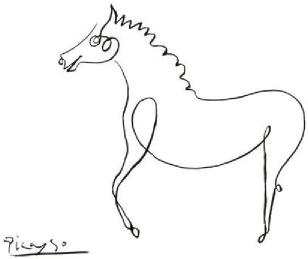
Figure 1: Pablo Picasso, drawing of a horse

In the early part of the 20th century, European artists like Miro, Klee and Picasso rediscovered the continuous-line and used it in their works. It was part of a growing interest in primitive art which reflected itself in different ways. The Cubists were interested in African art, for example, while the Surrealists favored Northwest Coast American Indian art and the arts of the Pacific. Specific forms were borrowed and reused, albeit in far different contexts than the originals. In 1984, the Museum of Modern Art mounted a show on the subject which received a lot of media attention. The juxtaposition of the primitive and modern was instructive but the commentary that followed was not; an avalanche of moralism and political rhetoric that precluded any deeper discussion of the underlying connections that first generated the interest of modern artists in these ancient forms. It was clear that none of the artists were scholars and had little background in primitive art. It was also clear that many of them were superb collectors with an eye for genuine pieces. They may not have understood the meaning of the art they were copying, but they did understand something about the construction of these works and the sensory preferences that lay behind them.
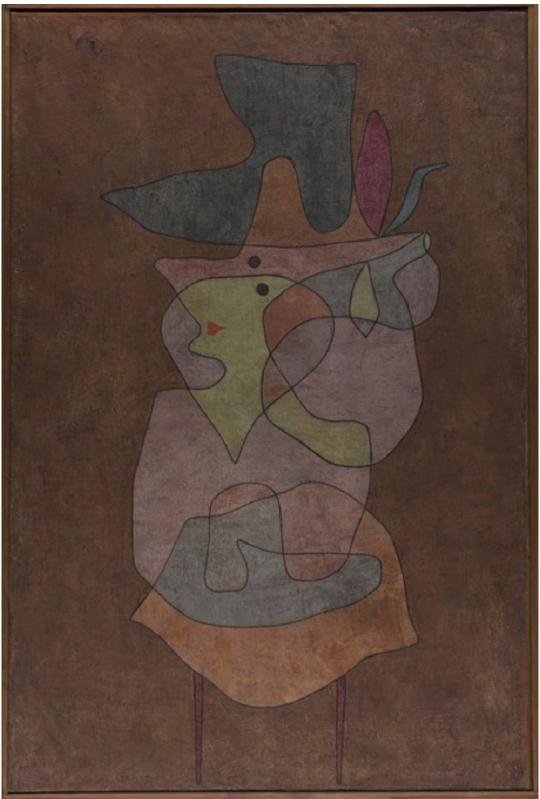
Figure 2: Paul Klee, Irony at Work

A generation earlier, the Bohemian-born Swiss art historian, Siegfried Giedion (1888-1968), did have some thoughts on the subject, which he published in 1948 in Mechanization Takes Command. It was not the most likely place for such a discussion, a few pages within a long book about the mechanization of American life. But Giedion was not your average art historian.

In a section titled “Scientific Management and Contemporary Art” he took up the issue of the redesign of work processes in America, pioneered by Frederick Taylor (1856-1915) and continued and expanded by Frank Gilbreth (1868-1924) and his wife, Lillian Moller Gilbreth (1878-1972).

The goal of Scientific Management was to analyze the work process to reduce the time it took to accomplish a task and to make the work less stressful. This was done by studying the physical motions of the worker through space and time. Gilbreth tried using a motion-picture camera to analyze movement but it did not make the trajectory of the motion clear enough because it portrayed it only in relation to the entire body.

To accomplish the separation, Gilbreth invented a device of appealing simplicity. An ordinary camera and a simple electric bulb were all he needed to make visible the absolute path of a movement. He fastened a small electric light to the limb that performed the work, so that the movement left its track on the plate as a luminous white curve. This apparatus he called a ‘motion recorder’—Cyclograph.
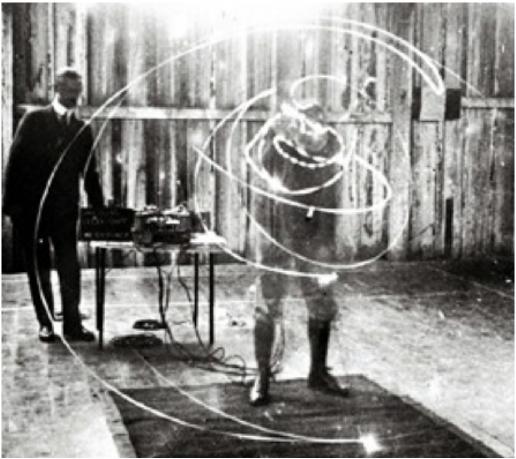
Figure 3: Motion of a golfer’s swing using a Cyclograph Later, Gilbreth made wire models of these recordings.

These wire curves, their windings, their sinuosities, show exactly how the action was carried out. They show where the hand faltered and where it performed its task without hesitation. Thus the workman can be taught which of his gestures was right and which was wrong.

Giedion was astute enough to realize that problems involving the representation of motion were of particular interest in the first half of the twentieth century to engineers, scientists, and artists alike. The development of the motion picture camera, the automobile and the airplane had registered their affects on the human psyche which had to be worked out separately in these various disciplines. Gilbreth’s wire models closely resemble continuous-line drawings. Their common element is the depiction of motion, traced with a continuous line, a beam of light, or twisted wire in this case.
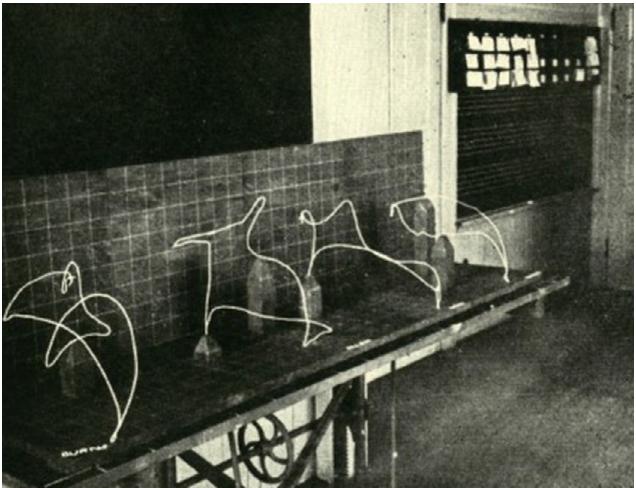
Figure 4: Wire models of Cyclotron images

Paul Klee was particularly eloquent in his writing and teaching about the role of motion in art. Perspective was no longer enough, the dynamism of process must be conveyed and the continuous line was one way to do this. He experimented with color and with the direction-pointing arrow, soon to be adopted internationally as a symbol of motion and direction.
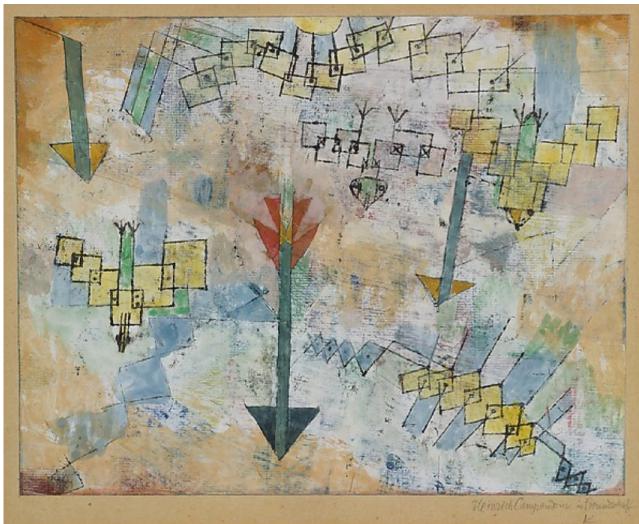
Figure 5: Paul Klee, Birds Swooping Down and Arrows, Metropolitan Museum of Art

It is motion that links the modern use of this form with ancient examples which were drawn on the ground or laid out in sand or colored powder, often to the accompaniment of music.
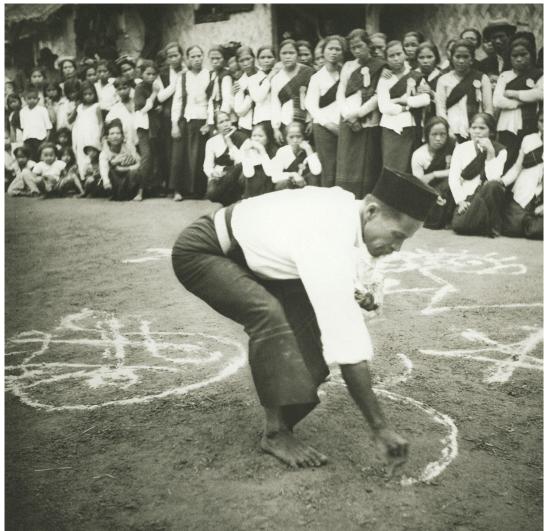
Figure 6: Batak sorcerer (datu), Sumatra

It will be our purpose here, to determine as far as it is possible, what the intentions of these early artists were. We will find that they looked to the past rather than the present for their subject matter and inspiration. They were upholders of tradition and in this way, differed radically from modern artists whom Ezra Pound termed, “the antennae of the race.”

Methods of Construction

The American art historian, Carl Schuster (1904-1969), collected continuous-line drawings from many cultures and time periods. To construct such a drawing, an artist usually began with a framework of dots and drew an unbroken line through or around them to form a figure or pattern. The essential element is the unbroken nature of the line and the smooth completion of the image.
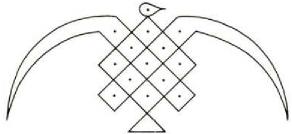
Figure 7: Sand drawing of a bird, Quioco, Angola

The guiding dots serve both a symbolic and a practical function. They aid the beginner in constructing the work. Experienced artists often dispense with the guides once they have learned to draw the image smoothly, without hesitation. It will become clear as we progress, that the dots were originally meant to represent joint marks, connected to reanimate the figure. A kind of connect-the-dots exercise with deep spiritual significance which gradually lost its meaning over time, eventually devolving to child’s play.
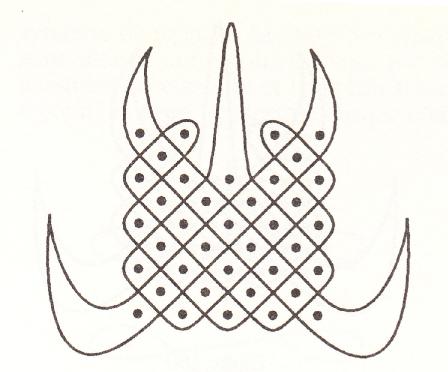
Figure 8: Head of elephant, Quioco, Angola

Examples

We find numerous examples of continuous-line drawings in Africa among the Bantu-speaking tribes of Angola, Zaire, and Zambia. Paulus Gerdes has documented these drawings, called sona by the Tchokwe, and analyzed the tradition as a whole, both in Africa and elsewhere.
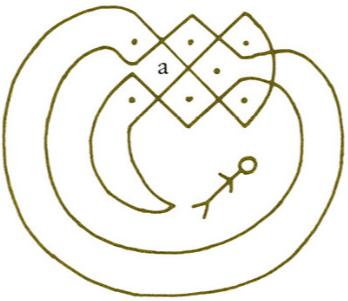
Figure 9: Maze with human figure, Quioco, Angola

Edmund Carpenter remarks, “at least one of these designs [Figure 9] is a maze with a human figure in it. The Quico identify the figure as the body of a slave found in the grass. They say the design of this maze will reveal the real identity of the killer.”2 The connection between continuous-line drawings and mazes or labyrinths is a matter of some interest and relates to some of the oldest ideas associated with the form centering around death and rebirth.

Another remarkable set of continuous-line drawings was collected in the early part of the 20th century from the New Hebrides, a Melanesian archipelago, by the anthropologists John Layard, Bernard Deacon, and Raymond Firth. A missionary, Ms. M. Hardacre, added several more examples. The drawings were both religious and secular and depicted a variety of subjects including birds, animals, fish, and plants (Figure 10).
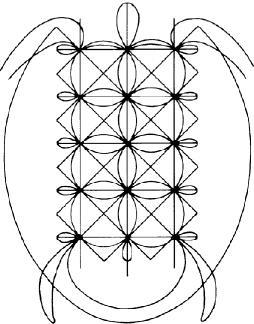
Figure 10: Malekulan sand drawing of a turtle

They were generally drawn for amusement and in some cases, stories were related as the figures were drawn. On the Island of Raga, two sides took turns drawing, each trying to outdo the other.

...knowledge of the art is entirely limited to men; women, of course, may see the designs. The whole point of the art is to execute the designs perfectly, smoothly, and continuously; to halt in the middle is regarded as an imperfection.

The techniques used to draw these complex figures are handed down from generation to generation and each design is practiced assiduously to ensure mastery. Once learned, the skill remains in the body of the practitioner, like dancing or jumping rope.

The methods of construction used in the New Hebrides are common to the tradition wherever it is found. First a patch of sand or earth is made level and smooth, or an area with volcanic dust may be used. Sometimes ashes are spread on the earth to provide a clean drawing surface. Next, the artist draws a framework consisting of lines set at right angles and crossing one another, or a series of small circles arranged in a regular pattern. This preliminary layout serves as a guide for constructing the drawing. The artist then smoothly traces the curves, circles, and ellipses around or through the guides until the figure is completed.

In theory, the whole should be done in a single, continuous line which ends where it began; the finger should never be lifted from the ground, nor should any part of the line be traversed twice. In a very great many of the drawings, this is actually achieved.

In some drawings lines must be retraced to avoid lifting the finger. In others, small details are added to complete the drawing, like a tail feather or eyes. More complex designs may involve several interconnected line drawings. Of particular interest are those New Hebridean designs that are the property of the secret societies and relate to initiation and the mysteries of life after death. In Vanuatu on Malekula, the second largest island in the group, and elsewhere in the New Hebrides, the home of the dead is reached by an arduous journey.
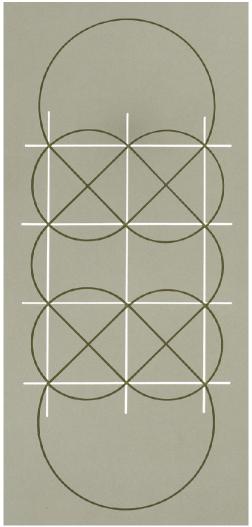
Figure 11: Drawing of Nahal (The Path), New Hebrides

Ghosts of the dead…pass along a ‘road’ to Wies, the land of the dead. At a certain point on their way, they come to a rock…lying in the sea…but formerly it stood upright. The land of the dead is situated vaguely in the wooded open ground behind the rock and is surrounded by a high fence. Always sitting by the rock is a female [guardian] ghost [called] Temes Savsap, and on the ground in front of her is drawn the completed geometrical figure known as Nahal [Figure 11], ‘The Path’. The path which the ghost must traverse lies between the two halves of this figure. As each ghost comes along the road the guardian ghost hurriedly rubs out half the figure. The ghost now comes up but loses his track and cannot find it. He wanders about searching for a way to get past the guardian ghost of the rock, but in vain. Only a knowledge of the completed geometric figure can release him from the impasse. If he knows this figure, he at once completes the half which Temes Savsap rubbed out; and passes down the track through the middle of the figure. If, however, he does not know the figure, the guardian ghost, seeing he will never find the road, eats him, and he never reaches the abode of the dead.

Among the northern peoples of the New Hebrides, the Lambumbu, Legalag, and Laravat, similar ideas prevail only here the land of the dead is called Iambi or Hambi and the geometrical figure, ‘The Stone of Iambi’ (Figure 12). Further, no test is required of the traveling soul. Variants of the story are told in Mewn and among the Big Nambas tribe, where the ghost is known as Lisevsep.
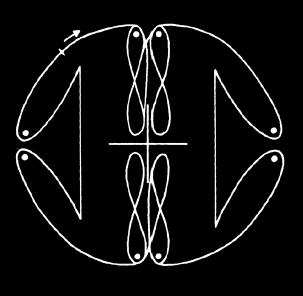
Figure 12: Stone of Iambi, New Hebrides

Initiates in the secret ghost societies such as those on Ambrim are taught these designs so they may enter the Afterworld when they die. They are also part of a larger cycle of rites.

A key dance in the Malekulan cycle of ceremonies represents, simultaneously, a sacred marriage, an initiation rite and, most important of all, the Journey of the Dead. At one point, participants enact a swimming movement to represent the crossing of the channel to the land of the dead. In the final movement, Maki-men form in two rows: then members of the introducing ‘line’, already fully initiated, thread their way between these ranks. This progression of initiates corresponds with the path followed by the dead man through the maze-like design Nahal.
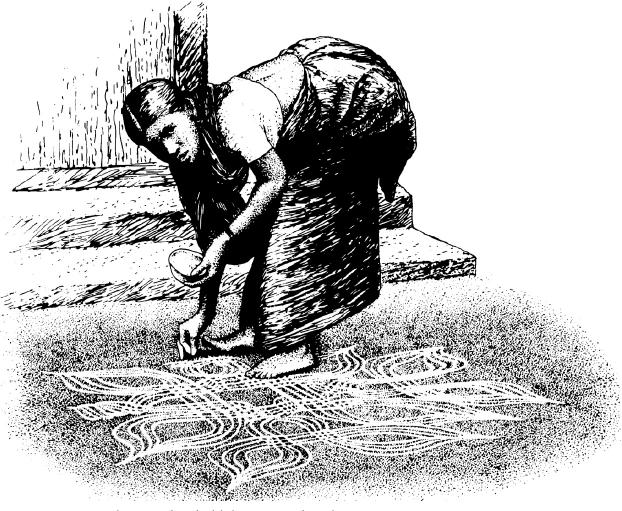
Figure 13: Woman drawing threshold designs, South India

Continuous-line drawings are also common in the southeastern part of India where they still drawn today (Figure 13). The Tamils refer to such drawings as kolams and they are drawn in front of dwellings, normally before sunrise. The woman of the house will smear a bit of ground with cow dung or sweep the threshold and sprinkle it with water to prepare her canvas. In the past, rice powder was run between the fingers to form the design. Quartz powder is used today. Dots or crossed lines are used as a framework and the kolam is formed from a single, uninterrupted line. Traditional designs are strictly geometrical though more naturalistic forms have developed in modern times. Similar designs are also found as tattoos and on mortuary pottery.
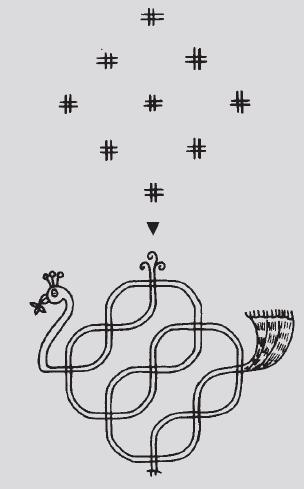
Figure 14: Rangoli design of a bird, India

In Northern India, figures called rangoli or rangavalli are drawn in courtyards, on the walls of buildings, and at places of worship. Rangoli designs tend to be more elaborate than kolams and are often multicolored. Elaborate floral or animal designs are drawn using the fingers or brushes. Many of the older designs are geometric, however, and bear the telltale dots and guide lines. Figure 14, a bird, is constructed from a framework of nine crosses. Additional features like tail decorations were added afterwards.
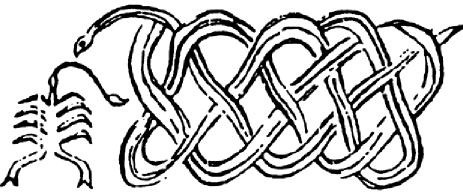
Figure 15: Snake and scorpion, Mesopotamia

The technique was also known in ancient Mesopotamia as evidenced by a number of serpent designs engraved on argillite cylinder seals from the 3rd millennium (Figure 15). While the serpent is not constructed from a continuous line, its shape indicates that the artist was familiar with the dot-and-line method common to the tradition.

Another interesting example from ancient Babylonia is made of clay and appears to be constructed from a single coil. The face is identified as Humbaba, a demon of the underworld who is slain by the epic hero, Gilgamesh.
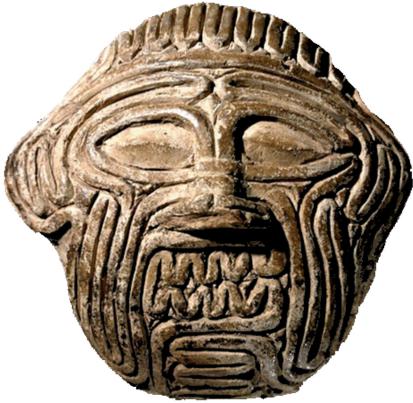
Figure 16: Clay figure of Humbaba, Babylonia (c. 1800-1600 B.C.)

The maze-like lines of the face part of the common equation of the underworld with the intestines, human or animal. This complex of ideas is very old if we can judge by its distribution and appearance in both the Old and New Worlds. We will return to this idea when we discuss the relationship of the continuous line to mazes and labyrinths.
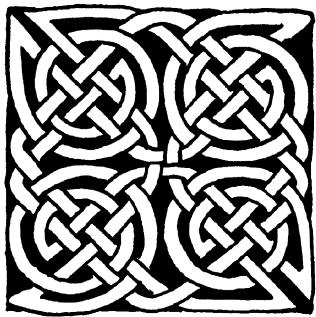
Figure 17: Celtic knotwork design

Perhaps the most familiar continuous-line drawings are the knotwork designs of Celtic art (Figure 17) that were used to decorate metalwork, stone monuments, and manuscripts like the famous Book of Kells. George Bain, who unraveled the methods used in constructing these complex designs, found their astonishing complexity to be based on a few simple geometrical principles.
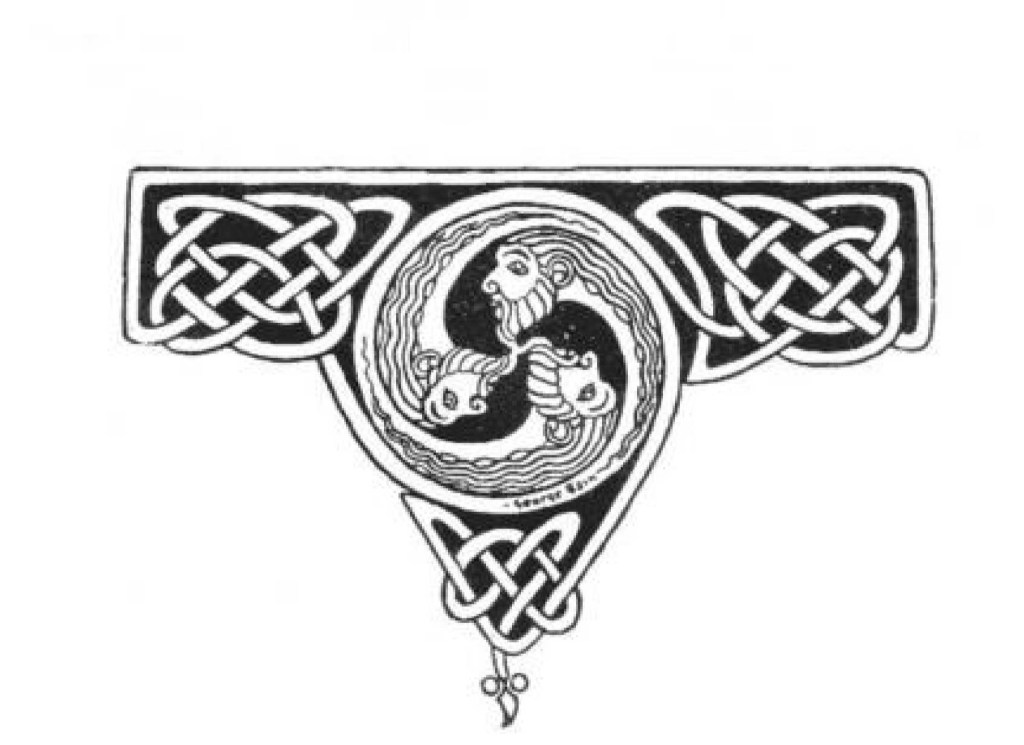
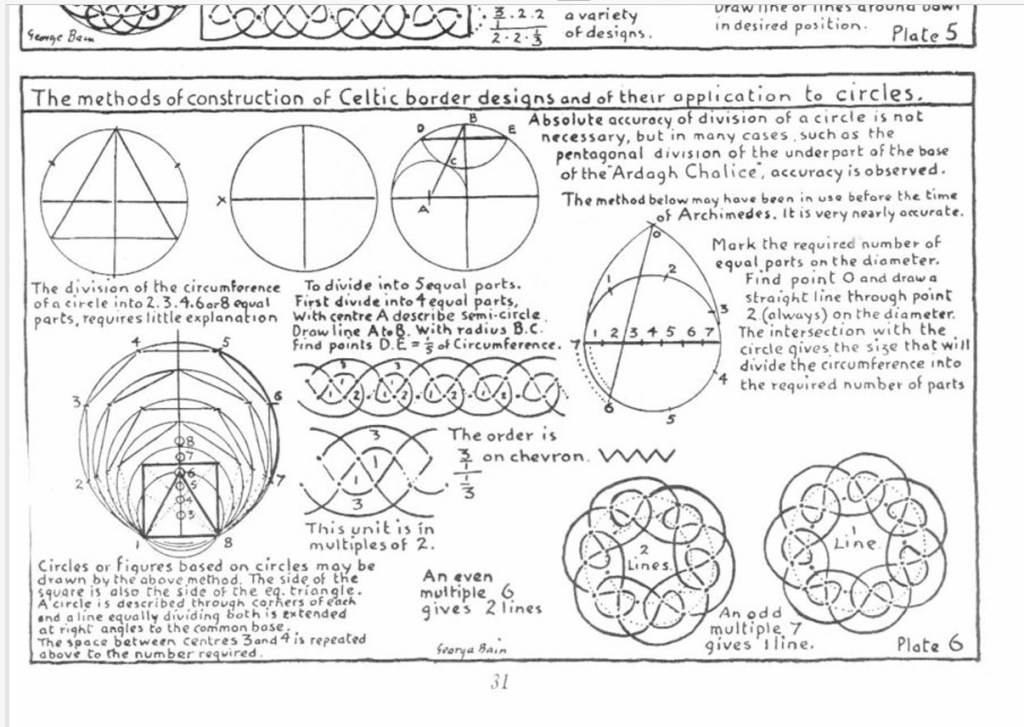
Bain’s research highlighted the connections between Celtic art and its religious, legal, and philosophical contexts. He noted that the use of knots and interlace motifs was often influenced by religious prohibitions on figurative representation, which led to ingenious decorative strategies in manuscripts and sculpture. His work also traced design influences between ancient Mediterranean, Asian, and North-European cultures, helping to clarify the origins and meaning of Celtic visual motifs.

  • Celtic knotwork often symbolizes eternity, the interconnectedness of life, or unbroken spiritual paths, as the lines have no beginning or end.
  • Spirals can represent cosmic forces, spiritual development, or cycles of birth and rebirth, especially in Insular and Pictish traditions.
  • Zoomorphic elements—where knots morph into animal forms—may evoke mythic creatures, protective spirits, or ancestral lineage, blending art with storytelling.

Referring to a page of the “Book of Armagh,” Professor J. O. Westwood wrote, “In a space of about a quarter of an inch superficial, I counted with a magnifying glass no less than one hundred and fifty-eight interlacements of a slender ribbon pattern formed of white lines edged with black ones upon a black ground. No wonder that tradition should allege that these unerring lines should have been traced by angels.” One of the aims of this book is to show that there is nothing marvellous in a design having not a single irregular interlacement. Indeed, a wrong interlacement would be an impossibility to a designer conversant with the methods. One might as well marvel at a piece of knitting that had not a mistake in its looping.

Figure 18: Threshold tracing, Isle of Lewis, Scotland

The continuous line also survived in Scotland, where M. M. Banks documented it in 1935. In some rural areas, housewives traced such patterns in pipe clay on thresholds, the floors of houses, and in dairies and byres. The designs, not all of which were continuous-line drawings, were refreshed each morning and were thought to keep away ghosts or evil spirits. One elderly woman in Galloway said that her grandmother had explained the tradition with a couplet:

Tangled threid and rowan seed

Gar the witches lose (or lowse) their speed

The example in Figure 18 is missing the guiding dots but a Greek vase from the 8th century B.C. with a similar design is not (Figure 19). The extra dots indicate the artist was imitating a design that was no longer understood. The Greeks viewed barbarian art much in the manner of modern decorators and borrowed and adapted freely.
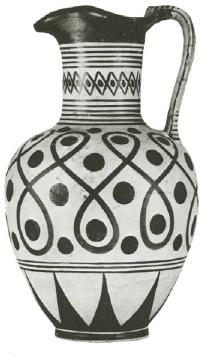
Figure 19: Proto-Corinthian Greek vase, 8th century B.C.

A related motif dating from at least Bronze Age times is the spiral ornament, found in Greece, Rome, Etruria and among Germanic and Celtic peoples. Spiral fibula were used to close garments while a variety of metalwork designs served as arm bands, diadems and the like (Figure 20). Drawn from a single piece of wire, the spiral forms a continuous path ending where it begins, a trait common to the other art forms we have been discussing.
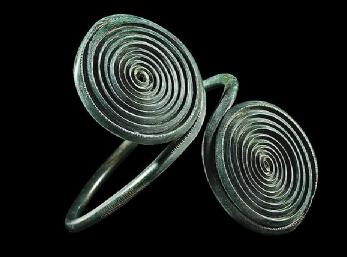
Figure 20: Bronze spiral arm band, 1600 B.C., Migration Period, Europe

The art historian Ananda Coomaraswamy comments on the symbolism of the spiral fibula.

The primary sense of “broach” (= brooch) is that of anything acute, such as a pin, awl or spear, that penetrates a material; the same implement, bent upon itself, fastens or sews things together, as if it were in fact a thread. French fibule, as a surgical term, is in fact suture. It is only when we substitute a soft thread for the stiff wire that a way must be made for it by a needle; and then the thread remaining in the material is the trace, evidence and “clew” to the passage of the needle; just as our own short life is the trace of the unbroken Life whence it originates.

Drawn from a single piece of wire, the spiral fibula forms a continuous path ending where it begins.

The use of a single line to construct a work of art has a long history as we have seen and examples can be found in a wide variety of media.

It is of little importance, in the different forms that the symbolism takes, whether it be a thread in the literal sense, a cord, a chain, or a drawn line such as those already mentioned, or a path made by architectural means as in the case of the labyrinth, a path along which the being has to go from one end to the other in order to reach his goal. What is essential in every case is that the line should be unbroken.

  • Symbolism shapes religious rituals, social identity, and even national icons, allowing communities to share complex ideas through shared visual language.
  • The study of symbolism reveals how societies articulate meaning, bridge material and spiritual worlds, and encode important knowledge through art and tradition.
  • George Bain, known as the father of the Celtic art revival, reached out and maintained contact with Ananda Coomaraswamy in the 1940s. Coomaraswamy, an esteemed art historian and philosopher specializing in Indian and Oriental art, was one of the most respected scholarly figures of that time and had a strong interest in Celtic culture throughout his career.
  • Coomaraswamy admired Bain’s work, and Bain expressed mourning for Coomaraswamy’s passing in the preface to his major book “Celtic Art: The Methods of Construction,” showing a connection that underlined a Celtic-Indian cultural linkage. Their intellectual exchange is regarded as part of a broader cross-cultural dialogue that linked Eastern art traditions and philosophies with Western Celtic revival movement. Core Philosophical Themes in Celtic Tradition
  • Interconnectedness and Eternity: Celtic art, especially knotwork, symbolizes the endless, interconnected nature of existence. The continuous loops without beginning or end reflect eternal life, unity, and the infinite cycle of birth, death, and rebirth.
  • Cycles of Life and Renewal: Many motifs, such as spirals and the triskele (triple spiral), evoke life cycles, cosmic rhythms, and transformation. These represent the soul’s journey through phases of growth, death, and spiritual renewal, aligning human life with natural and cosmic forces.
  • Nature and Spiritual Vitality: Celts believed all elements of nature—rivers, rocks, animals, the sun, and the moon—possess spirit and power. This animistic belief is expressed in symbols that honor natural forces and the sacred balance between earth and the cosmos.
  • Balance and Harmony: The Awen symbol, consisting of three rays, represents spiritual inspiration as well as the balance between opposites such as male/female energies, mind/body, and opposing cosmic forces.
  • Trinity and Triplicity: Triangular and threefold symbols such as the triquetra emphasize important trinities in Celtic belief: life-death-rebirth, body-mind-spirit, or past-present-future. These forms unify spiritual, natural, and philosophical concepts in a single visual.
  • Philosophical Role of Celtic Symbols
  • Symbols were used as tools in rituals, healing, and oral traditions to convey wisdom and cosmic truths.
  • They acted as spiritual maps for meditation and guides for eternal truths embedded in everyday life.
  • Their meanings often combine Christian symbolism with pre-Christian pagan beliefs, showing cultural continuity and transformation.
  • In essence, Celtic traditions and philosophies express a profound spirituality centered on eternal cycles, unity with nature, and the balance of cosmic and human forces, richly encoded in their symbolic art and motifs
  • these motifs and symbolism is still to be seen in Frisian Crafmanship:
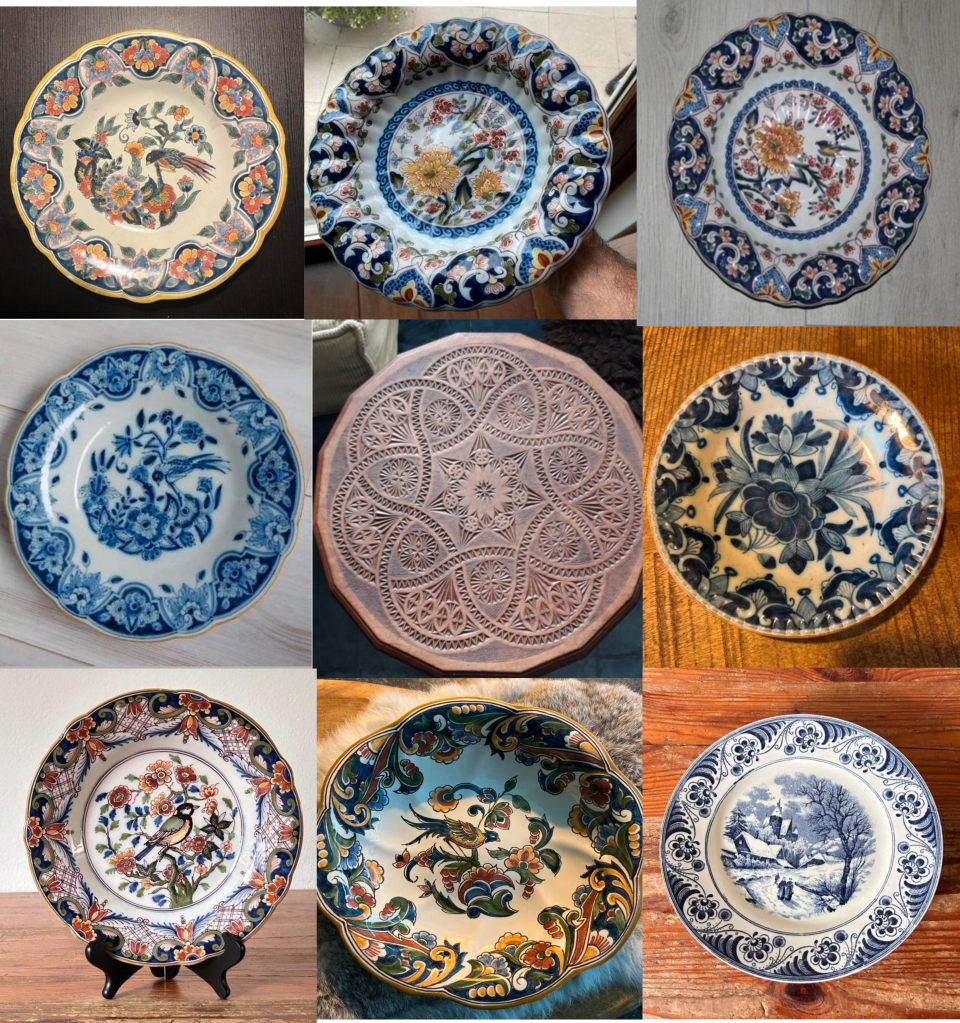
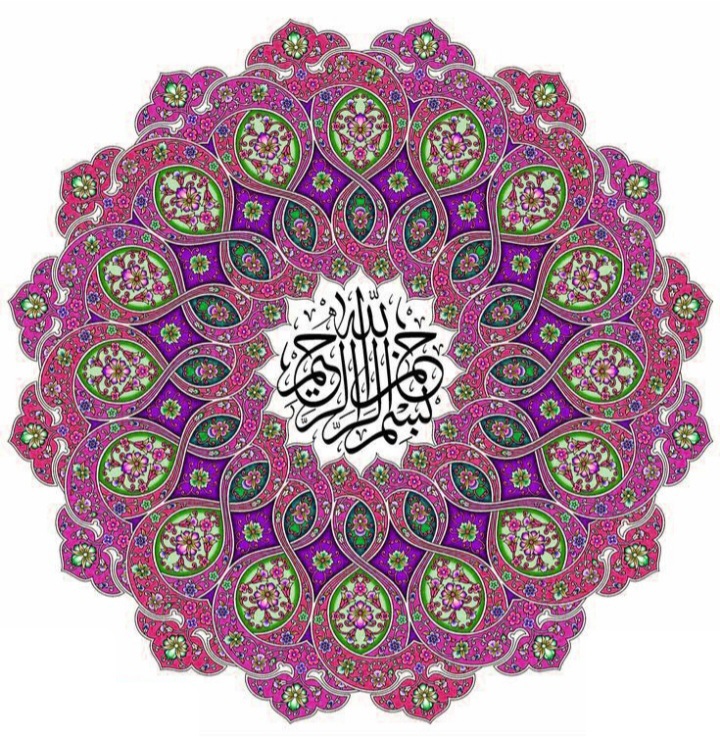
Frisian Mandala: “the Thread of Wisdom”

For the Frisian Eternal Knot see The wisdom of Frisian Craftmanship
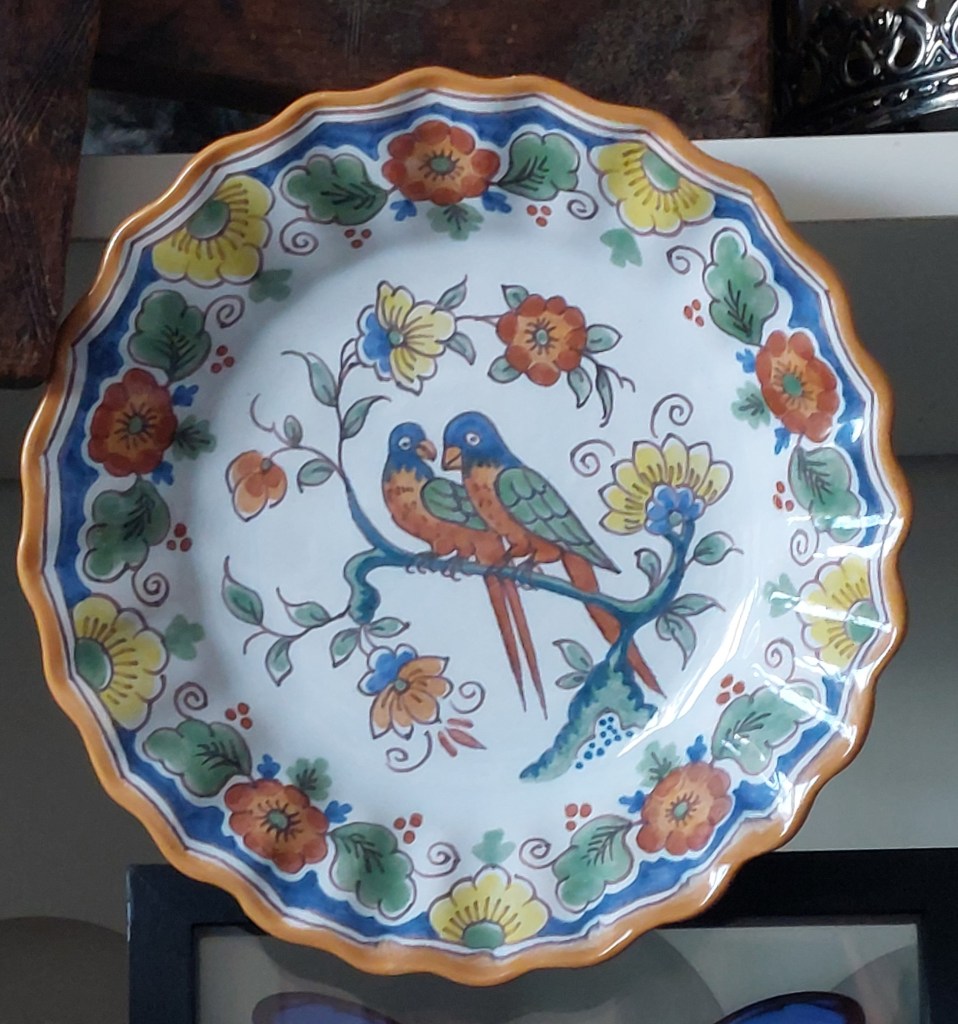
Ananda Coomaraswamy viewed the motif of two birds, especially twin or entwined birds, as deeply symbolic rather than merely decorative. He connected this symbolism across cultures, noting similarities between Celtic traditions and Indian texts like the Upanishads.

In these traditions, two birds often represent dualities or pairs of opposites—such as soul and body, divine and human, or inner and outer realities—reflecting a metaphysical unity through their relationship. Coomaraswamy saw twin birds as carriers of spiritual meaning, like “psychopomps” (soul guides) or symbols of the soul’s journey and transcendence.

This symbol appears in Celtic art as interlaced bird motifs serving not just as ornament but as a representation of life’s dual nature and spiritual truths, paralleling similar uses in ancient Indian cosmology and philosophy. Coomaraswamy’s comparative approach highlighted how such motifs are expressions of common archetypes across cultures, embodying spiritual and philosophical ideas through natural imagery.

Ananda Coomaraswamy interpreted the motif of twin birds in myth as a profound symbol of spiritual unity and duality. In a letter to George Bain in 1947, he explained that the two birds often found in traditional design represent the friendship or unity between the “inner and outer man,” meaning the spirit and body within every person. This is also reflected in the Indian Upanishads, where two birds perched on the same tree symbolize the universal self and the individual self—the true self and the ego.

Coomaraswamy elaborated that this symbolism captures the resolution of internal conflict and self-integration, the core goal of true psychology and spiritual development. He quoted the Upanishadic passage: “Two birds, fast bound companions, clasp close the selfsame tree, the tree of life,” indicating the inseparable, complementary nature of these dual aspects.

Thus, the twin birds in Celtic art, far from mere decoration, encapsulate themes of unity, friendship, and the relationship between body and spirit—an archetype that crosses cultural boundaries between Celtic and Indian traditions alike.

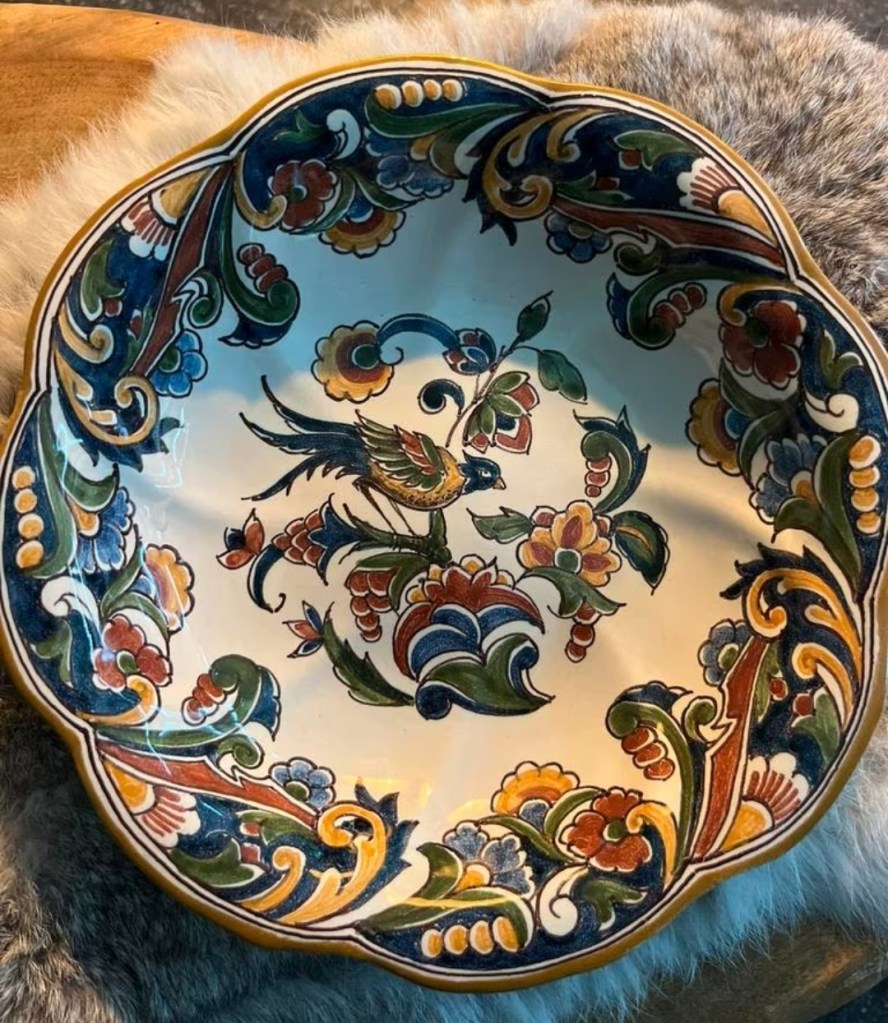
The blue tit symbolizes joy, cheerfulness, hope, and positive transformation, along with deeper meanings of love, loyalty, adaptability, and spiritual renewal in various folkloric and spiritual traditions.
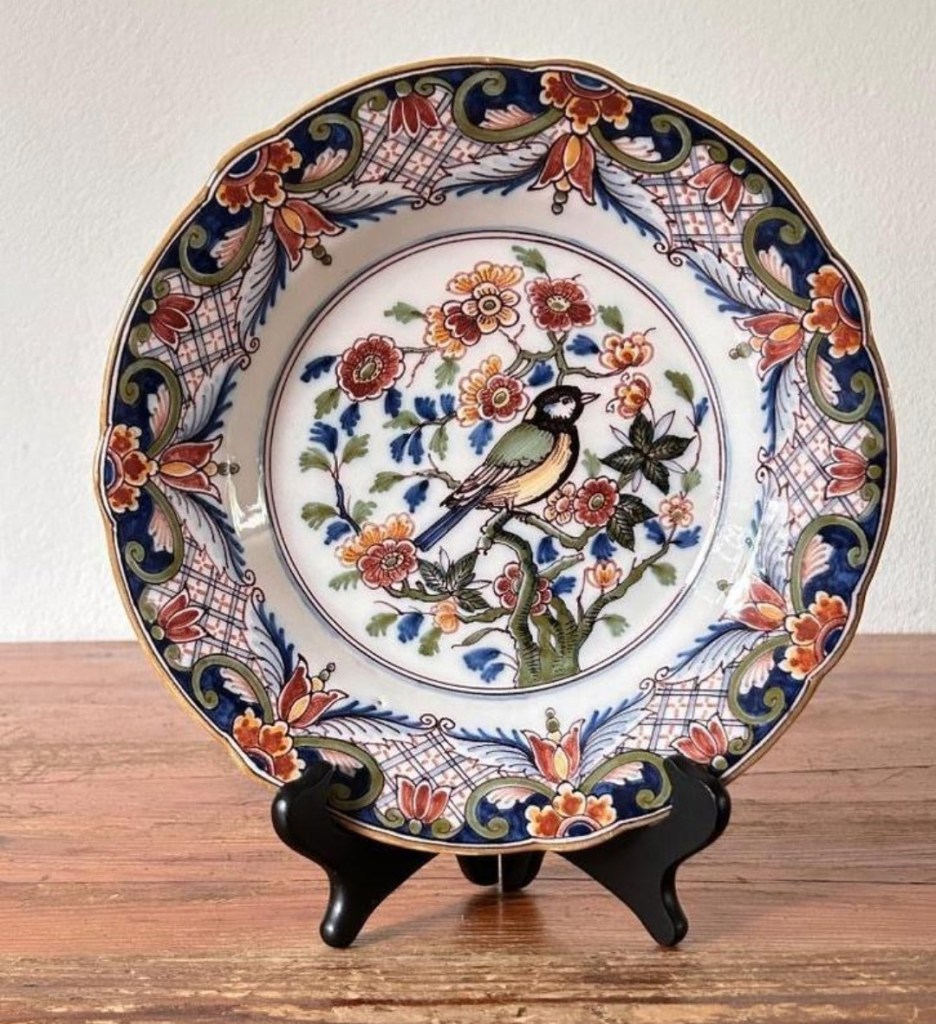
Joy and Positivity: The blue tit’s vibrant colors and playful behavior represent happiness,
cheerfulness, and a reminder to embrace joy and positivity even in difficult times.
Love and Loyalty: Folklore often associates blue tits with love, trust, and enduring faithfulness —these birds are monogamous and known for lifelong pair bonding, making them symbols of committed partnership and loyalty.
Hope and Renewal: Encounters with blue tits are viewed as omens of hope, new beginnings, and brighter futures after adversity.
Adaptability and Resourcefulness: Blue tits are known for their intelligence and ability to
thrive in changing environments, symbolizing resilience and making the most of available
resources.
Communication and Self-Expression: The species is vocal and expressive, offering a metaphor for clear communication and encouragement to openly share feelings and truths.
Spiritual Meaning: The blue coloration is often tied to spiritual awakening, divine intelligence,
and healing, while the bird itself might be interpreted as a messenger of spiritual guidance
and connection.

Cultural and Mythic Contexts: In Celtic and European folklore, blue tits represent good luck, honor, and protection—sometimes regarded as carriers of souls or spirits.

In sum, the blue tit in Dutch symbolism embodies themes of love, hope, joy, and spiritual
guidance, carrying a gentle but enduring message of faithfulness and renewal within the
broader tapestry of Dutch folklore and natural tradition.

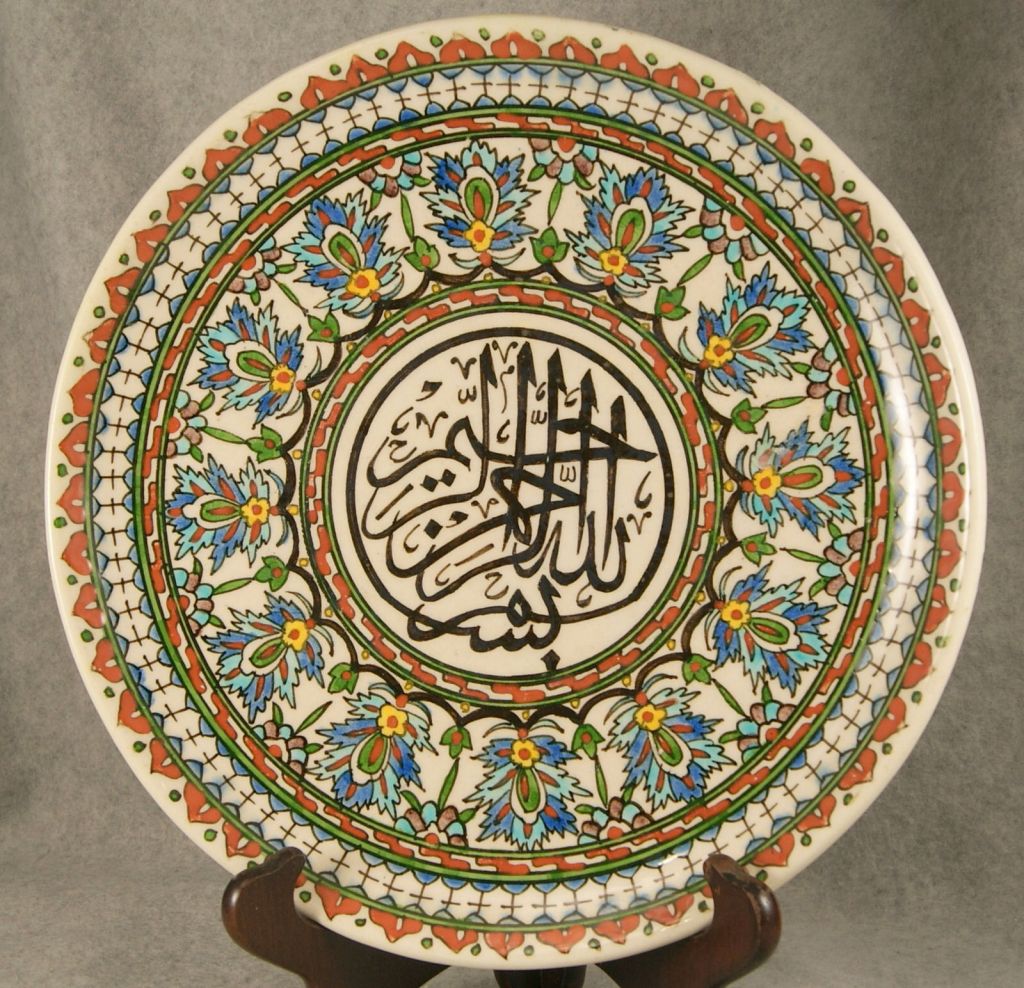
  • Simorgh

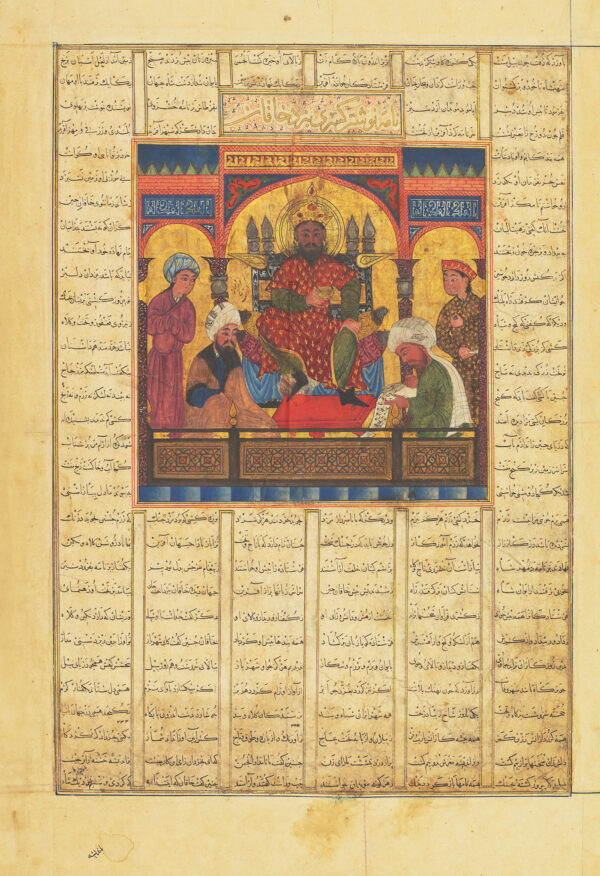
However, historically and mythologically, the Simorgh (or Simurgh) is a legendary Persian bird often associated with divinity, wisdom, and mythical power in Persian literature and Sufism. It is a large, benevolent, mythical bird said to possess great knowledge and spiritual
significance, sometimes seen as a symbol of the unity of all beings or divine intervention.

The Avesta (Zoroastrian holy scripture), specifically the Bahman Yasht and Rashnu Yasht,
where Simurgh is mentioned as Saêna, a divine bird associated with healing, fertility, and
divine blessing, roosting on the cosmic Tree of Life that contains all medicinal plants.
Minooye Kherad (a Zoroastrian wisdom text from the late Sassanid era), which elaborates on Simurgh’s role in healing and seeds of all plants.
The Shahnameh (The Book of Kings) by Ferdowsi, a seminal Persian epic poem from around 1000 years ago, that narrates the Simurgh raising the hero Zal, assisting in the birth of Rostam through surgical knowledge, and healing wounds with magical feathers.
The Conference of the Birds” by Farid ud-Din Attar, a 12th-century Sufi mystical poem,
where the narrative centers on thirty birds searching for the Simurgh, eventually realizing
they themselves embody the Simurgh, symbolizing divine unity and spiritual awakening.
These texts collectively form the core of the spiritual and mystical traditions relating to the
Simurgh as a divine, healing, wise, and unifying figure in Persian and Sufi cosmologies.

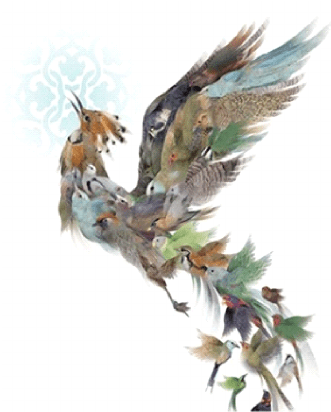
The phrase “Simurgh is 30 birds” comes from the famous 12th-century Sufi poem “The
Conference of the Birds” by Farid ud-Din Attar. In this allegorical tale, a gathering of birds
embarks on a spiritual quest to find their king, the Simurgh. The journey involves crossing
seven valleys symbolizing the stages of spiritual growth.
Out of the many birds on this journey, only thirty complete it and reach the Valley of Simurgh.
When they finally meet the Simurgh, they are astonished to discover that the Simurgh itself is none other than their collective selves. The name “Simurgh” is a pun in Persian: “si” means thirty and “morgh” means birds, hence “thirty birds.” This revelation symbolizes the spiritual realization that the divine they sought is actually the true nature of themselves, emphasizing unity and self-realization.
That the meaning of this symbolism was still understood in later periods can be seen in the work of Claude Mellan (fl. 1598–1688), whose remarkable engraving of Christ is composed from a single spiraling line (Figure 21). The Latin words underneath, Formatur unicus una (“By one the One is formed”), refer both to Christ and to the technique used to construct the work.
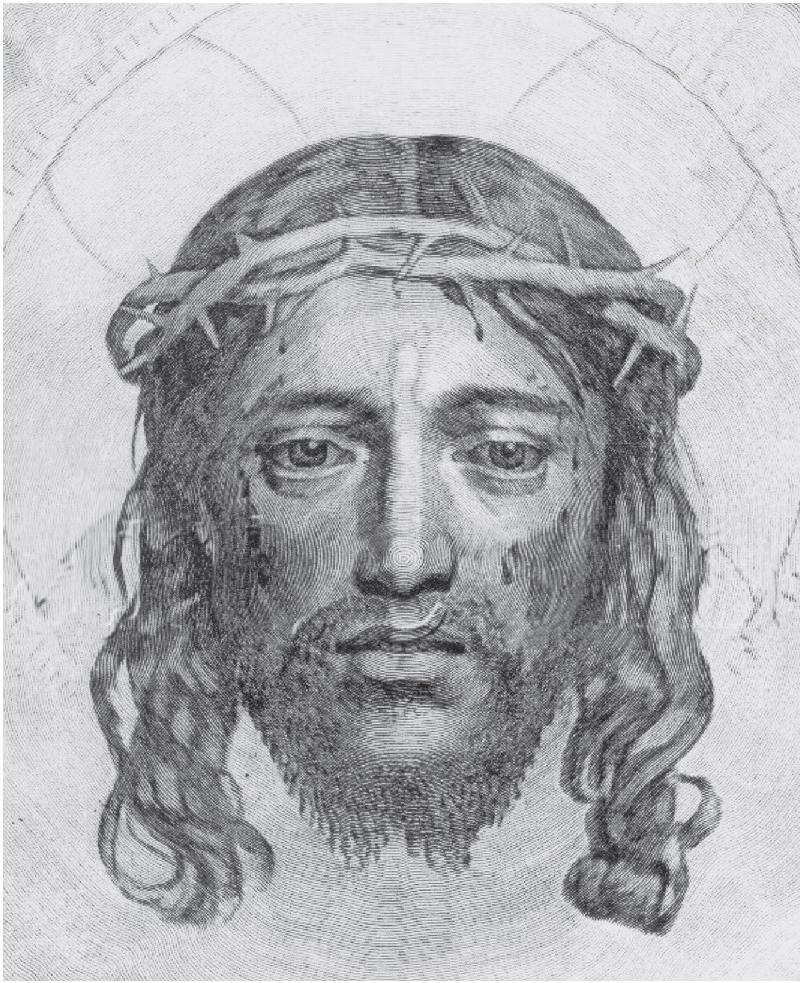
Figure 21: Claude Mellan engraving, The Face of Christ on the Sudarium.

Dr. Coomaraswamy took up a related motif in “The Iconography of Durer’s ‘Knots’ and Leonardo’s ‘Concatenation’” where he discussed the symbolic meaning of certain knotwork designs found in the engravings of Albrecht Dürer and the works of Leonardo da Vinci.
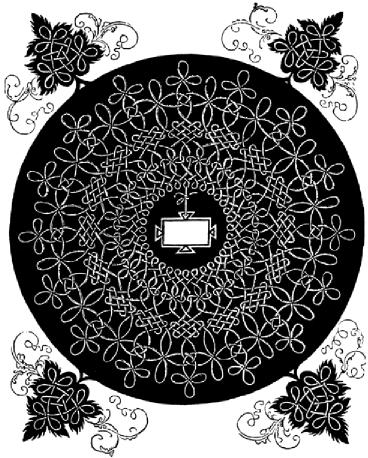
Figure 22: One of Albrecht Dürer’s “Sechs Noten”

Figure 22 is a wood engraving of Albrecht Dürer’s taken from a series, Sechs Knoten. In each of the six engravings, the central design is constructed from what appears to be a single white line on a black ground. There are actually six intersecting continuous-lines in the central ornament but it is hard to tell without tracing each line. Four smaller knot designs, all of them identical, occupy the corners. In each case, one or more continuous lines form an extremely complex series of designs that resemble lace work or embroidery patterns. The function of this artistic tour de force is uncertain, but the designs may be patterns intended for use in other media.
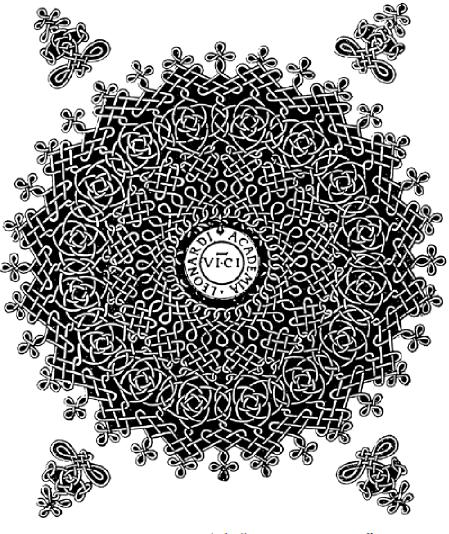
Figure 23: Leonardo Da Vinci’s Concatenation

In the opinion of many scholars, Dürer’s knot designs are variations on a copper engraving attributed to Leonardo Da Vinci that bears the words, “Academia Leonardi Vinci” within the central medallion (Figure 23).

Leonardo de Vinci, Albrecht Durer and Michelangelo were engaged in a renaissance of the Byzantine forms of Celtic knotwork. Vasari says that “Leonardo spent much time in making a regular design of a series of knots so that the cord may be traced from one end to the other, the whole filling a round space.” The example of his work shown herein [Figure 23] cannot be the one that Vasari had traced its line from end to end, for it has a number of lines. The student can find how many. The designs by these most famous artists were engraved and printed for the use of painters, goldsmiths, weavers, damaskeeners and needleworkers.1

Jessica Hoy and Kenneth C. Millett performed a mathematical analysis of Leonardo’s Concatenations and the Dürer copies and found that they were all composed of multiple continuous lines, or “links” as they are classified in mathematics. Figure 24 highlights the components.
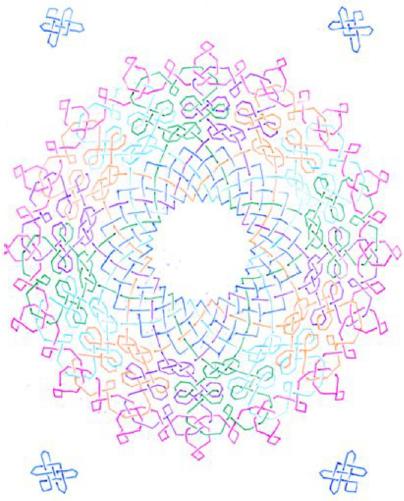
Figure 24: Components parts of Durer’s first knot engraving (after Hoy & Millett)

The technique of combining continuous lines is found throughout the tradition as a whole and it adds to the mystery of these constructions since they appear to be composed of a single line. A great deal of variety is possible using this method.

Coomaraswamy noted the similarity between Leonardo’s Concatenation, as it is called, and the cosmic diagram known as a mandala.

The significance of Leonardo’s “decorative puzzle”—which from an Oriental viewpoint must be called a mandala—will only be realized if it is regarded as the plane projection of a construction upon which we are looking down from above.

The dark ground represents the earth, which is associated metaphysically with the substantial, potential aspects of manifestation. The white line is the Spirit, the essential, active aspect of manifestation whose source is the summit or center (Heaven). The four corner ornaments are the cardinal directions and reflect the seasons (time), and the older conception of a quartered universe held together by the Spirit. The whole construction is summarized best in the words of Dante (Paradiso XXIX.31-6) to whom the meaning of these esoteric symbols was familiar.

Co-created was order and inwrought with the substances; and those were the summit in the universe wherein pure act was produced: Pure potentiality held the lowest place; and in the midst potentiality with act strung such a withy as shall never be unwound.1

Did Leonardo understand the symbolic meaning of his own work or was he merely copying an older design?

Leonardo’s Concatenation is a geometrical realization of this “universal form.” He must have known Dante, and could have taken from him the suggestion for this cryptogram. But there is every reason to believe that Leonardo, like so many other Renaissance scholars, was versed in the Neo-Platonic esoteric tradition, and that he may have been an initiate, familiar with the “mysteries” of the crafts. It is much more likely, then, that Dante and Leonardo both are making use of the old and traditional symbolism of weaving and embroidery.2

String Figures

String figures are known on every inhabited continent and show evidence of the greatest antiquity. Americans are most familiar with the game called Cat’s Cradle in which a string is looped in a cradle-like pattern on the fingers of one person’s hands and transferred to the hands of another to form a new pattern. In fact, Cat’s Cradle is but one variant of an art that while simple in principle, is far more complex in practice.

To create a string figure, a loop of string, fiber, hair, sinew, bark, or other pliable material is manipulated to form patterns using the hands, feet, mouth, knees and even teeth (Figure 25). The art is practiced alone or by several people. In the hands of a skilled practitioner, the loop of fiber can be manipulated to create complex figures that transform to illustrate a story or song or to prepare the viewer for a sudden denouement. Completed patterns may represent objects in the natural environment like plants and animals, activities such as hunting or fishing, or geometric patterns such as diamonds or zigzags.
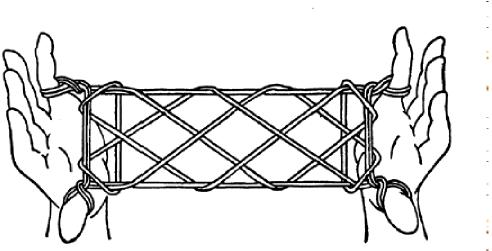
Figure 25: Method of constructing a string figure

There are also tricks in which the completed pattern resolves suddenly into a continuous loop, or “catches,” in which a figure tightens suddenly around the finger of an unsuspecting participant.

Though many practice the art, male and female, young and old, a master of the form must combine the legerdemain of the professional magician with the singing and story-telling art of the bard or shaman. String figures are at once an amusement, a lesson to help the young remember, a means to illustrate stories and myths, and a doorway for initiates into the mysteries of death and rebirth.

Starting with the assumption that the string represents the Spirit, the artist in string is in a position to re-create the world in microcosm. Like Proteus or the other shape-shifters of mythology, the string can be transformed from one figure into another. It is the drama of human existence that is on display. When the game is over, everything returns to the endless loop so the play may begin anew.

String figures are closely related to continuous-line drawings. The loop of string is the three-dimensional equivalent of the continuous line, used to create a pattern in the sand. In some cultures, completed string figures are actually removed from the hands and placed on the ground, emphasizing this connection. Both forms are used for storytelling and both once had deeper meanings centered on death and rebirth.

Among the Cahuilla Indians, the string figure played the same role as the sand drawing did among the Malekulans.

Moon also taught the people to play what we call Cat’s Cradle — a string figure game and a predictive technique necessary to know in order for the soul, it was said, to get into Telmekish, the land of the dead (Hooper 1920: 360). They had to know many figures because as the soul traveled to the land of the dead they had to tell Montakwet, the shaman-person who guarded the entrance to Telmekish, what they meant. If they couldn’t tell him, they would not be admitted. The same game, a favorite recreation for Cahuilla women, could predict the sex of a child.1 A similar story is related concerning the residents of the Gilbert Islands.

Prayers and incantations accompanied the making of string figures in the Gilbert Islands, as in other cultures. In Gilbertese mythology two notables were associated with string figures, Na Ubwebwe and Na Areau the Trickster (Maude & Maude 1958:9). Not only did Na Ubwebwe use sympathetic magic in the assistance of creation, but he also smoothed the way for the dead. At the ceremony known as tabe atu (the lifting of the head) an individual described as the “straightener of the path” performed a series of string figures beside the corpse. The figures included Tangi ni Wenei (The Wailing Over the Dead), (Maude & Maude 1958:25). On the way to the land of the departed ancestors the spirit meets a woman with the beak of a bird, Nei Karamakuna. Unless the spirit has been tattooed, in which case the tattoo marks are pecked out, the eyes will be pecked out instead. Naturally most Gilbertese take the precaution of being tattooed. Soon after meeting Nei Karamakuna the spirit meets Na Ubwebwe who makes a series of string figures with him or her. The spirit must make the series without a mistake until the first figure, called Na Ubwebwe, appears again. Only then can the spirit “pass on.”

The authors conclude that whether the sequence for one player used at the raising of the heavens, or the series performed by two persons during the tabe atu ceremony, “the figure of Na Ubwebwe is made as a rites de passage connected with death.”
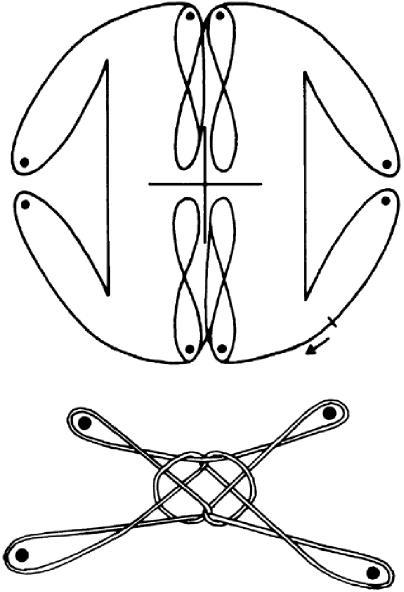
Figure 26: Framework for constructing continuous-line drawings and string figures

String figures also resemble continuous-line drawings in their manner of construction (Figure 26). Instead of guiding dots drawn on the ground, the finger joints (or other body parts) serve as the guides around which the string passes. The essential point is that the guiding dots used to construct continuous-line drawings were once understood as body joints. Joint marks are the link between the various versions of the thread-spirit doctrine. The line is the Spirit connecting the joints and reanimating the being.

Carl Schuster was particularly interested in a continuous-line drawing that appears in a Shang Dynasty inscription from the 13th century B.C. (Figure 27). According to Carl Henzte, it represents an archaic form of the Chinese character, hsi, “to bind” which comprises two elements: a simplified hand (shown at the top) and a skein of silk thread.2 There is also a two-handed version of the inscription that developed into the Chinese character luan, “to bring into order,” by adding another element that means “speech”. A similar development led to the modern Chinese character, tzu, meaning “concept, speech, expression, written composition.
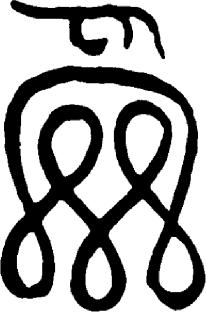
Figure 27: Shang Dynasty inscription, China

It would seem that the ancient Chinese associated the idea of spoken and written communication with the endlessly looped cord. Henzte explains:

Therefore, something must have been spoken while the skein of silk was brought into order; or else the putting into order of the skein was in itself an action somehow equivalent to a sign-language or the expression of a concept. This reminds us inevitably of the thread-games [string figures’ or Cats’ Cradles], known to us especially from Polynesia…. Indeed, the function of the thread-game is in a sense mnemonic, in so far as the production of each figure was accompanied by the recital of a specific chant or mythological story, which was then acted out. Today the thread-game is unknown in China. But was it unknown in ancient times? … The I-Ching (Book of Changes) mentions a kind of knot writing.1

Was the development of writing derived from the use of mnemonic devices like continuous-line drawings and string figures? Schuster found some evidence to support this contention among the Bataks of Indonesia and more significantly in the writing or proto-writing found at Mohenjo-Daro (Figure 28). Are the flanking figures in the other drawings hands?
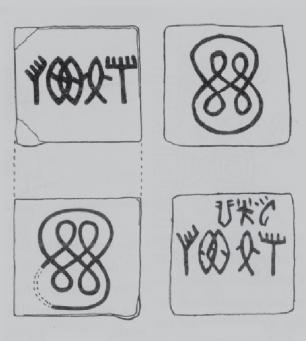
Figure 28: Copper plates from Mohenjo-Daro, Pakistan This looped design has a wide distribution (Figure 29).2
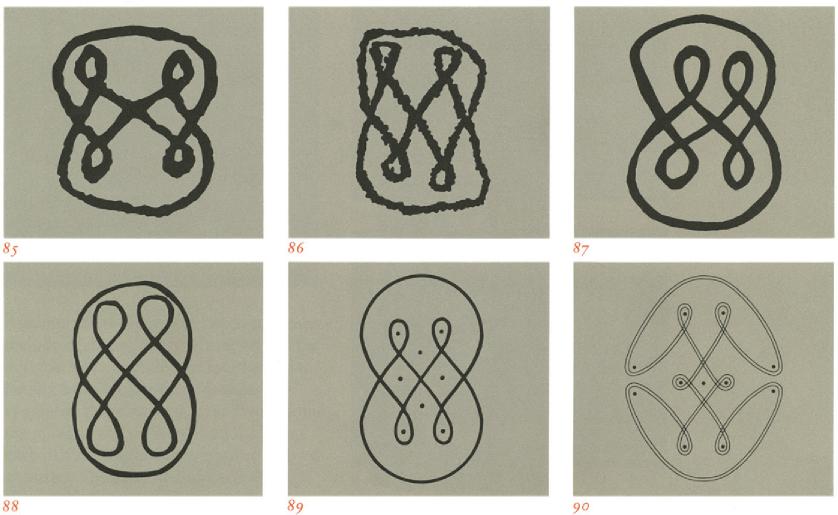
Figure 29: Looped continuous-line drawings

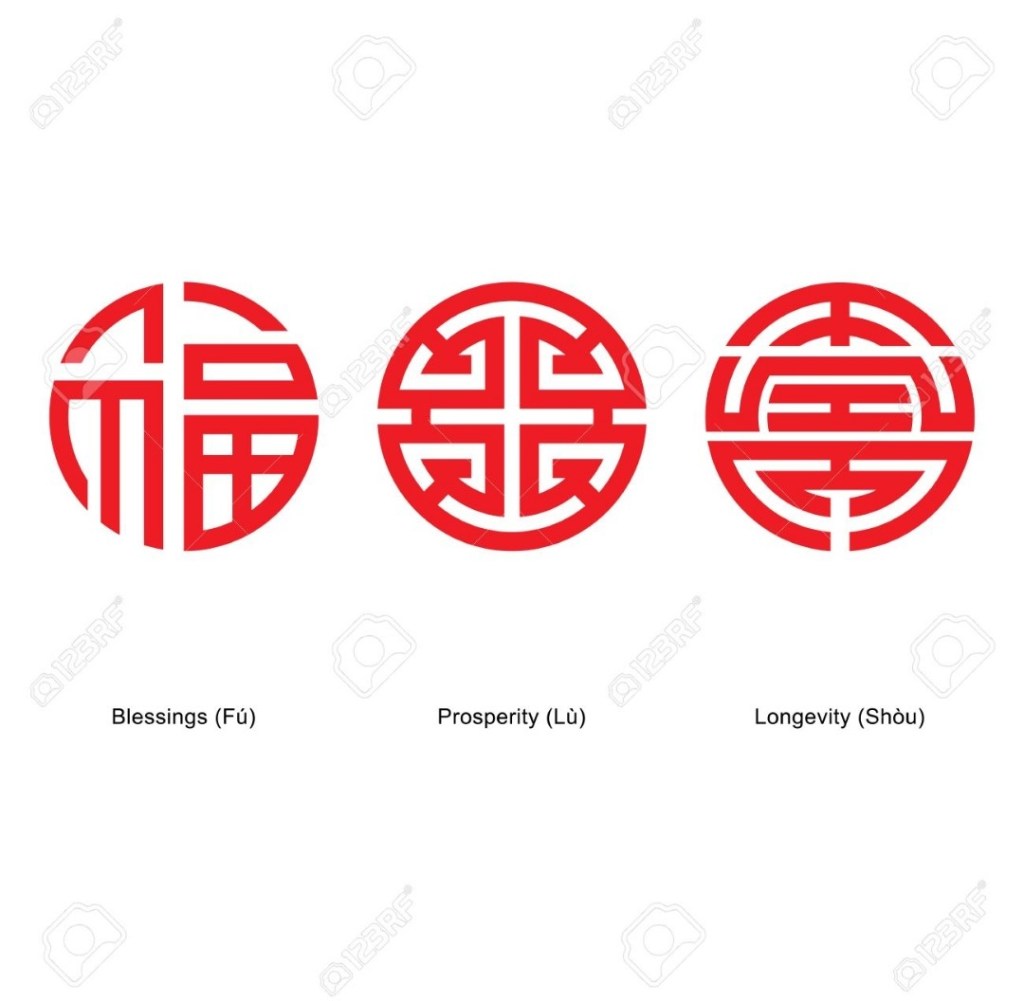
Double Happiness (simplified Chinese: 双喜; traditional Chinese: 雙喜; pinyin: shuāngxǐ; Vietnamese: song hỉ) sometimes translated as Double Happy
NumberDescription
85Magical design from a Batak manuscript, Sumatra
86Design on indigo cloth, Gashaka, Cameroon
87Inscribed copper plate, Mohenjo-Daro, Pakistan. 13th century B.C. (?)
88Egyptian seal, 1800-1600 B.C.
89Ground drawing, Quioco, Angola
90Sand tracing, Malekulan, New Hebrides

Relationship to Mazes and Labyrinths

Continuous-line drawings are related to the labyrinth both in the stories and rituals that surround them and in their manner of construction. Before any serious discussion of the labyrinth is possible it is first necessary to distinguish it from a maze. A labyrinth is unicursal; it is impossible to get lost in one since its path, despite its wanderings, leads inexorably to the center (Figure 30).

A maze is full of twists, turns, and dead ends. It is specifically designed to confuse the poor souls caught within it and prevent them from finding their way out. The Labyrinth of Minos was really a maze or Theseus would have had no need of Ariadne’s thread to find his way. The confusion seems to be an old one.
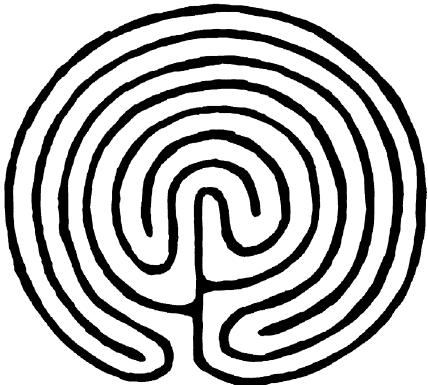
Figure 30: Labyrinth design, India

The maze is clearly the older of the two forms. Maze-like patterns have been found on cave walls from prehistoric times (Figure 31). The subterranean world with all its sinuous passages and dead ends is the original model for the maze.
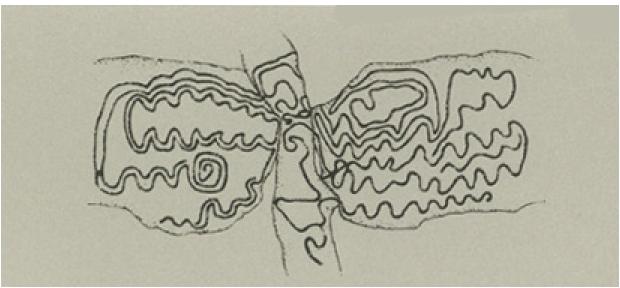
Figure 31: Engraved maze on a tomb lintel, Ireland

The purpose of a maze—in contrast to a labyrinth—was to keep the dead from coming back to bother the living. Claude Lévi-Strauss relates a relevant story in Tristes Tropiques:

As we drew nearer to the trees, we reached the object of our visit—a gravel pit where peasants had recently discovered fragments of pottery. I felt the thick earthenware, which was unmistakably of Tupi origin, because of the white outer coating edged with red and the delicate black tracery, representing, so it is said, a maze intended to confuse the evil spirits looking for the human remains which used to be preserved in these urns.1

In many Meso-American cultures it was thought that the wicked could be mazed in the underworld so their souls would not return. The Aztecs, like the Mayas, believed that while the celestial house— of which their own houses were models—was woven in a straight, orderly, and measured way, the “evil knotted earth” was a twisted and tangled web in which one could become ensnared.

The Chilam Balam of Tizimin refers to the “many roads that lead to death” during the times of injustice, and contrasts the obviously straight and vertical “good roads” by which the dead can ascend quickly to heaven, with the “evil roads” that descend, spreading out on the earth. Ultimately, the latter led to the land of the dead in the thick of the underworld, a place described by Sahagún as having “no outlets and no openings.”
In general, the Meso-American deities or monsters of the underworld were depicted with nets and snares useful for catching evil-doers or other persons unworthy of reaching heaven.

Sometimes, the undulant forms that describe the underworld are aquatic plants; in other instances, the material cannot be identified. What seems to have mattered was not the substance, but its unruly condition. The Popol Vuh describes the jaguars of hell, for example, as “all tangled up”…squeezed together in a rage,” while one Aztec god was named Acolnahuácatl “The One From the Twisted Region,” according to Caso.

The twisted underworld was also associated with the human intestines, an idea that is not as strange as it might seem. If the underworld is conceived as the body of a god, or a god in animal form, and death is a kind of devouring, then the dead must pass through the intestines of this primordial creature. The analogy is also based on the coiled and snake-like appearance of the human intestines and on the purifying role they play within the body. The Aztec goddess of lust and sexual perversity, Tlazolteotl, was called “the eater of ordure.” Those who confessed to her had their sins transformed by her digestive system into fertilizer.3 We are also told that the Aztec underworld was a kind of digestive system located deep within the “bowels of the earth” (an expression we still use) where dwelled monstrous crocodiles not unlike those found in Egyptian or Sumerian mythology.
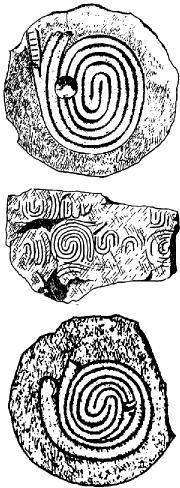
Figure 32: Babylonian tablets used for divination

Another aspect of the same complex of ideas can be found in the use of animal or human entrails for telling the future. Generally it was the liver and intestines that were used. The Etruscan and Roman haruspices are the best-known examples but the practice was once common worldwide.

The Babylonians divined in this manner and recorded the results on the back of baked clay tablets (Figure 32). A number of these have survived from about 1000 B.C. They depict maze-like patterns on the front; one is inscribed ekal tirani, “palace of the intestines.”1 In ancient Egypt, the dead king was eviscerated and his entrails put into Canopic jars. According to W. Jackson Knight, the bearers of the Canopic jars within the pyramids performed evolutions symbolizing the twisting path of the intestines they were carrying.

If the maze is a sort of flypaper for unclean souls, the labyrinth has the opposite purpose, to reunite the soul with the One, whether conceived as God or a First Ancestor. The labyrinth design itself appears to be of late origin, Bronze Age or a little earlier, but it is clearly an ancestor of the continuous-line drawings and string-figure designs we saw earlier. Those in the know were taught these designs or figures in order to facilitate their passage into the Other World after death.

The origins of the labyrinth are lost to us. It may have begun as an esoteric symbol whose meaning and method of construction were restricted to initiates. If this is the case, it probably existed for millennia before it appeared in a public setting. The earliest dateable labyrinth is from Pylos, Greece (c. 1200 B.C.), a product of the Minoan-Mycenaean culture (Figure 33).3 It was found on the back of a clay tablet the front of which was inscribed with Linear B writing.
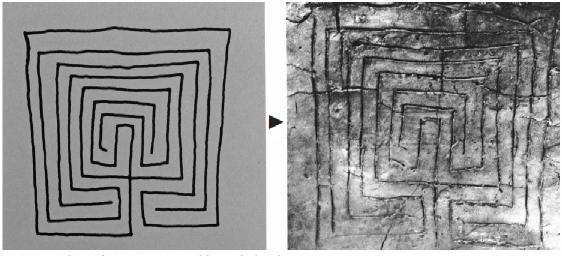
Figure 33: Labyrinth on a Linear B tablet, Pylos, Greece

Examples from the Camonica Valley in the Italian Alps may be older than those in Greece but they cannot be dated (Figure 34). Many are really spirals or debased forms, but a number show a human or demonic figure in the center, an important element in the tradition.
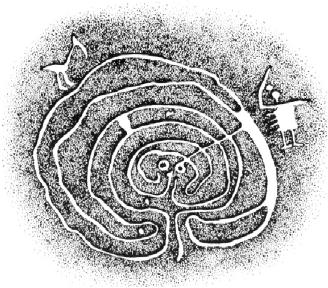
Figure 34: Petroglyph, Camonica Valley, Italy

In certain cases a demon is represented in abstract and stylized manner, as a labyrinth whose twistings end at the center of the image in two dots standing for eyes; a third dot sometimes marks the mouth or the nose. These are probably monsters comparable to those of ancient Greece; the legend of the Minotaur doubtless draws its origins from this kind of concept. Sometimes the monster is pictured within the labyrinth; sometimes he seems to be one with it, to be himself the labyrinth. These figures are very common in the rock carvings of Scandinavia, and they constitute one of the principle subjects of the Atlantic megalithic art which stretches from Galicia in Spain to Brittany and Ireland.

Carl Schuster found a suggestive example jabbed on a ladle excavated in Southern Denmark and dated from the early 3rd millennium (Figure 35). Not a true labyrinth, it is close enough to suggest that its creator was familiar with the design but didn’t have the skill to re-create it. This is thoroughly in keeping with the history of the motif.
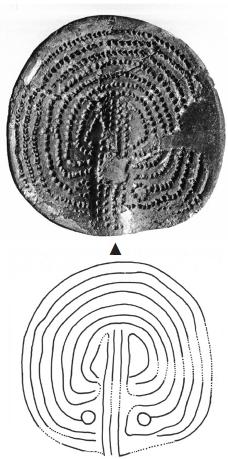
Figure 35: Ladle with jabbed decoration, Denmark

The procedure is simple—literally child’s play in many parts of the world. Still, relatively few persons, seeing the design drawn according to this scheme for the first time, are able to reproduce it accurately. The blunders which most people make today are precisely the blunders that have been made for thousands of years, in many parts of the world. In fact, this motif has been more often bungled than made correctly—and those blunders are themselves illuminating.

A variety of simplified forms exist, closer to mazes or gapped circles. The most common mistake is the enlargement of the entrance, significant in itself, for many labyrinths were constructed to be entered.

The labyrinth motif is widely distributed and is found in Europe, India, Southeast Asia, parts of Oceania (often in a debased form), North America, Mexico, and perhaps South America—though definitive proof is lacking. Labyrinths constructed of rocks or boulders were once common, particularly in Scandinavia. Many are large enough to enter and were probably used for rituals or games in which the participants walked or danced along the path between the boulders.

Examples from North America, such as those found among the Yaqui Indians of Sonora, Mexico, and the Pima of Arizona differ in no significant way from European examples (Figure 36). Some are incised on rocks while other larger examples are constructed of rocks or boulders. In more recent times, the Pima, Hopi, and Papago used the design on trays and baskets. We don’t know how old the motif is in North America because rock carvings cannot be dated but Carl Schuster believed that the design was part of the cultural heritage of these peoples and not learned from Europeans.
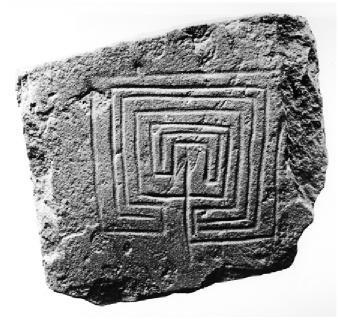
Figure 36: Sandstone carving of labyrinth, Arizona

The labyrinth, like the maze, is associated with the underworld and the afterlife. In many traditions, it is the home of some kind of monster or primordial ancestor who acts as a gatekeeper, restricting access to the Other World.

People who make the labyrinth often describe it as the refuge of some legendary rogue. The Finns have such a story. So do the Pima of Arizona. In India, the labyrinth is known as the domain of the demon Ravana, while the Bataks of Sumatra explain their version of this design as the refuge of the trickster Djonaha. In the Caucasus, the labyrinth is known as the dwelling of Syrdon, a nart or legendary ancestral hero. And in Crete, it served as the lair of the Minotaur, that monster—half-bull, half- human—who was given an annual tribute of seven youths and seven maidens.

As we have seen, what is clear from the idea of a tangled and intestine-like underworld is that the monster does not so much live inside the labyrinth, as it is the labyrinth (Figure 37). That is to say, passage through its body is required to effect rebirth. A few examples will suffice.
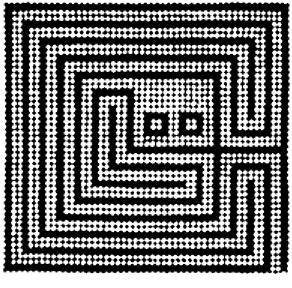
Figure 37: Design on a woven grass mat, Sri Lanka

The Seneca Indians described Kaistoanea, a two-headed serpent (shown here with one head) and denizen of the underworld who devoured the inhabitants of a hilltop village, except for one warrior and his sister (Figure 38). They killed him and he vomited forth his victims alive.
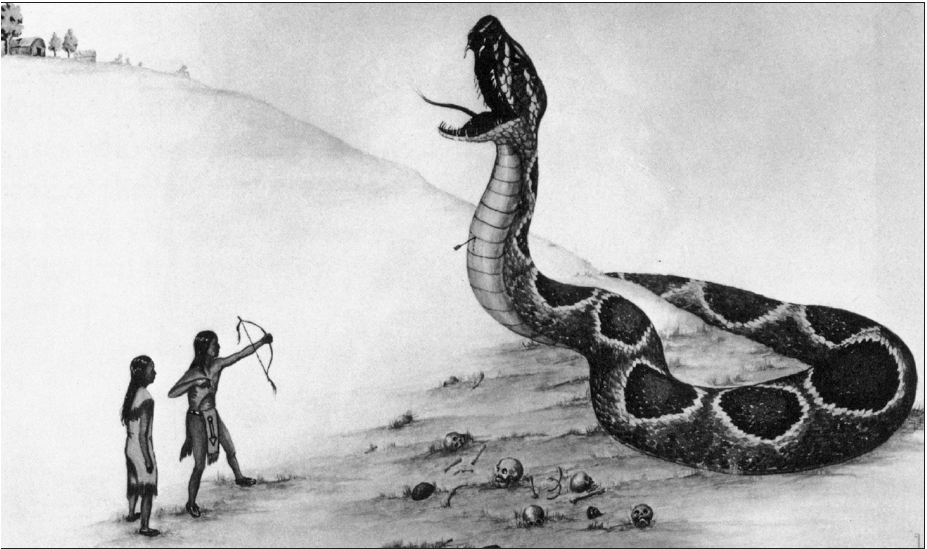
Figure 38: Drawing titled “Seneca Legend of Bare Hill”

A related story from the Kwakiutl of Cape Scott tells of a sea monster that swallowed tribesmen when they were out canoeing. One day, a chief walking near the seashore meets Kosa, a young girl, and asks her to fetch water for him to drink. She is afraid of the sea monster but agrees. As soon as she agreed to obey, she put her Sisiutl belt on, and the vampire instantly killed her. The chief, a wizard, sang an incantation which caused the beast to burst open and disgorge all the people it had devoured. Coming back to life, they limped forward or tripped sideways; their bones were all mixed up. But the chief soon sorted them out, and they became the present Koskimo tribe.

The mixed-up bones of the tribesmen are an important element in the story as the joints are the connecting links between bones and we have seen how the joints must be reconnected by the Spirit line to achieve rebirth.

T’ao-tieh (Glutton), a mythic bear or tiger according to the ancient Chinese, vomited forth “the whole of humanity from the abyss of Chaos (Figure 39).
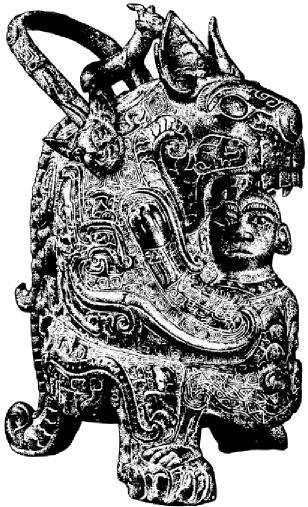
Figure 39: Vessel depicting T’ao-tieh, China

In Australia, the Walbiri describe the mythic serpent Warombi, which travels underground and is the source of life (Figure 40). He swallows initiates and returns them as men.
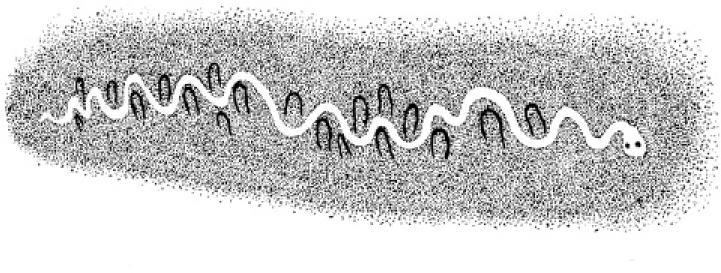
Figure 40: Pictograph of Warombi, Australia

We have two versions of the story in the Judeo-Christian tradition: Jonah is reborn from the belly of the whale crying, “Salvation is of the Lord” and Christ in the Harrowing of Hell, held open the monster’s jaws to release Adam and Eve and all the righteous who had died since the beginning of the world (Figure 41).
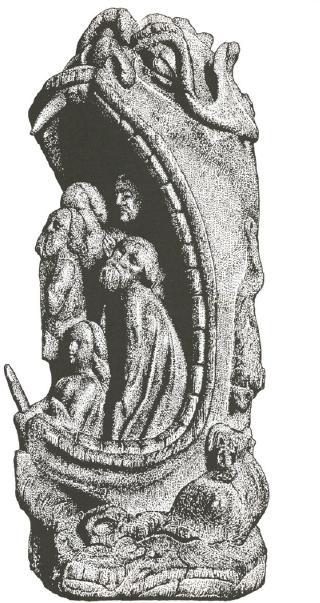
Figure 41: Wooden stall carving of the Harrowing of Hell, medieval, France

The challenge is to pass through this primordial creature without being destroyed.1 Rites of initiation prepare the young for the ordeal and ensure a safe passage to the Other World upon death. This generally involves the learning of some kind of esoteric information of which the labyrinth design seems to be a remnant. The relationship of the labyrinth to continuous-line drawings, Cats’ Cradles, and other sacred diagrams is revealed most clearly in its method of construction.

(The “jaws of death” that find later expression in folklore as the clashing rocks, revolving doors, double-edged swords orother guardian pairs protecting the entrance to Heaven. See Coomaraswamy, “Symplegades,” Selected Papers/His Life and Work, vol. II, pp. 521-44, and Guardians of the Sundoor.)

Constructing the Labyrinth

It was the American art historian Carl Schuster who first understood that the key to the labyrinth lay in its method of construction. His extensive research revealed several strategies for drawing the design. The most common employs a preliminary framework built from a cross, four arcs, and four dots within each arc. Once the framework is in place, the rest is simple (Figure 42):
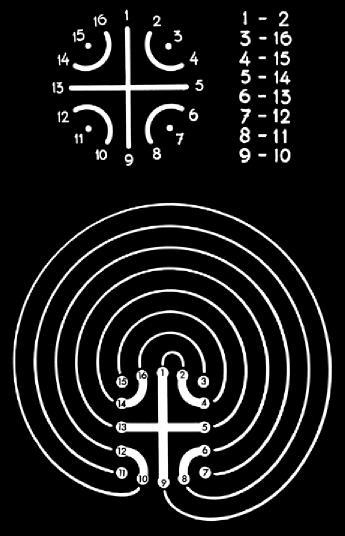
Figure 42: Drawing the labyrinth using a framework

Connect any of the four ends of the cross with the nearest end of an arc, either on the right or on the left; and thereafter connect the following dot with the next position on the other side of the diagram, and so on in orderly progression until the design is completed.

There is a satisfying rhythm to the process as the hand completes successive movements from one side of the diagram to the other. The method is easy to learn and execute, which accounts for its widespread diffusion and survival.

The design is drawn in precisely this way by school children in Finland, Sweden & Ireland; housewives in southern India; Batak sorcerers in Sumatra; and American Indians in southwestern United States, Mexico & Brazil. There is good reason to believe it has been drawn in this way, though not exclusively this way, wherever the motif is known.

Despite its ubiquity, Schuster was not convinced that this was the original method for drawing the labyrinth, feeling that the arcs and dots were really just guidelines for novices who were learning to make the figure. Ever resourceful, he had a friend place an article in the Irish Press (January 9, 1952) asking readers if they knew how to draw the labyrinth depicted on the famous Hollywood Stone, in County Wicklow (Figure 43).
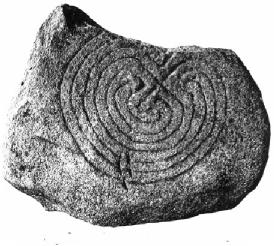
Figure 43: Hollywood Stone, County Wicklow, Ireland

He received twenty responses; all but one used the cross-arc-dots method, but the lone exception proved to be of some importance. A man named William Denton wrote and recalled that as a boy, an elderly Dubliner who knew all kinds of tricks and puzzles had shown him and his friends how to draw the figure using just two lines (Figure 44). He included a drawing illustrating the method. Schuster was intrigued and recalled a prior discussion with John Layard.

The old Dubliner’s method was the method suggested to Schuster by John Layard, when Carl showed him the four-dot method, common in so many parts of the world. …Layard pointed out that one essential feature of all such designs is that they be drawn by means of continuous lines, without raising the hand.
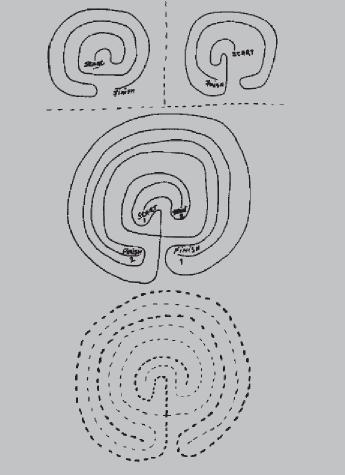
Figure 44: Drawing in a letter from William Denton to Carl Schuster

While the Old Dubliner’s method is not a true continuous-line drawing, it is closer in spirit than the cross-arc-dots method. “To me the Dublin story rings true. It’s disturbing, of course, that we seem to have only one person as a carrier of this tradition, but I still believe it is a bona fide survival of one ancient method of drawing the labyrinth.”2

Schuyler Cammann, former Professor of East Asian Studies at the University of Pennsylvania and an old friend of Schuster’s, also felt that the dots and arcs were not part of the original design. He pointed out that the labyrinth could be constructed without the arcs, by using a cross and four dots and drawing four lines (Figure 45).
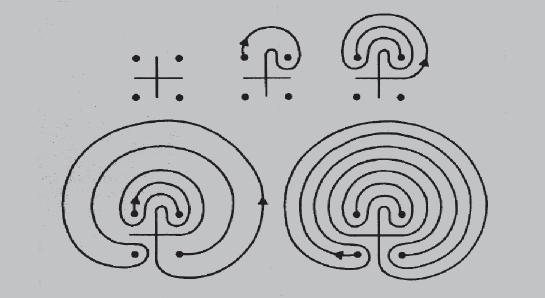
Figure 45: Four-line method for drawing the labyrinth

This would help to explain the familiar Bronze Age motif of the cross with four dots, often found on personal rings and protective amulets in the Near East and Central Asia (Figure 46). The same designs also appear as rock carvings in Shipaulovi, Arizona, in the same vicinity as labyrinth designs. Cammann thought this might be an abbreviated form of the labyrinth, understood only by those who shared the secret of its construction.
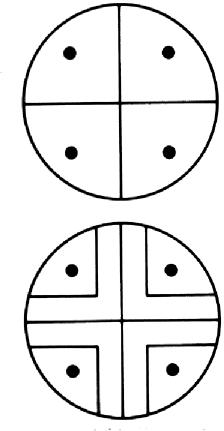
Figure 46: Abbreviated form of labyrinth

A last method for drawing the labyrinth starts with a cross but includes twelve dots, three within each quarter (Figure 47). Four lines are needed to complete the figure, one from each end of the cross.
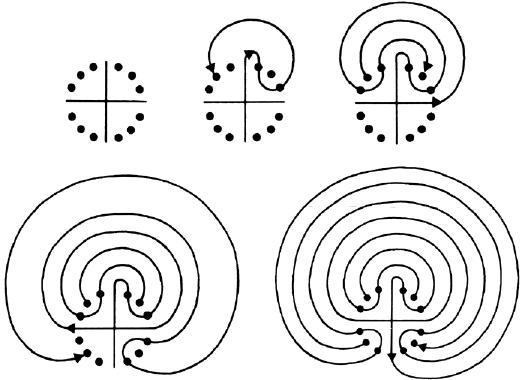
Figure 47: 12-dot method for drawing the labyrinth

The twelve dots represent the primary joints that make up the human body. In keeping with the sutratman doctrine, the connection of these joints by means of a Spirit-line amounts to a re-animation or “re-membering” of an ancestor figure in whatever form it is conceived (human, reptilian, or avian) (Figure 48).
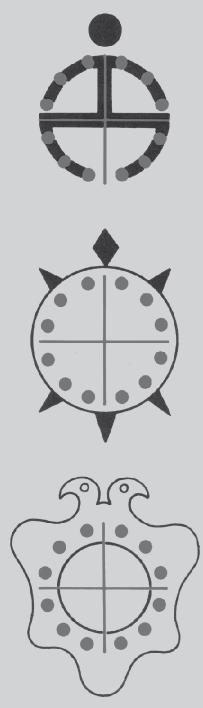
Figure 48: Joint-marked figures

Dismemberment and Reintegration

It was Carl Schuster’s contention that joint marks—often in the form of faces or eyes—represented the souls of primary ancestors. To achieve reunion with one’s ancestors and thereby qualify for rebirth, all the joints must be connected with a continuous line to form an image of the First One or Original Ancestor.

Thus a genealogical diagram, in the form of a human image, serves as a path to be followed into the Afterworld, by tracing one’s origins, as it were, through the pattern of one’s ancestors, commonly shown as joint marks.

The notion of a dismembered First Ancestor or other religious figure from whom all beings are descended is among the oldest and most widespread of human beliefs. Commenting on the task of the Masonic Masters to “diffuse the light and to gather that which is scattered,” Réne Guénon makes reference to the Hindu tradition.

‘what has been scattered’ is the dismembered body of the primordial Purusha who was divided at the first sacrifice accomplished by the Devas at the beginning, and from whom, by this very division, were born all manifested beings….The Purusha is identical with Prajapati, ‘the lord of beings brought forth’, all of whom have issued forth from him and are thus considered in a certain sense his progeny.

The same story is told of Osiris and Dionysius whose reintegration forms the basis of their respective religious traditions. One need only remember that cannibalism lies at the root of the Vedic and Christian rituals of communion.

By devouring, or as we may phrase it in the present connection, drinking Makha-Soma, Indra appropriates the fallen hero’s desirable qualities by an incorporation that is at the same time sacrificial and Eucharistic, cf. John VI.56, “He that eateth my flesh and drinketh my blood, dwelleth in me, and I in him.”

In earlier times, the “host” was treated as an honored guest, later to be sacrificed and eaten. The Latin word hostis (enemy) is related to hospes (guest), expressing this ambiguity. More directly, the related Sanskrit root ghas means to eat, consume, or destroy.

And what is the essential in the Sacrifice? In the first place, to divide, and in the second to reunite. He being One, becomes or is made into Many, and being Many becomes again or is put together again as One. The breaking of bread is a division of Christ’s body made in order that we may be “all builded together in him.”

The Hebrew Kabalists preserve the tradition in a slightly different but recognizable form.

…though here it is no longer really a question of either sacrifice or of murder, but rather of a kind of ‘disintegration’, the consequences of which are, moreover, the same—it was from the fragmentation of the body of Adam Kadmon that the Universe was formed with all the beings that it contains, so that these are like particles of this body, their reintegration into unity corresponding to the reconstitution of Adam Kadmon, who is ‘Universal Man’..

The re-membering of an ancestor figure is at once an act of personal, social, and cosmic reintegration, as well as a preparation for the life beyond. As a ritual, it found expression in a wide variety of forms.

Joint-marks varied in number, twelve being a complete set (shoulders, elbows, wrists, hips, knees, ankles). Generally fewer were shown. Ideally all were reached in clockwise order. When the last joint was reached, and image was turned and the ritual repeated; or, if the image was a ground drawing, the performer turned, as in hopscotch. The first sequence ‘re-membered’ the Guardian of the Lower World; the second ‘re-membered’ the Guardian of the Upper World.

In terms of social organization, division by twelve was quite common in antiquity. In the Old Testament (Exodus 24:4), Moses erects an altar surrounded by twelve pillars, representing the twelve tribes of Israel. A similar story is repeated in the Book of Joshua (4:1-24) where twelve stones are erected at Gilgal in memory of the crossing of the Jordon on dry land. The Hebrew word gilgal comes from a root word meaning “rolling” or “turning” so that the stones might be considered as spokes in a wheel. There are actually a number of cities so named in the Old Testament and one, north of Bethel, was the scene of Elijah’s departure to heaven in a fiery chariot (2 Kings 2:1-11).

In Kabalistic thought, each Hebrew tribe is associated with a zodiacal sign. The idea of a nation comprising twelve tribes was known to a wide variety of peoples including the Greeks and Celts, and Christ had twelve disciples, adumbrated by the twelve fruits of the Tree of Jesse.
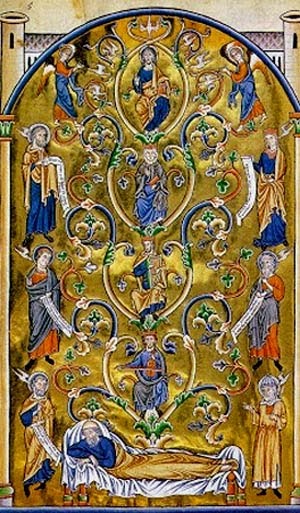
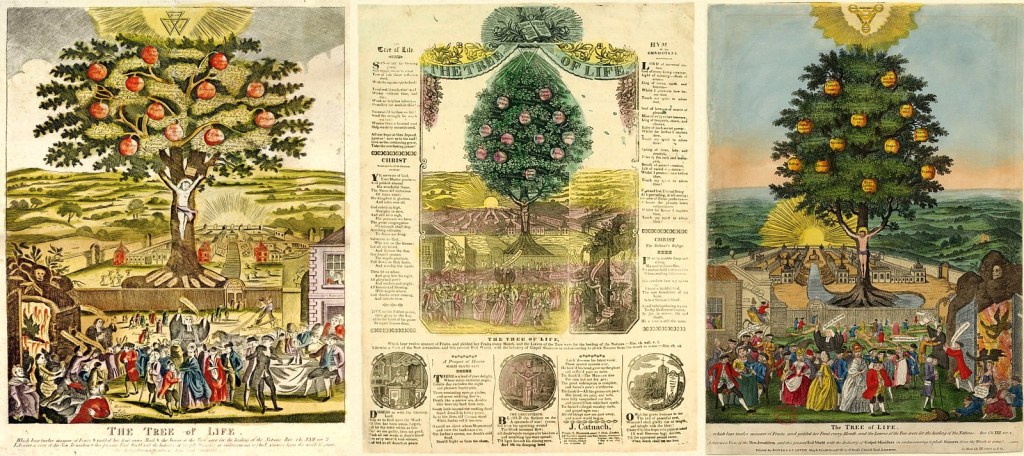
Astronomical and calendrical preoccupations were superimposed on this older idea of dismemberment starting in the 4th millennium. Birth and death mark the passage of time and body joints arranged in a circular fashion became both clocks and calendars.

The Christian Yakut of Siberia created peg-calendars within the framework of a two-headed bird (Figure 49). A peg was moved from hole to hole, clockwise, to mark the passage of the week. The circular form was meant to represent the sun, placed in the chest of the solar bird that guards the sun door or entrance to Heaven. The two heads represent darkness and light, night and day, death and life. Clocks were given the same form. The division of the equinoctial day into twelve hours of light and twelve hours of darkness is attributed to the Egyptians but the roots are clearly much older.
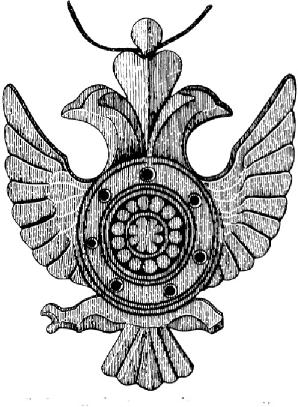
Figure 49: Wooden peg calendar, Yakut, Siberia
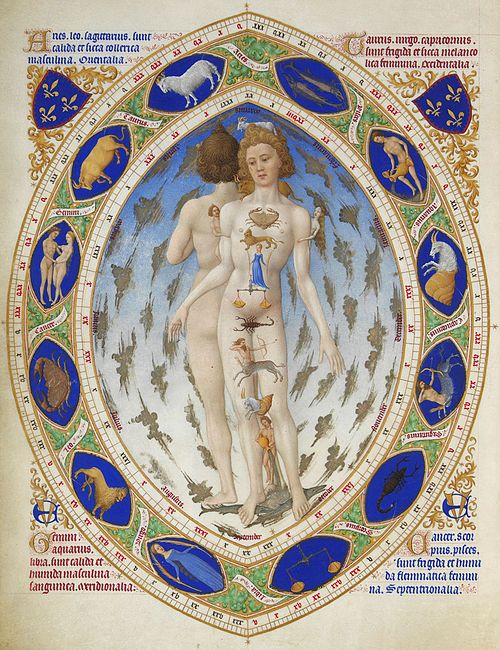
The same pattern was reflected astronomically as evidenced in the once common belief that the constellations represent a dismembered ancestor, whose body was strewn across the sky. The twelve signs of the zodiac were conceived as body joints that the sun touched in turn to complete a yearly cycle. The cycle was personified as the World Man or World Year in some traditions.

Prajapati is, of course, the Year (samvatsara, passim); as such, his partition is the distinction of times from the principle of Time; his “joints (parvani)” are the junctions of day and night, of the two halves of the month, and of the seasons ….In the same way Ahi-Vrtra, whom Indra cuts up into “joints (parvani, RV iv.19.3, viii.6.13, viii.7.23, etc.)” was originally “jointless” or “inarticulate (aparvah, RV iv.19.3),” i.e., “endless (anantah).”

We find an echo of these ancient ideas in the words of Shakespeare’s Hamlet (Act 1, Scene 5):

The time is out of joint, O cursed spite, That ever I was born to set it right.

A medieval astrological chart shows the same underlying pattern (Figure 50).

...a cosmic figure marked with twelve zodiacal signs divided into four categories according to Season & Direction. Each sign, representing a ‘temperament’ from its category, marked a location corresponding to a primary joint. Such signs were also conceived as constellations, scattered across the heavens. Re-membering this dismembered figure meant reassembly of its members: the tribal body made One; reembodiment of God and Cosmos.2
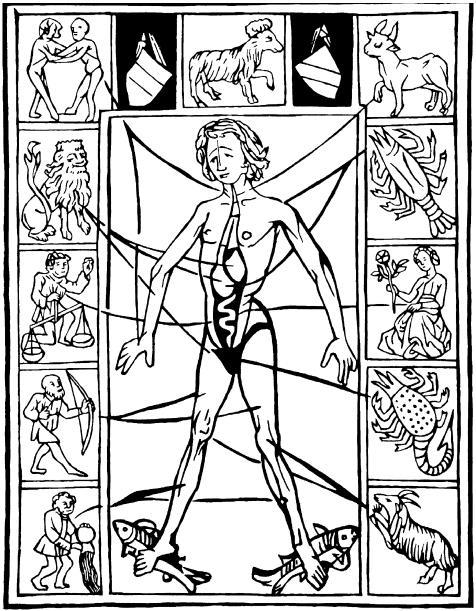
Figure 50: Medieval astrological chart, Germany.
Initiates must know how to complete the labyrinth design—or a related diagram, string figure, or other exercise—in order to ensure a safe passage into the Afterworld and a successful rebirth. This initiation is itself conceived as a kind of death and rebirth for which the participant must be prepared. The figure to be drawn is at once a mythical ancestor, a devouring creature, and the path to the Other World. The monster is the labyrinth in the most basic sense; death the devourer who swallows and regurgitates initiates. To pass through the beast one moves from joint to joint much as one completes the diagram. Many Chinese dragons are joint-marked in this way.

Mircea Eliade describes a Koryak tale “in which a girl lets a cannibal monster eat her so that she can quickly descend to the underworld and return to earth, with all the rest of the cannibal’s victims, before the ‘road of the dead’ closes.” He goes on to note that:

this tale preserves, with astonishing consistency, several initiatory motifs: passage to the underworld by the stomach of a monster; search for innocent victims and their rescue; the road to the beyond that opens and shuts in a few seconds.

Mircea Eliade, Shamanism, pp. 251-252. Eliade also documents the role of ritual dismemberment in many shamanic practices around the world. The shaman’s body must be replaced with a new one to enable entry to the other world and subsequent return to this one.
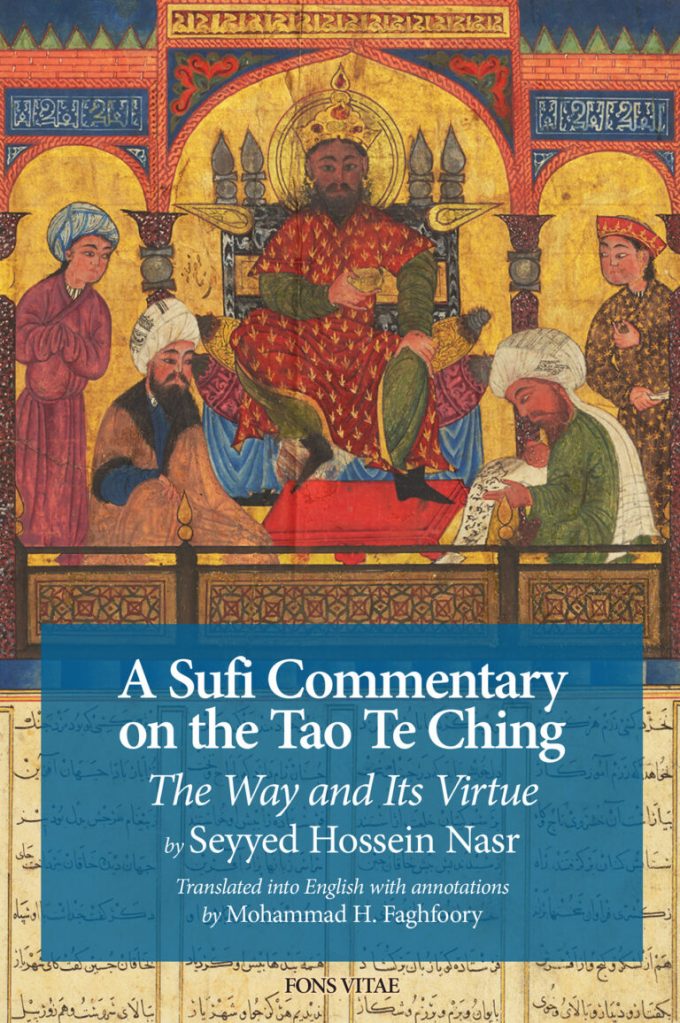
A Sufi Commentary on the Tao Te Ching: The Way and Its Virtue

This extraordinary book contains a full translation of the Tao Te Ching from Chinese, along with an extensive Sufi mystical commentary on each verse by the renowned scholar, Professor Seyyed Hossein Nasr, who includes along with his own commentary, passages from the Diwan of HafizRumi’s Mathnawi, Sa’adi, Nizami, Farid Al-Din Attar, Shabastari, and Bayazid Bastami.

The Prophet, upon him be peace, said, “Seek knowledge, even unto China.”

In 1974, the oldest extant copy of Lao Tzu’s Tao Te Ching (6-4th century BCE) was unearthed at Xi’an along with the ceramic warriors guarding the tomb of the first Chinese Emperor Qin Shi Huang. In the 1970s, Professor Toshihiko Izutsu—the Japanese Islamicist, philosopher and linguist—collaborated in Tehran with Dr. Seyyed Hossein Nasr to translate this treasure into English. Dr. Nasr went on to put it into Persian adding a Sufi commentary which was recently published in Iran. This has now been translated into English with annotations by Mohammad H. Faghfoory.

The scholar recognized as the “Father of World Religions”, Huston Smith, refers to the Tao Te Ching as a “Testament to humanity’s at-home-ness in the universe, [which] can be read in half an hour or a lifetime….”

Imagine having a foundational world scripture like the Tao Te Ching explained by such a renowned Sufi scholar and internationally recognized spiritual authority as Dr. Seyyed Hossein Nasr.  Passages whose subtleties are normally inaccessible to the Western mind become clear. Through Dr. Nasr’s insightful use of verses from such Persian luminaries as Rumi, Hafiz, and Attar, the reader is introduced to the “world” behind this world.

This book contains the first Sufi commentary, by Dr. Seyyed Hossein Nasr, on a key non-Abrahamic sacred text (the foundational scripture of Taoism) that will be highly relevant to anyone interested in the spiritual universality shared by the world’s religions.

Dr. Nasr’s ability to present complex religious and spiritual concepts and terms in a simple and readable language makes this book an ideal textbook for any course on religions of the world, comparative religious studies, Sufism, or Taoism. In the recent years leading up to this publication, Dr. Nasr has been teaching this work at George Washington University in Washington, DC.

Scholars in the fields of Islamic and Chinese studies, comparative religions, and Sufism will find that this volume expands their horizons. Lay readers will see it as enlightening; seekers of the truth will find it spiritually uplifting.

Find the book here

Excerpt:

Chapter One

The way of which one can speak as “way” is not the eternal Way (Tao)
The Name that can be named is not the eternal Name.
The Nameless is the beginning of Heaven and Earth;
While the named is the mother of the Ten Thousand Things.
In the state of eternal Non-Being we see the invisible depth of the Tao;
While in the state of Being, we see the determinations of the Tao.
These two are originally the same;
But they are called differently as they reveal themselves.
In that particular dimension in which the two are the same, they are called mystery, the mystery of all mysteries,
the gateway of all subtle things.

In the first verse of this discourse, the transcendence of the Tao is emphasized, and it is established that anything that can be spoken of is not the eternal Tao. This is because by speaking of the Tao one has placed a delimitation (qayd) on that which is transcendent, infinite and beyond definition and description. Therefore, any name that we assign to It is not the eternal Name, because by giving a name to that Absolute Reality we in fact delimit It. In its supreme meaning, the Tao is the Divine Reality, which has no name nor description.

About the contributors:

Lao Tzu 

Lao Tzu was a semi-legendary Chinese philosopher and author of the Tao Te Ching, one of the foundational texts of Taoism, on which this new translation/commentary is based. Traditional accounts say he was born in the 6th-century BC state of Chu during China’s Spring and Autumn period (c. 770 – c. 481 BC). The Chinese text used for this translation was unearthed in Xi’an along with the famed ceramic warrior in 1974.

Seyyed Hossein Nasr 

Dr. Seyyed Hossein Nasr, University Professor of Islamic Studies at the George Washington University, is an international authority on Islamic philosophy, mysticism, art, and science as well as comparative religion and religion and ecology.  He is the author of dozens of books and hundreds of articles and the subject of a number of books, edited collections, and articles.  A small sample of his recent publications include The Garden of Truth: The vision and Promise of Sufism (2007), Islam’s Mystical Tradition (2007), Islam in the Modern World (2010), In Search of the Sacred (2010), and Metaphysical Penetrations (a translation of Mulla Sadra’s Kitab al-Masha’ir. (2014).

“The greatest honor the academic world grants to a living philosopher is the dedication of a volume of The Library of Living Philosophers to his work and thought; and the most prestigious recognition a thinker can receive in the field of natural theology is an invitation to deliver the annual Gifford Lectures at the University of Edinburgh.  In the years 2000, the twenty-eighth volume of The Library of Living Philosophers was devoted to the philosophy of Dr. Seyyed Hossein Nasr, placing him in the company of Einstein, Sartre, Russell, Whitehead, and other luminaries of twentieth-century intellectual life.  Fourteen years previously, Dr. Nasr had delivered the Gifford Lectures, and the text of these lectures became his magnum opus, “Knowledge and the Sacred.”

Toshihiko Izutsu (Translator from the Chinese to English)

Toshihiko Izutsu (1914 –1993) was a Japanese scholar who specialized in Islamic studies and comparative religion. He took an interest in linguistics at a young age, and came to know more than thirty languages, including Arabic, Hebrew, Turkish, Persian, Sanskrit, Pali, Hindustani, Russian, Greek, and Chinese. He is widely known for his translation of the Qurʾān into Japanese.

Mohammad H. Faghfoory (Translator from Persian to English)

Mohammad H. Faghfoory is professor of Islamic Studies at the George Washington University and the director of the MA Program in Islamic Studies. In addition to advising graduate students’ research and theses, he teaches courses on Qur’an and Hadith, Islamic Political Thought, Sufism, Islamic Philosophy and Theology, Shi‘ite Islam, Islamic Art and Spirituality, Islam, and other related courses.

He received his Master’s degrees in history and Middle East studies from the University of Illinois, and a Master’s degree and a PhD in political science and Middle East studies from the University of Wisconsin-Madison. He has taught at the University of Tehran and has been a visiting scholar at the University of California-Los Angeles, Islamic Manuscripts Specialist at Princeton University, and at the Library of Congress, and adjunct professor of Middle East History at Mary-Washington University in Fredericksburg, Virginia. Dr. Faghfoory has written, translated, and edited twelve books, numerous book chapters, articles, and book reviews (see Publications section for details). He has lectured extensively in the United States, Europe, and the Middle East, and participated in interfaith dialogue organized by American media.

The Universal Message

As Dr. Nasr beautifully demonstrates, the meeting of these two great wisdom traditions reveals that the mystic’s path is universal, transcending cultural and religious boundaries while honouring the unique beauty of each tradition. In our troubled times, this synthesis offers profound healing, reminding us that all authentic spiritual paths ultimately lead to the One Reality that is both the source and destination of our seeking.

“The Tao that can be spoken is not the eternal Tao” echoes the Islamic teaching that Allah is beyond all human comprehension, yet paradoxically, both traditions affirm that this Ultimate Reality can be known through direct spiritual experience and the purification of the heart.

On the Nature of the Tao

Dr. Nasr illuminates the profound depth of this central concept:

“The title of this book, which is the most foundational source of the Taoist tradition and one of the best-known sacred texts of the religions of the world, has several meanings. Even though its title is usually translated as The Book of the Way and Its Virtues, it includes the word ‘Tao,’ which has no synonym in any other language. The Tao is not just the way to reach the Truth, it is also the Absolute Truth Itself, termed al-Ḥaqq in the Islamic tradition, meaning ‘the Real’ or ‘the Divine Truth.’ At the same time, It is also the Way to attain perfection and to reach the Absolute Truth. Moreover, the Tao is the Principle of all things in the hierarchy of being, and that which determines the nature of all beings and the principles of their existence. The Tao is also the source of virtue and salvation. It has both ontological and ethical dimensions, and is both individual and social, human and cosmic, practical, theoretical and existential. For these reasons the term ‘Tao’ is used in the Persian text and is not translated. The Tao is the guide that leads human beings to the highest plane of the Truth, which is nothing but the Tao Itself. Thus, the Tao is the fundamental key for understanding reality in all degrees of Its manifestation.”

This profound understanding reveals why our exploration of these parallel wisdom streams offers such rich nourishment for the soul’s journey toward Ultimate Reality.

Sufi Light on Tao Te Ching ~ The Book of the Ineffable Reality and Virtue by Pir (Lao Tsu) Li Er

1.
Tao Te Ching is a Spiritual Classic. Tao or Dao means Way, Ineffable Reality, Te or De means Virtue and Ching means Great Book or Classic. Thus ‘Tao Te Ching’ can be called: The Great Book of Reality and Virtue, or The Book of Ineffable Reality and True Virtue. Here simply translating ‘Te’ as virtue will not do justice, its healing virtue which brings man back to his original nature.

It is believed that the classic was inspired to be written down around 4th or 6th Century BC, so we are talking about a very old Spiritual Classic and something that ancient to have successfully been transmitted to us without being lost is not a light matter. This itself can be viewed as a proof of authenticity and energy of this timeless classic.

It is written by a Sage by the name Li Er Boiang, also known as Li Dan. Because he was Pir of his time, his honorary title was Lao Tsu which means ‘Old Master,’ the same meaning is conveyed in the word Pir in Sufism.

Tao Te Ching has 81 chapters, all brief, yet they carry profound message about the Reality. The Book introduce concepts about the Ultimate Reality in a language suitable for his time as well as statements concerning practical spirituality and wisdom for traveling the Spiritual Path which enable one to live in harmony and in a state of tranquility

Metaphysically Tao refers to Reality as It is. Psychologically it refers the way how human nature is constitute, the original nature of man, a deep dynamic structure of our being. Ethically its means the way human being must conduct with others to be at peace and harmony. Spiritually it refers tot the guidance that is offered to us, the method of searching for the truth that is handed down by the great sages, seers, divinely inspired communicators of the path, the way of inner work. All of these meanings of Dao / Tao is ultimately united and one.

Tao Te Ching’s appeal is broad and its meaning is deep. It speaks to each at our own level of understanding while inviting for search for level of insight and experience that are not yet within our comprehension.

It is a sacred text. To read it is not only to see ourselves as we are, but to glimpse a greatness  extending far beyond our knowledge of ourselves and and the universe we live in. The Tao Te Ching deals with what is permanent in us, it speaks of a possible inner greatness and an equally possible inner failture which are both indelibly written into our very structure as human being.

Under its gaze we are not American or Chinese or European. We are that being, Man, uniquely called to occupy a precise place in the cosmic order, no matter where or in what era we live. It is a work of metaphysical psychology. (credit)

an imaginal Portrait of Wise Elder (Pir) Lao Tsu Li Er, may Allah be pleased with him

2.
Timeless spiritual classics such as Tao Te Ching transmits its message continuously and depending on who is reading and receiving it and with what level of understanding, it continues to open itself up to help us see beyond into the deeper mysteries. This is a characteristic of authentic and inspired spiritual transmission.

How does the message of Tao Te Ching illume itself against the universal message of the Sufis? Can the message of the Tao Te Ching can also be found reflected in the message of the Quran, the Source that Sufis hold so dearly? 

In order to find suitable translation of Tao Te Ching in English, I have used several sources to have a more holistic appreciation of its mystical nature. The citation of the Quranic verses are indicated in the number within parentheses.

CHAPTER-1 OF TAO TE CHING

This chapter speaks about Tao as an Ineffable Reality, the Ultimate Reality about which anything expressed falls short, any comparison out of the construct of the limited mind is an injustice to its ineffableness. Some translation speaks of it as Path, as Existence Itself. Here is a composite translation:

The Ineffable (Tao), about which is spoken, is not the eternal Ineffable.
A name for the Unnameable, is but a name.
The Unnameable is what makes everything what it is,
By naming things you divide the Indivisible.

Only one who gives up all his desires can experience the Indivisible Essence,
One who still cherishes desires, will experience the Manifestations.
Both will see the same reality, but experience it differently.

The unity of Essence and Manifestations is said to be the mystery.
Mystery of mysteries, the door to all wonders.

Here are some reflection of the above passage and parallel phrases from the Quran to provide hint that both are speaking about the Ultimate Reality with reverence to It’s mystical nature.

La ilaha – Negate all false names. Only that Ultimate Reality now bear witness that the Unnameable alone Is. Shahida-Llahu ‘AnnaHu La ilaha illa Hu. (3:18) Who is more wrong than one who invent a lie, a conjecture about the Ultimate Reality? (6:93) Thus whatever one speak about the Ultimate Reality never can do justice. Subhanahu wata’ala ‘ammayasifoon –  Limitless is Hu in glory, and sublimely exalted beyond anything that men may devise by way of definition (6:100). Subhanahu wataAAala AAamma yaqooloona AAuluwwan kabeera – Exalted and Greater beyond what they say is Hu! (17:43Huwa as-Samad, the Ultimate Reality is Eternal. al-Qayyum – the Peerless. Huwa Allahu Ahad – That One is Indivisible (112:1).

That Reality is both al-Zahir and al-Batin, The Manifest and the Essence. It is both the First and the Last, al-Awwal wa al-Akhir. (57:3) Whatever in the Heaven and Earth are in a constant state of awe from the great wonder of the Great Mystery (57:1).

CHAPTER 4 OF TAO TE CHING

Chapter 4 describe the metaphysical reality and reminds of its nature of Emptiness, the Great Void It is sometime called.

The Tao is like an empty vessel:
Never emptied and never be filled.
It is like the eternal void:
filled with infinite possibilities.

It is hidden but always present.
Not given birth by any.
It is more ancient than the concept of God. 

The Great Emptiness, The Ultimate Void is al-La. The Eternal Void. Hidden, al-Batin and yet az-Zahir, always Present. Lam yalid walam yoolad –  The Ultimate Reality neither begets nor is born. (112:3). It is al-Qadim, the Most Ancient, more ancient that even revelations, conceptions about or of God. Al-Qadim is one of the Divine Names and Attributes of Allah which means the infinite-most antecedent to all else!

CHAPTER 6 OF TAO TE CHING

Chapter 6 again continues to shed light on the Supreme Reality.

The Supreme Spirit of the perennial spring is said to Ever-Living, the Mysterious One. The Mysterious One is typical of the source of heaven and earth. It is continually and endlessly issuing and without effort.

an alternative translation is this:

The Tao is called the Great Mother:
empty yet inexhaustible,
it gives birth to infinite worlds.

Subtle, barely seen but always Present.
Endless flow of inexhaustible energy.

An appreciation of the Divine Feminine embedded deeply within Islamic Tradition is required here. The two most invoked Divine Name ar-Rahman and ar-Rahim both goes back to the root word R-H-M, meaning Womb. Both the Divine Qualities, ar-Rahman and ar-Rahim are Mercy, Compassionate, Universal Loving Kindness are generally manifested in the world as natural qualities of a mother. The frequently used invocation Bismillahir Rahmanir Rahim, it is invocation of the Divine Feminine Principles of the Ultimate Reality. That Reality is also al-Hayy, the Ever-Living; ar-Rauf – the Motherly Loving and Tender; as-Samad – the Inexhaustible, al-Latif, Most Subtle, al-Baqi – the Ever Present, the Ever Lasting, al-Halim – the One Who is Motherly Forbearing.

CHAPTER 12 OF TAO TE CHING

Apart from speaking of the Highest Reality, in Tao Te Ching Lao Tsu also disseminate teachings on practical spirituality, on how to live to return back to the original nature from which arises tranquility of the heart, clarity of mind, deep peace of soul. 12th Chapter speaks of the dangers from the manifestation of the apparent and transitional world and how a true human being who wish to master himself and world should conduct his, her life. Finally it also speaks of the quality of the Heart that a true human being should attain.

This is a translation by Stephen Mitchell (1988):

Colors blind the eye.
Sounds deafen the ear.
Flavors numb the taste.
Thoughts weaken the mind.
Desires wither the heart.

The Master observes the world
but trusts his inner vision.
He allows things to come and go.
His heart is open as the sky.

Made beautiful are material and worldly things of desire, these are the pleasures of the present world’s life; but the Source of all has the excellent return with It. (3:14) True vision is not derived from ocular vision alone, but from the inner vision of the heart. Indeed it is not the eyes that grow blind, but it is the hearts, which are within the bosoms, that grow blind. (22:46) Only that person will be successful who has a sound Heart (qalbin salim). (26:89)

CHAPTER 14 OF TAO TE CHING

This again takes us back to the Highest Reality, Lao Tsu continue to help us see different facets of this Reality and dispenses his priceless wisdom.

Stephen Mitchell’s translation again:

Look, and it can’t be seen.
Listen, and it can’t be heard.
Reach, and it can’t be grasped.

Above, it isn’t bright.
Below, it isn’t dark.
Seamless, unnamable,
it returns to the realm of nothing.
Form that includes all forms,
Image without an image,
subtle, beyond all conception.

Approach it and there is no beginning;
follow it and there is no end.
You can’t know it, but you can be it,
at ease in your own life.

Just realize where you come from:
this is the essence of wisdom.

That Highest Reality about which Quran conveys the following, almost matching each phrase:

No vision can grasp Him, but Its grape is over all vision (6:103) The Highest Reality’s voice is not heard directly except through veil, revelation or human messenger as medium. (42:51) Most Subtle is It, wa huwa al-Latif (6:103). Beyond all conception – subhanahu ‘aamma yushrikoon. Only Allah knows Allah, It can not be known by other than it. Yet when one is consumed by It, It becomes the very eyes, the very hand, the very ear of the servant, of the human being. So one can be It, or rather said in more truthful way, one is granted the permission to become a more perfect Image of It, a more perfect representative (khalifa) of Hu. Then and only then it is said, you didn’t throw but Allah threw. (8:17) It is al-Badi, the Wonderful Originator, al-Mubdi, the Beginner of us and all that exists.

Hu in Arabic – pointing to the Ultimate Reality beyond conception, definition or comparison

Hu Allahu Akbar –  Ever Greater, Ever Transcendent beyond any conception and construct is Hu.

May the Ineffable keep us on the tao (as-sirat al-mustaqim) that leads to the Tao
May we realise and become what is possible
May we be granted a heart open as the vast sky.

The One Who Plans and Rules the Universe

// Sadiq M. Alam / Dhaka, Bangladesh

# Further:
Tao Te Ching Introduction – Read By Jacob Needleman
Side by Side Comparison of Tao Te Ching Translations
Alan Watts – Lao Tzu’s Tao Te Ching
Dr Wayned Dyer – Tao Te Ching
Full Audio Book of Tao Te Ching
Do the Dao by Wayne Dyer
Tao Te Ching: An All-New Translation by Lao Tzu, Laozi
The Perfect Man According to Taoism and Its Relevance with Sufism: A Brief Survey
Pondering Chinese Taoist and Arab/Persian Sufi ideas of individuality and immortality
The Way of Life by Lao Tsu (PDF)

Against the Machine: On the Unmaking of Humanity

How a force that’s hard to name, but which we all feel, is reshaping what it means to be human

In Against the Machine, “furiously gifted” (The Washington Post) novelist, poet, and essayist Paul Kingsnorth presents a wholly original―and terrifying―account of the technological-cultural matrix enveloping all of us. With insight into the spiritual and economic roots of techno-capitalism, Kingsnorth reveals how the Machine, in the name of progress, has choked Western civilization, is destroying the Earth itself, and is reshaping us in its image. From the First Industrial Revolution to the rise of artificial intelligence, he shows how the hollowing out of humanity has been a long game―and how your very soul is at stake.

It takes effort to remain truly human in the age of the Machine. Here Kingsnorth reminds us what humanity requires: a healthy suspicion of entrenched power; connection to land, nature and heritage; and a deep attention to matters of the spirit. Prophetic and poetic, Against the Machine is a spiritual manual for dissidents in the technological age. This title will be released on September 23, 2025.

Three decades of work finally comes together:

Above, you can see an interview with me that was recorded three years ago, when I was in the thick of writing the essays that would become this book, and also when I was in the thick of my facial hair. Perhaps I might not say everything in quite the same way now (or perhaps I would: it’s hard to know until the camera starts rolling) but this is a good enough distillation of the story I’m trying to tell. If you don’t want to buy a 300-page book, you can just watch this instead. Or you can do both, which of course is strongly encouraged.

My main emotion today is probably relief. I’ve said before that this book, at least in terms of my non-fiction work, is in some ways my magnum opus. It’s a distillation of all the themes that have obsessed me since I was a naive young road protester in the early 1990s. In some ways, much of my life since then, including my spate editing The Ecologist in the late 1990s, my time running the Dark Mountain Project in the 2010s and in much of my freelance writing, has involved trying to work out what was really going on out there, and what I actually thought about it. I asked these questions in many of my previous books, such as One No, Many YesesReal EnglandUncivilisation and Confessions of a Recovering Environmentalist.

This book draws all those themes together in as cohesive and coherent a way as I can manage. I won’t be writing anything like it again: as far as I’m concerned, this is it for me and the Machine. We’ve been dancing this strange, mutually hostile tango for three decades now, and while some I’m sure of these themes will continue to make an appearance here, there will be no more great non-fiction tomes on the subject from me. I’m over it, as the kids say. I’ve done my best, and this is it. Everything – well, most things – that I want to say about the tightening net that surrounds us is in here. From now on, if anyone asks me about this ‘Machine’, I’m just going to point them to this book.

What comes next? Well, I’ll have more to say on that later in the year after my whirl of book promotional events is over. For now, I just want to want to say thank you to all of the readers who supported this work by subscribing to the Abbey, reading my ramblings, commenting on them, challenging me when I’m wrong, pointing me towards things I should read, and encouraging me to keep going when I felt lost in the weeds. It’s not an exaggeration to say that this book would not have happened without this Substack and its readers, especially those of you who have been with me from the early days – and even more especially, my super-generous Founder Members. Thank you all. I mean it.

And with that, I’m off on the first stop of a three-week American speaking tour. Tonight I’ll be launching the book at a live event at the UnHerd Club in London before heading off to the US. If you can’t make it, you can watch it live here at 7pm UK time (I don’t know if you have to be an UnHerd subscriber to watch, but it doesn’t look like it). Details of all my public events over the next two months can be found here.

If any of you feel inclined to pray for my health and safety along the way, I’d be very grateful. It’ll be a gruelling trip, but hopefully rewarding one. Perhaps I’ll meet some of you on the road.

The Fly of the wild gander

THE WILD GANDER – From Campbell – The flight-of-the-wild-gander-
The highest concern of all of the mythologies, ceremonials, ethical systems, and social
organizations of the agriculturally based societies has ever been that of suppressing
the manifestations of individualism
; and this has been generally achieved by compelling or persuading people to identify themselves not with their own interests, intuitions, or modes of experience, but with archetypes of behavior and systems of sentiment developed and
maintained in the public domain.

For example, in India the ideal of Dharma is that of an unconditional submission to the archetypes of caste—these being functions of the social order, rationalized for the individual by way of a theory of graded incarnations, through many lifetimes, from caste to caste. The sternest expression of this ideal is implied in the word “suttee” (satī), which is the feminine form of the verbal root sat, “to be.” A suttee is a woman who is something: namely, an archetypal wife. She has suppressed every impulse to become an autonomous individual, even to that final extent of throwing herself on her husband’s funeral pyre. For in the archaic Orient, every act well performed is an act of suttee—a burning out, purging out, of ego.

In the Occident, too, ego has been regarded as the province of the devil. The Titans conquered by the Olympians were incarnations of this principle, just as the demons were in India —and we know how they were chained and imprisoned beneath mountains. A
similar fare was accorded, in the Germanic tradition, to the giants and dwarfs, the Fenris Wolf, the Midgard Serpent, and the dog Garm. However, the day will come, we are warned, when their chains will drop away, and that day will be the Weird of the Gods, Ragnarök. Then shall nothing be without fear in Heaven or on Earth.
But that day has already come—indeed, has been here since 1492, when the mandala broke that had been fashioned six thousand years before, in the period of the Halaf and Samarra bowls. Aeschylus, in Prometheus Bound, represented the spirit of the Titan who is now loose:
In one round sentence, every god I hate,
That injures me who never injured him.
Deem not that I, to win a smile from Jove,
Will spread a maiden smoothness o’er my soul
And importune the foe whom most I hate
With womanish upliftings of the hands!

It is not by accident that Prometheus became the hero of the humanistic Enlightenment, or that, today, when the mythos of the mandala is in full dissolution, we find a symbol of the wholeness of man emerging from the dark abyss of the unconscious, where it has been
chained for six thousand years. Will the mandala continue to contain this unbound Prometheus?


There have been collected from the American tribes hundreds of popular tales depicting, in various transformations, the fire-bringer, the titanic trickster-hero of the Paleolithic hunters. Among the Plains Indians his form was that of a kind of jackal, Coyote; among the forest dwellers he was the Great Hare (some of whose adventures have been attributed by the Negroes of America to an African rabbit-hero, whom we meet in the tales of Br’er Rabbit); among the tribes of the Northwest Coast he was the Raven. The closest counterpart in the myths of Europe would be the mischief-maker Loki, who at the time of Ragnarök will be the leader of the hosts of Hel. Coyote, Raven, the Master Hare— or Old Man, as he is called when he appears in a fully human form—is a lecherous fool as well as an extremely clever and cruel deceiver; but he is also the creator of mankind and shaper of the world. It is hardly proper to call such a figure a god, or even to think of him as supernatural. He is a super-shaman. And we find his counterparts in myth and legend throughout the world, wherever shamanism has left its mark: in Oceania and Africa, as well as in Siberia and Europe.


Authorities differ as to the period of the first migrations of Paleolithic man into North America. During the glacial ages a land bridge as wide as the nation of France stretched from Siberia to Alaska, and across this, grazing animals passed (herds of horses,cattle, elephants, camels), sometimes followed by hunters. As already noted,* tribes of men may have begun arriving as early as thirty or forty thousand B.C. However, the majority—if not all—of our present American Indian races represent much later periods of migration, extending even into the first millennium A.D.; and these were not purely Paleolithic. They appear to have stemmed, largely, from a late Paleo-Mesolithic culture platform in Siberia, in the neighborhood of Lake Baikal, where the Yakuts and the Tungus, the Voguls and the Ostiak, live today. In fact, it has been recognized that in physical race the Vogul and the Ostiak of the Yenisei River basin might be classified as Americanoid.

I have already spoken briefly of the Paleolithic caves. Early in the history of the art of these imposing underground temples there appeared the famous Paleolithic female statuettes—a full twenty thousand years or so before their Neolithic counterparts, in a date range at the close of the glacial era, not much earlier, if at all, than that of the first arrivals of hunters in the New World. No Paleolithic statuettes have been found in Spain, or anywhere southward of the Pyrenees. All belong to the hunting plains that commenced north of the Pyrenees and stretched eastward, as far as to the borders of China. And in the neighborhood of Lake Baikal, at a site known as Mal’ta, some eighty-five kilometers northwestward of Irkutsk, there was a particularly important Paleolithic hunting station where no less than twenty of these statuettes have been found, associated with a number of figures of flying geese—all carved in mammoth ivory (or, according to one authority, in bone).

Thus it appears that in the last great period of the Paleolithic hunt there was a cultural continuum extending from the Pyrenees to Lake Baikal, whence much of the culture, as well as some of the racial strains, of the hunting tribes of North America were derived during the millenniums following the close of the Paleolithic. A significant continuity, that is to say, appears to have been established, extending in time and space from the Upper Paleolithic of Europe to the final twilight of the Great Hunt in the North American Plains. In its various provinces this tradition absorbed influences both from the local landscape and from neighboring Neolithic and post-Neolithic cultures.

Nevertheless, there is a persistent syndrome of motifs that can be readily identified throughout, which is clearly that of a hunting, and not of a settled, planting system of societies. And one of its most persistent features is the association of the shamanistic trance with the flight of a bird. The hawk and eagle, wild gander and duck appear to be common throughout the range; but locally, other birds may appear: the owl and vulture, for example, the raven, magpie, or woodpecker—the last-named, because of the flash of red on its head, being frequently the chief hero of the fire-theft.

As Professor Mircea Eliade has shown in an exhaustive study of the subject, the main talent of the shaman is that of throwing himself into a trance at will. The rhythms of the shaman’s drum, like the rhythms of the Indo-Aryan Vedic hymns, are conceived as wings, the wings of spiritual transport: they simultaneously elevate the shaman’s spirit and conjure his familiars. And it is while in this trance that he performs his miraculous deeds. While in this trance he is flying as a bird to the upper world, or descending as a reindeer, bull, or bear to the world beneath. Among the Buriat, the animal or bird that protects the shaman is called khubilgan, meaning “metamorphosis,” from the verb khubilku, “to change oneself, to take another form.” The early Russian missionaries and voyagers in Siberia in the first part of the eighteenth century noted that the shamans spoke to their spirits in a strange, squeaky voice. They also found among the tribes numerous images of geese with extended wings, sometimes of brass. And here we are reminded that in Mal’ta, that Paleolithic hunting station where no less than twenty female figurines have been discovered, a number of flying geese or ducks were also found, carved, like the figurines, in mammoth ivory.

Flat plate with round of ibex. Samarra culture, 6200-5700 BCE Painted terracotta, H: 5,7 cm. 27,3 across. AO 21416

Flying birds, in fact, have been found in many Paleolithic stations; and on the under-wings of one example, as I have already remarked, there appears the earliest swastika of which we have record Like the swastikas on the much later Samarra ware of the High Neolithic, this one is in the sinister form, whirling to the left—the form that Dr. Jung has suggested would normally symbolize a regressive process: such a process, perhaps, as the shaman flight. And we must remember, also, that in the Paleolithic cavern of Lascaux, there is a shaman depicted, lying in trance, wearing a bird mask and with the figure of a bird perched on a staff beside him.

The shamans of Siberia wear such bird costumes to this day, and many are believed to have been conceived by their mothers from the descent of a bird.


In many lands the soul has been pictured as a bird, and birds commonly appear as
spiritual messengers: angels are modified birds. But the bird of the shaman is one of
particular character and power, endowing him with an ability to fly in trance beyond all
bounds of life, and yet return. “Up above there is a certain tree,” said a shaman of the
Tungus, who was questioned at his home on the Lower Tunguska River in the spring of 1925:“There the souls of the shamans are reared before they attain their powers. On the boughs of this tree are nests in which the souls of the shamans lie and are attended. The name of the tree is ‘Tuuru.’ The higher the nest is placed in this tree, the stronger will the shaman be who is raised in it, the more will he know, and the farther will he see.”

The shaman, then, is not only a familiar denizen, but even the favored scion, of those realms of power that are invisible to our normal waking consciousness, which all may visit briefly in vision, but through which he roams, a master.
We have observed that the birds found at Mal’ta and in the other Paleolithic stations are ducks and water birds, wild geese and ganders; and I have tried to suggest something,
also, of the rich context of associations linking the figure of the bird to the spiritual flight
of the shaman, as well as that linking the figure of the trickster-hero, the titan fire-bringer
and demonic enemy of the gods, to the Paleolithic context of shamanism.

Let me now add that the Hindu master yogis, who in their trance states go beyond all the pales of thought, are known as haṃsas and paramahaṃsas: “wild ganders” and “supreme wild ganders.” In the imagery of traditional Hinduism, the wild gander is symbolic of brahman-ātman, the ultimate, transcendent yet immanent ground of all being, with which the yogi succeeds in identifying his consciousness, thus passing from the sphere of waking consciousness, where A is not not-A, passing even beyond dream, where all things shine of their own light, to the nonconditioned, nondual state “between two thoughts,” where the subject object polarity is completely transcended and the distinction even between life and death dissolved.
But before pursuing this developing flight, we must pause for a moment to regard again our problem of the nature and function of the symbol……

Read here Flight of the Wild Gander

In Flight of the Wild Gander, renowned mythologist Joseph Campbell — in his first collection of essays, written between 1944 and 1968 — explores the individual and geographical origins of myth, outlining the full range of mythology from Grimm’s fairy tales to American Indian legends. Originally published in 1969, this collection describes the symbolic content of stories: how they are linked to human experience and how they — along with our experiences — have changed over time. Throughout, Campbell explores the function of mythology in everyday life and the forms it may take in the future.
Included are some of Campbell’s first groundbreaking essays: “Bios and Mythos” and “Primitive Man as Metaphysician,” both of which examine the biological basis and necessity for story and mythology, and establish mythology as a basic function or fact of nature. Campbell’s essay “Mythogenesis” turns from the natural and biological to the cultural and historical — the rise, flowering, and decline of a particular myth, a single American Indian legend. Campbell explores how the myth was born, as well as the personal experiences of the visionary medicine man through whose memory the myth was preserved.

The Essential René Guénon

René Guénon (1886-1951) was one of the founders of the Perennialist/Traditionalist school of comparative religious thought. In a time of unquestioning belief in the dogmas of progress and evolution, Guénon issued a devastating critique of the modern world. A pioneering philosopher, he also provided the intellectual keys for a reclamation of the West’s spiritual riches through an exposition of the Eastern metaphysical doctrines. This anthology of his essential writings is divided into four parts: 1. The Modern World; 2. The Metaphysical World; 3. The Hindu World; and 4. The Traditional World. Read here

Book Review – The Essential René Guénon: Metaphysics, Tradition, and the Crisis of Modernity By Samuel Bendeck Sotillos

It is truly strange that people ask for proof concerning the possibility of a kind of [transcendent] knowledge instead of searching for it and verifying it for themselves by understanding the work necessary to acquire it.” —René Guénon

The civilization of the modern West appears in history as a veritable anomaly”—written in 1924, this statement typifies the prophetic eschatology of the French metaphysician René Guénon (1886-1951). At last such a work as this one has come to pass in order to bring together the magisterial and erudite oeuvre of Guénon, the founder, along with Frithjof Schuon (1907-1998), of what has become known as the “Traditionalist” or “Perennialist” school of thought. Other notable luminaries of this school were Ananda Kentish Coomaraswamy (1877-1947) and Titus Burckhardt (1908-1984). It may surprise readers unfamiliar with Guénon that he was referred to as the “Great Sufi” by a definitive sage of the nineteenth Century, Sri Ramana Mahar shi.

Coomaraswamy, the seminal art histo rian, pointed out that Guénon was not an “Orientalist” but what in India would be deemed as a “master.” Schuon affirmed that Guénon was intrinsically pneumatic or a jñānic type and stated that “On symbolism Guénon is unbeatable.” Seyyed Hossein Nasr (b. 1933) wrote the following regarding Guénon’s first book: “It was like a sudden burst of lightning, an abrupt intrusion into the modern world of a body of knowledge and a perspective utterly alien to the prevalent climate and world view and completely opposed to all that characterizes the modern mentality.”

The praise for Guénon is not limited to these statements, but is extended by deci- sive intellects and philosophers of the twentieth century. Who René Guénon was as a person is a complex question that has puzzled the curious and frustrated the trivial, yet “individualist considerations” pertaining to his person, including biography, meant little or nothing to Guénon. A remarkable point to note is that Guénon did not put forward, or even attempt to create, a “new” or “novel” theory, nor was he interested in the “originality” of his ideas. His role and significance in the modern world was to wholeheartedly illuminate the universal metaphysics of the Primordial Tradition—known as the philosophia perennis or the perennial ph losophy—“[Truth is one, and it is the same for all who, by whatever way, come to know it.” He was to re-establish its primacy for contemporaries who were authentically seeking this uncompro- mised truth that was—“in conformity with the strictly traditional point of view”—known by many different names. This will appear odd to those living in the present time as novelty, not to mention monetary gain, as he noted with mathematical precision in the work THE REIGN OF QUANTITY, are central motivating fac tors to all current activity. Contrary to the timeless and universal tradition in the present weltanschauung is the endless talk of “change” as if present-day terrestrials have realized the inherent bankruptcy of the times—“disequilibrium cannot be a condition of real happiness.” What kind of change is being suggested is not clear, yet change from the present conditions itself is surely beckoned.

The “change,” if we could so term it, was for Guénon not change in a future orientated “progress” but change for the realignment of the first principles underlying the traditional doctrines of the world’s spiritualities. In this sense, the direction of change was not going forward or even backward but points to what is rooted in the immutable and eternal. Guénon suggested that if those in the current era could perceive the per- ilous end of “progress,” it would unequivocally come to a halt: “If our contemporaries as a whole could see what it is that is guiding them and where they are really going, the modern world would at once cease to exist as such.” Some might question the relevance of such an obscure metaphysician in the context of today’s world and suggest that establishing an “intellectual elite” to counter the perilous crisis of a disintegrating era—“the growing disorder in all domains”—is a utopian ideal, indicating his extreme naïveté or blatant ignorance.

Hitherto, the largescale crisis that Guénon astutely perceived did not only come to light and continue to unfold, but has palpitated into further disarray since he first identified and diagnosed the intellectual myopia” or “intellectual atrophy” of an age that was well into— the Kali-Yuga or “Dark Age”—“what has no parallel is this gigantic collective hallucination by which a whole section of humanity has come to take the vainest fantasies for incontestable realities.” Along with a vital introduction by Martin Lings (1909-2005), who was a close associate of Guénon for many years while living in Egypt, there is also a key preface by John Herlihy, author of numerous books on traditional spirituali- ty and the modern world. This work consists of four parts: The Modern World, The Metaphysical World, The Hindu World, and The Traditional World. This book also contains two help ful appendices to better acquaint those unfamiliar with Guénon. They include an overview of his life via a “Biography of René Guénon” and also a concise list of both French and English publications: “The Works of René Guénon.” A defining and axial feature of the tradi- tionalist or perennialist critique of the modern and post-modern world is the reduction of the intellect or intellectus with reason or ratio. Rationalism in all its forms is essentially defined by a belief in the supremacy of reason, proclaimed as a veritable “dog ma,” and implying the denial of every- thing that is of a supra-individual order, notably of pure intellectual intuition; this carries with it logically the exclusion of all true metaphysical knowledge.

This reductionism has given rise to a whole host of other confusions and mis- understandings such as the inversion of the “Self” with “ego” or “Personality” with “individuality,” which is apropos contextualized with what has been termed the “multiple states of being”: the human individual is both much more and much less than is generally sup- posed in the West: much more, by reason of his possibilities of indefinite extension beyond the corporeal modality, to which, in short, everything belongs that is commonly studied; but he is also much less, since far from constituting a complete self- sufficient being, he is but an outward manifestation, a fleeting appearance assumed by the true being, which in no way affects the essence of the latter in its immutability. In his monumental essay “Eastern Metaphysics” Guénon demonstrated that the integral metaphysics of the perennial philosophy was neither of the East nor West, but found unanimously at the heart of all sapiential traditions regardless of time or place: [I]n truth, pure metaphysics being essen- tially above and beyond all form and all contingency is neither Eastern nor Western but universal.

The exterior forms with which it is covered only serve the necessi- ties of exposition, to express whatever is expressible. These forms may be Eastern or Western; but under the appearance of diversity there is always a basis of unity, at least, wherever true metaphysics exists, for the simple reason that truth is one. With regard to the universal meta- physics Guénon makes it clear that: “Exoterism and esoterism, regarded not as two distinct and more or less opposed doctrines, which would be quite an erro- neous view, but as the two aspects of one and the same doctrine.” This differs radically from New Age thought, which seeks to abolish transcendence in favor of immanence, and thereby loses any guar- antee of truth and objectivity, that is to say the necessary “right-thinking” that is the first item on the noble Eightfold Path of Buddhism. (The opposite error, the abolition of immanence in favor of transcendence, is that of “Deism”; this renders any contact between God and man impossible.)
For Guénon, as for the perennial philosophy, it is necessary that one be practicing an orthodox spiritual form and it was in this orientation that both the “outer” and “inner” dimen- sions of exoterism and esoterism can become available—“the same teaching is not understood in a equal degree by all who receive it…there are therefore those who in a certain sense discern the esoter- ism, while others, whose intellectual horizon is narrower, are limited to the exoterism.” THE ESSENTIAL RENÉ GUÉNON brings together the broad and illuminating spectrum of Guénon’s corpus in a single volume like no other anthology currently available, which could very well realign the collec- tive nucleus of sapiential wisdom to truly and integrally shift the predominant par adigm. Paradoxically, the more the current dissolution of what appears as the— “eleventh hour”—gains way, the evermore relevant and indispensable Guénon’s work is. It is with our hope that this recent anthology will provide an antidotal remedy to the “intellectual myopia” of the times in order to reaffirm the sophia perennis—“multiple paths all leading to the same end.” On a concluding note, although the present crisis is skillfully veiled and exclusively contextualized in economic terms, Guénon would indefatigably confirm that it is rather a prolongation of the very same Kali-Yuga accelerating in its steadfast progression: “it can be said in all truth that the ‘end of a world’ never is and never can be any- thing but the end of an illusion.”

BLACK ELK, LAKOTA VISIONARY

BLACK ELK, LAKOTA VISIONARY:
The Oglala Holy Man and Sioux Tradition

HARRY OLDMEADOW.

Reviewed by Samuel Bendeck Sotillos

Free Download here

We Indians know the One true God, and that we pray to Him continually.” 1
—Black Elk

Millions have been inspired around the world by the life and spiritual legacy of the Lakota holy man Hehaka Sapa, more commonly known as Black Elk (1863-1950). It is in large part through John G. Neihardt’s book BLACK ELK SPEAKS, first published in 1932, that Black Elk became widely known and revered.

Even though numerous books have been written about the Lakota wicasa wakan or holy man, Harry Oldmeadow’s book is indispensable as it not only corrects the historical record through drawing upon recently discovered sources, but situates Black Elk within a universal context that extends across the world’s religions. This engaging account by Oldmeadow explores the fascinating life of Black Elk, his visions, his relationship with Catholicism, and his diligent efforts to revive the First Peoples religion.
This book contrasts the misguided notions of “the vanishing Indian” and that the First Peoples are relics of history to be viewed solely in museums or in the anthropology aisles of the library as reminders of a distant and romanticized past. In fact the opposite is true.

The First Peoples are still here and, although not generally known, there is a growing revival of the American Indian religion. It is without a doubt that the trauma of colonialism, racism, and forced assimilation has caused irreversible damage to the First Peoples, and it is with great sensitivity and respect that we recall anew the important reminder of Joseph Epes Brown (1920-2000), a renowned scholar of Native American traditions and world religions:

“We are still very far from being aware of the dimensions and ramifications of our ethnocentric illusions. Nevertheless, by the very nature of things we are now
forced to undergo a process of intense self-examination; to engage in a serious
re-evaluation of the premises and orientations of our society.” Oldmeadow
suggests that a key obstacle with understanding the American Indian or
any First Peoples religion is that “The extirpation of indigenous cultures is,
essentially, not a clash of ‘races’ or even ‘civilizations’ but of Tradition and modernity.”


Oldmeadow presents his three convictions for preparing this book on Black Elk:
First, the spiritual heritage of the Plains Indians deserves a more honored and more fully understood place among the world’s great religious traditions;
second, Black Elk’s account of his early life, his Great Vision, and the principal rituals of the Lakota comprise an eloquent expression of the heritage and one of the most radiant spiritual testimonies of our time; third, the Lakota visionary and his tradition offer the contemporary world profound lessons of the most urgent importance.

Oldmeadow clarifies from the onset that this book is not intended to be “a full-dress biography, nor a history, nor a systematic account of Lakota religious life.” The book consists of seven chapters and of three appendices that contain excerpts and selections from letters that help further situate Black Elk’s life and important mission.


Oldmeadow proposes that any research conducted on Black Elk requires the following three books: BLACK ELK SPEAKS (1932) by John G. Neihardt; THE SACRED PIPE (1953) by Joseph Epes Brown; and THE SIXTH GRANDFATHER (1984) by Raymond DeMallie. He additionally examines the controversies that surrounded Black Elk and his collaborators, Neihardt (1881 1973) and Brown. While Neihardt’s book provides a fascinating narrative on Black Elk and his remarkable visions, Brown’s provides a more articulate presentation of traditional Lakota metaphysics, cosmology, and ritual life.
DeMallie’s book brings to light for the first time the transcripts from Neihardt’s interviews with Black Elk obtained in 1931 and 1944 that formed the basis for BLACK ELK SPEAKS and WHEN THE TREE FLOWERED (1951). As well-intentioned as Neihardt was, DeMallie’s book presents how Neihardt introduced and omitted information that was not as Black Elk shared with him. Yet it is safe to say that without Neihardt’s book, non-Native peoples would know much less about the pre-reservation days and the sacred traditions of the Lakota.
Black Elk’s conversion to Catholicism was surrounded by controversy and often misunderstood. Oldmeadow points out that there are three distinct schools of thought pertaining to Black Elk’s relationship to the Christian tradition: “(a) no more than an
expedient stratagem and that he remained true to the ancestral ways; (b) deep and sincere, entailing a repudiation of his old beliefs; or that (c) he somehow blended and reconciled Lakota tradition and Christianity.”
Brown corresponded with anthropologist and one-time student Michael Steltenkamp about Black Elk’s involvement with the Christian tradition: “I have felt it improper that this phase of [Black Elk’s] life was never presented either by Neihardt or indeed by myself. I suppose somehow it was thought this Christian participation compromised his ‘Indianness,’ but I do not see it this way and think it time that the record was set straight.” Some have suggested that Brown had deliberately structured his book by drawing a parallel between the seven Lakota rites and the seven sacraments of the Catholic Church, but this assertion according to Oldmeadow appears to be little more than a coincidence.
Brown provides a cogent account of Black Elk’s “conversion” phenomenon through a lens that both situates the uniqueness and embraces all the sapiential traditions of the world:
Throughout virtually all indigenous American Indian traditions, a pervasive theme has been that all forms and forces of all orders of the immediately experienced natural environment may communicate to human beings the totality of that which is to be known of the sacred mysteries of creation, and thus of the sacred essence of being and beings…. Such conditioning to openness of mind and being towards manifestations of the sacred makes it understandable that for these peoples religious matters of whatever origin are not open to either question or argument. When, therefore, the Christian message came to the peoples through dedicated missionaries who led exemplary and sacrificial lives, the people easily understood the truths of message and example due to the profundity of their own beliefs; it was not difficult for them to adapt new expressions of values into the sacred fabric of their own culture. The historical phenomenon is thus not conversation as understood in an exclusivistic manner by the bearers of Christianity, but rather a continuation of the people’s ancient and traditional facility for what may be termed non exclusive cumulative adhesion. If this process of polysynthesis can be accomplished with neither confusion nor dissonance, it is ultimately due to the ability of American Indian peoples to penetrate and comprehend the central and most profound nature of all experience and reality.

While it is true that Black Elk does at times make exclusivist claims suggesting that Catholicism replaced the old beliefs and practices of the Lakota traditions, these statements need to take into consideration the Jesuit disapproval of the book BLACK ELK SPEAKS and how this condemnation impacted Black Elk. American anthropologist Raymond DeMallie explains: The publication of BLACK ELK SPEAKS put Black Elk in an awkward position in relation to the Catholic Church. His reputation on the reservation was built as a Catholic catechist, not as a native religious leader. The Jesuit priests at Holy Rosary Mission were shocked and horrified at the suggestion that one of their most valued catechists still harbored beliefs in the old Indian religion. For them to accept BLACK ELK SPEAKS at face value necessarily called into question the genuineness of their success in converting the Lakotas to Catholicism. Rather than accepting the book as a true representation of Black Elk, they blamed Neihardt for telling only part of Black Elk’s story. The priests objected most strongly to the epilogue portraying Black Elk as a believing, practicing “pagan” praying to the six grandfathers when he knew well that the Christian God was the only source of salvation.
Ben Black Elk told the missionaries, no doubt truthfully, that he and his father had not realized that Neihardt intended to include the final prayer on Harney Peak in the book. Although the old man was embarrassed in front of the priests… he never denied the sincerity of his final appeal to the six grandfathers. Brown’s arrival that was anticipated
by the holy man himself is a continuation of where Neihardt’s work left off, yet Brown’s work is centered on establishing a resurgence of Lakota spirituality. Michael Oren Fitzgerald notes the relevance of Brown’s letters that have recently been made available:
They provide a final chapter to Black Elk’s life because of their sharp contrast to the despair in Black Elk’s closing words in BLACK ELK SPEAKS, “you see me now a pitiful old man who has done nothing, for the nation’s hoop is broken and scattered. There is no center any longer, and the sacred tree is dead.”


These words were spoken at a time when most American Indian traditional ceremonies were still outlawed…. Joseph Brown’s arrival in 1947 was a catalyst that provided Black Elk the practical support to work toward perpetuating ancestral spiritual traditions, both through the
recording of his account of the seven sacred rites of the Lakota and through Black Elk’s efforts to reestablish an “Order of the Pipe” for his tribe. We are informed by Black Elk’s
daughter, Lucy Looks Twice, that during his last days, far from rejecting the traditional Lakota spirituality, Black Elk had emphasized that “The only thing I [Black Elk] really believe in is the pipe religion.” Brown recounts that “Black Elk says he is sorry that his present action towards reviving Lakota spiritual traditions shall anger the priests, but that their anger is proof of their ignorance; and in any case Wakan Tanka [the Great Spirit] is happy; for he
knows that it is His Will that Black Elk does this work.”
A missing link that is little known is Black Elk’s association with Frithjof Schuon (1907-1998), foremost spokesman for the perennial philosophy, and how this relationship aided in the
larger context of the Lakota holy man’s mission. It was Schuon who, after reading the book BLACK ELK SPEAKS, felt that Black Elk had more to reveal about his religion, and asked his collaborators if there was someone who could try to find Black Elk. This proposition was
discussed with Brown, who agreed to it and was able to find Black Elk in South Dakota in September 1947; again, Brown’s arrival was anticipated by the holy man himself.


Brown lived with Black Elk and his family for extended times over a two year period. During this time, Schuon corresponded not only with Brown but also with Black Elk himself. We are told that the reason that Black Elk chose Brown to record the sacred rites of the Lakota was because he was sent by a “holy man from the East.” Lucy Looks Twice (1907-1978) recalled to Brown about the Lakota holy man’s final weeks, as Brown informs readers:
Every afternoon at about the same time he would go into something of a trance as if he were talking with some unseen person. Once he scolded his daughter-in law for entering the house at that time, for he said that she had made the man leave. When they asked him who it was who came to talk with him (more precisely this person came to pray for Black Elk, saying that he knew he was soon to die, and he wished to help him in his suffering), he said it was “a holy man from Europe.” His relatives were frightened by these experiences, and Mrs. Looks Twice, noticing a large wooden rosary which always hung over his bed—a
Moroccan one that I had given him because of his fondness for beads, and for the barakah—took this away from him, and according to her after this he did not talk anymore with the “strange man.” At Black Elk’s death, possibly thinking that it had not been right to do this, she saw that this rosary was buried in the coffin with him.
Schuon had written an introduction to the first French edition of THESACRED PIPEand when parts of this introduction were read to Black Elk by Brown, he is reported to have been “extremely pleased.” Additionally, it is not generally known that Black Elk was also in correspondence with Schuon’s brother, Erich Schuon, who was a Trappist monk known as Father Gall (1906-1991). Black Elk adopted Father Gall as his son, whom he named Lakota Ishnala or “Lone Sioux” and “[Black Elk] said that he had told you that you shall always be
a Lakota, for when you die your body, which is of earth, shall remain with the white man, but your soul shall return to us.” Frithjof Schuon was adopted into both the Lakota and the Crow tribes.


The late doyen of the world’s religions, Huston Smith (1919-2016), situates the First Peoples religion as one of the religions of the world:“The Native American religion embodies the Sophia Perennis [or perennial philosophy] in its own distinctive idiom.” It is in this universal and metaphysical light of the perennial philosophy that the First Peoples religion needs to be situated, as Brown writes:
It has long been necessary to situate correctly the so-called primitive religions in the context of the world’s historical religions, and in so doing to recognize that in spite of many elements unfamiliar to the outsider, Native American traditions, at least where there has not been excessive compromise to the modern world, are in no sense inferior, but indeed are legitimate expressions of the philosophia perennis. In the great vision, Black Elk is taken
to the center of the earth, where he sees the “whole hoop of the world” where all people and sentient beings are interconnected and all is rendered sacred in Wakan-Tanka:


And while I stood there I saw more than
I can tell and I understood more than I
saw; for I was seeing in a sacred manner
the shapes of all things in the spirit, and
the shape of all shapes as they must live
together like one being. And I saw that
the sacred hoop of my people was one of
many hoops that made one circle, wide as
daylight and as starlight, and in the center
grew one mighty flowering tree to shelter
all the children of one mother and one
father. And I saw that it was holy.
The Great Spirit, as Black Elk informs
us, is both transcendent and immanent:
We should understand that all things are
the work of the Great Spirit. We should
know that He is within all things; the
trees, the grasses, the rivers, the
mountains, all the four-legged animals
and the winged peoples; and even more
important we should understand that He
is also above all these things and peoples
.


According to Lakota metaphysics,transcendence becomes immanent at the center of the human being, allowing the Great Spirit to dwell within. As described by Oldmeadow, “The Great Spirit as Creator orders the cosmos through the seven directions (the four cardinal points, zenith, nadir, and the center where they all meet).
The Lakota holy man discusses his motivation underlying the book THE SACRED PIPE, which could be said to also indirectly refer to the book BLACK ELK SPEAKS:


I [Black Elk] have wished to make this
book through no other desire than to
help my people in understanding the
greatness and truth of our own
tradition, and also help in bringing
peace upon the earth, not only among
men, but within men and between the
whole of creation.


One of the most celebrated and honored Lakota Sun Dance chiefs of the twentieth century, Fools Crow (1890 -1989), describes Black Elk’s role in preserving the First Peoples religion:
My uncle, the renowned Black Elk, has earned a place above all of the other Teton holy men. We all hold him the highest. I have never heard a bad word about him, and he never said a bad word about anyone. All he wanted to do was love and serve his fellow man…
. [I]n the Indian custom, he was also a father to me. I stayed with him quite often, and sometimes for long periods of time. We also made a few trips together, and over the years talked about many things. I learned a great deal about Wakan Tanka, prophecy, and medicine from him.
While many books have been written about the Lakota wicasa wakan, none have arguably explored the entirety of Black Elk’s life and the centrality of his universal vision as this book by Harry Oldmeadow. I am confident that this work will assist with correcting the historical record and will draw more interest to the life and legacy of Black Elk. This book depicts how the spiritual legacy of Black Elk is instrumental in representing the ancestral traditions in the pre-reservation era, their destruction, and subsequently a powerful revival that continues into the present-day. It is in this light that Black Elk, the Lakota holy man, needs to be regarded. Through the timeless wisdom of the First Peoples religion, a corresponding universal metaphysics can be found that is at the heart of all religious and spiritual traditions of the world. It is through the Lakota saying that it is imprinted in the hearts and minds of the people that we can identify the sacred unity within the created order, Mitakuye oyasin—“All
my relatives” or “We are all related.”

See also:Sun Dance of the Native Spirits of Plains Indians and Warli People of India

Read here Animals of the Soul: Sacred Animals of the Oglala Sioux

Brown examines the animals common to the Oglala Sioux and their significance in the Oglala value and belief system, ceremonies, and arts. His primary thesis is that the Oglala’s conceptions of various animals serve as a prime medium through which core values of the Oglala culture could find expression. As such, these conceptions provide a window into the Oglala religious experience. In other words, by understanding the way the Oglala view certain animals, we gain an understanding into how they view their world, practice their spirituality, and understand themselves.

This book serves as a detailed examination of one aspect of Oglala spirituality that Brown outlined more-generally in his earlier work The Spiritual Legacy of the American Indian.

Forty Rules of Love – Shams of Tabriz

Forty rules of love of Shams of Tabriz 1185-1248

  • Forty Rules of Love  – Persian Sufi – Shams of Tabriz 1185-1248

Rule 1
How we see God is a direct reflection of how we see ourselves. If God brings to mind mostly fear and blame, it means there is too much fear and blame welled inside us. If we see God as full of love and compassion, so are we.

Rule 2
The path to the Truth is a labour of the heart, not of the head. Make your heart your primary guide! Not your mind. Meet, challenge and ultimately prevail over your nafs (self, psyche, soul) with your heart. Knowing your ego will lead you to the knowledge of God.

Rule 3
You can study God through everything and everyone in the universe, because God is not confined in a mosque, synagogue or church. But if you are still in need of knowing where exactly His abode is, there is only one place to look for him: in the heart of a true lover.

Rule 4
Intellect and love are made of different materials. Intellect ties people in knots and risks nothing, but love dissolves all tangles and risks everything. Intellect is always cautious and advises, ‘Beware too much ecstasy’, whereas love says, ‘Oh, never mind! Take the plunge!’ Intellect does not easily break down, whereas love can effortlessly reduce itself to rubble. But treasures are hidden among ruins. A broken heart hides treasures.

Rule 5
Most of problems of the world stem from linguistic mistakes and simple misunderstanding. Don’t ever take words at face value. When you step into the zone of love, language, as we know it becomes obsolete. That which cannot be put into words can only be grasped through silence.

Rule 6
Loneliness and solitude are two different things. When you are lonely, it is easy to delude yourself into believing that you are on the right path. Solitude is better for us, as it means being alone without feeling lonely. But eventually it is the best to find a person who will be your mirror. Remember only in another person’s heart can you truly see yourself and the presence of God within you.

Rule 7
Whatever happens in your life, no matter how troubling things might seem, do not enter the neighbourhood of despair. Even when all doors remain closed, God will open up a new path only for you. Be thankful! It is easy to be thankful when all is well. A Sufi is thankful not only for what he has been given but also for all that he has been denied.

Rule 8
Patience does not mean to passively endure. It means to look at the end of a process. What does patience mean? It means to look at the thorn and see the rose, to look at the night and see the dawn. Impatience means to be shortsighted as to not be able to see the outcome. The lovers of God never run out of patience, for they know that time is needed for the crescent moon to become full.

Rule 9
East, west, south, or north makes little difference. No matter what your destination, just be sure to make every journey a journey within. If you travel within, you’ll travel the whole wide world and beyond.

Rule 10
The midwife knows that when there is no pain, the way for the baby cannot be opened and the mother cannot give birth. Likewise, for a new self to be born, hardship is necessary. Just as clay needs to go through intense heat to become strong, Love can only be perfected in pain.

Rule 11
The quest for love changes user. There is no seeker among those who search for love who has not matured on the way. The moment you start looking for love, you start to change within and without.

Rule 12
There are more fake gurus and false teachers in this world than the number of stars in the visible universe. Don’t confuse power-driven, self-centered people with true mentors. A genuine spiritual master will not direct your attention to himself or herself and will not expect absolute obedience or utter admiration from you, but instead will help you to appreciate and admire your inner self. True mentors are as transparent as glass. They let the light of God pass through them.

Rule 13
Try not to resist the changes, which come your way. Instead let life live through you. And do not worry that your life is turning upside down. How do you know that the side you are used to is better than the one to come?

Rule 14
God is busy with the completion of your work, both outwardly and inwardly. He is fully occupied with you. Every human being is a work in progress that is slowly but inexorably moving toward perfection. We are each an unfinished work of art both waiting and striving to be completed. God deals with each of us separately because humanity is fine art of skilled penmanship where every single dot is equally important for the entire picture.

Rule 15
It’s easy to love a perfect God, unblemished and infallible that He is. What is far more difficult is to love fellow human being with all their imperfections and defects. Remember, one can only know what one is capable of loving. There is no wisdom without love. Unless we learn to love God’s creation, we can neither truly love nor truly know God.

Rule 16

Real faith is the one inside. The rest simply washes off. There is only one type of dirt that cannot be cleansed with pure water, and that is the stain of hatred and bigotry contaminating the soul. You can purify your body through abstinence and fasting, but only love will purify your heart.

Rule 17
The whole universe is contained within a single human being-you. Everything that you see around, including the things that you might not be fond of and even the people you despise or abhor, is present within you in varying degrees. Therefore, do not look for Shaitan (devil) outside yourself either. The devil is not an extraordinary force that attacks from without. It is an ordinary voice within. If you set to know yourself fully, facing with honesty and hardness.

Rule 18
If you want to change the ways others treat you, you should first change the way you treat yourself, fully and sincerely, there is no way you can be loved. Once you achieve that stage, however, be thankful for every thorn that others might throw at you. It is a sign that you will soon be showered in roses.

Rule 19
Fret not where the road will take you. Instead concentrate on the first step. That is the hardest part and that is what you are responsible for. Once you take that step let everything do what it naturally does and the rest will follow. Don’t go with the flow. Be the flow.

Rule 20
We were all created in His image, and yet we were each created different and unique. No two people are alike. No hearts beat to the same rhythm. If God had wanted everyone to be the same, He would have made it so. Therefore, disrespecting differences and imposing your thoughts on others is an amount to disrespecting God’s holy scheme.

Rule 21
When a true lover of God goes into a tavern, the tavern becomes his chamber of prayer, but when a wine bibber goes into the same chamber, it becomes his tavern. In everything we do, it is our hearts that make the difference, not our outer appearance. Sufis do not judge other people on how they look or who they are. When a Sufi stares at someone, he keeps both eyes closed instead opens a third eye – the eye that sees the inner realm.

Rule 22
Life is a temporary loan and this world is nothing but a sketchy imitation of Reality. Only children would mistake a toy for the real thing. And yet human beings either become infatuated with the toy or disrespectfully break it and throw it aside. In this life stay away from all kinds of extremities, for they will destroy your inner balance. Sufis do not go to extremes. A Sufi always remains mild and moderate.

Rule 23
The human being has a unique place among God’s creation. “I breathed into him of My Spirit,” God says. Each and every one of us without exception is designed to be God’s delegate on earth. Ask yourself, just how often do you behave like a delegate, if you ever do so? Remember, it fells upon each of us to discover the divine spirit inside and live by it.

Rule 24
Hell is in the here and now. So is heaven. Quit worrying about hell or dreaming about heaven, as they are both present inside this very moment. Every time we fall in love, we ascend to heaven. Every time we hate, envy or fight someone we tumble straight into the fires of hell.

Rule 25
Each and every reader comprehends the Holy Qur’an on a different level of tandem with the depth of his understanding. There are four levels of insight. The first level is the outer meaning and it is the one that the majority of the people are content with. Next is the Batin – the inner level. Third, there is the inner of the inner. And the fourth level is so deep it cannot be put into words and is therefore bound to remain indescribable.

Rule 26
The universe is one being. Everything and everyone is interconnected through an invisible web of stories. Whether we are aware of it or not, we are all in a silent conversation. Do no harm. Practice compassion. And do not gossip behind anyone’s back – not even a seemingly innocent remark! The words that come out of our mouths do not vanish but are perpetually stored in infinite space and they will come back to us in due time. One man’s pain will hurt us all. One man’s joy will make everyone smile.

Rule 27
Whatever you speak, good or evil, will somehow come back to you. Therefore, if there is someone who harbours ill thoughts about you, saying similarly bad things about him will only make matters worse. You will be locked in a vicious circle of malevolent energy. Instead for forty days and nights say and think nice things about that person. Everything will be different at the end of 40 days, because you will be different inside.

Rule 28
The past is an interpretation. The future is an illusion. The world does not move through time as if it were a straight line, proceeding from the past to the future. Instead time moves through and within us, in endless spirals. Eternity does not mean infinite time, but simply timelessness. If you want to experience eternal illumination, put the past and the future out of your mind and remain within the present moment.

Rule 29
Destiny doesn’t mean that your life has been strictly predetermined. Therefore, to live everything to the fate and to not actively contribute to the music of the universe is a sign of sheer ignorance. The music of the universe is all pervading and it is composed on 40 different levels. Your destiny is the level where you play your tune. You might not change your instrument but how well to play is entirely in your hands.

Rule 30
The true Sufi is such that even when he is unjustly accused, attacked and condemned from all sides, he patiently endures, uttering not a single bad word about any of his critics. A Sufi never apportions blame. How can there be opponents or rivals or even “others” when there is no “self” in the first place? How can there be anyone to blame when there is only One?

Rule 31
If you want to strengthen your faith, you will need to soften inside. For your faith to be rock solid, your heart needs to be as soft as a feather. Through an illness, accident, loss or fright, one way or another, we are all faced with incidents that teach us how to become less selfish and judgmental and more compassionate and generous. Yet some of us learn the lesson and manage to become milder, while some others end up becoming even harsher than before…

Rule 32
Nothing should stand between you and God. No imams, priests, rabbits or any other custodians of moral or religious leadership. Not spiritual masters and not even your faith. Believe in your values and your rules, but never lord them over others. If you keep breaking other people’s hearts, whatever religious duty you perform is no good. Stay away from all sorts of idolatry, for they will blur your vision. Let God and only God be your guide. Learn the Truth, my friend, but be careful not to make a fetish out of your truths.

Rule 33
While everyone in this world strives to get somewhere and become someone, only to leave it all behind after death, you aim for the supreme stage of nothingness. Live this life as light and empty as the number zero. We are no different from a pot. It is not the decorations outside but the emptiness inside that holds us straight. Just like that, it is not what we aspire to achieve but the consciousness of nothingness that keeps us going.

Rule 34
Submission does not mean being weak or passive. It leads to neither fatalism nor capitulation. Just the opposite. True power resides in submission a power that comes within. Those who submit to the divine essence of life will live in unperturbed tranquility and peace even the whole wide world goes through turbulence after turbulence.

Rule 35
In this world, it is not similarities or regularities that take us a step forwardbut blunt opposites. And all the opposites in the universe are present within each and every one of us. Therefore the believer needs to meet the unbeliever residing within. And the nonbeliever should get to know the silent faithful in him. Until the day one reaches the stage of Insane-I Kamil, the perfect human being, faith is a gradual process and one that necessitates its seeming opposite: disbelief.

Rule 36
This world is erected upon the principle of reciprocity. Neither a drop of kindness nor a speck of evil will remain unreciprocated. For not the plots, deceptions, or tricks of other people. If somebody is setting a trap, remember, so is God. He is the biggest plotter. Not even a leaf stirs outside God’s knowledge. Simply and fully believe in that. Whatever God does, He does it beautifully.

Rule 37
God is a meticulous clock maker. So precise is His order that everything on earth happens in its own time. Neither a minute late nor a minute early. And for everyone without exception, the clock works accurately. For each there is a time to love and a time to die.

Rule 38
It is never too late to ask yourself, “Am I ready to change the life I am living? Am I ready to change within?” Even if a single day in your life is the same as the day before, it surely is a pity. At every moment and with each new breath, one should be renewed and renewed again. There is only one-way to be born into a new life: to die before death.

Rule 39
While the part change, the whole always remains the same. For every thief who departs this world, a new one is born. And every descent person who passes away is replaced by a new one. In this way not only does nothing remain the same but also nothing ever really changes. For every Sufi who dies, another is born somewhere.

Rule 40
A life without love is of no account. Don’t ask yourself what kind of love you should seek, spiritual or material, divine or mundane, Eastern or Western. Divisions only lead to more divisions. Love has no labels, no definitions. It is what it is, pure and simple. Love is the water of life. And a lover is a soul of fire! The universe turns differently when fire loves water..

 Shams Tabriz, Rumi’s Teacher

Shams-i-Tabrīzī (Persian: شمس تبریزی‎) or ‘Shams al-Din Mohammad’ (1185–1248) was a Persian Muslim, who is credited as the spiritual instructor of Mewlānā Jalāl ad-Dīn Muhammad Balkhi, also known as Rumi and is referenced with great reverence in Rumi’s poetic collection, in particular Diwan-i Shams-i Tabrīzī (The Works of Shams of Tabriz). Tradition holds that Shams taught Rumi in seclusion in Konya for a period of forty days, before fleeing for Damascus. The tomb of Shams-i Tabrīzī was recently nominated to be a UNESCO World Heritage Site.

According to Sipah Salar, a devotee and intimate friend of Rumi who spent forty days with him, Shams was the son of the [Ismaili] ‘Imam Ala al-Din’. In a work entitled Manāqib al-‘arifīn (Eulogies of the Gnostics), ‘Aflaki’ names a certain ‘Ali as the father of Shams-i Tabrīzī and his grandfather as Malikdad. Apparently basing his calculations on Haji Bektash Veli’s Maqālāt (Conversations), Aflaki suggests that Shams arrived in Konya at the age of sixty years. However, various scholars have questioned Aflaki’s reliability.

Shams received his education in Tabriz and was a disciple of ‘Baba Kamal al-Din Jumdi’. Before meeting Rumi, he apparently traveled from place to place weaving baskets and selling girdles for a living. Despite his occupation as a weaver, Shams received the epithet of “the embroiderer” (zarduz) in various biographical accounts including that of the Persian historian ‘Dawlatshah’. This however, is not the occupation listed by Haji Bektash Veli in the ”Maqālat” and was rather the epithet given to the Ismaili Imam Shams al-din Muhammad, who worked as an embroiderer while living in anonymity in Tabriz. The transference of the epithet to the biography of Rumi’s mentor suggests that this Imam’s biography must have been known to Shams-i Tabrīzī’s biographers. The specificities of how this transference occurred, however, are not yet known.

Shams’ first encounter with Rumi

On 15 November 1244, a man in a black suit from head to toe, came to the famous inn of Sugar Merchants of Konya. His name was Shams Tabrizi. He was claiming to be a travelling merchant. As it was said in Haji Bektash Veli’s book, “Makalat”, he was looking for something. Which he was going to find in Konya. Eventually he found Rumi riding a horse.

One day Rumi was reading next to a large stack of books. Shams Tabriz, passing by, asked him, “What are you doing?” Rumi scoffingly replied, “Something you cannot understand.” On hearing this, Shams threw the stack of books into a nearby pool of water. Rumi hastily rescued the books and to his surprise they were all dry. Rumi then asked Shams, “What is this?” To which Shams replied, “Mowlana, this is what you cannot understand.”

A second version of the tale has Shams passing by Rumi who again is reading a book. Rumi regards him as an uneducated stranger. Shams asks Rumi what he is doing, to which Rumi replies, “Something that you do not understand!” At that moment, the books suddenly catch fire and Rumi asks Shams to explain what happened. His reply was, “Something you do not understand.”

Read more: Shams, 1183-1248

Modern architecture in ancient Istanbul. Marmara University Faculty of Theology Mosque

There are countless mosques located on the territory of Istanbul, Turkey. Some of them were built hundreds of years ago, while others appeared only recently. We would like to tell you about one modern construction, the Marmara University Faculty of Theology Mosque. Despite the young age of the building, sure it will be of interest to all connoisseurs of unusual architecture.

The iconic structure was built on the site of an earlier mosque that had been present here for thirty years. The reason for the radical rebuilding of the previous building was its non-compliance with seismic resistance requirements.

Construction of the modern mosque was carried out from 2012-2015, and the complex was inaugurated by President of Turkey Recep Tayyip Erdoğan. The architect behind the mosque project was Hilmi Şenalp, who had worked on other religious buildings before.

Despite its modest size, the building can accommodate 4300 people. The complex includes not only the visible parts above ground, but also lecture halls, exhibition rooms, a library, and a cafe located beneath the mosque. Drawings of the building can be found online, revealing that the underground section dwarfs the size of the main prayer hall.

The mosque minarets soar over 50 meters high, and the dome rises above the ground by nearly 35 meters. The structure is made of steel, with approximately 500 tons of alloy used in the construction phase.

The building looks modern and remarkable from both the outside and inside. The walls of the main prayer hall are composed of glass archways with intricate lattice work. This design allows natural light to illuminate the building even on cloudy days. Sunrays penetrate the structure through the apex of the dome, which is itself a work of art and looks simply fantastic.

The Hassa Architects designed this mosque with a sense of tradition and used a lot of fractured geometry which is crucial to Islamic art. Modern construction techniques let us build the most intricate designs with ease. The motifs that are inspired by natural forms were transferred to steel, glass and glass fiber reinforced concrete in 3D.

The mosque is on the university’s Bağlarbaşı campus on the Asian side of İstanbul and sits on 30.000 square meters of area. It can house 5.000 people. It was planned as a social attraction center with classrooms, conference rooms, exhibition areas, theatre rooms and cafes.

This mosque is the first steel mosque in the country. Its steel structure sits on a decahedral cement base.

“The motifs that are inspired by natural forms were transferred to steel, glass and glassfiber reinforced concrete in 3D.”

One of the most attractive elements is the 1000 year old traditional wooden bridge wing which was constructed with steel, glass and GRC / GFRC this time. The central dome has a diameter of 35 meters and this 35 meter high central dome rests on twelve steel carriers.

There were also used for the Turkish triangle forms that tied the columns to the dome. The stepped helix structure was placed on the steel ridge ribs sat on the main steel beam. Each one of the materials used to dress the helix formed dome was prepared with specially constructed moulds. The geometry that was constructed by 22 different planes that were placed on top of each other comprises panels the sizes of which are between 7.84 and 3.81 meters.

The side windows of the mosque are reminiscent of Anatolian Seljuk architecture and the sunlight screens brought the inner and outer spaces together. The sunlight screens were carried over a special system of 7.39×7.57 meters of distance and were connected to the main steel construction. The same system was repeated at the mosque porticos. The carrier steel frames were hidden behind the sunlight screen panels and created the impression that the structure was hanging in the air.

Note: Frisian patterns are very comparable to Islamic PatternsThey express the same Thruth “Haqq” in Arabic and these patterns lead to the Truth. All Frisian would agree with Goethe who says:

Stupid that everyone in his case

Is praising his particular opinion!

If Islam means submission to God,

We all live and die in Islam.”

(West-East Divan)

See:The wisdom of Frisian Craftmanship

Personal myths in light of our modern-day “reality”

“The supreme madness is to see life as it is and not as it should be,

things are only what we want to believe they are ...” Jacques Brel

Big fish eating small fish

A broadside criticising the exploitation of political power by alluding to the proverb of big fish eating small fish; with an engraving with motives after Pieter van der Heyden after Pieter Bruegel showing in the centre a table with a large dish of small fish, around the table are sitting five large fish with human arms, dressed in clothes and devouring the small fish, the table scene surrounded by various scenes of larger fish being cut open, revealing smaller fish, in the background small fish hanging on the gallows; with engraved title and text.

  • Light and Dark Personal Mythology in Current Events

These days we ponder what should be the “new myths” in light of our modern-day reality, but upon reflection we can see that many already exist and are playing themselves out on the public stage, in the form of people’s “personal myths” that drive their words and actions. In our Internet age, “personal mythology” is not merely a private matter of each person’s individuation process. The manifestations and consequences of personal myths are often bizarre, tragic, and dangerous to society. We have seen this recently: in the minds of the shooters in the massacres in Charleston and elsewhere, the takeover of Oregon’s Malheur wildlife refuge by an armed self-styled militia, attitudes toward Muslims, the debate over immigration, race relations, and in much of the rhetoric of the current presidential campaign. In order to understand events and control our future, it has become more urgent than ever that we be able to recognize and understand myths when they see them, which is the first step both to controlling their dark side as well as to developing healthier new myths that will inspire individuals and society in a more positive way.

Masquerades played a big role in the carnival festivities and contributed to the reverse practices. Masks frequently evoked animal or even demonic faces and revealed the dark tendencies of being. Indeed, each person used to choose, without even realizing it, a disguise and a mask that best reflected the lower tendencies. Far from hiding his face, the individual put on a mask revealing the darkest face that he tried to hide under different social masks in everyday life.

The mask (from the Latin “persona”) actually concealed the various external and changing appearances of the social character and revealed the real personality of the individual.

Like carnival practices, the Italian theatre of the “comedia dell’arte” gave the actors a mask that hid their face and removed any possibility of expression other than that of the character.

Let us note in passing that the Chinese (Chan) and Japanese (Zen) Buddhist traditions consider that every being has an original face, the face of his or her true being, under the mask of the apparent face. So, the mask can both reveal the dark aspect of the being during the carnival time and hide the luminous aspect in everyday life.

James Ensor is in line with the Flemish painting and Jerome Bosch in particular. Like Jerome Bosch, he did not try to paint men according to their outer appearances, but as they were inside. And there is no better way than the Flanders’ carnival parties to unveil the other side of the picture.

The carnival mask did not only conceal the appearances of the social figure, it also revealed the hidden face of the being carrying it. Each person chose indeed, subconsciously, a mask (From the Latin “persona”) which best reflected his or her true personality. Far from hiding the face of the person, the mask let appear, on the contrary, his or her true face.

The grotesque faces of these masks revealed the desires that animated the being: jealousy, cupidity, concupiscence etc. If these desires were not counterbalanced by opposed tendencies such as love, generosity, non-attachment and so on, they generated anguish: the anguish of losing what one has, anguish to lack, anguish to die etc. Desires are always sources of torment. And at the time of Jerome Bosch, the supreme desire consisted in accessing Paradise and the supreme torment to end in the flames of Hell. Two dangers threatened any being by the end of the Middle Ages: Death and Devil. That theme often came back under the metal point or brush of James Ensor.

Christ’s Entry into Brussels in 1889

Devil (from the Greek “diabolos”, which means disuniting, splitting, dividing) symbolizes beforehand all our own inner demons. Desires and anguishes often conceal the other tendencies of the being. Othello only saw Desdemona through Iago’s eyes; jealousy masked his love for his wife. The being forgets this side of himself that unites him to the other and maintains his inner unity. He is disintegrated, split up and let people only see a hideous facet of himself because it was deprived of its complement.

The features revealed during the carnival parties are not specific to a particular being, but characteristic of the gathered crowd. James Ensor was always haunted by crowds and insect hordes, which share the same conditioning and know only one destiny, to follow their instincts.

  • Note: Krampus or   Spiritual  “winter”  of  the modern world

In Catholicism, St. Nicholas is the patron saint of children. His saints day falls in early December, which helped strengthen his association with the Yuletide season. Many European cultures not only welcomed the kindly man as a figure of generosity and benevolence to reward the good, but they also feared his menacing counterparts who punished the bad. Parts of Germany and Austria dread the beastly Krampus, while other Germanic regions have Belsnickle and Knecht Ruprecht, black-bearded men who carry switches to beat children. France has Hans Trapp and Père Fouettard. (Some of these helpers, such as Zwarte Piet in The Netherlands have attracted recent controversy.)

Krampus’s name is derived from the German word krampen, meaning claw, and is said to be the son of Hel in Norse mythology. The legendary beast also shares characteristics with other scary, demonic creatures in Greek mythology, including satyrs and fauns.

The legend is part of a centuries-old Christmas tradition in Germany, where Christmas celebrations begin in early December. Krampus was created as a counterpart to kindly St. Nicholas, who rewarded children with sweets. Krampus, in contrast, would swat “wicked” children, stuff them in a sack, and take them away to his lair.

According to folklore, Krampus purportedly shows up in towns the night of December 5, known as Krampusnacht, or Krampus Night. The next day, December 6, is Nikolaustag, or St. Nicholas Day, when children look outside their door to see if the shoe or boot they’d left out the night before contains either presents (a reward for good behavior) or a rod (bad behavior). (

  • In The Bear, the Harlot, the Magician and the King Lloyd D. Graham explains the source of Carnaval and the period of change  from winter to Spring.

The “ insurrection “of january 6th 2021 in USA Capitol  is an expression of the deep rooted origins of the folklores of Carnaval and Krampus,

6 january is the feast of Epiphany

HERE FOLLOWETH THE FEAST OF THE EPIPHANY OF OUR LORD AND OF THE THREE KINGS from Golden Legends

On this day we are making King cakes . They come with cardboard “crowns” to be worn by whoever gets the slice with the token and becomes monarch of the event.

The Bear, the Harlot, the Magician and the King  by Lloyd D. Graham
In the Epic of Gilgamesh, the seduction of the wild man Enkidu by Shamhat the
harlot symbolically causes his death as an unreflective animal and his rebirth as a
human – an Eden-like fall into self-awareness. Created as a match for king
Gilgamesh of Uruk, Enkidu goes on to become the king’s beloved friend. In
European folk traditions, the Wild Man is interchangeable with the bear, and
parallels can be drawn between Enkidu and the Candlemas Bear associated with
Carnival. Since Enkidu symbolises our pre-human nature, one can perceive a
figurative truth to the pan-European folk belief that people are descended from bears.
Thematic overlaps exist between some Gilgamesh narratives and European folk-tales
about a Wild Man whose father was a bear (the Bear’s Son / Jean de l’Ours motif) or
about twin boys, one of whom was raised in the wild by a female bear (Valentine and
Orson). Perhaps surprisingly, the roots of Santa Claus lie in the Wild Man. So too do
the origins of Merlin, the wizard of medieval Arthurian romance. Merlin has
elements in common with Enkidu, while King Arthur can be seen as a metaphorical
“Bear’s son.” Over time, the status of the Wild Man has changed from a wholly
inhuman monster to a “noble savage” who today might even be cast as a salvific ecowarrior.  Read here


The Wild Man or the Masquerade of Orson and Valentine – Brueghel

  • Free yourselves from mental slavery – part 2

“The crisis in sense, meaning, and identity doesn’t just push people into cults and conspiracy theories, it also makes mainstream belief systems more cult-like.”

      • From QAnon’s Dark Mirror, Hope

By Charles Eisenstein

A dark mirror shows features one would rather not see. You gaze at the repulsive visage in the picture frame, the caricature of everything despicable, only to realize with dawning horror that you are looking not at a portrait but at a mirror.

The political defeat of Donald Trump in the 2020 election is a crossroads for the quasi-political movement grouped loosely around the QAnon conspiracy myth and, more broadly, around Trump himself. Because the man and the movement were a dark mirror for the whole of society, it is also a crossroads for society. Read more here

  • Traditionalism and Folklore

Among the Traditionalists, Ananda Coomaraswamy and René Guénon touched upon folklore, but never made an extensive study of it. And Martin Lings, in the anthology Sword of Gnosis, did a metaphysical exegesis of a Lithuanian folk song. That’s about the extent of the Traditionalist treatment of folklore, though Rama Coomaraswamy told me that his father Ananda had made a collection of folk songs with a view toward a metaphysical treatment of them, but never finished the project. Among Sophia Perennis titles, Cinderella’s Gold Slipper: Spiritual Symbolism in the Grimms’ Tales by Samuel Fohr deals with this neglected area, as does Tales of Nasrudin: Keys to Fulfillment by Ali Jamnia, as well as Mining, Metalurgy and the Meaning of Life: A Book of Stories by Roger Sworder.

Ananda K. Coomaraswamy had this to say about the metaphysical dimension of folklore:

[By] “folklore” we mean that whole and consistent body of culture which has been handed down, not in books but by word of mouth and in practice, from time beyond the reach of historical research, in the form of legends, fairy tales, ballads, games, toys,crafts, medicine, agriculture, and other rites, and forms of organization, especially those we call tribal.

This is a cultural complex independent of national and even racial boundaries, and of remarkable similarity throughout the world. . . . The content of folklore is metaphysical.

Our failure to recognize this is primarily due to our own abysmal ignorance of metaphysics and of doctrines are received by the people and transmitted by them.

 In its popular form, a given doctrine may not always have been understood, but so long as the formula is faithfully transmitted it remains understandable;

“superstitions,” for the most part, are no mere delusions, but formulae of which the meaning has been forgotten. . . . We are dealing with the relics of an ancient folk metaphysics its technical terms. . . . Folklore ideas are the form in which metaphysical wisdom, as valid now as it ever was. . . . We shall only be able to understand the astounding uniformity of the folklore motifs all over the world, and the devoted care that has everywhere been taken to ensure their correct transmission, if we approach these mysteries (for they are nothing less) in the spirit in which they have been transmitted (“from the Stone Age until now”) with the confidence of little children, indeed, but not the childish self-confidence of those who hold that wisdom was born with themselves.

The true folklorist must be not so much a psychologist as a theologian and metaphysician, if he is to “understand his material”. . . . Nor can anything be called a science of folklore, but only a collection of data, that considers only the formulae and not their doctrine. . . .

René Guénon, who died in 1951, also dealt with the folklore as the transmission of the Primordial Tradition, in his book Symbols of the Sacred Science:

The very conception of folklore, in the generally accepted sense of the term, is based on an idea that is radically false, the idea that there are “popular creations” spontaneously created by the mass of the people….As has been rightly said [by Luc Benoist], “the profound interest of all so-called popular traditions lies in the fact that they are not popular in origin”; and we will add that where, as is almost always the case, there is a question of elements that are traditional in the true sense of the word, however deformed, diminished and fragmentary they may be sometimes, and of things that have a real symbolic value, their origin is not even human, let alone popular.

What may be popular is solely the fact of “survival,” when these elements belong to vanished traditional forms…. The people preserve, without understanding them, the relics of former traditions which go back sometimes to a past too remote to be dated, so that it has to be relegated to the obscure domain of the “prehistoric”; they thereby fulfill the function of a more or less subconscious collective memory, the contents of which have clearly come from elsewhere.

What may seem most surprising is that the things so preserved are found to contain, above all, abundant information of an esoteric order, which is, in its essence, precisely what is least popular, and this fact suggests in itself an explanation, which may be summed up as follows: When a traditional form is on the point of becoming extinct, its last representatives may very well deliberately entrust to this aforesaid collective memory the things that otherwise would be lost beyond recall; that is in fact the sole means of saving what can in a certain measure be saved.

At the same time, that lack of understanding that is one of the natural characteristics of the masses is a sure enough guarantee that what is esoteric will be nonetheless undivulged, remaining merely as a sort of witness of the past for such as, in later times, shall be capable of understanding It.

  • The mummers were costumed actors who participated in midwinter festivals in ancient and medieval Europe, largely in pantomime, though songs also formed part of the performance.

In the Middle Ages they performed at Christmas; the tradition of the Christmas mummers in England was revived in perhaps the 18th century.

Their plays included such motifs as the duel, death-and-resurrection, and the triumph of St. George over the dragon.

The word “mummer,” though derived from the Greek word for “mask,” is the likely origin of the English word “mum”; to “keep mum” means “to act like a mummer, a mime”—though the word “mime” comes from the Greek mimesis, “imitation; art”, which is related to the Sanskrit maya, the magical or dramatic power by which the Absolute manifests Itself as the universe. The universe, like a mask, both veils and reveals the mystery of the Absolute Reality. The symbolism found in “Nottamun Town” also suggests that the mummers, at one point in their history, may have had some relation to the tradition of Christian Hermeticism.

It is interesting, however, that the first two lines of stanza five, perfectly accurate in their context and entirely at one with the genius of the song, were written by Jean Ritchie herself (she tells me), following a vision she had, while walking in the woods, of the procession that appears in that stanza—proving that the ancient but always-new lore of the Primordial Tradition is transmitted by inspiration as well as memory, even if the one inspired is not entirely certain about, or necessarily even interested in, the intellectual meaning of the gift he or she has been given.

So René Guénon’s idea that the folk act as no more than a passive receptacle for metaphysical ideas received and transmitted by the esoteric sages must clearly be supplemented by the understanding that “the Spirit bloweth where it listeth,” that artists working consciously within folk traditions can sometimes be inspired by the same Source that the sage himself also acknowledges and serves; no-one can put their copyright on Wisdom, or their brand on Truth.

In traditional cultures, silence, like any essential human gesture, is not neutral. It indicates not simply the subjective desire not to speak, but the objective presence of a “mystery,” an initiatory secret; the Greek word for “mystery,” mysterion, is closely related to the verb myo, which means “to shut the mouth”, to “keep mum.” And to judge from “Nottamun Town,” the silence of the mummers was symbolic in precisely this sense, indicating that they were the transmitters, perhaps at one time the conscious transmitters, of mystical or alchemical lore in cryptic form.

In any fully traditional culture there is always a give-and-take between initiatory mysteries on the one hand and popular religion and/or folklore on the other, whether or not this exchange is mediated by an established “church.”

To take only one example, the Hindu Mahabharata may be viewed either as a mass of folklore which has collected around the core of a sophisticated literary epic, consciously designed to transmit a mystical doctrine in the guise of a semi-historical legend, or as a consciously-composed mystical epic which has drawn upon a mass of mystical and/or historical folklore for its raw material. This ambiguity and tension between the two poles of aristocratic literature and folk legend is expressed in the epic itself through the figure of the sage Vyasa, who is at once the poet who composed the Mahabharata and a character appearing within it. And this two-way flow of lore between the folk and the literati seems to have taken place in the mummer-tradition as well, where established poets would compose libretti for mummer-plays based on folk material—literary ballads which, after a generation or two, might themselves be transformed into folk songs.

The mystical truth which is realized in the sage is virtual in the folk.

 If the folk are the field, the sage is the fruit of the tree which grows in the center of it, a fruit which, even as it takes its place in the eternal domain of God’s attributes, also cyclically returns to the field from which it grew, via its seed, to propagate wisdom.

Note: Fulk is an old European personal name, probably deriving from the Germanic folk (“people” or “chieftain”). It is cognate with the French Foulques, the Italian Fulco and the Swedish Folke, along with other variants such as Fulke, Foulkes, Fulko, Folco, Folquet, and so on. However, the above variants are often confused with names derived from the Latin Falco (“falcon”), such as Fawkes, Falko, Falkes, and Faulques. Folquet de Marseille, fulco minstreel Fulk, King of Jerusalem

The folk correspond to the Aristotelian materia, that which receives the imprint of forms, and the sage to forma, that which shapes or “informs” the material which allows it to appear.

 And the tree corresponds to Tradition in the sense employed by French metaphysician René Guénon: that body of spiritual Truth, lying at the core of every religious revelation and a great deal of folklore and mythology, which has always been known by the “gnostics” of the race since it is eternal in relation to human time, representing as it does the eternal design or prototype of Humanity itself.

A traditional culture permeated by half-understood mystical lore on the folk level is a fertile matrix for the full development of the gnostic, the sagacious individual, who, by means of his darshan, his willingness to allow himself to be contemplated as a representative of spiritual Truth, returns the seed of wisdom to the folk who venerate him.

Such a sage may also compose tales, ballads, riddles, plays, proverbs and dances impregnated with mystical lore rendered into cryptic form, which can be subconsciously assimilated by the folk without breaking the seal of the mysteries.

A great deal of Sufi lore, for example, has been transmitted in this way. And if mystical truths may be shown to ordinary people in dreams—who will be unable to consciously understand and assimilate these truths in the absence of a traditional hermeneutic and a mystagogue who can employ it, unless God wills otherwise—then we can also say that there is a constant two-way communication between the enlightened sage and the people via the subtle realm, or between God and the people via the sage—a communication which, however, only the sage is fully conscious of. The voice of the people may be the Voice of God—vox populi vox Dei—but only the sage can hear what, precisely, this Voice is saying.

  • At the most basic and broadest level, a myth can be thought of as nothing less than our psyche’s construction of reality, or parts of it.

As psychologists have shown, myths, like dreams, are essential to our psychic well-being; we can’t do without them. The challenge becomes how to tend them.

Historically, myths were developed, taught, and ritualized in a public manner, so that everyone in a community shared the same myths and therefore the same essential vision of reality. Myths thus bonded societies together and served to enforce society’s rules and control its members. But this is no longer the case in our modern world where the old myths have lost their hold on most people. Among other things, science now explains things formerly explained by religion and myths; globalization has taken hold, breaking down the cultural walls that supported traditional religions and mythologies; technology and media have a dominant role in culture; there has been unprecedented migration and intermixing of cultures and of people themselves; and the rise of women has been unsettling and threatening to many men. The pace of change in society and culture has accelerated, to the point where it has outpaced the possibility for the traditional kind of public myths to develop and take hold.

Many elements of this process have been going on in Europe for centuries, where the various nations with differing languages and cultural traditions and myths lived closely together and worked out and minimized their differences at the cost of many wars, followed by integration.

But in the USA we were more isolated from this dynamic. Even after WWI when we emerged preeminent on the world stage, we imposed on others’ cultures rather than exchanged with them, and the Cold War rendered our relationship with the rest of the world rather one-dimensional. We have felt the shock more acutely since the end of the Cold War. Without a superpower enemy to unite us, we had to look more inward to find our identity. For this we needed new mythmaking, but in the new era the traditional public mythmaking could no longer work so well. Enter personal mythology, which when practiced at its best is what Joseph Campbell called “creative mythology” (see below).

“Personal mythology” is one way to describe the result of a person’s psychological individuation process (or failure in that process) as visualized by Carl Jung. As a mythologist, I like looking at individuation in terms of mythology, because it results in one’s own “story.”

This perspective begins by recognizing that our view of the world, including ourselves, is shaped fundamentally by common unconscious patterns within our psyches called archetypes (together forming our collective unconscious), together with elements of the unconscious accumulated from our personal experience, especially from childhood. This is the ultimate source of mythological symbols and motifs.

Our waking, ego consciousness, interacts with what wells up from the unconscious to produce a somewhat coherent (to ourselves) narrative or construction about ourselves and the world. In that process, our shadow asserts itself, with our ego rejecting what doesn’t match its image of our self (suppression/repression), resulting in corresponding projections of the same onto the external world (e.g., scapegoating). If this process is left to proceed on its own, we become passive prisoners of our archetypes and are carried through an unaware, unenlightened life, living according to corresponding myths, with pernicious, destructive consequences to our psychic balance and the outside world (in Star Wars terminology, going over to the dark side, which indeed has power).

Historically, when myths were imposed by society, they served to control people’s individual actions, while resulting pernicious behavior was often collective (e.g., witch trials, the Inquisition), but when the controlling function of the old myths is lifted in society at large, anti-social individuals with their own destructive mythologies can more easily surface to wreak their damage directly, which we see increasingly today.

Not only Campbell (from the perspective of the mythologist) but also a number of psychologists including David Feinstein, Stephen Larsen, Stanley Krippner, Rollo May, and Jean Houston recognized the problem and developed methodologies for proactively developing one’s personal mythology along a more enlightened path.

This is a centering/individuation process that involves identifying what one’s initial personal myth has been, as well as competing myths, integrating them, and then living out the new vision (Feinstein and Krippner). At bottom, this is an exercise in self-mastery. Such well-balanced, self-aware, integrated individuals in turn can help generate a healthier society. Campbell agreed. He wrote that creative mythology springs “from the insights, sentiments, thought, and vision of an adequate individual, loyal to his own experience” (pp. 6-7, emphasis mine). Such people are able “to relate to the wealth of mythological images and meanings in a creative and life-enhancing way” (Larsen, p. 15). In the end, argued Campbell, the new myths will come from such inspired individuals, who most commonly will be artists. Jung viewed this process as the most fundamental and important thing a person can do, and in fact described his whole lifelong journey as one of finding and developing his personal myth (Jung).

Don Quixote following his errant personal myth.

Returning to the course of history, we can see how chaos in our public myths results, at least initially, in chaos in our personal myths. The roots of this unsettling process go back at least to the Renaissance, and it is interesting to compare today’s situation with the similar impact this chaos had on people’s psyches centuries ago. As an example, Joseph Campbell, in his book Creative Mythology, used Cervantes’ novel Don Quixote, as interpreted by him, with help from José Ortega y Gasset’s Meditations on Quixote.

Campbell observed that by 1600 when Cervantes was writing, the Renaissance and science had just changed the world, but Quixote would not and could not recognize the cold facts of this new outer reality. Rather, he was a captive of old myths and his personal myth. Riding for the honor of his lady Dulcinea (a projected, imaginary form of his real-life farm-girl neighbor), he sees (projects) windmills as enemy giants to be overcome, but in the event he winds up in a heap. His aide Sancho Panza cries, “Anyone could have seen that these are windmills – not giants – unless he had windmills in his head!” But Quixote’s myth still drives him, creating a scapegoat shadow figure: “I am sure it was that necromancer Frestón who transformed these giants into mills, to deprive me of this victory. He has always been my enemy, this way. However, his evil arts will have little force, in the end, against the virtue of my sword” (my emphasis). Quixote’s will, remarked Campbell, had become “reality in itself” (p. 605).

Don Quixote by Miguel de Cervantes Translated by John Ormsby illustrated by Gustave Doré.

  • Note: The Perfect Individual as a Mirror
  • The Perfect Individual, as a perfect reflection of God, is given special status in the world. The Perfect Individual is the only creature that manifests all the Names or Attributes, of God, and therefore is the only creature that fully manifests Being. The question arises: “if the Perfect Individual perfectly and completely reflects God or Being, then is this individual somehow more ‘real’ than other individuals?” The answer to this question will always be yes and no. The reason for this paradoxical answer/non-answer is evident within the mirror analogy employed by Ibn al- ‘Arabi. Read more here
  • Polishing your heart, Virtues Ethic for a modern Devotion in our times
    • Ego rules the world: Anti-“God”, Anti-“Humanity”, Anti-“Nature
    Our civilization is in decay. Because we have blown-up our ego. Cosmic Balance has been disturbed. The Origin – Cosmic Womb/Vacuum – “doesn’t tolerate” this. With the help of Her two Cosmic Forces of “Death and Rebirth” (“Stirb und Werde” – “Die and Become”-J.W. von Goethe) She breaks down our ego-accumulations, thus restoring the Original Balance. see  Crisis of the modern world  and The Sorcerer’s Apprentice Current decadence, greed, evil, falsehood, corruption, violence, injustice, exploitation, thus have a Cosmic undertone. It is a “Cosmic Law” that civilizations which have become megalomaniacal will inevitably collapse. Because all levels of existence are corroded – including the religious realm – only a Dimension that is beyond – META – God and the world can redeem us.  “God hasn’t created the world out of nothingness, but Nothingness (Cosmic Womb) is giving birth to God and the universe, the latter continuously returning to the Origin”. One of the many disastrous consequences of an ongoing repression of this trans-personal Ground of Being – and the mistaken assumption of the Absolute by a relative entity or self – is epitomized in our techno-industrial pursuit to convert the earth into one large global factory – reinforced by multinational monopoly. Herein, nature is viewed simply as exploitable “raw material” for a “manufacturing” process aimed at churning out “products” for the “consumer.” This apparent narrowing of human perspective is the logical result of paradigmatic trends linking back to the so-called Age of Enlightenment. Read more here
  • l’Home de la Mancha ” Jacquel Brel ” De Munt Brussel 1968.( in Dutch)

” l’Homme de la Mancha “Jacques Brel 1968

Amerikaanse musical met ouverture door Mitch Leigh. Libretto op tekst van Joe Darion. Vertaling naar het Frans van de Broadway versie door Jacques Brel. Inleiding. De man van La Mancha is een Amerikaanse musical gebaseerd op de door Cervantes geschreven roman. De vernuftige edelman Don Quichotte is de man van la Mancha. De eerste versie was een toneelstuk van 1 h 30 met als titel ” Don Quichotte ” , in productie gebracht voor de Amerikaanse TV in 1959. Men paste het werk aan om op het podium te kunnen brengen, maar regisseur Albert Mane raadde Wasserman aan er een musical van te maken. Voor het toneelstuk werden nu liedjes geschreven door Joe Darion die de basis zouden worden van het toneelstuk en die werden op muziek gezet door Mitch Leigh. De nu originele Amerikaanse versie ging nu in première in 1965 en werd meer dan 2000 keer opgevoerd in Broadway. De belangrijkste rollen waren Cervantes/Don Quichotte door Richard Kiley, Dulcinée door Joan Dienes en Sancho Pancho door Irving Jacobs. In 1968 heeft Jacques Brel deze musical op Broadway gezien en was er zo door gecharmeerd dat hij er een Franse vertaling en bewerking van maakte onder de titel van ” l’Homme de la Mancha “. Brels versie zou op 4 oktober in première gaan aan de Koninklijke Muntschouwburg te Brussel en Brel zou zelf de regie voor zich nemen en de  hoofdrol vertolken . Op 11 december ging ook de première van start te Parijs aan de ” Olympia “. Synopsis. Het is de laat zestiende eeuw. De mislukte schrijver-soldaat-acteur en belastingsgeld-inner Miguel de Cervantes is door de Spaanse Inquisitie, samen met zijn onafscheidelijke vriend en bediende Sancho Pancho in de kerker gegooid. De twee hebben al hun bezittingen bij zich. In de kerker worden ze door medegevangenen, onder leiding van de gouverneur en de cynische hertog gedwongen deel te nemen aan een nepproces. Als Cervantes schuldig bevonden wordt zal hij zijn bezittingen moeten overdragen. Cervantes stemt hiermee in , maar wil een kostbaar manuscript achterhouden. Hij wil zich daarom in het proces verdedigen. Hij wil dit doen in de vorm van een toneelstuk waarin alle gevangenen hun rol zullen spelen. En dit wordt geaccepteerd. Cervantes transformeert zich in Alonso Quijana, een oude heer die veel boeken van ridderlijkheid heeft gelezen. Hij heeft zoveel nagedacht over onrecht dat hij niet meer normaal kan denken en nu van mening is dat hij als dolend ridder verder moet gaan om het onrecht te bestrijden. Hij hernoemt zich in Don Quichot van la Mancha, hij wil samen met zijn vriend als wapenknecht,  Sancho Pancha de wereld verbeteren. Als ze op stap gaan ziet hij een windmolen aan voor een reus en wil deze verslaan, een herberg aanziet hij als een kasteel en eenmaal aan de herberg aangekomen neemt hij het scheerbekken van de barbier voor een speciale helm die de drager onoverwinnelijk moet maken. In de herberg ontmoet hij zijn droomprinses Dulcinea, maar het is in werkelijkheid een meisje van lichte zeden Aldonza, Don Quichot is heel vriendelijk tegen haar, maar ze begrijpt er niets van. Vertwijfeld vraagt ze aan Sancho waarom hij Don Quichot volgt, zij is niet gewend dat mannen aardig tegen haar zijn. Sterker nog, voor weinig geld moet ze naar bed met de muildierdrijvers. Het kan haar niks schelen met wie, uiteindelijk wordt Pedro uitgekozen. Ondertussen is met Antonia ook kennis gemaakt, een nicht van don Quichot, zijn enige erfgenaam. Zij en haar verloofde Dr. Carnasco ( de hertog) zijn uit op zijn geld en willen hem weer normaal maken. Ze proberen dit door een pastoor in te schakelen, die echter erkent dat ze een droom najagen. Don Quichot verzoekt de herbergier( die wordt gespeeld door de gouverneur) om hem tot ridder te slaan, maar dan moet Don Quichot eerst buiten een nachtwake doen over zijn wapens. Hij doet dit met Aldonza die nog steeds niet met Pedro naar bed is geweest, omdat ze worstelt met de aandacht die Don Quichot haar gaf. Don Quichot zingt hier dan de wereldsong ( ” La Quiete – l’imposible réve “). Pedro komt ook naar buiten en slaat Aldonza, omdat ze hem zo lang laat wachten. Don Quichot komt tussen beiden en begint met Pedro een gevecht. Samen met Aldonza, Sancho worden Pedro en de inmiddels toegesnelde muildierdrijver verslagen. Don Quichot moet de herberg verlaten  en wordt door de herbergier nog wel tot ” ridder van de droevige figuur ” geslagen. De wetten van het ridderschap eisen volgens Don Quichot, dat de slachtoffers weer op de been geholpen worden.  Aldonza doet dit omdat Don Quichot daarvoor te zwak is geworden, maar de ezeldrijvers slaan haar, verkrachten haar en nemen haar mee. Dat laatste weet hij niet want hij hoort dat pas als hij Aldonza terug ziet vol met blauwe plakken in de herberg. Don Quichot en Sancho moeten terugkeren naar de herberg omdat ze hun bezittingen in bewaring hadden achtergelaten bij de moorse dansers. Don Quichot wil Aldonza wreken, maar zij wil met niets meer te maken hebben. dan komt een ridder binnen met zijn gevolg met spiegels als schilden. Die beledigt Aldonza en Don Quichot verdedigt haar en valt de ridder aan. Don Quichot kan echter niets uitrichten  want hij ziet in de spiegels alleen zichzelf en deinst daarvan terug, hij schrikt er zo van . De ridder in de spiegels blijkt Dr Carasco te zijn, de toekomstige echtgenoot van Antonia. De Carasco wil Don Quichot weer bij zinnen brengen en als Don Quichotte  instort vertelt hij hem dat de enige mogelijkheid was om hem terug tot zichzelf te brengen . Don Quichot geraakt echter in coma en ontwaakt hieruit door een vrolijk lied van Sancho. Don Quichot is nu volkomen normaal en herinnert zich zijn dwaas bestaan als een droom. Dan komt Aldonza binnen die niet meer kan verdagen dat ze Dulcinea niet is. Eerst herkent Don Quichot haar niet maar zij zingt Dulcinea en een aantal regels uit de song (l’Impossibele rève ) en Don Quichot herinnert zich nu alles weer en wil uit bed stappen om zijn weg als ridder te gaan vervolgen. Echter gedurende het zingen van de tweede reprise van het titelnummer ” l’Homme de la Mancha ” kreunt hij en valt hij dood neer. Aldonza verklaart dat ze nu Dulcinea is en dat voor haar Don Quichot altijd zal blijven leven. De Inquisitie komt binnen om Cervantes mee te nemen naar het proces. De gevangenen vinden hem niet schuldig en geven hem zijn manuscript terug. Het is nog zijn onafgewerkte roman over Don Quichot de la Mancha. Als Cervantes en zijn dienaar ten slotte de trap naar hun naderend proces betreden zingen de gevangenen als afscheid ( ” l’Impossibele rève “).

  • Jacques Brel says: “The supreme madness is to see life as it is and not as it should be, … things are only what we want to believe they are ...”
  • “I can’t Breathe” is the expression of the Crisis of the modern world.

Justice for All March – Dec. 13, 2014I can’t breathe is  sure the slogan associated with the Black Lives Matter movement in the United States. The phrase is derived from the words of Eric Garner and George Floyd, two African-American men who died of asphyxiation during their arrests in 2014 and 2020, respectively, as a result of excessive force by primarily white police officers. The phrase is used in protest against police brutality in the United States.

But this protest, this Cry show us the real problem of the Modern man:

Modern man is a human without Soul, without the “Living Breath”.

The protest is the expression of  his deep spiritual Crisis in the times of deep ignorance..

Modern man suffocates and cries:  “i can’t breathe” , because  a human without “the living Breath” is always dying. It is his only certainty in life, man shall once die and all traditions in the world teach us to take care of our Soul, our “Living Breath”, always in our daily life, but sure at the moment when we are dying. Modern man is the only one of all the traditions of the world who dares to think that he is right to live without his soul and without his “Living Breath”. What an arrogance and Vanity! But remember Vanity is the quality of being vain, something that is vain, it is always empty, or valueless. Read more here

  • Free yourselves from mental slavery – part 1

Emancipate yourselves from mental slavery: The origin and meaning behind Bob Marley’s Redemption song.

We are going to emancipate ourselves from mental slavery because whilst others might free the body, none but ourselves can free the mind.”“Redemption Song” by Bob Marley

Those words are widely associated with the lyrics in “Redemption Song” by Robert Nesta (Bob) Marley:

Emancipate yourselves from mental slavery; None but ourselves can free our minds.The Work That Has Been Done, Marcus Garvey, October 31, 1937, Sydney Nova Scotia

Few know those sentences and thereby the song’s true meaning. Those words can be traced to Marcus Garvey. In fact though Garvey’s movement was disparaged as being a “Back to Africa” movement, Garvey and his supporters refer to it as a movement for “African Redemption,” which has a reference in the song’s title. The earliest known reference to the concept of “African Redemption” can be found in a letter written by Benjamin Lundy on May 28th, 1833. The letter was addressed to the Annual Convention of Free People of Color Convention due to meet in Philadelphia, Pennsylvania. Lundy’s words to that effect are as follows:

A new era has opened upon the world! The “dark age” of African oppression is drawing to its close; and the happy “millennium” of African redemption is near at hand! Let the inhabitants of that ill-fated continent rejoice, and her children wherever scattered, sing praises to the Most High, on the “banks of deliverance.”

In Garvey’s only work that can be considered an actual book “The Philosophy and Opinions of Marcus Garvey” Volume 1 is “Dedicated to the true and loyal members of the Universal Negro Improvement Association in the cause of African redemption.”

Thereby it can be claimed Bob Marley paraphrased Marcus Garvey’s speech “The Work That Has Been Done” for not only that key lyric, but the song’s title as well. The speech is presented in its entirety below. Read more here

Bundy Malheur

Modern-day Quixotes living out their errant myth.

  • Fast forward to the recent siege in Malheur, Oregon, where we have: a self-styled militia visualizing themselves as heroes and patriots, knights if you will, in cowboy hats instead of a knight’s helmet, fighting not for an imagined lady but for an imaginary version of the Constitution and against an imagined tyranny, attacking not a windmill but an empty federal wildlife sanctuary building, riding in pickup trucks and SUVs rather than on the imagined steed Rocinante, and wielding, instead of a lance, an American flag on a standard and automatic weapons.

They imagined that ex-Navy Seals and other veterans would rally to their cause and join them, but no one came, and their self-perceived heroic exploit likewise ended up in a messy heap. While their actual motivations have been shown to be selfish economic ones, they were able to suppress that fact into the background and instead created and elevated for themselves and to the public their own dark myth, or more accurately became the prisoners of it. Their angst and that of like-minded people is an outcome the accelerated breakdown of their old myths and inability to adjust, prompting them to project enemies everywhere and construct new myths, which seem not to have been developed or held in a self-aware manner.

Because the underlying process is psychological and largely unconscious, the manifestations are varied and in the end constellate into a whole complex of interchangeable vehicles that reflect the same underlying fears, leading such people to rally to multiple, interchangeable causes to vent them. Thus, for example, one of the Malheur militia protesting federal “tyranny,” Jon Ritzheimer, also maintains an anti-Muslim website and recently led an anti-Muslim rally in Arizona wearing a t-shirt saying “F**k Islam.” We can multiply the examples of (and vehicles for) tragic wayward personal and group myths, such as that in the mind of the crazed Charleston shooter, Christian (and Islamic, and Jewish) fundamentalism, Confederate flag lovers, extremist gun culture, the Tea Party, climate change denial, rising religious intolerance, and proposals to ban immigration by targeted ethnic and religious groups.

So looking ahead to the near future, it becomes important, for example, to evaluate the messages of the current presidential candidates in the above mythological terms, dysfunctional myths become more dangerous when held and promoted by those in power. What dysfunctional myths does Donald Trump hold and ask us to buy into when he wants to ban Muslim immigration (and throw them out of his political rallies), stereotypes unauthorized Mexican immigrants as drug dealers and rapists and proposes sending them back to Mexico, characterizes various people as “losers” (and himself as a winner), and more vaguely vows to “make America great again”? (What mythological America is that?) And what about the evangelical Ted Cruz seeking to reinstate the old religious myths? But, then, what underlying myth has caused Trump (at least in some polls) to enjoy nearly as much or more support than Cruz among evangelicals? (Since seemingly competing manifestations derive from the same underlying myth, cognitive dissonance can be at work so that both of them can be held, even if one of them, well, trumps the other.)  So beware not only of Greeks bearing gifts, but also of politicians bearing myths. And let’s do our myths the right way.

  • 2 February: the mythology and ritual behind groundhog Day by Arthur George”

Groundhog Day is our first holiday that formally looks forward to spring weather, optimistically reminding us that it will come sooner or later, the interesting question being which it will be. The equivalent holiday worked likewise for our ancestors centuries ago, with one difference: Technically the date actually was the beginning of spring. Today we regard this holiday as quaint and secular, but in centuries past it was mythological and religious, featuring rituals that were taken seriously. This holiday, Carnival, and Valentine’s Day are actually related, as we shall see, so this is just the first in a trilogy of posts about our interrelated February holidays.

The importance of what is now the beginning of February goes back even to Neolithic times. In Ireland we find in Neolithic monuments alignments for the rising sun on this date, which became the festival of Imbolc. According to the Irish myth Tochmarc Emire (“The Wooing of Emer”), the maiden Emer named the calendar points of the year, including Imbolc, when setting up a challenge to her half-divine suitor, the hero Cú Chulainn, to remain awake for an entire year in order to win her. She divided the seasons of the year according to the four days which fall roughly halfway between the solstices and equinoxes (called cross-quarter days), now the first days of February, May, August, and November.

Emer called the opening of spring Imbolc, after the lactation and milking of ewes which began at that time of year . Thus, for Ireland anyway, was created what is commonly called the Celtic calendar. Our practice of dividing the seasons at the equinoxes and solstices is relatively recent, coming to full fruition only in the 20th century, following the lead of America. But even today in America, we still have at least three holidays marking the old seasonal divisions: Groundhog Day, May Day, and Halloween. (The first-fruits or harvest festival of August 1 is not observed here in our industrialized society, but it continues in some places, such as Lughnasa in Ireland.)

In Irish mythology, the Lughnasadh festival is said to have begun by the god Lugh (modern spelling: ) as a funeral feast and athletic competition (see funeral games) in commemoration of his mother or foster-mother Tailtiu.[

Before the advent of the Gregorian calendar, this beginning of spring occurred on February 14, which is now assigned to Valentine’s Day .

All four cross-quarter days were considered days of transition, when the veils between the normal and supernatural worlds were thin. So it was natural that people practiced divination on these holidays, which pertained not just to when the warm weather would arrive, but also more generally to the season’s crops, prospects for marriage, and other matters of concern. People also sought supernatural blessings for protection against sickness, blight, evil spirits, and other nasty things. For this purpose, protective fires, in the form of bonfires, torches, and candles were also part of rituals. In Christian times the Irish thought that St. Brigit traveled around Ireland on the eve of her holiday (Christianized Imbolc, called St. Brigit’s Day, thought of as her birthday, appropriately at the start of spring), conferring blessings on people and their livestock, and visiting their homes. Accordingly, the Irish had home rituals designed to welcome her into their homes and receive her blessings

When it came to divining the weather, people used various mediums to determine what was coming, including animals, which is natural: Any farmer or herdsman can predict the weather by watching the animals. Most important were hibernating animals, which emerge from their winter sleep in the spring.

In Ireland, just to see a hedgehog (the European holiday equivalent of our groundhog) on February 1 was a good sign ; not surprisingly, the hedgehog came to be connected with St. Brigit, and its behavior on her day was thought to predict the weather. The focus on the hedgehog (or badger) for divining the weather was most pronounced in Germany, however, which is how this holiday ritual made it to America via the so-called Pennsylvania “Dutch,” which was originally “Deutsch” since these immigrants were really Germans (who then used the American groundhog as the oracular animal). It was from Germany that the idea spread that the animal seeing his shadow on February 1 meant a continuation of winter for several weeks, whereas seeing no shadow meant that the warm weather was about to come, in which case the animal should remain out of hibernation.

People are often puzzled why a sunny Groundhog’s Day, when the groundhog sees its shadow, means that winter will continue, but cloudy or bad weather portends that spring weather is nearly upon us. Doesn’t this seem backwards? The answer, I suspect, lies in the original mythology lying behind the holiday ritual.

Originally in Europe, the animal associated with this holiday was not a hedgehog, but the bear. See The Bear, the Harlot, the Magician and the King and changed by  the church as Candlemas (Bear)

A straw bear (German: Strohbär, plural Strohbären) is a traditional character that appears in carnival processions or as a separate seasonal custom in parts of Germany, mainly at Shrovetide but sometimes at Candlemas or Christmas Eve.

The people playing the bears either dress in costumes made of straw, or are actually wrapped in straw. The straw used may be that of wheat, rye, oats, spelt or peastraw; twigs and modern artificial materials have also been used. The bears may be relatively realistic in appearance, with detailed masks,[1] or fully rounded headpieces,[2] or they may be more abstract, with narrow heads like a long, tapering sheaf.

Only when the population of bears in Europe was diminished did people resort to hedgehogs as a substitute for divination on this day. Bears were the largest, most powerful and magnificent creatures in Europe, the king of beasts, like lions in the more southern climes. Venerated since prehistoric times, the bear was the oldest zoomorphic deity (Campbell, p. 127), and they have figured prominently in myths, folktales, and art. Some of their traits are similar to humans, so they were viewed in anthropomorphic (including totemic) terms, often viewed as the ancestors of humans. They also could move between worlds, and thus were thought even to instruct shamans. Importantly, they also were considered spirit or soul animals, and their shadow was thought of as their soul.

The process of hibernating in the winter and emerging back into the world in the spring was thought of in terms of death and rebirth , much like the seasonal death and rebirth of plants.

In the winter, life goes back into the womb of the earth (death), only to be reborn. When the bear “dies” and for so long as it is dead before it is ready to be reborn, its soul must remain in the underworld. So, if it emerges from hibernation (its “little death” ) on February 1 and sees its shadow (soul) on earth, this emergence is premature: It must return for a few weeks because it has not yet completed the sleep of death and rebirth, so spring weather must await. On the other hand, if he sees no shadow, then he has truly completed the full cycle of death and rebirth, so spring can begin and he can remain above ground. Such seasonal, cyclic processes of nature also resulted in spiritual analogues in the form of ancient mystery rites such as the Eleusinian and Mithraic mysteries, where candidates were initiated in underground caverns and experienced (spiritual) rebirth.

In the Film Groundhog Day, the “dead” Phil undergoes rebirth like the holiday animal and the season according to the original mythology of the holiday, but not before he/the groundhog (literally together, and “driving” the point home) enter into the abyss.

The above hibernation mythology helps us to understand the meaning of the famous and insightful Bill Murray film, Groundhog Day. There Murray’s character is equated with the groundhog: He is named Phil, like the groundhog Punxsutawney Phil, and like the groundhog he is a weatherman. But appropriately he fails to predict the wintry weather that descends upon him that day, setting up his personal ordeal. Phil is stuck in Punxsutawney in the winter in a hotel, so he is figuratively in hibernation, in a state of spiritual death. This is paralleled by the groundhog in the film seeing his shadow. In one scene in the breakfast restaurant, when another customer learns that the weatherman’s name is Phil, the customer says, “Watch out for your shadow.” This is a psychological reference: In order to escape his fate Phil must confront his own shadow.

Thus, while potentially Phil could emerge from his self-induced plight on Groundhog Day in accordance with the mythology, he is not yet spiritually ready to do so. Therefore, he is fated to re-emerge from his hotel-room lair each morning to re-live Groundhog Day over and over again, like the bear whose soul has not yet undergone transformation. He must keep returning to re-hibernate until he gains in wisdom and is worthy, such that his old soul can be left behind when he emerges into the outdoors on holiday morning. His process is much like that of karma and reincarnation; indeed, in one phase of the film, he literally does die each day and is reborn each next morning, only to keep trying until he figures out how to live. In the end, by eventually learning to love and be authentic, he is finally reborn, both physically and spiritually, into a new day and a new way of life.

Today, Groundhog Day is but a shadow (so to speak) of its former self: It is no longer observed at the beginning of spring, there is no bear, the original mythology has been lost, and the ritual is simply taken in jest. But at least we have a fine film to remind us in part of what this occasion originally meant to people, and what the holiday can still mean for us.

  • 14 februari : St Valentine

The most original and enduring symbol of Valentine’s Day is a heart pierced by the arrow of Cupid, Eros in ancient Greece. It is not obvious, however, what this pagan image and the mythology that lies behind it should have to do with the third-century CE Christian martyr St. Valentine. The road from Eros to the Saint and then on to our holiday that bears his name is as tortuous as it is fascinating. As we shall see, at all points along the road – except for Valentine himself! – the ultimate idea has been about celebrating the spring season and the various themes that it has evoked in myth, literature, philosophy, and art, love being not the only such theme.
In Greek myth Eros was not originally the cute cherub that people visualize today. In fact, originally he could not be visualized at all because he was not even a deity, and so at first was represented simply by a herm. According to Hesiod’s Theogony, Eros self-generated into existence once Chaos and Earth came into being (lines 116-23). Eros was the driving force behind the universe responsible for every other created thing, the motor of generation and procreation. Eros is usually translated as “Love” because Eros as a force manifests itself in humans as the passionate desire that drives physical love, and hence procreation. Eros was thought to strike our hearts because in the ancient world the heart was considered the repository of thought as well as of the affective powers (e.g., emotions, intuition, wisdom), as evidenced by our heart pounding when we are excited and inspired. The primal power of Eros was overwhelming and could not be resisted by humans, gods or goddesses, or anything else. The result is what we see in nature: fertility, life, and the seasons.

Eventually Eros came to be represented as an Erote, a type of winged sprite (ker) that both symbolizes and mediates the coming of life, and so also spring. Hence Theognis (Eleg. 1275) wrote:

            Love [Eros] comes at this hour, comes with the flowers of spring, . .             Love comes, scattering seed for man upon earth.

Indeed, Eros as an Erote was usually depicted holding sprigs of foliage or sprays of flowers, and also could be seen watering flowers in a garden (Harrison, pp. 633-35). Eros later evolved from an Erote into a fully formed, handsome youth (ephebos) with golden wings, and his power was then represented by the arrows that he sent into the hearts of humans and gods alike.

Eros portrayed on a red-figured cylix, holding a spray of flowers, as the creative spirit moving upon the waters. Cf. Genesis 1:2, and so likewise Sophocles (Ant. 781): “O rover of the seas, O terrible one/In wastes and wildwood caves,/None may escape thee, none.”

The Greek philosophers also got ahold of Eros, making him the inspiration of lofty philosophical ideas. The most famous example is the discussion about the nature of Love (Eros) in Plato’s Symposium. To understand that dialogue properly we must put aside our contemporary notions of love and appreciate that Plato’s symposiasts were debating the question against the traditional mythological background of Love as Eros; Hesiod’s above-mentioned creation myth is even quoted at near the beginning (178b).

At the end of the dialogue, the prevailing idea emerged that the primal power of Eros can serve as a starting point to inspire and guide a person in realizing beauty in earthly nature, and from there shed these illusions and eventually realize pure, heavenly beauty – “beauty’s very self” – so that when such person “has brought forth and reared this perfect virtue, he shall be called the friend of god, and, and if ever it is given to man to put on immortality, it shall be given to him” (211e-212a). Somewhat analogously, in the Orphic tradition (where Eros had similarly self-generated, but from the cosmic egg), Eros as a fertility figure played a key role in Orphic mysteries, mediating the initiations .

Having discussed Eros as leading to an experience of God, we can turn to that man of God said to lead to love, St. Valentine. In fact we know almost nothing reliable about this murky figure. Most probably he was a bishop in Terni, Italy, who was martyred about 269 CE, supposedly on February 14. Catholic tradition also posits a second St. Valentine, a priest in Rome who also was martyred the same year, also on February 14. The prevailing view among scholars today is that the bishop of Terni is the real historical personage, but that his figure was then cloned in Rome and mythologized onto that of the nonexistent Roman priest. The stories about this priest were then attributed back to the bishop, which explains why the oldest stories about them are so similar. Both were said to heal people, whom they converted, thus arousing the ire of Roman authorities, as a result of which they were beheaded, both on February 14, which became the Saint’s feast day.) But none of the earliest stories, nor those of the next thousand years or so, contained or even prefigured any of the love and matchmaking themes and customs that we now associate with Valentine’s Day. We had to await the genius of Geoffrey Chaucer (c. 1343-1400), who has been called “the original mythmaker” in this instance , to make the connection and put us back on the path to Eros.

Chaucer put Valentine’s Day on the map in his poem, Parliament of Fowls, in which birds gather on February 14 to choose their mates:

           You well know how on Saint Valentine’s day,            By my statute and through my ordinance,            You come to choose your mates,            As I prick you with sweet pain,            And then fly on your way. [Lines 386-90]

Scholars over the centuries have tried long and hard to figure out how Chaucer got the idea to link the Saint with the coming of spring, but they have never been able to find an earlier tradition that he could have relied upon . The troubadours, for instance, wrote about love, birds, and the spring, but never mentioned or made a connection with St. Valentine. Rather, it seems that Chaucer’s creative genius simply combined existing bird lore and traditions of spring with the coincidence of St. Valentine’s feast day falling on the appropriate date of February 14. There was already a tradition of spring beginning on February 1, while other medieval calendars and sources marked the beginning of spring in mid-February when the sun moved into Pisces . Indeed, by then signs of spring were appearing, not only birds singing and mating but also some spring flowers, and some farming activity such as the pruning and grafting of trees. An observant poet like Chaucer would not miss this.

Once Chaucer had penned his poem, a cascade of other literature followed connecting the Saint with love. John Gower (1330-1408) and John Lydgate (1370-1451) both wrote that birds choose their mates on Valentine’s Day, Lydgate also making Valentine a type of poem. Sir John Clanvowe (1341-91) wrote The Book of Cupid. Soon members of the aristocracy in England and France started writing love notes on Valentine’s Day, and the custom had reached the commoners by the mid-to late 17th century. From the outset these valentines were decorated, most commonly with hearts and cupids.

Once Valentine’s Day had become a holiday and tradition, further mythmaking about the Saint followed. For example, while an old 5th or 6th century account told that the Saint had healed the blind daughter of his jailer and then converted the whole family to Christianity, now a detail was added that on the eve of his martyrdom the Saint wrote a farewell note to the young lady (implying that he was in love with her), thus accounting for the origin of Valentine notes.

See also: Carnavaleske achtergronden Valentijn ( in Dutch)

As another example, the idea of connecting the origin of some Valentine’s Day traditions (matchmaking and love-notes) with the Roman pagan mid-February festival of Lupercalia also surfaced, beginning in a 1756 century book by Alban Butler and embellished in 1807 by Francis Douce, a notion that scholars disproved long ago  but which nevertheless persists in contemporary books and on the Internet .

Quite apart from what Saint Valentine really did, today we have an image and dynamic of Valentine’s Day that harks back in important ways to the Greek concept of Eros. The occasion of this holiday can encourage us not only to celebrate our bond with our beloved but also to turn the force of our love and compassion toward the highest spiritual ends. At the same time, and quite apart from themes of romance, history shows us that the holiday is also a celebration of the coming of spring, like Groundhog Day and Carnival.

  • The Bear, the Harlot, the Magician and the King  by Lloyd D. Graham In the Epic of Gilgamesh, the seduction of the wild man Enkidu by Shamhat the harlot symbolically causes his death as an unreflective animal and his rebirth as a human – an Eden-like fall into self-awareness. Created as a match for king Gilgamesh of Uruk, Enkidu goes on to become the king’s beloved friend. In European folk traditions, the Wild Man is interchangeable with the bear, and parallels can be drawn between Enkidu and the Candlemas Bear associated with Carnival. Since Enkidu symbolises our pre-human nature, one can perceive a figurative truth to the pan-European folk belief that people are descended from bears. Thematic overlaps exist between some Gilgamesh narratives and European folk-tales about a Wild Man whose father was a bear (the Bear’s Son / Jean de l’Ours motif) or about twin boys, one of whom was raised in the wild by a female bear (Valentine and Orson). Perhaps surprisingly, the roots of Santa Claus lie in the Wild Man. So too do the origins of Merlin, the wizard of medieval Arthurian romance. Merlin has elements in common with Enkidu, while King Arthur can be seen as a metaphorical “Bear’s son.” Over time, the status of the Wild Man has changed from a wholly inhuman monster to a “noble savage” who today might even be cast as a salvific ecowarrior.  Read here

See also ( in Dutch)Bruegels Wildeman – alternatieve interpretatie: De maskerade van Valentijn en Oursson

Valentine and Orson is a romance which has been attached to the Carolingian cycle.

Synopsis

It is the story of twin brothers, abandoned in the woods in infancy. Valentine is brought up as a knight at the court of Pepin, while Orson grows up in a bear’s den to be a wild man of the woods, until he is overcome and tamed by Valentine, whose servant and comrade he becomes. In some versions, the pair discover their true history with the help of a magical brazen head. The two eventually rescue their mother Bellisant, sister of Pepin and wife of the emperor of Greece, by whom she had been unjustly repudiated, from the power of a giant named Ferragus.

Early Modern Versions

The tale is probably based on a lost French original, with Orson originally described as “sans nom” i.e. the “nameless” one. A 14th-century French chanson de geste, Valentin et Sansnom (i.e. Valentin and “Nameless”) has not survived but was translated/adapted in medieval German as Valentin und Namelos (first half of the 15th century).[1]

The kernel of the story lies in Orson’s upbringing and wildness, and is evidently a folk-tale the connection of which with the Carolingian cycle is purely artificial. The story of the wife unjustly accused with which it is bound up is sufficiently common, and was told of the wives both of Pippin and Charlemagne. The work has a number of references to other, older, works, including: Floovant, The Four Sons of Aymon, Lion de Bourges, and Maugis d’Aigremont.[1]

Like nearly all popular romances of chivalry of the period, the French chanson de geste was adapted into a prose romance by the end of the 15th century;[2] several versions from the 16th century are extant; the oldest prose version dates from 1489[1] (published in Lyon by Jacques Maillet).[2] An English-language version, The Historye of the two Valyannte Brethren: Valentyne and Orson, written by Henry Watson, printed by William Copland about 1550, is the earliest known of a long series of English versions – some of which included illustrations. One such illustrated variant of the tale was prepared by S R Littlwood and accompanied by the illustrations of Florence Anderson when published in 1919. It is known that Richard Hathwaye and Anthony Munday produced a theatrical version of it in 1598.

Other Renaissance versions exist in Italian, Spanish, Swedish, Dutch,[1] German, and Icelandic. The number of translations show a European success for the tale.[1] The works of François Rabelais have a number of echoes to the romance.[2]

  • Carnival

The festival’s inventive costumes, float parades, and jovial and irreverent atmosphere was not only great fun but also piqued my interest in the holiday. As it turns out, a lot of myth underlies Carnival’s rituals, and also explains why this holiday originated in southern Europe. Carnival is usually thought of as a last chance to feast and make merry before the privations of Lent, but the roots of the holiday’s rituals are deeper and older.  Carnival also has to do with the seasonal transition from winter to spring. Carnivals typically include such rituals as an irreverent parade/procession, excessive feasting and drunkenness, masks and costumes (masquerade), contests, sexual license, and role reversals in which people of lower social rank gain stature and authority and are free to speak their mind and are served by their usual masters who now must obey them. This reversal also typically includes the temporary removal of the ruler and appointment of a temporary mock ruler, who is then ousted at Carnival’s end (in some ancient cultures he actually may have been killed as a sacrifice).Holidays having such rituals are known as festivals of dissolution (or of reversal or inversion). They normally occur during a seasonal transition from one state of being into another, whether astronomical in nature (e.g., solstice, equinox) or in terms of human activity (e.g., sowing, harvest). The biggest and most important of these festivals of transition and dissolution is the New Year’s period, but they also occur at other times of year, including the transition from winter to spring, when we witness the rebirth of nature and the increased light of the sun. The concept behind festivals of dissolution derives from ancient creation myths. The ancients conceived of the creation process as one of instilling order and structure to the cosmos, which features pairs of opposites, multiplicity, and hierarchy. In the human sphere this meant, among other things, social distinctions and stratification, and in particular the institution of kingship, thought of as a form of order that keeps order. Before the creation existed chaos, which was eliminated as a result of the creation. Thus, for example, Genesis 1:2 depicts a formless and dark void existing before God begins the creative process. The annual progression through the seasons and astronomical alignments was thought of as a journey through distinctive stages and modes of being. The coming into being of a new stage (e.g., a new year, spring) also was viewed as a new creation, though a more modest one in terms of the particular seasonal changes that occur. But in order for such a new creation to be possible, the prior stage (e.g., the old year, winter) had to be dismantled and reduced to chaos. This recurring pattern of a reversion to primordial chaos and new creation in mythic rituals/holidays is known as “the myth of the eternal return” (Eliade). Such are festivals of dissolution.  -Mariage of May queen and May king in Folklore: “Boerenbruiloft” in Venlo,Holland The most fundamental holiday ritual is that of New Year’s, which in many ancient cultures was literally considered to involve the re-creation of the entire cosmos. The classic case was the New Year’s festival in ancient Babylon, celebrated near the spring equinox. Its rituals featured elements of dissolution, including the confining of the creator god Marduk in the underworld among criminals, resulting human chaos in which the populace roamed the streets looking for him, the temporary humiliation and removal of the king, the eventual battle for creation in which Marduk defeats the chaos monster Tiamat, and finally a triumphal procession and the restoration of Marduk’s and royal power (i.e., order). Other seasonal transitions constitute miniature versions of re-creation, so their festivals also feature elements of dissolution. Carnival has its origins in the ancient Greek and Roman world. In Greece the principal festival of dissolution was the Kronia, held after the summer harvest and thus representing the transition into the post-harvest regime of life heading towards winter. It is named after the Titan Cronos, who according to myth ruled the universe during the Golden Age of mankind, where there was no hunger, death, sickness, or social distinctions or oppression. But then Zeus established the later order of the cosmos by defeating Cronos in battle. Zeus imprisoned Cronos for a while in the underworld realm of Tartarus, but eventually let him out and assigned him to rule over the Elysian Islands, a paradise of the dead where, among other things, again there was a primordial equality with no social distinctions, and other features of the Golden Age. Kronia reflects this legacy of Cronos (as well as perhaps his originally being a harvest god – he did, after all, wield a sickle). During the festival the usual order of society was suspended. Among other things, slaves banqueted and played games with their owners, who waited on their slaves, who ran riot through the streets making noise. This represented a reversion to the Golden Age of Cronus when oppression and social distinctions did not exist . At the end of the festival, a criminal who had previously been condemned to death (a mark of chaos and disorder) was led out, given wine, and slain. This marked the end of dissolution and the moment of transition into the next seasonal modality of being. The Romans identified their god Saturn with Cronus (an exile after being defeated by Zeus, landing in Italy (Virgil, 8.320-25)), who as a historical matter may have landed in Rome through Greek influence on Etruria, where he may originally have been an agricultural deity, especially of sowing. Saturn’s festival, called the Saturnalia, was traditionally December 17-23, which was both just after the winter sowing and at the winter solstice. After 153 BCE, when the civil New Year was transferred from March 1 to January 1, the Saturnalia also served as the winding down of the old year. As a result, the holiday became the classic Roman festival of dissolution. At the start of the festival in Rome, the cult statue of Saturn, who was bound by woolen fetters all year, was released, signifying a time of liberation. After a sacrifice to him and a banquet open to all people on December 17, the celebrations became a festival of reversal, which like in the Kronia was a reversion to the Golden Age. Masters waited on their slaves, who ate before their masters did. The formal toga was shunned in favor of colored Greek-style clothing (the synthesis), and both master and slave wore the conical felt cap (pilleus) which was the mark of a freedman (i.e., slaves, being not free, could not normally wear it, meaning that he was “free” for the period of the festival). Slaves were also entitled to free speech, and they could disrespect their masters. Slaves and masters played gambling games together, and there was also gambling on the streets. Women played a more prominent role than usual. People also wore masks and costumes. Overeating and drunkenness was the rule. In the imperial period (though not before), a mock “king” (actually princeps, perhaps in response to this informal title adopted by Augustus) was appointed for the duration of the festival, whose orders had to be followed.

Saturnalia

Portrayal of Roman Saturnalia

Rome also had another old festival in late-February, the Regifugium (“flight of the king”), tied to the coming of the traditional March 1 New Year and the coming of spring. There the real king (this was the ancient time of the kingship) temporarily abdicated in favor of a mock king, who at the end of the festival fled (or originally might have been sacrificed). During the festival people held costumed celebrations and dances . This was also the time of year when epagomenal days were inserted after the end of the year in order to readjust the calendar, thus creating a liminal period out of normal time. (Originally, the Romans had no months between December and March.) This period of the Roman calendar, the same time as European Carnival, appears to be the true Roman source of the Carnival-type rituals that later appeared in the Saturnalia after January became the beginning of the civil New Year. The European Carnival originated in Italy and harks back to these local traditions. When Christianity took hold, the Lenten season leading into Easter matched the transition into spring in timing and in spirit. Carnival became an institutionalized pre-Lenten festival of dissolution. At the practical level, it was an opportunity to eat up the last winter stores of meat which would soon be spoiling. (The word Carnival probably comes from the Italian carne levare, meaning to take away meat )). Likewise, it was a last chance to eat cheese, milk, and eggs, which were forbidden during Lent. This was accomplished by making pancakes for the occasion, which also symbolized the spring sun. Carnival spread form Italy into southern France (of which the Nice Carnival is a legacy) and the Iberian Peninsula. From France it spread to New Orleans (Mardi Gras) and from Iberia to Rio. On Mardi Gras, we still have a mock king who rules the French Quarter of New Orleans until midnight on Ash Wednesday. In the north of Europe, Carnival as such did not become such a typical tradition, but equivalent rituals of dissolution, including masquerades, developed on Shrove Tuesday, especially in the British Isles. The Jewish festival of Purim gained its masquerading and general dissolution tradition among Jews in 15th-century Italy, influenced by Carnival there. So as we don our Carnival masks, it is instructive to remember that the mask entails not only our own personal temporary transformation into another archetypal being in sacred time, but also that doing so sets the stage for (and according to older mythical thinking, assists in) a more fundamental transformation of the season and stage in our normal life.

  • Carnival, an upside down world

Carnival corresponds today to the period reserved to diversion, between Twelfth Night (Epiphany) and Ash Wednesday, first Lent day. It reaches its climax at the end of the festivities, which means on Shrove Tuesday (“carnevale” in Italian) and is followed by a sudden return to the ordinary life. How far do carnivals as known as those of Venice in Italy, Nice in France, Cologne or Munich in Germany, Bale ou Zurich in Switzerland, Binche in Belgium, Rio in Brasil or New Orleans in the United-States, reflect the origins and foundations of festivals which gave birth to them ? Carnival and celebrations which gave birth to it constitute festivals of a strictly social character. These festivals do not aim at creating harmony of the being with the Cosmos, but the contrary as they systematically appeal to a reversal, an inversion of the cosmic world tendencies. Of course, such practices were an excellent catharsis for beings whose lives were rigidly regulated and offered a guarantee to the authorities regarding the maintenance of the social order. However, if these practices have fallen into disuse and if carnival is reduced today to an exhibition role where mocking the authorities is still a social outlet that is probably, as underlined by René Guénon, because the means of release, far from being limited to defined periods, have become part of the ordinary life. A life which has even taken on board the witch manifestations when the Halloween feast was brought into line with the style of the day, so far away from the upside down practices of the “Sabbath”.

  • Read also:Personal Inversion: Damnation or Redemption? 

A brief but wide-ranging illustrated essay on being upside down, a recurring magico-religious motif. Negative in its earliest and most widespread forms, positive interpretations emerged within gnostic and patristic Christian traditions. Read Here

The Hanged Man. Trump card from the Liguria Piedmont Tarot; Italy, 1860. An Ox […] Became a Butcher. Central panel from an early/mid-18th century Russian “World Upside Down” broadsheet.14 State Historical Museum, Moscow.

Inversion of the Hanged Man. The man is now a dancer performing a jig.

  • Free yourselves of mental slavery – part 3
  • Meister Eckhart, a Mystic for Our Time

The scenario is bleak: Consumerism and materialism dominate all aspects of social life. Older people look with alarm at the crumbling of civic and religious institutions. Young people view the future with a sense of foreboding. Politicians appear self-interested, religious leaders hypocritical, business people ever more corrupt. Violence is escalating at home and abroad, with no ready solution in sight. Alienation and disorientation are pervasive. Whatever similarities we may find in our contemporary predicament, the society I’m describing is 14th-century Germany. As in 21st-century America or the world, many people of the time, feeling battered by the world around them, sought spiritual wisdom and a more profound connection to the divine. In the early 1300s, this meant that a large number of practicing Christians, laypeople and clerics alike, were searching for a more direct and satisfying experience of God’s presence than what they found in familiar institutional practices. The potential chaos embodied in these grassroots, subjective movements alarmed some Church leaders. From his seat in Avignon, Pope John XXII, while mostly concerned with matters of state, sought to rein in both the “radical” Franciscans, who preached the importance of apostolic poverty, and the women known as beguines, who formed what we would today call intentional religious communities — groups of spiritually likeminded laypeople, rather than members of a formal religious order, who lived and prayed together. In the midst of this tumult, many Christian seekers in the Rhineland of what is today western Germany found life-altering wisdom in the preaching of a Dominican friar, Eckhart von Hochheim, better known as Meister (“Master”) Eckhart. An acclaimed scholar trained at the University of Paris, Meister Eckhart sought to bring the fruits of his many years of theological and philosophical study and contemplation to lay audiences — an unusual aspiration among priest-scholars, who typically considered such matters beyond the comprehension of average people. Even more revolutionary was Eckhart’s message. Unlike most preachers of the day, who focused on sin and eternal punishment, he described a process he called “the divine birth,” in which true believers could experience God directly within them. The key lay in letting go of all worldly things, all desires and preconceptions — even one’s image of God himself: “The more completely you are able to draw in your powers to a unity and forget all those things and their images which you have absorbed, and the further you can get from creatures and their images, the nearer you are to this [divine birth] and the readier to receive it.” Then, he said — “in the midst of silence” — God would come within the soul. Read more here

  • Note: The Masks of God:

The Masks of God traces mankind’s history as a search for meaning through ideas, themes and quests of culture and religion.

The Masks of God is the summation of Joseph Campbell’s lifelong study of the origins and function of myth. In volume 1 of the series, The Masks of God, Campbell examines the primitive roots of spiritual beliefs among our ancient ancestors. Drawing on anthropology, archaeology and psychology Primitive Mythology confirms the fundamental unity of mankind (not only biologically but in shared spiritual history).

In volume 2 of the series, Oriental Mythology, Campbell examines Eastern mythology as it developed in the distinctive religions of Egypt, India, China and Japan.  Campbell examines Eastern mythology as it developed in the distinctive religions of Egypt, India, China and Japan. While Western religions dwell on good and evil, Eastern religions focus on the promise of eternal life. Oriental Mythology explores how Eastern religions came to manifest their varying modes of thought and expression.

In volume 3 of the series, Occidental Mythology, Campbell examines the themes that underlie the art, worship and literature of the Western world. , Campbell examines the themes that underlie the art, worship and literature of the Western world. Occidental Mythology traces European consciousness from the Levantine earth-goddesses of the Bronze Age and the subsequent tribal invasions that shaped Judaic and Greek myth before examining the influence of Persia, Rome, Islam and Christian Europe on ancient beliefs.

In volume 4 of the series, The Masks of God, Creative Mythology, Campbell examines the entire inner story of modern culture, spanning its philosophic, spiritual and cultural history since the Dark Ages and investigating modern man’s unique position as the creator of his own mythology.

 Creative Mythology deepens our understanding of the post-medieval culture we have inherited. The Masks of God traces mankind s history as a search for meaning through the ideas, themes and quests of culture and religion.

The Essential Ananda K. Coomaraswamy

A new collection of essays by the great traditionalist/perennialist Ananda K. Coomaraswamy. This collection has been edited by his son, Rama Coomaraswamy, who is well known for his writings on the Christian tradition. The Essential Ananda K. Coomaraswamy contains 21 essays on topics reflecting the vast scope of Coomaraswamy’s intellect, including those topics with which he is most associated, such as symbolism, Eastern vs. Western thinking, mythology, literature, metaphysics, traditional art, folklore, and even more! For those new to Coomaraswamy’s writings, this is an excellent survey, and for those who cannot find some of his out-of-print essays, this collection may be the solution. The introduction by Rama P. Coomaraswamy includes a wonderful biography of his father with many details and from a perspective that have never been available before. Arvind Sharma wrote the foreword.

Ananda Kentish Coomaraswamy was a multi-talented researcher, scientist, linguist, expert on culture and art, philosopher, museum curator, and author. He was the first well-known author of the modern era to expound the importance of traditional arts, culture, and thought as more than simply relics of a bygone past. Dr. Coomaraswamy is often credited with reintroducing the concept of the “Perennial Philosophy” to a West dazed by the endless multiplicity of the modern world.

1. A Figure of Speech or a Figure of Thought?
2. The Bugbear of Literacy
3. On the Pertinence of Philosophy
4. Eastern Wisdom and Western Knowledge
5. Beauty and Truth
6. The Interpretation of Symbols
7. Why Exhibit Works of Art?
8. The Christian and Oriental, or True, Philosophy of Art
9. Is Art a Superstition, or a Way of Life?
10. The Nature of Medieval Art
11. Ars sine scientia nihil
12. Imitation, Expression, and Participation
13. Samvega: “Aesthetic Shock”
14. What is Civilization?
15. The Nature of “Folklore” and “Popular Art”
16. Primitive Mentality
17. The Coming to Birth of the Spirit
18. Quod factum est in ipso vita erat
19. The Hindu Tradition: The Myth
20. The Hindu Tradition: Theology and Autology
Glossary of Foreign Terms and Phrases
Bibliographical References
Biographical Notes
Index
Read here Free download