
THE WILD GANDER – From Campbell – The flight-of-the-wild-gander-
The highest concern of all of the mythologies, ceremonials, ethical systems, and social
organizations of the agriculturally based societies has ever been that of suppressing
the manifestations of individualism; and this has been generally achieved by compelling or persuading people to identify themselves not with their own interests, intuitions, or modes of experience, but with archetypes of behavior and systems of sentiment developed and
maintained in the public domain.
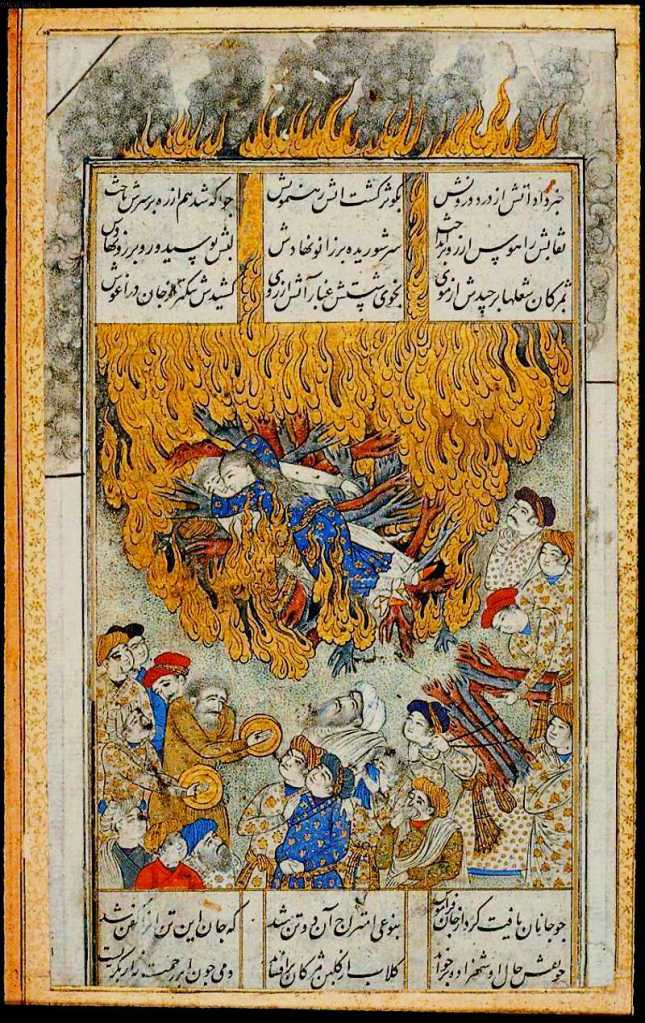
For example, in India the ideal of Dharma is that of an unconditional submission to the archetypes of caste—these being functions of the social order, rationalized for the individual by way of a theory of graded incarnations, through many lifetimes, from caste to caste. The sternest expression of this ideal is implied in the word “suttee” (satī), which is the feminine form of the verbal root sat, “to be.” A suttee is a woman who is something: namely, an archetypal wife. She has suppressed every impulse to become an autonomous individual, even to that final extent of throwing herself on her husband’s funeral pyre. For in the archaic Orient, every act well performed is an act of suttee—a burning out, purging out, of ego.


In the Occident, too, ego has been regarded as the province of the devil. The Titans conquered by the Olympians were incarnations of this principle, just as the demons were in India —and we know how they were chained and imprisoned beneath mountains. A
similar fare was accorded, in the Germanic tradition, to the giants and dwarfs, the Fenris Wolf, the Midgard Serpent, and the dog Garm. However, the day will come, we are warned, when their chains will drop away, and that day will be the Weird of the Gods, Ragnarök. Then shall nothing be without fear in Heaven or on Earth.
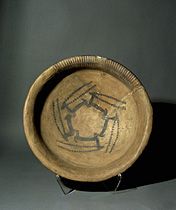
But that day has already come—indeed, has been here since 1492, when the mandala broke that had been fashioned six thousand years before, in the period of the Halaf and Samarra bowls. Aeschylus, in Prometheus Bound, represented the spirit of the Titan who is now loose:
In one round sentence, every god I hate,
That injures me who never injured him.
Deem not that I, to win a smile from Jove,
Will spread a maiden smoothness o’er my soul
And importune the foe whom most I hate
With womanish upliftings of the hands!

It is not by accident that Prometheus became the hero of the humanistic Enlightenment, or that, today, when the mythos of the mandala is in full dissolution, we find a symbol of the wholeness of man emerging from the dark abyss of the unconscious, where it has been
chained for six thousand years. Will the mandala continue to contain this unbound Prometheus?
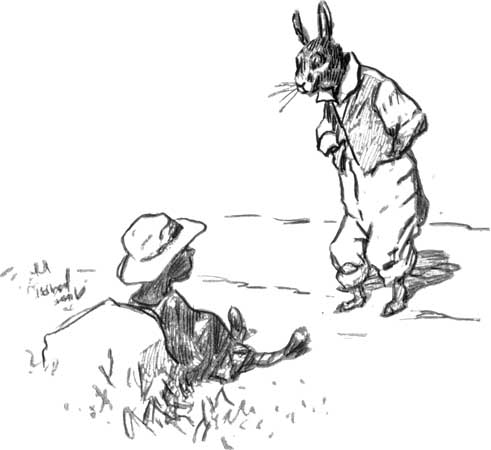
There have been collected from the American tribes hundreds of popular tales depicting, in various transformations, the fire-bringer, the titanic trickster-hero of the Paleolithic hunters. Among the Plains Indians his form was that of a kind of jackal, Coyote; among the forest dwellers he was the Great Hare (some of whose adventures have been attributed by the Negroes of America to an African rabbit-hero, whom we meet in the tales of Br’er Rabbit); among the tribes of the Northwest Coast he was the Raven. The closest counterpart in the myths of Europe would be the mischief-maker Loki, who at the time of Ragnarök will be the leader of the hosts of Hel. Coyote, Raven, the Master Hare— or Old Man, as he is called when he appears in a fully human form—is a lecherous fool as well as an extremely clever and cruel deceiver; but he is also the creator of mankind and shaper of the world. It is hardly proper to call such a figure a god, or even to think of him as supernatural. He is a super-shaman. And we find his counterparts in myth and legend throughout the world, wherever shamanism has left its mark: in Oceania and Africa, as well as in Siberia and Europe.
Authorities differ as to the period of the first migrations of Paleolithic man into North America. During the glacial ages a land bridge as wide as the nation of France stretched from Siberia to Alaska, and across this, grazing animals passed (herds of horses,cattle, elephants, camels), sometimes followed by hunters. As already noted,* tribes of men may have begun arriving as early as thirty or forty thousand B.C. However, the majority—if not all—of our present American Indian races represent much later periods of migration, extending even into the first millennium A.D.; and these were not purely Paleolithic. They appear to have stemmed, largely, from a late Paleo-Mesolithic culture platform in Siberia, in the neighborhood of Lake Baikal, where the Yakuts and the Tungus, the Voguls and the Ostiak, live today. In fact, it has been recognized that in physical race the Vogul and the Ostiak of the Yenisei River basin might be classified as Americanoid.
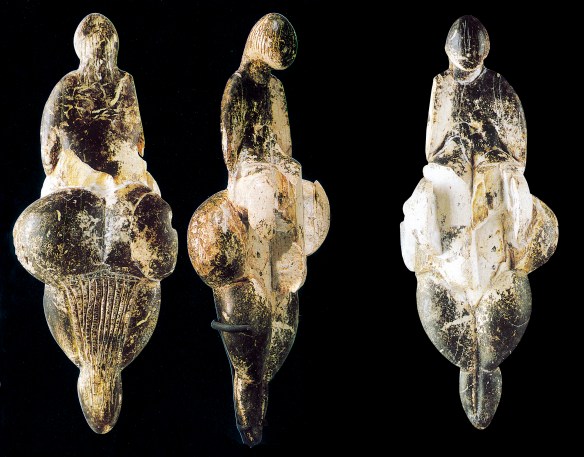
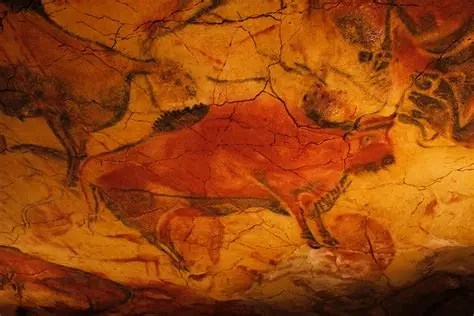
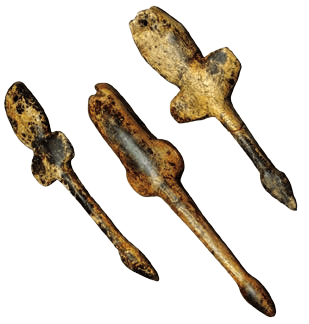
I have already spoken briefly of the Paleolithic caves. Early in the history of the art of these imposing underground temples there appeared the famous Paleolithic female statuettes—a full twenty thousand years or so before their Neolithic counterparts, in a date range at the close of the glacial era, not much earlier, if at all, than that of the first arrivals of hunters in the New World. No Paleolithic statuettes have been found in Spain, or anywhere southward of the Pyrenees. All belong to the hunting plains that commenced north of the Pyrenees and stretched eastward, as far as to the borders of China. And in the neighborhood of Lake Baikal, at a site known as Mal’ta, some eighty-five kilometers northwestward of Irkutsk, there was a particularly important Paleolithic hunting station where no less than twenty of these statuettes have been found, associated with a number of figures of flying geese—all carved in mammoth ivory (or, according to one authority, in bone).
Thus it appears that in the last great period of the Paleolithic hunt there was a cultural continuum extending from the Pyrenees to Lake Baikal, whence much of the culture, as well as some of the racial strains, of the hunting tribes of North America were derived during the millenniums following the close of the Paleolithic. A significant continuity, that is to say, appears to have been established, extending in time and space from the Upper Paleolithic of Europe to the final twilight of the Great Hunt in the North American Plains. In its various provinces this tradition absorbed influences both from the local landscape and from neighboring Neolithic and post-Neolithic cultures.
Nevertheless, there is a persistent syndrome of motifs that can be readily identified throughout, which is clearly that of a hunting, and not of a settled, planting system of societies. And one of its most persistent features is the association of the shamanistic trance with the flight of a bird. The hawk and eagle, wild gander and duck appear to be common throughout the range; but locally, other birds may appear: the owl and vulture, for example, the raven, magpie, or woodpecker—the last-named, because of the flash of red on its head, being frequently the chief hero of the fire-theft.
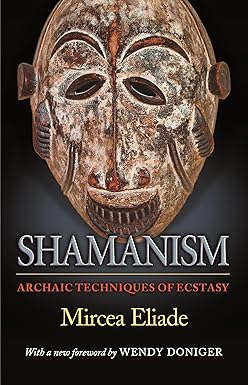
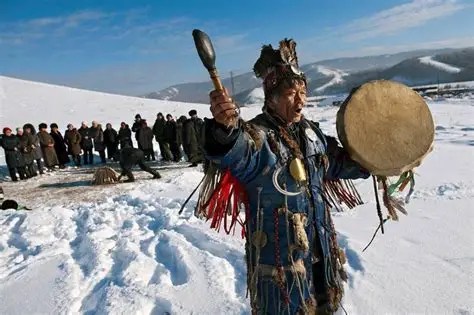
As Professor Mircea Eliade has shown in an exhaustive study of the subject, the main talent of the shaman is that of throwing himself into a trance at will. The rhythms of the shaman’s drum, like the rhythms of the Indo-Aryan Vedic hymns, are conceived as wings, the wings of spiritual transport: they simultaneously elevate the shaman’s spirit and conjure his familiars. And it is while in this trance that he performs his miraculous deeds. While in this trance he is flying as a bird to the upper world, or descending as a reindeer, bull, or bear to the world beneath. Among the Buriat, the animal or bird that protects the shaman is called khubilgan, meaning “metamorphosis,” from the verb khubilku, “to change oneself, to take another form.” The early Russian missionaries and voyagers in Siberia in the first part of the eighteenth century noted that the shamans spoke to their spirits in a strange, squeaky voice. They also found among the tribes numerous images of geese with extended wings, sometimes of brass. And here we are reminded that in Mal’ta, that Paleolithic hunting station where no less than twenty female figurines have been discovered, a number of flying geese or ducks were also found, carved, like the figurines, in mammoth ivory.


Flying birds, in fact, have been found in many Paleolithic stations; and on the under-wings of one example, as I have already remarked, there appears the earliest swastika of which we have record Like the swastikas on the much later Samarra ware of the High Neolithic, this one is in the sinister form, whirling to the left—the form that Dr. Jung has suggested would normally symbolize a regressive process: such a process, perhaps, as the shaman flight. And we must remember, also, that in the Paleolithic cavern of Lascaux, there is a shaman depicted, lying in trance, wearing a bird mask and with the figure of a bird perched on a staff beside him.

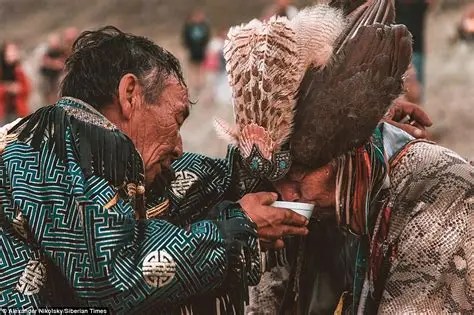
The shamans of Siberia wear such bird costumes to this day, and many are believed to have been conceived by their mothers from the descent of a bird.
In many lands the soul has been pictured as a bird, and birds commonly appear as
spiritual messengers: angels are modified birds. But the bird of the shaman is one of
particular character and power, endowing him with an ability to fly in trance beyond all
bounds of life, and yet return. “Up above there is a certain tree,” said a shaman of the
Tungus, who was questioned at his home on the Lower Tunguska River in the spring of 1925:“There the souls of the shamans are reared before they attain their powers. On the boughs of this tree are nests in which the souls of the shamans lie and are attended. The name of the tree is ‘Tuuru.’ The higher the nest is placed in this tree, the stronger will the shaman be who is raised in it, the more will he know, and the farther will he see.”

The shaman, then, is not only a familiar denizen, but even the favored scion, of those realms of power that are invisible to our normal waking consciousness, which all may visit briefly in vision, but through which he roams, a master.
We have observed that the birds found at Mal’ta and in the other Paleolithic stations are ducks and water birds, wild geese and ganders; and I have tried to suggest something,
also, of the rich context of associations linking the figure of the bird to the spiritual flight
of the shaman, as well as that linking the figure of the trickster-hero, the titan fire-bringer
and demonic enemy of the gods, to the Paleolithic context of shamanism.
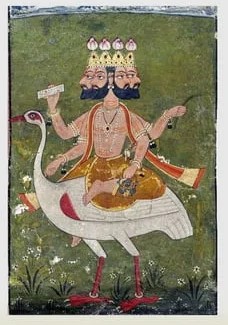
Let me now add that the Hindu master yogis, who in their trance states go beyond all the pales of thought, are known as haṃsas and paramahaṃsas: “wild ganders” and “supreme wild ganders.” In the imagery of traditional Hinduism, the wild gander is symbolic of brahman-ātman, the ultimate, transcendent yet immanent ground of all being, with which the yogi succeeds in identifying his consciousness, thus passing from the sphere of waking consciousness, where A is not not-A, passing even beyond dream, where all things shine of their own light, to the nonconditioned, nondual state “between two thoughts,” where the subject object polarity is completely transcended and the distinction even between life and death dissolved.
But before pursuing this developing flight, we must pause for a moment to regard again our problem of the nature and function of the symbol……
Read here Flight of the Wild Gander

In Flight of the Wild Gander, renowned mythologist Joseph Campbell — in his first collection of essays, written between 1944 and 1968 — explores the individual and geographical origins of myth, outlining the full range of mythology from Grimm’s fairy tales to American Indian legends. Originally published in 1969, this collection describes the symbolic content of stories: how they are linked to human experience and how they — along with our experiences — have changed over time. Throughout, Campbell explores the function of mythology in everyday life and the forms it may take in the future.
Included are some of Campbell’s first groundbreaking essays: “Bios and Mythos” and “Primitive Man as Metaphysician,” both of which examine the biological basis and necessity for story and mythology, and establish mythology as a basic function or fact of nature. Campbell’s essay “Mythogenesis” turns from the natural and biological to the cultural and historical — the rise, flowering, and decline of a particular myth, a single American Indian legend. Campbell explores how the myth was born, as well as the personal experiences of the visionary medicine man through whose memory the myth was preserved.

