For J.D.P and Paul -14 November 2025
In construction….

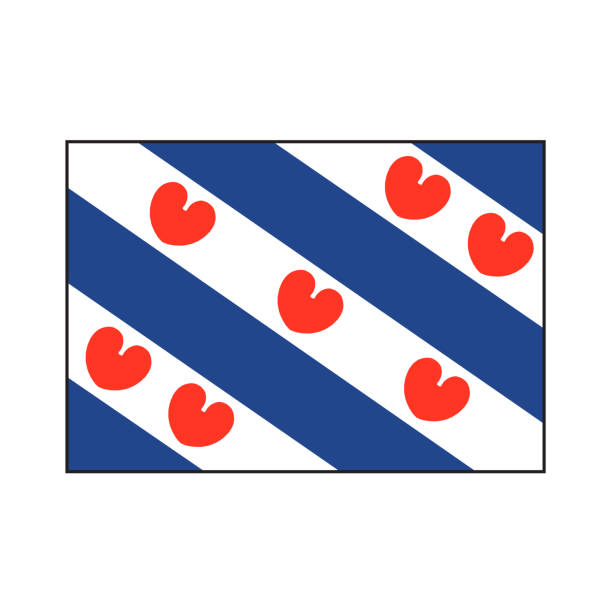
The term “Frisian heart” refer often to two distinct yet related concepts: the symbolic heart
seen on the Frisian flag and the genetic heart condition prevalent among those of Frisian
ancestry.
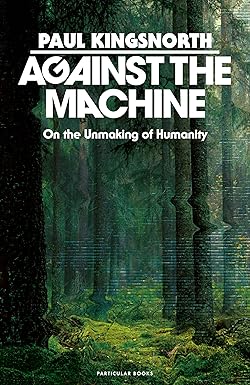
The machine, is the term used by novelist, poet, and essayist Paul Kingsnorth to present how a force that’s hard to name, but which we all feel, is reshaping what it means to be human. A wholly original―and terrifying―account of the technological-cultural matrix enveloping all of us. With insight into the spiritual and economic roots of techno-capitalism, Kingsnorth reveals how the Machine, in the name of progress, has choked Western civilization, is destroying the Earth itself, and is reshaping us in its image. From the First Industrial Revolution to the rise of artificial intelligence, he shows how the hollowing out of humanity has been a long game―and how your very soul is at stake.
See more on Against the Machine: On the Unmaking of Humanity
Waht is generally saidin the time of the machins::
Symbol on the Frisian Flag
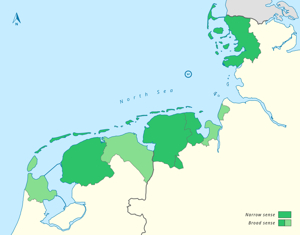
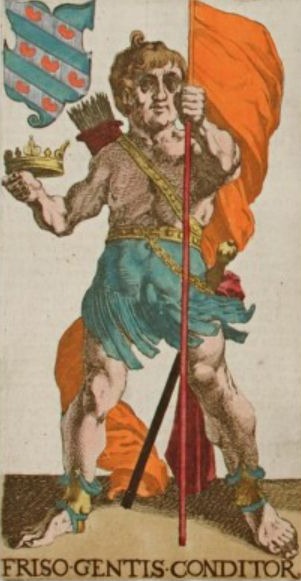
The Frisian flag, official in Friesland (Fryslân), features seven red, heart-shaped symbols called “pompeblêden” that actually represent leaves of the yellow water lily native to the region. These seven symbols are arranged diagonally across white stripes and are deeply associated with the region’s historic maritime territories. While commonly interpreted as hearts, they are not intended as romantic or anatomical symbols but carry cultural significance tied to Frisian history and identity.
Genetic Heart Condition: PLN Mutation
There is also a specific hereditary heart condition linked to Frisian descent—the PLN
(phospholamban) gene mutation. This genetic variant, first appearing in a Frisian ancestor
about 700 years ago, causes a form of cardiomyopathy leading to heart rhythm disorders,
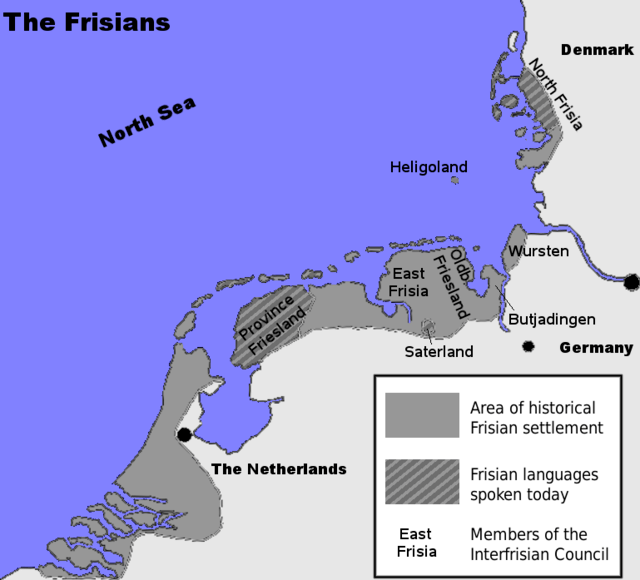
potential heart failure, and even sudden cardiac death in undiagnosed cases. Symptoms can include reduced stamina, palpitations, arrhythmias, and cardiac arrest. It is estimated that 1 in 1,400 to 1,500 people in Friesland and nearby regions carry the mutation, with about 10,000–15,000 carriers in the Netherlands. The PLN mutation is passed down in families and is regarded as a “founder mutation,” with all modern carriers tracing their ancestry to Friesland.
Summary Table
Both meanings connect to Friesland’s distinctive cultural and genetic legacy: one in symbolic
art, the other in hereditary health. If referring to medical risk within Frisian families, genetic
counseling and screening for the PLN mutation is recommended. If referring to symbolism, the “Frisian heart” represents historical pride rooted in centuries-old maritime identit
Origin and meaning of the Frisian pompeblêden
The Frisian pompeblêden—widely recognized as heart-shaped symbols on the flag of Friesland— actually represent stylized leaves of the yellow water lily native to the region, not hearts as often mistaken by outsiders
Origin
The tradition of using pompeblêden dates back at least to the Middle Ages. According to Frisian legend, the symbol originated with Friso, the legendary ancestor of the Frisians, who supposedly carried a weapon adorned with seven red leaves from the yellow water lily when settling the area.Medieval sources and heraldic documentation show the motif takes inspiration from coastal and maritime symbolism found in the Frisian region and neighboring parts of Scandinavia and Germany, most notably associated with water, lilies, and marshes. Early references can be found in epic poems and coats of arms from the 13th century, with Scandian and German cities using similar seeblatt (lake leaf) designs.
Meaning
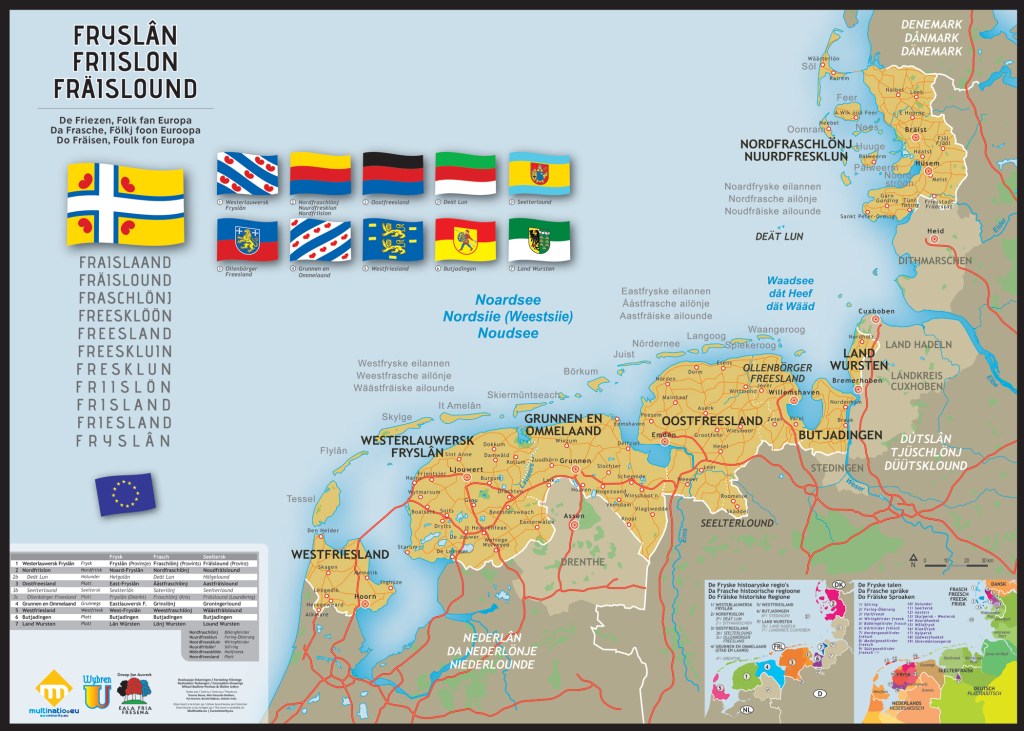
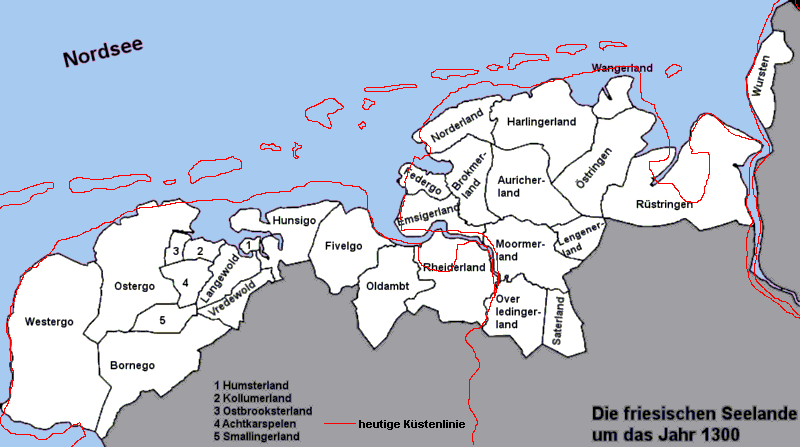
The seven pompeblêden on the flag refer symbolically to the “seven Frisian sea countries”:
independent territorial regions stretching from Alkmaar in the Netherlands to the Weser in
Germany, united historically in defense against external threats like the Vikings and Normans. While legend describes seven actual regions or the seven sons of Friso, historians note there may never have been exactly seven administrative units; in regional tradition, “seven” means “many” or “a large number”. The water lily leaves thus symbolize both the maritime nature of Friesland and its historical unity and autonomy across numerous independent districts.
- But outside that we have much more Traditional wisdom but totally ignored by he machine or modern universities:
Craft as Sacred Knowledge
René Guénon viewed traditional craft not as utilitarian labor but as a means of cosmic participation. The traditional craftsman, for Guénon, was engaged in work that reflected the divine order:
“A craft is not merely a technique, but a transmission of a traditional knowledge, the application of principles that are ultimately metaphysical.”
In traditional civilizations, there was no division between the sacred and the secular in labor. Every craft, from carpentry to stonemasonry, was infused with symbolic meaning. The tools themselves—like the compass, the square, or the chisel—served as metaphors for universal truths. The craftsman, through repeated and intentional action, participated in the divine act of creation.
Work and contemplation were not separate in traditional societies. A craftsman worked not just with his hands but also with an awareness of the symbolic and spiritual meaning of his work.
The tool, the material, and the process had symbolic dimensions. For instance, in masonry or metalwork, the transformation of raw material symbolized the transformation of the soul.
Initiation and Guilds
Guénon emphasized the role of initiatic craft guilds—especially in the West, such as medieval masonry guilds—which preserved esoteric teachings and transmitted initiatic knowledge through symbols, rituals, and oral transmission.
These guilds were structured hierarchically and transmitted cosmological knowledge embedded in tools, geometry, architecture, and ritual.
The compass and square, for example, symbolized heaven and earth or spirit and matter.
The architecture of temples or cathedrals followed sacred geometry, aligning physical structures with cosmic principles.
Degeneration in Modernity
Guénon argued that in modern times, the loss of sacred and symbolic understanding has led to the degeneration of crafts into mere technical skills, disconnected from their metaphysical roots.
This reflects his larger thesis: modernity is a descent into materialism, fragmentation, and loss of spiritual orientation””. The disappearance of guilds, desacralization of labor, and mass industrialization exemplify this decline.
Read Here: The Arts and their Traditional Conception
Art That Expresses Truth
Ananda Coomaraswamy, deeply rooted in both Eastern and Western traditions, emphasized that the traditional artist or craftsman was not creating to express individuality, but to reveal the timeless: “The traditional craftsman did not ‘express himself,’ he expressed truths.”
Coomaraswamy rejected the modern cult of originality and innovation. For him, traditional art and craft were “vehicles for eternal wisdom“. The form was not arbitrary—it was a symbolic expression of metaphysical principles, passed down through sacred traditions. Every detail, from proportions to ornamentation, had a purpose that reached beyond aesthetics.
“Work is for the sake of the work done, and not for the profit therefrom.”
In this sense, “work was prayer “—a form of contemplation, a discipline of the soul.
Read here: Primitive Mentality: The myth is not my own, I had it from my mother.
Beauty as a Path to the Divine
Frithjof Schuon* extended these insights by focusing on the spiritual essence of traditional art. For Schuon, beauty itself was a reflection of the Divine:
“The beauty of a traditional object reflects the eternal archetypes; it speaks in silence to the soul.”
Craftsmanship, when aligned with traditional forms, becomes a contemplative path. Whether it’s a sacred icon, a hand-carved door, or a woven textile, its power lies in its “participation in the eternal “. For Schuon, even in a world that has largely lost its traditional frameworks, the sacred can still be accessed through ” form, beauty, and right intention:
“A sacred form, however simple, is a vessel of grace.”
A Living Tradition
What unites Guénon, Coomaraswamy, and Schuon is the belief that “”true craft is never arbitrary”. It arises within a living tradition, where every gesture, pattern, and proportion reflects a metaphysical reality. In contrast, modern craftsmanship—stripped of symbolism and spiritual orientation—becomes hollow, reduced to commerce or self-expression.
Their critique is not simply nostalgic. It is a call to recover the sacred dimension of human making—to reintegrate craft into a vision of life that is oriented toward the transcendent.
To make with the hands, in the traditional sense, is to align oneself with the cosmos. Craft, then, becomes more than labor—it becomes liturgy. The Traditionalist vision invites us to see again with sacred eyes: to recognize that a pot, a wall, a song, or a loom, when shaped by truth and beauty, can become a path toward the eternal.
Made for use versus made for sale, creation versus production. Human being valued versus machine being valued.. When the human being is valued, there is integrity in the work. There is dignity in the freedom to work for purpose, and satisfaction knowing the effort is respected. When the human being is removed from the actual creation or building of the thing itself, the spirit of the work, whatever it is, is disconnected if not all together removed making the being servile to the method of production.
The ‘maker’ thus becomes a salesperson for something they have had manufactured for them to sell as their own to make an individual profit. The purpose is then not the benefit or betterment of humanity, but the betterment and advancement of oneself. And this
form applies now to almost all forms of artistic creation be it painting, dance, music, fashion,
design, architecture, interior design and so on; they all have become templated ideas easily
reproduced without much prerequisite of fundamental knowledge or originality.
Read here: Why Exhibit Works of Art?
For more info about Craft and Sacred Architecture read:
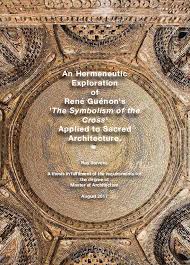
An Hermeneutic Exploration of René Guénon’s Symbolism of the Cross Applied to Sacred Architecture.
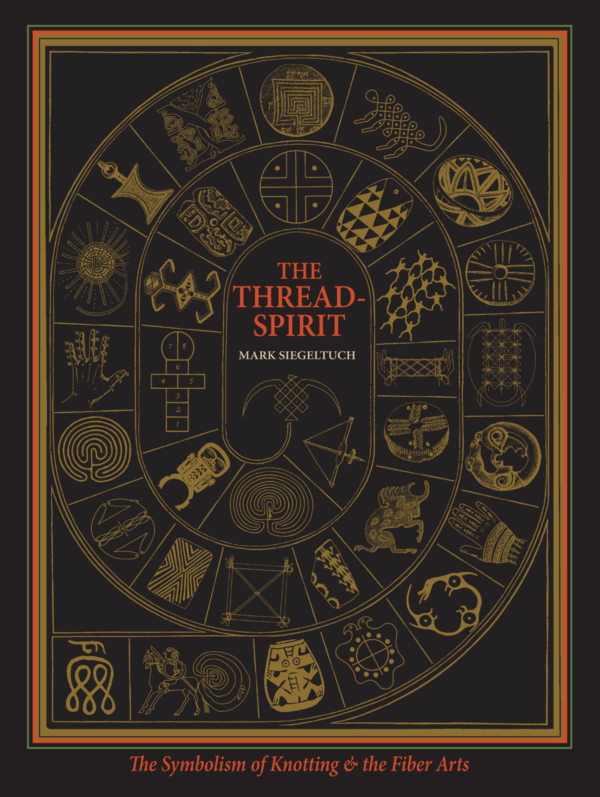
The Thread-Spirit Doctrine:An Ancient Metaphor in Religion and Metaphysics with
Prehistoric Roots
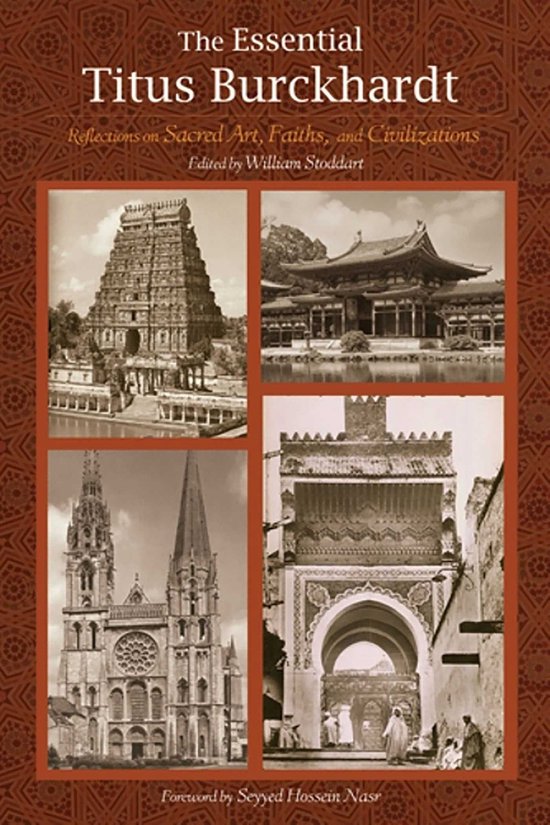
The Essential Titus Burckhardt: Reflections on Sacred Art, Faiths, and Civilizations
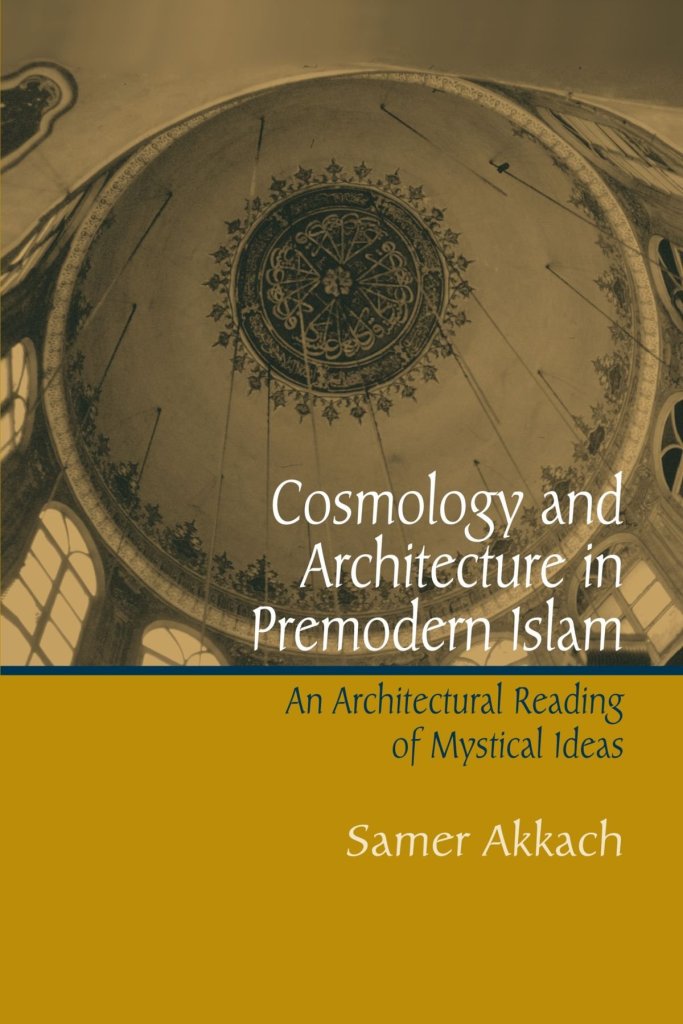
Cosmology_and_architecture_in_premodern Islam
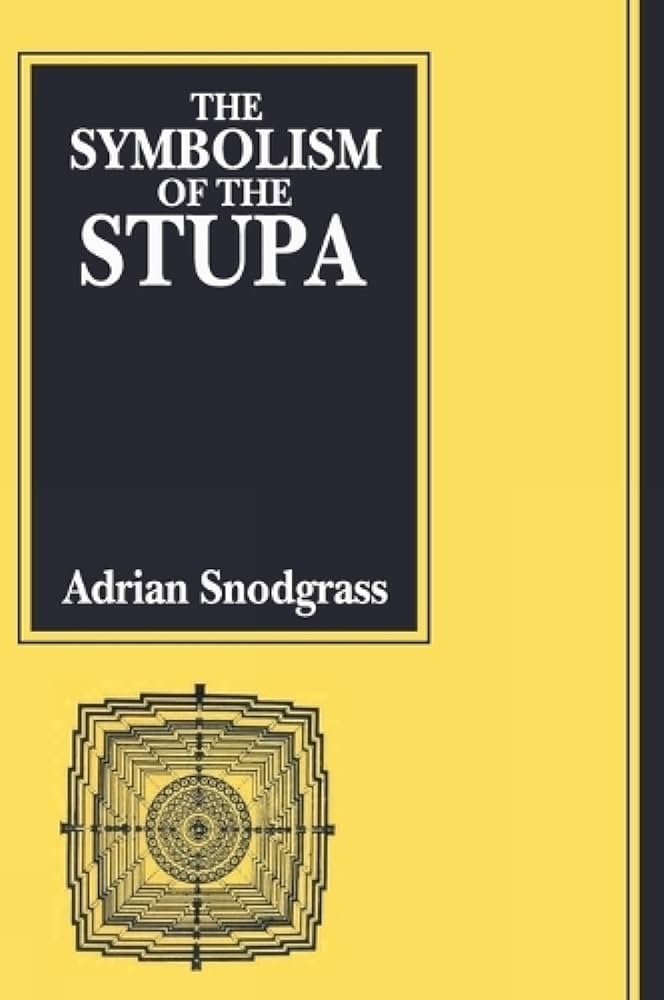
Buildings Without Architects:
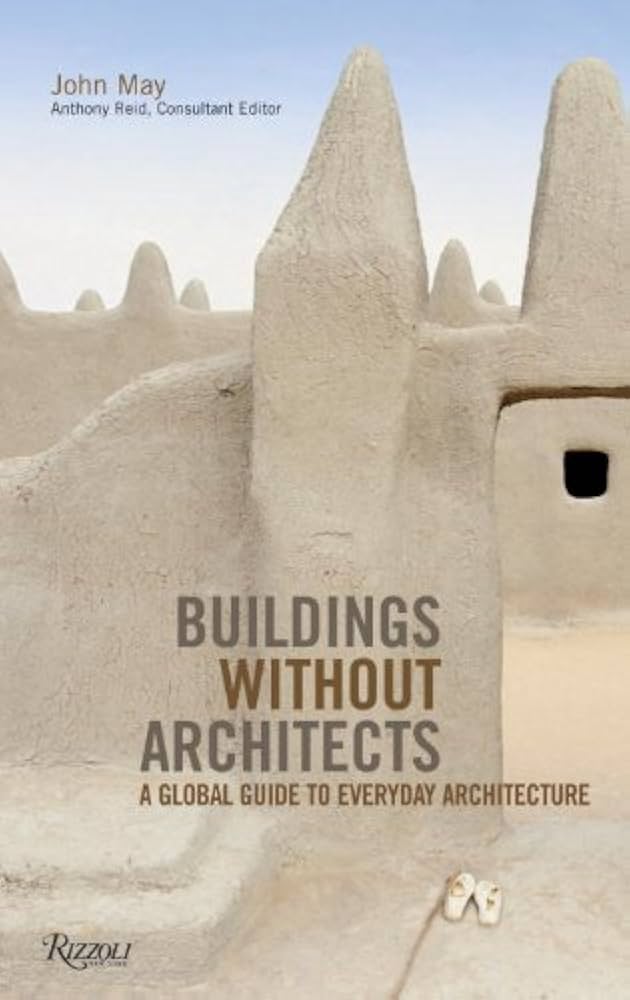
Buildings Without Architects is a wonderfully informative reference on vernacular styles, from adobe pueblos and Pennsylvania barns to Mongolian gers and European wooden churches. This small but comprehensive book documents the rich cultural past of vernacular building styles. It offers inspiration for home woodworking enthusiasts as well as architects, conservationists, and anyone interested in energy-efficient building and sustainability.
The variety and ingenuity of the world’s vernacular building traditions are richly illustrated, and the materials and techniques are explored. With examples from every continent, the book documents the diverse methods people have used to create shelter from locally available natural materials, and shows the impressively handmade finished products through diagrams, cross-sections, and photographs. Unlike modern buildings that rely on industrially produced materials and specialized tools and techniques, the everyday architecture featured here represents a rapidly disappearing genre of handcrafted and beautifully composed structures that are irretrievably “of their place.” These structures are the work of unsung and often anonymous builders that combine artistic beauty, practical form, and necessity. Read Here
==================
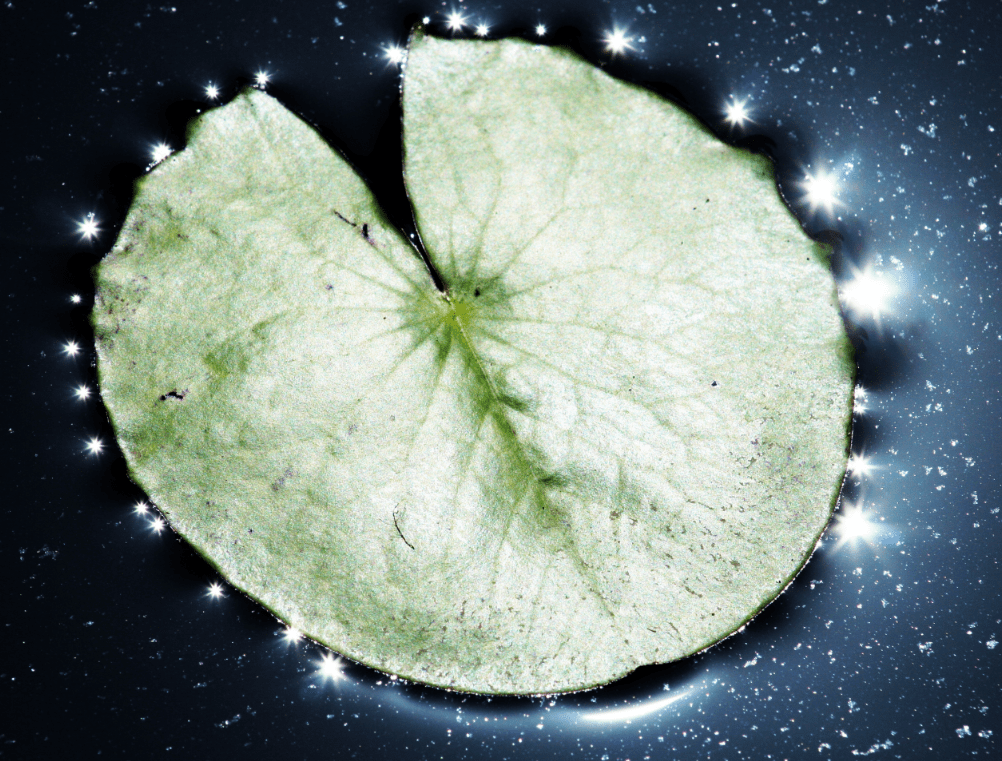
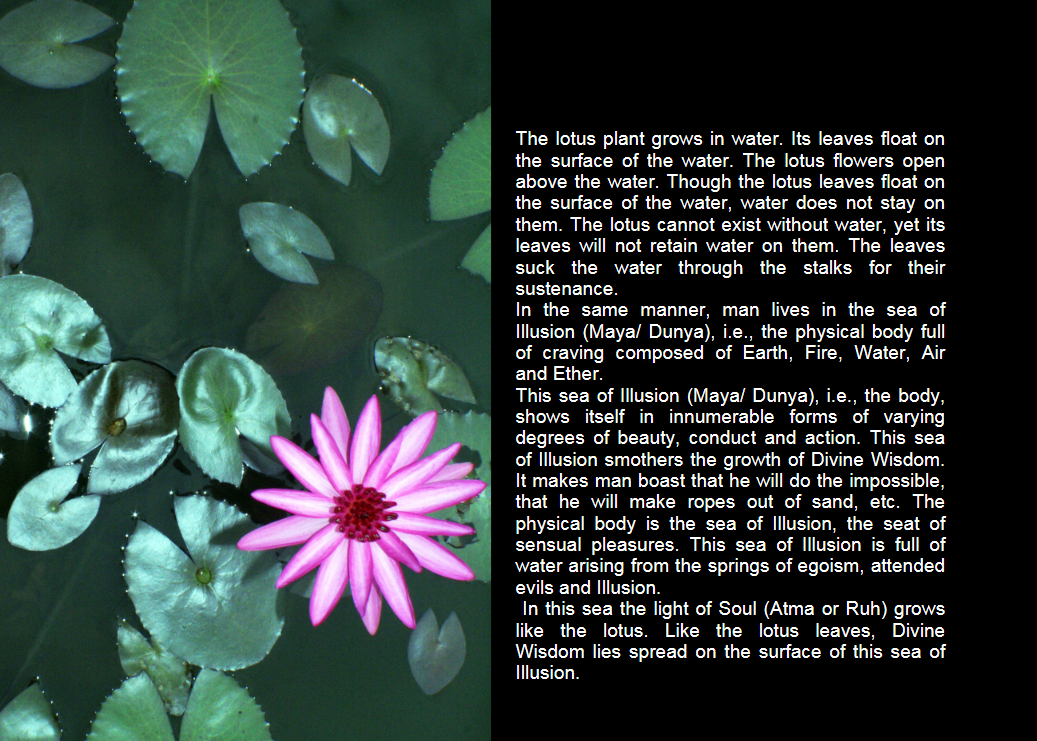
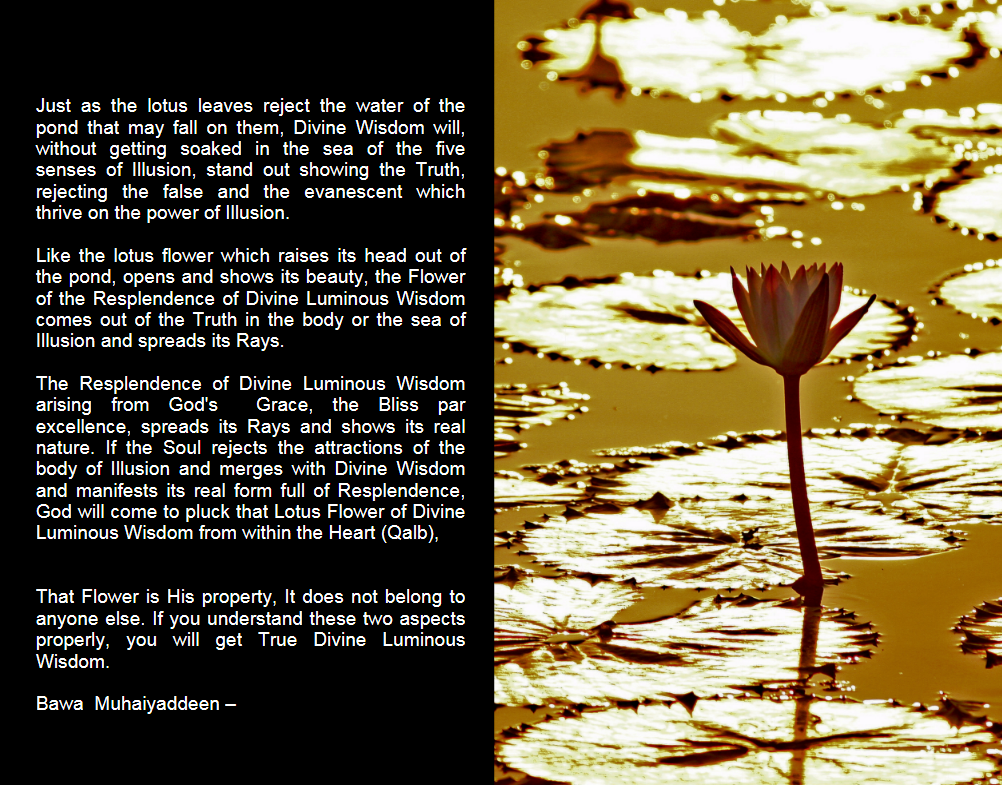
That Flower is His property, It does not belong to anyone else. If you understand these two aspects properly, you will get True Divine Luminous Wisdom,
Bawa Muhaiyaddeen —

More than four others – Frisian Folkstale
At that time there lived in the Grinzer Pein (Friesland) a young man who was called out that he was not afraid of anything. When a ferry had to be dug, he got a job there. He joined the team with twenty westerners. Those twenty westerners were as lazy as duckweed. They wanted him to do the work, so he got into trouble with them. Then they said, “If you don’t work, we’ll cut you in pieces.” But the young man laughed and said, “You should try that first.” And then those twenty westerners came up to him with open knives , but he knocked them down one by one, for he was not afraid. And that same evening, near the new ferry, one of the Westerners was found cut into strips. But that joung man had not done that, his own comrades wanted to get rid of that westerner. And because the young servant had fought with him, they thought, he will be blamed.
That turned out to be the case, because the nineteen westerners testified that he must have been the murderer of their comrade. He went to court, and because he would not confess, he was put on the rack, but he maintained his innocence, for he was not afraid of anything, not even the pain. Desesperate, they called a wizard, a real wizard. He had to scare him so he confessed. The wizard had him tied on a chair; then he was powerless. But they had tortured him so much that he could hardly speak.
And then he was given a cup of warm milk to drink. The magician looked straight at him and said, ‘Look at the ground in front of you!’ And then the young man noticed that his ten toes had turned into ten snakes. They grew out of his toes, they grew bigger and bigger and came closer and closer to his head. But he made those snakes drink one by one from the hot milk from the cup he had in his hands. The snakes writhed together again and fell asleep at his feet.
The wizard asked, “Aren’t you scared yet?” But he replied, “You haven’t got any of those beasts yet, because my cup isn’t empty yet.” Then the wizard turned the boy’s hair into flames and said that he would be consumed by these flames. But the young man asked: ‘Do you have tobacco in your pocket? I don’t have any tobacco with me, but my pipe does. Stop it in front of me for a moment, so I can at least light it on the flames and don’t have to use a match’.
And the third was that the sorcerer sat before him and said: If you will not confess, you will be sent to hell. ‘But the young servant laughed, for he was not afraid. The wizard looked straight at him and then the young man noticed that his body was turning into a skeleton. The magician said:
“Aren’t you scared yet? Remember – this is how you go to hell and stay there!” “Oh,” he said, “why should I be afraid? Such an old charnel house as I am now – there is no one in hell who knows me.” And he did not bow the neck.
However, he was sentenced to death. The executioner appeared and he was to be cut into four. He was already on the block to be chopped in four, then they asked him if he wasn’t scared yet. “No,” he said, “why should I be afraid? Our father always said I was worth more than four others. And if you cut me in four here, you’ll be dealing with not one, but four men in a minute.’ And he was not quartered, but they took him back to the cell.
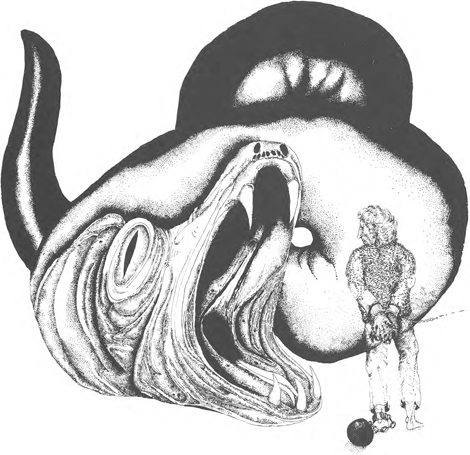
That same night the devil came to him and left nothing to frighten him. He told him the most horrible stories and transformed himself into the most horrible forms. The devil became an old woman, with teeth as large and as sharp as razors, and threatened to bite his throat. The devil became a dragon with seven heads that spewed fire at him. He became a very large snake, with a mouth so wide that it could eat it in one sitting. But the young servant was not afraid. Only when the devil finally asked him if he felt any fear at all did he say, “No, I don’t, but you do!
And he began to tease him so furiously, he made such hideous noises, and he drew such crooked faces, that even the devil became frightened and threw himself to the ground and blew the retreat.
The judges came to the conclusion that a person that even the devil
=================================================================
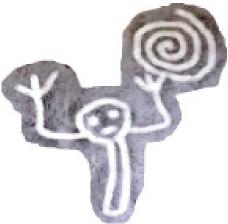
– Spiral
Spirals have been found in the form of pictographs or petroglyphs in most countries and cultures throughout the world. A simple design, it’s possibly the most common rock art motif in Colombia,appearing more times in the form of a petroglyph than a pictograph.
The white man Goes into his church house and talks about Jesus; The Indian Goes into his teepee and talks to Jesus. J.S. Slotkin
The shaman´s role in society
The role of the shaman in hunter-gatherer and horticultural societies has been written in detail by many authors (e.g.Vitebsky 1995). Generally speaking, the shaman is the tribal religious leader-healer who acquires supernatural powers, including power songs, from animals, birds, or reptiles during an initiation when he goes on a vision quest by entering a trance.
The shaman’s role encompasses tribal issues that are serious and need to be resolved. A community may be starving from lack of animals, crop failure due to flooding, freezing conditions, an extended drought or a tribal member may be very sick. The shaman is consulted to find the cause of illness and cure it. He may determine that the community has done something to cause an unbalanced cosmos, the soul has been stolen from a person or an evil object has entered the body of a person causing them to be sick.
Everyday illnesses and problems are resolved using chants, magical prayers, and incense. Using secret herbal potions, dances, power songs and rituals, the shaman summons his spirit helpers during a trance where he dies, is reborn, then battles and defeats hostile spirits causing the problem. He may suck a foreign object directly from the body of the ill patient to cleanse it of impurities or blow tobacco smoke on the patient.
During his spirit journey the shaman may fly up to the sky world or down to the underworld to plead with the spirit causing the problem, ask advice from deceased ancestors, physically battle evil spirits or win debates to gain concessions. The flight is usually upward to the heavens. When the shaman triumphs, h air or isolates him in a container or place where he can’t cause any more trouble.
After returning from this alternate reality, many researchers believe that shamans, or people under their direction, painted or engraved their visions, or symbols relating to them, on rocks One author wrote “It is probably extremely significant that the designs in many of the aspects of modern Indian artistry in the northwest Amazon are similar to or the same as those found in many of the rock engravings… Studies have indicated that these designs…are suggested by visions experienced during the
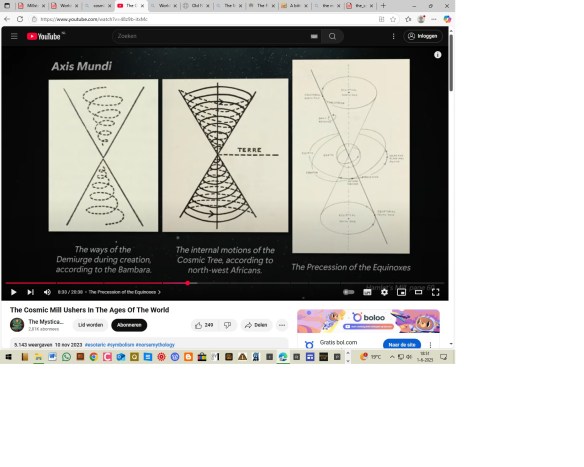
intoxication produced by caapi (Banisteriopsis Caapi),… There is no reason to doubt that the ancient artisans who made these rock-engravings had used the same drugs and had the same experiences as the natives of today” (Schultes 1988:80) (Figure 3b). These shamans enter the spirit world through a tunnel or spiral vortex portal and many believe that they actually pass through the stone surface at rock art site.
Trance stages
Modern studies of the brain have found that its main function is to make images. Under normal circumstances, external stimuli gathered by our sensory organs (eyes, ears, nose, skin, etc.) are received by the brain and processed.
The food we eat is the energy source used by the brain to perform its function. If external stimuli are blocked (e.g. isolation), or the food source is blocked or changed, in the case of toxins, or absent in the case of starvation, the brain reacts only to internal stimulation, and “abnormal” images are created.
These images, and those caused by physical pressure on the retina, are generally called entoptic phenomena and are composed of “phosphenes” (visual effects produced by mechanical pressure on the eye or electrical stimulation of the brain) and “form constants” (specific geometric shapes originating from other parts of the optic system away form the eye).
The brain may cut off reception of some external stimuli when its “normal” food source is not available and rely more heavily on internal stimulation. In the case of dreaming, for instance, the brain continues to do its job of making images using available stimuli to create a different “reality.”
The word Reality is difficult to define since each of us perceives the same material world in a similar, but slightly different way. One person may look at a tree and focus on the leaves, while another would concentrate on the bark. An artist may look at the general form of the tree or carefully note the root system or branches.
Altered Reality or Trance is a term used to describe a state where the brain has created images when its normal process has been interrupted by toxins, fatigue, starvation or a super-saturation of stimuli such as drumming, chanting, or dancing.
Spiral Symbolism
Clottes and Lewis-Williams (Clottes and Lewis-Williams 18) feel strongly that the three stages of a shamanic trance are universal and are an integral part of the human nervous system. One investigator has shown that the group of psychoactive drugs known as hallucinogens commonly used by shamans owe their activity to a very few types of chemical substances that act in a specific way upon a definite part of the central nervous system. Hallucinogens produce effects such as deep changes in the sphere of experience, in perception of reality, even of space and time and in consciousness of self.
Depersonalization may occur.
The trance state is short-lived, and lasts only until the causative substance is changed through digestion or excreted from the body. The effects of different hallucinogens vary according to the way they are prepared, the setting in which they are taken, the amount ingested, the number and kinds of additives, and the purposes for which they are used, as well as the ceremonial control exercised by the shaman. But all hallucinogens have similar trance STAGES as opposed to mood modifying psychoactive drugs such as analgesics and euphorics, sedatives and tranquilizers, and hypnotics (Schultes 13,14).
Therefore, apparently all trances induced by hallucinogenic plants have a transitional stage where shamans pass through a similar spiral or vortex tunnel. Waiká Indian shamans have stated that the most important part of their trance state is the transportation of their soul to other worlds (Schultes170). This implies that the spiral tunnel of the transition between stages 2 and 3 plays an important part of shamanic alternate reality visions and may have been recorded in rock art symbolizing the transitional stage, just as geometric shapes in rock art could be images from Stage 1, and realistic or floating animals in rock art could be created from Stage 3 images.
Anthropologists have proved that some Indians (e.g. Colombian Barasana shamans), reproduce geometric patterns in the sand that represent visions seen during their trances and paint their visions on the walls of their huts (Waimaja shamans). Interpretation of these design motifs is believed to be culture bound but, on the other hand, what is actually seen and recorded is controlled by specific biochemical effects of the active principles in the plant (Schultes 124).
Physiologically speaking, spirals seen during trances are caused by capillary circulation. The Tunnel Effect arises partly from the foveal cones and environing rods being smaller and more closely arranged than those of the periphery and in consequence the geometric figures perceived are likely to be smaller in the center than at the periphery (Marshall 300)
SEE;The colombian rock art spiral. A shamanic tunnel
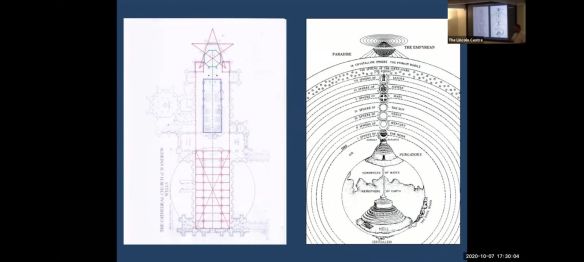
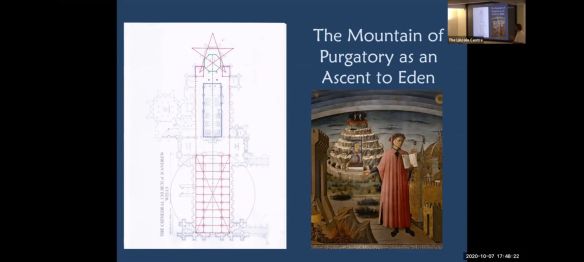
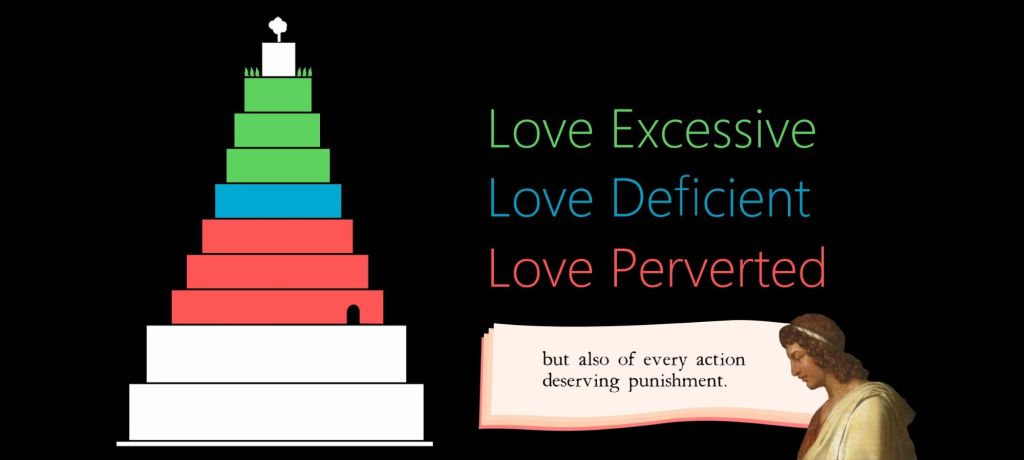
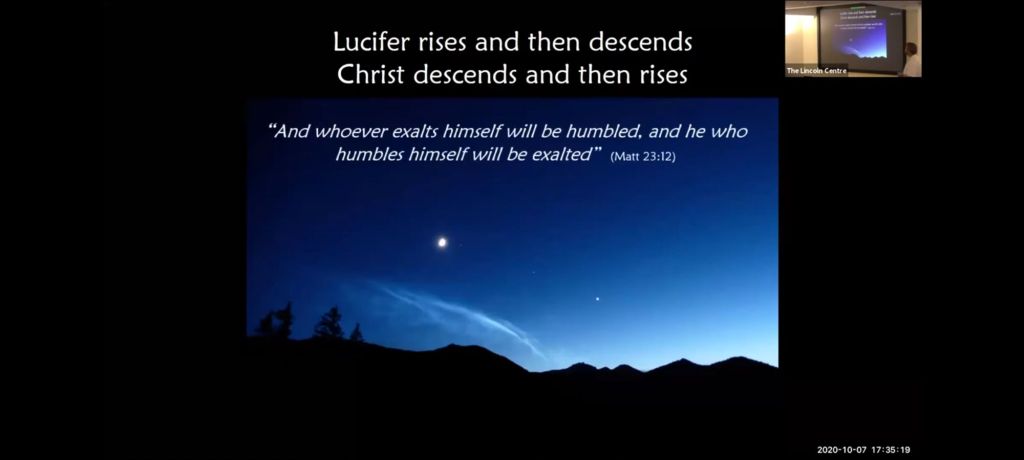
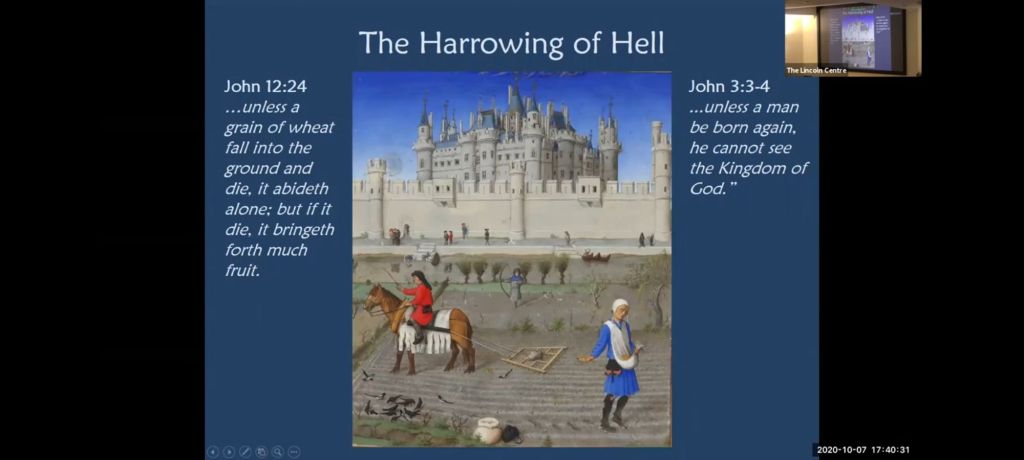
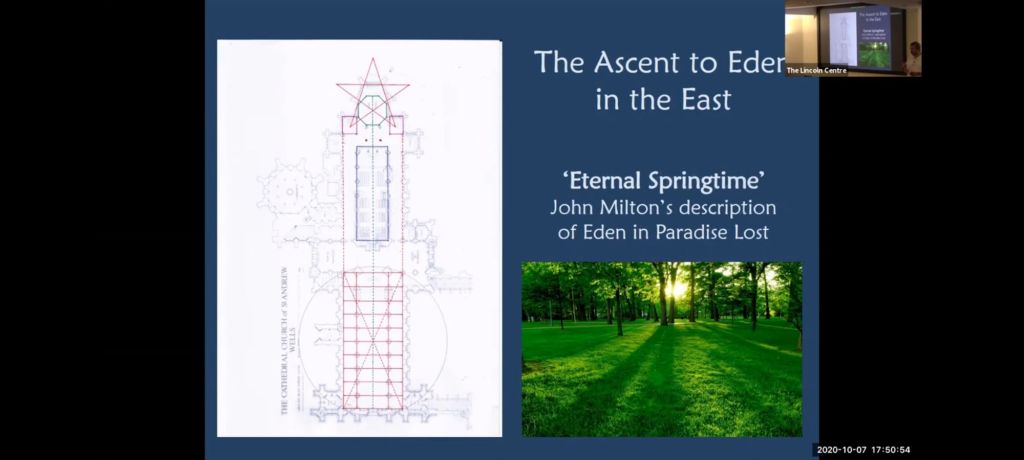
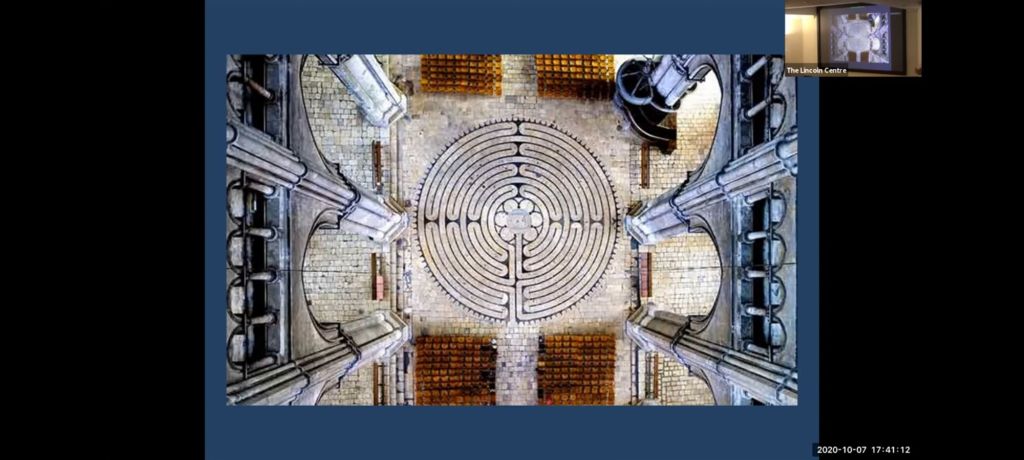
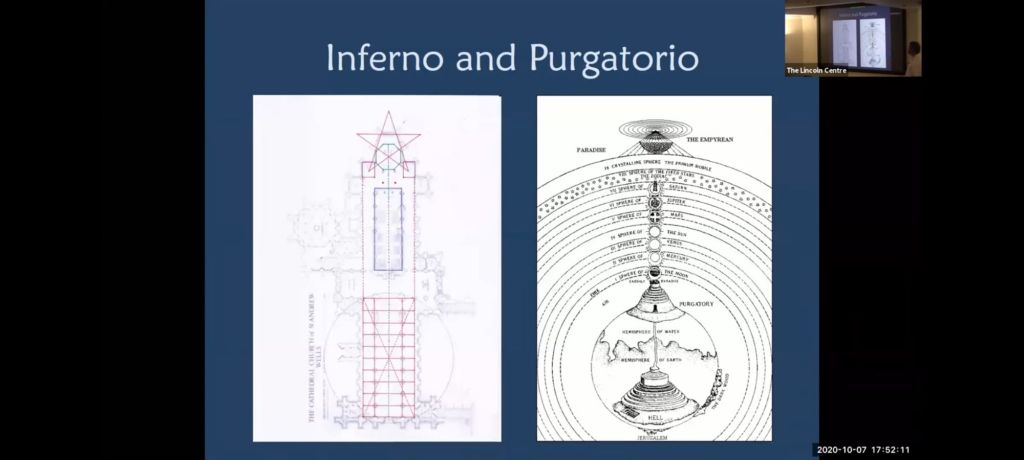
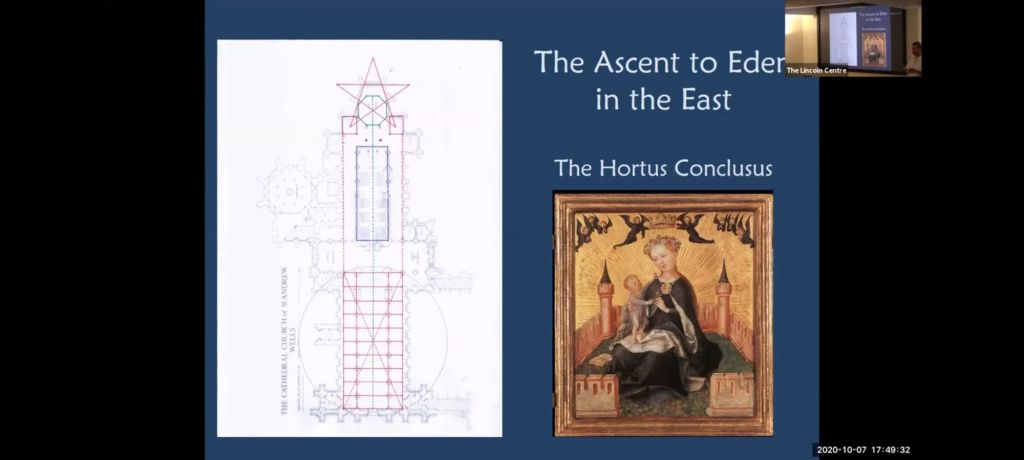
- Tom Bree – Dante’s Journey In Gothic Cathedral Design
The eastward journey through a cathedral forms a symbolic ascent climbing towards the place of the rising sun. However for the soul to return to its heavenly origin a certain lightness and buoyancy is required as attested to by the image of St Michael in which he weighs human souls on judgement day.
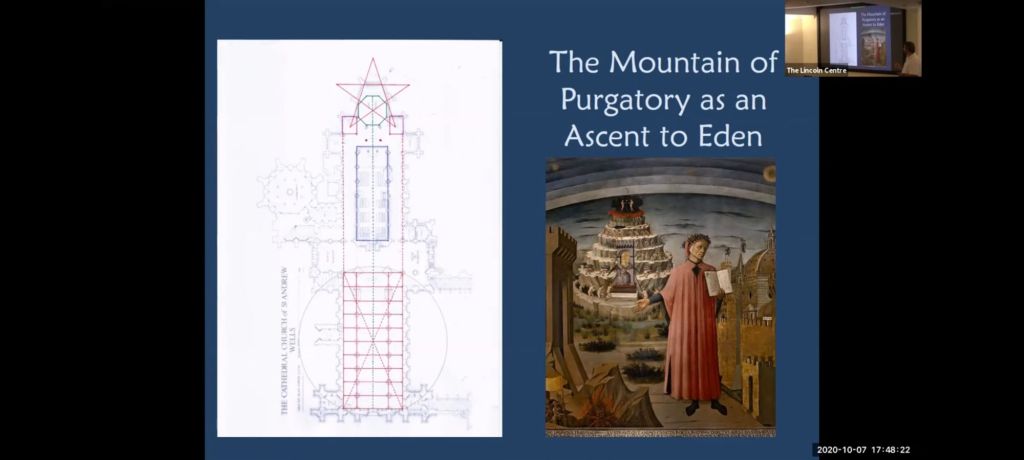
Within Dante’s poem, Commedia, such a preparation for ascent requires him to first descend to the Inferno so as to face the very lowest reaches of the soul’s potential. Only then can he slowly begin his rise back upwards, first to the surface of the earth followed then by an ascent to Eden which lies at the summit of the Mountain of Purgatory. Finally he ascends through the heavens to the Empyrean where he becomes reunited with the soul’s divine origin.
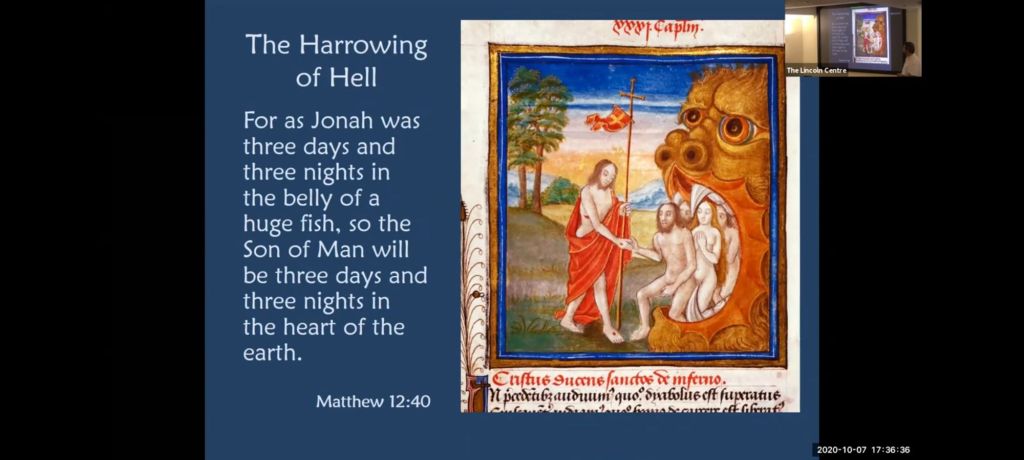
Dante’s journey is made in emulation of Christ because he descends to the inferno from Jerusalem on the afternoon of Good Friday and then re-ascends to the surface of the earth again on the morning of Easter Sunday. In this way he personally re-encounters the Harrowing of Hell which is Christ’s necessary descent into the underworld prior to His Resurrection on Easter Sunday and eventual ascent into heaven 40 days thereafter.
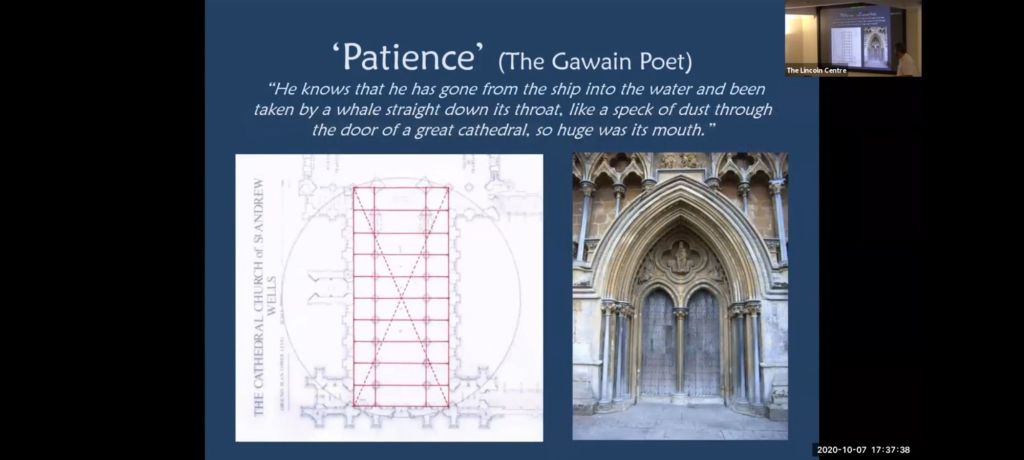
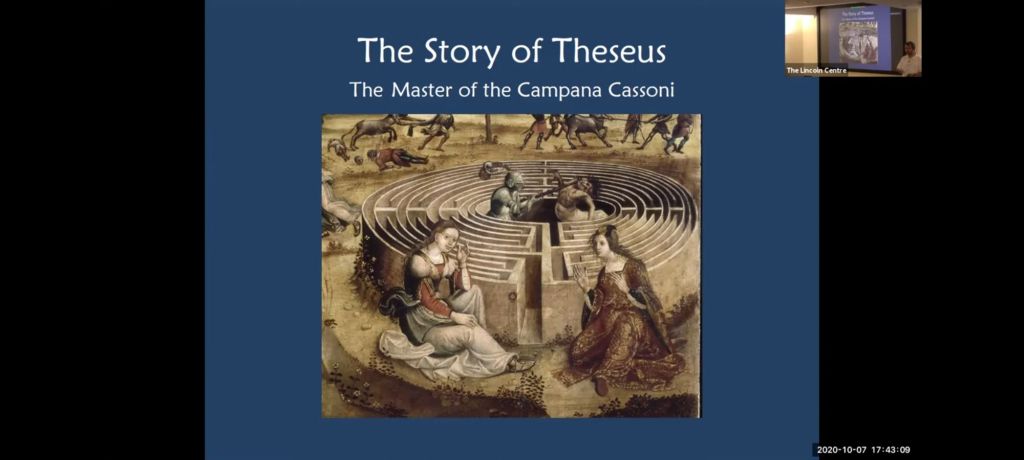
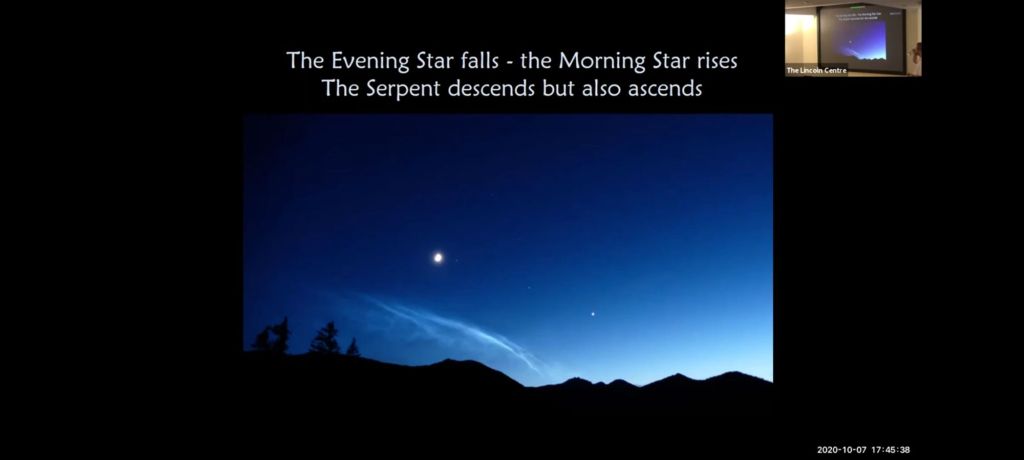
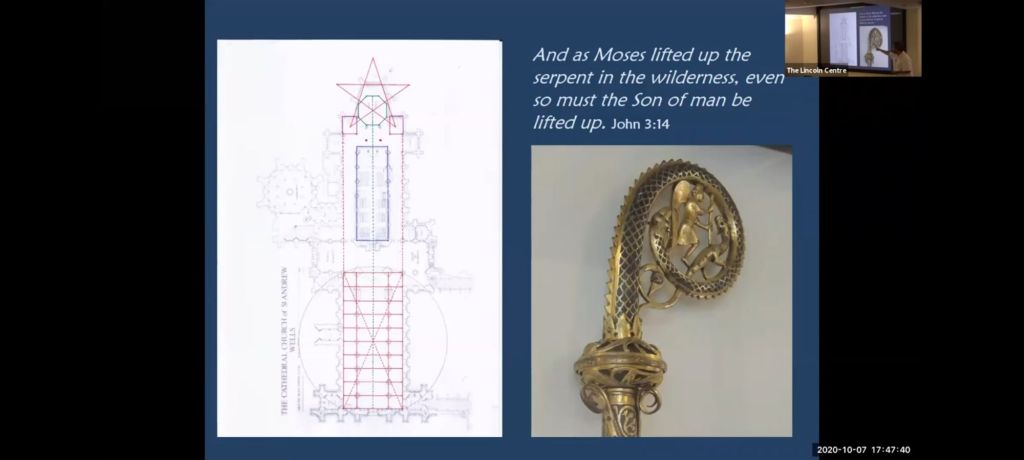
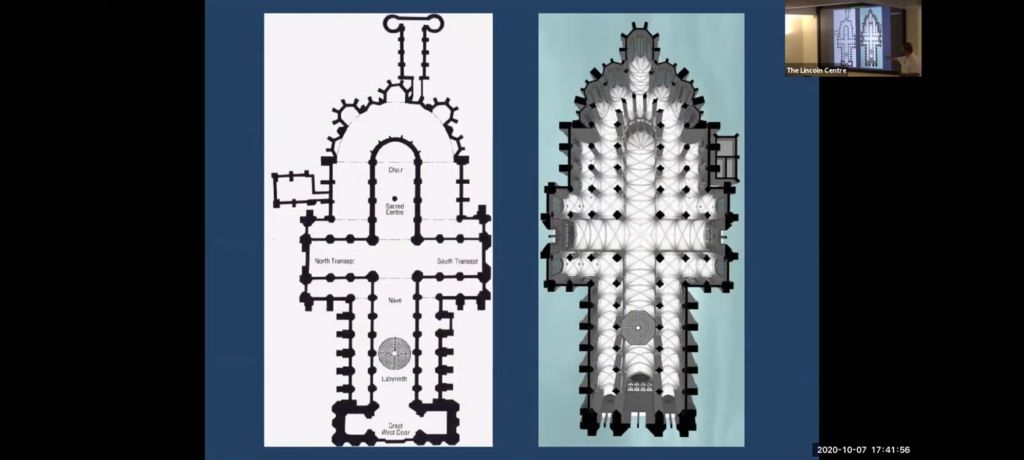
This illustrated talk will demonstrate how the three stages that characterise Dante’s journey are also present in the design of the ground plan of the first English Gothic cathedral. In this sense the beginning of the journey through Wells Cathedral is actually one of descent and only then can there subsequently be an eastward ascent towards the rising of the Bright Morning Star.
See The Cosmos in Stone: the Ascent of the Soul and Cosmology in Sufism
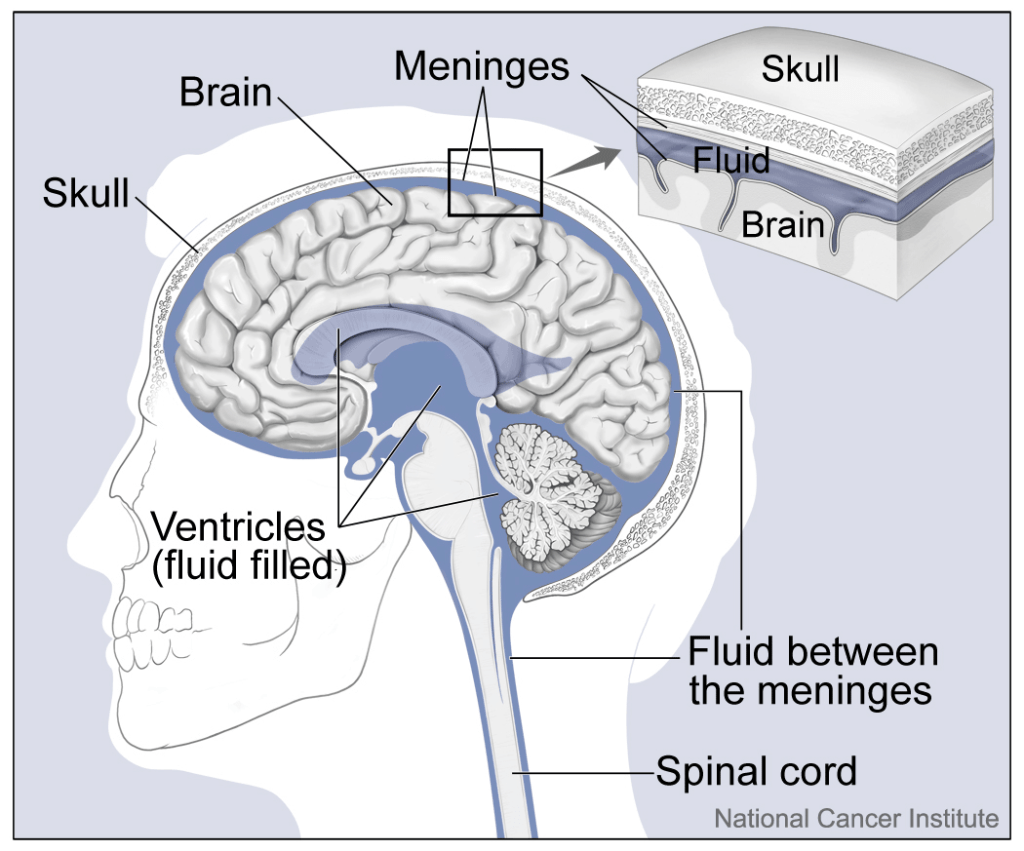
– Brain , gut…and the Heart
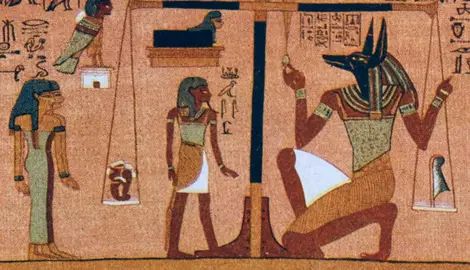
The Weighing of the Heart Ceremony & Its Role in the Egyptian Afterlife
The Weighing of the Heart ceremony was an essential step in passing from the world of the living to the realm of the dead in ancient Egypt.
Published: Jul 1, 2025
Like
Share
Share this article
Cite
Format
MLA
APA
CHICAGO
YOUR CITATION
Reilly, Heather. “The Weighing of the Heart Ceremony & Its Role in the Egyptian Afterlife” TheCollector.com, July 1, 2025, https://www.thecollector.com/heather-reilly/
Copy Citation
One of the most famous scenes surviving from ancient Egyptian art is the Weighing of the Heart Ceremony, during which the heart of the deceased was weighed against the feather of Ma’at. If the heart was lighter than the feather, they passed into ancient Egypt’s paradisical afterlife. If it was heavier than the feather, they were devoured by the monster Ammit and resigned to oblivion. This belief was so important to Egyptian culture from at least the New Kingdom onwards that it was immortalized in Egypt’s most common literary text, the Book of the Dead.
followed — the manual that teaches step-by-step how to awaken your heart, purify your soul, lataif and polish the mirror within until it reflects Divine light.
Because the first step to becoming a Sufi is to understand your own heart — its function, its power, its potential. Once you know your heart, you will know your path. And once you know your path, you will find your Lord.
So, my dear readera, if your heart still trembles at the mention of Allah’s name, rejoice! It means the door is not closed. You still have the potential to house Divinity. Protect that light, feed it with Dhikr, Salawat and keep it company with the friends of Allah.
Because one day, if Allah wills, your heart might become a home — not just for remembrance, but for His Presence.
اَللّٰهُمَّ صَلِّ عَلَىٰ مُحَمَّدٍ وَّعَلَىٰ اٰلِ مُحَمَّدٍ
● FJ 5.11.25
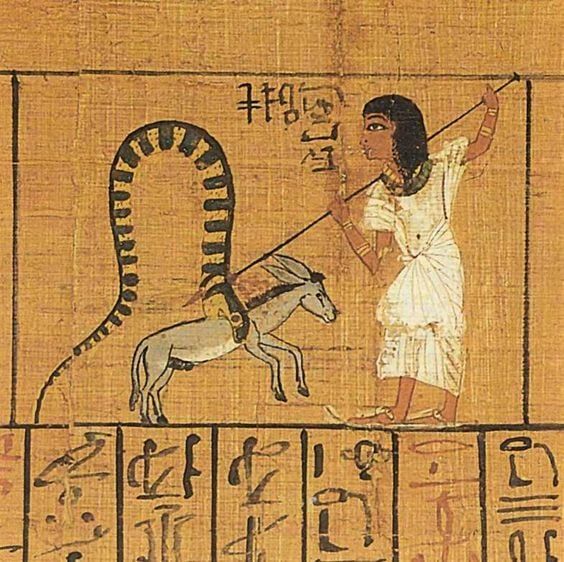
apophis god serpent
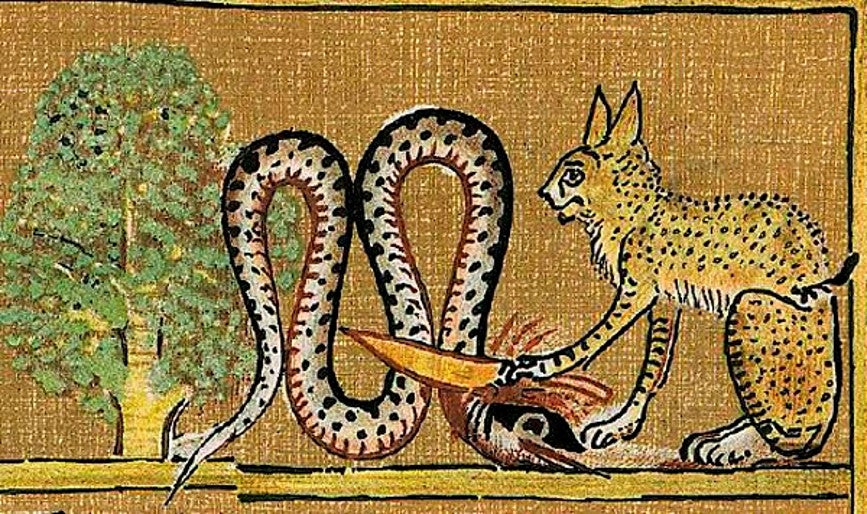
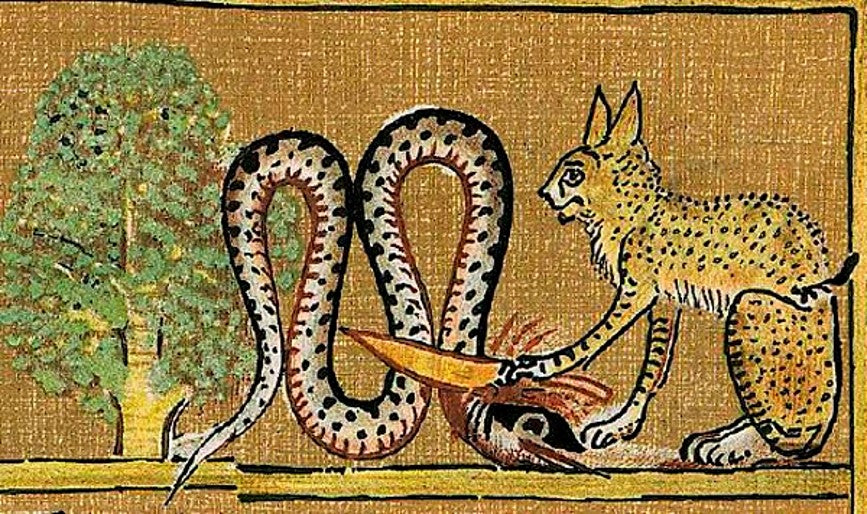
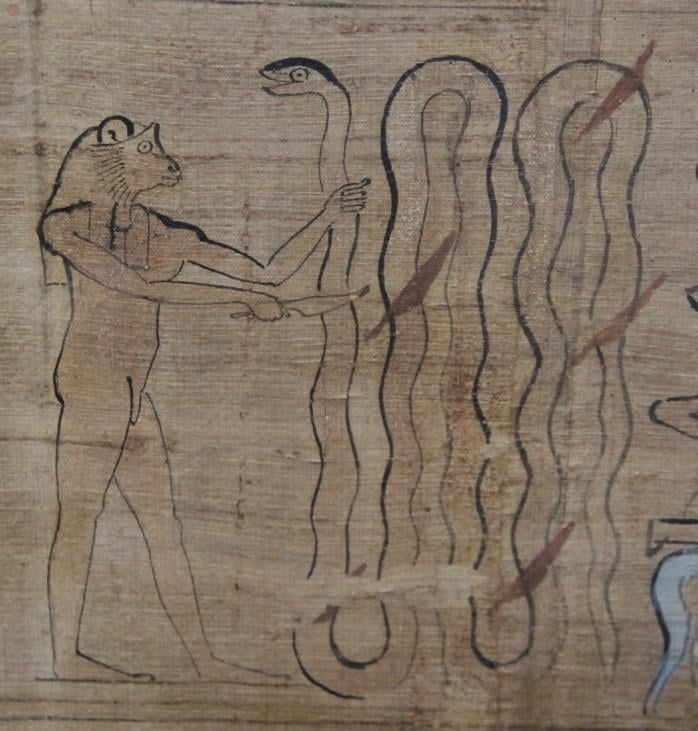
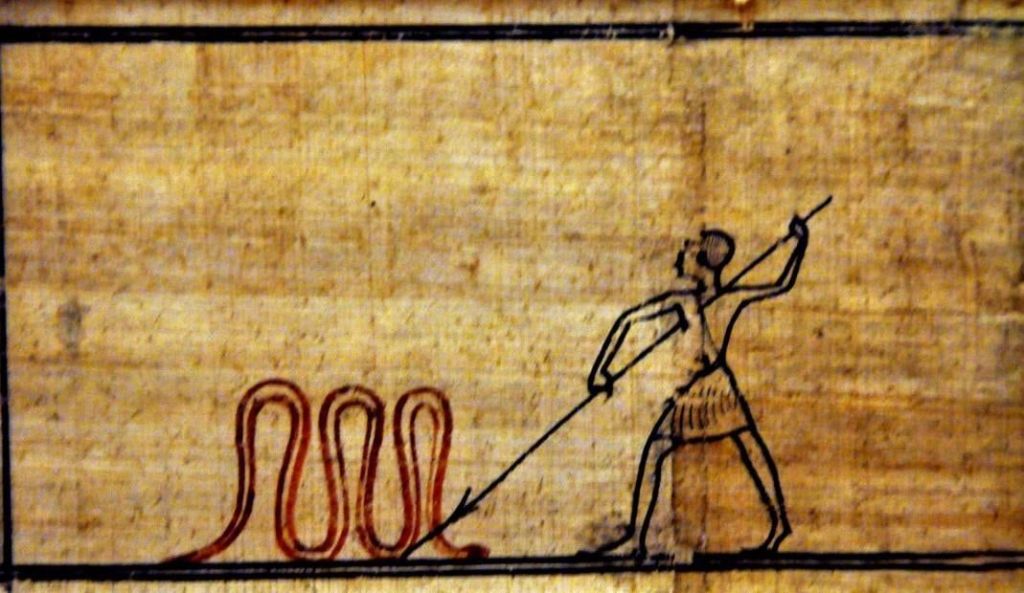
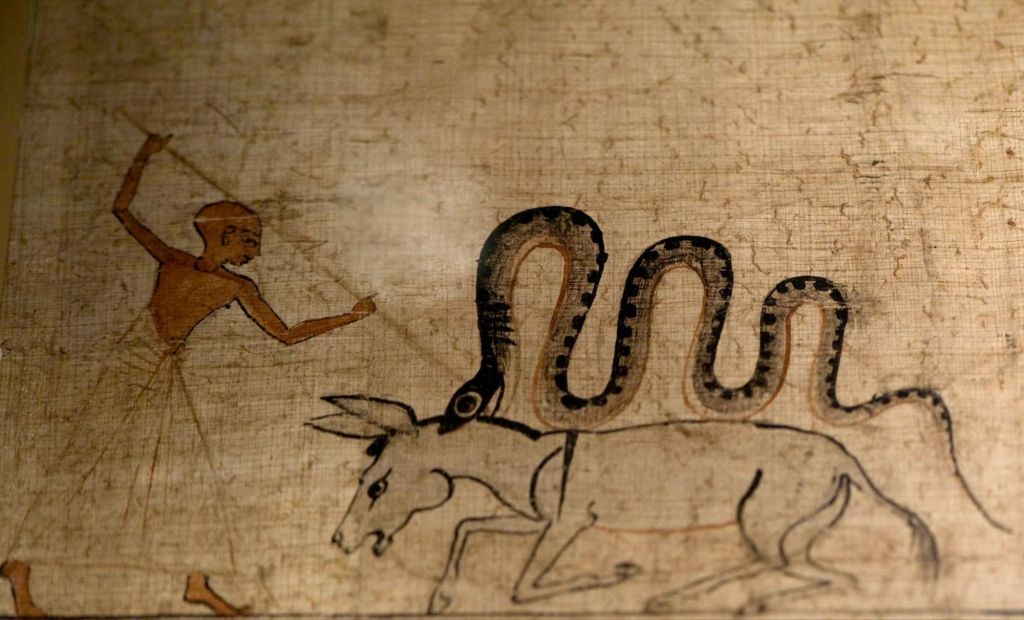
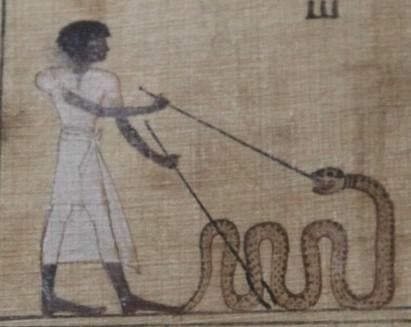
Apophis (also called Apep) is a giant serpent deity in ancient Egyptian mythology, representing chaos, darkness, and destruction, and is the primordial enemy of the sun god Ra. Every night, as Ra’s solar barge traverses the underworld, Apophis attempts to devour it and prevent the sun’s rise, threatening to plunge the world into darkness.
Role and Symbolism
Apophis embodies the forces outside the ordered cosmos, acting as the personification of chaos. He is often described as a mammoth serpent, sometimes as vast as the Nile itself, whose presence in the underworld brings earthquakes, floods, and eclipses when he successfully attacks Ra’s boat. The struggle of Apophis against Ra repeats nightly, symbolizing the eternal battle between order and chaos.
Rituals and Mythic Battles
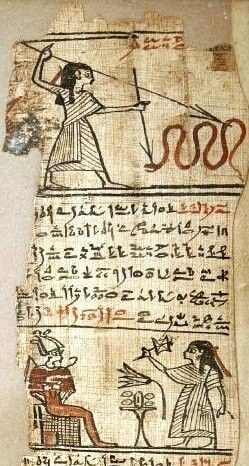
Egyptians greatly feared Apophis but did not worship him; rituals were performed to repel his destructive power. These included the crafting and ritual destruction of serpent effigies, special spells found in magical texts like the “Book of Apophis,” and depictions of deities such as Set, Isis, and others defending Ra against the serpent’s attack. Though Apophis was ritually “killed,” he resurrected each night, emphasizing chaos’s persistent nature.
Cultural Impact
Apophis’s myth illustrates the duality required for cosmic balance: darkness as a primordial, necessary counterforce to light. The god’s perpetual opposition to Ra is central to Egyptian conceptions of order and disorder, where ultimately, order (Ma’at) must be defended against emerging chaos. Apophis’s iconography as a giant snake, “the encircler of the world,” is echoed in other mythological traditions and remains a powerful symbol for fearsome cosmic threats.
Table: Apophis in Egyptian Mythology
Name(s)DescriptionSymbolismOpponent(s)NatureApophis, ApepGiant Serpent GodChaos, DarknessRa (aided by Set, Isis, others)Destructive evil, cosmic adversary
Apophis’s myth exemplifies ancient Egypt’s deep concern with the cosmic struggle between light and darkness, order and chaos, embodied in the nightly contests of sun and serpent.
What myths explain Apophis’s origin and role
Apophis’s origin and role in Egyptian mythology are explained by several creation myths and ritual traditions, each emphasizing his identity as the primordial enemy of order and the sun god Ra.
Mythological Origins of Apophis
Apophis (Apep) is commonly said to have existed from the very beginning, emerging from the primordial waters of chaos (Nu) that preceded creation. In one version, Apophis is born after Ra, arising from Ra’s umbilical cord, symbolizing disorder as a necessary shadow to cosmic order. Another myth from later periods suggests that Apophis sprang from the spit of the goddess Neith, which became a tremendous serpent in the primal waters.
The introduction of created order, duality, and especially light (represented by Ra’s first sunrise) angers Apophis, because he desires to return the universe to its former undivided darkness. This fundamental opposition establishes Apophis as the “Lord of Chaos,” eternally seeking to consume the sun and undo creation.
Role in Egyptian Cosmology
Apophis’s role is that of the eternal adversary. Every night, as Ra’s boat crosses the underworld, Apophis attempts to swallow the sun and extinguish its light, risking a return to primordial chaos. Although he is defeated nightly by Ra and the gods (especially Set, who sometimes defends Ra’s boat), Apophis is resurrected each evening, representing the perpetual cycle of disorder threatening the cosmos.
Unlike other deities, Apophis was not worshipped but was ritually repelled, emphasizing his role as an immortal and fearsome force of destruction whose existence continually challenges cosmic harmony. Egyptians enacted rituals to weaken him, symbolically defeating chaos and reaffirming the triumph of order with each sunrise.
Symbolic and Ritual Significance
- Apophis represents earthquakes, storms, eclipses, and all forces that disrupt Ma’at (order).
- Rituals included making and destroying serpent effigies to protect the sun god and the cosmic order.
- His presence and antagonism are central to Egyptian explanations of evil, darkness, and cosmic threat.
Apophis thus personifies the inescapable adversary of all created order, and his mythic story encapsulates the Egyptians’ daily struggle to preserve light and Ma’at against looming chaos.
How is Apophis depicted compared to other chaos serpents in Near Eastern myths
Apophis in Egyptian myth is depicted as a colossal serpent embodying chaos and darkness, notably coiled or shown under assault by gods who defend cosmic order. Apophis’s form is massive—sometimes described as spanning 16 yards—with features such as a flint head and destructive powers such as storms, earthquakes, and eclipses. Unlike other Egyptian serpents, Apophis is never worshipped but is ritually repelled, emphasizing his singular role as adversary to the sun and cosmic order.
Comparison with Other Near Eastern Chaos Serpents
Other chaos serpents appear in ancient Near Eastern mythologies with similar symbolic functions but differing visual and narrative contexts:
- Tiamat (Babylonian): Portrayed as a primordial sea dragon or multi-headed serpent, Tiamat is both chaos and creation. Following her defeat by Marduk, Tiamat’s corpse becomes the fabric of the cosmos—her skin forms the sky, her tail creates the Milky Way, and her body parts shape rivers and mountains. Tiamat’s imagery is more ambiguous, evolving from watery chaos to explicit dragon motifs especially in later texts and art.
- Lotan/Leviathan (Canaanite/Hebrew): Lotan and Leviathan are sea monsters or serpents with seven heads. They are shown battling storm gods (Hadad/Baal in Ugaritic myth; Yahweh in Hebrew texts), serving as metaphors for the containment of cosmic disorder. Leviathan’s depiction often carries connotations of monstrous power and is referenced allegorically as Babylon or other enemies. Lotan is sometimes associated with rivers and rain—his defeat symbolizes the restoration of balance.
- Vritra (Vedic): Although not as prominent visually as Apophis, Vritra is a serpent or dragon holding back the waters and sunlight, slain by Indra in a cosmic duel akin to Apophis’s nightly battles with Ra.
Table: Apophis vs. Other Chaos Serpents
NameCultureForm/DepictionSymbolismOpponent(s)Apophis (Apep)EgyptianColossal serpent, flint head, coiled, under attackChaos, darkness, destructionRa, Set, godsTiamatBabylonianSea dragon, multi-headed serpent, ambiguous formsPrimordial chaos, sea, creationMardukLotan/LeviathanCanaanite/HebrewMonster serpent, many-headed, river associationsCosmic disorder, enemy powerHadad/Baal, YahwehVritraVedicSerpent, dragonWaters withheld, darknessIndra
Apophis’s iconography and mythic role are echoed in—but distinct from—other Near Eastern chaos serpents, sharing the theme of cosmic conflict where order must eternally battle the serpentine force of chaos.
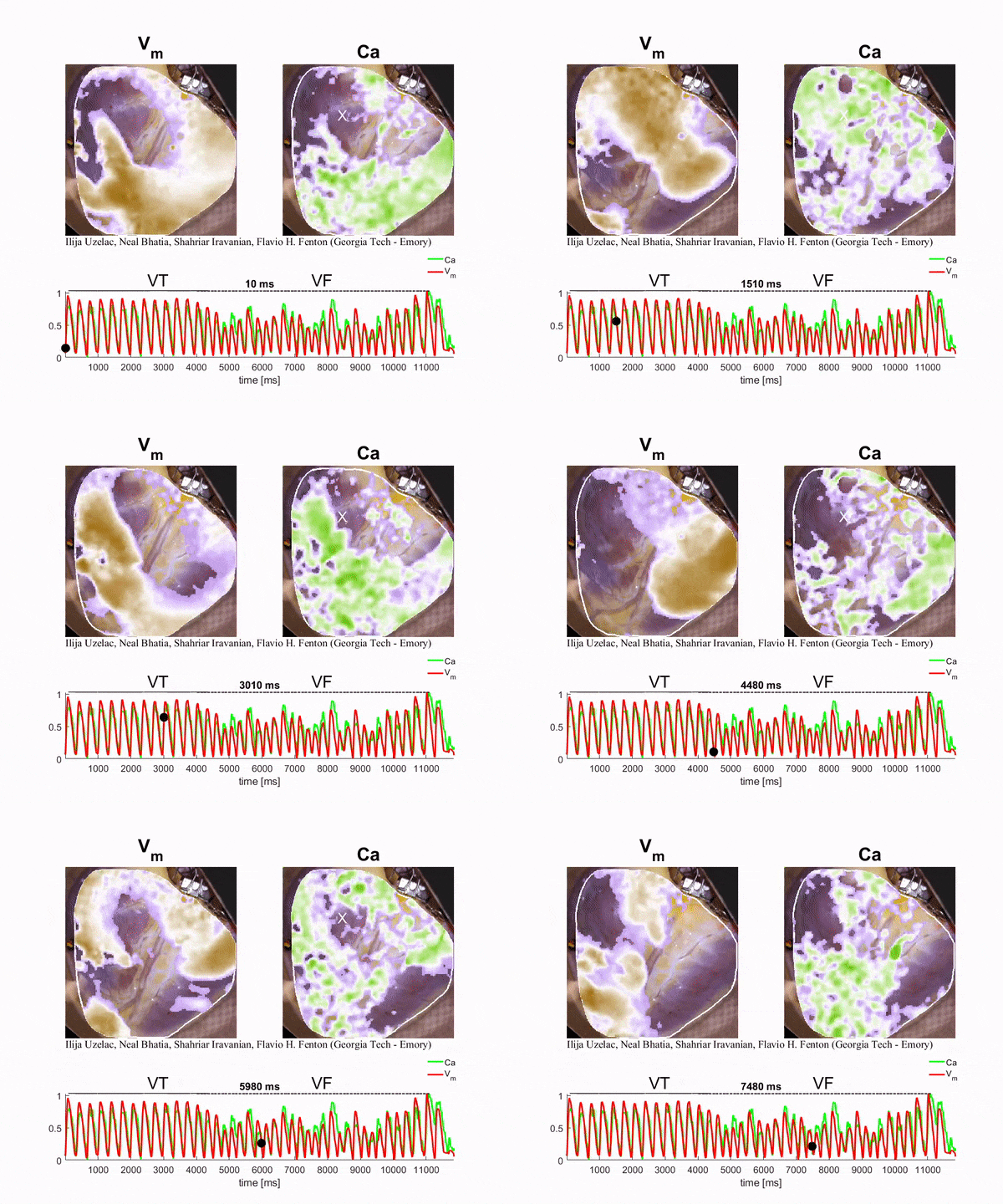
compare with brain
Apophis as a mythic figure can be metaphorically compared to the brain’s function in terms of representing the challenge between order and chaos within a complex system.
Comparison: Apophis and the Brain
- Apophis as Chaos: Apophis embodies primordial chaos, darkness, and the threat of destruction to cosmic order, continuously challenging the stability and function of the universe (through the sun god Ra). This can be likened to intrusive, chaotic elements that challenge an orderly system.
- Brain as Order: The brain, especially its higher cognitive functions, represents complex order, control, and regulation. It processes information, maintains homeostasis, and orchestrates coherent behavior to sustain life and well-being.
- Conflict and Balance: Just as Apophis is the unstoppable force of chaos requiring constant vigilance and defense by ordered cosmic forces, the brain must constantly manage internal and external “chaotic” stimuli—such as stress, emotional turmoil, or neurological disruptions—by employing regulatory mechanisms (e.g., the prefrontal cortex mediating emotional responses).
- Cycle of Threat and Recovery: Apophis’s nightly assault and defeat symbolize the recurring cycles of disruption and restoration of order—analogous to how the brain manages repeated challenges like stress, illness, or trauma, restoring equilibrium.
Mythic Symbolism in Cognitive Terms
- Apophis can be viewed as a symbol of disruptive neural or psychological forces (e.g., fear, anxiety, or disorder) that threaten the “light” of consciousness and rationality.
- The gods defending Ra are akin to neural networks or regulatory brain centers that maintain mental and physiological order.
- The persistent nature of Apophis’s threat reflects how challenges to brain regulation are ongoing and require active coping and resilience.
This metaphor highlights the ancient conception that cosmic order requires constant defense against chaos, much like brain function necessitates continual regulation against disorder to sustain life and consciousness.
compare with heart
Apophis can also be fruitfully compared metaphorically with the heart, especially in symbolic and mythic terms relating to the struggle between order and chaos within the core of life and consciousness.
Comparison: Apophis and the Heart
- Apophis as Threat to Life: Apophis represents chaos, darkness, and destruction seeking to devour the sun and plunge the cosmos into disorder and death. Similarly, the heart is the vital organ that sustains life through circulation; any disruption to its rhythm or function threatens life itself.
- Heart as Center of Vital Order: Symbolically and physiologically, the heart governs the flow of life-force (blood, energy) and symbolizes emotional and spiritual centers in many traditions. It embodies balance, vitality, and the sustaining power of order in an organism.
- Chaos Versus Harmony: Apophis’s role as a constant menace can be likened to factors that threaten the heart’s harmony—stress, fear, anxiety, or physical illness that disrupt the heart’s steady beating. In mythic terms, Apophis represents those disruptive forces that must be kept at bay to maintain the living order and vitality sustained by the heart.
- Duality in Symbolism: Just as Apophis’s chaotic nature opposes the sun’s ordered life-giving light, the heart symbolizes the sustenance of life and emotional equilibrium—undermined by chaotic emotional states or physical dangers. Apophis’s repeated defeats mirror the resilience of the heart to overcome threats and maintain steady rhythm.
- Emotional and Spiritual Dimensions: In esoteric symbolism and many religious traditions, the heart is the seat of virtues, love, and divine spirit, while Apophis personifies the dark, destructive unconscious forces that challenge these qualities.
Summary
AspectApophisHeartRoleCosmic chaos, destructionLife sustainer, vital centerSymbolismThreat to cosmic order and lightSource of life, emotion, spiritOppositionForces disrupting orderForces maintaining life’s flowMetaphoric meaningChaos challenging existenceOrder enabling existenceSpiritual aspectDarkness, fear, deathLove, virtue, vitality
The metaphor highlights the eternal tension between chaotic destructive forces (Apophis) and the sustaining, life-giving heart that keeps order and life flowing, both physically and spiritually.null
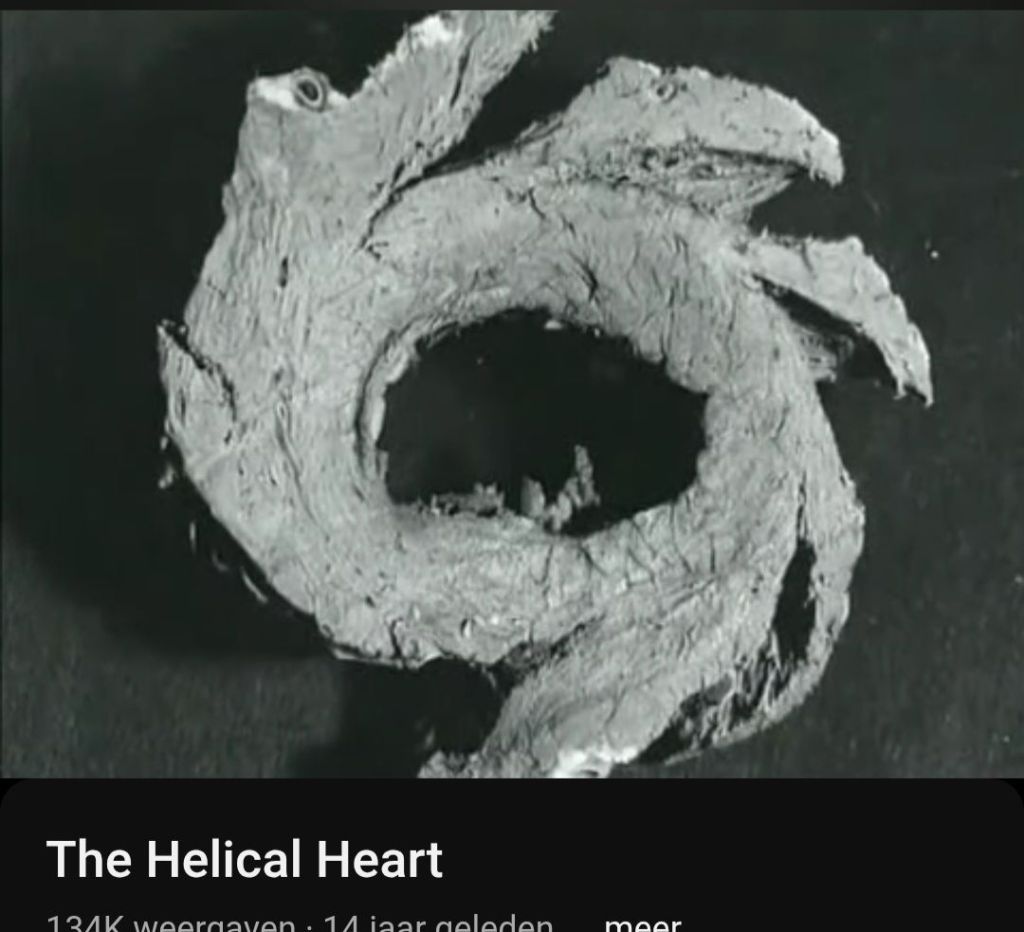
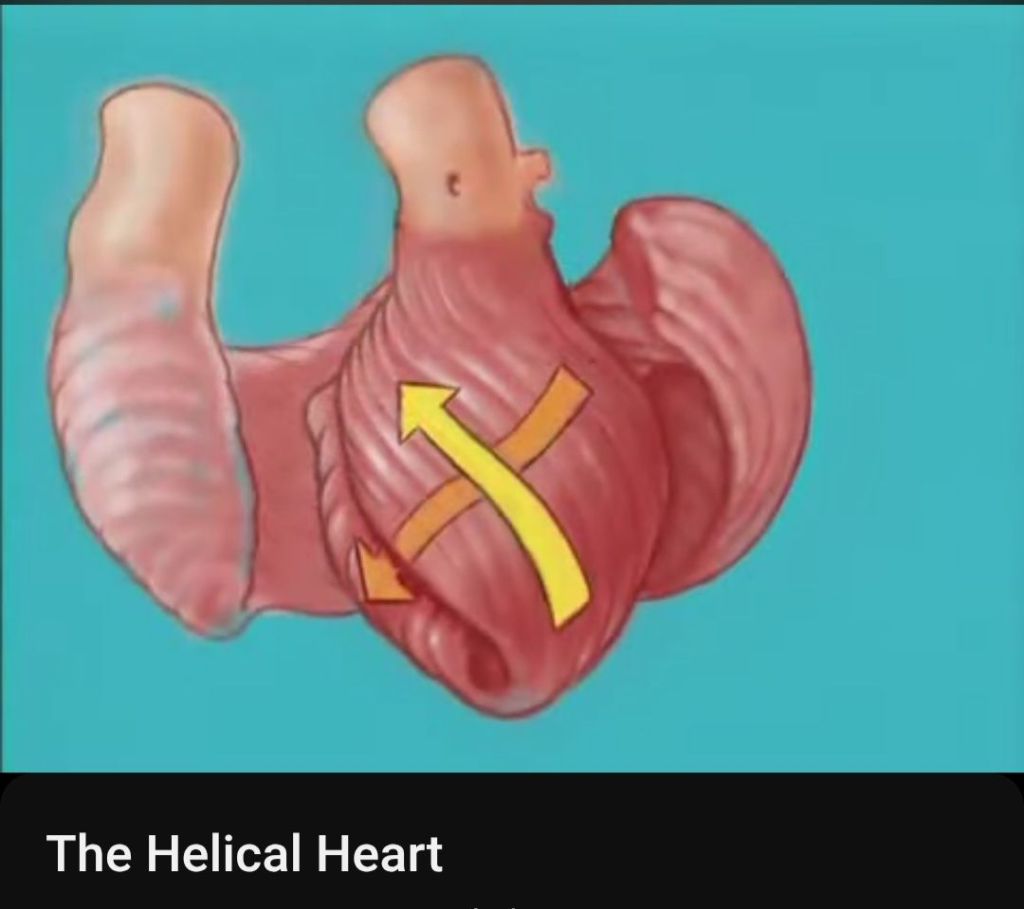
heart connect to virtues neuron
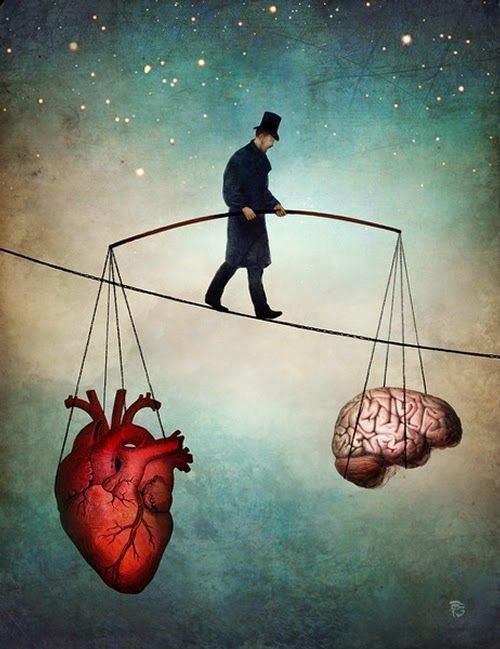
There is emerging evidence that the heart is intimately connected to the formation and experience of virtues at a neural level, influencing moral emotions, decision-making, and cognition via heart-brain interactions and specialized neural networks.
Heart-Brain Neural Networks
The heart possesses an intrinsic cardiac nervous system (ICNS) composed of about 40,000 sensory neurites, which communicate with the brain through afferent signals carried mainly by the vagus nerve. This feedback influences brain processes that shape emotional responses, mood regulation, and even higher cognitive functions such as decision-making and short-term/long-term memory, suggesting that the heart’s neural activity participates in virtue-related cognition.
Virtue and Moral Emotion Processing
Neuroscience has demonstrated that moral emotions and virtues activate specific brain areas, notably the default mode network (DMN), orbitofrontal cortex, and related regions associated with moral cognition and prosocial behaviors. Heart-generated signals can modulate these regions, for instance by heartbeat-evoked responses (HERs), strengthening the link between physiological states and neural processing of moral virtues.
Influence on Virtuous Decision-Making
The heart’s neural feedback may play a subtle role in decision-making, intuition, and emotional adaptation—qualities central to virtue ethics. Cardiac neural input can affect the robustness and connectivity of brain networks linked to compassion, moral indignation, and other virtuous responses, suggesting a bidirectional system where the heart shapes cognition and moral self.
Clinical and Philosophical Perspectives
This heart-brain connection opens new pathways for understanding not only cardiovascular disease treatment but also how emotional intelligence and moral development can be holistically cultivated. Virtue ethics grounded in both neuroscience and classic philosophy now considers heart-neuron networks as integral for moral flourishing and character.
In summary, the heart’s neural system, through communication with the brain, is increasingly recognized as foundational to the realization and neural embodiment of human virtues, offering a bridge between physiology, emotion, and ethics.
Tom Bree

The Vision of Heavenly Harmony
Biological life is now thought to have appeared on this planet not long after its formation. It seems that the bacterial reeds for the process may have flown in on the tail of a cornet or meteor. Speculation is again rife about life under the surface of Mars, on jupiter’s icy moon Europa and indeed anywhere the sacred substance of liquid water is known to exist.
(Earth Matters) Plant growth is governed by the Fibonacci sequence, which can be understood as a law of accumulation. The role of the Fibonacci sequence in the growth of plants is an intriguing example of the unifying order behind all creation. These patterns exist at all levels and permeate the universe, reminding us that the same swirling energy is shaping, sunflowers, whirlpools, spinning galaxies, and our own DNA.
The science of the cosmos has changed irnmeasurably since the (Greek and medieval vision of circles of planetary spheres. But with great cosmic schemes out of fashion, and with dragons and unicorns dismissed, the Earth has become a modern mystery.
No modem theory exists to explain the miracle of conscious life nor the cosmic “coincidences” which surround our planet. Why do the Sun and Moon appear the same size in the sky? There are ancient answers to such questions, however, and these invoke liberal arts like music and geometry. See Geometry of Human Life ,Geometry of pants, and Geometry of zoology
This suggests there is fundamental relationships between space, time and life which have not yet been understood or forgotten. These days we scan the skies listening for intelligent radio signals and looking for remote planets a little like our own. Meanwhile, our closest planetary neighbours are making the most exquisite patterns around us, in space and in time and no scientist has yet explained why. Is it all just a coincidence or do the patterns perhaps explain the scientists’s educated ignorance without wisdom?
– Dance of Planets:
Ujjwal Suryakant Rane from India says :” A picture is worth a thousand words and an animation? . . . probably as many pictures! That’s what this channel uses – graphics and animation – to deliver core concepts in Physics, Math, Engineering and Astronomy. Such geometric/graphical approach results in an intuitive and deeper understanding, that is retained better. Used in classrooms and in one to one sessions at levels ranging from middle school to engineering, this approach yielded success in both India and the United States over a period of 24 years.
I f you want to learn more look here
The kiss of Venus
Venus and Earth form a beautiful Spirograph pattern with their orbits. The pattern of Venus around the Earth portrays a 5-petalled rose when viewed from the geocentric position. This beautiful pattern reveals the essence of Venus in her role of celestial guardian of love and beauty to those of us here on Earth. Have a look…
Other than the Sun and Moon, the brightest point in the sky is Venus, morning and evening star. She is our closest neighbour, ldssing us every 584 days as she passes between us and the Sun. Each time one of these kisses occurs the Sun, Venus and the Earth line up two-fifths of a circle further around the starry zodiacal circle so pentagram of conjunctions is drawn. Seen from Earth the Sun moves round the zodiac white Venus whirls around the Sun drawing an astonishing pattern over exactly eight years (99.9%) (01 thirteen Venusian-years (99_9%)). Small loops are made when Venus in her dazzling kiss seerns briefly to reverse direction against the background Stars (shown below as seen from Earth).
Notice the Fibonnacci numbers we have just met, 5, 8 and 13. The periods of Earth and Venus are also loosely related as 1.618:1 (99.6%). This `phi’-fold nature of Venus and Earth’s dance extends to their closest and furthest distances from each other. Opposite we see Venus’ perigee and apogee defined by two pentagrams, 2.618:1 (99.9%). All these diagrams also apply to Venus’ experience of Earth.
If you want more look Here
Modern astronomers peer at distant galaxies, but know that they have lost track of human meaning. We are here concerned with what is seen and experienced within our local region of space; and have argued that, using modern observations to four or even five-figure accuracy, we are in some way re-gaining a Pythagorean/Platonic view. Twenty-five centuries ago, Greeks took the word Kosmos which meant beauty, as in ‘cosmetic’, and applied it to the universe. Heracleitos the ancient Greek philosopher wrote, in that century:
‘For those who are awake the cosmos is one and common, but those who sleep turn away each into a private world. We should not speak and act like sleeping men.’
Herakleitos lived circa 545BC to 485BC – exactly at the time Greek civilisation began to rise towards its Golden Age. But Herakleitos was not a great statesman or soldier or sculptor; he looked at the world without wanting to change it or bring it under his control or make beautiful stone images of it. He simply wanted to understand it. So he thought about it: how things come to be and how things pass away…and he saw that nothing is really separate at all – all matter, everywhere, simply changes form, in an endless cycle of transformation. What we experience as individual forms are but fleeting interlocking brush strokes in a picture too big for our normal human vision to grasp. Herakleitos, though, did grasp this mystic vision of unity. And he intuitively understood that every brush stroke in the picture can only occur if there is an underlying unseen pattern. This pattern he called the Logos. Observing that human problems and failures are caused by living separately, and thus out of harmony with Logos to the attention of all. The methods he chose were the methods anyone might resort to when describing something previously unknown: similes, riddles, metaphors, aphorisms, allegories and…when those failed, browbeating and exasperated criticism! Herakleitos’ own words are the starting place as the reader is taken on a voyage of discovery through philosophy and physics, through time and space, through human behaviour and consciousness – to arrive at a new vision of the nature of reality.. Look here Herakleitos : Logos Made Manifest
Read here: Heraclitus on Logos Language, Rationality and the Real; and DE BETEKENIS VAN LOGOS BIJ HERAKLEITOS VOLGENS DE TRADITIE ( Dutch)
The Logos of the Greek is the same as the Viritas of Hildegard of Bingen: the greening power of the Divine:
Read Here King Charles : Harmony – A New Way of Looking at Our World and King Charles III , Green Man and Viriditas
Many legends and mythologies are full of admirations for these beautifull “coincidences” of the Divine Logos Look at :
About Venus, Virgin Mary and “The Pentacle” of Sir Gawain
or at Mythology, Legends and Fairy Tale of Friesland
or look at Mythology of Easter: Resurrection
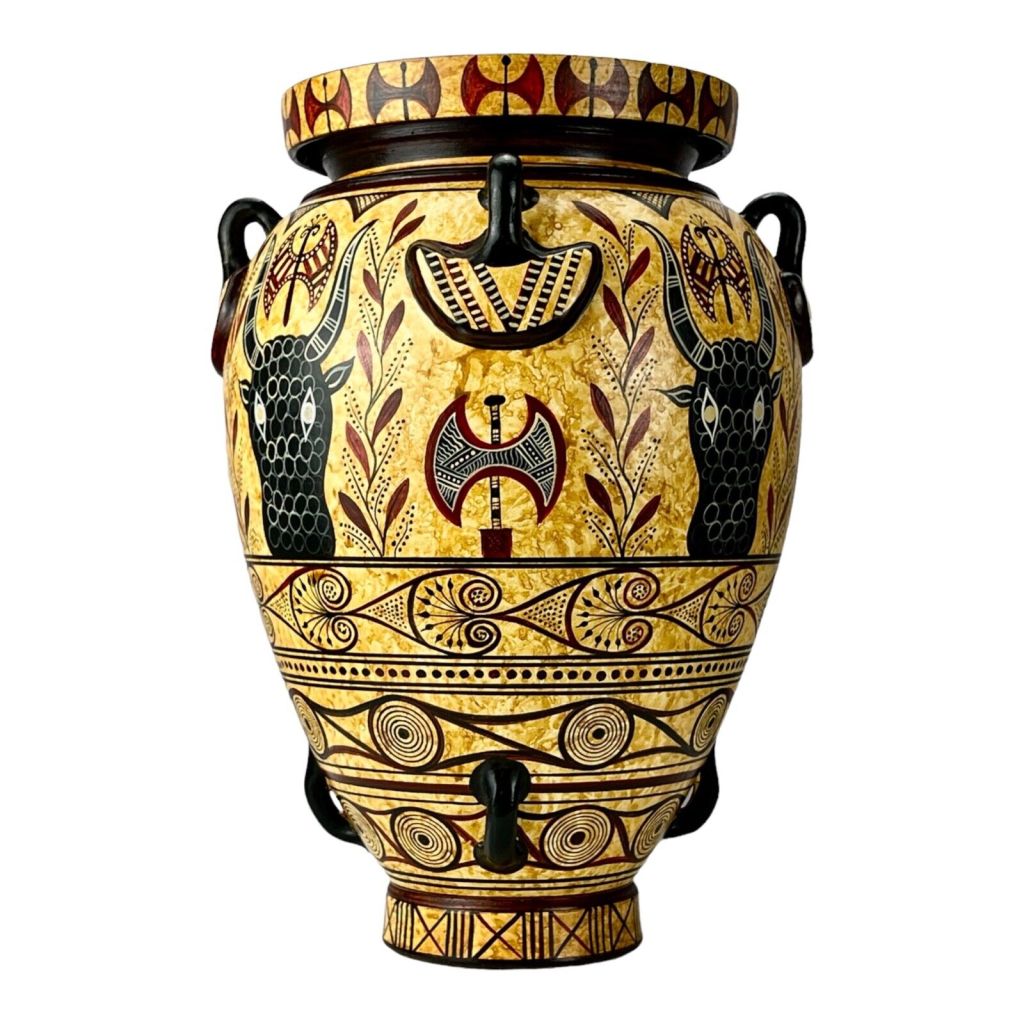
Evidence of Minoan astronomy and calendrical practices
An acclaimed geometer explores the fundamental connections between space, time, and life that have not yet been fully understood.
A most unusual guide to the solar system, A Little Book of Coincidence suggests that there may be fundamental relationships between space, time, and life that have not yet been fully understood. From the observations of Ptolemy and Kepler to the Harmony of the Spheres and the hidden structure of the solar system, John Martineau reveals the exquisite orbital patterns of the planets and the mathematical relationships that govern them. A table shows the relative measurements of each planet in eighteen categories, and three pages show the beautiful dance patterns of thirty six pairs of planets and moons. Read Here
The essential pocket guide to the marriage of the Sun and the Moon. Read here
The principles of the universal order are traced through the religiophilosophical reasoning of how Being emerged from non-Being, and how original Unity gave birth to an inexhaustible multiplicity. Here explore specifically the generative “move” from unity to triplicity and quadrature, seen as a central cosmogonic paradigm of simultaneous proliferation and synthesis. The move is explored in a variety of contexts and manifestations.
The first trace of this move unfolds the metaphysial order, which is then traced in the cosmic order, which is in turn traced in the architectural order.
Spatially, the move refers to the deployment of space from a central point along the three axes of what the French philosopher and metaphysician René Guénon describes as the “threedimensional cross.” This study shows how this conception formed the cornerstone of spatial sensibility in premodern Islam. It also shows how the manifold manifestations and interrelatedness of this primary spatial order unfold a complex web of meanings and intricate patterns of correspondence that at once govern the world and materialize the order inscribed in the divine exemplar…. Read more here: Cosmology in Sufism and Islam
The classic study of the cosmological principles found in the patterns of Islamic art and how they relate to sacred geometry and the perennial philosophy. Read here
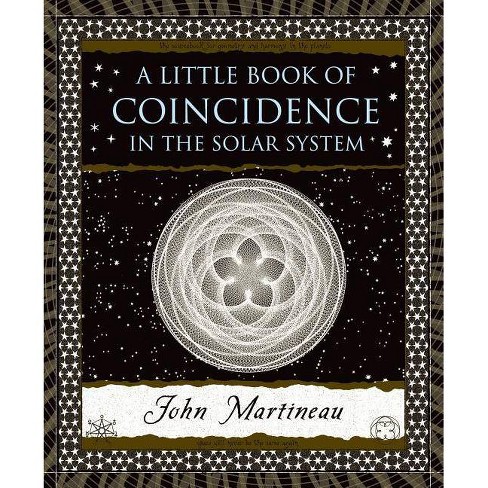
An acclaimed geometer explores the fundamental connections between space, time, and life that have not yet been fully understood.
A most unusual guide to the solar system, A Little Book of Coincidence suggests that there may be fundamental relationships between space, time, and life that have not yet been fully understood. From the observations of Ptolemy and Kepler to the Harmony of the Spheres and the hidden structure of the solar system, John Martineau reveals the exquisite orbital patterns of the planets and the mathematical relationships that govern them. A table shows the relative measurements of each planet in eighteen categories, and three pages show the beautiful dance patterns of thirty six pairs of planets and moons. Read Here
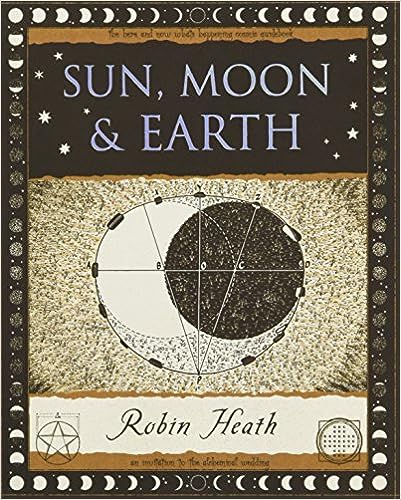
The essential pocket guide to the marriage of the Sun and the Moon. Read here
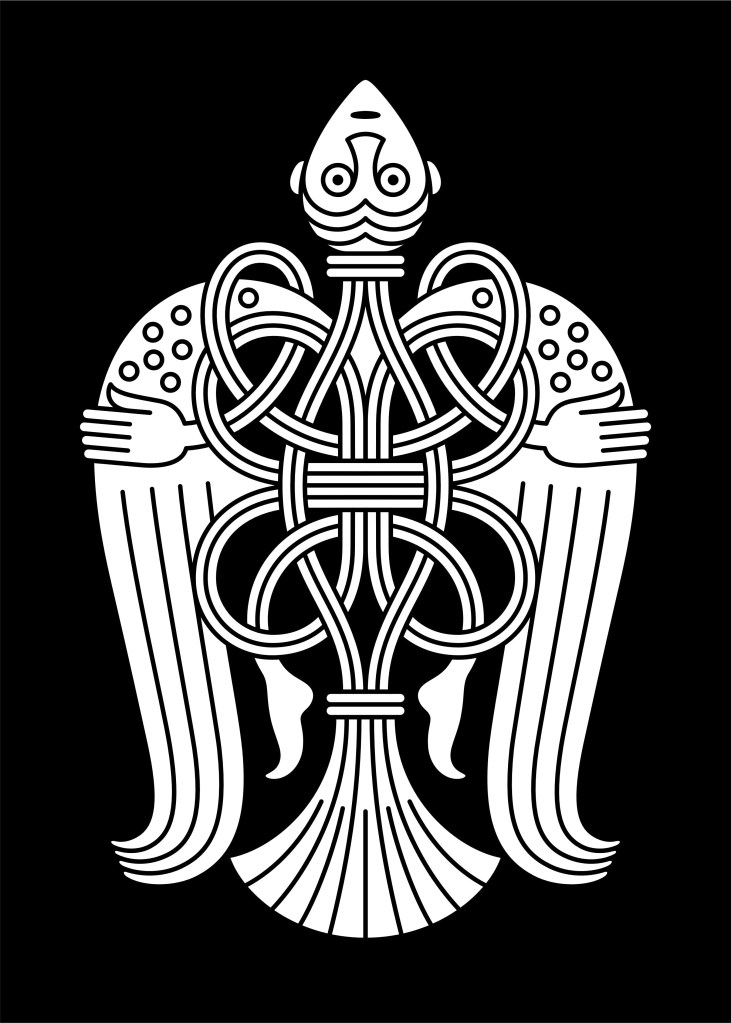
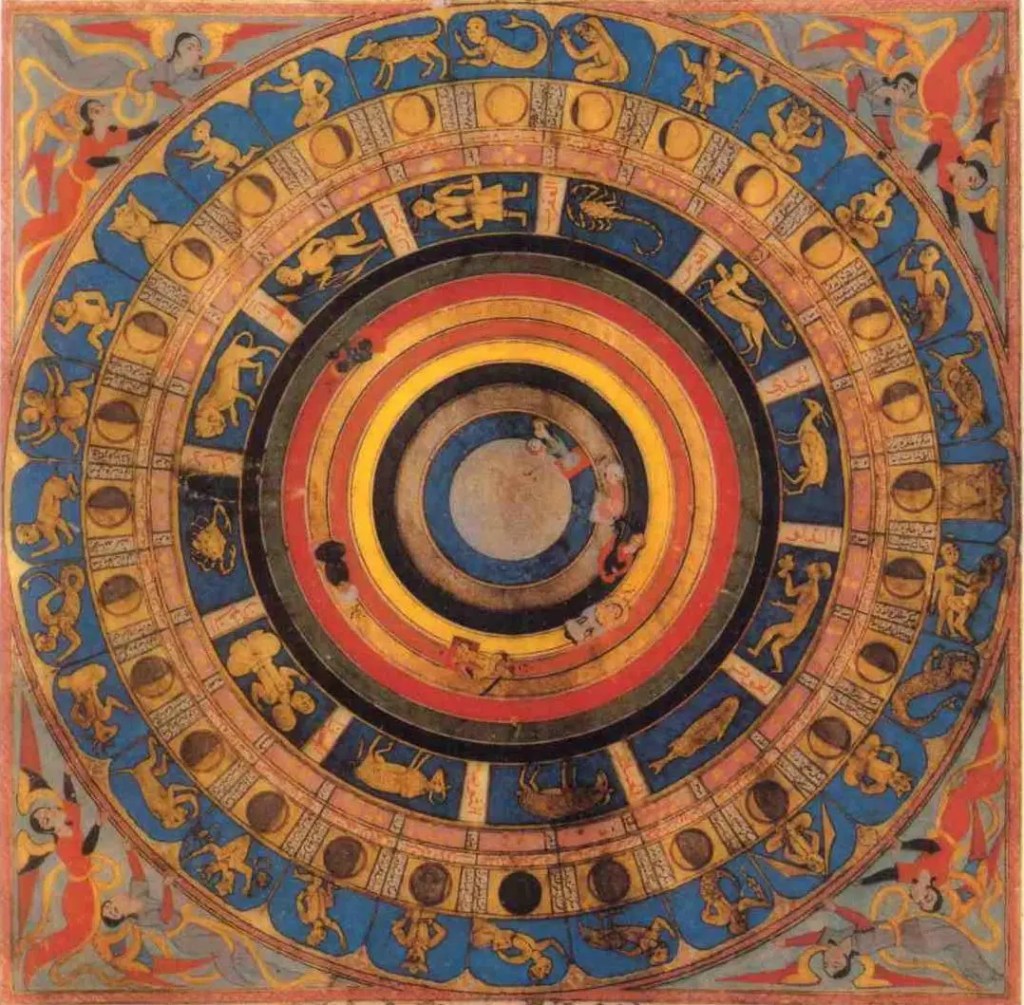
The principles of the universal order are traced through the religiophilosophical reasoning of how Being emerged from non-Being, and how original Unity gave birth to an inexhaustible multiplicity. Here explore specifically the generative “move” from unity to triplicity and quadrature, seen as a central cosmogonic paradigm of simultaneous proliferation and synthesis. The move is explored in a variety of contexts and manifestations.
The first trace of this move unfolds the metaphysial order, which is then traced in the cosmic order, which is in turn traced in the architectural order.
Spatially, the move refers to the deployment of space from a central point along the three axes of what the French philosopher and metaphysician René Guénon describes as the “threedimensional cross.” This study shows how this conception formed the cornerstone of spatial sensibility in premodern Islam. It also shows how the manifold manifestations and interrelatedness of this primary spatial order unfold a complex web of meanings and intricate patterns of correspondence that at once govern the world and materialize the order inscribed in the divine exemplar…. Read more here: Cosmology in Sufism and Islam
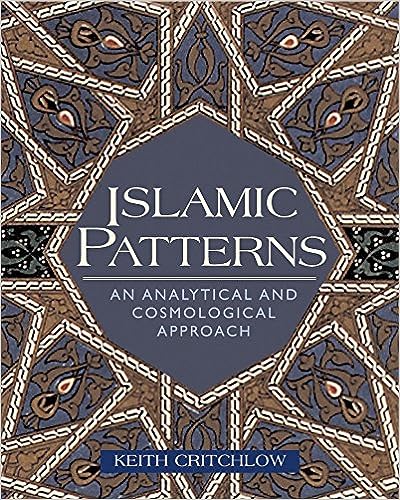
The classic study of the cosmological principles found in the patterns of Islamic art and how they relate to sacred geometry and the perennial philosophy. Read here
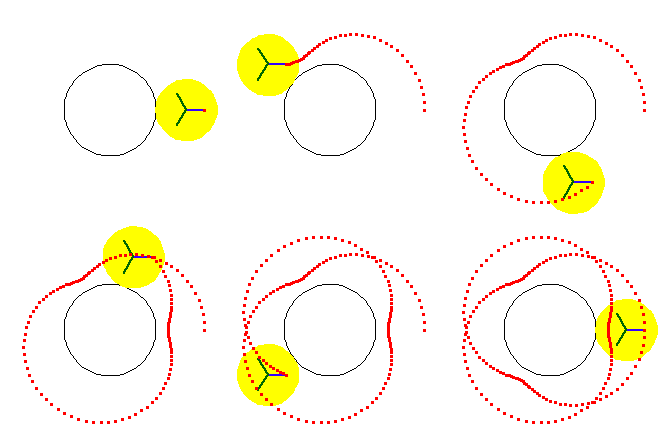
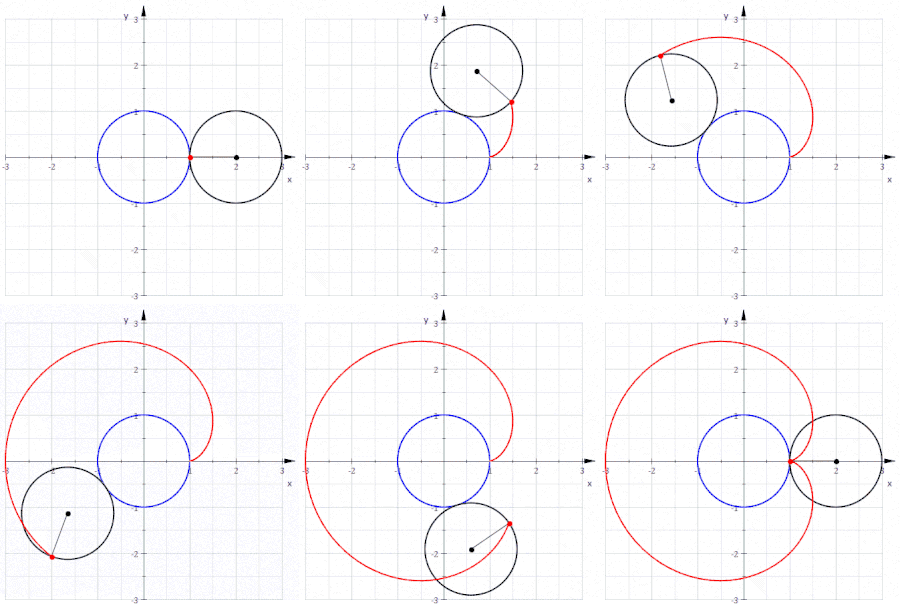
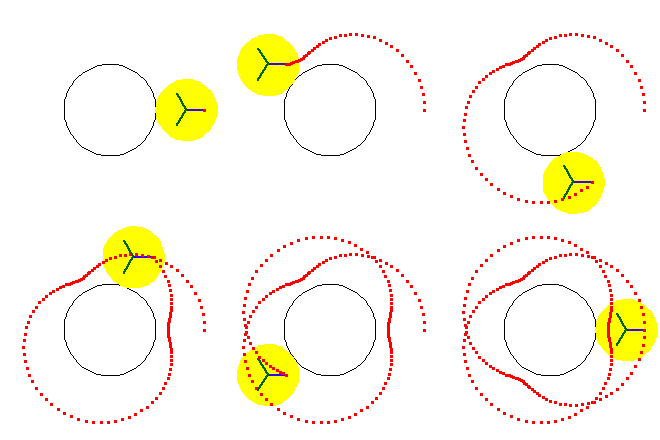
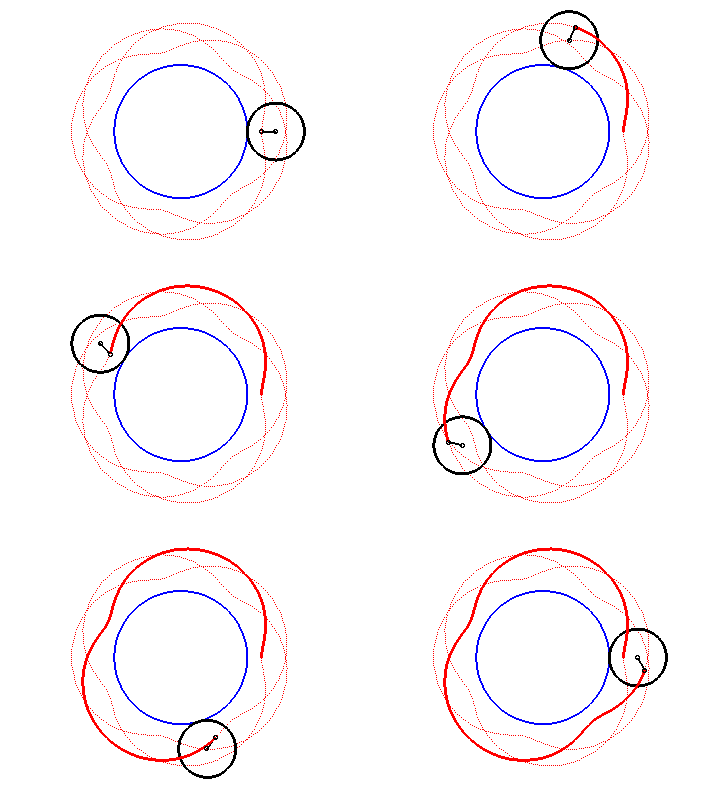
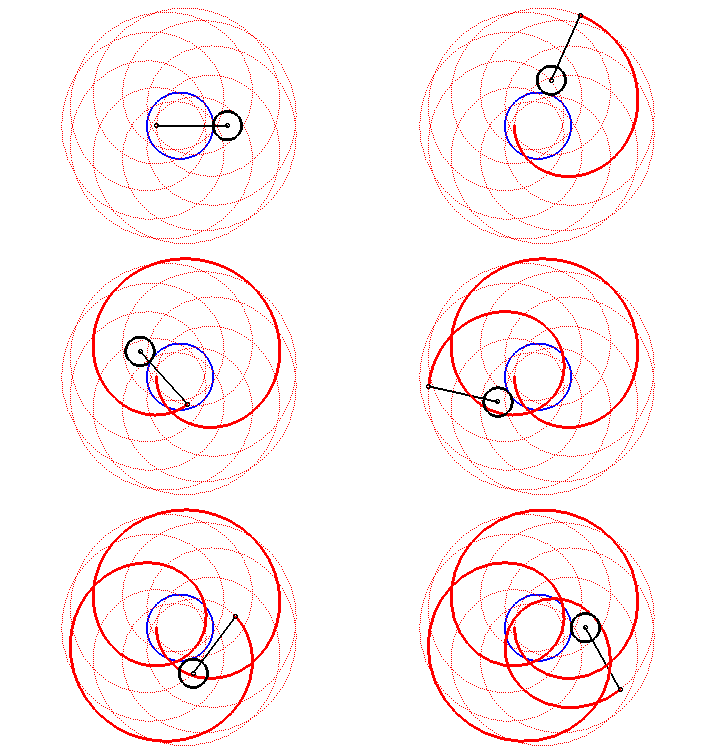
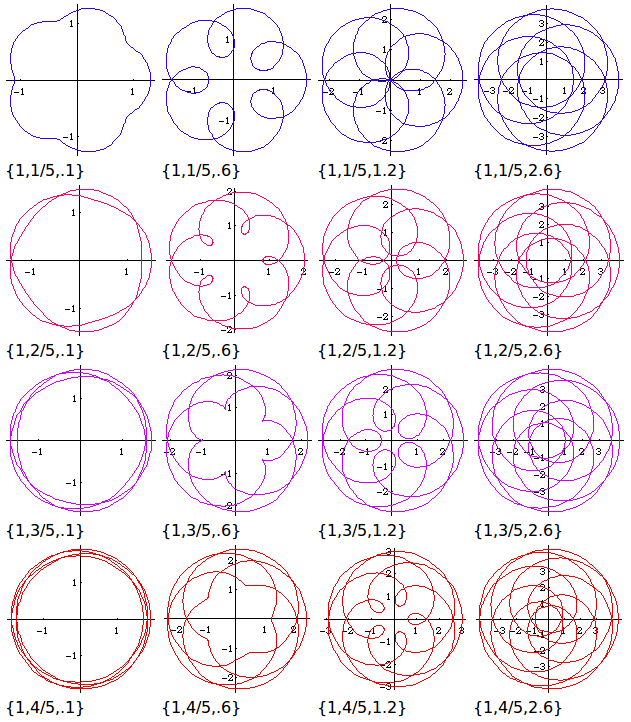

There are four curves which are closely related. These are the epicycloid, the epitrochoid, the hypocycloid and the hypotrochoid and they are traced by a point
P
P on a circle of radius
b
b which rolls round a fixed circle of radius
a
a.
For the epitrochoid, an example of which is shown above, the circle of radius
b
b rolls on the outside of the circle of radius
a
a. The point
P
P is at distance
c
c from the centre of the circle of radius
b
b. For the example
a
=
5
,
b
=
3
a=5,b=3 and
c
=
5
c=5 (so
P
P goes inside the circle of radius
a
a).
An example of an epitrochoid appears in Dürer’s work Instruction in measurement with compasses and straight edge(1525). He called them spider lines because the lines he used to construct the curves looked like a spider.
These curves were studied by la Hire, Desargues, Leibniz, Newton and many
Epitrochoids are geometric curves traced by a point on a smaller circle rolling around the outside of a larger fixed circle. In the Middle Ages, these curves emerged in Ptolemaic astronomy as mathematical models for planetary motion, particularly in explaining retrograde loops via epicycles on deferents.
Around 210 BCE, Apollonius of Perga formalized epicycles—small orbits on larger deferents—that produce epitrochoid-like paths to model planets’ apparent retrograde motion from Earth’s geocentric view. Ptolemy’s 2nd-century CE Almagest refined this system, influencing medieval Islamic and European scholars like Al-Battani and Sacrobosco.
Epitrochoid shapes found limited but notable applications outside astronomy in medieval contexts, primarily in mechanical devices and mathematical modeling rather than widespread practical use. Their geometric properties—curves generated by a point on a rolling circle outside a fixed one—influenced early engineering and artisanal designs, though explicit references remain scarce before the Renaissance.
Mechanical Devices
The Antikythera mechanism (c. 100 BCE, known through medieval copies and study) incorporated epicyclic gears producing epitrochoid paths to simulate planetary positions and predict eclipses, extending beyond pure astronomy into calendrical computation. Medieval Islamic scholars like Al-Biruni adapted similar gear trains for astrolabes, where epitrochoid-like motions calibrated dials for timekeeping and navigation.
Geometry and Crafts
In pure mathematics, epitrochoids appeared in studies of roulettes by medieval European and Islamic geometers, such as in Campanus of Novara’s 13th-century work on cycloids, inspiring symbolic knotwork and tracery in Gothic rose windows that mimicked looped curves. Craftsmen used rudimentary compasses to approximate epitrochoids for ornamental metalwork and tile patterns in mosques, evoking infinite loops akin to your interest in sacred knots.
Engineering Precursors
Water wheels and early mills in medieval monasteries employed epicyclic motion for irregular grinding paths, prefiguring epitrochoids in cam designs, though formalized later in clockworks by Richard of Wallingford (c. 1320s). These applications bridged astronomy’s legacy to practical mechanics, emphasizing uniform circularity as a divine principle.
 Path to the Maypole of Wisdom