God’s Psychology: A Sufi Explanation

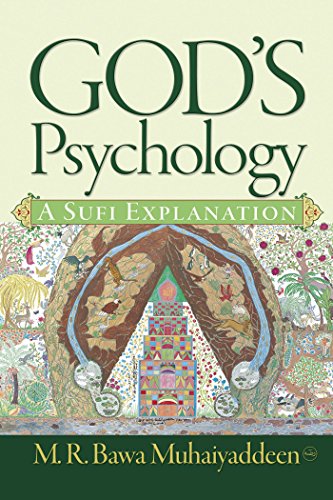
God’s Psychology is not normal psychology. It goes beyond the mind, beyond feelings, beyond emotions and beyond the study of behavior and beyond science. It goes to the core of who we are. Why we came to this world. How to return to a place within us that is untouched by the world. The One that created us is the One who takes us through this journey within. This book is revolutionary and unlike any book you have ever read. It can change your life. It will bring true peace. The extraordinary discourses in this book, God’s Psychology, were spoken in Tamil by Muhammad Raheem Bawa Muhaiyaddeen while he was residing in Colombo, Sri Lanka. They were given over a ten-day period, from March 7, 1982 to March 16, 1982. Read here
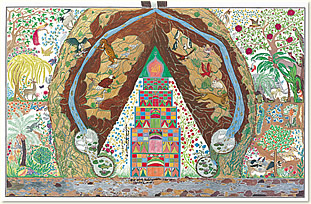
The Rocky mountain of the Heart

This original “Heart’s Work” painting by Muhammad Raheem Bawa Muhaiyaddeen (Ral.), “The Rocky Mountain of the Heart,” was completed on January 28, 1980, and it illustrates the stone-hearted qualities we have grown within ourselves; this mountain is harder than the hardest mountain in creation, and is layered with arrogance, selfishness, religious differences, religious arrogance, conceit, and desire for name, fame, and titles. This hard heart is unmelting and shows no compassion for other lives.

The animals that surround this rocky mountain are representative of the animal qualities that have entered the hearts of mankind. All these animals and even the shrubs and bushes illustrate the distractions that we need to clear from within ourselves. We must then build a place of worship to remember God.

The seven colors in the painting represent the seven states of consciousness within mankind: feeling, awareness, intellect, judgment, wisdom, divine analytic wisdom, and divine luminous wisdom. The fish represent creation, and the swan represents subtle wisdom, the perfection that accepts only purity.

This “Rocky Mountain of the Heart” has to be split open and blasted away, and in its place the house of God’s qualities must be built within our own hearts and within our own lives.

(Sources: From a discourse by M. R. Bawa Muhaiyaddeen (Ral.) given on January 28, 1980 and from The Tree That Fell to the West: Autobiography of a Sufi, Chapter Seven, “The Rocky Mountain,” December 22, 1983.)
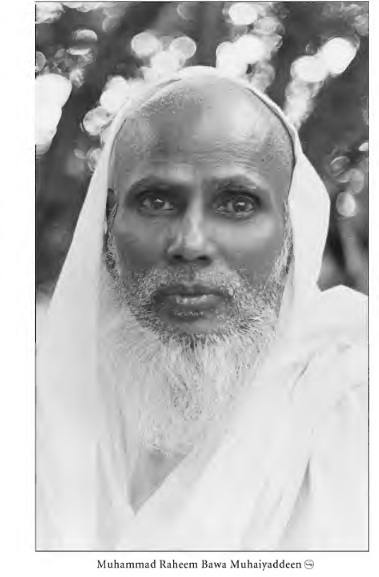
The words of Muhammad Raheem Bawa Muhaiyaddeen [Ral.] reveal the Sufi path of esoteric Islām: that the human being is uniquely created with the faculty of wisdom, enabling him to trace himself back to his Origin—Allāh, the Creator and Cherisher of all  the Universes who exists in Oneness with all lives—and to surrender to that Source, leaving the One God, the Truth, as the only reality in his life. This is the original intention of the purity that is Islām.

Bawa Muhaiyaddeen[Ral.] spoke endlessly of this Truth through parables, discourses, songs, and stories, all pointing the way to return to God. Over fifteen thousand hours of this ocean of knowledge were recorded.

What we know is that he was first sighted by spiritual seekers—a man we know only as Periari and a few others from the town of Kokuvil—at the edge of the jungle near the pilgrimage town of Kataragama in what was then known as the island country of Ceylon.

The tiny island that is shaped like a teardrop falling from the tip of southern India is a place known for its legendary as well as its sacred geography. Adam ’ s Peak in the center of the island is said to have retained the imprint created by the impact of Adam ’ s foot from when he first touched the earth after being cast out of the Garden of Eden.

Referred to in the ancient text of the Ramayana as Lanka, it was the site of Princess Sita ’ s captivity by her abductor, Ravana, the evil demon-king of Lanka. The Ramayana contains details of the battlefields where the armies of her husband Prince Rama fought the armies of the demon-king, and describes the groves of exotic herbs dropped by Hanuman, the monkey-king who helped Prince Rama rescue his wife.


When the island was called the Isle of Serendib, the voyage of Sinbad was described in the Thousand and One Nights. Medieval Arabs and Persians made regular pilgrimages to Adam ’ s Peak. The fourteenth century Arab traveler and scholar Ibn Batutah made that pilgrimage.

Legends record the visit of the Qutb[Ral.] who after visiting Adam’s Peak meditated for twelve years in what came to be known as the hermitage shrine of Daftar Jailani that lies at the edge of a precipitous granite cliff in the south central portion of the island, a site that has become a place of saintly visitation and mystical meditation.

Living in that land of legends, those seekers from Kokuvil recognized Bawa Muhaiyaddeen[Ral.] as a uniquely mystical being when they began to interact with him, begging him to teach them. He had lived peacefully alone in the jungle for so long that he had almost forgotten human speech. Gradually, he began to speak with those seekers. Telling those seekers that God was the only Teacher, he consented to study side by side with them. Working long hours in the rice fields as a farmer by day, he spoke and sang to them of his experiences of God in the evenings. Eventually, he and that small group of seekers from Kokuvil built an ashram in Jaffna, a town in the northern tip of the country.

Travel was difficult in that small country, yet the refuge of his presence was irresistible. As more and more people came to know about him and to hear him sing and speak of God, many of them began to invite him to stay in their homes. Among those people were Dr. Ajwad Macan-Markar and his wife Ameen Macan-Markar who lived in the city of Colombo. Bawa Muhaiyaddeen[Ral.] told them it would not be easy: that he was like a tree upon which many birds needed to take shelter. If he was to agree to stay at their home, they would also have to accommodate these birds. He warned them that there could be many at times. Dr. Ajwad and his wife did not hesitate to agree to open their home to all who wished to accompany him. After that, Bawa Muhaiyaddeen[Ral.] always stayed at their home when he was in Colombo. For forty years Bawa Muhaiyaddeen[Ral.] spent his time with those seekers until 1971.

In The Tree That Fell to the West, Bawa Muhaiyaddeen[Ral.] tells us:

“Before I arrived at 46th Street in Philadelphia for my first visit, Bob Demby, Carolyn Secretary, Zoharah Simmons and some others sitting here arranged for me to come.

“They formed a society for that purpose, to invite me here. I did not come to Philadelphia with the idea of establishing a fellowship. There is only one Fellowship and that is Allāh’s. There is only one family and one Fellowship. We are all the children of Adam [A.S.], and Allāh is in charge of that Fellowship.”

After that first visit, Bawa Muhaiyaddeen[Ral.] went back and forth between Philadelphia and what by then had been renamed Sri Lanka until 1982, when he stayed in the United States until December 1986.

In these distressing times, his words are increasingly recognized as representing the original intention of Islām which is the purity  of the relationship between man and God as explained by all the prophets of God, from Adam, Noah, Abraham, Ishmael, Moses, David, Jesus, and Muhammad, may the peace of God be upon them, who were all sent to tell and retell mankind that there is one and only One God, and that this One is their Source—attainable, and waiting for the return of each individual soul. See Bawa Muhaiyaddeen Fellowship
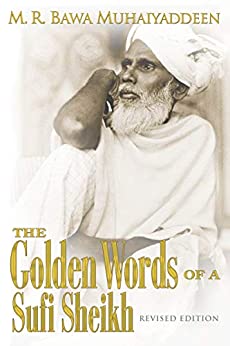
The Golden Words of a Sufi Sheikh

In this comprehensive collection of parables, proverbs and words of wisdom, M.R.Bawa Muhaiyaddeen (Ral.) provides guidance about nearly every aspect of a spiritual life.

Drawing on examples from animal life and nature, M.R. Bawa Muhaiyaddeen (Ral), cautions the reader to avoid what is wrong and turn towards what is right in every aspect of existence. Just open the book for inspiration, reflection and truth. These words illuminate the life of the soul and lead the reader towards God and unity with all lives. Read here
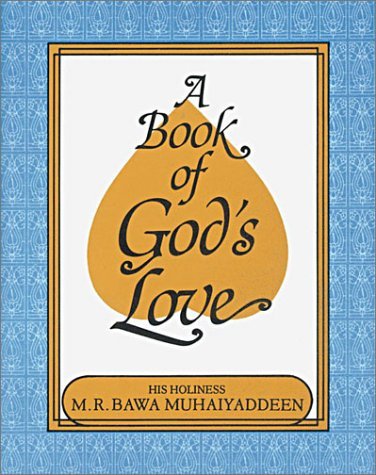
A Book of God’s Love

True Love, Forgiveness, Cultivating the Heart, and Eternal Youth;comprise a collection of discourses that offer a glimpse into some of the wonders of God.
The nature and mystery of God s love is explained a love that does not break or fail, an endless, unfathomable love without condition or attachment.
In the chapter titled Forgiveness, M.R. Bawa Muhaiyaddeen (Ral), explains that God does not punish us or forsake us, but treats us with limitless patience, and continues to forgive the faults we commit out of ignorance, until the very last breath. Read Here
Sufi landscapes of the Heart by a Calligrapher of Nature: Photography book  ( free download)
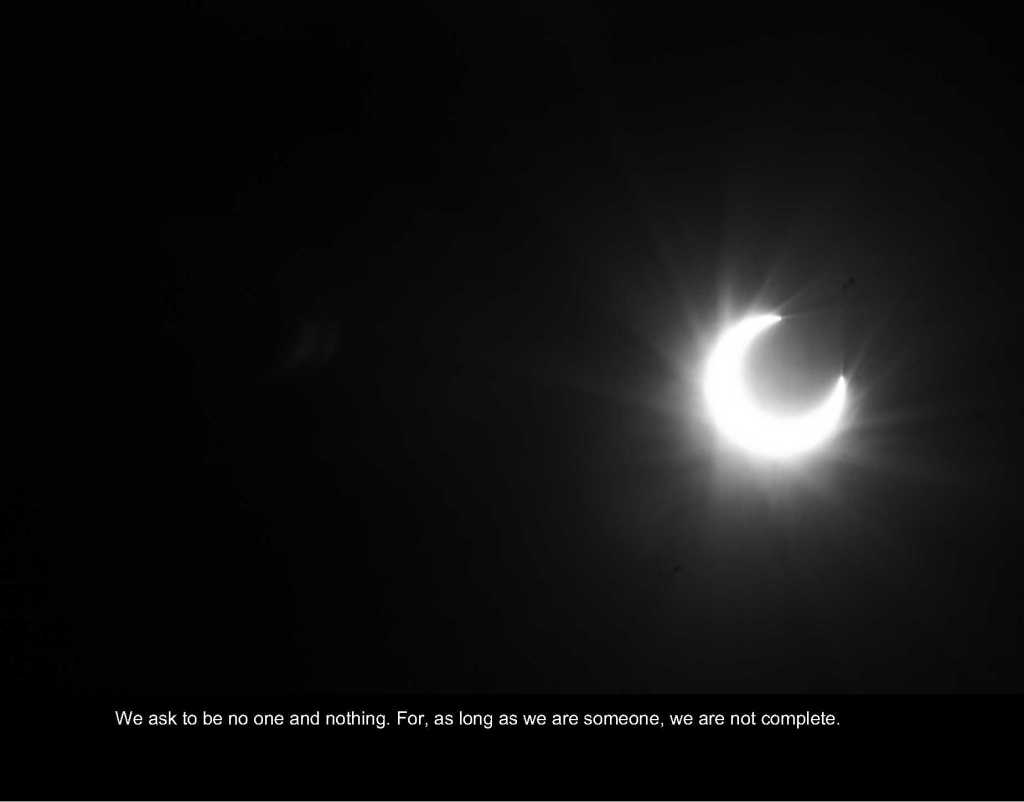
Mirrors for princes: Wisdom for the 21st century

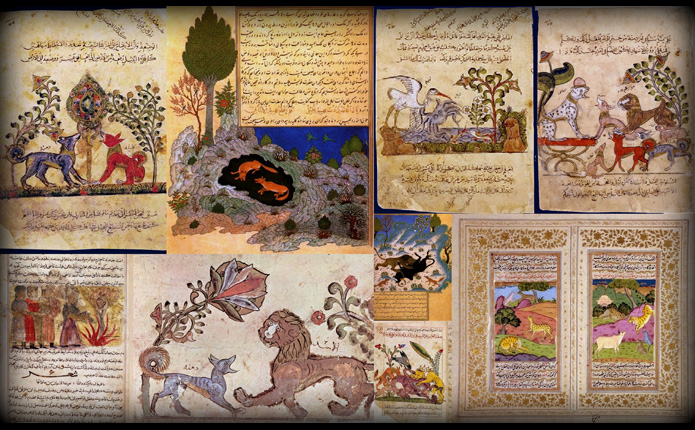
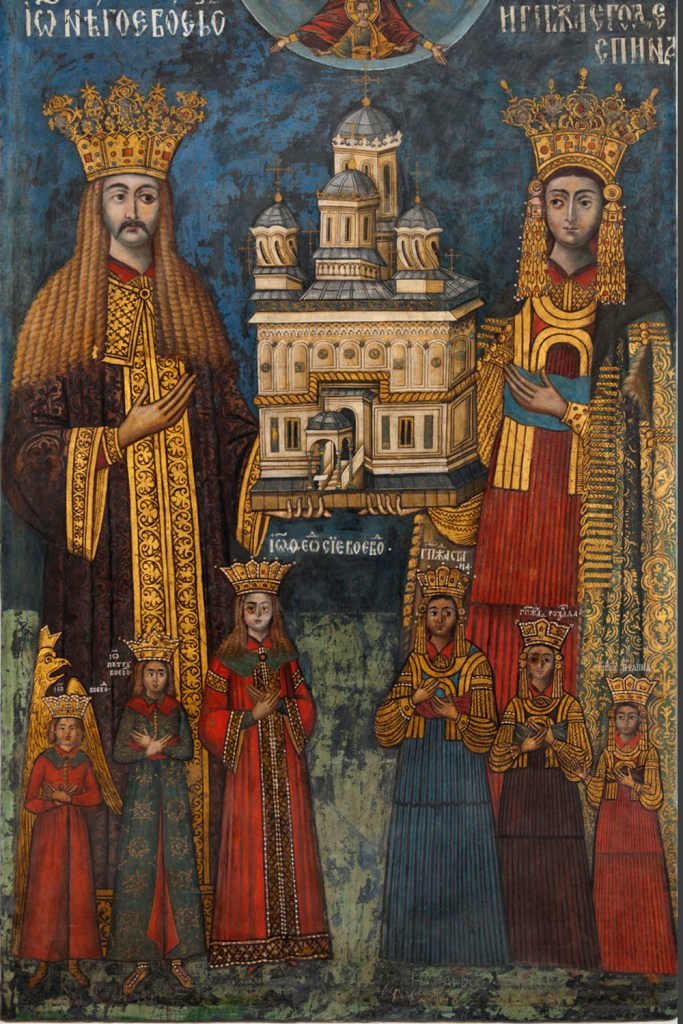
Mirrors for princes (Latin: specula principum) or mirrors of princes, are an educational literary genre, in a loose sense of the word, of political writings during the Early Middle Ages, the High Middle Ages, the late middle ages and the Renaissance. They are part of the broader speculum or mirror literature genre.

The term itself is medieval, as it appears as early as the 12th century, under the words speculum regum, and may have been used earlier than that. The genre concept may have come from the popular speculum literature that was popular between the 12th through 16th centuries, which focused on knowledge of a particular subject matter.

These texts most frequently take the form of textbooks which directly instruct kings, princes or lesser rulers on certain aspects of governance and behaviour. But in a broader sense the term is also used to cover histories or literary works aimed at creating images of kings for imitation or avoidance. Authors often composed such “mirrors” at the accession of a new king, when a young and inexperienced ruler was about to come to power. One could view them as a species of prototypical self-help book or study of leadership before the concept of a “leader” became more generalised than the concept of a monarchical head-of-state.[1]

One of the earliest works was written by Sedulius Scottus (fl. 840–860), the Irish poet associated with the Pangur Bán gloss poem (c. 9th century). Possibly the best known European “mirror” is The Prince (c. 1513) by Niccolo Machiavelli, although this was not the most typical example.

Antiquity

Greek and Roman

Indian

Western European texts

Early Middle Ages

  • Gregory of ToursHistory of the Franks (late 6th century) which warns against internal strife.
  • De duodecim abusivis saeculi, ‘On the twelve abuses of the world’ (7th century), a Hiberno-Latin treatise by an anonymous Irish author sometimes referred to as Pseudo-Cyprian. This work, though not a ‘mirror for princes’ per se, was to be of great influence on the development of the ‘genre’ as it took place on the Continent.
  • Bede’s Ecclesiastical History of the English People (731AD) specifically states that the purpose of the study of history is to present examples for either imitation or avoidance.

Carolingian texts. Notable examples of Carolingian textbooks for kings, counts and other laymen include:

Irish texts

  • see De duodecim abusivis saeculi above. The vernacular mirrors differ from most texts mentioned here in that the ones who are described as giving and receiving advice are commonly legendary figures.
  • Audacht Morainn (‘The Testament of Morand’), written c. 700, an Old Irish text which has been called a forerunner of the ‘mirrors for princes’.[3] The legendary wise judge Morand is said to have sent advice to Feradach Find Fechtnach when the latter was about to be made King of Tara.[4]
  • Tecosca Cormaic, ‘The Instructions of Cormac’, in which the speaker Cormac mac Airt is made to instruct his son Cairbre Lifechair about a variety of matters.
  • Bríatharthecosc Con Culainn ‘The precept-instruction of Cúchulainn‘ (interpolated in Serglige Con Culainn), addressed to Lugaid Réoderg.
  • Tecosc Cuscraid ‘The instruction of Cuscraid’
  • Senbríathra Fithail ‘The ancient precepts of Fíthal’
  • Briathra Flainn Fína ‘The Sayings of Flann Fína[5]

High and Late Middle Ages

Renaissance

Enlightenment

Modern

Walter Bagehot, The English Constitution (1867) studied by generations of British monarchs for its insight on their role in a constitutional monarchy.

Byzantine texts

Pre-Islamic Persian texts

  • Ewen-Nāmag (“Book of Rules”): On the Sasanian manners, customs, skills, and arts, sciences, etc. (Between 3rd – 7th century AD)
  • Andarz literature. (Between 3rd – 7th century AD)

Islamic texts

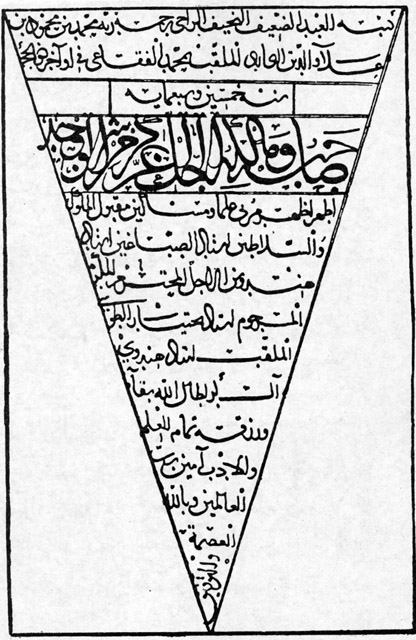
  • Nizam al-Mulk, Siyāset-nāmeh ‘Book of Government’ (c. 1090) (Persian)
  • Al-Imam al-Hadrami (d. 1095) – Kitâb al-Ishâra
  • Al-Ghazali (1058–1111), Nasihat al-muluk ‘Counsel to Princes’ (Persian)
  • Yusuf Balasaghuni, Kutadgu Bilig (11th century)
  • At-Turtushi, Siraj al-Muluk ‘The Lamp of Kings’ (c. 1121)
  • Ibn Ẓafar al-Ṣiqillī’s (12th century) Sulwan al-Muta’ fi ‘udwan al-atba ‘Consolation for the Ruler during the Hostility of Subjects’; published in English (1852) as, Solwān; or Waters Of Comfort[16][17]
  • Bahr Al-Fava’id ‘Sea of (Precious) Virtues’, compiled in the 12th century.[18]
  • Ibn Arabi, Divine Governance of the Human Kingdom (At-Tadbidrat al-ilahiyyah fi islah al-mamlakat al-insaniyyah) (1194-1201AD/590-598AH)
  • Saadi’s Gulistan, chapter I, “The Manners of Kings”, (1258, Persian).
  • Hussain Vaiz Kashifi’s Aklhaq i Muhsini (composed in Persian AH 900/AD 1495), translated into English as “The Morals Of The Beneficent” in the mid 19th century by Henry George Keene
  • Lütfi Pasha Asafname (Mid-16th century)
  • Muhammad al-Baqir Najm-I Sani, Mau‘izah-i Jahangiri ‘Admonition of Jahāngír’ or ‘Advice on the art of governance’ (1612 – 1613).[19]

Slavonic texts

Chinese texts

Ancient

  • Tao Te ChingLao Tzu Chinese philosopher (Can be interpreted as a mystical text, philosophical text, or political treatise on rulership) (late 4th century BC)
  • Mencius – moral advice for a ruler (late 4th century BC)
  • Han Fei ZiLegalist text advice for a ruler and the art of statecraft (mid-3rd century BC) dedicated to Qin Shi Huang
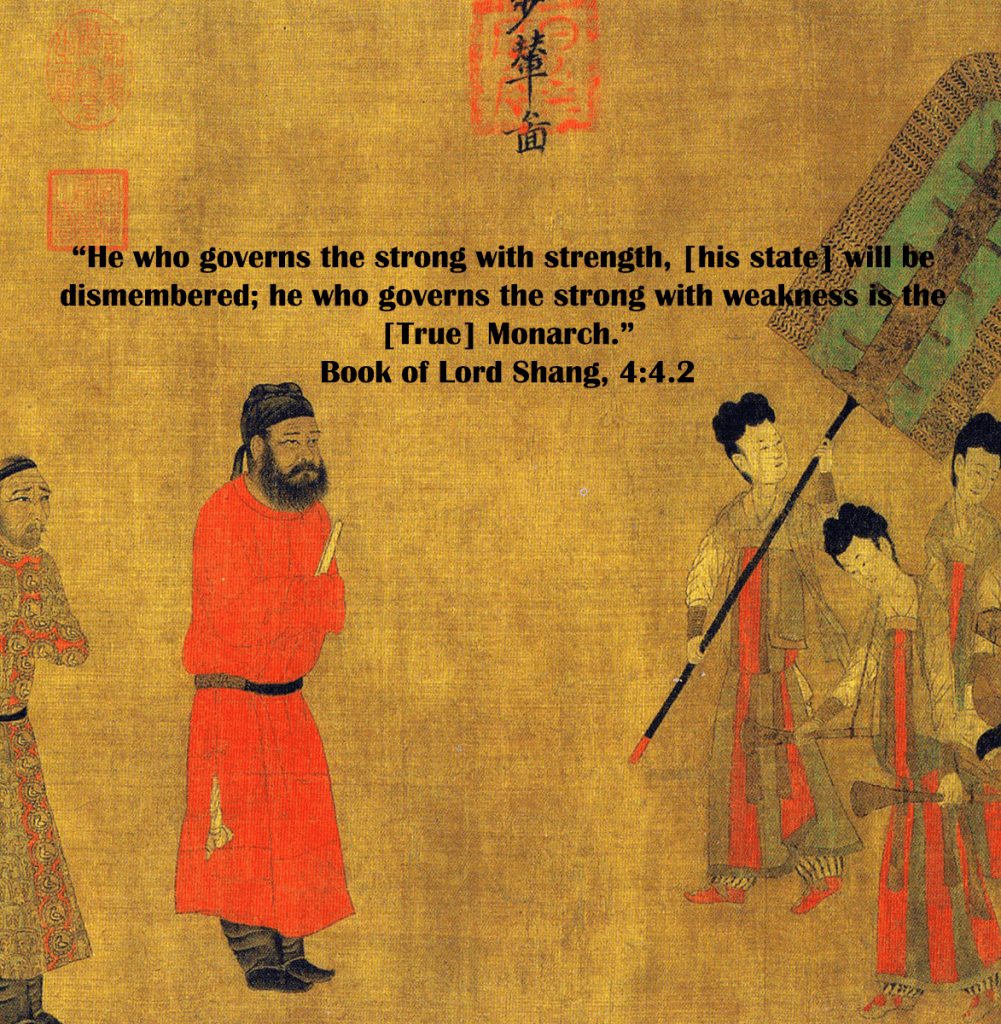
  • The Book of Lord Shang (Multiple authors spanning centuries, starting from c. 330BC) text advice useful for a ruler and statecraft
  • Shizi (c. 330BC) particularly section 15, The Ruler’s Governance

Imperial Dynasties

Han Dynasty

Tang Dynasty

  • Ouyang Xun (624AD) Yiwen leiju 藝文類聚 (“Classified collection based on the Classics and other literature”)
  • Kong Yingda (642AD) Wujing Zhengyi 五經正義 (“Correct Meaning of the Five Classics”)
  • Liu Zhi (7th century AD) Zhengdian 政典 (“Manual of politics”), a political encyclopaedia useful for young boys taking the Imperial Examination

Song Dynasty

Ming Dynasty

Qing Dynasty

In popular culture: folklore see

What is the difference between Satan and the carnal soul?

What is the difference between Satan and the carnal soul? An Islamic view:

Man’s real identity which is called soul has numerous aspects and layers. Quran mentions its three states (carnal, self-reproaching and peaceful).
The carnal soul is formed when animalistic desires dominate man. It is a state of human soul that constantly commands human toward vices and to satisfy carnal desires.
But Satan is literally and terminologically applied to any untamed and defiant creature whether human, jinn or animal.
 Iblīs is a specific Satan that is a jinn upgraded to angels’ level because of long years of worship. However he defied God’s command (to prostrate Adam) and thus he was expelled from God’s compassion.  Iblīs vowed to misguide humans through temptation.
Therefore the carnal soul is in fact one of Satan’s tools to dominate and control humans. It is considered one of Satan’s soldiers.
Thus the temptation by Iblīs as the external Satan and temptation and stimulation by the carnal soul as the internal Satan would lead humans to collapse. In other words, in view of animal inclinations of humans, the carnal soul is influenced by Satan’s temptations giving way to Satan to advance step by step until the person is considered a member of Satan’s party.

The answer to this question requires a few premises:
First premise: The soul and its levels
Mankind’s real identity has three aspects and layers (animal, human and divine). It is well inferred from Quranic verses that human soul and spirit has three stages:
1-The carnal soul or man’s animalistic layer:
Man’s animalistic layer is summarized in lust, anger and carnal desires. This internal inclination and state of soul is termed by Quran as the carnal soul. The Quran emphasizes that: “Most surely (man’s) self is wont to command (him to do) evil” Quran 12:53
That is why it has been called the carnal soul (the soul that commands to the vices). In this stage the intellect and the faith have not become so strong to control and harness the untamed soul. Instead the intellect and faith become dominated and defeated by the carnal soul in many cases.
In a quotation by ancient Egypt’s queen, this stage has been referred to where she said: “And I do not declare myself free, most surely (man’s) self is wont to command (him to do) evil”. Quran 12:53

2-Self-reproaching soul:
Lawwama soul”: It is a stage of soul reached by humans following education, training and effort. During this stage, human may occasionally commit vices due to the swelling of instincts. However he becomes immediately remorseful, blames himself and decides to recompense by cleaning his heart and soul through tawba [repentance].
Quran calls this stage “lawwama soul” and states: “Nay! I swear by the self-accusing soul.”Quran 75:2

3-Peaceful soul:
Mutma’enna soul” is a stage achieved by humans following purification and complete training. In this stage untamed instincts are unable to fight with the intellect and faith because the intellect and faith have become so strong that instincts do not have much power to confront.
This is the position of prophets’ and God’s friends and their true followers; those who have learned lessons of faith and piety purifying their souls for many years  accomplishing jihad akbar [the grand jihad].
Quran calls this stage as “mutma’enna soul” and says: ” O soul that art at rest! Return to your Lord, well-pleased (with him), well-pleasing (Him)” Quran 89:27-28

Second premise:  Iblīs and Satan


1- Iblīs:  Iblīs is a specific Satan, a jinn upgraded to angels’ level due to long years of worship. However he was expelled from the heavens following his defiance because he disobeyed the divine command and committed a vice.

2-Satan: Satan is derived from the Arabic verb “sha-ta-na” meaning defiance and distancing. Any defiant creature is called Satan whether a human, a jinn or an animal.
As we read in Quran: “And thus did We make for every prophet an enemy, the Shaitans from among men and jinn.” Quran 6:112

 Iblīs is called Satan because he is a defiant, saboteur and untamed creature.

Third premise: The relation between the carnal soul and Satan
The carnal soul is in fact one of Satan’s tools to dominate and control humans. It is considered a soldier of Satan.
Thus the temptation by Iblīs as the external Satan and temptation and stimulation by the carnal soul as the internal Satan would lead humans to collapse.
Satan’s primary effort is to mislead humans hindering them from reaching the reality. He has sworn by divine might in this regard, as we read in Quran:” He [ Iblīs] said: Then by Thy Might I will surely make them live an evil life, all Except Thy servants from among them, the purified ones.” Quran 38:82-83
Eghwa is derived from the Arabic word “ghayy” meaning “against rushd” and “rushd” means to achieve the reality.
Satan has sworn by divine might that he will mislead humans -Quran 38:82-83 . He advances step by step to mislead humans influencing them by his temptations up to the point where humans become satans themselves. Then Satan employs them to mislead other human beings.
A human being who surrenders himself to his animalistic desires as a result of Satanic temptation, has in fact been entangled by the carnal soul.
Imam Ali (PBUH) says: “Like a hypocrite, the carnal soul flatters the person depicting itself as a friend so that it can control the human leading him to next levels”
Satan tempts people with weak faith and makes their hearts his house using their carnal desires and the carnal soul. Finally he touches their hands and bodies, shakes their hands and becomes their friend. Because one whose heart has become Satan’s house, he is not only Satan’s host but also his assistant. About this group, Imam Ali (PBUH) says: “…Thus Satan looks through their eyes and speaks through their tongues.”
Conclusion:
Satan and the carnal soul are both mans’ enemies.
Therefore Quran mentions Satan as man’s external enemy and advises him to consider Satan as his enemy. Quran 2:168
Also in traditions by the infallibles (Peace be upon them all) the carnal soul (whims) has been considered an enemy. That the holy prophet (PBUH) said: “Your worst enemy is your own soul” refers to the abovementioned stage of soul.
The secret to call the soul “the worst enemy” is because it is internal. The external enemy/burglar is unable to damage the person without the company of the internal enemy/burglar. This internal enemy is an insider who knows everywhere and applies this information to report the person’s desire to Satan and reports back Satan’s message (who is the external carnal soul). Therefore the carnal soul is considered one of Satan’s jonoud (soldiers) because many of the carnal soul’s characteristics are similar to those of Satan’s soldiers.
Therefore the carnal soul is influenced by Satan’s temptations giving way to Satan to advance step by step until the person is considered a member of Satan’s party.

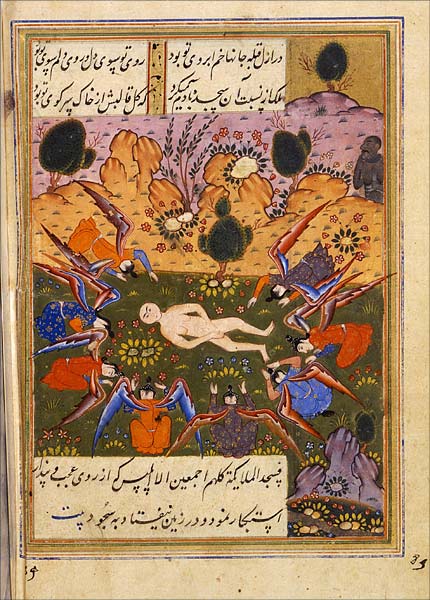
Iblis (top right on the picture) refuses to prostrate before the newly created Adam from a Persian miniature

In Islam, the principle of evil is expressed by two terms referring to the same entity:Shaitan (meaning astray, distant or devil) and Iblis. Iblis is the proper name of the devil representing the characteristics of evil. Iblis is mentioned in the Quranic narrative about the creation of humanity. When God created Adam, he ordered the angels to prostrate themselves before him. All did, but Iblis refused and claimed to be superior to Adam out of pride. [Quran 7:12] Therefore, pride but also envy became a sign of “unbelief” in Islam. Thereafter Iblis was condemned to Hell, but God granted him a request to lead humanity astray, knowing the righteous will resist Iblis’ attempts to misguide them. In Islam, both good and evil are ultimately created by God. But since God’s will is good, the evil in the world must be part of God’s plan. Actually, God allowed the devil to seduce humanity. Evil and suffering are regarded as a test or a chance to proof confidence in God. Some philosophers and mystics emphasized Iblis himself as a role model of confidence in God, because God ordered the angels to prostrate themselves, Iblis was forced to choose between God’s command and God’s will (not to praise someone else than God). He successfully passed the test, yet his disobedience caused his punishment and therefore suffering. However, he stays patient and is rewarded in the end]

Muslims hold that the pre-Islamic jinn, tutelary deities, became subject under Islam to the judgment of God, and that those who did not submit to the law of God are devils.

Although Iblis is often compared to the devil in Christian theology, Islam rejects the idea that Satan is an opponent of God and the implied struggle between God and the devil.] Iblis might either be regarded as the most monotheistic or the greatest sinner, but remains only a creature of God. Iblis did not become an unbeliever due to his disobedience, but because of attributing injustice to God; that is, by asserting that the command to prostrate himself before Adam was inappropriate. There is no sign of angelic revolt in the Quran and no mention of Iblis trying to take God’s throne and Iblis’s sin could be forgiven at anytime by God. According to the Quran, Iblis’s disobedience was due to his disdain for humanity, a narrative already occurring in early New Testament apocrypha.

As in Christianity, Iblis was once a pious creature of God but later cast out of Heaven due to his pride. However, to maintain God’s absolute sovereignty, Islam matches the line taken by Irenaeus instead of the later Christian consensus that the devil did not rebel against God but against humanity. Further, although Iblis is generally regarded as a real bodily entity, he plays a less significant role as the personification of evil than in Christianity. Iblis is merely a tempter, notable for inciting humans into sin by whispering into humans minds (waswās), akin to the Jewish idea of the devil as yetzer hara.

On the other hand, Shaitan refers unilaterally to forces of evil, including the devil Iblis, then he causes mischief. Shaitan is also linked to humans psychological nature, appearing in dreams, causing anger or interrupting the mental preparation for prayer. Furthermore, the term Shaitan also refers to beings, who follow the evil suggestions of Iblis. Furthermore, the principle of Shaitan is in many ways a symbol of spiritual impurity, representing humans’ own deficits, in contrast to a “true Muslim“, who is free from anger, lust and other devilish desires.

In Sufism and mysticism

See also: Nafs

In contrast to Occidental philosophy, the Sufi idea of seeing “Many as One”, and considering the creation in its essence as the Absolute, leads to the idea of the dissolution of any dualism between the ego substance and the “external” substantial objects. The rebellion against God, mentioned in the Quran, takes place on the level of the psyche, that must be trained and disciplined for its union with the spirit that is pure. Since psyche drives the body, flesh is not the obstacle to humans but rather an unawareness that allows the impulsive forces to cause rebellion against God on the level of the psyche. Yet it is not a dualism between body, psyche and spirit, since the spirit embraces both psyche and corporeal aspects of humanity. Since the world is held to be the mirror in which God’s attributes are reflected, participation in worldly affairs is not necessarily seen as opposed to God. The devil activates the selfish desires of the psyche, leading the human astray from the Divine. Thus it is the I that is regarded as evil, and both Iblis and Pharao are present as symbols for uttering “I” in ones own behavior. Therefore it is recommended to use the term I as little as possible. It is only God who has the right to say “I”, since it is only God who is self-subsistent. Uttering “I” is therefore a way to compare oneself to God, regarded as shirk.

Read alsoThe Meaning of Nafs and the Struggle Against the Lower Soul ( JIHAD AL-NAFS)

The Eclipse of the Soul and the Rise of the Ecological Crisis

by Samuel Bendeck Sotillos

For many of our contemporaries, there is no more pressing issue than the acute ecological challenges facing the planet. Environmental degradation has reached a tipping point, but how have we fallen into such a predicament? At a deeper level, this critical situation can be seen as a mirror that reflects the spiritual crisis gripping the soul of humanity today.

This commenced with the secularizing impetus of the Enlightenment project, which has led to a diminished understanding of the human psyche and the cosmos itself. The anomaly of modern Western psychology is that it stems from the same desacralized and reductionistic outlook.

By contrast, a deep-seated connection between sentient beings, the environment, and the Spirit has been recognized in all other times and places, throughout humanity’s traditional civilizations.

By a resurrection of a “science of the soul” via a rehabilitated sacred cosmology, the spiritual roots of the ecological crisis can be restored and seen in a proper light. This essay examines the metaphysical dimension of the environmental crisis. The framework employed for this study is the “transpersonal” perspective of the perennial psychology—an application of the insights found in the world’s great wisdom traditions. The objective of the study is to propose a more holistic approach to understanding the essential relationship between our humanity and the natural environment—in all of its boundless and complex variety—seen as a manifestation of divine reality. Read more here

The Transfiguration of the Human Being

Since the most remote times there has been a practice of continuously living with the awareness of death in one’s consciousness. The words of the adage Memento mori, Latin for ‘Remember that you are mortal’, encapsulate this practice. All the saints and sages speak in unanimity of identification with the empirical ego or separate self as the source of all human suffering. As ́Sri Ramakrishna (1836–1886), the Paramahamsa of Dakshineshwar, a spiritual luminary, powerfully expressed the need to die to our lower nature: ‘When “I” is dead, all troubles cease.’

An essential element in the world’s religions is the injunction that finds expression, for instance, in the well-known words of the Prophet of Islam: ‘Die before ye die’ (mutu qabla an tamutu). Correspondingly within the Hindu tradition there is the concept of being ‘twice-born’ (dvija): our initial birth into terrestrial existence is one type of birth, the second birth that the religions refer to is an initiation into the spiritual path. This alchemical and transformative psycho-spiritual process of dying before dying reoccurs in a myriad diverse forms and descriptions throughout the spiritual traditions, yet we can observe the myriad points of convergence.
Just how universal this transformative process is has been underscored by the philosopher Frithjof Schuon (1907–1998): ‘every complete tradition postulates in the final analysis the “extinction” of the ego for the sake of the divine “I.”’

The French metaphysician René Guénon (1886–1951) also confirms the universal nature of the doctrine of mystical death and resurrection: ‘[T]he idea of a “second birth”, understood in a purely spiritual sense, is indeed common to all spiritual doctrines.’ At the heart of every integral psychology or ‘science of the soul’ is the recognition of psycho-spiritual transformation or metanoia, which is inseparable from metaphysics and integral spirituality. This perennial psychology that is an application of the perennial philosophy discerns between the horizontal dimension consisting of the empirical ego, and the vertical dimension that that pertains to the transpersonal Self. The horizontal and vertical dimensions are interdependent, and are both required for the human realm and the realm of the Spirit.
However, it is essential to bear in mind that the vertical dimension precedes the horizontal and that the horizontal is reliant on the vertical dimension and not the other way around. As we recall, ‘To deny the spiritual is to deny the human.’ In what follows, we will
explore psycho-spiritual integration and the symbolic meaning behind mystical death and resurrection, as found in the universal and timeless wisdom found around the world. Read more here…