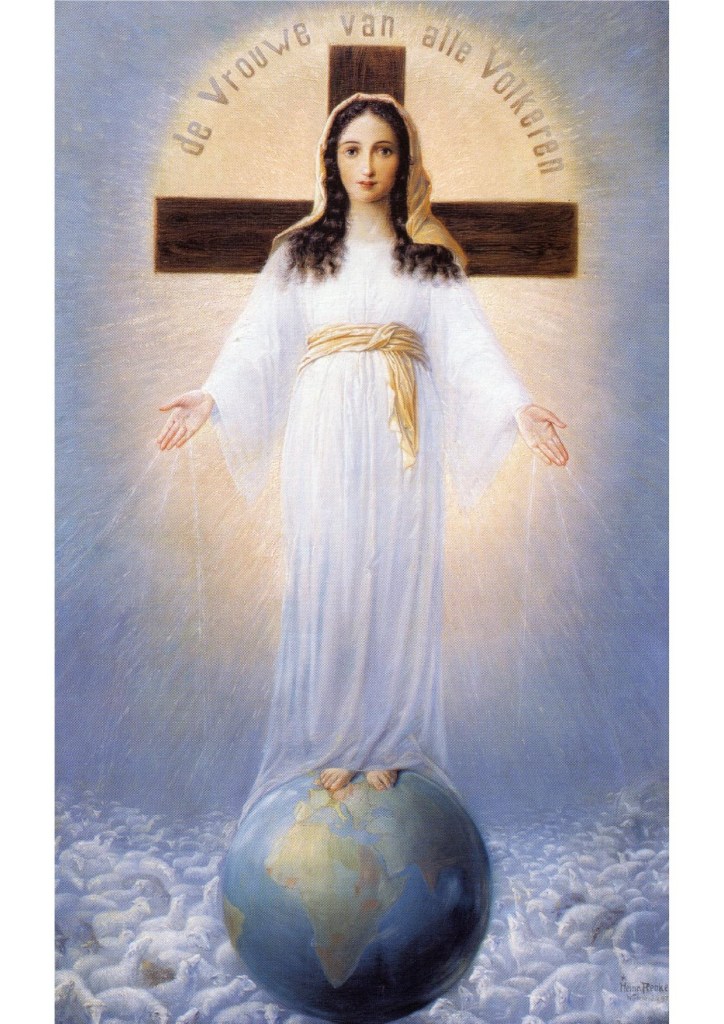
The Lady of all nations and Ida Peerdema Amsterdam 1945- 1959
– life of Ida Isje Peerrdeman in Amsterdam ( 1905 – 1996) – Appapiritions of the Lady of All Nations
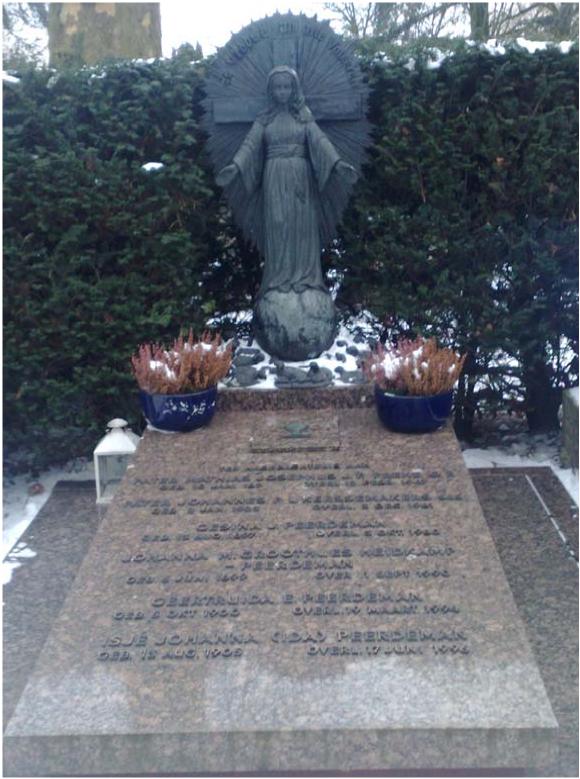
Ida Peerdeman, Prophetess for the Third Millenium
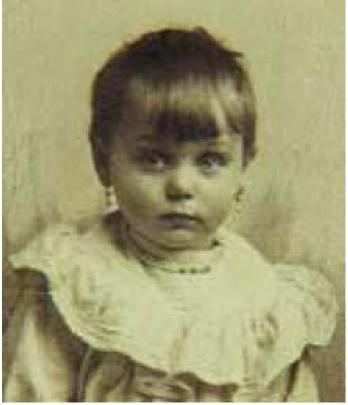
Biography by Fr. Paul Maria Sigl, 2004, part one.
Childhood and Youth
On August 13, 1905, Ida Peerdeman is born in Alkmaar, Holland, as the youngest of five children. There is a nice episode recounting this, for on the same day Gesina, her eldest sister, celebrates her birthday. She has wanted a new doll for a long time, and so her father guides her into the bedroom where her mother is lying with the newborn baby, Ida. Gesina understands, and stamps her foot in protest, complaining, “I don’t want a doll like that! I wanted a real doll!”
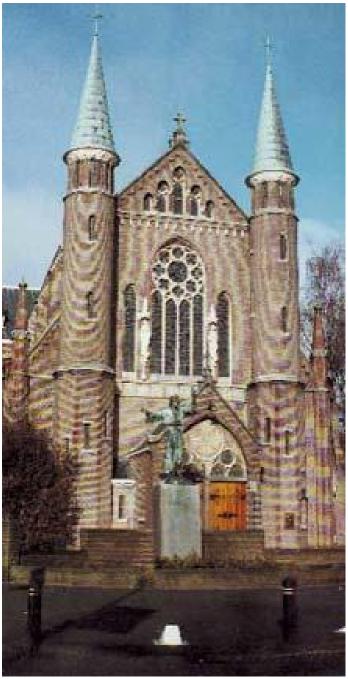
At the little one’s baptism in the parish church, St. Joseph, she is given the name Isje Johanna, but she will always be called just Ida.
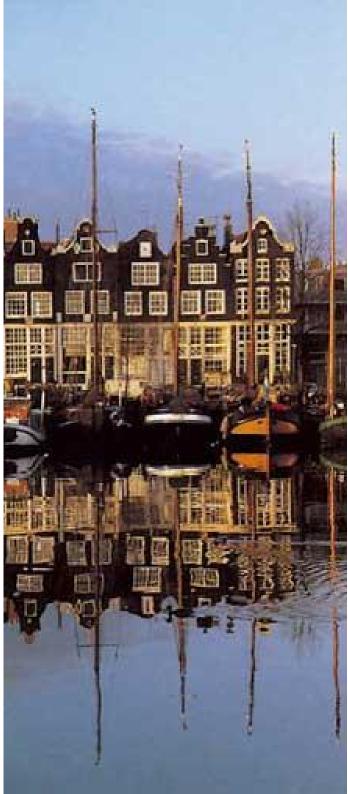
Shortly before World War I the Peerdeman family moves to Amsterdam. Ida is just eight years old when, after giving birth, her thirty-five-year-old mother dies along with the child. Following this great sorrow which deeply affects everyone, the oldest sister, Gesina, has to give up her wish of becoming a nurse. Only sixteen years old, she strives hard to be a good mother for her three sisters and her brother Piet. Since the father, a textile salesman, is often on business trips throughout the Netherlands, she must try to hold her family together. They treasure their family life at home all the more. Ida especially loves being together with her brother Piet, who understands her, with whom she can speak, and who consoles her when she is sad. As a Catholic family they attend Holy Mass on Sunday and they pray before meals, but that is all. (The Church of St. Joseph in Alkmaar)
In her childhood, Ida goes to the Dominican church every weekend for confession with Fr. Frehe, who will later become her spiritual director. Her life continues like this for several years, until October 13, 1917. On this memorable Saturday afternoon in the month of the Holy Rosary, also the day of the miracle of the sun in Fatima, something amazing happens on her way home from her weekly confession.
The First Meeting with Mary
The twelve-year-old Ida witnesses a heavenly apparition. At the end of the street she sees an overwhelming light and a radiant woman within, who looks like a very beautiful Jewish woman. The child immediately recognizes her as Mary. With her arms spread out a little, with a kind, joyful look, and without saying a word, she stands in the shining light. Never before in her life has Ida seen something so beautiful. After the woman makes a friendly sign, the girl hurries home.
It is understandable that her father admonishes her to remain silent about it, recommending that she forget everything. “For God’s sake, don’t tell this to anyone. You would be ridiculed and considered crazy. That’s all we need!” So Ida does not speak about it, even though something similar happens on two of the following Saturdays. The beautiful woman appears again as if in the sun, smiling and remaining silent, just as the first time, while Ida returns home from confession.
All of this happens in the month of October 1917, in which Mary appears for the last time to the three shepherd children in Fatima. Ida, of course, knows nothing about this. Fr. Frehe, as Ida’s confidant and the counselor of the Peerdeman family, hears about the extraordinary happenings. He, too, strongly encourages her to keep it to herself, and, better yet, not to think about it anymore. And thus Ida’s initial preparation for the later Marian apparitions remain completely hidden.1
Thirty-three years later, during the 25th apparition, Ida anxiously asks Our Lady, “Will they believe me?” In her answer Our Lady herself reminds Ida of her three-fold coming in 1917, saying, “Yes, that is why I came to you before––when you did not understand. It was not necessary then; it was the proof for now” (December 10, 1950). This means that now, just as before, the apparitions are not a deception, but truly Mary.
“Again and again have I experienced God’s extraordinary help in my life.”
Your Imagination Is Not Good Enough
After primary school, Ida wants to continue her studies to become a kindergarten teacher. After her time of practical training, however, she is turned away with the statement, “Unfortunately you are not qualified. Your imagination is not good enough, and you have too little creativity.” Nobody foresees how important this statement will someday be in the visionary’s life, namely, when she is accused that the apparitions might merely be the illusion of her vivid imagination.
Many years later, a psychological examination (at the bishop’s request) states that she is totally normal. Ida has no ability of pictorial visualization; she is unimaginative, yet straightforward.
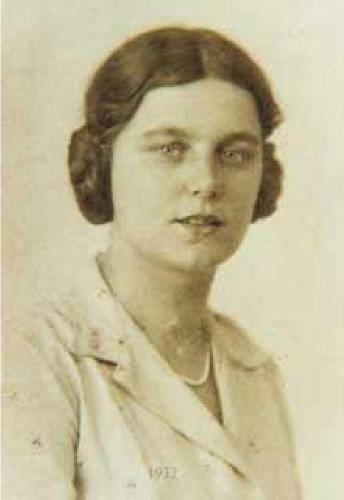
When Ida is about eighteen or nineteen years old, she decides to work in the office of a perfume factory in Amsterdam, where she will remain for many years. She is very popular among her co-workers because of her kind and modest ways. The attractive young lady has several admirers, but she does not feel herself called to marriage. In this time Ida suffers more and more from demonic attacks. To this day Helene, the daughter of Ida’s brother Piet, remembers very well all that was told within the family circle about this painful time of demonic torments.
While taking a walk through the streets of the town, a certain man catches Ida’s attention. He is dressed in all black, similar to a priest. Afraid of his uncanny, penetrating glance, she tries to evade him by quickening her pace. Her follower, however, is faster. He grabs her forcefully by the arm, trying to drag her into a nearby canal, as if to drown her. In this life-threatening moment, Ida hears a soft voice which calms her and promises help. In the same moment the man, shouting horribly, releases her and disappears without a trace. After this her father gives Gesina the task of accompanying her younger sister to work every day and picking her up in the evening.
Nevertheless, once more they meet this strange man, who laughs coldly, but does not dare touch Ida. Even a third time the devil approaches the twenty-year-old girl, and slyly attempts to draw her into a deadly accident. This time he appears to her as a frail old woman, who claims to know Ida very well from church. She gives the girl an address and invites her to come and visit as soon as possible. Ida says “no,” but she cannot refuse the woman’s request to help her at least to cross the street. In the middle of the street, she is overcome by paralyzing fear as she again feels an iron, claw-like grip on her arm. A shout follows, and Satan disappears. He has led her directly in front of an approaching tram, which barely stops in the last second, missing Ida by just a hair. In the evening, when her brother Piet, together with his future brother-in-law, searches out the address given by the old woman, he finds only an old, abandoned house.
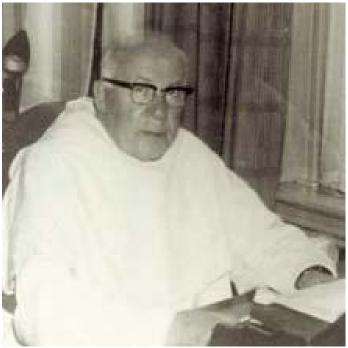
Fr. Frehe, Ida’s confessor and spiritual director, was personally deeply convinced of the authenticity of the messages, yet he was anything but gullible.
A Dominican with a theological education, he strictly examined the visions and words of Our Lady which were conveyed to him by the visionary.
A selfless and devoted pastor, he was kind and gentle with everyone. He could be truly strict only with himself—and, when concerning matters of the Lady of All Nations, with the visionary too.
Demonic Torments in the Family
Ida is severely tormented by demons at home too, and her family suffers together with her, as Ida’s brother Piet later recounts to his daughter Helene. Once, for example, while Fr. Frehe prepares at the parish house to visit the Peerdeman family, Ida is simultaneously at home, where she begins to shout and curse. Suddenly she has such physical strength that she is able to lift a heavy chair over her head. Her voice is totally changed. We know of similar phenomena from the life of Blessed Myriam of Abellin, a Carmelite who sometimes also had to endure expiatory possession before receiving exceptional graces.
Her family members are witnesses when the living room lamp swings back and forth and the doorbell or fuse box continually makes noise on their own. When doors and closets spring open by themselves, the father would sometimes say with humor, “Come in, everyone. The more the merrier!” Fr. Frehe advises him to ignore the demonic harassment as much as possible.
Their father’s fearlessness helps the whole family very much. Following his example, they attach as little importance as possible to extraordinary happenings. But when it is especially hard for them all, they encourage one another with a wise saying, “Laugh, youngsters, for if we don’t laugh, the little devils will—and we don’t want to give them that pleasure!” Once, however, as an invisible hand chokes Ida and the attacks become extremely strong, Fr. Frehe under-stands that he should perform an exorcism over her. During the exorcism the family hears Satan’s revolting voice, which from Ida’s mouth hatefully curses the priest. Fr. Frehe experiences the demons’ rage also in other ways.
Thus both Ida and her spiritual director are prepared by a twenty-year-long spiritual lesson for the grace-filled event which one day will concern the entire world—the coming of the Mother and Lady of All Nations.
Visions of War
For years now Ida’s life continues peacefully. Just once—still long before the outbreak of World War II—while working at her office desk, she unexpectedly sees in a vision countless exhausted soldiers passing by.
Then, in 1940, when Ida is 35-years-old, the so-called “war visions” begin, visions of the future concerning World War II. Seeing the approaching battle fronts, Ida, with her eyes closed, traces their course upon the table. Her brother, in the meantime, marks them down on a map with pins. The visions correspond exactly to the latest news broadcasts from secret transmitters.
Ida, who understands nothing of military strategy, has another vision of something inconceivable at the time. She sees the German army, which had still not lost a battle, pinched off and surrounded by the Red Army at Stalingrad. In May of 1940, at the highpoint of German “successes,” Ida already sees the end of Hitler and Mussolini. Even Ida’s best friend laughs about this prophecy.
None of the foreseen events have yet come to pass as her visions of war come to a sudden end. Ida begins a new phase of her life.
The Lady of all nations and Ida Peerdeman
Ida Peerdeman was born at Alkmaar in the Netherlands in 1905, the last of a family of five children. She was only eight years old when her mother died and her father, a textile merchant, moved to Amsterdam with his five children.
Since her father was often absent, her eldest sister looked after the family. However, Ida quickly developed a thirst for independence. The family, easy-going Catholics, was not particularly pious. They would go to church on Sundays and “that was all”, she would say later.
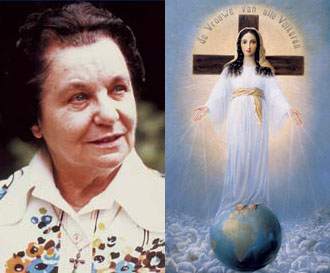
Ida was twelve years old when, on Saturday, October 13, 1917, the day when the last of the six Marian apparitions at Fatima took place, she saw, on the street leading to the church, a beautiful Lady in a dazzling light. This Lady was clad in a long white dress with a cream-colored sash and she wore a veil. This could only be the Blessed Virgin, she thought.
During that month of October, the celestial vision was to occur a second time. She spoke of this at home, but no one really paid any attention to her.
Ida wanted to become a kindergarten teacher, but her wish was never to become a reality because her professors felt she lacked the imagination indispensable to this task. This comment was to play in her favor later on, when questions would be raised regarding the veracity of her testimony.
At twenty, Ida worked as an employee for the firm Boldoot. The devil had long been aware that she would be chosen by Mary to bear Her message throughout the world. Consequently, during this period, the young lady was the object of diabolical manifestations: lamps swinging inside the house, cupboard doors opening on their own, the hands of the clock turning at a dizzying speed, the oven she seldom used suddenly beginning to smoke.
The situation became more serious when Ida herself was a victim of the devil’s tyranny. Her confessor, Father Frehe, then performed an exorcism with the bishop’s permission. The last thing the devil said to him was: “You priestling, I will get even with you!” On the way back to his residence, Father Frehe fell through a metal grate.
War Visions
Until the 1940s, Ida’s life was relatively quiet. At the beginning of May 1940, an astonishing event took place: she had visions dealing with the unfolding of the battle in Europe. She saw the Oder River reddened with blood, fighting going on at Betuwe, Mussolini being hung from his feet. She described Hitler’s eagle nest at the top of the mountain at Berchtesgaden. When she received visions, her gaze was fixed and she expressed what she was hearing and seeing very slowly to the people about her.
The war visions would come to an abrupt end on March 25, 1945, when the Lady once again appeared to Ida Peerdeman who was now forty and living with her sisters. Over the course of fourteen years, Mary appeared to her fifty-five times, during which time She gave her messages. Ida’s sisters were usually present during the apparitions and the eldest would note down the words she would repeat after the Blessed Virgin.
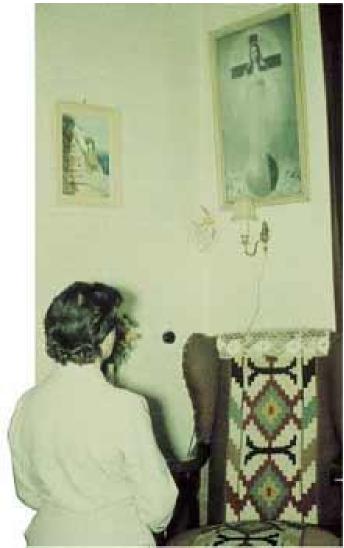
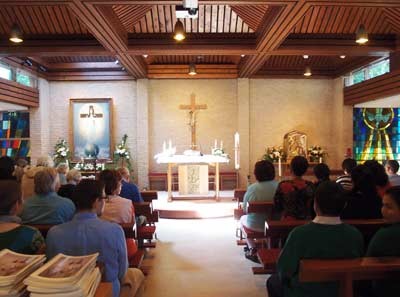
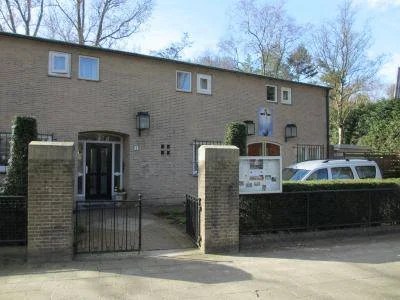
In the 1970s, the Foundation of the Lady of All Peoples took possession of the land at Diepenbrockstraat at a price that was almost symbolic. A secretariat was established there and a chapel, barely visible, was built there with, to the left of the altar, the painting of the Lady of All Peoples. That is where Ida Peerdeman spent the last years of her life.
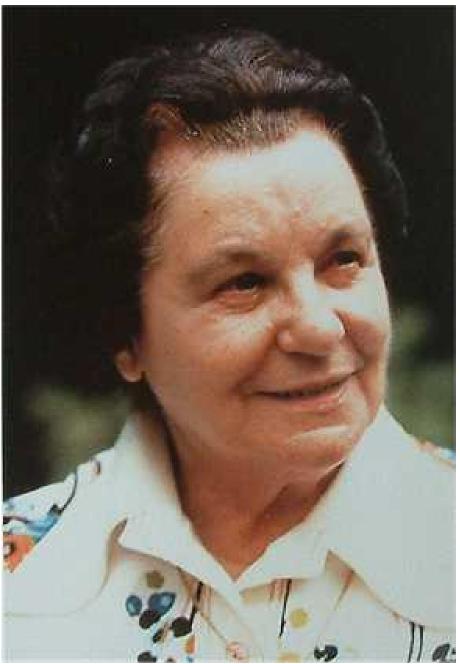
For years, she only wished to disappear, to remain unknown, absolutely not wanting a role in the forefront. How often did she not repeat: “It is not I; I am merely an instrument; these are simply Our Lady’s messages.”
Finally, on May 31, 1996, Ida saw her most cherished desire being fulfilled: His Excellency Most Reverend Bomers, Bishop of Haarlem, in collaboration with his auxiliary bishop, Bishop Punt authorized the public devotion of the Lady of All Peoples, leaving everyone completely free to believe in the messages to which he himself did not hesitate to bear witness.
“Now I can die”, Ida had said when she was informed of this news and she died the following June 17, at the age of ninety. At the last apparition, the Lady had said to her, “Adieu, see you in heaven.” His Excellency Bishop Bomers presided over her funeral held in the Chapel of the Lady of All Peoples
Why should such great joy be felt when the Church, through the action of a member of the episcopate, favorably receives the request made by the Lady of All Peoples? It is because we know that so many graces, blessings and possibilities for a better world are attached to this prayer given by the Lady, and that consequently, humanity will return to God and that “corruption, disaster and war” will progressively diminish. His Exc. Bishop Bomers’ paternal acceptance opened the way for an official approval by the Church. On May 31, 2002, His Exc. Most Reverend Joseph Maria Punt, Bishop of Haarlem/Amsterdam recognized the supernatural origin of the apparitions of the Lady of All Peoples.Mary has been waiting for this day for such a long time, in order to finally have permission to protect humanity, since neither the Father nor Mary will ever impede our freedom. “The peoples, in union with the Church, must recite my prayer….” (The Lady of All Peoples, 50th apparition, May 31, 1954, based on the French translation of the messages presented by Raoul Auclair, Éditions Stella.) Read more here
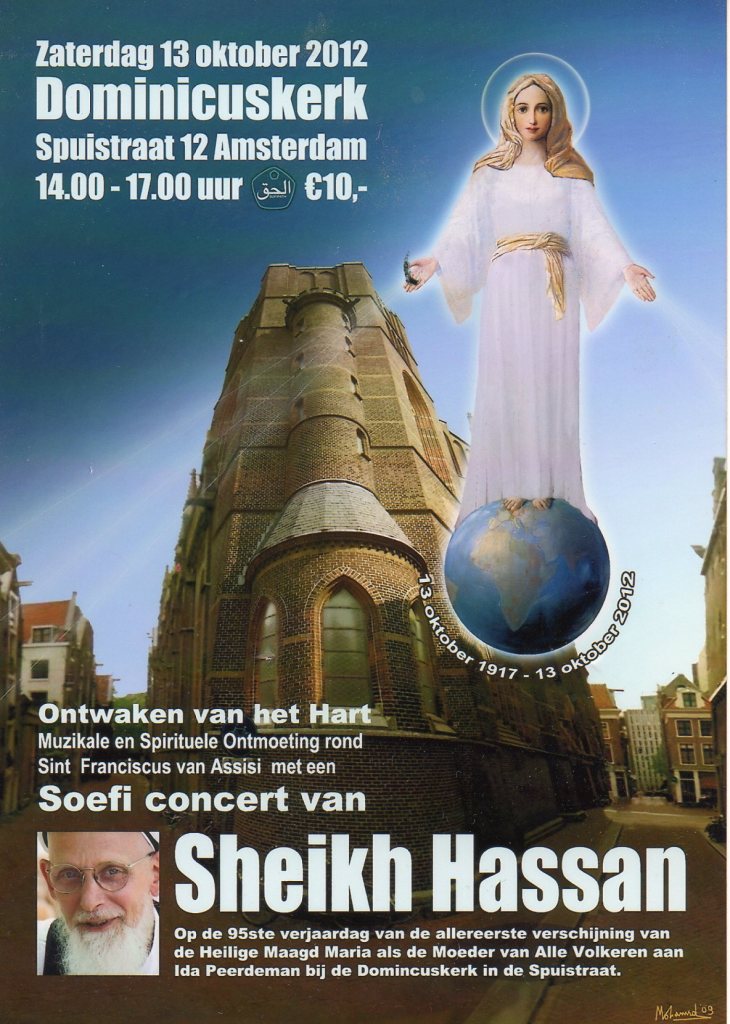
THE TITLE MOTHER AND LADY OF ALL NATIONS
A BIBLICAL TITLE
(It is important to note that in various languages the same word may be used for both ‘lady’ and ‘woman’ as is the case with the Dutch ‘Vrouwe’ Biblical references in English use only ‘woman’ as in John 19:26 which Our Lady quotes as being when she became ‘the Lady’.)
• Already in the first pages of the Bible, in the book Genesis, Mary is described as the woman (or Lady) who, united with her Son, will crush the head of the serpent. God said to Satan, who had led Adam and Eve into pride and disobedience, “I will put enmity between you and the woman, between your offspring and hers.” (Gn 3:15)
• At the wedding in Cana, Jesus addressed His Mother for the first time as woman, in order to remind her of her vocation to become the Lady of all Nations. As Mediatrix and Advocate she implores and obtains the miracle.
• On Calvary, our dying Redeemer turns to His Mother with His last strength, and as a personal testament says only four decisive words, “Woman, behold, your son!” With these divine words, Mary as Coredemptrix was made the Lady of all Nations. The message of April 6, 1952 confirms this, “At the sacrifice of the Cross, she became the ‘Lady (‘Woman’), the Coredemptrix and Mediatrix. This was announced by the Son while He was returning to the Father.”
• The last of the four Scripture passages is found in the Book of Revelation. There, at the climax of the history of salvation, the woman again appears, clothed with the sun. She lays in pain, in the birth pangs for the new birth of humanity. (cf. Rv 12:1 ff.) A huge and red dragon appears and pursues the woman, who has borne a son.
The promised WOMAN in Genesis, who, united with her Son, crushes the head of the serpent;
the WOMAN at Cana; the WOMAN on Calvary; and the WOMAN of the Apocalypse
is the LADY OF ALL NATIONS, because, united with the Redeemer, she suffered for all nations, mediates the life of grace to all nations, and intercedes for all nations
On 30 December 2020, the Bishop of Haarlem-Amsterdam, after consultation and accordance with the then Congregation for the Doctrine of the Faith, published a “Clarification Regarding the Lady of All Nations“, in which he stated that the use of the title “Lady of All Nations” for Mary is theologically acceptable in itself, but cannot be understood as a recognition of the supernaturality of some phenomena from which it seems to have come. The Congregation for the Doctrine of the Faith then reaffirmed the validity of the negative judgment on the supernaturality of the alleged “apparitions and revelations” to Ms. Ida Peerdeman, approved by St. Paul VI on 5 April 1974 and published on 25 May 1974.


- Lourdes aan de Amstel – current status
24 MAY 2024 08:37 | Stichting Lourdes aan de Amstel
MARIAL PILGRIMAGE CATHEDRAL
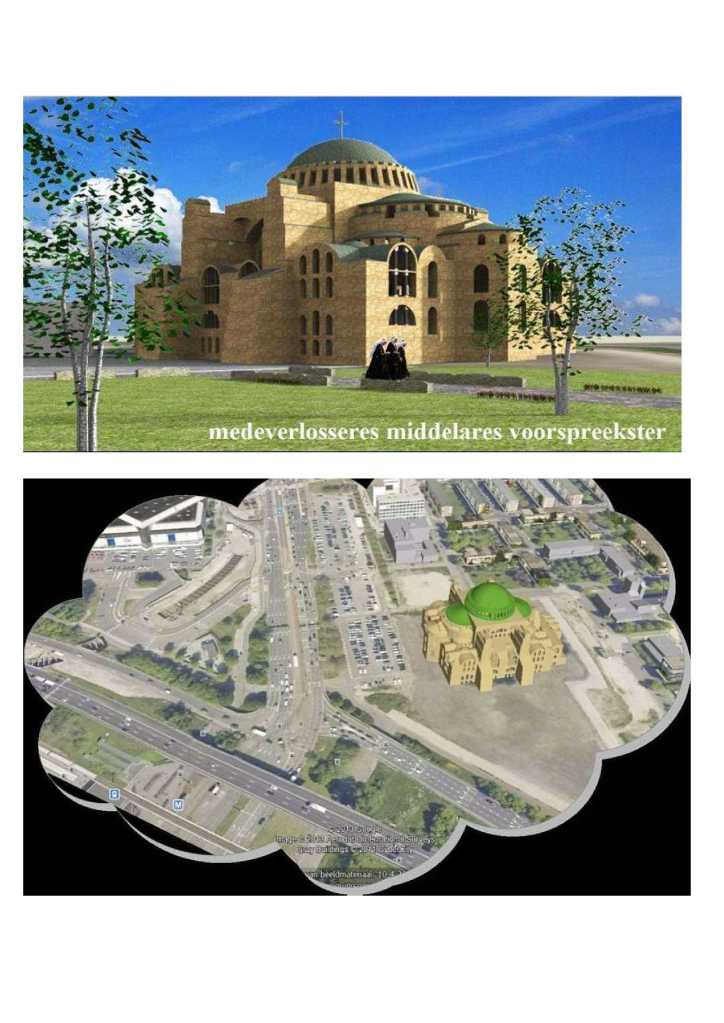
The Lourdes aan de Amstel foundation has been campaigning for the construction of a large Marian pilgrimage cathedral at the RAI in Amsterdam for many years. An initiative that aims to give a place to the devotion to the Amsterdam Marian apparitions that took place in the Amsterdam river district from 1945 to 1958, a devotion that has since spread worldwide.
HEAD OF THE ZUIDAS
In the head of the Zuidas on the Gaasterlandstraat, where the dreamed pilgrimage church should be built, there is still sufficient building land available to build a beautiful Marian cathedral. The site in question was already reserved 12 years ago for the construction of a large theater by Joop van der Ende and an entertainment area. This project was intended as a cultural closure of the Zuidas, and as a counterbalance to the many economic colossuses and office buildings that dominate the appearance of the Zuidas.
NEW STANDARDS FOR MARIAN APPARITIONS / CONSEQUENCES
Contrary to recent media reports about the devotion to the Lady of All Nations, in particular the fact that this devotion is said to be prohibited, the Lourdes aan de Amstel foundation would like to clarify that the situation is somewhat more nuanced than is claimed. The construction of a pilgrimage church is still a possibility and the Lourdes aan de Amstel foundation will continue with the realization of this Marian church.
The devotion to the Lady of All Nations is still fully permitted, provided that it is taken into account that the Marian apparitions of Amsterdam have not yet been “fully” recognized by Rome. The current status for the devotion has been qualified as the so-called “non constat” since 1974, which somewhat corresponds to what the new standards for the assessment of apparitions (issued on 17 May) describe as “nihil obstat”. This implies a neutral position with regard to the supernatural character, “nihil obstat” or “non constat” are however not a disapproval as being false/fabricated, which would be indicated by the qualification “constat de non”. However, this qualification has never been granted to the Amsterdam Marian apparition, and cannot be found in the official documents.
As early as 1981, the congregation – now Dicastery – for the Doctrine of the Faith sent letters to the diocese of Haarlem-Amsterdam requesting the then bishop to re-examine the apparition and possibly release the devotion. In 1995, the head of the congregation for the doctrine of the faith, Cardinal Ratzinger (later Pope Benedict XVI), gave permission for the release of the devotion, leaving open the possibility of full recognition at some later date.
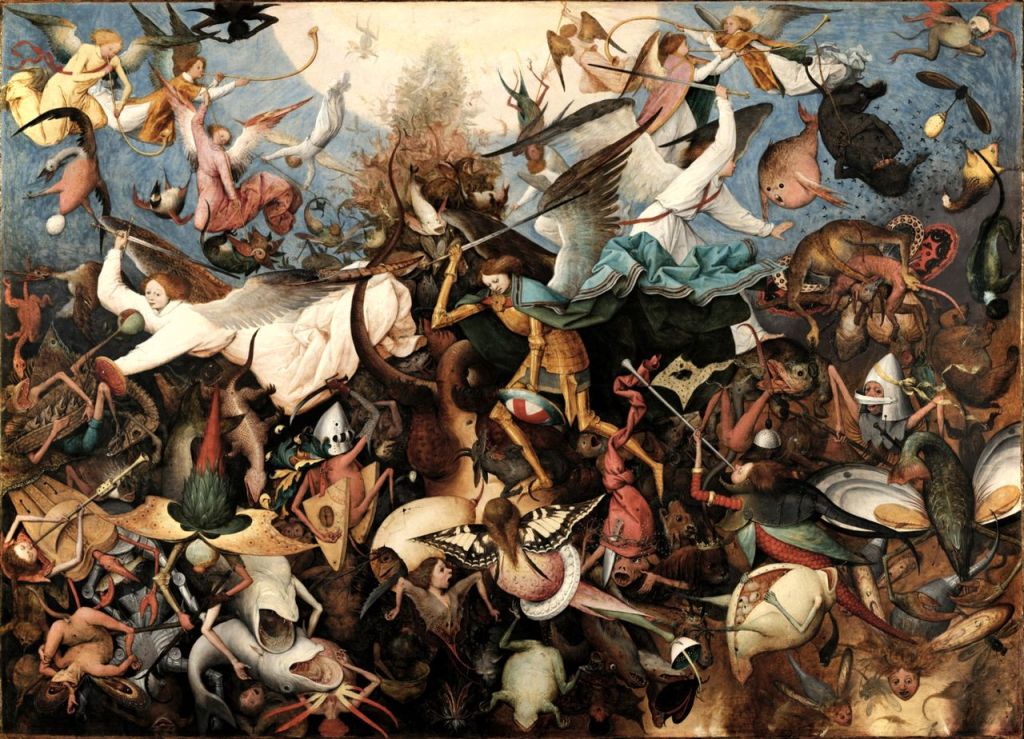
Lucifer was designed to be a perfect angel. He fell from heaven because of his pride and rebellion against God’s divine plan, which was to appoint Jesus as the people’s savior.[5] Lucifer coerced one-third of the angels to follow his lead in the rebellion and to assist in appointing him to be the new “God.”[5] The sin of pride caused the fall of Lucifer and his companions and resulted in the “war in heaven.” The archangel Michael was given the duty to drive Lucifer and the fallen angels out of heaven.[5] The conflict of good and evil as well as vice and virtue are constant recurring themes throughout Bruegel’s work.[6]
PILGRIMAGE CHURCH VERSUS MEGABROTHEL
A recent development with regard to the Zuidas area is the construction of a Megabrothel desired by the Amsterdam city council. According to Lourdes aan de Amstel, however, a Megabrothel will not bring about the desired change in the image of Amsterdam. Moreover, the municipality of Amsterdam has indicated that it wants to get rid of the many so-called “fun tourists” who cause a lot of nuisance in the city. Will this be done with a Megabrothel as an international calling card?
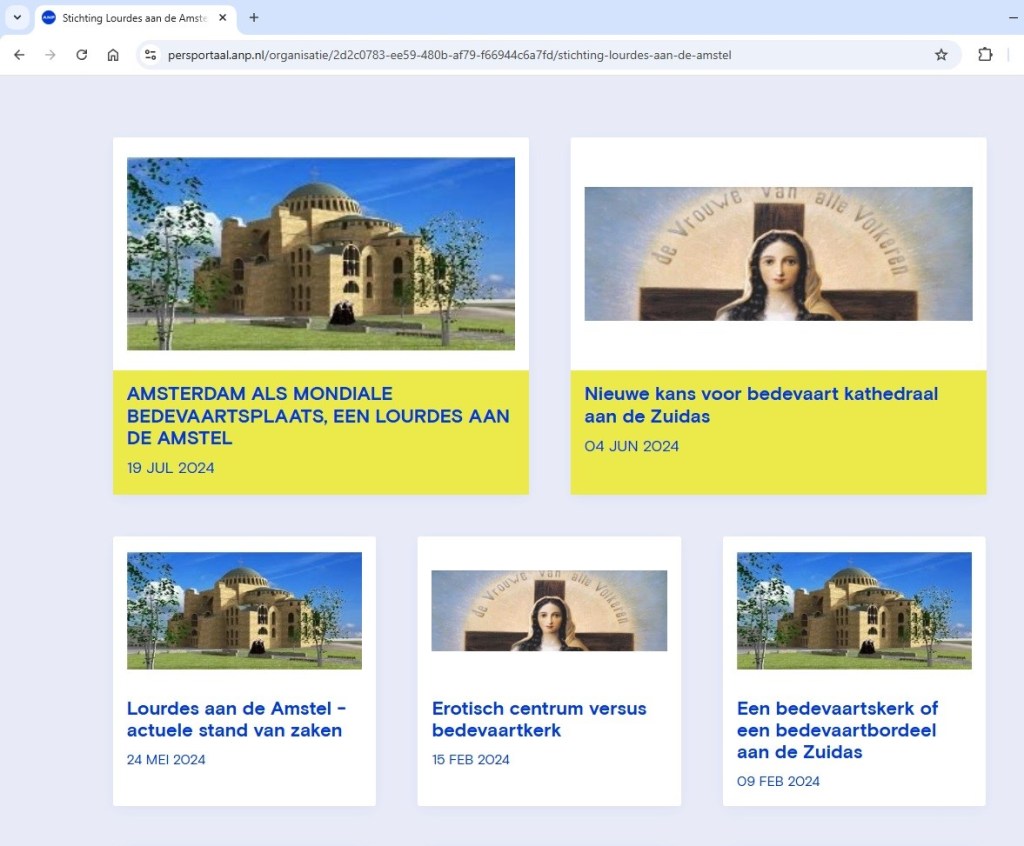
On the other hand, a beautiful pilgrimage cathedral, modeled on the Hagia Sophia, one of the oldest churches in the world, will be able to attract pilgrims or tourists to Amsterdam of a somewhat higher level, according to Lourdes aan de Amstel. The image of Mary as Mother of Humanity and Lady of All Nations by means of a Marian pilgrimage church according to Lourdes on the Amstel is also preferable to the image of a mega brothel. The image of Mary as Lady of and for all Nations also better symbolizes the image of Amsterdam as a city of many cultures, races and languages and the city of connection, tolerance and inclusivity.
DAY OF PRAYER IN HEILOO / 5th MARIAN DOGMA
On June 8, the annual day of prayer in honor of the Lady of All Nations will be held again on the grounds of the diocesan Marian shrine in Heiloo. Speakers will be Mgr. Hendriks, bishop of Haarlem-Amsterdam and prof. Mark Miravalle, top Mariologist from the US and initiator of the worldwide movement for the 5th Marian dogma: Vox Populi Mariae Mediatrici. A lay initiative that strives for the proclamation of a 5th and final Marian dogma, in which Mary is recognized in her Biblical and ecclesiastical role as Mediatrix, Advocate and Co-Redemtrix. An initiative that is already supported by more than 700 bishops and 40 cardinals and 8,000,000 lay people.
In the period following the Bishop’s statement, there were still some differences of opinion on the interpretation of the text from 1974. The Dicastery for the Doctrine of the Faith, therefore, issued a statement on 11 July 2024 in order to underline this once again.
This declaration was already part of the Bishop’s clarification and his “An explanation and a pastoral word to the clarification” of 30 December 2020, which were coordinated with the Dicastery. The Dicastery confirms this once again. Below is the text of the Dicastery for the Doctrine of the Faith.
Press Release Dicastery for the Doctrine of the Faith
Thursday 11 July 2024
In the past, the Dicastery, as a rule, did not make public decisions about alleged supernatural phenomena. However, in light of the persistent doubts raised about the alleged apparitions and revelations in Amsterdam from 1945 to 1959, in connection with the devotion to “The Lady of All Nations”, the Dicastery for the Doctrine of the Faith is making known the result of the Ordinary Session of the then Sacred Congregation for the Doctrine of the Faith, held on 27 March 1974, which reached the following decisions about the events in question:
- As for a doctrinal judgment, OMNES: “constat de non supernaturalitate.”
- As for whether to investigate the phenomenon further, OMNES: “negative.”
These decisions were approved by the Holy Father, Pope Paul VI, during an audience granted to the Prefect of the Sacred Congregation for the Doctrine of the Faith, Cardinal F. Šeper, on 5 April 1974.
The information above is being communicated so that the holy People of God and its Pastors may draw the appropriate conclusions.
Víctor Manuel Card. Fernández
Prefect
The Prayer of the Lady of All Nations
Lord Jesus Christ,
Son of the Father,
send now Your Spirit
over the earth.
Let the Holy Spirit live
in the hearts of all nations,
that they may be preserved
from degeneration, disaster and war.
May the Lady of All Nations,
the Blessed Virgin Mary,
be our Advocate.
Amen.
 Path to the Maypole of Wisdom