THE HORSE SACRIFICE
Om! Blessed be the animal,
With its horns and members.
Om! Tie it to the somber pillar,
That sunders Life from Death
Om! Tie this animal very well,
For it represents the universe.
Markandeya Purana(91:32)
- Introduction
In Vedic India, the greatest of sacrifices was the Ashvamedha (or Horse Sacrifice). Kings spent fortunes in the elaborate rituals, which sometimes required hundreds of officiating priests and lasted for several weeks at a time. The sacrifice of the horse was often associated with the sacrifice of the goat, as we discuss further below. Both these sacrifices were often associated with Tantric practices, and even today this ritual is often accompanied by the goat sacrifice.
The objective of the present essay is to discuss the esoteric meaning of these strange rituals, which date from Vedic times in India, from where they passed into the rest of the world. Hindu myths are particularly profound and, hence, extremely difficult to penetrate in their esoteric contents. This is due to the fact that the holy tongues in which they were originally composed mainly Sanskrit and Dravida are polysemic languages, where words may have several entirely different meanings, depending on the context.
Myths, symbols and rituals work at several different levels, simultaneously, according to the 48 Fundamental Sciences: Philosophy, Metaphysics, Ethics, Theology, Religion, History, Geography, Astronomy, etc.. In other words, myths work not according to so-called Aristotelian logic, but to “fuzzy logic”, where concepts and ideas are somewhat diffuse and vague, as in Quantum Mechanics.
We Westerners are not used to this kind of logic, in contrast to the ancients and to the Orientals, and the Hindus in particular. Our difficulty in understanding myths and their hidden truths derives above all from the essence of our monosemic tongues, which accustom our minds to reason literally, rather than “diffusedly”.
We hope that the present essay will shed some light on the way myths work, in order to embody the important revelations concerning Atlantis. The story of Atlantis is never told, except under the disguise of the Evangels and the religious symbols and rituals, or in the initiatic sagas and romances or, even, in the trivial anecdotes, fables and fairy tales that came to us from antiquity.
The Hindus who composed the ancient myths which later diffused to the other nations of the world never speak, except to the Initiates, being bound by a most sacred oath that has never been violated. So, we must all learn to understand their sacred myths by our own effort if we indeed want to understand the secrets of humanity’s past and, perhaps, the future as well. The wisdom of the ancient Atlanteans is ours for free, as a heritage, if only we have the fortitude required to rescue it from within the often foolish arcanes where it is has been hidden for so many millennia.
- 1- The Cosmic Hierogamy
The passage of the Markandeya Purana quoted above discloses the secret. The sacrifice of the animal represents that of the Universe. And the association with Tantric practices is symbolic of the Cosmogonic Hierogamy, another image of the Primordial Sacrifice of the World. Tantra with its emphasis on sex is far more than the ritualized orgy that Westerners associate with this peculiar form of worship.
Tantric practices are a ritual enactment of the Cosmogonic Hierogamy. Far more than a fertility ritual, such hierogamies are a symbolic representation of the dissolution of the World in the Marriage of Fire and Water, the two incongruals. The maithuna the mystic union of the worshippers is not an invention of modern Tantrism. The ritual dates back to Vedic times and probably to pre-Vedic, Dravidian epochs. Indeed, Tantrism is spurned by the Aryan castes in India, and is only popular in Southern India, where the Dravidian races prevail.
The Ritual Mating of the King and the Whore
However, the Vedic cults often tolerated an erotic union, though disguisedly. As related by the Taitiriya Samhita (V:5:9) and by the Apastamba Shrauta Sutra (21:17:18, etc.), in certain Vedic rituals a young brahman priest mated with a pumchali (hierodule) hidden inside the altar of the temple.
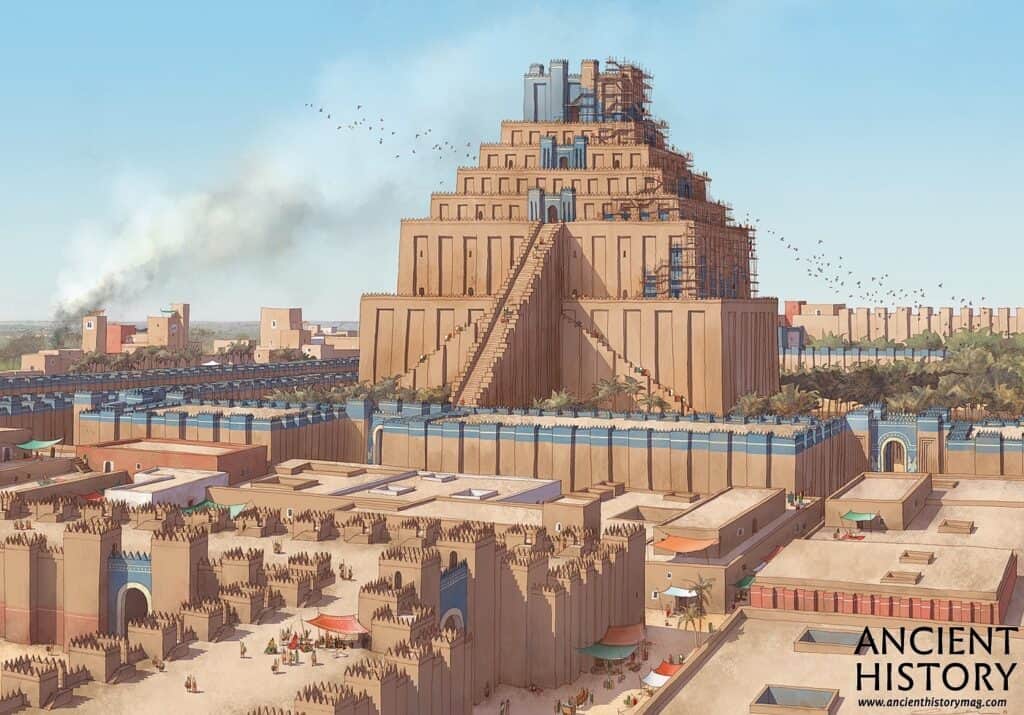
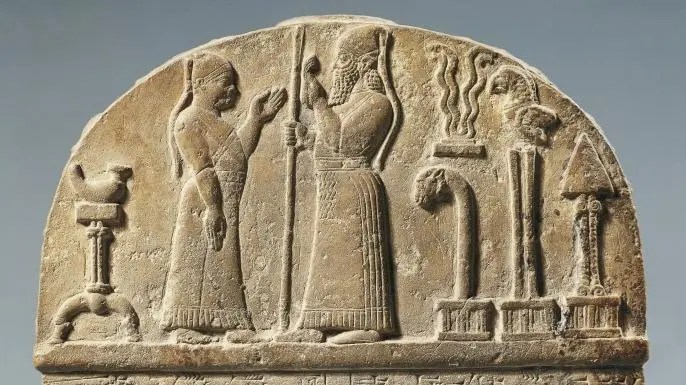
The ritual closely recalls the one celebrated in Sumer and Babylon on the occasion of the New Year Festival (Akitu). In this ritual, the king would ritually mate with a sacred prostitute (hierodule) inside a shrine on top of the ziggurat. This building, a sort of stepped pyramid, represented the Cosmic Mountain, itself a replica of the Cosmos. Hence, the couple united inside the temple or the altar represented the Primordial Couple buried inside the Cosmic Mountain, in Paradise.
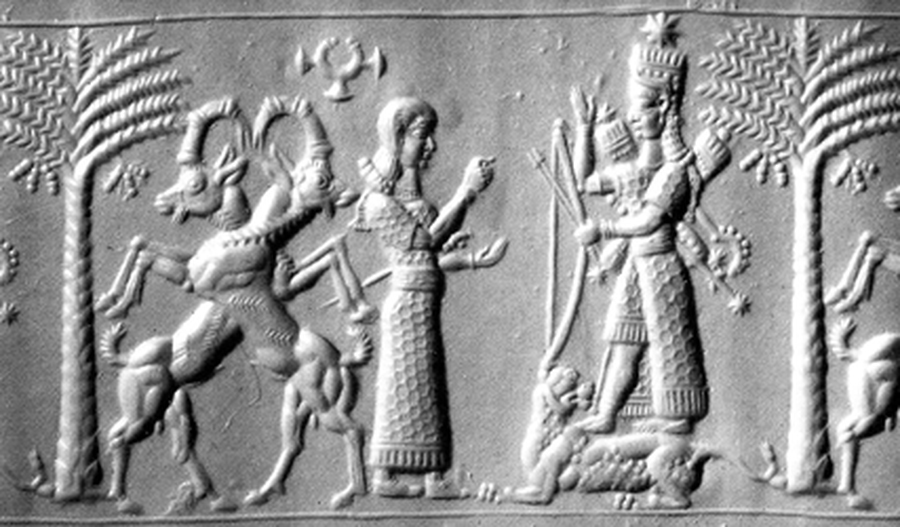
Very likely, the Heb Sed festival of the Egyptians, as well as the secret ceremonies celebrated inside the Egyptian temples and pyramids, were also ritual enactments of the Cosmogonic Hierogamy, the Sacred Marriage of the King and the Sacred Prostitute, the Hierodule of Bastit or of some other similar goddess, as we shall see further below.
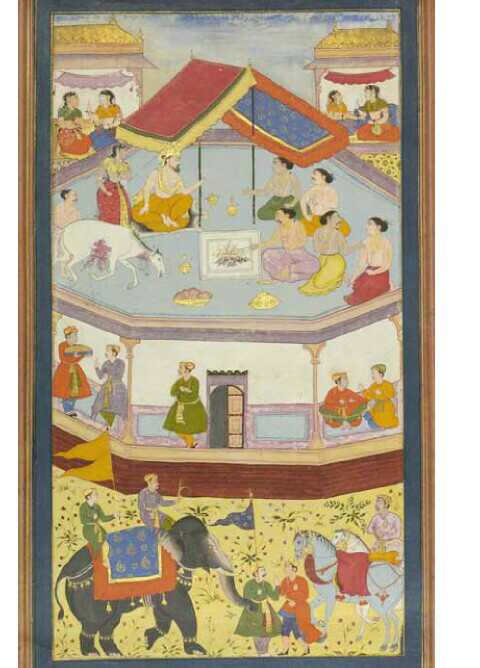
In the ashvamedha, the wife of the officiating priest the mahishi simulated a ritual mating with the sacrificial horse. The mahishi (lit. “the Great Cow”) represented the Earth, much as the horse symbolized the Sun. Indeed, she also stood for the queen as the Primordial Whore, just as her husband (the mahisha) was an alias of the Horse, the Sun, the Primordial Male (or buffalo). The couple stood for Heaven and Earth and, more exactly, for Yama and Yami, the Primordial Couple of paradisial times.1
After the horse sacrifice was performed, the mahisha mated with the mahishi. And so did the other four couples of priests, representing the Four Guardians of the World (Lokapalas) and placed around the royal couple.
The ritual enacted the destruction of the world (the deaths of the horse and the goat) due to the mystic union of Heaven and Earth (the union of the horse and the mahishi). But it also symbolized the rebirth of Nature, renewed by the drastic event (the union of the couples just after the sacrifice).
Interestingly enough, a similar ritual was performed in ancient Celtic Ireland. This ritual is closely related to the Vedic ashvamedha. In the occasion of his enthronement (a “renewal” of the world), the king would ritually mate with a mare, which was subsequently sacrificed. From its remains a broth was made, which was served communially to all. Clearly, the ritual is also an alias of that of Christian Mass and Communion, whose symbolism can also be traced back to the Vedic archetypes, the rituals of Soma preparation and of the ashvamedha.
Note: The Great Indo-European Horse Sacrifice – 4000 Years of Cosmological Continuity from Sintashta and the Steppe to Scandinavian Skeid
The great Indo-European horse sacrifice is one of the most enduring and widespread traditions in world history. This study presents a historic overview of Indo-European studies and shows the cosmological continuity of the horse-sacrificial tradition based on specific cultural innovations and ecological adaptations over time. It also sheds new light on cultural history through in-depth analysis of horse sacrifice in culture and cosmology. From Sintashta in Russia and the steppes to the legendary ashwamedha ritual in India and horse sacrifices in Roman, Greek and Irish traditions, the analysis finds that horse sacrifice appears to have been most successful in Scandinavia, with classic sites and funerals such as Sagaholm, Kivik and Håga in the Bronze Age and Old Uppsala, Rakne and Oseberg in the Iron Age. The horse-sacrifice tradition shows that these cosmological rituals were closely related to the region’s ecology, the weather and the availability of water that was required for a successful harvest. In the cold north, the sun was important for cultivation, but it was the relation between water and winter that defined the seasons and called for horse rituals, as recent skeid traditions show. Understanding horse sacrifice as an institution therefore provides new insights into prehistoric religion from the Bronze Age to recent folklore in rural Scandinavia. Read here full study
- The Far Oriental Archetypes
In his remarkable study of the Mexican and the Cambodian pyramids (Stufen Pyramiden in Mexico and Kambodscha, Paideuma, VI (1958), 473-517), W. Mueller makes important observations. To start with, the German archaeologist notes that these pyramids share several features which are also often observed everywhere these enigmatic monuments are found. These generally include:
- A surrounding wall, oriented along the Four Cardinal Directions.
- A small temple or shrine at the top.
- Roads of access along the four Cardinal Directions, forming a Cross.
- A lake or dam that is referred to as a “sea”, and which surrounds the pyramid, turning it into an island.
With small differences, the Egyptian pyramids and, in particular the first one of them, that of King Zozer, also obeyed this paradigm. Mueller notes that this scheme corresponds to an ancient conception of the Cosmos, where the earth is considered an island or mountain rising from the primeval waters. In the Egyptian cosmogony, this scheme corresponds to the Tatenen, the Primordial Hill rising out of the waters of the Nun, the Primordial Abyss.
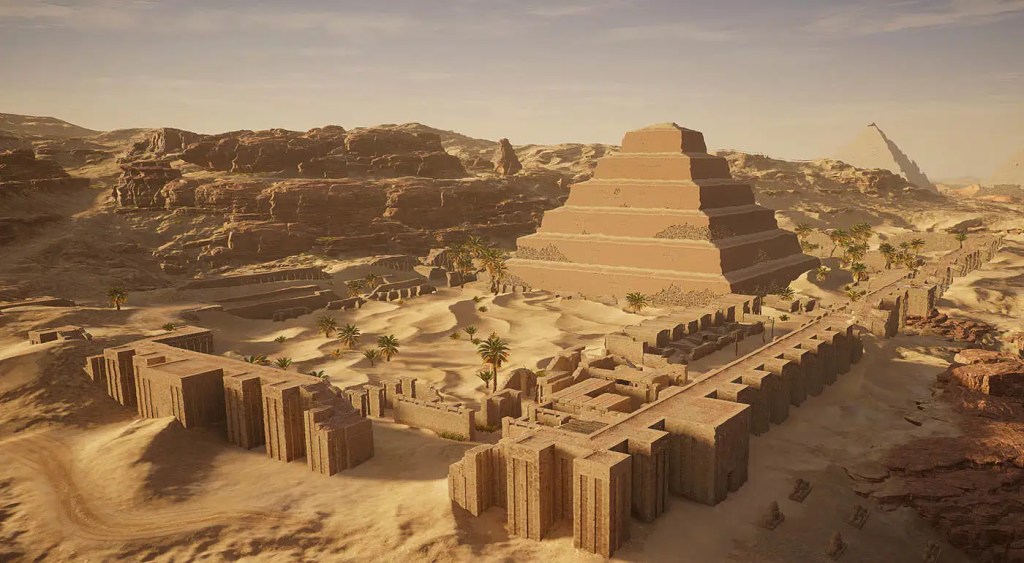
In Hindu conceptions, this mountain is the Holy Mountain, Mt. Meru, rising from the waters of the Primeval Ocean. More exactly, as we discuss in detail elsewhere, this idealized model corresponds to the sacred geometry of Atlantis. This connection among the Mexican pyramids, the Egyptian pyramids and the Cambodian pyramids, placed in regions almost antipodal in the world, attest the universality and, hence, the extreme antiquity of the Atlantean paradigm.
But what interests us here is the connection between pyramids and the Cosmogonic Hierogamy. The reader interested in more details in this regards should read the magnificent book by my Argentianian friend, Prof. José Alvarez Lopez (El Enigma de las Piramides, Buenos Aires, 1978), who treats the matter in depth. In the pyramid of Angkor there is an inscription in Sanskrit, in the northwestern corner of its wall, which reads: “Angkor is the young bride of the King, who just took her home, blushing with desire, and dressed with the sea”.
This beautiful poetic license is closely paralleled in the Book of Revelation, where the Celestial Jerusalem is described in similar terms, as the Bride of the Lamb the King of the City that is no other than the citadel of Atlantis itself. In fact, this quaint imagery is taken directly from the Ramayana, where it is applied to Lanka, about to be ravished by Rama and Hanumant. And the “dressing with the sea”, in a white dress that is even today ritually worn by the brides, is in reality an allegory of the Flood that engulfed the capital of Ravana s worldwide empire.
All this bespeaks of the Cosmogonic Hierogamy, of Atlantis fate, and of its origin in the Far East, in the dawn of times. These images derive directly from the of the Ramayana as can be seen by comparison. But the connection can be carried even further. As Mueller and Alvarez Lopez pointed out, the shrine on the top of the Angkor pyramid was used for a strange Tantric ceremony akin to the Cosmogonic Hierogamy celebrated in the holy of holies of the Egyptian pyramids and temples, and in those of Babylonian ziggurats: the ritual mating of the King and the Whore, the priestess of Bastit.
In Angkor, the king mates with the hierodule, the sacred prostitute that impersons the Nagini, the female Naga, whose role we discuss further below in the present article. The Nagini is the fateful blonde of Hindu traditions, the very same “Goldilocks” that we also encounter in the Egyptian myths which we detail below and elsewhere. In Egyptian traditions too the Whore is connected with the pyramids, for instance in the report of Herodotus concerning the whorish daughter of pharaoh Cheops, or in that related by Diodorus Siculus and the Arab historians, which ascribes the third pyramid of Giza to Naukratis, to Rhodopis, or to other such courtesans of fair countenance.
All these are, as we just said, Tantric rituals similar to the heb sed and the akitu. They replicate the Cosmogonic Hierogamy, and thus insure the periodic renovation of the Cosmos, after the model of the archetypal one which occurred with Atlantis. Alvarez Lopez notes the essential structural, symbolic and ritual identity of the American pyramids found in Mexico, Guatemala, Salvador, Bolivia, and Peru, with the ones of Angkor and Egypt.
The great Argentinian researcher even remarks the unequivocal connection of the American pyramids with the Atlantean myth, which had already been noted by Russian archaeologists such as Jaguemeister and others. For instance, one should note that the Egyptian pyramids essentially use three colors of stones with remarkable regularity: the white limestone of Tura and Mokatan, the red granite of Aswan, and the black basalt of the Sinai and elsewhere.
Now, these three colors of stones, obtained at great pains and at great distances, are precisely the ones mentioned by Plato, as composing the walls and buildings of Atlantis. We could believe in a coincidence were it not for the fact that the pyramids of Mexico are also built with these three colors of stones: red, white and black, precisely as in Atlantis. Very obviously, those colors had a ritual significance, probably related to the three races of Mankind, which also have similar colors.
In fact, the Mexicans often used a fourth color, yellow stones, completing the four colors of the human races. Again, as usual, this motif is Hindu in origin, the four colors being the four varnas (“castes”, “colors”) of the Hindus and, indeed, also those of the Egyptians as well. Now, to believe that this series of coincidences, and a myriad others we have been pointing out, can be ascribed to chance borders the irrational. So, what other conclusion can we reach but that of prehistoric contacts and of an Atlantean influence when we consider matters such as the above in detail?
Father Sky and Mother Earth
Far more than a fertility cult based on sympathetic magic, such rituals reenacted the destruction of the world in the Primordial Sacrifice. The mystic mating of King and the Whore or that of the Celestial Horse with the Cow-Mother represents the union of Father Sky and Mother Earth. This union, the Egyptians inverted into that of Mother Sky (Nut) and Father Earth (Geb), an operation permissible according to the “fuzzy logic” of myths.
This ritual mating is the same one as that described by Hesiod in his Theogony (155f.). The Greek bard tells how, in the beginning, Ouranos (the sky) detested his children. He oppressed them, leaving them no breathing space as he clung closely to his wife, Gaia (the Earth). His children were kept in the dark, somber recesses of the Earth until Kronos, helped by his mother, castrated his father, Ouranos, freeing them all.
The castrated phallus of Ouranos, thrown down into the Ocean by Kronos, became the Primordial Land. From the froth and blood it spilled in the waters, was born Aphrodite (“born of the scum (or seafroth)”). The words of Hesiod are worth quoting:
Inside herself, she posted Kronos, waylaid.
His father s genitals he grabbed with the left hand,
And with the right, the sickle sharp and toothed.
He cut the penis off, and threw it over his back,
Down into the sea, where it floated for long.
From the immortal spoils a white froth arose
And from it a girl was born most beautiful…
Her name Aphrodite, for from the froth she rose.
- Did Hesiod Invent His Cosmogony?
Hesiod was not inventing this strange Cosmogony. In a Hittite myth dating from the second millennium BC, a similar story is told. In the Hittite myth, Anu, the Sky God, is castrated and deposed by Kumarbi, who bites off and swallows his phallus. Kumarbi becomes pregnant, and later “spits” the Tempest God, Ullikumi. In time, the Tempest God, helped by the deposed Anu, defeats and ousts Kumarbi, becoming the new Sky God.
The Hittite myth is clearly related with the Greek myths concerning the sequential castrations and oustings of Ouranos by Kronos and of Kronos by Zeus. The “stone” swallowed by Kronos is visibly a linga or omphalos, the same as the phallus swallowed by Kumarbi. But both the Greek and the Hittite myths ultimately derive from Hindu myths, as we show elsewhere.
In the Rig Veda, Indra castrates and deposes his father Vritra, certainly from inside his mother s vagina, where he was forced to live. The myth of sequential castrations and deposals were also recurrent in ancient India. Vritra is castrated by Indra, who is in turn castrated by his own son, and so on. Likewise, Brahma is castrated by Shiva, his son, who is in turn castrated, becoming the linga.
Varuna the archetype of Ouranos as the sky-god is also castrated and thrown down into the Ocean, of which he became the lord. Varuna is an archetype of Poseidon, and it is likely that Poseidon was the earlier sky god defeated and deposed by Zeus, his dual and elder and enemy. The Vedic myths are unclear, as they are known only from the obscure Vedic hymns. But later literature is ample, and details the earlier forms. It is clear that the ashvamedha and the ritual Tantric matings relate to these early variants of the myth, and that they symbolize the same Cosmogonic events.
Indeed, they all obviously derive from a common source. This source can only be extremely ancient, as the concept was already present in an elaborate form in the Sumerian New Year festival of the akitu, which dates from 3,000BC or even earlier, and which may very well have been brought by the Sumerians from the Indies, whence they originally came, as their language and traditions attest. In other words, the East Indies and, particularly Indonesia, in its sunken region were indeed the same as the legendary continent of Atlantis where Civilization first sprung to life.
Moreover, as we just saw, the myth and ritual was present in extremely distant ancient nations of the most diverse peoples: the Hittites, the Irish, the Sumero-Babylonians, the Vedic Aryans, the ancient Greeks, etc.. Its equivalence to the Soma Sacrifice also affords a link with the Eucharist of Judeo-Christianism and with the Persian haoma ritual, to mention just two of an unending series.
Most certainly, the Egyptian myths of the castration and deposing of Osiris by Seth and of Seth by Horus, the son of Osiris, who this avenges his father, belong to the same mythical motif. As we saw above, in a footnote, Osiris, after his castration, was buried inside the Holy Mountain. There, he unendingly celebrates his phallus-less, ritual mating with his consort, Isis, the Great Mother of both gods and men.
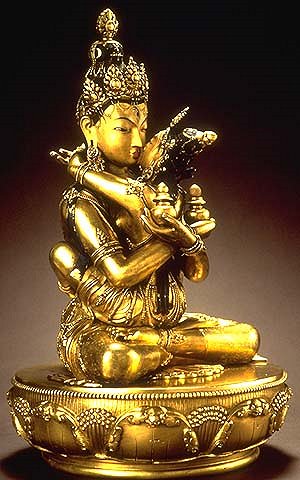
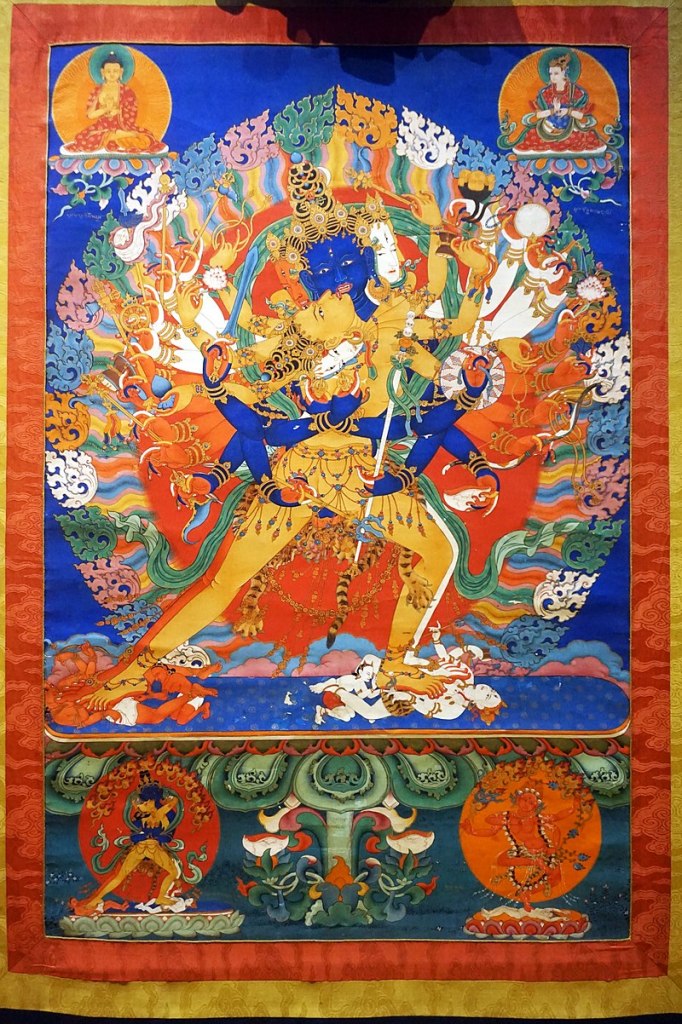
This ritual mating of the god and the goddess is known in Hinduism and Tantric Buddhism as the Yabh-Yum, the mystic union of the Father and the Mother in the innermost room of the Celestial Palace, the one inside the Holy Mountain of Paradise. This motif is endlessly reproduced in their mandalas, particularly in those of the Tibetan Buddhists.
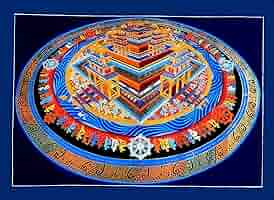
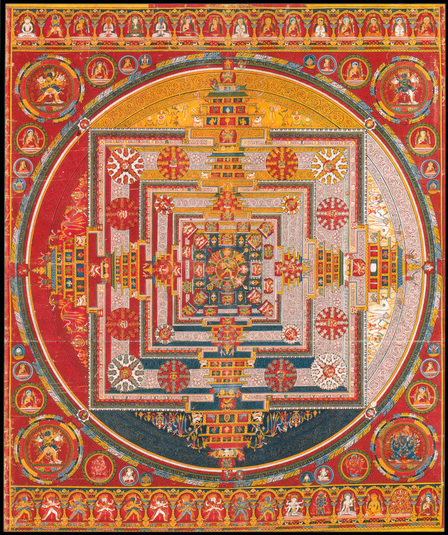
Note: Avalokiteshvara and Kalachkra Inititiation :
In Buddhism, Avalokiteśvara (meaning “the lord who looks down”, IPA: /ˌʌvəloʊkɪˈteɪʃvərə/[1]), also known as Lokeśvara (“Lord of the World”) and Chenrezig (in Tibetan), is a tenth-level bodhisattva associated with great compassion (mahakaruṇā). He is often associated with Amitabha Buddha. Avalokiteśvara has numerous manifestations and is depicted in various forms and styles. In some texts, he is even considered to be the source of all Hindu deities (such as Vishnu, Shiva, Saraswati, Brahma, etc).[2]
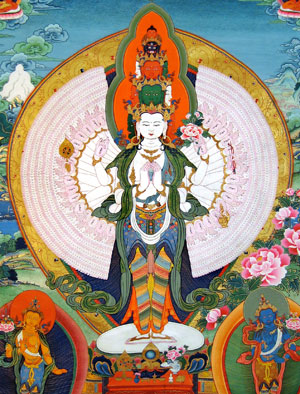
Avalokiteśvara is an important deity in Tibetan Buddhism. He is regarded in the Vajrayana teachings as a Buddha.[
In Tibetan Buddhism, Tãrã came into existence from a single tear shed by Avalokiteśvara.[3] When the tear fell to the ground it created a lake, and a lotus opening in the lake revealed Tara. In another version of this story, Tara emerges from the heart of Avalokiteśvara. In either version, it is Avalokiteśvara’s outpouring of compassion which manifests Tãrã as a being.
Certain living tulku lineages, including the Dalai Lamas and the Karmapas, are considered by many Tibetan Buddhists to also be manifestations of Avalokiteśvara.
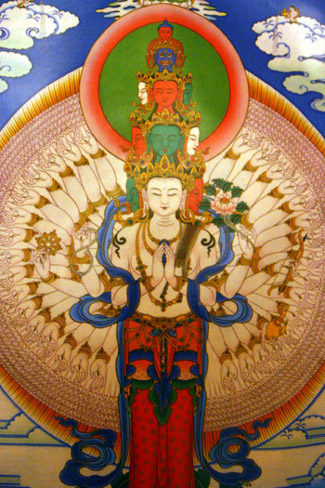
The Thousand Armed Avalokiteshvara is one of many manifestations of the Bodhisattva of Great Compassion. According to legend, the Bodhisattva Avalokiteshvara made a vow to liberate all beings in all the realms of suffering, and would not rest until this task is done. After working for countless eons, the Bodhisattva realized that there were still innumerable beings yet to be saved. Having received the blessing from the Buddha Amitabha, Avalokiteshvara manifested into the bodhisattva of eleven heads, and a thousand arms. In this form, the Bodhisattva of loving- kindness is able to see in all directions to continue his work to save all beings. The image of Avalokiteshvara, depicted with a thousand arms and eleven heads has the following meanings:
The head on top portrays the Buddha Amitabha, symbolizing the dharmakaya nature of Avalokiteshvara. The second head from the top represents Mahakala, the wrathful aspect of Avalokiteshvara, who helps practitioners to fight against negative forces and to overcome obstacles on their path. The nine remaining heads being set in three rows represent the directions: one being the center and the remaining eight represent the cardinal directions.
Avalokiteshvara’s first two hands are at his heart, holding a wish-fulfilling gem to grant wishes to all beings. On his right, the second hand holds a rosary composed of 108 beads; the third right hand at the lowest row is in the gesture of giving; the fourth hand, in the middle holds a Dharma wheel, symbolizing the teachings. On his left, the second hand holds a lotus, symbolizing bodhicitta and purity; the third hand on the first row holds a vase of nectar of compassion and wisdom; the fourth holds a bow and arrow to defeat negative forces. The remaining 992 hands with one eye in each of the palms exhibit Avalokiteshvara’s pervasiveness.With the thousand arms in his sambhogakaya form, Avalokiteshvara as a shining wish-fulfilling gem represents the supreme Bodhicitta and the awakened mind, the enlightened thought wishing to benefit all sentient beings. Many Buddhists believe that the Dalai Lama is a reincarnation of Avalokiteshvara in his nirmanakaya form, visible to human beings. The Dalai Lama embodies virtuosity through his principles of peace and compassion.
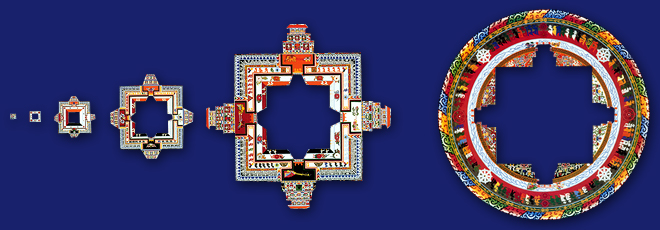
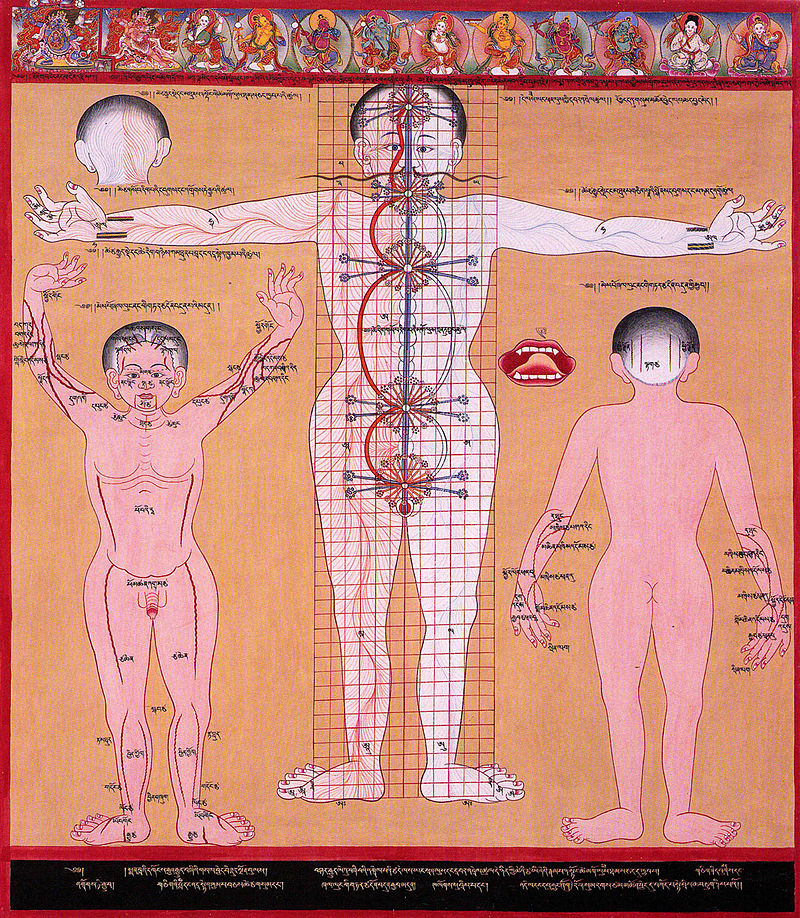
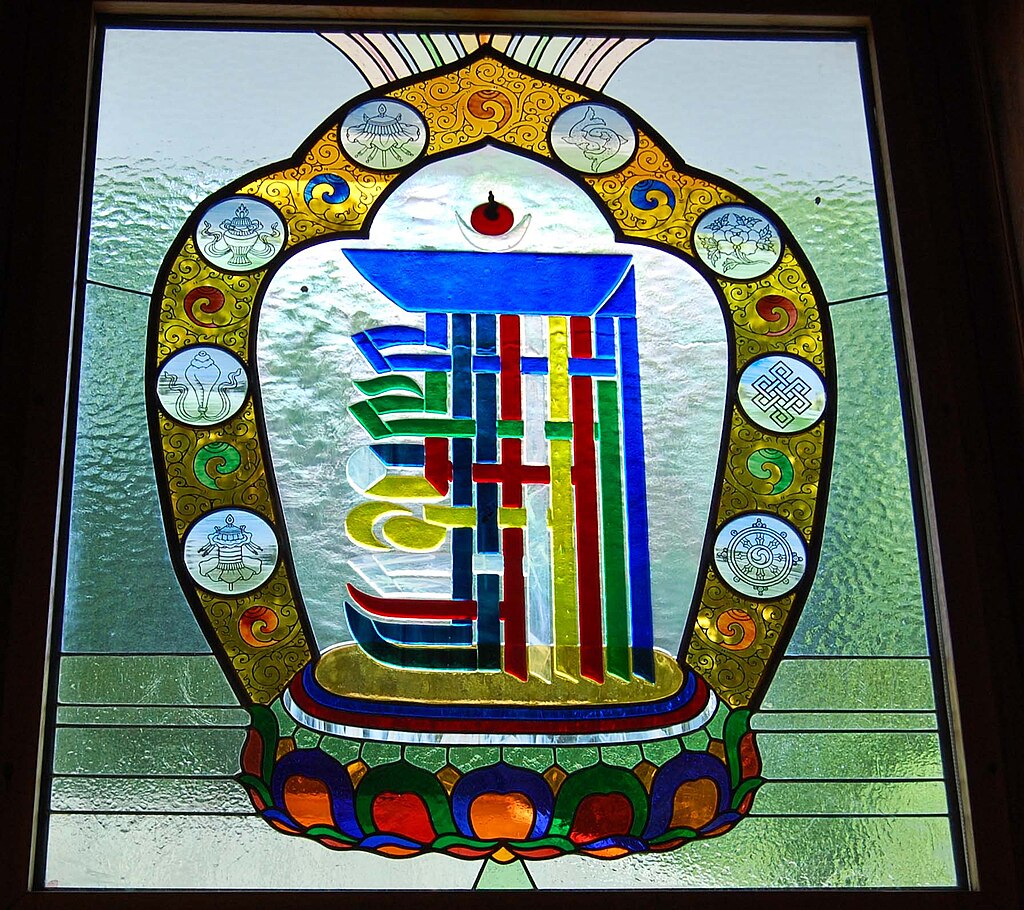
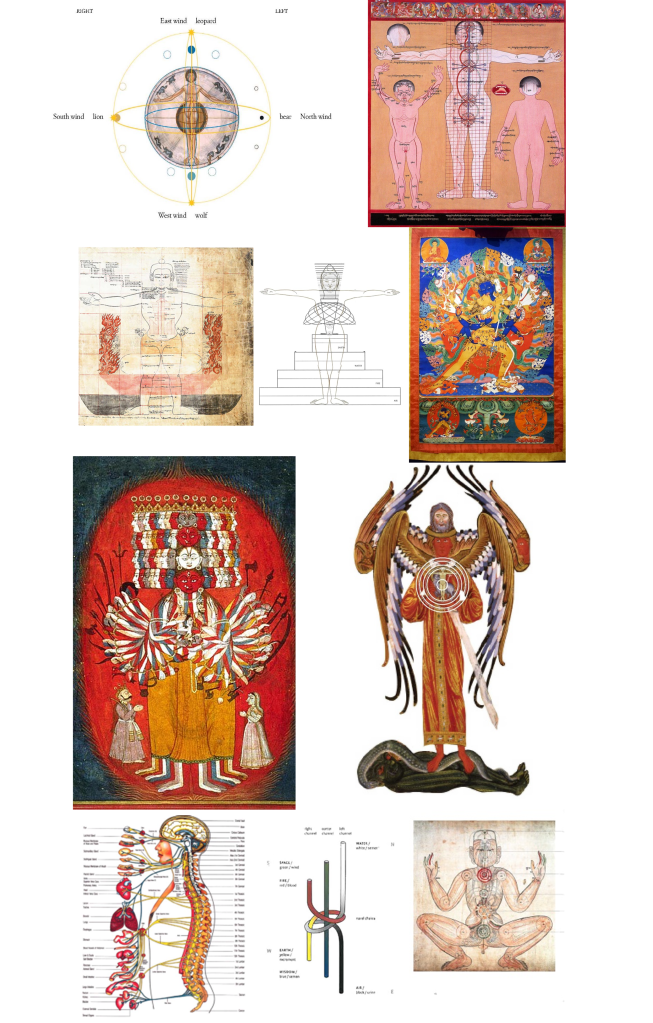
Introduction to the Kalachakra
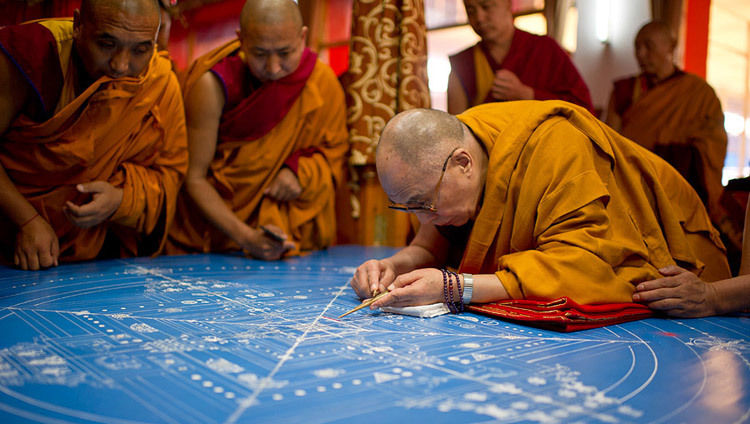
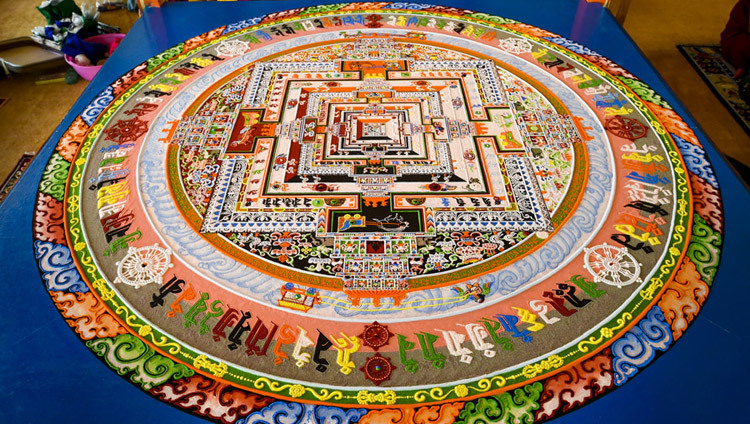
Some research has be done to compare Kalachakra with Merkabah mysticism see here
- The Ashvamedha of King Yudishthira
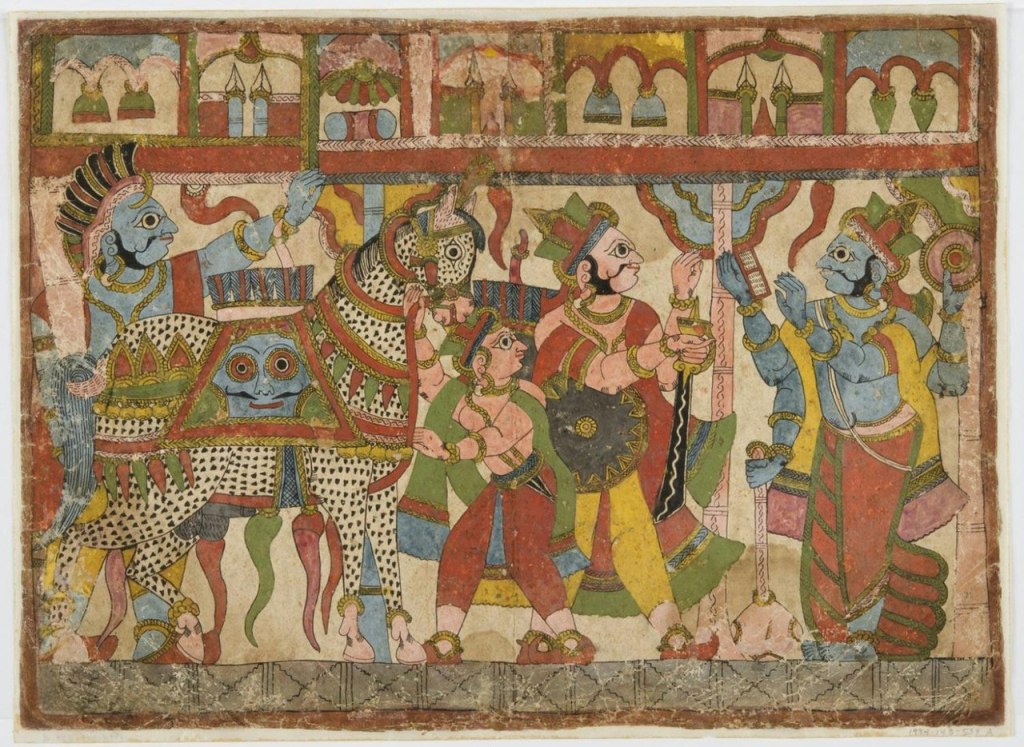
The Horse Sacrifice was the privilege of great monarchs, as it was fabulously expensive and demanding. Its importance can be gauged from the fact that a full chapter (the 14th) of the Mahabharata is dedicated to the ceremony, of which it bears the name. This sacrifice was performed in order to commemorate the victory of Yudishthira and the Pandus in the great war of the Mahabharata.
The reason why the ritual was so expensive is that, through it, the King claimed universal kingship, and thereby declared that he would wage war on all possible opponents. The sacrificial horse was released, and roamed freely through all lands, followed by the royal army. It was an act of open provocation.
Any king who resisted and refused to comply, was forced to fight with the invading army. If he lost or complied, he was invited to the sacrifice, and attended in full pomp and with his full court, at the host s expensive. The whole ritual lasted a full year, and many thousands of persons attended it. Yudishthira s sacrifice was so expensive that he had to send Arjuna to fetch the enormous treasures of Kubera in the Himalayas, in order to finance the expenses.
As we said, the sacrificial horse represented the entire Cosmos. The monarch that ordered the sacrifice was the Universal Monarch (Chakravartin), the ruler of the whole Cosmos. In other words, he was bringing about the Millennium and the Universal Conquest just as does the White Knight of the Book of Revelation. This epoch-making conquest would only end with the death of the old Cosmos represented by that of the sacrificed horse and of its often neglected dual, the goat, its humble dual.
The Goat Sacrifice
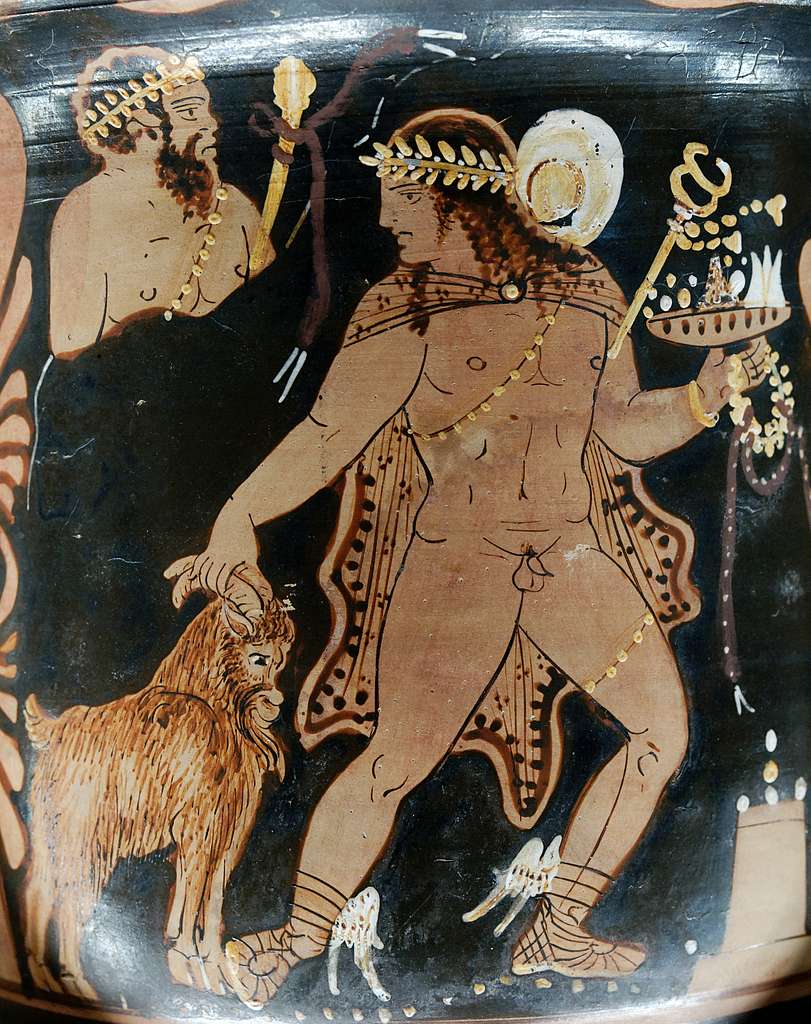
As we said above, in the ashvamedha a goat was also sacrificed, together with the horse. The two animals probably correspond to the two castrated gods of the above discussed myths. Farther below, we shall see their exact meaning and their connection with Atlantis and the bull sacrifice that was celebrated there, according to Plato.
As the supreme symbol of the victorious Aryans, the horse looms large in the Rig Veda. Celestial gods are often compared to horses there: Indra, Surya, Agni, Soma, etc.. The horse often a flying-horse like Pegasus was also equated to the Sun and to Fire. The humble goat was, instead, the symbol of the defeated Dravidas, who were thereby likened to the infernal asuras.
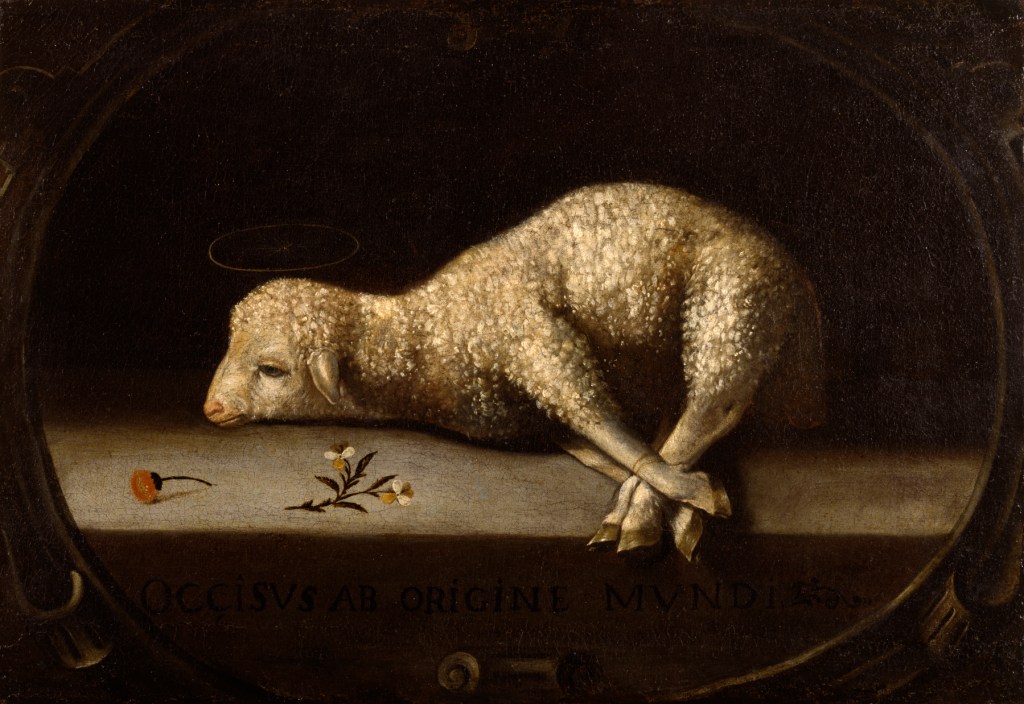
Indeed, the goat was deemed the sacrificial victim of excellence. It was considered the scapegoat for the dead (RV 10:16) and for the horse of the ashvamedha (RV 1:162). This hymn describes the horse-sacrifice in detail and tells how the horse and his scapegoat are processioned in pomp to the sacrificial spot. The goat is the share of Pushan, an early sun-god who fell into disgrace, whereas the horse is the share of the Celestial gods.
- The Symbolism of the Goat and the Horse
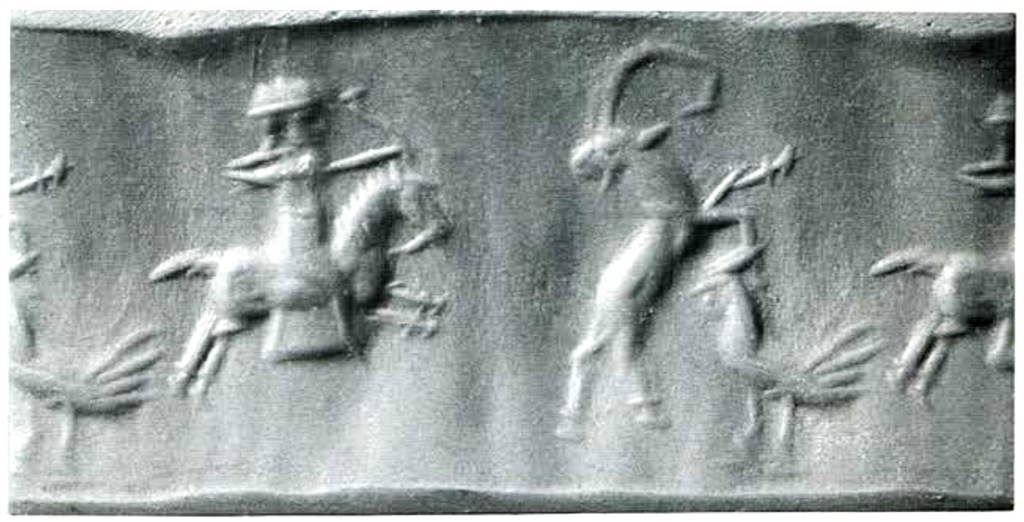
The Goat and the Horse represent the dual aspects of Creation. They represent, as we already said, the Universe. But, more exactly, they represent the twin Atlantises, as will become clear in what follow below. The Horse is Celestial and supreme, whereas the Goat is Infernal and humble.
The Goat represents Capricornus, the Water-Goat. In other words, he is the Fallen Sun, fallen from the supreme position down into the seas, into the infernal depths of the great abyss.
Greek myths tell how Pan, during the war of the gods with Typhon and his hosts, assumed the shape of a goat (Capricornus), and jumped into the Nile river in order to escape the fearful giant. In other versions, the god is substituted by Eros and Aphrodite who become the fishes of Pisces, in the Zodiac. Here, the allegory of the death by drowning of the twin Atlantises commemorated by the goat and the horse is even more transparent. And the story is cribbed verbatim from the myth of Matsya and Matsyâ (the male fish and his female), which is a celebrated motif in India from the dawn of times, as we comment in more detail further below.
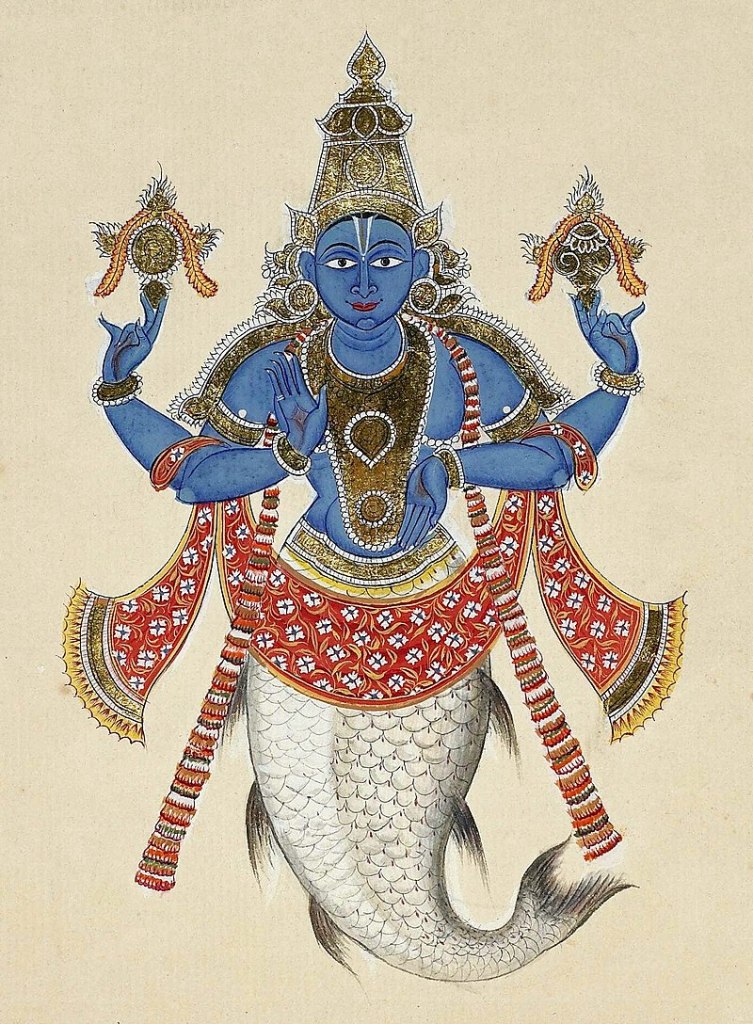
Of course, the fall of Pan is an allegory of the fall of the Celestial God who, from a mountain goat a dweller in the summits fell into the seas, and became a sort of fish or marine deity. Capricornus is the makara, the Hindu sea monster that causes the Flood. The makara (or sishumara) is a sort of dolphin or sea monster. It is the same as Matsya, the fish avatar of Vishnu. Matsya personifies Paradise or rather, Lanka, the Hindu archetype of Atlantis fallen from the skies, from the Celestial heights of Mt. Meru, into the ocean, where it disappeared forever, turned into Hell.
But the makara is also Kama, the Hindu love god who was the archetype of Eros-Cupid. Kama is also the son and lover of Rati. And Ratio is an alias of Aphrodite, the mother and lover of Eros, his Greek counterpart. As we see, the Greek myths are not only a close copy of the Hindu ones. They also have the same esoteric, initiatic meaning. They relate the death of Atlantis and its Lemurian Mother in the primordial cataclysm that we call by the name of Flood. The two animals image the twin Atlantises fallen from the skies from the summit of Mt. Atlas, the Pillar of Heaven and subsequently drowned in the ocean.
- The Goat Represents Atlantis as the Fallen Sun
The goat is often identified to Indra in India. Indra is also called meshanda (“whose testicles are those of a goat”). This epithet is due to the fact that Indra once made love to his master s wife, a most grievous sin. In consequence of his incontinence, Indra was castrated and covered with yonis. Later, he was restored with an implant of a goat s testicles, earning the above epithet. In fact, this allegory represents the fact that the Aryans (Indra) appropriated the creative role (the Phallus) of the Dravidas (the Goat), claiming that the second Atlantis was greater than the first one, the Great Mother (Amalthea).
The goat is a symbol of the Sun in India, where the day star is called Aja Ekapad (“the goat of the single foot”). Aja means not only “goat”, but also “unborn” (a-ja). As such, it is the symbol of primordial, unorganized matter, the same as Prakriti. The goat is also associated with the vajra, an image of the Fallen Sun. Interestingly enough, this association prevailed not only in India, but also in China, Tibet, and even Greece.
- The Aegis and Aja Ekapad
The association of the goat with the Devil is too well known to require elaboration. The Aegis the shield of Zeus and Minerva was fashioned by Hephaistos from the unpierceable skin of the she-goat Amalthea. The word “aegis” derives from the Greek aigis (“goat skin”), related to the Sanskrit aja and to the name of the Aegean Sea.
Allegedly the name Aegean derives from Aegeus, the father of Theseus, who drowned there. Aegeus, the father of Theseus, was deemed to be a son of Poseidon. He is indeed the same as Poseidon, who was so named in Euboea.
According to Homer, the submarine golden palace of Poseidon the very archetype of the Eldorado and of the sunken Atlantis was called Aigaia, meaning the same as “Aegaea” or “Aegea”. What these legends are hinting at is that Aegeus who was a marine god himself is the same as Poseidon or Neptune and, more exactly, as Atlas, the son of that god that personifies Atlantis.
More likely the name of the Aegean sea has to do with the legend of the Golden Fleece and the drowning of Helle. Helle drowned there when she fell off the Golden Lamb while flying over that sea with her brother Phrixus, mounted on it. This lamb seems to be the same as the she-goat Amalthea. Its skin is also the Golden Fleece quested by the Argonauts, itself an allegory of Atlantis.
The drowning of Pan, of Aegeus, of Helle, of Atlas, of the she-goat Amalthea, and so on all seem to be an allegory of the sinking of Atlantis, as myths tend to repeat themselves ad infinitum, under different forms. The word aigis also means “tempest”, “flood”, and tends to identify the cataclysm with that of the Flood. And the true Aegean Sea the sea of Aegeus (or Poseidon) where the Golden Lamb (or Eldorado) sunk away is indeed the Indian Ocean. It should not at all be confused with its replica recreated by the Greeks in the Mediterranean when they moved into that region of the world, having come from the Indies. The true “Atlantic Ocean”, the primeval “Ocean of the Atlanteans”, was originally the Indian Ocean, as we argue in detail elsewhere.
- The Origin of the Cross
Both sacrificial victims of the ashvamedha the horse and the goat were killed, impaled and roasted. Then the worshippers ate communially their roasted meat and the broth prepared from their remains. Before their sacrifice, the victims were tied to the sacrificial pole, called skambha or stambha or, yet, stavara.
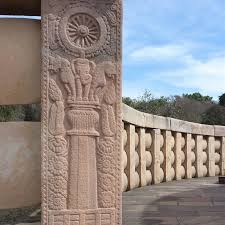
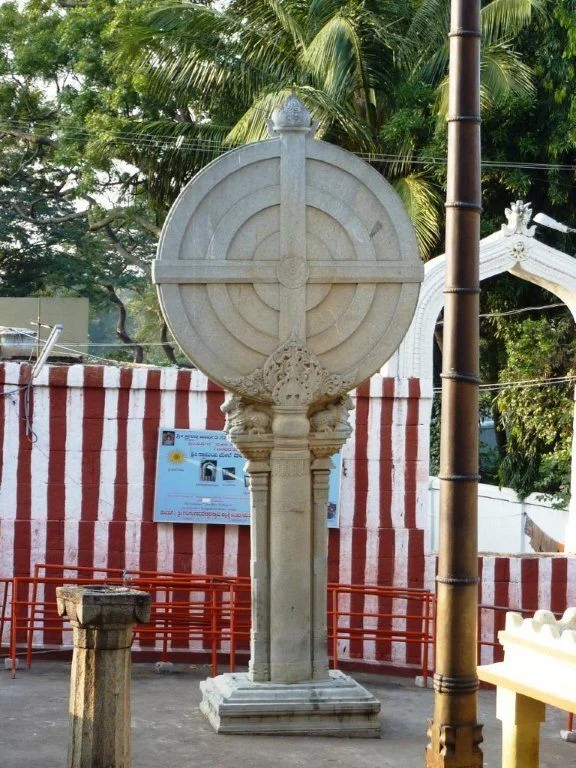
The skambha (lit. “prop”, “pillar”) was considered the Pillar of Heaven, the axis or support of the skies. It was identified with Brahma and with Shiva, the two world-supporters, as well as with Purusha, the Primordial Sacrifice. The skambha had the shape of a cross or, also, of a Y, precisely that of the Cross or Rood.
Like the Cross, it was equated both to the Pillar of Heaven and to the Tree of Life. Many authorities such as F. Max Mueller, have pointed out the fact that the name of the Cross in the original Greek is stauros, and that this word derives from the Sanskrit stavara (pronounced “stawara”), its Hindu archetype in the ashvamedha sacrifice.
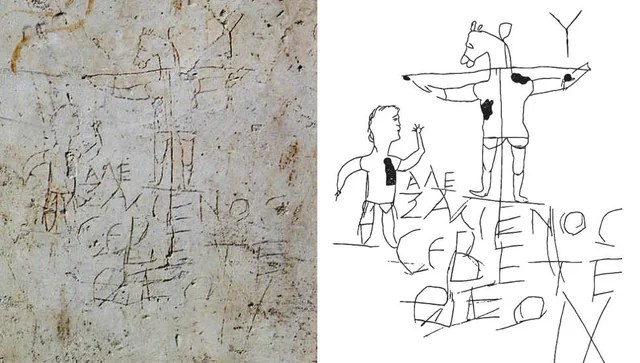
Of course, all such coincidences are the result of diffusion, and we see how the Evangelic notion was derived from Hindu archetypes. This is further rendered plausible by the fact that, in the earliest iconographies, the crucified Christ had a horse s head like that of the Ashvins and other Solar gods burnt at stake, in a sort of primordial ashvamedha. And this primordial sacrifice is no other than the one of Atlantis, as we just said.
Note:Crossed Figures A prehistoric motif and its relation to later artistic, metaphysical and mathematical ideas
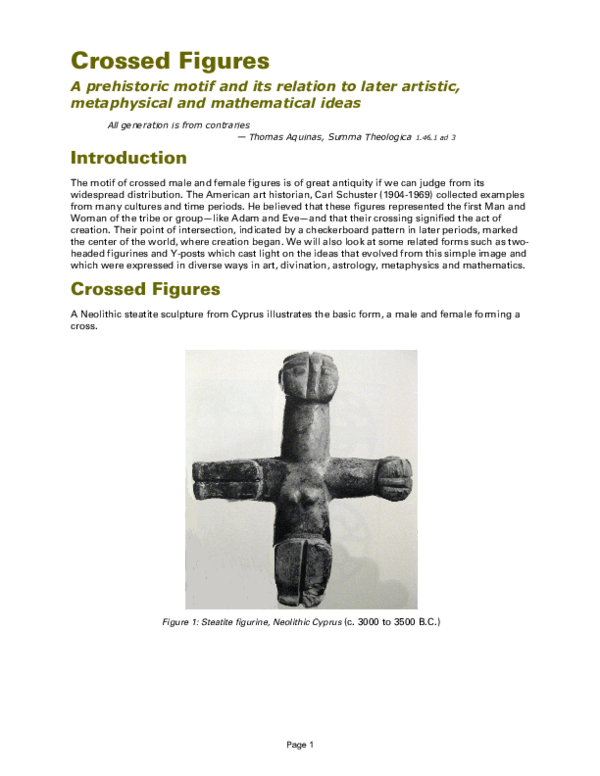
The motif of crossed male and female figures is of great antiquity if we can judge from its widespread distribution. The American art historian, Carl Schuster (1904-1969) collected examples from many cultures and time periods. He believed that these figures represented the first Man and Woman of the tribe or group—like Adam and Eve—and that their crossing signified the act of creation. Their point of intersection, indicated by a checkerboard pattern in later periods, marked the center of the world, where creation began. We will also look at some related forms such as two-headed figurines and Y-posts which cast light on the ideas that evolved from this simple image and which were expressed in diverse ways in art, divination, astrology, metaphysics and mathematics. Read more here
- The Ashvin Twins and the Vedic Flying Horse
The Ashvins (lit. “horses” or “centaurs”) are the Twins of Hindu myths. They are the primordial pair responsible for Creation. They are also the aliases of Yama and Yami. Yama, the Lord of the Dead, is the king of Atala, the Hindu archetype of Hades, the Hell that corresponds to sunken Atlantis. Yama is also the same as the Fallen Sun. Yama is also personified as Pushan or Vishvasvat, after their fall. In fact, the Fallen Sun is not the Day Star or even the Morning Star, the elder sun, but Atlantis, which it personifies.
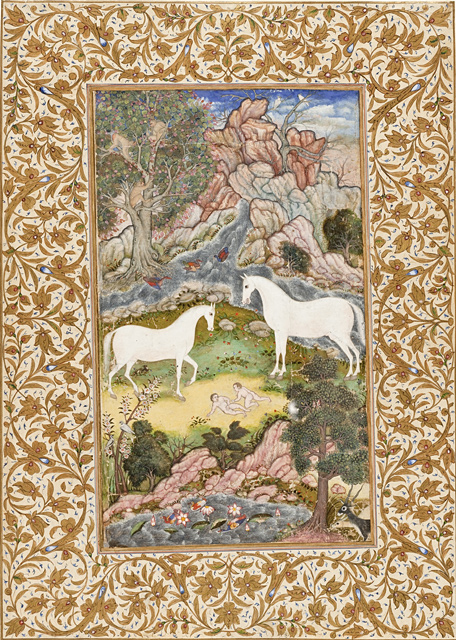
Pushan forms a pair of Twins with Aryaman, and is often confused with Chandra or with Vishnu. He is often associated with goats, which draw his car, much as the Sun s chariot are pulled by horses. The Horse is often equated to Dadhikra, the Flying Horse of the ancient Vedic Hindus. Dadhikra is the Celestial Horse, a personification of the Rising Sun (RV 4:38-40; 7:44; 10:177; 10:123, etc.).
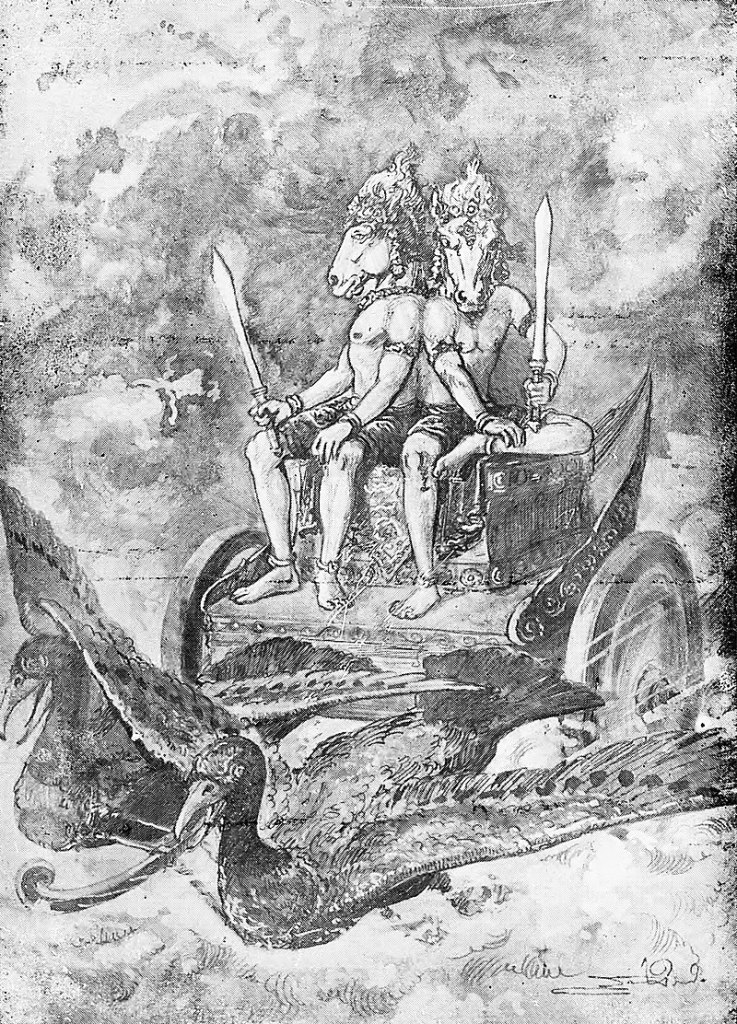
Like the Sun, he rises out of the waters where he has sunk and “enveloped in a cloud of light, he spans out the realm of space” (RV 10:123).3
The Sun Horse (or Bird) is also equated with the Gandharva and with Soma itself. He is called by a myriad Sanskrit names such as Vena and Tarkshya. Vena (“desire”) may be the archetype of Eros (“desire”) who, in Hesiod s Theogony (120) is paradoxically born of the darkness of Tartarus. Golden-winged Eros closely recalls Vena rising likewise from the bottom of the Ocean. Vena is also the archetype of the Phoenix bird of the Greeks, born of its own ashes.
Note: The Double Spiral by Rene Guenon from the Great Triad
We feel it would be not altogether without interest for the reader if we were to make a digression here – or at least an apparent digression- to take a look at a symbol that is closely related to the yin-yang.
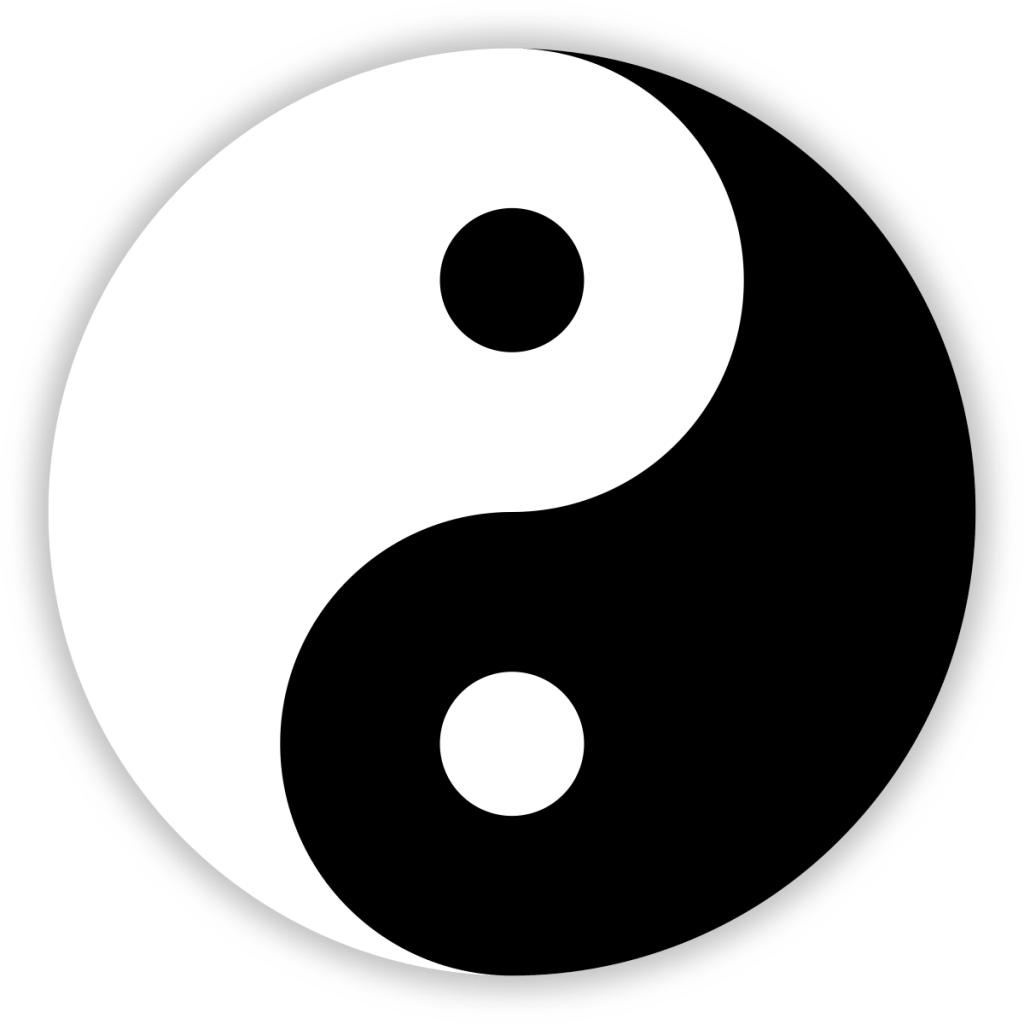
This is the symbol of the double spiral , which plays an extremely important role in the traditional art of the most diverse cultures, but particularly in the traditional art of ancient Greece.
This double spiral ‘can’, as has been said very aptly, ‘be viewed as the projection onto a plane surface of the two hemispheres of the Androgyne, providing an image of the alternating rhythm of evolution and involution, birth and death-in short, as portraying manifestation in its dual aspect’.
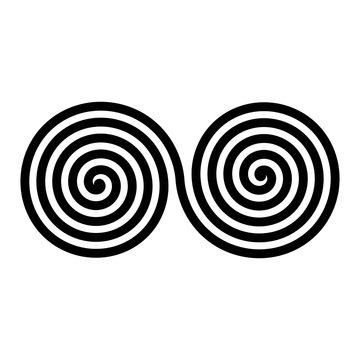
This symbol can be interpreted both ‘macrocosmically’ and
‘microcosmically’; and owing to the analogy between these two
perspectives it is always possible to switch from the one to the
other by making the appropriate transposition. However, it is
primarily with the ‘macrocosmic’ viewpoint that we will be specifically concerning ourselves here. For it is by comparing the double spiral with the symbolism of the ‘World Egg’ (which has already been mentioned in connection with the yin-yang) that the most notable parallels reveal themselves.
From this macrocosmic point of view the two spirals can be considered as indicative of a cosmic force acting in an opposite direction in each of the two hemispheres. In their broadest application the hemispheres are of course the two halves of the ‘World Egg’, and the points around which the two spirals coil themselves are the two poles. One can see at once the close connection between this and the two directions of rotation of the swastika
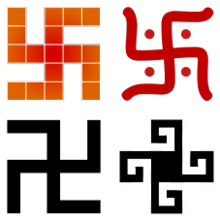
which essentially represent one and the same
revolution of the world around its axis, viewed now from one of the poles and now from the other.4 In fact these two directions of rotation express very well the dual action of the cosmic force with which we are concerned: a dual action which is basically identical
to the duality of yin and yang in all their aspects.
Returning to the yin-yang symbol in general, and in particular to the two semi-circumferences that together make up the line dividing off the light and dark
sections of the diagram, it is not hard to perceive that these semi-circumferences correspond exactly to the two spirals, while the central dots
-dark in the light part, light in the dark-correspond to the two poles.
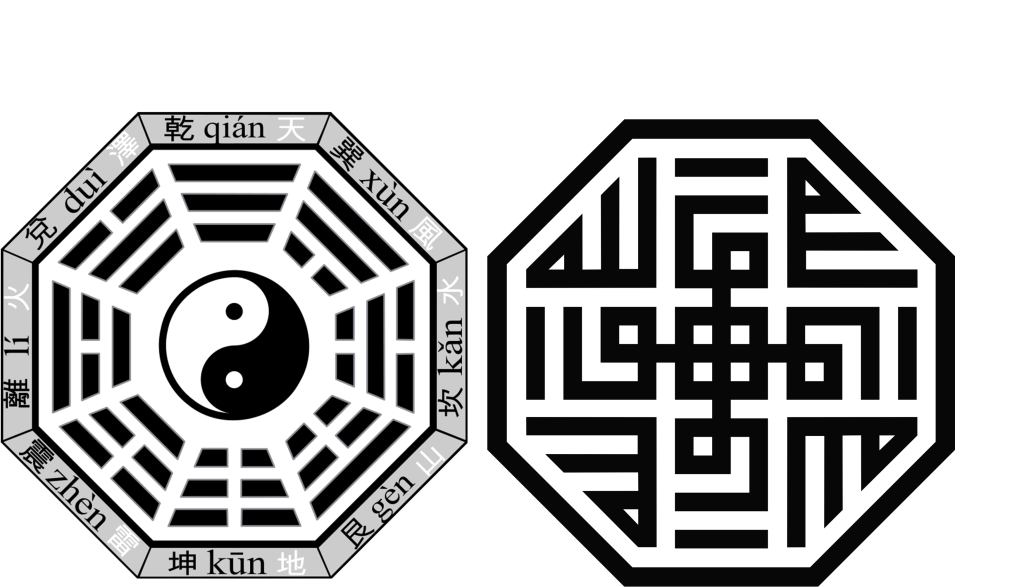
widespread in Islamic countries. In one of its most complete forms, the two points in
question are represented by stars symbolising the two poles; situated on a median
vertical which corresponds to the plane dividing the two hemispheres we find, above
and below the line connecting the two spirals, the Sun and Moon; and at the four
angles are four quadrangular devices corresponding to the four elements: these are
therefore the four ‘angles’ (arkan) or foundations of the world.
This brings us back again to the idea of the ‘Androgyne’ that we drew attention to earlier; and here we will repeat once more that the two principles of yin and yang must always be thought of as complementary, even if the ways they both act in the various realms of manifestation might give the outward appearance of being opposed.
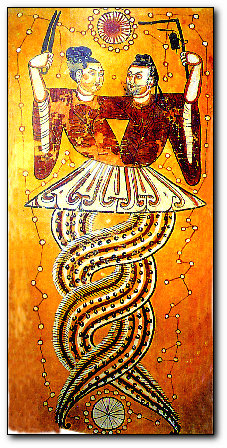
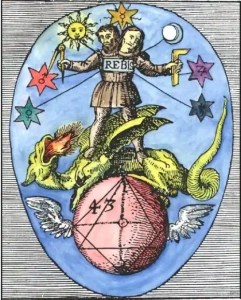
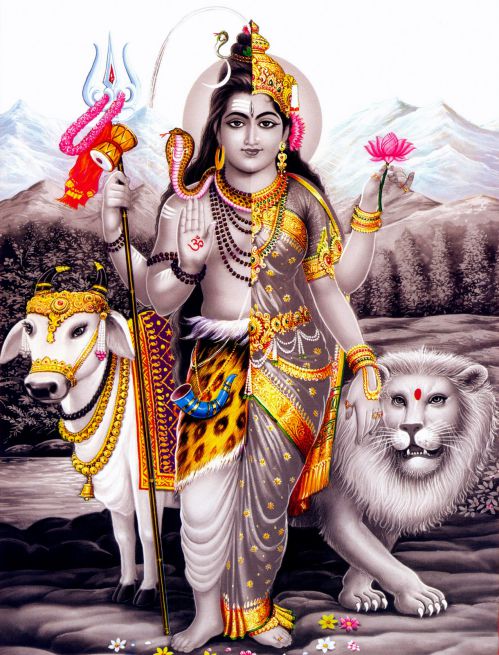
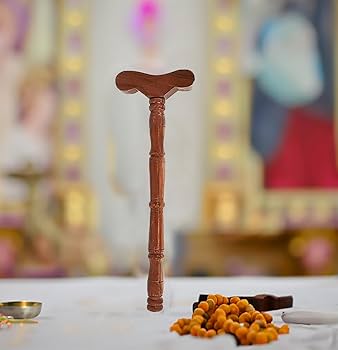
Accordingly, we may speak either (as we were doing above) of the dual action of a single force or else of two different forces, deriving from the polarisation of this single force and centred on the two poles, and bringing about in turn, through those very actions and reactions that result from their differentiation, the development of the virtualities contained or ‘enveloped’ in the ‘World Egg’ . This development comprises all the modifications of’the ten thousand beings’. It is worth drawing attention to the fact that these two forces are also depicted in a different-although fundamentally equivalent-way in other traditional symbols. The most notable example is the portrayal of the forces by two helicoidal lines coiling in opposite directions around a vertical axis. This can be seen for instance in certain forms of the Brahma-danda or Brahminical staff, which is an image of the ‘Axis of the World’ that clearly shows the relationship between this double coiling action and the two contrary orientations of the swastika. Within the human being, these two lines are the two nadis or subtle currents-right and left, positive and negative (ida and pingala).
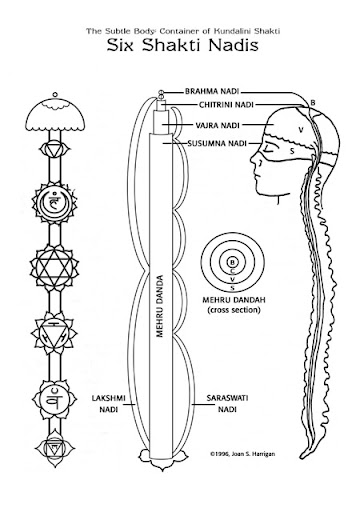
Yet another, identical motif is the two serpents of the caduceus. This is related to the general symbolism of the serpent in its two mutually opposing aspects; and viewed from this angle, the double spiral itself can also be regarded as portraying a serpent coiled around itself in two opposite directions. The serpent in question will therefore be an ‘amphisbaena’8-its two heads corresponding to the two poles, and equivalent in itself to the two opposing serpents of the caduceus combined.
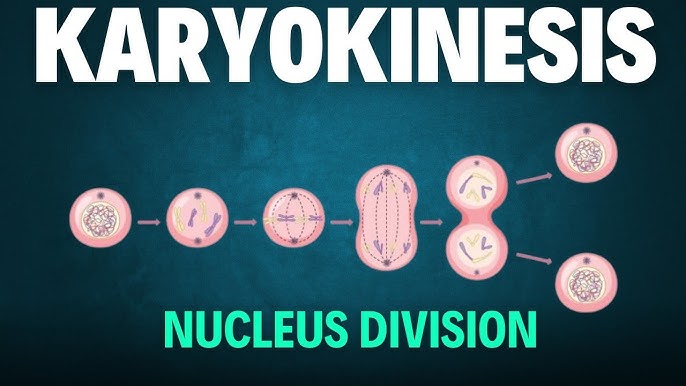
Those who take pleasure in trying to discover points of contact with the profane sciences could-as an example of a ‘microcosmic’ parallel–compare these symbols with the phenomenon of ‘Karyokinesis’, which is the initial stage in the division of cells.

There is a story which explains the formation of the caduceus: Mercury saw two serpents fighting each other (an image of chaos) and separated them (differentiation of the opposites) with a stick (determination of an axis along which chaos will organise itself in order to become the Cosmos) around which the serpents coiled themselves
(equilibrium of the two opposing forces acting symmetrically relative to the ‘World Axis’). An additional point worth noting is that the caduceus (kerukeion, insignia of the heralds) is the characteristic attribute of the two complementary functions of Mercury or Hermes: on the one hand the function of interpreter or messenger of the Gods; on the other, the function of ‘psychopomp’ guiding beings through their changes from one state to another, or in their passage from one cycle of existence to another. These two functions in fact correspond to the descending and ascending directions (respectively) of the currents that the two serpents represent.
In pursuing these analogies we have not let ourselves be sidetracked from the subject of the ‘World Egg’, for the simple reason that in various traditions the ‘World Egg’ is frequently
linked with the symbolism of the serpent. One has only to think of the Egyptian Kneph, depicted in the form of a serpent producing the egg out of its mouth, which is an image of manifestation being produced by the Word; or of the druidic symbol of the ‘serpent’s
egg’. On the other hand the serpent is often specifically described as living in the waters, as in the case of the Nagas in the Hindu tradition; and floating on these very same waters we find the ‘World Egg’. These waters symbolise possibilities, and the development of these possibilities is represented by the spiral: hence the close association that sometimes exists between the spiral and the symbolism of the waters.
In certain cases, then, the ‘World Egg’ is a ‘serpent’s egg’; but it can also sometimes be a ‘swan’s egg’ ( We may add that the swan is also reminiscent of the serpent because of the
shape of its neck. In some respects this makes it a kind of amalgam of the two symbols
of the bird and the serpent, which often appear together in a relationship either of opposition or of complementarity) .
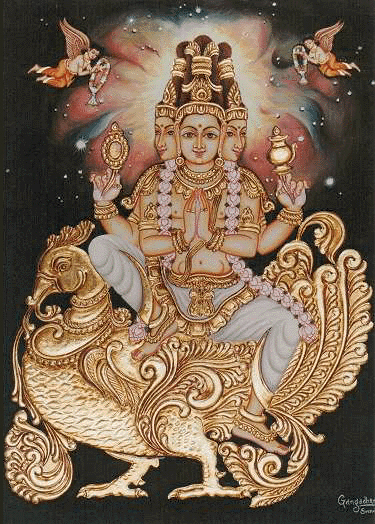
We are thinking here particularly of the symbolism of Hamsa, the vehicle of Brahma in the
Hindu tradition:
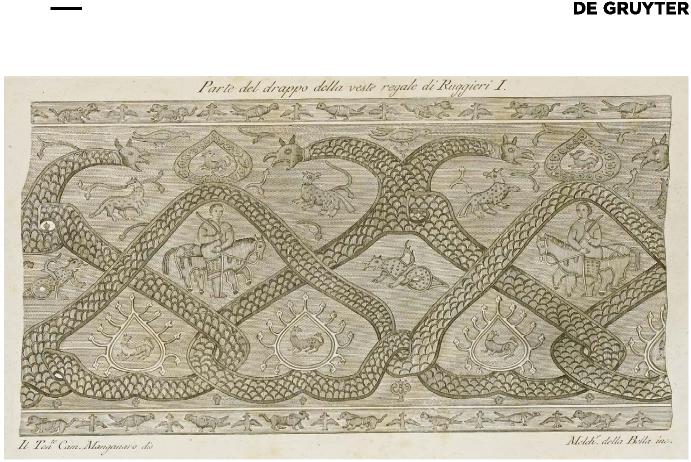
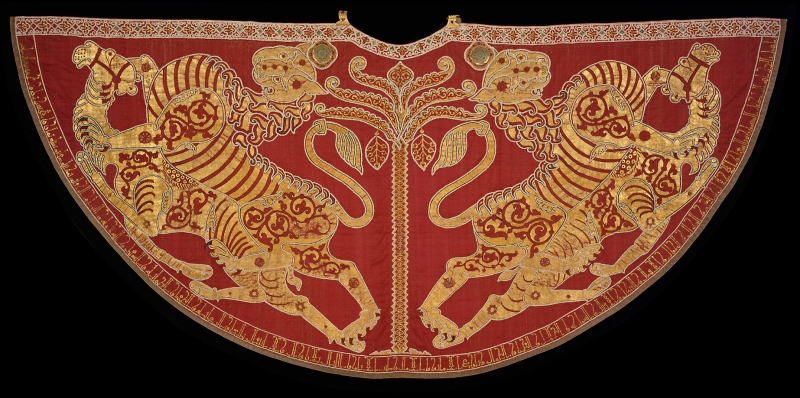
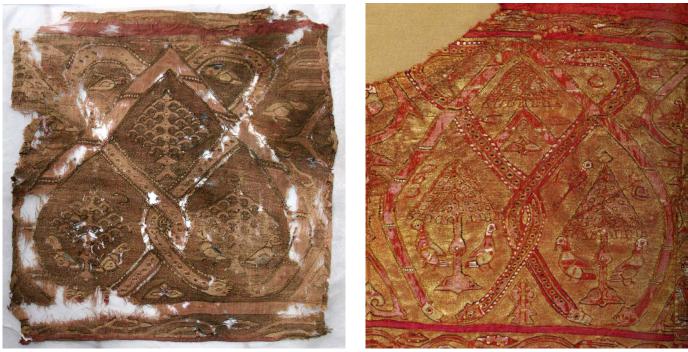
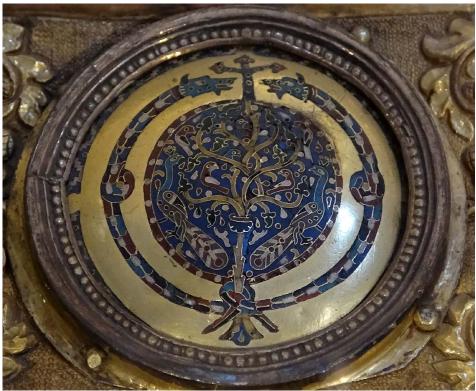
See also: The Androgyne: A Metaphysical, Linguistic and Anthropological View
——————
Note :This symbol is still used for union for mariage in Sri Lanka :
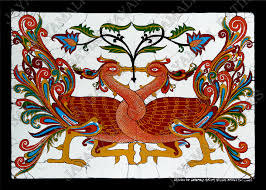
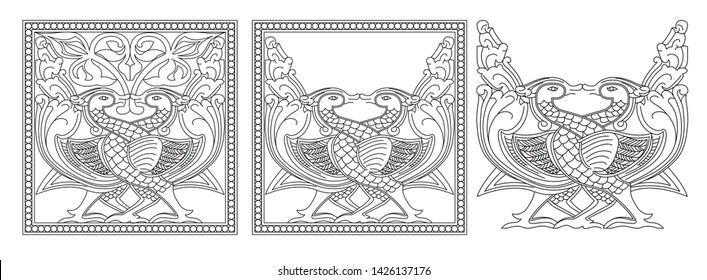
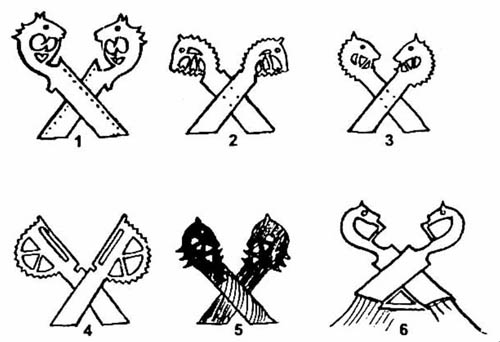
…. But we can also find it back in Germany and Friesland:
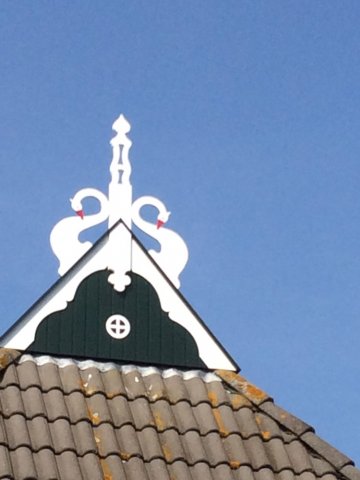
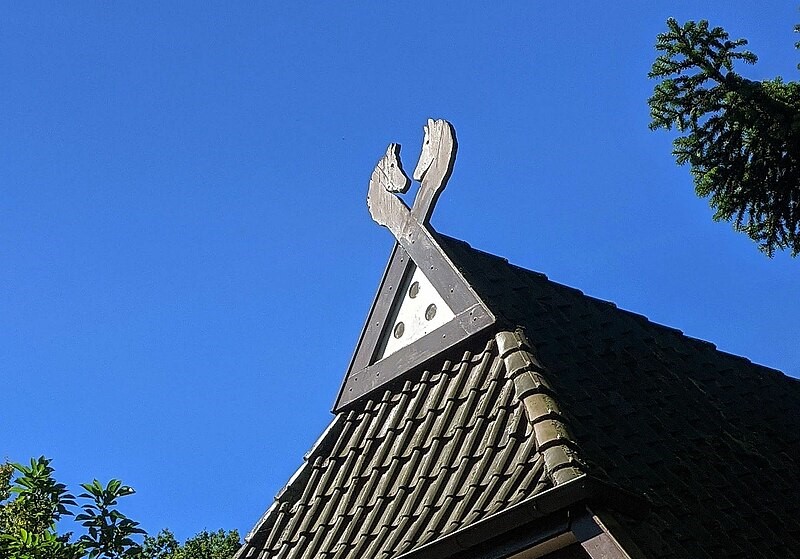
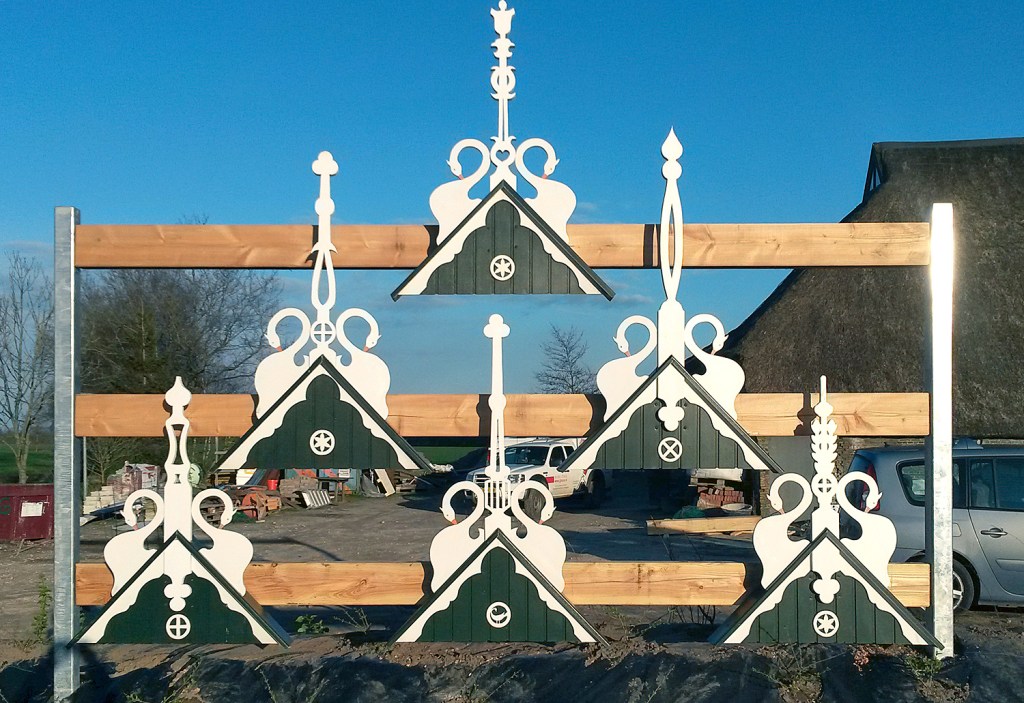
—————-
But it is also not at all uncommon (especially in Etruscan art) to encounter the double spiral surmounted by a bird. This bird is clearly the equivalent of Hamsa, the swan that sits on the Brahmanda upon the primordial Waters; and Hamsa in turn is none other than the ‘spirit’ or ‘divine breath’ (for Hamsa also means ‘breath’) that, according to the opening of the Hebrew
Genesis, ‘was borne upon the face of the Waters’.
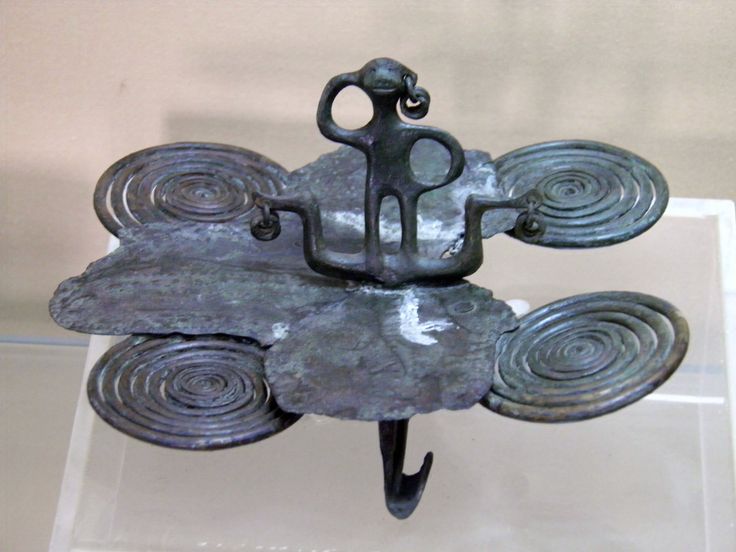
No less worthy of mention is the fact that according to the Greeks the Dioscuri, Castor and Pollux, emerged from the egg of Leda which was engendered by Zeus in the form of a swan. Symbolically Castor and Pollux correspond to the two hemispheres, and therefore also
to the two spirals we are considering. They will therefore represent the differentiation of the two hemispheres within this ‘swan’s egg’-in short, the splitting of the ‘World Egg’ into its upper and lower halves. (To make this symbolism more explicit the Dioscuri are shown wearing hemispherically-shaped caps.)
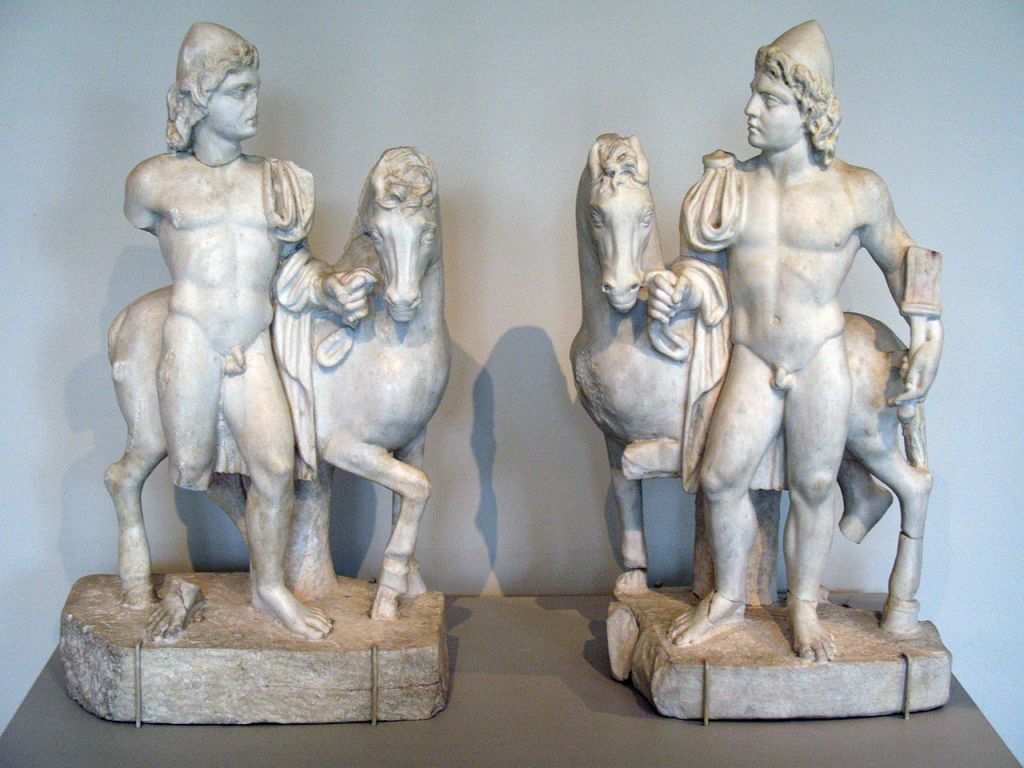
To attempt to elaborate further on the symbolism of the Dioscuri would be outside of our scope. It is a very complex matteras indeed is the symbolism of all comparable couples comprising one mortal and one immortal, one of them often depicted as white, the other as black, just like the two hemispheres of which one is illuminated while the other remains in darkness. We will confine ourselves to observing that this symbolism is basically very
close to the symbolism of the Devas and Asuras. Here the opposition is bound up with the dual significance of the serpent, depending upon whether it moves in an upwards or a downwards direction around a vertical axis, or alternatively on whether it is uncoiling itself or coiling around itself, as in the image of the double spiral.
—————
Note: Twins Cautes and Cautopates – Mithras mysteries
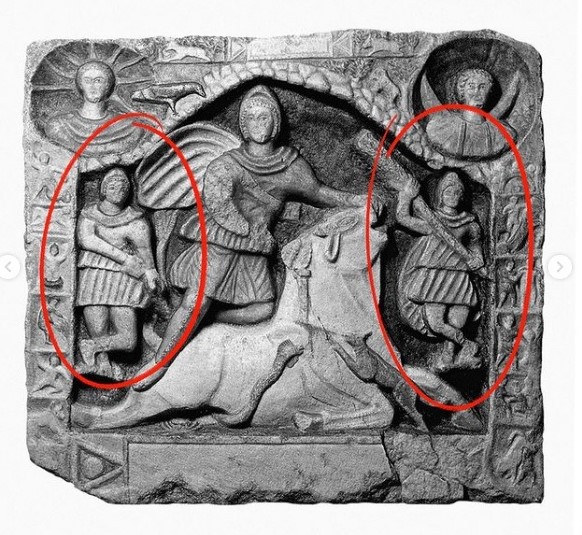
These twins often frame the scene, with one holding a torch upward and the other pointing theirs downward. This suggests contrasting energies, reflecting the common theme in divine twin myths. The torch symbolism is particularly intriguing given Gemini’s esoteric associations with both fire and the sun.
In some cultures, Gemini wasn’t seen as twin brothers but as two sticks used to make a fire. Some believe that these twins, with their opposing torches, represent the rising and setting sun or the equinoxes specifically.
mystical: terminology
The origin of the word is Greek, to mystikón, or better ta mystiká, to point out “the experience of a profound, mutual interference between the two divine and human planes, both in the sense of the participation of certain divinities in a partially human event (disappearance and return, life and death), and in the sense of a ritual participation of men to events and ways of being connected with the divinitie
Within the ‘mystical’ concept, a further differentiation was then reached:
- a first form, in which the participation or interference between divine and human is temporary and characterized by enthusiasm, as in the practices of Dionysian and Metroaco menadism (relating to the goddess Cybele, called by the Greeks simply Meter, hence the adjective. See S. Ribichini, The secret rite. Ancient mystery cults, handouts);
- a second form, the so-called ‘mystery cults’, stands out because it additionally implies the “presence of an initiatic ritual, graduated and esoteric, inside sanctuaries destined for this purpose (telesterion, mithraeum, penethral) in view of an even extra-worldly bliss of which the initiate receives promise and anticipation by witnessing and associating himself with the story and destiny of the mystery god“. The Eleusinian mysteries are the model of this typology, to which the mysteries of Mithra, Isis and Cybele attested respectively by Apuleius, Clement of Alexandria and Firmico Materno are added with novelty of structure.
- Finally, a third form of the ‘mystic’ is the ‘mysteriosophical’ religiosity, where the subject of the story of fall and rebirth is not so much the mystery god as thedivine soul, who are “a celestial element which, from the most ancient Orphic-Pythagorean formulations to Hermeticism and Gnosticism, through Platonic dualism, is found imprisoned in the tomb of the body and in the cave that is the world. Here the initiatory and salvific value is not so much found in a ritual of repetition of the story of the god, but in a sofia and in one gnosis which, moreover, is not without a certain rituality».
The specificity of Mithra
The mysteries of the Persian god in the Roman Empire have a peculiar character that disregards the ancient mystery cults of Greece: everything in Roman Mithraism belongs to the mystery structure, everything is based on initiation without any part open to public celebration.
Yet the mysteries of Mithra were able to fulfill a function that went beyond the initiatory environment (as evidenced by the popularity of the solar cult), and when it took on the characteristics of officialdom it became an instrument for the army, administration and notables. to show political-religious loyalty to the emperors – some of whom did not hide their adherence or sympathy to the Mithriac cult, as in the case of the dedication of Carnuntum placed by Diocletian, in which the emperor calls Mithra supporter of empires; in reverse, “the cults of the Magna mater or of Isis only in certain cases involved esoteric initiation and specific soteriological perspectives and had a large part that concerned public worship“; moreover Mithra was a foreign god, of a nation traditionally enemy of Rome where the Magna mater it had long been the national deity and the Egyptian gods were now incardinated in Roman worship.
The mystery cults of the Hellenistic-Roman world are an expression of movements of a supranational and cosmopolitan dimension, consistent with an era in which the individual and his aspirations for salvation go beyond the national and citizen moment of ancient religion as in the mysteries of Eleusis. and privilege of the Athenian state. “The Eleusinian mysteries continue to attract aspiring initiates to the famous, only sanctuary, which knows imitations but not branches, while the spelaea, the Mithraic conventicles multiply excessively, administered by employees of various geographical and social origins” (see the Roman temple of Mithra in London, the “greatest archaeological discovery” of the English capital, Museum of London) – something very different from Eleusis where the cult is entrusted to people of noble extraction and only the solemn autumn ceremony is managed by the state and concerns the different categories of population.
However, we are not always authorized to suppose the allusion to an effectively mysterious cult, that is, involving an initiation of an esoteric type with prospects of salvation, in the inscriptions in which reference is made to mystery, mystai, myesis, orgy, looms or myths and rites aporrhetoi, ‘which is not lawful to disclose’; the hints on Egyptian sarcophagi, for example, or the famous testimony of Herodotus (II 171) are not enough to suppose that in Pharaonic Egypt the Osiric rites had the character of mystery cults, because the privilege of bliss in the hereafter was not assured. to the individual still alive but to the dead, transformed into Osiris, through funeral rituals; not even the rich iconography of the Villa of the Mysteries in Pompeii can guarantee that we are faced with a real initiation ritual rather than an imaginative fantasy on a mythical-ritual theme. “these aporrheta Greeks, Egyptians or others we will define them with the adjective ‘mystics’, because they refer to the story and suffering of a god in a context of seasonal rite, without however implying the initiatory structures and the individual soteriology of the mysteries».
On the other hand, it is true that the cults of Isis and Osiris, Cybele and Attis do not hide their ‘vocation’ or mystery predisposition, even in continuity with theethos deriving from their specific traditions; formerly Plutarch in chap. 27 of De Isis «mentions the institution by the goddess of a rite that remembers and depicts her and Osiris’s events for the purpose of consolation for those, men and women, who were in similar painful contingencies“. Or the Homeric hymn to Demeter, when the goddess makes known and institutes the orgy misterici ‘for all’, and which recalls the mystery formula of an unspecified cult reported by Firmico Materno: “trust, or mixed, in the saved god: for you too there will be salvation from pain “.
Mithra presents some continuity with the original god, as well as in the name also in some ritual term as in the exclamation us or in the iconography and, above all, in the same distinction / identity between Mithra and the Sun, which appears, in different ways, in Rome and in Persia. But, for the rest, everything is new in Roman Mithraism, starting from the exclusively mysterious, esoteric nature of the cult, while the cult of Isis, deeply rooted in the terrain of Egyptian popular festivities connected with the seasonal cycle, could easily assume in the Ptolemaic period and then Roman a meaning of popular cult widely practiced: Isis and Osiris, Cybele and Attis imposed themselves in Rome as ‘mystical’ gods before being mysterious, because they were connected to a story of loss and discovery. Mithra instead is «devoid of mystical connotations in Persia, and only emerged as such during his long journey to the West».
Repetita mortis imago
Therefore the myth foresees an end for the two divine characters, the rite instead foresees that they return seasonally in the celebration of their presence-absence story, and when they return they are married with the goddess of all fertility, accompanying and guaranteeing earthly fertility. The gardens of Adonis were planted on purpose to melancholy withering immediately afterwards, signifying the rapidity and prematurity of the disappearance of the god, who died prematurely and without children; but Adonis and Attis still exist somewhere and have not ceased their function, they do not disappear even if the center of gravity of their mythical story is absence. For this, especially the weak and defeated Attis acquired cosmic attributes towards the end of antiquity that make him the great and powerful holder of a mystery cult.
Finally, in the Orphic and later Platonic doctrine, man exists in this world to ‘suffer his Hands’, that is, to atone for an ancient sin; this doctrine is founded on the dualism of Orphic mysteriosophy, which will have continuation in one of the central dogmas of Gnosticism according to which man is the fruit of a culpable event or a primordial accident that occurred in the divine world, before the creation of the world (different from sin original of Adam, formerly man). Still at the end of the fourth century, in Rome we are witnessing a rebirth of a noble style of the cults dedicated to the Great Mother, when Christianity had already been present in this city for some centuries.
Twins St Georges and St demetrius:
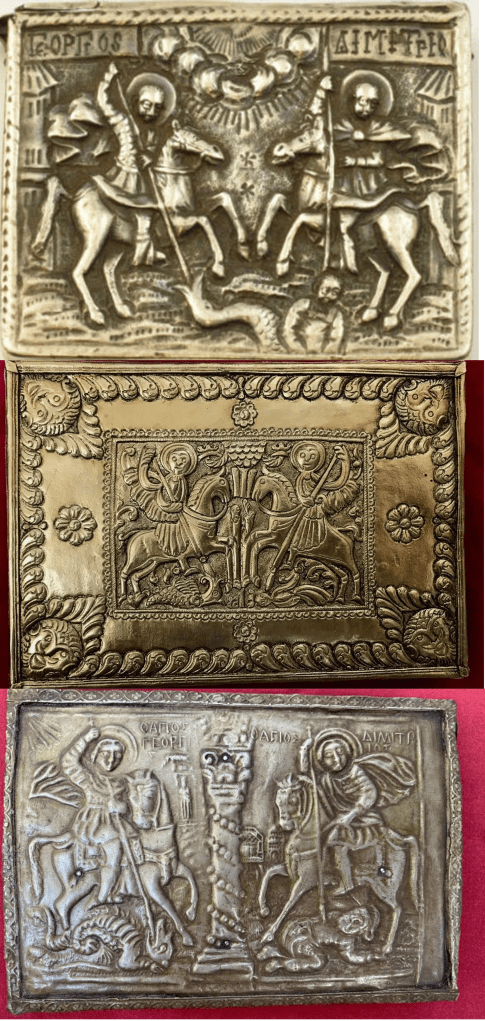
St George, St Demetrios and Al Khidr
Note on Al khidr: His original name seems to have been al-Khadir (“the green one”), which over time in many places became al-Khidr or Khidr or Hizr. In the modern Middle East the spelling is Khodor is often used as a person’s name. We shall use the shortened form, Khidr.
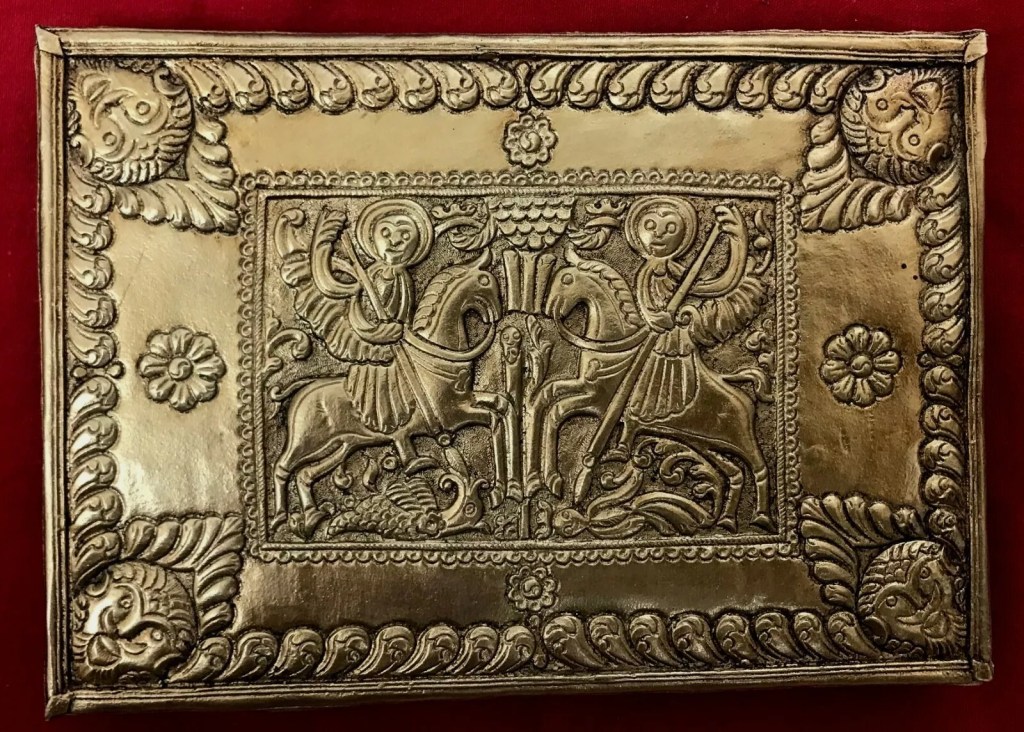
At first sight there seems to be little connection between Elijah, George, Demetrius and Khidr, apart from the fact that in the Middle East they are frequently associated with the same place by different religious traditions. Is it then a simple case of overlapping traditions, Jewish, Christian and Muslim, all of whom focus on the Holy Land as part of their own heritage and take Abraham as their forefather?
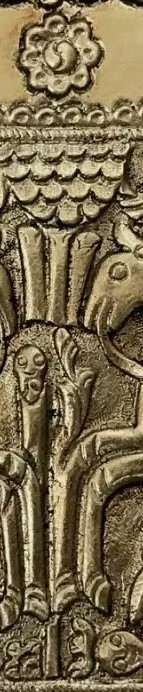
Certainly there is a view which suggests that Khidr is to Muslims what Elijah is to Jews, in respect of them both acting as initiator to the true believer, and which in itself is testimony to attempts to find common ground between the three traditions.
—————————
Of St. Elijah, hail and thunder storms in Bulgaria:
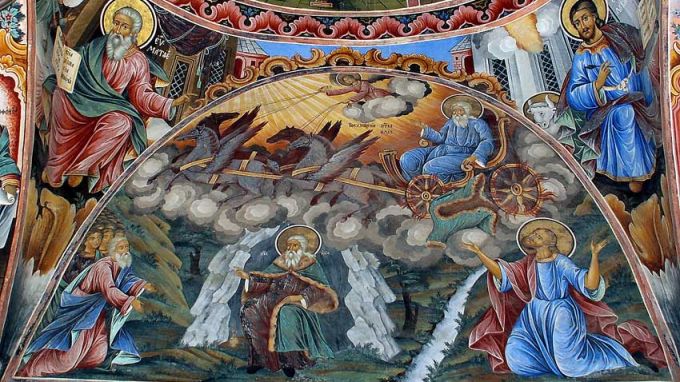
Ilinden, or St. Elijah’s day falls on July 20 (old style calendar) – the day of the Old Testament prophet Iliya (Elijah). When God decided to take him up to the heavens, a chariot of fire came down to Earth and whisked him up, alive. Because of his prophecies, his sanctity and the purity of his earthly life, in biblical texts Elijah is described as a “divine man” and an “earthly angel”.
In folklore the saint is painted as a very different figure – he is strong, powerful and quick-tempered. He is the master of the summer celestial elements – the clouds, the rain, the thunder, hailstorms… He is evidently heir to the pagan deities, rulers of rain and thunder, Perun and Tangra.
According to legend, when God gave out the world, St. Elijah got the summer thunder and lightning. To protect the crops, he would traverse the skies in a chariot of gold in pursuit of the dragon, because it was the dragon that fed on the wheat. While the bolts of lightning were the flames that came out of the horses’ nostrils and from under their hooves. Or the arrows he used to try and transfix the dragon. So, in folklore tradition he has many names that speak for themselves – Grumovnik, Grumolomnik, Grumodol – all of them derived from the word grum – thunderclap. When he is angry or happy he can work miracles. That is why his sister – St. Mary (some call her Fiery Mary) kept the date of his patron saint’s day a secret from her brother for fear of his unleashing the elements on the world. The saint carries hailstones up his sleeves. And when he encounters sinners or infidels, he works up a hailstorm. St. Mary’s day is two days after Ilinden, on July 22. That is when the church celebrates the memory of Mary Magdalene, the bringer of peace. According to one folklore legend, on her day, Mary put on her best clothes to go to church. She met her brother on the way who asked her where she was going, “Today is my day, so I shall go and light a candle,” she answered. “When will my day come, so I could have some fun too!” St. Elijah sighed. “Your day has come and gone,” his sister laughed.
They call Ilinden “high summer” because it was said July 20 marked a turning point in the weather. People living by the Black Sea say that is when the sea “turns”, to become stormy and cold and claim human lives. That is why on Ilinden fishermen do not go out to sea, and no one bathes in its waters. No work should be done on Ilinden and this is a ban that was, on the whole, observed across the Bulgarian lands. To this day, on July 20, fetes with votive offerings were organized in many towns and villages. According to tradition, the animal sacrificed on this day was the old rooster or “father rooster”. Women would make ritual loaves called bogovitsa or kolach and dedicate them to St. Elijah. In some parts of Southern Bulgaria a bull would be chosen for the sacrifice. The table would be laid near old hallow ground or an age-old tree, close to the village. It was believed that the votive meal on I linden would safeguard the people and the crop from thunder and hailstorms.
There are different stories describing how and where hailstorms are born. In Bulgaria, the guardians of hail are called Krivcho, Slepcho and Gluhcho – derived from the words for blind, deaf and crooked. According to some of the most popular legends, hailstorms are made by what are known as hail-saints. Besides the all-powerful St. Elijah, they include the saints Germain, Bartholomew, Theodore and Elisha. Just as with all natural elements, the ice storms are brought down on men for the sins they have committed, for failure to observe bans on major church holidays or for disrespecting the hail-saints.
Eagles are also thought to be connected with hailstorms. It is said that there is an eagle “leading” every hail-cloud, and that is why eagles’ nests must not be disturbed. Whenever a black cloud appears, the men would take their rifles and take shots at it to frighten the eagle into taking the cloud somewhere else. People also believed that if they were to look at the cloud through the willow-twig wreath they have kept since Palm Sunday or through a sieve, the hailstorm would pass them by. In some parts of Bulgaria, the candle from the St. George’s day lamb would be lit or the first egg dyed red at Easter – taken out of the house.
Ilinden – St. Elijah’s day is a day celebrated by all people named Iliya, Ilian, Iliana and their derivatives – Ilka, Lina, Licho etc. It is also the day of curriers, fur-dressers, saddle and tile makers.
——————————
The sacred sites associated with Elijah, the twin brother George and Demetrius and Khidr over centuries seem to have accumulated worship in various forms, so that one sits quite literally on top of or next to another. The sites often exhibit similar attributes: for instance, the presence of water and greenness, suggesting fertility in a barren land; or perhaps a cave, which represents a meeting-place of two worlds, the manifest and the hidden (and on occasion both elements are present, as at Banyas).
Then there is the ancient theme of the spiritual side of man being dominant over the material, as suggested in the stories by the holy rider on a chariot or horse (or in the case of Khidr, a fish).
This is a clear picture of the divinised human, who comes to deliver mankind:
Elijah is zealous for God and the destroyer of false prophets, while St George is the conqueror of animality in the form of the dragon; and Demetrios kill the Bad King
Khidr’s role is rather less vividly martial – he brings real self-knowledge, delivering the individual from the false and base nature of the soul.
In all three cases one can remark the polarity of the monotheist or true believer and the pagan or ignorant: Elijah and the prophets of Baal, St George, st Demetrios and the emperor Diocletian, for example and perhaps most strikingly in this respect, Khidr who points out the interior meaning of this opposition and is thus the educator of Moses.
However, we should note significant differences in their status, which in part reflect the religious context in which they appear: Elijah is a prophet, in a long line of prophecy; St George and his brother are saints, martyred for their faith in the tradition of Christianity; Khidr, however, is almost a nobody – he is neither saint nor prophet, but an ordinary person graced with immortality and initiatic significance. While the first three are usually portrayed as mounted, Khidr has his feet upon the ground (or just above it in some stories) or walks on water; as we shall see, he has a most particular role to play in mystical teaching. Read more here
See also: THE ELIATIC FUNCTION IN THE ISLAMIC TRADITION: KHIDR AND THE MAHDI
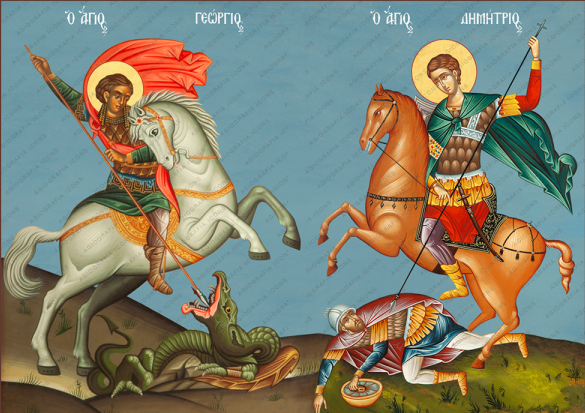
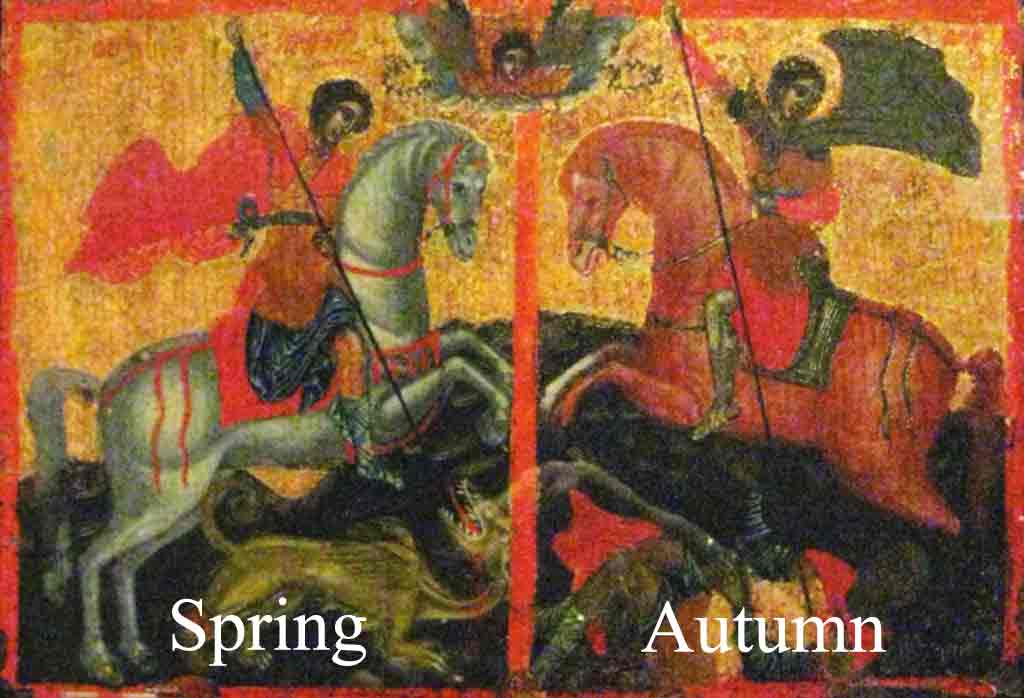
The traditional calendar of Bulgarians in the past had several important dates in the transitional period between the change of seasons. Climatic conditions on Bulgarian lands quite naturally split the cycle of nature into two major parts. The first part starts on May 6th, or Saint George’s Day, when spring arrives and all nature awakens for life. The second borderline is October 26th, or the Day of Saint Demetrius. This is deemed to be the end of the active agricultural season, the start of winter, evening gatherings and engagements of young couples. Just as every new beginning, Saint Demetrius’ Day was a source of much hope. On this day, people would make predictions as to the future fertility, health, love and the weather at the coming Saint George’s Day. Because in folk beliefs, George and Demetrius were twin brothers, that is why the predictions made on Saint Demetrius’ Day were valid for the day of his twin brother.
Saint Demetrius’ Day is a big Christian holiday. On this day, Bulgarians traditionally venerate the memory of the holy martyr Demetrius who was born in Thessaloniki in the 3rd century AD. He died as a martyr for the Christian faith, and upon his grave in Thessaloniki a small church was erected. At the place of this small church, a magnificent basilica stands today, where the relics of St. Demetrius are kept. This is, in a nutshell, his official Christian role in Bulgarian beliefs. In Bulgarian folklore, however, St. Demetrius has been given a special place, and the whole month of October is sometimes called the Month of Demetrius.
In folk beliefs, Saint Demetrius is the elder twin brother of St. George. Both are strong, beautiful and fearless men. Along with St. Theodore and St. Elijah, they are the Christianized equivalent of the brave men in Bulgarian mythology. Strong and dexterous in the battle, with their fast horses they can jump over mountains, conquer evil, and fight dragons. In folk tales and legends, the two saints have the power to open and close heaven, make rain and snow and ensure fertility. The task of St. Elijah was to protect the fields of corn from the evil creatures who stole the harvest. His brothers, twins George and Demetrius, were also strong enough to defeat the mythical monsters.
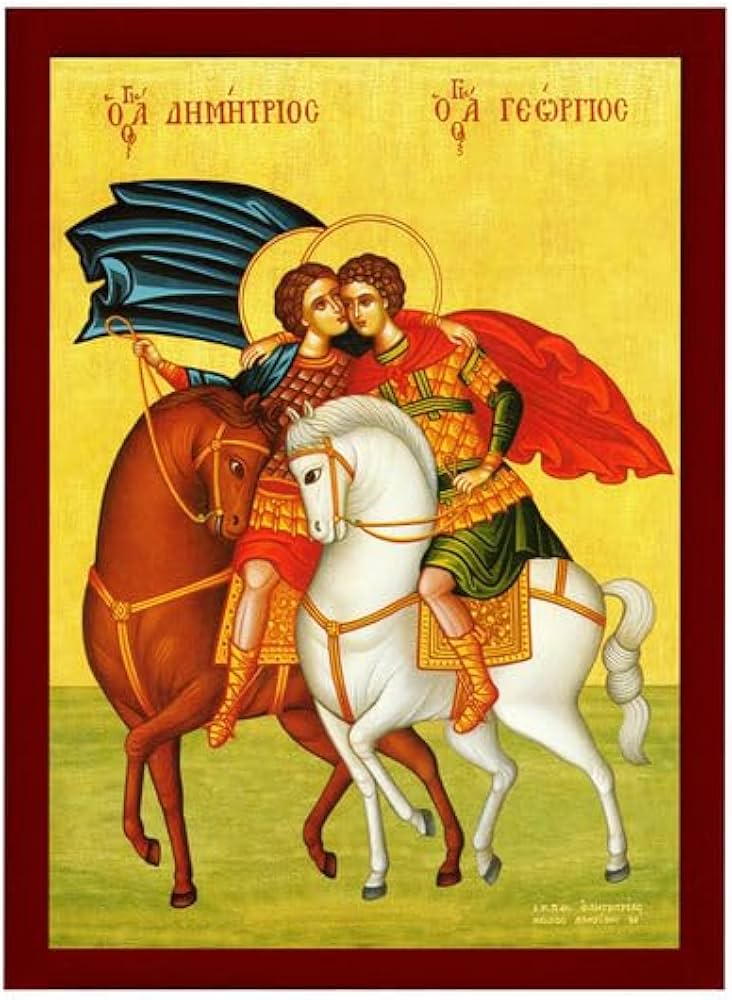
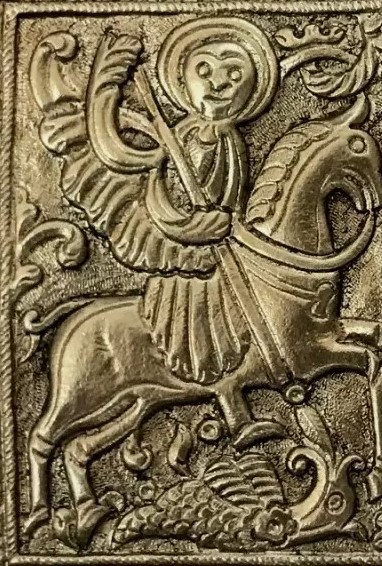
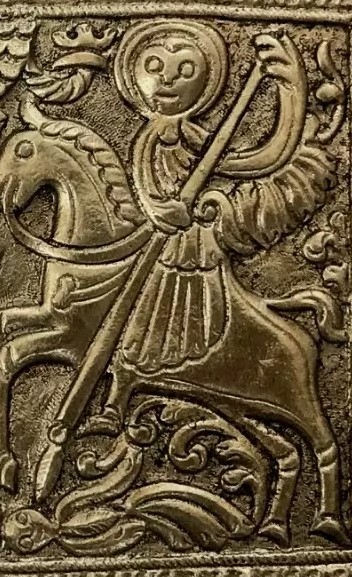
They are represented as warriors and victors also in Christian iconography. Saint George is riding a white horse and Saint Demetrius a red one, both holding a spear in hand.
The most popular legend of the brothers George and Demetrius contains facts from the life of St. Demetrius. It tells about the family of a poor fisherman who had no children. The man and his wife constantly prayed to God to give them offspring. One day, the fisherman caught only a very small fish which spoke with a human voice and begged him to let it go. The man did so. The next day, he had no luck again. He caught only the small fish again. On the third day, the same thing happened. This time the fish asked the man to take it to his house. He did so and after a while, his mare gave birth to two foals, and his wife – to two boys. They named them George and Demetrius. When they grew up, they set off on a long journey. They agreed they would divide the world into two halves and everyone would live in his own half. Once, when Saint George was in danger, Saint Demetrius fought with a dragon and saved his life. Then, they mounted their horses, flew to heaven and became saints.
In Bulgarian fairytales, St. Demetrius is also endowed with unearthly spiritual powers. His image is reminiscent of Proto-Bulgarian high priests, legendary healers and fortune-tellers. And he can even predict the weather – that is why Bulgarians used to believe that if the weather on Saint Demetrius Day was nice, so would be it also on St. George’s Day. And who knows, these predictions may as well be true. Or they could be seen just as another bridge between the known and unknown reality that has for centuries put man in anticipation, suspense and hope for a better future.
St George: The Art of Dragon Taming
Paul Broadhurst in “the Green Man and the Dragon”told about the art of Taming the dragon in Britain:
One of the best-selling books of all time was The Golden Legend, written by the Bishop of Genoa Jacobus de Voragine. In it he provided the medieval world with a definitive account of the lives of the saints, which everyone at the time believed to be historical facts gleaned by his scholarship from ancient records. In reality, like so many others that were to follow down the centuries, it was a motley mix of fact and, where there were no facts, a liberal dose of fiction. There was also an agenda.But it was a formula that gripped the attention of its readers, who preferred to believe in the fabulous and miraculous exploits of their heroes, just as in Celtic times when people loved to hear of the wondrous world of giants, gods and the Land of Faery. The saints were all these, and more, for they did the work of the one true God.
Printed in English in 1230 it contained a detail of St George’s career that had strangely hitherto gone unmentioned in the voluminous annals of the saint’s life. Almost a thousand years after his supposed death George was to become famous all over the world for what was his most fabulous exploit of all—the slaying of a dragon.

Jacobus’ story is a classic mix of fairytale heroic deeds and propaganda aimed at the conversion of previously pagan believers to the true faith. In it St George came upon the city of Silene in Libya where a terrible dragon ‘envenomed all the country’. Read more here
The “Great Martyr” Demetrios of Thessaloniki
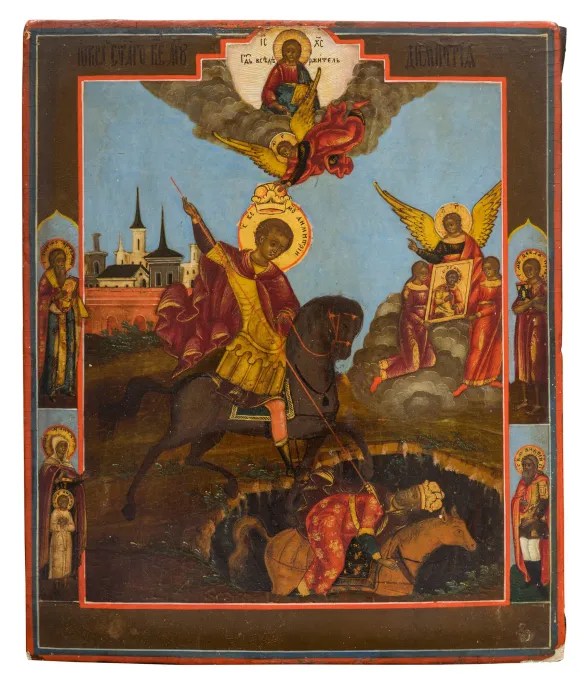
Icons of Dmitriy/ Demetrius also depict him riding a horse and thrusting his lance at an enemy beneath him, but in this case the enemy is not a dragon, but rather a figure sometimes vaguely called the “King of the Infidels,” a symbol of the invaders who threatened the city of Thessaloniki (Salonika), which was considered to be under the saint’s protection and has a church dedicated to him. In Slavic countries, the fallen King is identified as a Bulgarian Voevod called Kaloyan, supposedly defeated by Dmitriy, but history says he was actually assassinated by another Voevod named Manastras.
Return of Spring Sacrifice

The ancient custom of sacrificing divine kings is played out in both Bulgarian and Sardinian festivals in the Dionysian mode by distributing virtual fragments of their mutilated bodies over village fields, thus ensuring the return of a fertile spring. The tradition, which associates the sacrifice of the king or his children with a great scarcity of crops, points to the belief that the king is responsible for the weather and harvests. The spilled blood evokes rainfall for the parched earth, essential for collective survival. According to Frazer, when gods are killed, they take on the role of scapegoat, sweeping away disease, death, and sin from the community, and are eaten symbolically in order to be assimilated.
In the carnival enacted in Samugheo, Sardinia, a related character called S’urtzu-Dioniso, symbolizes the god to be sacrificed. He appears as a goat, which according to legend, is how Dionysus often appeared. Under the goat skin is a bladder filled with blood and water. When he is hit and falls, the bladder breaks and red blood soaks the ground. After this sacrifice, new life emerges.
Kukerovden, which translates as ‘Day of the Kukers’, is a Bulgarian mystery play within the festival, in which each player bears a strong symbolic connection to an archetypal aspect of nature. The Neolithic ritual is designed to bind heaven and earth together by telling a human story that echoes the greater, universal drama. See Dance Away Evil Spirits : Folklores of the Kukeri in Bulgaria, the Mamuthones in Sardinia and St Georges in Europe
Cosmic cycles and time regeneration: immolation rites of the ‘King of the Old Year”
Mircea Eliade wrote that “the main difference between the man of archaic and traditional societies and the man of modern societies, strongly marked by Judeo-Christianity, consists in the fact that the former feels solidarity with the cosmos and cosmic rhythms, while the second is considered in solidarity only with history “. This “cosmic life” is connected to the microcosm by a “structural correspondence of planes arranged in hierarchical order” which “together constitute the universal harmonic law in which man is integrated”
Archaic man especially took into consideration the solstices and equinoxes, as well as the dates between them: it was believed that in these particular days, which marked the passage from one phase of the cycle to the next of the “wheel of the year”, the energy of the cosmos flowed more freely, and therefore they chose such dates to perform their own rituals. Here we are especially interested in certain dates between the Winter Solstice and the Spring Equinox, that is to say the calendar phase in which the Sun appears die: the so-called “solstice crisis” or “winter crisis”.
Traditional man believed that when the “wheel of the year” had reached its winter phase, it would have to be done relive the heliacal star with special rituals, in order to ensure fertility and fecundity for the year to come. It can also be said that, in every part of the world, traditional societies knew and applied ritual methods to obtain the regeneration of time.[ For example, the thinkers of ancient India, from the Vedic period onwards, in an attempt to give structure to the shapeless chaos of the universe, forged with their intuitions a very dense web of mythical and ritual connections and correspondences, mainly centered on the sacrifice, exoterically represented with the death of a human and, later, animal victim, as a symbol of the death of the old year and its consequent renewal and rebirth as a “new year”.
Prajàpati is the year. *
The year is death. He who knows this is not touched by death.**
* Aitareya Br., 7,7,2
** Qat. Brahmin, 10,4,3,1
The immolation of the “King of the Waning Year”
We know that in ancient times the year for the Hindus — as well as for the Celts, Romans and other Indo-European peoples — began on the vernal equinox, “when fawns are born.” Then the king of the old year, adorned with cervine horns like Actaeon, was put to death by angry women, called “queens” . The king, in these ancient rituals, was the center of the cult, and as such was responsible for the harvests and prosperity of the communities from an archaic point of view that saw in the king the son and vicar of the divinity on earth, he was considered responsible for the regularity of the rhythms of nature and the good progress of the whole society: it is therefore not surprising to note that, through his sacrifice, he believed that time was regenerated and fertility assured for the year to come . In particular, the killing of the king was necessary, among various ancient populations, when a calamity or a famine: the sovereign was then sacrificed because it was believed that his “mystical strength of fortune” had failed and, for this reason, in order to born again the community following the calamity, it was necessary to sacrifice the king who had failed in his task to appoint a new one . The community ritually infused all negative nfluences into the person of the old king (the “King of the Old Year”), whose elimination was considered an act of purification and renewal of the world.
Even in the rest of Europe there are extremely suggestive traditions that seem to confirm the validity of the hypotheses: during the “Dance of the Horns” by Abbots Bromley (Staffordshire), the ritual phase of the celebrations dedicated to the Celtic god Lugh , God of sunlight,” the dancers, who wear two appendages on their heads corniforms, surround a ghostly creature dressed in buckskin and bearing a deer skull on its head with a huge antler stage “. The dance mimics the killing of the central character, personification of the burgeoning power and the sun weakened over the course of the year , or rather Lugh himself. In this way, the god would have regained strength by regenerating himself in another representative of him; just as the cervid loses its horns every autumn and develops new ones — hence the significance of the deer as a symbol of the dying and reborn Sun (and Year).
Traces of similar ceremonies are also found in 440th-century Ireland, another region that boasts a traditional Celtic substratum. Graves reports a story about a ritual of this type, in Tyrconnell, during which the “coronation of an Irish king” was carried out and which in the preliminary rites contemplated the sacrifice and quartering of a white mare. After being killed and quartered, the animal was put to boil in a cauldron: the king entered the container, sipped the broth and ate the meat. In this rite, the white mare was seen as the incarnation of the Solar Year, and therefore was sacrificed as a representative of the King of the Waning Year, to allow the rise of the new ruler, representing the King of the Increasing Year. Similar ceremonies are also documented among the Britons of the Bronze Age, in Gaul and in medieval Denmark
“Solstitial Crisis” and subversion of the Cosmos
The explanation of certain rituals is obtained by considering that,words, “in critical situations, which always express a transgression, therefore an emblematic reversal, symbolically subverting the terms of the relations helps to resolve the crisis itself. When order fails and equilibrium is broken, a new rupture is necessary, a new event out of the ordinary… so that we can be reintroduced into equilibrium ”]. In other words, the opposition of two transgressions cancels them.
For this reason, in the Roman Saturnalia (Saturn corresponds to Kronos / Cernunno) there was an inversion of customs and the subversion of roles: profane time was suspended and the paradoxical coexistence of the past (the return of the souls of the dead) with the present, in a situation of undifferentiated chaos. The last days of the past year, during which the Saturnalia took place, were in fact identified with the chaos preceding creation. The close relationship with the agrarian dimension of these rituals (it should always be borne in mind that in this period of the year we are in the midst of the “solstice crisis”) should make it clear that, as Eliade affirms, “both on the plant level and on the human, we are faced with a return to primordial unity, the establishment of a “nocturnal” regime in which limits, profiles, distances become indiscernible “: the dissolution of form conveyed externally by orgiastic chaos and the suspension of the law. Every license was allowed, laws and prohibitions are suspended, and “while awaiting a new creation, the community lives close to the divinity, or more exactly lives of total primordial divinity .
Regarding the orgy, it is supposed that it circulates vital energy because it takes place precisely in moments of “cosmic crisis” (eg during drought) or opulence (during some archaic vegetation festivals), as if, in the eliadian thought, it was practiced during the crepuscular periods of the history of the world. These moments “see not only a decrease in vital energies which therefore need to be regenerated, but also a” contraction “of the same duration of life, and all this therefore determines a unique situation of degeneration of all planes. existential “. Magnone,also reports the common opinion that “Tantrism, although a late phenomenon, represents the re-emergence of concepts linked to ancient fertility cults”, also underlining that “even in Tantrism the value of the orgy is reinterpreted as an instrument of reintegration of the original unity between Śiva and Śakti .
This vision of the cosmos in Rome permeated, in addition to the Saturnalia, also other rites: in February there was the ritual expulsion of Mamurius Veturius, the “horned god of the year”, “double” of Mars and demon of vegetation, who finally, through the his masked representative underwent the immolation rite . In the oldest Roman calendar, the year began in March: therefore, February was originally the last month of the year. This fact allows us to frame without fear of denial the ritual expulsion of Mamurio Veturio within this complex of end-of-year rites, all contemplating the return to an undifferentiated and orgiastic chaos and the killing of a sacrificial victim as a representative of ‘”Old Year”. Thus Eliade: “Since, in the old Roman calendar, February was the last month of the year, it participated in the fluid, ‘chaotic’ condition that characterizes the intervals between two time cycles: the rules were suspended and the dead could return to earth ; also in February the ritual of the Lupercalia took place, collective purifications that prepared the universal renewal symbolized by the “New Year” (= ritual recreation of the world) “.
The ancient wild party of Saturnalia has moved into today’s Carnival (*krn), so much so that in the character of the same name we can recognize “a continuer of the King of Saturnalia” : “Like this one, who, assuming the role of the God Saturn and the” King of Spree “, was finally sacrificed, so the Carnival character, after having taken part in all the manifestations of joy and revelry, was tried, condemned and burned “.
————-
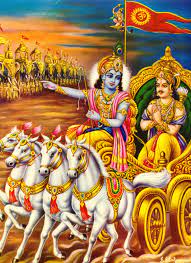
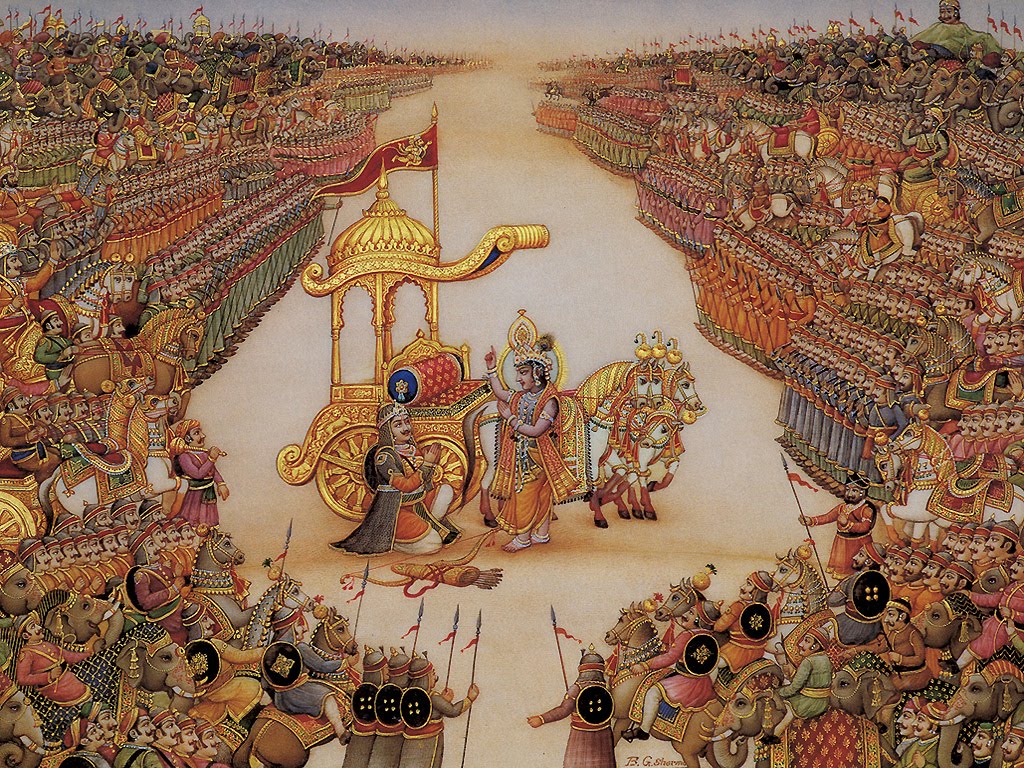
An example of this symbolism is provided by the names Arjuna and Krishna, which represent respectively jivatma and Paramatma, the ego and the Self, individuality and personality. They can, accordingly, also be associated with Earth, in the case of
Arjuna, and with Heaven in the case of Krishna.
Read here: Ananda K. Coomaraswamy, “Self Naughting,” and “Self Sacrifice”
– The Peace and Freedom of Self Knowledge:
He who thinks the Self is slayer
And he who thinks the Self is slain–
Neither of the two understands;
The Self slays not, nor is it slain. —Bhagavad Gita 2:19
The lessons to be learned
Being either killer or killed is impossible; so Krishna assures Arjuna–and us. The Gita is being spoken on a battlefield so martial action is the subject, but the principles presented by Krishna can be applied to anything in life. The fundamental lesson is twofold:
- everything has a meaning for us, and
- no “happening” or change is real. But we are real, and that should be the basis of our entire perspective on our present entanglement in the birth-death drama.
If we are not careful we will fall into the trap of considering only the negative as unreal and think of the positive as real and therefore to be accepted as such. This is not so. Sin and virtue, hellishness and holiness, are equally unreal. However, sin and evil render us incapable of seeing the truth of things, whereas virtue and holiness wean us from the illusions around us and purify our mind so we can come to learn the real Facts of Life from life itself.
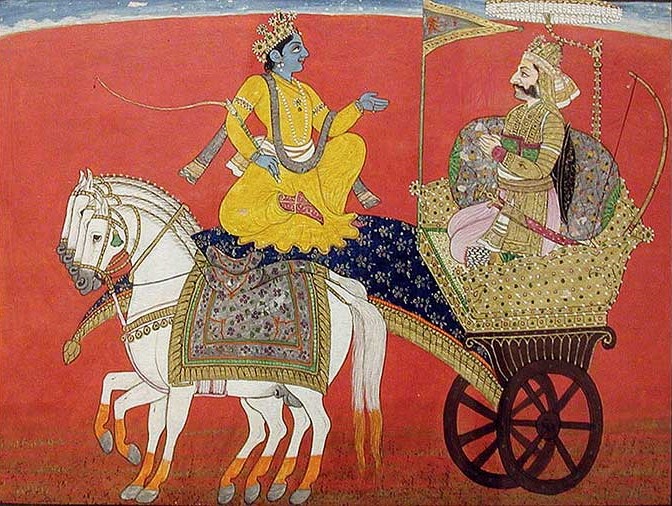
Yet, no change is ultimately real. Not even the decision: “I want to know God.” Insight and aspiration mean nothing of themselves. Only when they result in involvement in spiritual practice (sadhana, tapasya) do they mean anything. Yes, even the process of sadhana (meditation, yoga) is unreal, but its result is real in that it reveals the Real. In Indian thought spiritual practice is often spoken of as a thorn used to remove a thorn in the foot. Both are then discarded. Yoga is also just a movie, but it is a movie that leads to self-knowledge in which yoga ceases to be a practice and becomes a state–the state of consciousness that is our eternal being.
So all the holy and spiritual thoughts and feelings or philosophy we may come up with are just more of the same light and shadows that have been fooling us for countless creation cycles. They will eventually degenerate and reveal themselves as valueless as all our other fantasies. Only when they inspire us to take up meditation and authentic spiritual life are they of any worth, assisting us in drawing nearer and nearer to The Real.
The effects of self-knowledge
But knowing the atman-self is a different matter altogether. The attainment of self-knowledge is not the same as working out or puzzle or figuring out a riddle. It has a practical effect: eternal Peace and Freedom. Therefore Krishna continues:
“Neither is this [the embodied Self] born nor does it die at any time, nor, having been, will it again come not to be. Birthless, eternal, perpetual, primeval, it is not slain when the body is slain” (2:20)
This is the perspective that gives abiding peace to the seer. And further:
“He who knows this, the indestructible, the eternal, the birthless, the imperishable, in what way does this man cause to be slain? Whom does he slay?” (2:21)
Do not dream: know. Then you will be free from the compulsions and anxieties of the world-dream.
When we cling to these compulsions and anxieties, birth, life, and death are agonies raking us like hooks and whips. But what are they in actuality? Krishna says:
“As, after casting away worn out garments, a man later takes new ones, so, after casting away worn out bodies, the embodied Self encounters other, new ones” (2:22).
How simplel And how effortless. It is our clinging, our grasping, that torments us. For though we do not realize it, aversion and distaste are also graspings after them. To push a thing away we have to touch it, to come into contact with it. And once touched it works its effect on us.
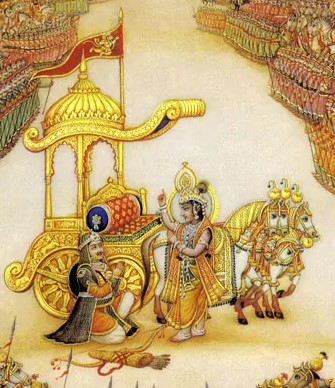
Peace and Freedom through not clinging
Although Krishna is speaking of the experiences of physical birth and death, the same is true of any kind of “becoming” or dissolving of both external and internal experiences. The same is true of the various states of consciousness that we pass through on the way to the goal of perfected awareness. We should pass into and out of them as easily as changing our clothing, neither clinging to them nor tearing them away from us.
Easefulness is the keynote of genuine spiritual development. There are no traumas, no cataclysms or sweeping shake-ups in the path to God. Such things only take place in the prisons of illusions. If they do occur we may know that we are either on the wrong path or are walking it in a wrong manner. Spiritual hypochondriacs revel in these things, regaling their hearers with lurid accounts of how traumatic and cataclysmic every step of “the path” has been for them. Their dramatic bombastic revelations are symptoms of mental illness, not of progress in spiritual life.
Finally, Krishna’s statement that “the embodied Self encounters other, new ones,” is an indication of the truth that it is we and we alone that are always in control. But, like those afflicted with short-term memory loss, we put ourselves into a situation and then forget we did so, attributing it to God, fate, accident, or just about anything but ourselves. Therefore, praying to God, engaging in superstitious “good luck” practices (which is what most religions are and little else), trying to “cheat fate” and suchlike are doomed to failure and frustration.
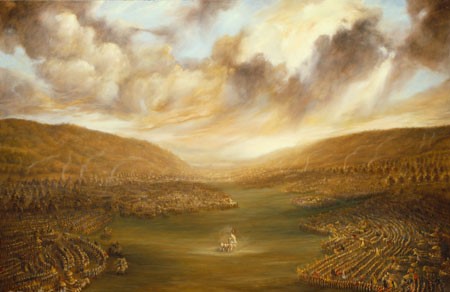
Grow your peace and freedom: look at Bhagavad Gita for Awakening—The endless spiritual treasures of this essential scripture have been mined by saints, scholars, and devotees throughout the ages.
Note: Le mortifiement de vaine plaisance is an allegorical treatise written by René I of Anjou in 1455, two years after the death of his first wife Isabella of Lorraine. The book is a moral treatise on the punishment or chastisement of ‘vain pleasure’. The work is dedicated to Jean Bernard the Archbishop of Tours between 1441 and 1466, René’s confessor.
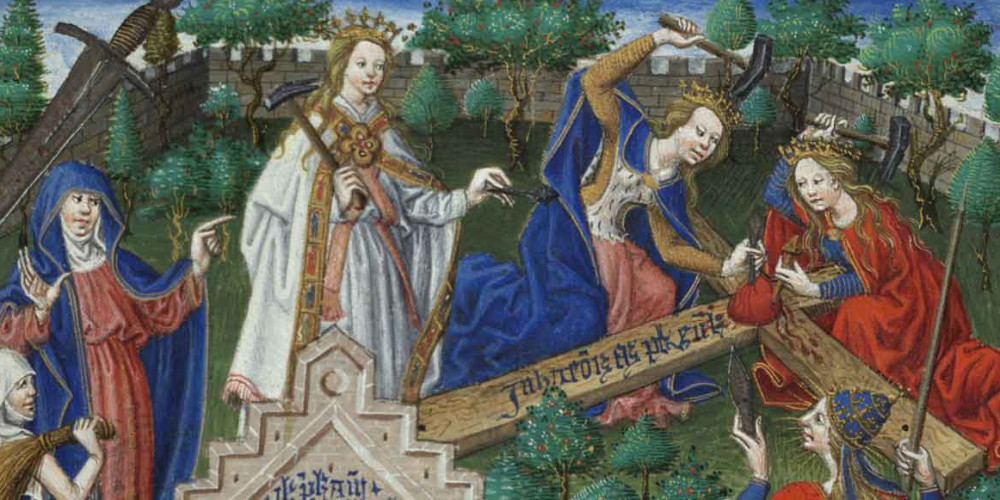
At the beginning of the work, Soul complains to God about the bad behavior of her heart, which is apparently attracted to evil and is the root of all evil. Soul then meets two ladies who propose to cure her heart of evil and put it on the right path. The two figures who are described in detail by René, probably for the benefit of the miniaturists, are Crainte de Dieu (God-fearing) and Contrition (Repentance). After they have told Soul three parables based on everyday life, and have thereby given Soul insight into her problem, Soul entrusts her heart to Crainte de Dieu and Contrition. They take the heart to a beautiful garden where four other women are staying: Ferme Foy (steadfast faith), Vraye Espérance (true hope) and Souveraine Amour (Divine love) the personifications of the theological virtues and Grace Divine (divine grace). The heart is then nailed to the cross and pierced with a spear to redeem it from vaine plaisance, a reference to the death of Christ on the cross which redeemed humanity. The heart is then returned to Soul who thanks the Lord for her healing.
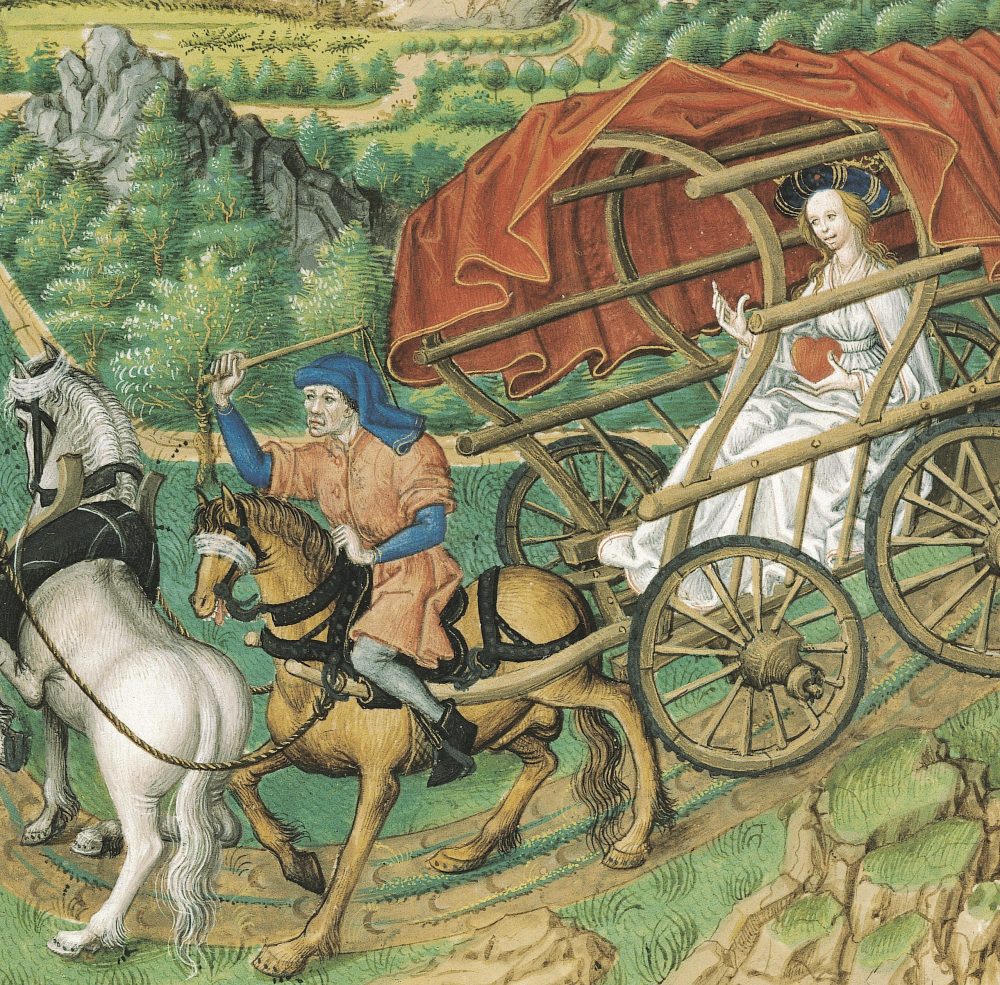
The first parable: the cart-driver of the Soul:
Suppose that a cart-driver, who earned his living with a cart to which two horses were harnessed, contracted with a v ery powerful and rich lord to take his wife from one place to another in his cart, and the c a r t – d r i v e r ’s payment was promised at one-hundred-times-double what he deserved. But, in making the bargain, there was one point, which was that if the cart overturned, or went only occasionally away from the right road, the cart-driver would lose his pay and in addition he would be severely punished.
Now the horses of that cart-driver were so fat that they did not wish to do anything at all for their master, and they had already made the cart overturn onto the ground several [ll60] times, through their overly-frisky spirits and their obstinacy, for the cart-driver held them so very dear that he did not punish them at all, such fear did he have of spoiling them. The first of these horses had a very miserable habit, for he was so covetous of observing and looking here and there that he was always jumping from the road in order to go and divert himself with the pleasures of his sight. The second horse, on the other hand, was not at all less ill-trained, for at every noise he heard, he would pull in that direction, without regard for the path or road. Therefore, in order to injure them less, the cart-driver willingly led them, as often as he might, by the plainest road he could find. The cart-driver, seeing his horses to be in such disarray, and thinking, on the other hand, of the payment he would receive if he could drive correctly, without falling, and then thinking of [1180] the pain and despair he would have in the event that he did wrong— is it any wonder that his heart is in worry and dismay? Many times he wondered, indeed, what remedy he might find for this situation. So it happened one day, just as he was speaking to a good friend of his, that another, who was very knowledgeable in the art of driving, and was very wsll instructed in it, approached the cart-driver, who was lamenting thus to the other, saying to him, “Say, companion who has undertaken to drive so correctly that he may not overturn at all, do you know my profession well, and that which pertains to driving a cart correctly so that it may not be completely overturned? Tell me first if you are well acquainted with the condition of your horses: do they fear the whip when they hear it sound? Are their bits comfortable? Tell me, which one do you make the shafthorse? Answer me, I pray you, because it is for your good I ask you.” To these questions the cart-driver answered him thus: “My friend, I know very well that your [120C-] questions are founded in reason, end that all of this pertains to knowing and understanding good driving. To tell you the truth, in brief, one of the horses goes after what he sees* and the other always goes in the direction of noises that he hears, and very often it happens that when one pulls to the left, the other pulls towards the right hand, making the cart completely overturn so that I am so disturbed that I do not know where to run: whether to the horses, who thus really frighten themselves, or to the cart, which is overturned on the ground. It is true that I never touch them with the whip, nor do I fit them with a bit that troubles them, so that they do everything at their will, through which it follows that the cart is much weakened from the hurts it has suffered.” When the other heard the cart-driver who spoke thus, he began to marvel at what he had heard, and so approached him, saying thus: “Listen to me; I wish to teach you, without making [1 2 2 Q] a long speech, how you may drive correctly, without fear of overturning. Listen and remember my speech well, since you have thus bargained better than could anyone living, provided you do not fail. Your reward is very great, generous and marvelous; in order that you may not lose it, believe my advice, for I understand the profession as much as anyone living. And to demonstrate this to you, here is what you will do: the horse that you place first to draw in the traces, which so easily goes off the road at the hue and cry of other h o r s e s ’ neighing, you will deafen completely, so that he will hear nothing at all from now on; and also the other, which goes after what he sees and looks at, you shall blind him. And when you will have done this, you will mount upon the one who will see no more, and thus you will guide him. To each of the two horses you will also give new bits, much stronger than what they are accustomed to, and further, you will give them only a third of their accustomed provender to eat. Please do not [1240] fear to lose such useless carrion as these two horses more than you wish to earn so rich, so great, and so generous a payment as that which was promised you. Do not be concerned if from this the horses become skinny, as Ici.g as they go along very well, without being frightened; for it is much better to drive correctly and wisely with two squinting, deaf, skinny and broken-down horses than to overturn the cart and vehicle completely to the ground through the confusion of a hundred strong, powerful, very comfortable, fat and noisy, overfed
mounts— thereby losing the pay and remaining miserable, failed and recreant at the start of the road, without the power to carry out the journey undertaken, and afterwards having to suffer serious penalty and blame. So, do as I say and good will come to you. On this point I do not wish to tell you anything else, other than how you should immediately do as I [l260] have told you, and lose little t ime.” Thus he stopped talking and went on his way, leaving the cartdriver to whom he had spoken, and who well remembered what was said to him, and did as he had been told, finding that it did him a great deal of good: for, safe and sound, he completed his journey and earned the pay that had been promised him, through which he was mace rich forever and always. Now then, let us go back to explain the substance and practical meaning of the parable that I have told you here. Firstly, the cart-driver represents understanding by reason. The first horse of the cart represents the ears, the second the eyes, and the cart the will of the heart. The wife who goes to her husband represents the soul, who is the spouse of God, and the road represents the course of life; and it is to be understood that sight and hearing are, of the five senses of nature, the two [1280] which most make the will of man move, be it to good or to evil, just as everyone knows and it is common knowledge. Then, if you wish to love your Creator perfectly, it is necessary that you apply yourself to it purely, entirely, and with all of your will, for otherwise, if your will is not completely engaged, you would not love with your whole heart, since the will is the h e a r t ’s principal seat of feeling, and the principal organs of the will are the eyes and the ears, as I have said.
Thus, no more nor less than if there were two doors in a large and spacious chamber, without which one could not enter inside, because of the material resistance of the thickness of the wall, and when one was in that chamber, which represents the will, it is to be understood that true repose is more in the bed than in any of the other parts of the room. Thus, then, he who enters the chamber of will must enter through the door of the eyes or through the [l3D0] door of the ears; and when he has entered, he must repose on the bed of the heart, and there lies the good or the evil.And to go back to explaining the method of deafening your ears and blinding your eyes, which are represented by the horses which pull the cart, it may be done thus, in brief: you must flee the places where you fear to find company who may give occasion to your ears to incline your will to sin; and if you think within yourself that you will make reason dominate your will so much and in such a way that you need not be careful to avoid sinning in the things you hear or in anything that you may see, I answer you on this point that it is a more difficult thing to be in a place where one can see and hear worldly activities, full of vanity, which pull one towards sin, without the will of the one who sees ana hears them being inclined in that direction, than it is to put a hand in the water and be able tc withdraw it without wetting it. [1320] For as soon as the eye sees or the ear hears something which appeals to the body, I say to you that, naturally, the sensual appetite will incline the will that way, in such a manner that the heart will covet it, and this covetousness sets an imprint on the p e r s o n ,smemory, which remains there no more nor less than the way a seal makes a figure in wax, the imprint of which cannot easily be effaced without great trouble. So, although it be lightly imprinted, in one blow and without violence it may be annihilated and effaced by the strength of another, stronger imprint which is superimposed upon it. Thus is the attempt most dangerous and damnable, and it is much better to wish not to know than it is to wish to forget. The places which are therefore to be fled and avoided are very easy to know, for the experience of past times, the sins remembered in displeasure, one after the other, will make you wise for the future. And when you are reminded of the sin, [1340] you will also be reminded of the place and the manner, the occasion and reason for which it was done; when you think about this place, manner and occasion, you will guard against it in such a way that you may not fall into it again. And you will flee them in advance, by seeking occupation such and so good that neither your eyes nor your ears will have the desire or the power to bring to your will any memory other than those of doing works that are good and agreeabla to God in such a manner that they may be and can be valuable towards the salvation of your soul. Anyone who truly and entirely wishes to devote his love completely to loving his Creator must thus blind and deafen his eyes and ears, as I have said hereabove. And the cart-driver, through his understanding, should so restrict the satisfaction of his greedy appetite that he may control his horses every time he sees that it is necessary [1360] for them not to go beyond the point which the understanding has first deemed to be appropriate. The sound of the whip must be theses sacred doctrines spoken and pronounced by the preachers, which sound must be repeated and sounded very often so that he thoroughly understands the commandments of God by the sound of the whip of holy preaching,in order that he may go or stop according to the dictates of time and place. He who acts thus will not occupy his eyes or his ears in any other way at all than to guide and drive the will of the heart on the straight path of the perfect, sweet and delicious love of his blessed Creator, and without putting his thought anywhere but on this, nor desiring that any other love may surpass this sole, true love.
————-
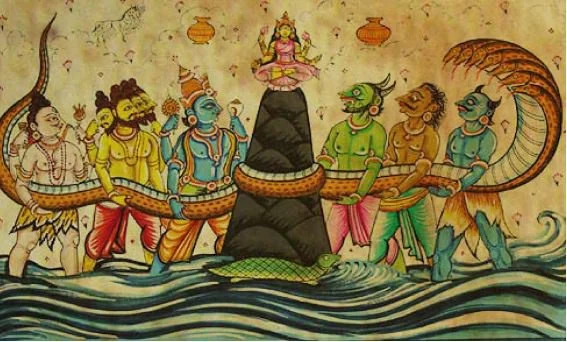
In the well-known symbolism of the ‘churning of the sea’, the Devas and Asuras pull in
opposite directions on the serpent coiled around the mountain, which represents the
‘World Axis’.
In ancient symbols the double spiral is occasionally replaced by two groups of concentric circles drawn around two points which once again symbolise the poles. At least in one of their more general connotations they represent the celestial circles and the infernal circles. The latter are a kind of inverted reflection of the former, and they both have their exact correspondences in the Devas and Asuras. Expressed slightly differently, they represent
the higher and the lower states relative to the human state, or the subsequent cycle and the previous cycle relative to the present cycle-which is ultimately just another way of saying the same thing using a ‘sequential’ symbolism. This provides further corroboration of our interpretation of the yin-yang as a plane projection of the helix that symbolises the multiple states of universal Existence. The two symbols are equivalent, and one can be considered as simply a modification of the other-except that the double spiral is unique in depicting the continuity between the cycles. One could also describe it as presenting things in their
‘dynamic’ aspect, in contrast to the concentric circles which present things from a more ‘static’ point of view.
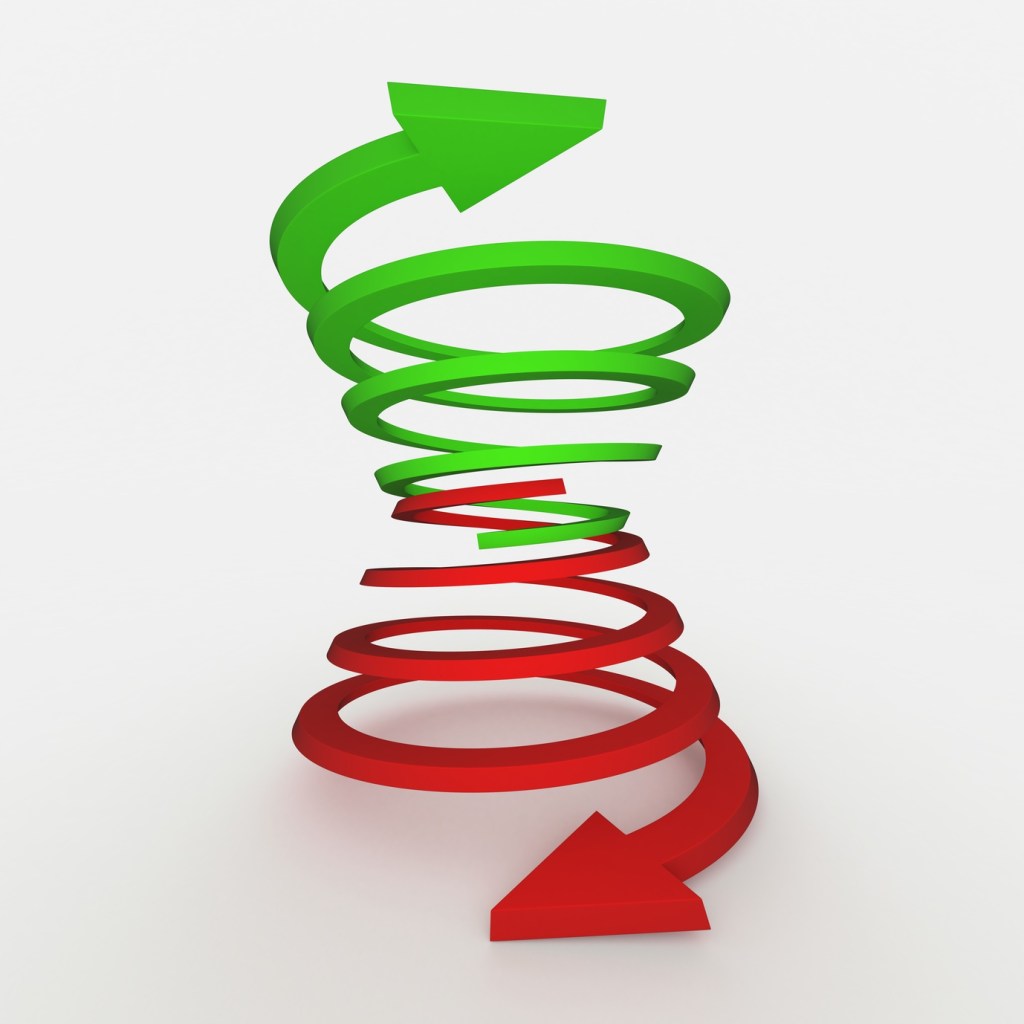
In referring here to a ‘dynamic’ aspect we of course still have in mind the dual action of the cosmic force, particularly in its relationship to the opposing and complementary phases of all manifestation which, according to the Far-Eastern tradition, are due to the alternating predominance of yin and yang. Accordingly we have ‘evolution’ (de-velopment, ‘unfolding’)on the one hand and ‘involution’ (en-velopment, ‘winding up’) on the other; or, to express the same thing in another way, ‘catabasis’ or ‘going down’ and ‘anabasis’ or ‘going up’; departure into the manifested, and return to the non-manifested. This double ‘spiration’-and one will observe the very significant kinship between the actual name ‘spiral’ and the term spiritus or ‘breath’ that we spoke of earlier in connection with Hamsa–is the universal ‘expiration’ (or exhalation) and ‘inspiration’ (or inhalation). In the langauge of Taoism these produce the ‘condensations’ and ‘dissipations’ that result from the alternating action of the dual principles of yin and yang; in Hermetic terminology they are the ‘coagulations’ and ‘solutions’. For individual beings they are births and deathswhat Aristotle calls genesis and phthora, ‘generation’ and ‘corruption’. For worlds, they are what Hindu tradition calls the days and nights of Brahma: Kalpa and Pralaya. And at all levels of reality, on the ‘macrocosmic’ as well as ‘microcosmic’ scale, corresponding phases occur in every cycle of existence, for they are the very expression itself of the law that governs the sum total of universal manifestation.
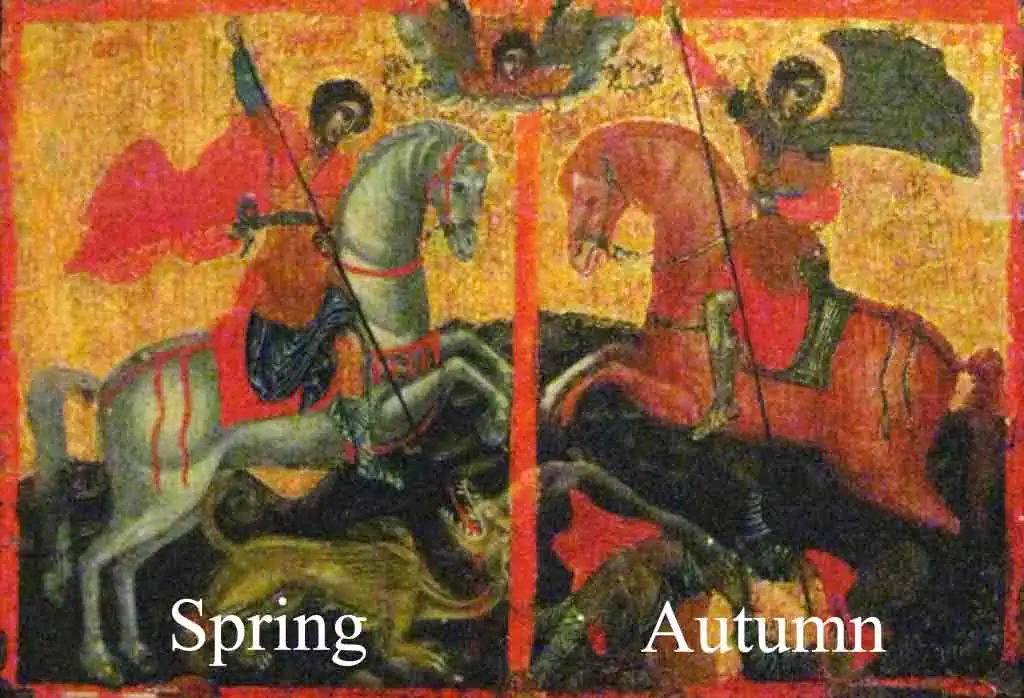
The Spiritual Traditions, Saints and Folklores learn us to understand who we are and will be. Between Spring and Autumn St george and St Demetrius give us advices:
Advice of St George: Kill your Dragon
Our only purpose is to give our love, respect and service to God. But if given the opportunity every person would be a pharaoh. His ego would declare itself the highest lord. We must kill the dragon that is our ego and then we will find God with us and around us and within us.
Kill your ego before it kills you
We are meant to be connected to our fellow travelers. Pride separates us. Let’s work to see ourselves as we truly are and love others as ourselves.
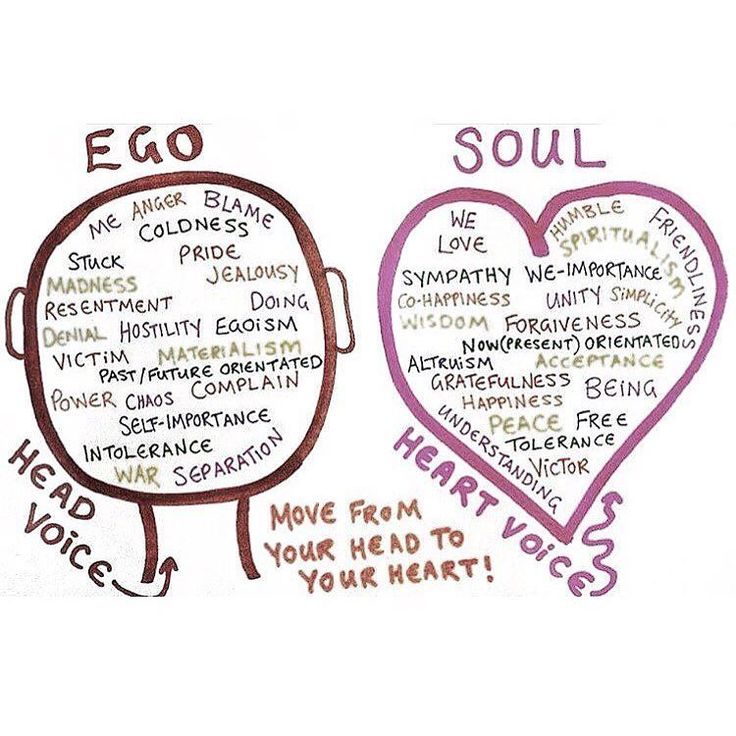
Advice of St Demetrius: Putting to Death the Old Man:
In the book of Ephesians, Paul addressed the subject of “the old man.” “But you have not so learned Christ, if indeed you have heard Him and have been taught by Him, as the truth is in Jesus: that you put off, concerning your former conduct, the old man which grows corrupt according to the deceitful lusts, and be renewed in the spirit of your mind, and that you put on the new man which was created according to God, in true righteousness and holiness” (Ephesians 4:20-24).
The words put off in this verse essentially mean “putting away” or “renouncing.” Paul was instructing the members to put away their old man—the selfish, sinful way we naturally think and act in this evil world. Our old man is deceitful (Jeremiah 17:9), even convincing us that we don’t need to change or that God’s way is too hard. It is naturally opposed to God and His laws (Romans 8:7). Our old man produces what Paul called “the works of the flesh” in Galatians 5:19-21, including adultery, hatred, jealousies, selfish ambitions and drunkenness.
We can do this by Prunning the brain with the wisdom of the Heart
According to the great formulator of Sufi psychology, Al-Ghazalli:
There is nothing closer to you than yourself. If you don’t know your self, how will you know others? You might say, “I know myself,” but you are mistaken…. The only thing you know about your self is your physical appearance. The only thing you know about your inside (batin, your unconscious) is that when you are hungry you eat, when you are angry, you fight, and when you are consumed by passion, you make love. In this regard you are equal to any animal. You have to seek the reality within yourself…. What are you? Where have you come from and where are you going. What is your role in the world? Why have you been created? Where does your happiness life? If you would like to know yourself, you should know that you are created by two things. One is your body and your outer appearance (zahir) which you can see with your eyes. The other is your inner forces (batin). This is the part you cannot see, but you can know with your insight. The reality of your existence is in your inwardness (batin, unconscious). Everything is a servant of your inward heart.
In Sufism, “knowing” can be arranged in seven stages. These stages offer a comprehensive view of the various faculties of knowledge within which the heart comprises the sixth level of knowing:
1. Hearing about something, knowing what it is called. “Having a child is called ‘motherhood.’”
2. Knowing through the perception of the senses. “I have seen a mother and child with my own eyes.”
3. Knowing “about” something. “This is how it happens and what it is like to be a mother.”
4. Knowing through understanding and being able to apply that understanding. “I have a Ph.D. in mothering and my studies show…”
5. Knowing through doing or being something. “I am a mother.”
6. Knowing through the subconscious faculties of the heart. “It’s difficult to put into words everything a mother experiences and feels.”
7. Knowing through Spirit alone. This is much more difficult to describe and perhaps it’s foolhardy to try, but it may be something like this: “I am not a mother, but in the moment when all separation dissolves, I am you.”
The outer world of physical existence is perceived through the physical senses, through a nervous system that has been refined and purified by nature over millions of years. We can only stand in awe of this body’s perceptive ability.
On the other hand, the mystery of the inner world is perceived through other even subtler senses. It is these “senses” that allow us to experience qualities like yearning, hope, intimacy, or to perceive significance, beauty, and our participation in the unity.
When our awareness is turned away from the world of the senses, and away from the field of conventional human thoughts and emotions, we may find that we can sense an inner world of spiritual qualities, independent of the outer world.
Our modern languages lack precision when it comes to describing or naming that which can grasp the qualities and essence of this inner world. Perhaps the best word we have for that which can grasp the unseen world of qualities is “heart.” And what we understand by the word “heart” is an intelligence other than intellect, a knowing that operates at a subconscious level. The sacred traditions have sometimes delineated this subconscious knowing into various modes of knowing. What are known in some Sufi schools as the latifas (literally, the subtleties, al-lataif) are subtle subconscious faculties that allow us to know spiritual realities beyond what the senses or intellect can offer. This knowing is called subconscious, because what can be admitted into consciousness is necessarily limited and partial.
These latifas are sometimes worked on by carrying the energy of zhikr (remembrance) to precise locations in the chest and head in order to energize and activate these faculties. Once activated, they support and irradiate each other.
Conclusion:
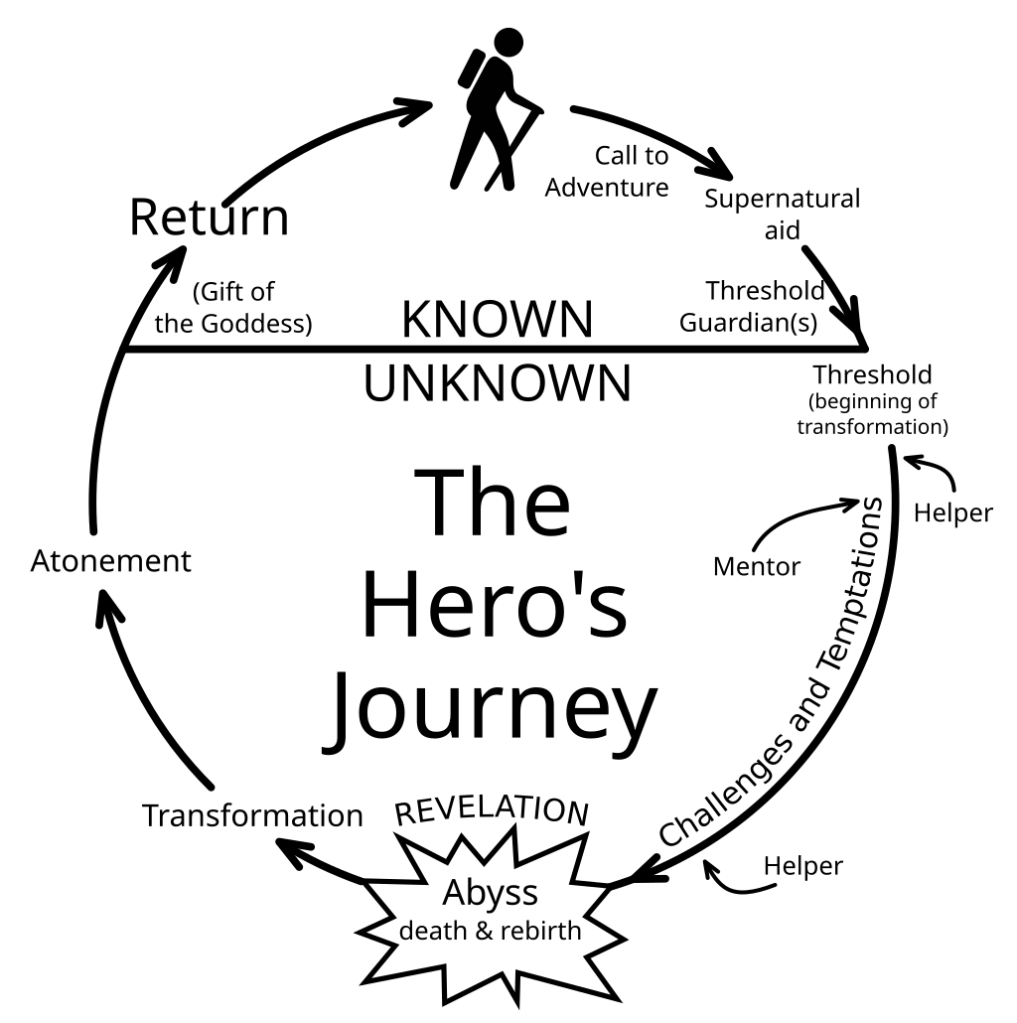
In his book The Hero with a Thousand Faces (1949), Campbell describes 17 stages of the monomyth. Not all monomyths necessarily contain all 17 stages explicitly; some myths may focus on only one of the stages, while others may deal with the stages in a somewhat different order.[14] In the terminology of Claude Lévi-Strauss, the stages are the individual mythemes which are “bundled” or assembled into the structure of the monomyth.[15]
The 17 stages may be organized in a number of ways, including division into three “acts” or sections:
- Departure (also Separation),
- Initiation (sometimes subdivided into A. Descent and B. Initiation) and
- Return.
In the departure part of the narrative, the hero or protagonist lives in the ordinary world and receives a call to go on an adventure. The hero is reluctant to follow the call but is helped by a mentor figure.
The initiation section begins with the hero then traversing the threshold to an unknown or “special world”, where he faces tasks or trials, either alone or with the assistance of helpers. The hero eventually reaches “the innermost cave” or the central crisis of his adventure, where he must undergo “the ordeal” where he overcomes the main obstacle or enemy, undergoing “apotheosis” and gaining his reward (a treasure or “elixir“).
In the return section, the hero must return to the ordinary world with his reward. He may be pursued by the guardians of the special world, or he may be reluctant to return and may be rescued or forced to return by intervention from the outside. The hero again traverses the threshold between the worlds, returning to the ordinary world with the treasure or elixir he gained, which he may now use for the benefit of his fellow man. The hero himself is transformed by the adventure and gains wisdom or spiritual power over both worlds.
Read here:Joseph Campbell and The Power of Myth
- René Guénon: “Gathering what is scattered”
On November 15, 1886, the esotericist René Guénon was born in Blois, France. As a tribute to him, we propose the reading of an excerpt from his work, published posthumously, “Symbols of Sacred Science”, which deals with the theme of the primordial fragmentation of the Universal Man (Purusha, Prajāpati, Osiris, Adam Qadmon) and of its final reintegration into its original state.
In one of our works we have mentioned (The Great Triad,) . about the Ming-tang and Hold-ti-Huei, a Masonic formula according to which the task of the Masters consists in “to spread the light and gather what is scattered“. In fact, the juxtaposition we were making then concerned only the first part of the formula (The motto of the Hold-ti-Huei it was in fact this: “Destroy the darkness (tsing), restore the light (ming). “); as for the second, which may seem more enigmatic, since it has very notable connections in traditional symbolism, it seems interesting to us on this point to provide some indications that could not have found a place on that occasion.
In order to understand the matter as completely as possible, it is convenient first of all to refer to the vêdic tradition, which is more explicit than others in this regard: according to it, in fact, “That which is scattered” are the limbs of the purusha primordial which was divided into the first sacrifice performed by Deva at the beginning of time, and from which, thanks to this division, all manifested beings were born .(Rig-Veda, X, 90.)
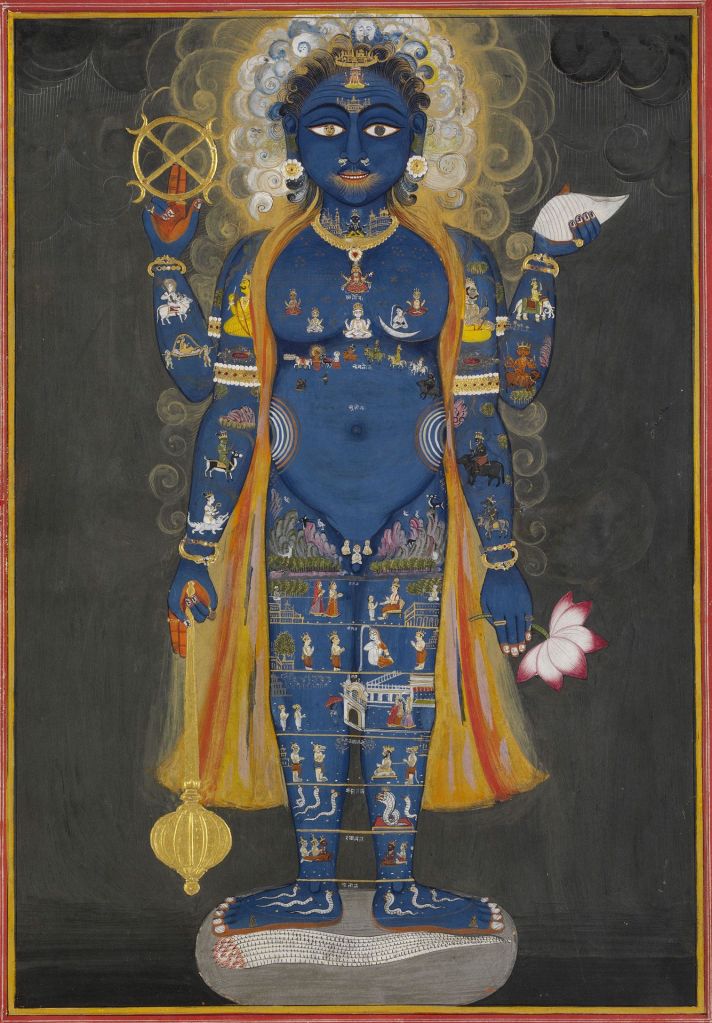
It is evident that this is a symbolic description of the passage from unity to multiplicity, without which there could actually be no manifestation; and thus one can already realize that the “reunion of that which is scattered”, or the reconstitution of the purusha what it was “before the beginning”, if it is allowed to express itself thus, that is, in the non-manifested state, it is nothing other than the return to principial unity. purusha is identical to Prajâpati, the “Lord of produced beings”, the latter being all derived from him and consequently considered almost as his “progeny” ; and also Vishwakarma, that is, the “Great Architect of the Universe”, and, in so far Vishwakarma, it is he who makes the sacrifice while at the same time being its victim (In the Christian concept of sacrifice, (Christ is also the victim and priest par excellence); and, if it is said that he is sacrificed by Deva, this does not really make any difference, since Deva they are ultimately nothing other than the “powers” that he carries within himself .
We have already said on several occasions that every ritual sacrifice must be considered an image of this first cosmogonic sacrifice; and always in every sacrifice, as he pointed out Coomaraswamy, «The victim, as Brahmana, is a representation of the sacrificer, or, as the lyrics say, the sacrificer himself; in accordance with the universal law according to which initiation (diksha) is a death and a rebirth, it is evident that the “initiate is the oblation” (Taittiriya Samhita, VI, 1, 4, 5), “The victim is essentially the sacrificer himself” (Aitarêya Brâhmana, II, 11) ”
This brings us directly back to the Masonic symbolism of the degree of Master, in which the initiate effectively identifies himself with the victim; on the other hand, there has often been an insistence on the relationship between the legend of Hiram and the myth of Osiris so that, when it comes to “reuniting what is scattered”, one can immediately think of Isis reuniting the scattered limbs of Osiris; but basically the dispersion of the limbs of Osiris is exactly identical to that of the limbs of purusha or Prajâpati: they are only, one might say, two versions of the description of the same cosmogonic process in two different traditional forms.
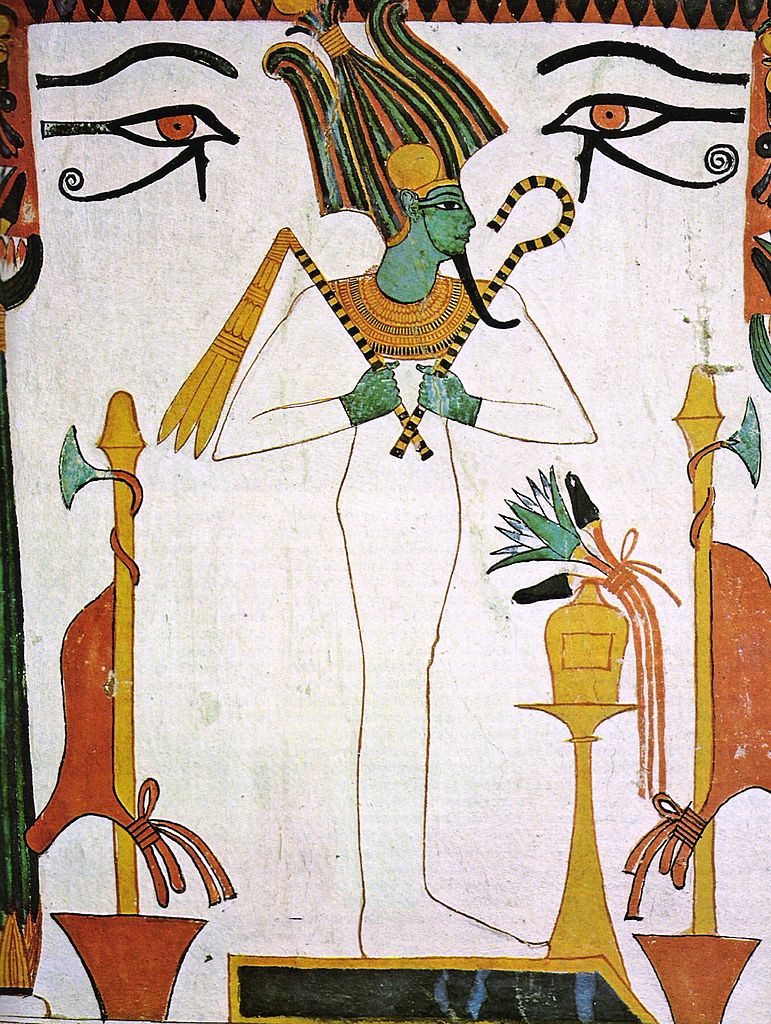
It is true that in the case of Osiris and Hiram it is no longer a question of a sacrifice, at least explicitly, but of a murder; but this essentially changes nothing, since it is the same thing considered under two complementary aspects, as a sacrifice under the “devic” aspect and as murder under the “asuric” aspect ; we are content to point out this point in passing, because we could not insist on it without going into arguments that are too detailed and extraneous to the problem we are now dealing with.
Always the same way, in the Jewish Kabbalah, although we no longer speak properly of either sacrifice or murder, but rather of a kind of “disintegration” whose consequences are the same, it is from fragmentation of the body of theAdam Qadmon that the Universe was formed with all the beings it contains, so that the latter are almost particles of this body, and their “reintegration” into unity appears as the very reconstitution of theAdam Qadmon. It is the “Universal Man”, and purusha, according to one of the meanings of this word, he is also the “Man” par excellence; it is therefore exactly the same thing.
We add in this regard, before proceeding, that since the degree of Master represented, at least virtually, the term of the “little mysteries”, it is therefore necessary to consider in this case properly the reintegration at the center of the human state; but it is known that the same symbolism is always applicable at different levels, by virtue of the correspondences that exist between them , so that it can be referred both to a determined world and to the whole of the universal manifestation; and the reintegration into the “primordial state”, who is also “Adamic”, is almost a figure of total and final reintegration, even though it is still only, in reality, a stage on the path that leads to it.
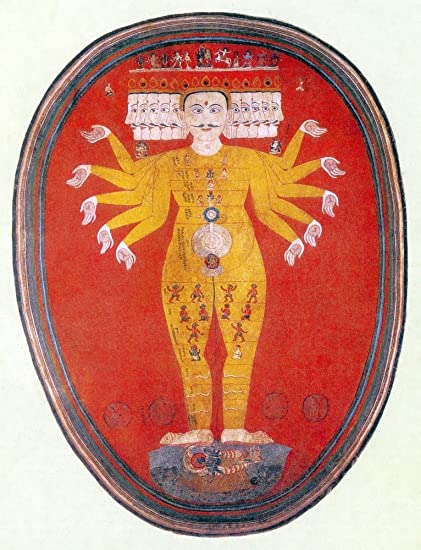
In the study we cited above, AK Coomaraswamy says that “The essential thing in sacrifice is first to divide, and secondly to reunite”; it therefore involves the two complementary phases of “disintegration” and “reintegration” which constitute the cosmic process as a whole: il purusha, “Being one, he becomes many, and being many, he becomes one again”. The reconstitution of the purusha is symbolically operated, in particular, in the construction of the vêdic altar, which includes in its various parts a representation of all the worlds .
On the other hand, since it can be considered that every ritual action, that is, ultimately, every action that is truly normal and in conformity with the “order” (rita), is endowed with a somewhat “sacrificial” character, according to the etymological sense of this word (from sacred face), what is true of the vêdic altar it is also, in a certain way and to a certain extent, for every construction built in accordance with traditional rules, since the latter actually always proceeds from the same “Cosmic model”, as we have explained on other occasions (The rites of foundation of a building on the other hand generally involve a sacrifice or an oblation in the strict sense of these words; also in the West, a certain form of oblation has been preserved to this day in the event that the laying of the first stone is carried out according to the Masonic rites.). We see how this is directly related to a “constructive” symbolism such as that of Freemasonry; and on the other hand, even in the most immediate sense, the builder actually brings together scattered materials to make a building that, if it is really what it should be, will have an “organic” unity, comparable to that of a living being, if one arises from the microcosmic point of view, or that of a world, if one arises from the macrocosmic point of view.
To conclude, we still have to talk a little about a symbolism of another kind, which may seem very different in its outward appearances, but is nevertheless, basically, equivalent in meaning: it is a question of the reconstitution of a word starting from its literal elements first taken in isolation . To understand it, we must remember that the true name of a being is nothing, from the traditional point of view, other than the expression of its very essence; the reconstitution of the name is therefore symbolically equivalent to the reconstitution of the being itself.
The role that letters play in a symbolism such as that of the Kabbalah with regard to creation or universal manifestation is also known; it could be said that this is made up of separate letters, which correspond to the multiplicity of its elements, and that, by bringing together these letters, it is thereby brought back to its Principle, provided that the meeting is operated in such a way as to effectively reconstitute the name of the Principle (As long as one remains in the multiplicity of manifestation, one can only “spell out” the name of the Principle by discerning the reflection of its attributes in creatures in which they are expressed only in a fragmentary and dispersed way. The Mason who has not reached the degree of Master is still unable to “gather what is scattered”, and therefore “only knows how to spell”). . From this point of view, “bringing together what is scattered” is the same as “Find the lost Word”, since, in reality, and in its deepest sense, this “lost Word” is none other than the real name of the “Great Architect of the Universe”.
- From The Great Indo-European Horse Sacrifice – 4000 Years of Cosmological Continuity to the Thracian Horseman,or the Knight of the Swan we can aknowlegde the same message of purification of the soul in the quest for Spiritual Ethics,Virtues and Uprightness. Jesus, Son of Mary: The Pilgrim of Viriditas prepared the venue of The last horseman and last Prophet: Mohammed (a.s.). He brings us the ultimate message of God ( the Quran) and the best Spiritual Ethics,Virtues and Uprightness for our times.
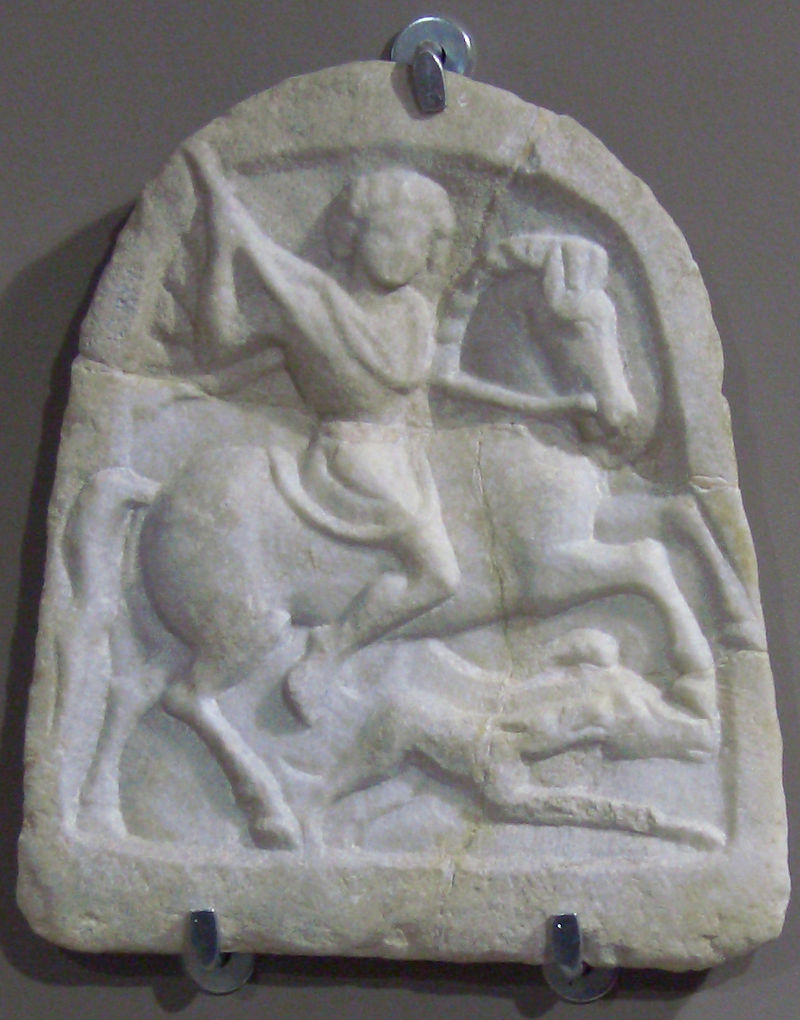
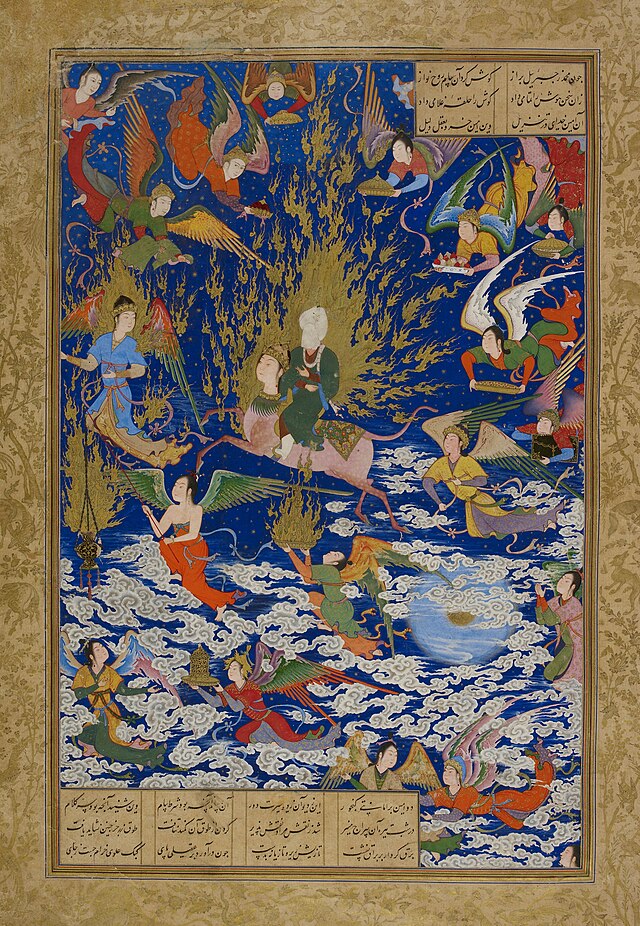
THE ISLAMIC CONCEPT OF HUMAN PERFECTION
William C. Chittick
The name `Islam’ refers to the religion and civilization based upon the Qur’án, a Scripture revealed to the Prophet Muhammad in the years AD 610-32. About one billion human beings are at least nominally Muslim, or followers of the religion of Islam. The modern West, for a wide variety of historical and cultural reasons, has usually been far less interested in the religious dimension of Islamic civilization than in, for example, that of Buddhistn or Hinduism. Recent political events have brought Islam into contemporary consciousness, but more as a demon to be feared than a religion to be respected for its sophisticated understanding of the human predicament.
Those few Westerners who have looked beyond the political situation of the countries where Islam is dominant have usually devoted most of their attention to Islamic legai and social teachings. They quickly discover that Islam, like Judaism, is based upon a Revealed Law, called in Arabic the Shari’a or wide road. Observance of this Law — which covers such domains as ritual practices, marriage relationships, inheritance, diet and commerce —is incumbent upon every Muslirn. But western scholars have shown far less interest in two other, more inward and hidden dimensions of the Islamic religion, mainly because these have had few repercussions on the contem-porary scene. Even in past centuries, when Islam was a healthy and flourishing civilization, only a relatively smalt number of Muslims made these dimensions their tentral concern.
The more hidden dimensions of Islam can be called `intellectuality’ and `spirituality’. The first deals mainly with the conceptual understanding of the human situation and the second with the practical means whereby a full flowering of human potentialities can be achieved. They are important in the present context because they provide clear descriptions of human perfection and set down detailed guidelines for reaching it. If we want to discover how Islam has understood the concept of perfection without reading our own theories into the Queán or imposing alien categories on the beliefs and practices of traditional Muslims, we have to pose our question to the intellectual and spiritual traditions of Islam itself.
Muslims look back to the Qur’án and the sayings of the Prophet Muhammad as the primary sources for everything authentically their own. These sources provide a number of teachings concerning the nature of reality, which are accepted by all Muslims and, as it were, instil the myth of Islam into the Muslim consciousness. The most succinct expression of these teachings is found in the Islamic testimony of faith: ‘There is no god but God, and Muhammad is the Messenger of God.’ All Muslims have faith in God and in the Qur’án, the divine word brought by God’s Messenger. More generally, according to the Qur’ánic formulation, Muslims believe in God, the angels, the Scriptures, the prophets, the Last Days and predestina-tion. From these basic objects of faith, the later authorities derive three principles that form the core of all Islamic intellectuality: the declaration of God’s unity (tawhid), prophecy, and eschatology, or the return to God. In theory all Muslims agree on these concepts, but in practice they have interpreted their meanings in a wide variety of ways. Naturally, the majority of Muslims have not been concerned with anything more than the basic catechism. The interpretation and exposition of the principles of faith have been left to those with an intellectual bent, and it is these learned classes of society who founded the various schools of thought in Islamic civilization.
Most of the vast literary output of the Islamic intellectual and spiritual traditions over the centuries has dealt directly or indirectly with the question of human perfection and the manner in which it can be achieved. Nothing is more tentral to the concerns of the religion. But the Islamic world-view differs profoundly from that of the modern West; before we can even begin to ask what constitutes a perfect human being a few general trends in Islamic thinking need to be brought out. Three of these are of particular interest: Islam’s theocentric view of reality, its cosmological presuppositions, and its idea of hierarchy. Read more here
- Ego rules the World: Anti-“God”, Anti-“Humanity”, Anti-“Nature“
Our civilization is in decay. Because we have blown-up our ego. Cosmic Balance has been disturbed. The Origin – Cosmic Womb/Vacuum – “doesn’t tolerate” this. With the help of Her two Cosmic Forces of “Death and Rebirth” (“Stirb und Werde” – “Die and Become”-J.W. von Goethe) She breaks down our ego-accumulations, thus restoring the Original Balance.
While the crisis of modernity has progressively escalated into a global meltdown and the masses are besieged by—the tyranny of mindless distractions, obsessive consumption of unnecessary goods, the insatiable thirst for unrestrained quantity, exploitation by illogical mechanisms of fear, the assault by hostile economic policies devised by the corporate hegemony virtually bloodletting the populace, the endless perpetuation of the war machine, the ever quickening of time, and the collapsing ecosystems of planet earth to name only a few—these are none other than reflections of the inner disarray, if not an utter eclipse of the human microcosm itself. One wonders where the regulatory agencies of today are to be found in this late hour and who would be the appropriate authority to be contacted regarding the imploding world that appears to be on an inescapable trajectory of self-destruction for it is not a simple question to answer and rightfully deserves considerable reflection.
The struggle for physical survival palpably includes the psychological but there appears to be very little response to the ruptured spiritual compass from which all these compounding crises derive.
Regrettably and sadly in our times, if we look in the mirror, we can see an image of a totally disturbed, disrupted and disconnected human being who has forgot all his past and denied it consequently. He forgets his Soul and prepares unconsciously and inevitably the end of times or end of a World .
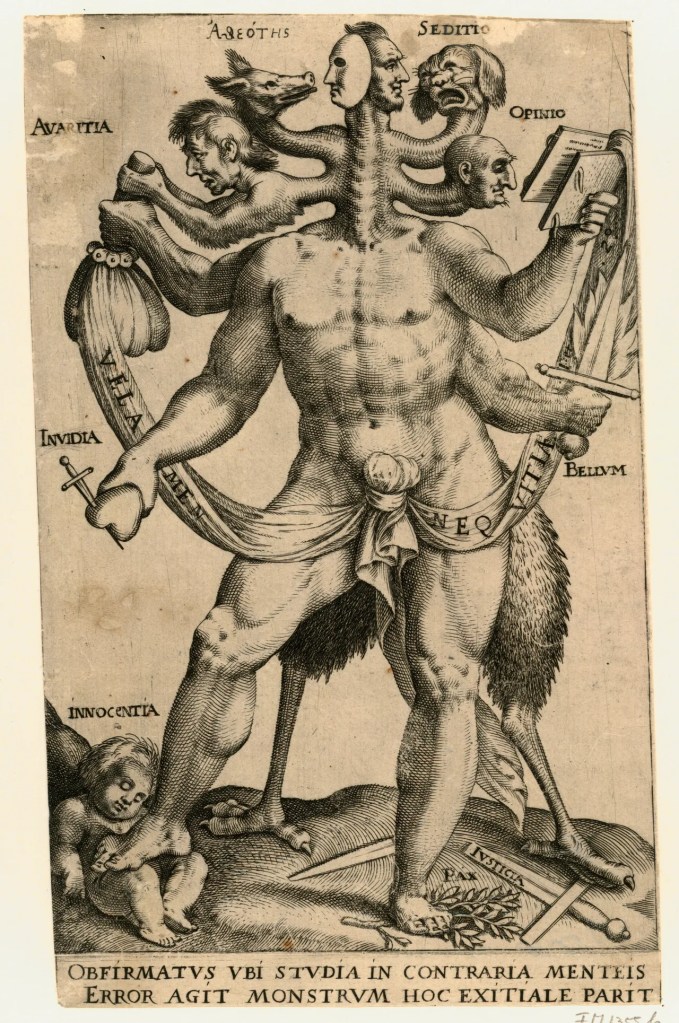
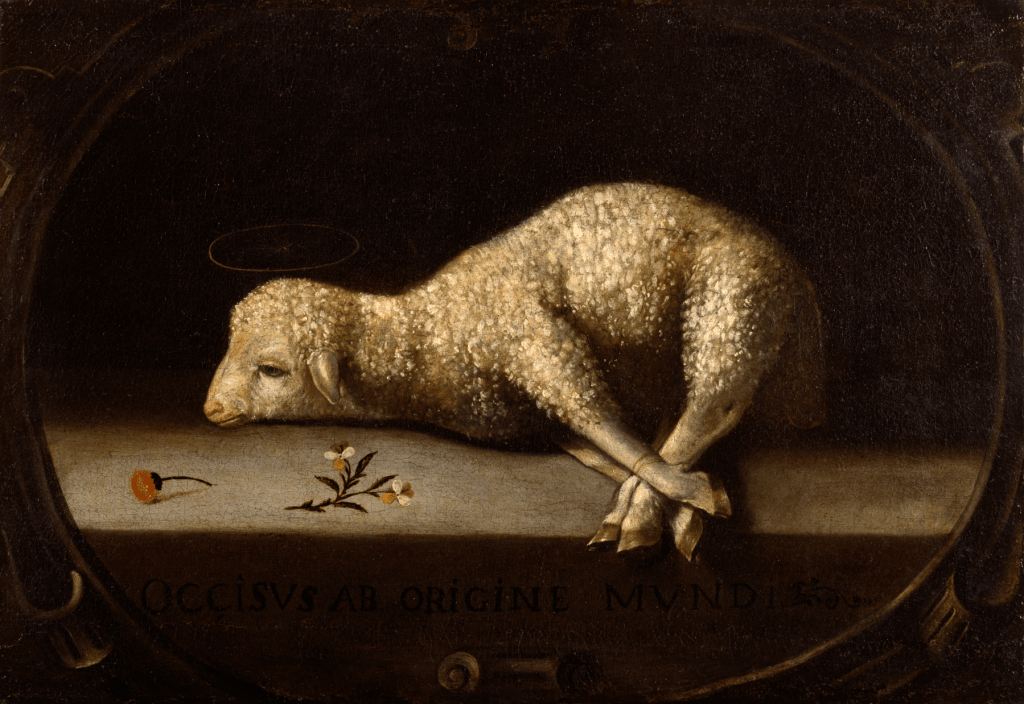
 Path to the Maypole of Wisdom