the Green Man, as pictured on the official coronation invitation.
The official invitation for the Coronation of The King and The Queen Consort has been revealed. Designed by Andrew Jamieson, the invitation features the Green Man, an ancient figure from British folklore, symbolic of spring and rebirth, to celebrate the new reign.
Central to the design is the motif of the Green Man, an ancient figure from British folklore, symbolic of spring and rebirth, to celebrate the new reign. The shape of the Green Man, crowned in natural foliage, is formed of leaves of oak, ivy and hawthorn, and the emblematic flowers of the United Kingdom.
The invitations for the coronation of King Charles, which were released this week, are whimsical and colorful, a riot of springtime flowers. The design, based on a British wildflower meadow, features the coats of arms for Charles and Queen Camilla and invites its recipient to “the Abbey Church of Westminster” on May 6 to witness the king and queen being anointed and crowned.
“O Shaykh we are never hearing of green color man!”
“Yes, we must be. You are not looking east and west. Say to top people that you must do and you must look and find green men also.”
Yes there is green men, it is true. there is green man. Only one, but he is not also, his face green, but that is then Christians saying St. George, but we are saying Khidr (as) . Green man, chevalier St. George. Always in his hand he is killing a dragon. Very good. It is very very and a important symbol that they are making a figure on a horse through his hand a spear and killing a dragon. So many people they are taking only looking to that figure, but really that figure asking to teach people.
O people! That one who is a famous personality through creation, through his hand with a spear killing a giant gigantic dragon.
O people! Look what does it mean? It means that St. George going to be a saint because he killed that dragon that it is representing our egos. Killing and going to bury the same. O people! ! Enough to carry your feelings that belongs all of them to your dragon. Leave that feelings and kill that one then everyone going to be a St. George, a blessed one in the Divine Presence. And that Green Man is only one. And asking to teach people “O people! Til your most terrible enemy, the dragon is killed…but you are not taking any care of it.
As everyone knows that every prophet they were sitting on earth, not on thrones. There are some exceptions, doesn’t matter, but mostly whole prophets sitting on earth with poor people, weak people, native people, and aseer, (slaves) slave people. They were sitting with those people and that not taking honor from them but giving honor because they are trying to give something to our Lord’s creatures. They tried to make people best ones, not the worst ones. Who is working for their egoes and no other aim for them is except their dragons? Therefore don’t try to be “First Lady”or “Number One” in America, in Turkey, in England, in Russia.
Who is first one? Who is best one?Don’t think that every first one going to be best one. Everybody thinking first one. First one they claim but it is not important. Important is that one who is claiming to be best one. Are you best one? Give answer to me. To be “First One” if making you best one, bravo. If not then it is a very dangerous situation to be “First Lady”or “Number One” through nations. No. Only if you are asking our honor in Divinely Presence. Yes, you may claim, “I am first one on earth” but on heavens do you think your name written under tables of best ones? Old Testament, New Testament, Psalms and Holy Quran what there are saying? What are they teaching people? Teaching them to be best ones or worst ones? Say! Popes say! Archbishops say! Patriarchs say! Presidents say! Philosophers say! Hindus say! Buddhists you may say! The Lord of heavens asking from you to be first ones or best ones? That is the main source of troubles on earth. Read more here
Despite the north pole being a fixed location in the Arctic circle, the Magnetic North Pole is a wandering location which changes year on year. The Magnetic North Pole describes the point where the Earth’s natural magnetic field points inwards and down to the ground. For years, the magnetic pole’s location was determined to lie not too far off from the Geographic North Pole. Scientists have, however, noticed in recent years an increased rate at which the pole appears to shift from location to location.
Deep beneath the Earth’s surface, liquid iron is sloshing around at its core, causing the North Pole to move away from Canada and towards Siberia. This has caused global geomagnetism experts to undergo an urgent update of the World Magnetic Model where it will alter where exactly North Pole is. The next update was not scheduled to happen until 2020, but due to the North Pole’s sudden shift, researchers have to bring it forward.
Is Earths magnetic field in the process of reversing? Since 1900 the magnetic north pole has been moving across the top of the planet moving in a straight line toward russia. At first it was traveling at 25 miles per year and today it has speed up to 40 miles per year. The magnetic south pole has been doing the same and has now left the continent of Antarctica as it continues to move toward Australia and Indonesia. Plus, a new magnetic field has popped up over south America in an area called the south Atlantic anamolie. Are these signs that the Earths magnetic field is in the process of flipping? Where are the poles moving to if not a reversal?
Earth’s Force Field The Earths magnetic field, the protector of all life on Earth is under constant attack from deadly cosmic radiation. This invisible shield that we live in is weakening in a region over the South Atlantic, leaving it exposed to potentially lethal radiation. Is the Earth losing its magnetic field and doomed to a fate similar to Mars? Many scientists believe the answer lies in Is Earths magnetic field in the process of reversing?data, and that this weakening may be a precursor to a magnetic field reversal; scientists know Earth is long overdue. However, humans were not around when the last reversal took place, so what does this mean for life?
A fascinating documentary! Award winning scientist and broadcaster, Dr. David Suzuki explores the reversal of Earth’s Magnetic Poles..
Man-made climate change may be happening at a far slower rate than has been claimed, according to controversial new research.
Scientists say that cosmic rays from outer space play a far greater role in changing the Earth’s climate than global warming experts previously thought.
In a book, to be published this week, they claim that fluctuations in the number of cosmic rays hitting the atmosphere directly alter the amount of cloud covering the planet.
High levels of cloud cover blankets the Earth and reflects radiated heat from the Sun back out into space, causing the planet to cool.
Henrik Svensmark, a weather scientist at the Danish National Space Centre who led the team behind the research, believes that the planet is experiencing a natural period of low cloud cover due to fewer cosmic rays entering the atmosphere.
This, he says, is responsible for much of the global warming we are experiencing.
He claims carbon dioxide emissions due to human activity are having a smaller impact on climate change than scientists think. If he is correct, it could mean that mankind has more time to reduce our effect on the climate….
Mr Svensmark claims that the number of cosmic rays hitting the Earth changes with the magnetic activity around the Sun. During high periods of activity, fewer cosmic rays hit the Earth and so there are less clouds formed, resulting in warming. Low activity causes more clouds and cools the Earth.see all article
Would the sun rise from the west if the magnetic poles of the earth shifts?
it depends from your point of view:
No. The magnetic field of the earth does not affect the planet’s rotation. A compass needle would point to the opposite direction from where it pointed before the reversal, but we would be unlikely to rename the directions of east and west. As it is, the magnetic poles are constantly in motion with regard to the earth’s surface, so geologic maps all have correction information on them to allow the users to adjust their compasses to correct for the changes.
In simple terms, the north and south poles have ‘swapped over’ in the past and could happen again one day soon because the cause is random (at least to our current understanding), geomagnetic reversal.
As East and West are based on North then yes, although the world would be spinning the same way and the sun would rise from the same direction, the compass would be telling you that the sun you saw rising would now be rising from the west and not the east.
Interestingly this is one of the signs of the last day according to the Islamic religion, ie the sun rising from the west. In the past, the previous signs have not manifested themselves in the way that was expected prior to them occurring, eg the sons of barefoot shephards vying with each other in the building of taller and taller buildings – who would have thought 1400 years ago or even 40 years ago that rich arabs would compete against each other in building ever taller skyscrapers in those gulf cities? Cities that have all the space in the world to expand but go up as if they’re space limited and want to imitate Manhattan. So whether it turns out this way or manifests itself some other way, we wait to see in shaa Allah.
Hadith of the Prophet:
One of the portents of the Judgment Day revealed in the hadiths of our Prophet (pbuh) is “The Rising of the Sun in the West”: Our beloved Prophet Mohamed (Peace Be Upon Him) said: “One of the signs of the (Last) hour..the sun will rise from the west, where no longer tauba (forgiveness) will be granted.”
Sahih Al-Bukhari Hadith 9.237 Narrated byAbu Huraira states that :- Allah’s Apostle said, “The Hour will not be established till … earthquakes will increase in number … till a man when passing by a grave of someone will say, ‘Would that I were in his place,’ and till the sun rises from the West. … “
Holy Quran states :-
Do they wait, so unto them, the angels appear
Or your Lord (Himself) to appear,
or some of your Lord’s signs should appear
(But) on the day when Lord’s signs do appear
Believing will be of no avail to anybody who did not believe earlier
Or who did no good works while believing
Say, “ watch and wait, we too are waiting”
(Quran- 6:158)
The last hour is sure to come, there is no doubt about it
Proclaiming St George’Day ( 23rd of April): A Day of “uprightness”, and a day of remembering, sharing and of coming together, organizing “Convivium” or Forum for Ethics, Honesty and “Uprightness” Asking St George his Intercession, protection and patronage for the project:
The saint was then beheaded on April 23, 303. And his feast day is still celebrated all over the world! 1717 years later, in the Year 2020 we asked you to pray .
One year later on 23 April 2021, no celebrations outside due to lokckdown but we can still pray in our Heart and Remember Him
The Prayer to Saint George directly refers to the courage it took for the saint to confess his Belief before opposing authority:
Prayers of Intercession to Saint George:
Faithful servant of God and invincible martyr, Saint George; favored by God with the gift of faith, and inflamed with an ardent love of Christ, thou didst fight valiantly against the dragon of pride, falsehood, and deceit.
Neither pain nor torture, sword nor death could part thee from the love of Christ. I fervently implore thee for the sake of this love to help me by thy intercession to overcome the temptations that surround me, and to bear bravely the trials that oppress me, so that I may patiently carry the cross which is placed upon me; and let neither distress nor difficulties separate me from the love of Our Lord Jesus Christ. Valiant champion of the Faith, assist me in the combat against evil, that I may win the crown promised to them that persevere unto the end.
O God! You are the Bestower of favours. No one has favour over You. O Possessor of Majesty and Nobility, You are the One Who constantly bestows His bounties. There is no deity other thanYou. You are the One who grants safety and refuge to those that seek it and to those in fear. We ask You to remove all tribulations, those that we know and those that we do not know and those about which You know more, for truly You are the Most Mighty, the Most Generous. ( From the Prayer on Bara’a Night)
The Passion of St george:
The legend of St George is extant in the medieval manuscripts in a variety of forms, as with most major saints’ “lives”. This is a translation into English of the oldest form of the St George legend, most likely 5th century in date, and condemned as foolish and heretical by the church in the 6 th century Decretum Gelasianum. In his study of the various forms of the text, Matzke chose to give this original form the slightly confusing label of “the apocryphal text”. A later revised form, purged of the worst excesses of the original, he called “the canonical text”. The Greek text of this original form is mostly lost, but a palimpsest in Vienna contains some 5th century leaves.
April 23 – The passion of the Martyr George
The emperor Datianus orders everyone to sacrifice to the gods on pain of torture At this time the devil took hold of Datianus, king of the Persians and king over the four corners of the world, which are above all the kings of the earth; and he sent out an edict that all the kings should gather together. And when the kings were assembled, to the number of seventy-two, and seated before his tribunal, with the senators in a circle and innumerable soldiers, the emperor Datianus ordered that every kind of torture, which he had prepared, should be gathered together in the sight of all the people. Among these were brass boxes , in which were twice-sharpened swords, frying-pans, cooking pots, very sharp saws, bronze bulls, fiery hooks fixed into boots, iron wheels and many other types of torments, without number. And he began to say, “If I find anyone who speaks against the gods and does not sacrifice to them, I shall cut out their tongue, I shall pluck out their eyes, I shall make their ears deaf, I shall split their jaws, I shall pluck out their teeth, I shall tear their brain from their head, cut off their arms, bruise their neck, sever their upper arms and shins , cut the nerves of their feet, rake out their bowels, and whatever is left I will hand over to the worms!” On seeing these torments displayed, many who were thought to believe in God recoiled in fear, and no-one was heard to say that he was a Christian.
An army officer from Cappadocia named George appears, and tells them not to. And while innumerable people were assembled, behold the saint of God, George, bright as the middle of heaven and earth, a native of Cappadocia, and an officer over many soldiers, a recipient of the gold many times, came to the emperor Datianus; so that he might serve him while the sun was visible. George saw the many kings assembled around the emperor Datianus with his army, blaspheming Christ and worshipping demons. Then all the gold which the servant of God carried with him, he gave it to the poor, he took off the cloak that he was wearing, and threw himself on the ground, and he began to say to himself, “The devil has closed their eyes so that they might not recognize the Lord.” Then he in a loud voice he said, “Throw down your coins, O kings, which are worthless, and do not call on the gods, who are not gods but the work of men. For let the gods, who did not create heaven and earth, be destroyed.”
The emperor questions St George On hearing this, the emperor was silent and looking to him, said, “Man, you have not only offended us, but you lessen all the gods. They are gods who give favour to everyone. Therefore, advance and give sacrifice to Apollo who preserves the whole earth and governs the whole world. Now tell me from what city are you? What is your name, or for what reason have you come here?
St. George replied to him, “I am a servant of God. The name which I have from men is George and in Christ I am a Christian, a Cappadocian. I was over a large number of soldiers, and well have I laboured in the service of Christ. I was also in the province of Palestine. Tell me, O emperor, to which of the gods do you advise me to sacrifice?” The emperor said, “To Apollo, who oversees the sky, or at least to Neptune, whom we say established the earth.” St. George replied, “I do not worship those of whom you speak, the old serpent. But to the people who are ever awaiting the mercy of God I speak, in the names of saints. I send away many and a few by name, so that I may describe the works of your gods. Which of these do you make me similar to: Eve, or Jezebel, the murderess of the prophets? or instead Mary, who gave birth to the Lord? Be ashamed, O emperor. Those in whom you believe are not gods, but idols, deaf and blind, the works of the hands of men.
St George is tortured, without effect. Then the angry emperor ordered that he should be suspended on the rack and scraped with [metal] claws so that his intestines came out and his whole body was wounded; and he endured this punishment in Christ. He then ordered him to be taken down and taken outside the city, and stretched out with four windlasses and the parts of his body which remained to be bloodied with clubs, and salt scattered into his wounds, and his stripes rubbed down with coarse goat-hair cloths. And then he ordered iron military boots to be brought, and once they were put on, his [bare] foot began to press on the spikes and the blood flowed from his feet like water from a spring. Read more here
Saint George (Greek: Γεώργιος, Geṓrgios; Latin: Georgius; d. 23 April 303 was a Roman soldier of Greek origin and a member of the Praetorian Guard for Roman emperor Diocletian, who was sentenced to death for refusing to recant his Christian faith. He became one of the most venerated saints and megalo-martyrs in Christianity, and was especially venerated by the Crusaders. Orthodhttps://maypoleofwisdom.com/saint-georges-day/ox Christians commemorate his feast day on April 23rd.
Saint George’s Day is normally celebrated on 23 April. However, Church of England rules denote that no saints’ day should be celebrated between Palm Sunday and the Sunday after Easter Day so if 23 April falls in that period the celebrations are transferred to after it. 23 April is the traditionally accepted date of the saint’s death in the Diocletianic Persecution of AD 303.[1] The fame of St. George increased throughout Europe in 1265 by publication of the Legenda Aurea (The Golden Legend) by James of Voragine, a collection of stories which included that of George and the Dragon. Actual origin of the legend of George and the Dragon is unknown. It may have been begun by the Crusaders when they returned home but was not recorded until the sixth century. St. George was a prominent figure in the secular miracle plays performed in the springs of medieval times. Some hold the story to be a christianized version of the Greek legend of Perseus said to have rescued a princess near the Lydda where St. George’s tomb is located. A poll published last week by the IPPR, a Left-leaning think tank, suggests that seven out of 10 people living in England want Saint George’s Day to be a public holiday. Well, on Ethiopia’s Saint George’s Day they surely have a public holiday, as it falls on the same day as Labor Day.
Before his tale, which begins with Islamic merchants carrying stories between Syria and Rome, Chaucer’s Man of Law offers this apostrophe to merchants: “Ye seken lond and see for yowre wynnynges; / As wise folk ye knowen al th’estaat / Of regnes; ye been fadres of tidynges / And tales . . .” Thus Chaucer notes that trading networks spread stories as well as merchandise, stories Chaucer himself appropriates and retells. If we take Chaucer’s remarks seriously, we need to expand the area of literary exchange beyond Western Europe. One work that may have been shaped, unexpectedly, by such exchanges is Sir Gawain and the Green Knight. Although European analogues and sources for it exist, there have been hints over the decades of possible non-European contexts for the poem. In 1916, George Lyman Kittredge noted that in a number of the analogues the supernatural challenger is black or Turkish. These analogues thus link the challenger of the beheading plot to racial otherness. In 1974, Alice Lasater, in her work on the influence of Spanish literature (Christian, Islamic, and hybrid) on Middle English literature, noted extensive parallels between a well-known popular Islamic folk figure, al-Khidr (the Green One), and the Green Knight.
Evidence for the Gawain-poet’s interest in the east has been detected in the other poems as well. The heavenly city of Pearl, as Mahmoud Manzalaoui has noted, has close parallels to the description in an Islamic text known to Europeans in Latin translation as the Liber Scalae or Book of the Ladder (a copy of fourteenth-century English provenance was found at Oxford). It recounts Mohammed’s ascent into the heavens (mi’rāj), and scholars now largely agree that this text was a source for Dante’s Commedia. Further suggesting interest in the east, Cleanness draws on Sir John Mandeville’s description of the Dead Sea. Since the poem is elusive in questions of authorship, date, and circumstances of composition, criticism has necessarily proceeded speculatively. Most critics have understandably focused on Northern European (especially Irish and French) sources and analogues.
Given recent scholarly interest in medieval romance’s engagement with the east and with Islam, however, the Green Knight’s non-European analogues and particularly Lasater’s intriguing suggestion of al-Khidr need to be reconsidered. While the poem’s many unknowns prevent any absolute identification of the Green Knight as al-Khidr, especially since the Green Knight is most probably a composite character with elements taken from several traditions as well as the poet’s imagination, the possibility that the Gawain-poet may have, in his typically allusive manner, borrowed from an Islamic figure nonetheless leads to a fruitful reexamination of the poem’s commitments and affiliations. The seminal works of Dorothee Metlitzki and María Rosa Menocal have demonstrated that Islamic literature must be taken seriously as an influence on and source for medieval Christian literature: intellectual engagement with Islam went far beyond the caricatured Muslims of bad romances.
Religious antipathy did not prevent medieval Christians from studying the sacred book of their enemies: Robert of Ketton’s twelfth-century translation of the Qu’ran circulated widely and continued to be read into the early modern period. As Thomas Burman shows in his study of Latin translations of the Qu’ran, Robert of Ketton and other translators incorporated Islamic commentary into their translations and their glosses in order to elucidate obscure Qu’ranic passages, and in so doing they strove to understand a difficult, alien text in its own terms: Christian response to the text was not simply polemical—though it certainly was that—it was also deeply philological. Since medieval engagements with Islam are starting to be understood as doing more than simply recycling old stereotypes or caricaturing Muslims, Lasater’s suggestion of al-Khidr as an analogue for the Green Knight must be more thoroughly considered. As medievalists also turn, increasingly, to questions of postcolonialism, a reconsideration of the literary markers of Sir Gawain and the Green Knight’s possible engagement with the Islamic world in relation to the likely historical and political contexts of its composition may point us to a new, international reading of the poem. Read more here: Saint_George_Islam_and_Regional_Courts
Back in the day, I was rooting for the dragon. It was a thing that some of us did back in the prehistoric nineties. Among the young, crusty eco-activists of yore, the myth of St George, patron saint of England, was another old story that needed to be turned on its head. As we battled to stop yet another square mile of English soil being concreted over for a motorway extension, superstore, housing estate, airport runway or whatever other embodiment of Progress was ‘necessary’ this week, we would hold up the dragon, not the saint, as our guiding light. This armoured human dealing out death to this innocent, wild creature: wasn’t it so appropriate that he would be the patron saint of this most modern and destructive of nations? The dragon, on the other hand was the icon of wildness, of untamed nature resisting the onslaught. Why couldn’t he be our saint instead?
As it happens, the dragon was once the symbol of England, back when St George was nowhere to be found. On Senlac Hill in 1066, Harold Godwinson, the last English king, was said to have fought William the Bastard’s Norman invaders under two banners: the dragon of Wessex, and the ‘fighting man’. The latter is still a mystery, and an intriguing one (I’ve often idly wondered if it looked anything like this.) But the dragon – or wyrm, to use the Old English – still flies on the official flag of Wessex today.
The king was defeated that day, of course – a story I wrote once – and the England which once flew the banner of the dragon now flies the banner of its slayer. But it always seemed to me, even when I was writing books about the state of England, that the English don’t care much for their patron saint. Perhaps we don’t care for any saints, and maybe that’s what haunts us. We wrecked most of their shrines during the Reformation, after all, and what did our national church replace them with? Ah yes: Helter Skelters.
But St George, in recent decades at least, has never attracted much popular loyalty. His national day only recently became a Bank Holiday (holidays used to be named after saints or heroes: now they’re named for global finance houses), and St George’s Day events in England have always been a bit lacklustre. Mostly a man in a dodgy dragon costume will get knocked about a bit by a crusader with a Pound Shop plastic sword, before everyone goes to the pub. In the background, a chorus of Guardian journalists can be heard piously chanting that ‘St George was Turkish anyway’, thus proving that England never really existed, or something. The new ritual year in our culture of inversion requires that England’s patron saint must be routinely denigrated on this day by the country’s chattering classes, all of whom remain Normans at heart.
But I’ve always found this line of attack on our patron saint a curiously self-defeating one. After all, if you’re championing a lovely new multicultural Britain, rather than a parochial, past-it old England, then St George is a highly appropriate saint. Originally from the Middle East (not Turkey, which didn’t exist at the time), he became England’s patron after Richard the Lionheart – once a symbol of English martial valour but actually a French king who barely came near the place – had a vision of George during the crusades, and was led by him to victory.
George himself was a Roman soldier martyred by Emperor Diocletian for his Christian faith, and he is one of the most popular saints in the world. He even has a country named after him. I remember, many years ago, walking down the street in the Italian port city of Genoa and wondering why I kept seeing English flags everywhere. I found out later that St George was the city’s patron, which made me feel stupid. And George is not only significant for Christians. Being much more popular in the middle east than he is in England, many Muslims also consider him an important figure; some of them even seem to think he was a proto-Jihadi.
All of this symbolises not the sinister, Brexity English patriotism which causes New Statesman types to shake as they sip their almond-milk Americanos, but the very international nature of Christianity, which is, after all, the world’s most globalised and multicultural religion. George seems an appropriate saint for an age like this: even more appropriate, perhaps, than he did back in the middle ages.
Yet he remains unloved in England, and perhaps for the same reason: because he belongs to so many in general, he belongs to nobody in particular. There is nothing actually English about him, and so he doesn’t speak to the country or its history. Call me old-fashioned (I’d take it as a compliment), but I believe that a nation’s patron saint should come from the nation: England, after all, is a land which has generated many great saints of its own. Before the middle ages, the country had several native holy men as its patrons, one of whom, St Edmund the Martyr, has always been a favourite of mine. I’ll write more about him when his own day comes around, but I regard him as the true, unofficial patron saint of England, just as I regard Jerusalem as its true, unofficial anthem. If I had my way, Edmund would replace George as the patron saint of my homeland tomorrow, and we’d get his shrine rebuilt in his hometown as a matter of national priority. Who knows what might start to happen then?
But this kind of wistfulness, like most other kinds, is unproductively redundant these days. Maybe the days of patron saints are gone, at least in the West. Maybe the days of nations are gone too: certainly a lot of people would like that to be true. The vortex of globalisation, of modernity itself, is widening and deepening daily, and into it all distinctions and differences are sucked, to emerge bleached, efficient and unloved on the far shore. Can countries as we have known them survive this? Can there be such a thing as a ‘national identity’ in the age of smartphones, shipping containers, mass media and mass migration, and do many people even care? Is England real, or did the Machine eat it long ago? Is it, like George and Edmund and all of their kind, only something we can access now through icon and memory?
I don’t know. What I do know is that nostalgia won’t get you far these days, if it ever did. When I look forward I can’t see anything much that is fixed or holy or pegged down. All I can see, somehow, is that dragon. I think that we are entering a dragon time. I don’t know what that means: those words just appeared this moment, unplanned. I’m going to leave them here, and see what they become.
There have always been dragons: across cultures, across time. They haunt the human mind, they invade our stories, and what they tell us can be as distinct as the English legend of the Lambton Wyrm or the Chinese tale of the Four Dragons. Sometimes they defend the kingdom, sometimes they ravage it. Sometimes they eat maidens, sometimes they eat their own tails. I would like to offer some deep, Jungian wisdom about the meaning of slaying our internal dragons, but I can’t pretend to have slain mine, and who am I to give advice? I just have a feeling, today, that the dragon might have more to say to us than the saint.
If this is a dragon time, what is our age’s serpent saying? What has it come for? Perhaps our dragon is the beast rising from the sea. Perhaps it is the return of the wild nature we have crushed outside and inside of us for so long: what D. H. Lawrence called the ‘inward revolt of the native creatures of the soul.’ Is it the consuming passion of the Machine, which will end up consuming us all? Is it some rescuer from beyond our small understanding? Does it come to destroy us or to redeem us – or are they both the same thing?
Today is St George’s Day, but it is also the culmination of Lent in the Orthodox Church. Tonight is Pascha – Easter. Later, we will gather in a darkened church just before midnight. When the hour strikes, a single light – a candle – will emerge from behind the iconostasis, and all of us, each holding an unlit candle, will light our own wick from its flame. Light will flood the darkness. Everything will look different. Everything will be changed. It will happen quickly, though we have been waiting so long.
This is how it works, it seems, always and everywhere. This is the cycle. Destruction leads to resurrection, for nations, people, ages, families, hearts. Dragons are needed as much as saints. Don’t ask me to explain any of it. Perhaps just light a candle tonight, and see what is revealed.
“….and you will certainly find the nearest in friendship to those who believe (to be) those who say: We are Christians; this is because there are priests and monks among them and because they do not behave proudly” [1]
In the UK today is St George’s Day. England’s flag is also named after St George bearing what is referred to as the “St George’s Cross”. But who exactly is St George?
Who is St George?
Not much accurate information is known about George. Historians believe he was born in Cappadocia, a part of modern Turkey, into a noble Christian family in the third century around 270AD, some 300 years before the advent of the final Prophet, Muḥammad (sall Allāhu ʿalayhi wa sallam).[2]
Bovenkant formulier
His father was of Turkish descent whilst his mother was a Palestinian from the city of Lud. Lud of course is the city where we know that ʿĪsā (ʿalayhi al-Salām) (Jesus) will kill the Dajjāl (anti-Christ) as the Messenger of Allāh (sall Allāhu ʿalayhi wa sallam) said:
“….Then, the son of Mary will go in pursuit of the Dajjāl, and will overtake him at the gate of Lud , and will kill him.”[3]
George is said to have joined the Roman army, following in his father’s footsteps. When his father died, he and his mother returned to Palestine, and he became an officer in the retinue of Diocletian, the Roman Emperor at the time. It is unclear whether George would have openly declared his faith at this time, however, what we know is that Emperor Diocletian embarked on a systematic terror against all Christian believers.
Before we continue with this story further, let us pause for a moment and consider what the Christians were like at the time of George.
Christianity Pre-Council of Nicea: The Islām of that time?
In order to understand what Christianity was like at that time, it would assist to understanding how we understand Christian beliefs and practices to be today. It must be remembered of course that George lived before the Council of Nicea, which took place in or around 325AD (George is reported to have died in 303AD). This is important because we know that it was at this Council that many aspects of how we come to understand Christianity today came from that period.
We know that Constantine was the Emperor at the time. In Constantine’s day, Rome’s official religion was pagan sun-worship — the cult of Sol Invictus, or the Invincible Sun—and Constantine was its head priest. Unfortunately for him, a growing religious turmoil was gripping Rome. Three centuries after ʿĪsā’s (ʿalayhi al-Salām) messengership, his followers had multiplied exponentially. Among the ‘Christians’ of that time were followers who were very similar to the original disciples of ʿĪsā (ʿalayhi al-Salām) i.e. Muslims (worshipping God alone and following the teachings of ʿĪsā as a prophet); alongside a variety of other types of Hellenised Christians with innovated ideas and beliefs about ʿĪsā, including those who began to worship him instead of or in addition to God. The various Christians and pagans began warring, and the conflict grew to such proportions that it threatened to render Rome in two. Constantine decided something had to be done. He decided to unify Rome under a single religion, a Roman Christianity.
Perhaps one of the most important matters to be settled at the Council was the status of ʿĪsā (ʿalayhi al-Salām) who was viewed by many of his early followers as a mortal Prophet. Around this period, the Christian world had many different competing Christological formulae and among them was Nontrinitarianism which rejected the doctrine of the Trinity, namely, the teaching that God is three distinct hypostases or persons who are co-eternal, co-equal, and indivisibly united in one being and believed in the oneness of God.[4]
Constantine of course favoured the view that existed of ʿĪsā (ʿalayhi al-Salām) being the Son of God and tied this in with his beliefs. Historians still marvel at the brilliance with which Constantine converted the sun-worshipping pagans to Christianity. By fusing pagan symbols, dates, and rituals into the growing Christian tradition, he created a kind of hybrid religion that was acceptable to both parties. The vestiges of pagan religion in Christian symbology are undeniable. Constantine’s favoured pagan deity was Sol, the sun god, which he and many other pagan converts identified with ʿĪsā (ʿalayhi al-Salām). Thus, he officially fused Christian celebrations, and pagan celebrations of the sun. The pagan god Mithras—called the ‘Son of God’ – was born on December 25, died, was buried in a rock tomb, and then resurrected in three days. By the way, December 25 is also the birthday of Osiris, Adonis, and Dionysus. Even Christianity’s weekly holy day was borrowed from the pagans. Christianity honoured the Jewish Sabbath of Saturday, but Constantine shifted it to coincide with the pagan’s veneration day of the sun.
Constantine also commissioned and compiled the Bible, which omitted those gospels that spoke of ʿĪsā’s (ʿalayhi al-Salām) human traits and embellished those gospels that made him godlike. The other gospels were outlawed, gathered up, and burned. Anyone who chose the forbidden gospels over Constantine’s version was deemed a heretic. The word heretic derives from that moment in history. The Latin word ‘haereticus’ means ‘choice.’ Those who ‘chose’ the original history of ʿĪsā (ʿalayhi al-Salām) were the world’s first heretics.[5]
What we know therefore is that the Christian community that was in existence at the time of George was virtually unrecognisable from the Christian community that followed later until this present day.
George and the Companions of the Cave
The story of the Asḥabul Kahf, ‘Companion of the Cave’ is told in Sūrah (Chapter) 18 of the Qur’ān which takes its name from their story, ‘The Cave’. In it, Allāh tells us about a story where we learn that the believers at that time were a persecuted people and, as a result, a group of youth left their town with their dog and hid and sheltered themselves in a cave in a mountain fleeing from the persecution; much like how the Messenger of Allāh (sall Allāhu ʿalayhi wa sallam) and Abū Bakr (raḍiy Allāhu ʿanhu) sought refuge in the Cave of Thawr fleeing from the persecution of the Quraish. The youth said:
“Our Lord is the Lord of the heavens and the earth, never shall we call upon any ilāh (god) other than Him; if we did, we should indeed have uttered an enormity in disbelief. These our people have taken for worship āliha (gods) other than Him (Allāh). Why do they not bring for them a clear authority? And who does more wrong than he who invents a lie against Allāh”.[6]
They withdrew to the cave, fell asleep and remained asleep for some generations or centuries. When they awoke from their long sleep, they still thought of the world in which they had previously lived when they had slept. They had no idea of the duration of time. But when one of them went to the town to purchase provisions, he found that the whole world had changed. The religion was no longer persecuted, His dress and speech, and the money which he brought, seemed to belong to another world. This attracted attention and thus, their story and miracle was made known to all by Allāh.
It is well known in Islām that the youth were followers of ʿĪsā (ʿalayhi al-Salām), who were Muslims (i.e. those who submitted their will to Allāh). In fact, the Sūrah starts with a message to the Christians in the opening verses wherein we find:
“And warn those who say Allāh has taken a son, they have no knowledge of it, nor had their fathers, a grievous word it is that comes out of their mouths, they speak nothing but a lie” [7]
Now there is a similar story in Christianity about the sleepers of Ephesus where it is taught that a number of youths went into hiding during the tyrant rule of none other than Diocletian. We can read this account in Edward Gibbon’s monumental “The rise and fall of the Roman Empire” and in other western works. If this is correct, then it places St George and the Companions of the Cave in the same period and given that this was known as the Great Persecution, it adds credence to the possibility that the Companions of the Cave were fleeing from the same persecution, and Allāh knows best.
It is well known that Emperor Diocletian issued a decree requiring public sacrifice which meant that Christians were compelled to sacrifice to Roman gods or face imprisonment and execution. Diocletian’s campaign has come to be known as the “Great Persecution”, which has been noted as the most severe persecution of Christians in Roman history. And whilst some, such as perhaps the Companions of the Cave escaped, others such as George did not.[8]
When the persecution of the monotheistic Christians began, George openly declared that he was a Christian and that he would not persecute his co-religionists.[9] Despite being cruelly tortured at the order of the emperor, George refused to denounce his faith in the oneness of God and venerate the Roman idols. His actions saw him dragged through the streets of Palestine and beheaded in 303 AD.[10]
So he was a religious fundamentalist immigrant who refused to accept his country’s ‘values’, that racists love?
Not only was St George a Turkish-Arab, but likely a believer in tawḥīd, of the One true God and who refused to associate partners with Him like the Companions of the Cave who were Muslims.
St George shunned and refused to believe in paganism and idolatry, which is unfortunately, associated much with modern day Christianity and it is for this reason that, if St George was alive today, he would most likely find idolising ʿĪsā (ʿalayhi al-Salām) a strange practice indeed, and would, conversely, find familiarity with the teachings of Islām.
Being of Turkish and Palestinian Arab descent, he would have been the perfect captain for the Gaza Flotilla, the Mavi Marmara (the Turkish ship which sought to break the siege of Gaza in 2010) and he would no doubt champion the cause of his fellow natives against their tyrannical and oppressive rulers, the Zionist entity of Israel.
There is a particularly delightful irony of far right groups in the UK venerating him as a saint. Sometimes the extent of racists’ stupidity is nothing short of hilarious to onlookers. They erroneously claim to be the true heirs of St George, but it is clear that if St George was alive today, they would reject him, call him a foreigner, and tell him to go back to his own country. In fact, if they saw him drowning in the Mediterranean Sea like 800+ poor souls recently, then they would have probably also called him a ‘cockroach’ and refused to rescue him.[11]
Z.A Rahman is a community activist and a member of a large Mosque in the UK. He has a keen interest in politics and history, particularly Islamic history. He also enjoys traveling and has visited numerous countries in the Middle East and North Africa.
An Athenian philosopher living in ancient Greece, Plato is famous in part for penning the Socratic dialogue The Allegory of the Cave, one of the most significant pieces of work in literary history.
– What Is an Allegory?
The word ‘allegory’ comes from the Latin ‘allegoria,’ meaning speaking to imply something else. An allegory represents a larger point about society or human nature through a simple story, in which different characters may represent real-life figures. Sometimes, situations in the story may echo stories from history or modern-day life without ever explicitly stating this connection.
Allegories are similar to metaphors in that both illustrate an idea by making a comparison to something else. However, allegories are complete stories with characters, while metaphors are brief figures of speech.
– What Is The Allegory of the Cave?
The Allegory of the Cave is a Socratic dialogue recorded by Greek philosopher Plato. Plato was a student of Socrates, and one of the few people to write down some of his many teachings, which were eventually compiled into their own books. The Republic is one such book, containing The Allegory of the Cave, a dialogue between Socrates and Plato’s brother Glaucon. As presented by Plato, Socrates’s allegory of the cave imagines a group of people chained together inside an underground cave as prisoners. Behind the prisoners there is a fire, and between the prisoners and the fire are moving puppets and real objects on a raised walkway with a low wall. However, the prisoners are unable to see anything behind them, as they have been chained and stuck looking in one direction—at the cave wall—their whole lives.
As they look at the wall before them, they believe the shadows of objects cast by the moving figures are real things—and the only things. Their visible world is their whole world. The narrative goes on to ponder about what would happen if one of the prisoners were forced to leave. What would they see? How would they adjust? Would they believe what they saw outside? What would happen to them if they returned to the cave? Would they be able to see the same things they saw before? The narrative assumes the freed prisoner would return and try to liberate their fellow prisoners, now knowing how much more of the world exists outside the cave. However, in its conclusion, Socrates and Glaucon agree that the other prisoners would likely kill those who try to free them, as they would not want to leave the safety and comfort of their known world.
– What Does The Allegory of the Cave Mean?
Plato uses the cave as a symbolic representation of how human beings live in the world, contrasting reality versus our interpretation of it. These two ideas reflect the two worlds in the story: the world inside the cave, and the world outside. For the prisoners in the cave, the shadows on the wall created by firelight are all they know to be real. If one of the prisoners breaks free and witnesses the outside world, they will come to understand that as the true reality. However, when the freed prisoner returns to the darkness of the cave, their eyes will have now been blinded by the light of the sun, and their fellow prisoners still inside the cave will believe that it is the outside world that is harmful; to them, that truth is not worth seeking.
The allegory delves into the philosophical thought of truth, and how those with different experiences or backgrounds may perceive it. The shadows on the wall of the cave are constantly changing, so there is no stability or consistency offered for those who bear witness to them—only a false reality. They have no knowledge that the real world exists outside of their dark cave, or even that there is a real world other than their own. Meanwhile, the person who has left the cave will not be able to exist as they once did. In fact, they may even come to pity or feel superior to those who remain in the cave. The allegory essentially demonstrates the conflicts between knowledge and belief and what happens to a person once they’ve been enlightened. It is an examination on the nature of humanity, and fear of the unknown.
The Influence of The Allegory of the Cave
Plato’s cave allegory has influenced philosophy as well as media and filmmaking, whether directly or indirectly. References to Plato’s allegory of the cave appear in works such as:
Fahrenheit 451 by Ray Bradbury (1953): In this famous dystopian novel, fireman Guy Montague burns books for a living, until a new acquaintance forces him to reconsider his values. Through literature, Montague discovers the outside world.
Country of the Blind by H.G. Wells (1904): In this Plato-esque story, a man with sight stumbles into a land of the blind, where all the villagers lost their sight due to a disease. However, not only can they not see, but they also don’t believe anyone else can. The man fails to prove to the villagers that he can see, and in the end, he is unable to save them from an impending rock slide.
The Matrix (1999): This popular film follows Neo (Keanu Reeves) as he discovers that the world he has been living in is actually a simulated reality. Neo decides to leave his comfortable existence and learn the truth.
The Truman Show (1998): In this movie about a TV show, Truman Burbank (Jim Carrey) lives a “fake” life that is used purely for the entertainment of others. Slowly, he begins to chip away at the facade, even though everyone else around him refuses to admit he’s right.
Room by Emma Donoghue (2010): Author Emma Donoghue has acknowledged the influence of the Socratic allegory in her novel, Room, which is told from the perspective of a young boy who has never left the room where he was born.
– Why Platonic Philosophy can help us Understand Islam
It is without a doubt that Plato’s Allegory of the Cave is one of the most thought-provoking and fascinating parables ever told. It is intriguing to the extent that many have devoted their entire careers, if not lives, to trying to fully grasp its true essence and meaning. The Allegory of the Cave has infinite interpretations, which have added to its beauty over time, creating multiple platforms for discussion, debate and abysmal philosophical analysis. This short tale by Plato not only depicts the journey of a ‘prisoner’ out of a dark cave and into the world of the Good, rather; it illustrates a story concerning the soul, the importance of knowledge and the true meaning of liberation. It is only when one has closely read and analyzed ‘The Republic‘ by Plato that he/she is able to summarize the three ways through which a person is able to make the celebrated turn. It this turn that transforms the person from being a regular individual who lives in the world of shadows and is preoccupied with non-concrete things, into a philosopher; a person who has experienced what lies outside the cave and is able to see “the true light of the Good.” According to Plato’s Republic, the three ways are: divine intervention or ‘divine irruption’ into the human dimension, education of the individual through the muses and gymnastics (which is supervised by the philosophers) and what is known as ‘dialectic’.
The Allegory of the Cave can be categorized as an example of divine irruption, the first of the three above-mentioned methods. The motive for such an assumption lies in the wording of the allegory itself narrated by Socrates. Socrates begins his renowned narration by instructing Glaucon to imagine a cave. In this imaginary cave, Socrates speaks of prisoners who have been firmly tied up and chained since their childhood, all facing the same direction: “Imagine further that since childhood the cave dwellers have had their legs and necks shackled so as to be confined to the same spot. They are further constrained by blinders that prevent them from turning their heads; they can see only directly in front of them.” (Plato, 209) What this description suggests is that the only reality, the only thing that the prisoners are familiar with, are the shadows that are projected on the cave’s wall. Everything else is obscure and unknown to them.
It is when Socrates mentions to Glaucon that one of the prisoners is freed that we sense an interference from the divine, a greater source of power that commands the liberation of the prisoner: “One prisoner is freed from his shackles. He is suddenly compelled to stand up, turn around, walk and look toward the light.” (Plato, 210) The language used in the previously cited phrase, particularly the words freed and compelled suggest the external intercession of an unmentioned player. The phrases: “Again, let him be compelled to look directly at the light” and “then let him be dragged up by force” both reiterate the interference of an external force”. What can be inferred from this extended metaphor is that it is only with the presence of a divine player, that the ordinary person can make the turn towards the light of the good. One can also interpret the allegory of the cave as being a justification for the proper transformation of the soul once it has been provided the precise sort of education. Hence, the person who pursues true education and seeks knowledge, continuously clarifying his doubts, will be able to attain the title of a philosopher if he strives to do so. When the ‘chosen prisoner’ is released and let out to the real world, his eyes gradually begin to adjust to the new environment that surrounds him. He instantaneously apprehends that everything that was once familiar to him i.e. the shadows, are in truth, factions and obscurities compared to what is actually existent—what is truer than reality as we know it. But, when the possibility of the prisoner returning back to the cave is presented to Glaucon, it is agreed that he will be mocked and ridiculed on his claim of seeing a ‘truer world’ than the world of shadows. The reason for this is that the other prisoners, who have never experienced life outside the cave, will find it impossible to believe a different insight on reality than the one they have known during the course of their lives: the faded shadows on the wall.
The Similarity of Plato’s Cave and the Story of the Prophet
One must closely encapsulate the allegory of the cave on its own terms before making any comparisons and associations that could further enhance one’s own understanding of this legendary fable. It was almost impossible to avoid connecting the Allegory of the Cave, and the ascent of ‘the chosen prisoner’, to the period of revelation in Prophet Muhammad’s life—peace and blessings be upon him. It was during the Holy month of Ramadan when God communicated with the Prophet Muhammad, who was retreating in a cave, through archangel Gabriel. A noticeable similarity between Plato’s allegory and the story of Muhammad’s first revelation in Islam lies in the first verse, or first word to be more precise, that was revealed to Muhammad by Gabriel: “Read in the name of thy Lord and Cherisher, who created—created man out of a mere clot of congealed blood. Read! And thy Lord is Most Bountiful, He who taught [the use of] the pen. He taught man that which he knew not.” (Qur’an, Surat Al-`Alaq 96:1-5)
Why We Need to Educate Ourselves
Education. Education is one of the most prominent parallels that can be found in both of the two accounts. It is with knowledge that one is able to transcend towards a higher class—that of philosophers. The allegory of the cave depicts the elevation process of one’s mind by education through the ascent of the ‘chosen prisoner’ to witness the true world of reality. Similarly, the first word revealed to Prophet Muhammad —read— stresses the importance of seeking knowledge and uplifting one’s intellectual capacity to the next domain. Henceforth, education is framed as a marvelous gift, whether it was through Plato’s thought (which is eventually sourced to the Creator), or directly from God through Gabriel, it is agreed upon that it holds great power and ability to transform what is ordinary to being extraordinary.
The Prophet Mohammed as the Liberated Man in Plato’s Allegoy
Apart from education, there are several other similarities between Muhammad’s experience with revelation and what is styled by Plato in the Allegory of the Cave. One main resemblance is the flow of events in each of the two accounts; the idea of a ‘chosen prisoner’ by a divine power, the adjustment that was required by the prisoner to his new surroundings, and then, the anticipated mockery that awaited the prisoner upon his return to the cave. All of these instants that Plato depicted in the fable narrated by his teacher, Socrates, can be found in the account of Prophet Muhammad’s first revelation.
Upon his sudden encounter with the archangel, Muhammad was unable to familiarize with what was happening around him and he hurried out of Cave Hira’a and down Jabal Al Nour (Mountain of Light). Gabriel then called out to Prophet Muhammad, seeing that he was running away from him, saying: “O Muhammad! You are the Messenger of Allah and I am Angel Gabriel.” Upon hearing this, the Prophet Muhammad stopped, and at that moment in time, anywhere he turned his head to he saw Gabriel. (Al Banna, 26) .
What we can infer from this is that Muhammad was specifically chosen by God to see the light of the Good and experience the real truth, this is similar to the prisoner who was liberated from his shackles and was compelled to ascent outside of the cave; it was he who was chosen out of all the others.
To conclude, the two versions that have been analyzed in this essay aim to further develop and bridge the gap between Platonic philosophy and one of the most significant stories in Islam. The Allegory of the Cave is not limited to philosophical aspects of the human life, rather; it can be extended further to religious and spiritual traits of our lives. In Islamic view; God is the source of all the Good in our world, He is the One that grants each of us His due of light and goodness: “God wishes to purify you completely…to lead you out of darkness into light”.
A Comparison of the Philosopher-Kings in Plato’s Republic and Al-Farabi’s The Attainment of Happiness – An Essay by Daniel Joshuva
Plato and Abu Nasr Al-Farabi
Al-Farabi (872-950 A.D.) was an Islamic Philosopher who lived during the Golden Age of Islam in the Abbasid Caliphate. He studied and wrote much on the ancient works by the Greeks, especially Plato and Aristotle. This essay will cover much on the ideals of Happiness for a city’s population, and the the basis on what makes a good ruler; that is the Philosopher-King. See here more: Al-Farabi’s Humanistic Principles and “Virtuous City” and The City of Life, Visions of Paradise
Introduction
The ideas of Plato’s Republic have both influenced and antagonized philosophy from cultures all over the world ever since it was written in the 4th century BC. Specifically, the philosopher-kings of his Republic have been debated and interpreted in so many ways, it’s hard to imagine anything new being said. However, in the 9th century AD, the brilliant Islamic philosopher Abu Nasr Al-Farabi (AD 870-950) would do just that. His breadth of knowledge and understanding of both Greek and Muslim thought is impressive, even by today’s standards. His originality is also seen in his attempts to synthesize the two traditions. In this essay, I would like to explore two things.
First, what are the similarities and differences between the philosopher-kings of Plato and the philosopher-kings of Al-Farabi? If there are any, what changes did Al-Farabi make to Plato’s theory?
Second, what can the modern-day reader learn from a comparison of these two thinkers that come from vastly different contexts?
Plato
Although the Republic is large and covers a variety of issues; for the purposes of this essay, the main discussion will come from books 5,6, and 7. As mentioned in the introduction above, the philosopher-kings of Plato have been interpreted in many ways since thetextwas written over 2 millennia ago. One of the more popular interpretations is that the philosopher-kings described by Plato are meant to stay in an idealistic context. This is important because many people have dismissed the concept of Plato’s philosopher-king on grounds that they are not a practical solution to any real political situation. Whereas this very well be true, Plato in this section is philosophizing on his ideal city, a city that he most likely doesn’t see coming to fruition in any real sense. As he tells Glaucon in Book V
Let me, as if on a holiday, do what lazy people do who feast on their own thoughts when out for a solitary walk. Instead of finding out how something they desire might actually come about, these people pass that over, so as to avoid tiring deliberations about what’s possible and what isn’t. They assume that what they desire is available and proceed to arrange the rest, taking pleasure in thinking through everything they’ll do when they have what they want, thereby making their lazy souls even lazier. (Republic 458a)
As Plato tells us, he is writing under the assumption that the aims of his ideal city arealready assumed possible. He does this to “avoid tiring deliberations about what’s possible and what isn’t.” Instead, he wants to talk about all the necessary parts that would be required for his ideal city, if the ideal city is already assumed to be possible. In this sense, the philosopher-kings are truly an idealist notion. Dr. Robin Barrow describes Plato as, “a poet”, with, “a touch of the mystic about him and more than a touch of imagination” (Barrow 209). In my opinion, it is important to remember this aspect of Plato’s thought when discussing his theory of philosopher-kings in his ideal city.
It is towards the end of Book V, after his discussion on the role of women and the family in his ideal city, that Plato states his controversial thesis that has caused debates ever since.
Until philosophers rule as kings or those who are now called kings and leading men genuinely and adequately philosophize, that is, until political power and philosophy entirely coincide, while the many natures who at present pursue either one exclusively are forcibly prevented from doing so, cities will have no rest from evils, Glaucon, nor, I think, will the human race. And, until this happens, the constitution we’ve been describing in theory will never be born to the fullest extent possible or see the light of the sun. It’s because I saw how very paradoxical this statement would be that I hesitated to make it for so long, for it’s hard to face up to the fact that there can be no happiness, either public or private, in any other city. (Republic 473c-e)
As he admits in the last sentence, Plato does not believe that a city can find happiness unless the rulers of the city become “philosopher-kings”. So, what are they?
Plato, through Socrates, spends the rest of Book V establishing what is means for a ruler to be a philosopher. When Glaucon asks Socrates who the true philosophers are, he responds “Those who love the sight of truth” (Republic 475e). “The outcome of the whole discussion”, as Cross and Woozley explain in their commentary of the Republic, “is that the latter does not possess knowledge, does not really know anything, but has only belief (doxa), is a philodoxos, i.e. a lover of belief, whereas the genuine philosopher possesses knowledge, is able to apprehend the truth, and thus alone merits the name of philosopher” In Book V, Socrates establishes that the philosopher-kings he is about to discuss further are those that possess true knowledge, as opposed to those that rely on “doxa” or belief.
Although much more time could be spent on what Plato understands as knowledge, which is a true understanding of his theory of Forms, for the purposes of this discussion it is better to move on to Book VI. It is in Book VI that Plato begins to give the specific qualities that should be seen in his ideal philosopher-king. After establishing again that the philosopher-king, in his nature, has, “a love for the truth” (Republic 485c); he then lists more specific characteristics associated with this nature. Wooley and Cross summarize these characteristics as, “a good memory, he is quick to learn, magnanimous, gracious, a friend and kinsman of truth, courage, justice and temperance” .It is these characteristics that Plato believes will be visible in the nature of every philosopher-king.
For the purposes of this essay, the other important takeaway from Book VI comes from Plato’s discussion about what the best constitution should be in relation to these guardians of the city. As he states, if we, “were to find the best constitution, as it is itself the best, it would be clear that it is really divine and that other natures and ways of life are merely human” (Republic 497d). It is here that Plato acknowledges the importance of laws and lawmakers in relation to his ideal city. He understands that true knowledge of the forms is not enough; the rulers must also use this knowledge in the making of the laws in the city. As Wooley and Cross state, “There must, as is said at 497d, be some authority in the state with the same idea of its constitution, the same understanding of it, as Glaucon and Plato, the original legislators. That is, the rulers must have knowledge, must in fact be philosophers” . The ideal rulers of Plato’s city must not only be philosophers, they must also be legislators.
Only if the rulers of Plato’s city also become philosophers and legislators will the happiness of Plato’s ideal city come to fruition. It must be remembered that the philosopher-kings Plato imagines only exist to create and maintain happiness in his ideal city. They do not have any selfish motives of their own. The rest of Books VI and VIII are Plato trying to explain how and what the education of these philosopher-kings might look like. He highlights this process with three different allegories: Allegory of the Sun, Allegory of the Divided Line, and the Allegory of the Cave. These allegories represent the process guardians are supposed to go through to obtain true knowledge. As described by Narges Tajik, “Philosophers pass through the steps of their own education, whether physical or mental, in the city. They, after training in music and literature as a preliminary education, learn mathematical disciplines-arithmetic, geometry, astronomy, and harmonics” . It is through this process of education, as the infamous allegory of the Cave shows us, that the philosopher-kings ascend from darkness to light. Plato summarizes the goal of this process in Book VII, “But our present discussion, on the other hand, shows that the power to learn is present in everyone’s soul and that the instrument with which each learns is like an eye that cannot be turned around from darkness to light without turning the whole body… education is the craft concerned with doing this very thing, this turning around, and with how the soul can most easily and effectively be made to do it” (Republic 518c-d). Is it through this process of ascent that the philosopher-kings learn the Good, which is what is necessary for the ideal city.
As Plato makes clear, however, learning about the truth is not enough. Those that learn must not be allowed, “to do what they’re allowed to do today”, which is, “To stay there and refuse to go down again to the prisoners in the cave and share their labors and honors, whether they are of less worth or of greater” (Republic 519d). The guardians must go back and educate the rest of the city. Glaucon then asks if it is wrong to force these guardians to live a worse life when they could live a better one by not going back. As Socrates then reminds Glaucon, the philosopher-kings only exist in the first place for the happiness of the whole city. “The law produces such people in the city, not in order to allow them to turn in whatever direction they want, but to make use of them to bind the city together” (Republic 520a). The guardian that returns to Plato’s city is not only ruler, but now a philosopher and legislator as well. Happiness for the city and for themselves is only found when they use their newfound knowledge for this purpose.
Al-Farabi
Although he was largely known in the medieval Islamic world for his expertise on Aristotle, even known as the “Second Master” because of this, the influence of Plato on Islamic philosopher Al-Farabi’s thought is also undeniable. However, the influence of Plato on Al-Farabi is largely, “an un-Platonic interpretation of Plato, at least of Plato as seen by the Hellenistic traditions” (Mahdi, Philosophy and Political Thought 17). The importance of Plato on Al-Farabi’s thought is largely a political one, while viewing the other-worldly aspects of Plato as “accidental” (Mahdi, Philosophy and Political Thought 17). This is noticeable when one sees the special importance Al-Farabi places on both Plato’s Republic and Laws in his political works. In this context, The Attainment of Happiness is especially important, because according to Mahdi, “it is here that he gives an account of the theoretical foundation on the basis of which those other works should be understood, and of the philosophic principles that are applied in the other works” (Mahdi, Philosophy of Plato and Aristotle 9). A comparison between the philosopher-kings of Plato and Al-Farabi becomes insightful when viewed through this light.
Before Al-Farabi arrives at his discussion of what philosopher-kings should be in his The Attainment of Happiness, he splits the books into two sections. He first discusses “the human things through which nations and citizens of cities attain earthly happiness in this life and supreme happiness in the life beyond are of four kinds: theoretical virtues, deliberative virtues, moral virtues, and practical arts” (Al-Farabi, Attainment of Happiness 13). Of these the theoretical virtues are most important because, “[It] is primary knowledge. The rest is acquired by meditation, investigation and inference, instruction and study” . After telling us what each of these are, he tells us that theoretical perfection is comprised with the knowledge of these four things (25). He then goes on to discuss in depth the methods by which one can attain knowledge in each of these things. Although much more could be said on this section of the book, Al-Farabi arrives at the conclusion that knowledge comes to be understood by man through one of two ways: philosophy or religion. As Mahdi points out, “The main argument of the Attainment of Happiness is so constructed as to lead inevitably to a view of the relation between philosophy and religion” (Mahdi, Philosophy of Plato and Aristotle 9). As we will see, the ruler of Al-Farabi’s ideal city becomes a different variation of Plato’s when this is fully understood.
Al-Farabi finally states the central thesis of his philosopher-kings towards the end of the book when he says
So let it be clear to you that the idea of the Philosopher, Supreme Ruler, Prince, Legislator, and Imam is but a single idea. No matter which one of these words you take, if you proceed to look at what each of them signifies among the majority of those who speak our language, you will find that they all finally agree by signifying one and the same idea. (Al-Farabi, TheAttainment of Happiness 46)
It is clear from reading this that his idea of philosopher-kings is very similar to Plato’s. The rulers described by both authors are those that work for a single idea: the happiness of the city. To begin, let us compare the first four categories that are almost identical to Plato’s: Philosopher, Ruler, Legislator, and Prince.
The philosopher that Al-Farabi describes is almost identical to the role the philosopher plays in Plato’s Republic. The philosopher, like Plato’s, is someone that understands the truth of being at deeper level than the rest of the city. For Al-Farabi, this is someone that is knowledgeable in the “theoretical virtues”, which as mentioned earlier is described as “primary knowledge”. Knowledge is not enough however, because, “To be a truly perfect philosopher one has to possess both the theoretical sciences and the faculty for exploiting them for the benefit of all others according to their capacity” (Al-Farabi, The Attainment of Happiness 43). Just like the example from Plato’s cave, the philosopher cannot stand idly by after learning truth, he must go back into the city. His philosophy must not only be theoretical, but practical as well. He goes as far as to say that those that isolate themselves with the theoretical alone practice a “defective philosophy” .
For the philosopher, the “practical virtues” in Al-Farabi’s system are the virtues used to bring the rest of the city happiness. For the city, it is not enough that the philosopher understands truth, he must be able to apply what he knows towards the benefit of the city. And because of the belief that Plato and Al-Farabi have that not all citizens can learn truth the same way the philosophers do, other “practical” methods must be used. It is for this reason that Al-Farabi declares that the philosopher must be a “supreme ruler” as well . The philosopher needs this authority so that he may apply practically what he knows how to demonstrate theoretically. Therefore, when someone considers, “the case of the true philosopher, he would find no difference between him and the supreme ruler. For he who possesses the faculty for exploiting what is comprised by the theoretical matters for the benefit of all others possesses the faculty for making such matters intelligible as well as for bringing into actual existence those of them that depend of the will” (Al-Farabi, The Attainment of Happiness ). In short, the supreme ruler brings about practically, through will, what the philosopher theoretically demonstrates as truth.
As was discussed above, the legislator aspect of Plato’s philosopher-king is an acknowledgement by Plato that knowing the truth is not enough, the rulers must also be able to create laws so that this same truth can be realized in the city. Al-Farabi understands the legislator role in a very similar way. He states that, “to bring the actual existence of intelligibles”, the philosopher also needs to, “prescribe the conditions that render possible their actual existence” (Al-Farabi, The Attainment of Happiness 45). Once the conditions to bring about truth are considered, the philosopher becomes legislator in creating laws to bring his knowledge to the city. “Therefore the legislator is he who, by the excellence of his deliberation, has the capacity to find the conditions required for the actual existence of voluntary intelligibles in such a way as to lead to the achievement of supreme happiness” . Al-Farabi’s legislator, just like the philosopher and supreme ruler, has one goal: achievement of supreme happiness. Al-Farabi reminds us that the legislator must be a philosopher first for this very reason. He believes that it is impossible for the legislator to find the conditions necessary for supreme happiness unless he experiences this happiness first with his own intellect . He then emphasizes the inverse as well: the philosopher that understands the theoretical virtues but cannot bring them about practically “has no validity” .
The Prince category that Al-Farabi mentions is also heavily inspired by Plato’s thought. Al-Farabi believes that humans have different “natural virtues”, or in other words, different humans have different natural states of character. It is only after this natural virtue is “coupled with deliberative virtue” that moral virtues can be formed by the will (Al-Farabi, The Attainment of Happiness 33). For Al-Farabi, it follows from this that, “some men who are innately disposed to a [natural moral] virtue that corresponds to the highest [human moral] and that is joined to a naturally superior deliberative power, others just below them, and so on… Therefore the prince occupies his place by nature and not merely by will”. It is important for Al-Farabi that it is not only outside things that give the prince power, he must also show innate ability to understand truth. In fact, he tells us the name prince itself is supposed to signify, “sovereignty and ability” (46). And just like the other categories, the perfect prince exists only for the attainment of supreme happiness. “If his ability is restricted to goods inferior to supreme happiness, his ability is incomplete and he is not perfect” .
After Al-Farabi mentions the Philosopher, Supreme Ruler, Prince, and Legislator, he mentions the last category that truly separates him from Plato: The Imam. The ingenuity that Al-Farabi shows in synthesizing the Imam with the philosopher-king is incredible. It is this synthesis that has lead scholars like Farouk A. Sankari to state that it is, “Alfarabi’s great contribution to political philosophy” . So, what exactly does Al-Farabi’s Imam represent? He tells us that the idea of the Imam in Arabic, “signifies merely the one whose example is followed and who is well received: that is, either his perfection is well received or his purpose is well received” (Al-Farabi, The Attainment of Happiness 46). In short, the Imam represents someone that brings the truth to the people through religion.
It is the incorporation of religion in Al-Farabi’s theory of philosopher-kings that separates him from Plato. Religion is important for Al-Farabi because, aside from philosophy, it is the other way that man can assent to truth. Philosophy, as discussed above, is when truth can be demonstrated by the intellect, when the philosopher shows proficiency in the “theoretical virtues”. Religion, on the other hand, knowing the same truth as the philosopher, persuades not through demonstration but through imitation. In fact, it is these “popular, generally accepted, and external [philosophical]” methods of persuasion through imitation that Al-Farabi understands as religion. “In everything of which philosophy gives an account based on intellectual perception or conception, religion gives an account based on imagination” (Al-Farabi, The Attainment of Happiness ). The divine revelation of religion for Al-Farabi is symbolic imitation, meant to persuade those that cannot understand the demonstrative methods of the philosopher. In this context, the Imam becomes important because he translates the demonstrated truth of the philosopher into symbols so that the rest of the city may be persuaded to truth through imagination.
In Al-Farabi’s own time, this religion was Islam. The bold claim that religion and philosophy ascend to the same truth by merging the Imam with the philosopher-king is what makes Al-Farabi stand out from Plato. As Ali and Qin state, “Unlike Plato’s philosopher king, the ruler of Alfarabi’s virtuous city is a philosopher prophet who receives divine revelations. Revelation as his source of knowledge differentiates him from the ruler of Plato’s The Republic and associates him with the prophet Muhammad, rightly guided Sunni caliphs and Shia Imams who received guidance from God through revelation” . Al-Farabi’s Imam, someone that receives divine truth and translates it into images for the benefit of the people, is clearly modeled after the prophet Muhammad. Religion can be the link that reveals truth to those that cannot understand the universal truths passed down through philosophy. For Al-Farabi, if philosophy is universal, then religion is cultural. As he states, “Philosophy gives an account of the ultimate principles (that is, the essence of the first principle and the essences of the incorporeal second principles), as they are perceived by the intellect. Religion sets forth their images by means of similitudes of them taken from corporeal principles and imitates them by their likeness among political offices. It imitates the divine acts by means of the functions of political”. Philosophy only gives an account of truth; it is religion that imitates this truth in the real world by the formation of political offices that try to bring this truth to reality. Ali and Qin go on to conclude, “Although Alfarabi makes a distinction between the knowledge of a philosopher and the nonphilosophers, he, nonetheless, seeks perfection for ‘all the people of the excellent city’, and argues that all of them ‘ought to’ have the basic knowledge about everything. While Plato either excludes or expels imperfect natures, Alfarabi’s policy towards them seems to be that of reformations through the knowledge they can grasp which is religion, the symbolic imitation of philosophy” . Al-Farabi links the Imam to the philosopher-king of Plato so that “ultimate principles” can be understood by all, even if this understanding must come through symbolic images created by religion to imitate the “ultimate principles” of the philosophers.
Takeaways for the Modern-Day Reader
When it comes to comparing philosophers with the magnitude and breadth of knowledge that Plato and Al-Farabi showed throughout their work, the hardest part comes in narrowing down what can be learned. The beauty of these great intellectuals for the modern-day reader is that they can continue to inform and expand our thinking in so many ways, even thousands of years later. The philosopher-kings of both writers is just one example of a jumping off point in a comparison between these two. However, in doing research for this comparison, there was a theme that is continually seen throughout both works that I believe is still relevant for any student of political philosophy. The theme is in the title of Al-Farabi’s work that has been discussed, sa adah in the Arabic, or in the English translation: happiness.
In my view, the philosopher-kings of both Plato and Al-Farabi cannot be critically examined unless the emphasis on happiness that both authors display is understood fully. This happiness, however, is different than what many people think of when they think of happiness in the 21st century. For most people in the modern world, happiness starts on the individual, personal level. This understanding of happiness never usually escapes the realm of feelings; feelings that change as consistently as the seasons. Some may go a little further, and extend this understanding of happiness not only to themselves, but to those they care about as well. However, for Plato and Al-Farabi, this is almost the exact wrong way to look at it. For them, happiness only exists when the city is happy. Everything they theorize for their ideal cities is always viewed through this lens, especially in relation to philosopher-kings. For both authors, it is not that the philosopher-kings come first, followed by ideal happiness. For them, it is that ideal happiness already exists, and it is the philosopher-kings that come to learn this truth to benefit the overall happiness of the city. It is why Plato’s philosopher-king must return to the cave, because his existence in the first place is only for that purpose. As Tajik reminds us, “Plato believes that the philosopher ought to return to the city, because if he does not promote the citizens towards the happiness, his own happiness will not be perfect” . Al-Farabi reminds us of this “supreme happiness” as well, which is seen in how he continually emphasizes both the theoretical and practical knowledge that rulers must have to properly govern a city. In these theoretical cities, every individual lives for the happiness of the city, and it is this happiness that comes back to then be experienced by the individual. Even the philosopher-kings, in their quest for ultimate truth, only exist in the end for this purpose.
Another takeaway that branches off this overall theme of happiness, is the significant impact that religion plays in the role of Al-Farabi’s city when compared to Plato’s. Al-Farabi, by looking at the world around him, knew that philosophy was not enough in bringing everyone to understand happiness in the same way as the philosophers did. His proof was not only the Islamic world around him, but also the other religions of the past. He understood the power religion could play in helping so many people come to understand happiness. Like Plato, Al-Farabi believed that because different people have different natures, not everyone could come to understand truth in the same way. Whereas Plato seems to leave behind those that cannot understand the truth of philosophy, Al-Farabi tries to bring them back in through religion. By imitating philosophy, religion tries to bridge gap between the philosophers and non-philosophers. Al-Farabi wants everyone to know the truth of the philosophers, even if they must come to understand this truth through methods of persuasion instead of methods of demonstration (Al-Farabi, The Attainment of Happiness).
Conclusion
As mentioned previously, the attempt to compare writers with the level of stature of these two was a difficult task. However, it has also been an extremely rewarding one. On the most basic level, having to dive deeper than I ever have into two different philosophers has greatened my interest not only in their philosophical contexts, but in their historical contexts as well. More specifically, Plato’s concept of philosopher-kings was what I found most interesting reading through the Republic earlier this semester, so getting to learn a little more about how it has been understood over time has also been rewarding. In my opinion, Plato’s philosopher-kings remind us that his ideal city was one in where every citizen lived for the happiness of the entire city. This means that the rulers are not only included in this, but that in his ideal city, the rulers would not even exist outside of this. Al-Farabi then takes this concept from Plato and expands on it brilliantly. In his attempt to synthesize the concept of Plato’s philosopher-king with the Imam of Islam, Al-Farabi displays great respect for the philosophy of the past without ignoring the people of his own historical context. If there is an overarching lesson to be drawn from Plato and Al-Farabi, it is this one. Plato’s philosopher-kings serve to remind us that the knowledge of existence outside the cave is useless unless one goes back in. Al-Farabi’s addition of religion is his acknowledgment that this knowledge should be known by all, not only the rulers. Although Plato and Al-Farabi both agree that philosophy contains truths that are eternal, it is Al-Farabi that reminds us that these truths can be understood in more than one way. If Plato’s emphasis on philosophy reminds us of universal truths, it is Al-Farabi’s addition of religion that reminds us that these truths are always being told in new eras, in new places, to new people.
Plato’s idea of democracy
Plato finds democracy next to tyranny. Why does he think so low of democracy? Explain your position towards his criticism. Can his argumentation be applied to contemporary democracies?
This essay seeks to address the above questions. First it explains Plato’s concept of democracy, which shapes his attitude towards this form of government. Then it discusses my position towards Plato’s criticism of democracy, provides a definition of contemporary democracy, and finally shows how Plato’s argumentation can be applied to present day democracies.
Plato’s idea of democracy which was conceptualized in around 300 B.C is quite different from the present day understanding of democracy. According to Plato, democracy originates “when the poor win, kill or exile their opponents, and give the rest equal civil rights and opportunities of office, appointment to office being as rule by lot” . In another word, for Plato only philosopher kings were entitled to rule a society and apart from them ordinary people were perceived as barbaric and not worthy of governing. Plato’s perception of democracy was shaped by his aristocratic background. For him only the elite which were described as “gold” had the right to rule the regular people who according to Plato were destined to be ruled. In Plato’s word elite is a person who born with capacity and ability of being “gold”. He doesn’t want the people to take power and hold office.
Plato believed that anyone who did not have exceptional gifts could not grow into a good man unless he was brought up from childhood in a good environment and trained in good habits. Plato asserts that “ democracy with a complicated gesture sweeps all this away” and doesn’t mind what the habits, and background of its politician are; provided they profess themselves the people’s friends, they are duly praised.
The main reasons why Plato doesn’t want people to be in power are the following: first, he says that “people are free, there is liberty and freedom of speech plenty, and every individual is free to do as he likes” . Therefore, people will abuse ultimate freedom and this will lead the state to chaos and instability. Plato refers to democracy as “an agreeable anarchic form of society” with lots of variety, which considers all people as equal, whether they are equal or not. In an anarchic society there is no protection of people’s basic rights and complete chaos. In such a society without law and order, violence would be rampant and inevitably lead to oppression and tyranny.
Second, in Plato’s point of view, a democratic society is a place for “constitution hunting” where a multitude of constitutions based on individuals’ interests are available. Plato says “it’s a shop in which one finds plenty of models to show” . In Plato’s word, model means constitutions mean the laws that people created by themselves and using that according to their own interests. He warns against leaving people with their own interests. Therefore, we can conclude that according to Plato finally it leads to anarchy and tyranny in a state. In an anarchic society there is no law, and the powerful person is the leader. He has his own law and he accommodates it on people. He does “what pleases him best”, and becomes a tyrant. In order to prevent a society from becoming anarchy, we should have regulation on that society.
I think there is need for regulation within the rule of law in a democratic society, but Plato defines it differently. In my opinion, every citizen of a state has equal rights and responsibilities toward his country similar to the elite (philosopher king) part of society. In contemporary democracy, unlike Plato’s time, the whole power belongs to people. However, Plato wants the state to be ruled only by the “philosopher king” therefore denying the rights of other citizens of the state; this is not practical in contemporary democracy. Read more here
Big Fish eats always little fishes
Why Democracy Doesn’t Work:
Democracy is the closest we’ve gotten to a form of government that offers equal representation and rights to all people and provides an avenue for everyone to contribute to society’s development. But it is no secret that Plato, one of the greatest ancient Greek philosophers, did not like democracy. He believed that democracy doesn’t work. Or as is precisely stated in The Republic, “Democracy is a charming form of government, full of variety and disorder, and dispensing a sort of equality to equals and unequal alike“. Furthermore, in The Republic, he proposes what he envisioned an ideal government should resemble. Although all of Plato’s suggestions are not ideal or applicable in a democracy, there are definitely a few that can be learned and adapted to improve our governments’ status. Due to the recent developments across the globe, it should be self-evident that we haven’t managed and taken care of our democracies very well. So what faults did Plato find in democracy as a form of government? Why did one of the greatest philosophers our planet has ever known, living in one of the most ancient democracies in humanity’s history, not like democracy? And more importantly, what lessons can we take away from Plato and his Republic? —-
Why Plato Hated Democracy
The Republic’s clues about modern leaders and their popularity
Ancient Greece is famed for both it’s democracy and philosophy. Despite this, the seminal Greek philosopher Plato was much opposed to his city’s democratic governance.
Plato’s ‘Republic’ is widely acknowledged as the cornerstone of Western philosophy and the first great examination of political life. Written around 375bc, ‘The Republic’ still holds insights into ethics and political life that can teach the modern world many a lesson. Such has been the impact of Plato on Western thought that Alfred North Whitehead claimed:
“The safest general characterization of the European philosophical tradition is that it consists of a series of footnotes to Plato”.
European political thought became dominated by appraisals to democratic values in the 20th century, as democracy swept the continent. But this is not quite what the great philosopher had in mind. Plato uses The Republic to deliver a damning critique of democracy that renders it conducive to mass ignorance, hysteria, and ultimately tyranny.
Democracy in Ancient Athens
Plato witnessed democracy begrudgingly in his city of Athens. Ancient Athenian democracy differs from the democracy that we are familiar with in the present day. Athens is a city-state, while today we are familiar with the primary unit of governance operating nationwide. Consequently, governance of a smaller population enabled more ‘direct’ forms of democracy rather than the ‘representative’ forms accorded by contemporary constitutions.
All citizens (with the pertinent qualification of their being free men) were permitted the opportunity of equal political participation: Important decisions were made by the assembly, where each citizen had the right to speak and the majority of offices were assigned by lot.
Professional prosecutors and judges did not exist in Ancient Athens. Instead, it was left to the ordinary citizen to bring indictments, act as jurors, and deliberate on the outcome of trials.
Nineteenth-century painting by Philipp Foltz depicting the Athenian politician Pericles delivering his famous funeral oration in front of the Assembly.
The Death of Socrates
Socrates, another of Ancient Athens’ great philosophers, was Plato’s respected mentor and friend. Plato’s Republic is written in a series of dialogues in which Socrates is given a starring role — Socrates himself never wrote his work down. As a result, there is some ambiguity as to whose opinions are being posited in the Republic but it is commonly thought to be Plato’s.
Socrates was largely a nonentity in Athenian public life but he was an enthralling character who dedicated his life to conversations with promising young men and leading intellectuals. But it was not only his life that had an extraordinary impact on Plato; but also his death.
In 399bc Socrates was put on trial by a small group of fellow citizens acting as democratic citizen-prosecutors. He was accused of corrupting the youth of Athens and introducing new gods, neglecting those of the city, which existed as an object of civic patriotism. Socrates was convicted of these charges, before being imprisoned and finally executed. Plato was repulsed by his city’s failure to benefit from Socrates and the execution influenced his conclusion that democracy is antithetical to philosophy.
Democracy — Rule by the Ignorant
Plato believed that expertise is the critical attribute of a leader; He criticizes democracy of seldom producing such characters. Rather, it elects popular spinsters who are effective in manipulating popular opinion.
To depict this, Plato uses an analogy of ship navigation in Book VI of ‘The Republic’. He contests that in order to select the appropriate captain, a popular vote is ineffective because people can be swayed by characteristics as irrelevant as their appearance. Instead, we should seek out only the most knowledgeable candidate as it is he who holds the required expertise.
Plato illustrates the ignorance that democracy yields in producing a captain:
… the true navigator must study the seasons of the year, the sky, the stars, the winds, and all the other subjects appropriate to his profession if he is to be really fit to control the ship…[the electorate] think that it’s quite impossible to acquire the professional skill needed for such control and that there’s no such thing as the art of navigation.
Plato, therefore, believed that philosophers should rule — philosopher kings. A true philosopher is someone that is in love with knowledge and the search for true reality. Those who seek reality are those best qualified to guide as they have the greatest knowledge at their disposal.
‘Philosophy’ can be interpreted from Greek as the love of wisdom, thus a true philosopher is a person who seeks pleasure purely of the mind. According to Plato (in Book VII), this unencumbered love of wisdom negates the possibility of the love of falsehoods, physical pleasures, material pleasures, meanness, and cowardice. All desires and tendencies that threaten to corrupt leadership.
In a democracy, however, leaders are prone to ignoring the inconvenient truths. During the Brexit campaign, a leading UK politician Michael Gove refused to name any economists who back Britain’s exit from the European Union, saying that “people in this country have had enough of experts”. In different sections of Plato’s Republic, this hostility towards philosophy (true knowledge) is predicted.
In his famous Allegory of the Cave (Book VI), Plato illustrates a moment in which a man discovers the reality of the world is different than perceived by prisoners in a cave. As he returns to the cave to reveal this, he is met with violent rage. As well as being symbolic of Athens’ treatment of Socrates, it suggests that knowledgeable leadership cannot survive in democracy as it will be ‘warped and estranged’ by the need to remain popular.
Democracy is Hysterical
The excitability and emotion of people and their mass mobilization incites democracy to acts of hysteria according to Plato. The whimsical nature of public support defies sound reason and produces fatal inconsistency over time.
The ‘Mytilenian Debate’ in Athens, 427bc, stands as a flagrant example of this hysteria. Reported in Thucydides’ book the History of the Peloponnesian War, the Athenian assembly, scared of further revolt, hastily sentenced all of the male citizens of the rebellious city-state Mytilene to death, while the women and children would be sold into slavery. Realizing the unprecedented brutality of their decision, it was overturned the very next day.
Aside from inconsistency, Plato also insists that the hysteria of democracy leads to its demise in other ways:
“An excessive desire for liberty at the expense of everything else is what undermines democracy and leads to the demand for tyranny”
In this society awash with liberty, there is no distinction between citizens, immigrants, and aliens. Teachers fear pupils, the young do no respect the old. Everything is full of the spirit of liberty and even animals walk the streets with rights. Aspects of the liberal society illustrated here are today celebrated. In fact, Plato’s apparent denunciation of immigrants holding citizenship and animal right appears draconian in the setting a present-day liberal-democracies. But rather than denunciating these substantive realities, the great philosopher was concerned this society would cause a greater conflict; a political conflict yielding hunger for a single, strong leader — a tyrant.
Incredibly, issues that Plato mentioned 2,400 years ago are very much still topical — often sources of political dispute. Across the Western political discourse, immigration and citizenship remain a source of political tension. Donald Trump’s ascent to power appears indicative of this revolt against libertarian politics that yearns for strong leadership, in light of these insights in Book VIII of ‘The Republic’.
Historically, the most famous demise from a democracy into tyranny happened in Germany between the First and Second World Wars. At the end of the First World War, a condition for armistice decreed that Kaiser Wilhelm was to give up his monarchy. The German Reichstag assumed the responsibility and offered to usher in a democracy, fearful of the rising communist appetite. Here became the Weimar Republic.
When the Weimar Republic was formed in 1919, there were hopeful signs that democracy would take root in Germany. The new democratic constitution with its expanded bill of rights was one of the most progressive in the world. Historians have offered a number of explanations as to why it failed. Among them is the punitive nature of the Treaty of Versaille, burdening generations of Germans with economic scarcity and so-called “guilt clause” attributing sole responsibility of the war to Germany.
German football supporters giving the Nazi salute during the international match against England in 1935.
The guilt and economic collapse enraged the German population, feeling it a huge mark of shame on national pride. Such emotion, a Platonic viewpoint may claim, is conducive to political hysteria enabling a well-timed tyrant to capitalize on the will for strong leadership and violent retribution. We all know what happened next.
Criticism of the Plato’s Ideal State
In Plato’s ideal state, groups are divided into their social utilities such as a warrior population and an agricultural population, without the ability to willfully change professions. With this system of functional specialization, there is little possibility of any full development of human personality. Suggesting that the state should wield such control over the livelihoods of its citizens is an affront to human liberty as we understand it now.
Plato fails to condemn the institution of slavery and regard it as fundamental evil, which reflects the social construct in neighboring Sparta — a militaristic oligarch with a large serf populous. His careful organization of society by a detached philosopher-king rids his ideal state of the self-determination that provides human liberty in a democracy. A final irony is that Plato’s advocacy of censorship of art, poetry, and bad characters (Books III and X) could perhaps prohibit The Republic from existing in his own ideal state.
Ignoring the lower class population was dangerous according to Aristotle, and likewise, notions such as a frequently idle warrior population were simply impractical. Kings should take advice from philosophers and they should also benefit from the advice of their citizenry. This mode of the constitution is thought to bring more unity than one preventing political dialogue between the ruled and their rulers.
While there have been instances of tyranny arising from democracy, as noted in the previous chapter, democracy has been widely successful. An article from the Economist claims that populations have turned on autocrats for good reason:
“Democracies are on average richer than non-democracies, are less likely to go to war and have a better record of fighting corruption. More fundamentally, democracy lets people speak their minds and shape their own and their children’s futures. That so many people in so many different parts of the world are prepared to risk so much for this idea is testimony to its enduring appeal”.
The affluence, liberty, and peace arising from the spread of democratic values in the 20th century would afflict damage to Plato’s testimony for what appears to be an autocratic rule of dissonant philosophy.
There is a lot we can learn from Plato and his work in The Republic. Perhaps where democracies are concerned, we must remain wary of the ignorance and hysteria that Plato forewarned us of, to halt regression into tyrannical practice.
Look Friends; This we have always knouw: that the big fishes eat the little ones
Tyranny of the stock Market:
– Why do the rich get richer — even during global crises?
Every 30 hours, the pandemic spawned a new billionaire, while pushing a million people into poverty. Here’s why. y Somesh Jha 26-12-2022
Death and devastation are not the only calling cards COVID-19 will be remembered by. The pandemic has also drastically widened inequalities across the globe over the past three years.
According to the Bloomberg Billionaires Index, 131 billionaires more than doubled their net worth during the pandemic. The world’s richest person, Louis Vuitton chief Bernard Arnault, was worth $159bn on December 27, 2022, up by around $60bn compared with early 2020. Elon Musk, the planet’s second-wealthiest man, boasted a $139bn fortune — it was less than $50bn before the pandemic. And India’s Gautam Adani, third on the index, has seen his wealth increase more than tenfold in this period, from approximately $10bn at the start of 2020 to $110bn at the end of 2022.
At the same time, close to 97 million people — more than the population of any European nation — were pushed into extreme poverty in just 2020, earning less than $1.90 a day (the World Bank-defined poverty line). The global poverty rate is estimated to have gone up from 7.8 percent to 9.1 percent by late 2021. Now, skyrocketing inflation is affecting real wage growth, eating into the disposable incomes of people around the world.
To curb rising prices, central banks are reducing the flow of money into the economy by increasing interest rates and withdrawing excess liquidity. But that has again boomeranged on workers, with companies — from tech firms like Amazon, Twitter and Meta to banks like Goldman Sachs — announcing layoffs at the end of an already tumultuous 2022.
Al Jazeera spoke to economists to understand why the rich keep getting richer even amid crises and whether that is inevitable each time there is an economic slowdown.
The short answer: Many countries adopt policies such as tax breaks and financial incentives for businesses to boost economies amid crises like the pandemic. Central banks flood the economy with money to make it easier to lend and spend. This helps the wealthy grow their money through financial market investments. But widening inequality is not unavoidable.
During economic crises, governments take measures to boost financial markets, like the New York Stock Exchange seen here, in turn helping the wealthy with major investments multiply their fortunes .
Stock market boom
When the pandemic began, central banks across the world swung into action to protect financial markets that took a severe beating as governments started imposing lockdown restrictions.
To save the economy from collapsing, central banks slashed interest rates, thereby lowering borrowing costs and increasing the supply of money. They also pumped trillions of dollars into financial markets with the aim of encouraging companies to invest in the economy. Major central banks have infused more than $11 trillion into the global economy since 2020.
These interventions triggered a boom in the value of stocks, bonds and other financial instruments — but the rise in asset prices wasn’t accompanied by an increase in economic production.
“Instead of leading to more economic output, a bulk of the sudden infusion of money into the financial system led to a dramatic rise in asset prices, including stocks, which benefitted the rich,” Francisco Ferreira, director of the International Inequalities Institute at the London School of Economics (LSE), told Al Jazeera.
A year into the pandemic, capital markets had risen $14 trillion, with 25 companies — mostly in the technology, electric vehicles and semiconductors segment — accounting for 40 percent of the total gaiBillionaires saw their fortunes increase as much in 24 months as they did in 23 years, according to Oxfam’s “Profiting from Pain” report released in May this year. Every 30 hours, while COVID-19 and rising food prices are pushing nearly one million more people into extreme poverty, the global economy is also spawning a new billionaire.ns, according to an analysis of stock performance of 5,000 companies by consulting firm McKinsey.
“The result is that this pandemic period has seen the biggest surge in billionaire wealth since the records began,” Oxfam America’s Director of Economic Justice Nabil Ahmed told Al Jazeera. “And we are still coming to terms about how extraordinary that rise has been.”
Billionaires saw their fortunes increase as much in 24 months as they did in 23 years, according to Oxfam’s “Profiting from Pain” report released in May this year. Every 30 hours, while COVID-19 and rising food prices are pushing nearly one million more people into extreme poverty, the global economy is also spawning a new billionaire.
Pre-pandemic factors
To be sure, both income and wealth inequalities have been on the rise since the 1980s when governments across the world began deregulating and liberalising the economy to allow more private sector participation. Income inequality refers to the gulf in the disposable income of the rich and the poor whereas wealth inequality deals with the distribution of financial and real assets, such as stocks or housing, between the two groups.
Among other things, the post-liberalisation period also resulted in declining bargaining power of workers. At the same time, companies increasingly started turning to financial markets to borrow money for their investments, Yannis Dafermos, a senior lecturer in economics at SOAS University of London, told Al Jazeera.
“It is the financialisation of the economy in particular that generated a lot of income for the rich, who invest in financial assets,” Dafermos said. “And whenever an economic crisis strikes, the central banks’ response is to save the financial market from collapsing because it is so much interlinked with the real economy. This helps stock and bond markets to thrive creating more wealth and inequality.”
This is what major central banks did during the global financial crisis in 2008-09 — injecting liquidity into the market through various tools and lowering interest rates to encourage companies to borrow and invest.
“The easy money policy that began after the global financial crisis led to really low to negative interest rates and big liquidity in the financial system,” Jayati Ghosh, professor of economics at the University of Massachusetts Amherst, told Al Jazeera. “So, in the past 15 years, corporations chose to reinvest the money into buying more financial assets chasing high returns, rather than increasing their production.”
The pandemic accelerated those structures of inequality – be it liberalisation of the labour market, surge in monopoly power or erosion of public taxation – Oxfam’s Ahmed said. One example is that 143 of 161 countries analysed by Oxfam froze tax rates for the rich during the pandemic, and 11 countries reduced them.
Inflation hits lower-income nations worst
As countries started easing COVID-19 restrictions, a sharp rise in consumer demand coupled with supply shocks contributed to global inflation touching record levels.
That has forced central banks to wind up their policies of allowing access to easy money. They have also announced sharp interest rate rises. Their aim now is to reduce demand so that prices soften and, in advanced economies like the United States, to also cool down the jobs market.
To preserve their earnings in the wake of this policy shift, major companies have now started announcing job cuts, even as inflation bites the poor with low savings.
“Even when inflation has increased, the profit margins of firms have not declined,” Dafermos said. Large companies are retaining profits to give dividends to their shareholders rather than increasing wage incomes, even as smaller companies suffer due to a lack of investments by bigger firms, he said.
Interest rate increases have increased borrowing costs, also affecting the ability of low-income and developing countries to spend more on welfare schemes as they have high levels of public and private debt.
“Because of the way the global financial system works, there will be a lot of pressure on developing countries to implement austerity measures,” Dafermos said. “That can create more inequalities and for me, this is perhaps more significant because it limits their capacity to provide social protection to the poor.”
According to Oxfam, lower-income countries spent approximately 27 percent of their budgets in repaying their debts – twice the money spent on education and four times that on health.
Inequality is a political choice
After World War II, countries started following progressive taxation policies and took steps to address monopoly power, Ahmed said. And while many nations reversed that approach during the pandemic, a few bucked the trend. Costa Rica increased its highest tax rate by 10 percent and New Zealand by 6 percent in order to redistribute wealth.
“There are examples of countries doing the right thing. And it reminds us that inequality is not inevitable. It’s a policy and a political choice,” Ahmed said.
If left unaddressed, on the other hand, wealth inequality gives power to the rich to influence policies in their favour, which can further deepen the income divide, independent of the boom-and-bust nature of economic cycles. “Higher wealth tends to be associated with capture of government and state institutions by the elite,” Ferreira at the London School of Economics said.
This, he said, can take different forms in different democratic contexts. But the result is the same. “The bargaining power of the rich increases due to various tools they use such as lobbying,” he said. “Policies end up benefitting the wealthy and that again creates a cycle. But, this time it’s a political cycle”
Mirrors for princes (Latin: specula principum), or mirrors of princes, form a literary genre, in a loose sense of the word, of political writing during the Early Middle Ages, Middle Ages and the Renaissance, and are part of the broader speculum or mirror literature genre. They occur most frequently in the form of textbooks which directly instruct kings or lesser rulers on certain aspects of rule and behaviour, but in a broader sense the term is also used to cover histories or literary works aimed at creating images of kings for imitation or avoidance. Authors often composed such “mirrors” at the accession of a new king, when a young and inexperienced ruler was about to come to power. One could view them as a species of self-help book – a sort of proto-study of leadership before the concept of a “leader” became more generalised than the concept of a monarchicalhead-of-state. see more here
Today Anno 2020 these self-help book can be used by any young man to form his heart and mind. Read here A Mirror for the Sons of our Times
Thomas More and Islam: Utopia (1516)
Sir Thomas More, by Hans Holbein
An odd case in early 16th century literature on tolerance is the work of Erasmus’s personal friend Thomas More. In his Utopia of 1516, More pictures an ideal society where different religions co-exist. He not only allows the diversity of Islamic society to enter the stage, but also the fact that the wise majority regards God as ‘above all our apprehensions’:
There are several sorts of religions, not only in different parts of the island, but even in every town; some worshipping the sun, others the moon, or one of the planets. Some worship such men as have been eminent in former times for virtue or glory, not only as ordinary deities, but as the Supreme God; yet the greater and wiser sort of them worship none of these, but adore one eternal invisible, infinite, and incomprehensible Deity, as a being that is far above all our apprehensions, that is spread over the whole universe, not by its bulk, but by its power and virtue; him they call the Father of all.
Utopus, the king of the Utopians, ‘made a law so that every man might be of what religion he pleased, and might endeavour to draw others to it by the force of argument’. Islam’s teaching on truth shared by different religions shows as Utopus ponders ‘whether those different forms of religion might not all come from God, who might inspire men differently, He being possibly pleased with a variety in it’.
The stress on philosophy and argument suggests that More, rather than the Ottoman, had the Moorish Empire in mind; the Medieval center of philosophy and science which had been surrendered to Catholic rule only years before. This viewpoint may be substantiated by the story of the Utopian who converted to Christianity. He commenced preaching ‘with more zeal than discretion’, crying out against the Utopians ‘as impious and sacrilegious persons, that were to be damned to everlasting burnings’. Despite the fact that it was ‘one of [the Utopians] ancientest laws, that no man ought be punished for his religion’, the Christian is punished, ‘not for having disparaged their religion, but for his inflaming the people to sedition’. This reminds of the story of Eulogius and the martyrs of Cordoba, suggesting stories reached Thomas More from that quarter.
Illustrative the fact that early in the 16th century, the ideas imported from Islam were only appreciated as experiments, is that despite the apparent comprehensiveness of the teachings on tolerance in Utopia, Thomas More would only 15 years later forget about his own book and vehemently persecute heretics as Chancellor under king Henry. Read here I N S E A R C H OF U T O P I A: A R T A N D S C I E N C E I N T H E E R A O F T H O M A S M O R E
The Ottoman Legacy: 600 years of how to maintain a balance between religious ideology and secular politics and how to promote fairness and equality among citizens in a multicultural society. Read also: Platonism in Islamic philosophy
While many still equate the Ottomans with the decadence of Istanbul–extravagant architecture, harems, and hookahs–they are unaware that the secrets of Ottoman success lay in a disciplined bureaucracy and a standing army that both awed and seduced its opponents. The Ottomans harnessed the talents of their diverse populations and quickly buttressed the crumbling edifice of Byzantine Christianity. Their dynamism and resilience helped fuse the cultures of Asia, Europe, and Africa, from the Himalayas to the Sahara, absorbing whatever impressed them, from Mongol armor to Persian tile work. Alongside their essential rigor, they enjoyed the finer aspects of life: in music, cuisine, and art, unafraid, even as rugged fighters, to display their love of flowers and gardens, especially tulips and roses. Behind the fine robes, carpets, and ceramics on display today in their great architectural monuments, Istanbul’s Topkapi Palace and Hagia Sophia, lie centuries of migration, trade, and struggle. Read more here
The present work complements Guénon’s East and West, The Crisis of the Modern World, and The Reign of Quantity and the Signs of the Times, for whereas the latter detail the West’s gradual movement away from traditional values, Spiritual Authority and Temporal Power focuses by contrast on what Guénon believed to be the normal relationship between the spiritual and the temporal implied in a healthy traditional civilization, that is, the supremacy of knowledge over action, of the sacerdotal over the royal caste. Touching first on India and the medieval West, Guénon then illustrates his point by citing quarrels over investiture and disputes of certain French kings with the papacy as evidence of a deviation in Christianity. In his preface Guénon refers to recent ‘incidents’ that had drawn attention to this general question, and although he says that his deliberations are not meant to deal directly with them, it may be of interest to note that the events concerned centered on a confrontation in 1926 between the political organization Action Française and Pope Pius XI. Read Here
This remarkable book grew out of a conference headed by René Guénon, the sinologist René Grousset, and the neo-Thomist Jacques Maritain on questions raised by Ferdinand Ossendowski’s thrilling account in his Men, Beast and Gods of an escape through Central Asia, during which he foils enemies and encounters shamans and Mongolian lamas, whose marvels he describes. The book caused a great sensation, especially the closing chapters, where Ossendowski recounts legends allegedly entrusted to him concerning the ‘King of the World’ and his subterranean kingdom Agarttha. The present book, one of Guénon’s most controversial, was written in response to this conference and develops the theme of the King of the World from the point of view of traditional metaphysics. Chapters include: Western Ideas about Agarttha; Shekinah and Metatron; The Three Supreme Functions; Symbolism of the Grail; Melki-Tsedeq; Luz: Abode of Immortality; The Supreme Center concealed during the Kali-Yuga; and The Omphalos and Sacred Stones . Read Here
We change Reality by changing our Perception of it
There is much to be learn about Eternity by living in Time
There is much to be learn about Time by living in Eternity
Sheikh Nazim al Haqqani al Rabbani
“The supreme madness is to see life as it is and not as it should be,
things are only what we want to believe they are ...”
Jacques Brel
“Ideas create idols. Only wonder leads to knowing.”
St. Isaac the Syrian
“Use Everyday as a Gift to sharpen the sword that is your Soul”
Miquel
Real, profound and lasting change for the better […] can no longer be the result of the victory […] of a particular political view. After all, that is ultimately only an external solution; a structural or systematic concept from the outside.
More than ever before, a profound change will have to be derived from human existence itself, from a fundamental reassessment of people’s position in the world, of their relationships to each other and to the universe. If a better economic and political model is to be made, then […] it must be derived from profound existential and moral changes in society. It’s not something that can be designed and introduced as if you were talking about a new car.
If it is about more than just a new variation on old degeneration, it must above all be an expression of life itself, which takes place in the natural process of transformation. A better system will not automatically lead to a better life. In fact, the opposite is true: only by creating a better life can a better system be developed.
Václav Havel, The Power of the Powerless, 1985
History is a mirror of the past and a lesson for the present.
A Persian proverb
Taking History as A Mirror to Be Future-ready
Yesterday is a history; tomorrow is a mystery; but today is a gift; that is why we call it the present.
The instructive line advocates a positive attitude towards life — living in the present. And people today also tend to focus on the present and plan for the future. History, however, is the record of the past. Some people may ask, “Given all the demands from the present and the future that people have to worry about, why bother with what has been? Why not just leave the past in the past? Does history have any value for people living in the present? ” However, we cannot isolate the present from the past. The past causes the present and influences the future. It’s undeniable to admit the value of history. We can take history as a mirror, learning something useful from it to prosper our country and cultivate ourselves to be a better person.
Tang Taizong, an emperor in Tang Dynasty, once said, “One can know the alteration of the society by viewing its history.” That is to say, the history can reflect the reasons for a country’s prosperity or depression. And history is never short of stories to demonstrate this point.
With post-industrialism in the latter part of the 20th century the world moved toward a
constant change gradient and as a result we entered a state of continuous transition. Now we are entering what I believe to be another state, one in which the gradient of change, largely due to information technology, is shifting from horizontal / linear to one that is exponential. The changes we are now facing and will continue to face much more ferociously are of such magnitude that survival will depend on the ability of people to work through the effects at the deepest levels of their personalities.
Whether we have the resilience to cope with these changes is, itself, a source of anxiety.
There is certainly ample evidence for concern about the degree of social fragmentation.
There is abundant evidence that our reliable containers, which have been vital to human development, are dissolving: familiar family structures, community, social institutions, stable groups and organizations, accepted norms, etc.
Without transformative containers, the cycle of projection and introjection that allows us to stay in contact with the reality of others can no longer do its integrative work. Psychotic anxieties and primitive rages and yearnings are unmediated and unmodified by containers that can no longer help to transform them into tolerable experience or reparative impulse. Deterioration in their containing functions releases frightening aggression and disorientation which, in turn, elicits primitive defenses that foster hostile projection or alienated withdrawal.
Perhaps we are not resilient enough, psychologically and sociologically, to cope with the enormous ambivalence and anxiety accompanying these changes, dooming us to live in the polarized, rigid world of fundamentalism, moralism, political correctness and denigration that seems to increasingly define our public spaces. Such dynamics can readily evoke an “apocalyptic-trajectory-in-the-mind”: the idea that unleashed hostility and aggression mixed with dissassociative technological advances will lead us toward massive destruction.
Does a technology that creates the illusion of actual, immediate proximity in time and space distort how we relate to others and to ourselves? Could it impact upon our ability to tolerate the necessary frustrations of reality? Does being able to “know” things instantaneously, instead of having to tolerate the discomfort of not knowing, impair the development of thinking? Does this perhaps constitute a breakdown of the authority of reality, resulting in less repression, diminished ability to cope with reality and reduced sublimation?
Are we moving towards a world without truth?
Due to the rise of social media, information bubbles and the possibilities of Deepfakes, we no longer live in a shared reality.How further?We live in an “infocalypse,” says British disinformation expert Nina Schick.In her book Deepfakes and the Infocalypse – What You Urgently Need to Know, she sketches a society that is overrun by too much information, whereby no distinction can be made between ‘information’ and ‘disinformation’.
The shifting from horizontal/linear information/knowledge to one that is exponential push us far away of the tradional knowledge or Wisdom which has a vertical principle.
Folly ’s ‘keep your mouth shut’, Anno 2020
Based on economic growth, financial hegemony of the “happy few”” and abuse or rape of cheapest labor workers in Low-cost country or homeland, the democracy of Modern man shall never succeed to recover his soul with fake “sincere political change” or with fake “concern”.
Folly ’s ‘keep your mouth shut’ about all the abuses of the systems and is silent about Ethics, Virtues and uprightness… Silence about spiritual grow, honesty and respect of differents communities…
Prophets of doom now abound and “green parties” have mushroomed everywhere. The moving force for those movements remains, however, by and large purely external. For a humanity turned towards outwardness by the very processes of modernization, it is not so easy to see that the blight wrought upon the environment is in reality an externalization of the destitution of the inner state of the soul of that humanity whose actions are responsible for the ecological crisis.
Many claim, for example, that if we could only change our means of transportation and diminish the use of fossil fuels as a source of energy, the problem would be solved or at least ameliorated. Few ask, however, why it is that modern man feels the need to travel so much?
The wisdom of the 21th century or the Foffy of our times say: ‘keep your mouth shut’,
But can we ask Why?
Ship of Fools
-Why is the domicile of much of humanity so ugly and life so boring that the type of man most responsible for the environmental crisis has to escape the areas he has helped to vilify and take his pollution with him to the few still well-preserved areas of the earth in order to continue to function?
The principle of verticality, which is a fundamental principle of traditional wisdom, is based on the affirmation of transcendence as an aspect of a comprehensive and integrated reality that is Absolute.
According to this understanding, reality has both a transcendent Origin and an immanent Center, which are one, rather than being reduced to the merely horizontal dimension of its existential or quantitative elements.
Verticality implies both Heaven and Earth, a worldview in which meaning and purpose are defined principally by both height and depth,and secondarily by breadth – that is, principally by man’s relationship to God, who is simultaneously ‘above’ and ‘within’ creation, and who there-fore governs all creaturely relationships – rather than by breadth alone –that is, solely in terms of the relationship between the subject and the world.
It also implies that the horizontal is subordinate to the vertical,that is to say, the relationship between man and the world is premised on the primary relationship between God and man: to restate this in Christian terms, the love of one’s neighbor is premised on one’s love for God. According to the traditional worldview, existence is transcended by a supreme reality, which, whether expressed in theistic or non-theisticterms, is Absolute, and which, without derogating from its unity, is si-multaneously (at the level of the primary hypostasis) expressed by the horizontal ternary, Truth or the Solely Subsistent Reality, Goodness or the Perfection and Font of all Qualities, and Beauty or Abiding Serenity and the Source of its Radiant Effulgence: in Platonic terms, the True, the Good and the Beautiful.
All creation is prefigured in this supreme reality,which projects existence out of its own Substance into a world of form (hence etymologically, ex-stare, to stand out of, or to subsist from, as the formal world of existence stands out of, and subsists from, the Divine Substance) through a vertical ternary comprising, first, the Essential or Principial Absolute (which is Beyond-Being), second, the Relative-Absolute Source of Archetypes (which is the primary hypostasis of Being), and third, the realm of Manifestation (which is Existence).
The world itself,and its creatures, including man, as such, are therefore of derivative significance and are accidental in relation to the supreme reality, which alone is substantial.The world is transient, ephemeral and illusory.
The Divine Substance alone is permanent and real. This view of the transcendent, supreme and substantial reality of the Absolute (which, according to the principle of verticality, is described in terms of its elevation orperfection in relation to creation) finds its expression in all religious traditions
The sufi master Sheikh Nazim al Haqqani al Rabbani says: We change Reality by changing our Perception of it.There is much to be learn about Eternity by living in Time and There is much to be learn about Time by living in Eternity
So it is time to look at Eternity:
A perpetual Spring
The meaning of spring is deduced from its characteristics: after the “sour face” of winter, before the burning of summer and the opposite of autumnal nostalgia, it is a renovation and a transfiguration. More than the cyclical return of a bloom, it is the miracle of the existence arisen from the “winter nothingness”, just as the oasis is the drunkenness of a desert touched by a gift of God. His explosions of colors and scents embody the movement of joy, the expansiveness of Love, the expressive sap of God and the alchemy of a revelation.
Spring is also the fulfillment of a promise: that of paradise after the “winter” ordeals of earthly life or after the autumnal sadness of the separation between the soul and God. See Time of Spring in Sufism, Traditions and Folklores
Spiritual “Greenness”or “Viridity” for our times
“Isn’t it time that, loving,
we freed ourselves from the beloved, and, trembling, endured
as the arrow endures the bow, so as to be, in its flight,
something more than itself? For staying is nowhere”. –
-Rainer Maria Rilke ( Duino Elegies)
“Just as it would harm the stomach if it were always full or empty, it does the soul harm when the body lives in constant pleasure.” – Hildegard of Bingen
“O you who have believed, obey Allah and obey the Messenger and those in authority among you.” Quran (4:59)
Between two Nothingness
Sheikh Nazim al Haqqani al Rabbani
Divine Healing Power of Green
During her lifetime, Hildegard of Bingen was famous for her visions that she had published in her mystical & theological works, Liber Scivias, Liber Vitae Meritorum and Liber Divinorum Operum. – Known as the German Prophetess (Prophetissa Teutonica), she perceived herself as the Trumpet of God called to denounce the social and political state of her time. Thus, she did not merely admonish nun and monks but also pope and emperor. – Hildegard was a seeing listener and a listening seeress. Her visions were at once auditions in which she perceived the voice of God, heard the music of the angels and gained insight into the secret of God (Vision of Trinity), the position of the human being in the cosmos and the history / herstory of God with humankind – from creation to incarnation up to the Last Judgement. ( Hildegard von Bingen 1098-1179)
Viriditas: the greening power of the Divine (or Divine Healing Power of Green)
Viriditas is one of the most recognizable contributions of Hildegard of Bingen.
For Hildegard, viriditas encapsulated the divine force of nature, the depth and breadth of which is reflected in the various translations. These words within the word are laden with meaning; with lively, powerful connotations that capture the essence Hildegard had conceptualized so long ago.
The origin of Viriditas,” Viridity” may be the union of two Latin words: Green and Truth. (Latin viridis (source of Spanish, Italian verde), related to virere “be green, and Old English triewð (West Saxon), treowð (Mercian) “faith, faithfulness, fidelity, loyalty; veracity, quality of being true; pledge, covenant,” from Germanic abstract noun *treuwitho, from Proto-Germanic treuwaz “having or characterized by good faith,” from PIE *drew-o-, a suffixed form of the root *deru- “be firm, solid, steadfast.also *dreu-, Proto-Indo-European root meaning “be firm, solid, steadfast,
But like most Latin words, Viriditas does not easily translate into convenient, straightforward English. While being difficult to translate may be frustrating to some, there is beauty in this complexity.
The Basic Definition and Origin
The definition is both literal, as in “green”, “greenness”, and “growth”, yet also metaphorical, as in “vigor”, “verdure”, “freshness” and “vitality.” For Hildegard, the spiritual aspects were just as essential as the physical meaning. In much of her work, viriditas was “the greening power of God.” It was in everything, including humans.
This “greenness” was an expression of heaven, the creative power of life, which can be witnessed in the gardens, forests, and farmland all around us. And like those lands, she saw viriditas as something to be cultivated in both our bodies and our souls.
What is it? Hildegard says it is God’s freshness that we receive as spiritual and physical life‐forces. This is vivid imagery that probably came to her simply as she looked around the countryside. The Rhine valley is lush and green and as we know today, a wonderful place, flourishing in fruit and vineyards. This greening power mysteriously is inherent in animals and fishes and birds, in all plants and flowers and trees, in all the beautiful things of this world.
Human flesh is green she says and our blood possesses this special greening power. The “life force of the body” (the soul) was green. Whenever sex was involved—she said there was a particular brightness in the green. This greening power was at the heart of salvation and the reality of the Word was verdant life. This greenness connects us all together as humanity and shines forth giving us common purpose. It is the strength within us that manifests as a strong and healthy life. This greenness originates in the four elements: earth and fire, water and air. It is sustained by the four qualities: by dry and moist, by cold and hot; not only the body—but greenness of soul as well.
Hildegard contrasts greening power or wetness with the sin of drying up (one of her visions.) A dried‐up person or a dried‐up culture loses the ability to create. Hildegard saw this as a grave sin and a tragedy. It also describes how she felt about herself during those years when she was refusing to write down her visions and voices. Her awakening did not occur until she embraced her own viriditas. From then on Hildegard was constantly creating.
This is in contrast to greening— dry straw, hay or chaff representing dried up Christians who are scattered and cut down by the just Divinity of the Trinity.
‘O most honored Greening Force, You who roots in the Sun; You who lights up, in shining serenity, within a wheel that earthly excellence fails to comprehend.
You are enfolded in the weaving of divine mysteries.
You redden like the dawn and you burn: flame of the Sun.”
– Hildegard von Bingen, Causae et Curae
Hildegard gives an interesting image about greenness stating that it drenches all things in this world and then gives the tree as an example. The function of the tree’s sap [its life blood that we know as its essential oil] falls to the soul in the human body. Its powers or abilities enable us to unfold or develop form just as it does in the tree. In other words, the tree’s essential oil gives life and nourishment— moistness to humans. She goes on to make comparisons between the tree’s branches, leaves, blossoms, and fruit with various stages within human life. For Hildegard, viriditas is that natural driving force, the life force that is always directed toward healing and wholeness. Love, too, is the breath of the same vital green power that sustains all life’s greenness. She sees the Holy Spirit as that power that gives human beings the green and open space where they are capable of responding to the Word and joining in all of creation. The Spirit purifies the world, scours away all guilt, and heals all wounds and sadness. So, green is not a mere color for Hildegard—it is an attitude and purposeful intent. It is the permanent inflowing and outflowing of viriditas. Ultimately—we are talking about physical health from the inexhaustible fountain of life’s living light. It is the very joy of being alive.
Hildegard’s Psychotherapy
Hildegard’s philosophy of healing centered around her view of the body‐soul relationship. She identified 35 vices and 35 virtues to offset the vices (see Appendix for a complete list ). The vices are like risk factors that can destroy humanity and life on earth while the virtues are healing forces counteracting this possible catastrophe. A virtue like love, compassion, trust, or hope positively affects wound healing, lowers blood pressure by decreasing the adrenaline blood level, calms the heart rate, and decreases life‐ hreatening abnormalities like poor digestion and migraine.
According to Hildegard’s writings, these Christian/ traditional virtues are the greatest healing powers when negative forces—depression, madness, anxiety, fear, rage, bitterness, arrogance, desperation—are blocking the healing light (energy). Negative thoughts, emotions, and feeling are health destroying.
Tree of Life and Death Flanked by Eve and Mary-Ecclesia
Description: This image precedes the liturgy for the feast of Corpus Christi in a missal created for the Archbishop of Salzburg. The central roundel depicts a tree that bears both fruit and sacramental hosts. It thus combines the paradisaical Tree of Life and the Tree of Knowledge from Eden. On the right is Eve, who hands a forbidden fruit to a man kneeling at her feet. A death’s head appears among the fruits on her side of the tree. The tempting serpent winds around the trunk, and offers Eve another piece of fruit from its mouth. On the left side is Mary-Ecclesia. Rather than a death’s head, a crucifix hangs on this side. Instead of fruit, Mary-Ecclesia administers one of the hosts to a kneeling man who opens his mouth to accept it, and she is in the process of plucking yet another wafer. She is presented as a mirror image of Eve and thus the salvific antidote to the Fall. An angel accompanies Mary-Ecclesia on the left and Death accompanies Eve on the right. Both hold banderoles bearing text. Adam reclines in a gesture of sorrow at the base of the tree and also holds a banderole. In the upper two roundels are princely figures who hold banderoles bearing the text of Psalm 77:25 on the left ( ” Man ate the bread of angels: he sent them provisions in abundance”).and Psalm 36:16 on the right ( “Better is a little to the just, than the great riches of the wicked”). Three shepherds depicted below illustrate Thomas Aquinas’s Corpus Christi sequence “Lauda ducem et pastorum,” but they also embody the virtues expected of a good ruler. The one on the left is the personification of “Prudentia,” the one in the center is “Regalitas,” and the one on the right is “Verus Pastor.” All are accompanied by banderoles.
Inscription: Angel: ecce panis angelorum factus cibus viatorum [behold the bread of angels made food for pilgrims]; Death: mors est malus vita bonis inde [death is evil, life therefore is goodness]; Upper left prince: Panem angelorum manducavit homo
The world itself,and its creatures, including man, as such, are therefore of derivative significance and are accidental in relation to the supreme reality, which alone is substantial.The world is transient, ephemeral and illusory.
The Divine Substance alone is permanent and real. This view of the transcendent, supreme and substantial reality of the Absolute (which, according to the principle of verticality, is described in terms of its elevation orperfection in relation to creation) finds its expression in all religious traditions.
Corona-tion 21 March 2020 – 21 March 2021 : One year of opportunity
The Coronation:
For years, normality has been stretched nearly to its breaking point, a rope pulled tighter and tighter, waiting for a nip of the black swan’s beak to snap it in two. Now that the rope has snapped, do we tie its ends back together, or shall we undo its dangling braids still further, to see what we might weave from them?…
Covid-19 is like a rehab intervention that breaks the addictive hold of normality. To interrupt a habit is to make it visible; it is to turn it from a compulsion to a choice. The phenomenon follows the template of initiation: separation from normality, followed by a dilemma, breakdown, or ordeal, followed (if it is to be complete) by reintegration and celebration. Now the question arises: Initiation into what? What is the specific nature and purpose of this initiation? The popular name for the pandemic offers a clue: coronavirus. A corona is a crown. “Novel coronavirus pandemic” means “a new coronation for all.”
Already we can feel the power of who we might become. A true sovereign does not run in fear from life or from death. A true sovereign does not dominate and conquer (that is a shadow archetype, the Tyrant). The true sovereign serves the people, serves life, and respects the sovereignty of all people. The coronation marks the emergence of the unconscious into consciousness, the crystallization of chaos into order, the transcendence of compulsion into choice. We become the rulers of that which had ruled us. The New World Order that the conspiracy theorists fear is a shadow of the glorious possibility available to sovereign beings. No longer the vassals of fear, we can bring order to the kingdom and build an intentional society on the love already shining through the cracks of the world of separation. Read more: The Coronation with Charles Eisenstein
Landscape of the soul, as an Image of the Pilgrimage of Life
Based on the “Rest on the Flight into Egypt” by Joachim Patinir
The Rest on the Flight into Egypt is a subject in Christian art showing Mary, Joseph, and the infant Jesus resting during their flight into Egypt. The Holy Family is normally shown in a landscape.
The subject did not develop until the second half of the fourteenth century, though it was an “obvious step” from depictions of the “legend of the palm tree” where they pause to eat dates and rest; palm trees are often included.[2] It was a further elaboration of the long-standing traditions of incidents that embellished the story of the Flight into Egypt, which the New Testament merely says happened, without giving any details.
Joachim Patinir is generally recognized as the founder of the Flemish school of landscape painting that flourished in the sixteenth century.
Reindert Falkenburg’s important new book, a translation of his doctoral dissertation landscape as an Image of the Pilgrimage of Life completed in 1985 for the University of Amsterdam. Falkenburg decisively rejects the prevailing view of Patinir’s landscapes; it is, he says, an anachronism, a projection of essentially modern secular attitudes onto the past. Falkenburg claims that these paintings were not only deeply rooted in the religious thought of Patinir’s day, but in fact ‘are directly related to late medieval devotional art‘ .
Rest on the Flight into Egypt ‘can be regarded as visual aids for meditation on the pilgrimage of life’
There are no immediate precedents for this subject in fifteenth-century art. Rather it developed out of earlier ,Andachtshilder, or devotional images, such as the Madonna of Humility, or the Madonna and Child in a hortus conclusus, an enclosed garden whose many plants svmbolize the virtues of the Madonna and the future Passion of Christ.
lt is the tradition of the hortus conclusus, furthermore. that accounts for the complex program of botanical symbols as the Tree of Knowledge and the Tree of Life.
To Become a “Refugee”: Emigration to Sincerity or “uprightness” of Love
To Become a “Refugee” means to make a migration to Sincerity or to the“uprightness” of Love.
What the Emigration to Sincerity demands of us
Goethe and his poem “Hegir” : Hijra
When one speaks of the Hijra one is not merely speaking of a journey from Mecca to Medina, or the starting point of a calendar; but one is also speaking of a new start for humanity. And Johann Wolfgang von Goethe make his Hijra, his emigration and take refuge in Islam. He became a “Refugee”.
The Hijra is symbolic of changing those conditions that cause problems and that clash with ideals and beliefs, as well as the search for new opportunities. Read more here: Goethe, the “refugee” and his Message for our times
Emigration: Historical Hijra
Starting from a narrow family-tribal environment Prophet Muhammad (pbuh) underwent 13 years of hardship and torment in Meccan society; with the immigration (Hijra) to Medina, a new stage began. This stage, if one takes into consideration the time that it took all religions to spread, is the starting point of one of the fastest religious developments in recorded history. In this sense, when one speaks of the Hijra one is not merely speaking of a journey from Mecca to Medina, or the starting point of a calendar; one is speaking of a new start for humanity.
The Hijra is symbolic of changing those conditions that cause problems and that clash with ideals and beliefs, as well as the search for new opportunities.
The Hijra, as is expressed in a variety of verses, was extrication from a difficult and stressful situation with the aim to widen the belief and the ideals, and a search for new possibilities and new places. From this aspect, the Hijra is not something that was realized as part of a certain process or a completed historical event in the life of Muslims. The Hijra is symbolic of changing those conditions that cause problems and that clash with ideals and beliefs, as well as the search for new opportunities. Thus, the Hijra, which includes certain preconditions, is a moral duty and responsibility for every individual.
Prophet Muhammad placed the Hijra in the minds and hearts of the Islamic community with a hadith (Prophetic tradition) that expresses two basic interconnected matters.
The first is a general principle which, in particular, is considered to be one of the reference points in the evaluation of laws for Islamic jurists. This principle is connected to intentions in behavioral values, as it is the intention that gives behavior direction. As we know the Hijrawas the first and most important social movement of the young Islamic society.
Migration
As is to be expected with all social movements, it is only natural that there were people who had different intentions when participating in the emigration led by Prophet Muhammad. Prophet Muhammad drew attention to this situation and stated that those who performed the same action received different responses, each according to their intention. The matter expressed in the hadiths is concerned with a Meccan Muslim who had joined the emigration and come to Medina to marry the woman he loved. The ruling that Prophet Muhammad gave concerning this person can be considered to be a universal principle compulsory for all Muslims to take into account when performing an action. Read more here
La Primavera – Botticelli: The Eternal Spring and a message for our times
In their search for a basis for reconciliation of the major religions with the religions of the ancients, the Medici Platonic Academy explored Gnosticism and Hermeticism, which they believed had passed down from this fertile epoch. Outwardly, reconciliation would appear impossible; however, it was argued that, if the nature of the gods were understood in the Orphic Platonist’s sense, and the Mosaic law in the sense of the Hebrew Kaballah, and the Christian grace in its interpretation by Paul to Dionysius, then they differed not in substance, only in name.*
From Egypt had emerged the concept of the Logos or Light, the sun as agent of the Way and the Truth, the spirtual nature which could rise out of and separate itself from the sensual, instinctual animal nature. Man encapsulates within his higher nature a profound reality, the answer to his own quest, closing the circle by both posing and answering the perennial question.
Realising this god within through contemplation is a rebirth, a resurrection through discovery of the spiritual treasure in the profound depths of the mind.
Experiencing this was seen as a paradise by Lorenzo and as a garden of perpetual spring by Poliziano. This was the ‘pure gold’ of early religious belief sought by the Academy.
The Egyptian sage Hermes-Mercurius’s recovered works were seen as validating the doctrines of Plato which they were translating from the Greek at the time.
For the Medici-Ficino circle, the idea of ‘oneness’ was supported by the capacity of all to achieve a deep inner tranquility (ataraxia) and fulfilment.
The idea that, by mastering the ego and the senses, one discovers who one is, was shared by many cultures, suggesting a single primal source.
Many such concepts, perceived as Christian (such as the virgin birth, father and son as deity, resurrection and the last judgment) had earlier pagan manifestations. This supported the belief in a common unity and therefore the need for a single harmonised religion. ( The Mysteries or `Mystery religions’ from the Orient, based on the Hermetic Perermial Philosophy, met a need which the established state religions, more concerned with celebrations and the state, did not satisfy. These cults employed allegorical drama to explain rebirth and reach their objective, a transcendant state or palingenesia. Down the ages, access to the higher Mysteries and their brotherhoods was restricted to initiates. They eschewed the deception of the senses and demands of the ego associated with the body and the unenlightened mind.
From Purgatory to the Primavera: Some Observations on Botticelli and Dante
Quelli ch’anticamente poetaro
I’eta de I’oro e suo stato felice,
forse in Parnaso esto loco sognaro.
Qui fu innocente I’umana radice;
qui primavera sempre e ogne frutto;
nettare e questa di che ciascun dice.
(They who in olden times sang of the Age of Gold and its
happy state perhaps in Parnassus dreamed of this place. Here
the root of mankind was innocent; here is always spring, and
every fruit; this is the nectar of which each tells) (Purg. xxviii,
1 39-1 44).
Botticelli’s “Primavera” has been studied by more eminent art historians than perhaps any other work of Renaissance art. The chronicle of these readings would make for a representative anthology of 20th-century art historical methodologies, and yet no consensus about the painting’s “meaning” has emerged. In this article, the “Primavera” is discussed in the context of what we know and what we can surmise about the artist’s own literary and intellectual culture and especially his lifelong engagement with Dante’s “Divina Commedia”. The painting is studied as an attempt on the artist’s part to translate into his own medium the thematics surrounding Dante’s Earthly Paradise episode at the end of the Purgatorio. These thematics are explored in the context of Cristoforo Landino’s 1481 commentary on Dante, with which Botticelli, who devoted many years to illustrating Landino’s edition, was intimately familiar. Landino saw in Dante’s Earthy Paradise episode an allegory of the soul’s moral and spiritual pilgrimage from the vita voluptuosa through the vita activa to the vita contemplativa, a passage occurring, like Dante’s pilgrimage as a whole, under the influence of Celestial Venus. The “Primavera” is discussed as a visual variation on the same theme, presented all’antica in a manner that resonates with Dante’s classical allusions, especially as interpreted by Landino. In addition to reflecting Botticelli’s own artistic and intellectual interests and aspirations, as well as those of his presumed patron, the “Primavera” echoes still with a rivalry that brought Botticelli into competition with such other close students of Dante as Leonardo and Michelangelo. This paragone awaits further study. Read more here
Educating Desire: Conversion and Ascent in Dante’s Purgatorio
by Paul A. Camacho
In Cantos 17 and 18 of the Purgatorio, Dante’s Virgil lays out a theory of sin, freedom, and moral motivation based on a philosophical anthropology of loving-desire. As the commentary tradition has long recognized, because Dante placed Virgil’s discourse on love at the heart of the Commedia, the poet invites his readers to use love as a hermeneutic key to the text as a whole. When we contextualize Virgil’s discourse within the broader intention of the poem—to move its readers from disordered love to an ordered love of ultimate things—then we find in these central cantos not just a key to the structure and movement of the poem ,but also a key to understanding Dante’s pedagogical aim. With his Commedia, Dante invites us to perform the interior transformation which the poem dramatizes in verse and symbol. He does so by awakening in his readers not only a desire for the beauty of his poetic creation, but also a desire for the beauty of the love described therein. In this way, the poem presents a pedagogy of love, in which the reader participates in the very experience of desire and delight enacted in the text. In this article, I offer an analysis of Virgil’s discourse on love in the Purgatorio, arguing for an explicit and necessary connection between loving-desire and true education. I demonstrate that what informs Dante’s pedagogy of love is the notion of love as ascent, a notion we find articulated especially in the Christian Platonism of Augustine. Finally, I conclude by offering a number of figures, passages, and themes from across the Commedia that provide fruitful material for teachers engaged in the task of educating desire. Read more here
“I Felt My Heart Awaken” – Vita Nova – The new Life
In chapter XXIV Of the Vita Nova , “I Felt My Heart Awaken” (“Io mi senti’ svegliar dentro a lo core”, also translated as “I Felt a Loving Spirit Suddenly”), Dante recounts a meeting with Love, who asks the poet to do his best to honour her.
Io mi senti’ svegliar dentro a lo core Un spirito amoroso che dormia: E poi vidi venir da lungi Amore Allegro sì, che appena il conoscia,
Dicendo: “Or pensa pur di farmi onore”; E ’n ciascuna parola sua ridia. E poco stando meco il mio segnore, Guardando in quella parte onde venia,
Io vidi monna Vanna e monna Bice Venire inver lo loco là ‘v’io era, L’una appresso de l’altra miriviglia;
E sì come la mente mi ridice, Amor mi disse: “Quell’è Primavera, E quell’ha nome Amor, sì mi somiglia.”
I felt awoken in my heart
a loving spirit that was sleeping;
and then I saw Love coming from far away
so glad, I could just recognize.
saying “you think you can honor me”,
and with each word laughing.
And little being with me my lord,
watching the way it came from,
I saw lady Joan and lady Bice
coming towards the spot I was at,
one wonder past another wonder.
And as my mind keeps telling me, Love said to me “She is Spring who springs first, and that bears the name Love, who resembles me.”
The Vita nova’s basic storyline is actually quite simple. The narrator tells us that he fell in love when he was nine years old with a girl who was about a year younger than he and who was named Beatrice. His falling in love with her is so powerful that it leaves an indelible mark on his soul, a perception that is reinforced when she greets him in passing nine years later. Because of her, the personification of love—that same “Lord Love” all the love poets of the time wrote about—comes to dwell in his heart. It is not a peaceful residence. The protagonist’s feelings of love are so intense and private that he (following the conventions of his time) pretends to others that his love, which he cannot hide, is actually directed toward another woman besides Beatrice. When this woman moves out of the city, leaving the protagonist without his cover, he invents another “screen-woman.” Beatrice catches wind of malicious gossip regarding her admirer’s alleged unsavory comportment in relation to this second screen-woman, and consequently shuns him. She has no awareness of the effect this has on him. Eventually he finds peace for his unrequited love by resolving to praise her in his poetry independently of her responses to him. Read here
EARTHLY PARADISE : Dante’s Initiatory Rite of Passage by Daniela Boccassini
Thanks to the experiential work he had done on himself in the years spanning the First World War, Jung had come to understand that the way to wholeness, to individuation – if any – demands at the outset a grueling descensus ad inferos, which entails «the confrontation with the shadow and the world of darkness» (CW13: §335). I do not need to dwell on how graphically Dante describes this very process in the Commedia: from his descent through Hell, where the souls engulfed in darkness are the unconscious manifestations of their own and humanity’s gigantic shadow, to his ascent of Purgatory, where Dante as a living being retains his shadow, while the souls, who have lost theirs, are engaged in the process of uncovering the hidden identity of their translucent celestial nature, which fully manifests as spirit in Paradise…
….The procession accompanying Beatrice captures Dante’s attention for the whole of canto 29, and the figurative events involving the chariot and the Tree unfold in canto 32. In between, through cantos 30 and 31, all of Dante’s reasonable expectations of a happy reunion with his Beloved are not merely challenged but ruthlessly thwarted. Instead of praising him for successfully carrying out his unparalleled journey into the Garden of Eden, Beatrice sternly forces Dante to confront the unacknowledged gloom that the shadow of his human persona still casts into the paradisal «chiaro fonte» (Pg 30.76). In this way and through interrogation, Dante is skillfully challenged to disown that side of himself which had failed to follow Beatrice beyond Persephone’s threshold, causing him to remain ensnared in the alluring, yet deadly, web of «imagini di ben false» that enwraps mortal life.
Only by dying to that fallacious, ego-centered and ego-driven worldview will Dante gain access to the paradoxical Apollonian dualitude of the griffin, thus entering into a true hieros gamos with his immortal Beloved, as Beatrice intimates by intently gazing at «la fiera | ch’è sola una persona in due nature» (Pg 31.80-81). It is this kind of radical ‘ri-conoscenza’, this endured apprehension of his mortal shadow as beguilement, that finally allows Dante to die-before-dying, so that the purifying ritual of immersion in the waters of the river Lethe, presided over by Matelda, can effectively take place. Yet this is not enough for Dante to move on, as the events outlined in the last two cantos openly show: if in Christianity the ritual of baptism symbolizes death and rebirth at once, here we are told beyond the shade of a doubt that Dante’s immersion in the waters of Lethe seals his death to what might be called his ego-consciousness, but leaves his rebirth into higher consciousness, literally, hanging. For that rebirth to occur, Dante needs to tap the potentialities offered by a different state of being, and only once this has occurred, will a second baptismal ritual be performed, in the waters of another river….. Read the complete paper EARTHLY PARADISE : Dante’s Initiatory Rite of Passage by Daniela Boccassini
Botticelli’s Mystic Nativity
There is good reason to believe that there is a tropological dimension to the
painting. The known Savonarolan sources on which the Mystic Nativity draws are all
moral in intent, and the painting exhorts us to worship the Child truly and become
reconciled with our brothers. Unlike most Italian pictures of the time, it is clearly
structured into groups of significant numbers and combinations of white, green,
and red. Significant numbers were the almost irresistable cue for late-medieval theologians to list a set of moral precepts, and Savonarola was no exception to this
rule. White, green, and red usually symbolise Faith, Hope, and Charity respectively.
That perhaps is what they do in Botticelli’s painting also. But caution is necessary.
For Savonarola Faith may be green and Hope sky blue,’ whereas white, green, and
red may stand for any number of other things.
To conclude, I shall propose three possible interpretations of the painting, taking them in ascending order of probability, before ending with an observation about its theme.
Firstly, the Mystic Nativity might be, along with the Mystic Crucifixion in the Fogg
Art Museum , a picture intended for the boys in the group of Bernardino
dei Fanciulli or another Savonarolan association like it. This is suggested by the
highly ‘naive’ syntax of both paintings, the great stress on angels, and the fact that
in both paintings the symbols of evil-five small and apparently self-destructed
demons in the case of the Mystic Nativity and two small and seemingly unferocious
animals in that of the Mystic Crucifixion-do not appear to be intended as frightening. As a further slight but perhaps relevant indication, in the only volume of the ‘collected works’ of Bernardino dei Fanciulli, there are just two illustrations, one showing the Nativity and the other the Crucifixion. Against the possibility that these two pictures were intended for children is of course the presence of the Greek inscription to the Mystic Nativity. But as we have seen, that inscription might have been added later; if so, perhaps it was added with the purpose of ‘redefining’ the painting. In this connection we should note that Bernardino and his group were forced into exile in 1500-and according to the inscription it was ‘at the end of the year 1500, in the troubles of Italy’ that the Mystic Nativity was painted.
Secondly, the painting might be a cryptic representation of the Millennium-or rather those features of it in which Botticelli believed and which he thought to be in harmony with the predictions that Savonarola had made. During such a Millennium those Florentines who truly believed would reign with Christ their king. As we have seen, the Millennium begins with the binding of Satan. Accepted Catholic doctrine holds that it therefore begins, figuratively, with the birth of Christ. It is even possible that the word ‘time’ in the painting’s Greek inscription means ‘millennium’, as in Francesco da Meleto’s interpretation. The mortals being embraced by angels and led by them to the manger would be the martyrs and saints who live again through the First Resurrection -or whomever else it was that Botticelli might have thought these Apocalyptic persons stood for. Their crowns of olive would be the crowns of martyrdom or righteousness. It at first strikes one as unlikely that Botticelli would have shown the Millennium in an age in which it was rarely mentioned. But of those persons who believed in the Millennium at the time, how many actually ventured to say so in print? If the Mystic Nativity does represent the Millennium in any real sense, firstly, the painting is in this respect unique as far as we know; secondly, it is thoroughly heretical. We recall that-if for the wrong reasons-Vasari believed Botticelli to have been a heretic.
The third possible interpretation is that the painting is a figuration of an ‘Apocalyptic’ birth of Christ, in which allusions to the reconciliation of the heavenly virtues with one another and with mankind, the ‘crown’ of Mary, and the Millennium (or the casting out of Satan) are elements of a complex and yet ‘simple’ allegory of the future in which Botticelli believed.
That future would, through the intercession of Mary, see the ‘birth’ of Christ in the hearts of the Florentines. Through the mercy of divine Grace, the Florentines would be filled with charity and love towards one another and be reconciled with the angels and their God.‘
There would thus come to pass that peace and goodness which the devil cannot abide and which would cause his downfall: ‘Now is come the power of Christ on earth; the dragon has lost’.
Whatever it is that the Mystic Nativity shows, the chances are that it took great
courage for Botticelli to paint it.
Where heaven shall touch earth
The overriding theme of the Mystic Nativity, because of the large number of olive branches in it, appears to be peace. But we should do well to remember that in
Botticelli’s time the olive was usually a symbol of peace and mercy.
In Savonarola’s ‘1493’ Christmas sermon it is Mercy, not Peace, who holds a branch of olive. Moreover, wreaths of olive conveying thoughts of mercy and repentance had recently come into use in one of Florence’s most important public rituals, the offering of little torches by pardoned offenders at the city’s Baptistry. These persons had formerly
been led to the Baptistry in chains, but from 1493 at the latest each is described as
being led, ‘in the usual way, his head uncovered, with a crown [or garland] of olive,
with a little torch in his hands… preceded by trumpets’.
Now, one of the conditions for receiving pardon at the time was that an offender make ‘peace’ with the offended party. Perhaps onlookers remembered this as the olive-wreathed offenders were marched past them. But surely what was uppermost in their thoughts was that these transgressors had come to repent what they had done and were now receiving mercy. Indeed, what Botticelli and many others who lived during his age probably hoped for more than anything else but also in our times , was Peace and Mercy.
The birth of Jesus in man:
The soul of the mystic, Rûmi teaches us, is similar to Mary: “If your soul is pure enough and full of love enough, it becomes like Mary: it begets the Messiah”.
And al-Halláj also evokes this idea: “Our consciences are one Virgin where only the Spirit of Truth can penetrate”
In this context, Jesus then symbolizes the cutting edge of the Spirit present in the human soul:“Our body is like Mary: each of us has a Jesus in him, but as long as the pains of childbirth do not appear in us, our Jesus is not born” ( Rumi, The Book of the Inside, V).
This essential quest is comparable to suffering of Mary who led her under the palm tree (Koran XIX, 22-26): “ I said:” 0 my heart, seek the universal Mirror, go towards the Sea, because you will not reach your goal by the only river! ”
In this quest, Your servant finally arrived at the place of Your home as the pains of childbirth led Mary towards the palm tree “(RÛMi, Mathnawî, II, 93 sq.)
Just as the Breath of the Holy Spirit, breathed into Mary, made him conceive the Holy Spirit, as so when the Word of God(kalám al-haqq) enters someone’s heart and the divine Inspiration purifies and fills his heart (see Matthew V, 8 or Jesus in the Sermon of the Mountain exclaims: “Blessed are pure hearts, for they will see God! “) and his soul, his nature becomes such that then is produced in him a spiritual child (walad ma’nawî) having the breath of Jesus who raises the dead.
“Human beings,” it says in Walad-Nama ( French translation, Master and disciple, of Sultan Valad andKitab al-Ma’ârif the Skills of SoulRapture), must be born twice: once from their mother, another from their own body and their own existence. The body is like an egg: the essence of man must become in this egg a bird, thanks to the warmth of Love; then it will escape its body and fly into the eternal world of the soul, beyond space. ”
And Sultan Walad adds: “If the bird of faith (imán) is not born in Man during its existence, this earthly life is then comparable to a miscarriage.”
The soul, in the prison of the body, is ankylosed like the embryo in the maternal womb, and it awaits its deliverance. This will happen when the “germ” has matured, thanks to a descent into oneself, to a painful awareness: “The pain will arise from this look thrown inside oneself, and this suffering makes pass to beyond the veil. As long as the mothers do not take birth pains, the child does not have the possibility of being born (. Rumi, Mathnawî, II, 2516 sq.) (…) My mother, that is to say my nature [my body], by his agony pains, gives birth to the Spirit … If the pains during the coming of the child are painful for the pregnant woman, on the other hand, for the embryo, it is the opening of his prison ”(Ibid., 3555 sq)
Union with God, explains Rûmi, manifests itself when the divine Qualities come to cover the attributes of His servant:
“God’s call, whether veiled or not, grants what he gave to Maryam. 0 you who are corrupted by death inside your body, return from nonexistence to the Voice of the Friend! In truth, this Voice comes from God, although it comes from the servant of God! God said to the saint: “I am your tongue and your eyes, I am your senses, I am your contentment and your wrath. Go, for you are the one of whom God said: ‘By Me he hears and by Me he sees!’ You are the divine Consciousness, how should it be said that you have this divine Consciousness?Since you have become, by your wondering, ‘He who belongs to God’.
I am yours because ‘God will belong to him. Sometimes, I tell you: ‘It’s you!’, Sometimes, ‘It’s me!’ Whatever I say, I am the Sun illuminating all things. “(Mathnawî, I, 1934 sq).
Once the illusion of duality has been transcended, all that remains in the soul is the divine Presence:the soul then finds in the depths of its being the divine effigy.
It has become the place of theophany. This is what Rumi calls the spiritual resurrection: “The universal Soul came into contact with the partial soul and the latter received from her a pearl and put it in her womb. Thanks to this touch of her breast, the individual soul became pregnant, like Mary, with a Messiah ravishing the heart. Not the Messiah who travels on land and at sea, but the Messiah who is beyond the limitations of space! Also, when the soul has been fertilized by the Soul of the soul, then the world is fertilized by such a soul “( Ibid., II, 1184 sq.).
This birth of the spiritual Child occurs out of time, and therefore it occurs in each man who receives him with all his being through this “Be!” that Marie receives during the Annunciation: “From your body, like Maryam, give birth to an Issa without a father! You have to be born twice, once from your mother, another time from yourself. So beget yourself again! If the outpouring of the Holy Spirit dispenses again his help, others will in turn do what Christ himself did: the Father pronounces the Word in the universal Soul, and when the Son is born, each soul becomes Mary (Ibid., III, 3773.)
So Jesus can declare: “O son of Israel, I tell you the truth, no one enters the Kingdom of Heaven and earth unless he is born twice!By the Will of God, I am of those who were born twice: my first birth was according to nature, and the second according to the Spirit in the Sky of Knowledge! » (Sha’ranî, Tabaqat, II, 26; Sohrawardî, ‘Awarif, I, 1)
The second birth corresponds to what we also gain in Sufism as the “opening (fath) of the eye of the heart“: “When Your Eye became an eye for my heart, my blind heart drowned in vision ; I saw that You were the universal Mirror for all eternity and I saw in Your Eyes my own image. I said, “Finally, I found myself in His Eyes, I found the Way of Light!” (Rumi, Mathnawî, II, 93 sq.)
This opening is the promise made by God to all those who conclude a pact with the spiritual master, pole of his time, like the apostles with Jesus or the Companions when they pledged allegiance to Muhammad: “God was satisfied with believers when they swore an oath to you under the Tree, He knew perfectly the content of their hearts, He brought down on them deep peace (sakina), He rewarded them with a prompt opening ( fath) and by an abundant booty which they seized ”(Coran XLVIII, 18-19).(The abundant loot indicates Divine Knowledge (mari’fa).
This enlivening and pleasant call, which is full of His love and affection, attracts the man’s attention to itself so deeply, and gives him joy, happiness and spirituality, that does not match any other bounty.
Yes hearing the call of the beloved one, is a call filled with love and mixed with grace which causes the people of Paradise to be thoroughly rejoicing, a moment of which is superior to the whole world and whatever exists in it.
A tradition narrated from the Prophet of Islam (S) indicates that he said:
“While the people of Paradise are busy enjoying the bounties of Heaven there will appear a light above them”.
This is the light of Allah which is cast upon them and at the same time a
call will be heard saying: ‘Peace and greeting on you, O’ the people of Paradise!’
And this is the same thing which has been mentioned in the Qur’an. It is here that the view of Allah attracts them so strongly that they neglect His all other things and, in that state, they forget the whole bounties of Paradise.
It is here that the angels come out from every door and say: ‘Peace upon you’.”
Yes, the ecstasy of the intuition and presence of the Beloved and the visit of the Lord’s Grace are so delightful and gratifying that a moment of which is not equal with any blessing, even with the whole world.
The lovers of visiting Him are so that if this spiritual gift might be ceased from them, they would die. Amir-ul-Mu’mineen Ali (as) in a tradition said: “If I remain walled from the visit of the Lord for a moment, I will die.”
It is interesting that the apparent of the verse is that this greeting of Allah unto the believers in Paradise is a direct greeting without any intermediator.
It is a greeting from the Lord, Allah, the greeting which originates from His special Mercy, i.e., the rank of His specific Mercy, and all grace and favours are gathered in it. Oh, what a blessing it is!
In principle, Paradise is ‘the Abode of Peace’, as Surah Yunus, No. 10,
verse 25 says: “And Allah does call mankind to the Abode of Peace…”
And the people of Paradise, who are the dwellers of this abode, will sometimes face with the angel’s greeting.
At the time of arrival into Paradise, the angels arrive to them from every door and say:
“Peace (be) upon you (saying) that you persevered in patience! (And now) how excellent is the Ultimate Abode.”
And sometimes the dwellers of ’A‘raf call them and say:
“…Peace be upon you!…”
And sometimes they will be faced with the angels’ greeting after entering
into Paradise: “…and the warders thereof say unto them: ‘Peace be unto you…”
Sometimes, at the time of taking their souls, this greeting is delivered to them from the side of the angels of death. They say: “…Peace be upon you! Enter the Paradise because of what you used to do.”
And sometimes they themselves greet each other. And, in principle, in their greeting there is ‘Peace’, the Qur’an says: “…their greetings therein is: ‘Peace!’.”
And, finally, the superior and above all of these is the greeting of Allah: “‘Peace’: is the word from a Merciful Lord (for them).”
Briefly speaking, there will be heard there neither a vain word nor a sinful thing. There will be only ‘peace’ and ‘peace’. The Qur’an says: “They shall not hear therein vain or sinful discourse,”
Of course, it is not a greeting in mere pronunciation, but it is a greeting the effect of which penetrates in the depth of man’s soul and makes it thoroughly full of tranquillity, peace, and health. See comment Surah 36 Yasin
Shaykh Nazim (ق) — Peace and Tranquility Loop. 1. Surah Yaseen 2. Verse 36:58 (111x) 3. Beautiful Dua (+Salawat Fatih)
Surah Yasin: Heart of the Quran
It has been proposed that yā sīn is the “heart of the Quran”.The meaning of “the heart” has been the basis of much scholarly discussion. The eloquence of this surah is traditionally regarded as representative of the miraculous nature of the Qur’an. It presents the essential themes of the Qur’an, such as the sovereignty of God, the unlimited power of God as exemplified by His creations, Paradise, the ultimate punishment of nonbelievers, resurrection, the struggle of believers against polytheists and nonbelievers, and the reassurance that the believers are on the right path, among others. Yā Sīn presents the message of the Qur’an in an efficient and powerful manner, with its quick and rhythmic verses. This surah asserts that Muhammad was not a poet, rather he was the greatest and the Last Messenger of Allah (the “Seal of the Prophets”)
There are three main themes of yā sīn: the oneness of God (tawhid); Risala, that Muhammad is a messenger sent by God to guide His creations through divine revelation; and the reality of Akhirah, the Last Judgment.[12] 36:70 “This is a revelation, an illuminating Qur’an to warn anyone who is truly alive, so that God’s verdict may be passed against the disbelievers.” [13] The surah repeatedly warns of the consequences of not believing in the legitimacy or the revelation of Muhammad, and encourages believers to remain steadfast and resist the mockery, oppression, and ridicule they receive from polytheists and nonbelievers.[14] The arguments arise in three forms: a historical parable, a reflection on the order in the universe, and lastly a discussion of resurrection and human accountability.
The chapter begins with an affirmation of the legitimacy of Muhammad.[12] For example, verses 2-6, “By the wise Qur’an, you [Muhammad] are truly one of the messengers sent of a straight path, with a revelation from the Almighty, the Lord of Mercy, to warn a people whose forefathers were not warned, and so they are unaware.”[15] The first passage, verses 1-12, focuses primarily with promoting the Qur’an as guidance and establishing that it is God’s sovereign choice who will believe and who will not. It is stated that regardless of a warning, the nonbelievers cannot be swayed to believe. 36:10 “It is all the same to them whether you warn them or not: they will not believe.”[15]
Surah Yāʾ-Sīn then proceeds to tell the tale of the messengers that were sent to warn nonbelievers, but who were rejected.[12] Although the messengers proclaimed to be legitimate, they were accused of being ordinary men by the nonbelievers. 36:15-17 “They said, ‘Truly, we are messengers to you,’ but they answered, ‘You are only men like ourselves. The Lord of Mercy has sent nothing; you are just lying.”[16] However, a man from amongst these people beseeched them to believe in the messengers. “Then there came running, from the farthest part of the City, a man, saying, ‘O my people! Obey the messengers: Obey those who ask no reward of you (for themselves), and who have themselves received Guidance.'”[Quran36:20] Upon his death, the man entered Paradise, and lamented the fate of the nonbelievers. 36:26 “He was told, ‘Enter the Garden,’ so he said, ‘If only my people knew how my Lord has forgiven me and set me among the highly honored.”[17] This surah is meant to warn the nonbelievers of the consequences of their denial. Verse 36:30 goes on to state: “Alas for human beings! Whenever a messenger comes to them they ridicule him.”[18] Ultimately, it is God’s will who will be blind and who will see.[12]
The following passage addresses the signs of God’s supremacy over nature.[12] This is presented by the sign of revived land, the sign of day and night, the sign of the arc and the flood, and the sign of the sudden blast that arrives on the day of judgement. 36:33-37 The sign of revived land follows:
There is a sign for them in this lifeless earth: We give it life and We produce grains from it for them to eat; We have put gardens of date palms and grapes in the earth, and We have made water gush out of it so that they could eat its fruit. It is not their own hands that made all this. How can they not give thanks? Glory be to Him who created all the pairs of things that the earth produces, as well as themselves and other things they do not know about.[17]
The disbelievers do not recognize God’s power in the natural world, although He is the one Creator.[12]
The surah further addresses what will happen to those who reject the right path presented by Muhammad and refuse to believe in God. On the last day, the day of reckoning, the nonbelievers will be held accountable for their actions and will be punished accordingly.[12] God warned the nonbelievers of Satan, and yet Satan led them astray. 36:60-63 “Children of Adam, did I not command you not to serve Satan, for he was your sworn enemy, but to serve Me? This is the straight path. He has led great numbers of you astray. Did you not use your reason? So this is the fire that you were warned against.”[19] Although God warned them against following Satan, the nonbelievers were deaf, and so now they will suffer the consequences of their ill judgements. 36:63 “So this is the Fire that you were warned against. Enter it today, because you went on ignoring [my commands].”[19]
The surah proceeds to address the clear nature of the revelation and assure that Muhammad is a legitimate prophet.[12] 36:69 states, “We have not taught the Prophet poetry, nor could he ever have been a poet.”[13]Yāʾ-Sīn concludes by reaffirming God’s sovereignty and absolute power. 36:82-83 “When He wills something to be, His way is to say, ‘Be’—and it is! So glory be to Him in whose Hand lies control over all things. It is to Him that you will all be brought back.” [13] It is to God, the one Creator who holds everything in His hands, that everything returns. The closing passage is absolute and powerful and carries an essential message of the Qur’an. Read more : Commentary of surah Yasin or Heart of the Qur’an: A Commentary to Sura Yasin
“All that is on the earth will perish: But the face of thy Lord willabide forever – full of Majesty, Bounty, and Honor.” (Qur’an, lv. 26-27).
Looking to the Spiritual vertical way, as the Maypole do, gives us an opportunity of discerning an understanding between Non-Virtues and Virtues, developing Spiritual values needed in our times.
We need to be sincere with our selves , to be “upright” strictly honourable and honest, as the symbol of the Maypole is.it is the Axis Mundi, also called the cosmic axis, world axis, world pillar, center of the world, or world tree — was greatly extended to refer to any mythological concept representing “the connection between Heaven and Earth” or the “higher and lower realms.
Together we can initiate and erect a maypole as various European folk festivals do, in respect of the safely coming of Spring. But as many Folklores in Europe did, to keep it more permantly, we can plant a Lime Tree in the center of the village of on squares in the city, to keep the remenbering of “uprightness”,of sincerity in our mind, in our heart and in our allday lives. In this way,as in many folklores of Europe, they recognize their dependance to Nature and their submission to something Higher than themselves. And happy they danced under the Lime Tree on important opportunities. Man has always be in need of a symbol, but certainly a symbol for communality and fraternity: The Path to the Maypole of Wisdom –Forum for Ethics, Virtues and Uprightness.
Master of the Assumption of the Magdalene, Assumption of Mary Magdalene, ca. 1506-1507
The Transfiguration of the Human Being by Samuel Bendeck Sotillos
[M]en die but live again in the real world of Wakan-Tanka [Great Spirit], where there is nothing but the spirits of all things; and this true life we may know here on earth if we purify our bodies and minds, thus coming closer to Wakan-Tanka, who is all-purity. Black Elk
[Y]our glory lies where you cease to exist. Ramana Maharshi
While living / Be a dead man. Bunan Zenji
The kingdom of God is for none but the thoroughly dead. Meister Eckhart
He has died to self and become living through the Lord. Rumi
Perhaps the most beneficial way to prepare for death is to recognize that we are in fact going to die. Although we cannot deny this fact, we can selectively defer thinking about death; yet the dilemma is that the overarching reality of death is always there side-by-side with life itself. Despite this ubiquity, ‘Man was created alone and he dies alone.’
Since the most remote times there has been a practice of continuously living with the awareness of death in one’s consciousness. The words of the adage Memento mori, Latin for ‘Remember that you are mortal’, encapsulate this practice. All the saints and sages speak in unanimity of identification with the empirical ego or separate self as the source of all human suffering.
As Sri Ramakrishna (1836–1886), the Paramahamsa of Dakshineshwar, a spiritual luminary, powerfully expressed the need to die to our lower nature: ‘When “I” is dead, all troubles cease.’An essential element in the world’s religions is the injunction that finds expression, for instance, in the well-known words of the Prophet of Islam: ‘Die before ye die’ (mutu qabla an tamutu).
Correspondingly within the Hindu tradition there is the concept of being ‘twice-born’ (dvija): our initial birth into terrestrial existence is one type of birth, the second birth that the religions refer to is an initiation into the spiritual path. This alchemical and transformative psycho-spiritual process of dying before dying reoccurs in a myriad diverse forms and descriptions throughout the spiritual traditions, yet we can observe the myriad points of convergence. Just how universal this transformative process is has been underscored by the philosopher Frithjof Schuon (1907–1998): ‘every complete tradition postulates in the final analysis the “extinction” of the ego for the sake of the divine “I.” The French metaphysician René Guénon (1886–1951) also confirms the universal nature of the doctrine of mystical death and resurrection: ‘[T]he idea of a “second birth”, understood in a purely spiritual sense, is indeed common to all spiritual doctrines.’
At the heart of every integral psychology or ‘science of the soul’ is the recognition of psycho-spiritual transformation or metanoia, which is inseparable from metaphysics and integral spirituality. This perennial psychology that is an application of the perennial philosophy discerns between the horizontal dimension consisting of the empirical ego, and the vertical dimension that pertains to the transpersonal Self.
The horizontal and vertical dimensions are interdependent, and are both required for the human realm and the realm of the Spirit. However, it is essential to bear in mind that the vertical dimension precedes the horizontal and that the horizontal is reliant on the vertical dimension and not the other way around. As we recall, ‘To deny the spiritual is todeny the human.’
In what follows, we will explore psycho-spiritual integration and the symbolic meaning behind mystical death and resurrection, as found in the universal and timeless wisdom found around the world. Human consciousness is always ruminating on eschatological questions about our final ends, whether we are aware of it or not. What does it mean to be born, to live, and to die? And who is it that is born, lives, and dies? These questions, although asked since time immemorial, hold as much importance today as they did in the past and remain equally perplexing because they illuminate the mystery of existence and the limits of human knowledge. Whitall N. Perry (1920– 2005) writes:
There are two historical moments in the life of every person on earth which are inexorably real and yet totally outside the reach of empirical consciousness: the moment of birth, and the moment of death. These two decisive events occur moreover exactly once, over the entire lifespan of the individual, and scarcely enter into his reflections at all—everything else considered.
At the intersection of the horizontal and vertical dimensions, time and the temporal are juxtaposed with the timeless and Eternal. Through metaphysics we can make sense of the strange and enigmatic logic of death and dying and its transformative process. While birth and death occur at opposite ends of a human lifetime, they are inextricably interconnected and intersect each other. They are both fundamentally linked to the sacred and originate from this common transpersonal source.
Chuang Tzu makes a thought-prvoking observation about the phenomenon of birth and death, alluding to what is beyond them both: ‘Birth is not a beginning; death is not an end.’14 it has been affirmed: ‘From the “point of view of eternity” birth and death are one.’15 The interconnected essence of birth and death has been recognized everywhere since the most remote past: ‘Life and death, then, are considered not as two separate stages of completing mankind’s temporal and post-earthly existence, but as complementary phases in an ever-recurring cycle.’16 For this reason, the well-known teacher of Zen Buddhism, Shunryu Suzuki (1904–1971), clarifies: ‘Our life and death are the same thing. When we realize this fact we have no fear of death anymore, and we have no actual difficulty in our life.’17
Roshi Philip Kapleau (1912–2004) asserts a similar point: ‘Living is thus dying, and dying living. In fact, with every inhalation you are being reborn and with each exhalation you are dying.’18 Seen in the light of Ultimate Reality or the Absolute, as articulated through the doctrine of non-duality, both birth and death are unreal and therefore illusory, as even these dichotomies need to be transcended.
The Tibetan Buddhist tradition maintains that: ‘Ultimately, there is nothing that dies, since neither self nor mind have true existence.’This is exemplified in the Heart Sutra (Prajñaparamita-hr. daya-sutra): ‘Form is emptiness; emptiness is form. Emptiness is not other than form; form is not other than emptiness.’ The mutual interconnectedness of all phenomena applies not only to the world of appearances of samsara, but also to the mutuality of samsara and nirvana and life and death—akin to the Taoist metaphysical and cosmological concept of yin-yang where all dualism is nonexistent. At the core of this psycho-spiritual transformation which provides integral health and well-being in divinis is not a socially adjusted ego but rather what transcends the empirical ego itself.
The secret of the Prophetic Tradition that is affirmed by Muhammad’s injunction ‘Die before ye die’ is a call for self-effacement before the Divine in order to be reabsorbed in the Divine. The spiritual path requires detachment from worldliness and sentimentality, ‘[I]n order to “live” inwardly one must “die” outwardly.’
By dying to the outer limitations, the human being is born into the unlimited and transpersonal dimension: ‘[T]he Divine requires both a ritual and moral preparation whereby the aspirant learns to “die” spiritually.’ Hence, it is essential to position oneself in this very life and to localize oneself in this ontological and existential context, to face one’s mortality and examine one’s life. Through this process, we can see and understand human existence in its most expansive and complete context:
The experience of death is rather like that of a man who has lived all his life in a dark room and suddenly finds himself transported to a mountain top; there his gaze would embrace all the wide landscape; the works of men would seem insignificant to him. It is thus that the soul torn from the earth and from the body perceives the inexhaustible diversity of things and the incommensurable abysses of the worlds which contain them; for the first time it sees itself in its universal context, in an inexorable concatenation and in a network of multitudinous and unsuspected relationships, and takes account of the fact that life has been but an ‘instant’, but a ‘play’. Projected into the absolute nature of things, man will be inescapably aware of what he is in reality; he will know himself, ontologically and without any deforming perspective, in the light of the normative proportions of the Universe.
Cave of Plato
Through this ontological and existential positioning that continually keeps death in the foreground of consciousness, the attachment to the world of appearances gradually loosens its hold and gives way so that the reliance on the Divine alone can occur.
Think often of death with attention, bringing to mind everything which must then happen. If you do this, that hour will not catch you unawares. . . . Men of this world flee from the thought and memory of death, so as not to interrupt the pleasures and enjoyments of their senses, which are incompatible with memory of death. This makes their attachment to the blessings of the world continually grow and strengthen more and more, since they meet nothing opposed to it. But when the time comes to part with life and all the pleasures and things they love, they are cast into excessive turmoil, terror and torment.
Every moment of our earthly sojourn is to be valued and cherished and in no way taken for granted and squandered, as behind the passing hourglass of time is the Eternal: [I]t is very remarkable, that God who giveth plenteously to all creatures . . . hath scattered the firmament with stars . . . yet in the distribution of our time God seems to be straight-handed, and gives it to us, not as nature gives us rivers, enough to drown us, but drop by drop, minute after minute, so that we never can have two minutes together, but He takes away one when He gives us another. This should teach us to value our time; since God so values it. . . .
The phenomena of death and the afterlife have had profound metaphysical and symbolic implications amongst the many ancient and diverse civilizations and societies of the world. There are numerous sacred texts on these themes such as Per-t Em Hru (‘The Book of Going Forth by Day’), often known as The Book of the Dead, from Egypt; and the Bardo Thödol (‘Liberation Through Hearing During the Intermediate State’), often known as The Tibetan Book of the Dead; and also the European genre of the ars moriendi (‘art of dying ). There are also other sacred texts both written and oral known within Hinduism, the First Peoples religions and their shamanic traditions, and in Islam. They are intended to provide guidance to human beings in their posthumous states, in order to find their way to a better or superior ontological status in the afterlife. Read the paper here
The story of the Juggler of Notre Dame goes back to at least the 12th century in France as one of the “miracle plays” of the medieval period in which God rewards devout commoners through acts of wonder.
The Juggler of Notre Dame tells how an entertainer abandons the world to join a monastery, but is suspected of blasphemy after dancing his devotion before a statue of the Madonna in the crypt; he is saved when the statue, delighted by his skill, miraculously comes to life.
Le Jongleur de Notre Dame is a religious miracle story by the French author Anatole France, first printed in a newspaper in 1890, and published in a short story collection in 1892. It is based on an old medieval legend, similar to the later Christmas carol The Little Drummer Boy. The title character is a monk who was formerly a carnival performer. The other monks all have made beautiful works in honor of the Virgin Mary: hymns, icons, stained glass windows, and so on. But he has no such craft. So one night he goes into the chapel and performs his best juggling tricks before the statue of the Virgin. The other monks see this and would punish him for blasphemy, but the statue comes to life and blesses the juggler for his gift. Read here
In this gripping, heart-warming contemporary version from Paulist Productions, Barnaby ekes out a bare existence juggling in the street for coins. He is broken-hearted over the death of his wife and best friend. Barnaby drifts aimlessly until he stays in a small community where he is treated kindly. As Christmas approaches, all are making special gifts for the Lord. Barnaby despairs over having nothing to offer until he discovers a most profound truth about the meaning of Christmas and giving:
The Juggler of Notre Dame and the Medievalizing of Modernity.
A ambitious and vivid study in six volumes explores the journey of a single, electrifying story, from its first incarnation in a medieval French poem through its prolific rebirth in the nineteenth and twentieth centuries.
The Juggler of Notre Dame tells how an entertainer abandons the world to join a monastery, but is suspected of blasphemy after dancing his devotion before a statue of the Madonna in the crypt; he is saved when the statue, delighted by his skill, miraculously comes to life.
Jan Ziolkowski tracks the poem from its medieval roots to its rediscovery in late nineteenth-century Paris, before its translation into English in Britain and the United States. The visual influence of the tale on Gothic revivalism and vice versa in America is carefully documented with lavish and inventive illustrations, and Ziolkowski concludes with an examination of the explosion of interest in The Juggler of Notre Dame in the twentieth century and its place in mass culture today.
The Juggler of Notre Dame and the Medievalizing of Modernity is a rich case study for the reception of the Middle Ages in modernity. Spanning centuries and continents, the medieval period is understood through the lens of its (post)modern reception in Europe and America. Profound connections between the verbal and the visual are illustrated by a rich trove of images, including book illustrations, stained glass, postage stamps, architecture, and Christmas cards.
Presented with great clarity and simplicity, Ziolkowski’s work is accessible to the general reader, while its many new discoveries will be valuable to academics in such fields and disciplines as medieval studies, medievalism, philology, literary history, art history, folklore, performance studies, and reception studies.
“This ambitious and vivid study in six volumes explores the journey of a single, electrifying story, from its first incarnation in a medieval French poem through its prolific rebirth in the nineteenth and twentieth centuries. The Juggler of Notre Dame tells how an entertainer abandons the world to join a monastery, but is suspected of blasphemy after dancing his devotion before a statue of the Madonna in the crypt; he is saved when the statue, delighted by his skill, miraculously comes to life. Jan Ziolkowski tracks the poem from its medieval roots to its rediscovery in late nineteenth-century Paris, before its translation into English in Britain and the United States. The visual influence of the tale on Gothic revivalism and vice versa in America is carefully documented with lavish and inventive illustrations, and Ziolkowski concludes with an examination of the explosion of interest in The Juggler of Notre Dame in the twentieth century and its place in mass culture today. The Juggler of Notre Dame and the Medievalizing of Modernity is a rich case study for the reception of the Middle Ages in modernity. Spanning centuries and continents, the medieval period is understood through the lens of its (post)modern reception in Europe and America. Profound connections between the verbal and the visual are illustrated by a rich trove of images, including book illustrations, stained glass, postage stamps, architecture, and Christmas cards. Presented with great clarity and simplicity, Ziolkowski’s work is accessible to the general reader, while its many new discoveries will be valuable to academics in such fields and disciplines as medieval studies, medievalism, philology, literary history, art history, folklore, performance studies, and reception studies.”
– The Juggler of Notre Dame and the Medievalizing of Modernity:
Oikosophia: From the Intelligence of the Heart to Ecophilosophy
Why «Oikosophia», and what does this new and yet archaic word mean? Sophia in Greek means Wisdom, a knowing, or intelligence, which once used to be called “of the heart”: that is to say, an inherently relational, inborn way of being in unison with the totality of the living world, rather than the analytical approach of a discriminating intelligence that reifies. Oikos in Greek is the communal home, and this word has generated the prefix of both «eco-logy» and «eco-nomy». This collection of essays argues that, in order to regain a meaningful connection to our “communal home”, just “caring for the environment” is simply not enough: rather, we need to recover the vision and inner presence that allows us to feel, and to inwardly know, how radically we belong to this home of ours. The wisdom necessary to achieve such a sense of interbeing —our only true being, in fact — is now urgently calling upon us, yet it comes from afar. From ancient Egypt to the Hermetic, Pythagorean, Presocratic, mysteric, Neoplatonic wisdom traditions, the vestiges of this knowing are traceable all along the history of the Indo-mediterranean world. During the first half of the twentieth century people such as G.R.S. Mead, C. G. Jung, R. Schwaller de Lubicz, and H. Corbin clearly saw, and proclaimed, that without a reclaiming of the Intelligence of the Heart there is no future for humanity, nor for our communal home. They therefore promoted the need for an epistemological shift in our perception of reality. Today, indigenous traditions weave this same ancestral message into the ecological discourse, with the same goal of endowing environmentalism with its necessary wisdom-based foundations; hence, their voice too has been included in these pages.
Oikosophia:For we need a home where we may once again speak the language of the soul, and a language of the soul that may take us home.
…To awaken the Functional Consciousness is to be Love, to be Unity. Qualification separates you from the water of the sea, from the stone, from the earth, from vegetation, from the amorous turtle dove, from the ferocious beast, from all human races; but all that appears outside of you is functionally within you, man of the end of a Time.
Qualification shows you a Moslem separate from a Jew, a Buddhist, a Brahman, a Taoist, a Christian; it discusses endlessly their “philosophies” and their merits. What is your criterion, you who do not know the revelation of Knowledge? Everything in its own fashion tells you the Truth, while only Truth speaks to you openly of Redemption.
Redemption is within us, provided we awaken the Consciousness of the function which unifies, and renders all discussion null and void. Is not Knowing more precious than seeking Learning?
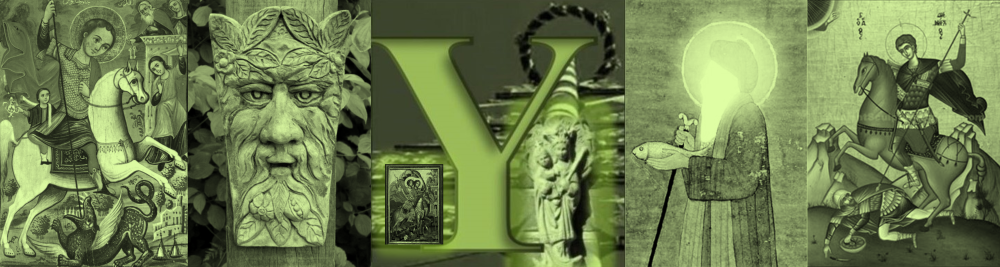
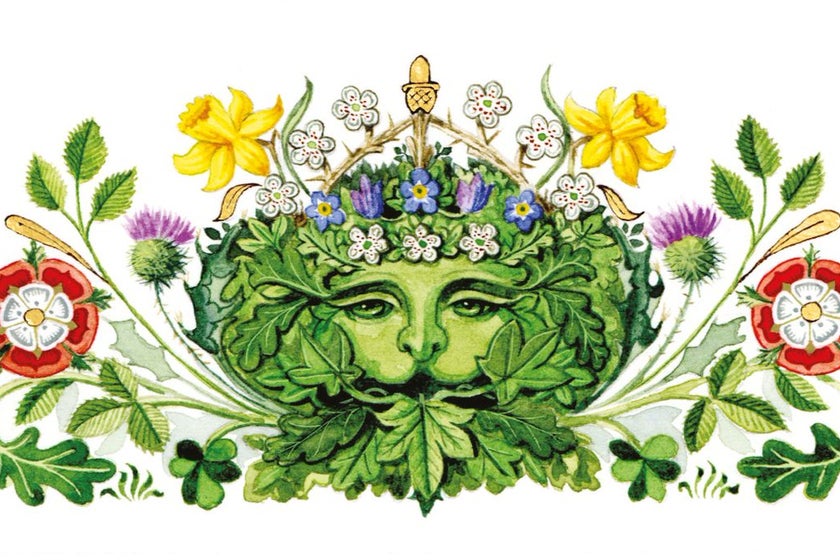
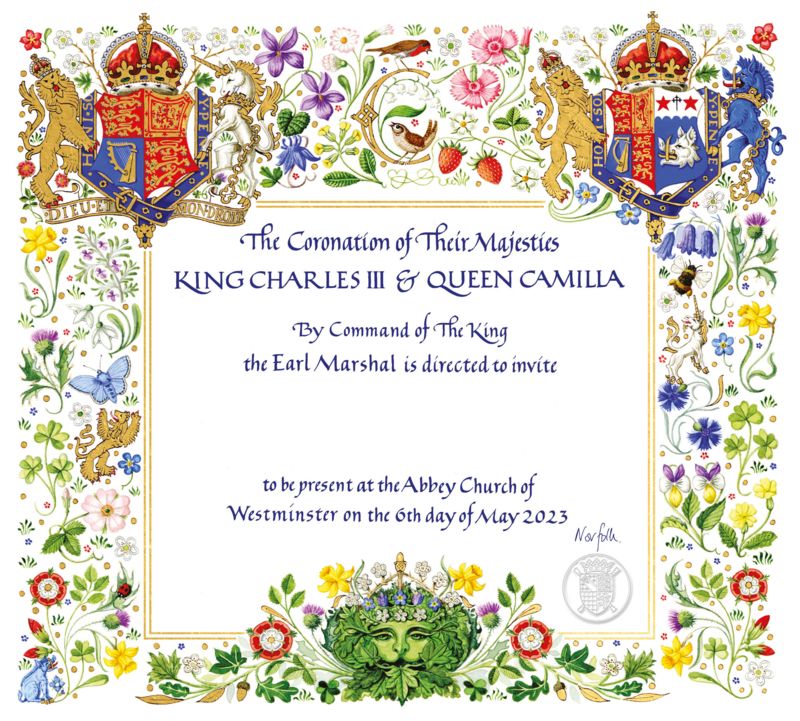
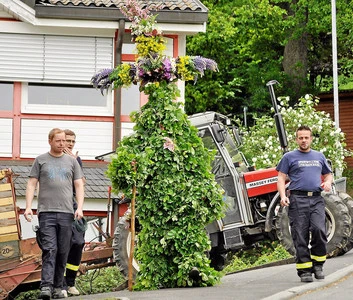
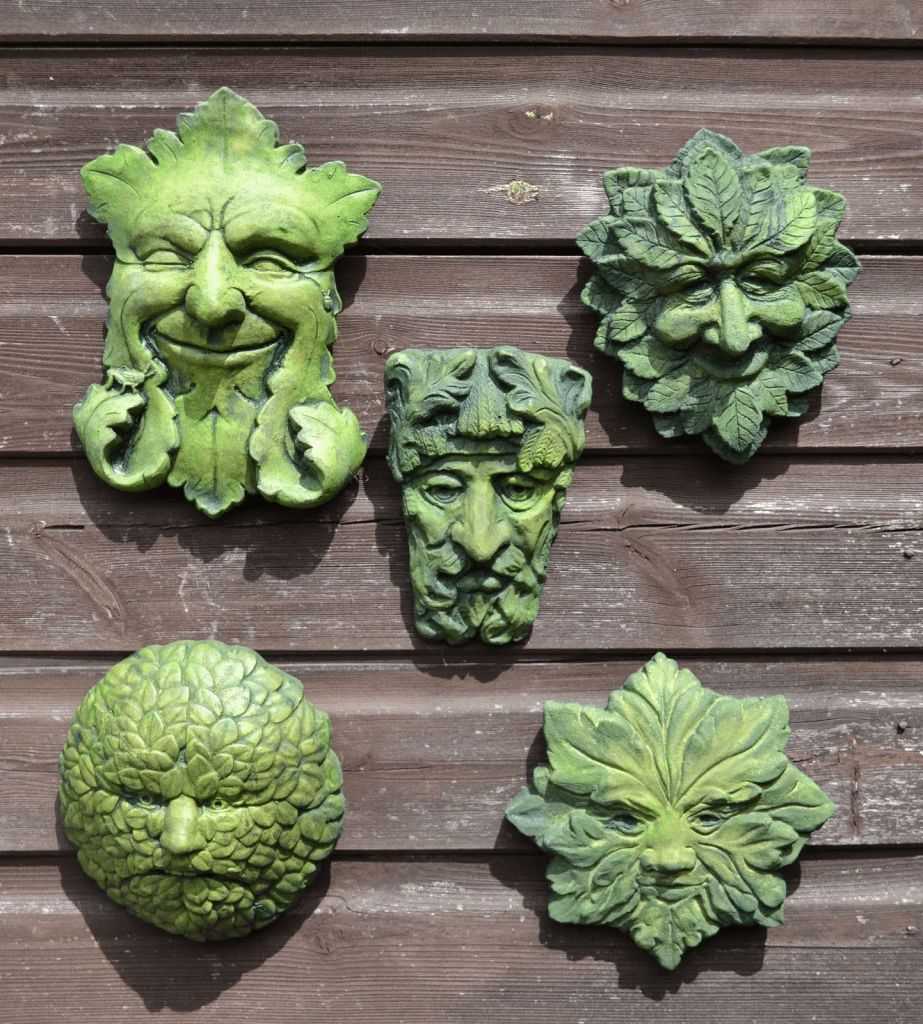
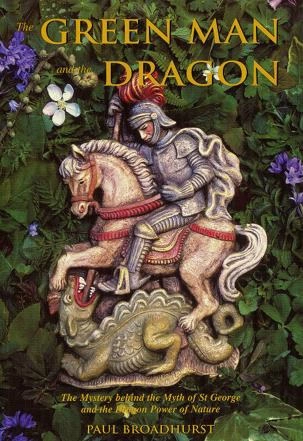
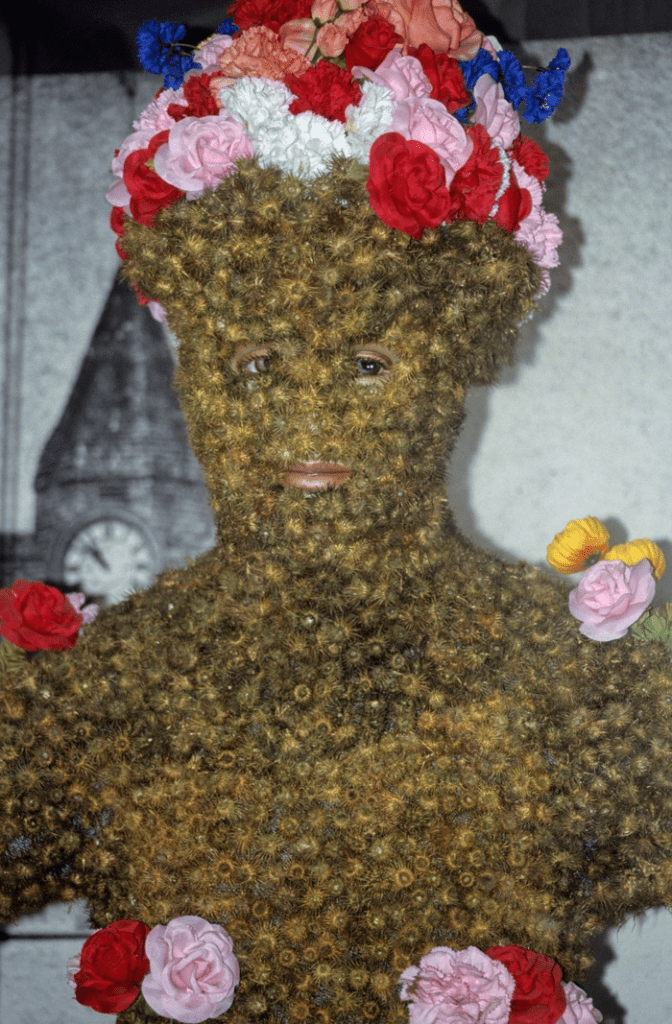
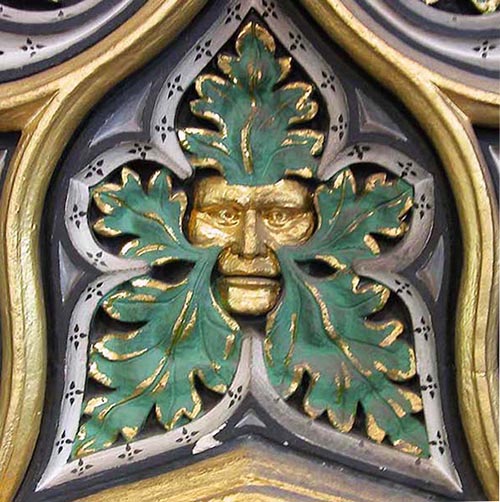
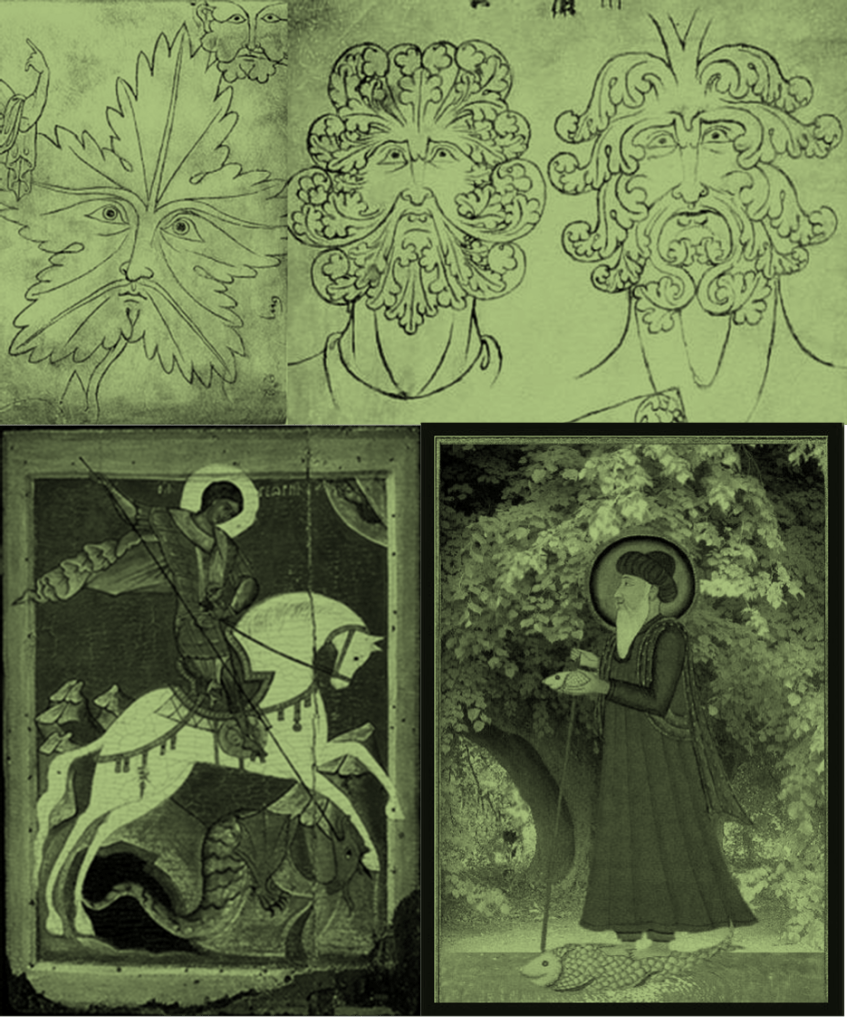

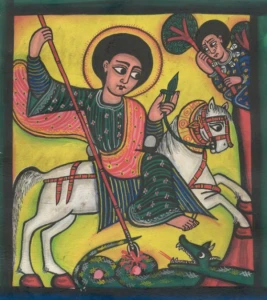
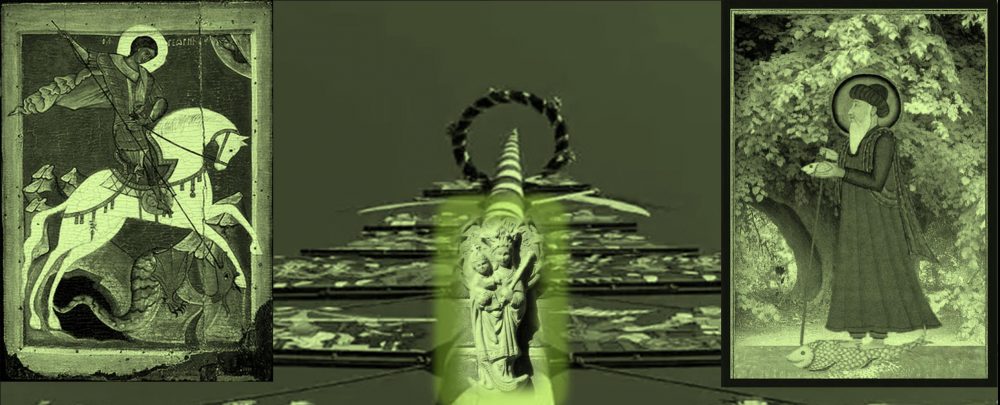

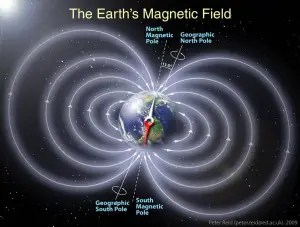
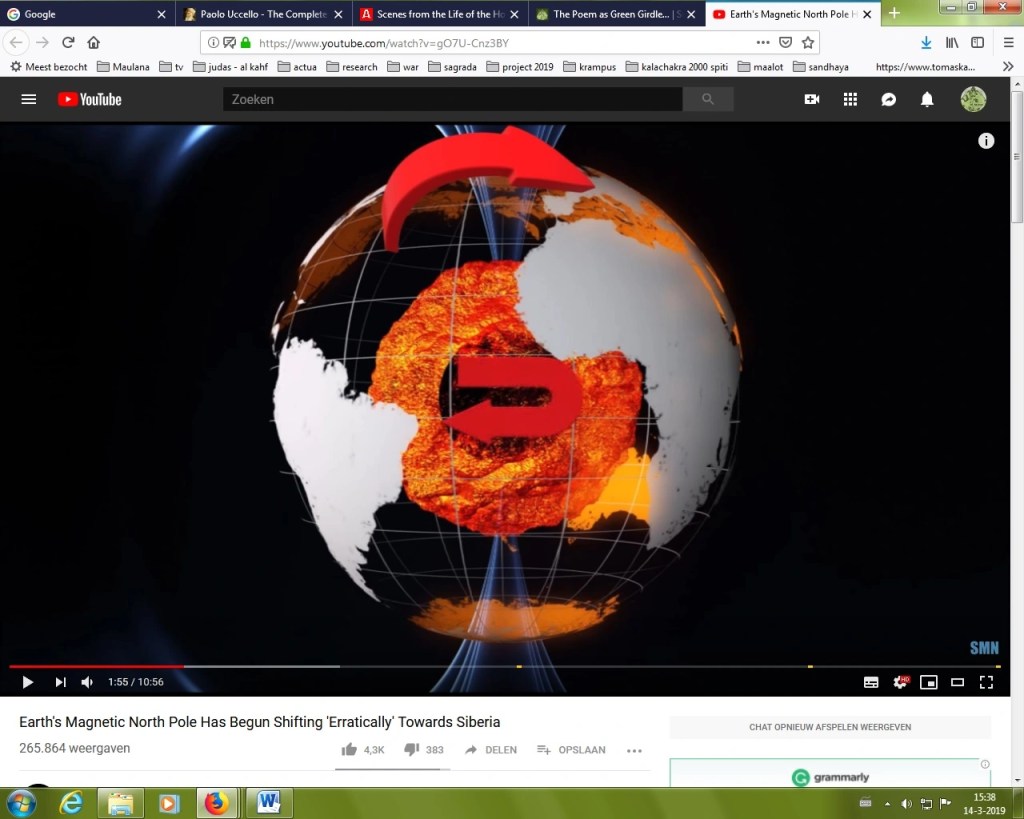
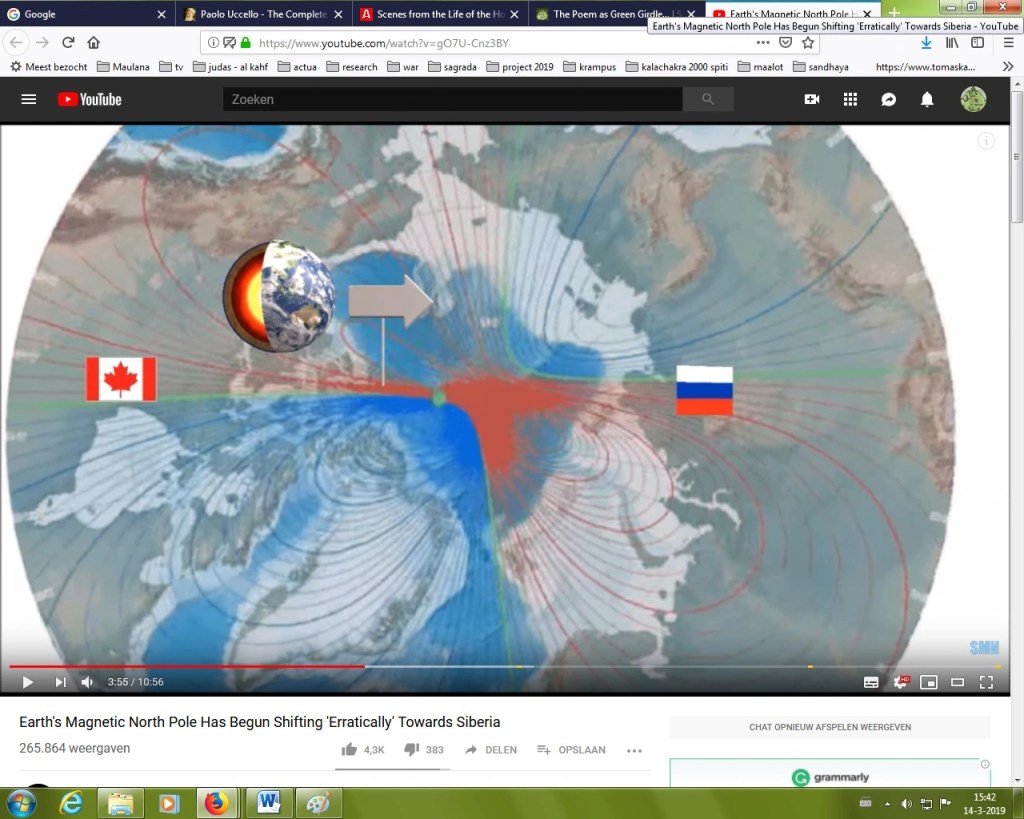
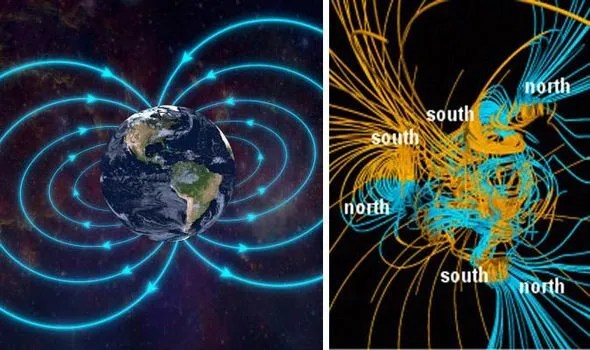


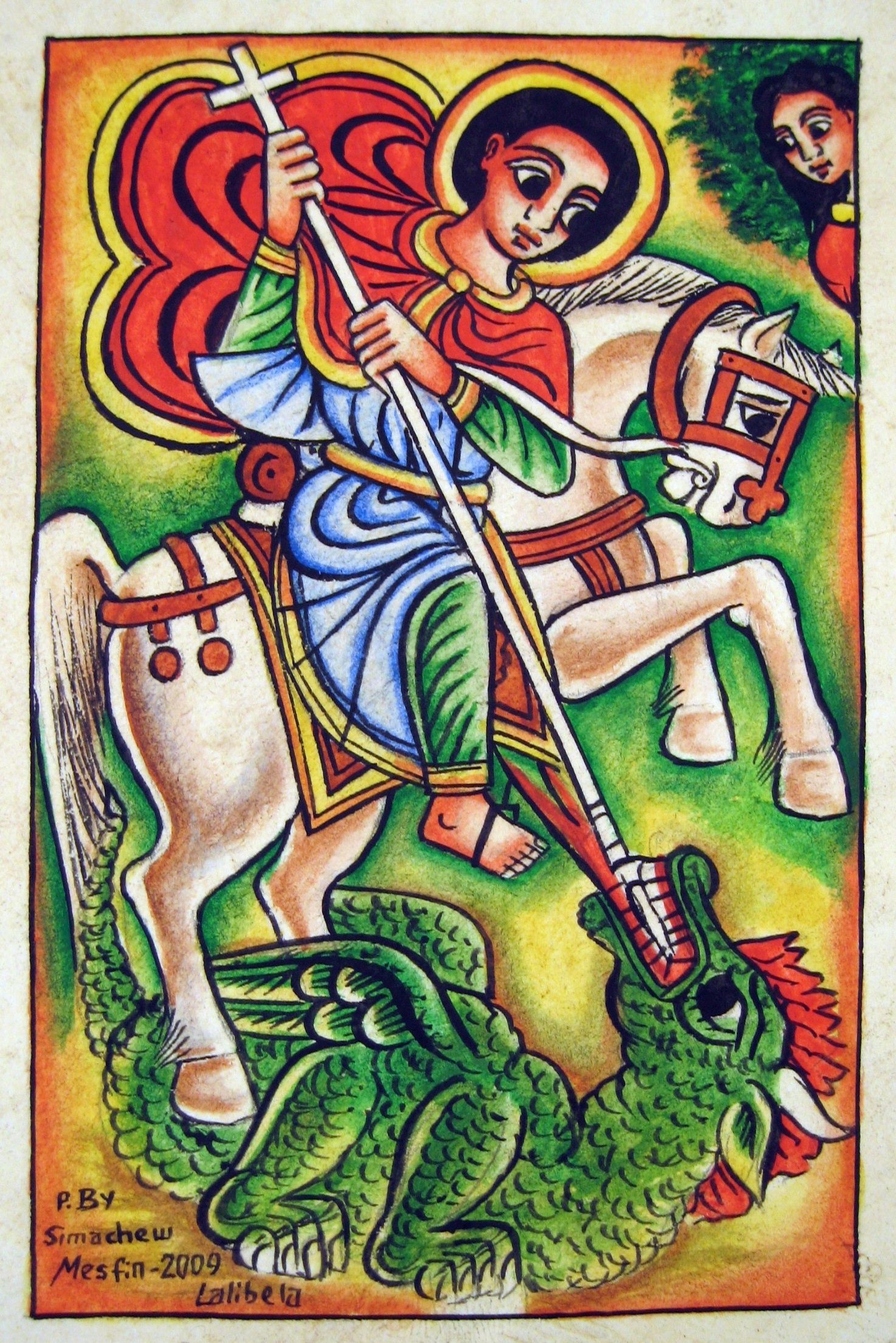

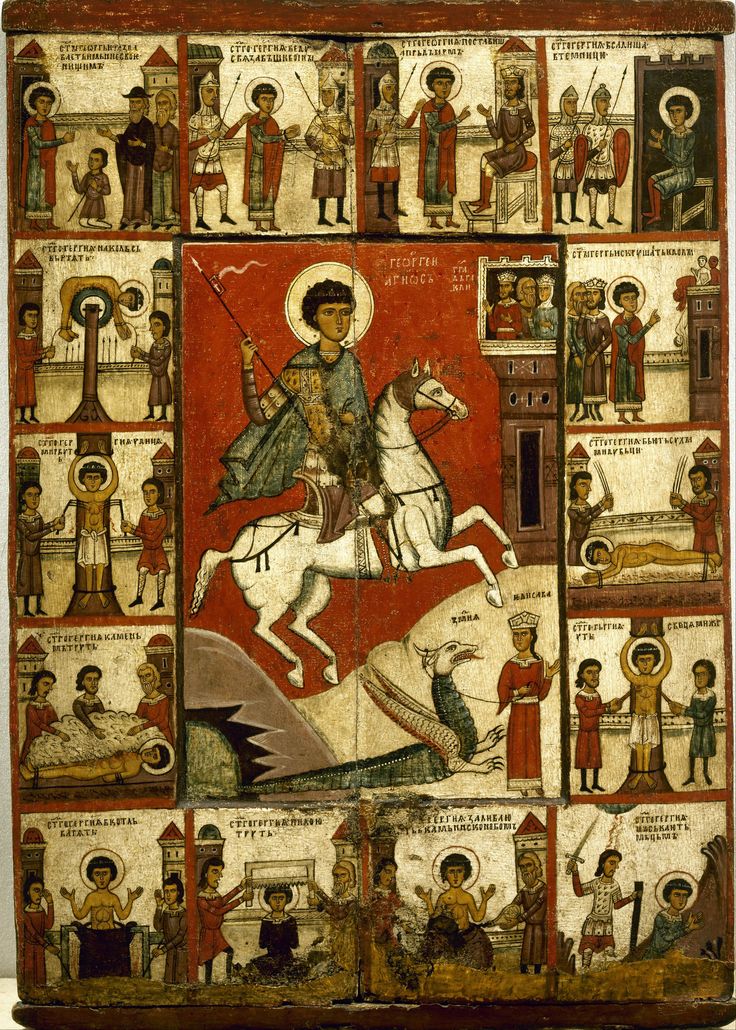
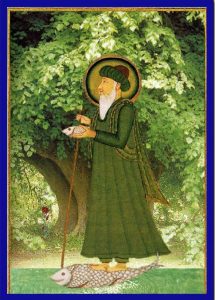
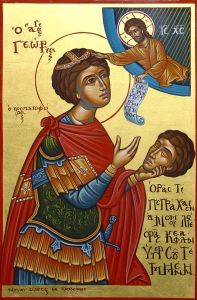

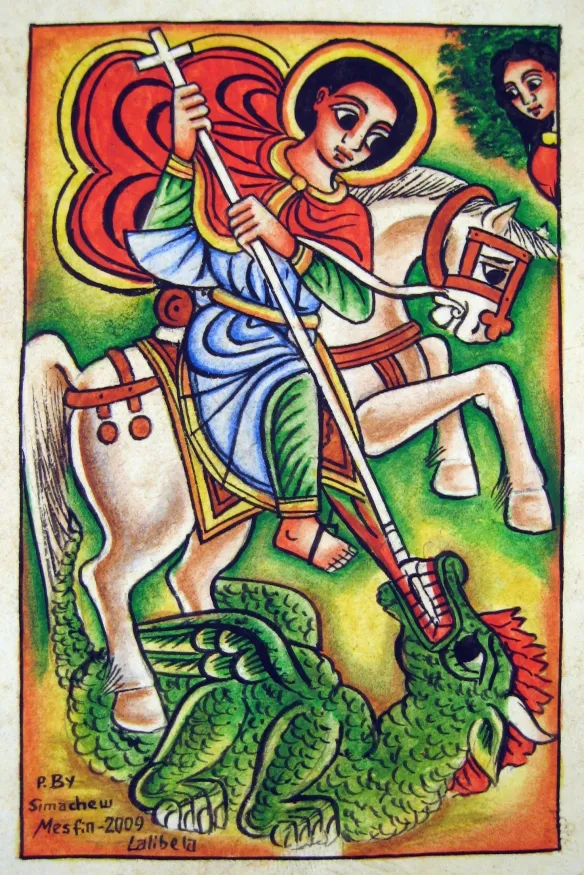
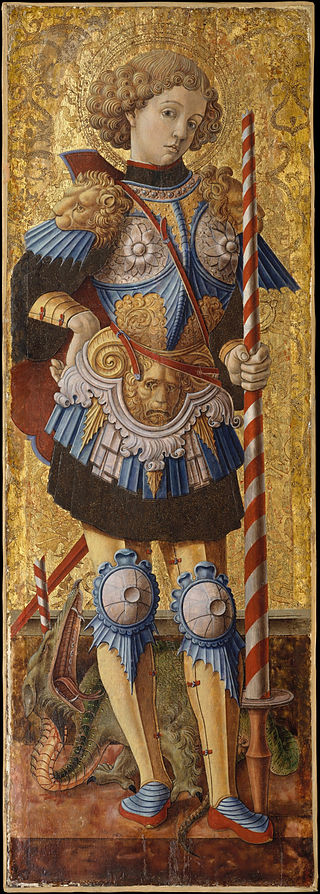
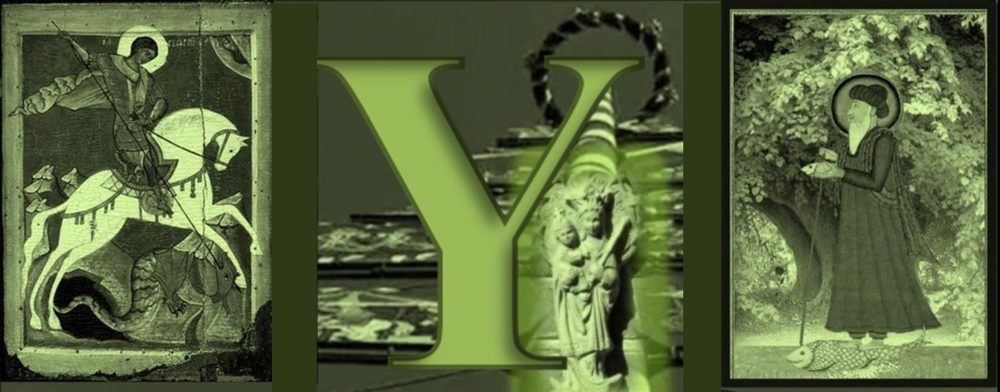


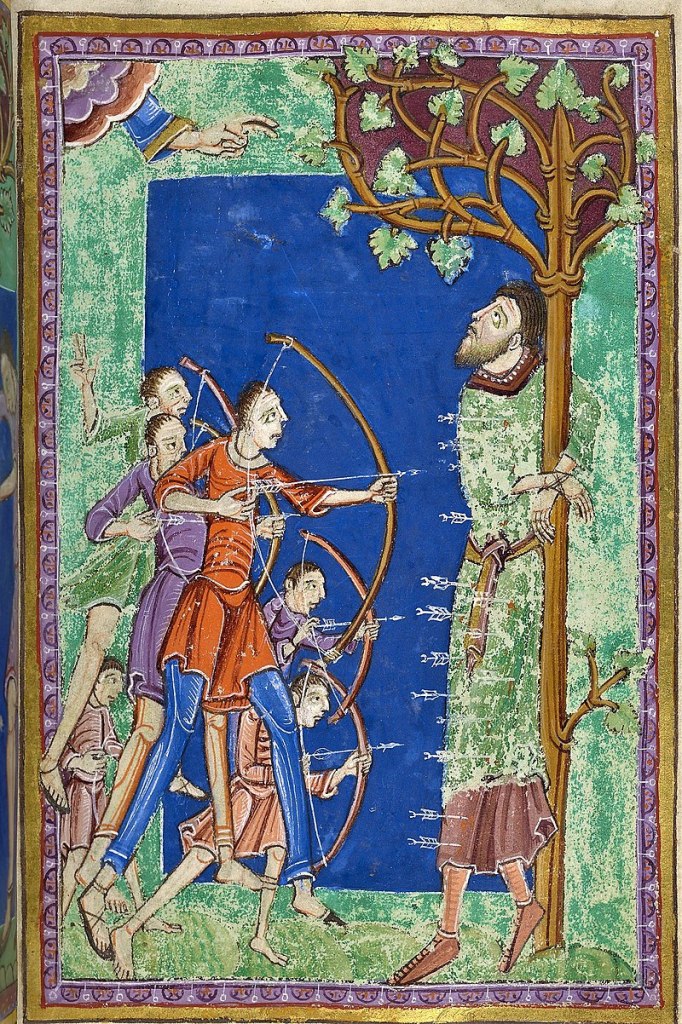
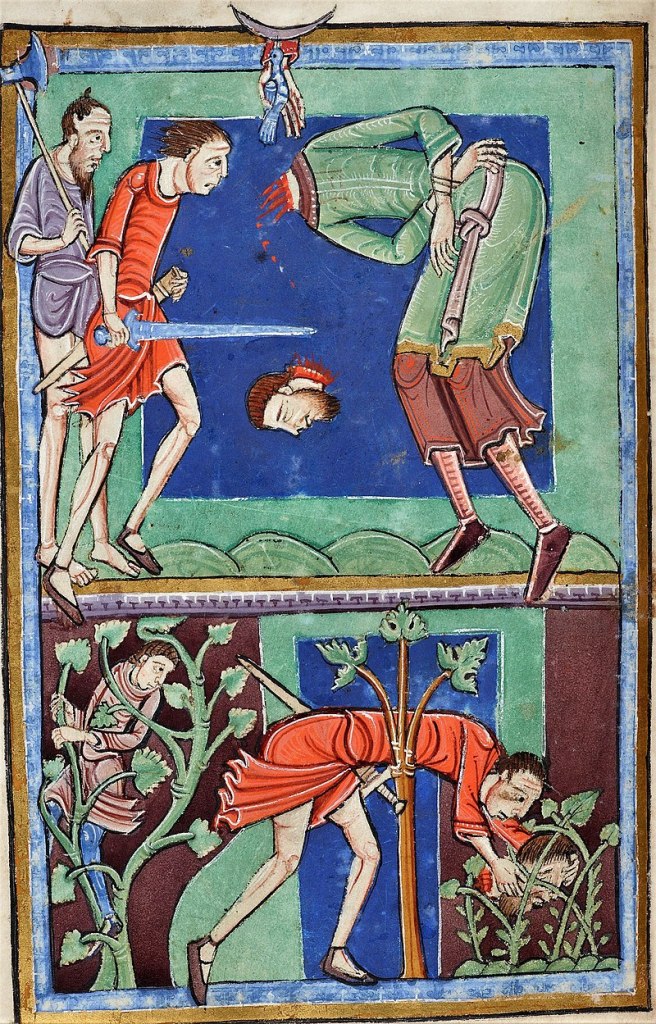

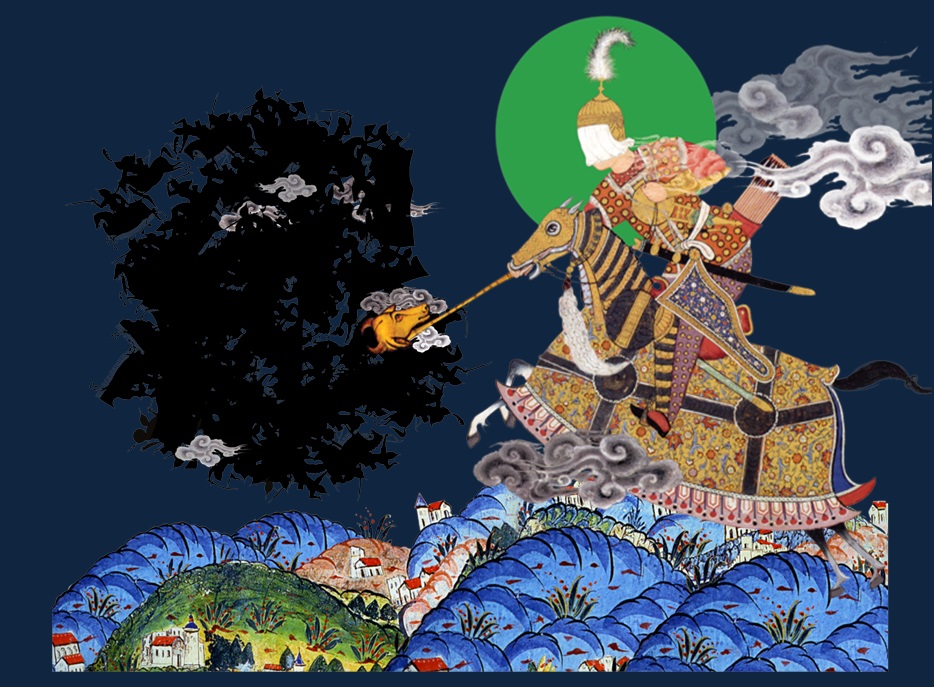
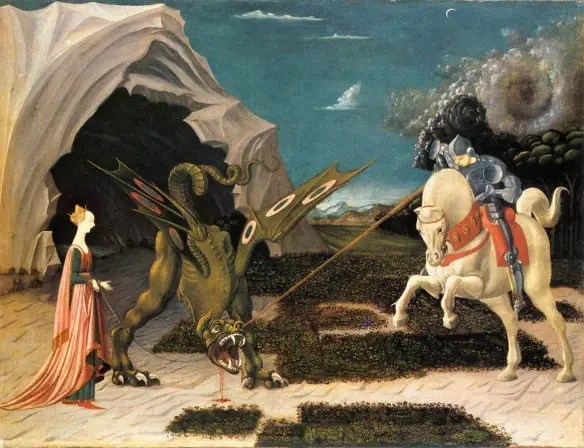

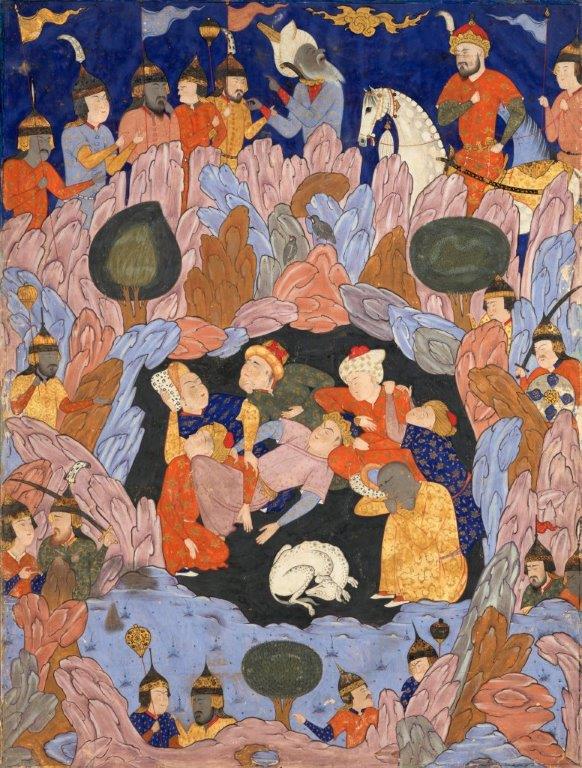
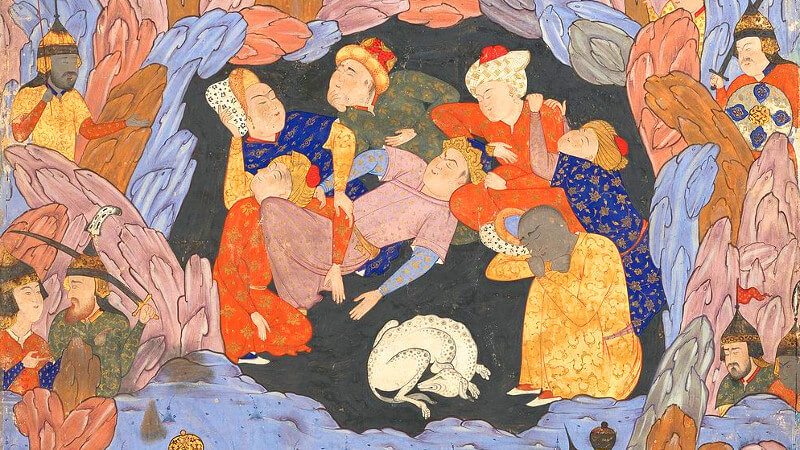
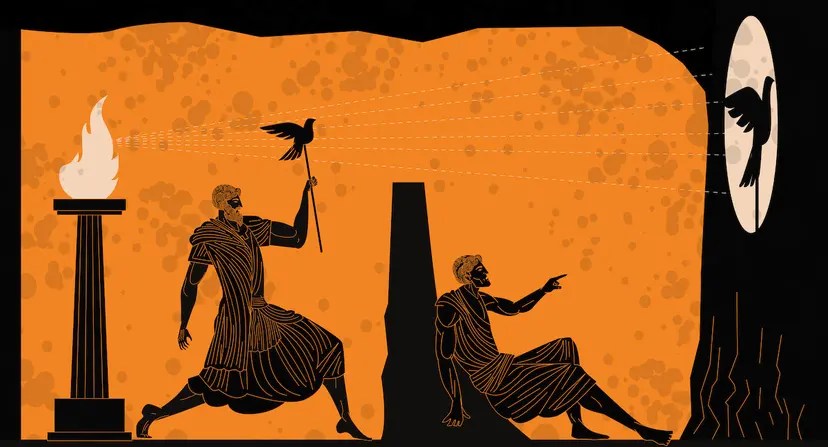


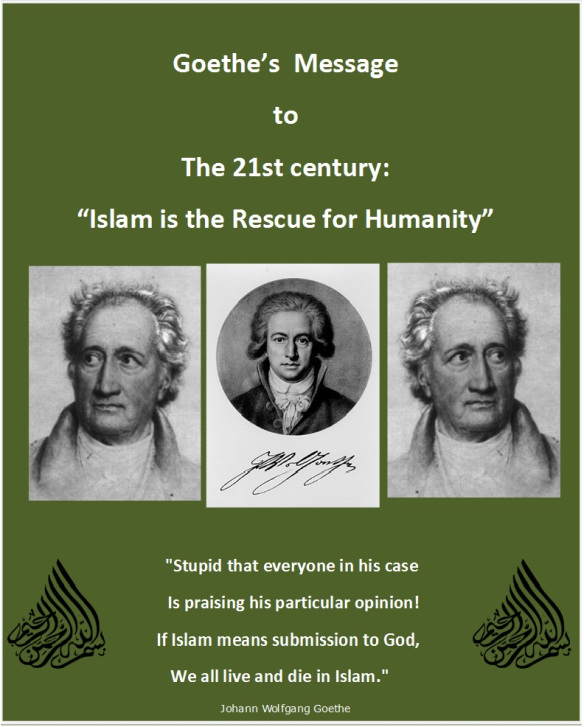
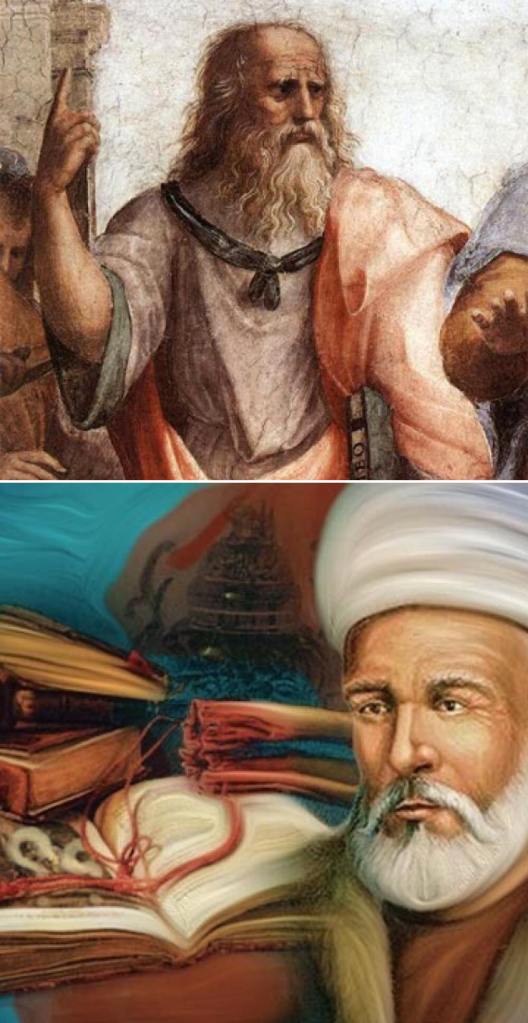
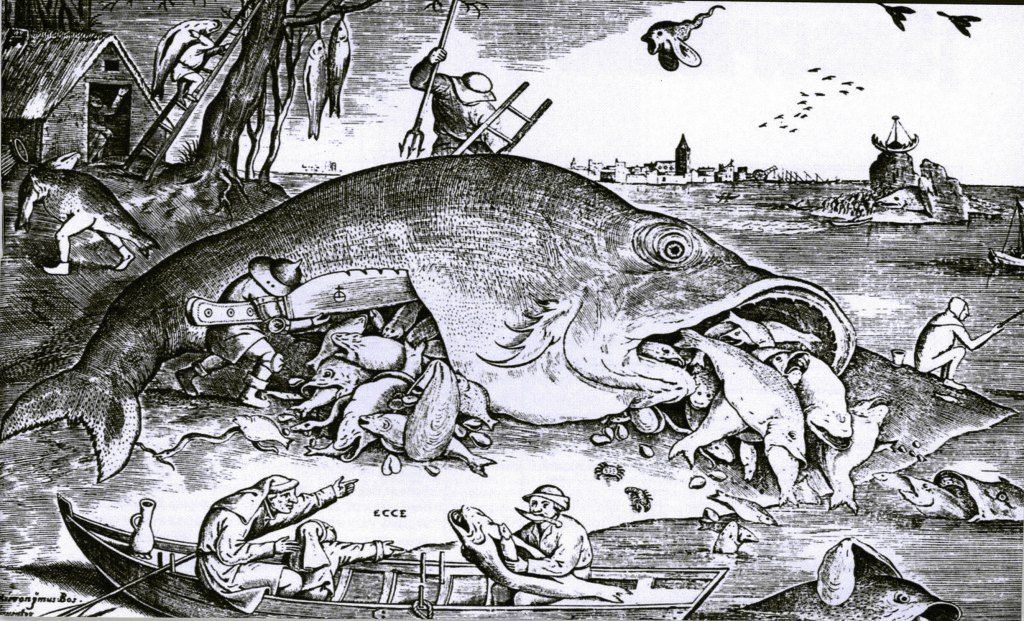
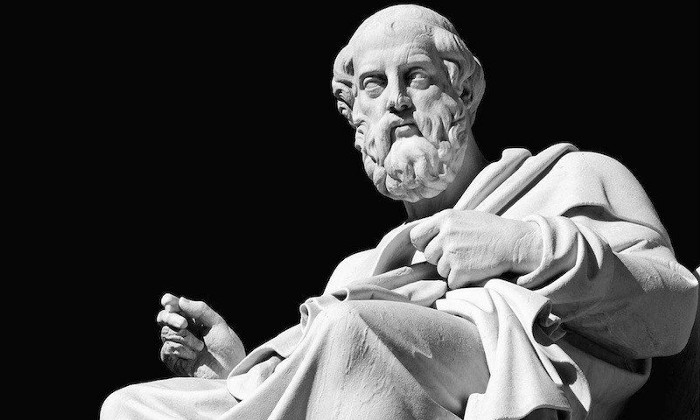
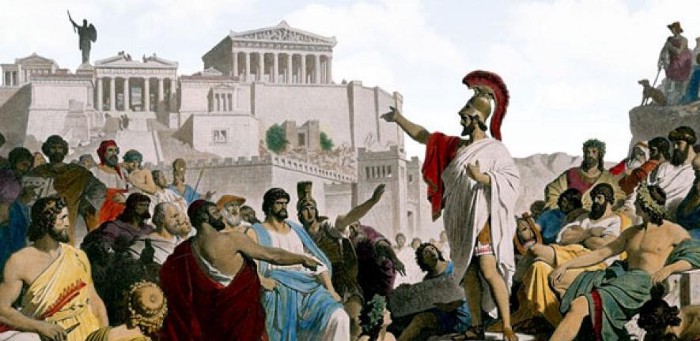
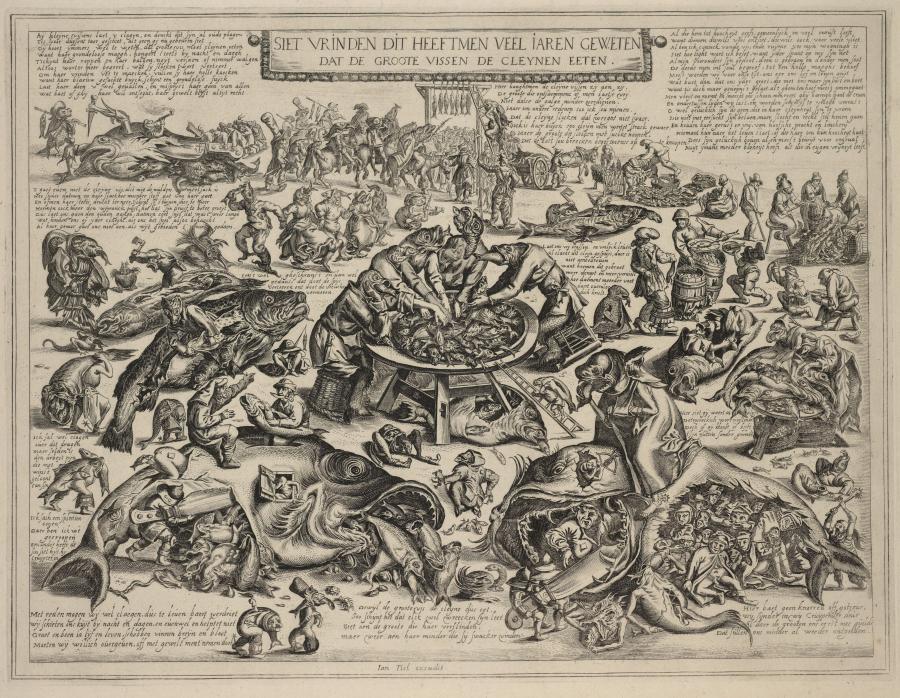




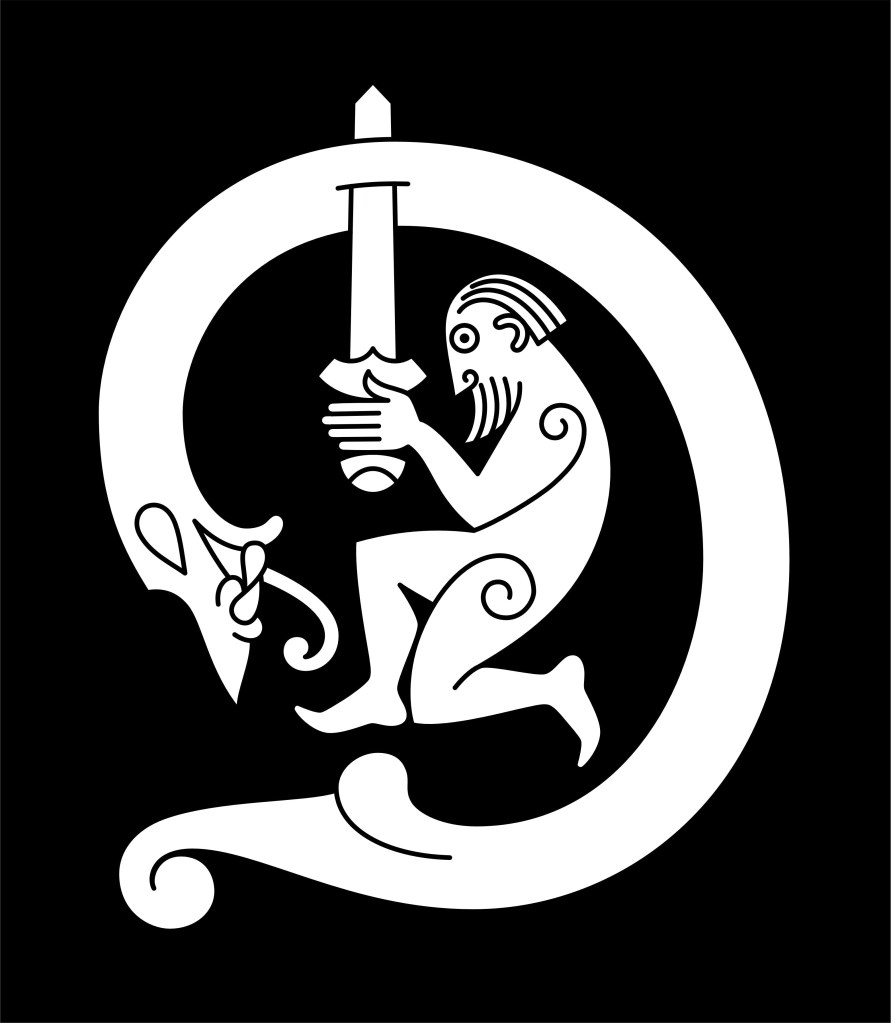
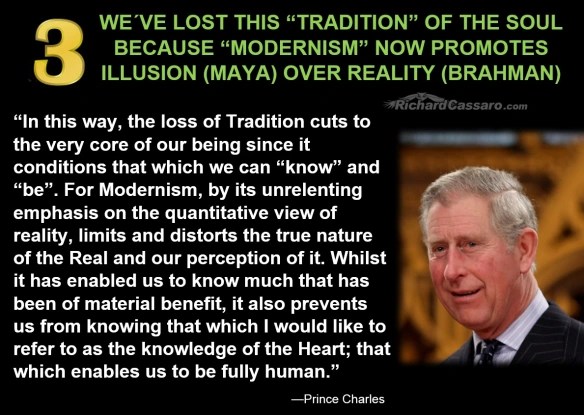
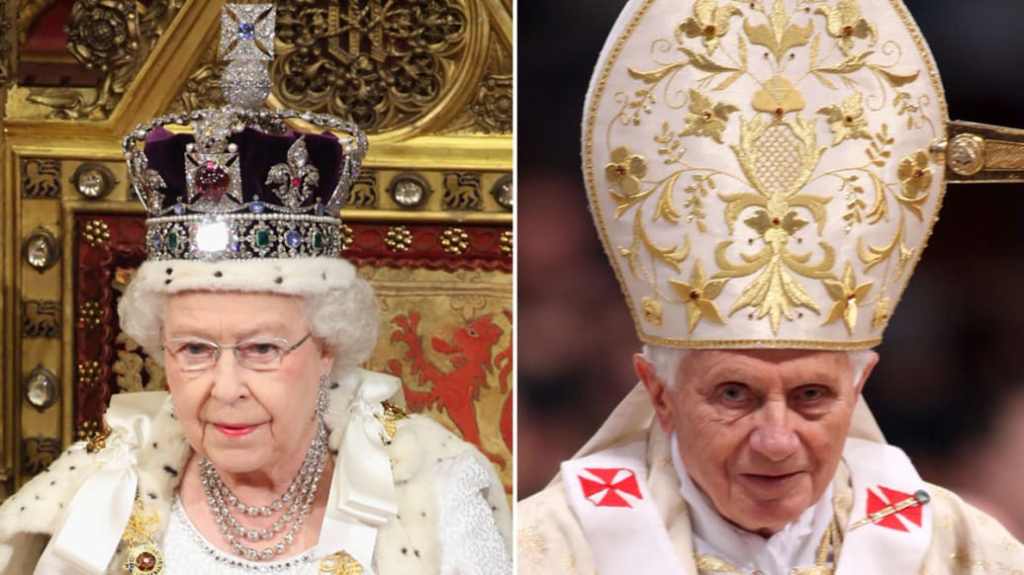
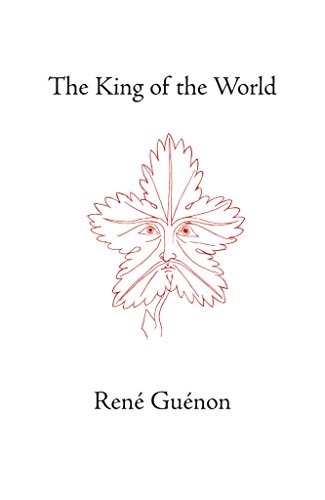
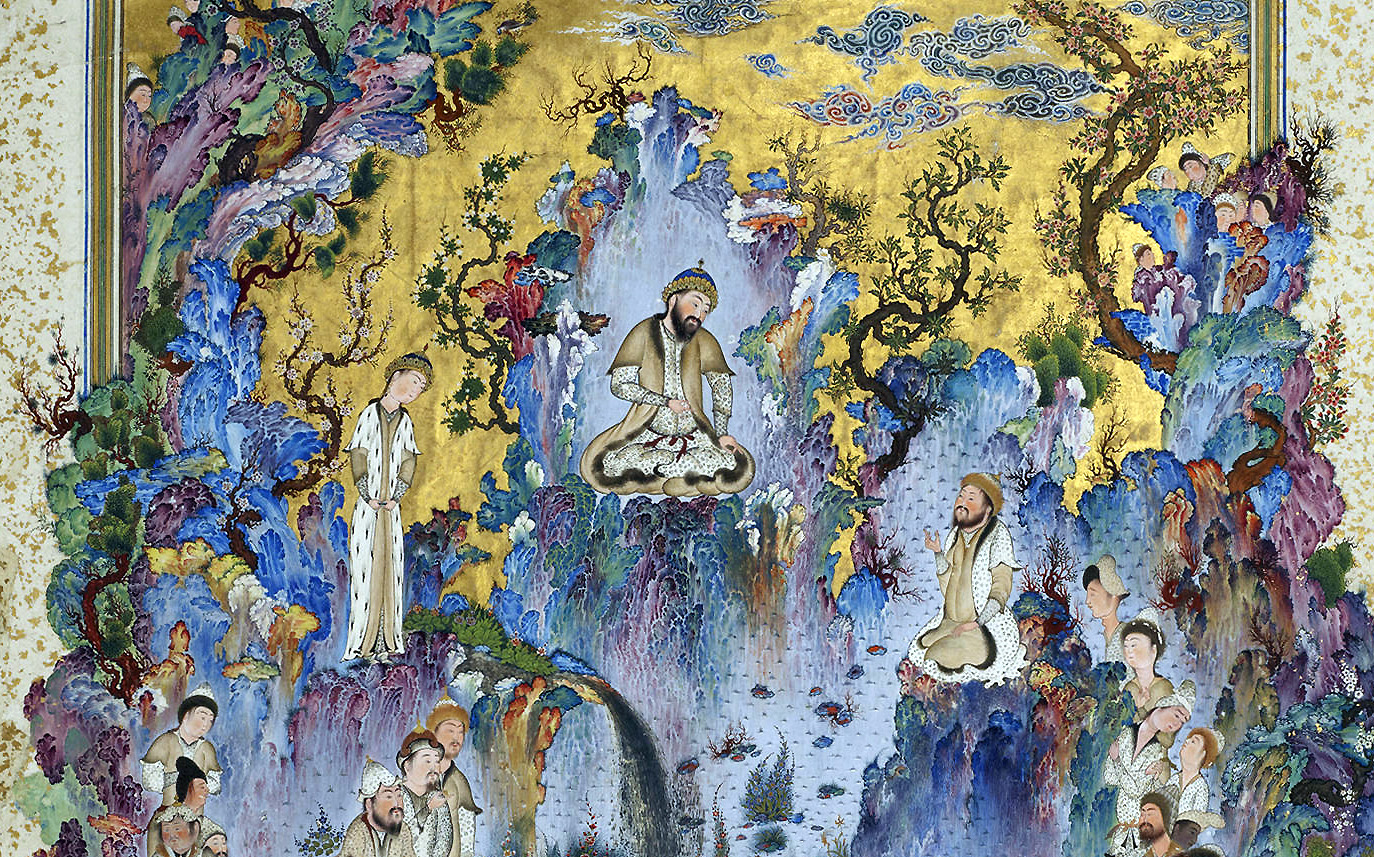
 Miquel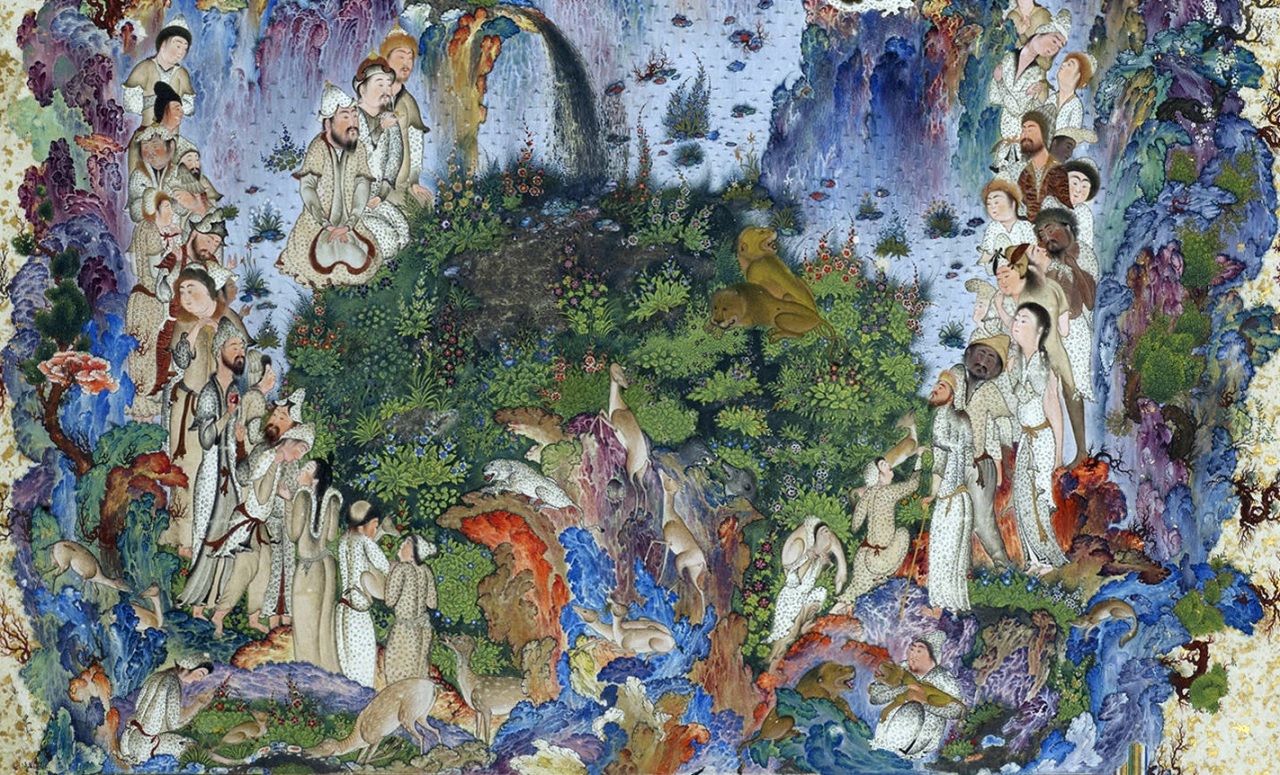
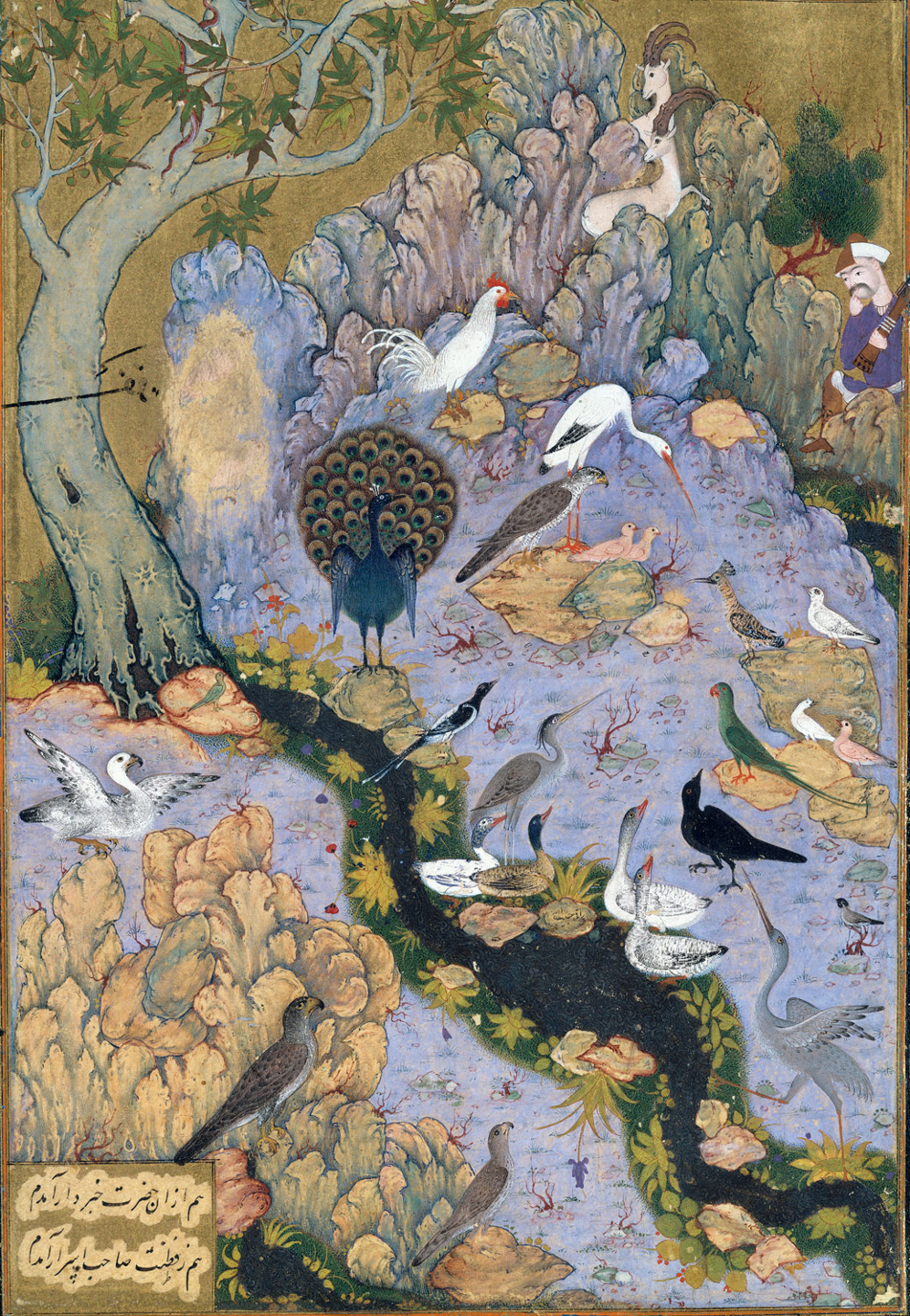


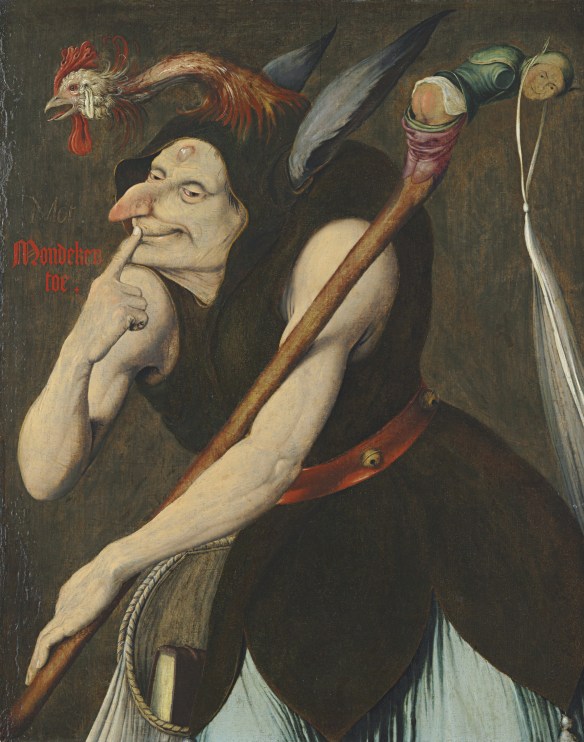
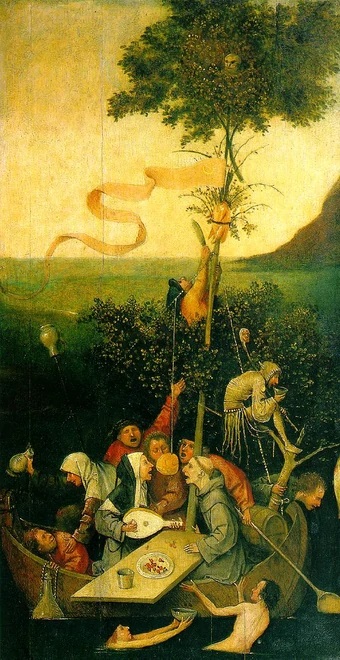
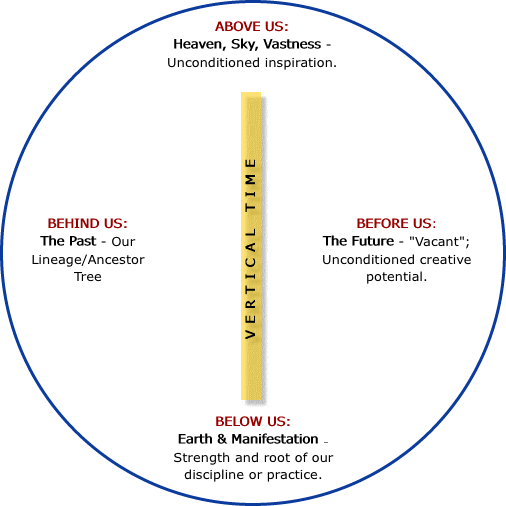
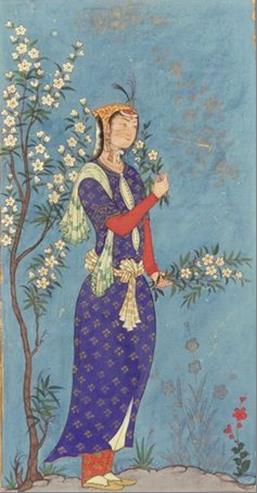 Spring is also the fulfillment of a promise: that of paradise after the “winter” ordeals of earthly life or after the autumnal sadness of the separation between the soul and God. See







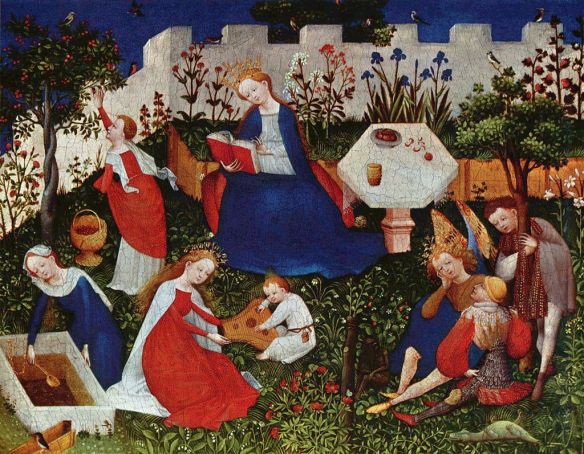
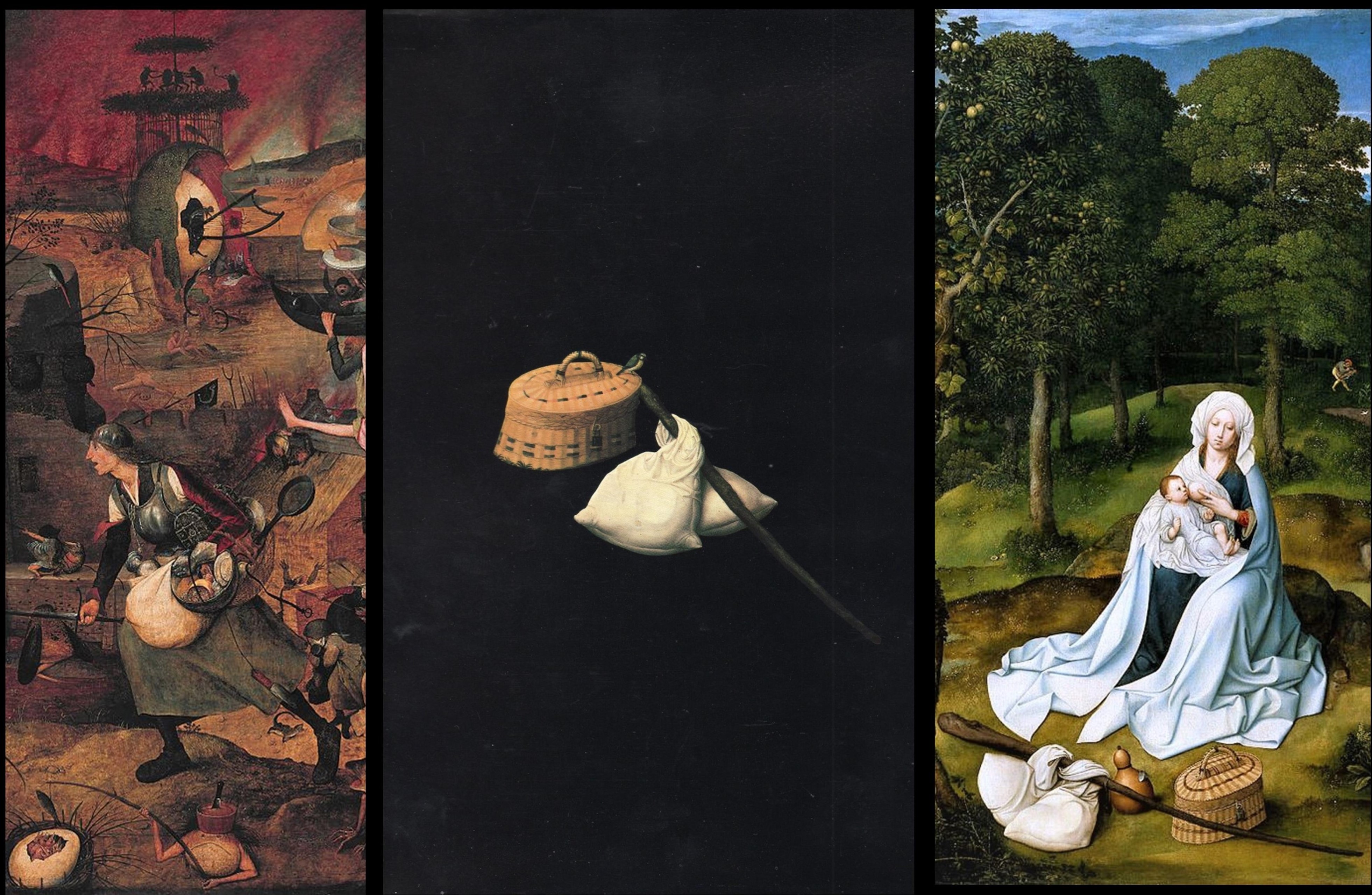
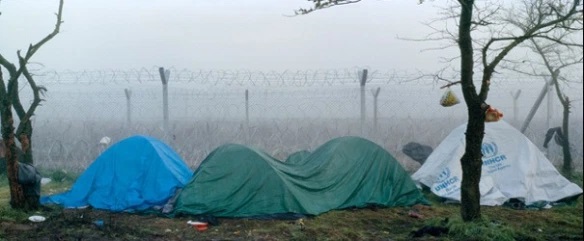

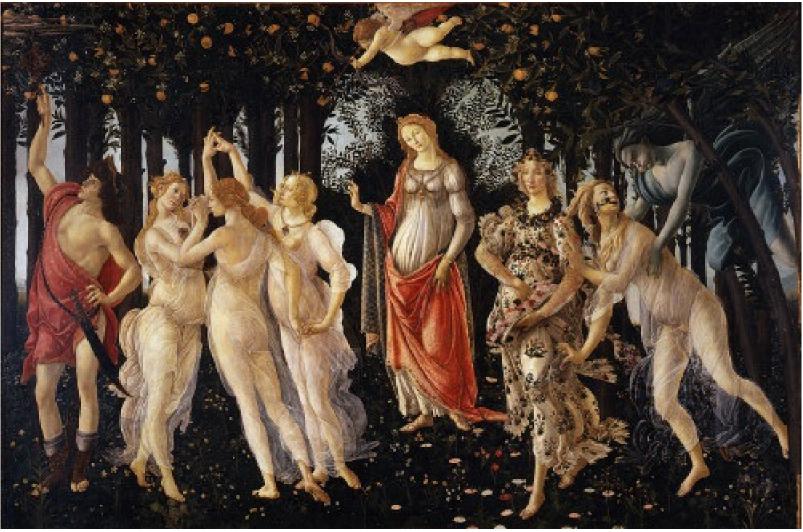



 Read more: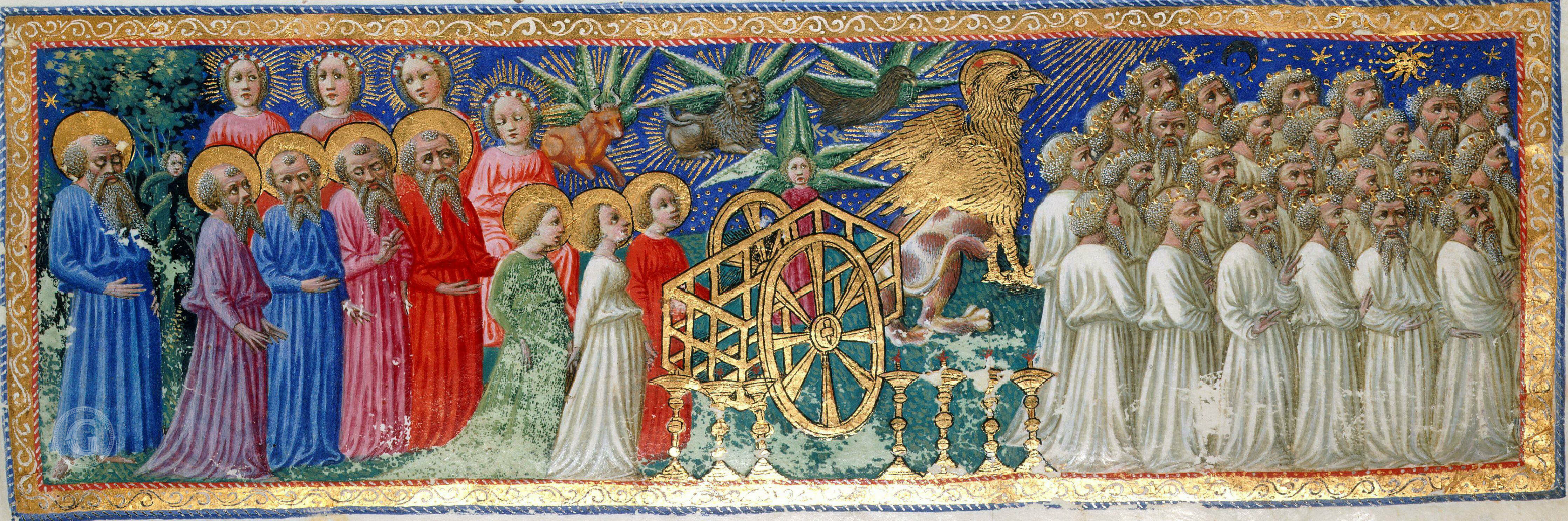
 Botticelli’s “Primavera” has been studied by more eminent art historians than perhaps any other work of Renaissance art. The chronicle of these readings would make for a representative anthology of 20th-century art historical methodologies, and yet no consensus about the painting’s “meaning” has emerged. In this article, the “Primavera” is discussed in the context of what we know and what we can surmise about the artist’s own literary and intellectual culture and especially his lifelong engagement with Dante’s “Divina Commedia”. The painting is studied as an attempt on the artist’s part to translate into his own medium the thematics surrounding Dante’s Earthly Paradise episode at the end of the Purgatorio. These thematics are explored in the context of Cristoforo Landino’s 1481 commentary on Dante, with which Botticelli, who devoted many years to illustrating Landino’s edition, was intimately familiar. Landino saw in Dante’s Earthy Paradise episode an allegory of the soul’s moral and spiritual pilgrimage from the vita voluptuosa through the vita activa to the vita contemplativa, a passage occurring, like Dante’s pilgrimage as a whole, under the influence of Celestial Venus. The “Primavera” is discussed as a visual variation on the same theme, presented all’antica in a manner that resonates with Dante’s classical allusions, especially as interpreted by Landino. In addition to reflecting Botticelli’s own artistic and intellectual interests and aspirations, as well as those of his presumed patron, the “Primavera” echoes still with a rivalry that brought Botticelli into competition with such other close students of Dante as Leonardo and Michelangelo. This paragone awaits further study.






 The second birth corresponds to what we also gain in Sufism as the “opening (fath) of the eye of the heart“: “When Your Eye became an eye for my heart, my blind heart drowned in vision ; I saw that You were the universal Mirror for all eternity and I saw in Your Eyes my own image. I said, “Finally, I found myself in His Eyes, I found the Way of Light!” (Rumi, Mathnawî, II, 93 sq.)


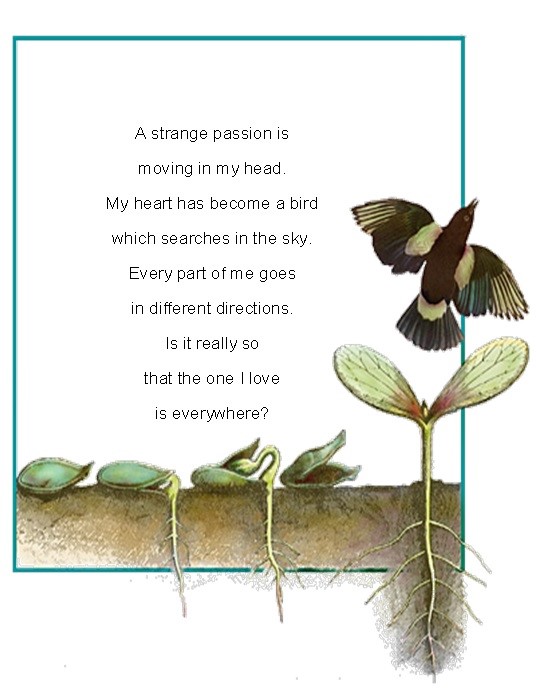
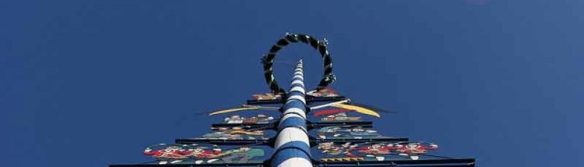

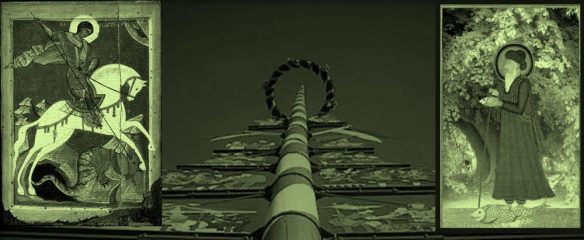
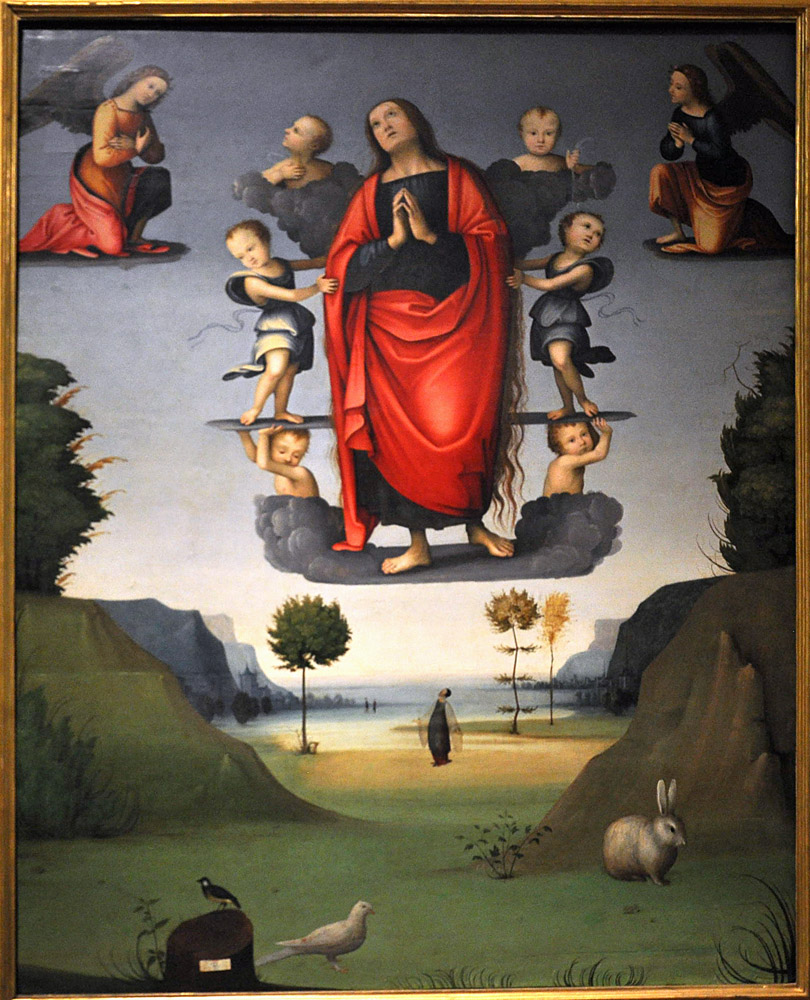

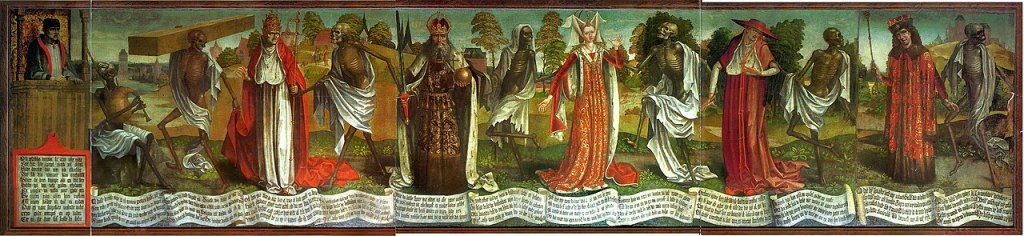
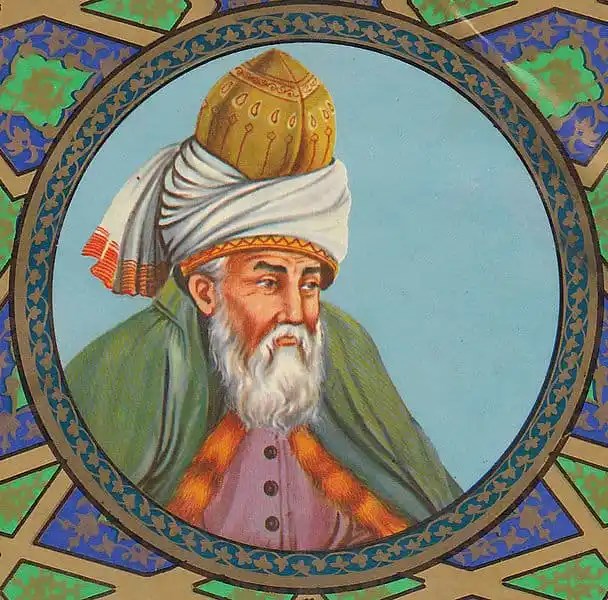
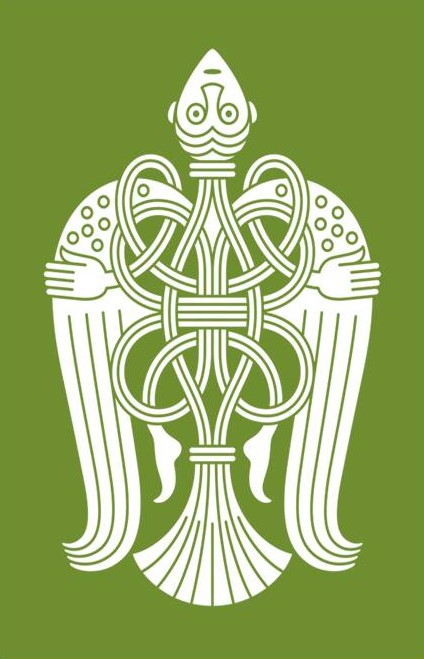


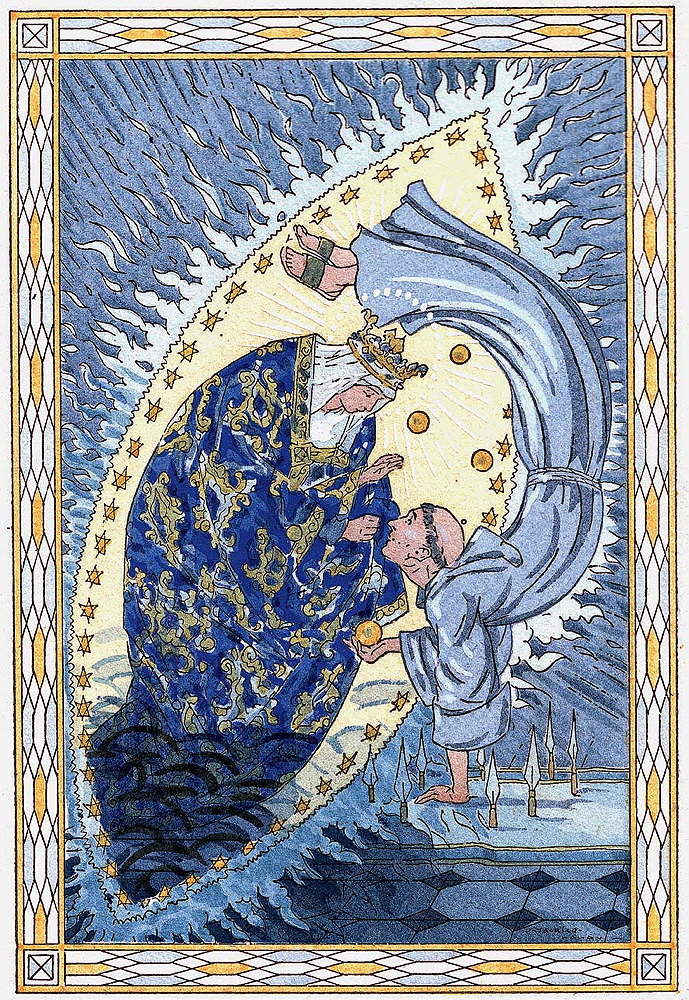
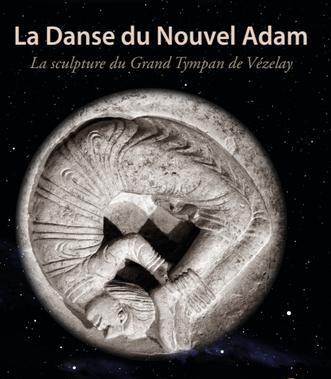
 Path to the Maypole of Wisdom