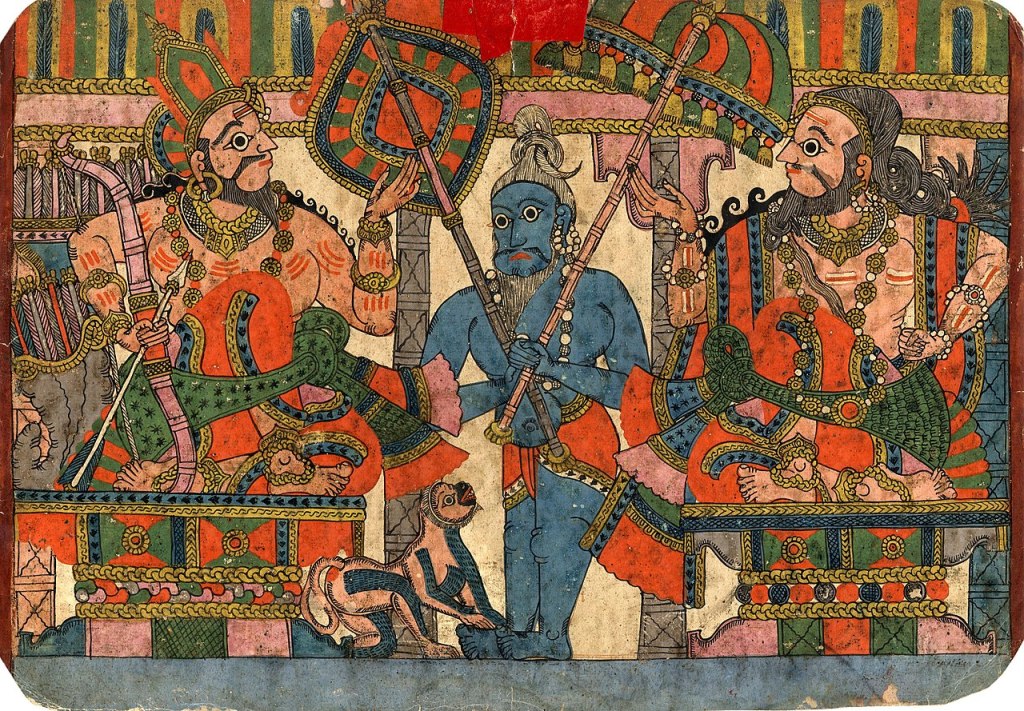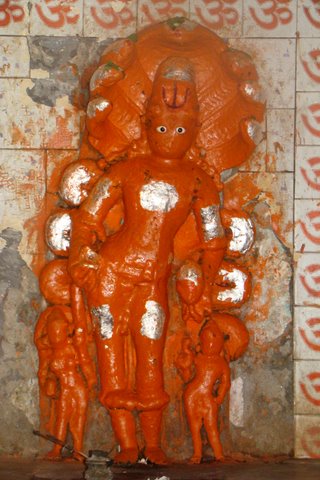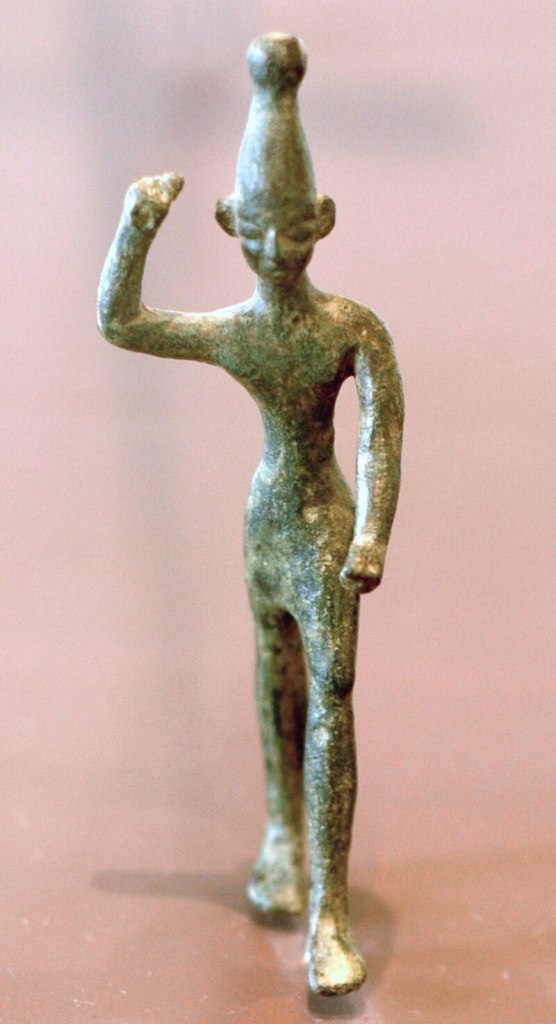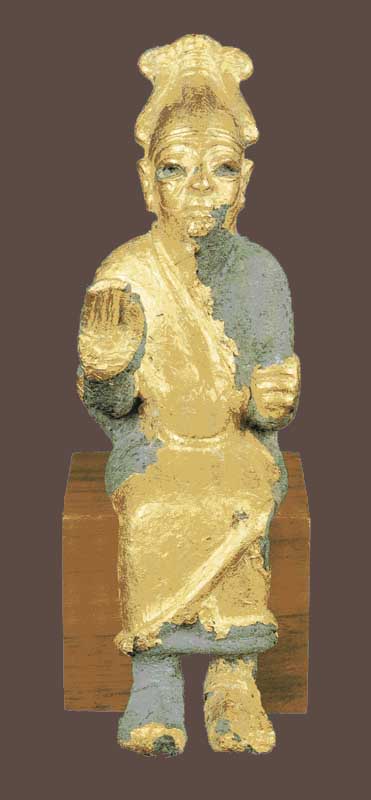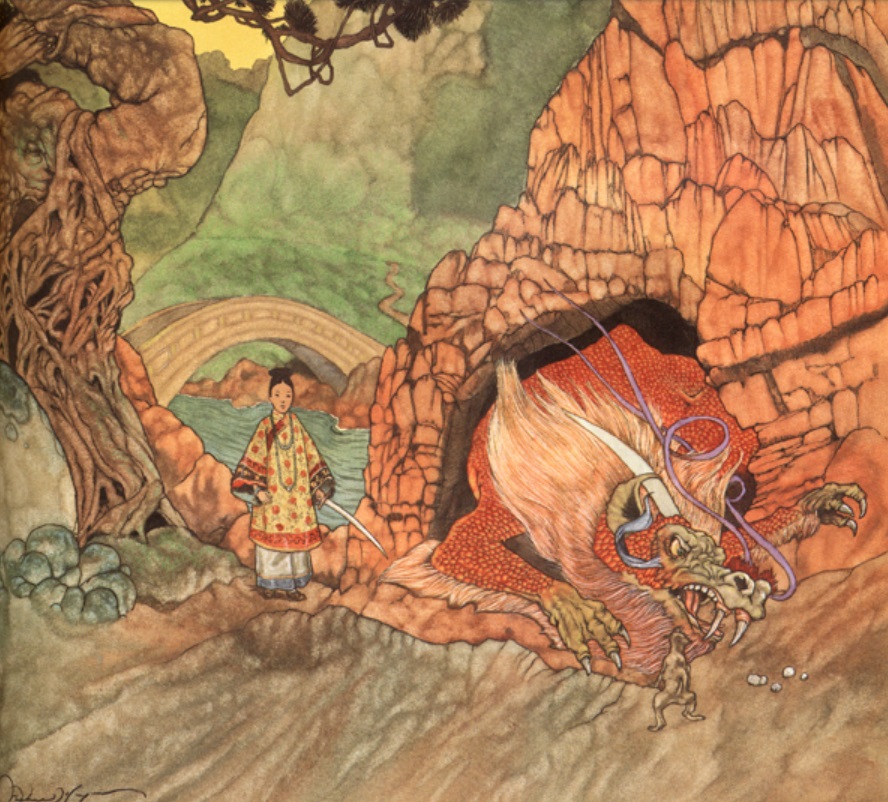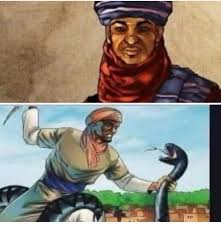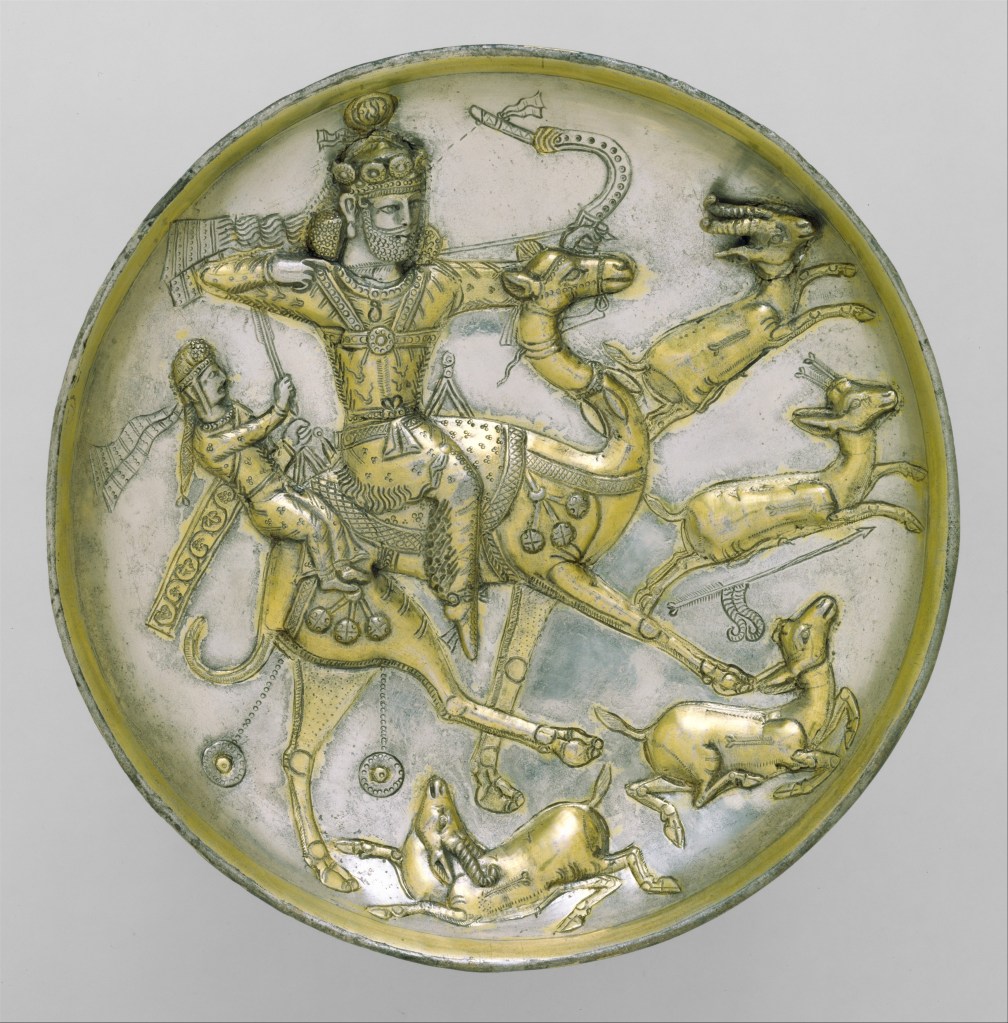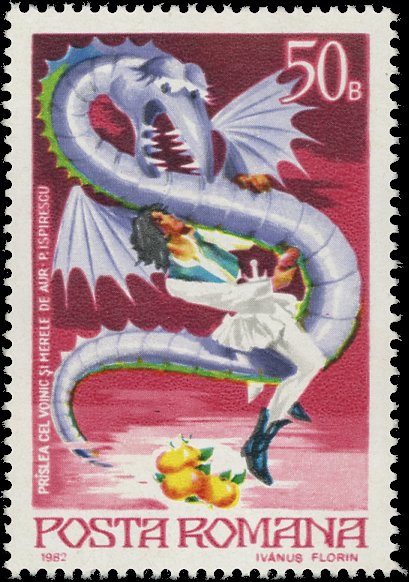
The Dragon Slayer, on becoming an adult

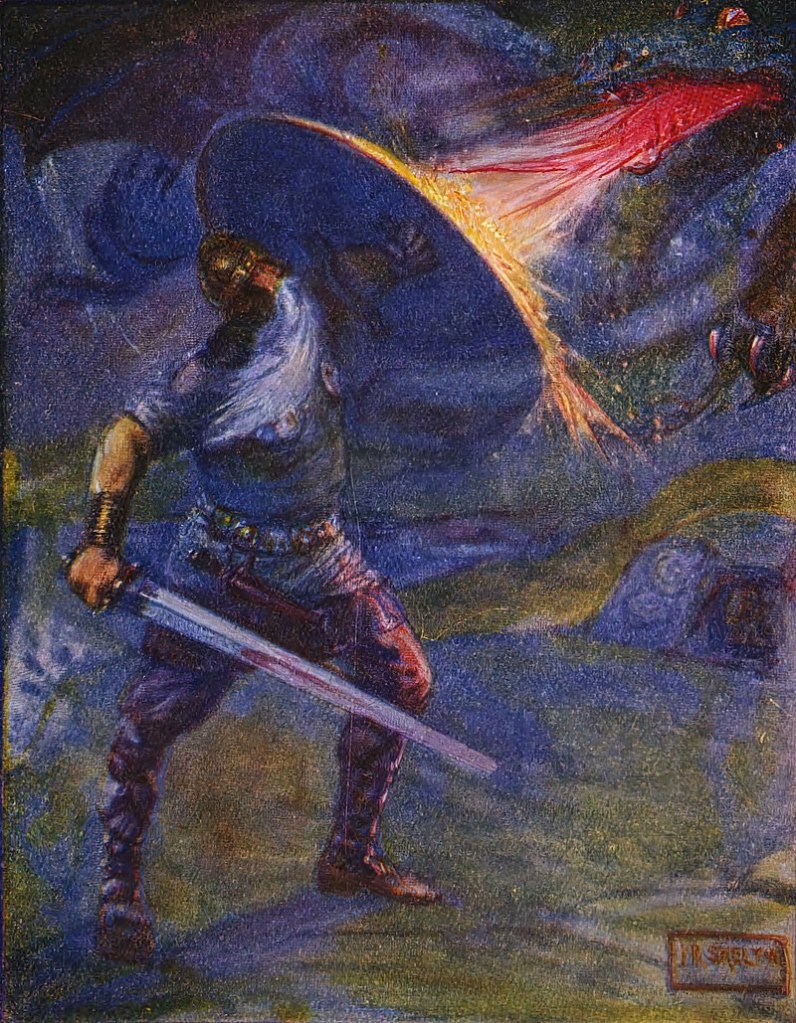
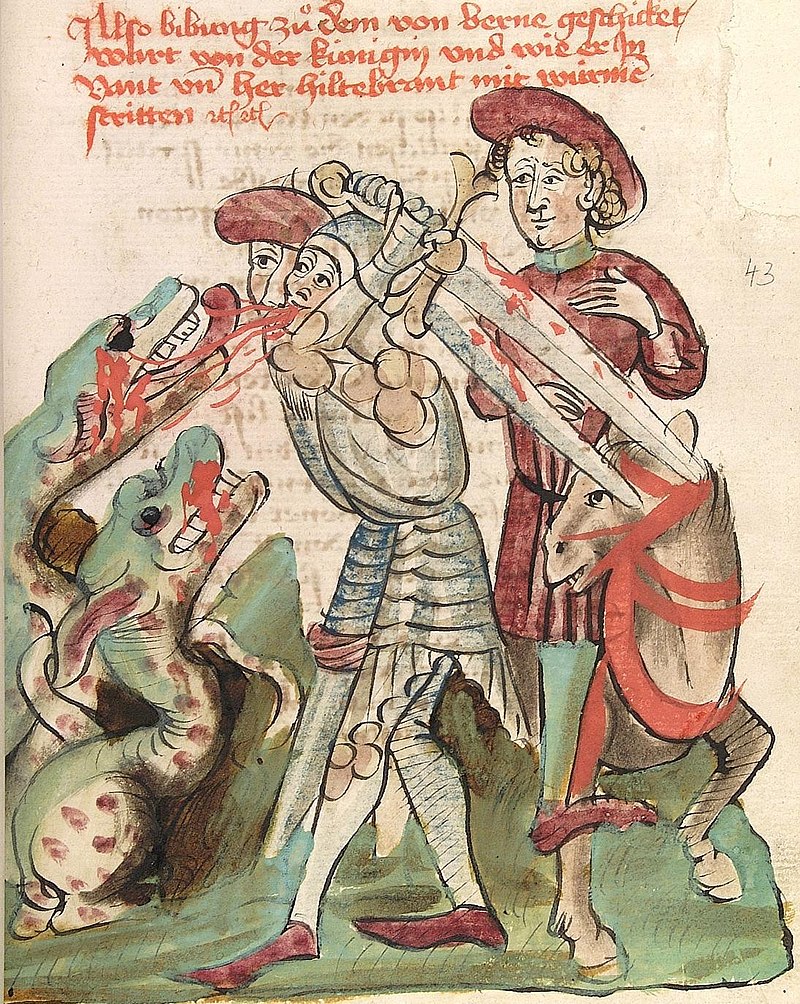
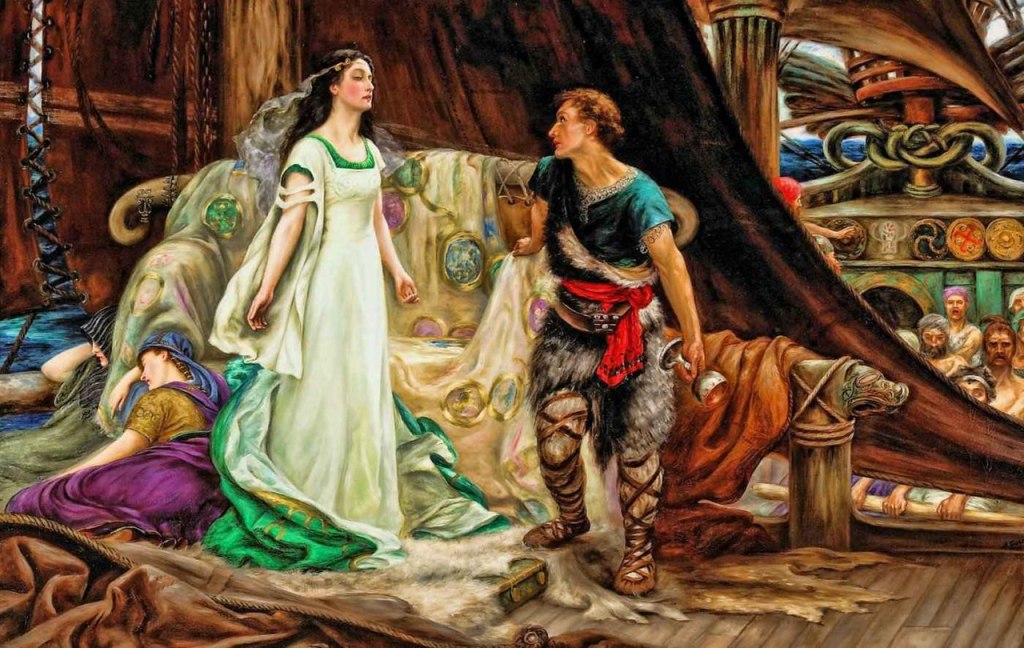
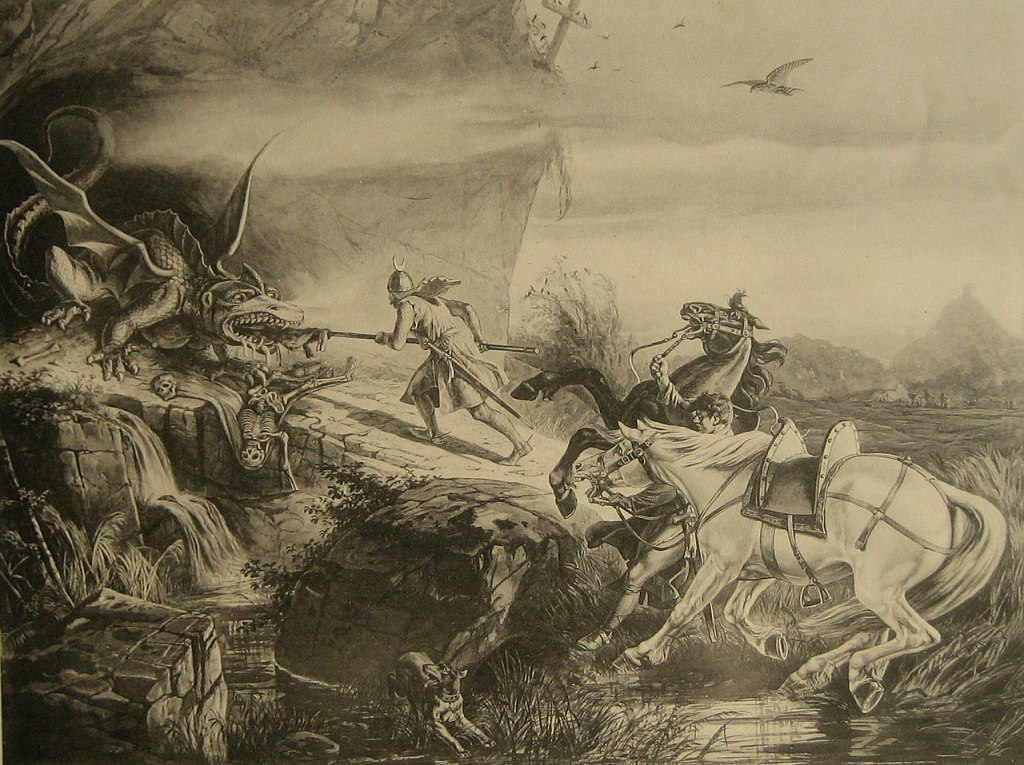
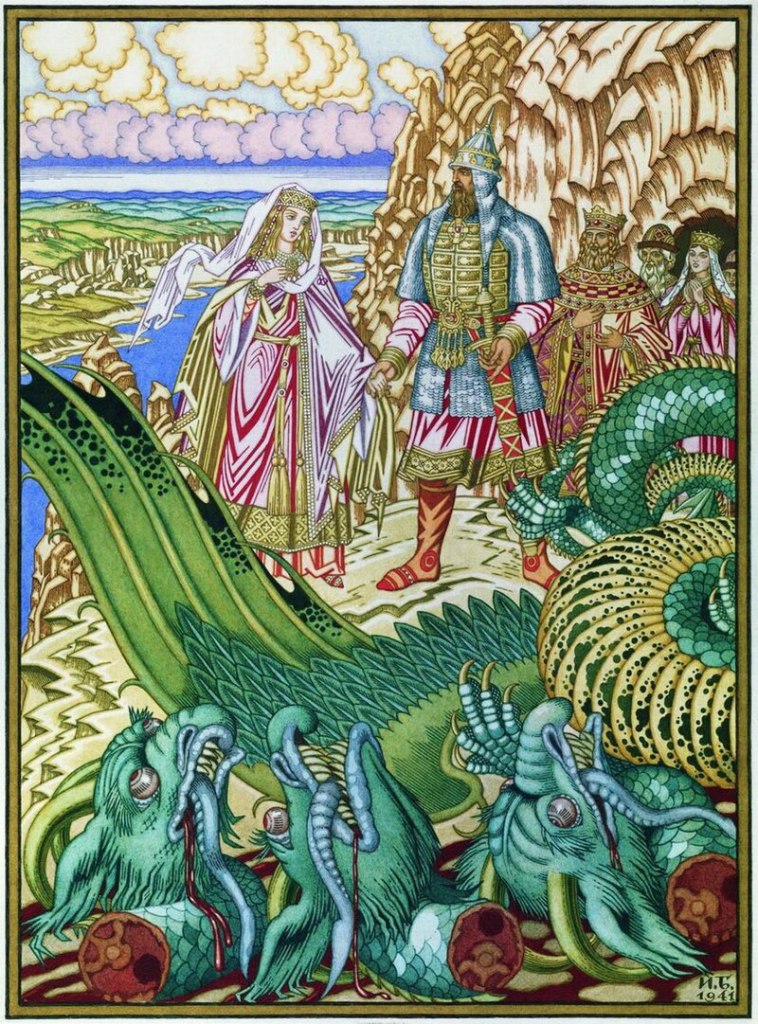
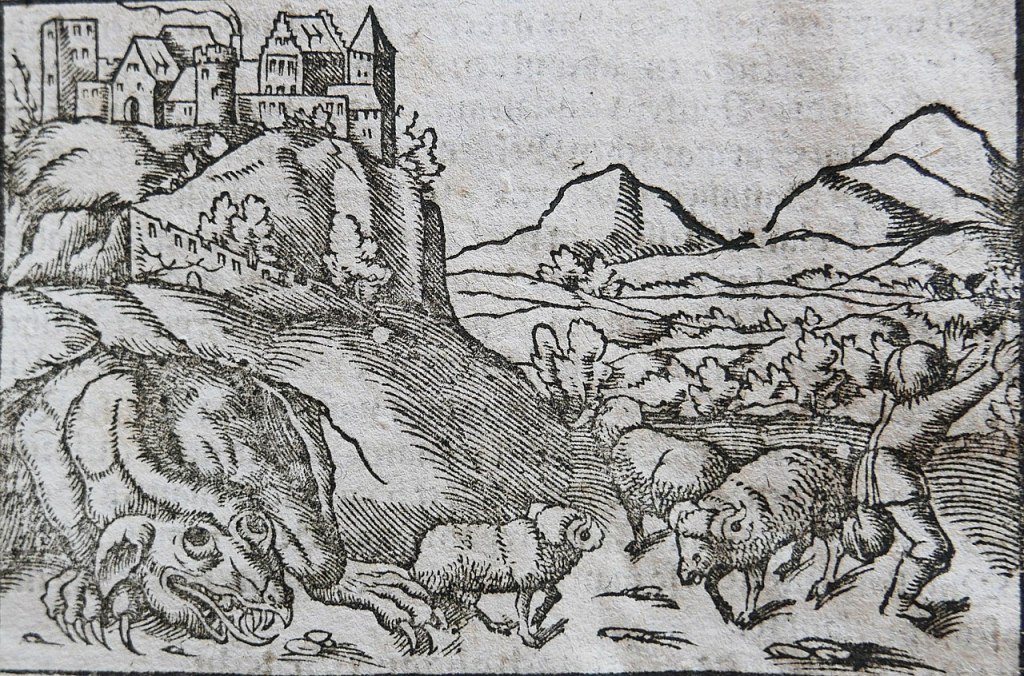
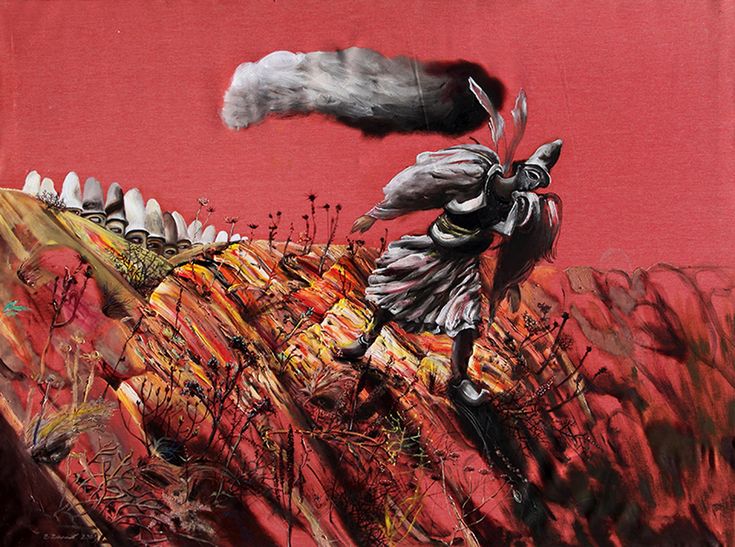
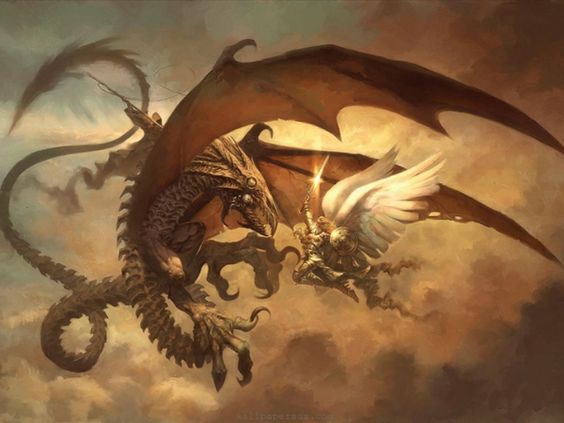
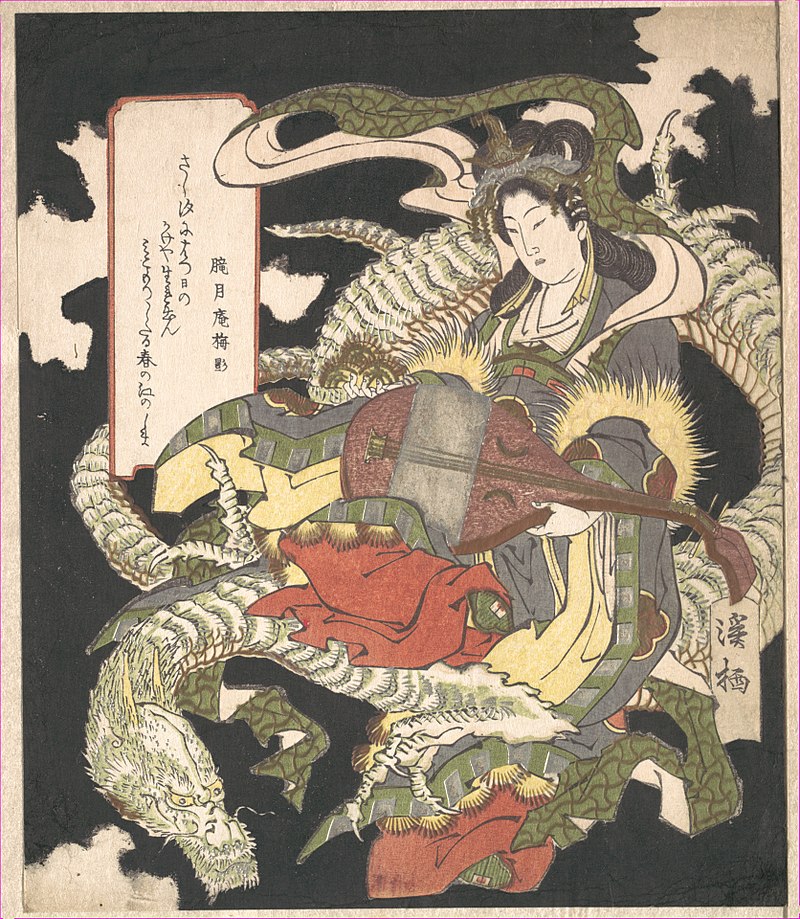
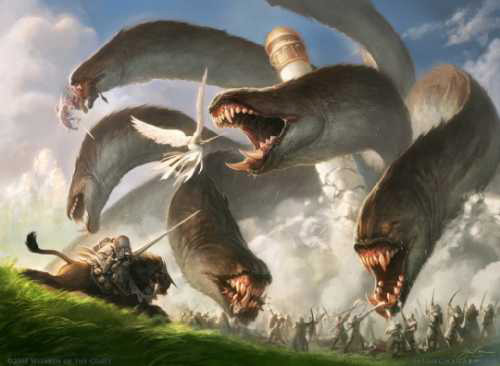
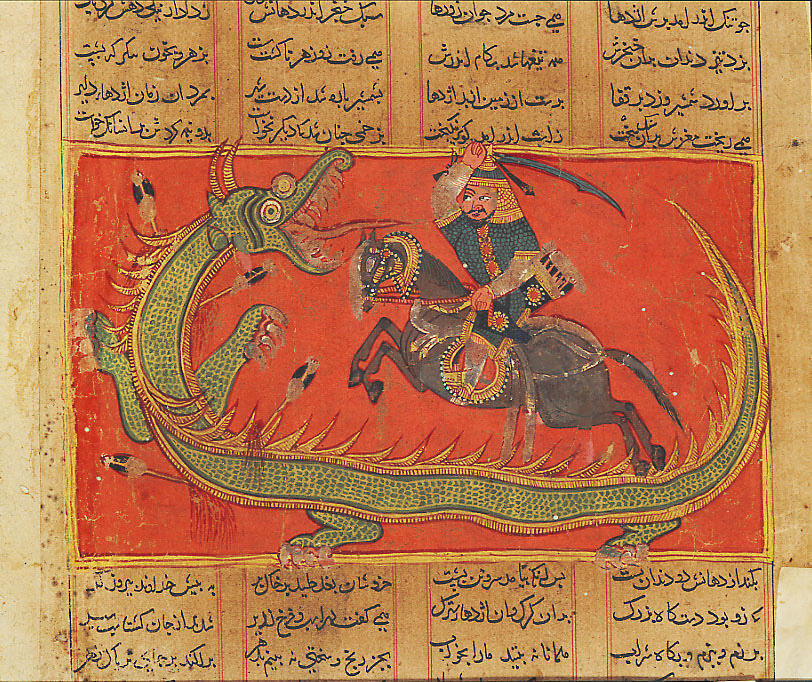
A dragonslayer is often the hero in a “Princess and dragon” tale. In this type of story, the dragonslayer kills the dragon in order to rescue a high-class female character, often a princess, from being devoured by it. This female character often then becomes the love interest of the account. One notable example of this kind of legend is the story of Ragnar Loðbrók, who slays a giant serpent, thereby rescuing the maiden, Þóra borgarhjörtr, whom he later marries.

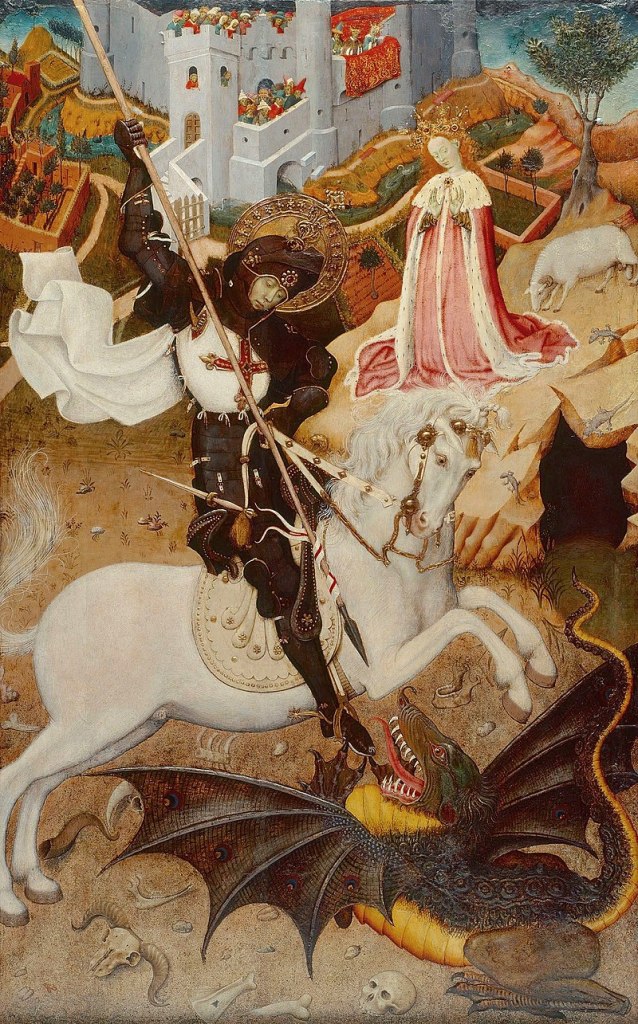
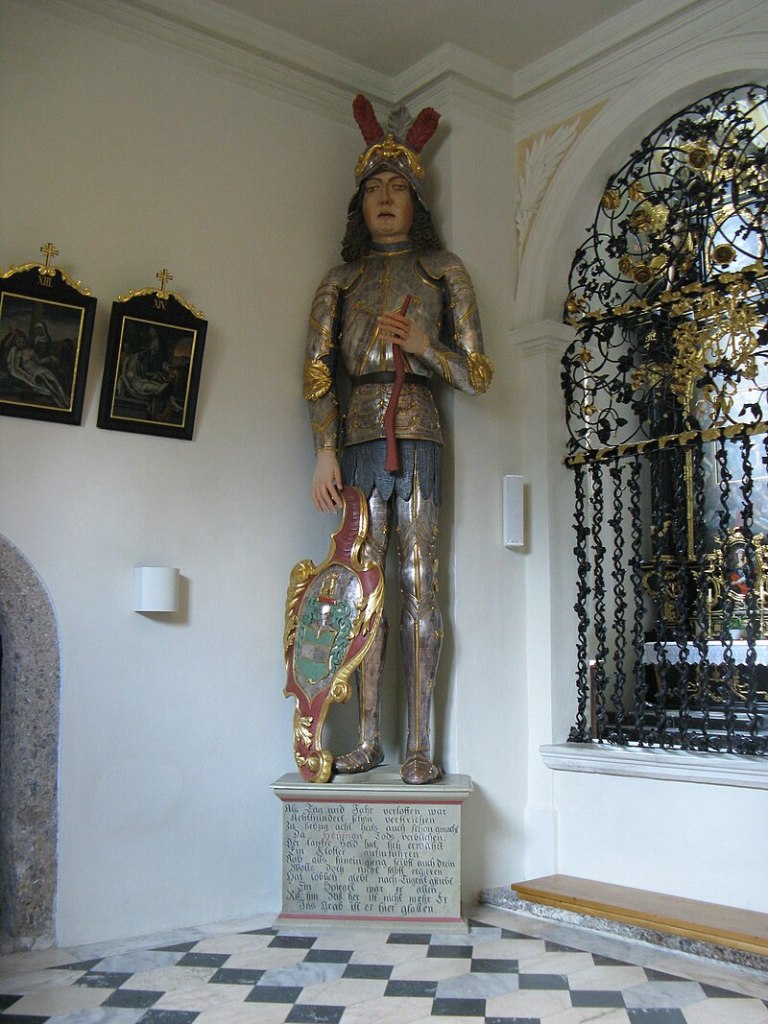
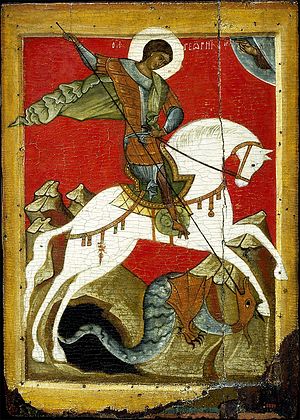
There are, however, several notable exceptions to this common motif. In the legend of Saint George and the Dragon, for example, Saint George overcomes the dragon as part of a plot which ends with the conversion of the dragon’s grateful victims to Christianity, rather than Saint George being married to the rescued princess character.

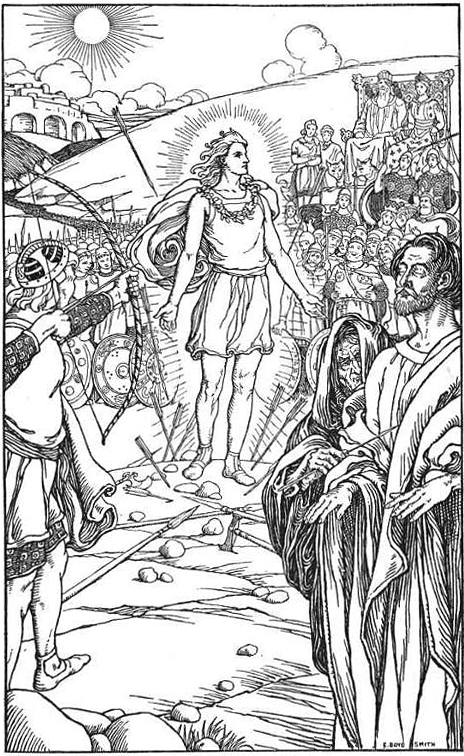
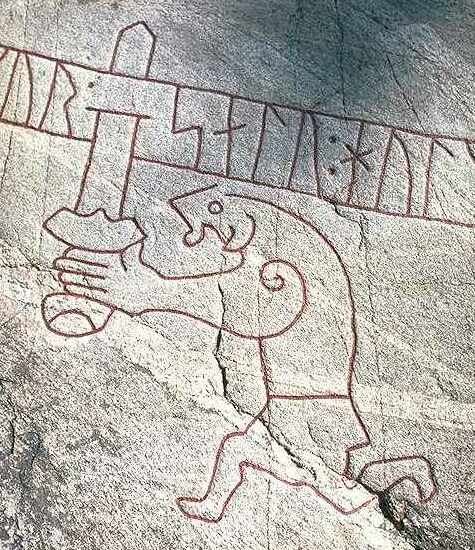
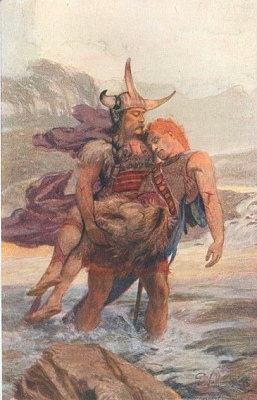
In a Norse legend from the Völsunga saga, the dragonslayer, Sigurd, kills Fáfnir—a dwarf who has been turned into a dragon as a result of guarding the cursed ring that had once belonged to the dwarf, Andvari. After slaying the dragon, Sigurd drinks some of the dragon’s blood and thereby gains the ability to understand the speech of birds. He also bathes in the dragon’s blood, causing his skin to become invulnerable. Sigurd overhears two nearby birds discussing the heinous treachery being planned by his companion, Regin. In response to the plot, Sigurd kills Regin, thereby averting the treachery.[2]

Mythologists such as Joseph Campbell have argued that dragonslayer myths can be seen as a psychological metaphor:[3]

“But as Siegfried [Sigurd] learned, he must then taste the dragon blood, in order to take to himself something of that dragon power. When Siegfried has killed the dragon and tasted the blood, he hears the song of nature. he has transcended his humanity and re-associated himself with the powers of nature, which are powers of our life, and from which our minds remove us. …Psychologically, the dragon is one’s own binding of oneself to one’s own ego.”[4]

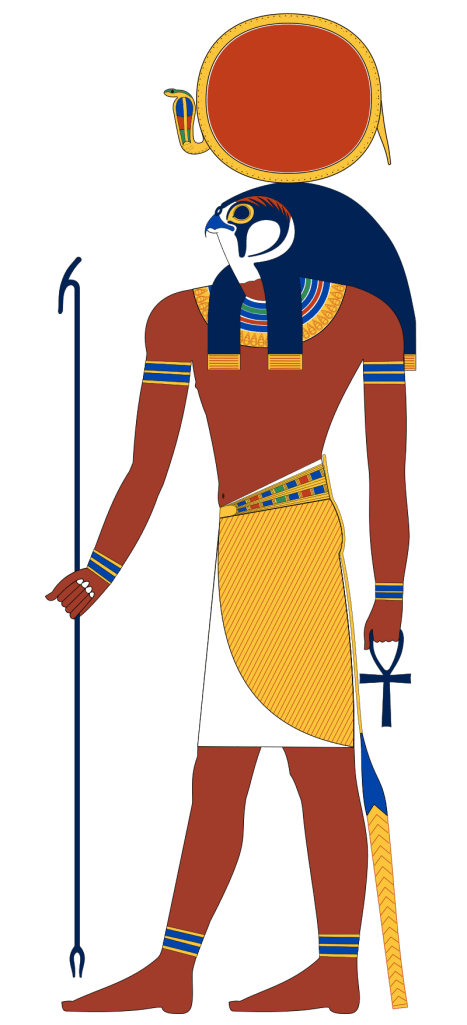
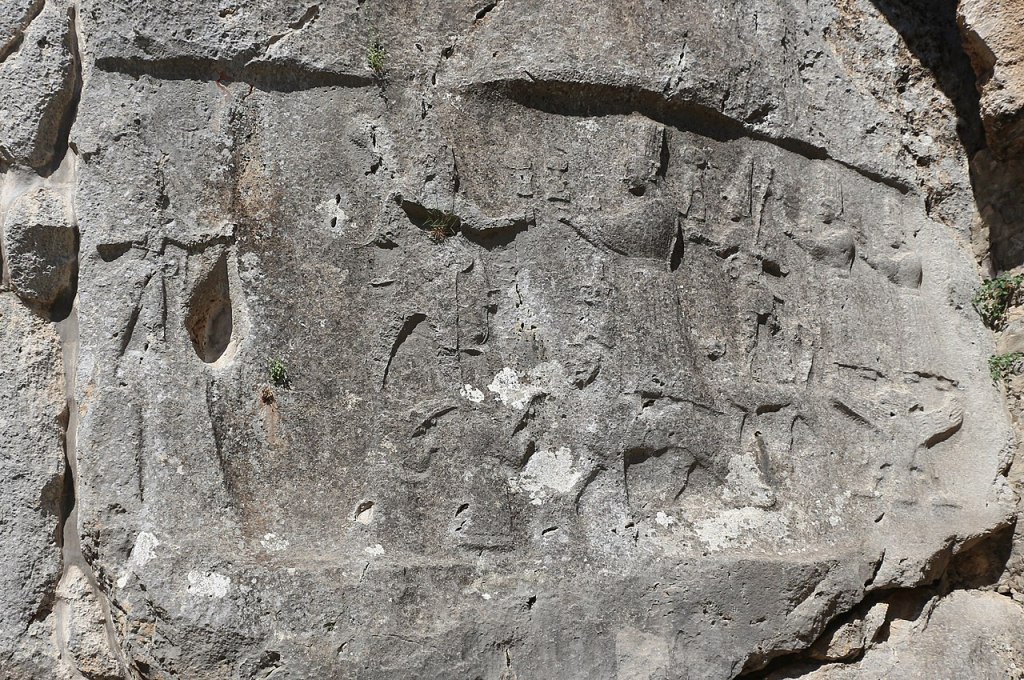
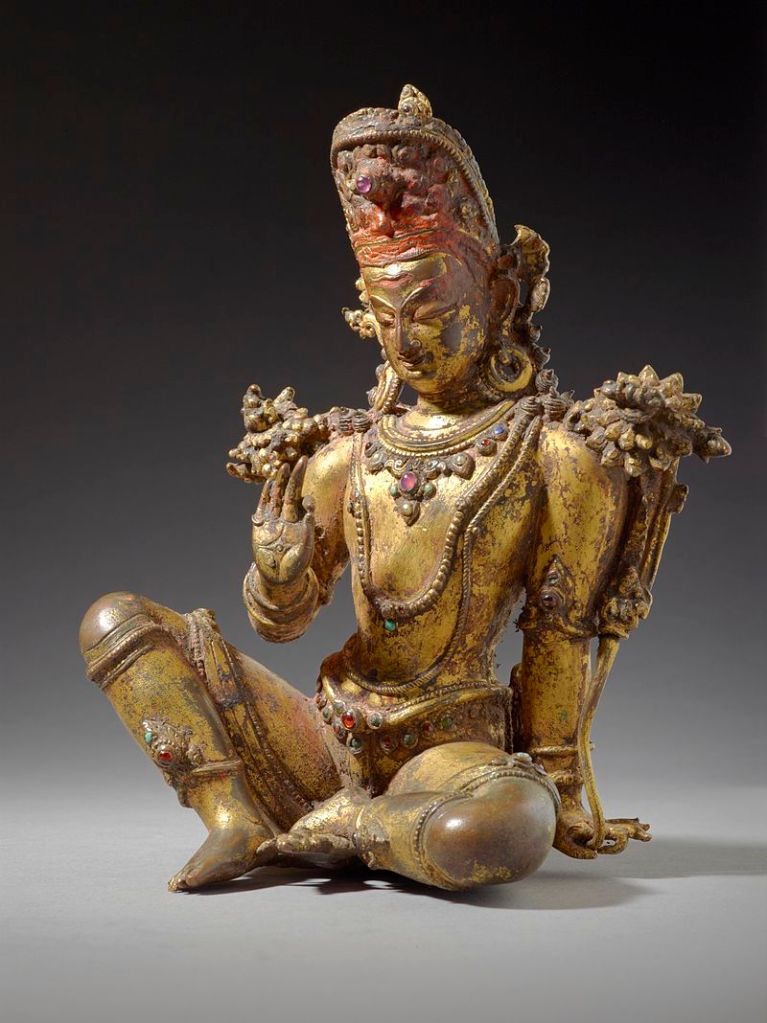
Dragonslayer characters

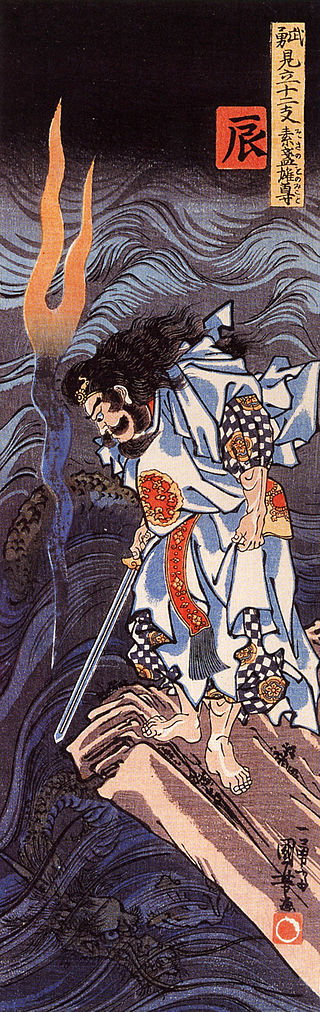
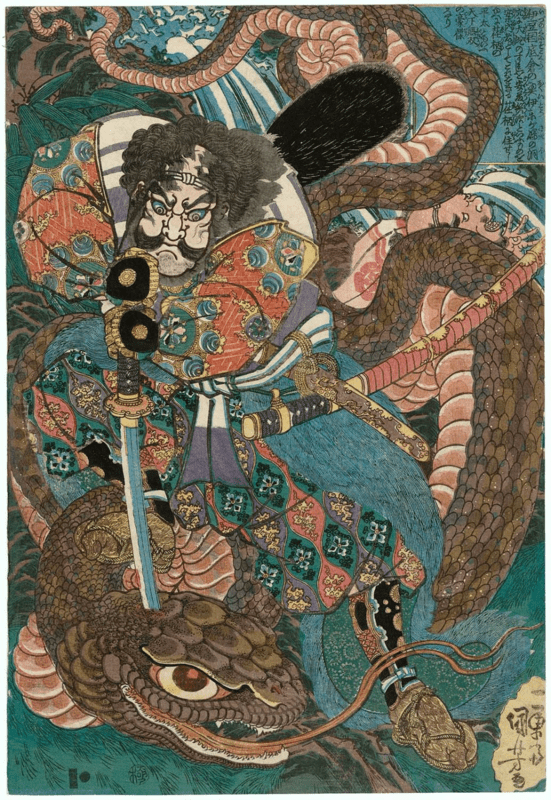
Susanoo slaying the Yamata no Orochi, by Kuniteru
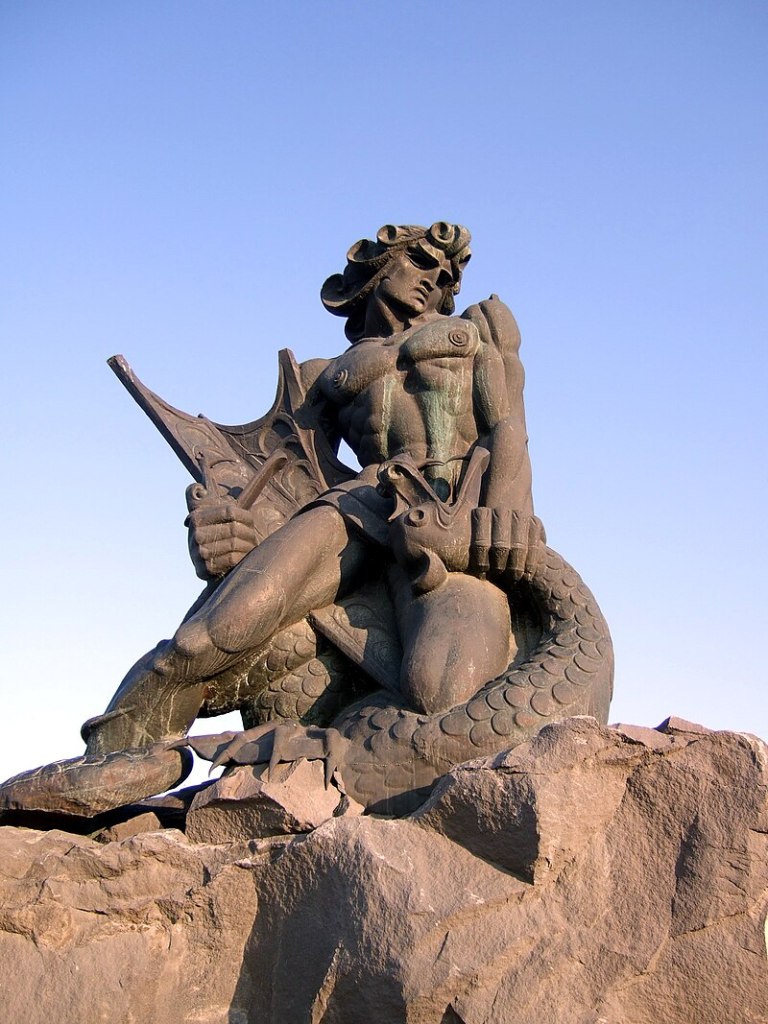
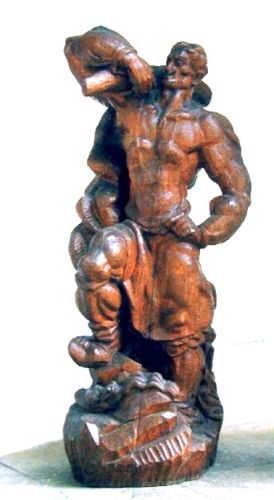
The dragonslayer (Copper door 1974) by German artist Klaus Rudolf Werhand
  • Antiquity
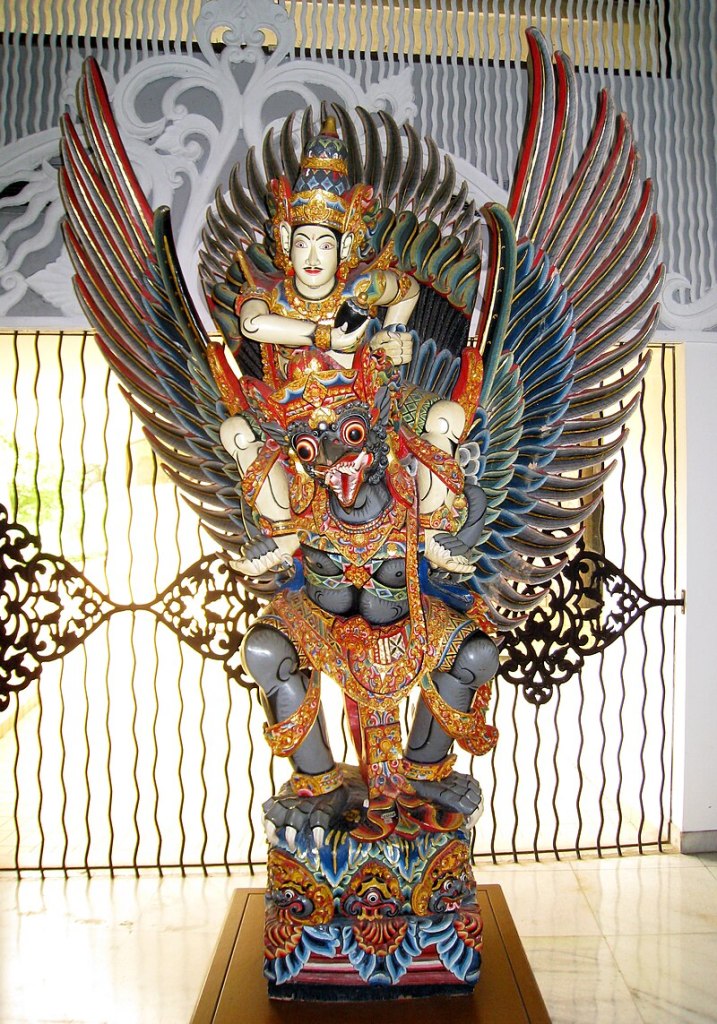
The Balinese wooden statue of Wishnu riding Garuda as his vehicle. Purna Bhakti Pertiwi Museum, Taman Mini Indonesia Indah, Jakarta.

According to Campbell, the spiritual poverty of today’s society lies, among other things, in the fact that people no longer want and/or can hear this call. This leads to alienation from our own nature, with all its consequences. “Follow your bliss, really, follow your bliss”, he says, “Find out where it lies and the universe will open doors where there were only walls”. His own life story* is a good example of this.

During his life, Joseph Campbell met Jiddu Krishnamurti, Carl Gustav Jung and Heinrich Zimmer, among others. If he had such a thing, Campbell said, the latter was his guru. Here a subtle line emerges to the tradition of advaita vedanta, because the guru of Heinrich Zimmer ( 1943) was Ramana Maharshi ( 1950).

However, Joseph Campbell’s material is infinitely broader, with approaches and contributions from countless peoples, cultures and times. Mysticism, myths, mystical stories… What are they about? Joseph Campbell says:

This ancient information (the myths) deals with themes that have supported human life for thousands of years, that have shaped civilizations and that have inspired religions. And that information concerns deep inner problems and mysteries, inner thresholds and inner transformation… “.

“And”, says Campbell, “if it grabs you, then you always draw such a deep, rich inspiring inspiration from these traditions that you will never give up. If you do not know where and what signposts are along the way, you have to figure it out for yourself and find your own way”. Read more here: Myths and Consciousness

This video is a special release from the original Thinking Allowed series that ran on public television from 1986 until 2002. It was recorded in February 1987. Here Campbell describes his overall vision of the role of mythology in culture.

the power of myth

Joseph Campbell and the Power of Myth Ep 1 ‘The Hero’s Adventure

Joseph Campbell continues exploring C.G. Jung’s idea of the Archetypes of the Collective Unconscious by looking at Jung’s concept of the Persona/Personae — the aspects of one’s personality that been shaped from outside, by the society in which one lives. In particular Campbell focusses on the ways that Asian and Western societies approach this. The lecture from which this clip was taken has been released as the first program in Mythos I — The Shaping of Our Mythic Tradition (https://www.jcf.org/works/titles/the-…) For more of Joseph Campbell’s thoughts on Jung and the Archetypes of the Collective Unconscious in myth, check out The Portable Jung (https://www.jcf.org/works/titles/the-….

https://www.youtube.com/@JosephCampbellFoundation/playlists

Myth lets you know where you are across the ages of life–at 40 or at 80… This video is a brief excerpt from interviews filmed with Joseph Campbell shortly before his death in 1987, previously unreleased by the Joseph Campbell Foundation – http://www.jcf.org

Medieval and early Modern legend
The romance of King Arthur and his knights of the Round Table. Abridged from Malory’s Morte d’Arthur by Alfred W. Pollard. Illustrated by Arthur Rackham. Published 1920 by Macmillan in New York.

Etc……

– Kill your  dragon

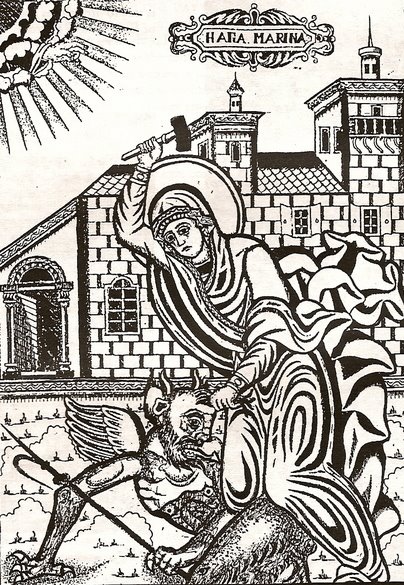
St George
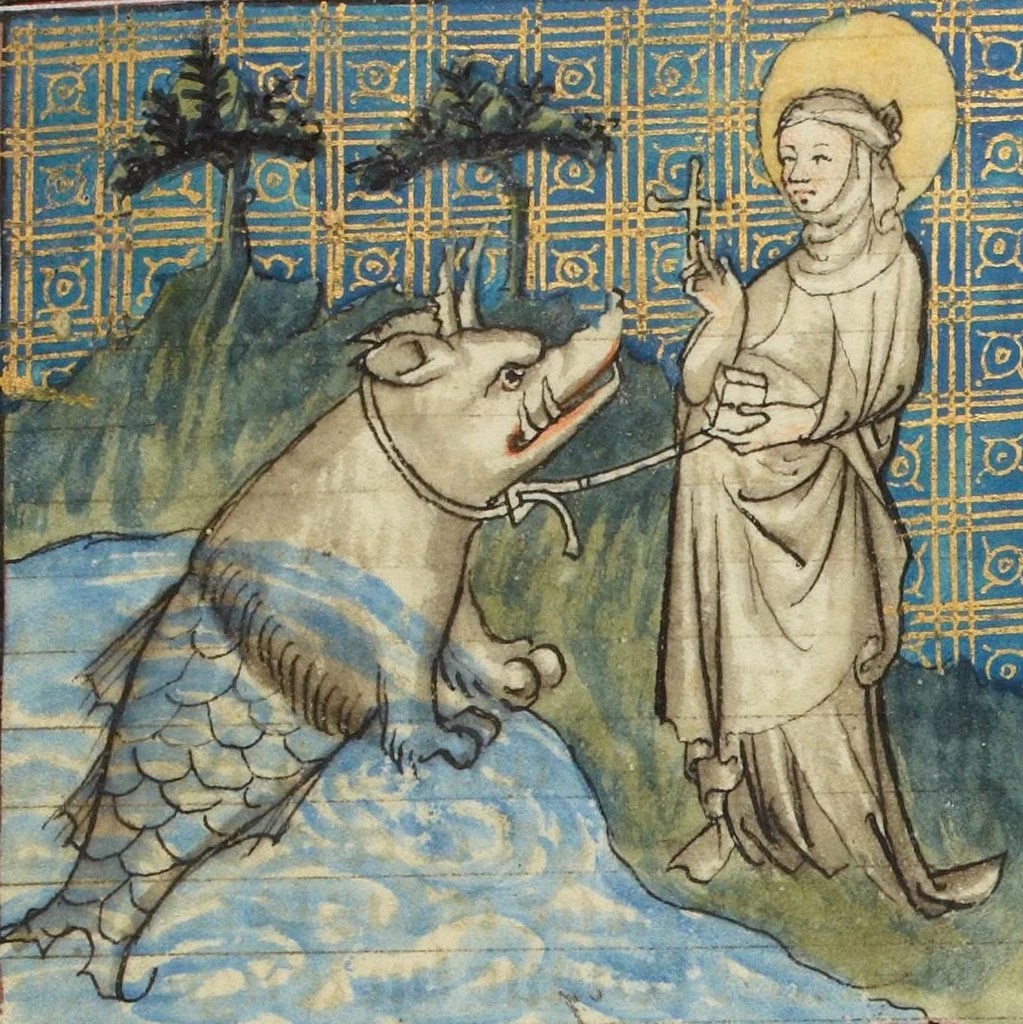
St Margaret
Doc2
St George
AlKhidr
Khidr

Our only purpose is to give our love, respect and service to Allah but if given the opportunity every person would be a pharaoh. His ego would declare itself the highest lord. We must kill the dragon that is our ego and then we will find Allah with us and around us and within us.

Kill your  dragon

Transcript

We are sitting here for the sake of Allah, the Lord of heavens and earth. We are asking from His divinely love, to carry everyone in His divinely love ocean.

From His endless love to His servants, Allah Almighty asking His servants to ask more love in Himself.
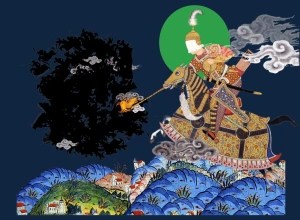
He is not asking anything else. You may ask from your children love and respect.

And love brings respect.

Therefore, Allah Almighty, the Lord of mankind, sending His Prophets to His servants to teach them that He Almighty asking from His servants love and respect.

I don’t think that any religion through their Prophets just bringing another message.

Heavenly messages all full with love and respect. We are not lecturers. I am not a lecturer.

I am a humble servant sitting here and, as it is mentioned through whole holy books, when servants of Lord meeting, gathering for the sake of their Lord’s love, Allah Almighty opening from His endless mercy oceans on them. Only that hope making me to be with you here.

And also, as I am an obedient servant  for the real servants of our Lord, and they are ordering me to be here and to address  to the servants of the Lord Almighty Allah. And I am only a transmitter. Transmitter.

What coming to my heart, I am trying to give to you. Therefore, we are not going to be imprisoned through  one subject. Our plane unlimited. We may run like this, like that, like straight background, anywhere. It is a wide plane. We may move in it.  We are free to reach everyone that may be here. We may reach. No one can escape.

If they can escape, finally we are catching. Yes. I saw a documentary vision in TV that

hunters on wilds, wilds hunters. They are hunting, they are throwing this harpoon on them and that [one]  thinking that it may escape. Making like this, like that but then catching him. No one present in here and may escape from my hand.

May ask to escape but from truth two years they may escape. I am declaring truth on behalf of the Lord Almighty Allah, on behalf of His Prophets, on behalf of His Beloved,

Seal of Prophets, Muhammad, peace be upon him and upon them,  on behalf of whole saints, all awliyas. My words, they are correct. Therefore, I don’t think that they are going to leave me to speak to you false, batil, wrong, or to carry you away from truth.

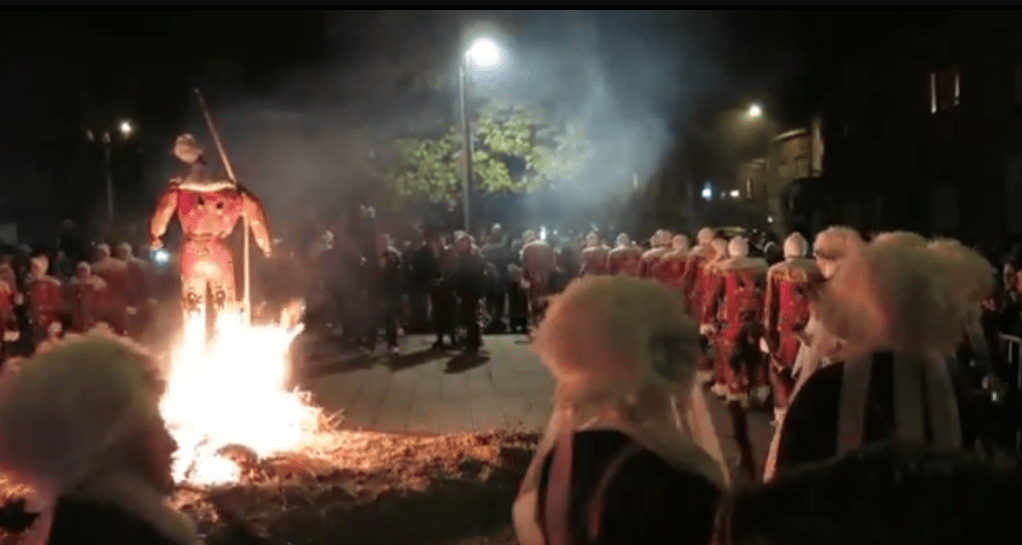
No. Therefore, someone’s ego going to be unhappy. Doesn’t matter. We can look after that ego to cut it down, to save that person from the hands of that dragon.

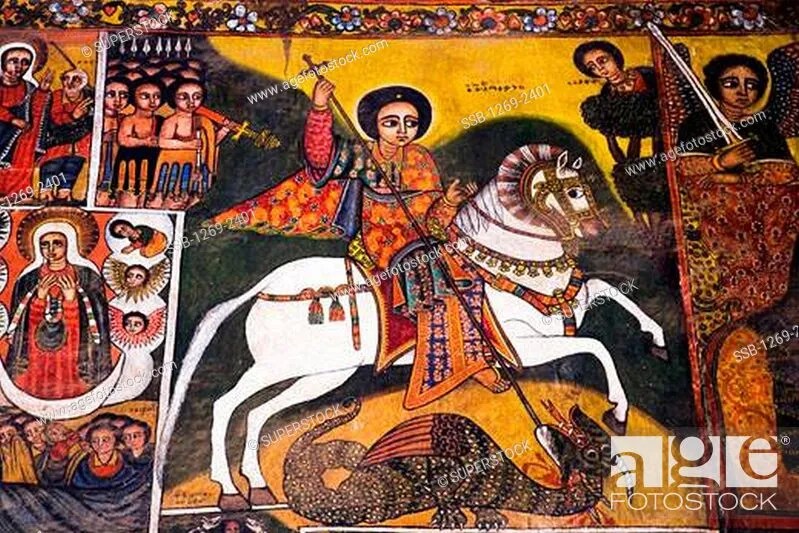
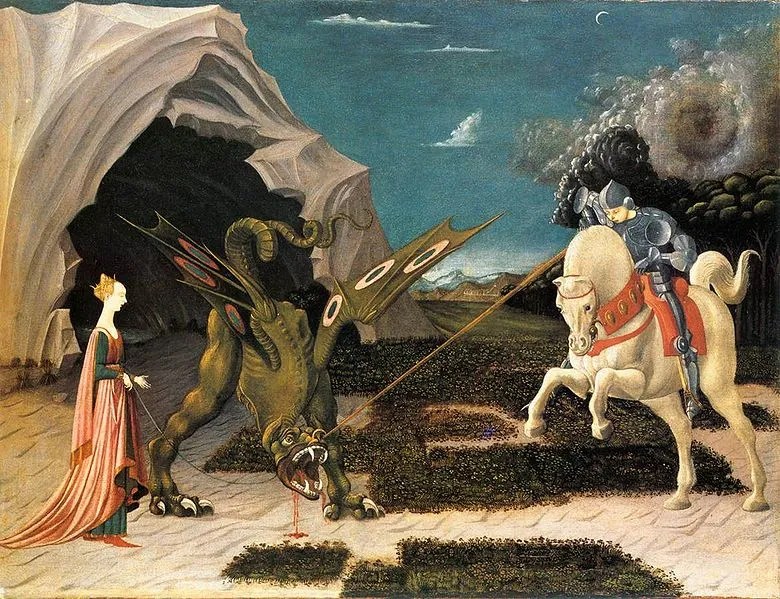
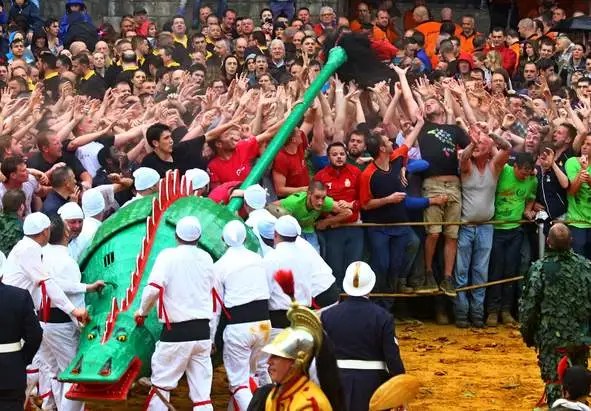
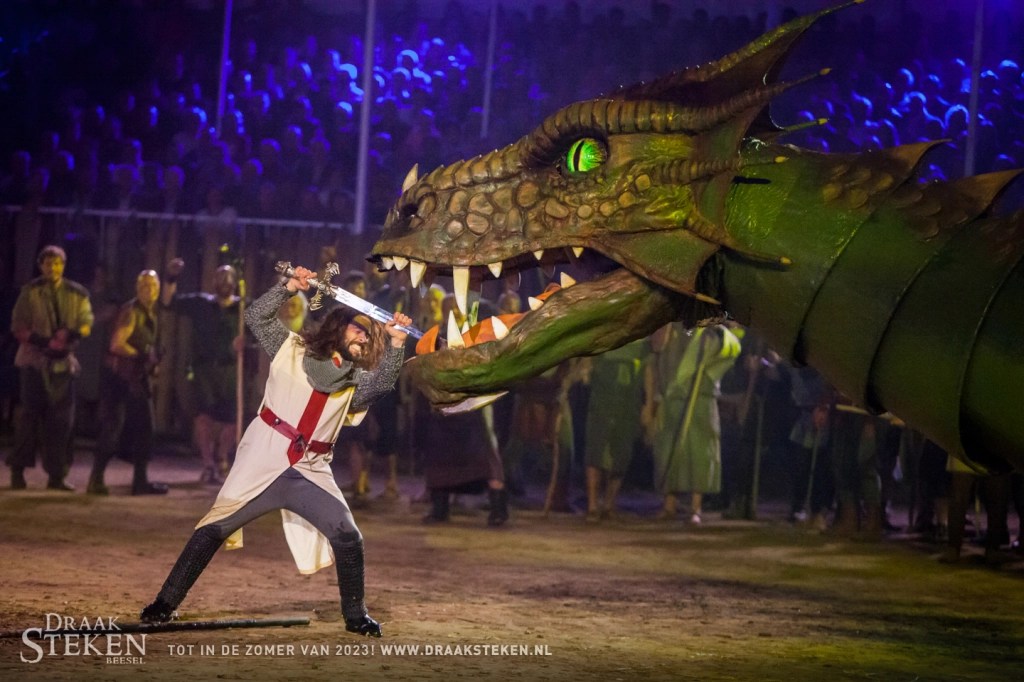
Here in England, in London, I am looking St. George’s Wood. St. George Wood, I mean to say about Saint George.
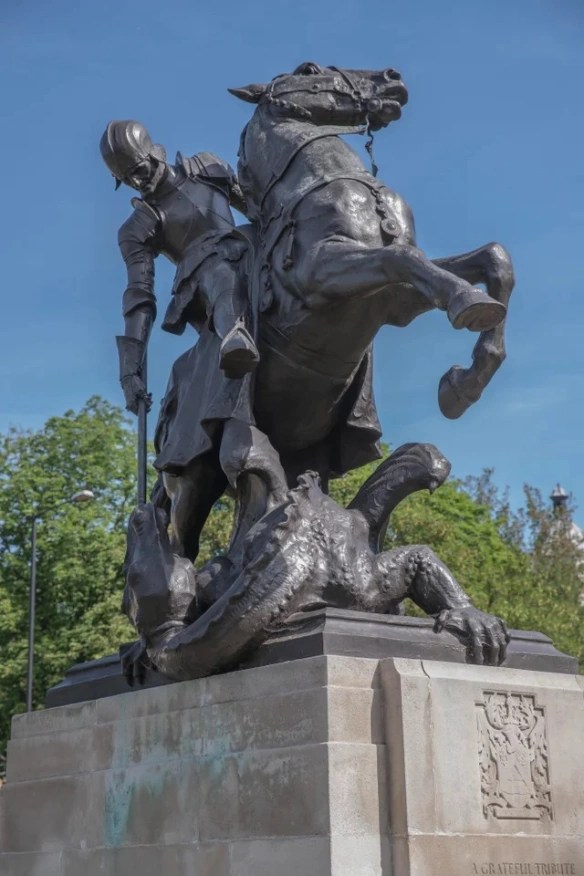
There is a statue nearby to central mosque. People running around and coming but they are not taking wisdom. What is that? What Saint George doing? What he mean to say?

He is killing a dragon, showing people “O people, all of you you must be killer of dragons.” Everyone has a dragon.

And that is their… That dragon who that dragon which was refusing whole Prophets.
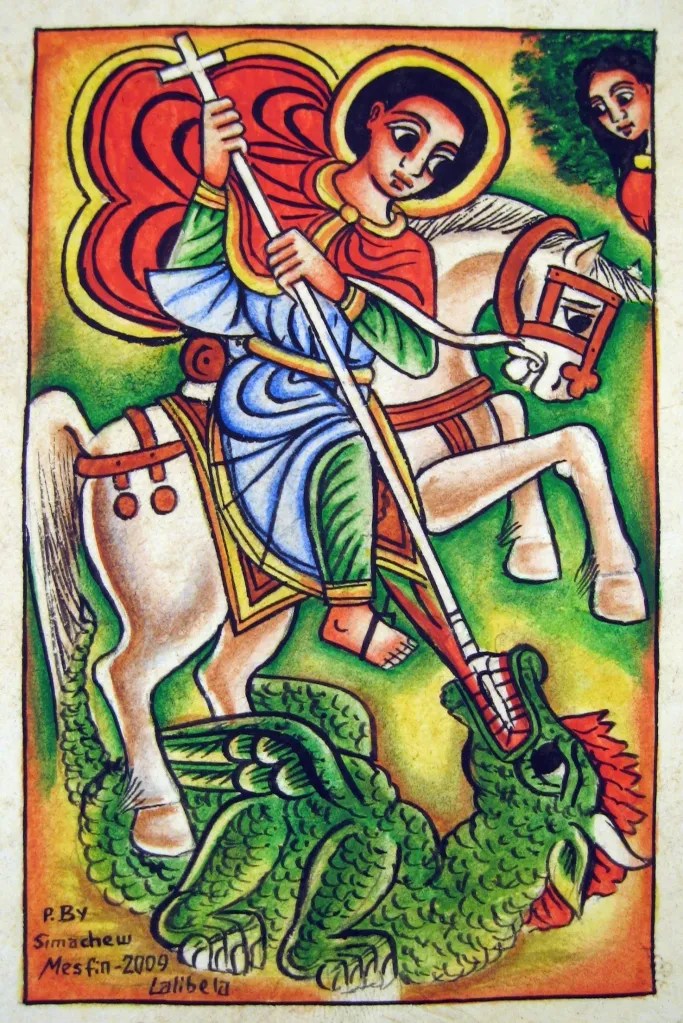
Same dragon attacking on Adam.

Same dragon just attacked on Noah.

Same dragon was attacking on Moses.

Same dragon attacking on Abraham. Same dragon attacking on Jacob.

Same dragon attacking on Solomon and David
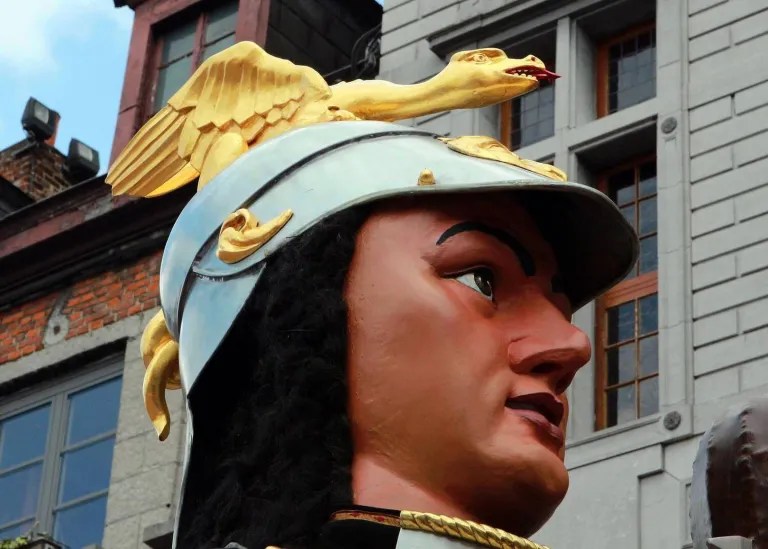
David killing Goliath

and on Zakariya, on… Same dragon attacking to Jesus Christ.

And same dragon attacking also on the Seal of Prophets.

And same dragon’s attacking on believers. Everyone has a dragon.
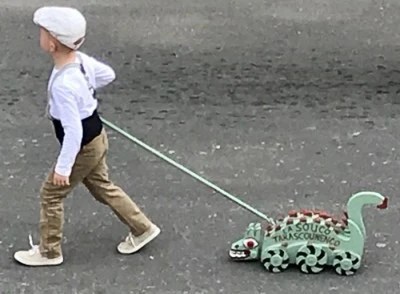
And that Saint George showing – “O people, you must kill it. If you are not killing it, no rest, no peace, no mercy, no justice, no love, no respect to you. Kill it, O mankind.” Calling through that statue.

But people running around, looking what is that. Yes. And we are feeding that dragon. Instead to kill it, we are feeding.

We are… Every morning we are awakening and making like this  “O my Lord, what you are asking? You’re asking smoking? Ready. Asking wine? Ready.

Asking something else? It’s ready. I am under your command. Everyday I am your slave.” – People saying to their dragons. Feeding, very carefully  saying “I am your obedient worshipper. I never leaving you.  I am never getting disobedient to you. I am not rebellion or rebellious to you. Always you are finding me obedient one.”
Yes. Why no peace on earth? Because you are feeding dragons.

You are looking after it so carefully. Never listening the Lord’s command. No one going to be obedient to the Lord of heavens and earth. Why people attacking on Prophets? Do you think that they are bad people? If they are not accepting now, good ones, they are fighting. But what about for Prophets?
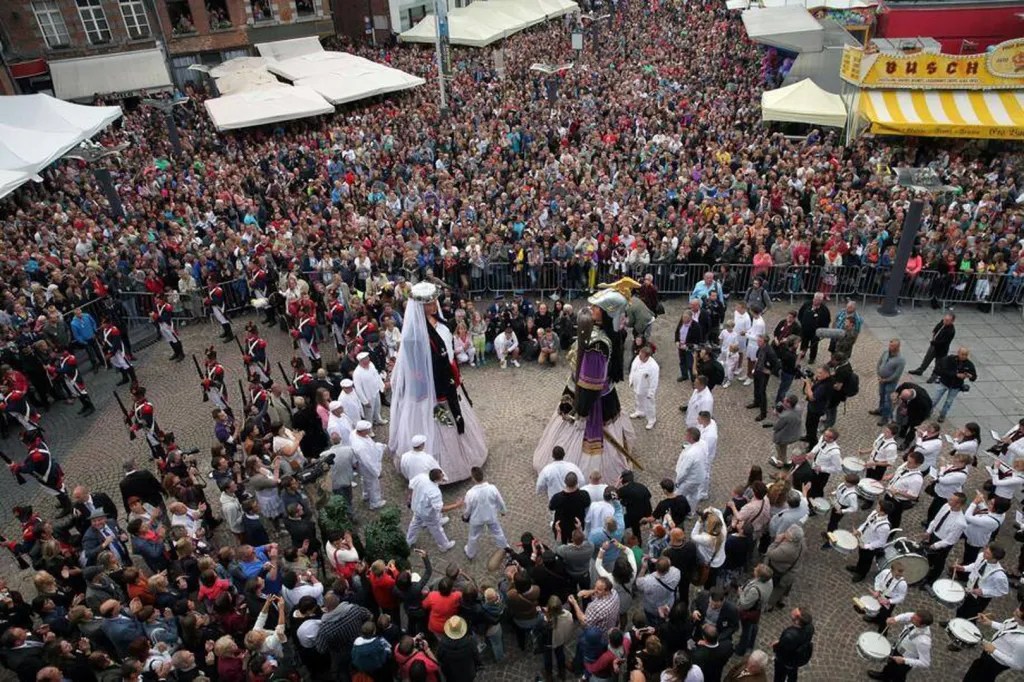
What was their sins? No sins for Prophets. Prophets, they are innocent people.

They are pure people, clean people, perfect people. Why common people attacking them, trying to kill them? And they killed thousands of thousands of Prophets. Murdering martyrs, thousands of Prophets. And they killed, martyred so many saints. Why?  They were bad people? They were devils, or people they were devils? Yes. We must look once again to ourselves. What we are doing? For what we are working?
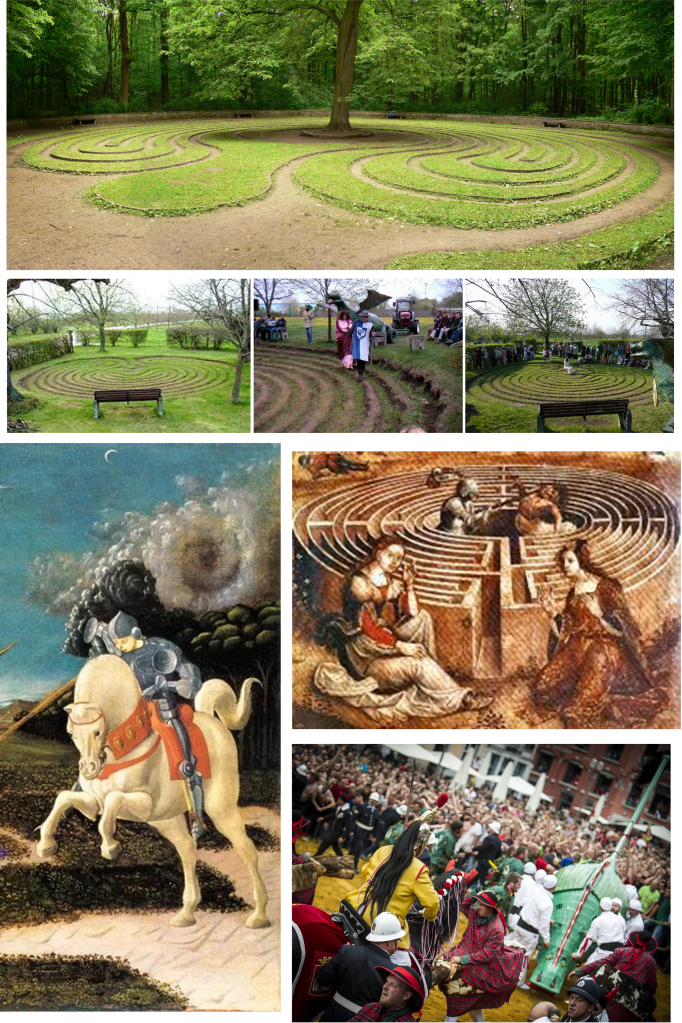
For the Lord, for the sake of Lord? To make Him pleased or to make our egos, our dragons pleased? You say to yourself. Don’t say to me.

When you are alone nighttime, you may say to yourself “Oh I am… Just I worked for my Lord today”. If you are saying this, you are very happy person, very lucky. But you must be true.

First, you must be true to yourself before becoming true to others.

But it is so difficult to be true even for yourself. Because that dragon should prevent you to say truth. Yes. Ask yourself.

When people sleeping, and you’re alone – “O James, or John or Ahmad or Abdullah. Are you here, Abdullah? Our name’s Abdullah, the servant of the Lord. But you must ask do you think that you’re really  servant of your Lord. Tell me, to whom you served today?”
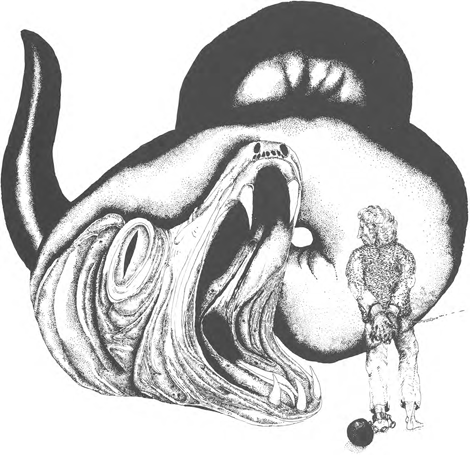
Yes. Be sincere. Everyone must be sincere.

Or this world going to be destroyed.

Because devils taking chance from insincere people, taking courage, taking power and trying to make people insincere. Yes. Therefore, I don’t think  that any religion… Because their source is heavens, from heavens coming every religion to establish through the conscience of mankind the love and respect towards their Lord.

If anyone knowing another thing, may say.  That is, up today I learnt, as a summary.

From whole books, from whole religions I have that summary that every Prophet  coming with divinely messages to make people more  in love and in respect for their Lord Almighty Allah.

That is our mission. And that is most precious mission and that is most acceptable mission in Divine Presence. You can’t find more than this respected job for mankind.

Most respected job in Divine Presence [is] to call people in love and in respect to their Lord Almighty Allah. And we are finding hindrance, biggest veil for reaching to that station.

Our egos too jealous, too jealous. Asking every respect to himself, asking every love to himself, asking every obedience to himself, asking everything for himself, not for anyone else, either for the Lord of heavens and earth or for others.
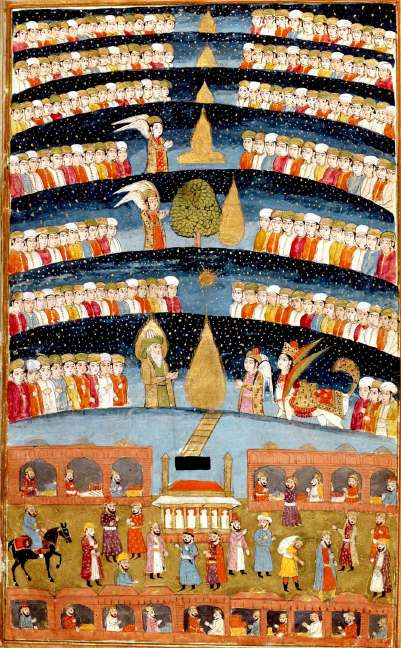
The night journey – what a strange translation? Power of night or  night journey. What is? Miraj.

You are doing so strange translations. That night that the Seal of Prophets Muhammad, peace be upon him, he invited to Divine Presence and the Lord of heavens and earth addressing to him “O Muhammad, Beloved one, if I am leaving My servants, if I am giving to everyone power or ability, you should find everyone like Pharaoh.”
Everyone should be one Pharaoh, that that Pharaoh, he finds himself all power through in his hands and people – slaves. And he was saying “I am your greatest lord.” He wasn’t agree to be an ordinary one. He was claiming to be the greatest one. Because people, Allah Almighty just made whole people to be slaves. When he was looking that people are slaves, he was saying “I am your greatest lord.”

But Allah Almighty taught him a lesson he never forgetting. That Pharaoh, who was saying “I am your greatest lord”  the Lord of heavens taught him a lesson, yet he is never forgetting. And it is impossible to forget.
When he was sank, sinking through the Red Sea’s red waves, he was knowing what he was.

Allah Almighty leaving His servants, giving power and testing them. And He was saying “O Muhammad, if I am giving a chance what I just gave to Pharaoh, all of them going to be Pharaoh to claim that they are Lord.”

And same characteristic with all mankind. Therefore, when you are finding someone they have been given a little bit power, going to destroy others.

Therefore, when I am saying, ego asking to be everything only for himself, not to be partner, as Pharaoh was saying “I never accepting any partner. I’m the greatest.” And every ego, nafs that we have [is] on same characteristic, never changing.

But a seed, seed… There is flowers now growing up.Red, white, what is that? Not rose. Full now whole London. What is it? Daffodils. They have small onions. If you are not planting, not opening. Maybe through shops a little bit opening. But never bringing this flower.

Because must be planted. Outside now. Therefore, our egos, if never finding its field, never growing up to be a Pharaoh.

And Allah Almighty giving from divinely wisdoms to the Seal of Prophets “Beware from ego. Make your nation My servants, beware from their ego.”
Beware dog. And instead beware dog, you must try to beware ego. Sleeping? Open your eyes.

Beware your ego – most dangerous, terrible dragon, more than dragon of Chinese. Chinese people, they are keeping that dragon not from love, but from fear.

They are old people with old wisdoms.  But now they are using it as a figure design. But really they are signing with that dragon – teaching people “O people, beware from that dragon

that it is with you.” Therefore, whole religions, whole religions taking methods for protecting people, protecting followers from their egos.

One of the most important protection for believers is fasting.

Without fasting, no one can be able to control that dragon and to protect himself from that dragon.  You should find same fasting through every religion from old religions, beginning from Adam. He fast first 30 days  without eating and drinking. Because he ate from prohibited wheat

in paradise, from prohibited tree. When he ate, he has been sent on earth. And till that, going from him he was fasting 30 days without eating anything. But the Lord Almighty Allah

giving permission to his children to fast from morning up to night, up to evening.

And it was through Moses’  holy book, through Jesus Christ’s holy book, and through David’s psalms, through Abraham’s orders and through Noah’s heavenly orders. Every Prophet just came with fasting. But we did it, we changed.
Christians doing 50 days. It was before correct fasting. It is now – there are only a few people keeping even that order for Christianity. Even they can’t carry to be patient not to eat what prevented for them through that period.

They are doing as fasting – not to eat fat or meat or such things. Even for that, now they are not keeping that order. And it was before fasting. And in our days anyone who asking a protection from their dragons, from their terrible egos, they must practice fasting.

Yes. It is not something to be hungry, to be thirsty.

People may say “What is the benefit from being hungry or thirsty?”

But whole power on it to be able, when your ego rushing to eat, you are saying that “There is 5 minutes more, be patient.” And it was attacking, and we are saying “There is 1 minute more. You must be patient.” That is training for ego and  to protect yourself and to be able to cut it.
We have… When we are going to be enough powerful  to catch that dragon, we have a method for cutting it. Because a small one can’t catch a sheep and cut it, slaughter.

No. Must be enough power to keep and to cut. And don’t think that only that fasting you may be enough powerful  to slaughter your dragon. No. We have another methods.

When you are going to be prepared for that purpose, we have 40 days. 40-days seclusions in Islam also, that every Prophet they did it. As it is mentioned through Holy Qur’an,  40 days for Moses before going to mount Sinai. And the Seal of Prophets, he was using that seclusion before his prophecy  on the mountain of Nur. Jabali Nur, mount of lights.

And don’t think that you can be able when you are living with people to cut it. No.

You must take it out. of communities. Whole saints, they were cutting it – out of communities, countryside, through deserts, through lonely mountains.

That is the reason Christians, they are using monasteries on silent deserts, on mountains. But now it is also lost.

Whom they were in monasteries, they are not going to be there to feed their egos. No, but to cut it.

And finally, we are asking forgiveness from Allah Almighty and asking good understanding.

Everyone through their religions, through their beliefs,  and every religion coming on same point to give more love,  more respect to Allah Almighty. But in front of you, your ego preventing. Take it away. Kill it.
And open, then you should find your Lord in front of you, in you, with you, around you.

Astaghfirullah. Astaghfirullah.

Astaghfirullah. Alhamdulillah.

Alhamdulillah. Wa shukrulillah.

Walhamdulillahi Rabbi l-alameen. Wa salatu wa salamu ‘ala rasulina Ziyadatan li sharafi Nabi, sallAllahu alaihi wa salam…

Fatiha.
WATER & ITS SPIRITUAL SIGNIFICANCE

WATER & ITS SPIRITUAL SIGNIFICANCE
EDITED BY VIRGINIA GRAY HENRY-BLAKEMORE AND ELENA
LLOYD-SIDLE. FONS VITAE (WWW.FONSVITAE.COM). 2009.

REVIEWED BY SAMUEL BENDECK SOTILLOS

Exploring man’s ecological, spiritual, and symbolic relationship with nature through meditation and thoughts on water, this volume is a useful tool for religious practitioners of all faiths to understand more deeply the connection between their religious life and the earth. Based on the idea that water is the original, primordial mirror, the examination details how a community’s values are now reflected in its water, asking questions such as What are our polluted rivers and streams saying about us? And does that match what our faith instructs us to be?

“Why die of thirst when the water of life is near? Drink from the source, For all things live
from water.”

HAFIZ

Conventional wisdom informs us of the crucial role that water plays in our collective lives. Regrettably, present-day discussions of water are often outweighed by its quantitative aspect pertaining to its increasing scarcity due to lack of rain fall, deforestation, and increasing atmospheric temperatures associated with climate change, not to mention the hither to unprecedented phenomenon of the privatization of water, while qualitative concerns regarding its contamination are also on the rise as fresh water is becoming evermore limited. The current pandemic is often couched within what has been identified as the environmental crisis of our times; although undeniably real, it frequently lends itself to misdiagnosis by not acknowledging or under standing what is above and beyond it, which is essentially a matter of the spiritual domain. In contradistinction, the perennial wisdom of the sophia perennis informs us that not only is water essential to sustaining sapiential existence itself, but it is sacred and concurrently a sym bol of the human soul, thus framing the most urgent call of all, the spiritual crisis of contemporary life. The following Native American proverb of the Lakota people is fitting: “The frog does notdrink up the pond in which he lives.
WATER & ITS SPIRITUAL SIGNIFICANCE was prepared in honor of the fourteenth annual Festival of Faiths, in Louisville, KY, organized by the Center for Interfaith Relations. It is therefore apropos that among its selections are providential essays by spiritual representatives who are at once authorities within their respective traditions, yet also embrace the universality of truth underlying the religions of the world, including the First Peoples or Shamanic traditions. These selections include essays and or poetry by Sri Ramakrishna, Ananda Kentish Coomaraswamy, Titus Burckhardt, Martin Lings, Whitall N. Perry, Emma Clark, Huston Smith, Henry David Thoreau, Thomas Merton, Wendell Berry, Colemen Barks, Timothy Scott, and Hamza Yusuf-Hanson.

Titus Burckhardt in his consummate essay, “The Symbolism of Water,” under scores the interconnectedness of the environment and the human being, who is made of up seventy-percent water, in its unanimous light: “When the balance of Nature is not disturbed, the earth’s waters themselves continually re-estab lish their purity, whereas, when this balance is lost, death and pollution are the result. It is thus not merely a coincidence that the ‘life’ of the waters is a symbol for the ‘life’ of the human soul.” That the corporeal world and life itself are indivisible from the element of water is directly acknowledged by the sacred traditions:
“We made every living thing of water” (QUR’AN XXI:30). The mystic Angelus Silesius writes:

“The world is my sea, the sailor
the spirit of God. The boat my body, the
soul he who wins back his Abode.”

This is also verified by the eminent Sufi, Shams-i-Tabriz:

“Conceive Soul as a fountain, and these created beings as rivers…. Do not think of the water failing; for this water is without end.”

Plotinus also affirms the mystical dimen sion of water:

“Imagine a fountain that has no origin beside itself; it gives itself
to all the rivers, yet is never exhausted by
what they take, but always remains inte
grally what it was…the fountain of life,
the fountain of intellect, beginning of
being, cause of the good, and root of the Soul.”

The process of spiritual alchemy and its relation to water is symbolized by Gautama Buddha’s words: “As a lotus flower is born in water, grows in water and rises out of water to stand above it unsoiled, so I, born in the world, raised in the world, having overcome the world, live unsoiled by the world.”

The coincidence of opposites or coincidentia oppositorum is skillfully presented in the following symbolism offered in the Rg Veda: “Though the rivers flow, the Waters do not move.” (v. 47:5)
The timeless wisdom of all ages is perhaps summarized best within the topic of water in Verse 8 of the Tao Te Ching:


The best way to live
is to be like water
For water benefits all things
and goes against none of them
It provides for all people
And even cleanses those places
A man is loath to go
In this way it is just like Tao
Live in accordance with the nature
of things…
One who lives in accordance with nature
Does not go against the way of things
He moves in harmony with the present
moment
Always knowing the truth of just what
to do


The underlying symbolism of water both East and West is well expressed in the didactic words of René Guénon:

“‘Walking on the water’ symbolizes the domination of the world of forms and change.”

Sri Ramakrishna humorously presents this theme in light of those seeking paranormal powers in dissimilarity from integration with the transcendent, and we also are reminded of the warning presented across all spiritual traditions about the seeking of such powers:


A man after fourteen years’ penance in a
solitary forest obtained at last the power of
walking on water. Overjoyed at this, he
went to his Guru and said, “Master, master, I have acquired the power of walking
on water.”

The master rebukingly replied,
“Fie, O child! Is this the result of thy fourteen years’ labors? Verily thou hast
obtained only that which is worth a
penny; for what thou hast accomplished
after fourteen years’ arduous labor ordinary men do by paying a penny to the
boatman.”


The life-giving qualities are perhaps most perceived in places that have minimal rainfall, such as the desert ecologies. Muhammad Asad articulates in a descriptive and seamless manner how life originates from the Divine, is sustained by it, and thus returns to it:


We had stopped for our noon prayer. As I washed my hands, face and feet from a
water-skin, a few drops spilled over a dried-up tuft of grass at my feet, a miserable little plant, yellow and withered and lifeless under the harsh rays of the sun. But
as the water trickled over it, a shiver went through the shriveled blades, and I saw
how they slowly, tremblingly, unfolded. Afew more drops, and the little blade moved and curled and then straightened themselves slowly, hesitatingly, trembling…. I held my breath as I pouredmore water over the grass tuft. It moved more quickly, more violently, as if some
hidden force were pushing it out of its dream of death. Its blades—what a delight
to behold!—contracted and expanded like the arms of a starfish, seemingly over
whelmed by a shy but irrepressible delirium, a real little orgy of sensual joy: and
thus life re-entered victoriously what a moment ago had been as dead, entered it
visibly, passionately, overpowering and beyond in its majesty.


Within the discussion, it is apt to mention the following words of John Chryssavgis in consideration of the meaning of water outpouring from the human body in the form of tears and their transpersonal significance:

“Tears signify an opening of new life, a softening of the soul, a clarity of mind. They
bring us to rebirth and the world to healing. They signify a true homecoming.
Through tears we are able to enter the
treasury of the heart.”


A. K. Coomaraswamy highlights the symbolism of water and contextualizes its symbolism in its unanimous orientation by way of grand synthesis: “In conclusion: we are not much concerned here with the literary history of these striking agreements…. The point is, rather, that such collations as have been made above illustrate a single case of the general proposition that there are scarcely any, if any, of the fundamental doctrines of any orthodox tradition that cannot as well be supported by the authority of many or all of the other orthodox traditions, or, in other words, by the unanimous tradition of the Philosophia Perennis et Universalis.”

This anthology assists in the recovery of the sacred meaning of water via the spiritual traditions of the world in a very comprehensive and unitive fashion. There have been scores of books published in recent years on the miraculous stature of water yet they often “miss the mark” by not acknowledging the underlying spiritual principles that provide the true origin in divinis, not only of water but of all the elements (air, fire, water, and earth) that make up the manifest world. In renewing the spiritual significance of water, we are reminded of the Buddhist parable of the finger pointing at the moon—When the finger points at the moon, the foolish man looks at the finger—which is to say water is sacred and inseparable from sapiential existence, yet the finger points beyond its own designation, to what is transcendent and Divine from where water and consequently all existence originates—”from God do we come and unto Him do we return” (inna lillahi wa inna ilahi raji’un).

Prayer for our Times


  • Forty rules of love  Persian Sufi – Shams of Tabriz 1185-1248

Rule 1
How we see God is a direct reflection of how we see ourselves. If God brings to mind mostly fear and blame, it means there is too much fear and blame welled inside us. If we see God as full of love and compassion, so are we.

Rule 2
The path to the Truth is a labour of the heart, not of the head. Make your heart your primary guide! Not your mind. Meet, challenge and ultimately prevail over your nafs (self, psyche, soul) with your heart. Knowing your ego will lead you to the knowledge of God.

Rule 3
You can study God through everything and everyone in the universe, because God is not confined in a mosque, synagogue or church. But if you are still in need of knowing where exactly His abode is, there is only one place to look for him: in the heart of a true lover.

Rule 4
Intellect and love are made of different materials. Intellect ties people in knots and risks nothing, but love dissolves all tangles and risks everything. Intellect is always cautious and advises, ‘Beware too much ecstasy’, whereas love says, ‘Oh, never mind! Take the plunge!’ Intellect does not easily break down, whereas love can effortlessly reduce itself to rubble. But treasures are hidden among ruins. A broken heart hides treasures.

Rule 5
Most of problems of the world stem from linguistic mistakes and simple misunderstanding. Don’t ever take words at face value. When you step into the zone of love, language, as we know it becomes obsolete. That which cannot be put into words can only be grasped through silence.

Rule 6
Loneliness and solitude are two different things. When you are lonely, it is easy to delude yourself into believing that you are on the right path. Solitude is better for us, as it means being alone without feeling lonely. But eventually it is the best to find a person who will be your mirror. Remember only in another person’s heart can you truly see yourself and the presence of God within you.

Rule 7
Whatever happens in your life, no matter how troubling things might seem, do not enter the neighbourhood of despair. Even when all doors remain closed, God will open up a new path only for you. Be thankful! It is easy to be thankful when all is well. A Sufi is thankful not only for what he has been given but also for all that he has been denied.

Rule 8
Patience does not mean to passively endure. It means to look at the end of a process. What does patience mean? It means to look at the thorn and see the rose, to look at the night and see the dawn. Impatience means to be shortsighted as to not be able to see the outcome. The lovers of God never run out of patience, for they know that time is needed for the crescent moon to become full.

Rule 9
East, west, south, or north makes little difference. No matter what your destination, just be sure to make every journey a journey within. If you travel within, you’ll travel the whole wide world and beyond.

Rule 10
The midwife knows that when there is no pain, the way for the baby cannot be opened and the mother cannot give birth. Likewise, for a new self to be born, hardship is necessary. Just as clay needs to go through intense heat to become strong, Love can only be perfected in pain.

….. read more here

  •  Prayer for our times

The Prayer is an excellent act, but its spirit and meaning are more excellent than its form, even as the human spirit is more excellent and more enduring than the form. For the human form does not abide forever, but the spirit does. In the same way, the form of The Prayer does not remain,but its meaning and spirit do.


From the book Illuminated Prayer Coleman Barks/Michael Green

You are a Christian because you believe in Jesus, and you are a Jew because you believe in all the prophets including Moses. You are a Muslim because you believe in Muhammad as a prophet, and you are a Sufi because you believe in the universal teaching of God’s love. You are really none of those, but you are all of those because you believe in God. And once you believe in God, there is no religion. Once you divide yourself off with religions, you are separated from your fellowman.


What is it that we really love? What is the stronger pull? Behavioral scientists believe that immediately after birth, we enjoy a happy blurring of the distinction between “self” and “non-self,” but that before too long in our life-trajectory, we pull our-selves free of such oceanic unity and we individuate.

It’s a fascinating new experience: Me! Years go by, life experience accumulates. We slowly discover that our self-entity exists within an atmosphere of aloneness and separation. Our first instinct is to break out of the isolation with a lot of grasping and pos-sessing—friends, lovers, food, cars, money, land, whatever. We try to dull the ache with entertainment, understand it with philosophy, or accept it in therapy. No matter. Nothing quite delivers the abiding wholeness we sense is really the way we ought to be.
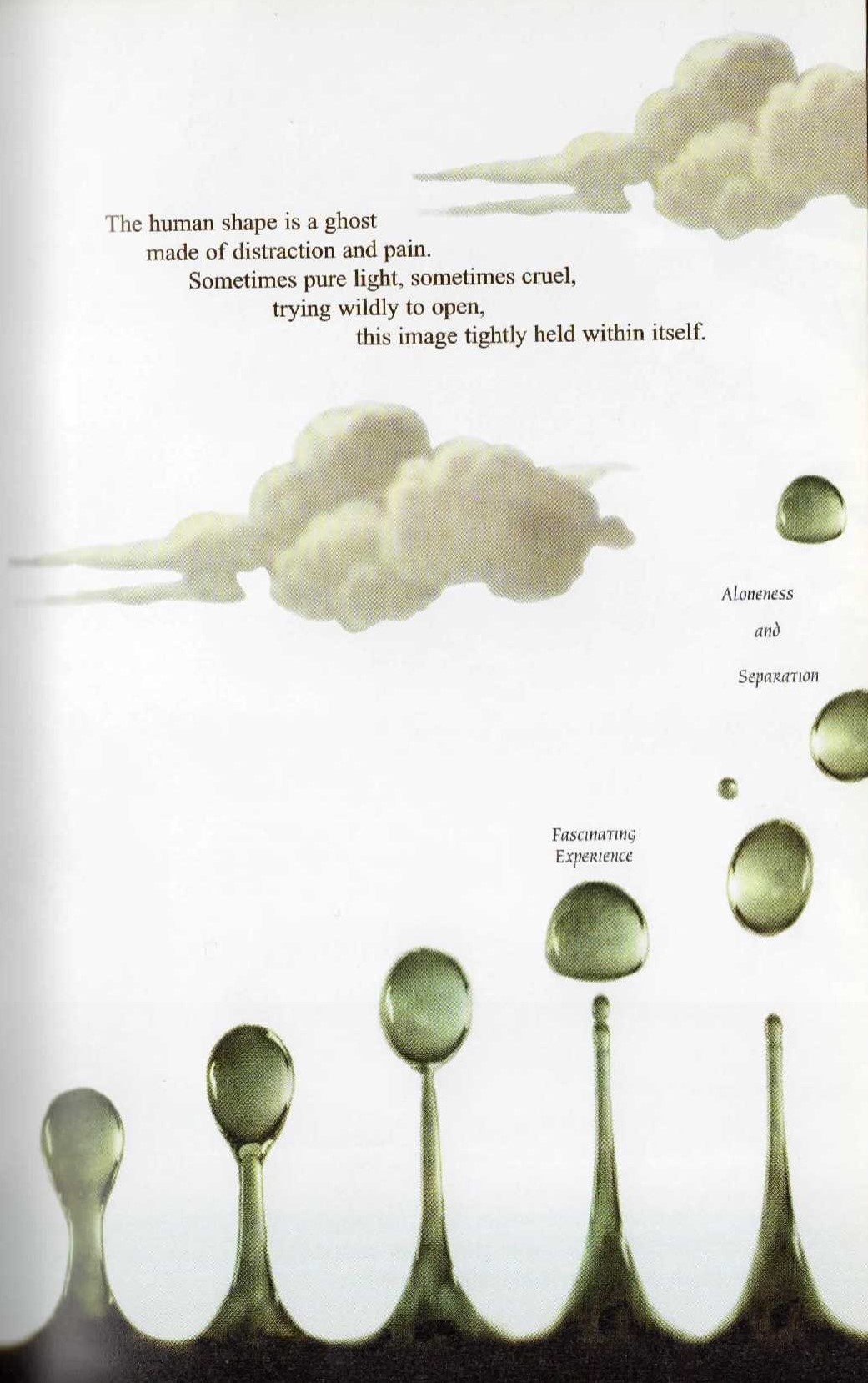
 

The human shape is a ghost made of distraction and pain. Sometimes pure light, sometimes cruel, trying wildly to open,this image tightly held within itself.

“The mystics are gathering in the street. Come out!”

“Leave me alone. I’m sick.”

“I don’t care if you’re dead! Jesus is here, and he wants to resurrect somebody!”

An intuition is awakened within us of the original human experience, of a deep, effortless unity, not with things, but with the ocean of pure love-being within which they exist. A longing and a thirst…

The thirst in our souls is the attraction put out by water itself:

We belong to it, and it to us.

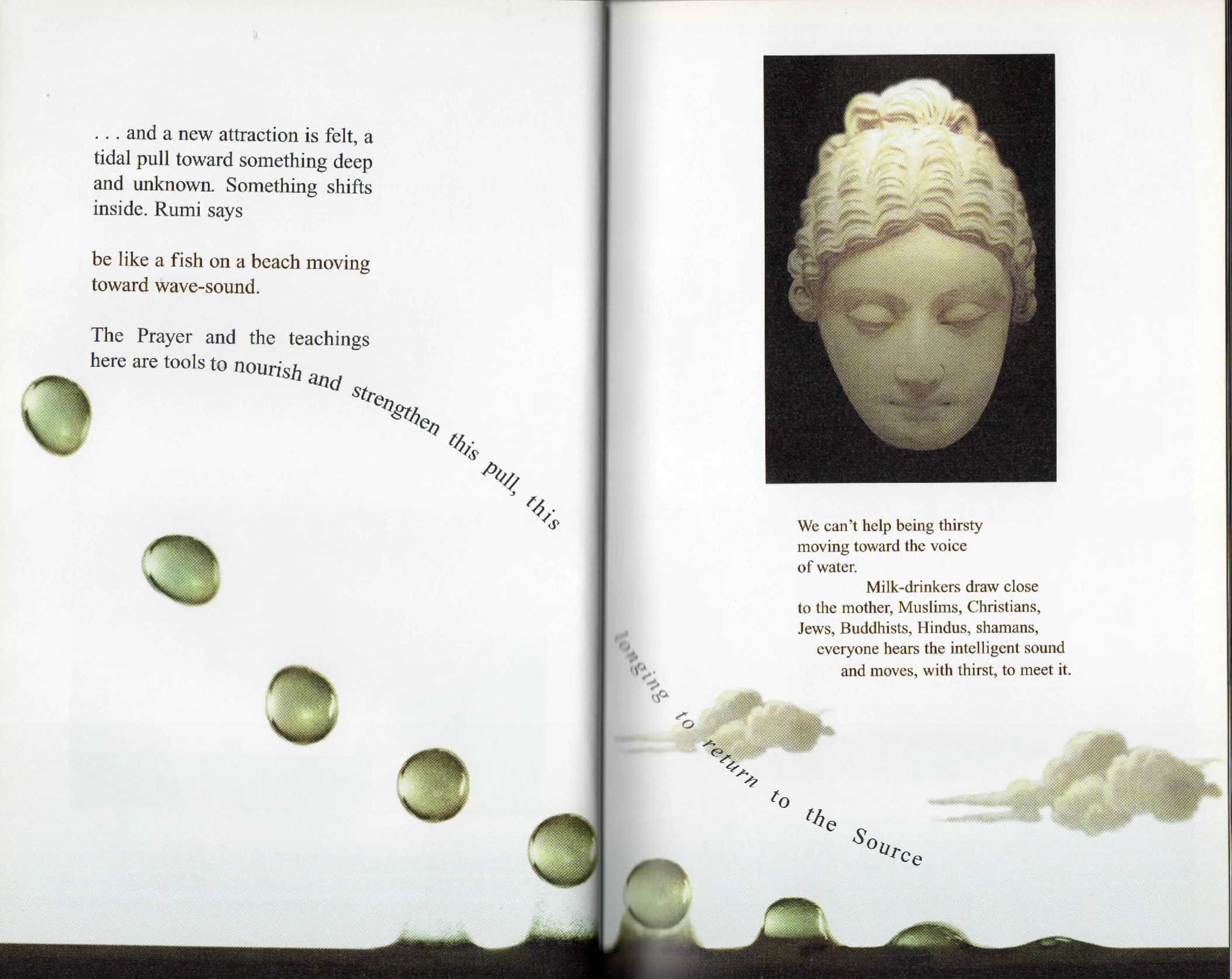
…and a new attraction is felt, a tidal pull toward something deep and unknown. Something shifts inside. Rumi says:

be like a fish on a beach moving toward wave-sound.

The Prayer and the teachings here are tools to nourish and strengthen this pull, this longing to return to the source…

We can’t help being thirsty  moving toward the voice of water.

Milk-drinkers draw close to the mother, Muslims, Christians, Jews, Buddhists, Hindus, shamans, everyone hears the intelligent sound and moves, with thirst, to meet it.

These teachings are part of an ancient Way of returning. They go far back before recorded history. The Way is not “religion,” it is the root from which all religions grow.

Signs of this Way can be found everywhere, among all peoples. The Way exists to serve, and chameleon-like, it takes much of its external coloration from whatever culture or religion it finds itself in.

In the world of mystic Islam, the ones who embrace and transmit this way of returning, of knowing themselves, are often called Sufis.

Their “I” is not what most think of as “I.”

I am cloud and rain being released, and then the meadow as it soaks it in.

I wash the grains of mortality from the cloth around a dervish.

                       I am the rose of eternity, not made of water or fire                                                               or the wandering wind, or even earth. I play with those.

I am

a light within his light. If you see me, be careful.

Tell no one what you’ve seen.

The “I” that so many have defended to their dying breath might be likened to a slightly unstable computer operating system. It’s got wonderful features, but it still crashes and needs regular upgrades. Ultimately it is nothing more than a swarm of charged particles, or rather, it’s only the pattern of charges, completely ephemeral, subject at any moment to error messages, erasure, viruses, random power surges . . . even unfixable crashes. The Sufi’s response to such a marginal exitence is simple: abandon the assumption that this pro­gram is who we really are. Marvelous things can now happen. We might identify with wider horizons—like the hard drive, or the processor. Or the network, the World Wide Web, the wide world, or finally, the great sea of being supporting everything.

This opening up of identity is the great work, and no effort in it is ever wasted. Those who find their way to the shore of this sea are ennobled and transformed. Those diving in discover they are no different from the sea. They were God’s secret. Now God is their secret

Dissolver of sugar, dissolve me, if this is the time.

Do it gently with a touch of hand, or a look. Every morning I wait at dawn. That’s when it happened before.

Or do it suddenly like an execution. How else can I get ready for death?

You breathe without a body like a spark. You grieve, and I begin to feel lighter. You keep me away with your arm, but the keeping away is pulling me in.

Where do we begin? The arts of starting out, of soul-turning, of returning to the vast bright waters of universal consciousness are all found in the realm of prayer.

A wicker basket sank in the Ocean,  saw itself full of seawater,

decided it could live independently. Left the ocean, not a drop stayed in it.

But the ocean took it back

For God’s sake, stay near the sea! Walk the beach.

Your face is pale.

I am sinking in the ocean of this subject.

A man in prison receives a prayer rug from a friend. What he had wanted, of course, was a file or a crow-bar or a key! But he began using the rug, doing the Five-Times Prayer before dawn, at noon, midafternoon, after sun-set, and before sleep. Bowing, sitting up, bowing again, he notices an odd pattern in the weave of the rug at the point where his head touches. He studies and meditates on that pattern, gradually discover­ing that it is a diagram of the lock that confines him to his cell and how it works. He’s able to escape.

Anything you do every day
can open
into the deepest spiritual place,
which is freedom.

What nine months does for the embryo

Forty early mornings will do for your growing awareness.

There is no single word in English that conveys the scope of the Arabic word Salat. “Prayer,” “blessings,” “supplication,” and “grace” are implied, but all fail to convey the Salat’s marvelous integration of devotional heart-surrender ‘with physical motion.

In Salat, our entire being is engaged in a single luminous event.

The Salat that we practice begins with the Miraj, the mystic Night Journey of . the noble prophet Muhammad. Called. from his meditation into superconsciousness, he ascends through the heavens and beyond to mingle and merge with the Lord and Creator, light upon Light.

Returning, he brings back the earthly forms of these celestials adorations.

The prayer is gifted not to one tribe or to one race or one religion but to all humanity, and we present it here as such, a treasure for everyone.

Moving with the Prayer as response to inner need draws one into the precious community of mystic lovers everywhere.

At the Call says the Book of Revelation,

leave your trading and hasten unto remembrance.

The Prayer lends a new life to the day, binding it into the rhythm of a sacred circle. Like a waterwheel that ceaselessly catches water out of a stream and spills it into a garden, The Prayer lifts us up again and again out of our preoccupations and sets us into a sacred time. The Prayer empowers us to put aside the ten thousand cares and realign to the unity and blessedness intrinsic to all things.

Be courageous and discipline yourself.
Work. Keep digging your well.
Don’t think about getting off from work.
Water is there somewhere.
Submit to a daily practice.
Your loyalty to that
is a ring on the door.
Keep knocking, and the joy inside
will eventually open a window
and look out to see who’s there.


The Prayer is a deep psycho-logical  force field to help us over-come our mole-like resistances to the light. The Prayer is an unfolding series of archetypal motions and gestures that appear in endless variation throughout all the devotional practices of the human family.
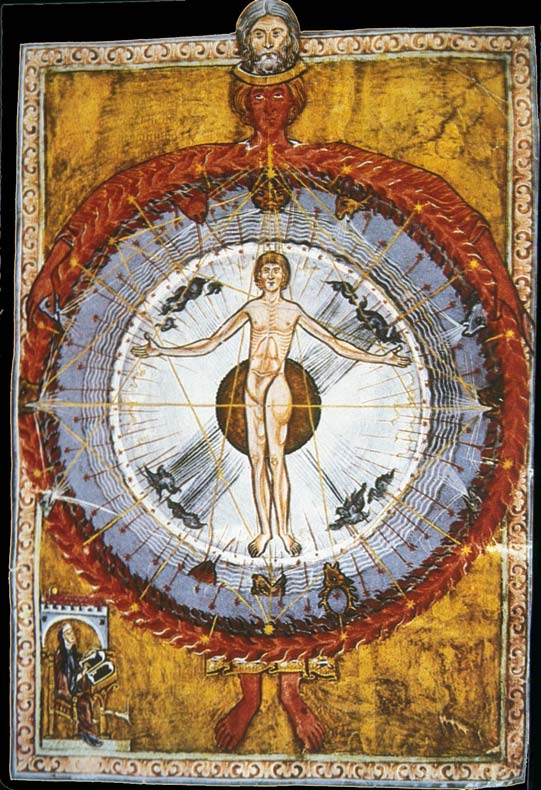
Salat is a remarkably compact and focused exercise. It gently returns our lives to “that which we really love” five times every day, and grounds that returning in the movements and knowledge of body-wisdom.

The body itself is a screen to shield and partially reveal the light that’s blazing inside your presence.


-The Times
Following celestial law, the earth each day performs a complete turning. The light moves through five stages as the sun dawns, climbs to its zenith, descends downward in the slanting rays of aftemoon, sets in glowing colors, and disappears into darkness. For the Sufi, this cycle is a mirror of the human life span: our dawing into the world, our growth, maturation, decline, and death. In these five stages, the soul makes its journey around another sun that never rises or sets.

The Prayer invites us to awaken from the superficial self at these moments of the day. By aligning our devotional work with these natural times of power we start to move with the rhythms of God’s creation in a new way, attuned to the mystical correspondences between outer and inner and to the seasons of life.

see: Hildegard of Bingen: Viriditas – the Greening power of the Divine –

Think of how PHENOMENA come trooping

out of the Desert of Non-existence

into this materiality.

Morning and night,

they arrive in a long line and take over

from each other, “It’s my turn now. Get out!”

A son comes of age, and the father packs up. This place of phenomena is a wide exchange of highways, with everything going all sorts of different ways.

We seem to be sitting still, but we’re actually moving, and the Fantasies of Phenomena are sliding through us like ideas through curtains.

Read more here