Myths and Consciousness: Bill Moyers interviews Joseph Campbell ( 1987). In six episodes. English, Dutch subtitles. With thanks to Roy Hartgers for the digitization of the video material.
What is shown is impressive. The structure, content and explanations show the unimaginably rich stature and erudition of Joseph Campbell at the end of his life with crystal clarity.
As he says: “At the beginning of my search I wrote about what I had read and studied, now I know from a lifelong experience that it is so“. Quests with a completely open mind: no dogmas.
And the emphatic message that the purpose of life cannot really be described ‘scripturally’, because it can ultimately only be experienced internally, beyond the words. The myths refer to this.
That is where everyone’s own inner treasure lies. Which everyone can only dig up themselves. Myths are very helpful in this. Very educational material, therefore, to be used for education, joint study with discussion and human development in a much broader sense. The six episodes are titled as follows:
1: The Hero’s Adventure
2: The Myth’s Message
3: The First Storytellers
4. Sacrifice and Bliss
5. Love and the Goddess
6. Masks of Eternity
(Note: The formal request for permission to the Joseph Campbell Foundation [Joseph Campbell Foundation, PO Box 705, Fleischmanns, NY 12430] to place this Dutch subtitled version on You-Tube has so far remained unanswered.)
Joseph Campbell believes that every person receives a call in their life to realize their deeper desires. This often goes against newly acquired or already established interests and requires courage. Choices have to be made. Potential heroism unfolds.
According to Campbell, the spiritual poverty of today’s society lies, among other things, in the fact that people no longer want and/or can hear this call. This leads to alienation from our own nature, with all its consequences. “Follow your bliss, really, follow your bliss”, he says, “Find out where it lies and the universe will open doors where there were only walls”. His own life story* is a good example of this.
During his life, Joseph Campbell met Jiddu Krishnamurti, Carl Gustav Jung and Heinrich Zimmer, among others. If he had such a thing, Campbell said, the latter was his guru. Here a subtle line emerges to the tradition of advaita vedanta, because the guru of Heinrich Zimmer ( 1943) was Ramana Maharshi ( 1950).
However, Joseph Campbell’s material is infinitely broader, with approaches and contributions from countless peoples, cultures and times. Mysticism, myths, mystical stories… What are they about? Joseph Campbell says:
“This ancient information (the myths) deals with themes that have supported human life for thousands of years, that have shaped civilizations and that have inspired religions. And that information concerns deep inner problems and mysteries, inner thresholds and inner transformation… “.
“And”, says Campbell, “if it grabs you, then you always draw such a deep, rich inspiring inspiration from these traditions that you will never give up. If you do not know where and what signposts are along the way, you have to figure it out for yourself and find your own way”.
His own life story is also a good example of this.
The Masks of God:
The Masks of Godtraces mankind’s history as a search for meaning through ideas, themes and quests of culture and religion.
The Masks of Godis the summation of Joseph Campbell’s lifelong study of the origins and function of myth. In volume 1 of the series, The Masks of God, Campbell examines the primitive roots of spiritual beliefs among our ancient ancestors. Drawing on anthropology, archaeology and psychology Primitive Mythology confirms the fundamental unity of mankind (not only biologically but in shared spiritual history).
In volume 2 of the series, Oriental Mythology, Campbell examines Eastern mythology as it developed in the distinctive religions of Egypt, India, China and Japan. Campbell examines Eastern mythology as it developed in the distinctive religions of Egypt, India, China and Japan. While Western religions dwell on good and evil, Eastern religions focus on the promise of eternal life. Oriental Mythology explores how Eastern religions came to manifest their varying modes of thought and expression.
In volume 3 of the series, Occidental Mythology, Campbell examines the themes that underlie the art, worship and literature of the Western world. , Campbell examines the themes that underlie the art, worship and literature of the Western world. Occidental Mythology traces European consciousness from the Levantine earth-goddesses of the Bronze Age and the subsequent tribal invasions that shaped Judaic and Greek myth before examining the influence of Persia, Rome, Islam and Christian Europe on ancient beliefs.
In volume 4 of the series,The Masks of God, Creative Mythology, Campbell examines the entire inner story of modern culture, spanning its philosophic, spiritual and cultural history since the Dark Ages and investigating modern man’s unique position as the creator of his own mythology.
Creative Mythology deepens our understanding of the post-medieval culture we have inherited. The Masks of God traces mankind s history as a search for meaning through the ideas, themes and quests of culture and religion.
The Hero with a Thousand Faces
The Hero with a Thousand Faces (first published in 1949) is a work of comparative mythology by Joseph Campbell, in which the author discusses his theory of the mythological structure of the journey of the archetypal hero found in world myths.
Since the publication of The Hero with a Thousand Faces, Campbell’s theory has been consciously applied by a wide variety of modern writers and artists. Filmmaker George Lucas acknowledged Campbell’s theory in mythology, and its influence on the Star Wars films.
The Joseph Campbell Foundation and New World Library issued a new edition of The Hero with a Thousand Faces in July 2008 as part of the Collected Works of Joseph Campbell series of books, audio and video recordings. In 2011, Time placed the book in its list of the 100 best and most influential books written in English since the magazine was founded in 1923.
Campbell explores the theory that mythological narratives frequently share a fundamental structure. The similarities of these myths brought Campbell to write his book in which he details the structure of the monomyth. He calls the motif of the archetypal narrative, “the hero’s adventure”. In a well-known quote from the introduction to The Hero with a Thousand Faces, Campbell summarizes the monomyth:
A hero ventures forth from the world of common day into a region of supernatural wonder: fabulous forces are there encountered and a decisive victory is won: the hero comes back from this mysterious adventure with the power to bestow boons on his fellow man]
In laying out the monomyth, Campbell describes a number of stages or steps along this journey. “The hero’s adventure” begins in the ordinary world. He must depart from the ordinary world, when he receives a call to adventure. With the help of a mentor, the hero will cross a guarded threshold, leading him to a supernatural world, where familiar laws and order do not apply. There, the hero will embark on a road of trials, where he is tested along the way. The archetypal hero is sometimes assisted by allies. As the hero faces the ordeal, he encounters the greatest challenge of the journey. Upon rising to the challenge, the hero will receive a reward, or boon. Campbell’s theory of the monomyth continues with the inclusion of a metaphorical death and resurrection. The hero must then decide to return with this boon to the ordinary world. The hero then faces more trials on the road back. Upon the hero’s return, the boon or gift may be used to improve the hero’s ordinary world, in what Campbell calls, the application of the boon.
While many myths do seem to follow the outline of Campbell’s monomyth, there is some variance in the inclusion and sequence of some of the stages. Still, there is an abundance of literature and folklore that follows the motif of the archetypal narrative, paralleling the more general steps of “Departure” (sometimes called Separation), “Initiation”, and “Return”. “Departure” deals with the hero venturing forth on the quest, including the call to adventure. “Initiation” refers to the hero’s adventures that will test him along
Campbell studied religious, spiritual, mythological and literary classics including the stories of Osiris, Prometheus, the Buddha, Moses, Mohammed, and Jesus. The book cites the similarities of the stories, and references them as he breaks down the structure of the monomyth.
The book includes a discussion of “the hero’s journey” by using the Freudian concepts popular in the 1940s and 1950s. Campbell’s theory incorporates a mixture of Jungian archetypes, unconscious forces, and Arnold van Gennep’s structuring of rites of passage rituals to provide some illumination.[4] “The hero’s journey” continues to influence artists and intellectuals in contemporary arts and culture, suggesting a basic usefulness for Campbell’s insights beyond mid-20th century forms of analysis. The Hero with a Thousand Faces Read here
Richard Gault explores the meaning of an extraordinary mathematical phenomenon
The Mandelbrot set is a very modern phenomenon; it was discovered only in the 1970s and the endless unfolding of the beautiful complex patterns it generates can be witnessed only due to contemporary computer power. Natural phenomena as diverse as snowflakes, the leaves of ferns and the form of mountain ranges can be described as Mandelbrot fractals. But in this article, Richard Gault argues that the main purpose it serves is a philosophical one, demonstrating the feasibility of a principle which many great thinkers and spiritual teachers throughout the ages have expounded – that what we see in the material world is in reality a projection or shadow of happenings in a higher dimension of spirit and consciousness.
Beauty seems either to be just there in the natural world, waiting to be recognised – think of sunsets – or to be the work of artistic inspiration. But at the end of the last century an astonishingly beautiful mathematical discovery was made – the Mandelbrot set. Nothing quite like the fantastic patterns it generates had ever been seen before 1980. The mesmerising images are made up of intricate fractal shapes – that is, irregular shapes which remain similar though never identical as more detail is revealed. Natural phenomena as diverse as snowflakes, the leaves of ferns and the form of mountain ranges can be described as Mandelbrot fractals. But they can also be seen in human constructs such as the muqarnas in Islamic architecture or in the design of Persian rugs.[1]
The term ‘fractal’ was only coined in 1975 by the man after whom the Mandelbrot set is named, the Polish-French-American mathematician and polymath Benoit Mandelbrot. The story of its discovery, and of Benoit’s role in it, is related by Arthur C. Clarke in the 1995 Netflix documentary Fractals: The Colours of Infinity (see end of article). Clarke remarks during the documentary: ‘I’m often asked, well these pictures are all very pretty but what’s their practical value?’ And it is true that while the Mandelbrot set does have practical applications – in computer graphics, for example – its usefulness is relatively limited. It does not compare with, say, Fleming’s discovery of penicillin or the uses of the laws of electromagnetism developed by Faraday and Maxwell. Or within mathematics itself, the discovery and development of calculus and differential equations which affect each of us daily: almost everything that has been engineered will have been designed using these mathematical techniques.
That Clarke was ‘often asked … what’s their practical value’ is revealing. It shows that practical value is a widely accepted yardstick. This was not always the case. Those who ask the question unwittingly live by the vision of the founding father of modern Western science, the Englishman Francis Bacon. Bacon wrote in 1597: ‘The real test of knowledge is not whether it is true but whether it empowers us.’ This was a radical and novel idea four hundred years ago. Now utility almost overwhelms all other values. But there are other purposes knowledge can serve and I want to suggest that for the Mandelbrot set, there is a very interesting and important philosophical one.
Left: Detail of Mandelbrot set, the ‘Sea Horse Tail’. Right: Sea horses.
A Philosophical Role
A core role of philosophy is to help us find answers to fundamental questions about ourselves and the reality we find ourselves in. Existential and metaphysical questions are also the ones that all the great spiritual traditions address. There are, of course, differences between the way that spiritual seekers search for answers and the methods of philosophers. One of the most essential of these is that most contemporary philosophers accept that there is just one level of reality, which is the reality we know and experience through our senses. By contrast, all spiritual traditions acknowledge at least two levels: the sensory, material world and another deeper, hidden world of spirit and consciousness.
I did not say ‘all contemporary philosophers’ – just ‘most’. It is true that most modern philosophers, as well as virtually all of Bacon’s successor scientists, investigate reality on the understanding that what is real is simply what can be observed and measured. However, there is a significant number who do not. Important examples of such heterodox thinkers in our present day include those whose work we have covered in Beshara Magazine over the last five years: Philip Goff, Iain McGilchrist, Federico Faggin and Bernardo Kastrup. They recognise that there is a higher primordial level of pure consciousness out of which ordinary reality emerges.
I also wrote ‘most contemporary philosophers’ because before the modern age, there were many major philosophers who recognised distinct levels of reality. Plato was particularly famous and influential for arguing that the phenomenal world is merely a shadow of a deeper, truer reality. That reality, he wrote, is the world of forms or archetypes. So, for example, all horses we see are manifestations of the ideal horse form according to Plato. Likewise every beautiful sunset, beautiful rose or beautiful song reveals in its own way the essential idea of beauty. Iain McGilchrist echoes Plato in describing fundamental values such as beauty as ‘ontological primitives’.
A similar understanding is brought out in Islamic philosophy. The 13th century philosopher and mystic Ibn ‘Arabi also used the analogy of shadows, maintaining that what we see in the world is really a projection – as in a shadow theatre – of events in this other, vertical dimension. This hidden reality, as Eric Winkel explained in our conversation with him last year (click here) is the domain of the ‘Divine Names’, and thus the external world is understood to be an arena where the Divine Names play out.
Interesting as the ideas of Ibn ‘Arabi and Plato are, how easy is it to accept them? Is it really plausible that what we see – this complex, rich, ever-changing world – could actually be the product of relatively few, unchanging forms or names? I argue that the Mandelbrot set provides an answer, or at least a way of opening ourselves to the answer, as it vividly demonstrates how an endless variety can emerge from something that is in itself quite simple.
left: Detail of the Mandelbrot set , ‘One Island’. Right: The variety of sea shells, as portrayed in Le conchyliologie, or Histoire naturelle des coquilles de mer by Antoine-Joseph Dezallier d’ Argenville in 1780.
How a Simple Equation Generates Unique Complexity
. This is because the astonishing patterns of the set are generated by a remarkably concise mathematical equation:
Z = Z2 + C
How such a simple formula can give rise to such intricate and exquisite patterns is explained in some detail, but in an easily understood way for the non-mathematician, in the video below.
… but understanding the mathematical intricacies of how the magic happens is not really important for grasping the main point I want to make, which is that a simple equation, once brought to life, can yield enthralling, ever-changing intricacy and beauty. Each feature of a Mandelbrot pattern, while similar to others, is unique, despite there being an infinite number of them and them all being the product of the same, simple equation. Thus we can see that it is possible that while there is only one ideal, Platonic horse, the countless horses we see in the world are all different and unique; and that while there is just one Name for Beauty, there are endless manifestations of beautiful sunsets, roses, songs.
The Mandelbrot set does not prove that thinkers such as Plato, Ibn ‘Arabi and McGilchrist are right, of course. But it does offer an analogy to help us understand what they are suggesting. To believe something it is necessary to first accept that it is believable. In our secular, scientistic age, the step of acknowledging that reality might not be confined to the observable is difficult, often unsurmountable, for many people. Therefore the infinite generative capacity of the Mandelbrot set can be useful as a way of opening minds and hearts to another, I believe much richer, way of understanding the world.
Further: not only does it suggest why the idea of different levels of reality is believable, it also gives an answer to the question that might arise; why, if Plato is right, did reality not stop at the level of the ideal? Look again at the Mandelbrot equation, Z= Z2 + C. There is an elegance here and, perhaps for a mathematician, it has a certain beauty and perfection in itself. But its true magnificence is a hidden one, in that it is essentially a potential. The beauty within it is invisible and can only be seen when it is brought out by letting a computer unfold the equation. In the same way, Plato’s ideal horse is fine in itself, but it wants fulfilment in, among others, the chestnut stallion I see grazing in the pasture close to where I live. Ideal forms, as well as Ibn ‘Arabi’s and McGilchrist’s ontological primitives, appear in a very real sense to need to express themselves.
The Dome, Hall of the Two Sisters, Court of the Lions, Alhambra, Granada, where according to Nurfan Tercan [/] the arrangement of the muqarnas is based upon fractal geometry
What Science Is and Is Not
The Mandelbrot set also helps us to understand what science is. Confronted by the rich complexity of the world as it presents itself, scientists attempt to describe how it works in relatively simple terms. They seek the rules or laws which underlie the behaviour of everything from photons to galaxies. This is not easy. Their task is analogous to being presented with a set of Mandelbrot images and being challenged to discover the equation that produced them. It would be extremely difficult, if it is possible at all, to derive the source equation, Z= Z2 + C, by interrogating the patterns. How much more challenging, then, is the task that science has set itself? So it is right that philosophers of science acknowledge that scientific theories cannot claim to be true, but are just the best explanation found so far for a particular phenomenon. That science offers only provisional approximations maybe should be better known by the general public – and indeed by many practising scientists.
It can also be noted that usually the rules or models that scientists propose are not iterative like the Mandelbrot set. They are static equations, like Einstein’s E = MC2 and linear models like Newton’s laws of motion. By contrast, Mandelbrot’s equation is itself a process in motion. As such it is in keeping with the ancient idea, first expressed by Heraclitus and echoed in our own times by McGilchrist, that reality should be understood to be ‘based on process and flow’ rather than on concrete, static matter. Here again, the set provides an analogy which may assist people to comprehend new ideas.
Bacon sparked a revolution in the 16th century that has culminated in the commonly accepted way of seeing the world. The Mandelbrot set with its marvellous patterns may help people accept that there can be a different way of understanding reality. The time may yet come when, amongst other things, a scientific discovery is greeted with – yes it could be useful but would it really be beautiful?
“Hail, O Love that bringest us good gain—thou art the physician of all our ills”
–Rūmī
The outpouring of interest in RūMī(1207-1273) or as he is known within the world of Islamic spirituality, Jalāl al-Dīn Muḥammad Rūmī or simply Mawlānā, “our Master,” in the contemporary West is an overwhelming confirmation of the timeless relevance of traditional wisdom that isneither of the East or West. He is the originator of the renowned “mystical dance” (semā), which later became known as the “dance of the whirling dervishes” that is utilized by the Mevlevi or Mawlawiyya Sufi order founded by Rūmī ’s followers after his death. How is it that a poet from the thirteenth-century born in Balkh (Khurasan or present-day Afghanistan), who lived most of his life and was buried in Konya (Turkey), has become a celebrated figure in America today? This is again evidence of his universal message that transcends religious and sectarian boundaries, national, cultural, and ethnic divisions and is not limited to time or place. With the rise of Islamophobia, including extremism and xenophobia in all its forms, the message of the saints and sages such as Rūmī provide an antidote to the increasing ignorance, hatred, and violence that are besieging the world today. THE SUFI DOCTRINE OF RUMI is a revised edition of a work that was initially published in 1974 in Iran by the Aryamehr University in Tehran to celebrate the seven-hundredth anniversary of Rūmī ’s death, when Professor Chittick was an assistant professor of Religious Studies at the university. This new edition is colorfully decorated with calligraphy, Persian and Turkish miniature paintings, which are truly stunning for the eye to gaze upon. Seyyed Hossein Nasr, one of the world’s most respected writers and speakers on Islam and its mystical path, Sufism, was then the Chancellor of Aryamehr University. Nasr discusses the importance of this work for future Rūmī studies in his Foreword to this book: [This] study of Dr. Chittick has the great merit…of approaching the subject [of Rūmī’s metaphysical teachings] from a strictly traditional point of view untainted by the modernistic fallacies which have colored most of the other studies devoted so far to this subject in Western languages.… May the message of Rūmī serve as a beacon of light to dispel the shadows which prevent modern man from seeing even his own image in its true form and from knowing who he really is.
Rūmī ’s major works are the DīWāN-I SHAMS-I TABRīZī of some 40,000 verses, and the MATHNAWī containing some 25,000 verses, which is often regarded as “the Qu’ran in the Persian language.” Although no work could fully encompass the totality of Rūmī ’s teachings, readers may ask, why yet another book? While numerous books are available they often miss the mark, and do not provide insight into the mystical symbolism of Rūmī ’s spiritual universe. Chittick speaks to his intentions behind preparing this work: Despite numerous studies of him [Rūmī], until now there has been no clear summary in English of the main points of his doctrines and teachings…. For those who know [ Rūmī] only through the popularizing translations [of his poetry], this little book may provide some insight into his universe of meaning. Unlike most Sufi poets, Rūmī explains the meaning of his imagery and symbolism. My task is simply to juxtapose various verses and prose passages to let him say what he wants to say.
While Rūmī is well-known, and celebrated in the present-day, what is lacking are authoritative works accessible for general readers that offer an introduction in clear and accessible language to his magical poetry. This book does just that as it provides an authoritative and accessible presentation of Rūmī ’s magisterial teachings and its fundamental themes vis-à-vis the Islamic tradition, which is central to his spiritual universe. The lack of knowledge pertaining to the Islamic tradition tends to obstruct Western readers from understanding the depth of Rūmī. Sufism is regarded as the inner or esoteric dimension of Islam and is a spiritual path by which the human being can transcend his or her individual egoism to reach the Divine. Chittick explains the distinction and relationship between the inner and outer dimensions of religion: Exotericism by definition must be limited in some sense, for it addresses itself to a particular humanity and a particular psychological and mental condition— even though its means of addressing itself is to some degree universalized and expanded through time and space to encompass a large segment of the human race. Esotericism also addresses itself to particular psychological types, but it is open inwardly towards the Infinite in a much more direct manner than exotericism, since it is concernedprimarily with overcoming all the limitations of the individual order.
Chittick clarifies the role of the Prophet Muhammad within Sufism as some have tried to separate Sufism from the Islamic tradition as if one could be a Sufi without being a Muslim: For the Sufis themselves one of the clearest proofs of the integrally Islamic nature of Sufism is that its practices are based on the model of the Prophet Muhammad. For Muslims it is self evident that in Islam no one has been closer to God—or, if one prefers, no one has attained a more complete spiritual realization—than the Prophet himself, for by the very fact of his prophecy he is the Universal Man and the model for all sanctity in Islam. For the same reason he is the ideal whom all Sufis emulate and the founder of all that later become crystallized within the Sufi orders. Rūmī confirms that all Sufi orders link back like a chain (silsilah) to the Prophet and that without the Prophet Muhammad there would be no Sufism. This is expressed in his lyrical verse:
“God’s way is exceedingly fearful, blocked and full of snow. He [the Prophet] was the first to risk his life, driving his horse and pioneering the road. Whoever goes on this road, does so by his guidance and guarding. He discovered the road in the first place and set up waymarks everywhere.”
To the surprise of many Rūmī admirers, who would never accuse him of being narrow-minded, rather than being against orthodox interpretations of religion, Rūmī speaks of orthodoxy as a spiritual necessity to the union with the Divine: “The (right) thought is that which opens a way: the (right) way is that on which a (spiritual) king advances.”
The following is another poetic articulation of Rūmī ’s perspective on orthodoxy: “Alter yourself, not the Traditions: abuse your (dull) brain, not the rose-garden (the true sense which you cannot apprehend).” According to Rūmī, the true nature of the relationship between the Divine and the world of form requires a transcendent wisdom that is outside the reach of normal or rational knowledge:
It…is neither inside of this world nor outside; neither beneath it nor above it; neither joined with it nor separate from it: it is devoid of quality and relation. At every moment thousands of signs and types are displayed by it (in this world). As manual skill to the form of the hand, or glances of the eye to the form of the eye, or eloquence of the tongue to the form of the tongue (such is the relation of that world to this).
Although the Divine confirms the unity of all phenomena in the manifest world, when viewed through the lens of the relative or duality, all things appear as separate and disjointed from one another without a trace that they are essentially interconnected on a higher level. Likewise, knowledge cut off from its transcendent source characterizes the fallen consciousness of humanity. Chittick writes, “The fall of man is the result of the blinding of the ‘eye of the heart’ (chashm-i dil or ‘ayn al-qalb), which alone sees with the vision of gnosis.” Due to the fallen consciousness which attaches itself to what is transitory, human beings do not see things as they are but rather in a distorted way: “Therefore union with this (world) is separation from that (world): the health of this body is the sickness of the spirit. Hard is the separation from this transitory abode: know, then, that the separation from that permanent abode is harder.”
According to Rūmī, the fallen consciousness of Adam extends and includes the whole of humanity:
Sick, surely, and ill-savored is the heart that knows not (cannot distinguish) the taste of this and that. When the heart becomes whole (is healed of pain and disease), it will recognize the flavor of falsehood and truth [since “God taught Adam the Names”]. When Adam’s greed for the wheat [the forbidden fruit] waxed great, it robbed Adam’s heart of health ….discernment flees from one that is drunken with vain desire.
The loss of the sense of the sacred is itself the forgetting of the Divine. Rūmī asserts, “Forgetfulness (of God), O beloved, is the pillar (prop) of this world; (spiritual) intelligence is a bane to this world.” Sufism teaches that Universal or Perfect Man (al-insān al-Kāmil) is the prototype of both the microcosm and the macrocosm, the human being and the cosmos. This is to say that Universal or Perfect Man is “the perfect human model who has attained all the possibilities inherent in the human state.” For Universal or Perfect Man the misidentification with the empirical ego has relinquished itself, “the human ego with which most men identify themselves is no more than his outer shell”. Chittick explains the need for consciousness to be in ceaseless contemplation of the Real in order to remedy the forgetfulness of the Divine: “the maintenance of the world depends on the balance between the contemplative who has realized the state of Universal Man, and fallen man, who lives in a state of forgetfulness.” The theomorphic identity of all human beings is the Universal or Perfect Man as Rūmī instructs:
The owner of the Heart [Universal or Perfect Man] becomes a six-faced mirror: through him God looks upon (all) the six directions. Whosoever hath his dwelling place in (the world of) the six directions, God doth not look upon him except through the mediation of him (the owner of the Heart)…. Without him God does not bestow bounty on any one.
Rūmī reminds readers that the original function of every human being is to be the Universal or Perfect Man in order to act as a channel of grace in the world. In fact, not to do so, is to forfeit what it means to be human:
There is one thing in this world which must never be forgotten. If you were to forget everything else, but did not forget that, then there would be no cause to worry; whereas if you performed and remembered and did not forget every single thing, but forgot that one thing, then you would have done nothing whatsoever.
The saints and sages of the world’s religions remind the human collectivity of his or her original or theomorphic nature and provide methods of realizing this transpersonal identity:
In the composition of man all sciences were originally commingled, so that his spirit might show forth all hidden things, as limpid water shows forth all that is under it—pebbles, broken shards, and the like—and all that is above it, reflecting in the substance of the water. Such is its nature, without treatment or training. But when it was mingled with earth or other colors [when Adam fell], that property and that knowledge was parted from it and forgotten by it. Then God most High sent forth prophets and saints, like a great, limpid water such as delivers out of darkness and accidental coloration every mean and dark water that enters into it. Then it remembers; when the soul of man sees itself unsullied, it knows for sure that so it was in the beginning, pure, and it knows that those shadows and colors were mere accidents.
Identity itself belongs to the Divine and thus the mystery of human identity cannot be resolved without the inclusion of what transcends the empirical ego. Rūmī astutely writes: “The idol of your self is the mother of (all) idols….” Whether the human being chooses to do good actions or evil ones, all creation confirms the existence of the Absolute. Rūmī writes,
“…(both) infidelity and faith are bearing witness (to Him): both are bowing down in worship before His Lordliness.”
The secret of the Prophetic Tradition that affirms “Die before ye die” is a call for self- effacement before the Divine in order to be reabsorbed in the Divine. Rūmī states that ultimately death in this life is an alchemical process of spiritual transformation; it is a journey of homecoming and not of departure in order to return to the Supreme Identity:
O you who possess sincerity, (if) you want that (Reality) unveiled, choose death and tear off the veil [of your self-existence]— Not such a death that you will go into the grave, (but) a death consisting of (spiritual) transformation.
Rūmī casts light on the famous, yet no less controversial dictum by the great Sufi mystic al-Hallāj (858-922), which is an instruction on how to approach the Divine: Take the famous utterance “I am God.” Some men reckon it a great pretension; but “I am God” is in fact a great humility. The man who says “I am the servant of God” asserts that two exist, one himself and the other God. But he who says “I am God” has naughted himself and cast himself to the winds. He says, “I am God”: that is, “I am not, He is all, nothing has existence but God, I am pure nonentity, I am nothing.” In this the humility is greater.
The deepening of our understanding of the mystical dimension of the religions will aid in creating more spiritual literacy across the faith traditions and will simultaneously revive the meaning and significance of the outer or formalistic dimension of religion. For Rūmī and all saints and sages of the sapientia traditions are upholding the right understanding of their own faith traditions and how to approach them accordingly.
The shahādah or the essential declaration of faith in Islam, Lā ilāha illallāh, “There is no god but God,” when seen through the discerning and contemplative “eye of the heart” becomes a crystalline distillation of Rūmī ’s metaphysical teachings. Two main steps on the Path are contained in the shahādah, the first consisting of the “annihilation of self” (fanā) and the second the “subsistence in God” (baqā), for when the illusory nature of human identity dissociated from the Divine reality is seen for what it is and it becomes evident that the Divine is all that exists, concentration on the Real becomes possible. This formula can also be understood as “There is no self but the Self” or, correspondingly, “There is no reality but the Reality,” being universal in principle and applicable to all faiths.
As the centuries pass, Rūmī continues to demonstrate his profound presence in the hearts and minds of those who are attracted to his message, which calls for nothing less than are sacrilization of this world and union with the Divine. The importance of this book is that it guides readers through the fundamental themes of Rūmī ’s complex spiritual labyrinth, making his symbolic language intelligible to readers unfamiliar with his teachings or the mystical dimension of Islam. It is truly remarkable to find the timeless in time; and it is not only through Rūmī but all of the saints and sages of the world’s faith traditions where such examples of pure metaphysics can be found, urging a resurgence of the sacred that is ever present in this very moment. We conclude with two lines from Rūmī ’s DīWāN inviting all to take part in the pilgrimage of the Heart:
“Make a journey out of self into [your real] self, O master, / For by such a journey earth becomes a quarry of gold.”
“Under whatever name and form one may worship the Absolute Reality, it is only a means for realizing It without name and form. That alone is true realization, wherein one knows oneself in relation to that Reality, attains peace and realizes one’s identity with it.” — Śrī Ramana Maharshi
ŚRī RAMANA MAHARSHI (1879-1950), KNOWN AS THE SAGE OF ARUNACHALA, was a spiritual paragon of the twentieth century. He was revered by millions of people around the world because his teachings transcend all forms of religious exclusivism and are not limited to Hindu spirituality, as people of all faiths and walks of life came to sit in his presence. He assisted individuals to inquire into the deepest truths and did so using very few words. His teachings were many times taught in silence. This was often his preferred method of instruction in order to transmit to the human being in his company the essence of non-duality or Advaita Vedānta. He embodied what is known as the sanātana dharma or “eternal religion” that is found at the heart of each of the world’s religions.
This book by A.R. Natarajan combines biographical material gathered from direct sources and the essential teachings of Ramana Maharshi. Also, included in this volume is Foreword by Eliot Deutsch, a leading authority on Hindu thought. The reader can find therein 160 photographs documenting the span of Ramana Maharshi’s lifespan. The Sage of Arunachala was born as Venkataraman Iyer, in what is now Tiruchuli, Tamil Nadu, India, into an orthodox Hindu Brahmin family. On July 17, 1896, at the age of sixteen, Venkataraman for no apparent reason was overwhelmed by a sudden, violent fear of death. He provided the following description of this event:
I stretched myself like a corpse, and it seemed to me that my body had actually become rigid—“I” was not dead—“I” was on the other hand conscious of being alive, in existence. So the question arose in me, “What was this ‘I’?” I felt that it was a force or current working, despite the rigidity or activity of the body, though existing in connection with it. It was that current or force or center that constituted my personality, that kept me acting, moving etc. The fear of death dropped off. I was absorbed in the contemplation of that current. So further development or actively was issuing from the new life and not from any fear
From this event emerged his true identity as the Self (Ātmā) that is beyond birth and death (saṃsāra) and prompted his self-enquiry (ātma vichāra) of “Who am I?”
Who can understand the state of the one Who has dissolved his ego and Is abiding always in the Self? For him the Self alone is. What remains for me to do?
Nearly six weeks later, on August 29, 1896, Venkataraman left his uncle’s home in Madurai, and traveled to the holy mountain Arunachala, in Tiruvannamalai. Since his arrival to the holy mountain on September 1, 1896, he remained there for the rest of his life. He emphasizes that this process was not of his own ego-bound will, but rooted in the Divine Will, being as he considered it an act “in obedience to his command”. It needs to be emphasized that while Ramana Maharshi left home and became a renunciate at an early age he did so with the highest regard and love for his parents and credits them for his spiritual search:
As mother and father both, you gave birth to me and tended me. And before I could fall into the deep sea called jaganmaya, and get drowned in the universal illusion, you came to abide in my mind, you drewme to yourself.
O Arunachala, you whose being is all Awareness. What a wonderful work of art your Grace has wrought, my Mother-Father-Lord!
In fact, Ramana Maharshi’s mother, Azhagammal or Alagammal (1864 -1922), followed her son to live on the holy mountain with him during the last years of her life and was very devoted to him. The Matrubhuteswara Temple was built over her burial place and daily worship continues to be carried out until this day. Ramana Maharshi in no uncertain terms emphasized that “liberated women are on a par with liberated men” and viewed all women as being his mothers. At the ashram, according to Ramana Maharshi, “All are equal here.” Upon arriving in Tiruvannamalai he initially stayed at the Arunachaleswara Temple and while he subsequently stayed at various sites on the sacred mountain, he is reported to have stayed the longest period in the Virupaksha Cave—for seventeen years, from 1899 to 1916. He in no way downplayed the householder life as he viewed it as being equal with a renunciate life. He adds, “There is no difference between domestic life and that of hermits. Just as you avoid the cares of home when you are here, go home and try to be equally unconcerned and unaffected at the circumstances amidst home life.” This early period of Ramana Maharshi’s sādhana or spiritual practice occurred in a remarkable fashion and demonstrated his total and utter surrender to the path for he underwent many physical and psychological austerities:
Days and nights would pass without my being aware of their passing. I entertained no idea of bathing or cleaning of teeth or other cleansing activities even when I had defecated and had no baths. The face got begrimed, the hair had become one clotted mass like wax and the nails grew long. When anyone thought that I should have food, I would stretch a hand and smoothing would drop on my hand. My hands were not useful for any other purpose. I would eat and rub my hand on my head or body and drop again into my continuous mood. This was my condition for some years from the time of my arrival.
Because of his non-dual point of view, he denied having engaged in any form of spiritual practice as it would affirm the insurmountable split of duality which was itself an illusion (māyā). It could be alternatively viewed as spontaneous penance as he affi rms, “I have never done any sadhana.” For Ramana Maharshi there was no otherness—no devotee or pilgrim—coming to visit him or asking questions as this would again denote a fundamental duality and would further perpetuate the notion of separateness, when in reality there is only the Absolute or non dual Essence. According to Hindu metaphysics the notion of the spiritual aspirant (sādhaka) and the realized, the enlightened and the unenlightened or moksha and saṃsāra are illusory as they perpetuate this duality that is imaginary in nature. From the relative point of view, duality is all that exists, but from that of the Absolute such constructs are unreal. This is reflected in his dialogues with visitors and devotees, when he expressed: “What you seek is that which is already at hand, ever existent.” Likewise, “Is there any way of adoring the Supreme who is all, except by abiding fi rmly as That!”
Because Ramana Maharshi emphasized like many other saints and sages before him that “the Guru is always within you,” this powerful non dual teaching has been fundamentally misinterpreted and distorted. While this teaching is undoubtedly true and orthodox according to the different ways that immanence is expressed throughout the sapiential traditions, without prior transcendence there is no immanence. Meaning that without there first being an external guru it is improbable that the seeker will come to know the internal guru. For Ramana Maharshi, his relationship with the holy mountain of Arunachala took on the disciple-guru relationship. He describes this remarkable bond in the ensuing:
O Arunachala, you who stand and shine before me in the form of my guru, destroy utterly my faults, cure me and convert me, and as your servant govern me. Look at me! Think of me! Touch me! Make me fi t, ripen me! Then be my Master, govern me, O Arunachala. Oh Lord in the form of hill, You are the remedy for the endless chain of births. For me your feet alone are the refuge. Your duty it is to remove my mother’s suffering and govern her. O Conqueror of Time! Your lotus feet are my refuge, Let them protect my mother from death.
What is death if scrutinized? Arunachala, blazing fire of knowledge, Burn away the dross. Absorb my sweet mother in you, What need would there be then for cremation? Arunachala, dispeller of Maya’s veil, Why then the delay in curing my mother’s delirium? O Mother of those who seek refuge in you, Is there a better shield than you from fate’s blows
Ramana Maharshi discusses the traditional sources documenting the sacredness of Arunachala as the embodiment of Shiva:
There is an aitikya (tradition) that this hill is linga swarupa, that is to say, that this hill itself is God. This aitikya is not to be found anywhere else. That is the cause of the glory of this place. The tradition of this place is that this hill is the form of God and that in its real nature it is full of light. Every year the Deepam festival celebrates the real nature of the mountain as light itself. Authority for this is found in the Vedas, the Puranas, and in the stotras (poems) of devotees. Because this tradition maintains that the hill is Siva swarupa, the practice of giripradakshina, walking clockwise around the mountain as an act of reverence or worship, has risen, I also have faith in giripradakshina and have had experience of it.
He encouraged seekers that visited to walk around the sacred mountain, which is a custom that is common to many of the world’s religions, known in Sanskrit as pradakshina. Ramana Maharshi describes the function of circumambulation for the spiritual aspirant:
For everybody it is good to do pradakshina. It does not matter if one has faith in the pradakshina or not. Just as fire will burn on touching it, whether they believe or not the hill will do good to all those who go around it.
Ramana Maharshi clarifies the mistaken belief that he never had a teacher: “I have never said that there is no need for a guru.” He affirms that while he had a guru, it was not a human guru, in the traditional sense. He states this here: “a Guru need not always be in human form.” Yet this does not mean that other seekers can follow in his footsteps, as his Spiritual Realization was due to his unique disposition given his jnānic nature that allowed him to attain deliverance or liberation (moksha) without the traditional requirement of initiation (diksha), which likens him to what is referred to in Islamic esoterism as a fard, a “solitary” or someone who awakens spontaneously and outside the normal channels of tradition. He elaborates further on the mistaken notion that he has not had a guru: That depends on what you call a guru.He need not necessarily be in the human form. Dattatreya had twenty-four gurus—elements, etc. That means that every form in the world was his guru. A guru is absolutely necessary. The Upanishads say that none but a guru can take a man out of the jungle of mental and sense perceptions, so there must be a guru.
The Sage of Arunachala welcomed all and everyone who visited the ashram. He received Hindus, non Hindus or even the non-religious in the same manner, for he did not want to withhold his darshan from anyone who desired it. However, this should not be then taken to suggest that to have a religion was unnecessary; on the contrary, for having a religion and committing oneself to it may very well have provided individuals with the framework needed to assimilate his teachings in a more integral way. Ramana Maharshi’s compassion and blessing extended to all of creation. All sentient beings were in their essential nature the Self and the notion of “other” or “otherness” was again non-existent and illusory (māyā). He had special relationships with squirrels and peacocks, and there was the well known and highly esteemed Cow Lakshmi, who came to the ashram as a calf in 1926 until her awakening or mukti in June 1948. When asked if the Cow Lakshmi had indeed been liberated Ramana Maharshi confirmed that she had been. He emphasized that happiness is the longing and natural state of all sentient beings:
“Every living being longs always to be happy, untainted by sorrow: and everyone has the greatest love for himself, which is solely due to the fact that happiness is his real nature. Hence, in order to realize that inherent and untainted happiness, which indeed he daily experiences, when the mind is subdued in deep sleep, it is essential that he should know himself. For obtaining such knowledge the enquiry “Who am I?” in quest of the Self is the best means.
The Sage of Arunachala recognized the transcendent unity of all faith traditions. He went so far as stating that of all the non-dual Vedāntic statements none could match the one found within the Old and New Testaments: Of all the definitions of God, none is indeed so well put as the Biblical statement “I AM THAT I AM” in EXODUS (Chap. 3). There are other statements, such as Brahmaivaham, Aham Brahmasmi and Soham. But none is so direct as the name JEHOVAH = I AM. The Absolute Being is what is—It is the Self. It is God. Knowing the Self, God is known. In fact God is none other than the Self. A noteworthy parallel has been made between Śrī Ramana Maharshi and Shaykh Ahmad Al-‘Alawī (1869-1934), two principle spiritual lights in the contemporary world. (Martin Lings, “The Spiritual Master,” in A SUFI SAINT OF THE TWENTIETH CENTURY: SHAIKH AHMAD AL-‘ALAWī, HIS SPIRITUAL HERITAGE AND LEGACY
This is also an example of how two analogous spiritual traditions manifest themselves distinctly within the temporal cycle, one within Hinduism, a religion that traces itself back to the beginning of the Manvantara or the temporal cycle known as the Krita-Yuga or Satya-Yuga (Golden Age), and the other Islam, which represents the closing of the current temporal cycle known as the Kali-Yuga (Iron Age). Ramana Maharshi provides an astute and sobering instruction on how to benefit others and the world when questioned on this point, “Help yourself, you will help the world.” Likewise, he taught to always live and abide in the now or present moment, “Do what is right at a given moment and leave it behind.” This book depicting the life and teachings of one of the most celebrated spiritual luminaries of the twentieth century, the Sage of Arunachala, Ramana Maharshi, conveys the magnitude of his teachings in an era that has become increasingly disconnected from the sacred, finding itself in a continued and alarming state of disarray. A.R. Natarajan has done a commendable job in presenting these timeless teachings in a manner that makes them relevant and accessible for contemporary seekers. Throughout the book there are wonderful photographs that provide a darshan-like experience of being in the presence of this remarkable sage. It is the unborn and eternal essence within all sentient beings known as the Self that Ramana Maharshi unshakably identified with, as his memorable words capture so eloquently: “Where can I go? I am here.” ◆Free Download Here
“Whosoever implores my aid shall receive it’.—St. George
The purpose of this paper will be to examine the pattern of the eternal return (anakuklêsis) in relation to a particular archetypal entity—in the present case, St. George; and then to see, both how it happens that, and what the consequences are when, “myth” declines into desuetude.
….. Christianity’s conflict with the various paganisms it encountered can thus in part at least be explained as a rivalry between the classic spatial or periodic perspective and the newly revealed temporal or historical one, which—independently of other considerations—being more “timely” was precisely bound to prevail. Yet the bane of historicity is secularization, and man being what he is, it suffices but a subtle shift in focus for “the measureless and perilous world of forms and of change,” hitherto regarded as something negative to be rejected, now to be seen as something positive to be espoused. The outer world becomes reality, matter assumes an increased importance, and man experiences a Renaissance marked by humanism with its concept of indefinite progress and human or worldly perfectibility. This entails in consequence a loss of contact with higher states of being, mythology is relegated to a realm equatable with the incredible, while sacred history itself in turn becomes “myth.” Islam, the last of the historical religions, actually seizes hold of time itself as a sword with which to destroy all time: the Shahâdah or Witness “Lâ ilâha illa ‘Llâh—There is no divinity if not the Divinity” destroys through a transformation that refers and ultimately renders everything back to its Origin; the Event or Final Day or Judgment is not only ceaselessly proclaimed as immanent, Islam itself is in a way already that Event or Judgment. The past and the future are more geometric than temporal; Allah “is the First and the Last, and the Outward and the Inward”; there is purely the desertic fatality of the omnipresent Now, and this Now belongs to God
For the Muslim believer, the world is thus in part illusion and in part theophany, but at all events never more than a veil (hijâb) covering Reality.
It goes without saying that the Christian believer (wherever he still exists) is likewise no secularist: he is the first to “let the dead bury their dead” and is more predisposed than not to turn his back on the world itself as the personification of evil. He is a man who only endures history while awaiting the glory of the Kingdom to come. Read more here
At that time there lived in the Grinzer Pein (Friesland) a young man who was called out that he was not afraid of anything. When a ferry had to be dug, he got a job there. He joined the team with twenty westerners. Those twenty westerners were as lazy as duckweed. They wanted him to do the work, so he got into trouble with them. Then they said, “If you don’t work, we’ll cut you in pieces.” But the young man laughed and said, “You should try that first.” And then those twenty westerners came up to him with open knives , but he knocked them down one by one, for he was not afraid. And that same evening, near the new ferry, one of the Westerners was found cut into strips. But that joung man had not done that, his own comrades wanted to get rid of that westerner. And because the young servant had fought with him, they thought, he will be blamed.
That turned out to be the case, because the nineteen westerners testified that he must have been the murderer of their comrade. He went to court, and because he would not confess, he was put on the rack, but he maintained his innocence, for he was not afraid of anything, not even the pain. Desesperate, they called a wizard, a real wizard. He had to scare him so he confessed. The wizard had him tied on a chair; then he was powerless. But they had tortured him so much that he could hardly speak.
And then he was given a cup of warm milk to drink. The magician looked straight at him and said, ‘Look at the ground in front of you!’ And then the young man noticed that his ten toes had turned into ten snakes. They grew out of his toes, they grew bigger and bigger and came closer and closer to his head. But he made those snakes drink one by one from the hot milk from the cup he had in his hands. The snakes writhed together again and fell asleep at his feet.
The wizard asked, “Aren’t you scared yet?” But he replied, “You haven’t got any of those beasts yet, because my cup isn’t empty yet.” Then the wizard turned the boy’s hair into flames and said that he would be consumed by these flames. But the young man asked: ‘Do you have tobacco in your pocket? I don’t have any tobacco with me, but my pipe does. Stop it in front of me for a moment, so I can at least light it on the flames and don’t have to use a match’.
And the third was that the sorcerer sat before him and said: If you will not confess, you will be sent to hell. ‘But the young servant laughed, for he was not afraid. The wizard looked straight at him and then the young man noticed that his body was turning into a skeleton. The magician said:
“Aren’t you scared yet? Remember – this is how you go to hell and stay there!” “Oh,” he said, “why should I be afraid? Such an old charnel house as I am now – there is no one in hell who knows me.” And he did not bow the neck.
However, he was sentenced to death. The executioner appeared and he was to be cut into four. He was already on the block to be chopped in four, then they asked him if he wasn’t scared yet. “No,” he said, “why should I be afraid? Our father always said I was worth more than four others. And if you cut me in four here, you’ll be dealing with not one, but four men in a minute.’ And he was not quartered, but they took him back to the cell.
That same night the devil came to him and left nothing to frighten him. He told him the most horrible stories and transformed himself into the most horrible forms. The devil became an old woman, with teeth as large and as sharp as razors, and threatened to bite his throat. The devil became a dragon with seven heads that spewed fire at him. He became a very large snake, with a mouth so wide that it could eat it in one sitting. But the young servant was not afraid. Only when the devil finally asked him if he felt any fear at all did he say, “No, I don’t, but you do!
And he began to tease him so furiously, he made such hideous noises, and he drew such crooked faces, that even the devil became frightened and threw himself to the ground and blew the retreat.
The judges came to the conclusion that a person that even the devil fears can never be a murderer. And he was acquitted…
BEADS OF FAITH: Pathways to Meditation and Spirituality Using Rosaries, Prayer Beads and Sacred Words REVIEWED BY SAMUEL BENDECK SOTILLOS
The Name pronounced even once is a benefit, whether one is aware of it or not. Prayer is not verbal, it is from the heart. To merge into the heart is prayer.
RAMANA MAHARSHI
This book BEADS OF FAITH, which comes with a DVD of the documentary film that was previously released under the same title, examines both the “outer” and “inner” meanings of the use and function of prayer beads that have been instrumental in prayer, recitation, invocation, and meditation found throughout all of the world religions. The book begins by confirming that prayer beads have their origin in the divine, and simultaneously acknowledges the uses of prayer beads across spiritual traditions: “The use of prayer beads is not a practice recently invented or introduced, but is archetypal in nature, and common to every great faith tradition.” It will interest readers to learn that the etymology of the word “bead” reinforces the transcendent function of prayer beads, taken from the Sanskrit buddh, which means “to awaken,” referring to the Buddha or “The Awakened One,” and simultaneously connected to the Saxon verb bidden—“to pray.”
Modern man
This work acknowledges the universal and perennial uses of prayer beads and guides the seeker into the sacred dimensions of varied faiths by introducing the spiritual methods employed with prayer beads. The allegory of terrestrial existence is likened to “a rope thrown by God to a drowning man,” much like this “rope” of prayer beads comes from the spiritual domain and offers a spiritual method acting as a sacred funiculus umbilicalis or umbilical cord connecting the practitioner to the divine via revelation—“from Himself to Himself”—that is from the Divine to the Divine. The myriad practitioners are said to be as diverse as the paths leading up a mountain or points around the circumference of a circle traveling like radii to the center, yet they all converge at the summit or the center, confirming the true purpose of sapiential existence—union with the Self or the Divine.
This “summit,” which is transcendent, is analogous to the “center” that is immanent, described in the text as it pertains to prayer beads “…the very act of pausing on a bead brings you back to the centre of where you are and who you are.” Both the book and the DVD are filled with beautiful and contemplative imagery depicting the diverse ways that prayer beads are employed by spiritual practitioners of all traditions. The comparative approach of both mediums assists the reader in understanding each tradition via the wisdom found in the other.
The book begins with “The Universal Rosary” and then continues to explore the different uses of prayer beads through the world religions: “Catholic Rosaries,” “Orthodox Rosaries,” “The Jewish Tefillin.” “Hindu Malas,” “Buddhist Malas.” “The Muslim Tasbih,” “Native American Beads.” And “Amulets and Meditation.”
Prayer beads known as rosaries have been integral to the act of prayer within the Christian West or the Roman Catholic Church since the Middle Ages. Some possible origins of the Catholic rosary, from the Latin rosarium or “rose garden,” date back to the twelfth century during the Holy Crusades or in Moorish Spain and stem from Islamic uses of prayer beads. Another origin is thought to be connected to St. Dominic. who received the Holy Rosary from the Blessed Virgin Mary, as affirmed by Pope Leo XIII. It was during the sixteenth century that rosaries took their current form that they are known today by. The rosary allows the practitioner to pray throughout the day no matter what activity is being engaged in, thus creating a divine precinct within the heart. St. Augustine writes, “Do thou all within. And if perchance thou seekest some high place, some holy place, make thee a temple for God within.” The text also explains the recitation of Hail Mary (Latin: Ave Maria), meditating on the Mysteries of the Rosary, and other key prayers. The rosary within the Christian East known as the Eastern Orthodox Church is a woolen rope of knots that is used to recite the Jesus Prayer or the Prayer of the Heart. Quintessential to the Prayer of the Heart is the command of St. Paul, “Pray without ceasing” (I Thessalonians 5:17). The text also describes how to enact the Jesus Prayer—“Lord Jesus Christ, Son of God, have mercy on me.”—which is continuously repeated while integrating the breath and can also incorporate prostrations that resemble yogic postures or asanas. In the film, one can observe a monk of Mount Athos performing this practice of the Prayer of the Heart.
The Jewish tradition uses prayer straps known as the tefillin, rather than prayer beads, which are worn on the head and the arm. The tefillin contain passages from the Torah that when worn on the forehead and the arm closest to the heart sublimate the desires of the heart, body,and mind as mandated by King Solomon, “Bind them upon thy fingers, write them upon the table of thine heart” (Proverbs 7:3). The text also explains the methods of praying with the tefillin in order to bind the words of God to man. In Hinduism (sanatana dharma) prayer beads are known as malas, and are used to repeat a mantra or Divine names, which is a devotional practice known as japamala. The purpose of repeating the Divine names is articulated by Swami Ramdas, “Om tunes the entire human being with the eternal music of the Divine, bringing the soul in direct contact with the in-dwelling and all-pervading Reality.” The book elucidates the spiritual method of japamala as used by three spiritual masters of the Vedanta: Ramakrishna (1836–86), Swami Ramdas (1884–1963), and Ramana Maharshi (1879–1950). The DVD takes one into the presence of some of the great spiritual masters and sannyasin of India, including the sounds of that world. The book describes how prayer beads or malas and chanting are used by the different schools of Buddhism known as the three “vehicles” or yanas— Theravada, Mahayana, Vajrayana. The text provides details on how one of the most widely used invocations is practiced: Om Mani Padme Hum—“O, thou ewel in the Lotus, Hail”—and how constant repetition of this invocation offered to the bodhisattva Avalokitesvara or Chenrezig can release the practitioner from the clenches of samsara—the cycles of birth and death leading to liberation. There is also an introduction to Jain Malas at the end of the section. Some of the exquisite footage in the DVD takes us on a visit to Burma—to Pagan, a city of temples, and to the great stupa of Shwedagon Pagoda in Rangoon, and it also invites the viewer to enter the world of a Burmese Buddhist master, among other sacred sites.
The Islamic tradition as well as Sufism, its mystical expression, refers to prayer beads as the tasbih, which is reaffirmed in the prophetic traditions, “Repeat the Tasbih a hundred times, and a thousand virtues shall be recorded by God for you, ten virtuous deeds for each repetition.” In Sufism this process of remembrance or dhikr allows the seeker of truth to reside with God whenever and wherever God is remembered. A common recitation is: la ilaha il-Allah, “There is nodivinity but the Divinity,” illuminating the quintessential Sufi doctrine of the “Unity of Being” (wahdat al-wujud). Found at the end of the section are useful pointers for praying with the tasbih. The DVD takes us into the world of remembrance (dhikr), sound, and imagery of some of the great Sufi saints as well. The uses of beads have a primordial origin for the indigenous peoples of the Americas. The Huichol Indians of Mexico, the Ojibwin of Canada, and the Iroquois of North America (Turtle Island) use beads as a spiritual vocation, which is similar to the use of the rosary. Beading allows the artist to experience the “heartbeat of creation” while simultaneously participating in the craft or sacred art that connects the individual with the spiritual realm. The various forms of traditional prayer are described, such as: the sweat lodge (Inipi), the vision quest (Hanblecheyapi), and the act of praying with the sacred pipe (Chanupa). The last section devoted to amulets and meditation draws attention to the ancient uses of beads not only as a form of religious devotion, but as a way of centering and quieting the mind to assist with worldly concerns and dispel fear. The film concludes with a demonstration showing step by step how to make a rosary from rose petals by Brother Paul Quenon, a monk from the Abbey of Gethsemani in Trappist, Kentucky, who was a novice under Thomas Merton. We welcome BEADS OF FAITH as an addition to other works dedicated to inter-religious dialogue in order to better understand the world’s religions in an age where diverse traditions are asked to peacefully coexist. It is through the “transcendent unity of religions” that an authentic understanding and mutual respect for different spiritual traditions can take place, which this book acknowledges.
May Day (May 1) is a holiday rich in history and folklore, celebrating the return of spring! Learn about some of the fun traditions, from May Day baskets to dancing around the maypole.
Origins of May Day
Did you know that May Day has its roots in astronomy? Traditionally, it was the halfway point between the spring equinox and the summer solstice! In ancient times, this was one of the Celtic cross-quarter days, which mark the midway points between the (four) solstices and equinoxes of the year.
As with many early holidays, May Day was rooted in agriculture. Springtime festivities filled with song and dance celebrated the sown fields starting to sprout. Cattle were driven to pasture, special bonfires were lit, and doors of houses as well as livestock were decorated with yellow May flowers. In the Middle Ages, the Gaelic people celebrated the festival of Beltane. Beltane means “Day of Fire.” People created large bonfires and danced at night to celebrate.
NLD-20010430-TEXEL: Over het gehele eiland Texel branden op de laatste avond voor de maand mei tal van hoog oplaaiende vuren, Meierblis genoemd. Jongeren poffen hun aardappelen en velen stoken er kleine vuurtjes omheen. Het is een gebruik dat lijkt op de Twentse paasvuren en is bedoeld als blijdschap voor de terugkerende lente.
May Day has a long history and tradition in England, some of which eventually came to America. Children would dance around the Maypole holding onto colorful ribbons. People would “bring in the May” by gathering wildflowers and green branches, weaving of floral hoops and hair garlands, and crowning a May king and queen.
The Maypole Dance
Did you ever dance around the Maypole as a child? Wrapping a Maypole with colorful ribbons is a joyous tradition that still exists in some schools and communities.
Originally, the Maypole was a living tree chosen from the woods with much merrymaking. Ancient Celts danced around the tree, praying for the fertility of their crops and all living things! For younger people, there was the possibility of courtship. If a young woman and man paired by sundown, their courtship continued so that the couple could get to know each other and, possibly, marry 6 weeks later on June’s Midsummer’s Day. This is how the “June wedding” became a tradition.
In the Middle Ages, all villages had Maypoles. Towns would compete to see who had the tallest or best Maypole. Over time, this Old English festival incorporated dance performances, plays, and literature. People would crown a “May Queen” for the day’s festivities.
The strict Puritans of New England considered the celebrations of May Day to be licentious and pagan, so they forbade its observance, and the springtime holiday never became an important part of American culture as it was in many European countries.
Interestingly, from the late 19th century through the 1950s, the Maypole dance and festivities became a rite of spring at some U.S. colleges. Seen as a wholesome tradition, this celebration often included class plays, Scottish dancing, Morris dancing, a cappella concerts, and cultural dancing and music displays.
In the 1960s and 1970s, interest waned; the May Queen and her court became more of a popularity contest. Today, the Maypole dance is mainly celebrated in schools (from elementary though college) as a fun spring activity.
The Maypole Festival: Courting and Declarations of Love
In Germany it is still celebrated: the Maypole festival. The tree is planted in the village square or the market at the end of April or on May 1. In Limburg and the Achterhoek, a maypole is still placed at the highest point of new houses. In this case too, the maypole symbolizes prosperity and fertility.
Read more about the old traditions and courtship during the Dutch Maypole festivities here:
The Maypole festival occurred in Western Europe, but the festival was also known among the Germanic and West Slavic peoples. The festival heralds the beginning of summer with the accompanying growth and blossoming of nature. The maypole symbolizes fertility. The tradition got a Christian touch during the Middle Ages, according to the church the maypole symbolized Mary, but the original Germanic version survived. That is why there was mainly partying and drinking during the Maypole festival. In the Netherlands, the tradition lasted until the 19th century.
The May Guild and the May Count
The May Guild organized the party, this guild was led by the May Count. He could be recognized by his green crown. The day was dominated by may fires, may songs, parades (‘Meynachten’) and waldhorns made from the bark of a willow or alder. Horns (but also whistles) were blown to chase away the witches and evil spirits.
The green crown
The maypole was colorfully decorated with ribbons, wreaths, crowns, green branches and flowers. It was tradition for the mayor to sit at the maypole, whereupon the girls of the town or village stood in a circle around the tree and sang a maysong. The Maygrave then decided who was his May Countess (also known as May Queen) by throwing his green crown at a girl.
Courtship and Rejection in the 18th and 19th Centuries
In addition to the symbol of prosperity and fertility, the maypole was also seen as a symbol of love. Boys therefore planted maypoles ( maybranch) in front of the houses of the girls they liked. The way the tree was decorated expressed exactly how the boy felt about the girl. This could sometimes be disappointing: if the tree was decorated with thorny flowers, this meant that he thought the girl was haughty. Read Here Jonkheid, venstersvrijen, spinnen ( Importance of social cohesionn for community) – in Dutch
Riotous girls
An elder in the maypole meant that the girl was seen as licentious. The cherry branch meant that the girl in question wasn’t particularly picky. A straw doll meant that the girl had fooled a previous love and there were many more symbols. However, the premise of the maypole planting was to declare love.
Well in front of my sweetheart door
I plant, as a lover’s pawn,
The Maypole, sweet with fragrance,
And offer her heart and hand;
And tell her, “Sweet! come happy
Now standing in front of your window;
The sweet May tide,
Oh! done so quickly.”
A new spring and a new sound
A new spring and a new sound: I want this song to sound like the whistle, That I often heard before a summer night In an old town, along the water canal – It was dark in the house, but the quiet street Collected twilight, the sky shone late Still light, a golden white shine fell About the facades in my window frame. Then a boy blew like an organ pipe, The sounds shake in the air so ripe Like young cherries, get used to a spring wind disappears into the bush and begins his journey. (p. 11)
Een nieuwe lente en een nieuw geluid: Ik wil dat dit lied klinkt als het gefluit, Dat ik vaak hoorde voor een zomernacht In een oud stadje, langs de watergracht – In huis was ’t donker, maar de stille straat Vergaarde schemer, aan de lucht blonk laat Nog licht, er viel een gouden blanke schijn Over de gevels in mijn raamkozijn. Dan blies een jongen als een orgelpijp, De klanken schudden in de lucht zoo rijp Als jonge kersen, wen een lentewind In ’t boschje opgaat en zijn reis begint. (p. 11)
….This is the beginning of Herman Gorter’s great epic Mei, which appeared in March 1889. The first line is perhaps the most famous line in Dutch literature. Herman Gorter had been working on his May in solitude for months. The great narrative poem Mei has no fewer than 4381 lines of verse. Although he had already written some poems and a shorter epic, ‘Lucifer’, the May was his official debut. It was pre-published in De Nieuwe Gids, the magazine of the Eighties, and made a huge impression at the time. Read here in Dutch
When we begin to look at some of the other elements of the George myth a completely different picture begins to emerge. One of the most telling clues to the genuine mystery behind the George phenomenon is in the name itself.
The word begins and ends with the root Ge. This is one of the oldest words known, occurring in Sumerian, Egyptian, Greek and Indo-European languages. It means Earth. Everyday words still in common use such as Ge-ology or Ge-ography show how persistent this root has been over at least the last six thousand years.
The etymology of George thus appears to show that he may originally have been an Earth-God connected with fertility, whose widespread worship in the ancient world was absorbed by Constantine’s attempts to make early Christianity into an all-inclusive religion that would become a vehicle for Roman bureaucracy. To reinforce this view the Greek translation of the name means ‘Earth-worker’ or ‘Tiller of the soil’.
A MEDIEVAL VILLAGE IS THREATENED BY A FIRE-BREATHING DRAGON. HUMAN SACRIFICE APPEARS TO BE THE ONLY WAY TO KEEP THE MONSTER AT BAY. LOTS ARE DRAWN TO DECIDE WHO IS TO SUFFER THIS DREADFUL DEATH. AND THEN, ONE DAY, IT IS THE TURN OF THE KING’S OWN DAUGHTER…THAT IS, UNTIL A BRAVE KNIGHT APPEARS…”
This thrilling and engrossing legend about good and evil is brought to life in a visually theatrical way in an immense open-air spectacle in Beesel in Limburg on the 12-13-14-18-19-20th August 2016.
Snorting steeds; a rebel-rousing rabble and , of course, a terrifying dragon take you back to a mythical age in the past. Different storylines guarantee a varied, fascinating and lively performance with music, song, fights, drama and comedy. With more than 400 actors taking part you will be immersed in the Middle Ages. Share the experiences of the villagers, the army and the royal court – will they be able to defeat the poisonous dragon?
History The legend of St. George and the Dragon has been performed in Beesel since 1736. Once every seven years the entire village finds itself involved in the eternal battle between Good and Evil. What began as a short play performed by a small cast has evolved over the years into an Open-Air Pageant enjoyed by 15,000 spectators on six occasions during the month of August. A mature theatre production with a rich background.
Historical Procession On Sunday 21st August, for the third time, a colourful historical parade will thread its way through the streets of Beesel. The parade starts at 14.00 hours and the costs are €3,50 per person. Spectators will find themselves “time-warped” into bygone days – entirely in the atmosphere of “Dragon-slaying”. Thanks to the interactive nature of this historical parade it’s as if you are actually back there in the Middle–Ages.
Picture of St. George, Debre Berhan Selassie Church, Gondar, Ethiopia
Tarasque – France and Spain
Throughout Provence, the most southerly part of France, there was a strong medieval tradition that the region was converted to Christianity soon after the death of Jesus, not by one of the apostles but by his personal friends – the family from Bethany, consisting of Mary Magdalene, Martha, and their brother Lazarus, together with two unrelated Marys mentioned in the gospels (the mother of James and John, and Mary Salome). They had all come to live there, fleeing from persecution. At Tarascon, a town near the Spanish border, attention was focused on St Martha, to whom the local church is dedicated. Read more here
The earliest Life of St Martha was written in Latin at some time between 1187 and 1212. One episode tells how, soon after coming to Tarascon, she heard that people there were terrorised by ‘a huge dragon, part land animal and part fish’ which lived in a forest beside the Rhône and had killed many people passing the spot or crossing the river. Attempts to destroy it always failed, since it would hide underwater. The description of the monster is vivid and detailed, and by no means that of a conventional dragon:
It was fatter than an ox, longer than a horse, with a lion’s face and head, teeth as sharp as swords, a horse’s mane, its back as sharp as an axe, bristling and piercing scales, six feet with bear’s claws, a serpent’s tail, and a shell on either side like a tortoise.
La Tarasca (del francés Tarasque, y éste del topónimo de la localidad de Tarascón, en Ariege, Francia) es una criatura mitológica cuyo origen se encuentra en una leyenda sobre Santa Marta. See here
More than four others – Frisian Folkstale
At that time there lived in the Grinzer Pein (Friesland) a young man who was called out that he was not afraid of anything. When a ferry had to be dug, he got a job there. He joined the team with twenty westerners. Those twenty westerners were as lazy as duckweed. They wanted him to do the work, so he got into trouble with them. Then they said, “If you don’t work, we’ll cut you in pieces.” But the young man laughed and said, “You should try that first.” And then those twenty westerners came up to him with open knives , but he knocked them down one by one, for he was not afraid. And that same evening, near the new ferry, one of the Westerners was found cut into strips. But that joung man had not done that, his own comrades wanted to get rid of that westerner. And because the young servant had fought with him, they thought, he will be blamed.
That turned out to be the case, because the nineteen westerners testified that he must have been the murderer of their comrade. He went to court, and because he would not confess, he was put on the rack, but he maintained his innocence, for he was not afraid of anything, not even the pain. Desesperate, they called a wizard, a real wizard. He had to scare him so he confessed. The wizard had him tied on a chair; then he was powerless. But they had tortured him so much that he could hardly speak.
And then he was given a cup of warm milk to drink. The magician looked straight at him and said, ‘Look at the ground in front of you!’ And then the young man noticed that his ten toes had turned into ten snakes. They grew out of his toes, they grew bigger and bigger and came closer and closer to his head. But he made those snakes drink one by one from the hot milk from the cup he had in his hands. The snakes writhed together again and fell asleep at his feet.
The wizard asked, “Aren’t you scared yet?” But he replied, “You haven’t got any of those beasts yet, because my cup isn’t empty yet.” Then the wizard turned the boy’s hair into flames and said that he would be consumed by these flames. But the young man asked: ‘Do you have tobacco in your pocket? I don’t have any tobacco with me, but my pipe does. Stop it in front of me for a moment, so I can at least light it on the flames and don’t have to use a match’.
And the third was that the sorcerer sat before him and said: If you will not confess, you will be sent to hell. ‘But the young servant laughed, for he was not afraid. The wizard looked straight at him and then the young man noticed that his body was turning into a skeleton. The magician said:
“Aren’t you scared yet? Remember – this is how you go to hell and stay there!” “Oh,” he said, “why should I be afraid? Such an old charnel house as I am now – there is no one in hell who knows me.” And he did not bow the neck.
However, he was sentenced to death. The executioner appeared and he was to be cut into four. He was already on the block to be chopped in four, then they asked him if he wasn’t scared yet. “No,” he said, “why should I be afraid? Our father always said I was worth more than four others. And if you cut me in four here, you’ll be dealing with not one, but four men in a minute.’ And he was not quartered, but they took him back to the cell.
That same night the devil came to him and left nothing to frighten him. He told him the most horrible stories and transformed himself into the most horrible forms. The devil became an old woman, with teeth as large and as sharp as razors, and threatened to bite his throat. The devil became a dragon with seven heads that spewed fire at him. He became a very large snake, with a mouth so wide that it could eat it in one sitting. But the young servant was not afraid. Only when the devil finally asked him if he felt any fear at all did he say, “No, I don’t, but you do!
And he began to tease him so furiously, he made such hideous noises, and he drew such crooked faces, that even the devil became frightened and threw himself to the ground and blew the retreat.
The judges came to the conclusion that a person that even the devil fears can never be a murderer. And he was acquitted…
Spring Festivity at Steigra – Germany
One of the four historical labyrinths in Germany is situated at Steigra in the Burgenlandkreis district in Saxony-Anhalt. It is also named Sweden Ring or Troy Town.
The layout is the classical type with 11 circuits. The exact time of origin is uncertain. Much points to the 17th century, in addition, an older origin would be conceivable. It lies beside a hill grave.
In the neighborhood one made world-wide unique archaeologically finds in the last years: The 7000 years old sun observatory of Goseck, the 3600 years old sky disk of Nebra.
The turf labyrinth of Steigra kept over centuries. Nowadays it is maintained annually by the confirmands of the locality. The patron saint of the parish church is St George, and there is even a tavern St George.
Annually on Saturday after April 23, the day of St George, takes place a spring celebration at the labyrinth. This year that was on April 26, 2008. Read more here
Sun Danceof the Native Spirits
The Sun Dance is a ceremony practiced by some Native Americans and Indigenous peoples in Canada, primarily those of the Plains cultures. It usually involves the community gathering together to pray for healing. Individuals make personal sacrifices on behalf of the community
“Our only purpose is to give our love, respect and service to God but if given the opportunity every person would be a pharaoh. His ego would declare itself the highest lord. We must kill the dragon that is our ego and then we will find Allah with us and around us and within us” Sheikh Nazim al Haqqani
Looking to the Spiritual vertical way, as the Maypole do, gives us an opportunity of discerning an understanding between Non-Virtues and Virtues, developing Spiritual values needed in our times :. Read here: Maypole the Principle of verticality
Ash-Shams (Arabic: الشمس, “The Sun”) is the 91st surah of the Qur’an, with 15 ayat or verses.
BY the Sun, and its rising brightness[18] by the moon when she followeth himby the day, when it showeth its splendorby the night, when it covereth him with darknessby the heaven, and him who built itby the earth, and him who spread it forthby the soul, and him who completely formed itand inspired into the same its faculty of distinguishing, and power of choosing, wickedness and piety: now is he who hath purified the same, happybut he who hath corrupted the same, is miserable.
1-That just as the sun and the moon, the day and the night, the earth and the sky, are different from each other and contradictory in their effects and results, so are the good and the evil different front each other and contradictory in their effects and results; they are neither alike in their outward appearance nor can they be alike in their results.
2-That God after giving the human self powers of the body, sense and mind has not left it uninformed in the world, but has instilled into his unconscious by means of a natural inspiration the distinction between good and evil, right and wrong, and the sense of the good to be good and of the evil to be evil.
3-That the future of man depends on how by using the powers of discrimination, will and judgement that Allah has endowed him with, he develops the good and suppresses the evil tendencies of the self. If he develops the good inclination and frees his self of the evil inclinations, he will attain to eternal success, and if, on the contrary, he suppresses the good and promotes the evil, he will meet with disappointment and failure. Sahl al-Tustari (d. 896), a Sufi and scholar of the Qur’an, mentions, “By the day when it reveals her [the sun],He said:This means: the light of faith removes the darkness of ignorance and extinguishes the flames of the Fire.[20][21]
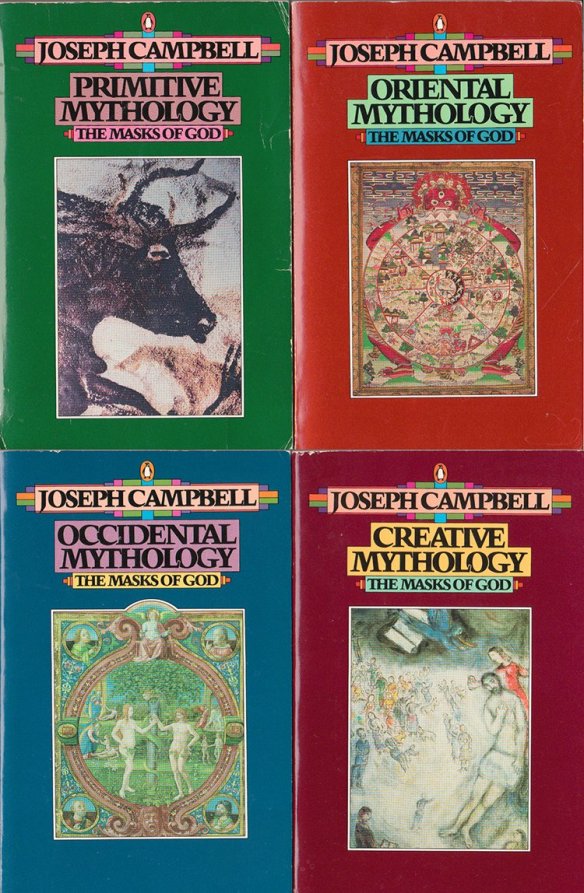
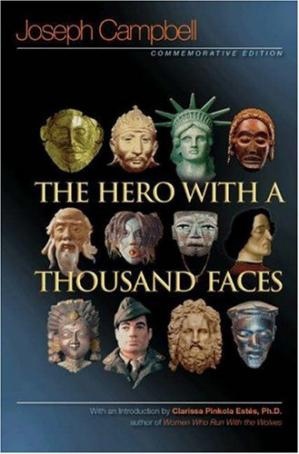
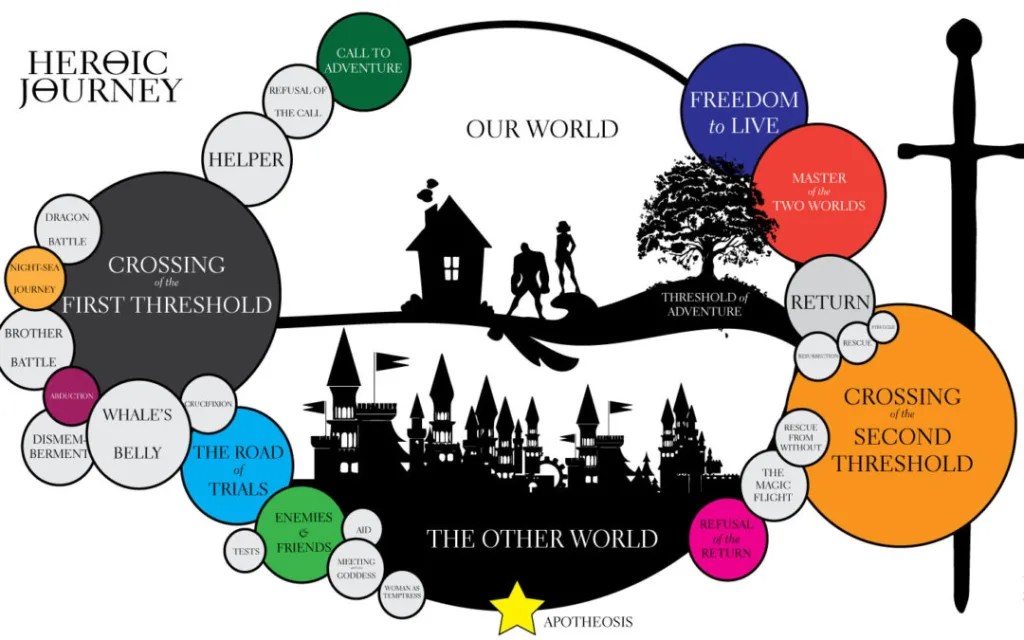
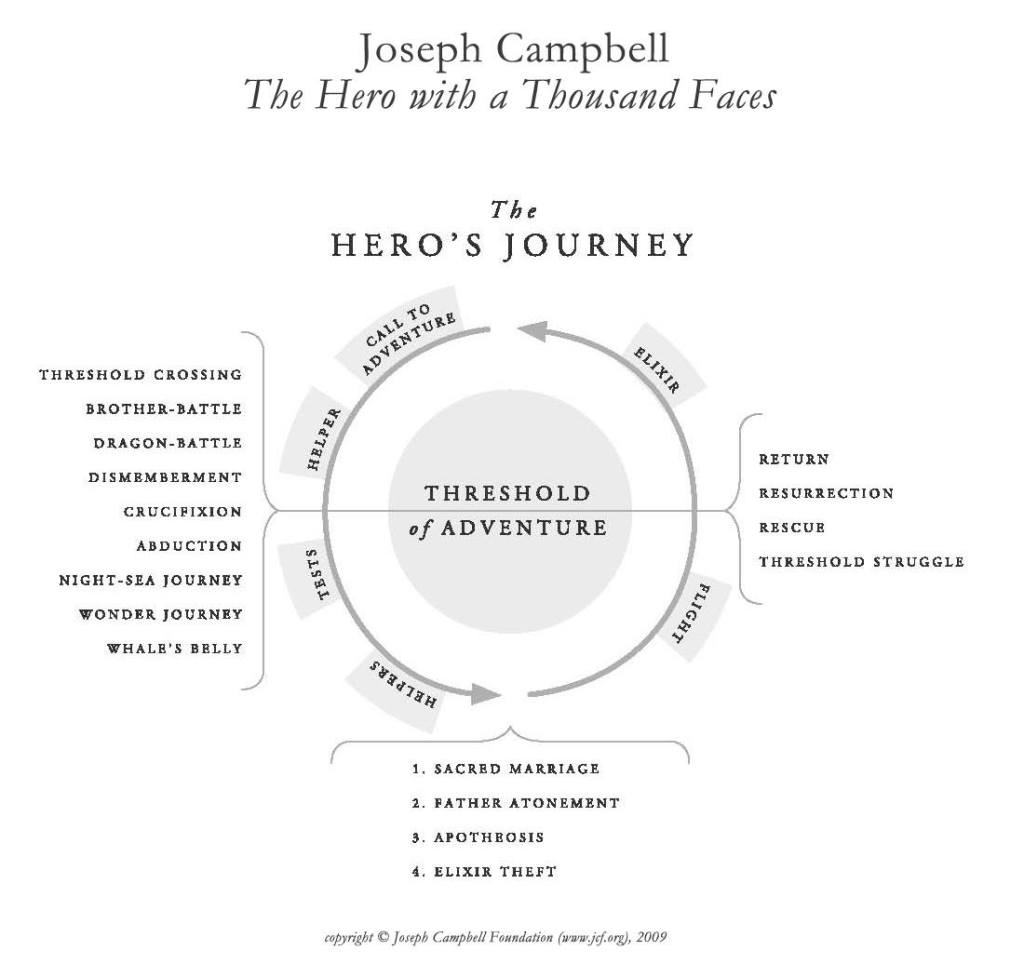
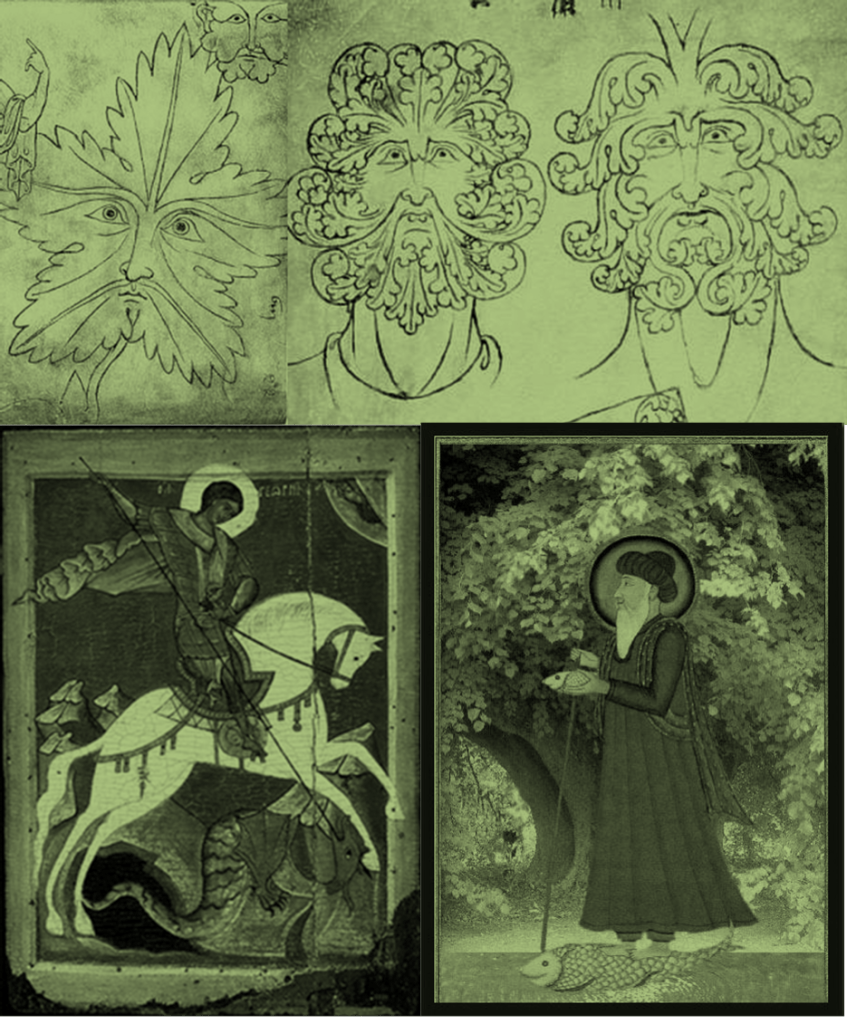


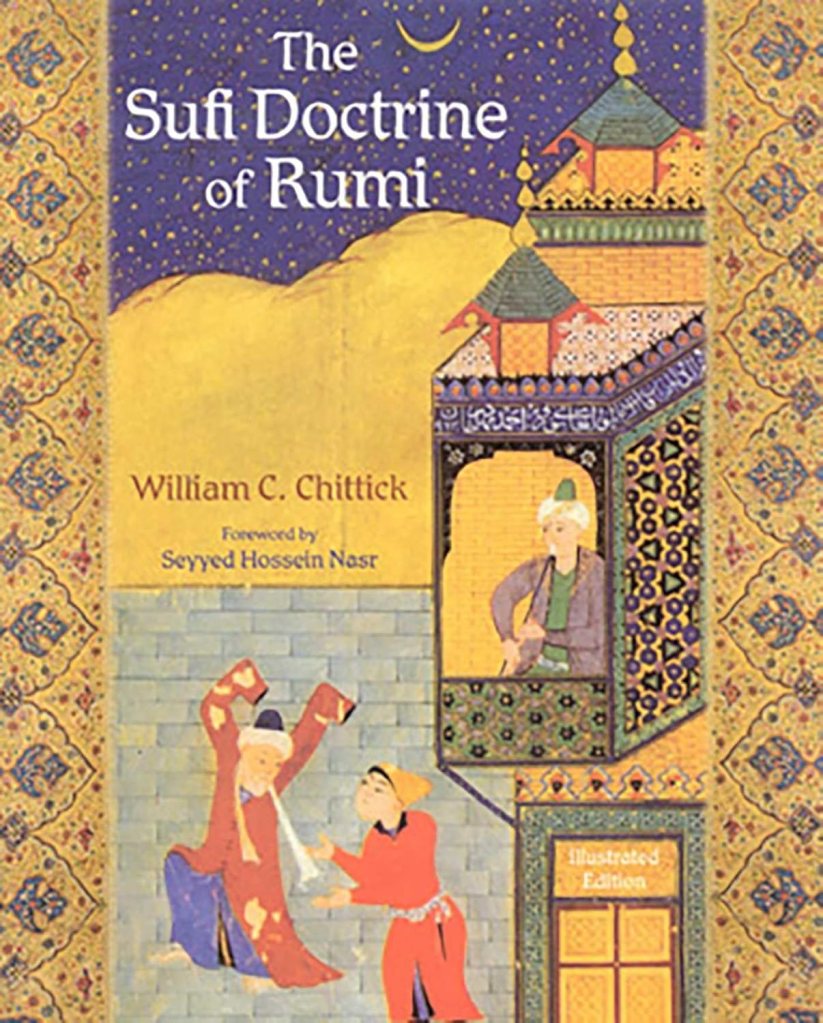

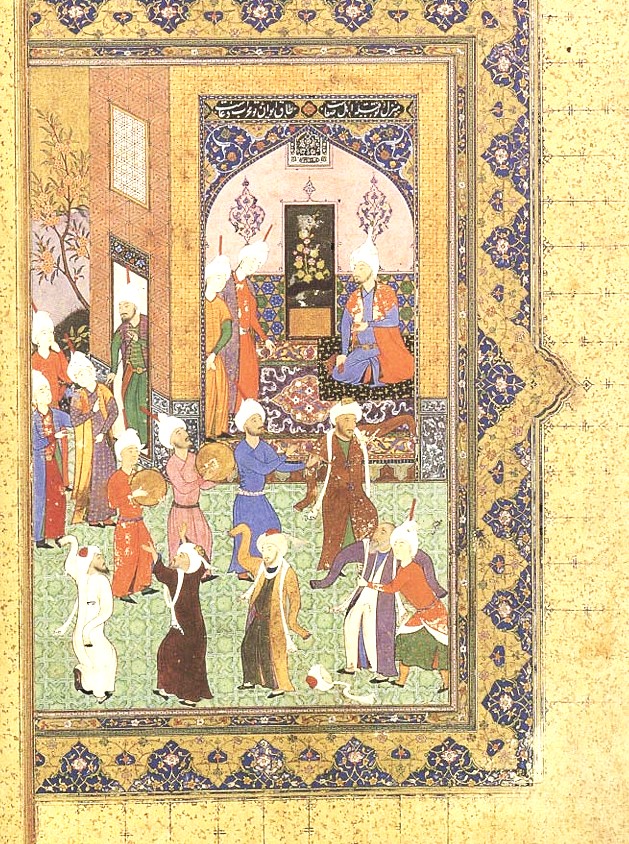
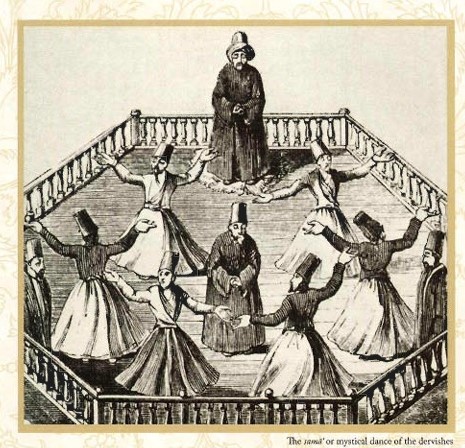
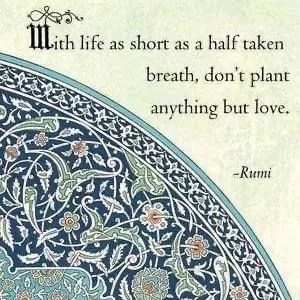


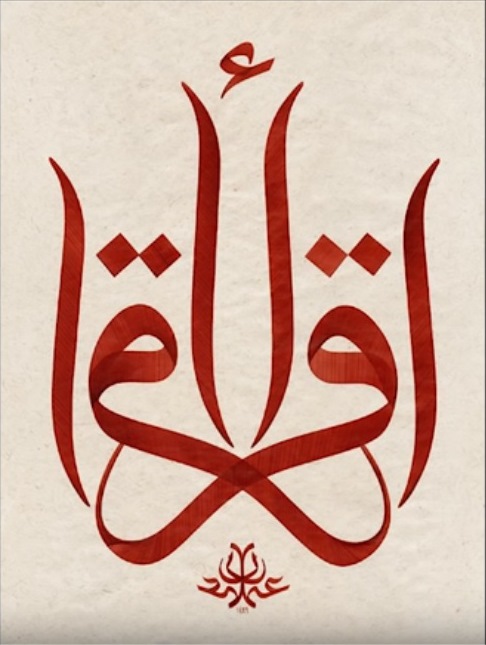
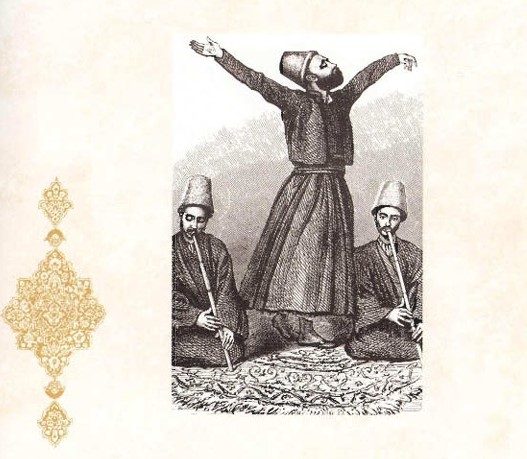


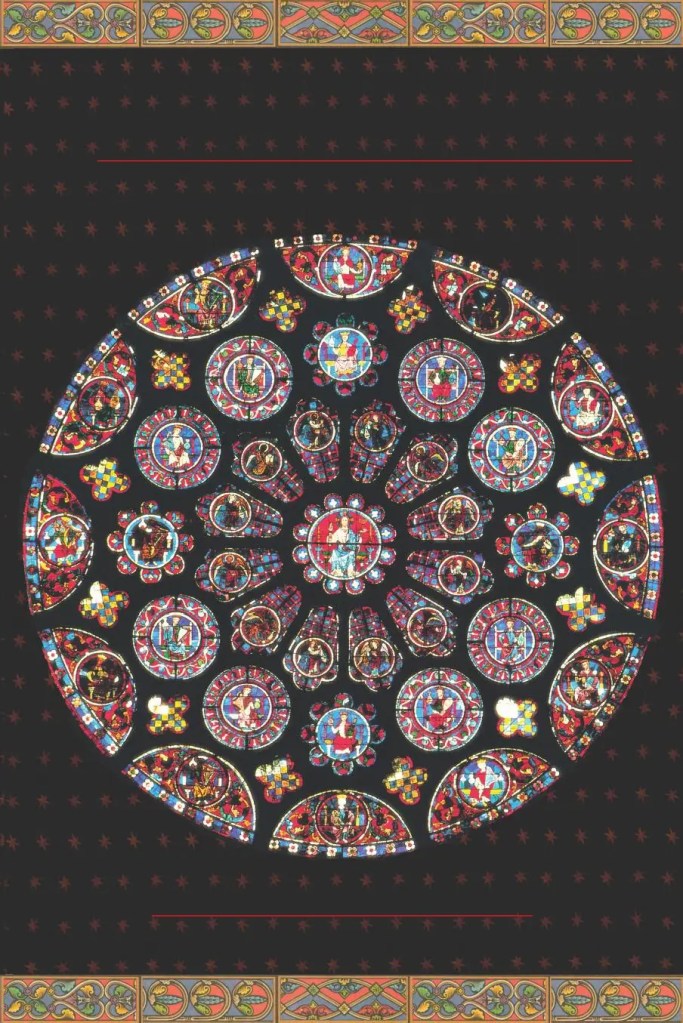
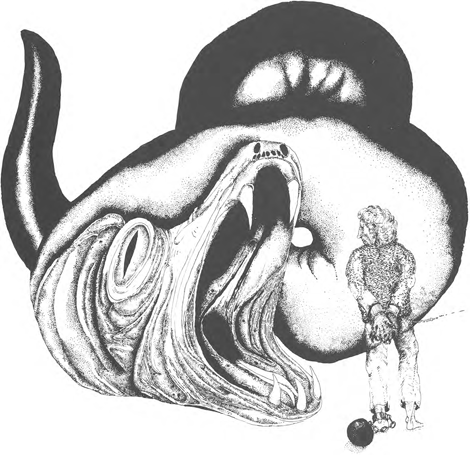


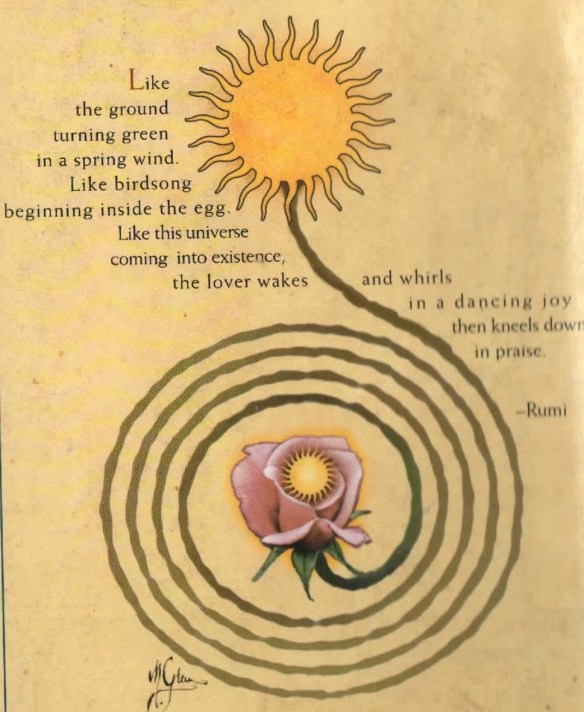
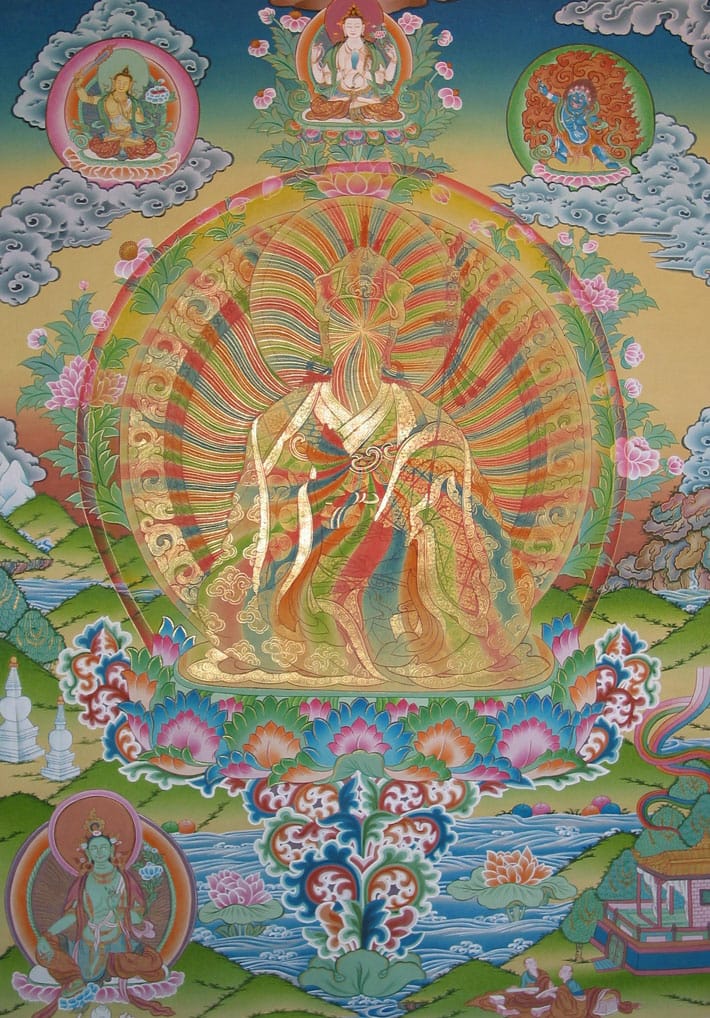
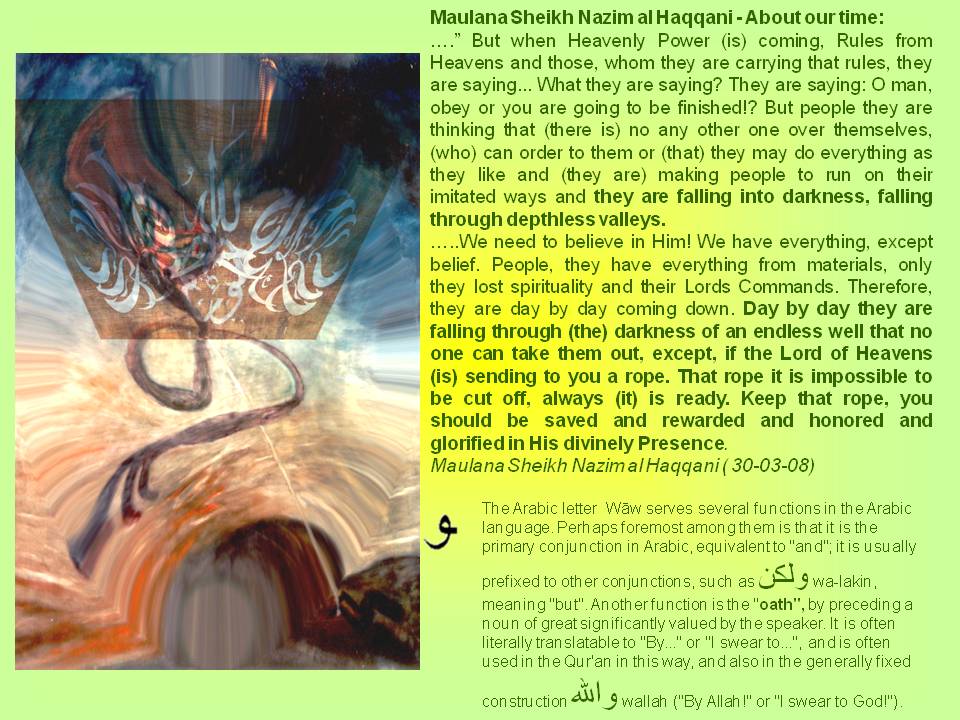
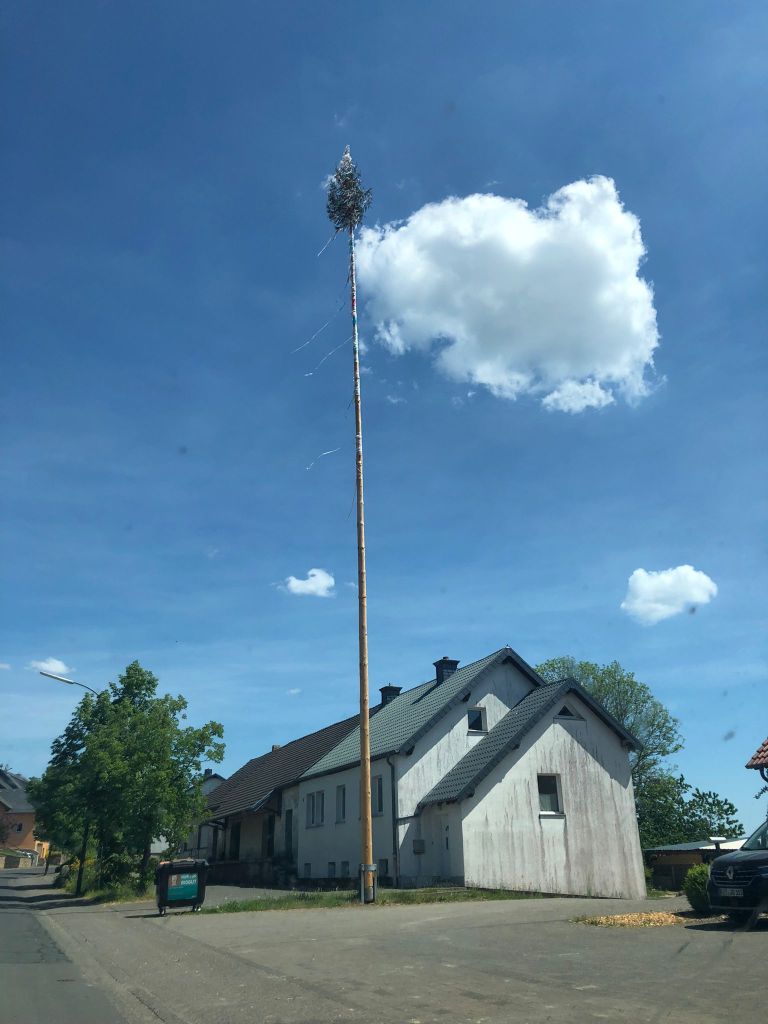
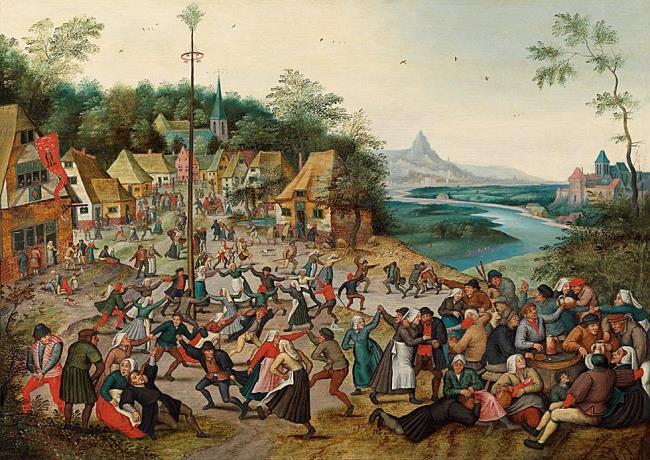
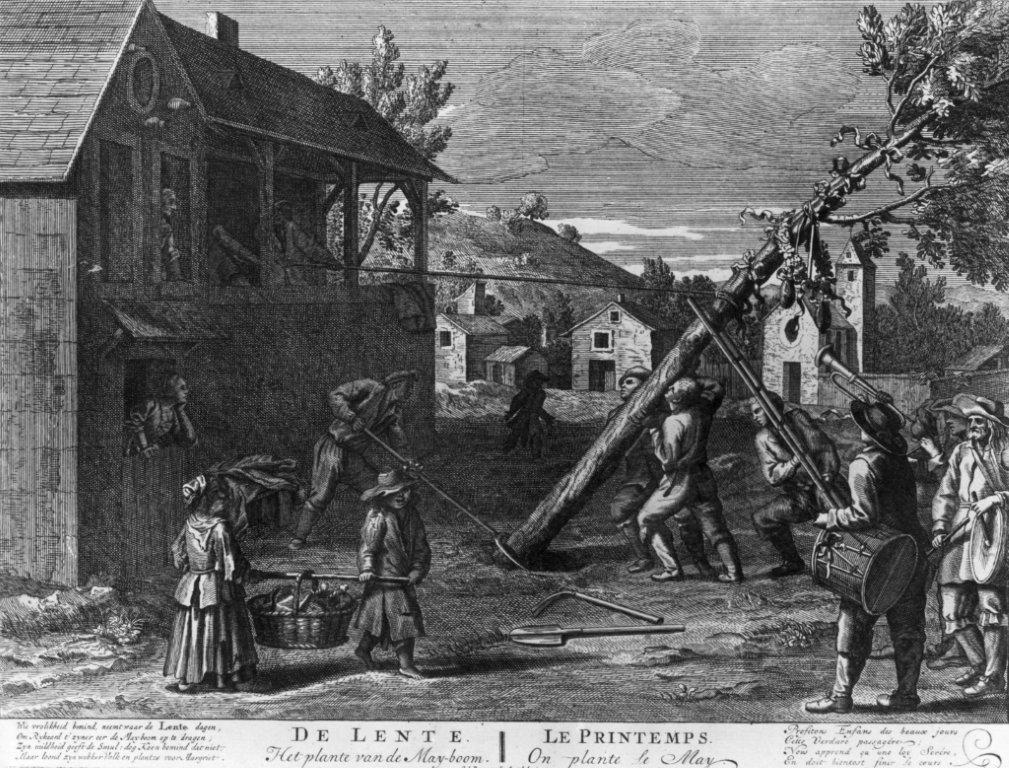
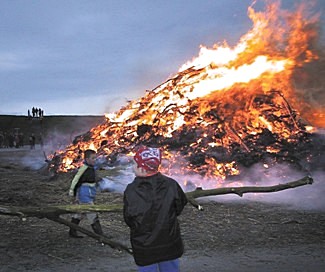
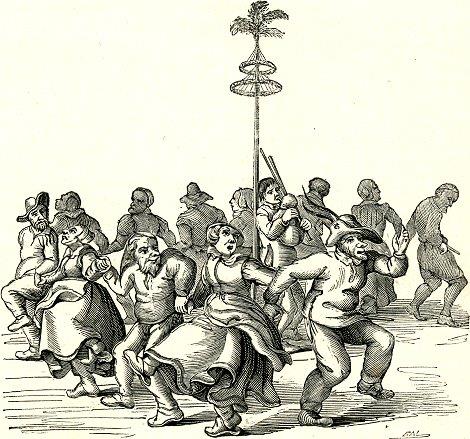
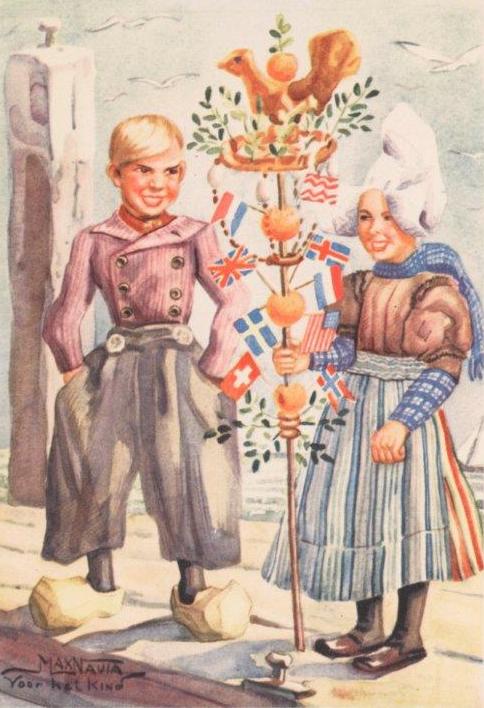
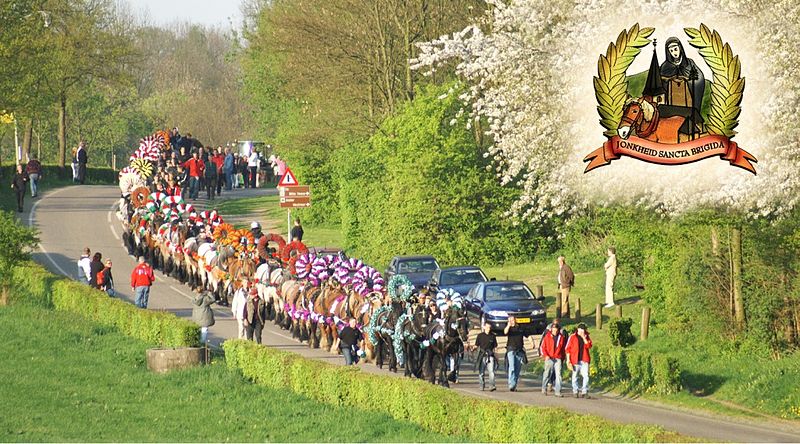
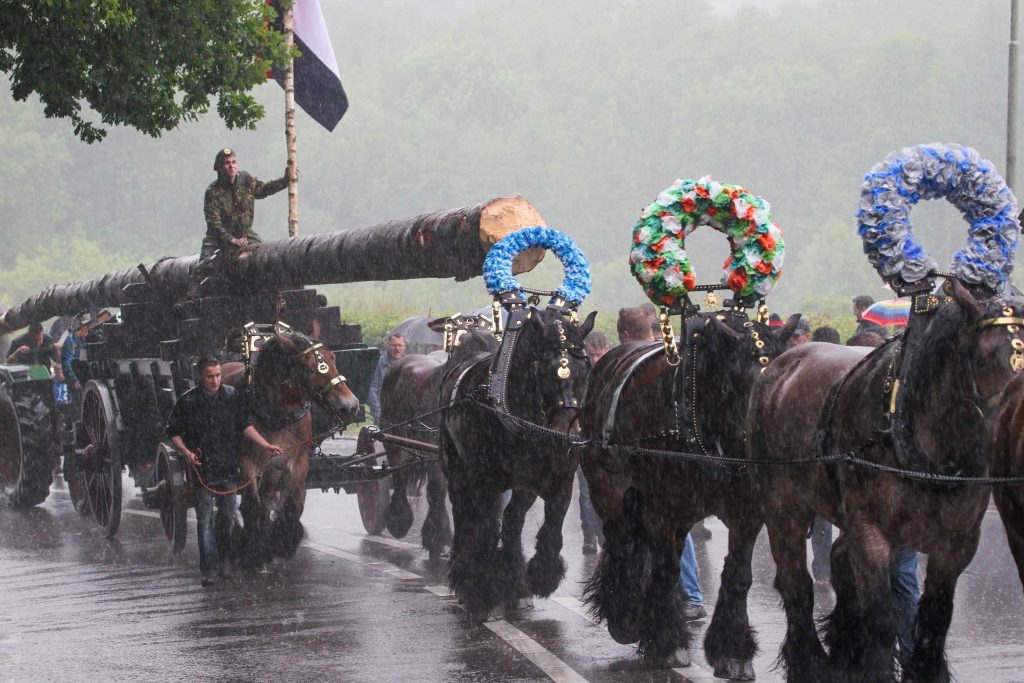
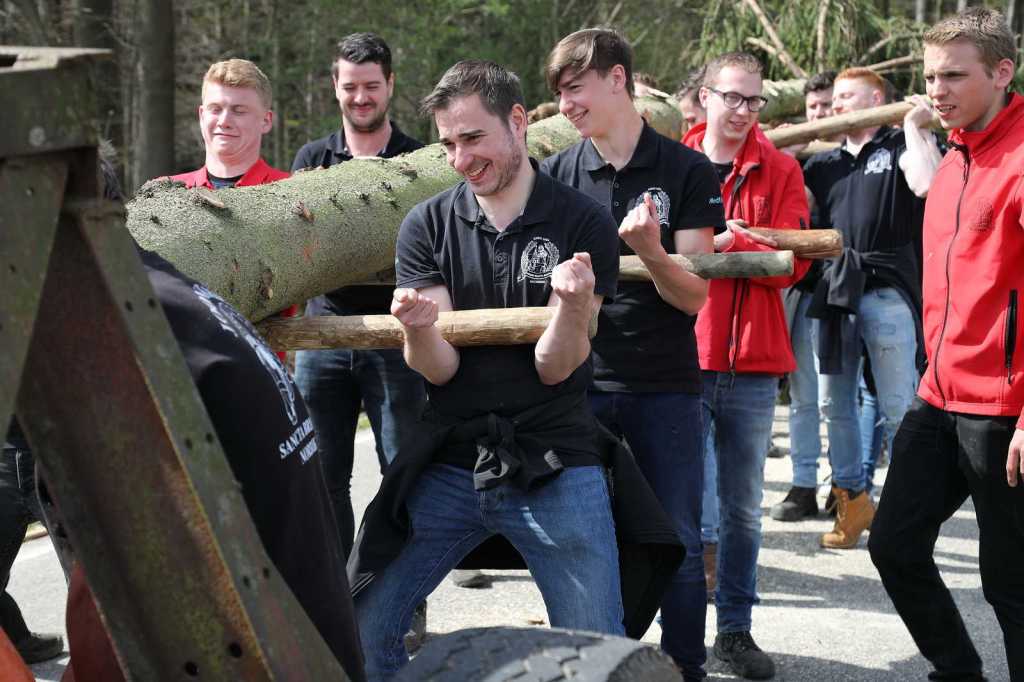
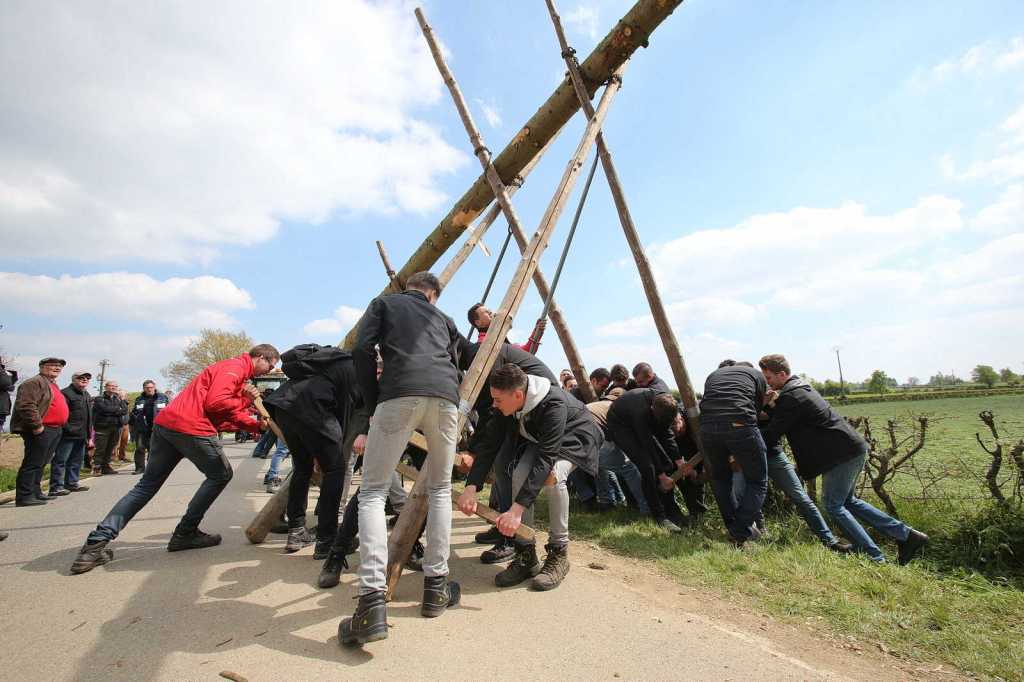
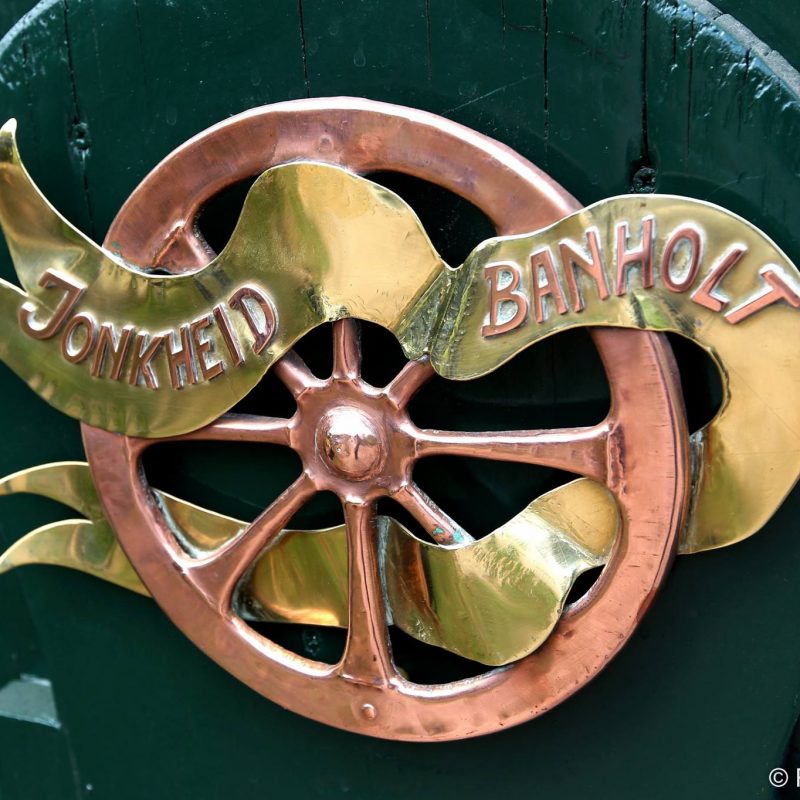
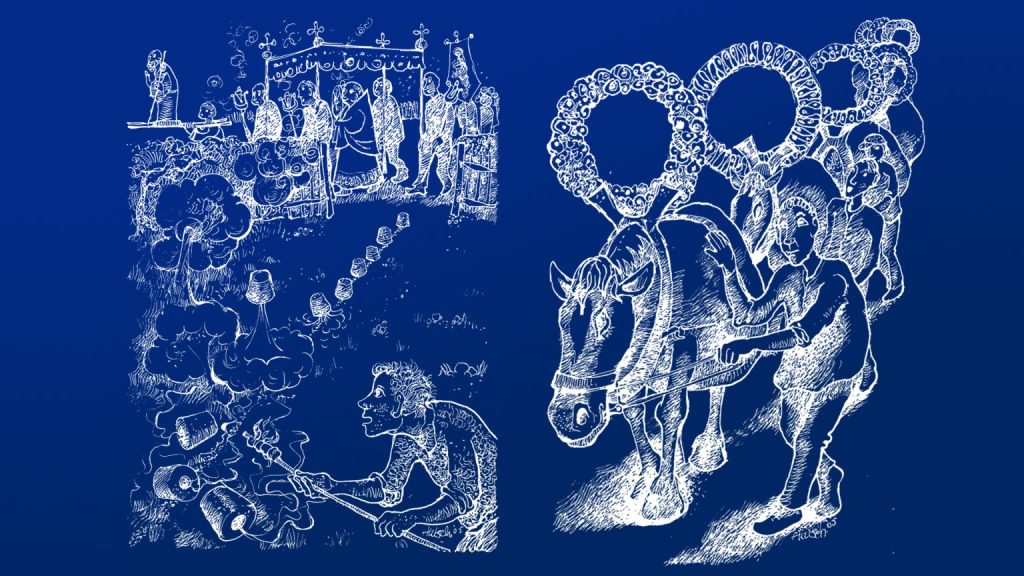



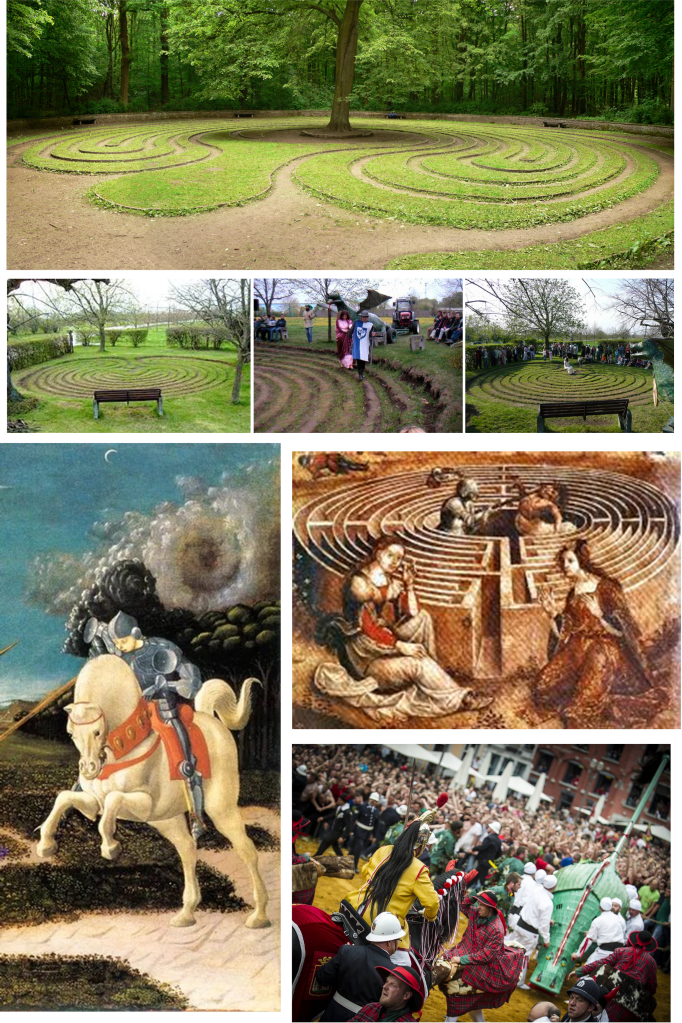
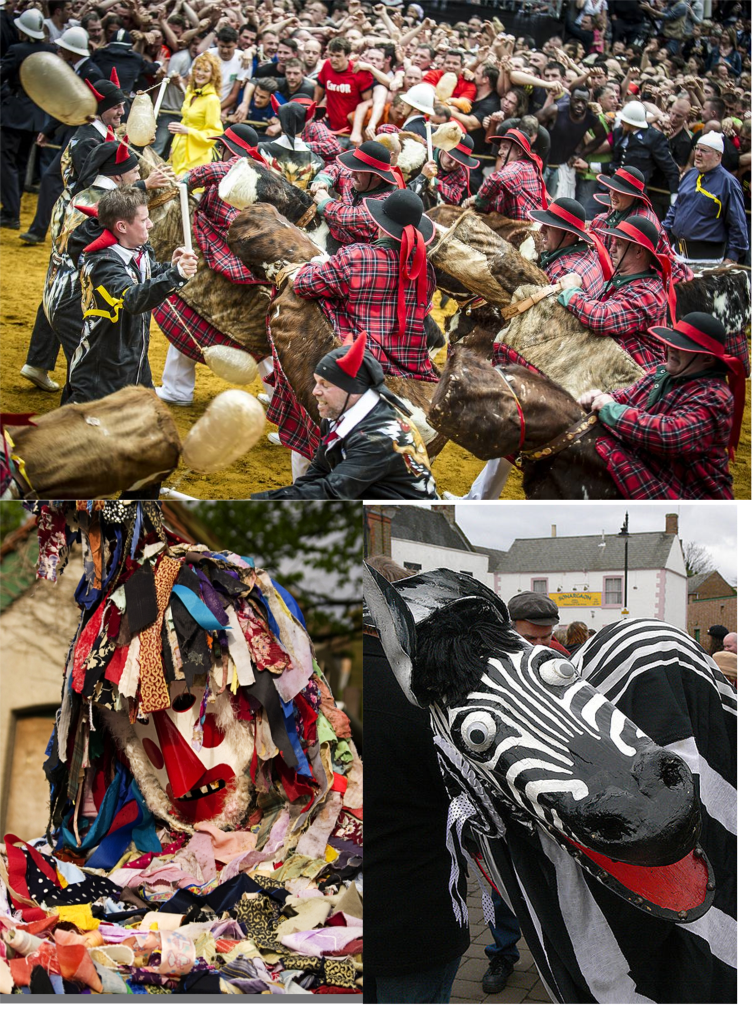
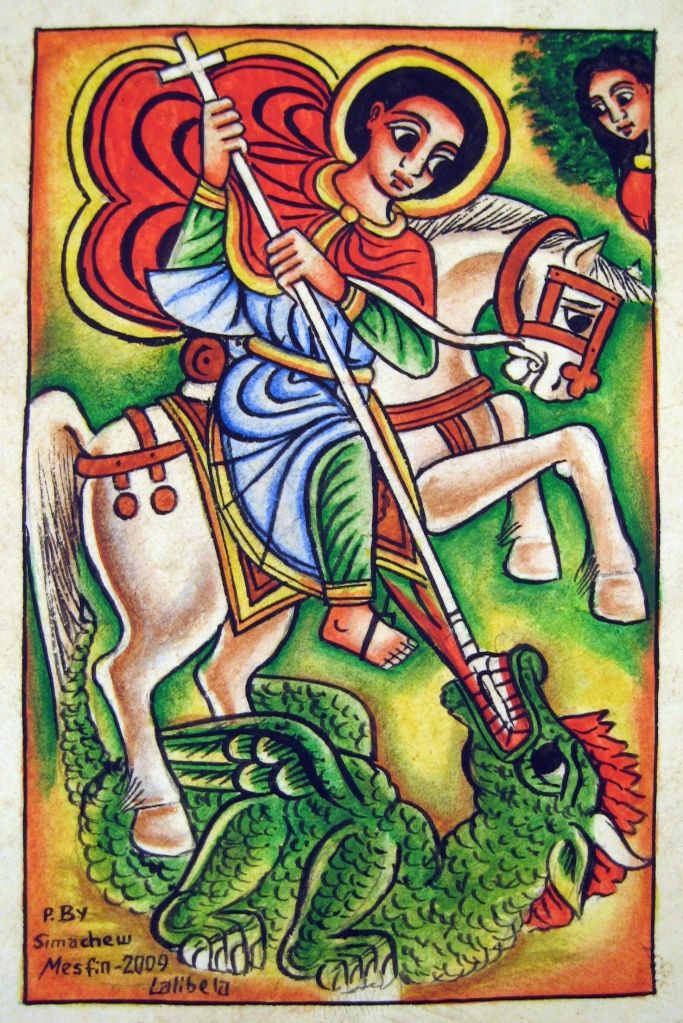
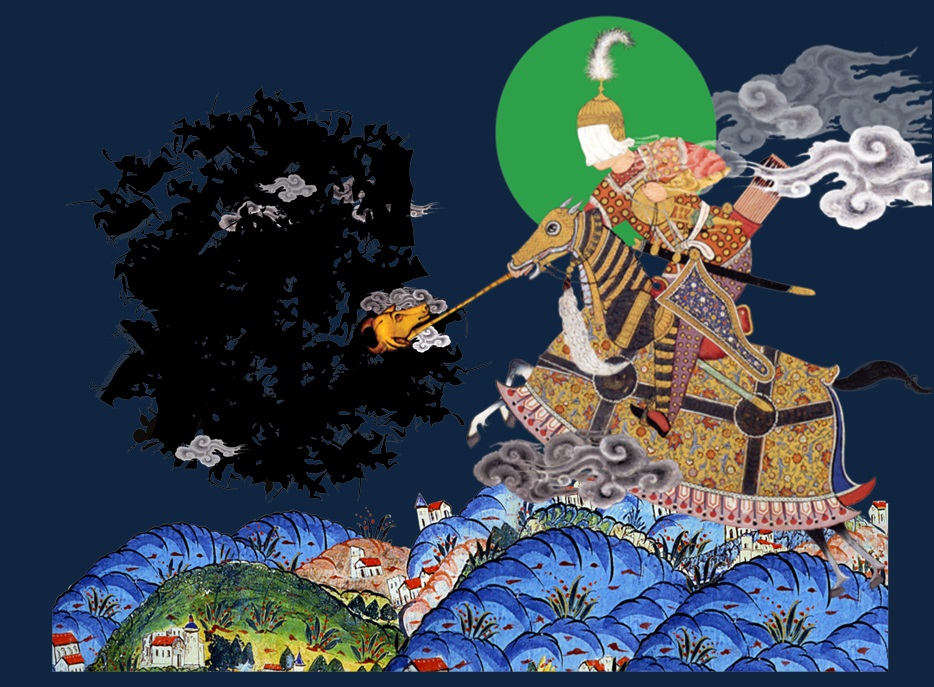
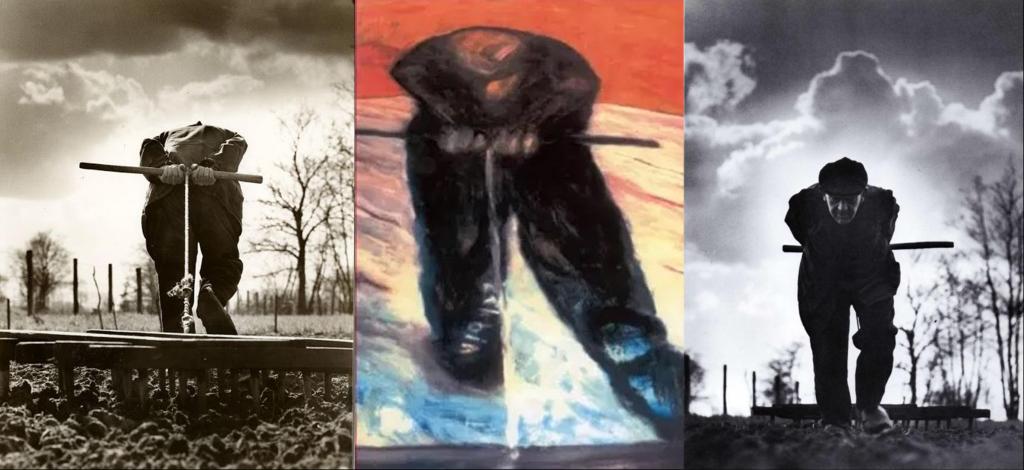
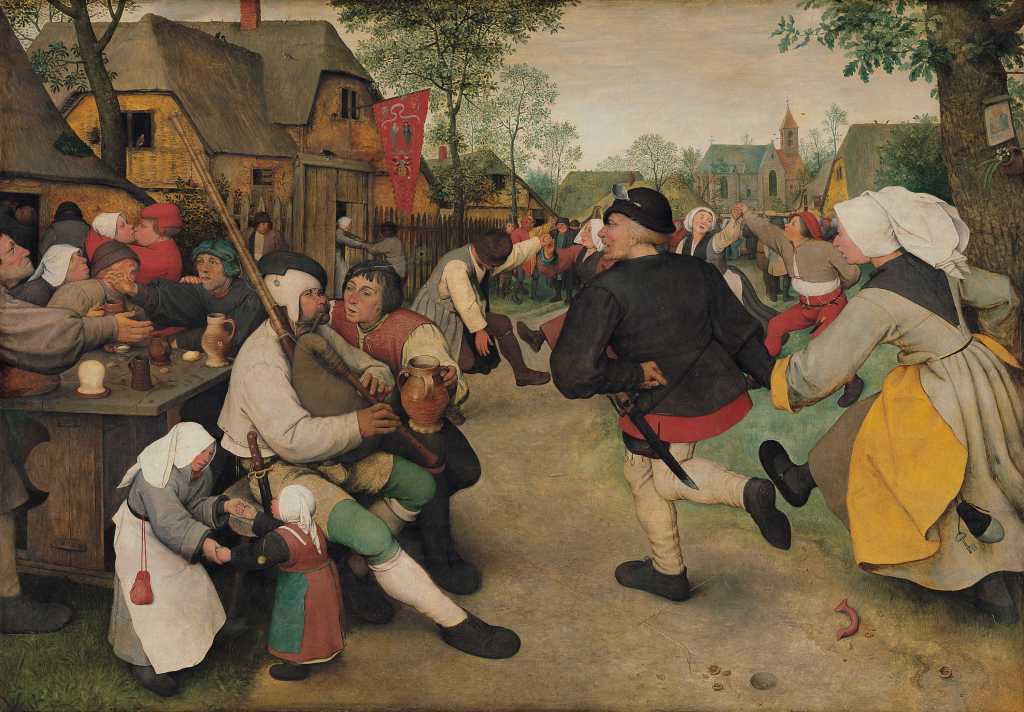
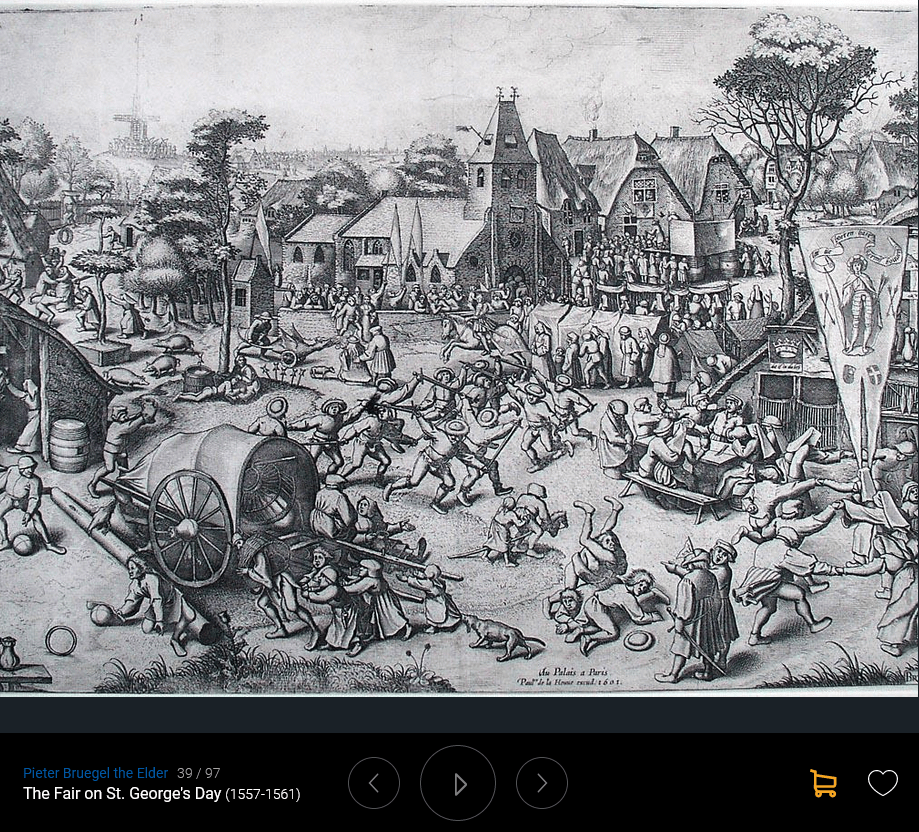
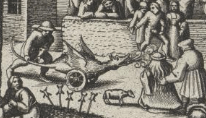
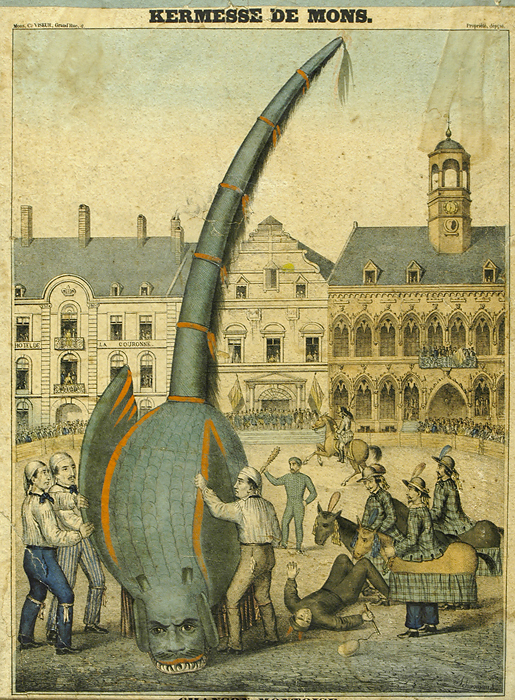
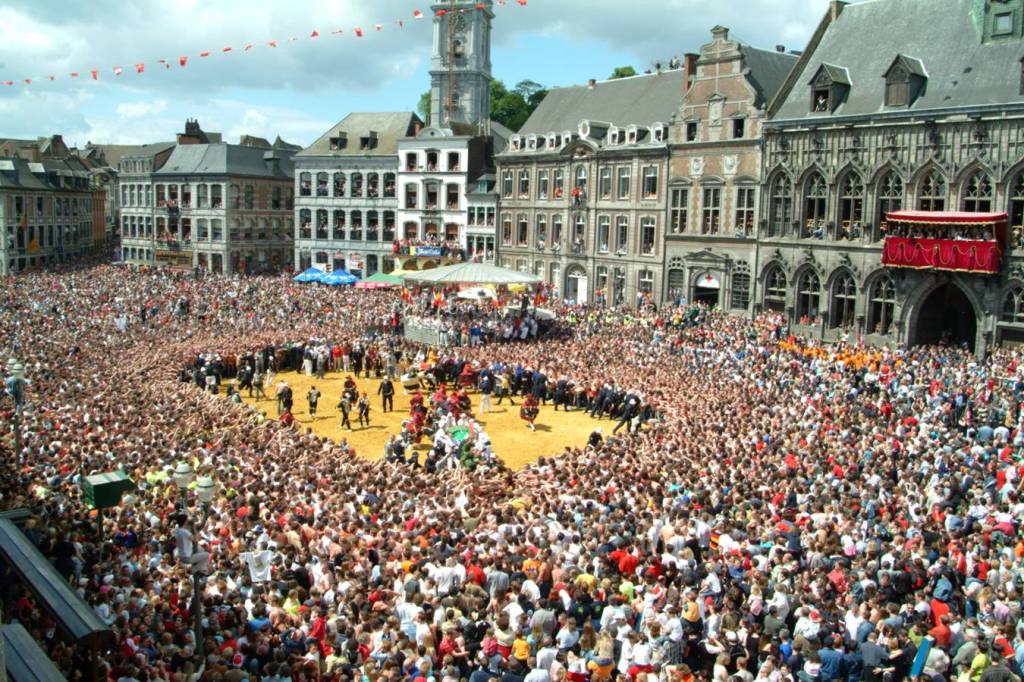
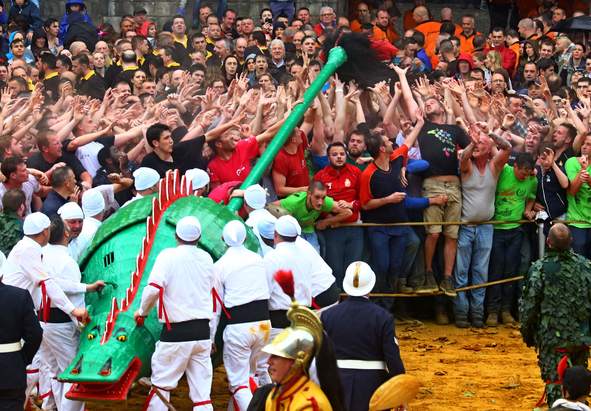

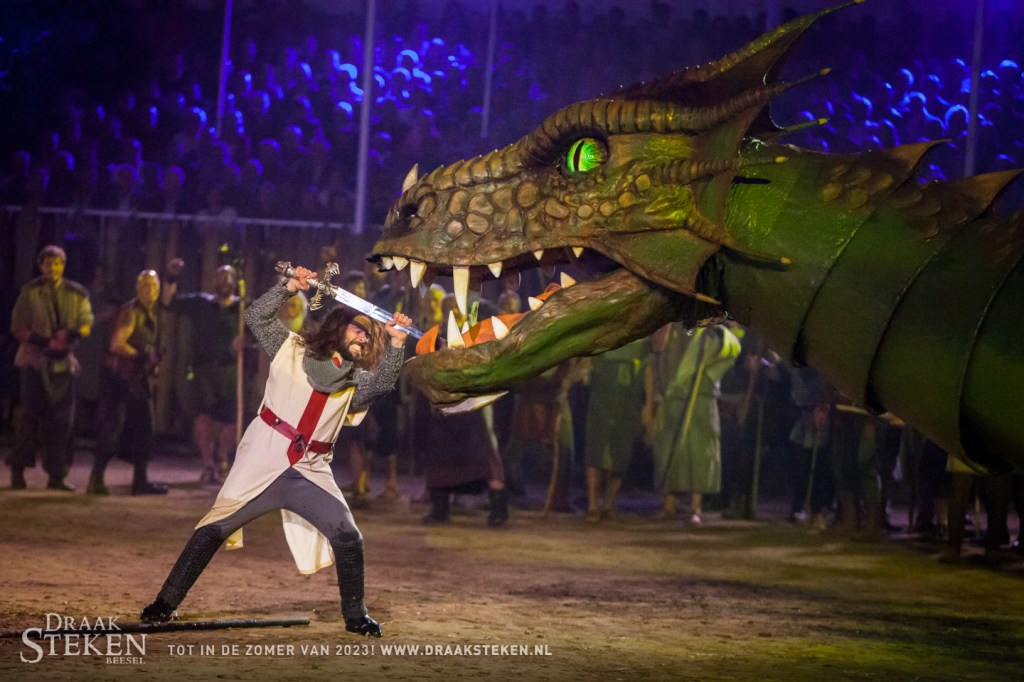
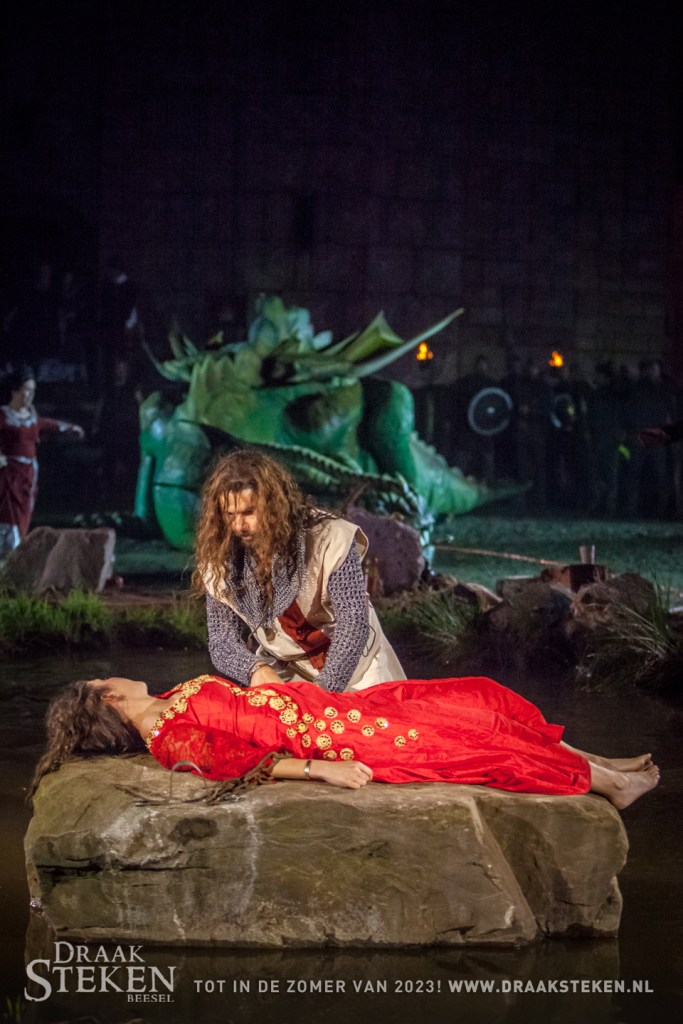
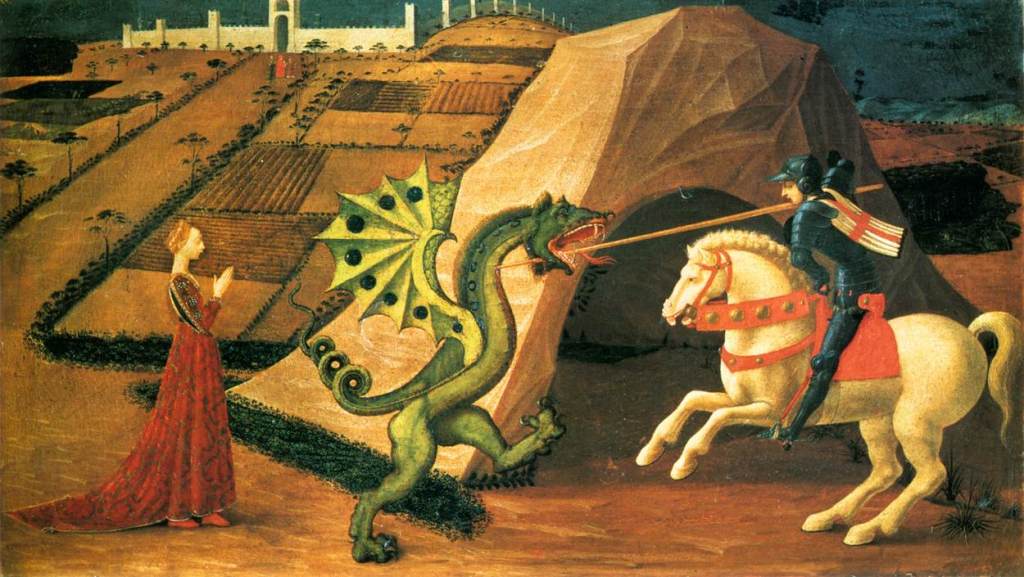
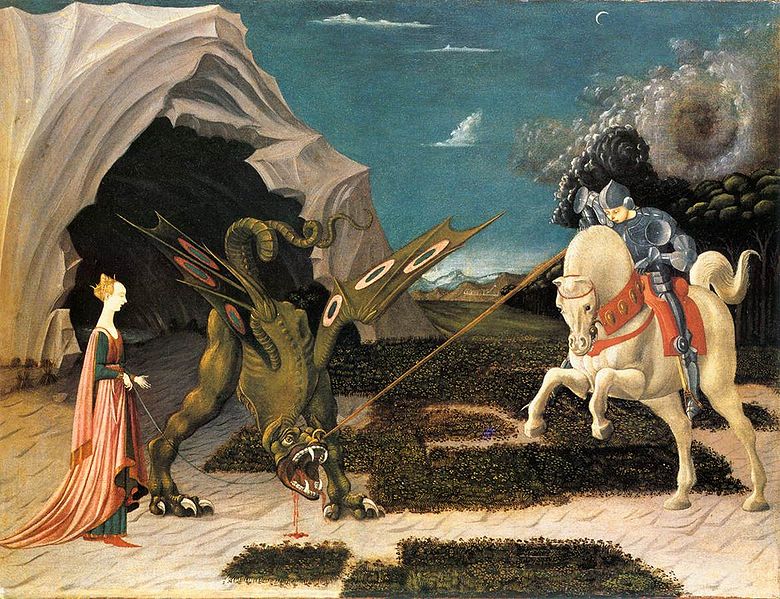
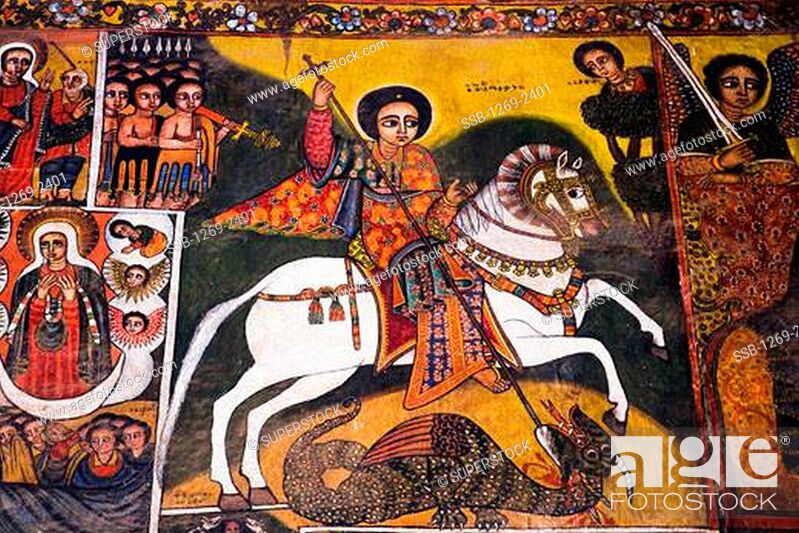
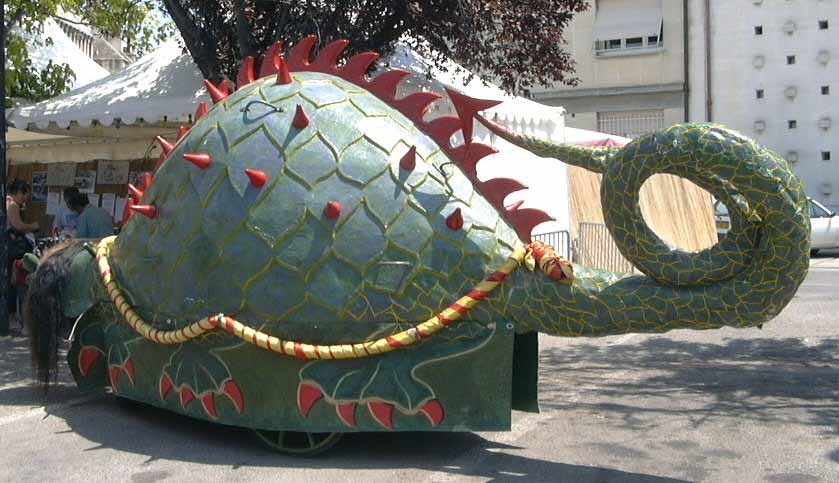
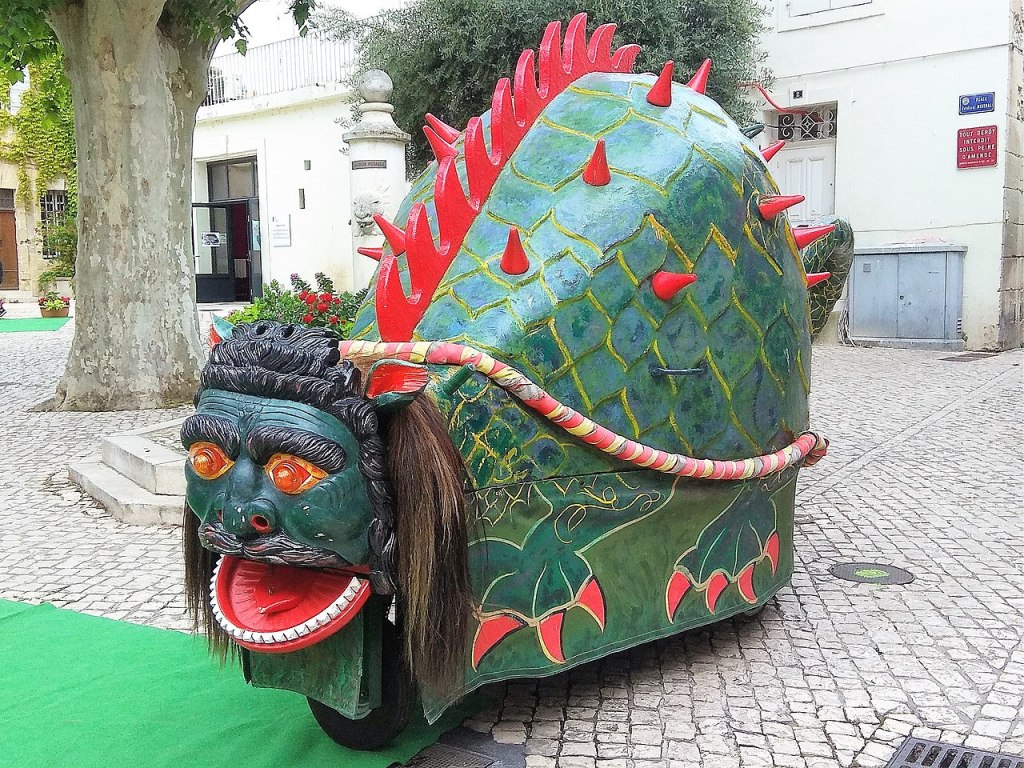
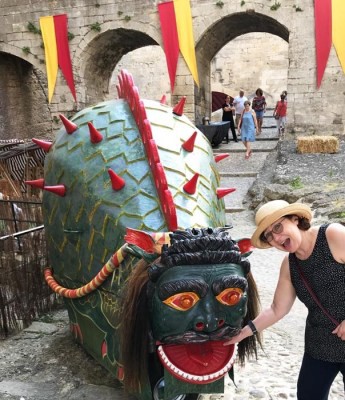
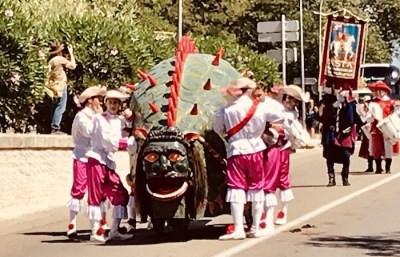
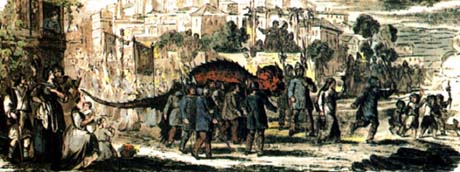
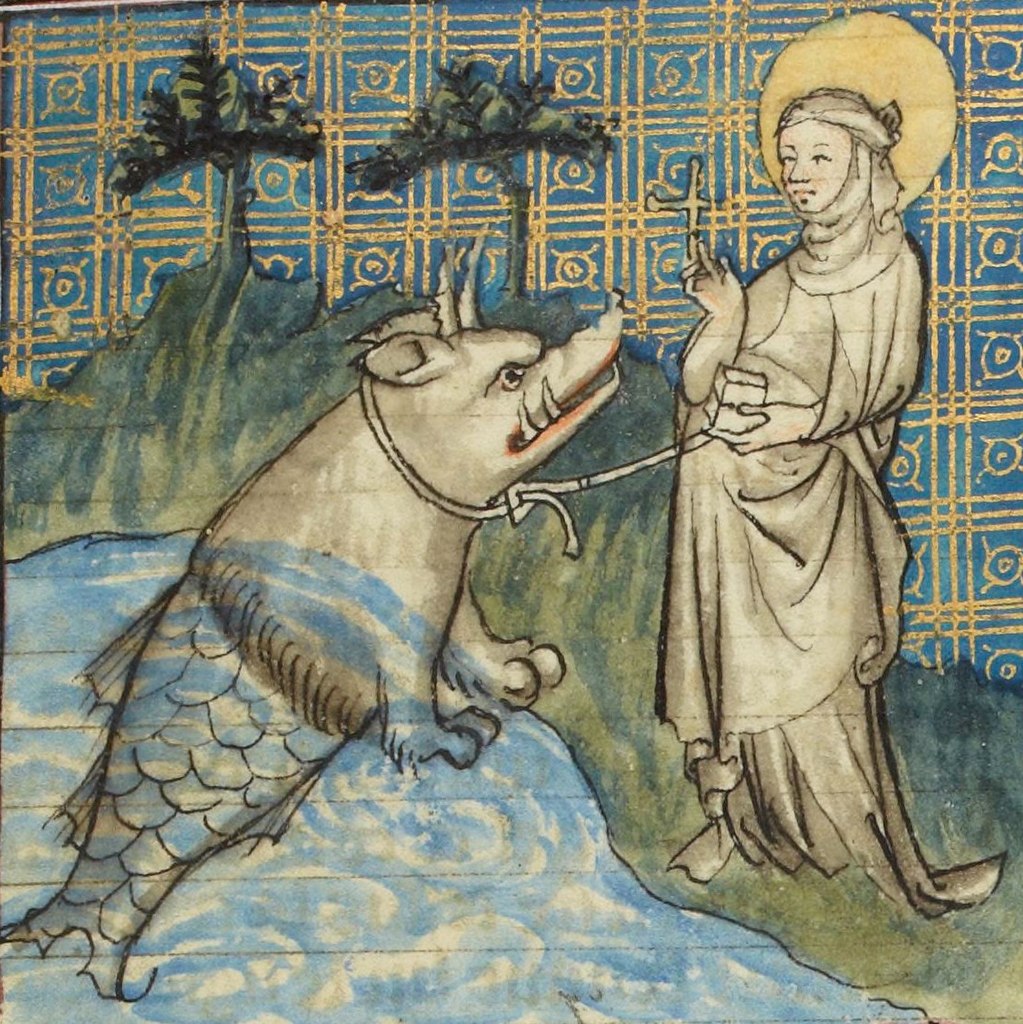
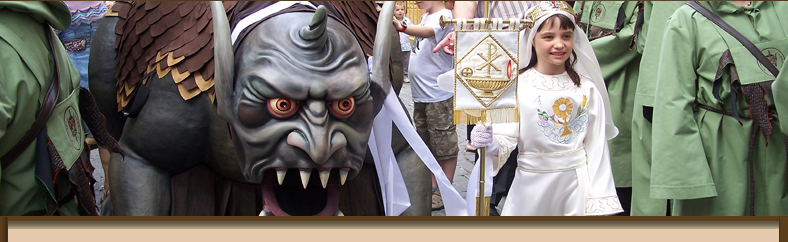

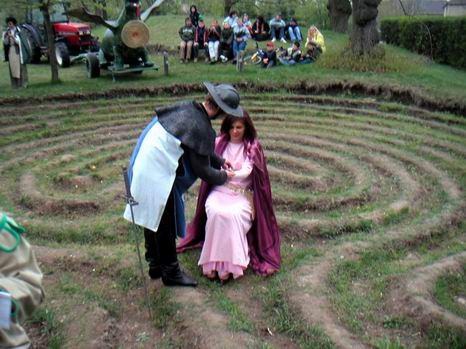
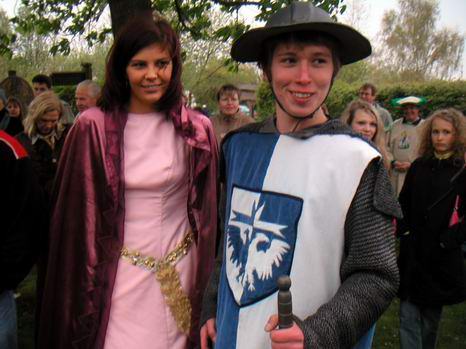
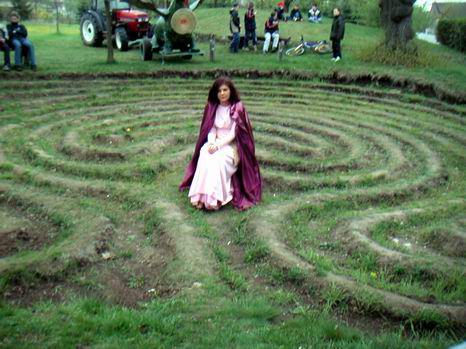

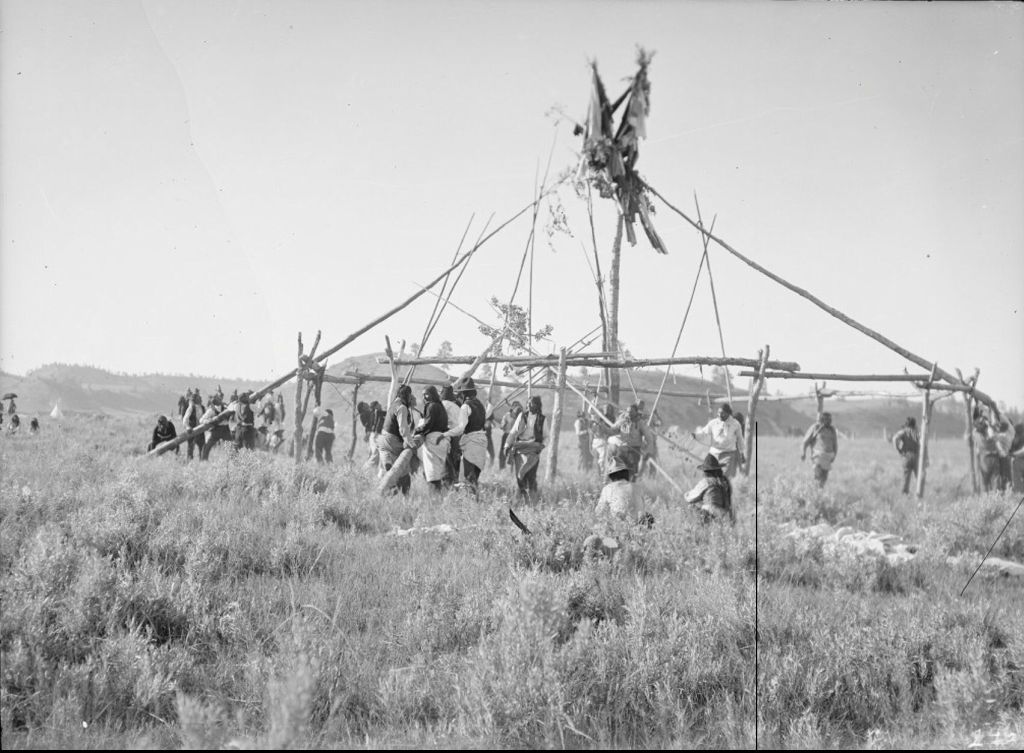
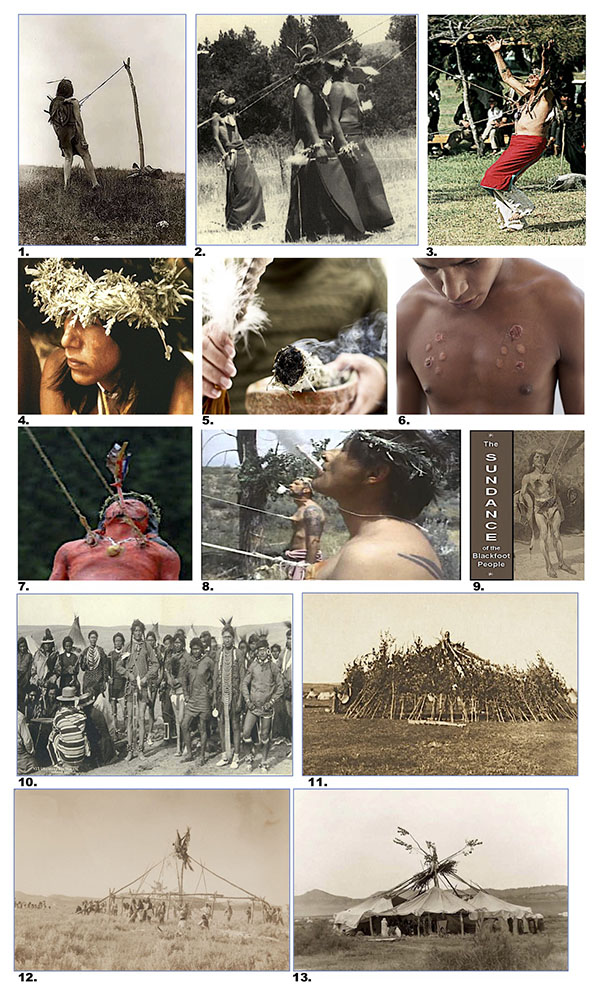
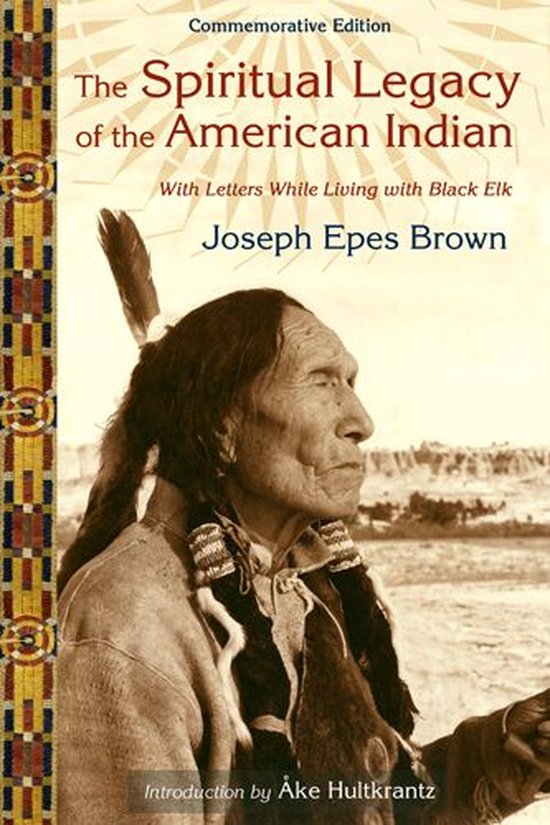

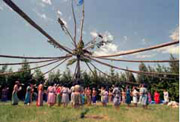
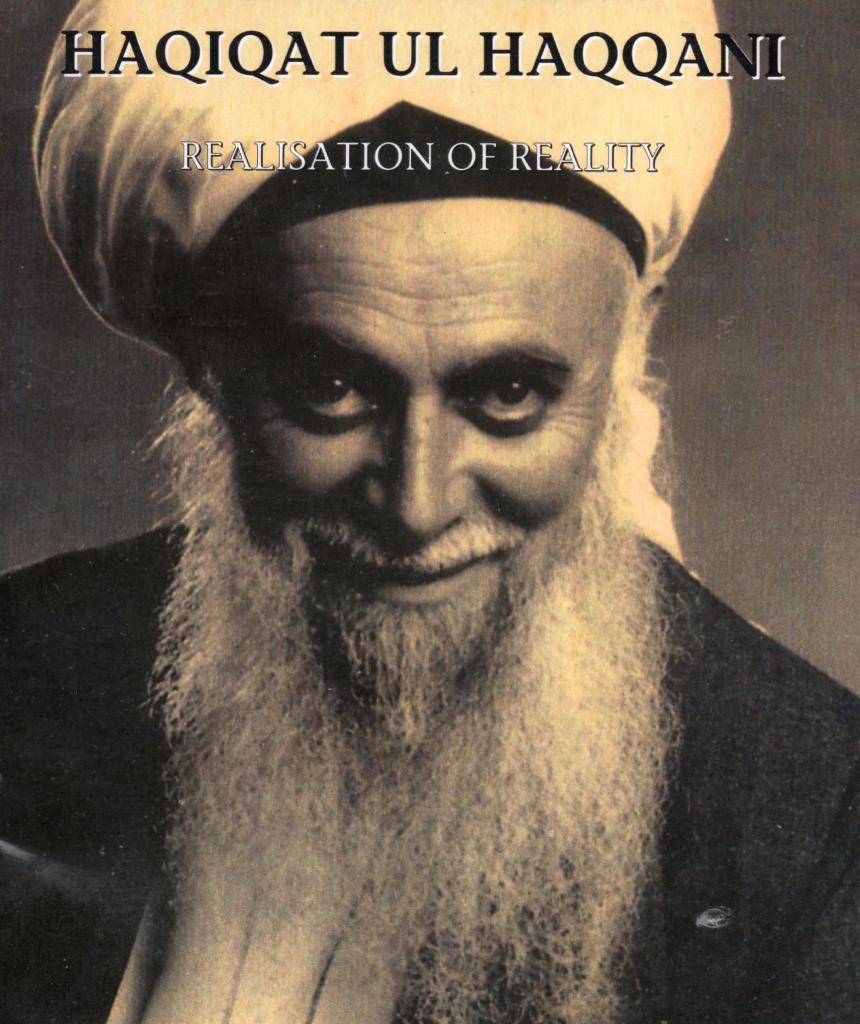
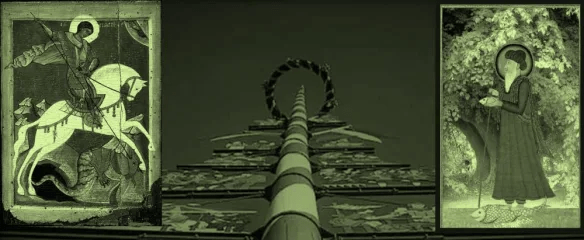
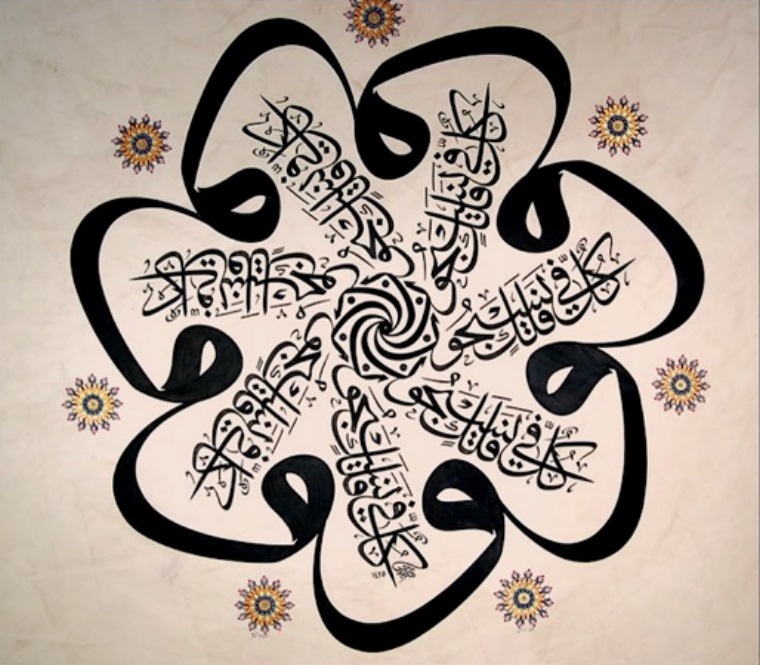
 Path to the Maypole of Wisdom