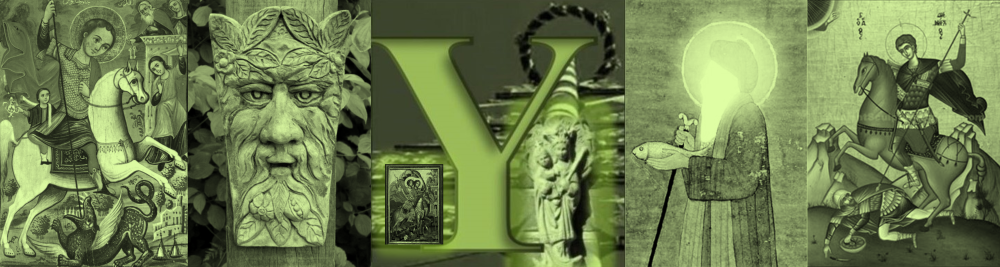
- The Rosslyn Chapel : Refuge for more than 100 Green Men
See:Green Man, the Legend of the Rood and the Grail
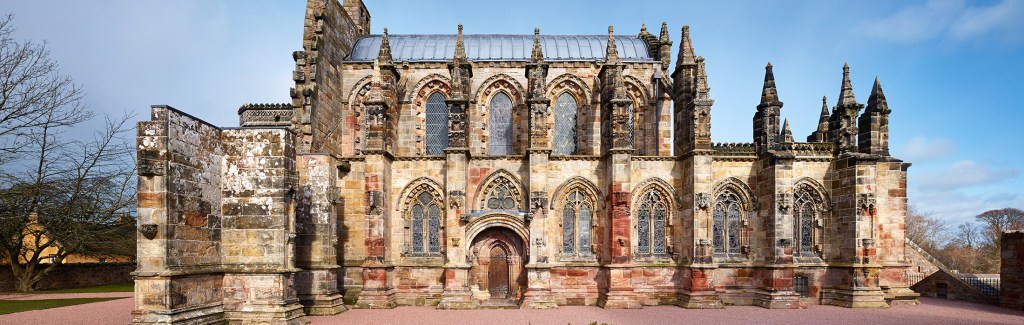
Stretching 21 metres (69 feet) in length and standing nearly 13 metres (42 feet) high, practically every surface of Rosslyn Chapel is carved in an outstanding display of craftsmanship.
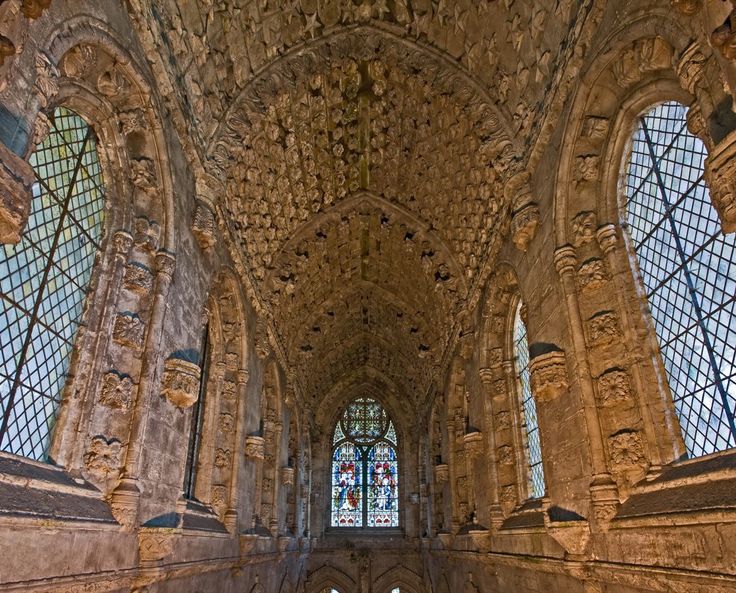
There are literally hundreds of individual figures and scenes carved around you. Here are just a few of our favourites.
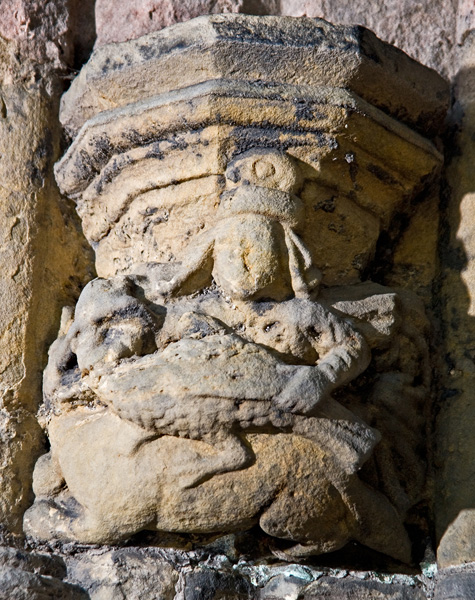
Farmers wife rescuing a goose from the jaws of a fox
This carving appears on the outside wall of the Chapel, near the entrance door. It tells us of the farming community which was based around Rosslyn in the fifiteenth century.
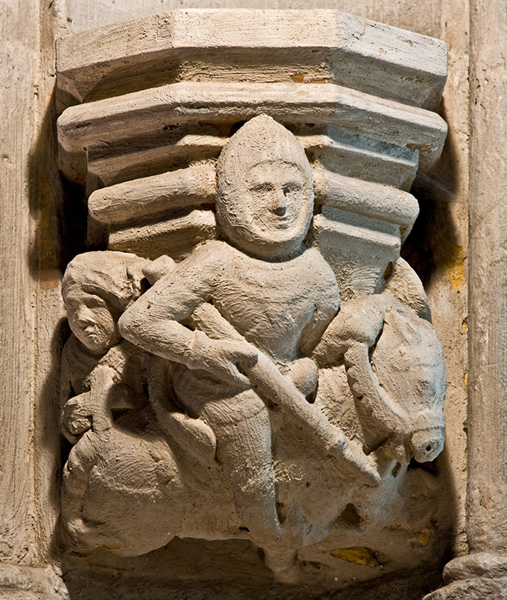
Knight on horseback
A possible representation of William ‘the Seemly’ St Clair, the first of the St Clairs to settle in Scotland
William is said to have brought a portion of the True Cross or ‘Holy Rood’ to Scotland. An alternative theory is that the figure holding a cross behind the knight may represent Queen Margaret whom William escorted from Hungary to marry Malcolm Canmore, King of Scotland, in 1070.
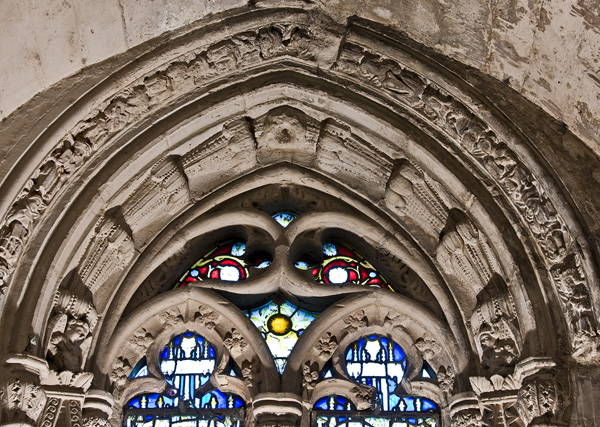
Maize
Surrounding a window are carvings of maize or Indian Corn
The presence of this plant carving in the Chapel raises many questions: not only is it an exotic plant but it originates from North America, a country traditionally thought to have been discovered by Columbus in 1492, almost 50 years after Rosslyn Chapel was built.
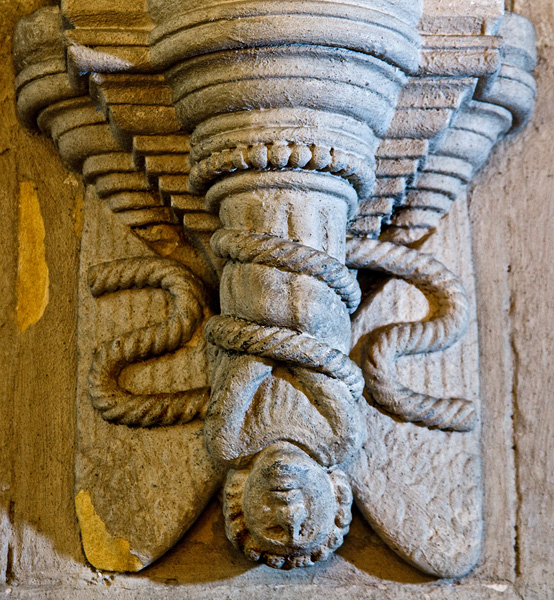
Lucifer
One of the many Masonic carvings in the Chapel
Hanging upside down and bound with rope, this is the fallen angel Lucifer. It is one of the depictions of angels in unusual positions in the Chapel which are significant in the rites of Freemasonry.
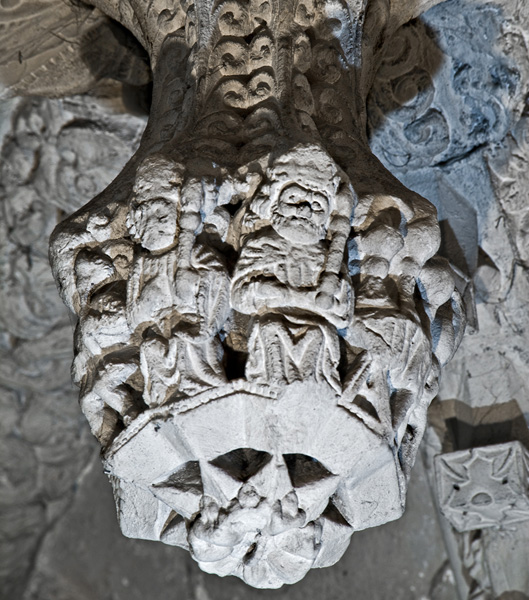
The Star of Bethlehem and the Nativity
Representation of the birth of Christ
This hanging boss encompasses the eight-pointed Star of Bethlehem carved with figures of the nativity. Clockwise around its sides are the Virgin and child; the manger; the three wise men; and three shepherds.
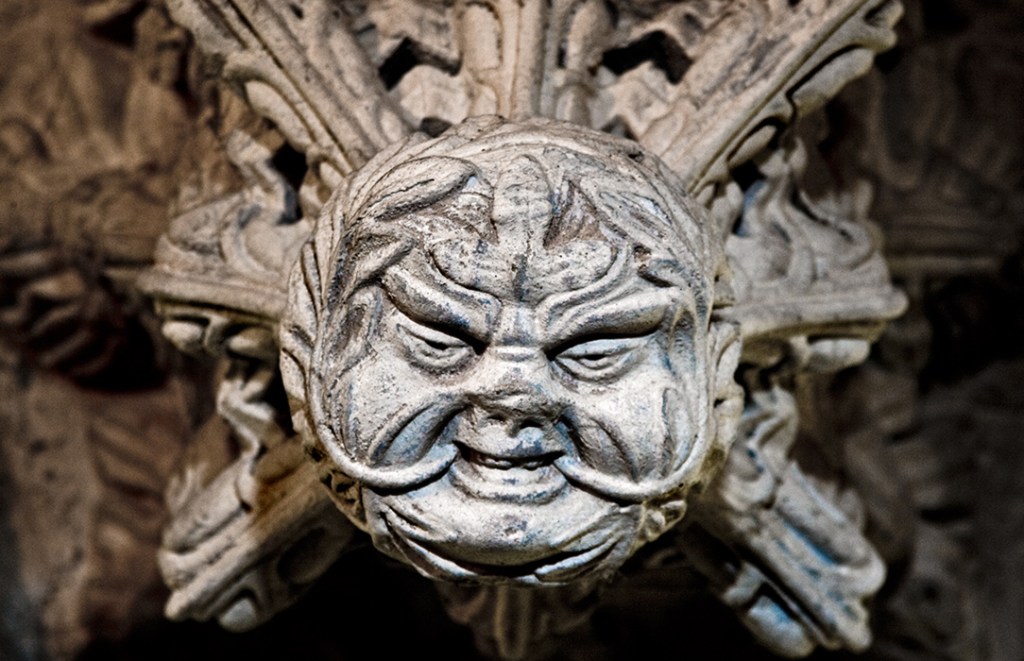
Green man
One of the best examples of over 100 ‘Green Man’ carvings in the Chapel
Rosslyn is renowned for its many carvings of the Green Man, historically a pagan figure. The vines sprouting from his mouth represent nature’s growth and fertility, illustrating the unity between humankind and nature.
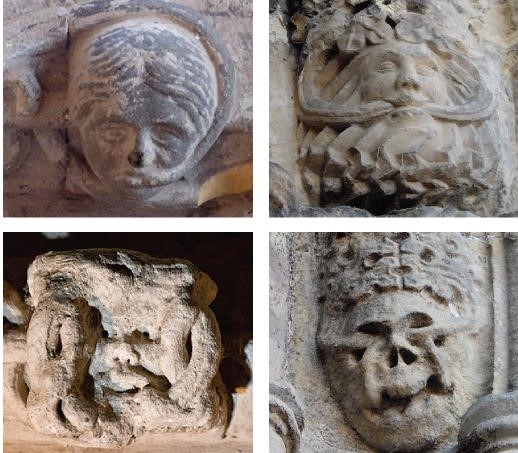
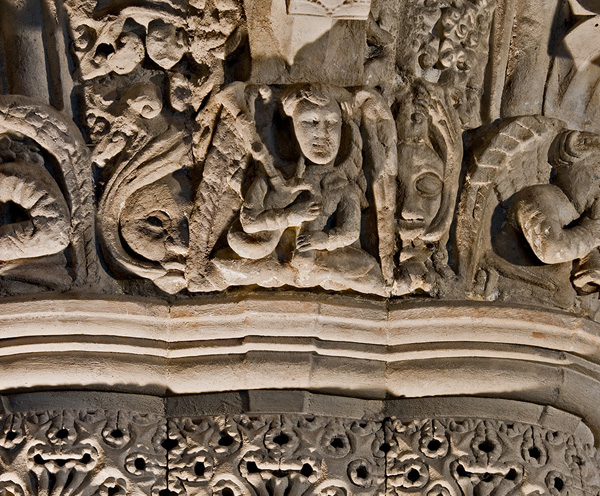
Angel playing the bagpipes
One of the many carvings of angels playing musical instruments
The carved angels in the Lady Chapel are celebrating Christ’s birth with music. Bagpipes first appeared in Scotland from the mid-1400s and this is thought to be one of the earliest depictions of the instrument.
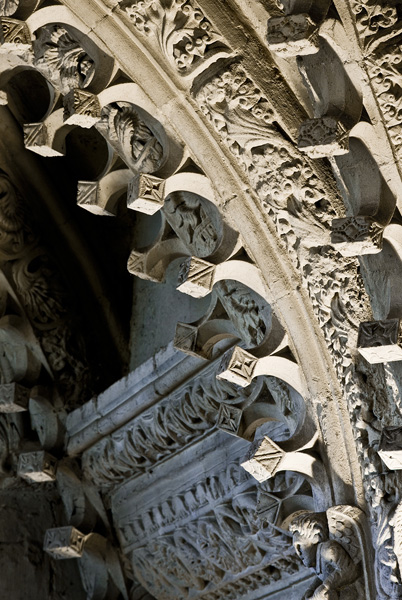
Musical cubes
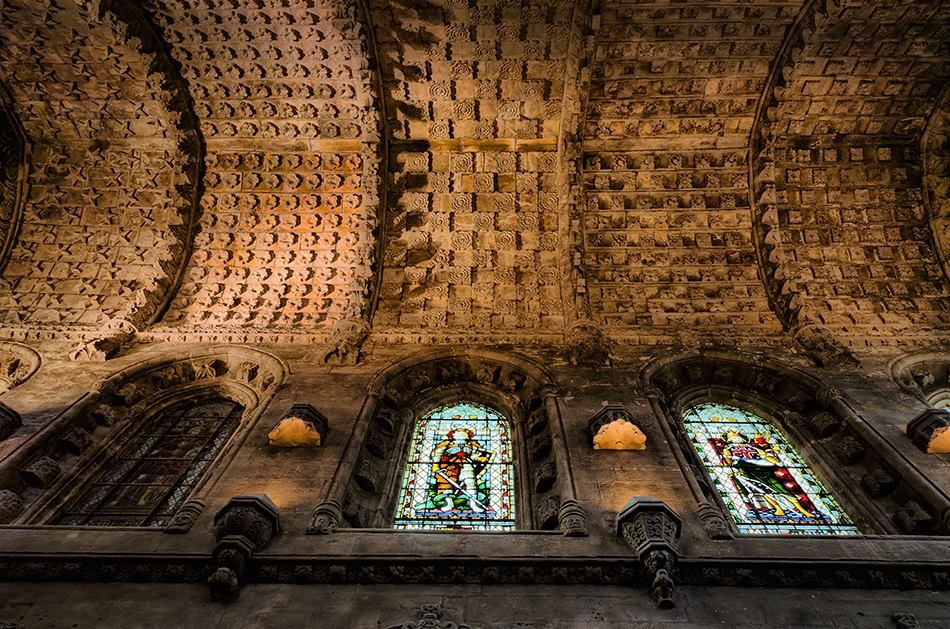
Carved cubes that protrude from the arches of the Lady Chapel
Each one of these cubes is unique, carved with individual symbols made up of lines and dots. Various theories suggest that these may represent keys to a secret code or be musical notes. The Rosslyn Motet has recently been composed as one ‘solution’ to the code
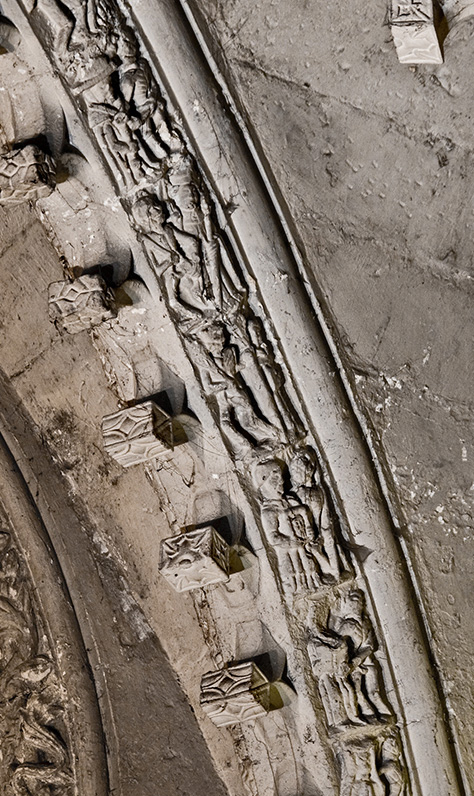
The Dance of Death :A string of figures caught in the ‘Dance of Death’
Characters from all walks of life are each accompanied by a skeleton, Death. The dance springs from the skeletons pushing and pulling the reluctant people off to meet their fate and symbolises death’s inevitable triumph over life. See also The Dance of Death: A warning for our Times
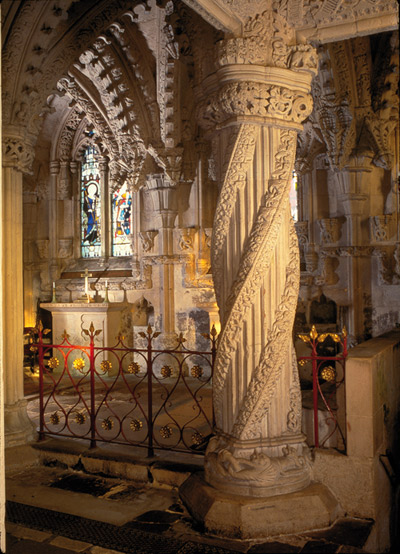
Apprentice Pillar The most elaborately decorated pillar in the Chapel
This pillar contains one of the most famous and fascinating riddles of the building. An apprentice mason is said to have carved the pillar, inspired by a dream, in his master’s absence. On seeing the magnificent achievement on his return, the master mason flew into a jealous rage and struck the apprentice, killing him outright.
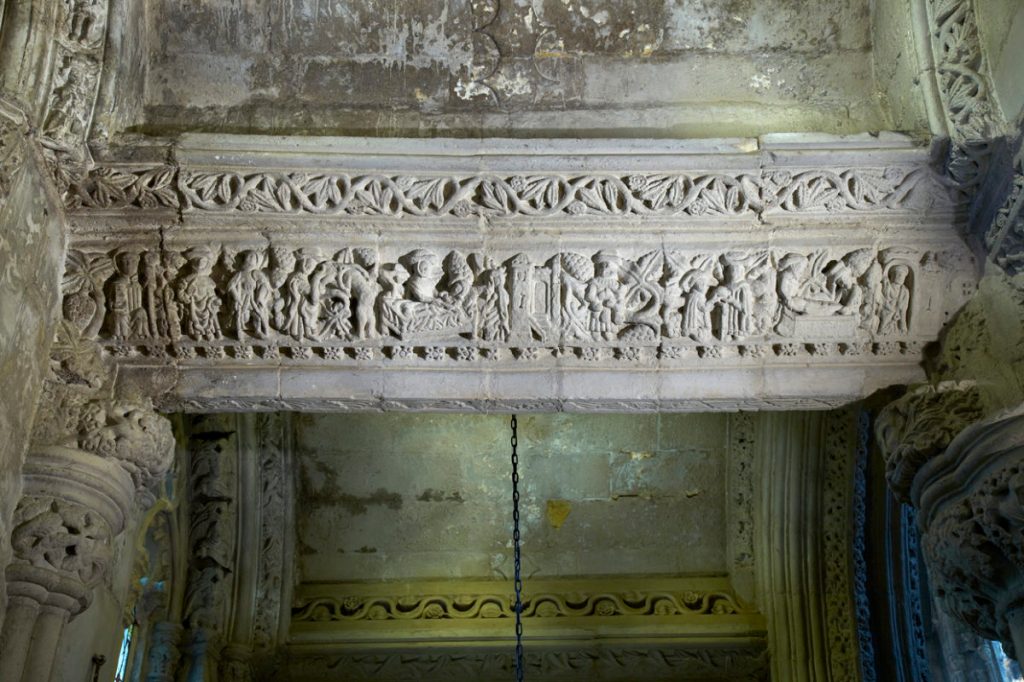
Seven Virtues
On the south aisle, you will see the seven virtues. Starting from the left, there is a bishop then, left to right, helping the needy; clothing the naked; looking after the sick; visiting those in prison; avarice (misplaced from the seven deadly sins, see below); feeding the hungry; burying the dead, then the reward for virtue, St Peter waiting at the gates of heaven with a key in his hand.
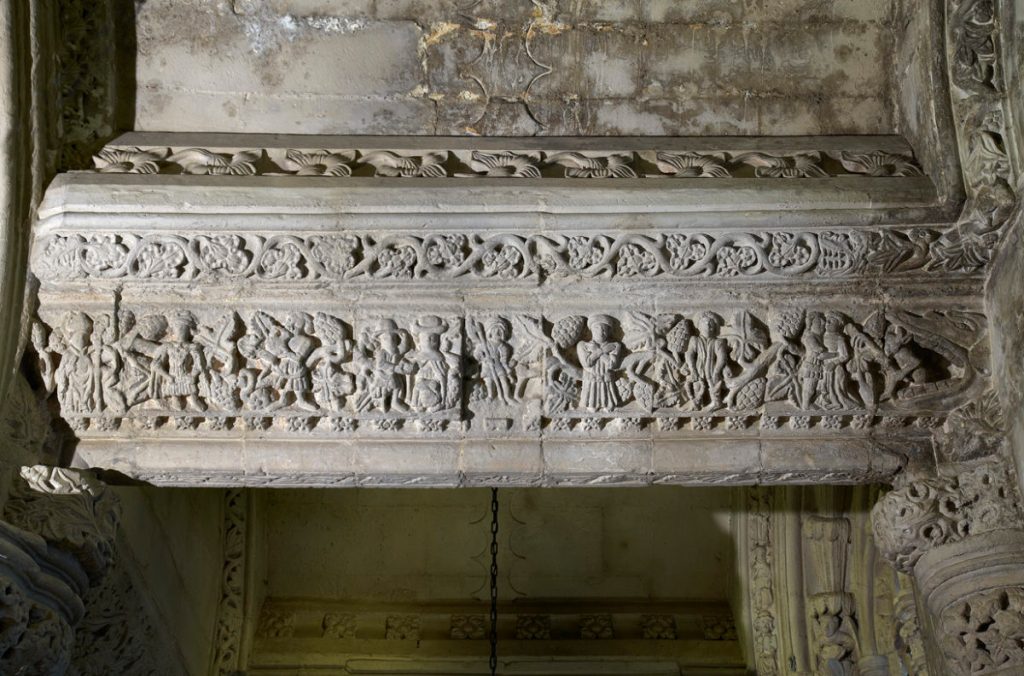
Seven deadly sins
Also on the south aisle, opposite the seven virtues, you will find the seven deadly sins. Starting from the left, there is a bishop, then left to right, pride; gluttony; charity (misplaced from the seven virtues); anger; envy; sloth; lust, then the punishment for sin, the devil emerging from a monster’s mouth and stretching out a hook towards the whole group.
The Rosslyn Stave Angel – Music Cipher’
Melody deciphered in the chapel
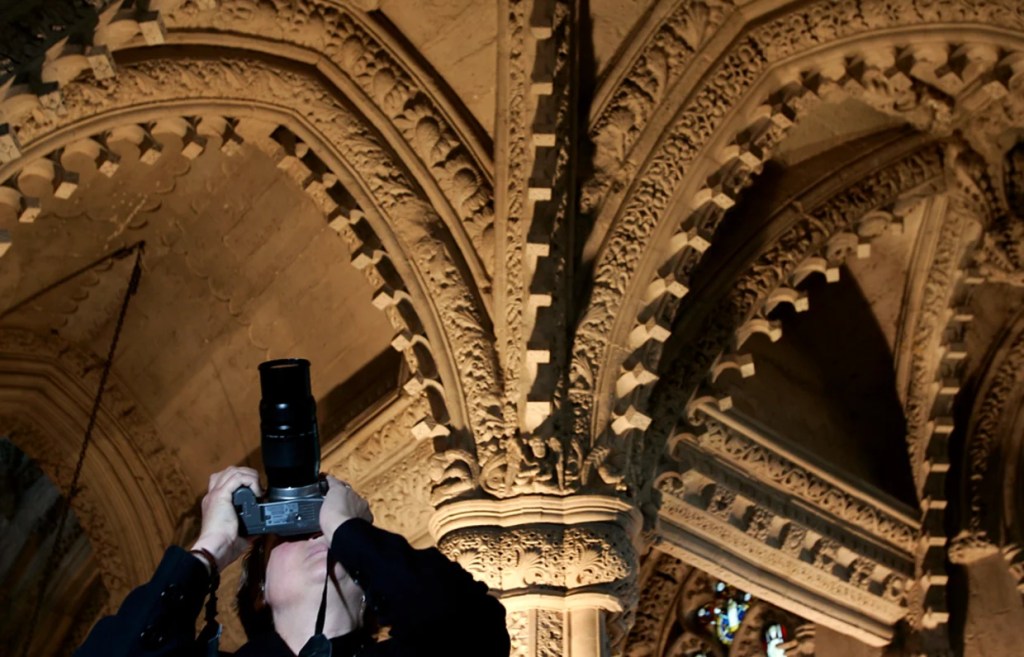
Like a plot from “The Da Vinci Code,” a team of code breakers claims to have found music hidden for 500 years in intricate carvings at the church where author Dan Brown set the climax of the best-selling book.
Father and son team Thomas and Stuart Mitchell say they deciphered a musical code hewn into stone cubes on the ribs supporting the ceiling of Rosslyn Chapel in the village of Roslin, near Edinburgh.
“Breaking the code was a true eureka moment. It’s like we have been given a compact disc from the past,” said Stuart Mitchell, 41, a music teacher from Edinburgh. “But unlike the fiction of ’The Da Vinci Code,’ this is a tangible link to the past.”
The music has been recorded, and will get its official premiere in the chapel May 18.
Musical experts reserved judgment, but did not dismiss the Mitchells’ theory.
“We have 213 cubes (at Rosslyn), and the possibility that they have something to say is by no means implausible,” said Warwick Edwards, an expert on early Scottish music at Glasgow University. More research is needed, he said.
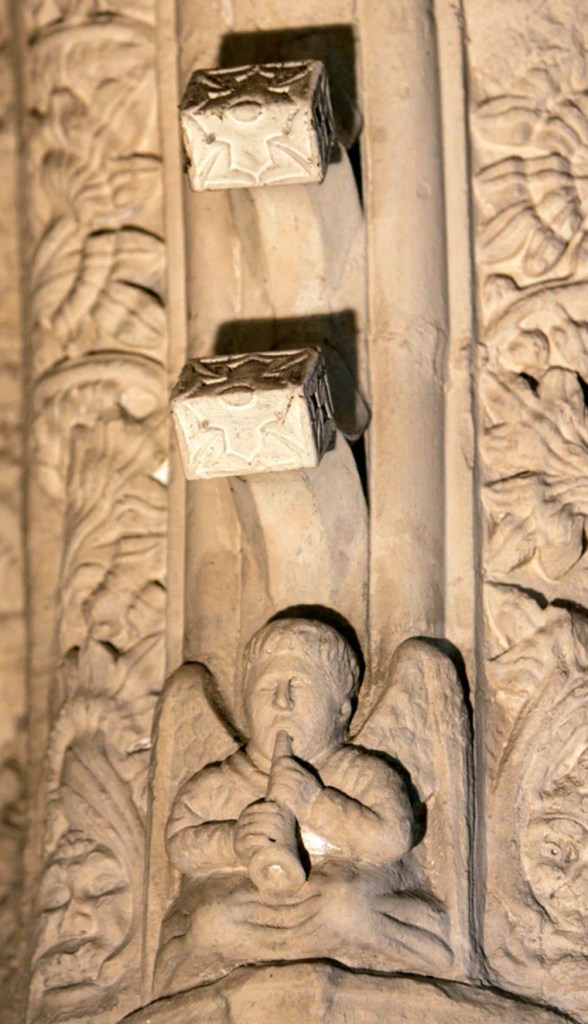
Cube carvings on the chapel’s arches believed to be a musical score are seen at Rosslyn Chapel near Edinburgh, Scotland May 1, 2007. A former Royal Air Force codebreaker and his composer son believe they have deciphered a musical score which has remained hidden for nearly 600 years in the carvings on the walls of Rosslyn Chapel which was a major feature in the book and film ‘The Da Vinci Code’
Gordon Munro, an expert on Scottish church music from the 1500s, 1600s and 1700s at the Royal Scottish Academy of Music and Drama in Glasgow, said, “I have heard the music and it is not impossible, but it can only be a reconstruction that is open to interpretation.”
Ground Zero for symbolism
The elaborate decoration and the mysterious symbolism have inspired many legends, among them that the building is a replica of Solomon’s Temple and that it is the resting place of the Holy Grail, the Ark of the Covenant or even the mummified head of Jesus Christ.
Brown’s novel, based on the theory that Jesus married Mary Magdalene and founded a dynastic line which survives today, climaxes at Rosslyn Chapel. “Symbology heaven,” Brown called it.
The Mitchells’ research centered on the ribs of a ceiling in the Lady Chapel. Rows of carved angels play instruments above the columns of cubes.
The elder Mitchell, 75, who was a code breaker for the Royal Air Force during the Korean War, said he spent 25 years working at the puzzle.
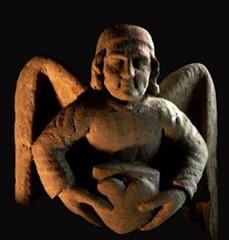
“Many of the angels had musical instruments and some were arranged as a choir, but there was one angel we couldn’t work out,” he said. “Then we realized she was carrying a musical stave, the lined blueprint for musical composition, and therefore we were looking at a coded piece of music.”
The five-line stave that Mitchell believes the angel is holding came into general use in the 16th century in the West, music historians say.
the science of sound
If the Mitchells are right about the meaning of the shapes, the people who built Rosslyn Chapel between 1446 and 1486 knew something about the science of sound that wasn’t generally known in the West until the 1700s.
The Mitchells believe the patterns on the cubes are Chladni patterns — created by vibrations of musical pitches.
The patterns are named for Ernest Chladni (1756-1827), a German musician who is also remembered as the inventor of the glass harmonica.
Chladni spread fine sand on metal or glass plates, then used a violin bow to make the plate vibrate. Sand gathered in parts of the plate which were not vibrating, creating patterns unique to each pitch. Although the patterns are associated with Chladni, the effect had been noted a few decades earlier, by the English scientist Robert Hooke in 1665.
The Mitchells assert the effect was also known by Gilbert Haye, one of the chapel’s builders, who died in 1513. “The Cymatics/Chladni patterns were inspired and found in the art of the ancient Chinese gong making which Sir Gilbert Haye would have discovered during his time in the Far East,” said Stuart Mitchell.
The Apprentice Pillar
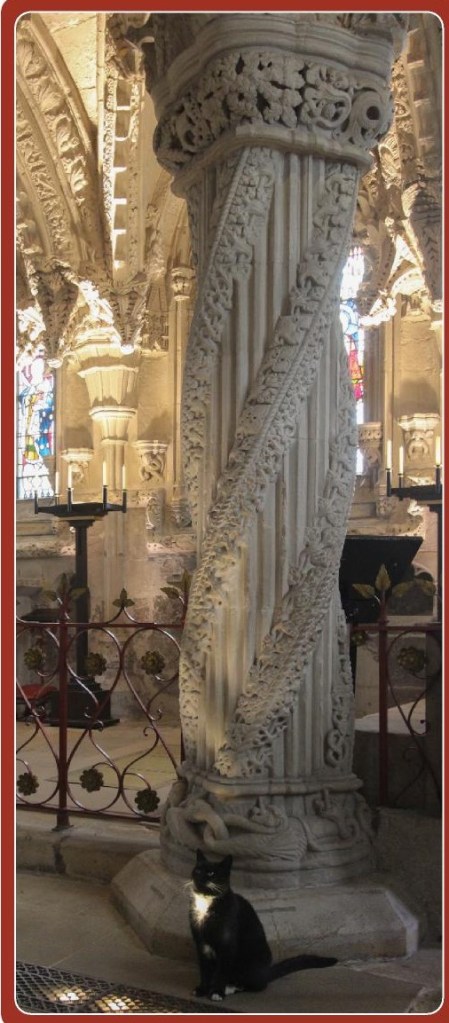
The extraordinary ‘Apprentice Pillar’, as it is known today, is probably the most famous and unique feature at Rosslyn Chapel. It is a column of stone, ornately decorated with vines that
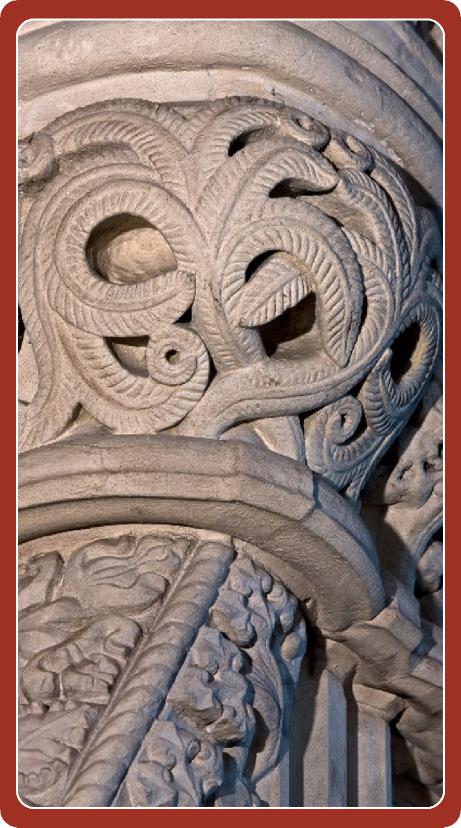
climb up its trunk in a helix pattern. The top of the pillar is bursting with a profusion of different plants, and at the bottom are eight dragons encircled around the base, chewing on cords that come out from the pillar.
The pillar is made from sandstone, and was carved using simple tools such as a mallet and chisels. There is a famous story about how the pillar was made by an apprentice boy, hence its name ‘Apprentice Pillar’ The pillar is at the south east corner of the Chapel, partitioning the smaller Lady Chapel from the main part of the building.
The pillar dates from between the founding of the Chapel in 1446 and 1484, when building
work stopped.
The precise meaning of the pillar is a puzzle that has teased many brains over the last 500 years. One theory is that the pillar represents the mythical Tree of Life, which connects and nourishes all forms of life. This tree is a widespread idea, found in many cultures and traditions around the world.
In Christianity and Judaism, the tree is the source of eternal and infinite life and it stood
in the paradise that was God’s Garden of Eden.
(Eternal and infinite mean outside the world of time and space as we know it, with no end or
limit.) In Norse myth, the tree is called Yggdrasil, and there is a dragon underneath called Niðhöggr which is trying to destroy all life by gnawing through the tree’s roots.
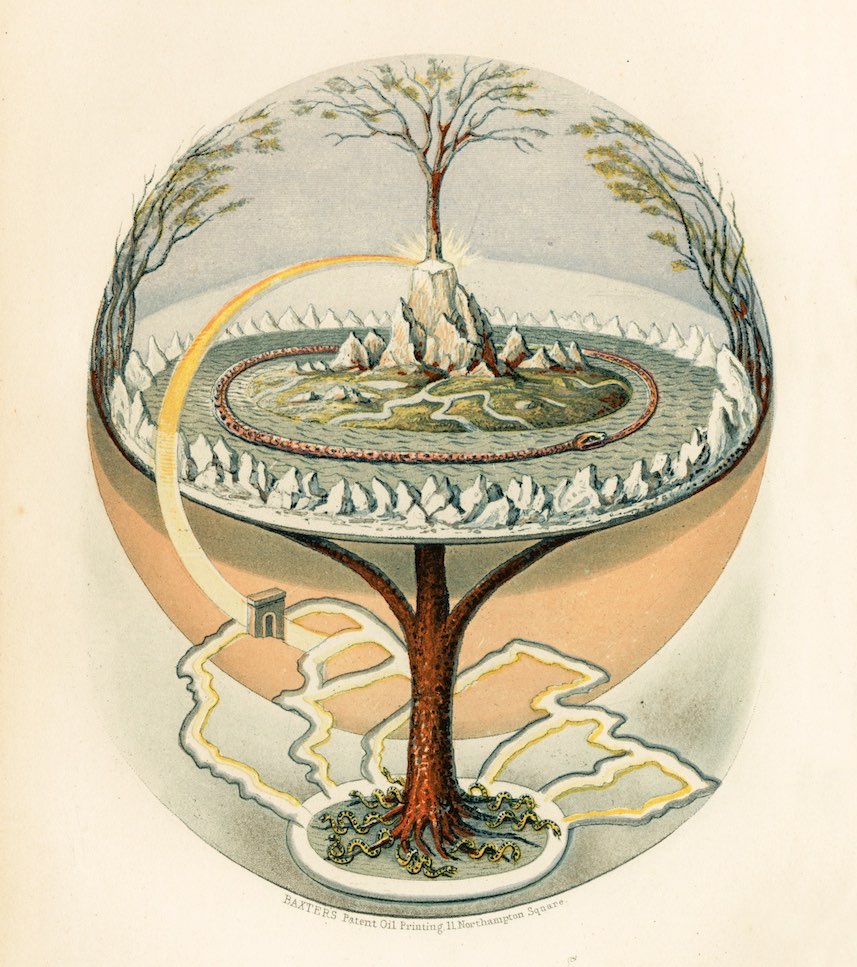
The Apprentice Pillar seems to be honouring both traditions – the Chapel is a Christian church designed for Christian worship and the pillar is surrounded by carvings referencing the Bible – in fact, the Chapel has been described ‘A Bible in Stone’.
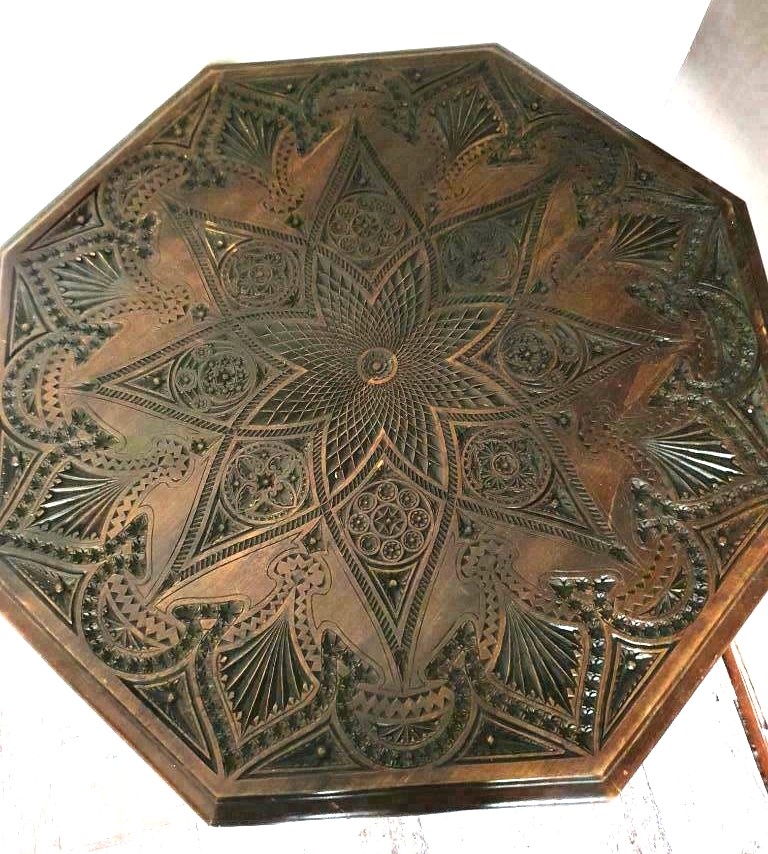
As the Alhambra in Spain is called a “Quran in stone”:
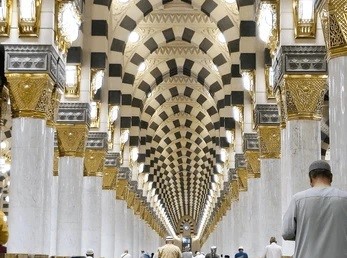
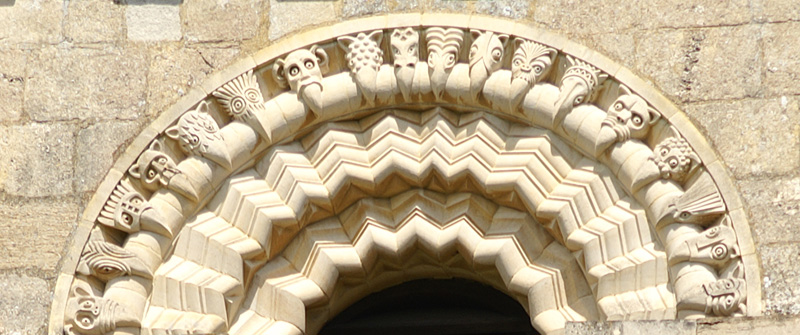
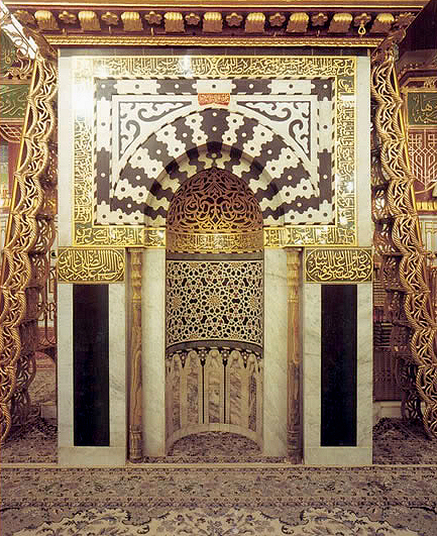
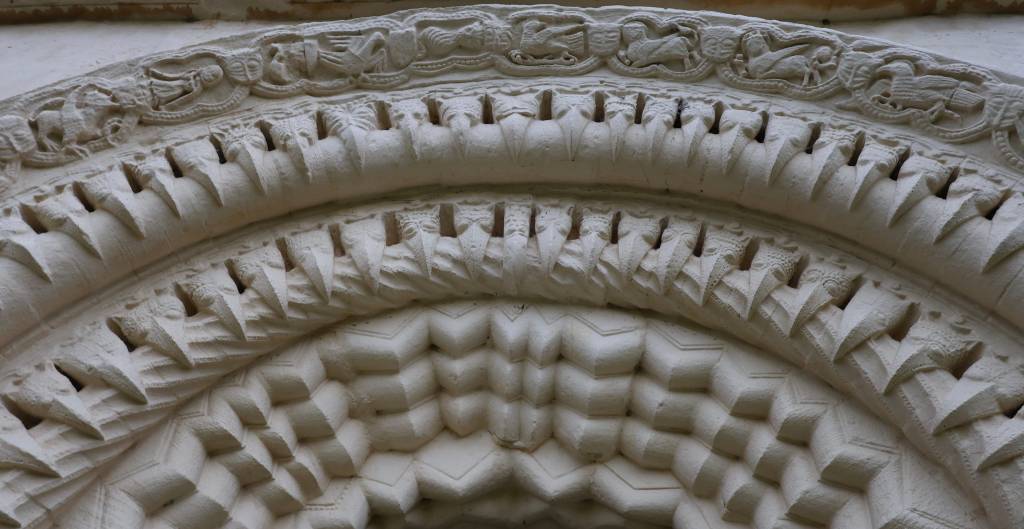
See How Islamic Architecture Shaped Europe


————————————————–
Just as the Tree of Life was in God’s Garden of Eden, surrounded by all the life God created, so the pillar stands in the Chapel surrounded by Biblical carvings and depictions of flourishing plant life.
However, the eight dragons gnawing the roots at the bottom suggest that the pillar is also the Norse tree Yggdrasil, and this may be because Sir William St Clair, the founder of the Chapel, had Norse ancestry and was very proud of it. He and his forebears were Princes of Orkney, which was Norse before it became part of Scotland, and the origins of the St Clair family itself were Scandinavian
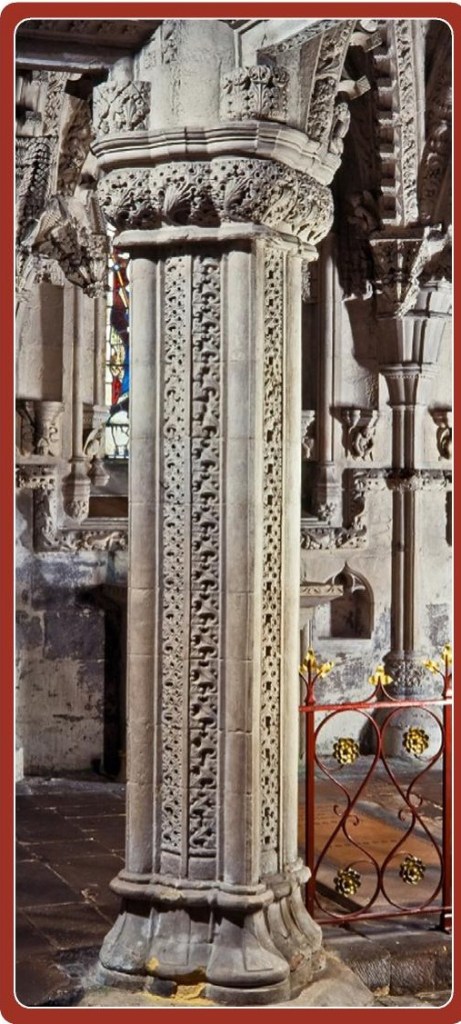
On the other side of the Chapel is another ornately carved pillar, popularly called the ‘Mason’s Pillar’. Unlike the Apprentice Pillar however, the plants do not climb in energetic spirals, but in rigid vertical rows. While the Mason’s Pillar is a fine example of stone carving, the Apprentice Pillar is generally held to be a more beautiful and superior work of art.
In medieval times, a skilled craftsman was called a master. A Master was at the top of his profession, and respected for his work. This master would train up young boys in his trade, and in time they might become Masters too. This took a long time and a lot of hard work. When these boys were in training, they were called ‘apprentices’. An apprentice would start his training young, at the age of about thirteen, and he would be at the beck and call of his Master until he was twenty one years old.
The story goes . . .
There was once a Master Mason in charge of building Rosslyn Chapel. This Master Mason had an idea of how marvellous the Chapel could be, and he planned to make a beautiful pillar decorated with all sorts of wondrous leaves and vines. But when his pillar was finished, he was dissatisfied. He knew it could have looked even better – more beautiful and more alive – but it was his own skill and craftsmanship that had fallen short.
What he needed to do, he felt, was to travel abroad and see the amazing cathedrals of Europe. If he could study them, he would be able to come back with the knowledge needed to create the pillar of his dreams for Rosslyn Chapel. Sir William St Clair gave him permission to travel, and he left. He was gone a long time. Years, in fact. And while he was gone, a lowly apprentice boy had a vision, in which he realised how this amazing pillar could be made. He set to work, and created the feat of stone carving that you see today – the famous ‘Apprentice Pillar’.
When Master Mason returned, he felt he finally had it in him to create the pillar he wanted. Into Rosslyn he came, full of ambition and plans. Imagine his feelings, when he saw the Apprentice Pillar, standing there already in all its glory! And then imagine his anger when he discovered that it was not even a craftsman of high status who had made it, but a lowly apprentice! He flew into a rage of jealousy, picked up his mason’s mallet, and struck the young apprentice on the head, killing him outright.
His fellow craftsmen and Sir William were appalled. The Mason was taken to trial for the murder and was hanged according to the law of the time, but the other masons felt this unishment was not enough. They created an image of the young apprentice’s head, with the gash on his forehead, and placed it on the Chapel wall as a memorial. And they made an image of Master Mason as well, and placed it where his gaze would rest on the Apprentice Pillar for eternity
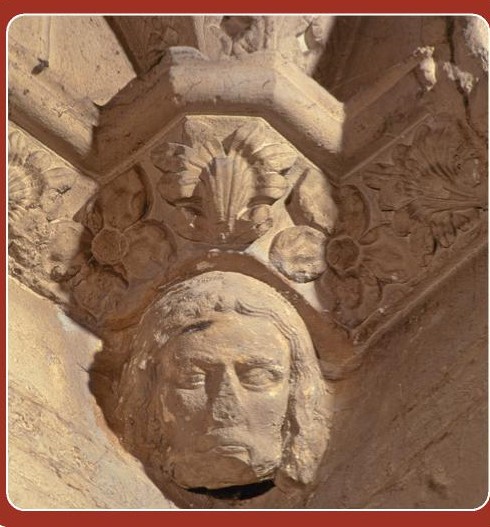
The murder story of a mason and apprentice exists in many medieval cathedrals
and churches across Europe, not just at Rosslyn. Furthermore, the pillar was called the ‘Prince’s Pillar’ before it became known as the Apprentice Pillar. However this story has been told at Rosslyn since at least the 17th century, so it certainly has a long association with the building.
Of the many mysteries and legends which envelop Rosslyn Chapel few can be so well known as that surrounding the ‘Apprentice’ Pillar. The legend concerns the murdered apprentice with its overt references to the initiation rituals of ancient guilds of stonemasons which stretch back to the murder of Hiram Abif, the master mason, at the time of the building of King Solomon’s Temple in Jerusalem. Thus, the murder of the apprentice at Rosslyn is seen as a symbolic re-enactment of the murder of Hiram Abif which, today, has immense spiritual and emotional connotations for the world-wide fraternity of Freemasons.
Another robust legend that may connect Rosslyn with threshold sacrifice is the widespread belief that the chapel’s groundplan is based on that of Solomon’s Temple, although skeptics point out that Rosslyn’s is identical to that of Glasgow Cathedral, which, except for the enormous difference in scale, is true.
But what if the similarities between Rosslyn and Solomon’s Temple, at least for Freemasons, were meant to be more symbolic than actual, and that both skeptics and true believers have been looking at things the wrong way? In Albert Mackey’s Encyclopedia of Freemasonry is the following entry: “Over the Sacred Lodge presided Solomon, the greatest of kings, and the wisest of men; Hiram, the great and learned King of Tyre; and Hiram Abif, the widow’s son, of the tribe of Naphtali. It was held in the bowels of the sacred Mount Moriah, under the part whereon was erected the Holy of Holies. On this mount it was where Abraham confirmed his faith by his readiness to offer up his only son, Isaac.
Here it was where the Lord delivered to David, in a dream, the plan of the glorious Temple, afterward erected by our noble Grand Master, King Solomon. And lastly, here it was where he declared he would establish his sacred name and word, which should never pass away — and for these rea-sons this was justly styled the Sacred Lodge.”
Might not the floor of Rosslyn Chapel be symbolic, then, of a place that predates Solomon’s Temple – the threshing floor of Araunah and a place of great Biblical sacrifice, which in many ways it still is? Claimed as a holy place by Christians, Jews, and Muslims, the rock over which now stands Jerusalem’s Dome of the Rock has become, over millennia, a most costly piece of real estate.
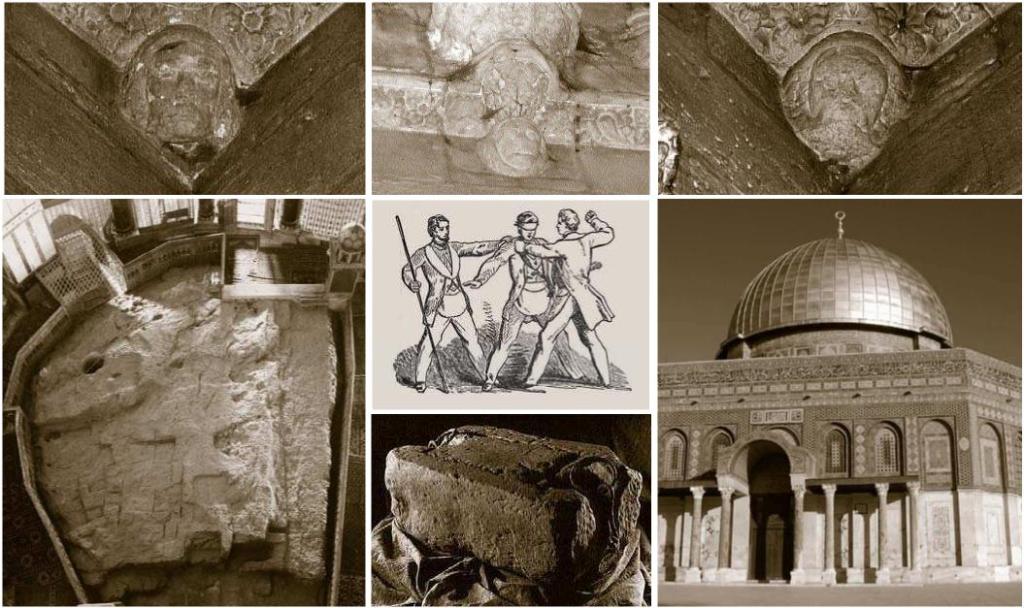
Center: The murder of Hiram Abiff, as reenacted in a Masonic ritual
Also revered as “The Foundation Stone,” the rock from which the world was made, it was the place where Biblical patriarch Jacob is said to have dreamt of a ladder reaching to Heaven, with angels ascending and descending – which brings us to Scotland’s unique connection with the place. Whether or not the block of stone now safely enshrined in Edinburgh Castle is Scotland’s fabled Stone of Destiny, one of its popular monikers is “Jacob’s Pillow.” And then there is the theory that the Scots are, in fact, a “lost tribe of Israel.” When historians, Biblical scholars and adherents to British Israelism debate that theory, things get noisy.
In the Rosslyn story The master mason was so inflamed with rage and passion, that he struck him with his mallet, killed him on the spot, and paid the penalty for his rash and cruel act.
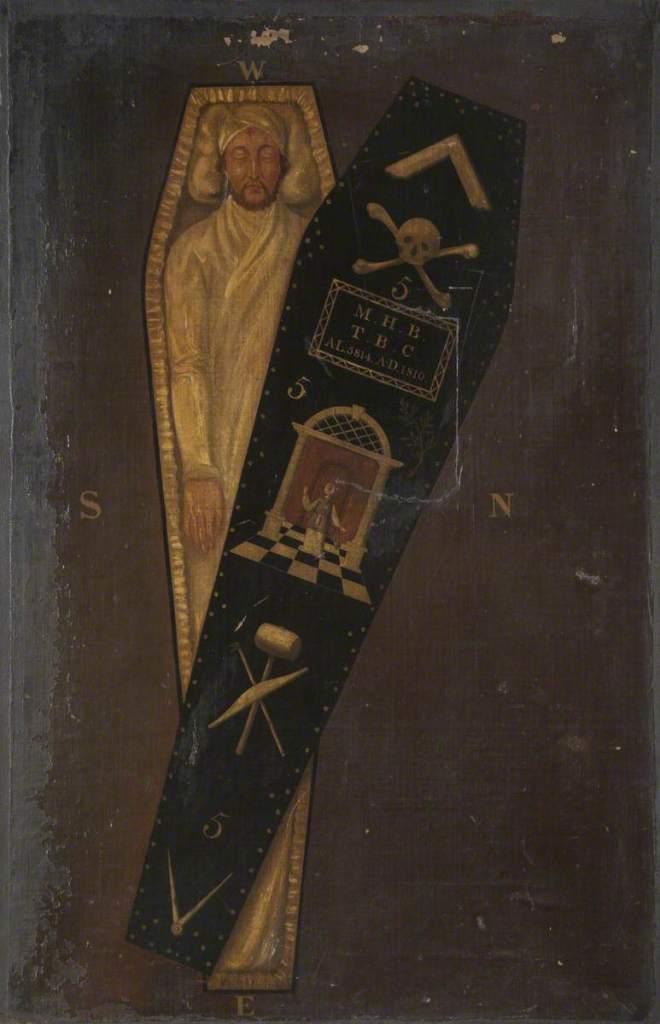
- The goal of a master mason is to control his passions and so to realize a death to the world: The world” is the general name for all the passions. When we wish to call the passions by a common name, we call them the world. But when we wish to distinguish them by their special names, we call them passions. The passions are the following: love of riches, desire for possessions, bodily pleasure from which comes sexual passion, love of honor which gives rise to envy, lust for power, arrogance and pride of position, the craving to adorn oneself with luxurious clothes and vain ornaments, the itch for human glory which is a source of rancor and resentment, and physical fear. Where these passions cease to be active, there the world is dead…. Someone has said of the Saints that while alive they were dead; for though living in the flesh, they did not live for the flesh. See for which of these passions you are alive. Then you will know how far you are alive to the world, and how far you are dead to it.”
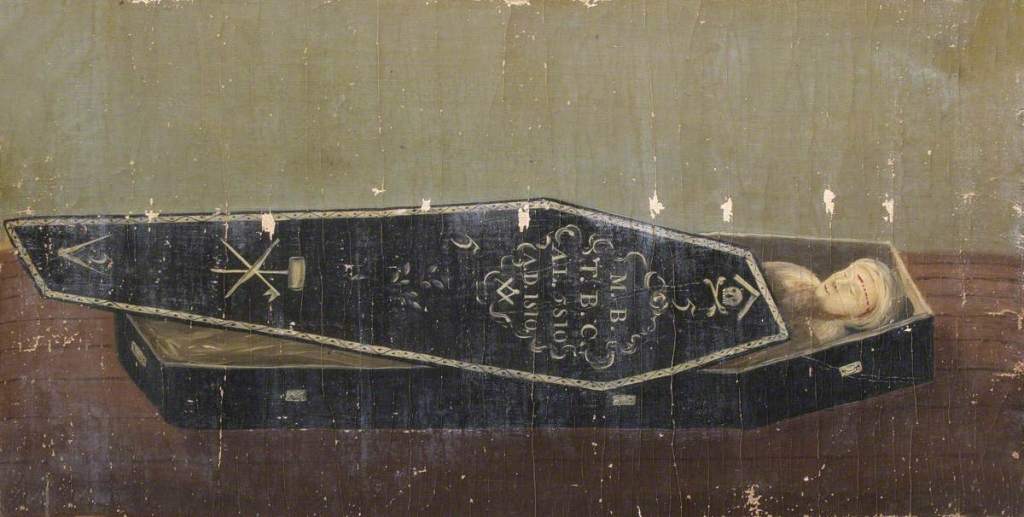
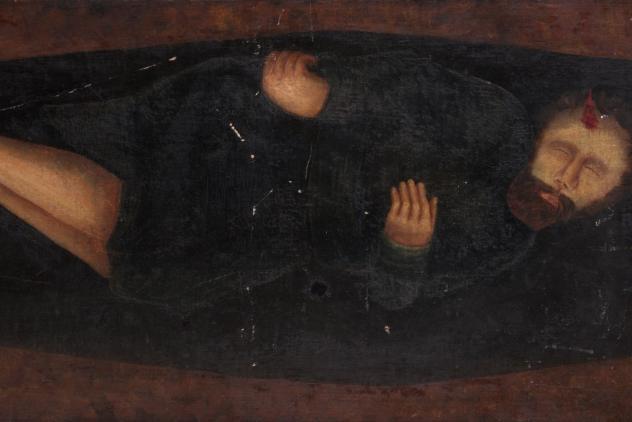
- Substition- Simulation – Imitation
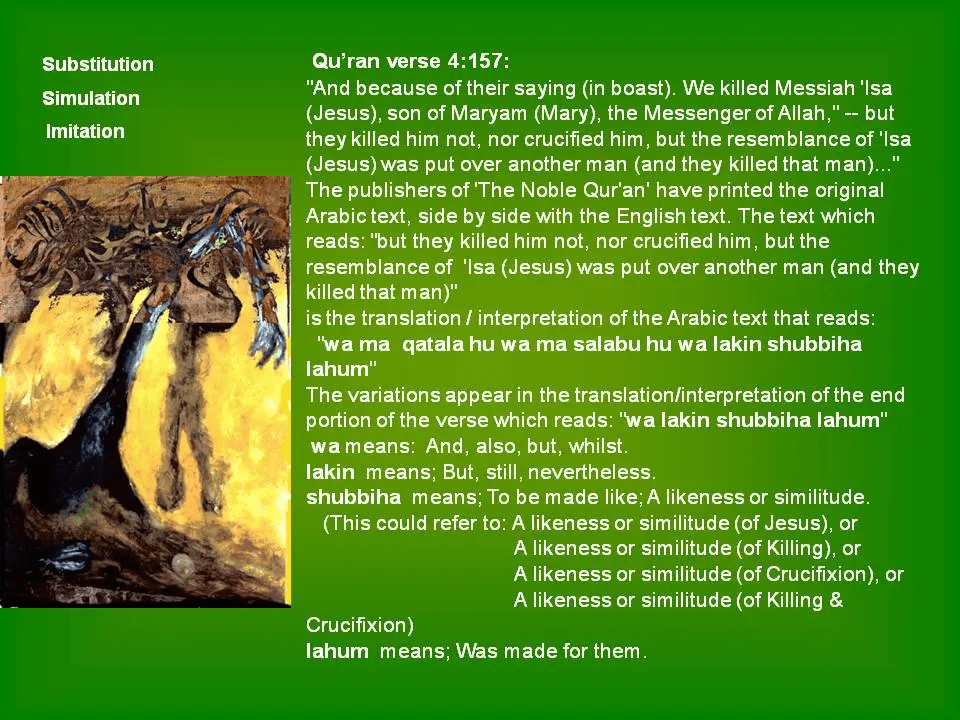
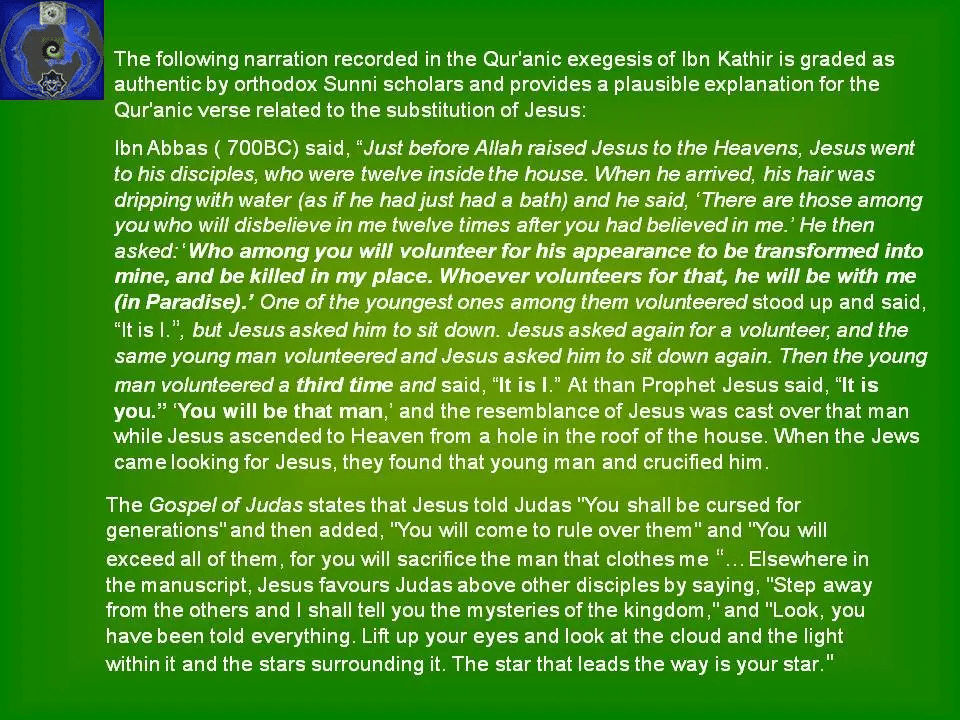
Note: Pontius Pilate offering to sacrifice his own son in the place of Jesus
Written in the Coptic language, the ancient text tells of Pontius Pilate, the judge who authorized Jesus’ crucifixion, having dinner with Jesus before his crucifixion and offering to sacrifice his own son in the place of Jesus. It also explains why Judas used a kiss, specifically, to betray Jesus — because Jesus had the ability to change shape, according to the text — and it puts the day of the arrest of Jesus on Tuesday evening rather than Thursday evening, something that contravenes the Easter timeline.
The discovery of the text doesn’t mean these events happened, but rather that some people living at the time appear to have believed in them, said Roelof van den Broek, of Utrecht University in the Netherlands, who published the translation in the book “Pseudo-Cyril of Jerusalem on the Life and the Passion of Christ”(Brill, 2013).
While apocryphal stories about Pilate are known from ancient times, van den Broek wrote, with Pilate offering to sacrifice his own son in the place of Jesus.
“Without further ado, Pilate prepared a table and he ate with Jesus on the fifth day of the week. And Jesus blessed Pilate and his whole house,” reads part of the text in translation. Pilate later tells Jesus, “well then, behold, the night has come, rise and withdraw, and when the morning comes and they accuse me because of you, I shall give them the only son I have so that they can kill him in your place
In the text, Jesus comforts him, saying, “Oh Pilate, you have been deemed worthy of a great grace because you have shown a good disposition to me.” Jesus also showed Pilate that he can escape if he chose to. “Pilate, then, looked at Jesus and, behold, he became incorporeal: He did not see him for a long time…”
Pilate and his wife both have visions that night that show an eagle (representing Jesus) being killed.
In the Coptic and Ethiopian churches, Pilate is regarded as a saint, which explains the sympathetic portrayal in the text, van den Broek writes.
The reason for Judas using a kiss
In the canonical bible the apostle Judas betrays Jesus in exchange for money by using a kiss to identify him leading to Jesus’ arrest. This apocryphal tale explains that the reason Judas used a kiss, specifically, is because Jesus had the ability to change shape.
“Then the Jews said to Judas: How shall we arrest him [Jesus], for he does not have a single shape but his appearance changes. Sometimes he is ruddy, sometimes he is white, sometimes he is red, sometimes he is wheat coloured, sometimes he is pallid like ascetics, sometimes he is a youth, sometimes an old man …” This leads Judas to suggest using a kiss as a means to identify him. If Judas had given the arresters a description of Jesus he could have changed shape. By kissing Jesus Judas tells the people exactly who he is. [Religious Mysteries: 8 Alleged Relics of Jesus]
This understanding of Judas’ kiss goes way back. “This explanation of Judas’ kiss is first found in Origen [a theologian who lived A.D. 185-254],” van den Broek writes. In his work, Contra Celsum the ancient writerOrigen, stated that “to those who saw him [Jesus] he did not appear alike to all.”
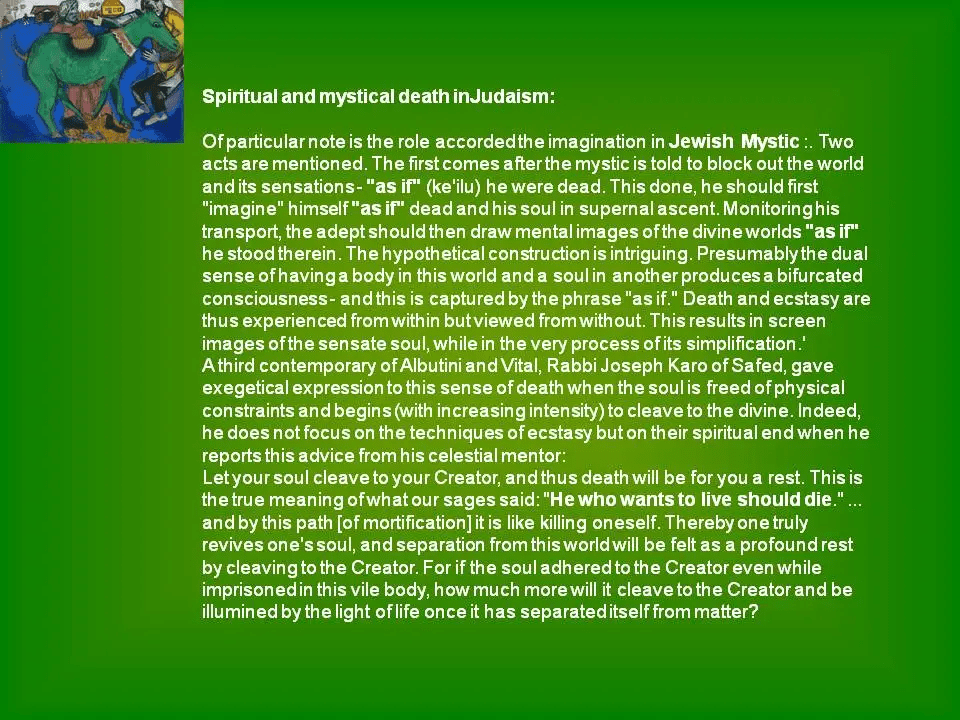
- The Kiss of God: Mystical Death in Judaism
this study discusses spiritual and mystical death under three rubrics: the first is entitled,
“`If you wish to live then die’: Aspects of Death and Desire in Jewish Spirituality”; the second is “‘For Your sake we are killed all day long’: The Sanctification of God in Love”; and the third is entitled
“‘As if he sacrificed a soul’: Forms of Ritual Simulation and Substitution.” Read here
see also Paths to Freedom: A Mystical Passover Companion
- Maccabee, Essenes, Seven Sleepers, Compagnonage and Freemasonry
The name Maccabee[4] is often used as a synonym for the entire Hasmonean dynasty, but the Maccabees proper were Judas Maccabeus and his four brothers. The name Maccabee was a personal epithet of Judah,[5] and the later generations were not his direct descendants. One explanation of the name’s origins is that it derives from the Aramaic maqqəḇa, “the hammer”, in recognition of Judah’s ferocity in battle.[6] The traditional Jewish explanation is that Maccabee (Hebrew: מכבים Machabi) is an acronym for the Torah verse that was the battle-cry of the Maccabees, “Mi chamocha ba’elim YHWH“,
Who is like You among the heavenly powers, Lord!”,] as well as an acronym for “Matityahu haKohen ben Yochanan” (Matthias the priest, son of John). The correlating Torah verse Exodus 15:11, The song of Moses and the Children of Israel by the Sea,[7] makes a reference to elim, with a mundane notion of natural forces, heavenly might, war and governmental powers. The scholar and poet Aaron Kaminka argues that the name is a corruption of Machbanai, a leading commando in the army of King David.[9]
—————————-
Note: In Freemason ritual of the Master Degree the concept of the lost Word which it is always difficult to understand , Rene guenon says it a question and an answer:
question:(MKBI:Who is like You among the heavenly powers, Lord! from the song of the sea and the answer : AIN BLTK( Nobody but YOU) it is the same meaning asThe meaning of ‘La ilaha illa Allah’ in Islam :“there is no God but God
( MKBI was bastarded in a corrupted and totally without meaning “mac bebenac”” and AIN BLTK became … “bltk ain” also nonsens for ignorant of Hebrew so it became “Tubalcain””
————————————-
it is relate also to the Shem Ha Mephoresh
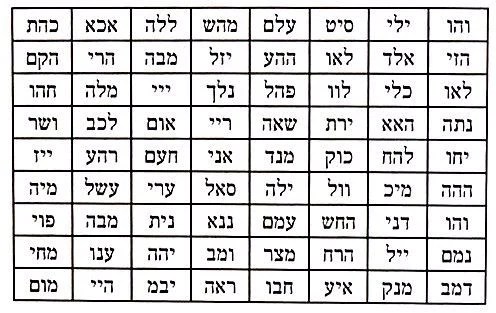
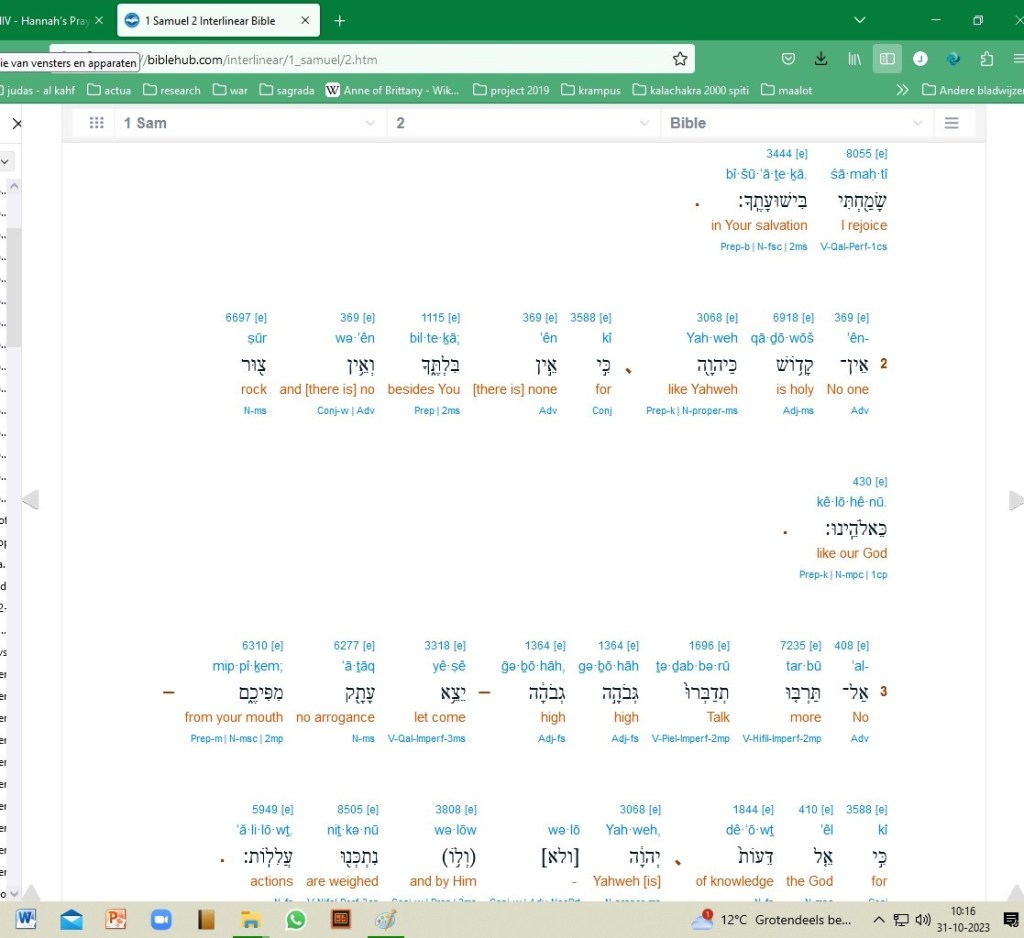
and Hannah’s Prayer of Thanksgiving:
“My heart rejoices in the LORD in whom my horn is exalted.
My mouth speaks boldly against my enemies,for I rejoice in Your salvation.
2There is no one holy like the LORD.
Indeed, there is no one besides You!
And there is no Rock like our God.
The Compagnons du Devoir, full name Compagnons du Devoir et du Tour de France, is a French organization of craftsmen and artisans dating from the Middle Ages. Their traditional, technical education includes taking a tour, the Tour de France, around France and doing apprenticeships with masters. For a young man or young woman today, the Compagnonnage is a traditional mentoring network through which to learn a trade while developing character by experiencing community life and traveling.[1] The community lives in a Compagnon house known as a cayenne and managed by a mère (mother) or maîtresse (mistress), a woman who looks after the well-being of the residents,[1] of which there are more than 80 in France. The houses vary in size from a small house for five people to a larger one with more than 100 people living together.
It is relate with the Woman and the seven sons who was a Jewish martyr described in 2 Maccabees 7 as the mother of seven sons who, like her, were arrested by Antiochus IV Epiphanes and forced to prove their respect to him by consuming pork. When they refused, Antiochus tortured and killed the sons one by one in front of the unflinching and stout-hearted mother.
The Ballad of Hannah and her Seven Sons tells a story well known from the Apocrypha II Maccabees 6:12-17. During the persecution of the Jews in Syria at the time of Antiochus Epiphanes (d. 163 B.C.E.), the seven sons of Hannah were commanded to worship an idol. Each refused, and each in turn was slaughtered. The Babylonian Talmud Gittin 57b sets the story in the time of “Caesar,” that is, at the time of the destruction of the second temple in 70 C.E. The ballad follows the medieval version of Jossipon in its account of the mother’s death. The Judeo-Arabic ballad based on this story appears to have been very popular, and like so many of its type, is “known only in its variants.” It is found throughout the eastern dialect area extending from Libya to Iraq, and the western dialect area has a different ballad on the same theme. In the past century or so, the eastern ballad has been printed in such far-flung spots as Calcutta, Bagdad, Aden, Tiberias, Leghorn, Tripoli and Tunis. The version translated here is that printed in Tunis in 1910 by Mardochée Uzan and brother, and sold by him at his “modern bookstore” in Rue Sidi Mardoum, Tunis. At that time Tunis had a large Jewish population, perhaps as much as one third of the inhabitants of the city. Occasionally, I have preferred a reading from a different edition to which reference is made in the notes.
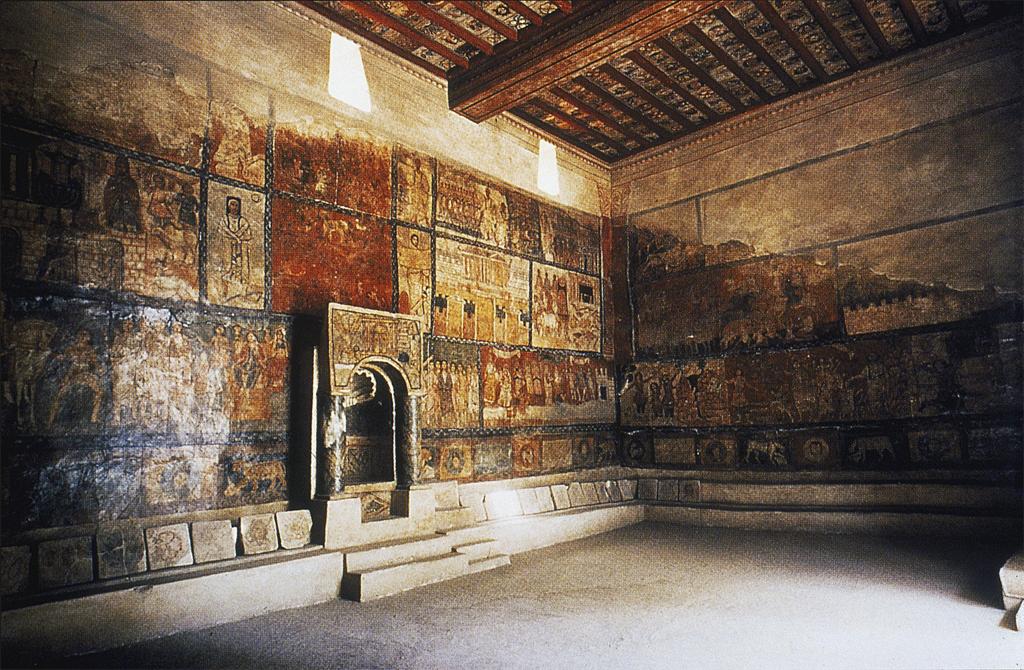
The Ezekiel Mural at Dura Europos
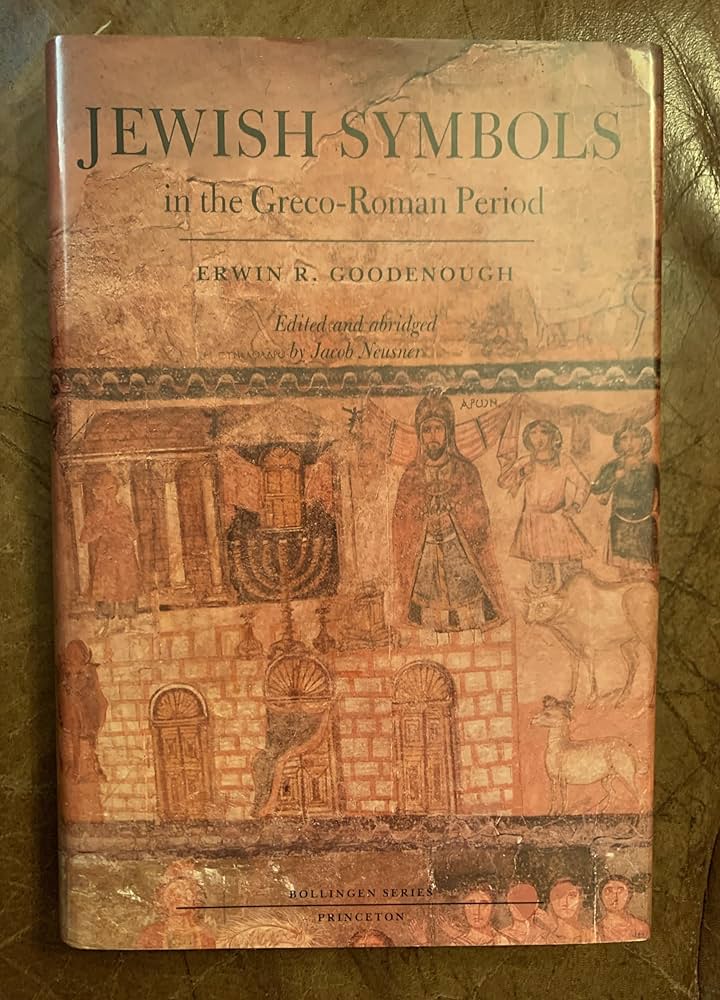
Jewish Symbols in the Greco-Roman Period: Abridged , his volume presents the most important portions of Erwin Goodenough’s classic thirteen-volume work, a magisterial attempt to encompass human spiritual history in general through the study of Jewish symbols in particular. Revealing that the Jewish religion of the period was much more varied and complex than the extant Talmudic literature would lead us to believe, Goodenough offered evidence for the existence of a Hellenistic-Jewish mystic mythology far closer to the Qabbalah than to rabbinical Judaism.
Read here The symbolism of Fish, Bread and Wine
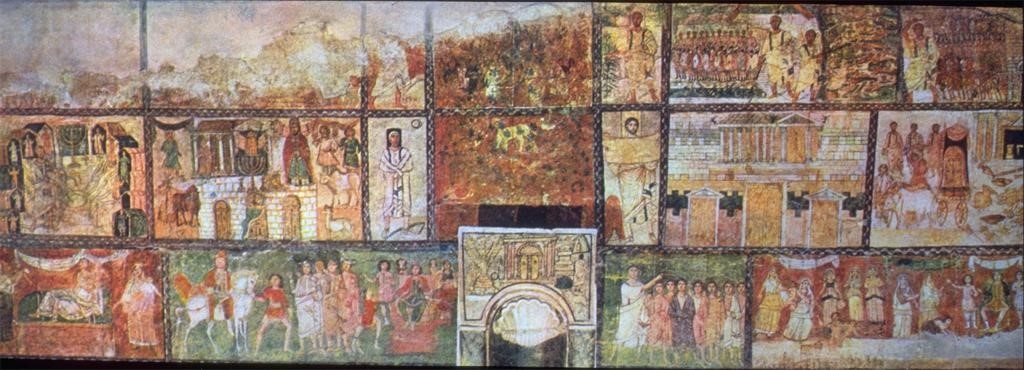
To Goodenough, the art and layout of the synagogue suggested a group with a “mystical” orientation to worship, specifically involving the liturgical experience of heavenly ascent.10 Eminent Jewish scholar Jacob Neusner sees such a development at Dura as no surprise, given that in this region around AD 220–50 other significant religious movements with strong mystical components were also taking form.11 It should be remembered, however, that detailed descriptions of corresponding ideas relating to “Jewish mysteries” were already to be found centuries earlier in the writings of Philo—writings whose core elements may go back to the First Temple period and arguably relate to its distinctive rites and theology .Read
Read also the beginnings of Christianity and Light by Light the Mystical Gospel
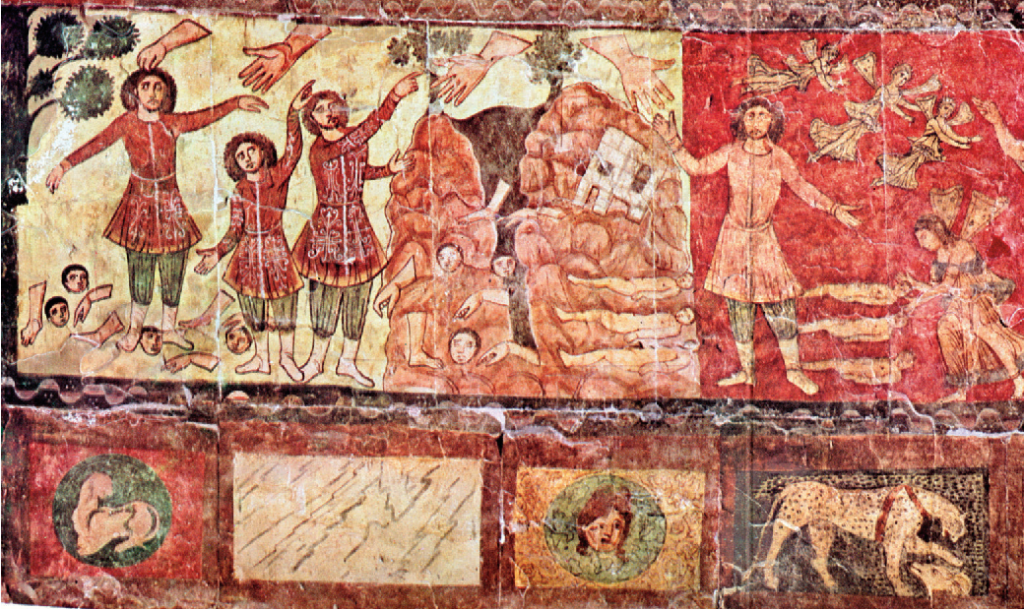
As all the Traditional societies in the world , the Jews had their own Mysteries : see t he Ezekiel Mural at Dura Europos: A Witness of Ancient Jewish Mysteries and The Study of Man: Pagan Symbols in Jewish Antiquity
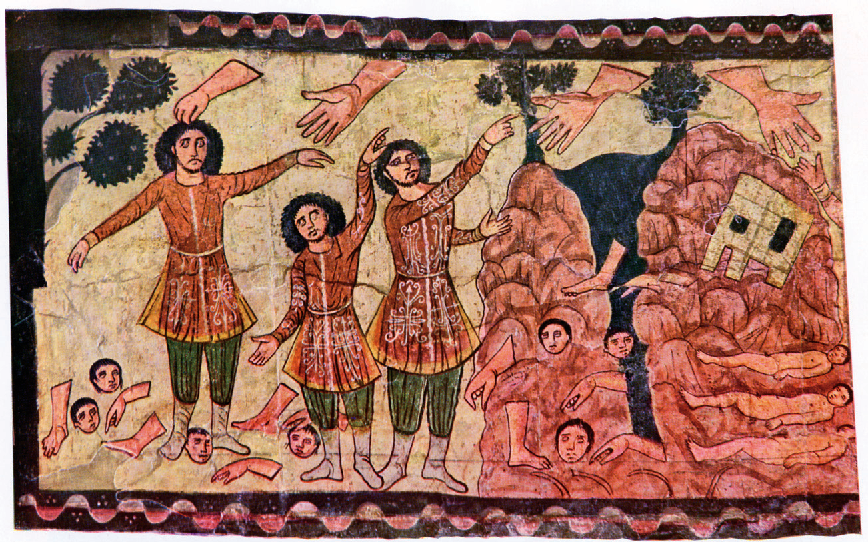
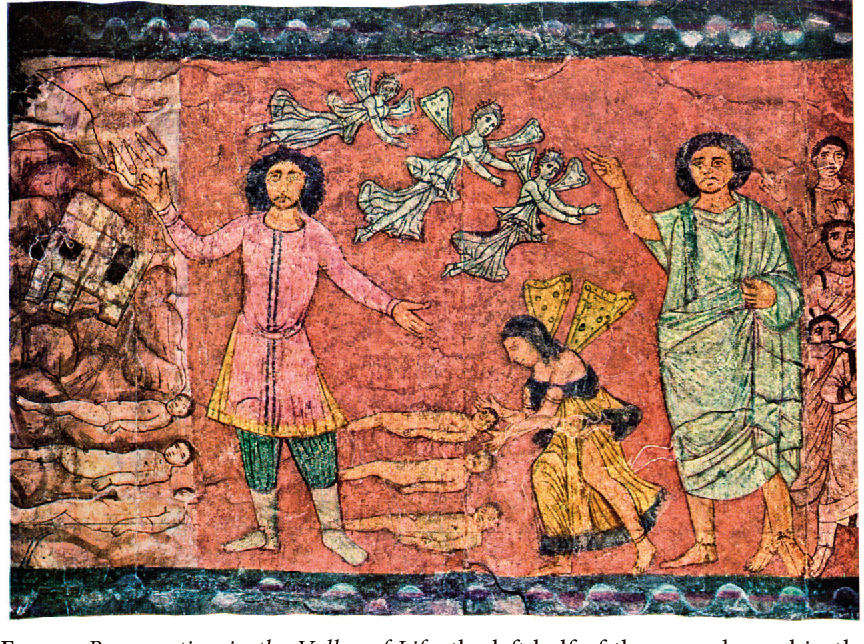
Read also Ezekiel 37: the Valley of Dry Bones
- The Seven Sleepers between Christianity and Islam: from Portraits to Talismans
This article deals with the particular role played by the “Compagnons of the Cave” (Ashāb al-Kahf ) in saint veneration, considering that they were among the first figures in Islam to be regarded as “friends of God” (walī, awliyā). Particularly interesting is the case of the dog Qitmīr who protects them and was regarded by some authors as a manifestation of some great figures, such as the Prophet Khidr, ‘Alī ibn Abū Tālib, or Salmān. This study also explains why the portraits (drawings, paintings, miniatures) of these saints were so attractive, to the extent that they became protective objects or talismans. Though these talismans are geometrical figures (with a focus on circle and/or hexagon), and more precisely “geometric portraits,” they take shape in a variety of ways, especially in the form of ships or trees, all being explained by the Qurʾānic story of the Companions or by the Muslim tradition about them. No wonder that Qitmīr is given a key position in this talismanic art. Read Here
Sacrifice :
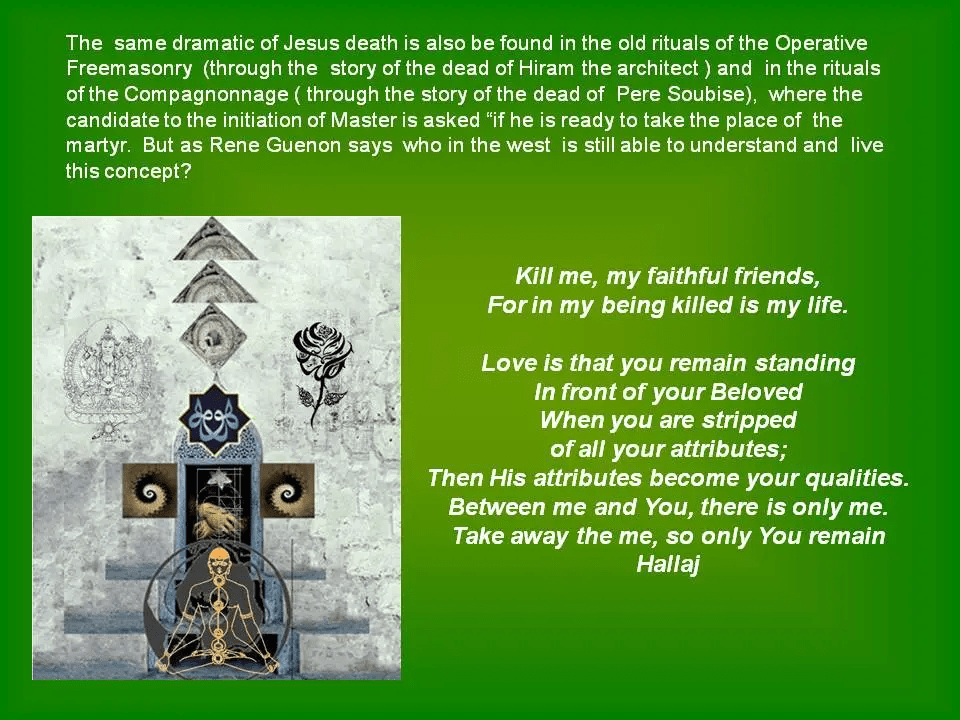
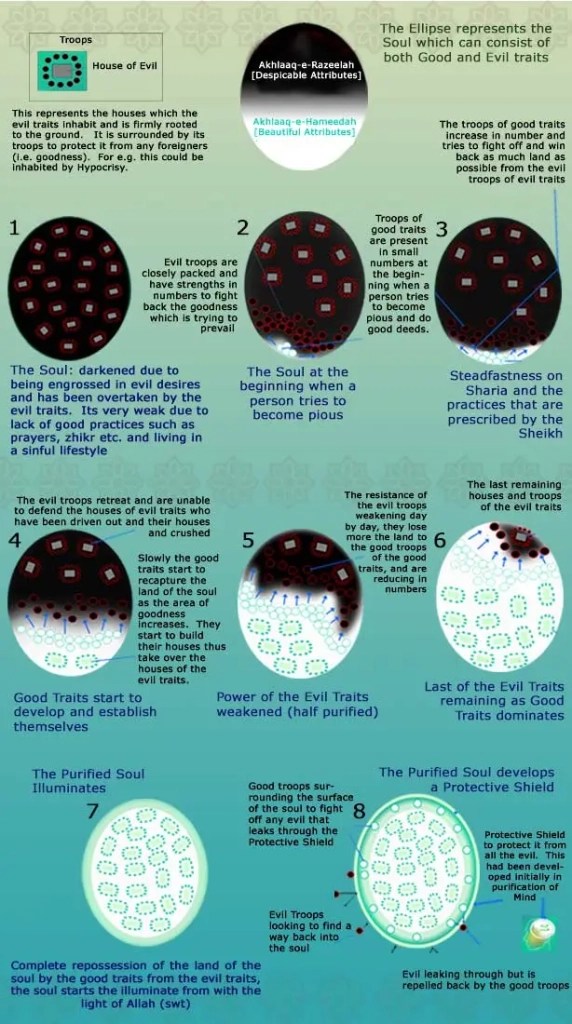
This cleaning process of the soul was well know at that time see: Sleep, Death, and Rebirth: Mystical Practices of Lurianic Kabbalah and Window of the Soul_ The Kabbalah of Rabbi Isaac Luria
In Sufism this cleaning of the Soul is very important: see the SEVEN LEVELS OF BEING
- Craft guilds were made up of craftsmen and artisans in the same occupation, such as hatters, carpenters, bakers, blacksmiths, weav ers and masons.Guilds are defined as associations of craftsmen and merchants formed to promote the economic interests of their members as well as to provide protection and mutual aid. As both business and social organizations, guilds were prolific throughout Europe between the eleventh and sixteenth centuries. A significant part of the skilled labor force in medieval cities was structured around the organization of guilds, which provided economic, educational, social and religious functions, based on the Christian tradition :Spiritual Ethics,Virtues and Uprightness, the seven heavenly virtues combine the four cardinal virtues of prudence, justice, temperance, and fortitude with the hree theological virtues of faith, hope, and charity. These seven capital virtues, also known as seven lively virtues, contrary or remedial virtues, are those opposite the seven deadly sins. They are often enumerated as chastity, temperance, charity, diligence, kindness, patience, and humility. These virtues were often explained in the admittance of the guild through a ritual of admission as the Operative Masonry rituals and the example of Rosslyn Chapel.
But these Craftmen shape for 500 years all the beautifull architectures and Art not only in Europe but over the all world:
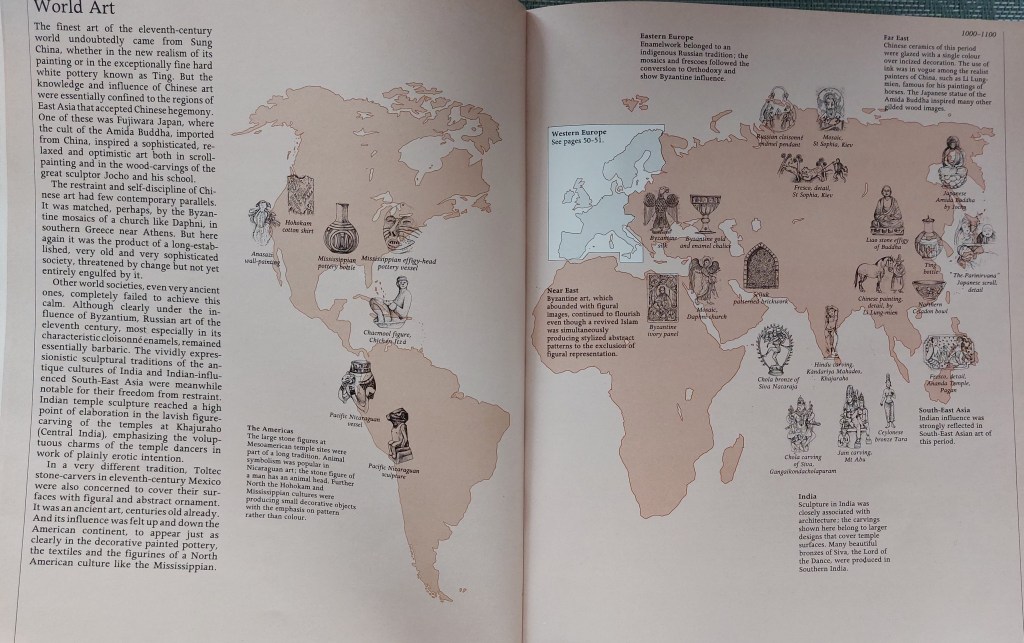
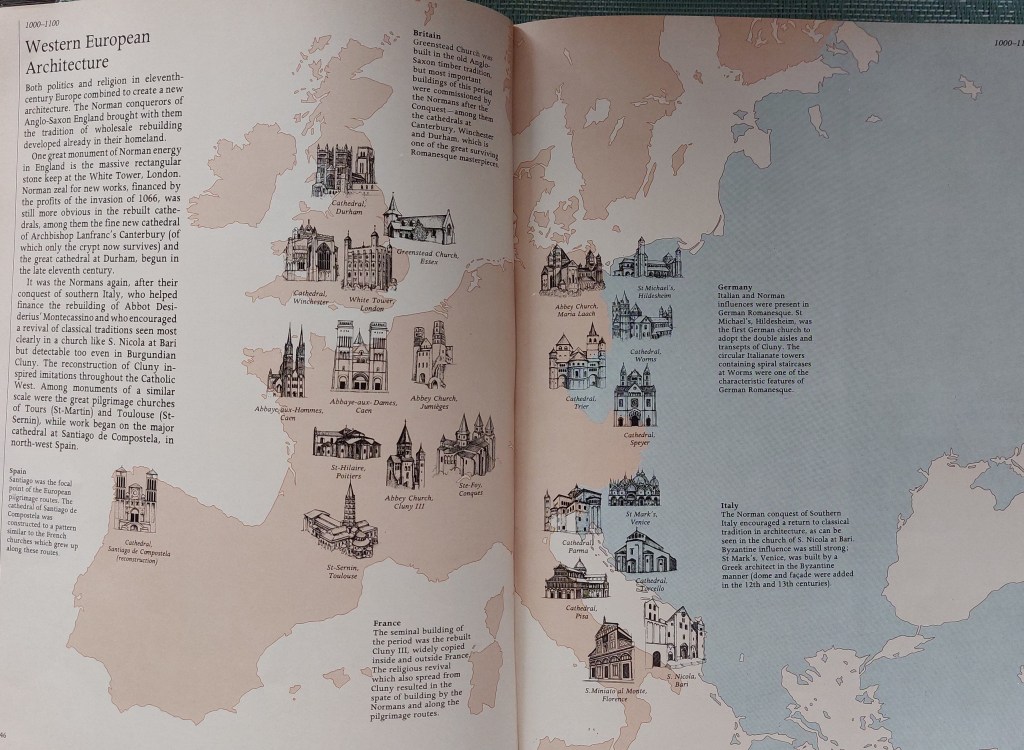
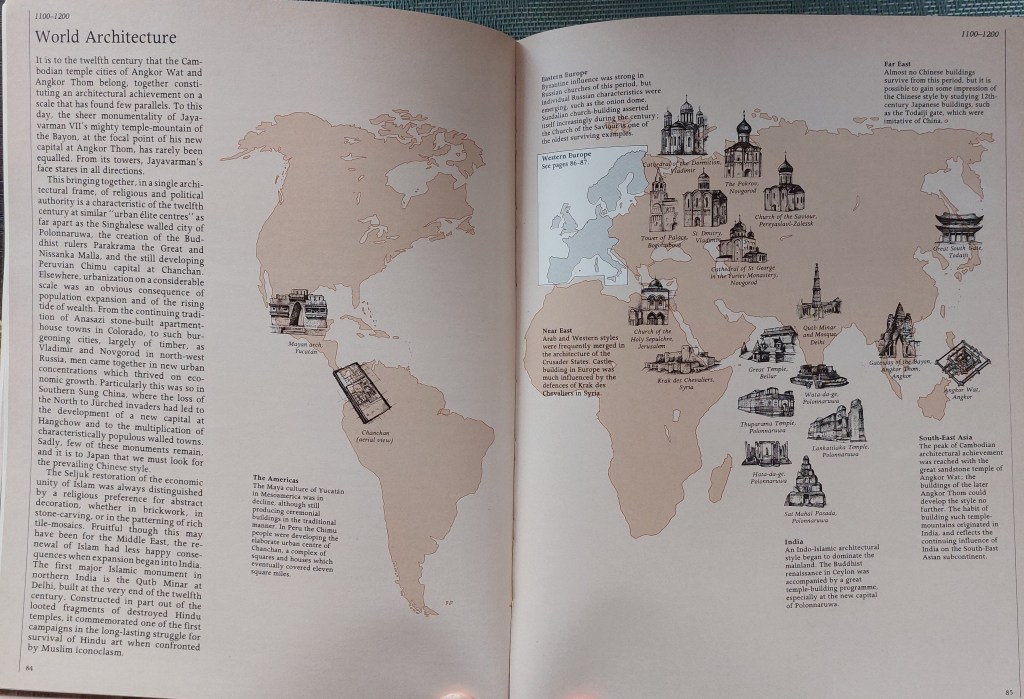
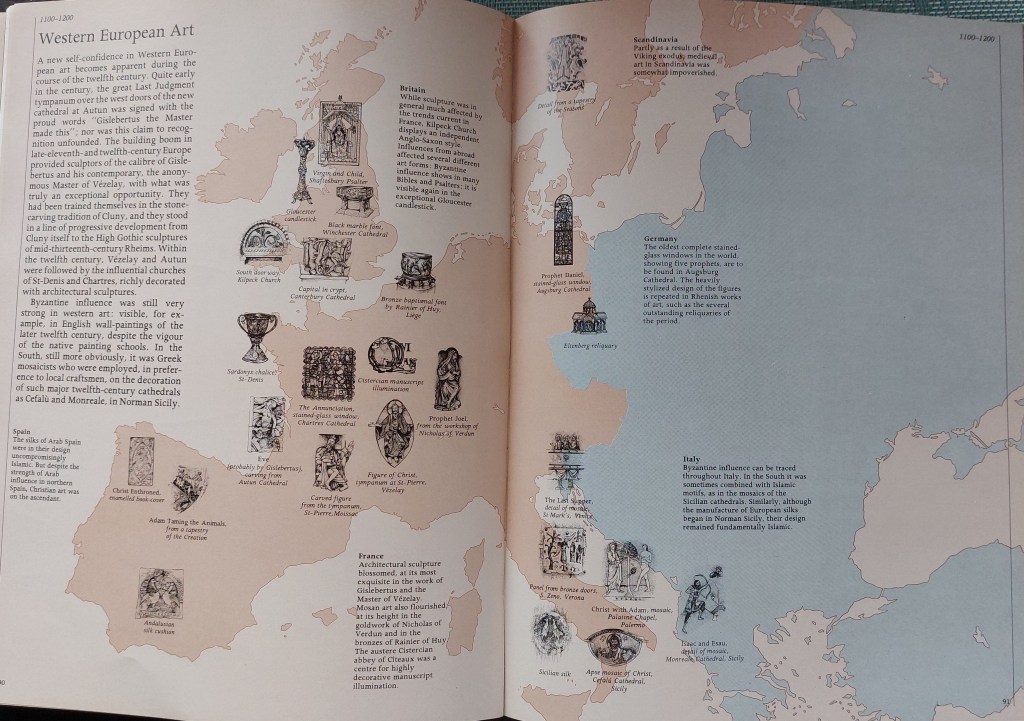
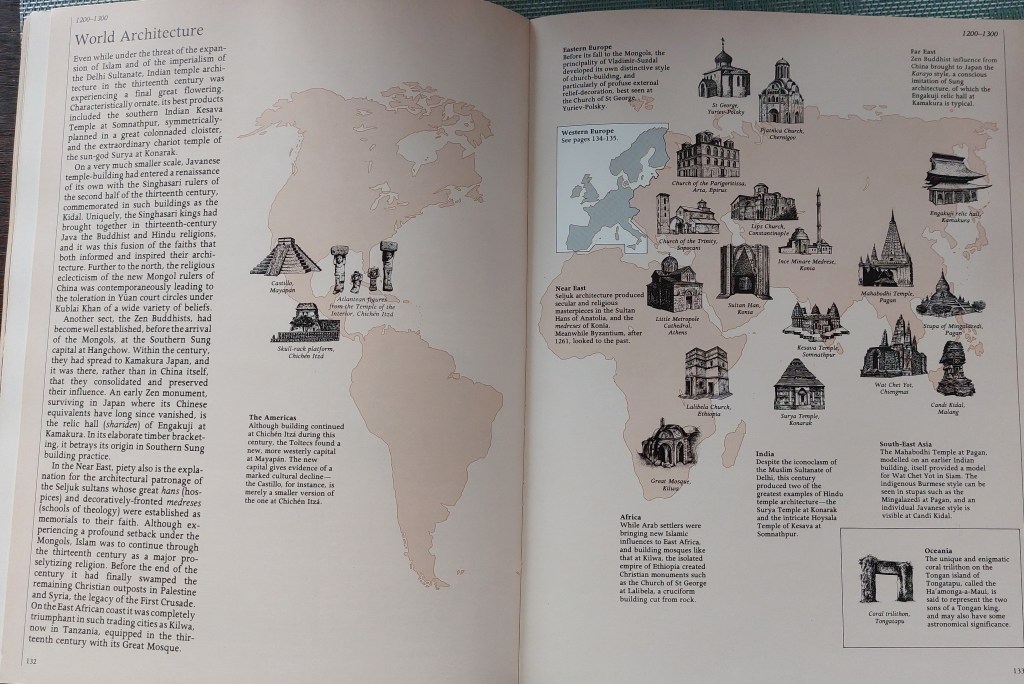
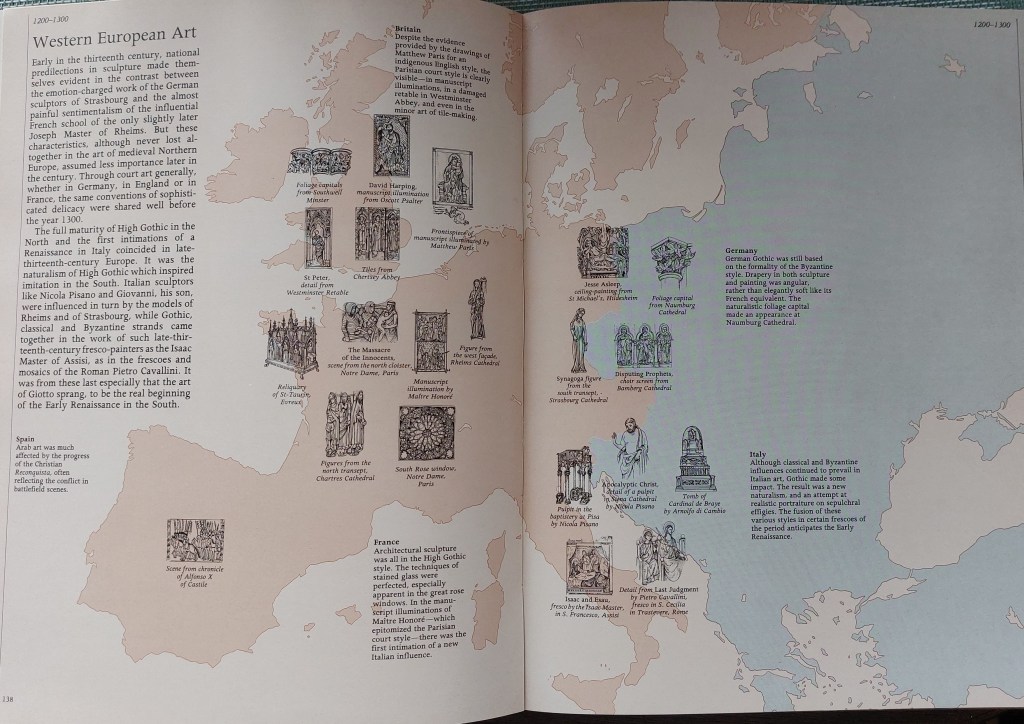
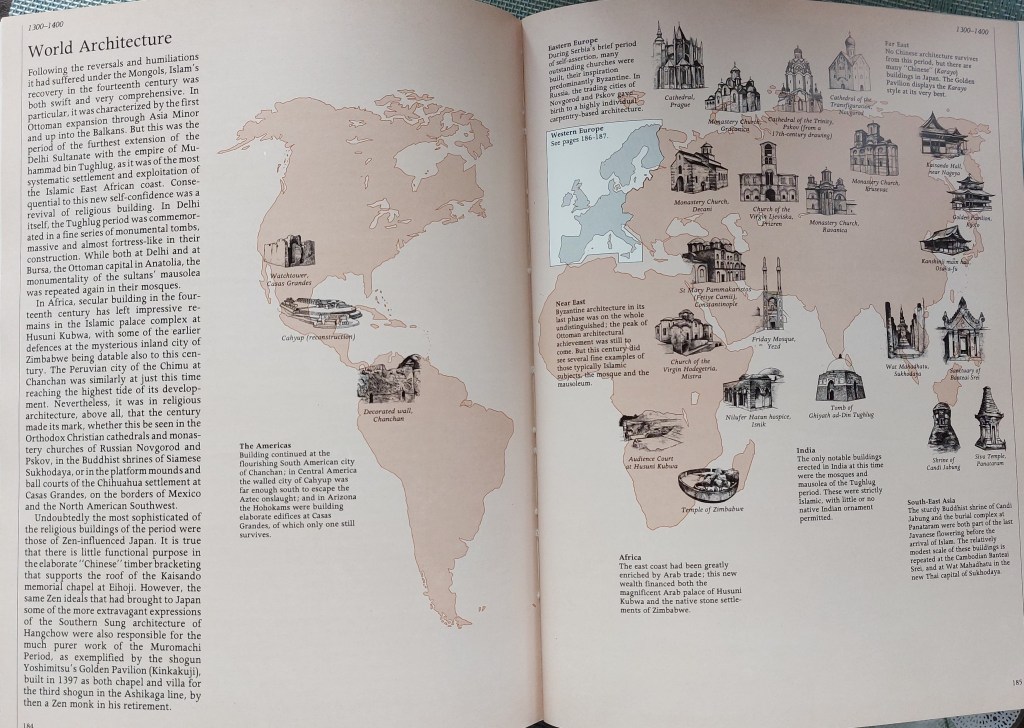
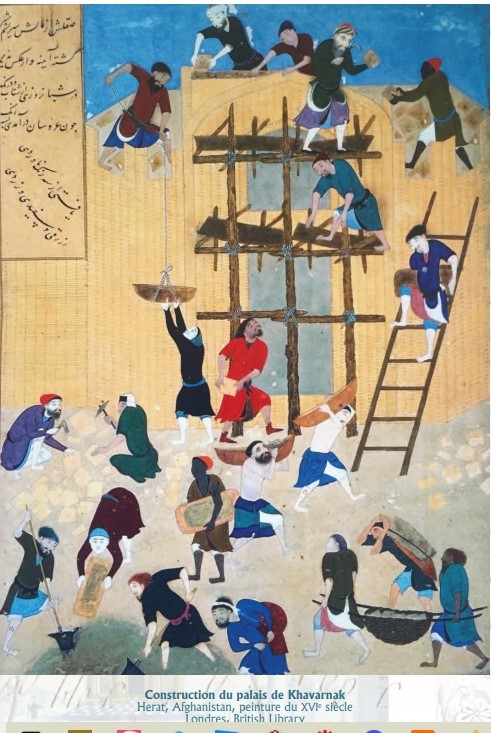
Legends and patron saints of the craft mason and architect in the Islamic East
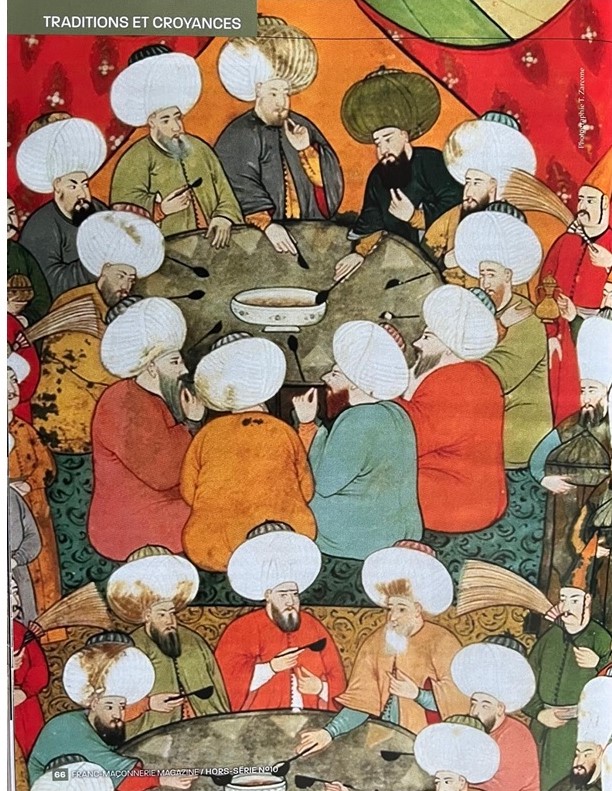
The table of Sufis and Muslim craft guilds
It came with a philosphy of Life where the rules of Chivalry was very important: See St George and Al kidhr and Mirrors for princes: Wisdom for the 21st century
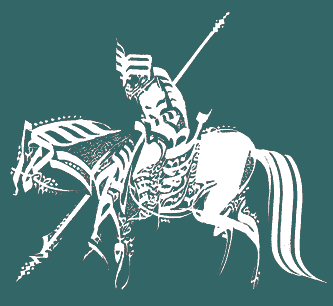
read here: THE BOOK OF SUFI CHIVALRY – LESSONS TO A SON OF THE MOMENT: Futuwwah
look also: Ritualising asceticism and Symbolizing mortification and Khidr in Alevism ant Bektashism
- The decline of guilds after the sixteenth century took place for both economic and religious reasons. Industrialization and the existence of new markets greatly weakened the control of craft guilds. As societies moved from feudalism to emerging forms of capitalism, the monopolistic practices of guilds and the hereditary structure of many apprenticeships became outmoded. With industrialization, the structure and control of guilds were difficult to maintain. In addition, the Reformation resulted in the suppression of guilds in Protestant nations because of their religious functions.
As a stonemason grew in his craft, he was entered into the appropriate rank: apprentice, journeyman (now called Fellow Craft) and master mason. At each stage, the craftsman was entrusted with the secrets of each level, which include passwords and grips (or handshake) made known to him only upon due inspection of necessary proficiency by a master of the craft. This way, as stonemasons migrated across Europe to the next job, each man was assured proper pay and privilege commensurate with his skill level, and clients were assured of the quality of work. (The only three degrees of a Mason)
The speculative freemasons of our modern time lost all these crafts, all the Wisdom-knowledge and are ignorant of their own ignorance. Forgetting Plato’s Cave and promoting the madnees of Democracy, they became a “secret society” and the actors of an Inverted Spirituality, becoming a “moral” code of behavior for “”all the conquest of the West” convincing the elites of the colonial world that avarice, pride; gluttony,anger; envy; sloth; lust ( the 7 deadly sins), the best way to function in a “modern”society” and inflated their ego with 30 degrees of pubertal prideness . The Wisdom of the guilds which provided economic, educational, social and religious functions, based on the Christian tradition, but also present in all spiritual traditions, was totally lost.
While the crisis of modernity has progressively escalated into a global meltdown and the masses are besieged by—the tyranny of mindless distractions, obsessive consumption of unnecessary goods, the insatiable thirst for unrestrained quantity, exploitation by illogical mechanisms of fear, the assault by hostile economic policies devised by the corporate hegemony virtually bloodletting the populace, the endless perpetuation of the war machine, the ever quickening of time, and the collapsing ecosystems of planet earth to name only a few—these are none other than reflections of the inner disarray, if not an utter eclipse of the human microcosm itself.
Modern man is a human without Soul, without the “Living Breath”.
Modern man suffocates and cries: “i can’t breathe” , because a human without “the living Breath” is always dying. It is his only certainty in life, man shall once die and all traditions in the world teach us to take care of our Soul, our “Living Breath”, always in our daily life, but sure at the moment when we are dying. Modern man is the only one of all the traditions of the world who dares to think that he is right to live without his soul and without his “Living Breath”. What an arrogance and Vanity! But remember Vanity is the quality of being vain, something that is vain, it is always empty, or valueless.
Our protest is the expression of his deep spiritual Crisis in the times of deep ignorance..
See also William Blake, the Sexual Basis of Spiritual Vision and the Inverted Spirituality of Freemasonry.
look also :
Karezza, Semen Retention, and Sexual Continence
KALACHAKRA: THE INNER PROCESSES
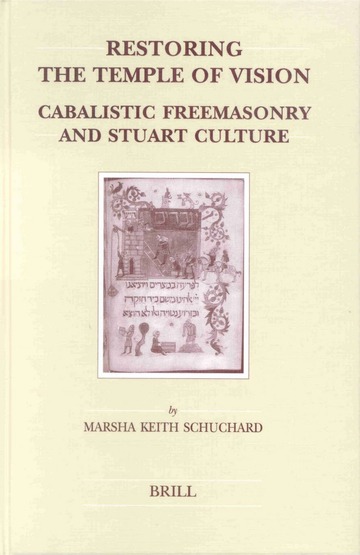
Restoring the Temple of visions
This text seeks to uncover the early Jewish, Scottish and Stuart sources of “ancient” Cabalistic Freemasonry that flourished in “Ecossais” lodges in the 18th and 19th centuries. Drawing on architectural, technological, political and religious documents, it offers real-world, historical grounding for the flights of, accomplished through progressive initiation, are found in Stuart notions of intellectual and spiritual “amicitia”. Despite the expulsion of the Stuart dynasty in 1688 and the establishment of a rival “modern” system of Hanoverian-Whig Masonry in 1717, the influence of “ancient” Scottish-Stuart Masonry on Solomonic architecture, Hermetic masques, and Rosicrucian science was preserved in lodges maintained visionary Temple building described in the rituals and symbolism of “high-degree” Masonry. The roots of mystical male bonding by Jacobite partisans and exiles in Britain, Europe, and the New World. Read Here
Islam and Freemasonry , from fascination to hatred
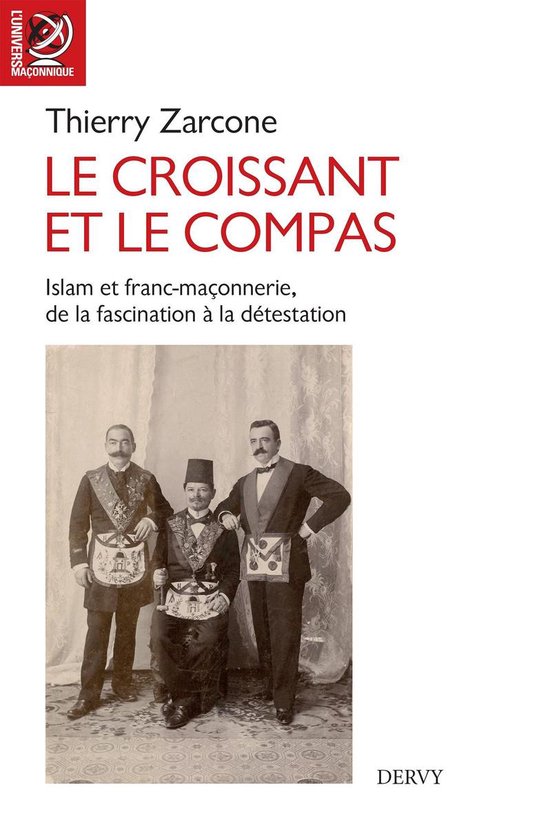
The first Masonic lodges in the Muslim East were founded on the initiative of diplomats, merchants and foreign residents. From Morocco to Indonesia, they were numerous and prosperous as long as the power in place – weak or in the hands of Europeans – tolerated or supported them. For a long time, the initiation of natives remained unthinkable or rejected because of differences in religion, level and method of education or the status of the country. This obstacle was overcome at the beginning of the 19th century. Belief in a single God, sometimes designated by the ecumenical expression “Great Architect of the Universe”, was shared, the neophyte being able to demand the presence of the holy book of his choice upon his reception. Notables and even sovereigns (Turkey, Morocco, India) thus entered the Order. The astonishing similarity of certain oriental doctrinal entities (Bektashism), always established and accepted, with the practices of the lodges, facilitated this expansion. The relationships were reversed with the emergence of three combined factors: the suppression, by the main French obedience, in 1877, of the obligation to believe in God and in the immortality of the soul – and the extreme radicalization of oriental political regimes hostile to any meeting or organization acting under the seal of secrecy. Masonic rites and myths being largely inspired, even in the high grades, by the Old and New Testaments, the suspicion, spread by abundant anti-Masonic literature, according to which Freemasonry is a Zionist tentacle, did the rest. Today, lodges only exist in four of the countries where Islam is predominant: Turkey, Lebanon, Malaysia and Morocco. See Summary here in French
Secret Practices of the Sufi Freemasons: The Islamic Teachings at the Heart of Alchemy
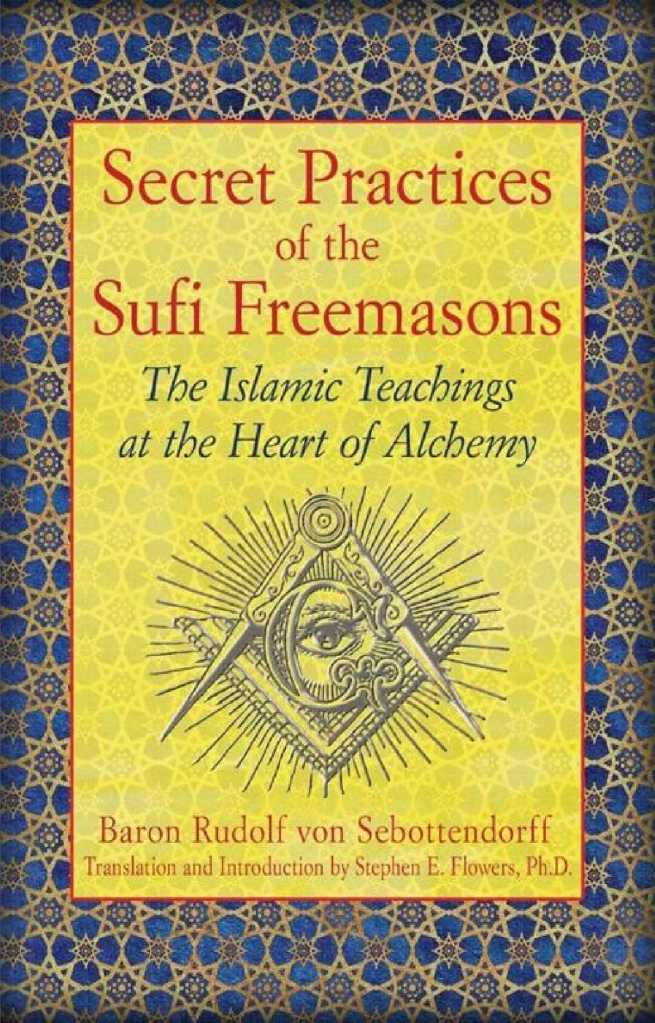
Baron Rudolf von Sebottendorff (1875-1945) was a Freemason and practitioner of alchemy. In 1900 he moved to Turkey where he met the Jewish Termudi family, who introduced him to Rosicrucianism and led to his initiation into a local Masonic lodge. In 1910 he founded a lodge of the Bektashi Order in Constantinople. Returning to Germany, in 1917 he founded the Thule Society, an occult organization that led to the German Workers’ Party–joined in 1919 by Adolf Hitler, who transformed it into the Nazi Party. Sebottendorff left the Thule Society as it became increasingly political, fleeing to Turkey.
Stephen Flowers studied Germanic and Celtic philology and religious history at the University of Texas at Austin and in Goettingen, West Germany. He received his Ph.D. in 1984 in Germanic Languages and Medieval Studies with a dissertation entitled Runes and Magic.
Read also :The Course and Destiny of Inverted Spirituality
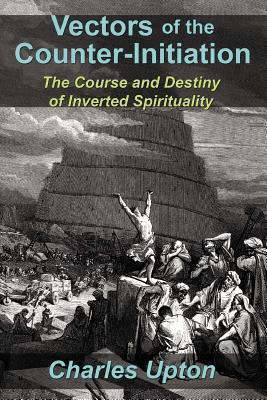
Anti-Tradition—secularism and materialism—opposes religion; Counter-Tradition inverts it; and the esoteric essence of Counter-Tradition is the Counter-Initiation.
Charles Upton expands on this concept, recognizing the action of the Counter-Initiation in such areas as the politicizing of the interfaith movement, the anti-human tendencies in the environmental movement, the growing interest in magic and sorcery, the involvement of the intelligence communities in the fields of UFO investigation and psychedelic research, the history of Templarism and Freemasonry, and the de-Islamicization of the famous Sufi poet, Jalaluddin Rumi.
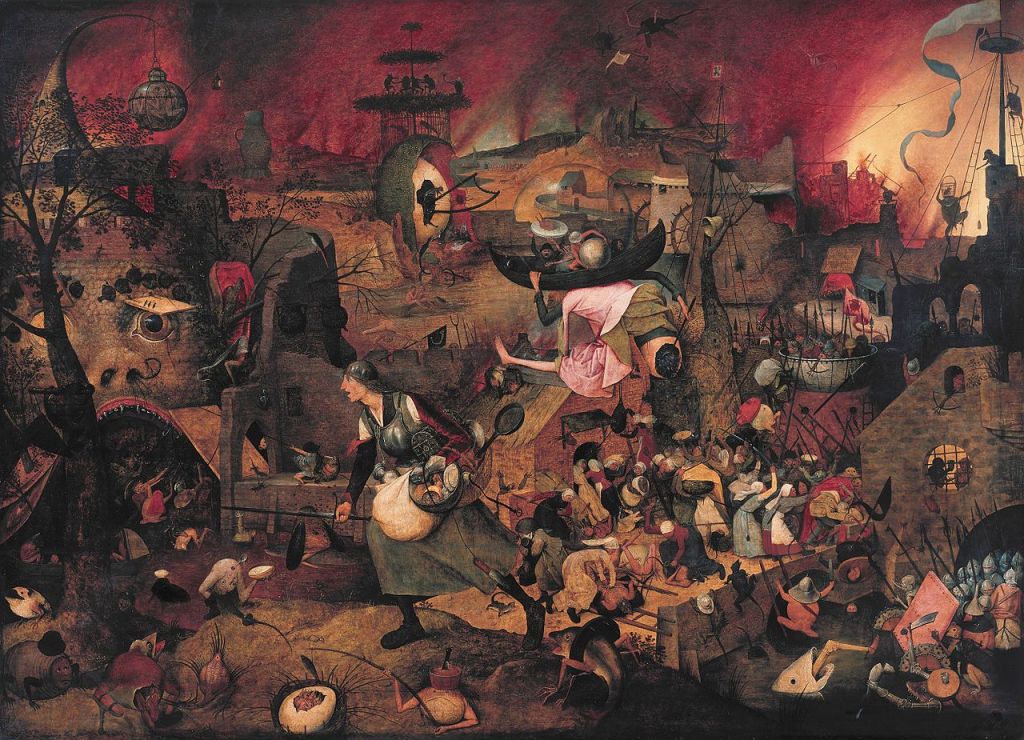
In the mid-16th century, Bruegel’s paintings are coveted conversation pieces. That they still elicit conversations and admiration 450 years later is no coincidence, according to Manfred Sellink. “There are only a few artists in history whose oeuvre has such a scope that you can spend a lifetime working on it, without getting bored,” says Manfred Sellink (director of the KMSKA in Antwerp and Bruegel expert) , who devoted the lion’s share of his career to Pieter Bruegel the old. “When he died in 1569 in Brussels, he dominated like no other, the image of that pivotal period in the Southern Netherlands, the mid-16th century developed into one of the most creative regions of the known world.”
Much like the great humanist scholar Erasmus of Rotterdam, Bruegel questioned how well we really know ourselves and also how we know, or visually read, others. His work often represented mankind’s ignorance and insignificance, emphasizing the futility of ambition and the absurdity of pride. See Bruegel : Discerning Wisdom from Folly
In PETER BRUEGEL THE ELDER AND ESOTERIC TRADITION , we have explored the idea that traditional sacred art and literature are vehicles for transmitting knowledge of what philosophers associated with the Perennial Philosophy regarded as eternal truths. We have also examined the idea that such knowledge comes veiled in symbolism and allegory.
Bruegel: the Tower of Babel:The paintings depict the construction of the Tower of Babel, which, according to the Book of Genesis in the Bible, was built by a unified, monolingual humanity as a mark of their achievement and to prevent them from scattering: “Then they said, ‘Come, let us build ourselves a city, and a tower with its top in the heavens, and let us make a name for ourselves; otherwise we shall be scattered abroad upon the face of the whole earth.‘” (Genesis 11:4).

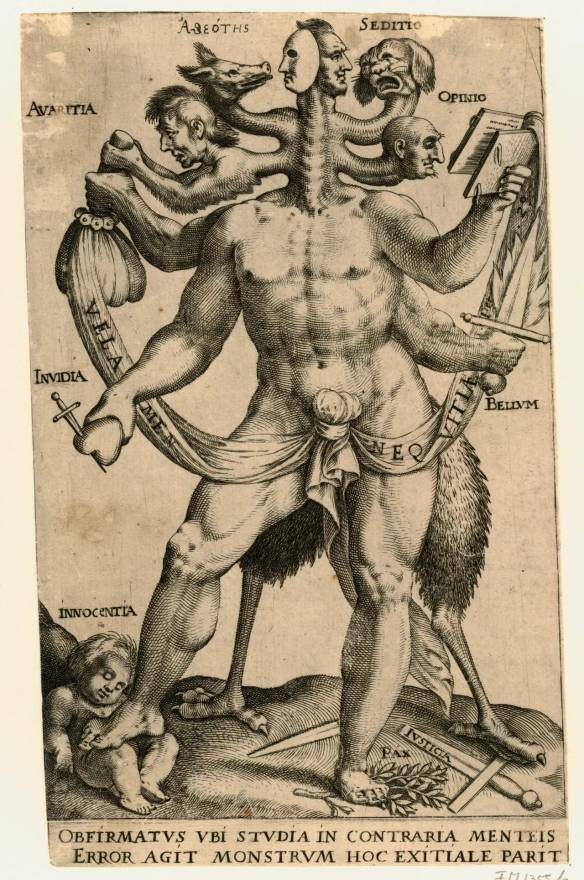
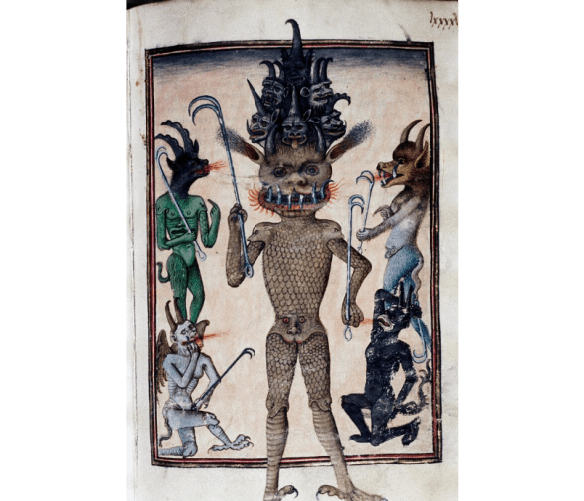
- “die before you die”
The Egyptians and other Traditions knew the meaning of “die before you die” to secure a new Spring: Mythology of Easter: Resurrection and Migration to the Spiritual Land of Peace
Sacrifice : the hidden meaning of easter
“Death is not the opposite of life. The opposite of death is birth. Life has no opposite.” — Eckhart Tolle
What if the story of Jesus isn’t about Jesus at all?
To re-cast a famous Joseph Campbell saying, what if each of us is the dying god of our own lives? What riches are uncovered if we read the dying god stories not as literal, historical events but as metaphors for our own evolution from material, biological beings bound by instinctual conditioning into spiritual beings of awakened consciousness? Is it any wonder then that the dying god is so often born of a virgin or through some other non-biological process? Horus was conceived as his mother Isis hovered in the form of a hawk over the dead body of her husband Osiris. Mithra was born spontaneously from a rock. Adonis, Attis, Dionysus, Jesus, Quetzalcoatl and many others were born of virgins. The hero, the gift-giver and the dying god live and have their being in higher consciousness, not in the lower realms of ego, competition and conflict. In the Gospel of John, when Nicodemus asks for Jesus’ advice, Jesus simply says, “you must be born from above.” In other words, each of us must shift from lower consciousness to the higher plane of God-consciousness within. The virgin birth signifies that each of us, at the level of our divine essence, was not born from the union of sperm and egg but are identical and unified with the eternally Real, what Krishna called “the unborn” and what Jesus called “everlasting life”. Shifting out of body and ego identification is the work of every spiritual tradition.
If the purpose of myth is to teach us how to live our own lives, then what have we learned?
In Buddhism the central metaphor is that of awakening from the sleep of ignorance, suffering and conditioning. In Christianity the central metaphor is death and rebirth, coming out of our animal nature with its instinctual drives of acquisition and conflict and rising into the unitive experience of God-consciousness, transcending all boundaries and limitations. Resurrection is transformation. Rebirth signifies death to the ego, to limitation, to space and time. Rising from the “grave” of our lower nature embodies the realization of awakening.
Beneath the crests and troughs of the ocean’s waves lies an immense stillness, a stillness that is both the source of the waves and their destination. Is it not true that we “die” every night? Were it not for sleep, this cyclical, recurring “death”, this immersion into the sea of unconsciousness, our life would cease. Just as the silence between notes makes music possible, so too the empty formlessness of the Void makes possible the vibrant fullness of our conscious, waking life. In the end, the inner and the outer are the same. The surface mirrors the depth. The tomb is a womb. Nirvana is samsara, and the kingdom of heaven is lying all around us, only we do not see it. Not only is there a correspondence, there is an identity. Life, in essence, is synonymous with the eternal Ground of Being, the Real, what we in the west call God, and as such it is ultimately untouched by death. “Death is not the opposite of life,” Eckhart Tolle writes in Stillness Speaks. “The opposite of death is birth. Life has no opposite.” Despite centuries of theological calcification it is still possible for us to exhume the universal spiritual wisdom of the Christian story, that each of us is the presence of God-consciousness in the field of forms. Only, as Buddha pointed out, we don’t know it. Like the sun breaking over the horizon at countless sunrise services throughout Christendom this Easter, we too are gradually dawning to the truth of our divine nature. Dare to say it out loud. Let your sun rise. Let the wisdom within you shape your thoughts and words and actions. Become, finally, who you really are. This is the hidden meaning of Easter.
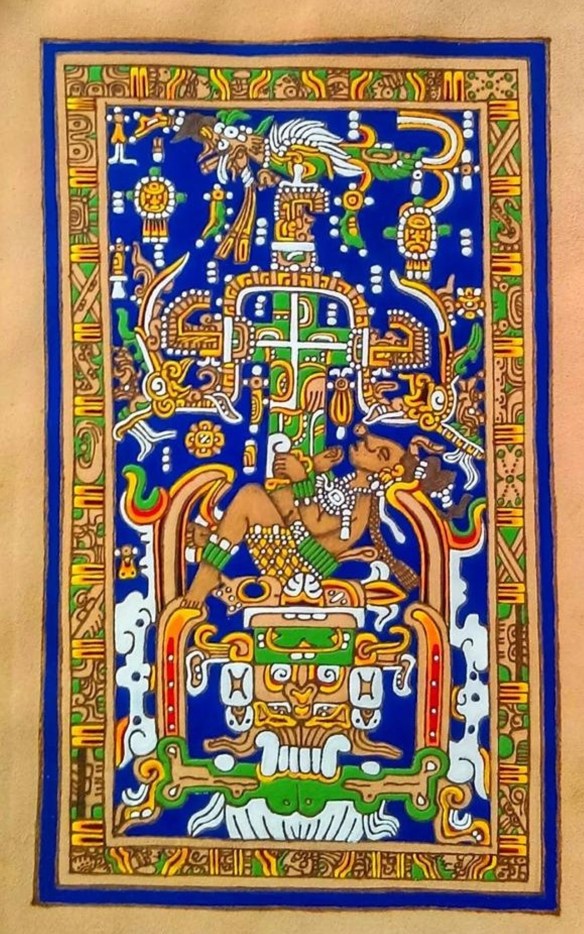
Pakal’s sarcophagus lid ( maya mythology)
see:Joseph Campbell and The Power of Myth
The Blessed Virgin Mary fell asleep on Mt. Rahel, Jesus came to her and asked; Mother are you asleep? I did sleep but you my Son awakened me, said the Blessed Virgin Mary.
She continued telling him this; I saw you in the Garden, stripped of your clothes, you were led to Caiphas to Pilate, from Pilate to Herode. There your Holy face was spat on (upon) and they crowned you with thorns.
Then they tied you to a pillar of stone and beat you with the chain of iron until your Holy Flesh fell away and then they nailed you on the cross and with a spear they pierced your side from which came your Holy Blood and Water. For more info Read the The Way of the Seeded Earth, Part 1: The Sacrifice (Historical Atlas of World Mythology)
Sacrifice : the hidden meaning of easter
“Death is not the opposite of life. The opposite of death is birth. Life has no opposite.” — Eckhart Tolle
What if the story of Jesus isn’t about Jesus at all?
To re-cast a famous Joseph Campbell saying, what if each of us is the dying god of our own lives? What riches are uncovered if we read the dying god stories not as literal, historical events but as metaphors for our own evolution from material, biological beings bound by instinctual conditioning into spiritual beings of awakened consciousness? Is it any wonder then that the dying god is so often born of a virgin or through some other non-biological process? Horus was conceived as his mother Isis hovered in the form of a hawk over the dead body of her husband Osiris. Mithra was born spontaneously from a rock. Adonis, Attis, Dionysus, Jesus, Quetzalcoatl and many others were born of virgins. The hero, the gift-giver and the dying god live and have their being in higher consciousness, not in the lower realms of ego, competition and conflict. In the Gospel of John, when Nicodemus asks for Jesus’ advice, Jesus simply says, “you must be born from above.” In other words, each of us must shift from lower consciousness to the higher plane of God-consciousness within. The virgin birth signifies that each of us, at the level of our divine essence, was not born from the union of sperm and egg but are identical and unified with the eternally Real, what Krishna called “the unborn” and what Jesus called “everlasting life”. Shifting out of body and ego identification is the work of every spiritual tradition.
If the purpose of myth is to teach us how to live our own lives, then what have we learned?
In Buddhism the central metaphor is that of awakening from the sleep of ignorance, suffering and conditioning. In Christianity the central metaphor is death and rebirth, coming out of our animal nature with its instinctual drives of acquisition and conflict and rising into the unitive experience of God-consciousness, transcending all boundaries and limitations. Resurrection is transformation. Rebirth signifies death to the ego, to limitation, to space and time. Rising from the “grave” of our lower nature embodies the realization of awakening.
Beneath the crests and troughs of the ocean’s waves lies an immense stillness, a stillness that is both the source of the waves and their destination. Is it not true that we “die” every night? Were it not for sleep, this cyclical, recurring “death”, this immersion into the sea of unconsciousness, our life would cease. Just as the silence between notes makes music possible, so too the empty formlessness of the Void makes possible the vibrant fullness of our conscious, waking life. In the end, the inner and the outer are the same. The surface mirrors the depth. The tomb is a womb. Nirvana is samsara, and the kingdom of heaven is lying all around us, only we do not see it. Not only is there a correspondence, there is an identity. Life, in essence, is synonymous with the eternal Ground of Being, the Real, what we in the west call God, and as such it is ultimately untouched by death. “Death is not the opposite of life,” Eckhart Tolle writes in Stillness Speaks. “The opposite of death is birth. Life has no opposite.” Despite centuries of theological calcification it is still possible for us to exhume the universal spiritual wisdom of the Christian story, that each of us is the presence of God-consciousness in the field of forms. Only, as Buddha pointed out, we don’t know it. Like the sun breaking over the horizon at countless sunrise services throughout Christendom this Easter, we too are gradually dawning to the truth of our divine nature. Dare to say it out loud. Let your sun rise. Let the wisdom within you shape your thoughts and words and actions. Become, finally, who you really are. This is the hidden meaning of Easter.
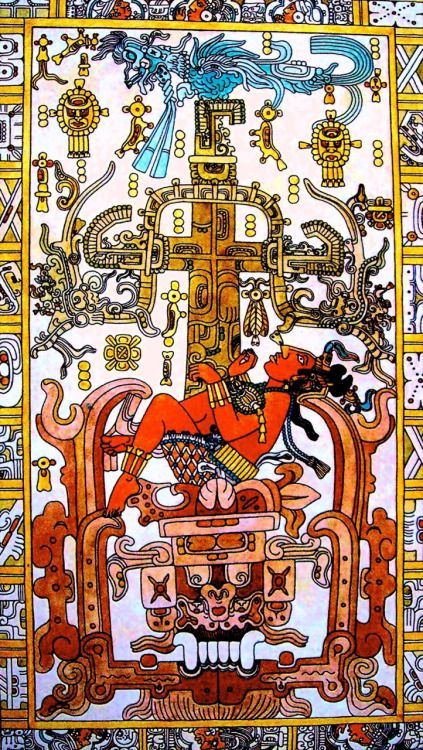
Carved lid of the tomb of Kʼinich Janaab Pakal I in the Temple of the Inscriptions.
The large carved stone sarcophagus lid in the Temple of Inscriptions is a unique piece of Classic Maya art. Iconographically, however, it is closely related to the large wall panels of the temples of the Cross and the Foliated Cross centered on world trees. Around the edges of the lid is a band with cosmological signs, including those for sun, moon, and star, as well as the heads of six named noblemen of varying rank.[18] The central image is that of a cruciform world tree. Beneath Pakal is one of the heads of a celestial two-headed serpent viewed frontally. Both the king and the serpent head on which he seems to rest are framed by the open jaws of a funerary serpent, a common iconographic device for signalling entrance into, or residence in, the realm(s) of the dead. The king himself wears the attributes of the Tonsured maize god – in particular a turtle ornament on the breast – and is shown in a peculiar posture that may denote rebirth.[19] Interpretation of the lid has raised controversy. Linda Schele saw Pakal falling down the Milky Way into the southern horizon.
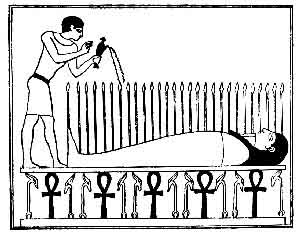
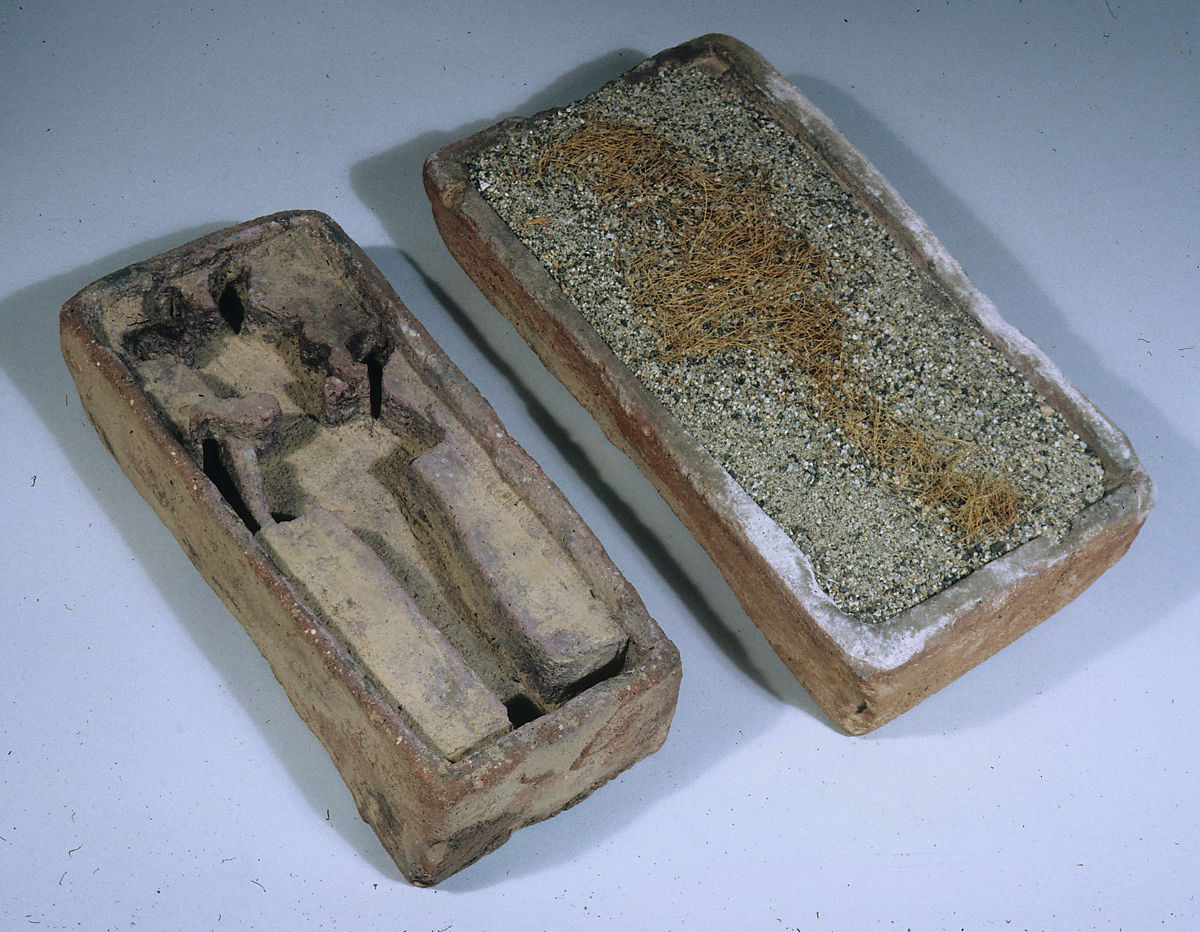
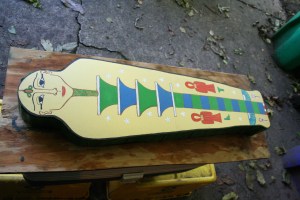
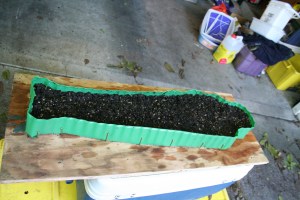
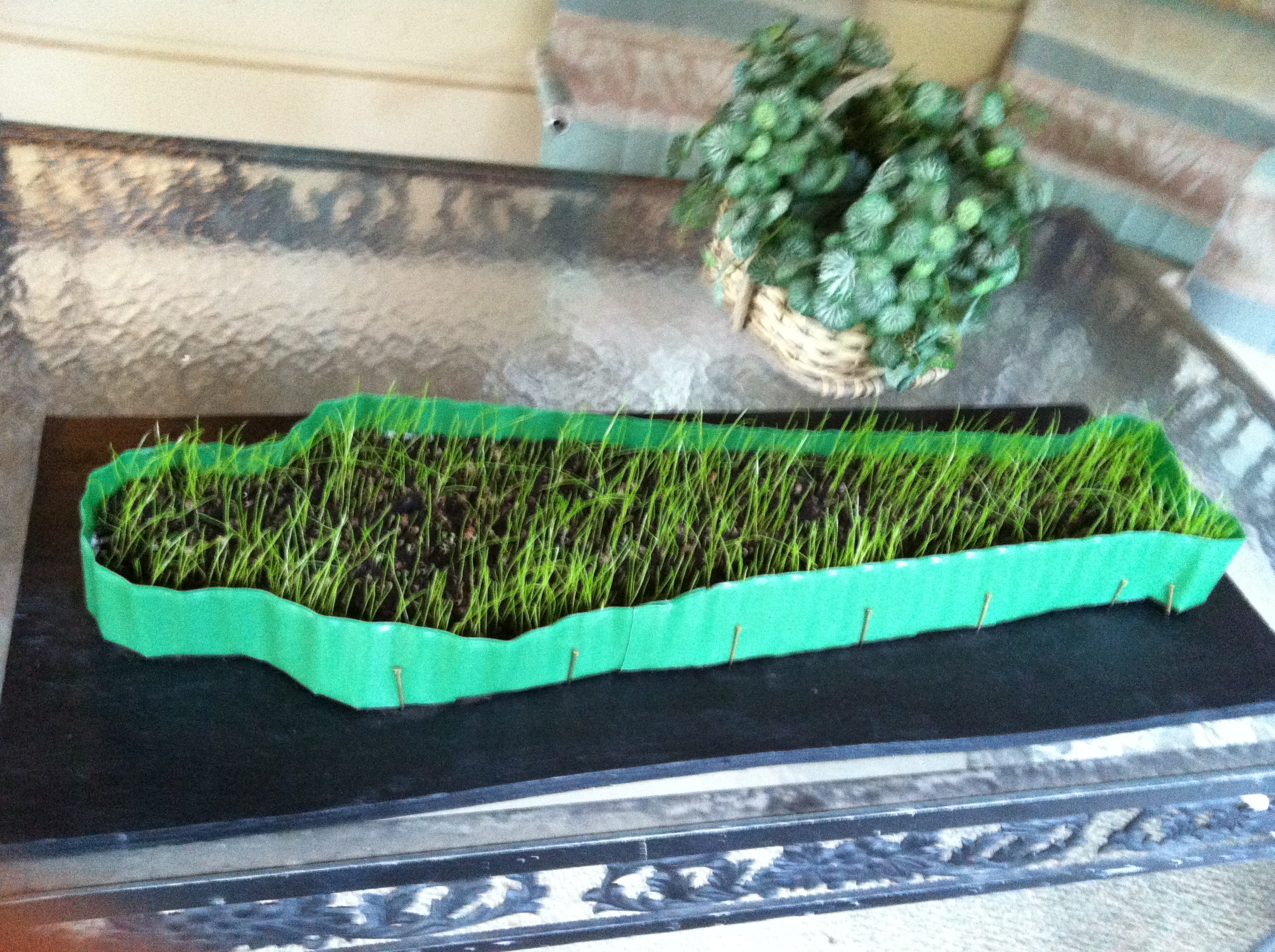
Germinate osiris:
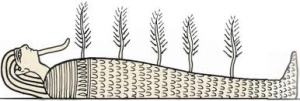
Beginning in Dynasty 18, beds were made on which soil was molded into the shape of the god of regeneration and ruler of the dead, Osiris. Thickly sown with grain and kept moist until the grain sprouted and grew, then left to dry again, these figures were created as part of a ritual carried out in association with the Osirian Festival of Khoiak. They magically expressed the concept of life springing from death, symbolizing the resurrection of Osiris. Some examples are also seen in tomb contexts, as the deceased was identified with this god.
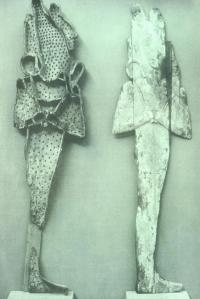
In later periods, pottery Osiris bricks were most likely used during the Khoiak Festival as planters; this example was empty, but others contained soil mixed with cereal grains and linen. Here Osiris is shown in his typical form as a mummy, wearing the tall crown of Upper Egypt flanked by ostrich plumes. In his hands he In his hands he holds the crook and flail of kingship. See : The Corn Osiris of Isis Oasis
Read also: OSIRIS & HUN HUNAHPU: Corresponding Grain Gods of Egypt and Mesoamerica
Many scholars suggest that Quetzalcoatl of Mesoamerica (also known as the Feathered Serpent), the Maya Maize God, and Jesus Christ could all be the same being. By looking at ancient Mayan writings such as the Popol Vuh, this theory is further explored and developed. These ancient writings include several stories that coincide with the stories of Jesus Christ in the Bible, such as the creation and the resurrection.
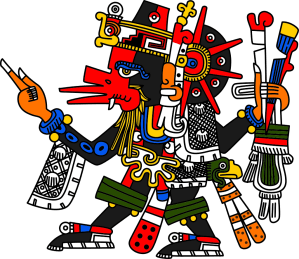
The symbol of the serpent has long been associated with deities of Mexico and Guatemala. In the Aztec language, the word “coatl” means serpent. By placing the Aztec word “quetzal” in front of the word “coatl” we have the word, “Quetzalcoatl”. The word “quetzal” means feathers. A beautiful bird, native to Guatemala, carries the name quetzal. Quetzalcoatl, therefore, means, “feathered serpent,” or serpent with precious feathers. (See our web site for illustration} The word quetzal is the name of the coin in Guatemala and also is the national symbol of the country.
Throughout pre-Columbian Mexican history, scores of individuals, both mythological and real, were given the name or title of Quetzalcoatl. Attempts also have been made to attribute the name Quetzalcoatl to only one person. The following quotations are indicative of what is said about Quetzalcoatl
The role that both Quetzalcoatl and the Maize God played in bringing maize to humankind is comparable to Christ’s role in bringing the bread of life to humankind. Furthermore, Quetzalcoatl is said to have descended to the Underworld to perform a sacrifice strikingly similar to the atonement of Jesus Christ. These congruencies and others like them suggest that these three gods are, in fact, three representations of the same being. Read more here: Quetzalcoatl the Maya Maize God and Jesus Christ
In the sacred history of Meso-America, a Christ-like figure dominates the spiritual horizon. His name is Quetzalcoatl, which means the Plumed Serpent. Quetzalcoatl is one of the most ancient concepts of God in this region. He reconciles in himself heaven and earth. He is the creator of humankind and the giver of agriculture and the fine arts.
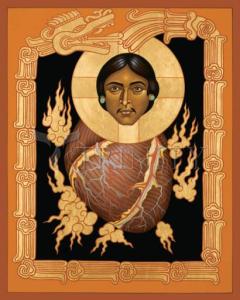
In the tenth century, a Toltec priest named Quetzalcoatl acquired a large following in the Valley of Mexico. He opposed both human sacrifice and warfare, promoting instead the arts and self-discipline as a means for coming closer to God. This made him many enemies among the ruling classes. They brought about his downfall, but he confounded them by rising from the dead, after being consumed in a sacred fire. His heart became the morning star, and he himself became young once again. He promised to return one day to his people.
The stories of Quetzalcoatl and Christ are so similar that it is easy to see one in the other. In this icon, both Quetzalcoatl and Christ are depicted in the same guise. It is a resurrection icon, with their heart ascending from the flames of death and rebirth. Around the edge, in gold leaf, is an ancient Aztec depiction of the Plumed Serpent. Red and black are the colors the Aztecs associated with the morning star.
Quetzalcoatl and Christ bring us the same timeless message: God is closer to us than we are to ourselves. In both their lives, our human condition has been joined inseparably to the divine. Each proclaims to us a simple gospel of compassion, and invites us to dance with God in the divine fire burning in each of our hearts.
see also:The Sun Dance: A Maypole of Wisdom for the 21th century
Look also at :The Tale of the Machine – by Paul Kingsnorth
Note : The Chapel was planned to be a part of a large project as a cathedral
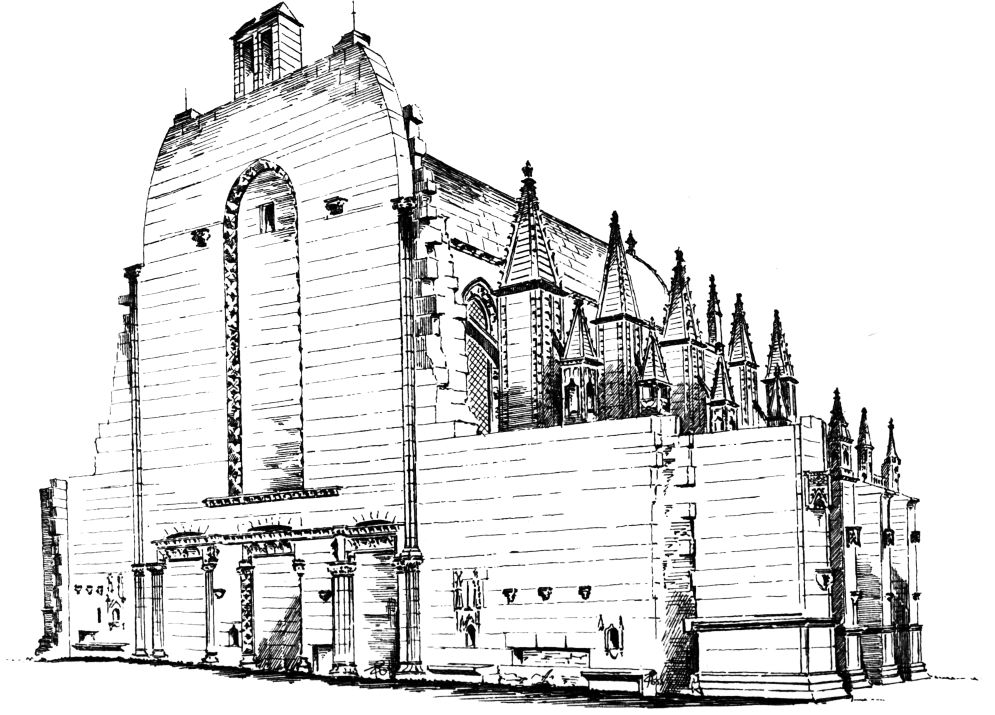
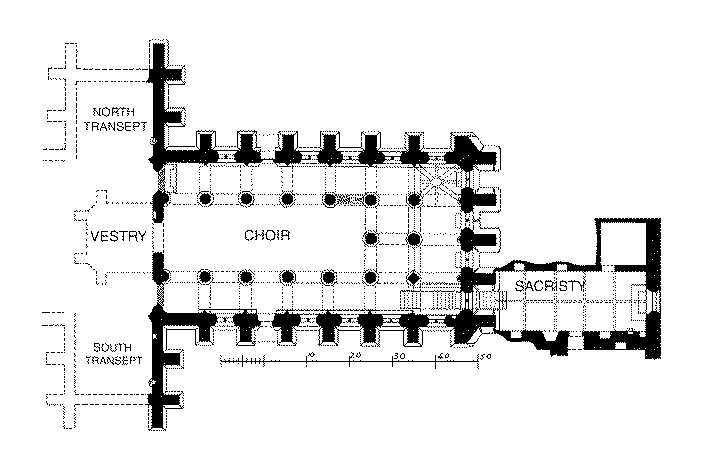
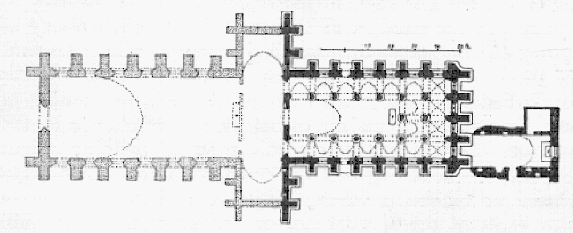
Here by a very good explanation of a cathedral deaign by Tom Bree:
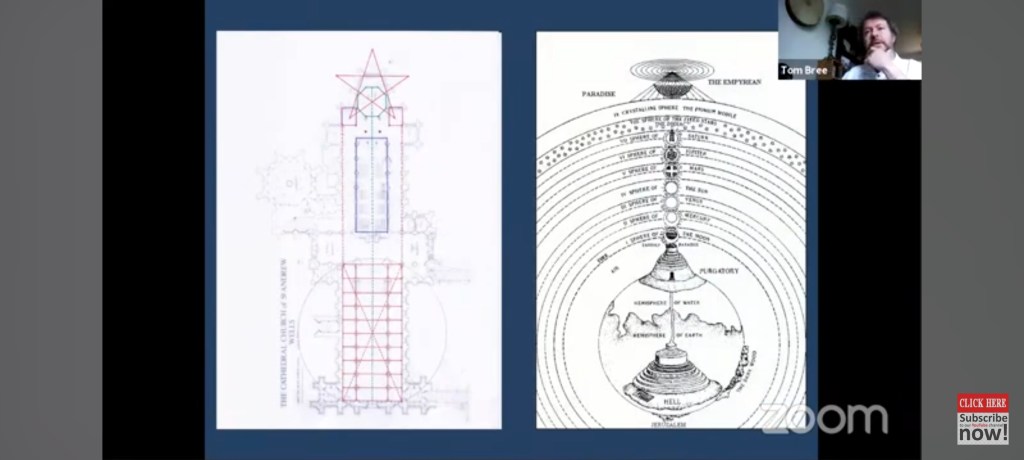
See also The Cosmos in Stone in The Cosmos in Stone: the Ascent of the Soul and Cosmology in Sufism
- St Geoges and St demetrios … the twin Brothers
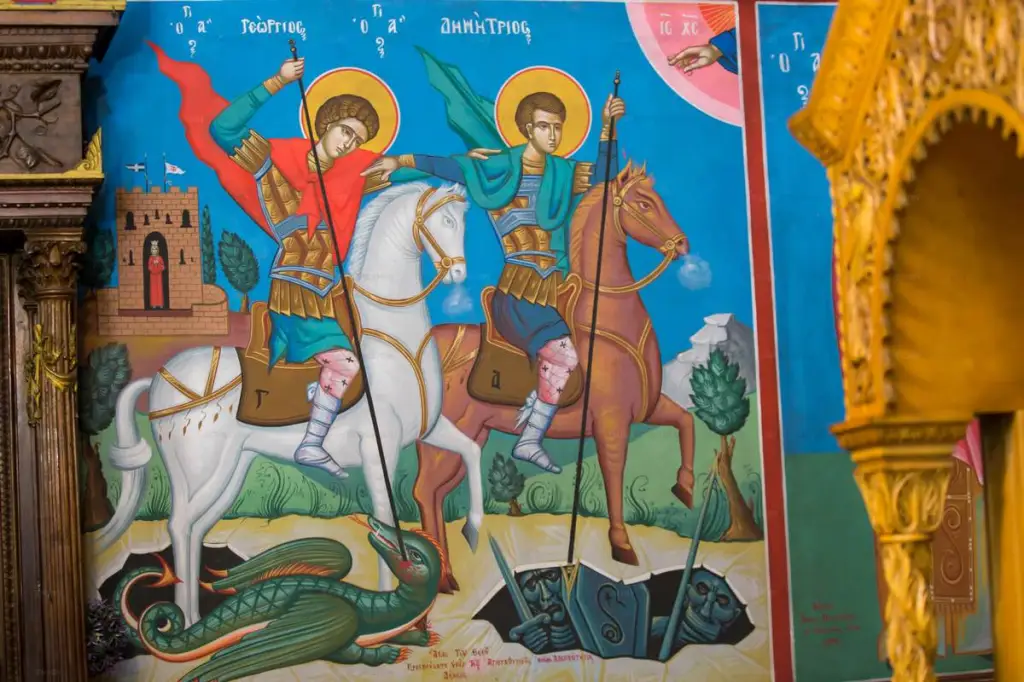
The traditional calendar of Bulgarians in the past had several important dates in the transitional period between the change of seasons. Climatic conditions on Bulgarian lands quite naturally split the cycle of nature into two major parts. The first part starts on May 6th, or Saint George’s Day, when spring arrives and all nature awakens for life. The second borderline is October 26th, or the Day of Saint Demetrius. This is deemed to be the end of the active agricultural season, the start of winter, evening gatherings and engagements of young couples. Just as every new beginning, Saint Demetrius’ Day was a source of much hope. On this day, people would make predictions as to the future fertility, health, love and the weather at the coming Saint George’s Day. Because in folk beliefs, George and Demetrius were twin brothers, that is why the predictions made on Saint Demetrius’ Day were valid for the day of his twin brother.
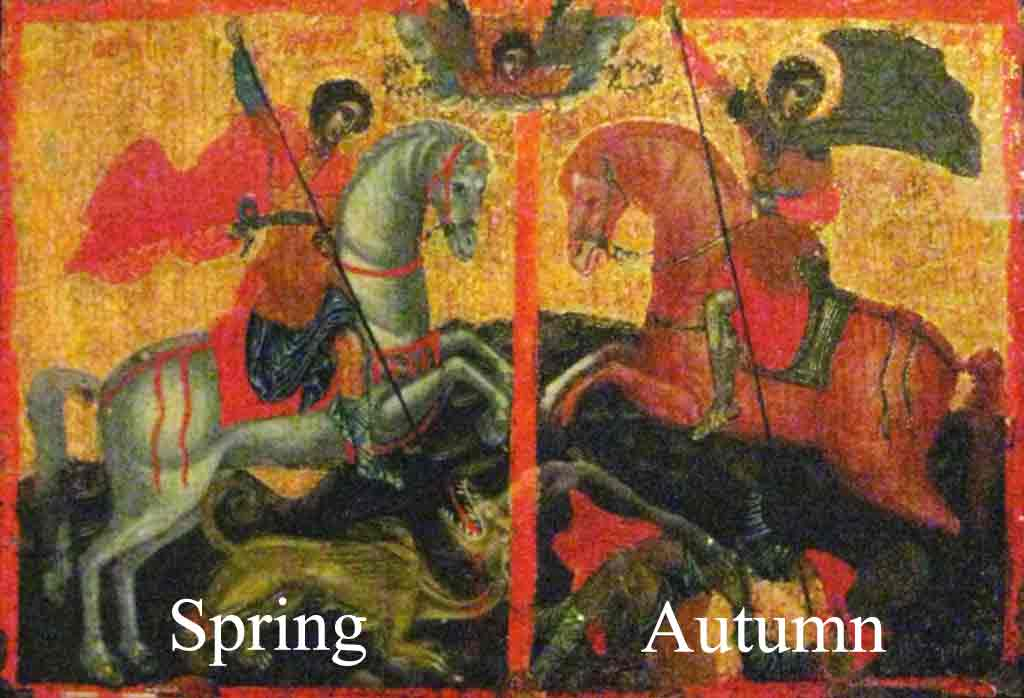
Saint Demetrius’ Day is a big Christian holiday. On this day, Bulgarians traditionally venerate the memory of the holy martyr Demetrius who was born in Thessaloniki in the 3rd century AD. He died as a martyr for the Christian faith, and upon his grave in Thessaloniki a small church was erected. At the place of this small church, a magnificent basilica stands today, where the relics of St. Demetrius are kept. This is, in a nutshell, his official Christian role in Bulgarian beliefs. In Bulgarian folklore, however, St. Demetrius has been given a special place, and the whole month of October is sometimes called the Month of Demetrius.
In folk beliefs, Saint Demetrius is the elder twin brother of St. George. Both are strong, beautiful and fearless men. Along with St. Theodore and St. Elijah, they are the Christianized equivalent of the brave men in Bulgarian mythology. Strong and dexterous in the battle, with their fast horses they can jump over mountains, conquer evil, and fight dragons. In folk tales and legends, the two saints have the power to open and close heaven, make rain and snow and ensure fertility. The task of St. Elijah was to protect the fields of corn from the evil creatures who stole the harvest. His brothers, twins George and Demetrius, were also strong enough to defeat the mythical monsters. They are represented as warriors and victors also in Christian iconography. Saint George is riding a white horse and Saint Demetrius a red one, both holding a spear in hand. Read more here
- Symbolism of Holy Grail and Sir Gawain and the green Knight
The Symbolism of the Holy Grail
by Rene Guenon
In connection with the Knights of the Round Table it is not irrelevant to show the meaning of the “Grail quest”, which, in legends of Celtic origin, is represented as their principal function. Every tradition contains such allusions to something which, at a certain time, became lost or hidden. There is, for example, the Hindu Soma—the Persian Haoma—the “draught of immortality” which has a most direct relationship with the Grail, for the latter is said to be the sacred vessel that contained the blood of Christ, which is also the “draught of immortality”. In other cases the symbolism is different: thus according to the Jews it is the pronunciation of
the great divine Name which is lost; but the fundamental idea always remains the same, and it will shortly appear to what, exactly, it corresponds.
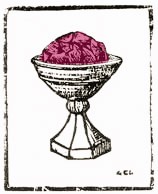
The Holy Grail is said to be the cup used at the Last Supper, wherein Joseph of Arimathea received the blood and water from the wound opened in Christ’s side by the lance of Longinus the Centurion. According to legend, this cup was carried to Britain by Joseph of Arimathea himself along with Nicodemus;2 and in this can be seen the indication of a link established between the Celtic tradition and Christianity. In fact, the cup plays a most important part in the majority of ancient traditions, and this, no doubt, applied particularly in the case of the Celts. The cup is also to be observed in frequent association with the lance, the two symbols then becoming in a certain way complementary; but it would take us far from our subject to enter into this.
Perhaps the clearest expression of the Grail’s essential significance is found in the account of its origin: it tells that this cup had been carved by the angels from an emerald which fell from Lucifer’s forehead at his downfall. That emerald strikingly recalls the urnā, the frontal pearl which, in Hindu (and hence in Buddhist) symbolism, frequently replaced the third eye of Shiva, representing what might be called the “sense of eterni ty”. It is then said that the Grail was given into Adam’s keeping in the Earthly Paradise, but that Adam, in his
turn, lost it when he fell, for he could not bear it with him when he was driven out of Eden. Clearly, man being separated from his original center, thereafter found himself enclosed in the temporal sphere; he could no longer rejoin the unique point whence all things are contemplated under the aspect of eternity. In other words the possession of the “sense of eternity” is linked to what every tradition calls the “primordial state”, the res toring of which constitutes the first stage of true initiation, since it is the necessary preliminary to conquest of “supra-human” states.
What follows might appear more enigmatic: Seth obtained re-entry into the Earthly Paradise and was thus able to recover the precious vessel; now the name Seth expresses the ideas of foundation and stability and, consequently, indicates, in a certain manner, the restoration of the primordial order destroyed by the fall of man. It can therefore be understood that Seth and those who possessed the Grail after him were by this very fact, able to establish a spiritual center destined to replace the lost Paradise, and to serve as an image of it; thus
possession of the Grail represents integral preservation of the primordial tradition in a particular spiritual center. The legend tells neither where nor by whom the Grail was preserved until the time of Christ; but its recognizably Celtic origin leaves it to be understood that the Druids had a part therein and must be counted among the regular custodians of the primordial tradition.
The loss of the Grail, or of one of its symbolic equivalents, is, in brief, the loss of tradition with all that the latter includes; nevertheless, the tradition is, in truth, hidden rather than lost; or at least it can only be lost as regards certain secondary centers, when they cease to be in direct relation with the supreme center. Read more here
For The Legend of King Arthur: The Once and Future King and his Knights of the Round Table, the mysterious Grail – a legend which is wide spread over Europe and even beyond, makes people want to know even more. Look here
René Guénon and the Heart of the Grail:
Looking around him, describing and deploring the effects of modernity, René Guénon found an answer in the Grail. More than that, he believed that it could light our way back to the Terrestrial Paradise, to the kind of communion with the divine enjoyed by our primordial parents in Eden. It may even offer us deliverance from the world completely, carrying us beyond the cosmos until we are so utterly transfigured and transformed that we are no longer merely human.
As Guénon is undoubtedly one of the most interesting thinkers of the twentieth century, we may find it fruitful to meditate on these ideas. They may not set us on the path to transformation (as Guénon would wish), but they may reveal a truth which is not generally appreciated: that at the very centre of Guénon’s challenging thinking, the
place where the Grail is to be sought, is a heart overflowing with joy and love. Read here
Sir Gawain and the Green Knight :

During a New Year’s Eve feast at King Arthur’s court, a strange figure, referred to only as the Green Knight, pays the court an unexpected visit. He challenges the group’s leader or any other brave representative to a game. The Green Knight says that he will allow whomever accepts the challenge to strike him with his own axe, on the condition that the challenger find him in exactly one year to receive a blow in return.
Stunned, Arthur hesitates to respond, but when the Green Knight mocks Arthur’s silence, the king steps forward to take the challenge. As soon as Arthur grips the Green Knight’s axe, Sir Gawain leaps up and asks to take the challenge himself. He takes hold of the axe and, in one deadly blow, cuts off the knight’s head. To the amazement of the court, the now-headless Green Knight picks up his severed head. Before riding away, the head reiterates the terms of the pact, reminding the young Gawain to seek him in a year and a day at the Green Chapel. After the Green Knight leaves, the company goes back to its festival, but Gawain is uneasy.
Time passes, and autumn arrives. On the Day of All Saints, Gawain prepares to leave Camelot and find the Green Knight. He puts on his best armor, mounts his horse, Gringolet, and starts off toward North Wales, traveling through the wilderness of northwest Britain. Gawain encounters all sorts of beasts, suffers from hunger and cold, and grows more desperate as the days pass. On Christmas Day, he prays to find a place to hear Mass, then looks up to see a castle shimmering in the distance. The lord of the castle welcomes Gawain warmly, introducing him to his lady and to the old woman who sits beside her. For sport, the host (whose name is later revealed to be Bertilak) strikes a deal with Gawain: the host will go out hunting with his men every day, and when he returns in the evening, he will exchange his winnings for anything Gawain has managed to acquire by staying behind at the castle. Gawain happily agrees to the pact, and goes to bed.
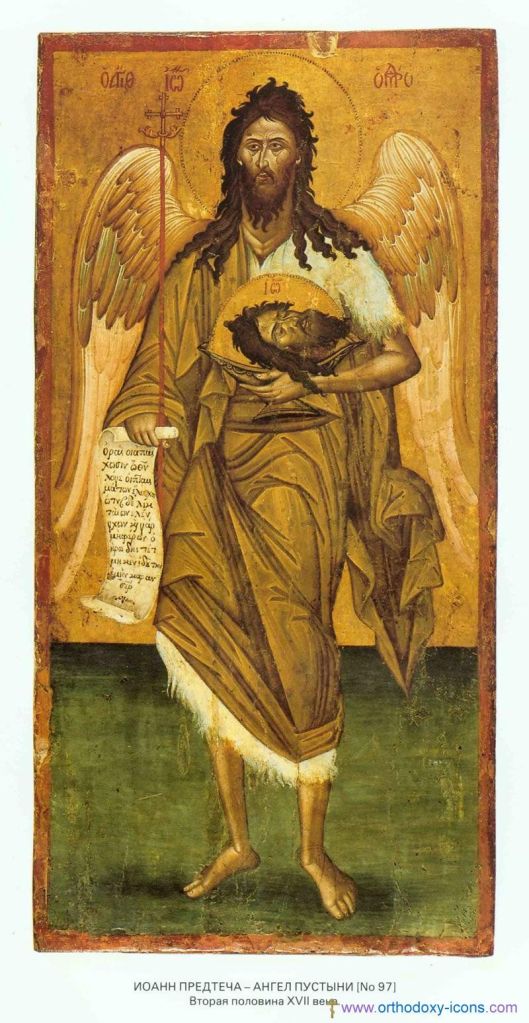
The first day, the lord hunts a herd of does, while Gawain sleeps late in his bedchambers. On the morning of the first day, the lord’s wife sneaks into Gawain’s chambers and attempts to seduce him. Gawain puts her off, but before she leaves she steals one kiss from him. That evening, when the host gives Gawain the venison he has captured, Gawain kisses him, since he has won one kiss from the lady. The second day, the lord hunts a wild boar. The lady again enters Gawain’s chambers, and this time she kisses Gawain twice. That evening Gawain gives the host the two kisses in exchange for the boar’s head.
The third day, the lord hunts a fox, and the lady kisses Gawain three times. She also asks him for a love token, such as a ring or a glove. Gawain refuses to give her anything and refuses to take anything from her, until the lady mentions her girdle. The green silk girdle she wears around her waist is no ordinary piece of cloth, the lady claims, but possesses the magical ability to protect the person who wears it from death. Intrigued, Gawain accepts the cloth, but when it comes time to exchange his winnings with the host, Gawain gives the three kisses but does not mention the lady’s green girdle. The host gives Gawain the fox skin he won that day, and they all go to bed happy, but weighed down with the fact that Gawain must leave for the Green Chapel the following morning to find the Green Knight.
New Year’s Day arrives, and Gawain dons his armor, including the girdle, then sets off with Gringolet to seek the Green Knight. A guide accompanies him out of the estate grounds. When they reach the border of the forest, the guide promises not to tell anyone if Gawain decides to give up the quest. Gawain refuses, determined to meet his fate head-on. Eventually, he comes to a kind of crevice in a rock, visible through the tall grasses. He hears the whirring of a grindstone, confirming his suspicion that this strange cavern is in fact the Green Chapel. Gawain calls out, and the Green Knight emerges to greet him. Intent on fulfilling the terms of the contract, Gawain presents his neck to the Green Knight, who proceeds to feign two blows. On the third feint, the Green Knight nicks Gawain’s neck, barely drawing blood. Angered, Gawain shouts that their contract has been met, but the Green Knight merely laughs.
The Green Knight reveals his name, Bertilak, and explains that he is the lord of the castle where Gawain recently stayed. Because Gawain did not honestly exchange all of his winnings on the third day, Bertilak drew blood on his third blow. Nevertheless, Gawain has proven himself a worthy knight, without equal in all the land. When Gawain questions Bertilak further, Bertilak explains that the old woman at the castle is really Morgan le Faye, Gawain’s aunt and King Arthur’s half sister. She sent the Green Knight on his original errand and used her magic to change Bertilak’s appearance. Relieved to be alive but extremely guilty about his sinful failure to tell the whole truth, Gawain wears the girdle on his arm as a reminder of his own failure. He returns to Arthur’s court, where all the knights join Gawain, wearing girdles on their arms to show their support. See: The Journey to the Self: Stages of Trauma and Initiation in Sir Gawain and the Green Knight
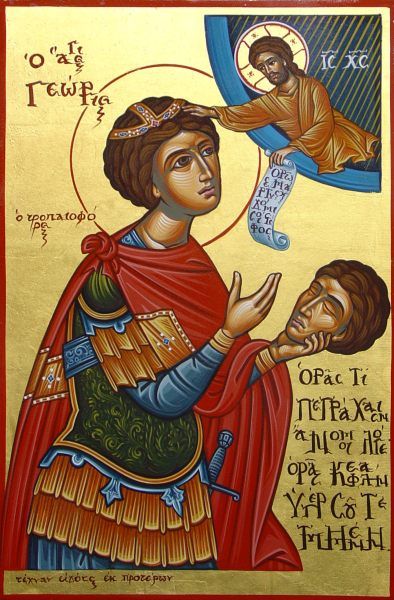
look also at Sir Gawain and the Green Knight by Coomaraswamy
” This is the vera sentenzia of ‘losing one’s head.’ It is called a ‘secret’ and a ‘mystery’ not because it cannot be stated in words, however enigmatically, but because it must remain incomprehensible to whoever has not taken even the first steps on the way of self-naughting, and never having sacrificed is still ‘unborn.”‘
Whoever, like Gawain, searches for the Master Surgeon, to pay his debt, and submits to this Headman’s axe, will find himself, not without a head, but with another head on his shoulders; just as Gawain, having lain down to die, assuredly stood up again a new man. That is what is enacted in the ritual, in which the sacrificer himself is always identified with the victim, – ‘and verily, no sacrifice whatever is offered that is not the Pravargya for the Comprehensor thereof. And, verily, whosoever teaches, or participates in (bhaksayati) this Pravargya enters into that Life and that Light. The observance of the rule thereof is the same as it was at the first outpouring”
- The Imitation of Christ , by Thomas à Kempis, is a Christian devotional book first composed in Medieval Latin as De Imitatione Christi (c. 1418–1427).[1][2] The devotional text is divided into four books of detailed spiritual instructions: (i) “Helpful Counsels of the Spiritual Life”, (ii) “Directives for the Interior Life”, (iii) “On Interior Consolation”, and (iv) “On the Blessed Sacrament”. The devotional approach of The Imitation of Christ emphasises the interior life and withdrawal from the mundanities of the world, as opposed to the active imitation of Christ practised by other friars.[1] The devotions of the books emphasize devotion to the Eucharist as the key element of spiritual life.[Read here
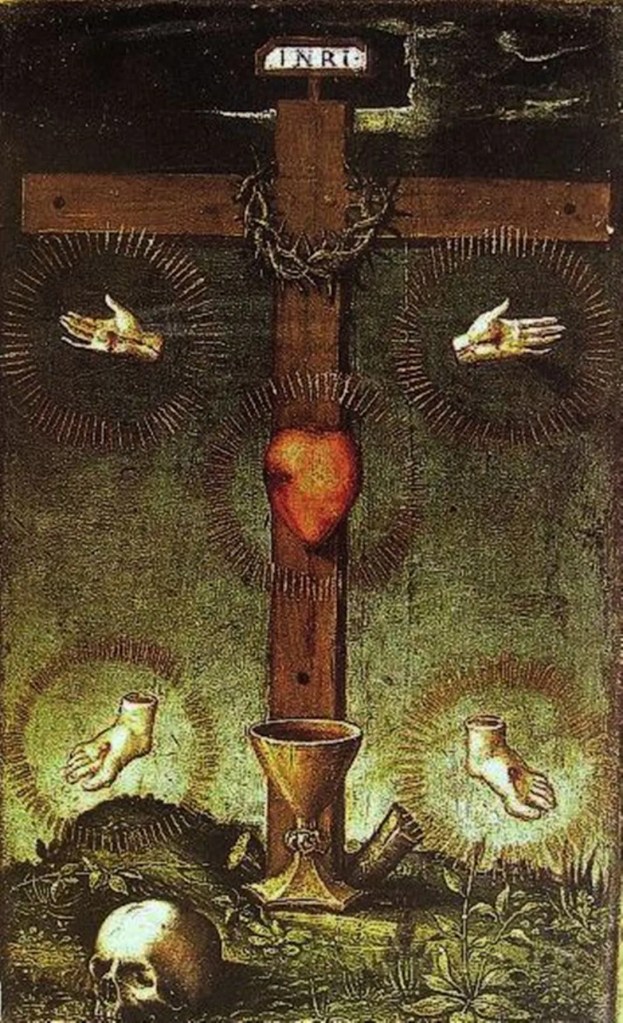
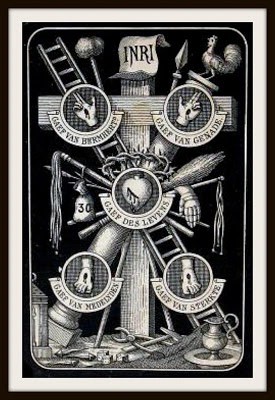
What does love look like?
It has the hands to help others.
It has the feet to hasten to the poor and needy.
It has eyes to see misery and want.
It has the ears to hear the sighs and sorrows of men.
That is what love looks like.
Saint Augustine
In the 5 circles is written: “Gave van Barmhartigheid“: Gift of Mercy , “Gave van Genade’: Gift of Grace, “Gave des Levens” ( in the heart): Gift of Life, ” Gave van Medelijden”: Gift of Compassion, “Gave van sterkte“: Gift of strength.
Read more The infancy of Jesus
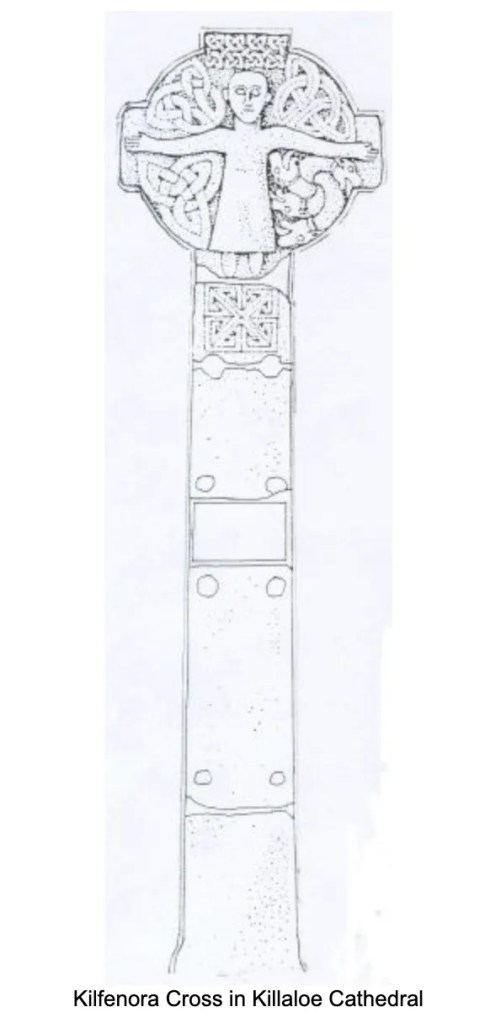
The Analavos of the Great Schema Explained
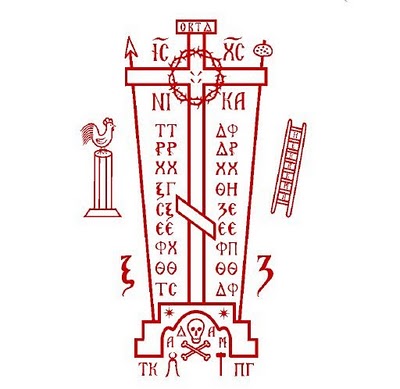
The Great Schema in the Orthodox Church requires the traditional monastic vows, plus
special spiritual feats. According to Archpriest G. S. Debolsky: “In the understanding of the
Church, the Great Schema is nothing less than the supreme vow of the Cross and death; it is the image of complete isolation from the earth, the image of transformation and
transfiguration of life, the image of death and the beginning of another, higher, existence.”
As a monastic dignity, the Great Schema has been known since the 4th century. According to an ancient legend, this dignity was inaugurated by St. Pachomios the Great. However, as a form of monastic life, the Great Schema goes back to the origin of Christianity. Those who
followed Christ’s teachings on supreme spiritual perfection by voluntarily taking the vows of
chastity, obedience and poverty were called ascetics to distinguish them from other
Christians. They led a harsh and secluded hermit’s life like St. John the Baptist, or like our
Lord Jesus Christ Himself during his forty days in the desert.
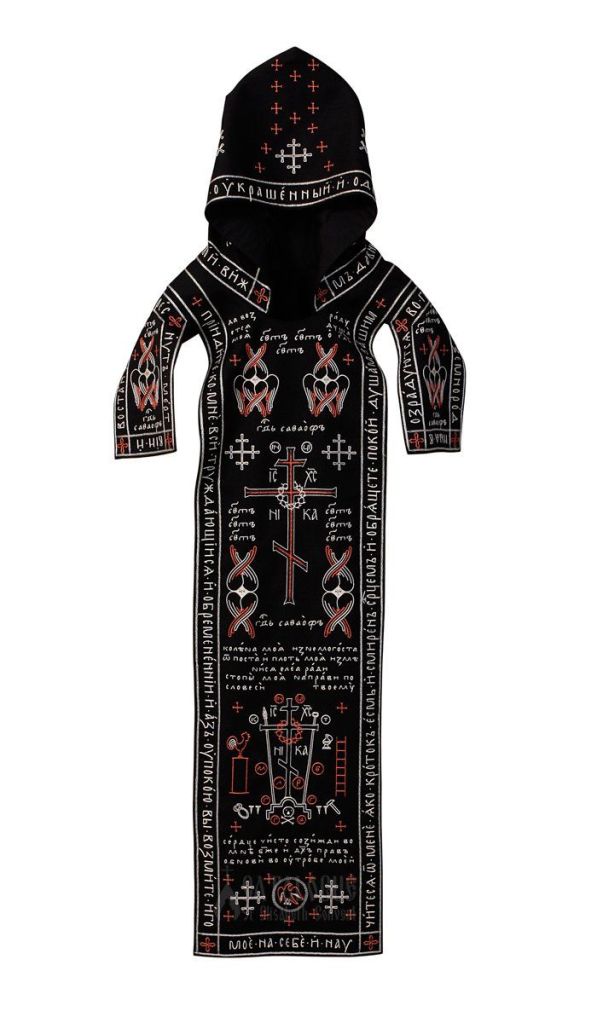

According to the Rule of St. Pachomios, the act of acceptance into a monastery had three
steps and consisted of (a) “temptation” (trial), (b) clothing, and (c) presentation to the starets
for spiritual guidance. Each of the three steps undoubtedly had its own significance. They
marked the beginning of the three stages in monasticism which have become deeply
embedded in the life of the Eastern Church: first, the novice (or rasoforos); the second, the
monk (known as a monk of the Lesser Schema); and the third, the monk of the Great
Schema. Read more here
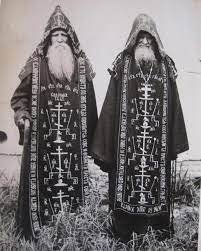
look also : ABOUT DEATH TO THE WORLD
IN THE WILDERNESS of Northern California, Monks John and Damascene searched in hopes of finding a way to reach out to the Punk scene, which John had escaped. Seeing that the scene was full of kids that were sick of themselves and crippled by nihilism and despair, the Monks set out to give them the same hope that they found in Ancient Christianity. To do this, they decided to submit an article about Father Seraphim Rose in the popular magazine, Maximum Rock and Roll. When Father Damascene read over the magazine, he knew that they would never publish something like it. Struggling to show truth to the darkened subcultures, they tried again, but this time only placing an ad for Saint Hermans Brotherhood. They got a response from the editor, saying “What the @#*% is a Brotherhood?” and the Monks were told “We only run ads for music and ‘zines*.” A light bulb went on and thus, Death to the World was born. The first issue was printed in the December of ’94 featuring a Monk holding a skull on cover. The hand-drawn bold letters across the top read “DEATH TO THE WORLD, The Last True Rebellion” and the back cover held the caption: “they hated me without a cause.”
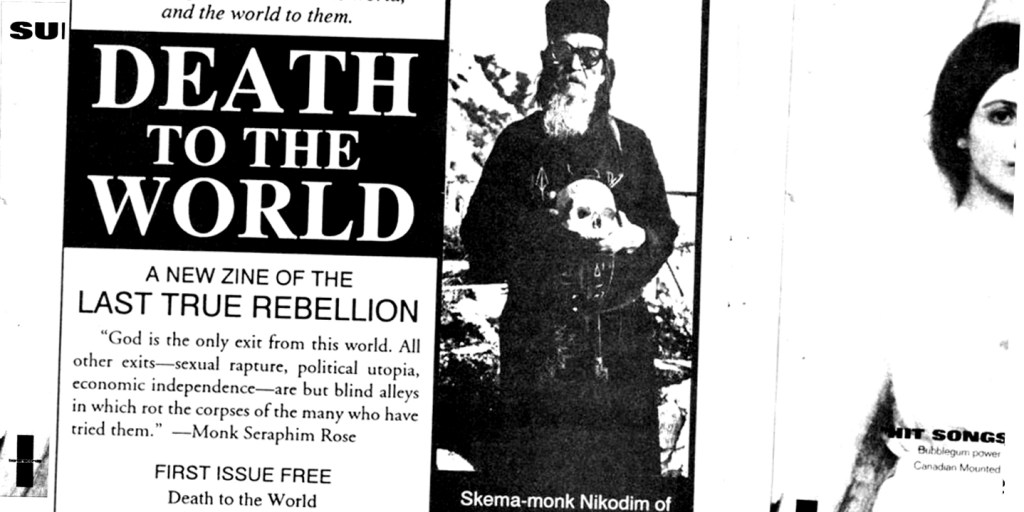
“The world” is the general name for all the passions. When we wish to call the passions by a common name, we call them the world. But when we wish to distinguish them by their special names, we call them passions. The passions are the following: love of riches, desire for possessions, bodily pleasure from which comes sexual passion, love of honor which gives rise to envy, lust for power, arrogance and pride of position, the craving to adorn oneself with luxurious clothes and vain ornaments, the itch for human glory which is a source of rancor and resentment, and physical fear. Where these passions cease to be active, there the world is dead…. Someone has said of the Saints that while alive they were dead; for though living in the flesh, they did not live for the flesh. See for which of these passions you are alive. Then you will know how far you are alive to the world, and how far you are dead to it.”
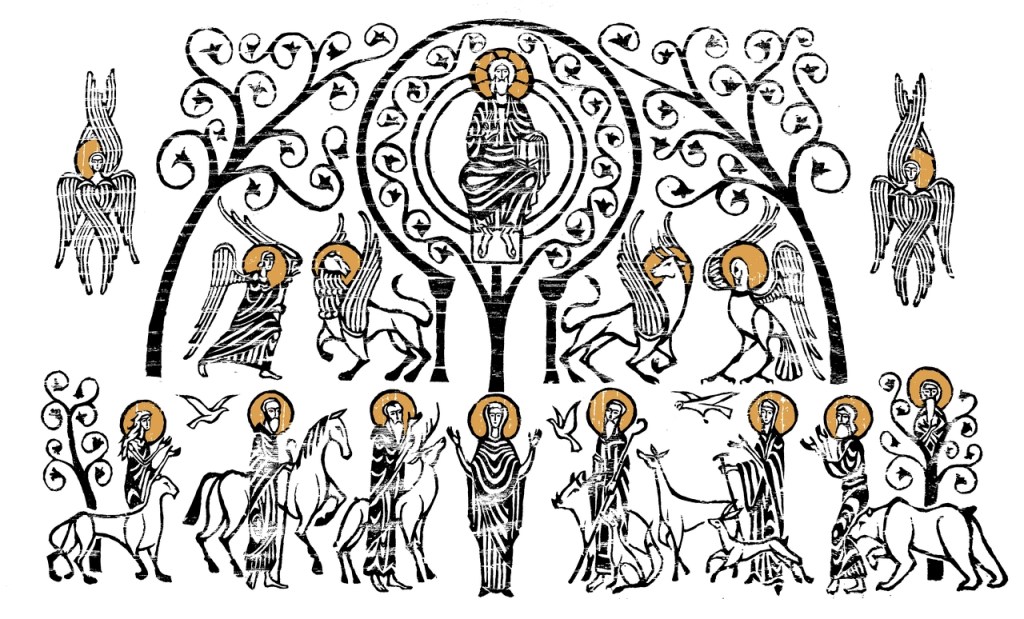
Look also At the The Abbey of Misrule Do not be conformed to this world By Paul Kingsnorth and the Green Martyrdom
- The birth of Jesus in man
In Sufism, the four traditional forms (white, black, red and green) of this initiatory death represent the practices which aim to extinguish spiritual lusts as well as carnal concupiscences read here in French
The Green death: Death to the universe.
Death thus understood, death with regard to the universe, becomes, with the desire to enter the path, the first step of the itinerants towards God. In Sufi thought, it has four aspects: a white death, a black death, a red death and a green death.
The white death is hunger, which is akin to enlightenment. The black death is realized when the Sufi practices and succeeds in enduring the evils caused by men or even all evil in an absolute way, which is likely to sadden the self/ego which becomes darkened. The Red Death consists of subduing him, which ends up killing him.
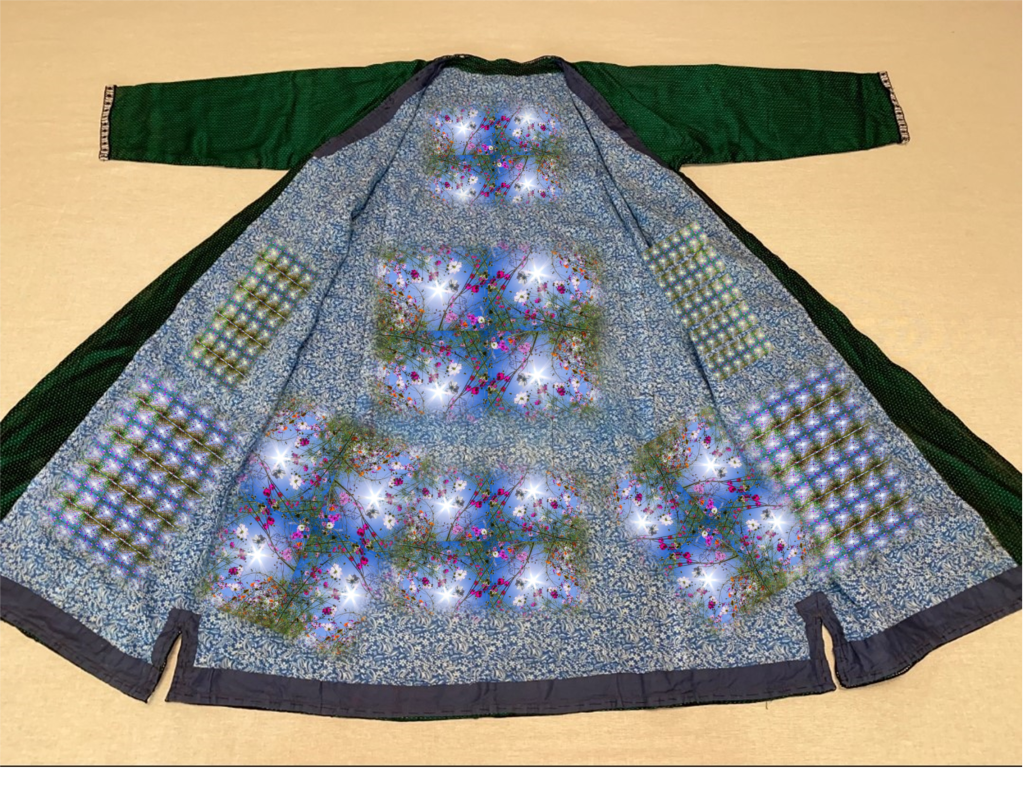
Finally, the green death consists of wearing the dress which becomes, by dint of being patched, variegated like the earth in spring.
Spiritual death here below is therefore the supreme privation. But, for Sufism, there exists, here below also, another death, this one eminently positive: death with regard to the universe, which is rebirth and which is access to the first home of the other. -of the. Such death results in life, it is itself life.
The words of Hallâj are eloquent in this regard:
“Kill me, my comrades, it is in my murder that my life lies! My death, it is to (over)live; and my life is to die!”
We change Reality by changing our Perception of it
There is much to be learn about Eternity by living in Time
There is much to be learn about Time by living in Eternity
Sheikh Nazim al Haqqani al Rabbani
Islam and the Transformative Power of Love
Before the modern-day obsession with social and political issues, the strand of learning often called Sufism played a major if not predominant role in all Muslim societies. What distinguishes Sufism from other approaches to the Islamic tradition is the fact that it considers the transformation of the soul the goal of human life, while looking at dogma, ritual, and law as means to this end, not ends in themselves. (Sufism is a problematic and controversial term, but probably more adequate than “mysticism” or “esotericism”, both of which carry too much baggage to apply in any more than superficial ways to the vastly diverse assortment of teachings and practices that are directed toward spiritual transformation in the Islamic tradition). In keeping with the worldview established by the Koran, Muslim scholars addressed three major issues: activity, understanding, and transformation.
Activity became the specialty of the jurists, the experts in the Shariah, who took it upon themselves to define right and wrong deeds. Understanding was the specialty of various schools of theology and philosophy, ranging from the dogmatic to the mystical and metaphysical. Transformation was the specialty of spiritual guides, many but not all of whom came to be called Sufis.
If we want to choose one word to designate the process and goal of transformation, we can not do better than “love.”
To explain why this is so, I will summarize the understanding of love as it was discussed from early times. Specifically, I want to look at two issues that run through all the discussions, namely the ontological and moral imperatives.
The ontological imperative means that all things love by nature.
The moral imperative means that human beings, by virtue of their own specific nature, must refine and perfect their love or suffer the consequences.
Any thinking that can be called Islamic grounds itself in tawhīd, the notion of unity. Briefly, tawhīd means that all reality is utterly contingent upon the one supreme reality, called God by theologians and the Necessary Being by philosophers. What imparts a specifically Islamic color to this universal notion is the idea that Muhammad was the last in a series of 124,000 prophets sent by God.
Strict attention to unity brings us face to face with the ontological imperative:
Everything is exactly what it must be, for all things are under the control of the One. Among the many Koranic proof texts cited in support of this imperative is the verse «His only command, when He desires a thing, is to say to it “Be!”, and it comes to be» (36: 82).
Theologians called this word “Be” the creative command (al-amr al-khalqī).It is eternal, which is to say that, from the human point of view, it is re-uttered at every moment. As a result, the universe and all things within it are constantly renewed. Read more here
Stupid that everyone in his case
Is praising his particular opinion!
If Islam means submission to God,
We all live and die in Islam.”
Goethe (West-East Divan)
Goethe, the “refugee” and his Message for our times
As Paul Kingsnorth in 50 Holy Wells say: “Who knows what the future holds? Not me. But as the chaos of the Void accelerates, a parallel spiritual longing deepens. We need truth. We need God. People still come to the wells to speak to Him. I can see, if only in my dreams, a future in which more and more people come looking here. A future in which the wells are still tended and the prayers grow in numbers, the well rounds revive and the sacred landscape of ancient Ireland begins to awaken from its slumber. A future in which we remember that all things are soaked in God. A future in which the lessons of the modern hermit St Joseph the Hesychast are remembered by us worldly Christians today:
God is everywhere. There is no place where He cannot be found. Within and without, above and below, wherever you turn all things cry out: “God.” We live and move in Him. We breathe God, we eat God, we clothe ourselves in God. All things praise and bless God. The whole creation cries out. All things, living or inanimate, speak with wonder and glorify the Creator.
Verily He is the One Who will revive the dead…
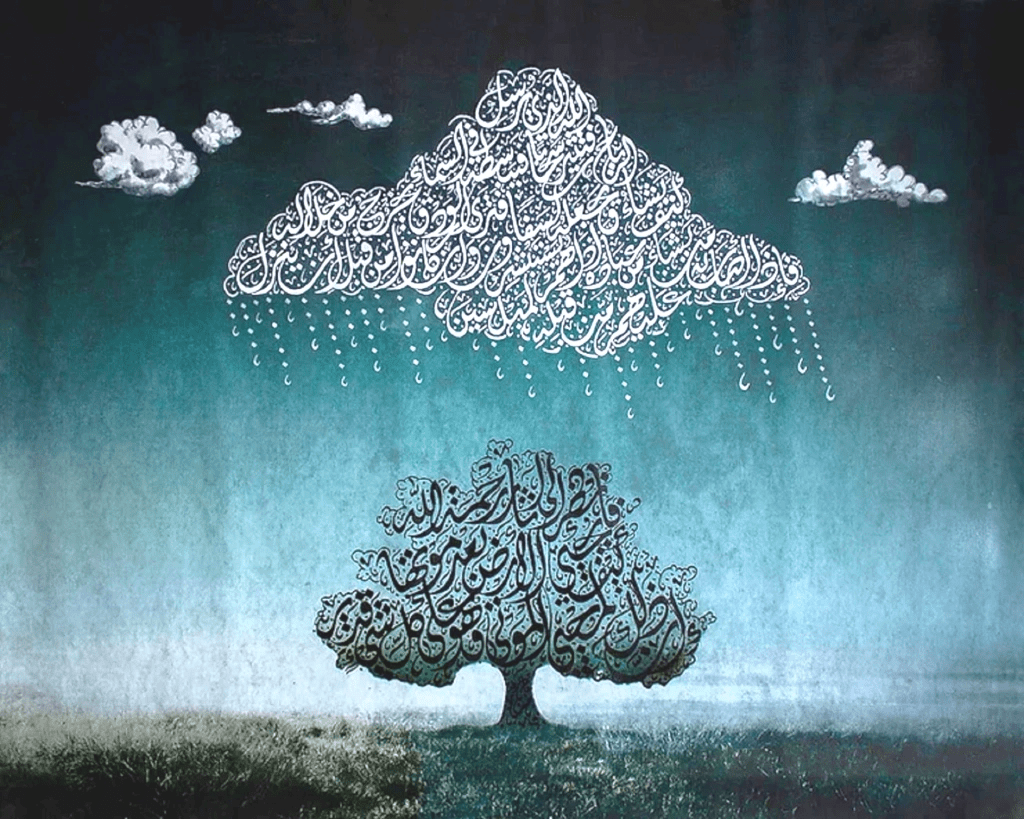
48- Allah is He Who sends the winds, so they raise clouds, and spread them along the sky as He wills, and then break them into fragments, until you see rain drops come forth from their midst! Then when He has made them fall on whom of His slaves as He will, lo! they rejoice!
49- And verily before that (rain), just before it was sent down upon them, they were in despair!
50- See, then, the tokens of Allah’s Mercy: how He revives the earth after it is dead. Verily He is the One Who will revive the dead. He has power over everything. see here
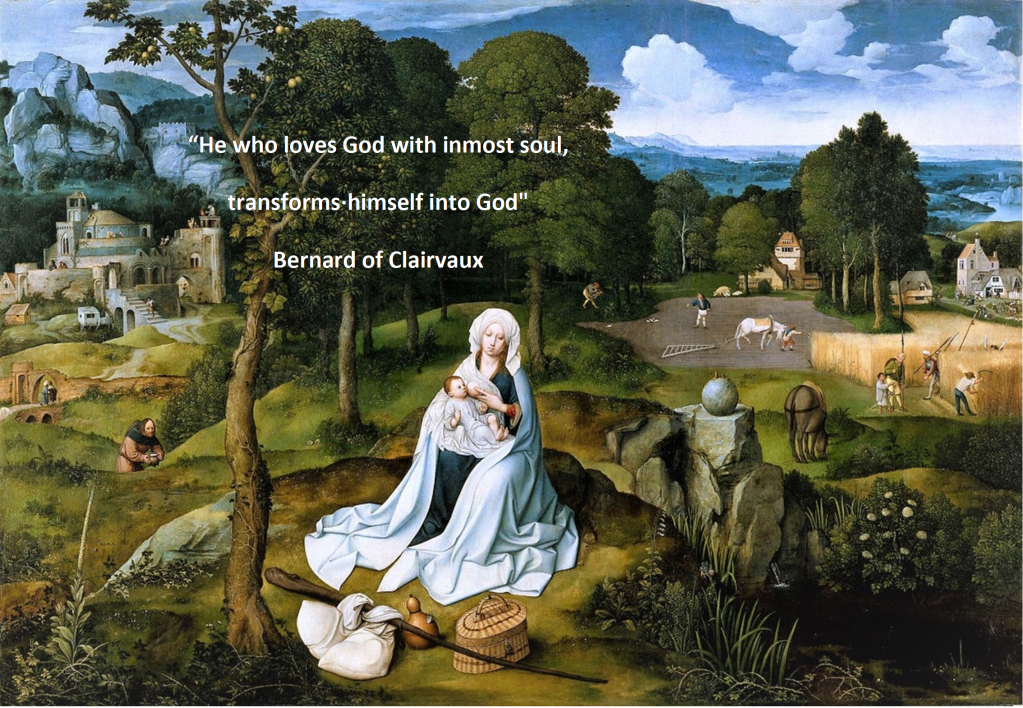
Rumi
- The birth of Jesus in man
In Sufism, the four traditional forms (white, black, red and green) of this initiatory death represent the practices which aim to extinguish spiritual lusts as well as carnal concupiscences read here in French
The Green death: Death to the universe.
Death thus understood, death with regard to the universe, becomes, with the desire to enter the path, the first step of the itinerants towards God. In Sufi thought, it has four aspects: a white death, a black death, a red death and a green death.
The white death is hunger, which is akin to enlightenment. The black death is realized when the Sufi practices and succeeds in enduring the evils caused by men or even all evil in an absolute way, which is likely to sadden the self/ego which becomes darkened. The Red Death consists of subduing him, which ends up killing him.
Finally, the green death consists of wearing the dress which becomes, by dint of being patched, variegated like the earth in spring.
Spiritual death here below is therefore the supreme privation. But, for Sufism, there exists, here below also, another death, this one eminently positive: death with regard to the universe, which is rebirth and which is access to the first home of the other. -of the. Such death results in life, it is itself life.
The words of Hallâj are eloquent in this regard:
“Kill me, my comrades, it is in my murder that my life lies! My death, it is to (over)live; and my life is to die!”
Faouzi Skali in his book Jesus and the Sufi Traditon explains in the 10 chapter,The birth of Jesus in man:

The soul of the mystic, Rûmi teaches us, is similar to Mary: “If your soul is pure enough and full of love enough, it becomes like Mary: it begets the Messiah”.
And al-Halláj also evokes this idea: “Our consciences are one Virgin where only the Spirit of Truth can penetrate”
In this context, Jesus then symbolizes the cutting edge of the Spirit present in the human soul: “Our body is like Mary: each of us has a Jesus in him, but as long as the pains of childbirth do not appear in us, our Jesus is not born” ( Rumi, The Book of the Inside, V).
This essential quest is comparable to suffering of Mary who led her under the palm tree (Koran XIX, 22-26): “ I said:” 0 my heart, seek the universal Mirror, go towards the Sea, because you will not reach your goal by the only river! ”
In this quest, Your servant finally arrived at the place of Your home as the pains of childbirth led Mary towards the palm tree “(RÛMi, Mathnawî, II, 93 sq.)
Just as the Breath of the Holy Spirit, breathed into Mary, made him conceive the Holy Spirit, as so when the Word of God (kalám al-haqq) enters someone’s heart and the divine Inspiration purifies and fills his heart (see Matthew V, 8 or Jesus in the Sermon of the Mountain exclaims: “Blessed are pure hearts, for they will see God! “) and his soul, his nature becomes such that then is produced in him a spiritual child (walad ma’nawî) having the breath of Jesus who raises the dead.
“Human beings,” it says in Walad-Nama ( French translation, Master and disciple, of Sultan Valad and Kitab al-Ma’ârif the Skills of Soul Rapture), must be born twice: once from their mother, another from their own body and their own existence. The body is like an egg: the essence of man must become in this egg a bird, thanks to the warmth of Love; then it will escape its body and fly into the eternal world of the soul, beyond space. ”
And Sultan Walad adds: “If the bird of faith (imán) is not born in Man during its existence, this earthly life is then comparable to a miscarriage.”
The soul, in the prison of the body, is ankylosed like the embryo in the maternal womb, and it awaits its deliverance. This will happen when the “germ” has matured, thanks to a descent into oneself, to a painful awareness: “The pain will arise from this look thrown inside oneself, and this suffering makes pass to beyond the veil. As long as the mothers do not take birth pains, the child does not have the possibility of being born (. Rumi, Mathnawî, II, 2516 sq.) (…) My mother, that is to say my nature [my body], by his agony pains, gives birth to the Spirit … If the pains during the coming of the child are painful for the pregnant woman, on the other hand, for the embryo, it is the opening of his prison ”(Ibid., 3555 sq)

Union with God, explains Rûmi, manifests itself when the divine Qualities come to cover the attributes of His servant:
“God’s call, whether veiled or not, grants what he gave to Maryam. 0 you who are corrupted by death inside your body, return from nonexistence to the Voice of the Friend! In truth, this Voice comes from God, although it comes from the servant of God! God said to the saint: “I am your tongue and your eyes, I am your senses, I am your contentment and your wrath. Go, for you are the one of whom God said: ‘By Me he hears and by Me he sees!’ You are the divine Consciousness, how should it be said that you have this divine Consciousness? Since you have become, by your wondering, ‘He who belongs to God’.
I am yours because ‘God will belong to him. Sometimes, I tell you: ‘It’s you!’, Sometimes, ‘It’s me!’ Whatever I say, I am the Sun illuminating all things. “(Mathnawî, I, 1934 sq).
Once the illusion of duality has been transcended, all that remains in the soul is the divine Presence: the soul then finds in the depths of its being the divine effigy.
It has become the place of theophany. This is what Rumi calls the spiritual resurrection: “The universal Soul came into contact with the partial soul and the latter received from her a pearl and put it in her womb. Thanks to this touch of her breast, the individual soul became pregnant, like Mary, with a Messiah ravishing the heart. Not the Messiah who travels on land and at sea, but the Messiah who is beyond the limitations of space! Also, when the soul has been fertilized by the Soul of the soul, then the world is fertilized by such a soul “( Ibid., II, 1184 sq.).
This birth of the spiritual Child occurs out of time, and therefore it occurs in each man who receives him with all his being through this “Be!” that Marie receives during the Annunciation: “From your body, like Maryam, give birth to an Issa without a father! You have to be born twice, once from your mother, another time from yourself. So beget yourself again! If the outpouring of the Holy Spirit dispenses again his help, others will in turn do what Christ himself did: the Father pronounces the Word in the universal Soul, and when the Son is born, each soul becomes Mary (Ibid., III, 3773.)
So Jesus can declare: “O son of Israel, I tell you the truth, no one enters the Kingdom of Heaven and earth unless he is born twice! By the Will of God, I am of those who were born twice: my first birth was according to nature, and the second according to the Spirit in the Sky of Knowledge! » (Sha’ranî, Tabaqat, II, 26; Sohrawardî, ‘Awarif, I, 1)

The second birth corresponds to what we also gain in Sufism as the “opening (fath) of the eye of the heart“: “When Your Eye became an eye for my heart, my blind heart drowned in vision ; I saw that You were the universal Mirror for all eternity and I saw in Your Eyes my own image. I said, “Finally, I found myself in His Eyes, I found the Way of Light!” (Rumi, Mathnawî, II, 93 sq.)
This opening is the promise made by God to all those who conclude a pact with the spiritual master, pole of his time, like the apostles with Jesus or the Companions when they pledged allegiance to Muhammad: “God was satisfied with believers when they swore an oath to you under the Tree, He knew perfectly the content of their hearts, He brought down on them deep peace (sakina), He rewarded them with a prompt opening ( fath) and by an abundant booty which they seized ”(Coran XLVIII, 18-19).(The abundant loot indicates Divine Knowledge (mari’fa). Read more here

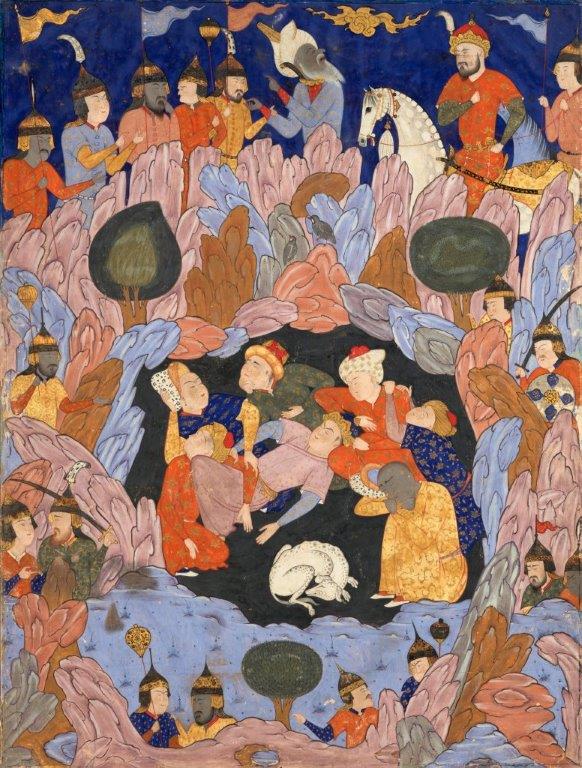
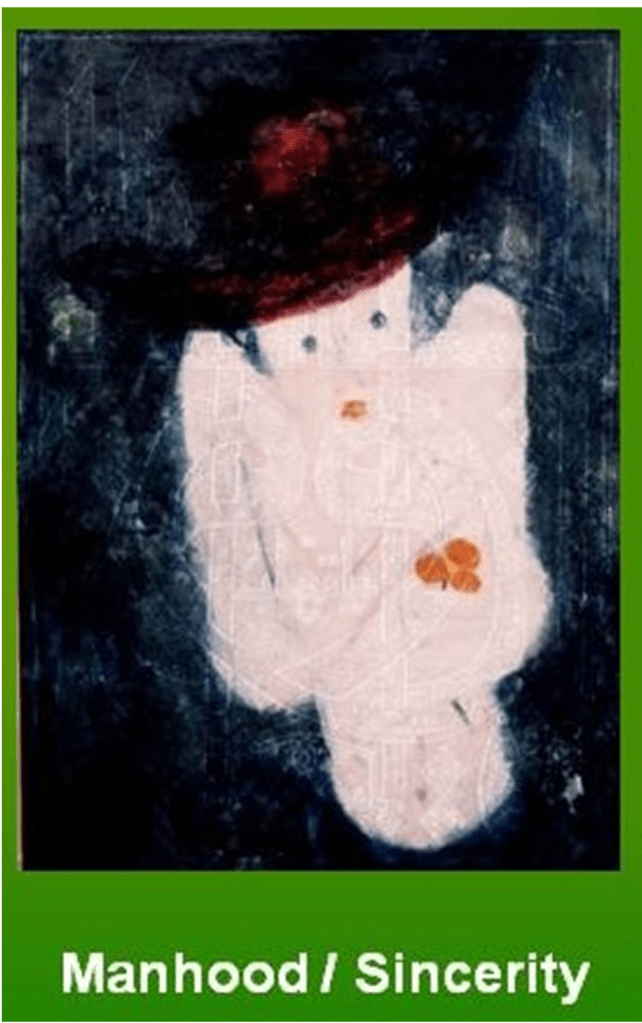
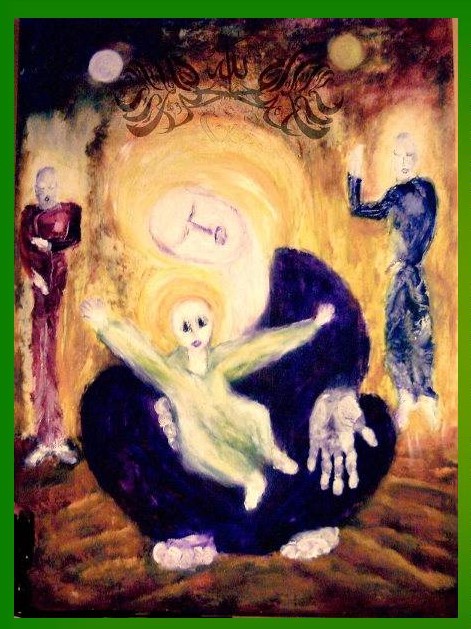
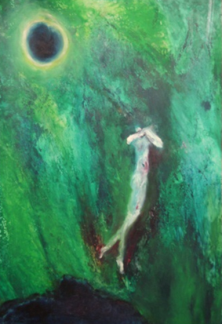
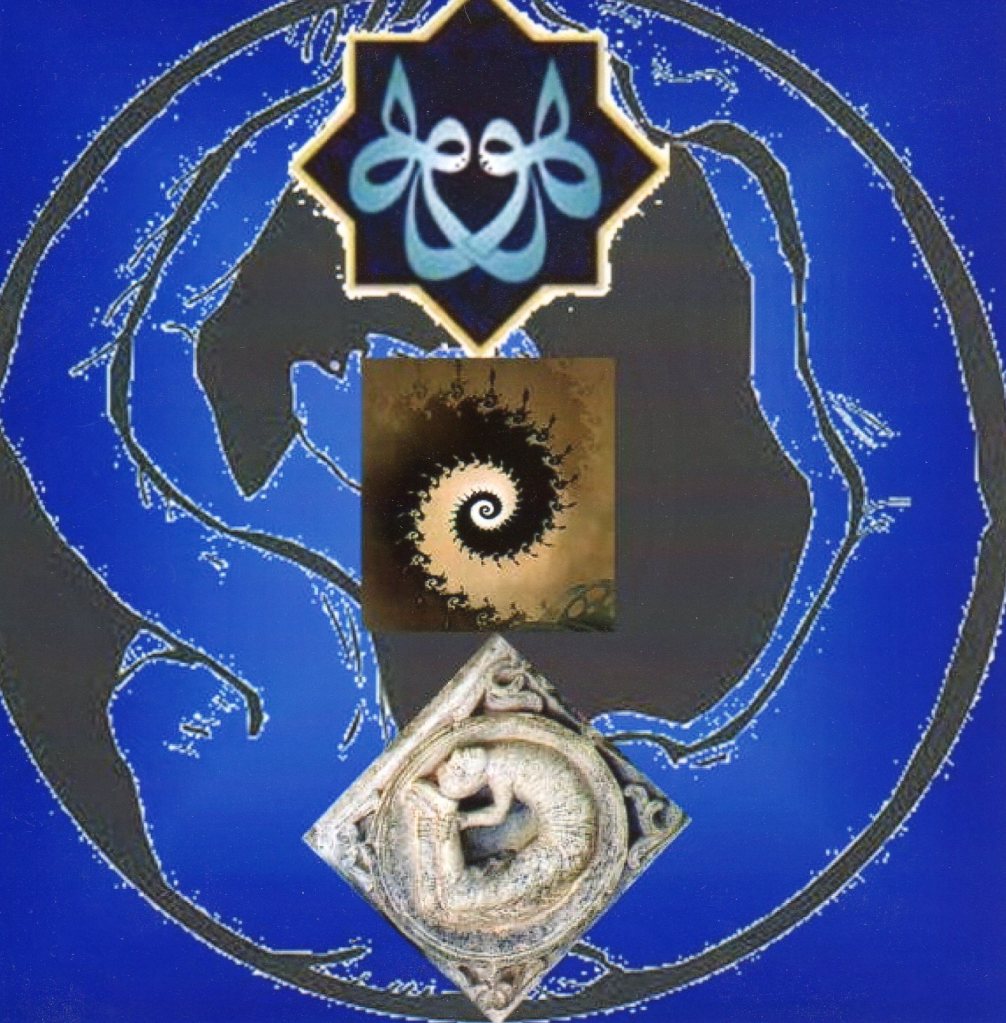
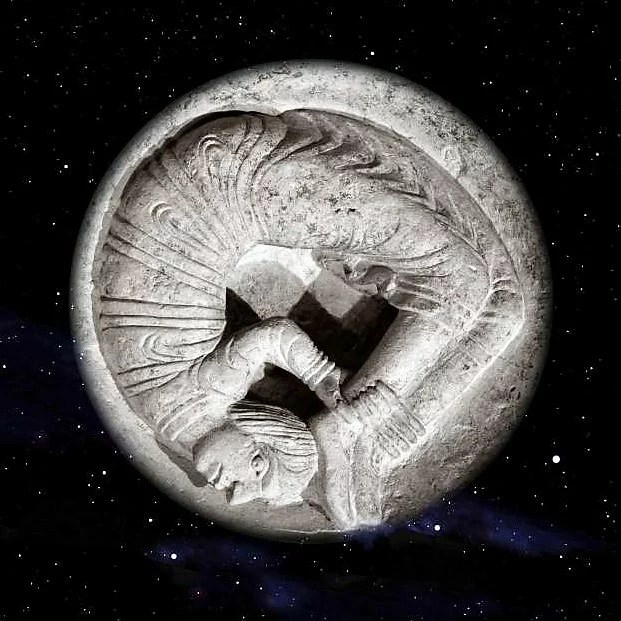
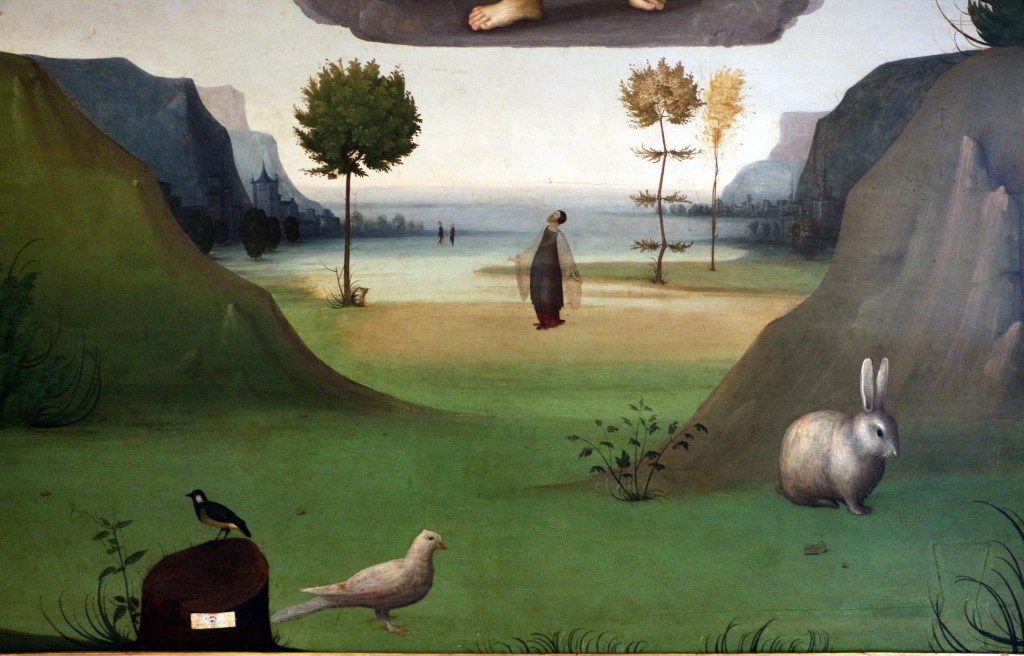
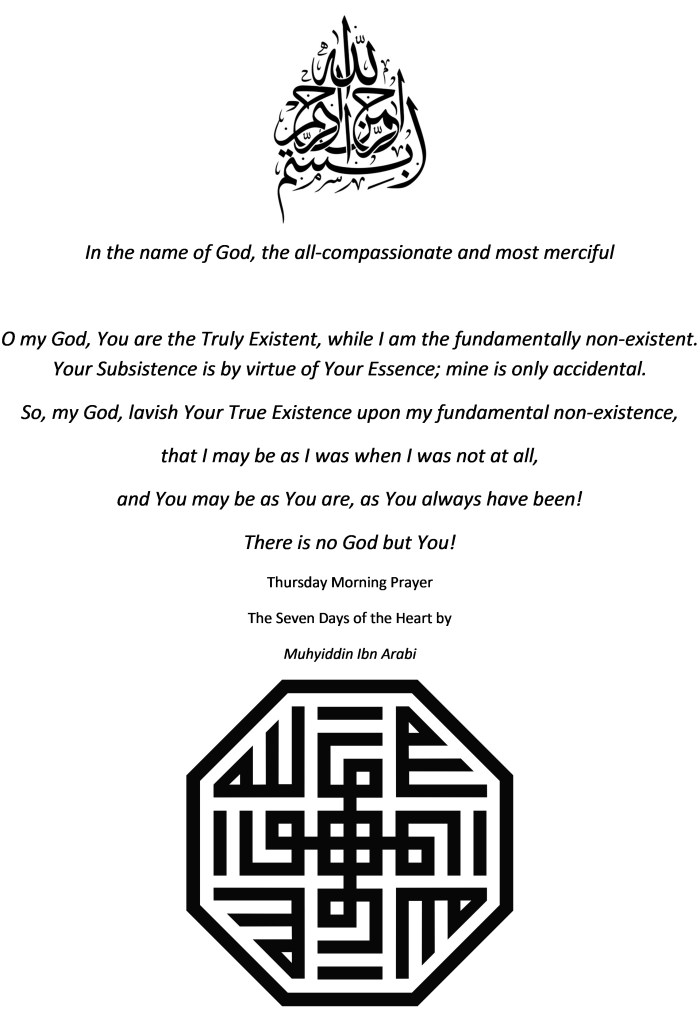
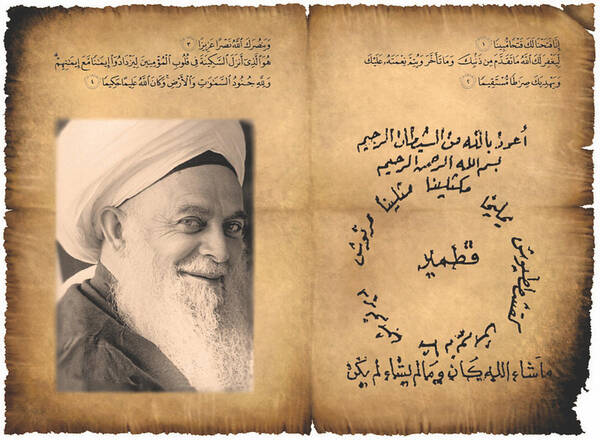
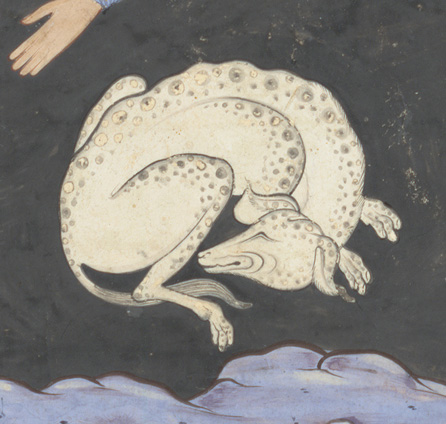

 Path to the Maypole of Wisdom