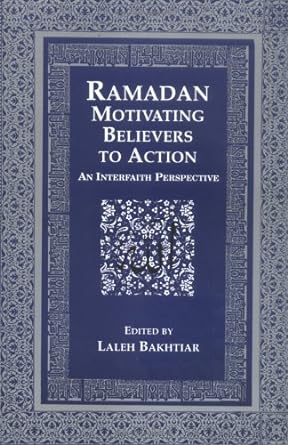
Ramadan is not just a month of fasting, but a month of spiritual healing. Presented from an interfaith perspective as a means to motivate believers to action, the articles by such famous writers as Muhammad al-Ghazzali, Shaykh Abdul Qadir Jilani, Imam Jawziyya, Ibn Sireen, Seyyed Hossein Nasr, Mawlana Mawdudi and Laleh Bakhtiar include essays on both the Law and the Way. They are divided into the traditional threefold method of spiritual healing, namely, knowledge, inner processing and action. Read more here

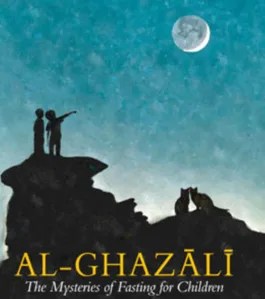
Understanding the spiritual meanings on which the practices of Islam are based, opens up the vastness of the inner life. Even though young Muslim children are not yet obliged to fast or pay zakat, the virtues and spiritual dimensions on which these are based can easily be introduced and comprehended even by five-year olds. Imam al-Ghazali’s stories and metaphors offer an effective way for parents to communicate with their children, in a language which can be used and directly related to the occurrences within everyday life. In the following two books of the Ihya, such virtues as generosity, gratitude, selflessness, reflection, self-discipline, patience, honesty, moderation, and trust in God’s loving wisdom are no longer abstract concepts but can be clearly seen instead as urgent and absolutely relative to each individual. We are indeed blessed to have Imam al-Ghazali’s systematic presentation of aspects belonging to the inner sunna and his detailed map for guarding and perfecting our innate and noble nature. Read Here or download

O moon-faced Beloved,
the month of Ramadan has arrived
Cover the table
and open the path of praise.
O fickle busybody,
it’s time to change your ways.
Can you see the one who’s selling the halvah
how long will it be the halvah you desire?
Just a glimpse of the halvah-maker
has made you so sweet even honey says,
“I’ll put myself beneath your feet, like soil;
I’ll worship at your shrine.”
Your chick frets within the egg
with all your eating and choking.
Break out of your shell that your wings may grow.
Let yourself fly.
The lips of the Master are parched
from calling the Beloved.
The sound of your call resounds
through the horn of your empty belly.
Let nothing be inside of you.
Be empty: give your lips to the lips of the reed.
When like a reed you fill with His breath,
then you’ll taste sweetness.
Sweetness is hidden in the Breath
that fills the reed.
Be like Mary – by that sweet breath
a child grew within her.
– Rumi

YOU MUST PRUNE TO HARVEST
“For example, when trees become big, they say, “Let’s leave this tree. Let’s not prune it.” They do things so that it bears a lot of fruit. If you don’t prune it, the fruit will become small or it will be bad. If you prune it, you leave half of the big tree. Those fruits it gives come out beautiful; they become good. It’s easy to harvest. It actually bears more fruits. People think, “I pruned the tree, a lot will be lost.” Whereas if you don’t prune it, it will yield less. You can’t reach inside it from the thorns. You can’t benefit from it. Zakāt is the same. It increases wealth, it makes it of barakah because you will attain the pleasure of Allāh ‘Azza wa-Jalla and the pleasure of our Prophet صلى الله عليه وسلم. You will also give the poor their right.”
Mawlana Sheikh Muhammad Adil ar-Rabbani 01 March 2025/ 01 Ramadan 1446
 Path to the Maypole of Wisdom