Dance Away  Evil Spirits : Folklores of the Kukeri in Bulgaria, the Mamuthones in  Sardinia and St Georges in Europe

  • OF MUMMERS AND MEN in Bulgaria

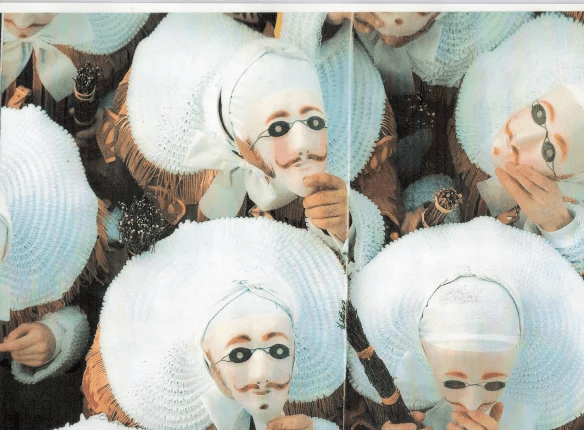
In the midst of winter, kukeri dance for the rebirth of nature
The word “mummer,” though derived from the Greek word for “mask,” is the likely origin of the English word “mum”; to “keep mum” means “to act like a mummer, a mime”—though the word “mime” comes from the Greek mimesis, “imitation; art”, which is related to the Sanskrit maya, the magical or dramatic power by which the Absolute manifests Itself as the universe. The universe, like a mask, both veils and reveals the mystery of the Absolute Reality.

Winter has been a critical period for traditional societies in Europe since times immemorial. People, of course, were aware that the turn of the seasons would eventually bring back spring, sun and food. They knew that the slow, imperceptible change would start when the days are short and cold, and the nights are long and bleak. Despite this, they would crave some reassurance that spring would indeed return, the snow would melt and the plants would thrive again.

Many historians and anthropologists think that this fear from eternal winter and the anticipation of spring are at the core of old and present-day religions, and of countless rites and rituals practised in the coldest months of the year. Christmas is the best known example: the birth of Jesus is celebrated on the date of an old pagan feast dedicated to the rebirth of the sun. The day is close to the actual date of the winter solstice, which marks the longest night in the year.
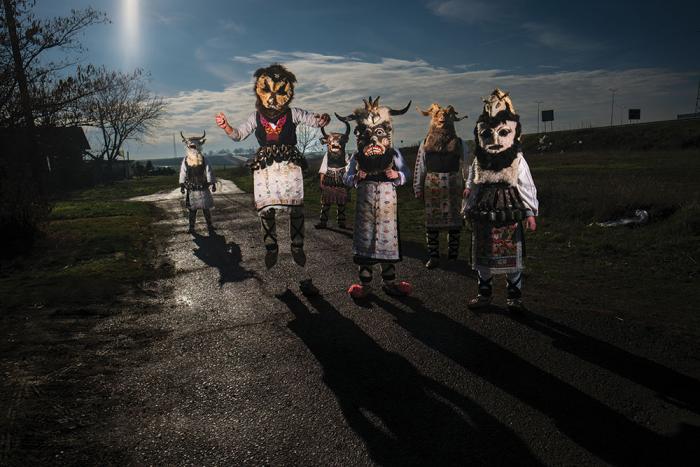
Bulgarians were not an exception. In winter and early spring they would celebrate several feasts with rites designed to ensure that the new cycle of life would start again. The dances of the kukeri, or mummers, are the most spectacular.

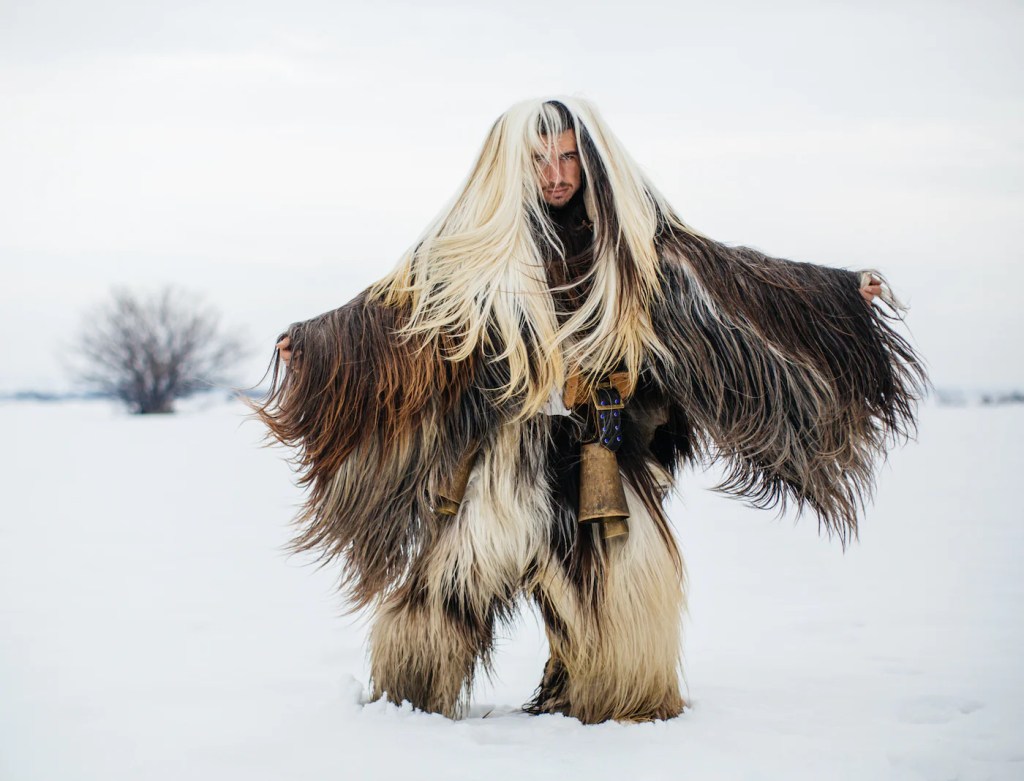
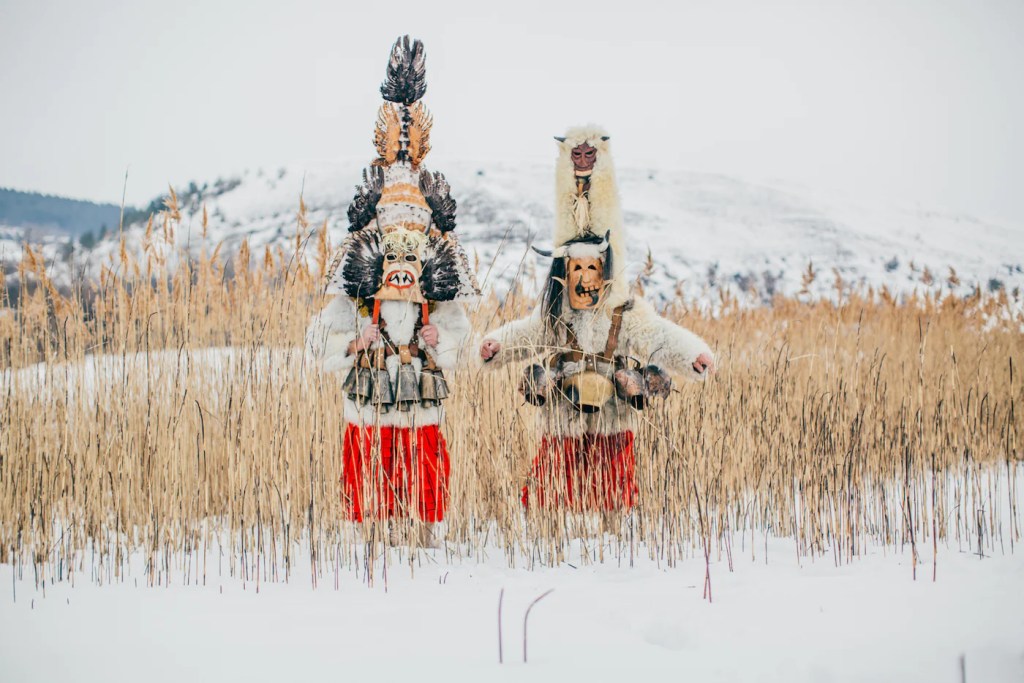
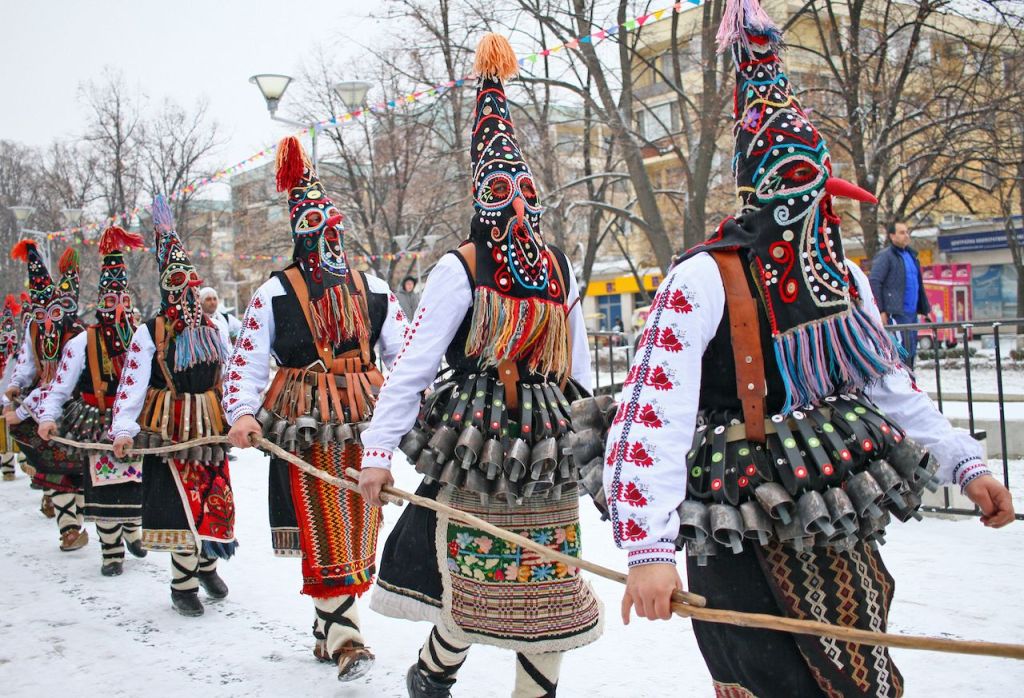
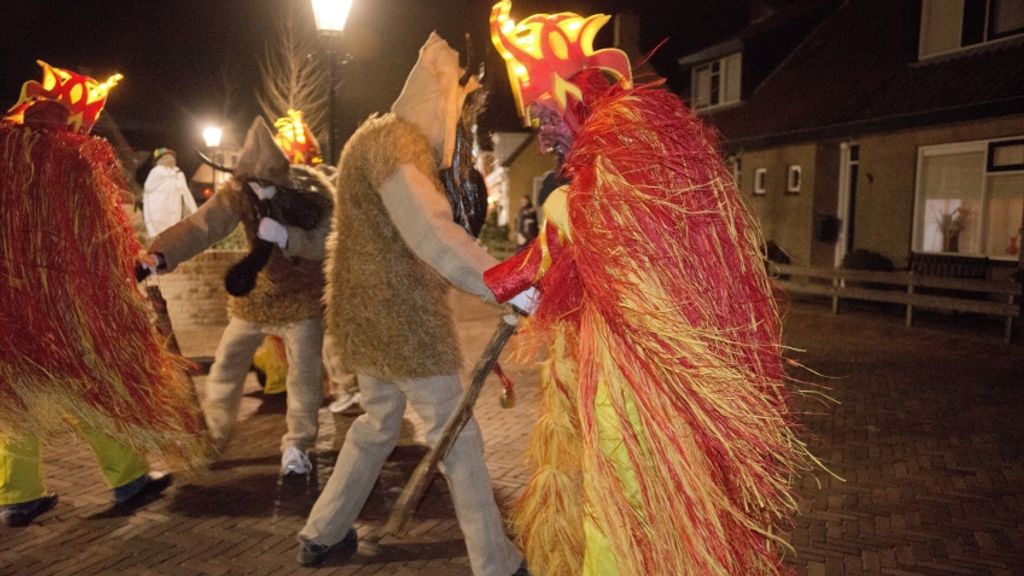
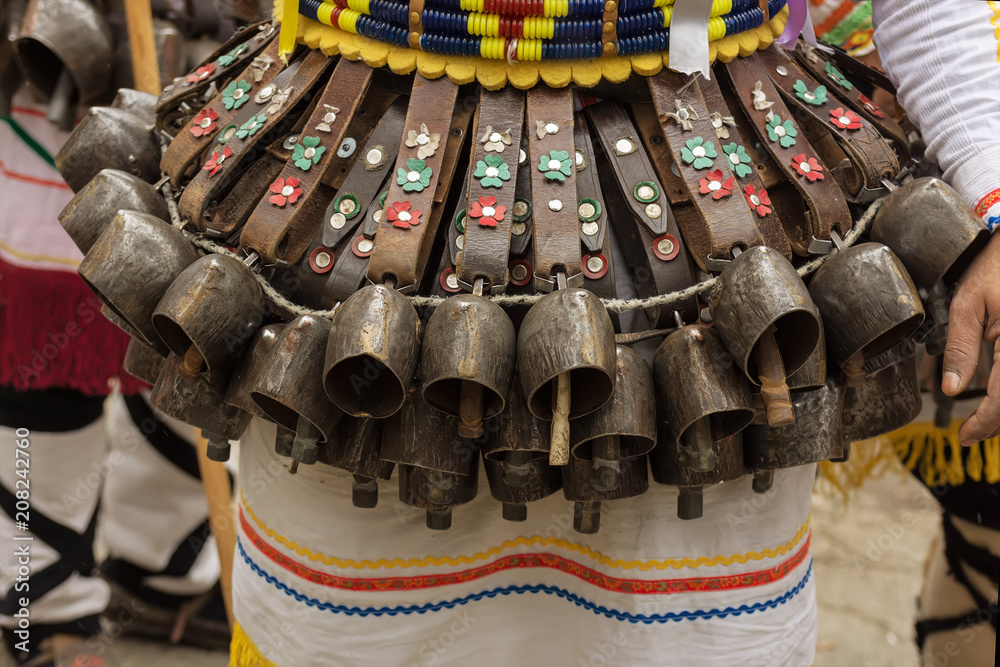
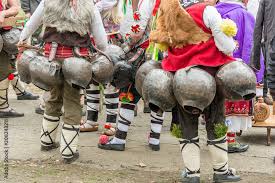
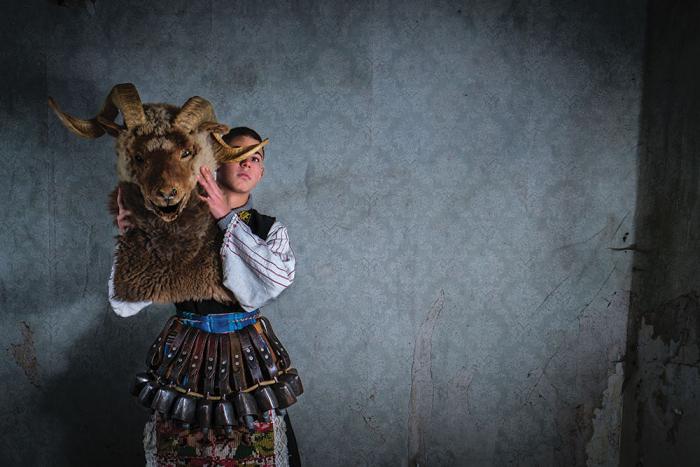
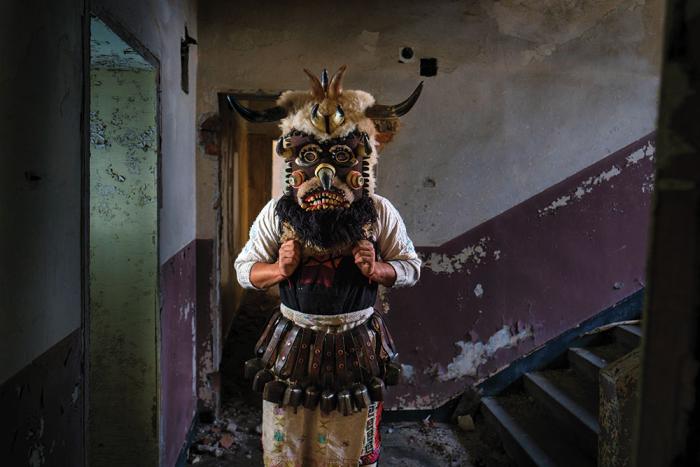
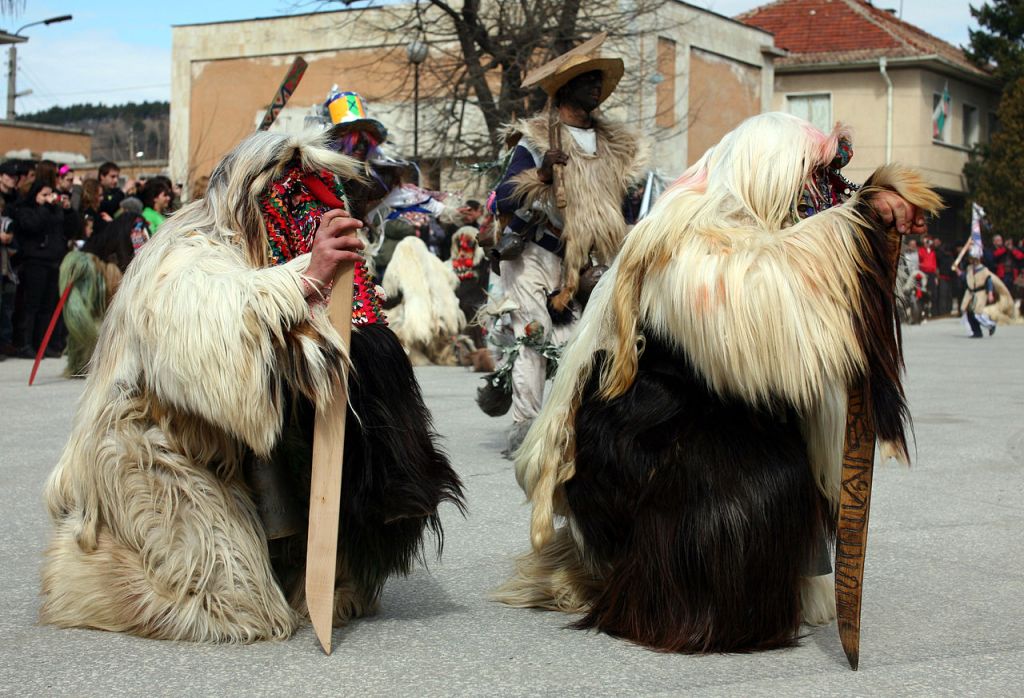
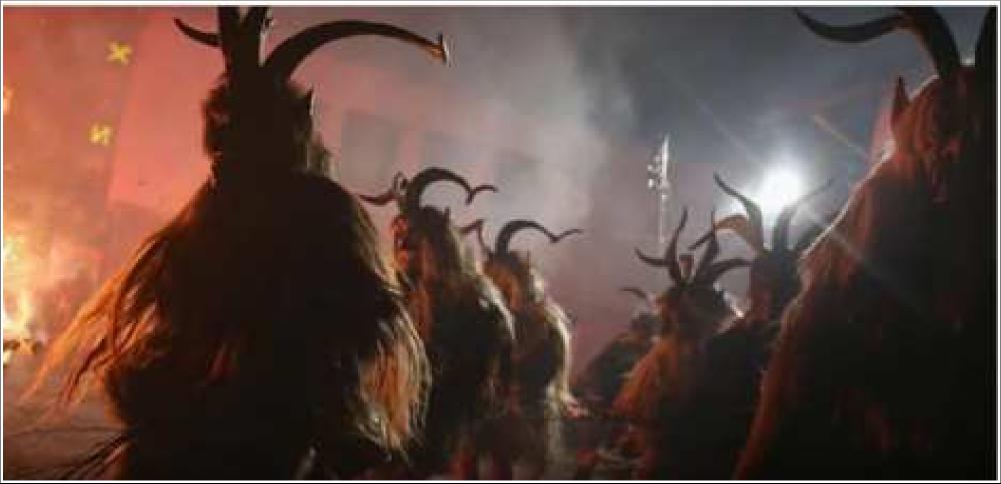
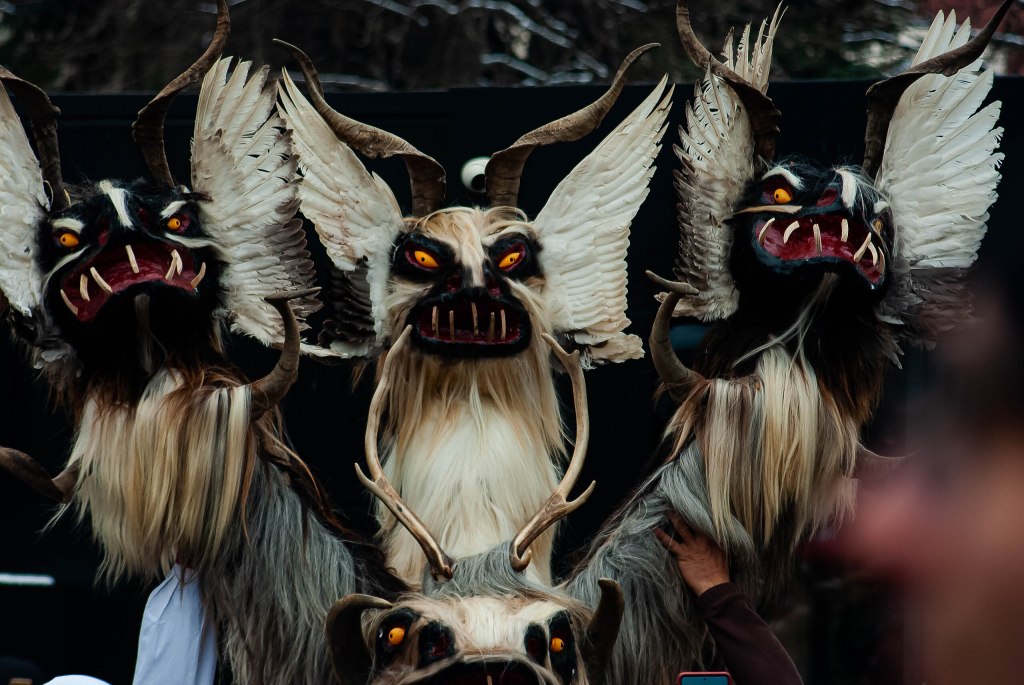
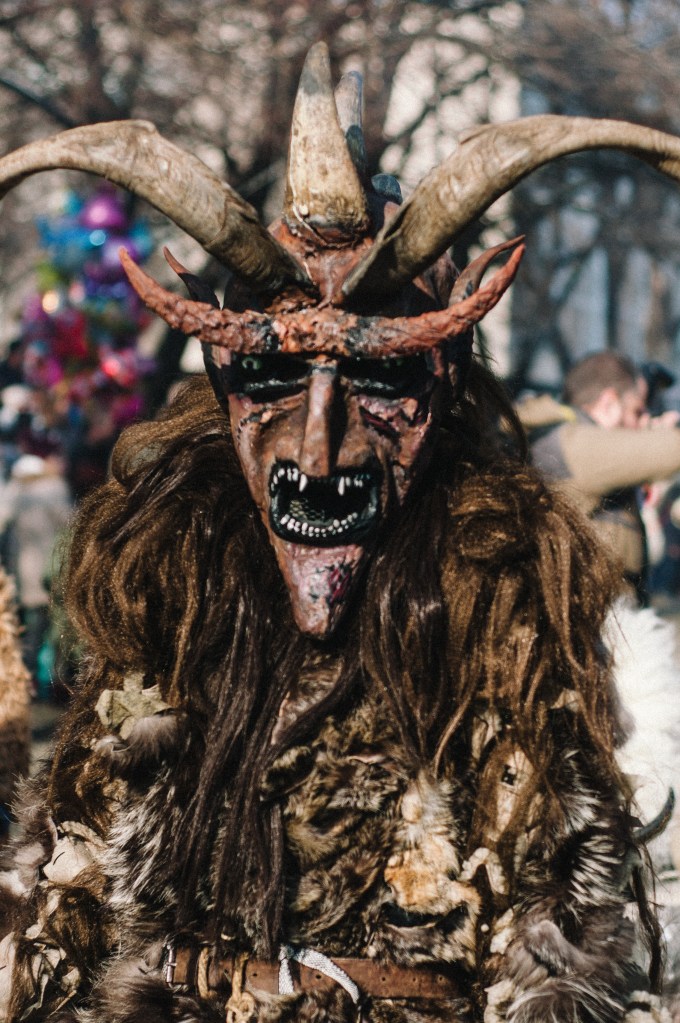
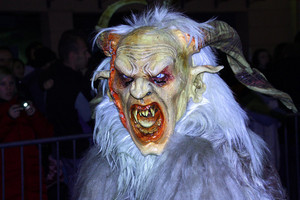
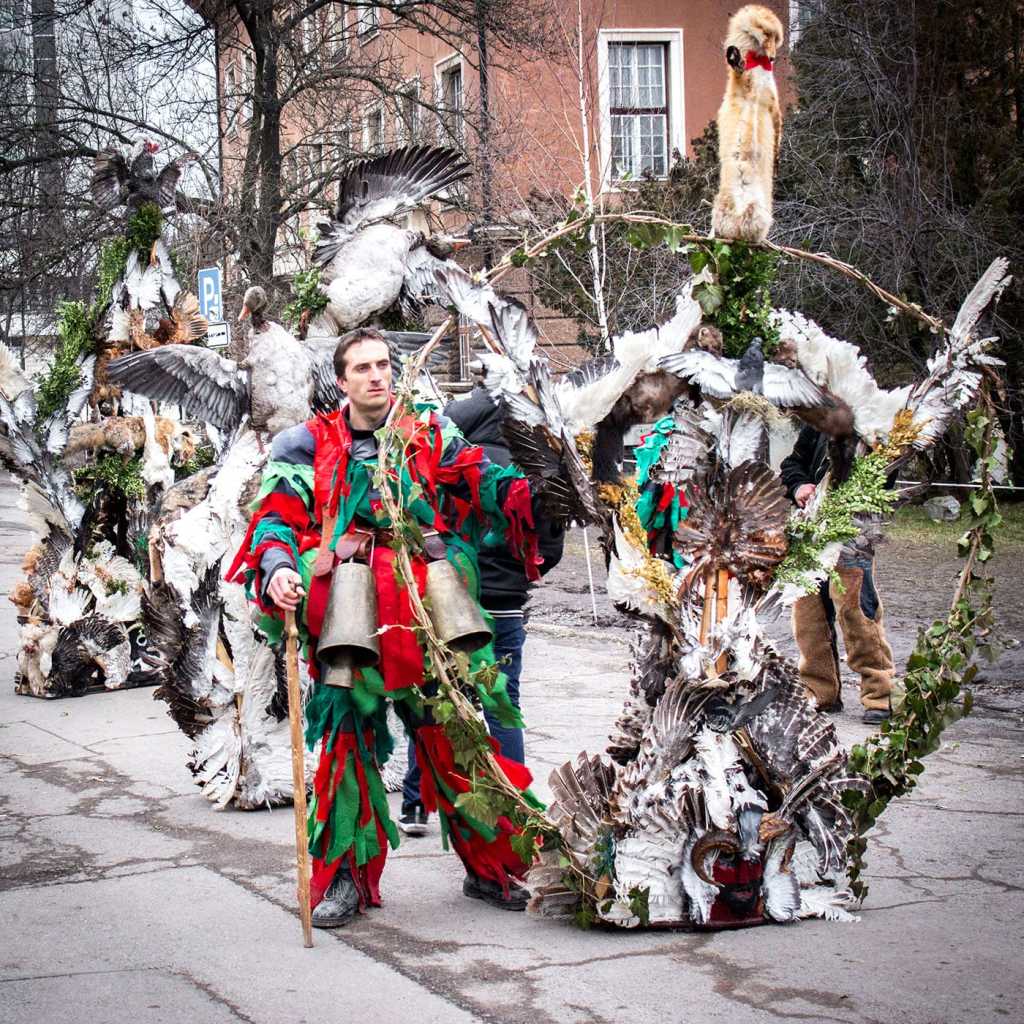
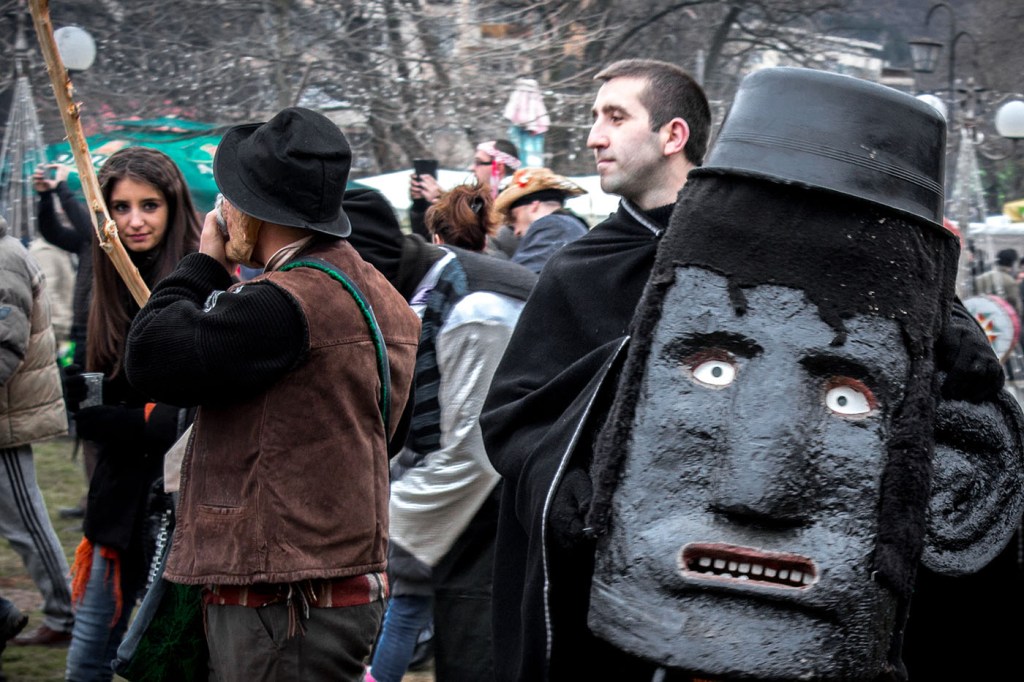
Dressed in animal skins, with faces hidden behind monstrous masks, the kukeri dance in the streets surrounded by the clang of sheep and cowbells hanging on their belts. The cacophony of noises and movements seem chaotic but is far from it. There is a clear concept behind the mummers’ behaviour, a strong hierarchy and even a script.
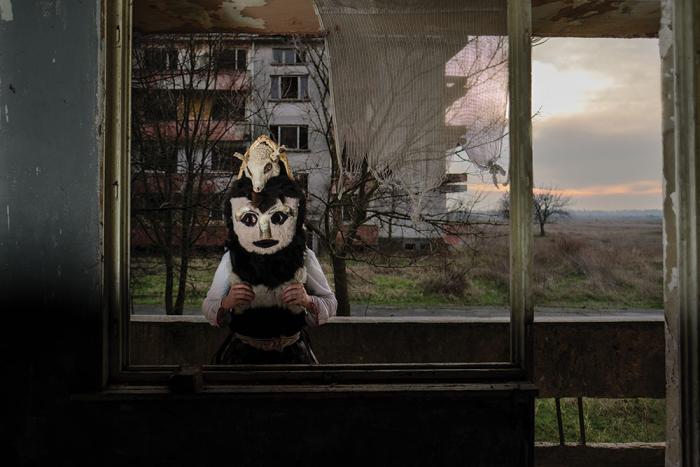
The mummers organisation and costumes, the dates when they dance and even their names vary across the Bulgarian lands. For example, what is known as kukeri in eastern Bulgaria become babugeri west of Sofia. They can also be called survashkari, mechkari, dervishi, startsi and mechkari.

The group consists of masked unmarried men. They are led by a chief kuker who is usually a married man considered a pillar of the society. On this day, however, his behaviour can be less admonitory. Chasing the women in the streets, he aims to touch their legs with a long, red painted staff. The symbolism is clear: the rite ensures that more babies would be born in the community.
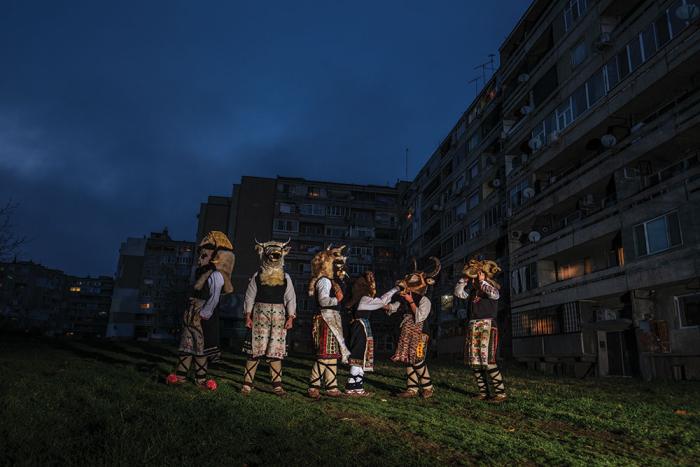
The chief kuker is usually joined by a man dressed as a hag carrying a ragdoll baby. This kuker’s wife is the chief target of the villagers, who would try to abduct her or her baby. When this happens, the chief kuker would go into a mock rage and fight to bring back his wife and child. The couple would also perform a pantomime of sex.

Meanwhile file-and-rank kukeri would dance, go from home to home, dance more and collect food donated by the hosts. Their group can include other characters that openly mock the established social order. A fake priest would chastise people, a mock tax collector would “arrest” them in the streets and demand exorbitant sums of money, a barber would try to shave them with a grotesquely big wooden razor, a fake Gypsy musician would force a man clad as a bear to dance, and so on and so forth.
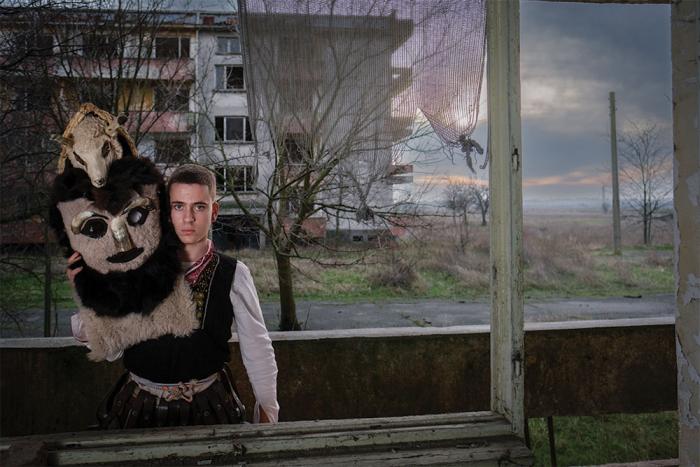
The chief kuker is not the only person of importance during the day. The rite would be impossible without a “king.” Dressed in the villagers’ idea of royal attire and accompanied by a group of bodyguards or ministers, he has an important task. When the day turns, the king and the whole village would gather for an outdoor feast. The king would not eat by himself, letting his bodyguards feed him. When he is finished, he would ritually plough the ground and sow some grain in it in a ritual that is supposed to provide fertility.

Kukeri costumes are meant to be scary. In different parts of the Bulgarian lands this is achieved through different means. In the west, fur, animal hides and birds’ wings are the norm, while in the east there is a preference for colourful rags and sequins. The mummers in the west would dance immediately after Christmas and around New Year, while their brethren in the east would roam the streets in the days before Lent.
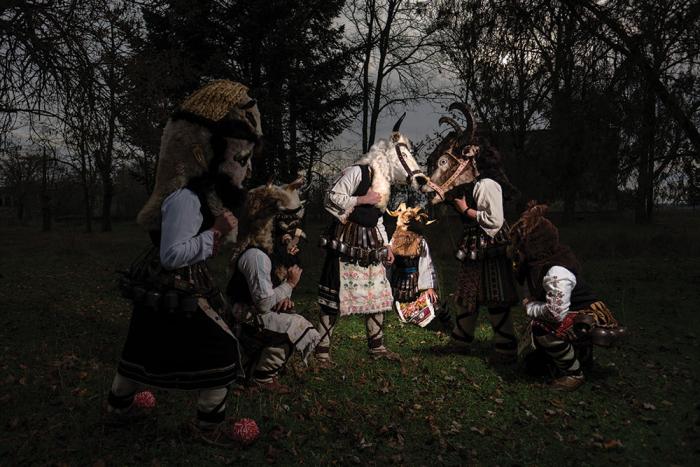
The tradition’s pagan origins are evident. The established theory claims that the Bulgarian kukeri are the descendants of ancient Thracian Dionysian rites. Whatever the kukeri origins, their recent history has changed significantly.

Until the early 20th century, the kukeri dances were vital for rural communities. When the Bulgarian society started to urbanise itself and young people began to emigrate to the cities, the rite started to lose its base, meaning and significance. As it was slowly dying in the villages, nostalgia for the idealised rural life turned mummers into a symbol of “true Bulgarianness” despite the fact that the tradition is hardly unique for Bulgaria and is present in one form or another across Europe – and even as far as Japan. Their rowdy behaviour was tamed, anything resembling sex or mocking the established order was cleansed. The change took place under Communism, a time of rapid urbanisation and modernisation, but also of revived nationalism. By the 1960s, the government was eager to invent a new Bulgarian identity that was both nationalist and Communist. Kukeri, along with folk music, traditional costumes and crafts, were reinvented. Mummers became a modern festival, a spectacle for the eye emptied of its ancient spirit. The obscene antics disappeared and the dances were choreographed and sterilised. Kukeri were reduced to funny figures wearing impressive masks. They were promoted as bringers of health and good fortune to the guileless public, which was itself alienated from its own rural past and traditions.
CREATOR: gd-jpeg v1.0 (using IJG JPEG v62), quality = 75

The trend deepened after the collapse of Communism, when emigration from the villages continued, depopulation took over and nationalism rose, combined with consumerism. The two big festivals dedicated to kukeri dances, Surva in Pernik and Kukerlandia in Yambol, are both organised in towns, not in villages where the natural ground of the rite is. Both events feature troupes from all over Bulgaria and even abroad who compete on who can produce the most spectacular show and costumes. This has resulted in the creation of elaborate masks that would be unthinkable just 50 years ago. Participants also change – some mummer troupes include women and children, a grave disregard for the original essence of the rite, which is dedicated to the fertilising power of men. Some troupes have even monetised their experience – you can book them to put up dance for a wedding feast, regardless of the time in the year.
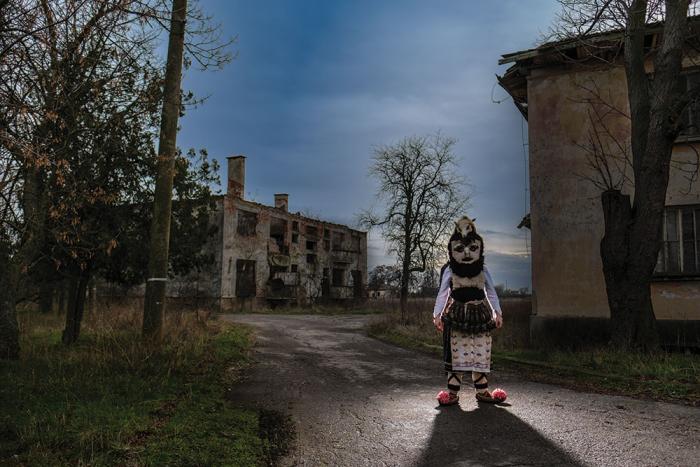
Of course, there are people who try to keep the tradition alive as close to the original – whatever original in folklore is.

Some of the best places to see kukeri and experience their magic are the villages around Pernik, Razlog and Yambol.

This article is illustrated with images of the mummers troupe in the village of Mogila, near Yambol (by Dimana Trankova; photography by Anthony Georgieff)
  • Mamuthones of Sardinia:

The period during which we can admire them during their almost ancestral ritual is during the Feast of the Fires of Sant’Antonio, between the 16th and 17th of January, and then in the midst of the Carnival period, on Carnival Sunday and Shrove Tuesday. Their presence is associated with propitiatory rites for the fertility of livestock and good luck for the year to come; it is a ritual full of symbols and history that goes way back. They say it’s like the battle of good versus evil, winter versus summer vibes.
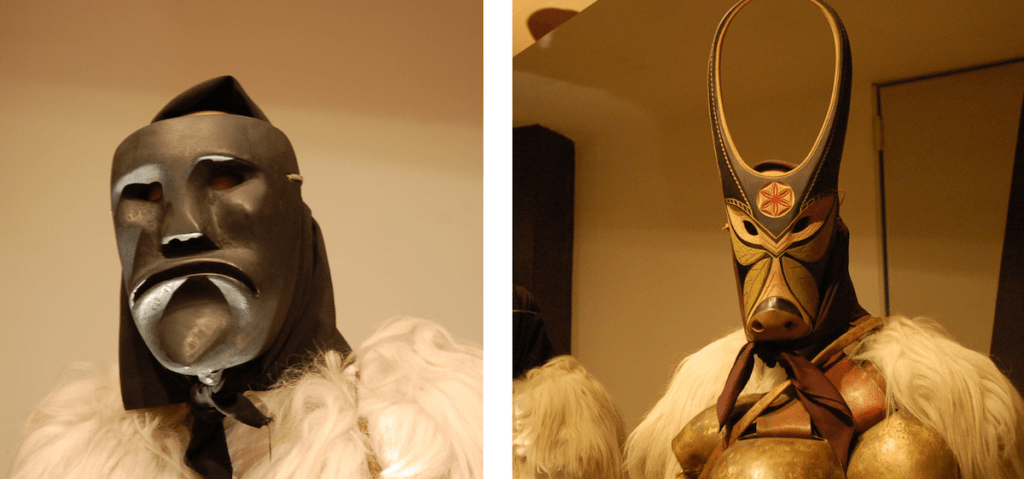
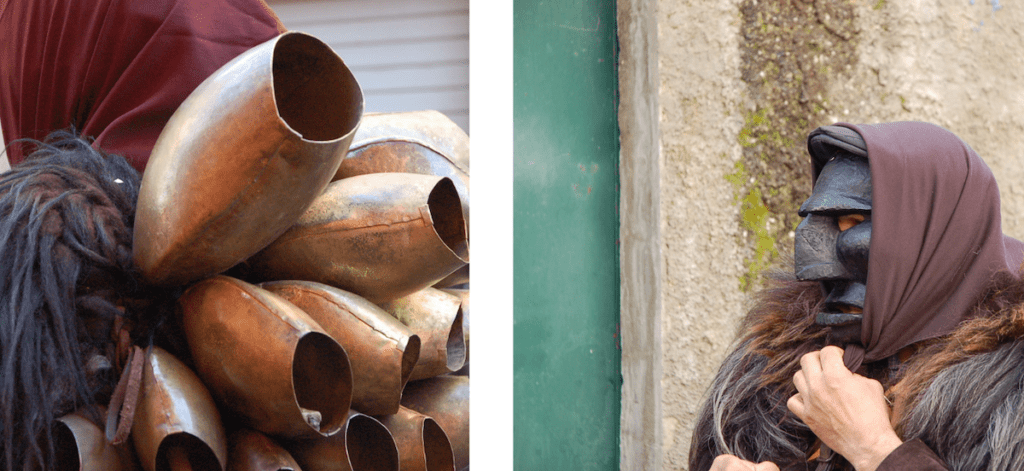
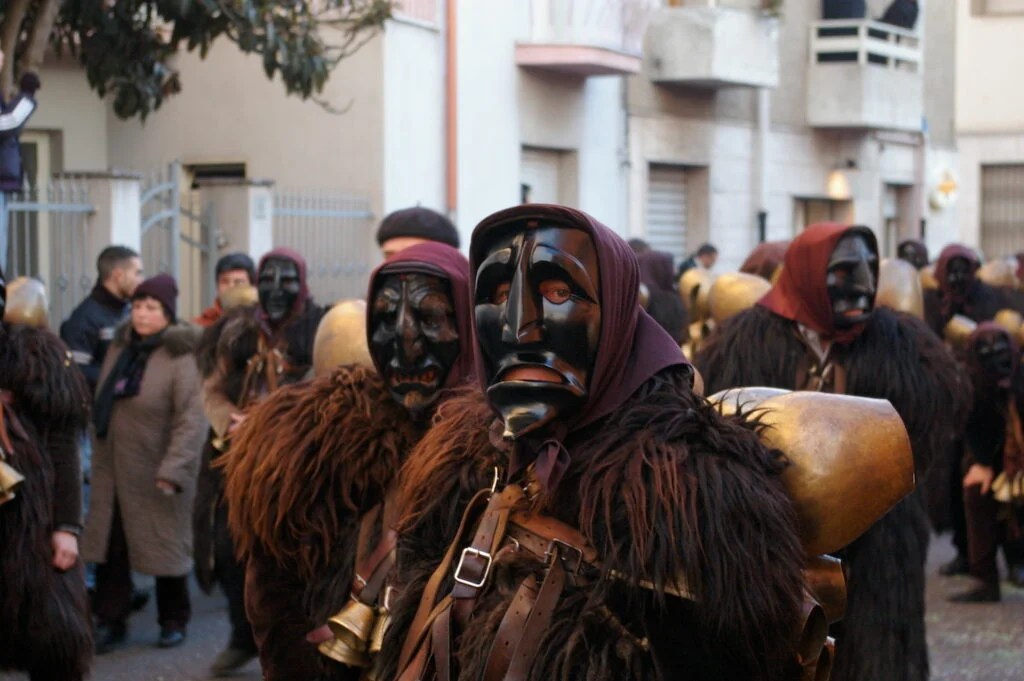
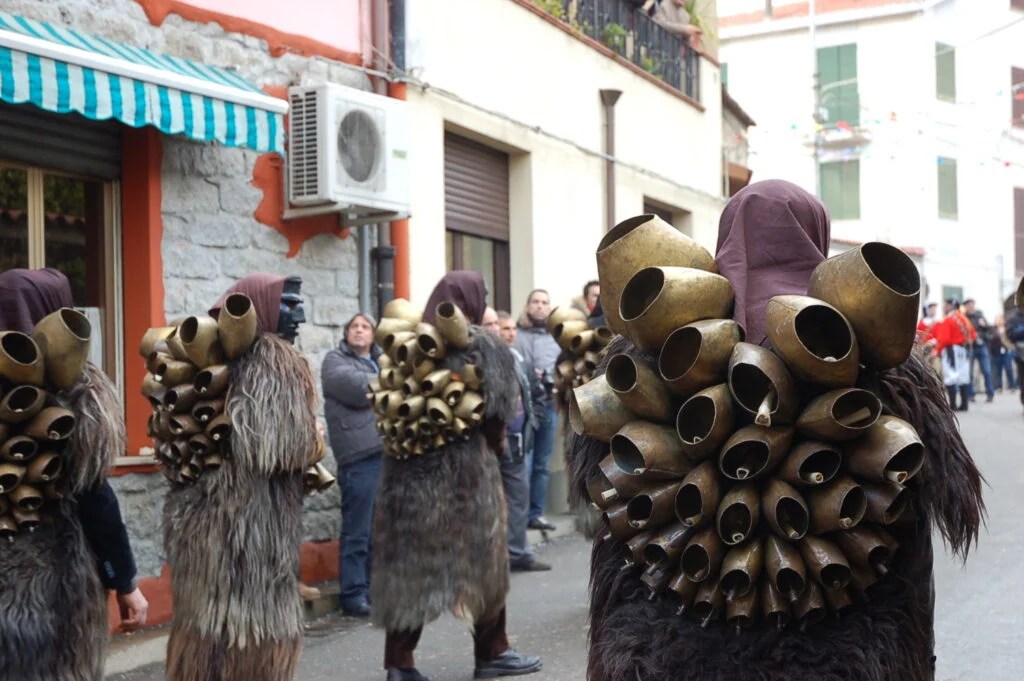
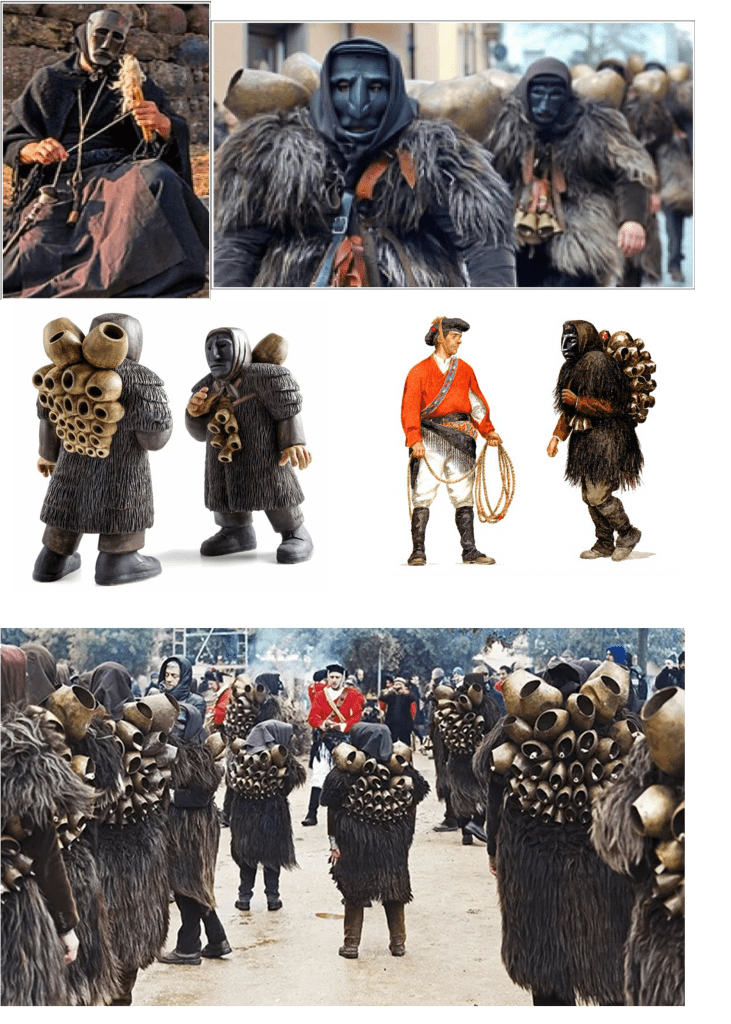
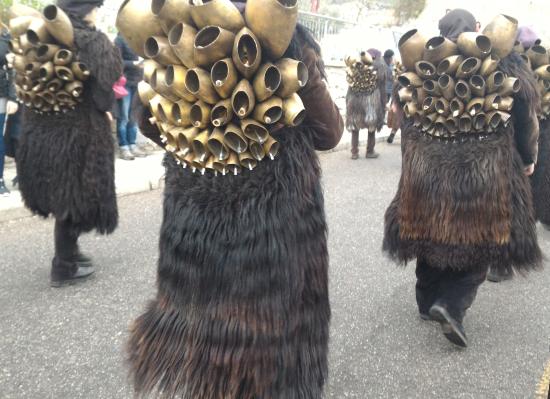
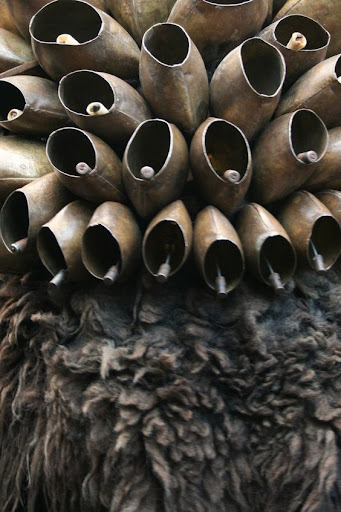
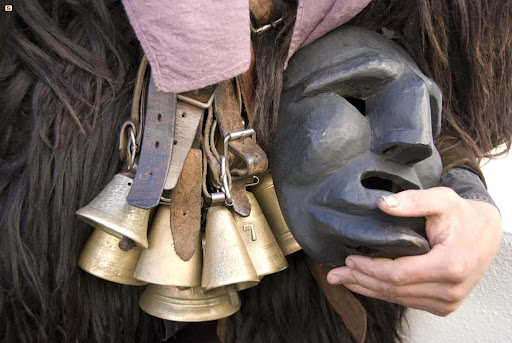
The Mamuthones embody a kind of ancestral spirit linked to the rural world. Their masks, horns, and bells carry a symbolic meaning that gets lost in history, but they’re thought to be connected to pagan beliefs and propitiatory rituals. They wear traditional leather clothing and a heavy wooden mask that completely covers their faces, adorned with goat or deer horns. They haul around these massive copper bells called “sa carriga” on their backs, weighing like 30 kg, jangling with every step they take, setting up this cool, mysterious vibe.
On the other hand, the Issohadores rock linen shirts, red jackets, white pants, and a female shawl. They sling brass and bronze bells over their shoulders, and some even sport a white mask.

The parade is like an actual ceremony, almost like a procession. The first group moves super slowly, bent under the weight on their backs, while the others keep the rhythm, moving more agilely. Suddenly, they’ll toss their ropes into the crowd to catch someone – to get free, you have to offer them a drink.
  • Comparing Symbols of Sardinian Carnivale & Bulgarian Kukeri Festivals of Old Europe Through Common Neolithic Rituals and Bronze Age Mythology by Judith Mann
The intent of this research paper is to trace the antiquity and significance of the rudiments of traditional masquerades still practiced in Sardinia, Bulgaria and other Balkan or Alpine countries through matrilineal ritual symbols from Neolithic Old Europe interlaced with Dionysian Bronze Age rituals based upon Thracian myths.
Additionally, this research is to query accepted beliefs that Carnival origins only began with medieval Christmas, Lenten and Easter holidays, or are merely processions reflecting current popular culture.
In this paper, the symbols of suppressed spiritual consciousness embedded mnemonically in the masks and gear of all-male Bulgarian Kukeri Festivals and Sardinian Carnivales participants, are presented as evolving from Neolithic times in Old Europe, then extending to Sardinia with migrations, and later,
through extensive obsidian trade routes, myths and rituals carried between Sardinia-Corsica, Old Europe and the Mediterranean-at-large.

The Ötzi DNA Connection of Old Europe to Sardinia

In September 1991, a natural, well-preserved mummy of a 45- year-old hunter was discovered in the Ötztal Alps on the border between Austria and Italy. He had died between 3239-3107 BCE, a time period categorized as Late Neolithic, notable in Europe for Great Mother-goddess-oriented, hunter-gatherer cultures on the cusp of agriculture. Deemed ‘Ötzi the Iceman’, his is the oldest human sample to undergo high-throughput DNA sequencing of an entire genome.
Austrian forensic scientist Walther Parson reported in 2013 that 19 men living not far from where Otzi was discovered, had the same Y chromosome mutation as the Iceman, based upon a study of almost 4,000 Austrian blood samples.
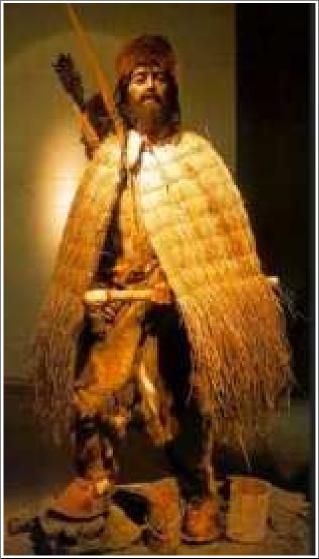
Fig. 1 Restoration of Otzi

“His lineage is very rare in mainland Europe”. Only 1%t or less share the same sequence, but is rather frequent in northern Sardinia and southern Corsica. The Iceman’s ancestry most closely mirrors that of modern-day Sardinians”. said Stanford School of Medicine’s Dr. Peter Underhill. He came to the conclusion assisting Dr. Carlos Bustamante in analyzing the mummy’s Y chromosome.

Just one small variation on the Y chromosome, a rare Y-chromosome mutation known as G-L91, pointed the researchers to Otzi’s Sardinia-Corsica connection. Sardinians and Corsicans have remained so moored to their genetic past, that a 5,300-year-old individual from Old Europe can clearly exhibit affinities with them. A reason might be the distinct isolation of central Sardinia mountain regions far removed from the often invaded coasts.

Extremely high frequency of I2-M26 Y chromosomes in the Sardinian population signal a major founder event, also adding to their outlier position. The detection of identical chromosomes in Volterra, Italy, suggests an ancient founder or trade connection between Tuscany and Sardinia.

Paleolithic-Neolithic Migrations to Sardinia
First migrations from Paleolithic Europe to Sardinia-Corsica took place about 14,000-20,000 years ago. when sea levels were lower and access to the single Sardinia-Corsica island was
close to the Tuscan coast, indicated by the submerged green land of Fig. 2. Early drifts brought matrilineal hunter-gather tribes. The oldest bones of Homo sapiens in Sardinia dating back to the Upper Paleolithic period, have been found in the Corbeddu Cave of Oliena, central Sardinia.
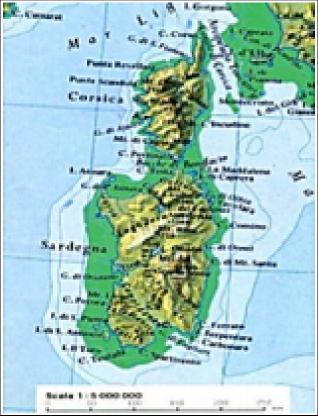
Fig. 2 Pleistocene Sardinia-Corsica


A significant portion of Sardinian-Corsican ancestry derives from these peoples, mixed with a subsequent wave of an undiluted Neolithic farmer strain
.A 14-inch bronze statue dating from the 9th century BCE, on display the Museum of Cagliari, has been identified as an Early Neolithic farmer by independent researcher, Daniele Cocco.
Rather than a ‘Craftsman’, as labeled by the museum. Cocco bases his conclusion on what now seems obvious, that the figure is carrying, along with a
hoe, a hand plow with a stone head, in use when a man, not an ox, was attached to the yoke.
So this statue precisely captures the 3-7,000 year-old memory of Neolithic origin, the giant leap into agriculture. It is an artistic communication tool inspired by oral history, and preserved intact through the ages. Masked dramas performed today at Sardinian and Bulgarian carnivals, echo the myth of man yoked to the plow.
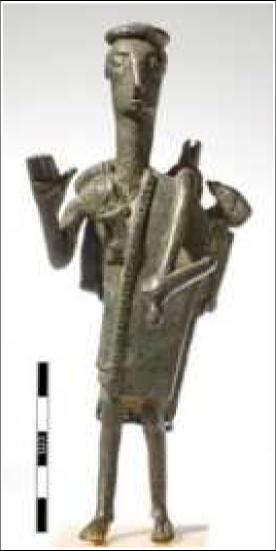
Fig. 3 Bronze Farmer Statue


Obsidian Trade Routes
With the transition into the Neolithic period, obsidian tools from Sardinia became the prototype of exchange. Because of obsidian, Sardinia became one of the most important trade nodes of the entire Mediterranean basin extending to what is now mapped as France, Italy, Crete , Austria, Croatia, and Bulgaria, thus spreading the y Sardo chromosome, 12a2-M26 link.
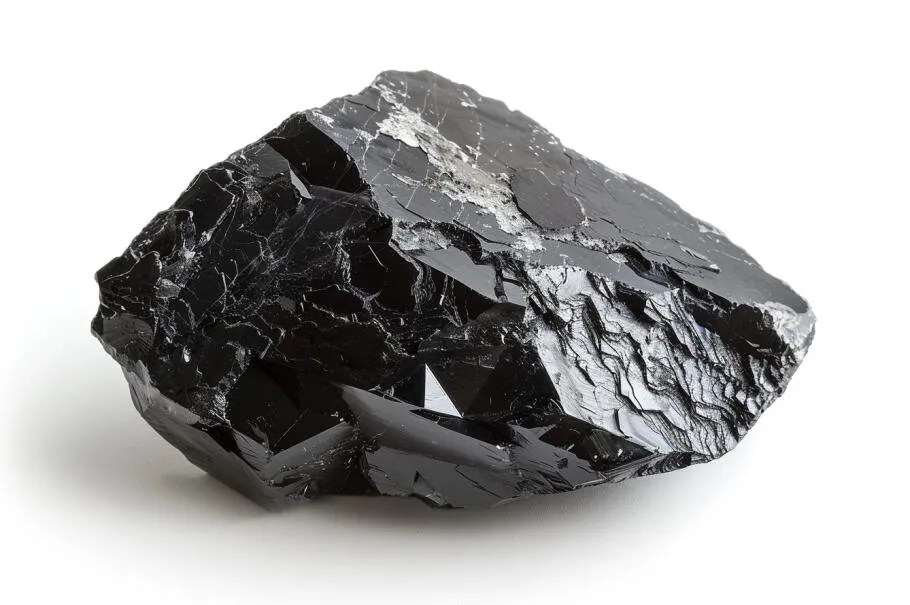
From Monte Arci, a 3.5 million year-old volcano in western Sardinia, flowed the most ancient deposits of obsidian in the central Mediterranean. Obsidian is a volcanic glass with a black-
glossy appearance, formed when lava rich in silica quickly cools, generating a glassy mass. Because it can be reduced to very sharp shards, obsidian was fashioned into valuable cutting tools, hunting spears, scrapers and arrowheads.
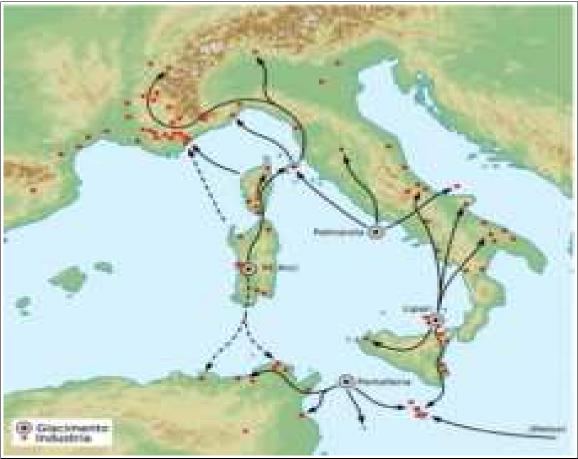
Fig. 4 Neolithic Obsidian Trade Routes

Excavations carried out in 1968, by archaeologists Enrico Atzeni and Gérard Bailloud at a rock shelter called ‘Su Carroppu’ in the Sirri region, revealed obsidian tools from Monte Arci. The remains of ancient meals also found in the shelter, included bones of animals such as deer, wild boar and fish, confirm a 6,000 year-old Neolithic economy based on farming, hunting and fishing in Sardinia and Corsica.
The obsidian trade brought the sea-faring Sardinians into direct contact with the syncretic worship of the high Minoan-Mycenean culture of Crete which reinforced and expanded their own Great Mother rituals, adding those of homage to Dionysus.

The Great Mother
The Great Mother figured prominently in the cultures of Old Europe. Archeologist Marija Gimbutas characterized their unfortified settlements as peaceful, egalitarian, matrilineal. Their worship gave priority to cycles encompassing birth, nurturing, growth, death, and regeneration. (SeeThe goddesses and gods of Old Europe, 6500-3500 B.C )

Focus was on untamed natural forces as well as crop cultivation and animal rearing. As confirmation, extensive caches of goddess figurines have been unearthed in Neolithic settlements along the Danube and in the Balkans. Corresponding stone female figurines shown in Figs. 6 and 7 were discovered at Cuccuru S’Arrius and Senorbi in Sardinia.
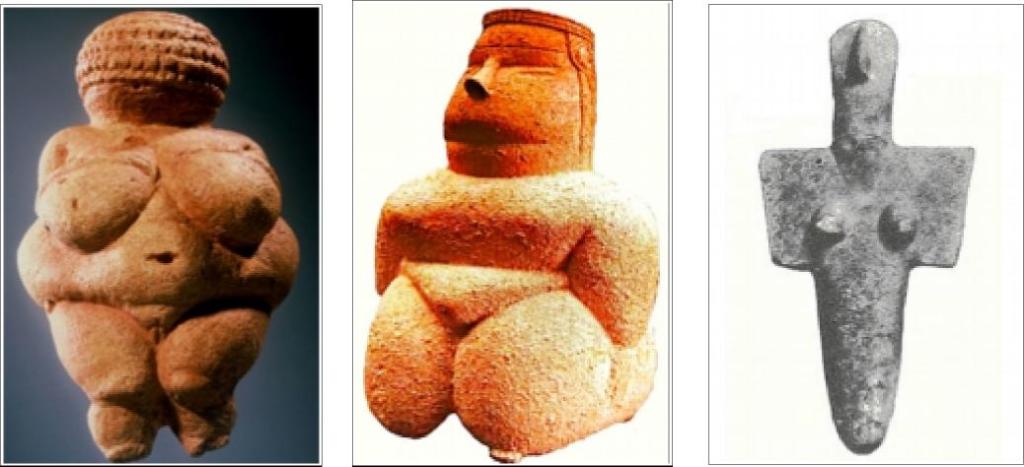
Fig, 5 Willendorf, Austria 30,000 BCE Fig. 6 Cabras, Sardinia 4,000-2800 BCE Fig.7 Senorbi, Sardinia 3200-2700 BCE

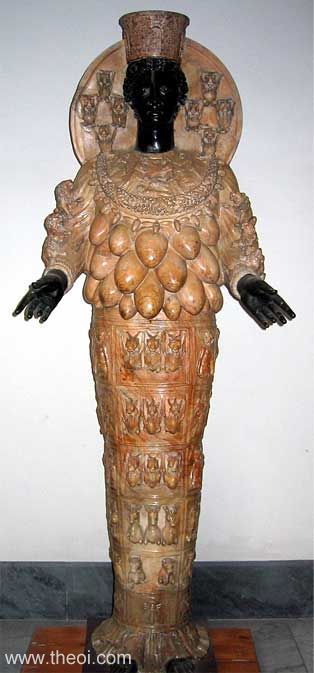
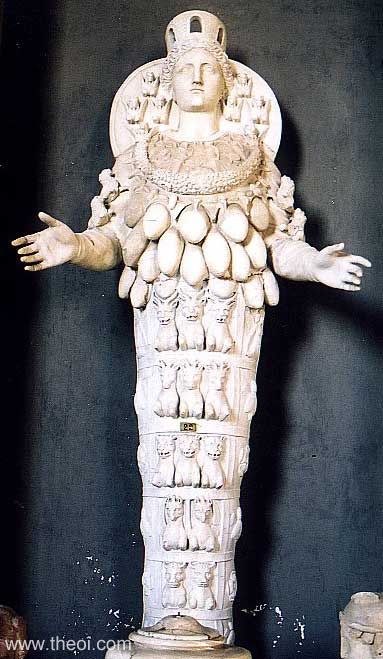
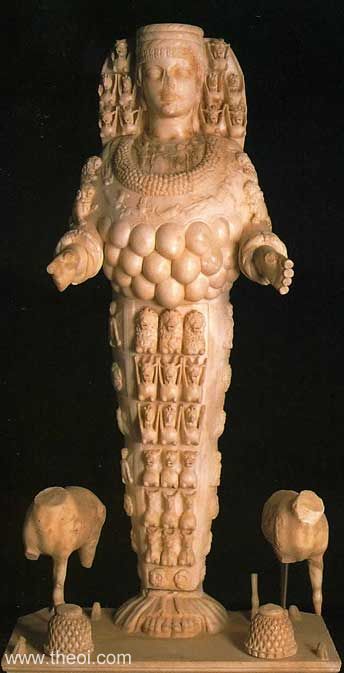
ARTEMIS was the Olympian goddess of hunting and wild animals, and the protectress of women and girls.

This page describes her cult in the Greek colonies of Anatolia, the Black Sea, North Africa and Italy. Her cult was often combined with those of indigenous local godddesses, or such foreign deities were simply renamed “Artemis”. The most significant of these was the Ephesian Artemis–an ancient Anatolian mother-goddess who was depicted with a multitude of egg-shaped breasts. Another was the goddess of the Tauric Chersonese on the Black Sea (now Crimea). The cult of these two foreign “Artemises” spread throughout the Greek world. see page
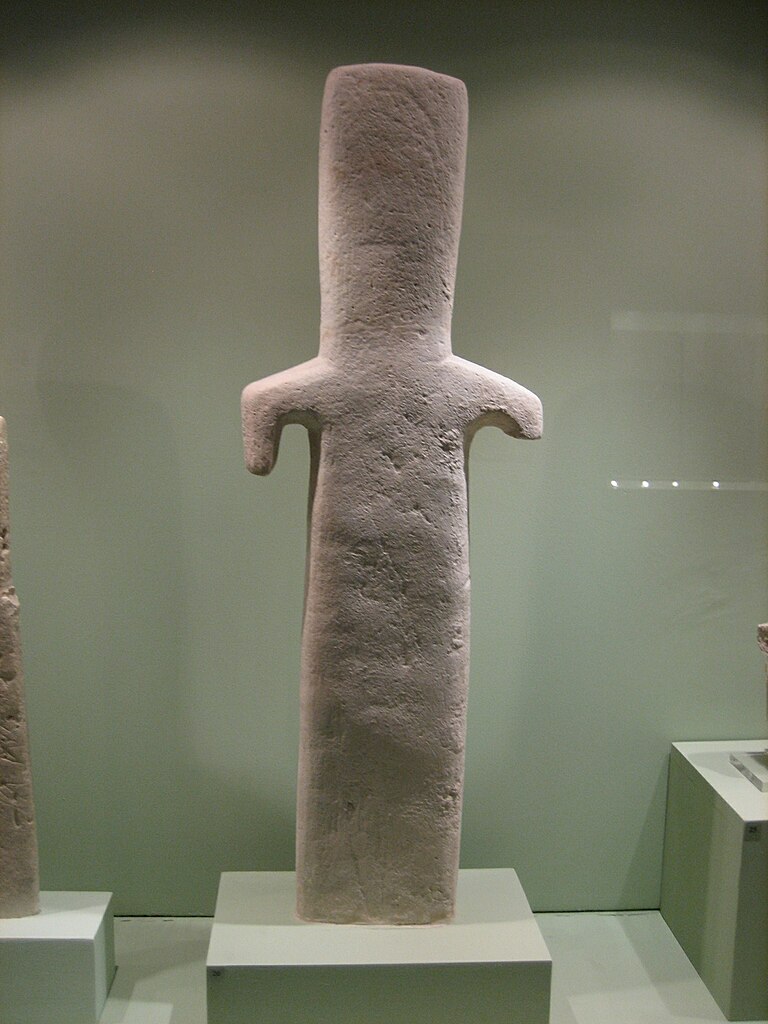
xoanon (/ˈzoʊ.ənɒn/ ,[1] Greek: ξόανον; plural: Greek: ξόανα xoana, from the verb Greek: ξέειν, xeein, to carve or scrape [wood][2]) was a wooden cult image of Archaic Greece. Classical Greeks associated such cult objects, whether aniconic or effigy, with the legendary Daedalus. Many such cult images were preserved into historical times, though none are known to have survived to the modern day, except as copies in stone or marble. In the 2nd century CE, Pausanias described numerous xoana in his Description of Greece, notably the image of Hera in her temple at Samos. “The statue of the Samian Hera, as Aethilos [sic][a] says, was a wooden beam at first, but afterwards, when Prokles was ruler, it was humanized in form”.[3] In Pausanias’ travels he never mentions seeing a xoanon of a “mortal man”.
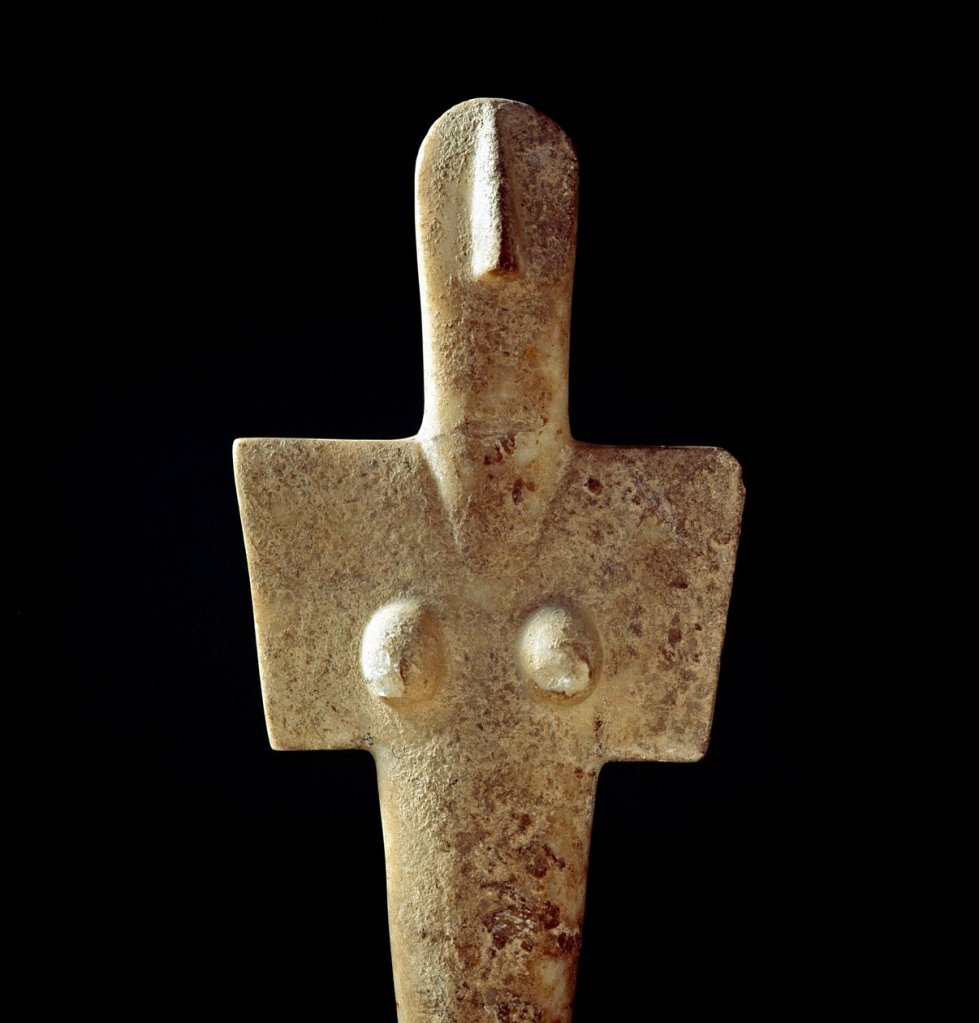
Veneration of the Great Mother found its way from Old Europe to Sardinia during its BonuIghinu and Ozieri periods, from 4000-2800 BCE. Central to the pre-patriarchal worship of the goddess was the miracle of birth and the power to transform death into life through the mysterious cyclical regeneration of nature.

Her arcane initiation rituals were marked by masquerades representing cosmic powers, either benevolent or threatening and myths enacted with masks depicting birds, bulls, mountain goats and deer.n ( See The Chalice and the Blade )
Astrologer, Barry Goddard views these initiations as “essentially inner experiences in which
some new element of Spirit comes into consciousness.”. (shamanicfreestate.blogspot.com)
Deer Masquerades
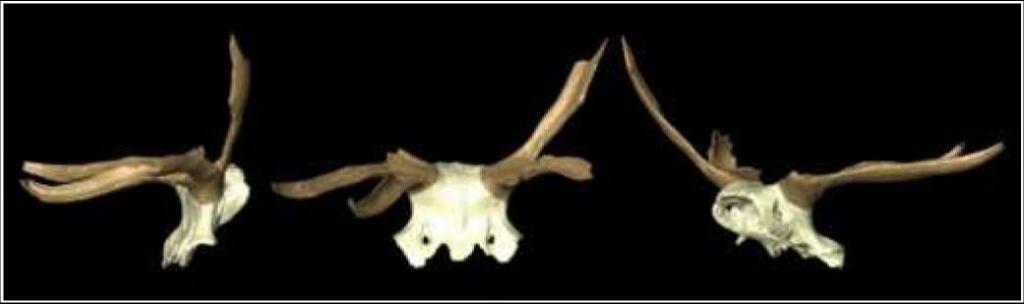
Fig. 8 Star Carr 11,000-Year-Old Deer Mask Study Credit: University of Oxford

The oldest known deer rituals may date back 11,000 years, to a time when England was connected to mainland Europe. This premise is validated by a cache of twenty-seven deer masks probably worn by shamans, unearthed at Star Carr, UK in the 1940’s and 2013.
Shamans enter a trance state to communicate with animal spirits, often experienced as a physical transformation into the beast in question. This typically involves wearing a costume that integrates animal references and identifies the shaman with their animal spirit.

Pre- gricultural hunting rituals tended towards such shamanic forms, with deer symbolism linked to cyclical regeneration and antler growth. Northern Europeans in the hunting stage carried an image of the Great Mother as an elk- or wild reindeer-doe, her udders depicted as the source of rain.
Continuing the Mesolithic tradition, villagers in Sinnai, Sardinia, don horned deer masks to act as quarry in an ancient hunt ritual.
As part of the rite, masked Is Canaxus, hunters, push Is Cerbus, deer-men, towards a stake-out for the kill. The goal is to renew divine consent, so as to continue to receive the Great Mother’s gift of prey.
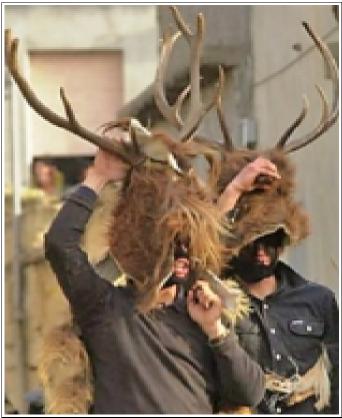
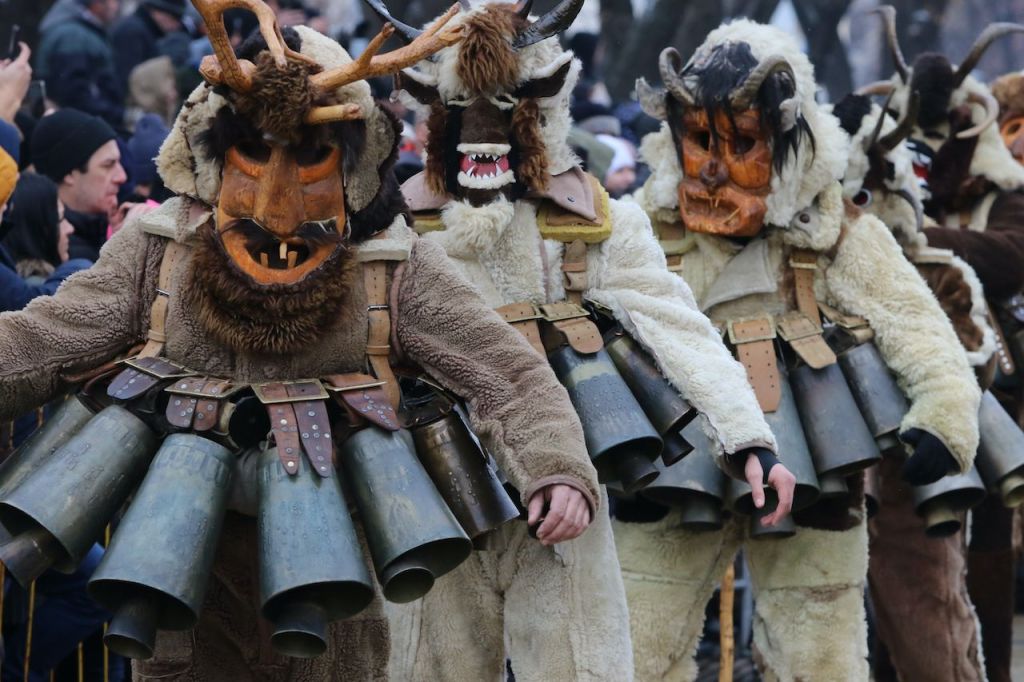
Fig. 9 Is Cerbus, Deer-Men Sinnai, Sardinia
Kukeri

Indo-European Invasions

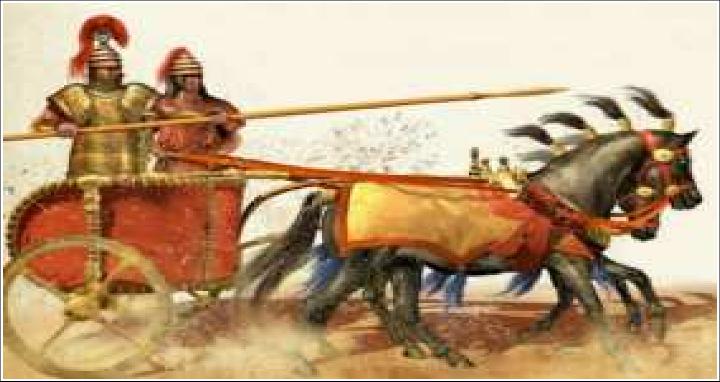
Fig. 10 Mycenaean Warriors 1500 BCE

The dispersion of Indo-Europeans into Old Europe, the Aegean and the rim of the Black Sea, overthrew these civilizations whose most important feature of life was worship of the Great Mother. Three great waves of proto-Indo-European pastoralists from eastern steppes mark the suppression of Great Mother worship by a dominant patrilineal culture. In Old Europe the physical and cultural disruption of the Neolithic societies that acknowledged the Great Cosmic Mother, seems to have started in the fifth millennium BCE, with what Marija Gimbutas termed ‘Wave No. 1, 4300-4200 BCE’, followed by ‘Wave No. 2, 3400-3200 BCE’ and ‘Wave No. 3, 3000-2800 BCE’.
At the core of the invaders’ system was the high valuation on the power that takes, rather than on what gives life. The system was composed of patrilinear, socially stratified, herding units that lived in small villages or seasonal settlements while grazing their animals over vast areas. Its ideology, according to author Riane Eisler, exalted virile, heroic warrior gods of the shining and thunderous sky.
The pastoral invaders increasingly obliterated Great Mother worship because it challenged their authority. Findings indicate that in some invader camps, the majority of the female population was of Old European stock taken in slave raids.
This may have contributed to the remarkable continuity of suppressed Great Mother symbolism appearing in the masked carnivals of historic times.

The influence of Mycenaean Crete Early inhabitants of the Balkan peninsula were the Indo-European Thracians, who introduced the cult of Dionysus to the region including Mycenae, through their masked initiations and festivals. The Mycenaeans who went on to conquer Minoan Crete, superimposed the Dionysian rituals onto the existing Great Goddess worship of the Minoans, which appeared to be the most singular and important aspect of daily life.
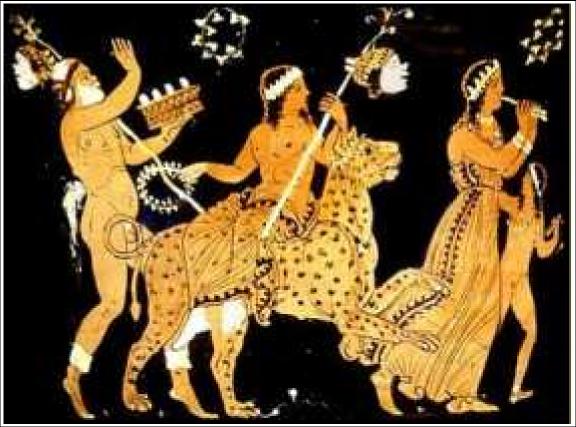
Fig. 11 Silenus, Dionysus, and Maenad Procession 370 BCE

As mentioned, Late Bronze Age trade voyages to Crete also brought knowledge of Dionysian rituals on return trips, to be blended with the existing Great Mother worship of Sardinia. In his book, The Golden Bough, Sir James Frazer states, “The god, Dionysus is best known as a personification of the vine and as the exhilaration produced by the grape. His ecstatic worship is characterized by wild dances, thrilling music and tipsy excess.
These attributes are still displayed in the carnivals of remote mountain villages in the Rhodope and Strandhza mountains of Bulgaria and the upland Nuoro Province of Sardinia.
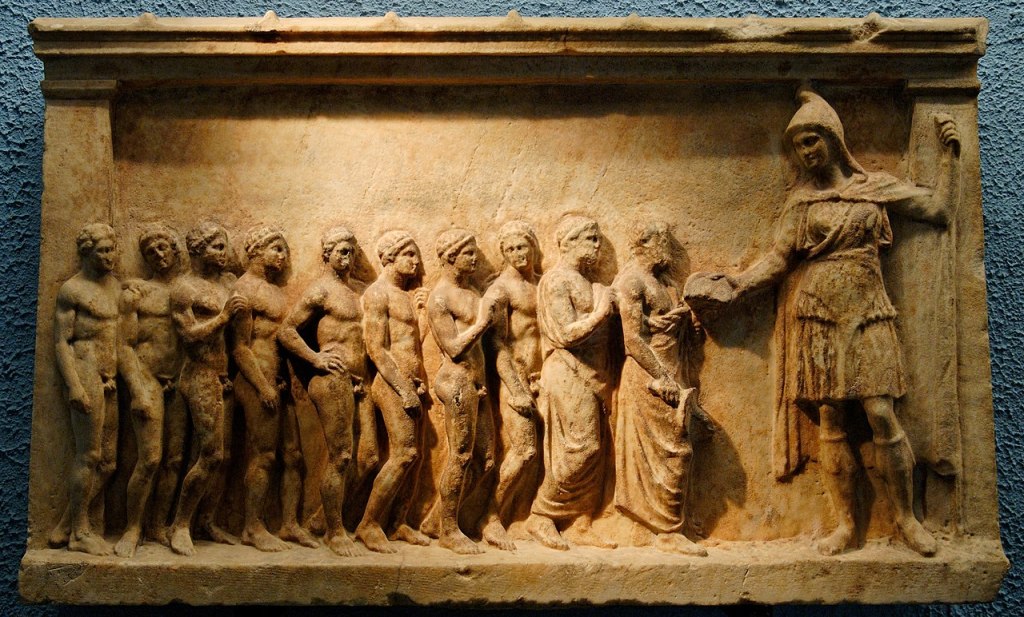
The Thracian festivals that took place at the start of the ancient New Year in early spring, focused on the goddess and her son, Dionysus. Versions of his birth, sacrificial death and resurrection were performed in horn-masked rituals to ensure renewal of the cosmos and society.
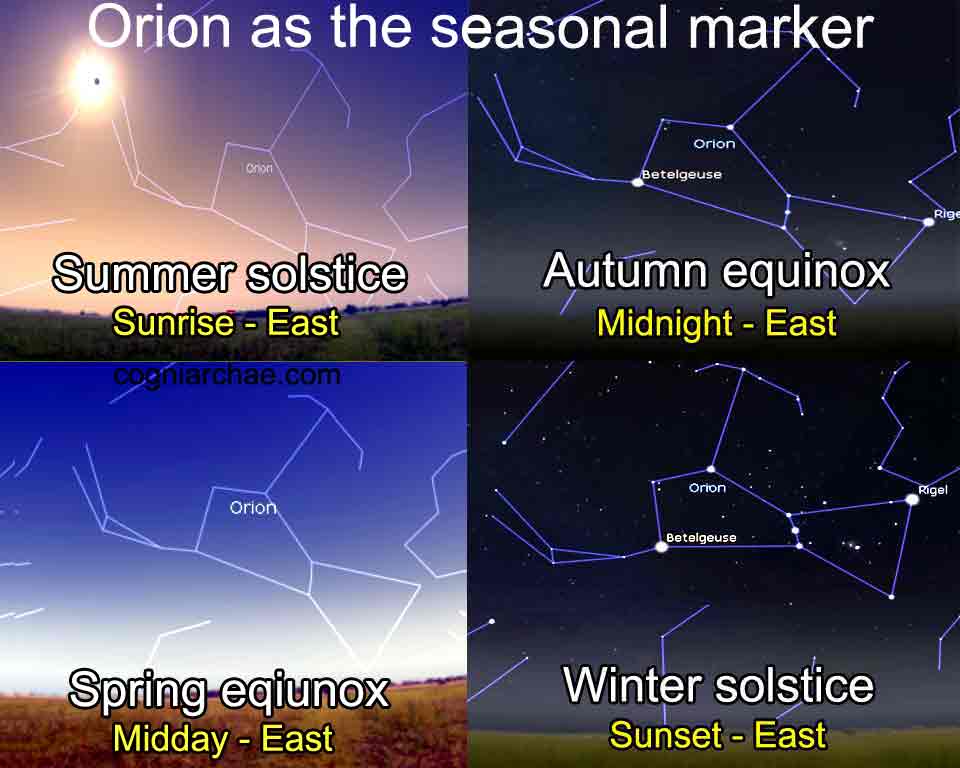
Though Dionysus was considered a deity of vegetation, he was often depicted as a bull or a goat, or wearing Taurine horns. Legend has it that he was in bull form when torn to pieces, reenacted in Crete by an actual bull being ritually torn apart and consumed raw. His worshippers may have believed they were eating the flesh and drinking the blood of a god. The killing of a bull or goat came to be regarded as no longer the direct slaying of a god, but seeas a sacrifice offered to him. Hence, Dionysus eating his own flesh and gaining resurrection. see Orion worship – part 1 – Christianity and Orion worship – part 2 – Dyonisian mysteries
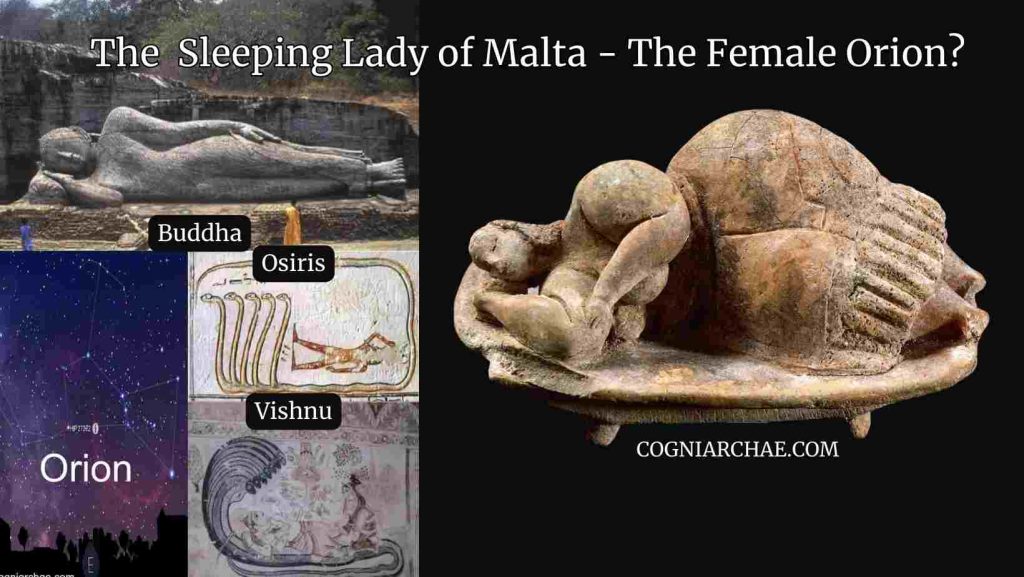
Orion as a Goddess: Peeling the Layers of Ancient Star Lore

Thread of Life

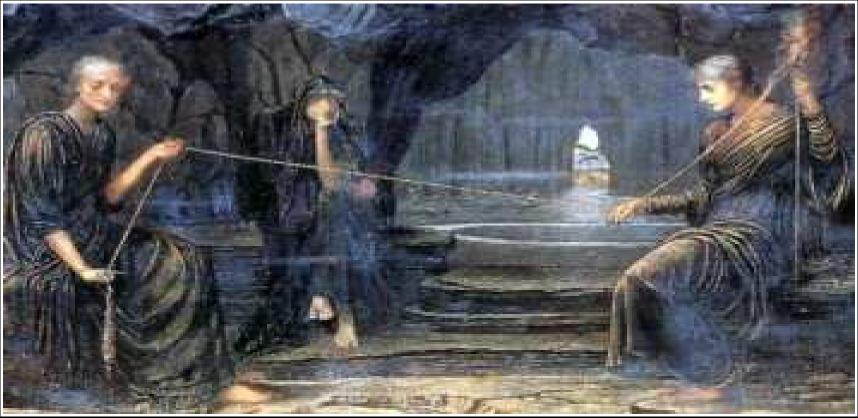
The Three Moirai or Fates Lachesis, Atropos, Clotho

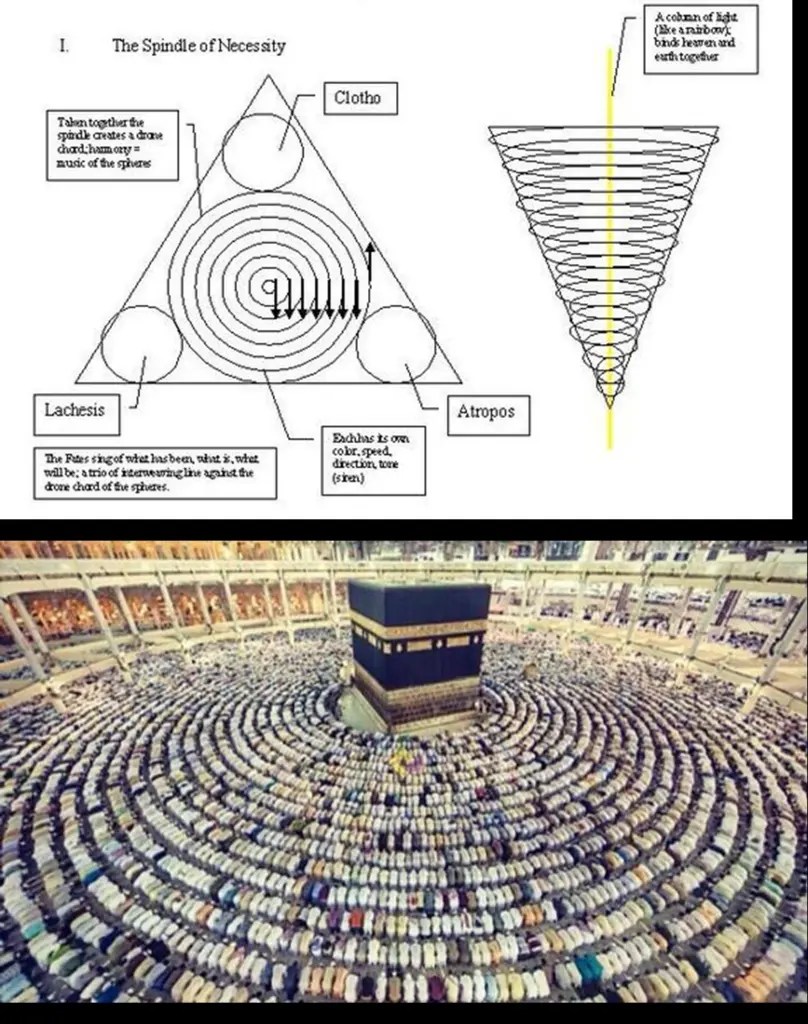
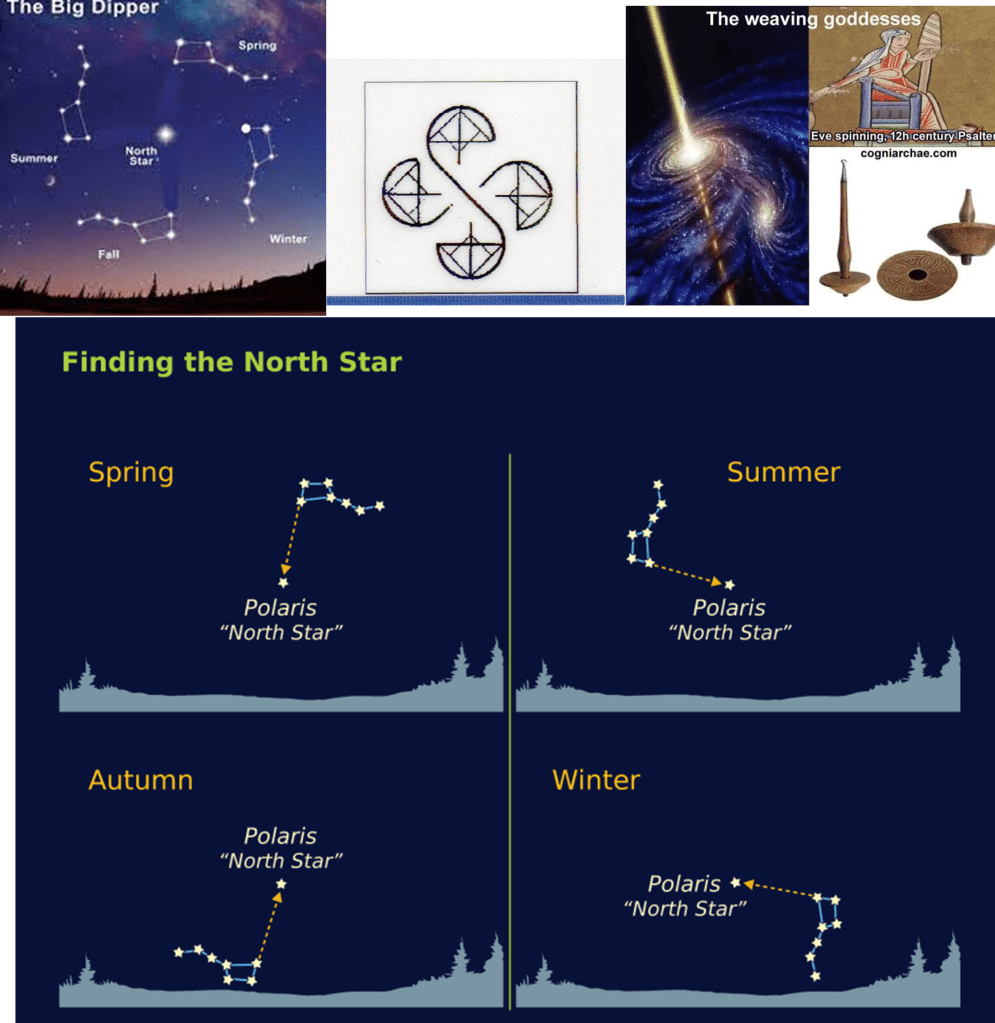
The Moirai were the three goddesses of Bronze Age mythology who personified the inescapable destiny of humans and gods. They assigned to every person his or her share of daily life. The sacred trinity was composed of Clotho who spun the thread of life from her distaff onto her spindle, Lachesis who measured the thread of life allotted to each person with her measuring rod, and Atropos, the cutter of the thread of life. She chose the manner of each person’s death; and when their time came, she cut their life-thread with her loathed shears.
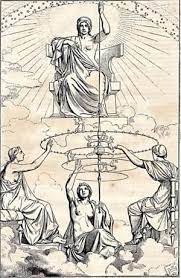
In Neolithic times, the three Fates were considered daughters of the primeval goddess to whom the gods themselves must bow and considered aspects of time:
Lachesis represents the things that were, Clotho the things that are, and Atropos the things that are to be.
Common to the Sardinian Carnavale and the Bulgarian Kukeri Festival is the crone character, Filonzana, whose face is either painted with soot or wears a mask and dressed in black expressing deep mourning. The crone stays close to the ‘victim’ in the procession; the thread coiled on
her spindle, the symbol of destiny. As birth naturally ordains death, the thread will soon be cut and the scapegoat cursed to prevent guilt from clinging to his killers as they spill his redeeming blood . Moirai or Filonzana embody a sentient power governing the limit of life.
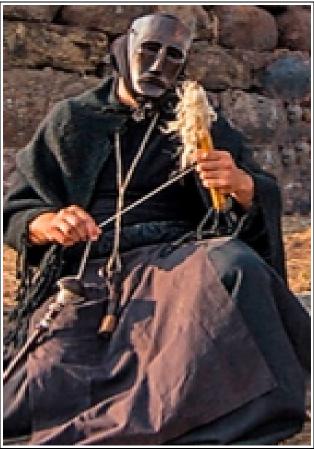
Spindle of Destiny, Sardinia

There appears to be an early dynastic Egyptian influence on the Sardinian crone, occurring through a Minoan Cretan connection with Egypt. The little-known ancient Egyptian goddess Meskhenit was defined by Sir Wallis Budge as ‘the goddess of the birth chamber’ and also as a presiding presence at the time of death, an antecedent to Filonzana’s functions.
Laird Scranton observed in his book, The Science of the Dogon, “the passages that Meskhenet oversees relate to a gateway between the non-material and material, one that takes on different nuances of expression depending on whether we consider it in relation to the universe/macro-cosm, the formation of matter/microcosm, or biological reproduction.”
Scranton associates the name of the goddess which rests on the phonetic Mes with glyphs relating to a modern scientific perception of spindles and chromosomes in molecules through the concept of a dipole, a pair of separated electric charges of equal magnitude but of opposite sign or polarity. Certain hieroglyphs from the 30th Dynasty Metternich Stele can thus be interpreted.
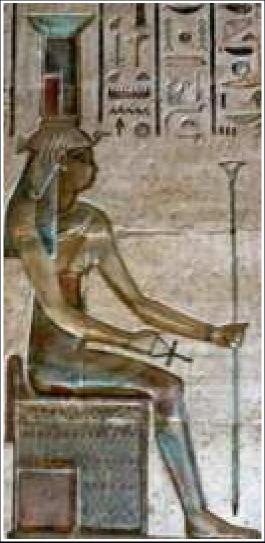
The Goddess Meskhenet

Reading the hieroglyphs from left to right, a ‘chromosome’ glyph combined with a curved staff glyph conveys the idea of creative transition, the glyphs depicting the act of giving birth, the act of weaving, and the vision of energy shown as a snake undulating
between nonmaterial and material domains. In that context, Meskhenit oversees not a static life-ending moment, but the energetic gateway of death.
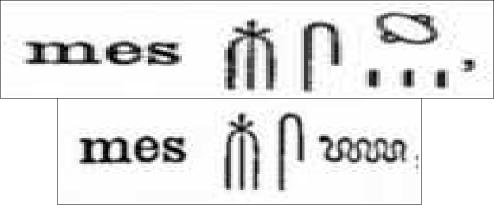
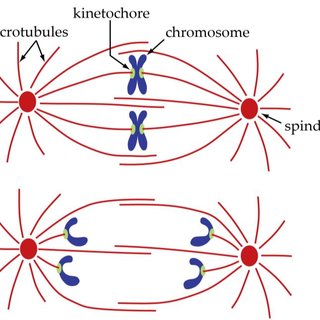
Glyphic Definition of the Phonetic ‘Mes’
Chromosomes and Spindles

see also The Thread of life: Wisdom for our Times
The Kouker
The village of Indje Voivoda, Bulgaria, hosts an early spring festival revolving around a single Kouker who is sacrificed and born anew, akin to Dionysus. The role of Kouker, whose original Greek name has been defined as ‘rod-carrier’, serves the double function of chasing evil spirits and endowing fertility. This ritual has been performed continuously from ancient Thracian times to the present to restore order to an otherwise chaotic world.
The Kouker’s face is blackened with rye straw soot mixed with oil as a sign of transitioning from one world into another, rather than wearing a formal mask. His costume, created from seven sheep or goat hides, is deconstructed at the end of the festival to be buried in seven different parts of the farmland outside the village. Bells suspended from his waist and horns atop his hood refer to the sacrificial bulls of ancient cults.
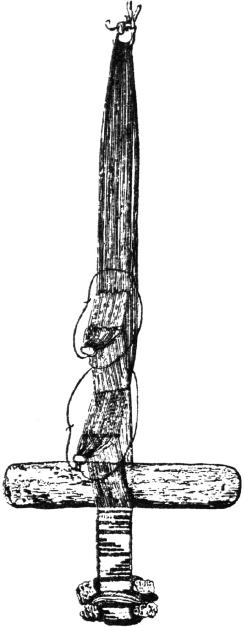
He carries a phallic pole during three tours of the village, striking both ground and female spectators with the assumption they will conceive faster after being hit. Only the crone can resurrect him after his sudden death during a staged fight, reenacting the sacred mother-son mystery initiation. Everything in the ritual episodes speaks to the cyclical destruction and renewal of the universe.
Add the observation of author Riane Eisler, that the Paleolithic association of sex with communal sharing and benefiting from the bounty is made possible by the rebirth of nature each year in the spring. In most other Bulgarian village celebrations, multiple Koukers evolved from the single Kouker character and appear as a group in ornate masks and garb.
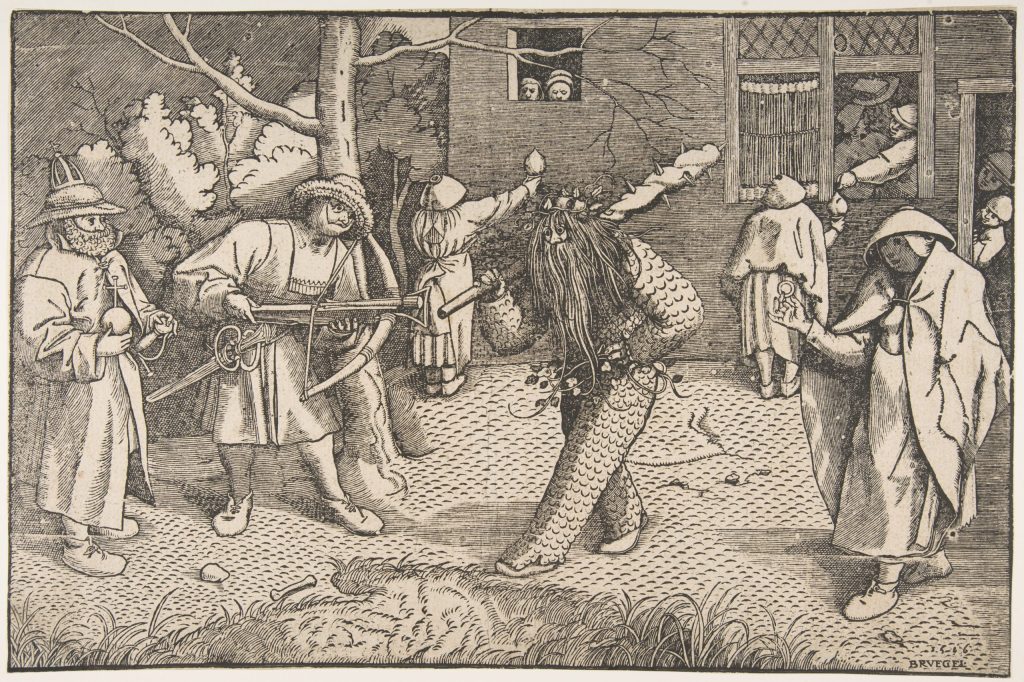
The-Wild-Man-or-the-Masquerade-of-Orson-and-Valentine-

It is the story of twin brothers, abandoned in the woods in infancy. Valentine is brought up as a knight at the court of Pepin, while Orson grows up in a bear’s den to be a wild man of the woods, until he is overcome and tamed by Valentine, whose servant and comrade he becomes. In some versions, the pair discover their true history with the help of a magical brazen head. The two eventually rescue their mother Bellisant, sister of Pepin and wife of the emperor of Greece, by whom she had been unjustly repudiated, from the power of a giant named Ferragus.

See also the Mythology, Legends and Fairy Tales of Friesland
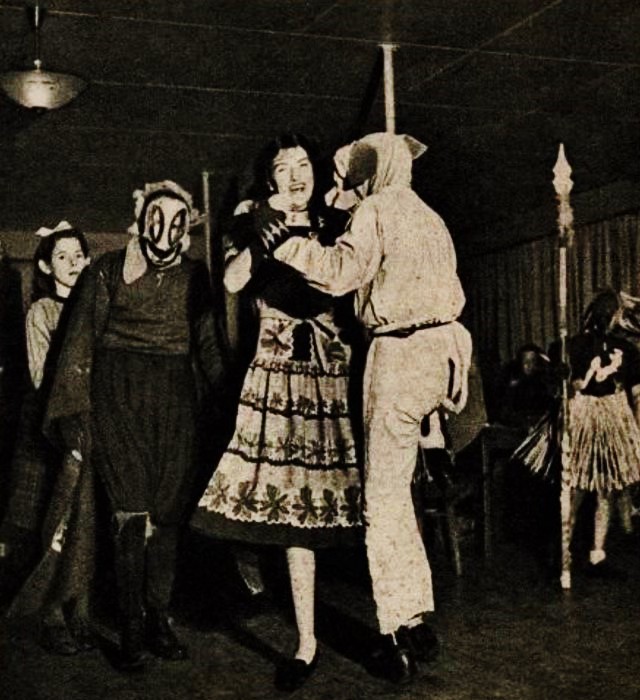
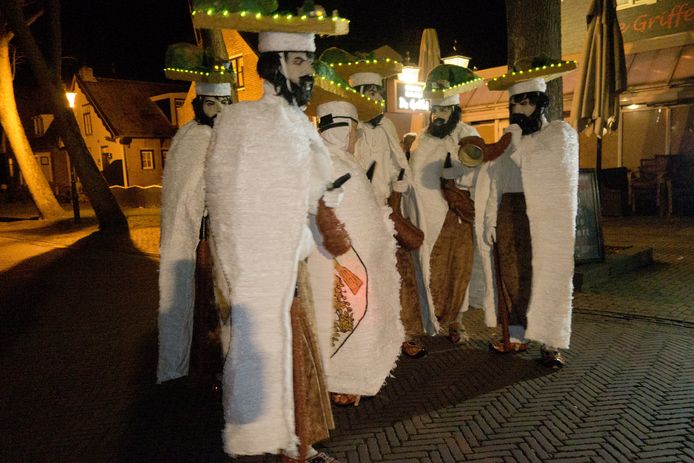
Ameland( Friesland)

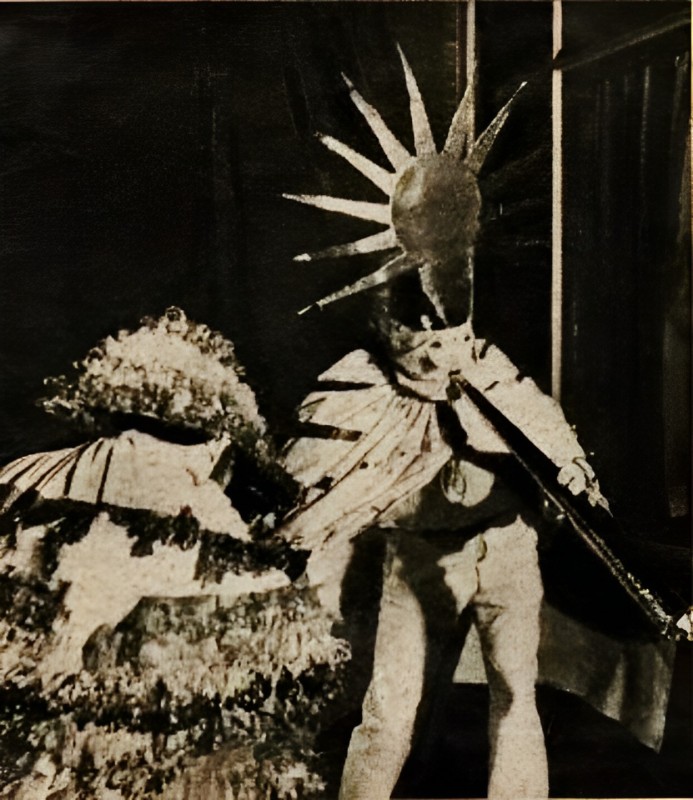
Note :In Friesland you have Sunneklaas or Sunterklaas is a variant of the Sinterklaas festival in which elements of pre-Christian traditions are mixed with traditions and stories about Saint Nicholas. This folk festival, which also shows similarities with the Krampus tradition, is celebrated annually on or around 5 December for two consecutive days on the Dutch Wadden Island of Ameland.[a] It is the most important festival of the year there and the roughest of all the variants of Sinterklaas on the Wadden Islands.
Sunneklaas is an old tradition that is part of the Ameland identity. It is a festival of, for and by Ameland residents that is celebrated in its most original form in Hollum and Ballum. Especially in these western villages on the island it is shrouded in secrecy and outsiders are kept out.[b] Due to media exaggeration of the little information that comes out, Sunneklaas has an image of a misogynistic horror festival where no laws apply.
Significance of Mamathune Masks & Costumes
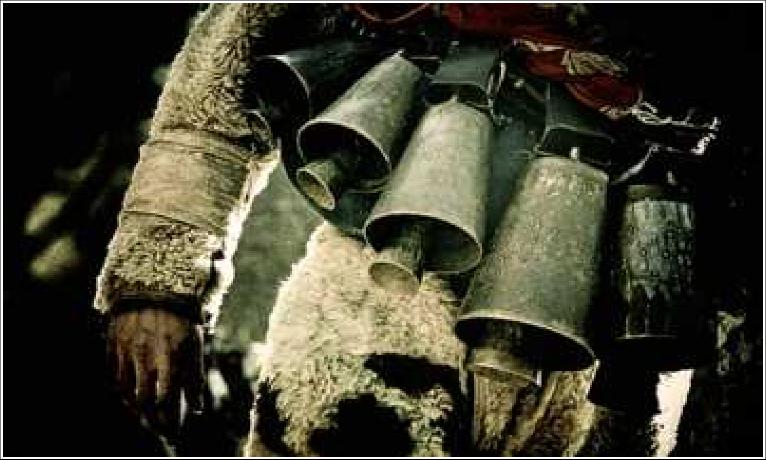
Kouker Back Bells Bulgaria

Masquerades focused on the characters of the Kouker in Bulgaria and the Mamathunes in Sardinia may be among the most ancient, arriving barely altered from the Paleolithic times of Great Mother worship.
The name Mamathune. translates as ‘the men who call for rain’ , a shamanic under-taking for survival in a parched land. Their sheepskin costumes evoke a prehistoric man-animal connection. A female kerchief knotted over the rugged contours of a carved wooden mask or a blackened face, signals the androgynous nature of the Mamathune. This is worn in
stark contrast to the rough clothing and masculine boots of the participant. Approximately one hundred pounds of large bronze cow bells are carried on the back, secured by tight leather straps. Smaller bells are secured on the front, purportedly to ward off evil spirits. Similarly, Kukeri wear both sets of bells, straps, skins and grotesque masks or blackened faces, though generally, not the kerchief. Other research ascribes a satanic origin to the black Mamuthone mask, and the entire procession is presumed to be a kind of ritualistic exorcism .
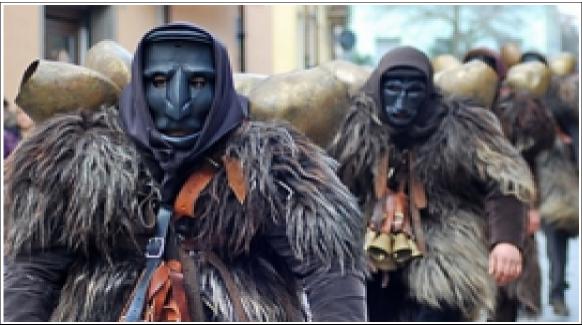
Mamathune Procession, Sardinia

Darkened Faces

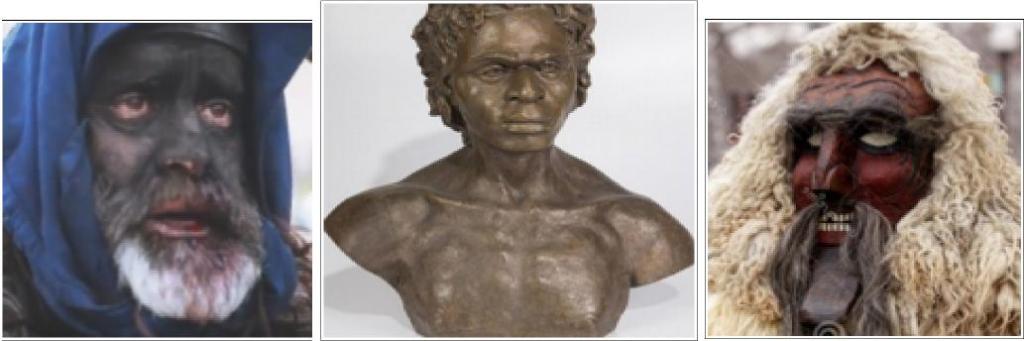
Fig. 20 Blackened Maimon Battileddu Fig. 21 Reconstruction of Kostenki Man Fig 22 Dark Carved Mask

Though the carnival custom of darkening the skin with soot or wearing dark carved wooden masks is attributed to the demonic or to animal nature and to be ritually exorcised, it actually might refer to a deep collective urge to display the genetic memory of chronologically distant European ancestors who were dark-skinned before the advent of the Ice Age.
According to evolutionary biologist Eske Willerslev of the Natural History Museum of Denmark, ancient DNA taken from the 36,000 year-old fossilized skeleton of a short, dark-skinned, dark-eyed young man, contains all the genetic components found in contemporary Europeans. He is known as the ‘Kostenki Man’ from the Don River, Russia.
The data, published online in the November 2014 issue of Science Magazine33, suggests that today’s Caucasian Europeans are descendants of an interconnected population of dark hunter gatherers that had spread throughout Europe, Asia and the Middle East 36,000 years ago, long after leaving Africa.
A branch of this founder population called basal Eurasians, spread north and west into Europe and central Asia. These people interbred at the edges of their separate populations, keeping the entire cmplex network interconnected and so giving the ancient Kostenki man genes from three different groups, indigenous hunter-gatherers within Europe, people from the Middle East, and northwest Asians from the Great Steppe of eastern Europe and central Asia along the Middle Don River in Russia presents a different view: This dark-skinned young man with DNA from all three of those migratory groups was already ‘pure European‘.

Procession Movements
The first jump that a Mamathune or a Kouker takes is the most memorable, for it is the archetypal jump from the womb of the Great Mother, announced by the haunting sound of bronze cowbells.
The sound becomes even more impressive multiplied by twelve Mamuthones jumping simultaneously. On signal, they quickly jump three times in place, producing three sharp, powerful ringing sounds from their entire outfits. The claps reverberate through narrow cobble streets.
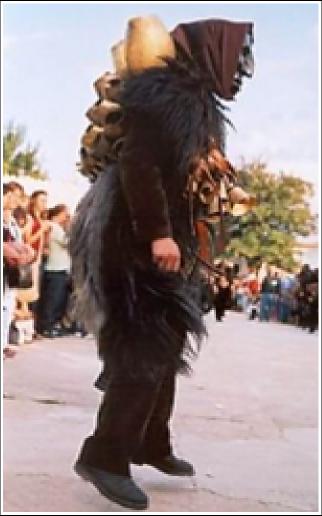
Jumping Mamathune, Sardinia

The group of twelve, who symbolize the number of months in a year, parade slowly in two parallel lines under the weight of the cowbells. Their every movement plays a significant part in the ritual. As they press forward, the Mamuthones acting as one
organism, swing their shoulders and twist their bodies, first to the right and then to the left. These gestures in two
beats accompanied by deeply resounding bells, is executed
in perfect synchrony despite the weight of their outfits, the mask’s obstruction of vision and tight straps limiting their
freedom of movement.
The motions of this sacred procession suggest an ancestral memory of a miracle of twisting descent culminating in the birth of humankind. The profoundly dignified ceremony linked to the eternal cycle of birth and re-birth, honors the androgynous Great Mother.
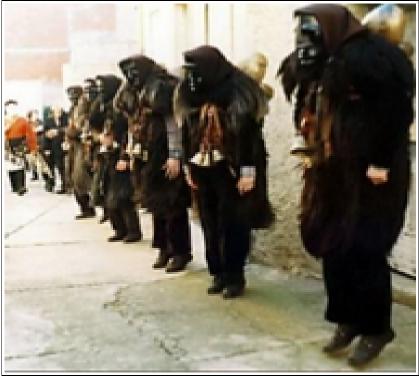
Mamuthones Procession, Sardinia


Return of Spring Sacrifice

Sacrificed ‘Tsar’ or King of Kukerovden, Bulgaria

The ancient custom of sacrificing divine kings is played out in both Bulgarian and Sardinian festivals in the Dionysian mode by distributing virtual fragments of their mutilated bodies over village fields, thus ensuring the return of a fertile spring. The tradition, which associates the sacrifice of the king or his children with a great scarcity of crops, points to the belief that the king is responsible for the weather and harvests. The spilled blood evokes rainfall for the parched earth, essential for collective survival. According to Frazer, when gods are killed, they take on the role of scapegoat, sweeping away disease, death, and sin from the community, and are eaten symbolically in order to be assimilated.

In the carnival enacted in Samugheo, Sardinia, a related character called S’urtzu-Dioniso, symbolizes the god to be sacrificed. He appears as a goat, which according to legend, is how Dionysus often appeared. Under the goat skin is a bladder filled with blood and water. When he is hit and falls, the bladder breaks and red blood soaks the ground. After this sacrifice, new life emerges.


Kukerovden, which translates as ‘Day of the Kukers’, is a Bulgarian mystery play within the festival, in which each player bears a strong symbolic connection to an archetypal aspect of nature. The Neolithic ritual is designed to bind heaven and earth together by telling a human story that echoes the greater, universal drama.

Sacrifice of S’urtzu-Dioniso

The wine-fueled Kukerovden ritual includes a tsar or king and a human couple along with a team of attendant kukeri. In an act of bawdy pantomime, the groom impregnates his bride as the kukeri charge, dance and interact with the crowd, jabbing, thrusting, and chasing girls with their long, red poles. Two kukeri are then yoked to a wooden plow, goaded by the tsar as they ritually till three concentric rings. The tsar scatters grain seeds symbolizing the sowing of fields.

Kukerovden Plow with Male, Female and Tsar

The heated climax occurs when the tsar is struck down with the spindle of destiny. Raising his body announces the arrival of spring. By now the bride, a male disguised with kerchief and comically bulging dress is ready to give birth. When the child pops out, usually represented by an androgynous rag doll, the ceremony is complete.

Maimone Dragging Plow, Sardinia Solo Maimon Dragging Plow

The ritual seems to have originated as an initiation for young Kukeri, historically, boys and young bachelors. Through phallic thrusting and sowing movements. older men would convey the ways of the world and their community. Maimon is the name by which Dionysus is invoked in Sardinia. In Orotell, Maimones mime cultivation by dragging a plow behind them. The deep, indissoluble bond is indicated by ropes that bind the farmers to the yoke. It is no coincidence that Dionysus was especially adored by farmers who considered him the inventor of the plow and the one who had taught men how to lure oxen to ease their labour.

The Sardinian version of carnival is called Carrasecare,’meat carried in a cart to be dismembered’. But the term care does not mean meat for butchery, which is always called petta or petza. The term suggests human meat, revealing the arcane function of traditional Sardinia carnivals. Maskers continue to play out the roles, though with different intentions. They are sad events that require a victim or a stand-in effigy to be torn apart, incarnating the deity who had been eaten by Titans, then resurrected by his mother.

Demeter and Dionysus in Kukeri Festival Cart, Bulgaria

The cart also serves as the platform for enacting the consummation of the divine union between the Neolithic Great Mother and her consort-son in Bulgaria. They reappear in Minoan myth as either Demeter or Semele, depending upon the version, as the stand-in for the Great Mother and her consort- son, Dionysus in bull form, representing male virility.
Ensured through these mini-dramas is the fertility of the fields, fruit trees and grape vines, the source of the wine that keeps the excitement of the festivals alive. The magic of these long-repeated rituals seem to be regarded as guarantee for a rich harvest, health and fertility for humans and their domesticated animals with chaos subdued and evil spirits chased away.
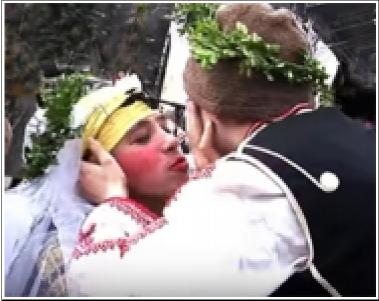
Sacred Marriage Enactment

Note:The Mystical Origins of the Kukeri: Bulgaria’s Strangest Folk Festival

Freemasonry describes itself as: “A beautiful system of morality, veiled in allegory, illustrated by signs and symbols.” Much the same could be claimed for Bulgaria’s kukeri ritual. In the masonic lore, Hiram Abiff was the chief architect of King Solomon’s Temple. He designed the building according to principles of sacred geometry, which he taught to his apprentices. Three of those apprentices were impatient though, and demanded their master revealed to them all of the secrets at once. One after another they set upon him with their working tools, and on the third strike the master architect was killed. In the ritual reconstruction of this fable, the candidate plays the role of Hiram Abiff; and on being raised from the symbolic grave he is reborn as a Master Mason.
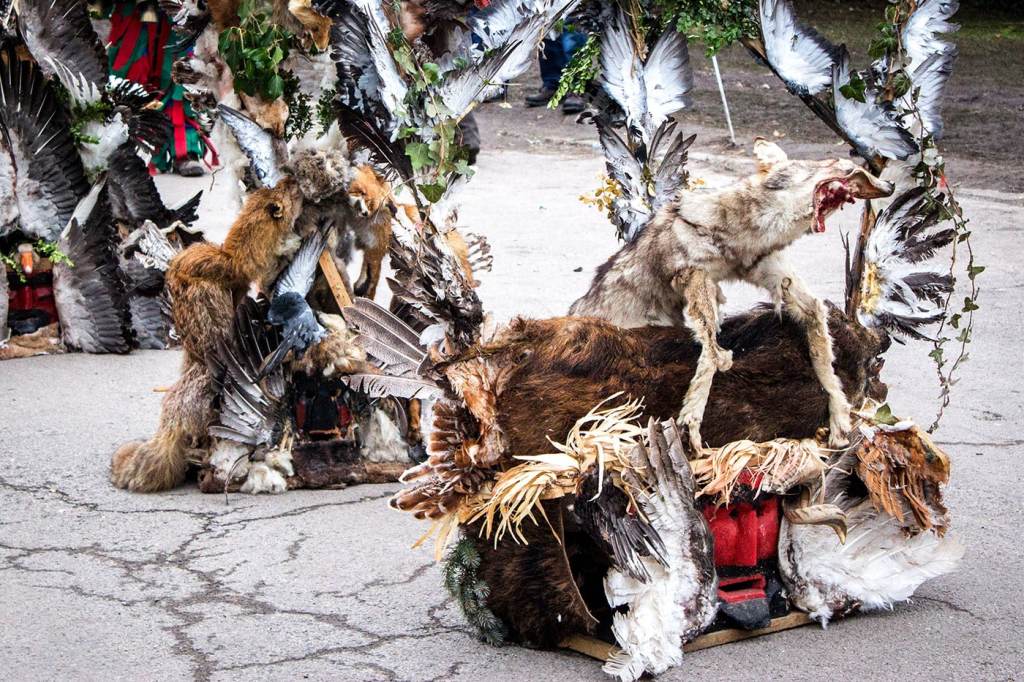
It’s certainly tempting to draw parallels between the rituals of the kukers and the freemasons. Further west, links between mummery and freemasonry have been hypothesised… there’s even a theory that all mummers are freemasons, whether they know it or not. In this case though drawing any kind of connection between the two is problematic.

For a long time the only freemasons in Bulgaria were Turks. The Ottomans adopted the craft from the French and British, and particularly during the Crimean War there was a huge transfer of traditions by way of military lodges.

Bulgaria was a part of the Ottoman Empire at the time… but the Bulgarians themselves were usually forbidden from joining Ottoman lodges.

During those dark centuries of occupation the Bulgarians were treated very poorly. They were second-class citizens in their own country, living under an Islamic caliphate whose Sharia law was enforced by brutal Ottoman militias. Their population was spread across largely agricultural settlements the length of the country, with poorly-developed systems for communication between them; conditions that allowed for almost endless regional interpretations of the kukeri ritual.

It’s curious to think that these two ritual practices once existed side by side; freemasonry as a system of allegorical plays for the ruling class, while the equally esoteric Kuker Games were handed down through the native population. The kukeri ritual has even shown signs of evolving over the years, adopting some Turkish elements along the way; there’s the ‘Byulyukbashiya’ for a start, and in certain regional traditions from the south of Bulgaria the part of the priest is replaced with an imam. But given the spread of these communities, the distance between them, it seems impossible that such influence could have happened on anything but a local scale.

Whatever the Kuker Games have in common with freemasonry then, comes not from a transfer of tradition but rather as the result of sharing a similar source; with both of these ritualistic systems displaying the archetypal hallmarks of the solar deity myth, that originated in the empires of antiquity.
Conclusion
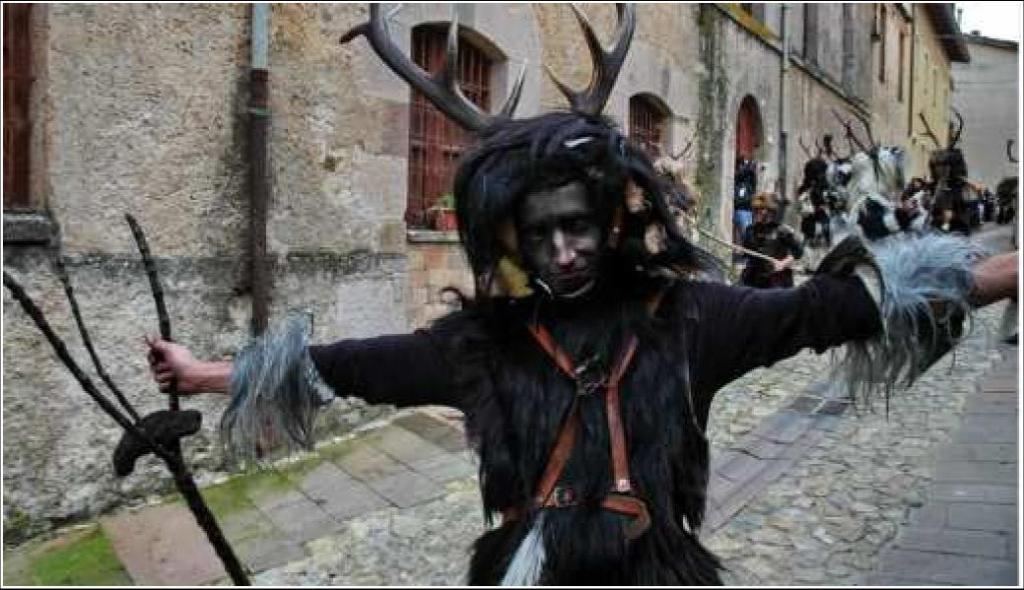
Corriolo di Ristiano, Sardinia

Despite numerous invasions, suppression and co-opting of their cultures, the indigenous rural populations of Sardinia and Bulgaria manage to retain, almost intact, their root myths and rituals, legacies to guide future generations. How ancient symbols and legends are interpreted still underlies the shaping of both our present and our future.
This paper reflects author Octavio Paz’s statement, “The essential attribute of Carnival is a time apart from ordinary life, a wild time of exuberant, uncontrolled, licentious behavior in which chaos reigns and order seems to disappear”.
However, what must be taken into account is that these rituals establish their own order through collective participation, so that social relationships and values are reinforced during the remainder of the year. The reinforced values attuned to natural cycles, may prove to be invaluable in these uncertain times.

– Saint George: Great Martyr and Triumphant

Saint George (Greek: Γεώργιος, Geṓrgios; Latin: Georgius; d. 23 April 303 was a Roman soldier of Greek origin and a member of the Praetorian Guard for Roman emperor Diocletian, who was sentenced to death for refusing to recant his Christian faith. He became one of the most venerated saints and megalo-martyrs in Christianity, and was especially venerated by the Crusaders. Orthodox Christians commemorate his feast day on April 23rd.

Saint George’s Day, also known as the Feast of Saint George, is the feast day of Saint George as celebrated by various Christian Churches and by the several nations, kingdoms, countries, and cities of which Saint George is the patron saint including England, and regions of Portugal and Spain (Catalonia and Aragon).

Saint George’s Day is normally celebrated on 23 April. However, Church of England rules denote that no saints’ day should be celebrated between Palm Sunday and the Sunday after Easter Day so if 23 April falls in that period the celebrations are transferred to after it. 23 April is the traditionally accepted date of the saint’s death in the Diocletianic Persecution of AD 303.[1]
The fame of St. George increased throughout Europe in 1265 by publication of the Legenda Aurea (The Golden Legend) by James of Voragine, a collection of stories which included that of George and the Dragon. Actual origin of the legend of George and the Dragon is unknown. It may have been begun by the Crusaders when they returned home but was not recorded until the sixth century. St. George was a prominent figure in the secular miracle plays performed in the springs of medieval times. Some hold the story to be a christianized version of the Greek legend of Perseus said to have rescued a princess near the Lydda where St. George’s tomb is located.
A poll published last week by the IPPR, a Left-leaning think tank, suggests that seven out of 10 people living in England want Saint George’s Day to be a public holiday. Well, on Ethiopia’s Saint George’s Day they surely have a public holiday, as it falls on the same day as Labor Day.

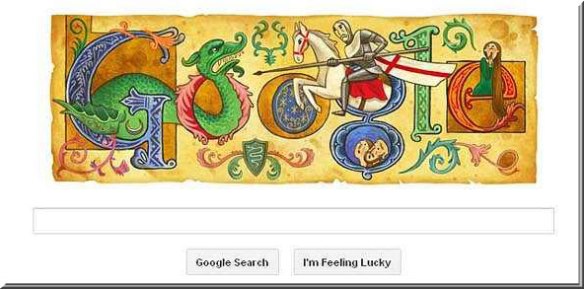
Even a Google Doodle marked once Saint George’s Day with an image of Ethiopia’s Patron Saint slaying a dragon. Read more here
St. George and the Miracle of Mons – Belgium

  • World War I Miracle? The Angels of Mons

Surrounded by the Germans who outnumbered them five to one, 4,000 Commonwealth soldiers fought their way through and were saved from certain death. They had barely returned to camp when a rumour began: angels from heaven had led the way.

Doomed to death

While the Battle of Mons raged and they had lost count of the number of British soldiers who had been killed by enemy fire, the 8th brigade was fighting tooth and nail to defend Mons. On the evening of 23 August, as night was falling, the situation was serious. The 21,000 Germans involved in the battle had made it to Mons from the East. They were occupying the city and threatening the British rear. On the right, the situation was just as dire, the Commonwealth soldiers had to tackle the 7th Bremen Regiment, which was holding Spiennes. Despite all this, the 8th Brigade miraculously made their way out. They managed to find their way through the darkness to get to their camp. The story might have been left there, if a rumour hadn’t started to spread among the soldiers. Some claimed to have seen angels in the form of archers. They supposedly stopped the Germans in their tracks so that the British could retreat. Fiction or reality? Of course it’s hard to say. The Great War gave rise to plenty of legends. On some parts of the front line, soldiers are said to have been helped by celestial figures to stay alive.

A legend that has gone down in history

The church and then the British government used this event to motivate soldiers to continue to fight. Shortly afterwards, the fantasy writer Arthur Machen published an article in the London Evening News about the event. He told the story of a British soldier who was helped by archers to escape from the claws of the German army. He alluded to Saint George, the patron saint of soldiers and a legendary character for Mons.
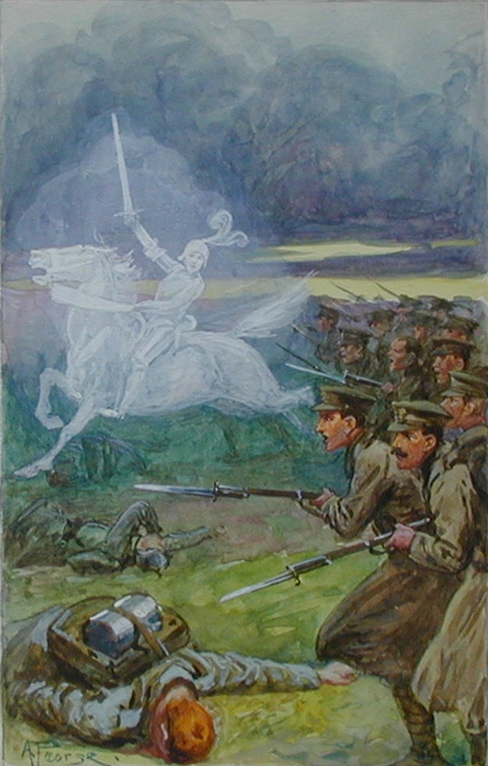
Although he quickly admitted that he had made up the whole story, there was no longer any doubt. The legend took on different forms. The angels were presented in different ways, either as a cloud of light or a winged horseman. The famous legend of Mons is still widely written about today, 100 after years after the war began.World War I Miracle? The Angels of Mons read more and look also “The Great and Holy War”

The 800-year-old Doudou of Mons Read more here

  • St George: The Art of Dragon Taming:

Paul Broadhurst in “the Green Man and the Dragon”told about the art of Taming the dragon in Britain:

One of the best-selling books of all time was The Golden Legend, written by the Bishop of Genoa Jacobus de Voragine. In it he provided the medieval world with a definitive account of the lives of the saints, which everyone at the time believed to be historical facts  gleaned by his scholarship from ancient records. In reality, like so many others that were to follow down the centuries, it was a motley mix of fact and, where there were no facts, a liberal dose of fiction. There was also an agenda.But it was a formula that gripped the attention of its readers, who preferred to believe in the fabulous and miraculous exploits of their heroes, just as in Celtic times when people loved to hear of the wondrous world of giants, gods and the Land of Faery. The saints were all these, and more, for they did the work of the one true God.

Printed in English in 1230 it contained a detail of St George’s career that had strangely hitherto gone unmentioned in the voluminous annals of the saint’s life. Almost a thousand years after his supposed death George was to become famous all over the world for what was his most fabulous exploit of all—the slaying of a dragon.

Jacobus’ story is a classic mix of fairytale heroic deeds and propaganda aimed at the conversion of previously pagan believers to the true faith. In it St George came upon the city of Silene in Libya where a terrible dragon ‘envenomed all the country’.

When the inhabitants set out to rid the land of it they were overcome by its foul breath and fled in terror. To keep the monster satisfied they fed it two sheep every day; if they failed to do this then it devoured a man instead. A local law was proclaimed that children should be selected by lots, and whoever the lot fell upon, whether rich or poor, they were to be sacrificed to the beast. But one day the lot fell upon the King’s daughter. He offered the townsfolk gold and silver instead but they would not be moved; it was the King’s daughter or they would burn down the palace. Lamenting that he would never see her married he begged for eight days respite, and then, when again approached by the desperate inhabitants who reminded him that the ‘city perisheth’, dressed her in the finest wedding gown and, blessing her, took her to the dragon’s lair.

As it happend, this was the very moment that St George was passing by, and no doubt struck by the sight of an attractive woman dressed for a wedding and hanging around in a swamp, he naturally enquired as to her well-being.

She replied that he should go on his way, lest he perish too. But the valiant hero, on learning of the imminent arrival of the dragon, would have none of it; `Fair daughter, doubt ye no thing hereof for I shall help thee in the name of Jesus Christ.

At that very moment the dragon appeared and charged towards them. St George made the sign of the cross, struck it with his spear and threw it to the ground. Then he said to the maiden, ‘Deliver to me your girdle and bind it about the neck of the dragon and be not afeard‘.

The dragon, up until that moment a terrible beast that would devour anything, instantly became as meek as a pet. They led him to the city, where the people were aghast and began to flee. But George said that if they would believe in God and Jesus Christ and be baptised into the Christian religion he would slay the dragon and save them all. There was no argument. The King was baptised immediately, the dragon’s head was cut off, and all 15,000 men as well as all the women and children became Christian.

The King built a church to Our Lady and St George, where the waters of a magic fountain healed the sick. He offered George great wealth, but the saint asked for it to be given to the poor. And so they all (except George who was evidently later to be horribly tortured by Diocletian) lived happily ever after…

The elements of the story are the same as many folk-tales which people would have been familiar with at the time, and this applies to the formula as well: damsel in distress is rescued by brave hero who saves the land from devastation.. It is the very stuff of legend as recounted endlessly throughout history. Yet certain parts indicate something else is going on `behind the scenes’, which may help to enlighten us about its real meaning.

To begin with, it is strange that the townsfolk choose to give their children to the dragon when sheep seemed to keep his hunger at bay. Or surely they wo have preferred to send one of their more elderly residents to the dragon ’s lair?

This looks as though it refers to some form of ritual sacrifice, where the vitality of the young is an essential feature (the story of Abraham sacrificing his son Isaac on the rock at Jerusalem is another example of a reference to this primitive method  of appeasing the gods).

Then we have the King’s daughter all dressed up in her wedding finery. This too is reminiscent of ancient ritual. But who is she to be married to?

Presumably, as she is about to go into the dragon’s cave, she is about to enter the underworld with its monstrous inhabitants. It is very much as tho she represents the archetypal maiden of the Earth, an innocent young woman about to confront the hellish denizens of the hidden realms. The word Hell though, before it came to have Christian associations of torture and retribution merely meant transformation. Read more here

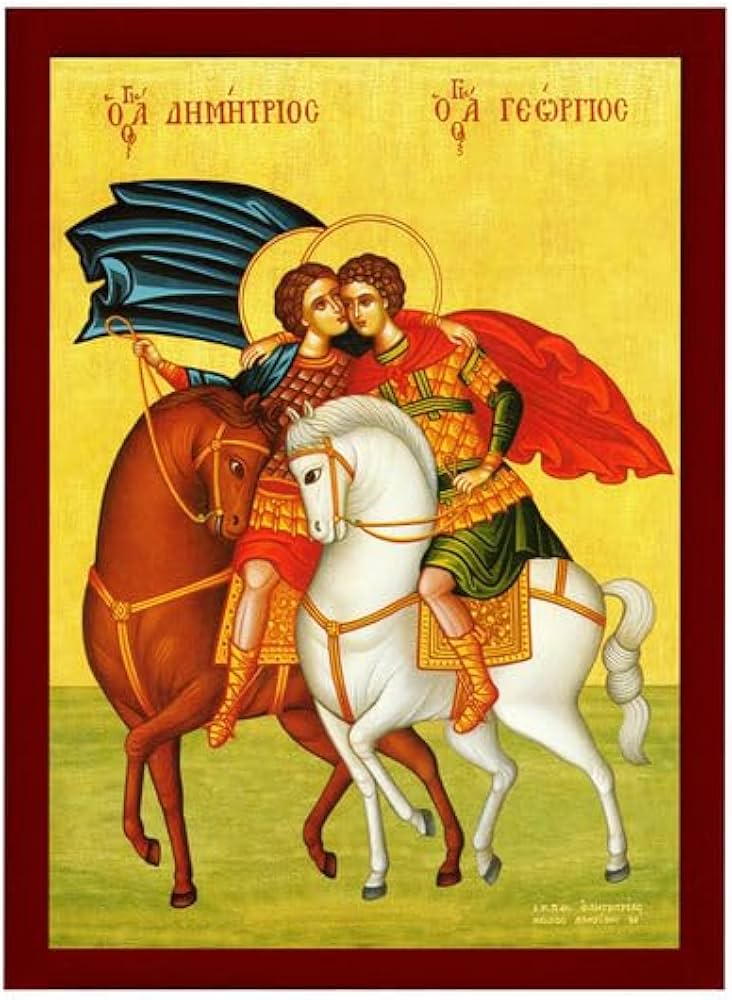
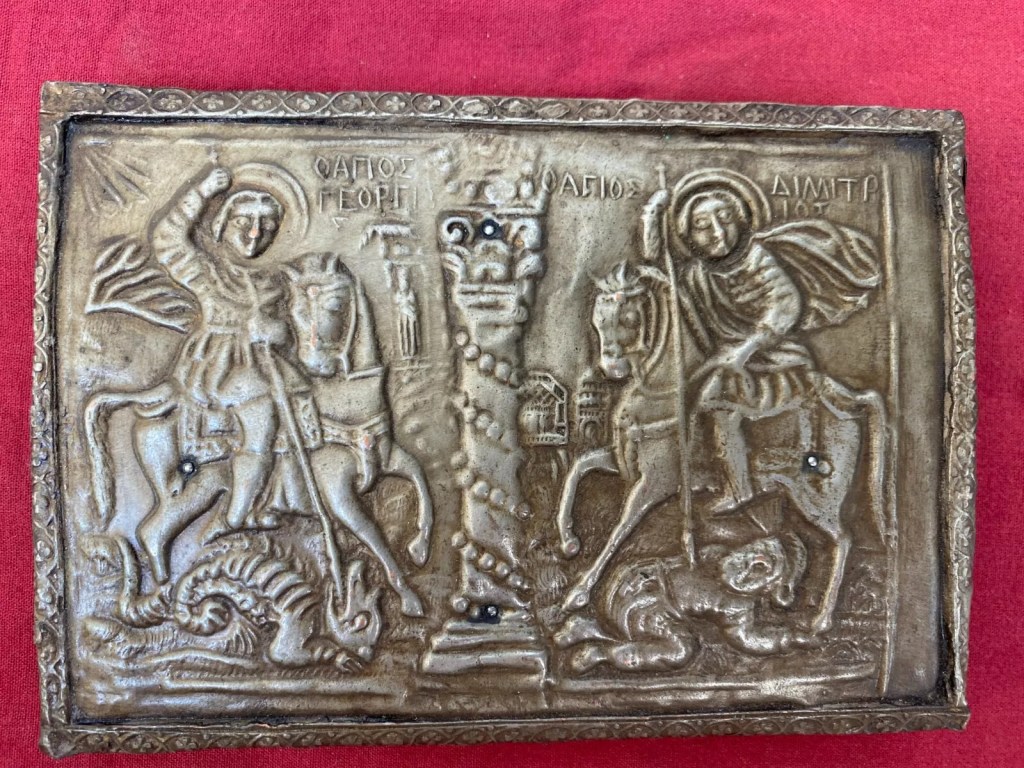
St Geoges and St demetrios … the twin Brothers
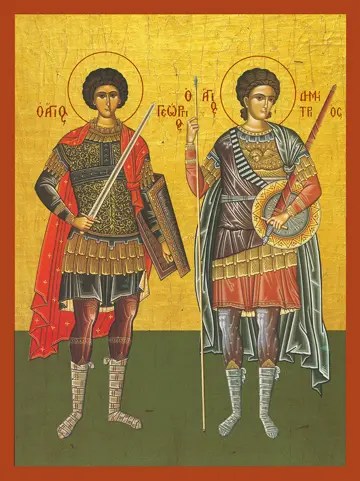
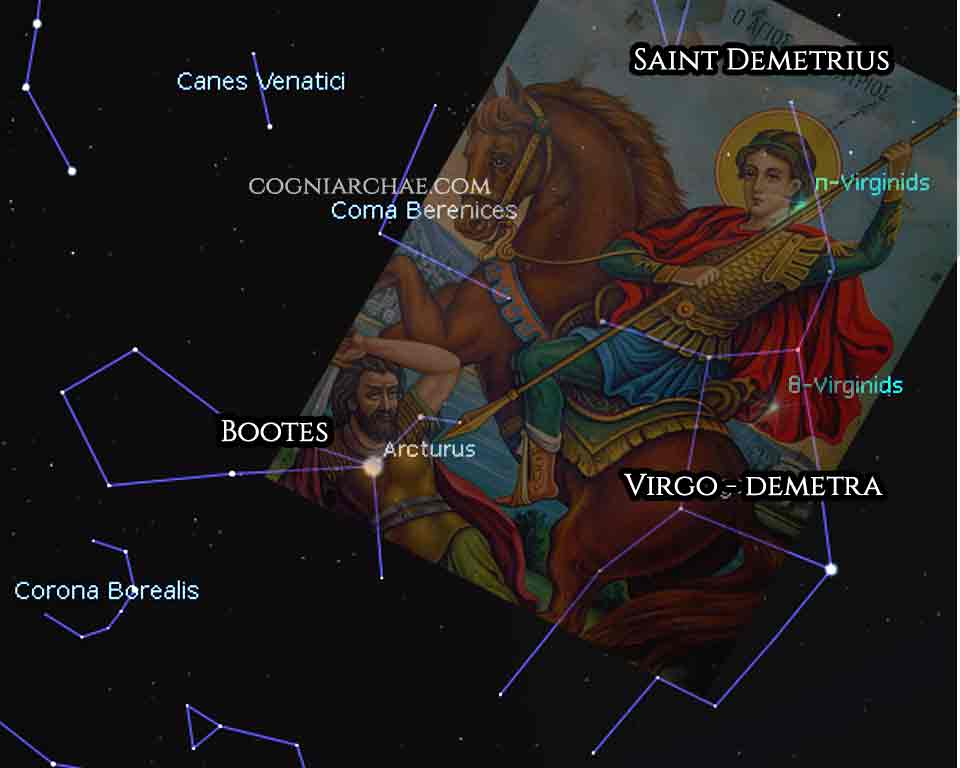
The traditional calendar of Bulgarians in the past had several important dates in the transitional period between the change of seasons. Climatic conditions on Bulgarian lands quite naturally split the cycle of nature into two major parts. The first part starts on May 6th, or Saint George’s Day, when spring arrives and all nature awakens for life. The second borderline is October 26th, or the Day of Saint Demetrius. This is deemed to be the end of the active agricultural season, the start of winter, evening gatherings and engagements of young couples. Just as every new beginning, Saint Demetrius’ Day was a source of much hope. On this day, people would make predictions as to the future fertility, health, love and the weather at the coming Saint George’s Day. Because in folk beliefs, George and Demetrius were twin brothers, that is why the predictions made on Saint Demetrius’ Day were valid for the day of his twin brother. 

Saint Demetrius’ Day is a big Christian holiday. On this day, Bulgarians traditionally venerate the memory of the holy martyr Demetrius who was born in Thessaloniki in the 3rd century AD. He died as a martyr for the Christian faith, and upon his grave in Thessaloniki a small church was erected. At the place of this small church, a magnificent basilica stands today, where the relics of St. Demetrius are kept. This is, in a nutshell, his official Christian role in Bulgarian beliefs. In Bulgarian folklore, however, St. Demetrius has been given a special place, and the whole month of October is sometimes called the Month of Demetrius. 

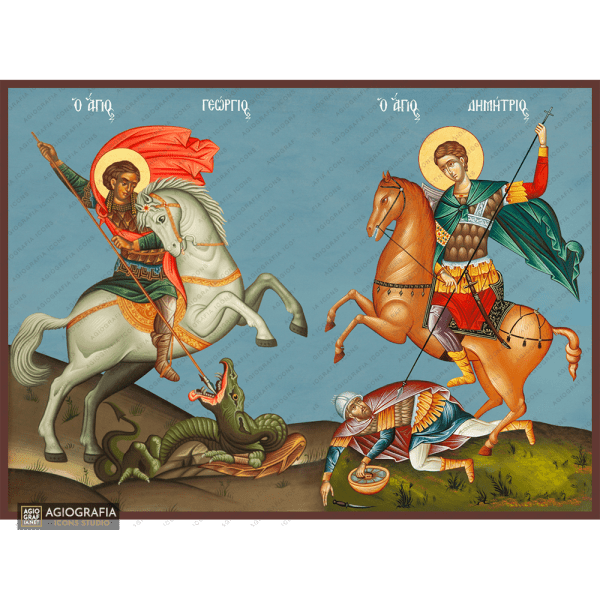
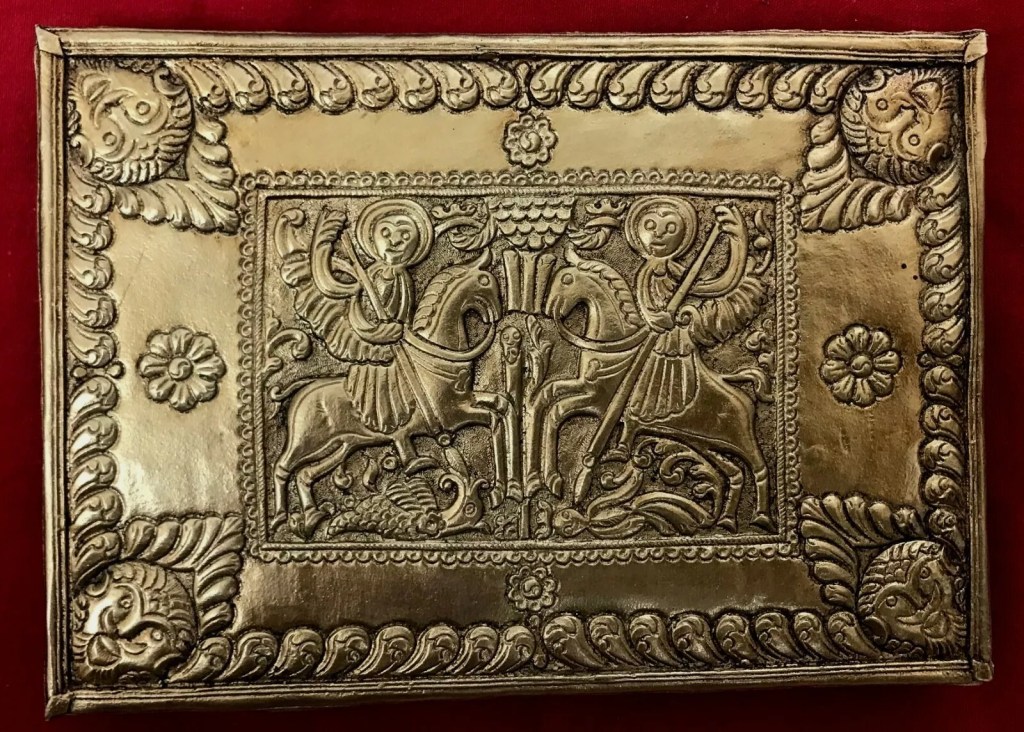
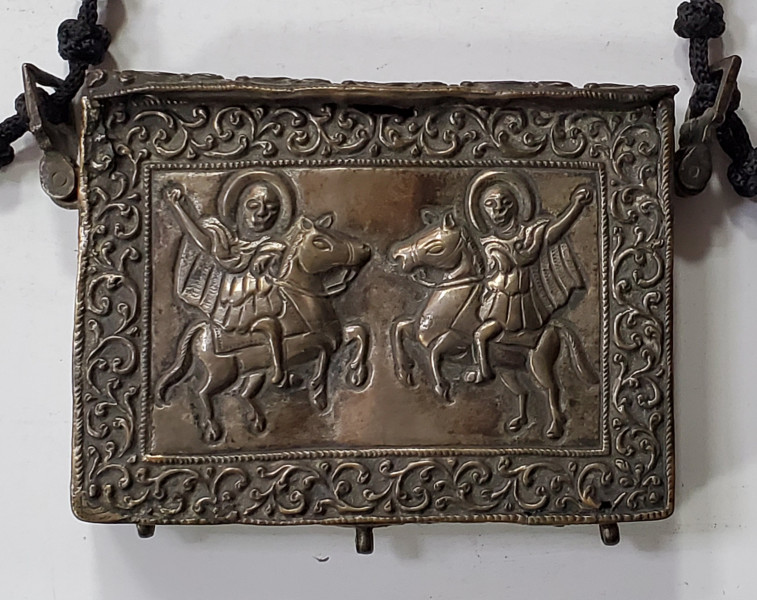
In folk beliefs, Saint Demetrius is the elder twin brother of St. George. Both are strong, beautiful and fearless men. Along with St. Theodore and St. Elijah, they are the Christianized equivalent of the brave men in Bulgarian mythology. Strong and dexterous in the battle, with their fast horses they can jump over mountains, conquer evil, and fight dragons. In folk tales and legends, the two saints have the power to open and close heaven, make rain and snow and ensure fertility. The task of St. Elijah was to protect the fields of corn from the evil creatures who stole the harvest. His brothers, twins George and Demetrius, were also strong enough to defeat the mythical monsters. They are represented as warriors and victors also in Christian iconography. Saint George is riding a white horse and Saint Demetrius a red one, both holding a spear in hand. 
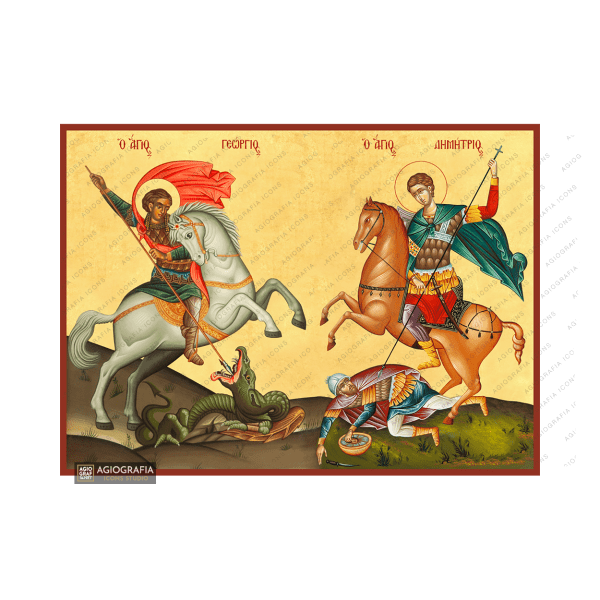


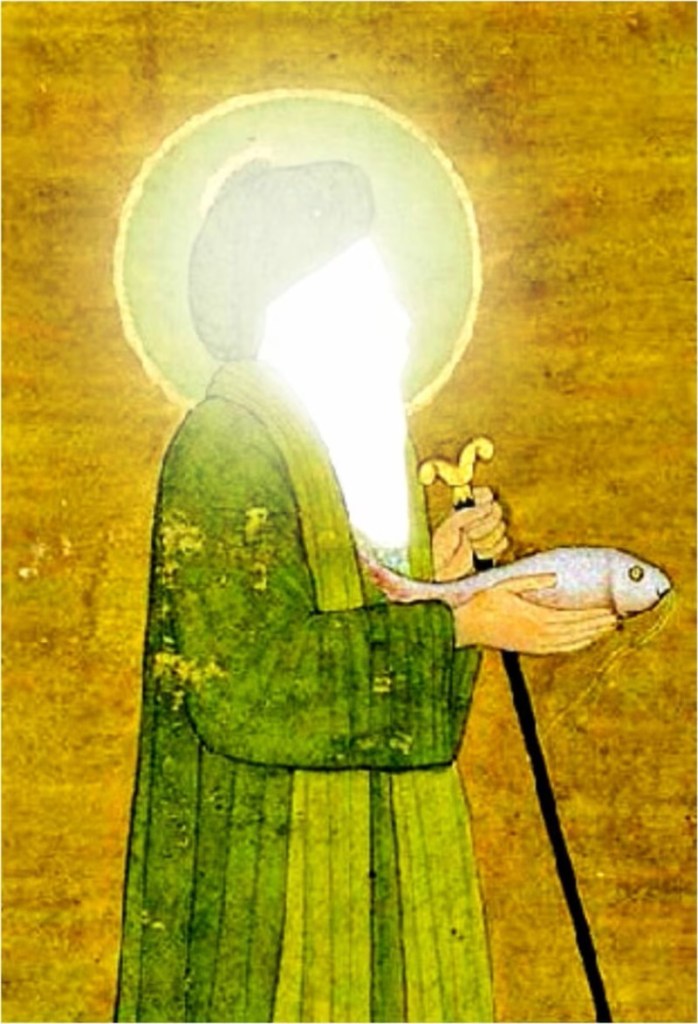
The most popular legend of the brothers George and Demetrius contains facts from the life of St. Demetrius. It tells about the family of a poor fisherman who had no children. The man and his wife constantly prayed to God to give them offspring. One day, the fisherman caught only a very small fish which spoke with a human voice and begged him to let it go. The man did so. The next day, he had no luck again. He caught only the small fish again. On the third day, the same thing happened. This time the fish asked the man to take it to his house. He did so and after a while, his mare gave birth to two foals, and his wife – to two boys. They named them George and Demetrius. When they grew up, they set off on a long journey. They agreed they would divide the world into two halves and everyone would live in his own half. Once, when Saint George was in danger, Saint Demetrius fought with a dragon and saved his life. Then, they mounted their horses, flew to heaven and became saints.

In Bulgarian fairytales, St. Demetrius is also endowed with unearthly spiritual powers. His image is reminiscent of Proto-Bulgarian high priests, legendary healers and fortune-tellers. And he can even predict the weather – that is why Bulgarians used to believe that if the weather on Saint Demetrius Day was nice, so would be it also on St. George’s Day. And who knows, these predictions may as well be true. Or they could be seen just as another bridge between the known and unknown reality that has for centuries put man in anticipation, suspense and hope for a better future.
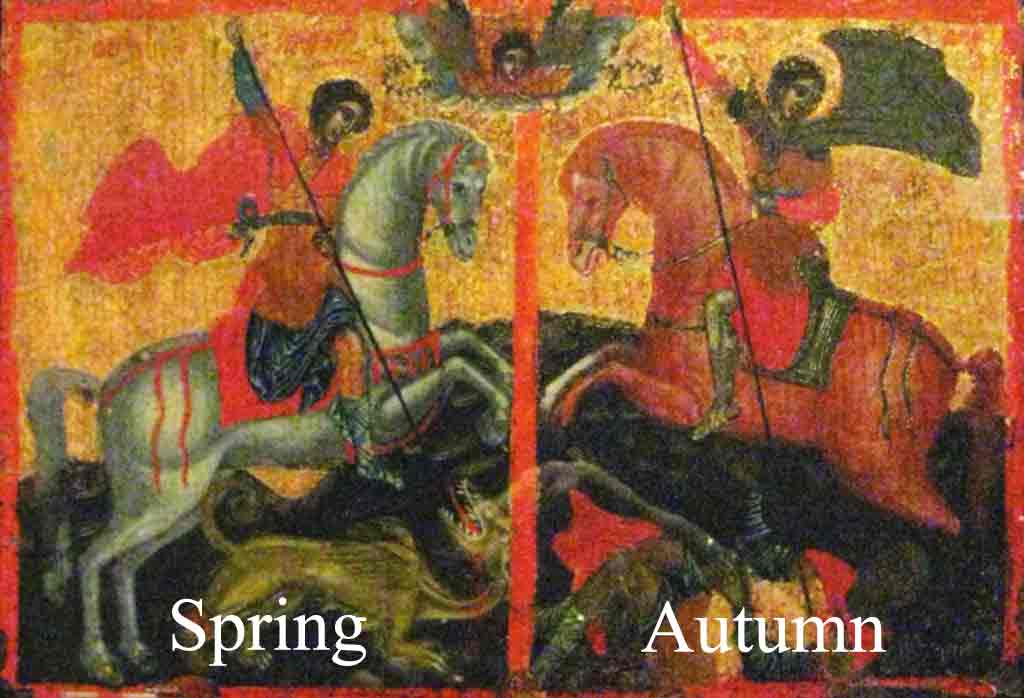
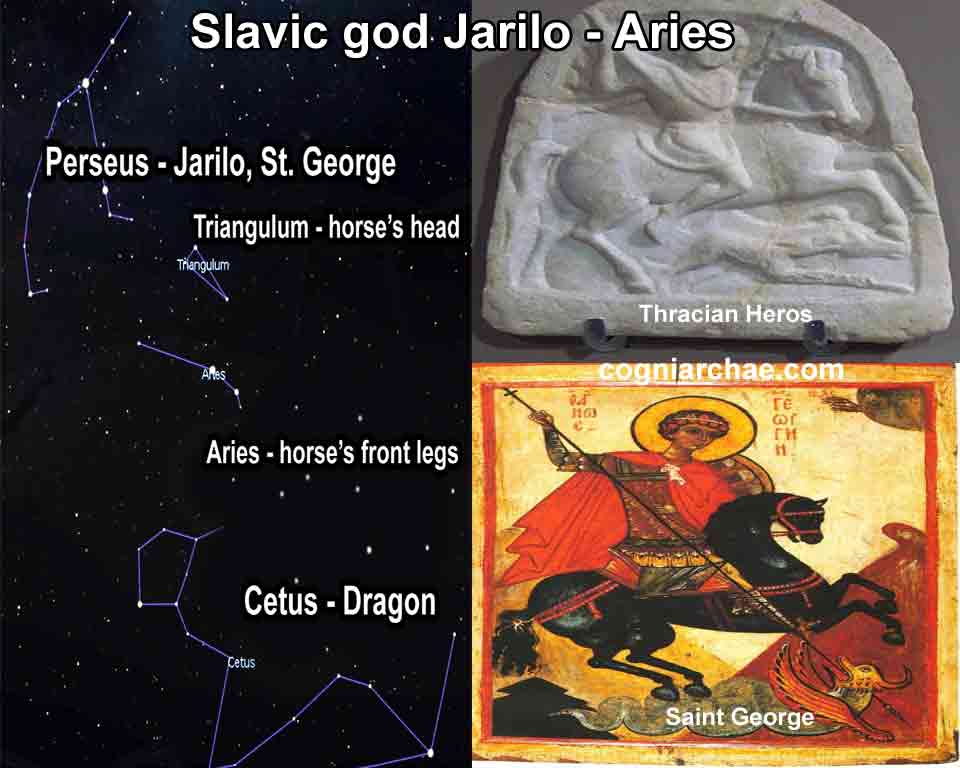
Note: in Horus, St. George, Jarilo, and the star-lore of the equinoxes  Cogniarchae explains: “Supposedly, merely a century after the arrival of his cult to Thessaloniki from the territory of modern Serbia, Slavs came to Balkans, following the same route as St. Demetrius only to be repelled by this Saint in Thessaloniki. I highly doubt this – in fact, I believe that it was the Slavs who brought his cult to Greece, whether this means that they were present in Balkans before the official history accepts or not”.
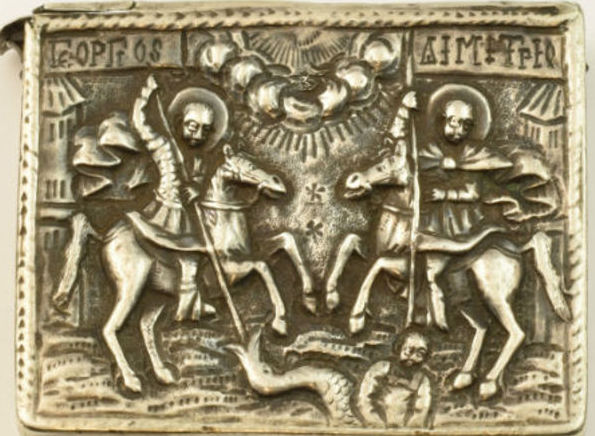
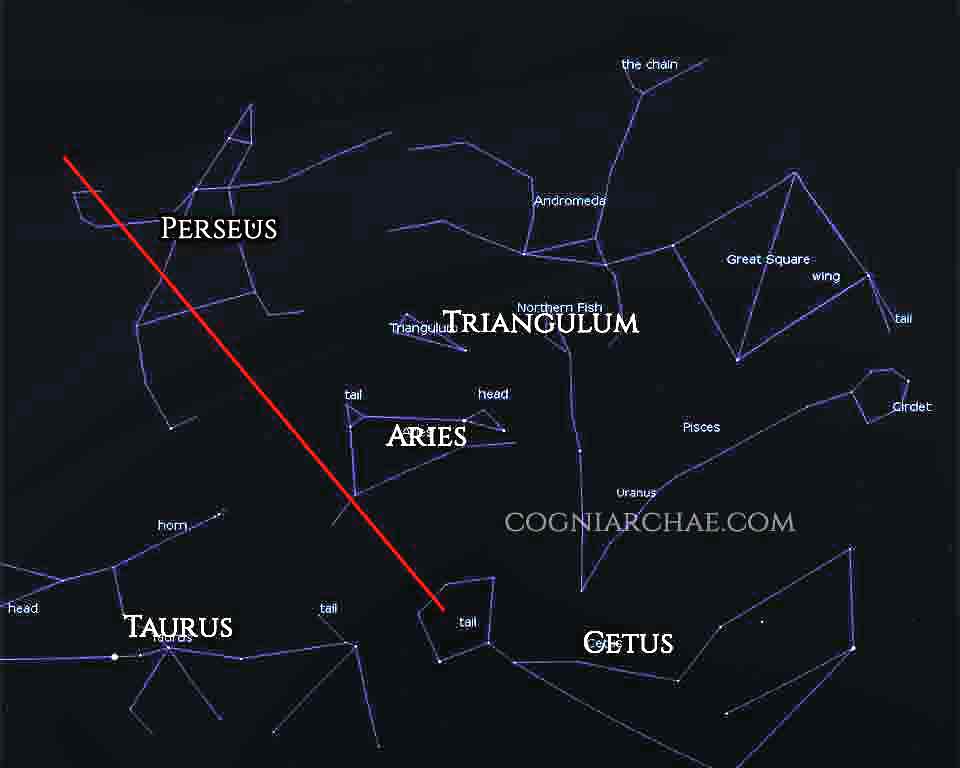
St Georges = Pesseus
St Demetrios

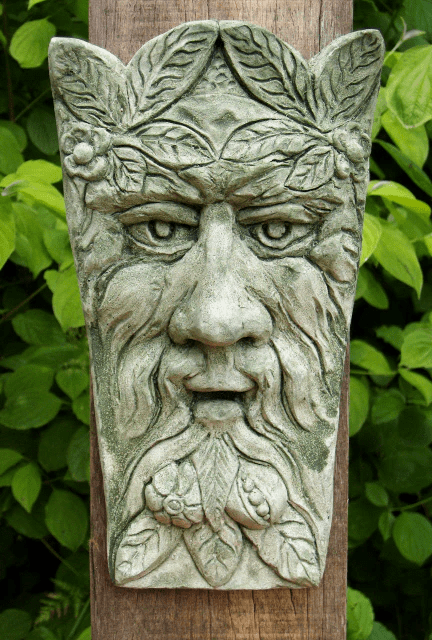
Look also: Green Man, the Legend of the Rood and the Grail


Prunning the brain with the wisdom of the Heart

During infancy, billions of brain cells form connections with one another, blooming like a tree. Like a gardener trimming the excess branches, synaptic pruning clears away unneeded connections. Too much or too little pruning can contribute to a range of psychiatric disorders.

An inside look reveals the adult brain prunes its own branches

/ Karen Ring

Did you know that when you’re born, your brain contains around 100 billion nerve cells? This is impressive considering that these nerve cells, also called neurons, are already connected to each other through an intricate, complex neural network that is essential for brain function.

Here’s how the brain does it. During development, neural stem cells produce neurons that navigate their way through the brain. Once at their destination, neurons set up shop and send out long extensions called axons and branched extensions called dendrites that allow them to form what are called synaptic connections through which they can communicate through electrical and chemical signals.

Studies of early brain development revealed that neurons in the developing brain go on overdrive and make more synaptic connections than they need. Between birth and early adulthood, the brain carefully prunes away weak or unnecessary connections, and by your mid-twenties, your brain has eliminated almost half of the synaptic connections you started out with as a baby.

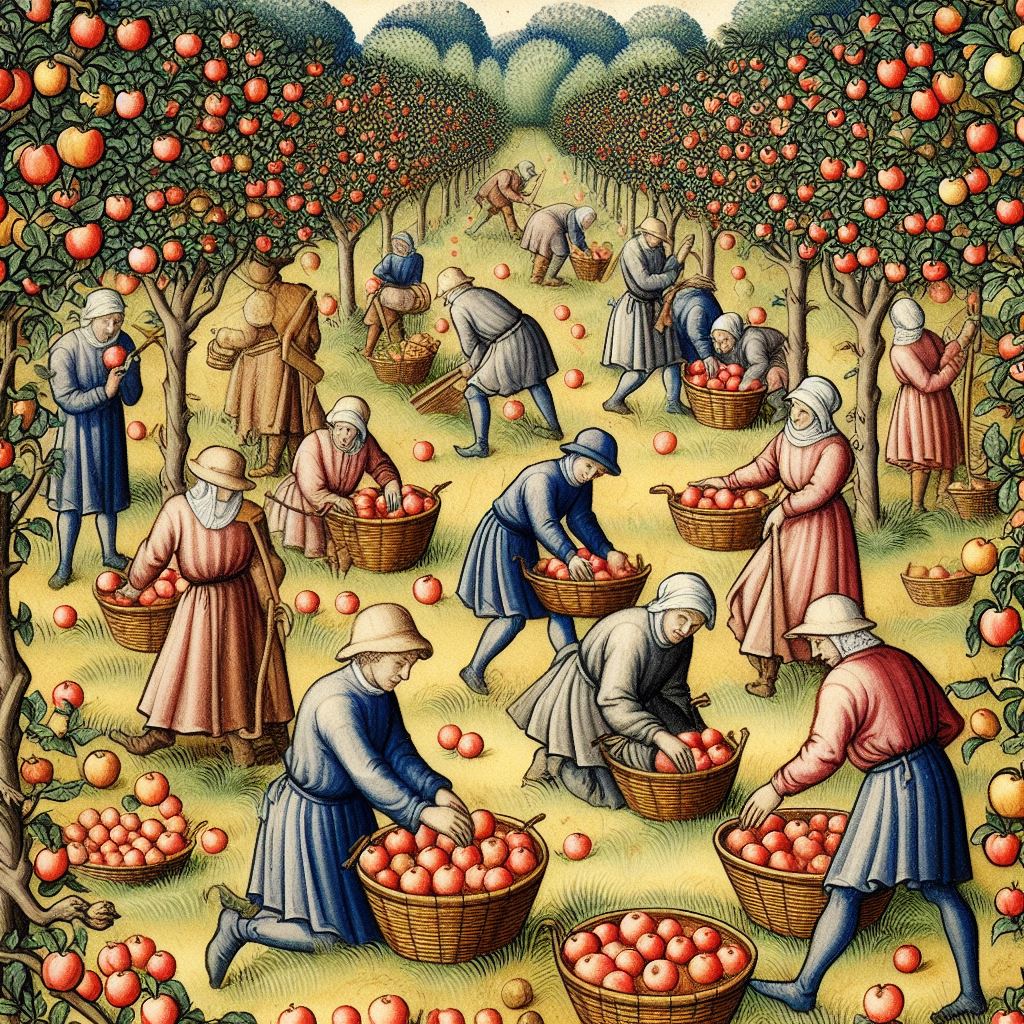
This synaptic pruning process allows the brain to fine-tune its neural network and strengthen the connections between neurons that are important for brain function. It’s similar to how a gardener prunes away excess branches on fruit trees so that the resulting branches can produce healthier and better tasting fruit.

The brain can make new neurons

It was thought that by adulthood, this process of pruning excess connections between neurons was over. However, a new study from the Salk Institute offers visual proof that synaptic pruning occurs during adulthood similarly to how it does during development. The work was published today in the journal Nature Neuroscience, and it was funded in part by CIRM.

The study was led by senior author and Salk Professor Rusty Gage. Gage is well known for his earlier work on adult neurogenesis. In the late 90’s, he discovered that the adult brain can in fact make new neurons, a notion that overturned the central dogma that the brain doesn’t contain stem cells and that we’re born with all the neurons we will ever have.

There are two main areas of the adult brain that harbor neural stem cells that can generate new neurons. One area is called the dentate gyrus, which is located in the memory forming area of the brain called the hippocampus. Gage and his team were curious to know whether the new neurons generated from stem cells in the dentate gyrus also experienced the same synaptic overgrowth and pruning that the neurons in the developing brain did.

Pruning the Adult Brain

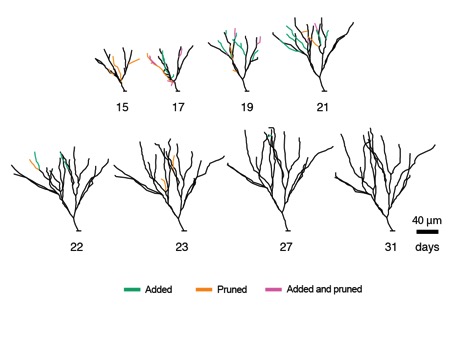
They developed a special microscope technique that allowed them to visually image the development of new neurons from stem cells in the dentate gyrus of the mouse brain. Every day, they would image the growing neurons and monitor how many dendritic branches they sent out.

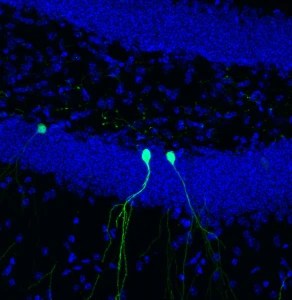
Newly generated neurons (green) send out branched dendritic extensions to make connections with other neurons. (Image credit: Salk Institute) After observing the neurons for a few weeks, they were amazed to discover that these new neurons behaved similarly to neurons in the developing brain. They sent out dozens of dendritic branches and formed synaptic connections with other neurons, some of which were eventually pruned away over time.

This phenomenon was observed more readily when they made the mice exercise, which stimulated the stem cells in the dentate gyrus to divide and produce more neurons. These exercise-induced neurons robustly sent out dendritic branches only to have them pruned back later.

First author on the paper, Tiago Gonçalves commented on their observations:

“What was really surprising was that the cells that initially grew faster and became bigger were pruned back so that, in the end, they resembled all the other cells.”

Rusty Gage was also surprised by their findings but explained that developing neurons, no matter if they are in the developing or adult brain, have evolved this process in order to establish the best connections.

“We were surprised by the extent of the pruning we saw. The results suggest that there is significant biological pressure to maintain or retain the dendrite tree of these neurons.”

A diagram showing how the adult brain prunes back the dendritic branches of newly developing neurons over time. (Image credit: Salk Institute).

Potential new insights into brain disorders

This study is important because it increases our understanding of how neurons develop in the adult brain. Such knowledge can help scientists gain a better understanding of what goes wrong in brain disorders such as autism, schizophrenia, and epilepsy, where defects in how neurons form synaptic connections or how these connections are pruned are to blame.

Gonçalves also mentioned that this study raises another important question related to the regenerative medicine applications of stem cells for neurological disease.

“This also has big repercussions for regenerative medicine. Could we replace cells in this area of the brain with new stem cells and would they develop in the same way? We don’t know yet.”


Related Links: Adult brain prunes branched connections of new neurons

– Growth and pruning: the brain of a child

Groeien en snoeien: de hersenen van een kind

Translated by Rumia Bose

This post is a revised version of “Growth and pruning” published on 9-11-2017

A newborn baby is well-equipped to eat and sleep, but not much more than this. It cannot speak, can hardly see at all, and has but minimal voluntary controlled movements of its arms and legs. All this changes quite quickly. At one year of age, a child can see a lot, can direct the use of its arms and legs remarkably well, and makes its first attempts to walk and talk.
Previously it was believed that, at birth, the brain was ready for all these tasks (nature), and that the child only had to learn through experience (nurture). The brains of a newborn are however prepared for the tasks to come, but still need to grow. By adulthood they are two or three times as big. That growth is controlled by the genes and by experience, the interaction with the environment. The genes are most important in the first year of life; from here onwards the environment becomes increasingly important1.

Critical periods

A newborn baby can very quickly identify its mother; soon after that it also recognises her facial expressions. There are critical periods for everything a child learns. In this period he has to acquire the basic skills for that function. After the first year the critical period for basic visual functions – such as depth vision, colours and movement – are laid down in the brain. But if you were to leave a baby in the dark for its first year, then it would never learn to see well.

Human Brain Development
Fig. 1 Critical periods for development of basic skills.

The more complicated the cognitive function, the longer it takes before it is fully developed, and the longer the critical period lasts. The critical period takes longest for executive functions such as goal-directed planning and impulse suppression. This lasts till beyond the first twenty years. These functions are essential for rational thinking and the modulation of urges and risky behaviour, and all these are therefore only fully established when one is past the age of twenty.

Growth….

What happens in a child’s brain during critical periods? At first the brain cells or neurones have few dendrites in the part of the cerebral cortex that accounts for that particular function. When the critical period starts, the dendritic trees grow and the number of interneuron connections increase. This is the time of growth. Later the number of interneuron connections reduces drastically. That is the period of pruning2.

Fig. 2 Increase and pruning of neuronal connections in an area of the cortex.
Source: Gilmore JH, Knickmeyer RC, Gao W (2018): Imaging structural and functional brain development in early childhood. Nature Reviews Neuroscience 19:123-137.

During the period of growth of interneurone connections, the child learns all sorts of new skills, such as facial recognition. Learning and the growth of the cortex go hand in hand. Learning to see is facilitated by this growth, and the growth occurs as the child learns. A requirement for the latter is that the child is presented with new visual information. For instance, seeing the mother’s face often, but also other colourful moving objects.
The basic structure of the brain with the basic functions has been formed around the second year of life. This is especially the case for areas involved in perception or locomotion, such as the visual and motor cortex. The frontal cortex-which is of importance for rational thinking-takes a lot longer. The critical periods therefore correspond to the age at which growth and pruning takes place in the relevant areas of the cortex.

… and pruning

After a while the connections that are of little or no use are cleared away. The most important effect of this clearing is that the pruned cortex works far more efficiently. In order to recognise mother’s face quickly, all impressions that are somewhat similar have to be examined. Clearing away unimportant impressions results in a shorter search.
It is thought that the advantage of this process of growth and pruning is that it allows for a more flexible adjustment to the specific environment than a fully-programmed brain at birth, as seen in simpler forms of animal life, such as insects. The growth allows for fast, extensive and directed learning, while the subsequent pruning makes way for the most efficient application of what has been learnt.

Learning at a later age

All of this seems to suggest that the child can only acquire various skills such as seeing or language in its first years of life. This is naturally not true. Learning a language after five years of age is possible, of course, but it needs more effort, and one can almost never speak the language with the authentic native accents. Top musicians almost always start learning to play their instrument(s) of choice at a very young age3. The critical periods are especially important in learning basic skills, and not for learning subtle variations on a theme.
The critical period can even be “reopened” at a later age. Someone who has lost the ability to speak as a result of cerebral haemorrhage can learn to speak again if the damage is not too extensive. The lost skills of speech are then laid down in other areas of the cortex, mostly those adjacent to the damaged area4. This takes more effort than learning in childhood, but is essentially based on the same process of growth and pruning of neurones and interneuron connections.

  • Bonsai Trees in Your Head: How the Pavlovian System Sculpts Goal-Directed Choices by Pruning Decision Trees

abstract

When planning a series of actions, it is usually infeasible to consider all potential future sequences; instead, one must prune the decision tree. Provably optimal pruning is, however, still computationally ruinous and the specific approximations humans employ remain unknown. We designed a new sequential reinforcement-based task and showed that human subjects adopted a simple pruning strategy: during mental evaluation of a sequence of choices, they curtailed any further evaluation of a sequence as soon as they encountered a large loss. This pruning strategy was Pavlovian: it was reflexively evoked by large losses and persisted even when overwhelmingly counterproductive. It was also evident above and beyond loss aversion. We found that the tendency towards Pavlovian pruning was selectively predicted by the degree to which subjects exhibited sub-clinical mood disturbance, in accordance with theories that ascribe Pavlovian behavioural inhibition, via serotonin, a role in mood disorders. We conclude that Pavlovian behavioural inhibition shapes highly flexible, goal-directed choices in a manner that may be important for theories of decision-making in mood disorders.

  • The Heart: Threshold Between Two Worlds

Excerpted from The Knowing Heart, A Sufi Path of Transformation

Anyone who has probed the inner life to a certain extent, who has sat in silence long enough to experience the stillness of the mind behind its apparent noise, is faced with a mystery. Apart from all the outer attractions of life in the world, there exists at the heart of human consciousness something else, something quite satisfying and beautiful in itself, a beauty without features. The mystery is not so much that these two dimensions exist–an outer world and the mystery of the inner world–but that the human being is suspended between them–as a space in which both meet. It is as if the human being is the meeting point, the threshold between two worlds. Anyone who has explored this inwardness to a certain degree will know that it holds a great beauty and power. In fact, to be unaware of this mystery of inwardness is to be incomplete.

According to the great formulator of Sufi psychology, Al-Ghazalli:

There is nothing closer to you than yourself. If you don’t know your self, how will you know others? You might say, “I know myself,” but you are mistaken…. The only thing you know about your self is your physical appearance. The only thing you know about your inside (batin, your unconscious) is that when you are hungry you eat, when you are angry, you fight, and when you are consumed by passion, you make love. In this regard you are equal to any animal. You have to seek the reality within yourself…. What are you? Where have you come from and where are you going. What is your role in the world? Why have you been created? Where does your happiness life? If you would like to know yourself, you should know that you are created by two things. One is your body and your outer appearance (zahir) which you can see with your eyes. The other is your inner forces (batin). This is the part you cannot see, but you can know with your insight. The reality of your existence is in your inwardness (batin, unconscious). Everything is a servant of your inward heart.

In Sufism, “knowing” can be arranged in seven stages. These stages offer a comprehensive view of the various faculties of knowledge within which the heart comprises the sixth level of knowing:

1. Hearing about something, knowing what it is called. “Having a child is called ‘motherhood.’”

2. Knowing through the perception of the senses. “I have seen a mother and child with my own eyes.”

3. Knowing “about” something. “This is how it happens and what it is like to be a mother.”

4. Knowing through understanding and being able to apply that understanding. “I have a Ph.D. in mothering and my studies show…”

5. Knowing through doing or being something. “I am a mother.”

6. Knowing through the subconscious faculties of the heart. “It’s difficult to put into words everything a mother experiences and feels.”

7. Knowing through Spirit alone. This is much more difficult to describe and perhaps it’s foolhardy to try, but it may be something like this: “I am not a mother, but in the moment when all separation dissolves, I am you.”

The outer world of physical existence is perceived through the physical senses, through a nervous system that has been refined and purified by nature over millions of years. We can only stand in awe of this body’s perceptive ability.

On the other hand, the mystery of the inner world is perceived through other even subtler senses. It is these “senses” that allow us to experience qualities like yearning, hope, intimacy, or to perceive significance, beauty, and our participation in the unity.

When our awareness is turned away from the world of the senses, and away from the field of conventional human thoughts and emotions, we may find that we can sense an inner world of spiritual qualities, independent of the outer world.

Our modern languages lack precision when it comes to describing or naming that which can grasp the qualities and essence of this inner world. Perhaps the best word we have for that which can grasp the unseen world of qualities is “heart.” And what we understand by the word “heart” is an intelligence other than intellect, a knowing that operates at a subconscious level. The sacred traditions have sometimes delineated this subconscious knowing into various modes of knowing. What are known in some Sufi schools as the latifas (literally, the subtleties, al-lataif) are subtle subconscious faculties that allow us to know spiritual realities beyond what the senses or intellect can offer. This knowing is called subconscious, because what can be admitted into consciousness is necessarily limited and partial.

These latifas are sometimes worked on by carrying the energy of zhikr (remembrance) to precise locations in the chest and head in order to energize and activate these faculties. Once activated, they support and irradiate each other.

The five spiritual senses are connected.
They’ve grown from one root.
As one grows strong, the others strengthen, too:
each one becomes a cupbearer to the rest.
Seeing with the eye increases speech;
speech increases discernment in the eye.
As sight deepens, it awakens every sense,
so that perception of the spiritual
becomes familiar to them all.
When one sense grows into freedom,
all the other senses change as well.
When one sense perceives the hidden,
the invisible world becomes apparent to the whole.

[Rumi, Mathnawi II, 3236-3241]

According to one model, the heart is understood as the totality of subtle, subconscious faculties; according to another model, it is the subtlest faculty of them all, sharing in all the knowledge of the others. Essentially, however, we can consider the heart a mostly subconscious knowing of spiritual realities or qualities.

A Universe of Qualities

The heart is the perceiver of qualities. What we mean by qualities are the modifiers of the things. If we say for instance that a certain book has a particular number of pages on a certain subject by a particular author, we have described its distinguishing outer characteristics. If we say, however, that the book is inspiring, depressing, boring, fascinating, profound, trivial, or humorous, we are describing qualities. Although qualities seem to be subjective and have their reality in an invisible world, they are more essential, more valuable, because they determine our relationship to a thing. Qualities modify things. But where do qualities originate if not in an inner world? And is that inner world completely subjective, contained within the individual brain? Or are qualities, somehow, the objective features of another “world,” another state of being?

The answer of the tradition is that Absolute Reality–which cannot be described or compared to anything–possesses qualities, or attributes. All of material existence manifests these qualities, but the qualities are prior to their manifestation in forms. Forms manifest the qualities of an inner world. A cosmic creativity is overflowing with its qualities which eventually result in the world of material existence.

The human being is an instrument of that cosmic creativity. The human heart is the mirror in which divine qualities and significances may appear. And the world is the mirror in which these qualities are reflected and known more clearly. The cosmic creativity manifests itself in and through the human heart which has the capacity for interpreting the forms and events of material existence.

From the point of view of the human being, qualities are projected on things, recognized in the outer world. Things lose or gain importance for us as they are qualified by qualities whose immediate source is the human heart, but whose ultimate source is the divine treasury. A cheap, mass-produced teddy-bear becomes an object of love because it has been qualified by the affection of a child’s heart.

This subject may seem elusive because we are so conditioned to project qualities onto the things and events of the world that we overlook that everything of true significance is happening within us. Furthermore, the qualities that we experience in relation to the outer, material world also have a reality beyond both ourselves and the things of outer world. That which becomes the object of our affection, for instance, is receiving a projection of the capacity for affection contained within the individual heart. Affection, itself, is a quality that exists in Reality itself and transcends both the heart and the object of affection. Another way of saying it is that we live in an affectionate universe and we know this through the relationship between the individual heart and the object of its affection.

A mature enlightenment is seeing all these projections for what they are: the heart, because of its nearness to the divine treasury, is primary; the world is the shadow. We need not then withdraw these qualities into ourselves, because the mirror of the world receiving the projection of the heart has received the qualities of the divine source. This divine source, the heart, and outer existence together form a unified Whole.

Between Ego and Spirit, Fragmentation and Wholeness

The heart could be called the child of the marriage of self and spirit. The heart occupies a position intermediate between ego and God. It becomes a point of contact between the two. Like a transformer, it receives the spiritualizing energy of the spirit and conveys it to the self. Like the physical heart it is the center of the individual psyche. If it is dominated by the demands of the ego-self, the heart is dead; it is not a heart at all. If it is receptive to spirit, then it can receive the qualities of spirit and distribute these according to its capacity to every aspect of the human being, and from the human being to the rest of creation. If it is receptive to spirit, a heart is sensitive, living, awake, whole. It becomes the treasury of God’s qualities.

In this, behold, there is indeed a reminder for everyone whose heart is wide-awake–that is who lends ear with conscious mind. [Qur’an 50:37]

It is through the heart that the completion of the human psyche is attained. The heart always has an object of love; it is always attracted to some sign of beauty. Whatever the heart holds its attention on, it will acquire its qualities. Those qualities are as much within the heart as within the thing that awakens those qualities in the heart. The situation is like two mirrors facing each other, while the original reflection comes from a third source. But one of these mirrors, the human heart, has some choice as to what it will reflect. Rumi said, “If your thought is a rose, you are the rose garden. If your thought is a thorn, you are kindling for the bath stove.”1 Being between the attractions of the physical world and the ego, on the one hand, and spirit and its qualities on the other, the heart is pulled from different sides. Rumi addressed this issue in a conversation recorded and presented in Fihi ma fihi2 (Herein is what is herein):

All desires, affections, loves, and fondnesses people have for all sorts of things, such as fathers, mothers, friends, the heavens and the earth, gardens, pavilions, works, knowledge, food, and drink–one should realize that every desire is a desire for food, and such things are all “veils.” When one passes beyond this world and sees that King without these “veils,” then one will realize that all those things were “veils” and “coverings” and that what they were seeking was in reality one thing. All problems will then be solved. All the heart’s questions and difficulties will be answered, and everything will become clear. God’s reply is not such that He must answer each and every problem individually. With one answer all problems are solved.3

There are countless attractions in the world of multiplicity. Whatever we give our attention to, whatever we hold in this space of our presence, its qualities will become our qualities. If we give the heart to multiplicity, the heart will be fragmented and dispersed. If we give the heart to spiritual unity, the heart will be unified.

Ultimately what the heart desires is unity in which it finds peace.

Truly, in the remembrance of God hearts find peace.

The ego desires multiplicity and suffers the fragmentation caused by the conflicting attractions of the world. Rabi’a, perhaps the greatest woman saint of the Sufi tradition, said, “I am fully qualified to work as a doorkeeper, and for this reason: What is inside me, I don’t let out. What is outside me, I don’t let in. If someone comes in, he goes right out again– He has nothing to do with me at all. I am a doorkeeper of the heart, not a lump of wet clay.”4 We can assume the responsibility of being the doorkeeper of our own heart, choosing what we wish to keep within the intimate space of our own being.

Purity of Heart

The heart is our deepest knowing. Sometimes that deepest knowing is veiled, or confused by more superficial levels of the mind: by opinions, by desires, by social conditioning, and most of all by fear. Like a mirror it may become obscured the veils of conditioned thought, by the soot of emotions, by the corrosion of negative attitudes. In fact we easily confuse the ego with the heart. Sometimes, in the name of following our hearts, we actually follow the desires and fears of the ego.

The heart may be sensitive or insensitive, awake or asleep, healthy or sick, whole or broken, open or closed. In other words, its perceptive ability will depend on its capacity and condition.

Both spirit and the world compete to win the prize of the human heart. As Junayd said, “The heart of the friend of God is the site of God’s mystery, and God does not reveal his mysteries in the heart of one who is preoccupied with the world.”5 The traditional teachers agree that one of the consequences of preoccupation with the world is the death of the heart. If the heart assumes the qualities of whatever attracts it, its attraction to the dense matter of the world only results at best in a limited reflection of the divine reality. At worst, the heart’s involvement with the purely physical aspects of existence results in the familiar compulsions of ego: sex, wealth, and power.

In The Alchemy of Happiness, Al-Ghazzali describes the human being in the following metaphor:

The body is like a country. The artisans are like the hands, feet, and various parts of the body. Passion is like the tax collector. Anger or rage is like the sheriff. The heart is the king. Intellect is the prime minister. Passion, like a tax collector using any means, tries to extract everything. Rage and anger are severe, harsh and punishing like the police and want to destroy or kill. The ruler not only needs to control passion and rage, but also the intellect and must keep a balance among all these forces. If the intellect becomes dominated by passion or anger, the country will be in ruin and the ruler will be destroyed.

Rumi echoes the same theme when he describes the role of Conscious Reason in keeping a balance among our various desires:

God has given you Conscious Reason
as an instrument for polishing the heart until its surface reflects.
But you, prayerless, have bound the polisher
and freed the two hands of sensuality.
If you can restrain sensuality, you will free the polisher….
Until now you have made the water turbid, but no more.
Do not stir it up, let the water become clear enough
for the moon and stars to be reflected in it.
For the human being is like the water of a river:
when muddied you cannot see the bottom.
The river is full of jewels and pearls.
Do not cloud the water that was pure and free.
[Mathnawi IV, 2475-2477, 2480-2482]

The attractions of the outer world are only a small distraction compared to the promptings of egoism which distract us from within. Bayazid Bistami said, “The contraction of the heart comes with the expansion of the ego, and vice versa.”

When our hearts soften at the remembrance of God [39:23], the ego acquires the qualities of servanthood and humility in relation to the Divine Majesty, and the heart becomes sensitive and expansive–expansive enough, in fact, to contain the whole universe.6

The healthy heart requires the nourishment of spiritual foods. When the heart is healthy, its desires will be healthy. Muhammad said, “The heart of the faithful is the throne of the Merciful.” When the heart has nourished itself only on the desires of physical existence, it is deprived of life-giving nourishment, and its own desires become less sound, more sickly.

Sufi wisdom offers several traditional cures for an ailing heart. One of these is the contemplating the meanings of the revealed Holy Books and the words of the saints, since these perform an action upon the heart, removing its illusions, healing its ills, restoring its strength.

Another cure for the heart is keeping one’s stomach empty. Muhammad said that an excess of food hardens the heart. Fasting is the opposite of the addictions, subtle and not so subtle, with which he numb ourselves to the heart’s pain. When through fasting we expose the heart’s pain to ourselves, we become more emotionally vulnerable and honest. Only then can the heart can be healed.

Keeping a night vigil until dawn is a practice that is unfamiliar outside of Islamic culture, but it has been a mainstay of the Sufis. It has been said that in the early hours before the dawn “the angels draw near to the earth,” and our prayers can better be answered. Another explanation is that in these early morning hours the activity of the world has been reduced to its minimum, the psychic atmosphere has become still, and we are more able to reach the depths of concentration upon our own unconscious.

Finally, keeping the company of those who are conscious of God can restore faith and health to the heart. “The best among you are those who when seen remind you of God.”7

It is only a matter of degree to move from the ailing heart to the purified heart. This eventual purification could be understood to proceed through four primary activities or stages:

Liberating ourselves from the psychological distortions and complexes that prevent us from forming a healthy, integrated individuality.

Freeing ourselves from the slavery to the attractions of the world, all of which are secondary reflections of the qualities within the heart. Through seeing these attractions as veils over our one essential yearning, the veils fall away and the naked reality remains.

Transcending the subtlest veil which is the self and its selfishness.

Devoting oneself and one’s attention to God; living in and through God, Reality, Love.

The first three of these are virtually impossible without the fourth. Without the power of Love, we can only love our egos and the world. Without the Center, we suffer fragmentation, dispersion in the multiplicity.

By living in and through the Center we become still and at peace. Then all the things of the world will run after us. But if while sitting, we are engaged with the attractions of the world, we are not sitting but running after the world. The Prophet Muhammad said, “Make all your cares into a single care, and God will attend to all your cares.” The real friends of God are not occupied with power, self-importance or acquisition, because they are with God.

Moses said, “O Lord, are you close enough for me to whisper in your ear or so distant that I should shout?”

And God said, “I am behind you, before you, at your right and at your left. O Moses, I am sitting next to my servant whenever he remembers me, and I am with him when he calls me.”8

Ali Ibn Abu Talib, may God be pleased with him, was once asked if he had ever seen God. “How could I worship what I have not seen?,” Ali said. “Our eyes cannot see God directly, but the heart can see God through the realities of faith.”

Those who turn toward their own heart may enter the world of spiritual qualities, and they may find there the source of every quality that they projected onto the outer world. And all that they are looking for may truly be within themselves.

It is they on whose hearts He has inscribed faith, and whom He has strengthened with inspiration from Himself. [Qur’an 58:22]

Outer and Inner

There must be a reason for our being embodied in this world other than to escape it. The perspective of Sufism is always a non-dual wholeness.

If the human heart is a space in which two worlds meet, in which two kinds of senses operate, then it is possible to be in both worlds simultaneously: the world of the senses and the world of inner spiritual qualities. Our humanness would consist, then, in that presence, that receptivity to what is offered both by the senses and the spiritual qualities, and finding our right relationship to the outer and the inner dimensions.

In this life, no pleasure is entirely physical or spiritual, outer or inner. The most outer, material pleasures would mean nothing if there were not some quality of anticipation, association, personal relationship. Likewise for a living human being, the most spiritual pleasure is nevertheless experienced through the mediation of the human nervous system. We experience the spiritual qualities as states of relaxation, of heart expansion, of coming alive.

The word for heart in Arabic is qalb and literally means that which fluctuates; the heart expands and contracts, and even in its purified condition passes through many states. The Prophet said, “The hearts of the children of Adam are as if between the two fingers of the Infinitely Compassionate. He turns each however He wishes. O God, O Turner of hearts, tour our hearts toward obedience to You.”

Ibn ‘Arabi says:

God made the heart the locus of this longing to bring actualization of this reality near to the human being, since there is fluctuation in the heart. If this longing were in the rational faculty, the person might seem to be in a constant state. But since it is in the heart, fluctuation comes upon him always. For the heart is between the two fingers of the Compassionate, so its situation is not to remain in a single state. And so it is within this fluctuation, witnessing the way the fingers cause it to fluctuate. [II 532.30]

The heart as the locus of longing experiences constant expansion and contraction, but if the heart is awake, it begins to grasp the Divine Reality through all these changes of state, through the intoxication of expansion and through the aridity of contraction. The heart is always occupied with some object of longing through which it is coming to know the essential Beauty, the longing behind all longings.

The goblet is the lover’s heart, not his reason or sense perception. For the heart fluctuates from state to state, just as God–who is the Beloved–is “Each day upon some task” [55:29]. So the lover undergoes constant variation in the object of his love in keeping with the constant variation of the Beloved in His acts. The lover is like the clear and pure glass goblet which undergoes constant variation according to the variations of the liquid within it. The color of the lover is the color of the Beloved. This belongs only to the heart, since reason comes from the world of delimitation; that is why it is called reason, a word derived from “fetter.” …[L]ove has many diverse and mutually opposed properties. Hence nothing receives these properties except that which has the capacity to fluctuate along with love in those properties. This belongs only to the heart…. The wine is precisely what becomes actualized in the cup. And we have explained that the cup is identical with the locus of manifestation, the wine is identical with the Manifest within it, and the drinking is that which is actualized from the Self-discloser if His locus of self-disclosure.9[II 113.33]

The heart is not an accessory to life. It is not a switch to be turned on or off, a box to be open or closed. The fathoming of the human heart and the disclosure of spiritual qualities within it is the work of all life, art, spirituality. Our purpose in life is to know the heart without the veils of our fears, preoccupations, desires, and strategies. A human being with a heart is the hologram of the seen and unseen universes. If we have seen such a person we have seen everything. Everything is a part of him or her who has fully known the reflection of the Infinite within the heart. If we keep the mystery of spirit, “God,” present in our hearts, that “God” will become our reality. This Essence will become our essence. This Power will become our power. God’s wholeness is our wholeness.

The heart can be understood as the center of the unconscious, the potential integrative power at our core. It is the point at which the individual human being is closest to the Divine Reality, to Wholeness. The heart is the center of our motivation and our knowing, possessing a depth and strength of will that the personality lacks. The heart may even know what the conscious mind denies. When we say that the heart has an integrative power, we are not talking in abstract, metaphorical, or merely intellectual terms. The realization and purification of the heart both opens a doorway to the Infinite, and also results in a restructuring of neural pathways, a refinement and reorganization of our entire nervous system without which we are not completely human.

Living from the Heart

We have proposed that the heart includes a spectrum of subconscious faculties for knowing reality immediately and qualitatively. In other words, the heart is intuitive. The heart, however, is obscured, or “veiled” from its intuitive knowing by most of our habitual thoughts and emotions, particularly in so far as these are derived from the false self.

In the condition we find ourselves, life presents us with so many ambiguous situations. How can we know whether we are following the concealed desire of the false self or the guidance of the heart? We cannot afford to sentimentalize the heart, which is not only tender but fierce, which is both in submission and in absolute freedom at the same time.

Reason, which is the wise and skillful use of the conscious mind, can be used to clear the mirror of the heart from the distortions of compulsion, defensiveness, and illusion. To some extent this is the work of a true psychotherapy, a process which is a “healing of the soul.” While the effects of past wounds can be mitigated by bringing contents into consciousness and psychotherapy, an authentic spirituality can awaken the healing forces of humbleness, gratitude, and love. For these qualities, however, to be authentic and spontaneous, and not merely the outcome of a moral obligation, it is necessary to live from the heart. The complete healing of the soul is possible through the soul’s contact with Wholeness through the heart.

Purity of the heart refers to the heart’s overall soundness and health. The heart, if it is truly a heart, is in contact with Spirit, but to achieve this rapport with Spirit it must be renovated and made receptive all the way down to the subconscious levels. Only then can it reliably respond to the spiritual qualities within are reflected within itself.

Living from the heart is responding to the inner guidance of Love and Wisdom in the heart. This guidance may appear to be irrational and even counter to one’s own apparent self-interests. That is its beauty and power. It does not come cheap. It does not depend on emotion. It submits faithfully, spontaneously and joyfully to the requirements of the moment. It knows no fear and always submits to the Wholeness.

– Qalb

In Islamic philosophy, the qalb (Arabic: قلب), or heart, is the origin of intentional activities, the cause behind all humans’ intuitive deeds. While the brain handles the physical impressions, qalb (the heart) is responsible for deep understanding within the sadr (the chest).[1] Heart and brain work together, but it is the heart where true knowledge can be received.

In Islamic thought, the heart is not the seat of feelings and emotions,[2] but of rūḥ (Arabic: روح): the immortal cognition, the rational soul.[3]

Qalb (قَلْب) literally means to turn about. So what is the connection between “turn about” and “the heart”? When something turns about, it does not remain the same and so does our heart. Our feelings and thoughts change all the time and that is why it is called Qalb (قَلْب).

In the Quran, the word qalb is used more than 130 times.[citation needed]

Stages of taming qalb

Qalb also refers to the second among the six purities or Lataif-e-sitta in Sufi philosophy. To attend Tasfiya-e-Qalb, the Salik needs to achieve the following sixteen goals.

  1. Zuhd or abstention from evil
  2. Taqwa or God-consciousness
  3. War’ a or attempt to get away from things that are not related to Allah.
  4. Tawakkul or being content with whatever Allah gives
  5. Sabır or patience regarding whatever Allah Subhanahu wa ta’âlâ does
  6. Şukr or gratefulness for whatever Allah gives
  7. Raza or seeking the happiness of Allah
  8. Khauf or fear of Allah’s wrath
  9. Rija or hope of Allah’s blessing
  10. Yaqeen or complete faith in Allah
  11. Ikhlas or purity of intention
  12. Sidq or bearing the truth of Allah
  13. Muraqabah or total focus on Allah
  14. Khulq or humbleness for Allah
  15. Dhikr or remembrance of Allah
  16. Khuloot or isolation from everyone except Allah
—————————————————–

HEALING OF THE HEART WITH THE MEDICINE OF ZIKR, -Lecture by Sultan ul Awliya Shaykh Muhammad Nazim Adil Al Haqqani Q.S (Alyaa Rehma), Lecture dated 01.07.1983, Lefke, Cyprus

The LADY OF ALL NATIONS

The Lady of all nations and Ida Peerdema Amsterdam 1945- 1959

– life of Ida Isje Peerrdeman in Amsterdam ( 1905 – 1996) – Appapiritions of the Lady of All Nations

Ida Peerdeman, Prophetess for the Third Millenium

Biography by Fr. Paul Maria Sigl, 2004, part one.

Childhood and Youth

On August 13, 1905, Ida Peerdeman is born in Alkmaar, Holland, as the youngest of five children. There is a nice episode recounting this, for on the same day Gesina, her eldest sister, celebrates her birthday. She has wanted a new doll for a long time, and so her father guides her into the bedroom where her mother is lying with the newborn baby, Ida. Gesina understands, and stamps her foot in protest, complaining, “I don’t want a doll like that! I wanted a real doll!”

At the little one’s baptism in the parish church, St. Joseph, she is given the name Isje Johanna, but she will always be called just Ida.

Shortly before World War I the Peerdeman family moves to Amsterdam. Ida is just eight years old when, after giving birth, her thirty-five-year-old mother dies along with the child. Following this great sorrow which deeply affects everyone, the oldest sister, Gesina, has to give up her wish of becoming a nurse. Only sixteen years old, she strives hard to be a good mother for her three sisters and her brother Piet. Since the father, a textile salesman, is often on business trips throughout the Netherlands, she must try to hold her family together. They treasure their family life at home all the more. Ida especially loves being together with her brother Piet, who understands her, with whom she can speak, and who consoles her when she is sad. As a Catholic family they attend Holy Mass on Sunday and they pray before meals, but that is all. (The Church of St. Joseph in Alkmaar)

In her childhood, Ida goes to the Dominican church every weekend for confession with Fr. Frehe, who will later become her spiritual director. Her life continues like this for several years, until October 13, 1917. On this memorable Saturday afternoon in the month of the Holy Rosary, also the day of the miracle of the sun in Fatima, something amazing happens on her way home from her weekly confession.

The First Meeting with Mary

The twelve-year-old Ida witnesses a heavenly apparition. At the end of the street she sees an overwhelming light and a radiant woman within, who looks like a very beautiful Jewish woman. The child immediately recognizes her as Mary. With her arms spread out a little, with a kind, joyful look, and without saying a word, she stands in the shining light. Never before in her life has Ida seen something so beautiful. After the woman makes a friendly sign, the girl hurries home.

It is understandable that her father admonishes her to remain silent about it, recommending that she forget everything. “For God’s sake, don’t tell this to anyone. You would be ridiculed and considered crazy. That’s all we need!” So Ida does not speak about it, even though something similar happens on two of the following Saturdays. The beautiful woman appears again as if in the sun, smiling and remaining silent, just as the first time, while Ida returns home from confession.

All of this happens in the month of October 1917, in which Mary appears for the last time to the three shepherd children in Fatima. Ida, of course, knows nothing about this. Fr. Frehe, as Ida’s confidant and the counselor of the Peerdeman family, hears about the extraordinary happenings. He, too, strongly encourages her to keep it to herself, and, better yet, not to think about it anymore. And thus Ida’s initial preparation for the later Marian apparitions remain completely hidden.1

Thirty-three years later, during the 25th apparition, Ida anxiously asks Our Lady, “Will they believe me?” In her answer Our Lady herself reminds Ida of her three-fold coming in 1917, saying, “Yes, that is why I came to you before––when you did not understand. It was not necessary then; it was the proof for now” (December 10, 1950). This means that now, just as before, the apparitions are not a deception, but truly Mary.

“Again and again have I experienced God’s extraordinary help in my life.”

Your Imagination Is Not Good Enough

After primary school, Ida wants to continue her studies to become a kindergarten teacher. After her time of practical training, however, she is turned away with the statement, “Unfortunately you are not qualified. Your imagination is not good enough, and you have too little creativity.” Nobody foresees how important this statement will someday be in the visionary’s life, namely, when she is accused that the apparitions might merely be the illusion of her vivid imagination.

Many years later, a psychological examination (at the bishop’s request) states that she is totally normal. Ida has no ability of pictorial visualization; she is unimaginative, yet straightforward.

When Ida is about eighteen or nineteen years old, she decides to work in the office of a perfume factory in Amsterdam, where she will remain for many years. She is very popular among her co-workers because of her kind and modest ways. The attractive young lady has several admirers, but she does not feel herself called to marriage. In this time Ida suffers more and more from demonic attacks. To this day Helene, the daughter of Ida’s brother Piet, remembers very well all that was told within the family circle about this painful time of demonic torments.

While taking a walk through the streets of the town, a certain man catches Ida’s attention. He is dressed in all black, similar to a priest. Afraid of his uncanny, penetrating glance, she tries to evade him by quickening her pace. Her follower, however, is faster. He grabs her forcefully by the arm, trying to drag her into a nearby canal, as if to drown her. In this life-threatening moment, Ida hears a soft voice which calms her and promises help. In the same moment the man, shouting horribly, releases her and disappears without a trace. After this her father gives Gesina the task of accompanying her younger sister to work every day and picking her up in the evening.

Nevertheless, once more they meet this strange man, who laughs coldly, but does not dare touch Ida. Even a third time the devil approaches the twenty-year-old girl, and slyly attempts to draw her into a deadly accident. This time he appears to her as a frail old woman, who claims to know Ida very well from church. She gives the girl an address and invites her to come and visit as soon as possible. Ida says “no,” but she cannot refuse the woman’s request to help her at least to cross the street. In the middle of the street, she is overcome by paralyzing fear as she again feels an iron, claw-like grip on her arm. A shout follows, and Satan disappears. He has led her directly in front of an approaching tram, which barely stops in the last second, missing Ida by just a hair. In the evening, when her brother Piet, together with his future brother-in-law, searches out the address given by the old woman, he finds only an old, abandoned house.
Fr. Frehe, Ida’s confessor and spiritual director, was personally deeply convinced of the authenticity of the messages, yet he was anything but gullible.

A Dominican with a theological education, he strictly examined the visions and words of Our Lady which were conveyed to him by the visionary.

A selfless and devoted pastor, he was kind and gentle with everyone. He could be truly strict only with himself—and, when concerning matters of the Lady of All Nations, with the visionary too.

Demonic Torments in the Family

Ida is severely tormented by demons at home too, and her family suffers together with her, as Ida’s brother Piet later recounts to his daughter Helene. Once, for example, while Fr. Frehe prepares at the parish house to visit the Peerdeman family, Ida is simultaneously at home, where she begins to shout and curse. Suddenly she has such physical strength that she is able to lift a heavy chair over her head. Her voice is totally changed. We know of similar phenomena from the life of Blessed Myriam of Abellin, a Carmelite who sometimes also had to endure expiatory possession before receiving exceptional graces.

Her family members are witnesses when the living room lamp swings back and forth and the doorbell or fuse box continually makes noise on their own. When doors and closets spring open by themselves, the father would sometimes say with humor, “Come in, everyone. The more the merrier!” Fr. Frehe advises him to ignore the demonic harassment as much as possible.

Their father’s fearlessness helps the whole family very much. Following his example, they attach as little importance as possible to extraordinary happenings. But when it is especially hard for them all, they encourage one another with a wise saying, “Laugh, youngsters, for if we don’t laugh, the little devils will—and we don’t want to give them that pleasure!” Once, however, as an invisible hand chokes Ida and the attacks become extremely strong, Fr. Frehe under-stands that he should perform an exorcism over her. During the exorcism the family hears Satan’s revolting voice, which from Ida’s mouth hatefully curses the priest. Fr. Frehe experiences the demons’ rage also in other ways.

Thus both Ida and her spiritual director are prepared by a twenty-year-long spiritual lesson for the grace-filled event which one day will concern the entire world—the coming of the Mother and Lady of All Nations.

Visions of War

For years now Ida’s life continues peacefully. Just once—still long before the outbreak of World War II—while working at her office desk, she unexpectedly sees in a vision countless exhausted soldiers passing by.

Then, in 1940, when Ida is 35-years-old, the so-called “war visions” begin, visions of the future concerning World War II. Seeing the approaching battle fronts, Ida, with her eyes closed, traces their course upon the table. Her brother, in the meantime, marks them down on a map with pins. The visions correspond exactly to the latest news broadcasts from secret transmitters.

Ida, who understands nothing of military strategy, has another vision of something inconceivable at the time. She sees the German army, which had still not lost a battle, pinched off and surrounded by the Red Army at Stalingrad. In May of 1940, at the highpoint of German “successes,” Ida already sees the end of Hitler and Mussolini. Even Ida’s best friend laughs about this prophecy.

None of the foreseen events have yet come to pass as her visions of war come to a sudden end. Ida begins a new phase of her life.

The Lady of all nations and Ida Peerdeman

Ida Peerdeman was born at Alkmaar in the Netherlands in 1905, the last of a family of five children. She was only eight years old when her mother died and her father, a textile merchant, moved to Amsterdam with his five children.

Since her father was often absent, her eldest sister looked after the family. However, Ida quickly developed a thirst for independence. The family, easy-going Catholics, was not particularly pious. They would go to church on Sundays and “that was all”, she would say later.

Ida was twelve years old when, on Saturday, October 13, 1917, the day when the last of the six Marian apparitions at Fatima took place, she saw, on the street leading to the church, a beautiful Lady in a dazzling light. This Lady was clad in a long white dress with a cream-colored sash and she wore a veil. This could only be the Blessed Virgin, she thought.

During that month of October, the celestial vision was to occur a second time. She spoke of this at home, but no one really paid any attention to her.

Ida wanted to become a kindergarten teacher, but her wish was never to become a reality because her professors felt she lacked the imagination indispensable to this task. This comment was to play in her favor later on, when questions would be raised regarding the veracity of her testimony.

At twenty, Ida worked as an employee for the firm Boldoot. The devil had long been aware that she would be chosen by Mary to bear Her message throughout the world. Consequently, during this period, the young lady was the object of diabolical manifestations: lamps swinging inside the house, cupboard doors opening on their own, the hands of the clock turning at a dizzying speed, the oven she seldom used suddenly beginning to smoke.
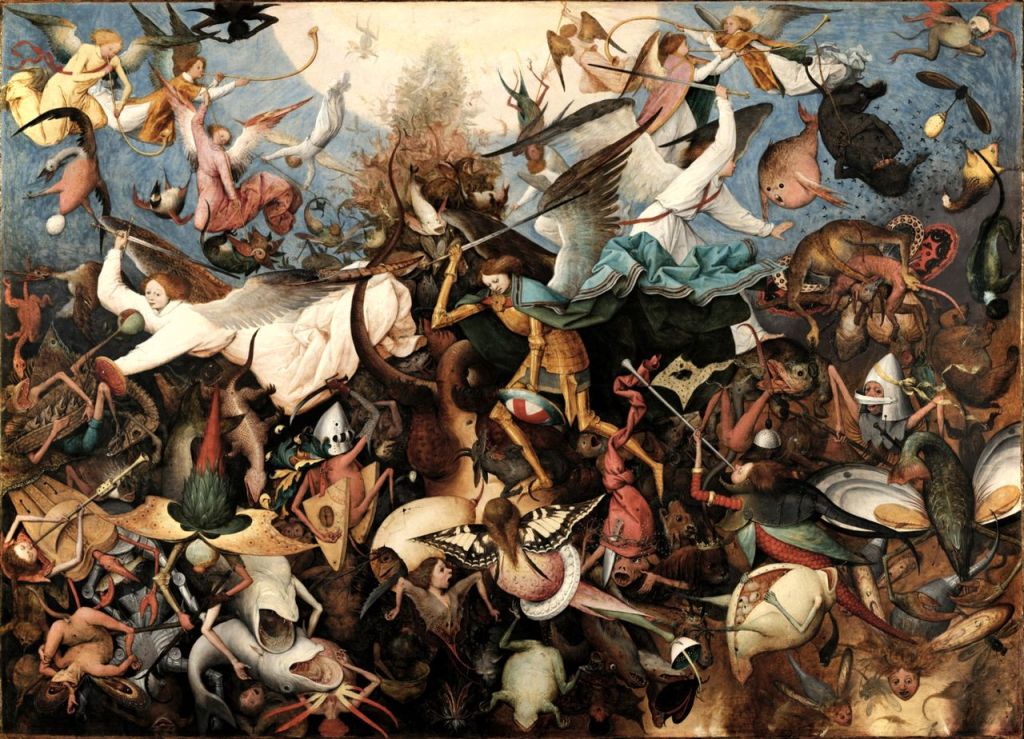
The situation became more serious when Ida herself was a victim of the devil’s tyranny. Her confessor, Father Frehe, then performed an exorcism with the bishop’s permission. The last thing the devil said to him was: “You priestling, I will get even with you!” On the way back to his residence, Father Frehe fell through a metal grate.

War Visions

Until the 1940s, Ida’s life was relatively quiet. At the beginning of May 1940, an astonishing event took place: she had visions dealing with the unfolding of the battle in Europe. She saw the Oder River reddened with blood, fighting going on at Betuwe, Mussolini being hung from his feet. She described Hitler’s eagle nest at the top of the mountain at Berchtesgaden. When she received visions, her gaze was fixed and she expressed what she was hearing and seeing very slowly to the people about her.

The war visions would come to an abrupt end on March 25, 1945, when the Lady once again appeared to Ida Peerdeman who was now forty and living with her sisters. Over the course of fourteen years, Mary appeared to her fifty-five times, during which time She gave her messages. Ida’s sisters were usually present during the apparitions and the eldest would note down the words she would repeat after the Blessed Virgin.

This photograph, which was taken at Ida’s home in the 1950’s, shows us the plain surroundings in which thesemost important messages were given.

In the 1970s, the Foundation of the Lady of All Peoples took possession of the land at Diepenbrockstraat at a price that was almost symbolic. A secretariat was established there and a chapel, barely visible, was built there with, to the left of the altar, the painting of the Lady of All Peoples. That is where Ida Peerdeman spent the last years of her life.

Her life was filled with moral sufferings. It was very difficult for her to share her experiences, in part because of adversaries and refusals, and also in part because of her own concern to always transmit everything as faithfully as possible. Ida Peerdeman

For years, she only wished to disappear, to remain unknown, absolutely not wanting a role in the forefront. How often did she not repeat: “It is not I; I am merely an instrument; these are simply Our Lady’s messages.”

Finally, on May 31, 1996, Ida saw her most cherished desire being fulfilled: His Excellency Most Reverend Bomers, Bishop of Haarlem, in collaboration with his auxiliary bishop, Bishop Punt authorized the public devotion of the Lady of All Peoples, leaving everyone completely free to believe in the messages to which he himself did not hesitate to bear witness.

“Now I can die”, Ida had said when she was informed of this news and she died the following June 17, at the age of ninety. At the last apparition, the Lady had said to her, “Adieu, see you in heaven.” His Excellency Bishop Bomers presided over her funeral held in the Chapel of the Lady of All Peoples

Why should such great joy be felt when the Church, through the action of a member of the episcopate, favorably receives the request made by the Lady of All Peoples? It is because we know that so many graces, blessings and possibilities for a better world are attached to this prayer given by the Lady, and that consequently, humanity will return to God and that “corruption, disaster and war” will progressively diminish. His Exc. Bishop Bomers’ paternal acceptance opened the way for an official approval by the Church. On May 31, 2002, His Exc. Most Reverend Joseph Maria Punt, Bishop of Haarlem/Amsterdam recognized the supernatural origin of the apparitions of the Lady of All Peoples.Mary has been waiting for this day for such a long time, in order to finally have permission to protect humanity, since neither the Father nor Mary will ever impede our freedom. “The peoples, in union with the Church, must recite my prayer….” (The Lady of All Peoples, 50th apparition, May 31, 1954, based on the French translation of the messages presented by Raoul Auclair, Éditions Stella.) Read more here

Mirakel 1345

THE TITLE MOTHER AND LADY OF ALL NATIONS

A BIBLICAL TITLE

(It is important to note that in various languages the same word may be used for both ‘lady’ and ‘woman’ as is the case with the Dutch ‘Vrouwe’ Biblical references in English use only ‘woman’ as in John 19:26 which Our Lady quotes as being when she became ‘the Lady’.)

• Already in the first pages of the Bible, in the book Genesis, Mary is described as the woman (or Lady) who, united with her Son, will crush the head of the serpent. God said to Satan, who had led Adam and Eve into pride and disobedience, “I will put enmity between you and the woman, between your offspring and hers.” (Gn 3:15)

• At the wedding in Cana, Jesus addressed His Mother for the first time as woman, in order to remind her of her vocation to become the Lady of all Nations. As Mediatrix and Advocate she implores and obtains the miracle.

• On Calvary, our dying Redeemer turns to His Mother with His last strength, and as a personal testament says only four decisive words, “Woman, behold, your son!” With these divine words, Mary as Coredemptrix was made the Lady of all Nations. The message of April 6, 1952 confirms this, “At the sacrifice of the Cross, she became the ‘Lady (‘Woman’), the Coredemptrix and Mediatrix. This was announced by the Son while He was returning to the Father.”

• The last of the four Scripture passages is found in the Book of Revelation. There, at the climax of the history of salvation, the woman again appears, clothed with the sun. She lays in pain, in the birth pangs for the new birth of humanity. (cf. Rv 12:1 ff.) A huge and red dragon appears and pursues the woman, who has borne a son.

The promised WOMAN in Genesis, who, united with her Son, crushes the head of the serpent;

the WOMAN at Cana; the WOMAN on Calvary; and the WOMAN of the Apocalypse

is the LADY OF ALL NATIONS, because, united with the Redeemer, she suffered for all nations, mediates the life of grace to all nations, and intercedes for all nations

On 30 December 2020, the Bishop of Haar­lem-Am­ster­dam, after consultation and accordance with the then Congregation for the Doctrine of the Faith, published a “Clarification Regar­ding the Lady of All Nations“, in which he stated that the use of the title “Lady of All Nations” for Mary is theologically acceptable in itself, but cannot be understood as a recognition of the supernaturality of some pheno­mena from which it seems to have come. The Congregation for the Doctrine of the Faith then reaffirmed the validity of the negative judg­ment on the supernaturality of the alleged “apparitions and revelations” to Ms. Ida Peerdeman, approved by St. Paul VI on 5 April 1974 and published on 25 May 1974.

https://theladyofallnations.info/en/

  • Lourdes aan de Amstel – current status

24 MAY 2024 08:37 | Stichting Lourdes aan de Amstel

MARIAL PILGRIMAGE CATHEDRAL

The Lourdes aan de Amstel foundation has been campaigning for the construction of a large Marian pilgrimage cathedral at the RAI in Amsterdam for many years. An initiative that aims to give a place to the devotion to the Amsterdam Marian apparitions that took place in the Amsterdam river district from 1945 to 1958, a devotion that has since spread worldwide.

HEAD OF THE ZUIDAS

In the head of the Zuidas on the Gaasterlandstraat, where the dreamed pilgrimage church should be built, there is still sufficient building land available to build a beautiful Marian cathedral. The site in question was already reserved 12 years ago for the construction of a large theater by Joop van der Ende and an entertainment area. This project was intended as a cultural closure of the Zuidas, and as a counterbalance to the many economic colossuses and office buildings that dominate the appearance of the Zuidas.

NEW STANDARDS FOR MARIAN APPARITIONS / CONSEQUENCES

Contrary to recent media reports about the devotion to the Lady of All Nations, in particular the fact that this devotion is said to be prohibited, the Lourdes aan de Amstel foundation would like to clarify that the situation is somewhat more nuanced than is claimed. The construction of a pilgrimage church is still a possibility and the Lourdes aan de Amstel foundation will continue with the realization of this Marian church.

The devotion to the Lady of All Nations is still fully permitted, provided that it is taken into account that the Marian apparitions of Amsterdam have not yet been “fully” recognized by Rome. The current status for the devotion has been qualified as the so-called “non constat” since 1974, which somewhat corresponds to what the new standards for the assessment of apparitions (issued on 17 May) describe as “nihil obstat”. This implies a neutral position with regard to the supernatural character, “nihil obstat” or “non constat” are however not a disapproval as being false/fabricated, which would be indicated by the qualification “constat de non”. However, this qualification has never been granted to the Amsterdam Marian apparition, and cannot be found in the official documents.

As early as 1981, the congregation – now Dicastery – for the Doctrine of the Faith sent letters to the diocese of Haarlem-Amsterdam requesting the then bishop to re-examine the apparition and possibly release the devotion. In 1995, the head of the congregation for the doctrine of the faith, Cardinal Ratzinger (later Pope Benedict XVI), gave permission for the release of the devotion, leaving open the possibility of full recognition at some later date.

The Fall of the Rebel Angels: Painted in 1562, Bruegel’s depiction of this subject of Lucifer falling with his fallen angels is taken from a passage from Revelation 12, and reveals the artist’s profound debt to Hieronymus Bosch. This is shown through the grotesque, ugly or distorted, figures painted as half-human and half-apocalyptic creatures.[4]
Lucifer was designed to be a perfect angel. He fell from heaven because of his pride and rebellion against God’s divine plan, which was to appoint Jesus as the people’s savior.[5] Lucifer coerced one-third of the angels to follow his lead in the rebellion and to assist in appointing him to be the new “God.”[5] The sin of pride caused the fall of Lucifer and his companions and resulted in the “war in heaven.” The archangel Michael was given the duty to drive Lucifer and the fallen angels out of heaven.[5] The conflict of good and evil as well as vice and virtue are constant recurring themes throughout Bruegel’s work.[6]

PILGRIMAGE CHURCH VERSUS MEGABROTH

A recent development with regard to the Zuidas area is the construction of a Megabrothel desired by the Amsterdam city council. According to Lourdes aan de Amstel, however, a Megabrothel will not bring about the desired change in the image of Amsterdam. Moreover, the municipality of Amsterdam has indicated that it wants to get rid of the many so-called “fun tourists” who cause a lot of nuisance in the city. Will this be done with a Megabrothel as an international calling card?

On the other hand, a beautiful pilgrimage cathedral, modeled on the Hagia Sophia, one of the oldest churches in the world, will be able to attract pilgrims or tourists to Amsterdam of a somewhat higher level, according to Lourdes aan de Amstel. The image of Mary as Mother of Humanity and Lady of All Nations by means of a Marian pilgrimage church according to Lourdes on the Amstel is also preferable to the image of a mega brothel. The image of Mary as Lady of and for all Nations also better symbolizes the image of Amsterdam as a city of many cultures, races and languages ​​and the city of connection, tolerance and inclusivity.

DAY OF PRAYER IN HEILOO / 5th MARIAN DOGMA

On June 8, the annual day of prayer in honor of the Lady of All Nations will be held again on the grounds of the diocesan Marian shrine in Heiloo. Speakers will be Mgr. Hendriks, bishop of Haarlem-Amsterdam and prof. Mark Miravalle, top Mariologist from the US and initiator of the worldwide movement for the 5th Marian dogma: Vox Populi Mariae Mediatrici. A lay initiative that strives for the proclamation of a 5th and final Marian dogma, in which Mary is recognized in her Biblical and ecclesiastical role as Mediatrix, Advocate and Co-Redemtrix. An initiative that is already supported by more than 700 bishops and 40 cardinals and 8,000,000 lay people.

In the period follo­wing the Bishop’s state­ment, there were still some differences of opinion on the interpretation of the text from 1974. The Dicastery for the Doctrine of the Faith, therefore, issued a state­ment on 11 July 2024 in order to underline this once again.

This declaration was already part of the Bishop’s clarification and his “An explanation and a pas­to­ral word to the clarification” of 30 December 2020, which were coordinated with the Dicastery. The Dicastery confirms this once again. Below is the text of the Dicastery for the Doctrine of the Faith.

Press Release Dicastery for the Doctrine of the Faith

Thursday 11 July 2024

In the past, the Dicastery, as a rule, did not make public decisions about alleged supernatural pheno­mena. However, in light of the persis­tent doubts raised about the alleged apparitions and revelations in Am­ster­dam from 1945 to 1959, in connection with the devotion to “The Lady of All Nations”, the Dicastery for the Doctrine of the Faith is making known the result of the Ordinary Session of the then Sacred Congregation for the Doctrine of the Faith, held on 27 March 1974, which reached the follo­wing decisions about the events in question:

  1. As for a doctrinal judg­ment, OMNES: “constat de non supernaturalitate.”
  2. As for whether to inves­tigate the pheno­menon further, OMNES: “negative.”

These decisions were approved by the Holy Father, Pope Paul VI, during an audience granted to the Prefect of the Sacred Congregation for the Doctrine of the Faith, Cardinal F. Šeper, on 5 April 1974.

The information above is being communicated so that the holy People of God and its Pastors may draw the appropriate conclusions.

Víctor Manuel Card. Fernández
Prefect

The Prayer of the Lady of All Nations

Lord Jesus Christ,
Son of the Father,
send now Your Spirit
over the earth.
Let the Holy Spirit live
in the hearts of all nations,
that they may be preserved
from degeneration, disaster and war.
May the Lady of All Nations,
the Blessed Virgin Mary,
be our Advocate.
Amen.