In this video, Diana Darke, author of the award-winning book, Stealing from the Saracens: How Islamic Architecture Shaped Europe, takes you on a quick architectural journey to see how architectural styles and ideas passed from vibrant Middle Eastern centers, such as Damascus, Baghdad, and Cairo, and entered Europe via gateways including Muslim Spain, Sicily, and Venice through the movement of pilgrims, bishops, merchants, and medieval Crusaders. It’s a rich tale of cultural exchange that will help you see some of Europe’s – and even America’s – iconic landmarks with new eyes. Diana Darke is a Middle East cultural expert with special focus on Syria.
With degrees in Arabic from Oxford University and in Islamic Art & Architecture from SOAS, London, she has spent over 30 years specializing in the region, working for both government and commercial sectors. She is frequently invited to speak at international events and media networks, such as the BBC, PBS, TRT, Al-Jazeera, and France24. Her work on Syria has been published by the BBC website, The Sunday Times, The Guardian, and The Financial Times. She is a Non-Resident Scholar at Washington’s think-tank MEI (the Middle East Institute). Diana is also the author of the highly acclaimed My House in Damascus: An Inside View of the Syrian Crisis (2016), The Merchant of Syria (2018), and The Last Sanctuary in Aleppo (2019). Special thanks to the Foundation for Intelligent Giving and the Barrington Peace Forum for their support. You can get Diana’s book from Hurst Publishers (https://www.hurstpublishers.com/book/…) or Amazon (https://amzn.to/2V1Gv0L).
Fan vaulting of the crossing inside Canterbury CathedralPointed arches, trefoil arches and ribbed vaulting in the Chapter House, Westminster Abbey. The perfect geometry of the ribbed vaulting in the Cordoba Mezquita, predating Gothic rib-vaulted ceilings by over a century.
Masterpieces of Islamic Art, from the Umayyad Empire to the Ottomans
From the expansion of the Umayyad Empire in the seventh century until the fall of the Ottomans in the early 20th century, Muslim artists produced a stream of masterpieces that circulated across the globe – adorning places of worship, royal courts and the grand residences of the nobility.
How to Enter the Kingdom of Heaven: William Blake and the Erotic Imagination
When I first Married you, I gave you all my whole Soul
I thought that you would love my loves & joy in my delights
Seeking for pleasures in my pleasures, O Daughter of Babylon
Then thou wast lovely, mild & gentle, now thou art terrible
In jealousy & unlovely in my sight, because thou hast cruelly
Cut off my loves in fury till I have no love left for thee.
Thy love depends on him thou lovest & on his dear loves
Depend thy pleasures which thou hast cut off by jealousy.
— Milton (1804-10), plate 33
In 1863 Alexander Gilchrist corrected the claim made by J.T. Smith, a friend of Blake, that the artist and “his beloved Kate” lived in “uninterrupted harmony”. Such harmony there really was; but it had not always been unruffled. There had been stormy times in years long past, when both were young; discord by no means trifling while it lasted. But with the cause (jealousy on her side, not wholly unprovoked), the strife had ceased also.
Though Gilchrist provided no examples of Blake’s provokings, he did report a conversation in which Blake asked, “Do you think if I came home and discovered my wife to be unfaithful, I should be so foolish as to take it ill?” Gilchrist’s reticence did not satisfy Algernon Swinburne, who commented in l868:
Catherine Blake. “Do you think if I came home and discovered my wife to be unfaithful, I should be so foolish as to take it ill?”
Over the stormy or slippery passages in their earlier life Mr. Gilchrist has passed perhaps too lightly. No doubt Blake’s aberrations were mainly matters of speech or writing; it is however said, truly or falsely, that once in a patriarchal mood he did propose to add a second wife to their small and shifting household, and was much perplexed at meeting on one hand with tears and on all hands with remonstrances.
In l893 Edwin Ellis and William Butler Yeats repeated the rumor, noting that “It is said that Blake wished to add a concubine to his establishment in the Old Testament manner, but gave up the project because it made Mrs. Blake cry.” They then chided Michael Rossetti for accepting the hearsay and piously discounted its probability:
The prospect of polyamory, or polygamy, horrified the Victorians, challenging as it did the whole basis of patriarchal control, and their view of love as a form of private property
There is the possibility that he entertained mentally some polygamous project, and justified it on some patriarchal theory. A project and a theory are one thing, however, and a woman is another; and though there is abundant suggestion of the project and theory, there is no evidence at all of the woman.
In l907 Arthur Symons gleefully reported that he found corroboration for Blake’s proposal in the unpublished part of Henry Crabb Robinson’s diary a passage that the horrified diarist disguised in German. Noting that the sixty-nine year-old Blake was “as wild as ever,” Robinson recorded that he had “learned from the Bible that wives should be in common.” Robinson called this “practical notion” palpably mischievous and immoral. Even worse, Blake argued that “What are called vices in the natural world, are the highest sublimities in the spiritual world.” Symons, like his blushing predecessors, reassured his post-Victorian readers that Blake’s assertions were undoubtedly a “mentally polygamous project” and that “a tear of Mrs. Blake (for ‘a tear is an intellectual thing’) was enough to wipe out project if not theory.”
However, in Blake’s own, pre-Victorian milieu, his antinomian sexual theories would have found sympathetic readers and listeners among the motley crew of Moravians, Swedenborgians, Kabbalists, alchemists, and millenarians who populated the clandestine world of illuminist Freemasonry in London. From the evidence of his drawings, notebooks, and illuminated prophecies, it is clear that Blake maintained a life-long commitment to radical theories of sexuality.
“Blake maintained a life-long commitment to radical theories of sexuality”
Blake’s own confidence in his sexual credo was possibly rooted in his early family life, for his father allegedly associated with Swedenborgians, Moravians, and other “irregular” Freemasons. From each of these societies, with their overlapping memberships, young Blake could have imbibed the theosophy of desire that fueled his visionary art and troubled his marriage.
Bogen notes the long-held tradition that “the teachings of Swedenborg had been imparted to Blake at his father’s knee,” but she also suggests that “Blake and his family were Anglicans and at the same time maintained a connection with the Moravian Church.” As we shall see, Swedenborgian, Moravian, and Anglican affiliations were not necessarily mutually exclusive.
In l743 the names “Mr. and Mrs. Blake” appeared on the register of the Fetter Lane Society, at a time when seventy-two members formed “The Congregation of the Lamb,” a society “within the Church of England in union with the Moravian Brethren.” The Blake couple were perhaps William’s grandparents, for James Blake (his father) married a widow, Catherine Armitage, in l752. Catherine’s maiden name was Wright, and a Mr. Wright (her father?) was included among the married men in the l743 register. According to the early Blake facsimilist William Muir, who was “a near contemporary of several people who had been personally acquainted” with the artist, his parents “attended the Moravian Chapel in Fetter Lane.”
“Our Lamb has conquered, let us follow Him” was the motto of the Moravian Church
Of greatest relevance to Blake’s radical sexual beliefs is the fact that his family was allegedly associated with the Moravians during the turbulent “Sifting Period”, a series of experiments in social egalitarianism, magical practices, and sexual antinomianism. Count Nicolaus Ludwig Zinzendorf, the chief of the “United Brotherhood,” was determined to act out the Kabbalistic theories of earthly and heavenly copulation that he had learned from Kabbalistic Christians and heterodox Jews. When arguing for Blake’s Moravian sympathies, Lindsay notes the sect’s “veneration for the sexual organs” and rejection of “the works of the law,” but he does not discuss their relevance to techniques of vision inducement.
According to the Kabbalistic theories adopted by Zinzendorf, God and the universe are composed of dynamic sexual potencies (the sephiroth) which interact with each other and produce orgasmic joy when in perfect equilibrium. In the Holy of Holies of the Temple in Jerusalem, a golden sculpture of male and female cherubim guarded the Ark of the Covenant. The Kabbalists claimed that the cherubim were entwined in the act of marital intercourse, thus forming an emblem of God’s joyful marriage with his female emanation, the Shekhinah (or Jerusalem). When the Temple was sacked by pagans, the erotic statuary was paraded through the streets in order to ridicule the Jews. That Blake was aware of this tradition is suggested by his reference to the defilement of Jerusalem, “Thy Tabernacle taken down, thy secret Cherubim disclosed.”
After the destruction of the Temple, the re-joining of the cherubim (and thus the reintegration of the male and female within God) depends upon the reverent act of sacramental intercourse by the devout Kabbalist and his wife. This reintegrative process can also take place within the adept’s mind, while he meditates upon the male and female potencies of Hebrew letters and numbers until he reaches a state of visionary trance. God’s androgynous essence is manifested in the microcosmic body of Adam Kadmon (the Grand Man), and the Kabbalists portray the divine processes within that body “in vividly sexual terms.” Blake’s declarations to a confused Crabb Robinson that “we are all coexistent with God; members of the Divine Body, and Partakers of the Divine Nature,” which was originally androgynous and manifested in “a union of sexes in man” reveal his familiarity with this Kabbalistic tradition.
“a golden sculpture of male and female cherubim guarded the Ark of the Covenant”. It is not clear in what form or position these male and female cherubim originally appeared: the Kabbalists claimed that the cherubim were entwined in the act of marital intercourse.
In the l740’s and ’50’s, “Rabbi” Zinzendorf (as he was then called) directed a mission to the Jews in London, in which mutual Kabbalistic studies served as a bridge between religions. At the same time, he organized his followers into a hierarchical secretsociety that functioned as an offshoot of “irregular” or “illuminist” Freemasonry. According to James Hutton, an English Moravian who became a lifelong friend of Richard Cosway, the public society held open meetings in the Fetter Lane Chapel, while the elite interior order (the “Pilgrim Church”) met secretly, lived communally, and practised Kabbalistic rituals. If Blake’s parents attended the public services at Fetter Lane or were members of the “Congregation of the Lamb,” it perhaps explains the similarities between Blake’s poem “The Lamb” and a hymn by Hutton. If they were aware of the interior “Pilgrim” order, it would explain Blake’s own usage of Moravian-style sexual imagery.
Interiors and exteriors: the Moravian Chapel in Fetter Lane
Hutton described the Pilgrims as the unknown superiors of the larger society, for their identity was not revealed to lower-ranking initiates:
… a congregation of labourers who go hither and thither; whom no one knows but he to whom it is revealed. Everyone who has a whole mind to our Saviour is a member of it. It is composed of persons who indissolubly cling together … and who labour for the good of others among all religions, but never form themselves into sect.
Count Nicolaus Ludwig von Zinzendorf
Henry Rimius, a Prussian visitor to the London Moravians, charged that their “clinging together” was a euphemism for communal sex. In a sensational exposé that received wide publicity in London, Rimius described the Moravians as a nonsectarian, subversive secret society, whose leaders “are gradually sapping the foundation of civil government in any country they settle in, and establishing an empire within an empire.” While the higher initiates practise “gnostic obscenities,” the neophytes are left in ignorance of the ritualistic orgies. It is perhaps relevant that Crabb Robinson characterized Blake’s philosophy as consistently Gnostic.
Attendants at the public services in Fetter Lane were certainly aware of the theory, if not the practice, of Zinzendorf’s Kabbalistic sexual agenda. In public sermons, the Count affirmed that “a person regenerated enjoys a great Liberty,” because “Christ can make the most villainous act to be a virtue and the most exalted moral virtue to be vice.” Though the depravation caused by the Fall gave the “hideous name Pudendum” to the genitals, the Saviour has changed it “into Verendum.” Moreover, “what was chastized by Circumcision in the Time of the Law, is restored again to its first Essence and flourishing State.”
Because the genital organs of both sexes are “the most honourable of the whole body,” he exhorted the wives, when they get sight of the male member to honour that “precious sign by which they resemble Christ.” The female vulva is “that little Model of a Chapel of God,” and husbands must daily worship there. When Blake later sketched “a naked woman whose genitals have been transformed into an altar or chapel, with an erect penis forming a kind of holy statue at the center,” he seeemed to give vivid expression to Zinzendorfian sexual religion.
“that little Model of a Chapel of God”
The Count further chastised his fellow-males that they “do not perform and labour enough for their Wives, there is still too much remissness.” He exalted marital intercourse as “the most perfect Copy of God,” noting that “Our Sex is an Employment, an Office,” with Jesus acting as the “Spouse of all the Sisters and the Husbands as his Procurators.” Thus, even marital “procuring” within the society was a divine act. Though Hutton tried to defend the English Moravians from Rimius’s charges, he admitted that the foreign members enticed the more radical locals into their erotic experiments.
Also attending the Fetter Lane services was Emanuel Swedenborg, who periodically lived in London while working as a secret intelligence agent for the pro-French, pro-Jacobite party in Sweden (called the “Hats”). Since his student days, Swedenborg had access to rare instruction in heterodox Jewish mysticism, which included the more erotic and visionary theories of the Sabbatians, secret disiciples of the seventeenth- century “false messiah,” Sabbatai Zevi.
Swedenborg.
As Schuchard notes, “What Swedenborg brought uniquely to religious studies is this whole physiological analysis of what are very powerful spiritual experiences.”
In his diaries, Swedenborg recorded many of the lurid sexual ceremonies of the Moravians, which initially attracted but later repelled him. Like Zinzendorf, Swedenborg sought out Jewish Kabbalists in the East End, and he soon came under the spell of Dr. Samuel Jacob Falk, known as the “Baal Shem” of London (master of the magical names of God). Falk was a crypto-Sabbatian, who collaborated with a network of fellow “Zoharites” in England, Holland, Poland, and Germany. (It was W.B. Yeats who first argued that Falk had an influence on Blake’s knowledge of Kabbala). Following the Sabbatians’ advocacy of “holy sinning,” some members of the network pretended conversion to Christianity and assimilated Kabbalistic notions of the Shekhinah into Christian notions of the Virgin Mary.
Among the more radical Sabbatians, such as the followers of Jacob Frank in Poland, there developed a “veritable mythology of nihilism,” in which the new spiritual or messianic law “entailed a complete reversal of values, symbolized by the change of the thirty-six prohibitions of the Torah … into positive commands.” This included all the prohibited sexual unions and incest. Believing that the descent into evil is a condition of ascent towards good, the radicals “permitted the illicit things.” When they outwardly converted to Christianity (Edom), the Sabbatians committed the holy sin that would liberate them from the repressions of Mosaic and Talmudic law.
In l790, when Blake asserted in The Marriage of Heaven and Hell that “now is the dominion of Edom,” he seemed to draw on this Frankist tradition, which was assimilated into certain Jewish-Christian rites of Freemasonry. Scholem notes that among the disciples of Jacob Frank,
Edom symbolizes the unbridled flow of life which liberates man because its force and power are not subject to any law. It was necessary to abolish and destroy the laws, teachings, and practices which constrict the power of life, but this must be done in secret; … it was essential outwardly to assume the garb of the corporeal Edom, i.e., Christianity …[but] Jesus of Nazareth was no more than the husk preceding and concealing the fruit, who was Frank himself [the reincarnation of Sabbatai Zevi].
Zinzendorf was so fascinated by Frank’s pronouncements, after thousands of Frankists converted to Catholicism in Poland, that he sent emissaries (Jews converted to Moravianism) to meet with Frank’s disciples.
“holy sinning”: One of Blake’s mysterious ‘Book of Enoch’ drawings, perhaps made in the last few years of his life. “Blake made five pencil drawings related to the Book of Enoch …On three rather explicit pictures one can witness the illicit union of the ‘sons of God’ and the ‘daughters of men.’ On one of these a Watcher, shooting down from heaven touches the vulva of a naked woman, next to them two baby-giants are wabbling. On another an aroused Watcher is surrounded by four women. Most shocking is the one representing a ‘daughter’ flanked by two overtly priapic Watchers while the woman touches the impressive, radiating phallos.”
At the same time, Swedenborg became suspicious of the sincerity of Dr. Falk, whose apparent Christian sympathies clothed his private Sabbatian beliefs. Some initiates of Frank’s and Falk’s inner circles encouraged antinomian sexual practices in the name of holy sinning, while forbidden magical practices were undertaken to hasten the messianic reversal of reality. In his journals, Swedenborg described the sexual rituals and magical practices of certain Jews in London, which both inspired and frightened him. According to oral tradition, Swedenborg kept a mistress in Sweden and, by his own admission, another one in Italy; moreover, his many descriptions of prostitutes and sirens and his advocacy of legal brothels make clear that he was widely experienced in earthly sexuality-despite his lifelong bachelorhood.
However, while associating with Moravian and Jewish mystics in London, the fifty-six year-old Swedenborg learned how to perform the mystical Kabbalistic marriage within his mind, through the sublimation of his sexual energy into visionary energy. By meditating on the male and female potencies concealed in the vessels of Hebrew letters, by visualizing these letters in the forms of human bodies, by regulating the inhalation and exhalation of breath, and by achieving an erection without progress to ejaculation, the reverent Kabbalist could achieve an orgasmic trance state that elevated him to the world of spirits and angels. Thus, Swedenborg became experienced in heavenly sexuality, which he—like the Kabbalists—believed to be the essence of the reintegrated God.
“the sublimation of his sexual energy into visionary energy”
As a trained scientist and student of anatomy, Swedenborg recorded with rare objectivity the physiological processes of the erotic and visionary trance. Describing his own sensations in brain corticals, lung rhythms, abdominal muscles, and seminal duct, he provided a uniquely “scientific” record of paranormal states. Because his writings on these subjects were studied by Blake and his Swedenborgian friends, it will be useful to follow Swedenborg’s hints at the how-to of visionary sex. In his Journal of Dreams (1744-45), Swedenborg described the difficult discipline required to control and manipulate the sexual energies.
William Blake, Study of Hebrew Characters in Human Form
Despite the intensely erotic character of the images he visualized (while meditating upon the male and female Hebrew letters and sephiroth), he must not dissipate his sexual energies in masturbation, nocturnal emission, or premature ejaculation. By maintaining the “pure intention” (kawwanah), he must resist the tempting visions produced by evil spirits, a female with teeth in her vagina, himself urinating in front of a woman, sirens displaying their vulvas to him, voyeurs watching him copulate, etc. During the early stages of his training, he noted that “I could not keep control of myself so as not to desire the sex, although not with the intention of proceeding to effect.” However, as he mastered the techniques of breath control, in which his respiratory rhythyms matched those of the cosmic sephiroth, he began to achieve waking trances:
The will [male sephira] influences the understanding [female sephira] most in inspiration [breathing in]. The thoughts then fly out of the body inward, and in expiration are as it were driven out, or carried straight forth; showing that the very thoughts have their alternate play like the respiration … therefore when evil thoughts entered, the only thing to do was to draw to oneself the breath; so the evil thoughts vanished. Hence one may also see the reason that during strong thought the lungs are held in equilibrium … and at this time the inspirations go quicker than the expirations. Also, of the fact that in ecstasy or trance, the man holds his breath.
Swedenborg also learned to control the cremaster muscle, which he had earlier studied when preparing a section on “The Generative Organs” for his treatise on The Animal Kingdom (l744). Drawing on Boerhaave and other anatomical authors, Swedenborg recorded:
The cremaster is a thin muscle or fleshy plane, which runs down round the sheath of the spermatic cord, and terminates in the tunica vaginalis testis. It surrounds the whole bag,and afterwards expands on the upper and outer part. It seems sometimes to arise from the spine of the os ilium …
The testicles or didymi … their coats are three: the cremaster or elevator muscle of the testicle … The two epididymides are oblong, almost cylindrical parts, lying on the upper border of the testicle, and each having somewhat the appearance of a caterpillar or silkworm. The cremaster muscle draws up, sustains, compresses, and expresses* the tunica vaginalis and the testicle. [*Trans. Note: Expresses in the sense of squeezes out the juices from].
He became so fascinated by his investigation that he proclaimed, “If the structure of the testicle be properly examined, it will be evident, that it is so wonderfully constructed on geometrical principles, that anything more perfect cannot be.” Reflecting his current studies in alchemy, he referred to “the alchemical preparation of the seed in the testicles.” Swedenborg followed this section with extremely graphic descriptions of the erector muscles of the female clitoris (which is equivalent to the male penis), of the essentially hermaphroditic relation of male and female in coitus, of the composition of seminal and vaginal fluids, of the physiological and psychic sensations produced by intercourse and orgasm.
After completing this manuscript, Swedenborg learned from his London mentors how to merge his intense visualization of the genital organs (based on precisely detailed anatomical engravings) with his visualization of the sexual dynamics within the androgynous, microcosmic “Divine Human” (the Kabbalists’ Adam Kadmon). His mastery of cremaster control, when combined with ritualized breathing, produced “genital respiration” and enabled him to achieve an altered state of consciousness in which spirits first spoke and then appeared to him. When Blake later proclaimed that the bodily “parts of love follow their high breathing joy,” he perhaps referred to genital respiration.
“his intense visualization of the genital organs”
While Swedenborg struggled to maintain kawwanah, he was often distracted by lower spirits (grotesque images of perverted sexuality), and he sometimes feared that he would go mad from the psychic strain. During one period, he was found naked in the Fetter Lane Chapel and then delirious and naked in the street. Blake’s remark to Crabb Robinson that Swedenborg’s “sexual religion is dangerous” suggests his awareness of the tremendous psychic strain of Kabbalistic meditation.
Idel explains that for the Kabbalist “the attainment of `prophecy’, namely, of ecstatic experience is tantamount to the union of a bride and her bridegroom.” Moreover, “an actual experience of a sexual contact is not essential” for the ecstatic Kabbalist. As he struggled with the difficult process, Swedenborgwas eventually rewarded with a state of “indescribable bliss”:
In the spirit there was an inward and sensible gladness shed over the whole body… it was shown in a consummate manner how it all issued [from God] and ended [in the genitals]. It flew up (abouterade) in a manner, and hid itself in an infinitude, as a center. There was love itself. And it seems as though it extended around therefrom, and then down again; thus, by an incomprehensible circle, from the center, which was love, around, and so thither again. This love, in a mortal body, whereof I then was full, was like the joy that a chaste man has at the very time when he is in actual love and in the very act with his mate; such extreme pleasantness was suffused over the whole of my body, and this for a long time.
Swedenborg’s unusual use of the French word abouterade reinforces the psycho-erotic nature of this ecstatic state; the verb aboutir means “to lead to and end in,” “to come to a head and burst,” “to gather (as an abcess) and come to a head.” At the supreme moment of this aroused state, the adept achieves not an ejaculation but the externalization of his internal man (in Hebrew, his maggid). This phenomenon perhaps explains Blake’s later portrayal of Milton as a projection of himself, with whom he achieves an ecstatic reunification. Swedenborg was initially confused by this visionary figure, who embraced him, but he eventually concluded that it was Jesus.
Over the next decade, Swedenborg charged Zinzendorf with increasing megalomania, and he turned away from the Moravians. At the same time, he maintained a love-hate relationship with the Jews who continued to instruct him in Kabbalistic techniques of meditation and Bible interpretation. Though his Swedish political colleagues labored for years to open Sweden to Jewish immigration, the prevailing anti-Semitism of the country led Swedenborg to distance his published writings from their Jewish sources. He gradually displaced his Kabbalistic theories from Israel to Asia, which was considered a more acceptable source of mysticism in contemporary Sweden. Ironically, this transference was made possible through his rejected Moravian brethren.
‘Zinzendorf preaching to people of Many Nations’ by Johann Valentin Haidt
During Swedenborg’s early Moravian participation, one of the missionaries to the Jews also recruited East Indians from Malabar who came to London. In his Spiritual Diary, he later described the deceased Zinzendorf conversing with “some of the gentiles in Western India,” whom he had converted to Moravianism. Swedenborg became intrigued by the similarity of Yogic techniques of meditation and sexual magic to Kabbalistic techniques, and he referred to Indian sorceresses and magicians, who were skilled in “abominable arts, from the influx of those who were from Eastern India.” He also acquired a bizarre book, La Crequinière’s Agreement of the Customs of East Indians with Those of the Jews (l705), that claimed an Asian origin for the “priapic rites” of the Jews, which were represented by erotic sculptures of male and female fertility figures.
Swedenborg also learned about Tibetan and Chinese Yoga from Swedish soldier-scholars, who had been prisoners of war in the Siberian and Tartar areas of Russia and returned to Sweden in the l720’s. Hallengren argues that Swedenborg’s “Great Tartary” was actually Tibet, and that he had access to rare Asiatic manuscripts and oral traditions brought back by returning relatives and colleagues. In his Spiritual Diary, Swedenborg drew on the travel journal of Philip Strahlenberg, a Swedish officer and former prisoner, to describe the spiritual relation between the Tibetans, Tartars, Chinese, and Siberians.
The Kabbalah Tree of Life can be mapped onto the left and right side of the human body, denoting the pathways between the human and the divine (‘Jacob’s Ladder’)
In London, he received reinforcement for his Kabbalistic-Yogic interests from Dr. James Parsons, an Irish- and French-educated physician and Fellow of the Royal Society, who met Swedenborg when both attended meetings of the society in early l745. Martin Folkes, the president, introduced Swedenborg to the Fellows and asked Parsons to study his treatise on The Animal Kingdom and present a report. Parsons was a peculiarly appropriate evaluator of Swedenborg, for he was well versed in Hermetic, Talmudic, and Zoharic lore, and he was an expert on the physiology of the genital organs and the phenomenon of hermaphroditism, which he explored from an anatomical and Kabbalistic perspective. Like Swedenborg, he studied the reports of Strahlenberg and earlier Swedo-Gothic scholars, which led him to perceive similarities between Kabbalistic, Tibetan, Nordic-Gaelic, and Christian beliefs in a triune godhead. After decades of exploration in this arcane field, he published his findings in The Remains of Japhet (l767).
Swedenborg’s practical access to Yogic techniques probably came from Moravian missionaries, who went beyond the East Indies and penetrated into central Russia, Tartary, and China. Shortly after Swedenborg’s spirit-account of Zinzendorf and the Indians, he described his vision of Chinese Yogis, “sitting there, as the Indians are wont to do, with the feet crossed” and “in the tranquility of peace” (i.e., in the lotus position and state of nirvana). Taking advantage of the great interest in Asian culture generated by the Swedish East India Company (which secretly employed Swedenborg), he argued that the Yogis of Great Tartary discovered the secrets of Kabbalism long before the Jews. These notions of a pre-Judaic Chinese or Asiatic revelation were assimilated into some Écossais Masonic rites.
Many years later, Blake drew on Swedenborg’s claims about Tartary, when he described in Jerusalem the “Masonic” construction of the material cosmos:
Urizen wrathful strode above directing the awful Building: As a mighty Temple; delivering form out of confusion … Within is Asia & Greece, ornamented with exquisite art: Persia & Medea are his halls: his inmost hall is Great Tartary. China & India & Siberia are his temples for entertainment … A World of Generation continually Creating; out of the Hermaphroditic Satanic World of rocky destiny.
From his Yogic-Kabbalistic sources, Swedenborg learned the meditative practices shared by husband and wife, which raise the act of conjugal love to cosmic significance. In l768 he was so inspired by these revelations that he broke his anonymity to publish, under his own name, The Delights of Wisdom Concerning Conjugial Love. The question of whether to translate the Latin original into English would later provoke bitter controversy in the Swedenborg society that the Blakes attended. W.B. Yeats, who came to believe that Blake practised these meditative techniques, gave a succinct description of the Tantric method:
An Indian devotee may recognise that he approaches the Self through a transfiguration of sexual desire; he repeats thousands of times a day words of adoration, calls before his eyes a thousand times the divine image. He is not always solitary, there is another method, that of the Tantric philosophy, where a man and woman, when in sexual union, transfigure each other’s image into the masculine and feminine characters in God, but the man must not finish, vitality must not pass beyond his body, beyond his being. There are married people who, though they do not forbid the passage of seed, practise, not necessarily at the moment of union, a meditation, wherein the man seeks the divine Self as present in his wife, the wife the divine self as present in the man. There may be trance, and the presence of one with another though a great distance separates.
“there is another method, that of the Tantric philosophy, where a man and woman, when in sexual union, transfigure each other’s image into the masculine and feminine characters in God”
In his diary, Swedenborg hinted at similar achievement of conjugal union through mental telepathy:
…conjugial love, or that which exists between two conjugial partners who love one another…is the inmost of all loves, and such that partner sees partner in mind (animus) and mind (mens), so that each partner has the other in himself or herself, that is, that the image, nay, the likeness of the husband is in the mind of the wife and the image and likeness of the wife is in the mind of the husband, so that one sees the other in himself, and they thus cohabit in their inmosts.
Because the bachelor Swedenborg hoped to marry the wife of Count Frederick Gyllenborg in the spirit world, he perhaps attempted to achieve mental copulation with her by long-distance thought-transfer in the natural world.
Idel points out the similarities and differences between Kabbalistic and Tantric sexual mysticism: “The [Jewish] husband has to elevate his thought to its source, to achieve an unio mystica, which will be followed by the descent of supernal spiritual forces on the semen virile… It is worthwhile to compare this mystical conception of the sexual act to the tantric view. In both cases, the sexual act must be performed in a very mindful matter; a certain mystical consciousness is attained alongside the Corporeal act.”
The Occult Anatomy of Man, showing the collation of Cabalistic, Hindu and Western esoteric wisdom regarding the human body as the central temple of divine energy and intelligence, and the practices by which this energy is able to manifest. What we call ‘sex’ is one of the most potent – and as Blake said, easiest – ways into God; but for that reason also one of the most problematic.
However, the usage of intercourse as a vehicle for spiritual experiences is evidently different. The mystical union of thought with its source is, in kabbalah, instrumental to the main goal—conception. In the tantric systems, the mystical consciousness, the bodhicitta, is an aim in itself whereas the perfect state is obtained by the immobilization of the flow of semen virile. The kabbalists put mystical union in the service of procreation; tantra put fruitless intercourse into the service of mystical consciousness.
As noted earlier, Idel also describes Jewish meditative practices in which sexual contact is not necessary, for magical-mystical experiences replace the conception of a child.
“magical-mystical experiences replace the conception of a child”
In his Journal of Dreams (1744), Swedenborg wrote a veiled description of his Kabbalistic-style ecstatic experience, which he achieved through meditation on the Hebrew letters;
…during the whole night something holy was dictated to me, which ended with “sacrarium et sanctuarium.” I found myself lying in bed with a woman, and said, “Had you not used the word sanctuarium, we would have done it.” I turned away from her. She with her hand touched my member, and it grew large, larger than it ever had been. I turned round and applied myself; it bent, yet it went in. She said it was long. I thought during the act that a child must come of it; and it succeeded en merveille… This denotes the uttermost love for the holy; for all love has its origin therefrom; is a series; in the body it consists in its actuality in the projection of the seed (projectione semenis) when the whole [left blank] is there, and is pure, it then means the love for wisdom.
Twenty-four years later, in Conjugial Love, his experience seemed to merge Yogic with Kabbalistic practice. Like Yeats, Swedenborg hinted at the control of seminal flow, when he stressed that the Lord provides “a hinged door, as it were,” between earthly and heavenly sexuality, “which is opened by determination, care being taken that it does not stand open, lest the one should pass over into the other and they should commingle.” From his statement that the acquisition of Divine Wisdom consists in “projectione semenis” and his anatomical comments on the genital muscles, it seems that the “hinged door” was the seminal duct, which could be controlled by rigorous discipline. According to Tantric Yoga, some adepts achieve “that extraordinary mastery over non-striated muscles which normally cannot be controlled” that allows them to “arrest the semen” and “in-breathe” it back through the penis. In Swedenborg, the cremaster muscle seemed to function like the Yogic “yoni place between the male organ and anus.”
In a decadent age of excess, Swedenborg argued the importance of moderation in order to maintain the male’s general health, which will sustain sexual vigor: “His fibres, nerves, muscles, and cremasters do not become torpid, relaxed, or feeble, but continue in the strength of their powers.” The presence of “the virile powers” elevates the mind and “their absence depresses, this absence causing the mind to droop, collapse, and languish.” When sexual potency is properly infused into the devout mind, the meditator allegedly achieves supranormal power she communicates with spirits, performs automatic writing, gains clairvoyance, and travels through the heavens.
“physiological alchemy”
Adepts of Chinese and Tibetan Tantrism claim that repeated disciplined arousal, without emission (“physiological alchemy”) empowers the mind, makes the body glow, increases longevity (to the point of immortality), and produces communication with the gods. Swedenborg frequently recorded his personal achievement of these paranormal states, and the Yogic techniques were infused into some Kabbalistic-Rosicrucian rites of Écossais Freemasonry.
For the Jewish couple, the capacity to maintain high spiritual consciousness while achieving mutual orgasm not only imitated the cosmic marriage but stimulated similar pleasures within the Divine Human (Adam Kadmon), who is the manifestation of God. As Swedenborg hinted, the delights of true conjugal love “ascend and enter into heaven”:
I have heard from angels, that when these delights ascend from chaste partners on earth, they perceive them to be exalted from themselves and infilled. Because some of the bystanders who were unchaste, to the question of whether this applied also to the ultimate delights [sexual intercourse], they nodded assent and said tacitly, “How can it be otherwise? Are not those delights the other delights in their fullness.”
Angelic love of the sex is “full of inmost delights,” for it is “a pleasing expansion of all things of the mind.” Through proper meditation, the regenerated man becomes angelized and achieves superhuman sexual pleasure.
Jacob’s Ladder: Like everything else in Blake, this ‘ladder’ is located within the human body
Like the Sabbatians, Swedenborg elevated the sense of touch into the highest spiritual gift: “That the sense of touch is dedicated to conjugial love and is the sense proper thereto, is eveident from its every sport and from the exaltation of its refinements to the supremely exquisite.” He also emphasized that physical sexuality is only an instrument of the mind, which receives influx from the spiritual world: “With those who are united in conjugial love, the forms of their minds terminate in these [sexual] organs.” For the male to maintain a prolonged erection, he must keep his thoughts “on high and hold them in the air, as it were, so that they do not descend and press on to that which makes that love.” Because virile potency is crucial to spiritual vision, Swedenborg argued that there were cases where an unmarried man could take a mistress and a husband could take a concubine.
“the Kabbalistic belief that proper performance of the meditative-sexual act rebuilds the Temple”. Note the locations of the womb, the phallus, and the right and left arms/legs on this map of the Temple
However, emerging scandals among the Sabbatians—who were accused of practising cults of masturbation and group sex—and rival claimants to Swedenborg’s role as a Masonic and Kabbalistic guru made him worry that his Temple of Love was being turned into a brothel (lupinaria). A passage in Dr. Falk’s diary suggests that one of his Kabbalistic students engaged in bizarre phallic rituals. Thus, Swedenborg and his Masonic colleagues in London assimilated their sexual theories into highly Christianized degrees within a special order of Freemasonry, the “Royal Order of Heredom of Kilwinning” or “Rite of Seven Degrees.” The Kabbalistic belief that proper performance of the meditative-sexual act rebuilds the Temple and manifests the Shekhinah between the conjoined cherubim was especially attractive to the intitiates of the Order of Heredom. One of the leaders of this rite, the French artist and engraver Lambert de Lintot, produced a series of hieroglyphic designs, which included phallic and vaginal symbolism as part of the process of regenerating the psyche and rebuilding the Temple of the New Jerusalem.
Swedenborg also described a secret mystical society, in which “spirits from Asia” teach inititiates how to meditate on emblems of love “works of art and some small images as though cast in silver” that represent “the many qualities, attributes, and delights which belong to conjugial love.” Lintot’s order had close ties with Swedish Masonry which were reinforced by the initiation of numbers of Swedish ship captains “in London lodges, including the Jewish.” These Kabbalistic rites were in turn exported to India and China by initiated captains sailing for the Swedish East India Company, who opened lodges in their ports of call. The merging of Jewish and Asiatic rituals would thus have significant earthly as well as heavenly relevance. The Royal Order of Heredom survived through the l790’s, when Swedish and Swedenborgian Masons in London continued to join it. As I have argued elsewhere, Blake was possibly associated with Lintot’s rite, which featured the word “Los” (the name of Blake’s illuminated prophet) among its erotic emblems.
While Blake may have been initially exposed to these antinomian notions through his parents’ religious associations, he also had access to them through Richard Cosway, who was an instructor at Pars’s Drawing School when Blake Studied there in l767-72, and who became a lifelong friend. During the period of Moravian, Swedenborgian, and Falkian sexual experimentation, Cosway was familiar with all three groups. As a student, he lived with Dr. Husband Messiter, who was friendly with Zinzendorf and moved in Moravian circles. Cosway subsequently developed lasting friendships with James Hutton and other Moravians.
Blake’s house, 28 Broad Street
After Zinzendorf’s death in l760, Messiter became Swedenborg’s personal physician and agent. Messiter was also connected with “irregular,” Ancient Freemasonry, at a time when the name James Blake appeared in the register of an Ancient’s lodge. He was a close neighbor of Blake’s family at 28 Broad Street, Golden Square, for he lived on Great Pulteney Street, Golden Square. It was probably through Messiter that Cosway acquired rare volumes of Swedenborg’s early works, which inspired him to immerse himself in Jewish studies, magical experiments, and erotic art.
“Freemasons’ Hall and Tavern, which faced Basire’s studio on Great Queen Street”
A student of the more bizarre offshoots of Freemasonry, Cosway was one of the earliest members of the Universal Society, organized by Messiter and other devotées of Swedenborg in l776. While Blake served his apprenticeship, he had access to these Masonic developments, often centered at Freemasons’ Hall and Tavern, which faced Basire’s studio on Great Queen Street. The name William Blake appeared frequently in the l780’s and ’90’s in surviving lodge registers but, unfortunately, no further identification is given. Both Cosway and Blake would have applauded the efforts of the radical Swedish Masons to publish Latin editions and English translations of Swedenborg’s most erotic and occultist writings.
In l779-80 and l783-86, the Universal Society was visited by Augustus Nordenskjöld, a Swedish Mason and son of Moravian parents, who was an eager student of Kabbala and a practicing alchemist. During his first visit, Nordenskjöld met Dr. Messiter and then moved into the home of the latter’s friend, Dr. Gumpertz Levison, a Jewish physician and alchemist. Levison had been a youthful protégé of Rabbi Jonathon Eibeschütz, a crypto-Sabbatian, who perhaps informed him about the Kabbalistic and Masonic activities of Falk and Swedenborg in London. After his arrival in London in l770, when he undertook medical studies with the Hunter brothers, he became a Swedenborgian Mason. Like Zinzendorf’s and Falk’s disciples, Levison was accused of antinomian sexual and religious practices.
Count Caglistro
In l780 Levison accompanied Nordenskjöld to Stockholm, where the “illuminist” king, Gustav III, employed him as court alchemist and physician. In l789 another Jewish Swedenborgian named Samuel acted as a liaison between the London society and the illuminist lodge at Avignon, which was accused of “frivolous erotic practices.” Nordenskjöld fully supported the efforts of charismatic Masonic emissaries from France—Count Caglistro, Count Grabianka, and Louis Claude de St. Martin—to radicalize the London Swedenborgians and to promote Kabbalistic theories of spirit communication and conjugal love. From the early l780’s, Blake’s drawings and writings reflected his interests in Swedenborg and other occultists, such as Paracelsus and Boehme.
In fact, it was through the Swedes’ influence on the Swedenborg Society in l788-90 that the first evidence of Mrs. Blake’s difficulties with her husband’s sexual theosophy begins to emerge. In March 1788 Charles Bernhard Wadström, a Swedish colleague of Nordenskjöld, arrived in London with the manuscript of Swedenborg’s spiritual diary. Though Blake’s friend John Augustus Tulk offered to subsidize the publication of these “memorabilia” from the spirit world, some of the English Swedenborgians were horrified at the erotic and magical scenes described in them.
In February l789, when Augustus Nordenskjöld returned to London, his bold advocacy of Swedenborg’s sexual and alchemical theories exacerbated an emerging liberal-conservative split in the society. Though the London society was linked with Swedenborgian Masonic lodges in Avignon, Paris, Berlin, and Stockholm, a minority of English members distrusted the revolutionary leanings of the foreigners, and they determined to establish a separate dissenting church at Great Eastcheap. When the Blakes attended the Great Eastcheap Conference in April l789, the factions attempted to patch over their quarrel, and they issued a compromise manifesto (signed by William and Catherine Blake).
However, the Swedes were distressed at the reluctance of the conservatives to publish an English translation of Conjugial Love, which they considered Swedenborg’s most inspired work. In a particularly provocative passage, Swedenborg stressed the importance of male sexual potency to the capacity to receive divine influx:
That conjugial love makes man more and more a male… That the ability and vigour called virile accompanies wisdom according as the latter is animated from the spiritual things of the Church; that it is then present in the conjugial love; and that wisdom opens the vein of that love from its fountain in the soul, and thus invigorates the intellectual life, which is masculine life itself, and blesses it with perpetuity… the angels in heaven are in this vigour to eternity… the most ancient peoples in the Golden and Silver Ages were in enduring efficacy because they loved the caresses of their wives and children and shuddered at the caresses of harlots. Moreover it was told me from heaven that with those who abominate adulteries as infernal, this spiritual sufficiency will not be lacking in the natural world also…
Blake’s annotations to Swedenborg
When Blake annotated The Wisdom of Angels Concerning Divine Love and Divine Wisdom, he responded positively to Swedenborg’s hint at the influx of spirit which produces the erotic trance (which Swedenborg called Wisdom). To Swedenborg’s claim that “Man in whom the spiritual degree is open” can come into that Wisdom “by laying asleep the Sensations of the Body, and by Influx from above at the same time into the Spirituals of his Mind,” Blake responded that “This is while in the Body. This is to be understood as unusual in our time, but common in ancient.” Blake also made clear that he participated in the discussions and arguments taking place in the Swedenborg Society, and he rejected the conservatives’ argument that reason (the understanding) must mediate the influx into love. He applauded Swedenborg’s statement that the “natural Man can elevate his Understanding to superior Light as far as he desires it,” and he defied the rationalists who “dare to say after this that all elevation is of self & is Enthusiasm and Madness.”
When the conservatives threatened to separate from the Universalists, Augustus Nordenskjöld appealed to the liberals to join a secret interior order that would implement the full revolutionary agenda of the radical Masons. On 4 May he presented his proposals for “The Form of Society in the New Jerusalem,” which argued for the centrality of conjugial love to society and advocated a sexualized process of meditation upon Swedenborg’s texts as well as the Bible. Because sexual energy is so important to spiritual energy, Swedenborg’s theory of “permission” for concubinage should be implemented immediately:
As it will happen, of course, that for a long time to come there will be unmarried men in our Church who are not able to marry, and married men who have been received among us, but who have unchristian wives, rejecting the New Doctrine, and who thus mustlive in a disharmonious marriage, it follows that such men are driven so strongly by the inborn amor sexus that they cannot contain themselves, it is inevitable, for the sake of order, that they be permitted, the former to take a mistress and the latter a concubine.
Nordenskjöld’s proposals set off a storm of controversy, and the minutes of the meeting were subsequently torn out.
“secret alchemical order”: alchemy employed many of the same esoteric symbols and practices as Kabbalah, as you can probably work out from this early alchemical illustration
On 26 May he issued an invitation to the liberal Swedenborgians to join his secret alchemical order, which would implement the master’s philosophy of chemistry, economics, and sexuality. In the process, the initiate would “render the day of his Tabernacling in the Body a continual State of Bliss, correspondent with the spiritual State of Happiness, which was prepared in him before.” On 26 June Nordenskjöld issued another appeal in his Plan for a Free Community Upon the Coast of Africa, in which he stressed the importance of the “virile powers” to a healthy society:
…in regard to the permanent Powers of a Community, a knowledge of what constitutes the Foundation, is the great secret of all true Policy, which, however, at present, is intirely unknown. The ultimate Foundation of all kinds of Powers, as well in Individuals, I call Virility or Conjugal Power… Now the first elementary, powerful, and universal Union, or Bond of Society, is the Love of the Sex. If we deprive ourselves intirely of this, we shall never be able to become rich and great, because then we are incapable of any social Life. This Love of the Sex in every Male has two kinds of Eruption, or two channels of Ebullition; the one extends more and more towards various objects, and the other concentrates its force into one, and never strays beyond its proper circle. The former tends always to Impotency, and of course to Infelicity; the latter continually increases in Virility … Nothing however is more true, than that the Love of the Sex, and the constant exercise thereof, which is the Virile Potency, is the very basis to the accession of all other kinds of permanent Powers. All activity and every executive impulse is in such complete conjunction with the Virile Power, that they all advance step by step, and can never be separated. Who does not find, that in Activity lies the very foundation of all kinds of real happiness? It is then evident why a Man with the permanent Power of Virility, stands on the sure foundation of being exalted to every Power of Wealth and Dignity.
Well, you get the, er, point. Note how sexual imagery and theosophy constantly surrounds us, and for a reason – to suggest potency, containment, generation etc. Doors, portals, arches, domes, obelisks, towers: the geometry of sacred spaces is always psychogeometry: churches are always sexual experiences.
Nordenskjöld argued further that women are “designed by creation to constitute the felicity of Men”; thus, it is tragic that they are so repressed and poorly educated:
Marriages in their present state are but Seminaries for a corrupt Generation; instead of a sincere Friendship, which ought to subsist in the Union, we find nothing but Indifference, proceeding from dissimulation; instead of Liberty, constraint; instead of tender love, cold Disgust.
Since wives are so often dominated by the “Lust of Dominion” and the “Lust of Possession,” which debilitate Virile Potency, concubinage “never ought to be forbidden in a Free State.”
Thel: “his paean to sexual love”
That Blake responded enthusiastically to these proposals is suggested by his paean to sexual love in Thel, probably composed in summer or autumn l789. At the same time, he lamented the prudish fears of some women—including his wife?—about open and ardent sexuality. When Thel “enter’d in & saw the secrets of the land unknown,” she emitted “Dolours & Lamentations”hardly an inspiration to continual virile potency!
Echoing Swedenborg’s doctrine of Use, in which the functions of bodily organs manifest spiritual essences, Blake warns that if Thel does notexercise her sexuality, “all shall say, ‘Without a use this shining woman liv’d.’” For the conservative Swedenborgians, who included attractive figures like the Anglican minister John Clowes, caution and discretion must veil the doctrine of conjugial love, which should be taught gradually, in a rational way, to members judged morally fit. While Nordenskjöld was accused of “opening the floodgates to immorality,” those members who utilized animal magnetism to speed up the production of erotic trances were accused of producing “horrid enormities.” Like the Moravians earlier, the Swedenborgians were vulnerable to becoming objects of public ridicule and scandal.
In early 1790, Nordenskjöld became so frustrated by the prudery of the Eastcheapers that he travelled to France, where he presented a French version of his “Form of a New Society” (Tableau d’une Constitution incorruptible) to the National Assembly in Paris. In autumn of that year, Blake moved to Lambeth, where he became the close neighbor of several Swedenborgians who supported the radical agenda of Nordenskjöld and the illuminist Masons (J.A. Tulk, Frances Barthelemon, Jacob and Thomas Duché). Moreover, they were sympathetic to the even more radical sexual notions of the frères at Avignon, who featured ritual nudity, communal sex, and worship of the Shekhinah (a Kabbalistic version of the Virgin Mary) in their arcane ceremonies. A conservative critic would later charge that illuminist “clubs” in England sent to the French National Assembly a memorial, “in which the Assembly was requested to establish a community of wives, and to take children from their parents, and educate them for the nation.” Count Grabianka, chief of the Avignon Illuminés, had actually relinquished his small daughter to his Masonic superior, before he visited the Swedenborgians in London in l785-86 (and again in l796). Accusations about erotic ceremonies at Avignon suggest that these revolutionary sexual theories were not only preached but practised.
Even Nordenskjöld was distressed when the Avignon society decided that Swedenborg’s Conjugial Love was not divinely inspired and adopted instead the kind of free-love agenda promulgated by the “Asiatic Brethren,” a Masonic rite developed by Sabbatian Jews and Cabbalistic Christians. At this time, emissaries from the “Asiatics” were in London, and several Swedenborgians collected their writings. When Blake declared that Swedenborg “is the Angel sitting at the tomb: his writings are the linen clothes folded up,” he suggested his own movement towards the Sabbatian position—”Now is the dominion of Edom, & the return of Adam into Paradise.” If Mrs. Blake shared Thel’s hesitations about the plunge into sexuality, she must have been even more distressed by her husband’s increasing advocacy of free love.
In the powerful erotic paean of Visions of the Daughters of Albion (1793), Blake targeted “the frozen marriage bed,” which needed “wanton play” in “happy copulation” (preferably in groups) in order to thaw.
According to Swedenborg and the liberated J.A. Tulk (an admirer of Grabianka), the divine innocence of conjugial love is best expressed in daylight nakedness, rather than furtive couplings under the covers. Thus, Tulk would not have been shocked to discover the Blakes naked in their garden, acting out “the return of Adam into Paradise.” Thomas Butts, a new Swedenborgian friend who allegedly walked in upon them, was amused but not critical. That Mrs. Butts hoped for a romantic relationship with Blake is suggested by the poem, “The Phoenix,” that Blake wrote for her. When Mrs. Blake cried at her husband’s proposal to bring a concubine into their home, she was perhaps influenced by those New Church preachers who warned about “opening the floodgate to immorality.” Blake’s poem, “The Garden of Love,” makes clear that it was religious fears that made his wife resist his ardent overtures, and in his bitter notebook poems he described a jealous wife who “trembling cold, in ghastly fears” withdraws from his approach.
But “The Garden of Love” also implies that Blake himself had difficulty with the demanding techniques of Yogic-Kabbalistic sex. In the vaginal “chapel of gold,” his phallic serpent forces the door until “the golden hinges tore “thus ruining his chance to open the hinged door to spiritual vision that Swedenborg described. Instead, he ejaculates prematurely, “Vomiting his poison out.” No longer the vehicle of the divine, the wasted semen becomes perverted. In the Tantric sexual trance, the female’s “ovarial fluids” play a crucial role, while Chinese Tantrists used the word “broth” to describe the proper relationship of male semen to female fluids.
“Throughout Vala, or the Four Zoas, positive images of phallic and vaginal desire are mingled with negative images of perverted sexuality”
Throughout Vala, or the Four Zoas, positive images of phallic and vaginal desire are mingled with negative images of perverted sexuality. Like Swedenborg, who feared for his sanity while being tormented by sexual images he could not control, Blake underwent severe mental and emotional strain that worried his wife and friends.
Lincoln notes that some of the Vala drawings “suggest—often in startling terms—a relationship between repression and the fetishizing of sexuality,” while other “partly obliterated” drawings present sexuality “in terms which suggest frenzied compulsion, an urge for domination, or voyeuristic fascination.” Thus, “sexuality becomes at once a torment and an obsession.”
That Blake attempted some of the more bizarre techniques of Kabbalistic Yoga is suggested by his odd description in Milton of the left foot as a vehicle of spiritual ascent. He may have hinted at this phenomenon earlier when he sketched a great toe and drew a circle around an engraved toe on a page of Vala, or the Four Zoas. He was probably aware of Richard Payne Knight’s treatise on The Worship of Priapus (1786), in which the phallus was called the “Great Toe” in contemporary Neapolitan folk religion, which preserved the remains of “the mystic theology of the ancients.” Moreover, Knight discussed similar sexual notions in Jewish mysticism, Indian art and scriptures, and the Scandinavian Eddas. However, it is the merged Kabbalistic-Yogic theosophy of Swedenborg that sheds most light on Blake’s description.
According to Wolfson, the foot functions in Kabbalistic literature as “a euphemism for the phallus, human and divine,” while the toes represent the “ten demonic powers.” Swedenborg followed Kabbalistic teaching when he placed hell under the soles of the feet of the Grand Man and described the “vastation” that can purge the demonic evil from the feet and toes. In the hell of religious hypocrites, a spirit “is now vastated under the soles of both feet”:
Pain was felt in the great toe of the left foot… that great toe communicates with the genitals; for the genitals correspond to the Word… It has been often granted to sensibly perceive that communication.
Reinforcing the sexual significance of foot and toe were certain Yogic rites, in which the great toe plays a crucial role in breath control. The initiate is taught to massage the ankle and great toe, opposite the side through which he wishes the breath to flow. The capacity to breathe on one side was connected with the precoital position of the Tantric couple:
Quite aside from using the great toe as a means for changing the breath flow, Tantrik aspirants are taught to massage this toe (on both feet) regularly. They are told that a nerve terminating in the large toe regulates all cyclic changes and rhythms in the entire body.
Blake may have been aware of another Yogic technique with the toe, for Edward Moor, a soldier in India and student of Hindu mythology, returned to London in l791-96 with sketches of Indian Yogis, for which he sought engravers among Blake’s colleagues. Among these was a drawing of Narayana “with his toe in his mouth, reposing on a lotus leaf.” Though Moor continued to collect pictures and carvings of Indian erotica, he was unwilling to publish unexpurgated versions.
Thus, in his prudishly euphemistic account of “Linga Yoni,” he dismissed the “puerile conceit” of Narayana’s “putting his toe in his mouth, symbolical of eternity,” which was maintained by “mystical sectarists” in order to “furnish enthusiasts with fancies of a corresponding description.” Having glossed over the role of the toe in the sexual ritual, Moor did not publish its Yogic purpose. According to Ghosh’s The Original Yoga, “If one takes his big toe in to his mouth and holds it there, he can thereby stop the flow of psychic air within his body.” This technique facilitates the control of seminal flow during the prolonged erection.
Blake’s encircled toe appears with a passage depicting two joined cherubim hovering over the Fallen Man:
Two winged immortal shapes one standing at his feet Toward the East one standing at his head toward the west Their wings join’d in the Zenith over head
Such is the Vision of All Beulah hov’ring over the Sleeper.
The limit of Contraction now was fixd & Man began To wake upon the Couch of Death…
. . . .Then Los said I behold the Divine Vision thro the broken Gates Of thy poor broken heart astonishd melted into Compassion & Love And Enitharmon said I see the Lamb of God upon Mount Zion Wondring with love & Awe they felt the divine hand upon them.
Blake’s “Vision of All Beulah” represented the Kabbalist’s state of sexual equilibrium between male and female potencies and Swedenborg’s state of conjugial love. Awakened from their stupor by sexual arousal and spiritual vision, Los-Enitharmon and William-Catherine transcend nature and gain a direct apprehension of God. Feeling “the divine hand upon them,” they joined the Daughters of Beulah, who “worshipped / Astonish’d Comforted Delighted in notes of Rapturous Extacy.” When Blake later re-drew the great toe, did he hope to clarify its relation to the conjoined cherubim and orgasmic vision of Beulah?
Spector argues that Blake also utilized Kabbalistic theories for the structure and themes of Milton, including the mystical purpose of sexual intercourse on earth and in heaven:
Simultaneously, man is expected to unite with his wife, each sexual act being said to assist the reunification of Adam Kadmon and his female counterpart. The macrocosmic union symbolizes the cosmic reunification, ultimately to be achieved through the sexual union of the Godhead and His Female Counterpart, the Shekhinah (Blake’s ‘Jerusalem’).
That there were parallels between Kabbalistic and Tantric traditions concerning the big toe sheds some light on two obscure passages in Swedenborg’s diary and Blake’s Milton. Moreover, while Blake was completing Milton (ca. 1809-10), he had also resumed his positive interest in Swedenborg, while practising Kabbalistic meditation and studying works on Hindu mythology and art [129].
According to Don Karr, certain Kabbalistic-Yogic methods connect the big toe with sexual and visionary functioning:
The seat of sexuality resides in the ajna chakkra, or the Kabbalistic hiah. It is at this level that aba and aima are conjoined. There are two aspects of this center, which correspond to the pituitary and pineal glands. In acupuncture and reflexology traditions, the big toe contains points to stimulate these two glands. The ajna chakkra is the “third eye,” hence the visionary function, though these visions are thought by some only to originate there, to be “seen” by the visudha, or throat, chakkra; in Kabbalistic terms, this is the neshama.
When Blake portrayed Milton’s spirit descending into “my left foot falling on the tarsus,” he seemed to draw on one of Swedenborg’s wierdest “Kabbalistic” scenes.
In a passage in the Spiritual Diary, which is always left in Latin by New Church scholars, Swedenborg described the secret sex rituals of a Moravian and/or Jewish group in London:
It was shown to me of what sort were the filthy loves of those [people], truly in the way they support (confirmant) such loves with filthy calculations (spurcis ratiociniis), by means of sensations induced into the area of the genital members, first into the little glands of the groin (glandulas inquinales), then through a certain sensible approach [touch, massage] from the area of the belly toward that area [the groin]; then through the induction of sensation into the genital member itself, successively in the direction of the scrotum (bulbo) and then at the same time into the big toe of left foot; and through a burning sensation under the sole of the left foot, especially into the nail of the big toe of the left foot, which at length co-responds with a fiery burning of such a kind in the scrotum (bulbum). It [scrotum] came to be fiery. By these things it was signified in what manner they will have progressively encouraged (confirmarint) and incited themselves with filthy calculations, indeed in those grossest of natural things which are made known through the burning of the nail of the big toe of the left foot; then in a sensation of those whose same burning [is felt] previously in the urethra, which things betoken that which pertains to the filthy bladder. Thus have their fetid loves proceeded, for they prize their partners the lowest and regard their spouses as urinary vessels [piss pots] into which each one it is permitted to pour his urine. To such an extent do they hate and abominate their partners, and conjugial love, indeed thewhole female sex. In consequence, all loves are thence diverted into another channel, that thus their life may finally be a hyemis life, and filthy indeed.
The Latin scholar Shaw-Smith observes that the passage (with its repetition of confirmant) hints at a process of sexual healing or rejuvenation, though Swedenborg is sarcastic about the results. Despite the wierdness of his description, Swedenborg revealed clearly his access to the arcana of Judaized Yoga or Tantric Kabbala. According to Wolfson, the Zohar teaches that “He who knows and measures with measurements of the measuring line…the length of the extension from the thighs to the feet” will envision the messianic moment when the Jews will be released from their state of entrapment in the feet of the demonic power. These “measurements” or “calculations” involve the psychosexual combination of Hebrew letters and numbers (gematria), which Swedenborg scorns as “spurcis ratiociniis” or filthy calculations.
As Swedenborg noted earlier, control of the semen is crucial to the erotic trance. According to Tantrists, ritualized touching of the area below the umbilicus awakens the serpent of wisdom (kundalini), which engenders a fiery sensation as it moves through the body. Swedenborg similarly described the movement of respiration from the umbilicus to the abdomen, “pertaining to the region of the genital members and loins.” As arousal progresses, the Yogin changes the breath flow by massaging the great toe, where a nerve terminates that regulates all cyclic changes and rhythms in the entire body. At the moment of ejaculation, the adept applies pressure on the urethra in the perineal area, thus diverting the seminal secretion into the bladder. This diversion (the most important technique in “left-hand” Tantrism) is extremely difficult and requires disciplined “pumping and expulsion of liquids from the urethra” while the semen is arrested. Even among Tantric masters, success was rare. No wonder the neophyte Moravians ended up using their wives as “urinary vessels”! However, if successful, these rituals were said to produce rejuvenation and long life.
When Swedenborg wrote this passage in October l748, he was torn between his attraction to the Moravian and Jewish arcana of visionary sex and his guilt at its libertine ramifications. According to Idel, some Sabbatians (including the more radical disciples of Falk, Eibeschütz, and Frank) turned “orgiastic practices” into a “via mystica of the new aeon.” In another passage, Swedenborg used similar but inverted imagery to describe “the dregs of the people” who cannot achieve such mental and visonary feats: “I perceived for some time a cold considerably severe from the sole of the foot upwards through the foot itself to the knee, and even to the loins.” It is possible that these descriptions (and others since destroyed) were shown to Blake by the Swedes in London. In 1790 Nordenskjöld gave J.A. Tulk, Blake’s friend and neighbor, 180 pages of extracts from the unpublished spiritual diary. Their illuminist collaborator Benedict Chastanier, who hoped to heal the breach between the Eastcheapers and Universalists, copied passages from the diary throughout 1790-91.
While Blake vows to teach Milton the error of his puritanical misogyny, he knows that he must first absorb Milton’s error before he can regenerate it. Though Swedenborg used traditional Kabbalistic symbolism on the association of the feet with the natural man in the natural world, he also argued that they can be reformed and regenerated through the processes of conjugial love. Blake seemed to include these “contrary” dynamics in his description of the spirit of Milton entering Blake’s foot:
…So Milton’s shadow fell Precipitant, loud thund’ring into the Sea of Time and Space. Then first I saw him in the Zenith as a falling star
Descending perpendicular, swift as the swallow or swift:
And on my left foot falling on the tarsus, enter’d there:
But from my left foot a black cloud redounding spread over Europe.
An earlier version in which an erection can be seen slightly erased.
Spector observes that the entry of Milton’s spirit into Blake’s left foot is an act of sacrificial yet redemptive materialization that will allow psychic and cosmic sexual reunification.
“An earlier version in which an erection can be seen slightly erased”
Just as Swedenborg described the sexual energy progressing from the undersole to the toe of the left foot, Blake stressed that Milton’s spirit entered at the tarsus, which is the space on the sole of the foot just before the “five long bones which sustain and are articulated with the toes.” In the Zohar, toes and feet are considered “lower crowns” from the left realm of evil; their male and female potencies often desire to entice Kabbalistic students, who “see in them an adumbration of the holy body” and seek to become included in it. After Milton’s spirit enters Blake’s foot, “a black cloud redounding” from it “spread over Europe.” The moment of entry, however, is one of abandonment to visionary and sexual ecstasy. In copy A, Blake portrayed himself nude, with a blackened or charred penis erect against his body. One can only wonder if tarsus and toe stimulated a fiery burning in his bulbum! That Blake or his cautious executors added shorts (underpants) to subsequent copies suggests that the original plate was deemed offensive by some viewers.
Blake may have further drawn on Kabbalistic lore when he again described “Milton entering my Foot” and placed him within the mysteries of the Grand Man (Adam Kadmon). In this moment of mystical union,
…all this Vegetable World appeard on my left Foot,
As a bright sandal formd immortal of precious stones & gold: I stooped down & bound it on to walk thro’ Eternity.
Wolfson notes that in the Zohar,
…the sandal symbolizes the feminine and the foot the masculine, or, more specifically, the phallus. The symbols have a twofold connotation: they refer to mundane realities and their correlates in the divine realm, the sandal symbolizing the Shekhinah and the foot Yesod.
Thus, when the feminine sandal is put on Blake-Milton’s foot, the defective mundane marriage is rectified while the cosmic marriage is consummated. Such explication may seem far-fetched to most modern readers, but Blake had friends and associates— especially the Swedenborgian Masons—who were adept at Kabbalistic-Yogic interpretations and psycho-sexual techniques.
As above, so below
Blake eventually taught Catherine to see visions and, in rare and treasured moments, they seemed to share a state of “sweet raptur’d trance,” when “Embraces are Cominglings: from the Head even to the Feet;/ And not a pompous High Priest entering by a Secret Place.” As the Kabbalists taught, “when the feet reach the feet,” the union of the divine phallus (Yesod) with the feminine presence (Shekhinah) is consummated.
In poetic lines that would have pleased Zinzendorf, Swedenborg, and Falk, Blake also rends the veil over the ancient sexual mystery:
In Beulah the Female lets down her beautiful Tabernacle; Which the Male enters magnificent between her Cherubim: And becomes One with her…
2- William Blake , the Erotic Imagination and the inverted spirituality in Freemasonry
America, like many of Blake’s other works, is a mythological narrative and is considered a “prophecy”. However, only America and Europe were ever given that title by Blake. His understanding of the word was not to denote a description of the future but to describe the view of the honest and the wise. America was also the first book that Blake titled a Prophecy. This change indicates that he was no longer dramatizing history, as in The French Revolution, but instead “recording the formula of all revolution”.or that reason the events of the revolution are portrayed without regard for chronological order: the governors meet at the house of Sir Francis Bernard (who had been recalled in 1769), the 37-year-old King George is described as having “aged limbs”, and other episodes are compressed or out of order.
Why Mrs Blake Cried: William Blake and the Sexual Basis of Spiritual Vision
Written by a leading William Blake scholar, this is an intriguing and controversial history of the poet and artist, which reveals a world of waking visions, magical practices, sexual-spiritual experimentation, tantric sex and free love. Read here
Emanuel Swedenborg, Secret Agent on Earth and in Heaven: Jacobites, Jews and Freemasons in Early Modern Sweden
Drawing on unpublished diplomatic and Masonic archives, this study reveals the career of Emanuel Swedenborg as a secret intelligence agent for Louis XV and the pro-French, pro-Jacobite party of Hats in Sweden. Utilizing Kabbalistic meditation techniques, he sought political intelligence on earth and in heaven. Read Here
Freemasonry, Secret Societies, and the Continuity of the Occult Traditions in English Literature
This dissertation examines the role of Freemasonry and related secret societies in the transmission of the occult traditions in English literary history from the seventeenth to twentieth centuries. The study draws upon recent Renaissance and Hebrew scholarship to define those elements of vision-inducement and magical theories of art which were developed into the syncretic Renaissance tradition of Cabalistic and Hermetic symbolism. After the publication and subsequent suppression of this occult tradition during the Rosicrucian agitation in Germany, Rosicrucianism was assimilated into the secret traditions of Freemasonry in England in the mid-seventeenth century. Many English literary figures, such as John Dee, Francis Bacon, Elias Ashmole, and John Milton, were evoled in this theosophical, millenial reform movement. Read here
This text seeks to uncover the early Jewish, Scottish and Stuart sources of “ancient” Cabalistic Freemasonry that flourished in “Ecossais” lodges in the 18th and 19th centuries. Drawing on architectural, technological, political and religious documents, it offers real-world, historical grounding for the flights of, accomplished through progressive initiation, are found in Stuart notions of intellectual and spiritual “amicitia”. Despite the expulsion of the Stuart dynasty in 1688 and the establishment of a rival “modern” system of Hanoverian-Whig Masonry in 1717, the influence of “ancient” Scottish-Stuart Masonry on Solomonic architecture, Hermetic masques, and Rosicrucian science was preserved in lodges maintained visionary Temple building described in the rituals and symbolism of “high-degree” Masonry. The roots of mystical male bonding by Jacobite partisans and exiles in Britain, Europe, and the New World. Read Here
Islam and Freemasonry , from fascination to hatred
The first Masonic lodges in the Muslim East were founded on the initiative of diplomats, merchants and foreign residents. From Morocco to Indonesia, they were numerous and prosperous as long as the power in place – weak or in the hands of Europeans – tolerated or supported them. For a long time, the initiation of natives remained unthinkable or rejected because of differences in religion, level and method of education or the status of the country. This obstacle was overcome at the beginning of the 19th century. Belief in a single God, sometimes designated by the ecumenical expression “Great Architect of the Universe”, was shared, the neophyte being able to demand the presence of the holy book of his choice upon his reception. Notables and even sovereigns (Turkey, Morocco, India) thus entered the Order. The astonishing similarity of certain oriental doctrinal entities (Bektashism), always established and accepted, with the practices of the lodges, facilitated this expansion. The relationships were reversed with the emergence of three combined factors: the suppression, by the main French obedience, in 1877, of the obligation to believe in God and in the immortality of the soul – and the extreme radicalization of oriental political regimes hostile to any meeting or organization acting under the seal of secrecy. Masonic rites and myths being largely inspired, even in the high grades, by the Old and New Testaments, the suspicion, spread by abundant anti-Masonic literature, according to which Freemasonry is a Zionist tentacle, did the rest. Today, lodges only exist in four of the countries where Islam is predominant: Turkey, Lebanon, Malaysia and Morocco. See Summary here in French
Secret Practices of the Sufi Freemasons: The Islamic Teachings at the Heart of Alchemy
Baron Rudolf von Sebottendorff (1875-1945) was a Freemason and practitioner of alchemy. In 1900 he moved to Turkey where he met the Jewish Termudi family, who introduced him to Rosicrucianism and led to his initiation into a local Masonic lodge. In 1910 he founded a lodge of the Bektashi Order in Constantinople. Returning to Germany, in 1917 he founded the Thule Society, an occult organization that led to the German Workers’ Party–joined in 1919 by Adolf Hitler, who transformed it into the Nazi Party. Sebottendorff left the Thule Society as it became increasingly political, fleeing to Turkey.
Stephen Flowers studied Germanic and Celtic philology and religious history at the University of Texas at Austin and in Goettingen, West Germany. He received his Ph.D. in 1984 in Germanic Languages and Medieval Studies with a dissertation entitled Runes and Magic.
Anti-Tradition—secularism and materialism—opposes religion; Counter-Tradition inverts it; and the esoteric essence of Counter-Tradition is the Counter-Initiation.
Charles Upton expands on this concept, recognizing the action of the Counter-Initiation in such areas as the politicizing of the interfaith movement, the anti-human tendencies in the environmental movement, the growing interest in magic and sorcery, the involvement of the intelligence communities in the fields of UFO investigation and psychedelic research, the history of Templarism and Freemasonry, and the de-Islamicization of the famous Sufi poet, Jalaluddin Rumi.
The Counter-Initiation has six main features: syncretism; inverted hierarchy; deviated esoterism; the granting of the temporal transmission of spiritual lore precedence over the vertical descent of Revelation; the reduction of religion to utilitarianism (magic) and esoterism to a purely technical knowledge (Promethean spirituality); and the mis-application of the norms of the individual spiritual Path to the supposed spiritual evolution of the collective.
The Counter-Initiation is the ego’s idea of spirituality. It appears in the Old Testament as the Serpent in the garden, in Cain’s murder of Abel, as the “sons of God who looked upon the daughters of men and found them fair,” in the Tower of Babel, in the degeneration of Sodom, and in the magicians of Pharaoh whom Moses defeated.
In the New Testament it is personified by Judas, and in the Qur’an by the figure of as-Samiri, who forged the Golden Calf, and the angels Harut and Marut—testers of man by God’s design—who taught magic to the human race in Babylon. For both traditions, it is destined to culminate in Antichrist.
This book brings together two schools of thought: the Traditionalists or Perennialists (writers on comparative religion and traditional metaphysics) and the conspiracy theorists who are investigating the origin, nature, and plans of the New World Order. The NWO researchers can throw a penetrating light on the social and political dangers presently threatening the Perennialists, while the Perennialists can provide these researchers with a deeper and wider spiritual context for their vision of human evil.
In Guénon’s time the Counter-Initiation appeared in terms of this or that secret society operating in the shadowy underworld of European occultism; it has now come up into the open, and moved inexorably toward the centers of global power. In the words of American Eastern Orthodox priest Seraphim Rose, “in our time Satan has walked naked into human history.”
3- Conclusion: Crisis of the modern World
Ego rules the world: Anti-“God”, Anti-“Humanity”, Anti-“Nature
Our civilization is in decay. Because we have blown-up our ego. Cosmic Balance has been disturbed. The Origin – Cosmic Womb/Vacuum – “doesn’t tolerate” this. With the help of Her two Cosmic Forces of “Death and Rebirth” (“Stirb und Werde” – “Die and Become”-J.W. von Goethe) She breaks down our ego-accumulations, thus restoring the Original Balance.
Current decadence, greed, evil, falsehood, corruption, violence, injustice, exploitation, thus have a Cosmic undertone. It is a “Cosmic Law” that civilizations which have become megalomaniacal will inevitably collapse. Because all levels of existence are corroded – including the religious realm – only a Dimension that is beyond – META – God and the world can redeem us. “God hasn’t created the world out of nothingness, but Nothingness (Cosmic Womb) is giving birth to God and the universe, the latter continuously returning to the Origin”.
One of the many disastrous consequences of an ongoing repression of this trans-personal Ground of Being – and the mistaken assumption of the Absolute by a relative entity or self – is epitomized in our techno-industrial pursuit to convert the earth into one large global factory – reinforced by multinational monopoly. Herein, nature is viewed simply as exploitable “raw material” for a “manufacturing” process aimed at churning out “products” for the “consumer.” This apparent narrowing of human perspective is the logical result of paradigmatic trends linking back to the so-called Age of Enlightenment.
With the advent of Positivist philosophy, Cartesian dualism and the resulting scientific reductionism – and hence an increased denial of all metaphysical realities – these paradigmatic trends were naturally followed by a human failure to correctly grasp the reality of the Divine Absolute and a corresponding inability to perceive nature and cosmos as sacred theophany. These misperceptions and repressions consequently and inevitably created destructive inversions of essential timeless truths, and these distortions now find projection in society as inflated “absolutisms” – psychologically and ideologically perpetuated by the materialist self as it wanders in narcissistic ignorance.
Until humanity attains cognition of the fact that the eternal and unbounded Spirit is primary and hence sovereign to the limited and temporalself, and that every human, and indeed the entire seen and unseen cosmological order, is sustained by this trans-personal Divine Absolute (the true domain of “Greatness,” “Majesty” and “Oneness”), then human vice will continue to be the governing factor in a consequently imbalanced and unjust world. It is important to note at this point that no human has more, or less, Spirit than any other; we just have more, or less, self-ishness masking the divine centre or reality of Being. For example, perceived racial superiority is misguided in the sense that only the Spirit (rûh) is truly superior (al-Azim / al-Mutakabbir) and sovereign (al-Malik) in relation humanity, nature and cosmos. These recognized divine attributes should not be taken out of context and assumed as an appellation or attribute of the relative / temporal self, race or corporate entity. Commercial attempts to “exploit” and ultimately oppress nature in the name of ‘development’ or ‘progress’ and to establish a (now) promethean human species as the only (believed worthy) species in the universe, are clearly reflected in statements of the following kind: Our goal is to destroy, to eradicate the environmental movement… We want to be able to exploit the environment for private gain, absolutely…and we want people to understand [that this] is a noble goal.
Evidently this is a misguided and ultimately destructive reading of the natural environment; a distorted interpretation of the human as “steward” or “guardian” of cosmological order. Not only are our natural landscapes fast being degraded and replaced by overbearing marketing billboards – selling artificial, ever-elusive or impossible dreams – but our bodies and minds are becoming increasingly eroded by seemingly disconnected consumer-related agendas and abstract “post-human” techno-philosophy.
How can the best-fed, finest clothed, most literate, and scientifically nurtured people in history be so miserable? …The notion that human beings are themselves getting better is quite obviously wrong. The quality of human beings is declining, even while the web of man’s infrastructure grows around him. Modern man is a Wizard of Oz, a shrunken soul in a mighty machine. Thus modern man has multiplied his means of communication with mobile phones, satellites, email, SMS – a whole array of devices – but then finds he has nothing to say or no one to whom to say it. He has a diminishing capacity to make any real contacts. He has prolific external means but no inner reality to share. Ours is the age of the space tourist: truly awesome technology devoted to truly trivial human beings
The attempts by marketing interests to hijack and commercially manipulate influential archetypal principles, the resulting corruption of psyche, the lack of meaningful connection to the realm of the divine attributes, and the (conceptual) collapse of the Absolute, find reflection in clinical psychosis, violent crimes both domestically and socially, ongoing ecological destruction and a forever increasing narcissism. In this scenario there is no anchored perspective of ‘self’; no guiding reference to the Divine Ideals (by which, universal law and the cosmological order is governed); no ultimate aspiration towards an inherently unified pure consciousness that is our sacred centre of Being. In other words we seek guidance from the fickle and morally-bankrupt worlds of marketing, fashion, soap-operas and consumer research – all of which are based on adversarial politics and a divisive economics, rather than an ethos of interconnectedness and harmony.
It is thus critical that we do not misread or distort these sacred archetypes and theophanies in unexamined pursuit of entertainment, or hanker after subjective expression within the limited confines of the personal psyche believing this to be the objective goal in life, or lose awareness of the more subtle zones of higher consciousness, all of which is ultimately sustained by the primary, unconditioned and unbounded pure consciousness: the divine ground. Kabir Helminski ( in Soul Loss & Soul Making) brings necessary clarity to the issue:
When it is proposed that modern man has lost his soul, one meaning is that we have lost our ability to perceive through the Active Imagination59 which operates in an intermediate world, an interworld between the senses and the world of ideas. This Active Imagination is the imaginative, perceptive faculty of the soul, which cannot be explained because it is itself the revealer of meaning and significance. The Active Imagination does not produce some arbitrary concept standing between us and ‘reality,’ but functions directly as an organ of perception and knowledge just as real as – if not more real than – the sense organs. And its property will be that of transmuting and raising sensory data to the purity of the subtle, spiritual world. Through the Active Imagination the things and beings of the earth will be made incandescent. This imagination does not construct something unreal, it unveils the hidden reality. It helps to return the facts of this world to their spiritual significance, to see beyond the apparent and to manifest the hidden. …For some, whom I will call the psychological polytheists, the mundus imaginalis is the playground of “the gods.” They have appropriated the concept of the interworld for very limited purposes. The mundus imaginalis is not to be unlocked by either fantasy or intellect, but by the purified heart, understood here as a subtle but penetrating cognitive faculty of mind beyond intellect. [Please note that in the tradition of sophia perennis, this faculty of ‘heart’ is referred to as the (higher) Intellect – not to be confused with what is commonly known as intellect (which is referred to as ‘reason’ or ‘rationation’)60] The function of this power of the soul is in restoring a space that sacralizes the ephemeral, earthly state of being. It unites the earthly manifestation with its counterpart on the imaginal level, and raises it to incandescence. Isn’t this what is sought by most of those who are drawn to paganism, mythologies, and mystical eroticism?
All true spiritual work is based on the unity of these different aspects of our being. An alternative to the conception of the human being proposed by psychological polytheism and other regressive pathways, and one more consistent with the highest wisdom traditions, would be the following model which is based on three essential factors combining to form a whole. The terms that must be used in English are, unfortunately, somewhat vague and imprecise. By defining our terms, however, we can give these terms a more exact meaning within the context of our studies.
1. The “ego” (or natural self, eros), a complex of psychological manifestations arising from the body and related to its survival. It has no limit to its desires, but it can supply the energy necessary to aspire toward completion, or individuation.
2. The “spirit” or “spiritual self” (essential self, essence,logos, nous), the center which is capable of conscious reflection and higher reason and is in communication with the spiritual world. The essential self can help to guide the natural self, limit its desires to what is just and reasonable, and, more importantly, help it to see the fundamental desire behind all desires: the yearning to know our Source. It can help to establish presence on all levels of our being.
3. The “soul,” sometimes called “the heart” (including the psychic functions, active imagination, presence), and interior presence which includes the subconscious faculties of perception, memories, and complexes, and which can be under the influence of either the ego or the spiritual self. When we speak about involving ourselves “heart and soul” we are speaking about this aspect of ourselves. Living from the heart, having a pure heart refers to a deep condition of spiritualized passion. Losing one’s soul refers to a condition of having the soul dominated by material, sensual, and egoistic concerns. Such a “heart and soul” is veiled, dim, unconscious. The heart is the prize that the “animal self” and “spiritual self” struggle to win, but when it is dominated by the “animal self” it is not truly a heart at all.
4. The “individuality” (the result of the relationship of the other three). When the spiritual self has been able to harmonize with the natural self, and “heart and soul” have been purified, then the human being exists as a unified whole, fully responsive to the divine, creative will.
Kill your dragon( ego): Follow the path of St georges and become a Saint
“Our only purpose is to give our love, respect and service to Allah but if given the opportunity every person would be a pharaoh. His ego would declare itself the highest lord. We must kill the dragon that is our ego and then we will find Allah with us and around us and within us“. Sheikh Nazim al Haqqani
“ Why no peace on earth? Because you are feeding dragons…..
Dante’s Pluralism and the Islamic Philosophy of Religion
This book shows that Dante’s project for the establishment of a peaceful global human community founded on religious pluralism is rooted in the Arabo-Islamic philosophical tradition–a tradition exemplified by al-Farabi’s declaration that “it is possible that excellent nations and excellent cities exist whose religions differ.” Part One offers an approach to Dante’s Comedy in the light of al-Farabi’s notion of the relation between religion and imagination. Part Two argues that, for Dante, the afterlife is not reserved exclusively for Christians. A key figure throughout is the Muslim philosopher Averroes, whose thinking on the relation between religion and philosophy is a model for Dante’s pragmatic understanding of religion. The book poses a challenge to the current orthodoxies of Dante scholarship by offering an alternative to the theological approach that has dominated interpretations of the Comedy for the past half century. It also serves as a general introduction to Dante’s thought and will be of interest to readers wishing to explore the Islamic roots of Western values.
All things walk on the Straight Path of their Lord and, in this sense, they do not incur the divine Wrath nor are they astray.
Ibn Arabi
In the opening verses of the Comedy, Dante writes memorably of la diritta via, “the straight way,” the right path. A few verses later he speaks of la verace via, “the true way.”
In the middle of the journey of our life,
I came to myself in a dark wood,
for the straight way [la diritta via ] was lost. . . .
I cannot really say how I entered there,
so full of sleep was I at the point
when I abandoned the true way [la verace via].
(Inf. I, 1–3; 10–12)
What is this via, this way, straight and true, which Dante claims once to have abandoned and lost—the recovery of which will apparently be the matter treated in his poem?
The Christian tradition readily provides an answer, with the words of Christ himself: “I am the way [ego sum via], and the truth, and the life. No one comes to the Father except through me” ( John 14.6). Indeed, what could be more obvious than that the “straight and true way,” the right path that Dante abandoned, lost and regained and which his poem above all else exhorts us to find, is the path of Christianity?
It seems beyond doubt that the Comedy is primarily an imperative call to humankind: Thou shalt be Christian!
If this is so, then the Comedy might be construed as a threat to ways other than the Christian way, a denial of ways such as Islam, which from the beginning presents itself as the straight way. The Qur’an’s first sura recites a prayer to God:
“Show us the straight way, / The way of those on whom Thou hast bestowed Thy Grace, those whose (portion) is not wrath, and who go not astray” (1.6–7).
In Sura 42 God says to Muhammad: “Most surely you show the way to the right path” (42.52).
Dante’s Comedy and the Qur’an both open with the claim that the way to be mapped out is the straight way, the right path. Yet does this mean that each simply proclaims its own religious path as the single right way?
Dante tells us that he had lost and then found the straight way. The Qur’an tells us that Islam is the straight way. Can there be, on the question concerning the identity of the right path, any common ground between a Christian Comedy and the Islamic holy book? Or must we acknowledge that Dante and Islam are necessarily adversarial participants caught in a polemical clash of ways?
The Qur’an and Religious Pluralism
In the case of Islam, an answer presents itself: a plurality and diversity of ways is divinely ordained, for the Qur’an teaches that each and every human community, in every historical era, has been blessed with a truthful prophet: “To each nation we have given a prophet” (10.47). Muhammad does not offer a radically new revelation, a heretofore unheard of message (Qur’an 46.9: “Say: ‘I am not an innovation among the messengers’.”).
What is new is not the truth that Muhammad brings but rather the insistence that all peoples have always been brought the truth. Truth has been revealed to each community, throughout human history, in a way that is appropriate for the specific historical situations of each. Truth is not a special gift bestowed upon an elect nation, nor is it only first revealed at a certain midpoint of human history, following ages during which humankind was doomed to struggle in the dark. Rather, the Quranic teaching is that all human communities, everywhere and always, have been “reminded” by their prophets of what they ought already to know: to do good and avoid doing wrong—epitomized in the early Meccan revelations as charity to widows and orphans. Since each and every human community has been blessed with its own truthful prophet, the Qur’an encourages each people to embrace the truth (which amounts to the practice of “good works”) that is already there in its own tradition.
The Qu’ran’s most notable ecumenical verse tells us that each divinely revealed way is, in its own way, a right way:
For every one of you [li-kull-in: “unto each”] We have ordained a law and a way. Had God pleased, He could have made you one community: but it is His wish to prove you by that which He has bestowed upon you. Strive (as in a race) with one another in good works, for to God you shall all return and He will explain for you your differences. (5.48)
God does not merely tolerate, but rather he actively orchestrates and maintains religious and cultural differences. He does not wish for diversity to be overcome, here on earth, by the conversion of difference into identity.
God has intentionally created human ethnic, racial, national, and gender differences, not so that some groups would thus be marked as superior to others, but so that each would get to know others (“superiority” thus belongs not to groups but to individuals; it is a matter of one’s awareness of God and an honor that can be bestowed on individuals from any of the different groupings): “O humanity! Truly We created you from a male and a female, and made you into nations and tribes that you might know each other. Truly the most honored of you in the sight of God is the most Godconscious of you. Truly God is knowing, Aware” (49.13).
As Amir Hussain remarks, this passage “does not say that Muslims are better than other people, but that the best people are those who are aware of God.” The Qur’an envisions a world community that is locally diverse but also ultimately unified: all virtuous humans are part of God’s community insofar as they submit themselves to God’s guidance, to the truth that God provided for them in their own traditions and in their own languages: “Each messenger We have sent has spoken in the language of his own people” (14.4).
Although the essential revelation of the Qur’an is universal (“We never sent a messenger before thee save that We revealed to him, saying, ‘There is no god but I, so serve me’ ” [21.25]), this one universal message is always made manifest in a particular culturally specific form. God, who delights in cultural and racial diversity (“Among His other wonders are the creation of the heavens and the earth and the diversity of your tongues and colors”; 30.21), has given each particular historical people the message in its own vernacular—so that the truth is never something alien to a community, never something imposed by one human community upon another – as Ibn Arabi puts it:
God has sent “to each and every community an envoy who is one of their kind, not someone different to them.”
The message is always there in the tradition of every vernacular. Despite their differing ways, all virtuous believers—all who heed the teachings that God has given them in their own religious tradition and in their own language—will end up returning to God, and all in the end will be saved: “Believers, Jews, Sabaeans and Christians—whoever believes in God and the Last Day and does what is right—shall have nothing to fear or to regret” (5.69).
The religious limit that divides “us” from “them”—although it remains in place here on earth as testimony to God’s wondrous unlimited creativity—is in the final analysis effaced.
There was in the medieval Islamic exegetical tradition a debate concerning the referent of Qur’an 5.48’s li-kull-in (“unto each”; see above: “For every one of you [li-kull-in] We have ordained a law and a way, etc.”).
A minority of commentators took “unto each” to mean “unto every Muslim”; they thus took the verse to mean: “For every Muslim [yet not for non-Muslims] we have ordained a law and a way.” The diversity at stake here then is internal to Islam—a matter of the multiplicity of Islamic sects, which, according to a famous hadith (one of the canonical “Traditions” concerning the sayings and deeds of the Prophet) are said to be seventy-three in number. The aim of this minority reading of Qur’an 5.48 would then be to lend scriptural support to the legitimacy of pluralism within the Islamic community as a whole. Such a reading would be in accord with the non-canonical hadith: “The disagreements of my community are a blessing.” Here one might mention the position of the eminent scholar al-Baghdadi (d. 1037 AD), who maintained that any teachings that fit in the framework of the seventy-three sects, no matter how “heretical” they may appear in the eyes of others, have a legitimate place in the Muslim community. He cites an earlier thinker, al-Ka‘bi (d. 931 AD), who goes even farther, deeming legitimate anything taught by anyone who affirms the Prophethood of Muhammad and the truth of the Prophet’s teaching: “When one uses the expression ummat alislam [the community of Islam], it refers to everyone who affirms the prophetic character of Muhammad, and the truth of all that he preached, no matter what one asserts after this declaration.”
The thrust of this position is that, within the Islamic community, there are no doctrinal limits—that anything taught by a Muslim is by definition authentically “Islamic.”
But the majority of medieval exegetes understood the referent of Qur’an 5.48’s “unto each” to include Muslims and non-Muslims alike—so that the verse is understood not to be directed exclusively to the Muslim community but rather to a variety of religious communities. In accordance with the commentary of the great historian and exegete al-Tabari (d. 923 AD)—who showed that taking “unto each” to mean “unto each Muslim” makes no sense in itself and fails to respect the context of surrounding verses—every major medieval commentator took Qur’an 5.48 to be God’s declaration of ecumenical pluralism. Some of these took the referent of “unto each” to be the so-called People of the Book, a category that comprised Jews, Christians, and Muslims, but which, as Islamic civilization moved farther east and encountered more peoples in possession of scriptural traditions, was expanded to include Zoroastrians, Hindus, and Buddhists. On this reading, the verse teaches that all virtuous individuals belonging to communities that profess scripture-based religions will in the end be counted among those in Paradise. An even more “liberal” interpretation was implied by commentators such as al-Zamakhshari (d. 1144 AD) and al-Baydawi (d. 1286 AD), for whom the referent of “unto each” is all humans, regardless of their religious identities.
The thrust of this interpretation is that, when it comes to the matter of the afterlife, there are no religious limits dividing cultures or groups of peoples that will be “saved” from those that will be “damned”: all virtuous humans will be accorded their place in Paradise.
The Plurality of Paths
Does this recognition of a plurality of right paths work both ways? If the Qur’an mandates that Muslims acknowledge the truth and rectitude of Dante’s Christian way, does the Comedy in turn insist that Christians acknowledge the legitimacy of non-Christian ways?
Our initial response must be negative, since the Comedy’s first twelve lines do indeed give the impression that there is a single right path, one and only one “straight and true way” to the desired destination. But the next two stanzas cast everything in doubt:
But when I had reached the foot of a hill,
where the valley ended
that had pierced my heart with fear,
I looked on high and saw its shoulders clothed
already with the rays of the planet
that leads us straight [dritto] on every path.
(Inf. I, 13–18)
Doubt is cast on the very idea of la diritta via—the idea that one can speak, using the singular, of “the straight way,” for here Dante calls the sun “the planet that leads us straight on every path” (in Ptolemaic cosmology, the sun was considered one of the planets). If the sun is such a guide—if Dante is neither mistaken nor lying—then any and every path is potentially a right one.
Those guided by the sun are always going the right way, regardless of which way they happen to be going. We learn in line 18, which recalls with its dritto the diritta via of line 3, that every illuminated way is “the straight way.”
We ought not gloss over the universalist implications of this verse— perhaps one of the most significant in the entire poem—simply because such implications do not fit our image of a Dante for whom “rectitude” is an accolade that can, in the final analysis, be granted solely to the Christian way.
Is there not an intolerable contradiction? How can Dante first speak of “the straight and true way,” then immediately follow this with talk concerning the inevitable rectitude of every way under the sun?
SURAH 30- AR-RUM AYAT 48-50 48- Allah is He Who sends the winds, so they raise clouds, and spread them along the sky as He wills, and then break them into fragments, until you see rain drops come forth from their midst! Then when He has made them fall on whom of His slaves as He will, lo! they rejoice! 49- And verily before that (rain), just before it was sent down upon them, they were in despair! 50- See, then, the tokens of Allah’s Mercy: how He revives the earth after it is dead. Verily He is the One Who will revive the dead. He has power over everything.
August 15th is the Feast of the Assumption. Around this feast cluster so many associations that a wide variety of images can prompt meditation. From the Orthodox Church comes another name for the Assumption: the Dormition of Mary.
The word dormition means sleep; icons portray Mary as falling asleep in the Lord. With roles reversed, Christ holds her wrapped in a burial sheet as if she were a newborn child. Christians remember how she held him, wrapped in swaddling clothes, newly born into this life. “Your grave and death,” they sing on August 15, “could not keep the Mother of Life.”
In St Luke’s Gospel on this Solemnity of the Assumption, the Evangelist records the words of Our Lady as she prays: “My soul magnifies the Lord and my spirit rejoices in God my Saviour”. Before reciting the Angelus, Pope Francis reflected on the two verbs in that prayer: to rejoice and to magnify.
To rejoice
“We rejoice when something so beautiful happens that it is not enough to rejoice inside, in the soul, but we want to express happiness with the whole body”, said the Pope. “Mary rejoices because of God… she teaches us to rejoice in God, because He does “great things”.
To magnify
“To magnify means to exalt a reality for its greatness, for its beauty”, continued Pope Francis. “Mary proclaims the greatness of the Lord… she shows us that if we want our life to be happy, God must be placed first, because He alone is great”. The Pope warned of getting lost in the pettiness of life, chasing after things of little importance: “prejudices, grudges, rivalries, envy, and superfluous material goods”. Mary, on the other hand, invites us to “look upward at the ‘great things’ the Lord has accomplished in her”.
The Gate to Heaven
“Mary, who is a human creature, one of us, reaches eternity in body and soul”, said Pope Francis. This is why we invoke her as the “Gate of Heaven”. “There she awaits us, just as a mother waits for her children to come home”. We are like pilgrims on our way home to Heaven. Seeing that “in paradise, together with Christ, the New Adam, there is also her, Mary, the new Eve, gives us comfort and hope in our pilgrimage down here”.
Heaven is open
For those who are afflicted with doubts and sadness, “and live with their eyes turned downwards”, the Feast of the Assumption is a call to “look upwards” and see that “Heaven is open”. It is no longer distant, and we need no longer be afraid: “because on the threshold of Heaven there is a Mother waiting for us”. Mary constantly reminds us that we are precious in the eyes of God, and that we are made for the great joys of Heaven. “Every time we take the Rosary in our hands and pray to her”, he said, “we take a step forward towards our life’s great goal”.
The greatness of Heaven
“Let us be attracted by true beauty”, “let us not be drawn in by the petty things in life, but let us choose the greatness of Heaven”. Pope Francis concluded by praying that the Blessed Virgin Mary, Gate of Heaven, may help us daily to fix our gaze with confidence and joy “on the place where our true home lies”.
The Assumption signals the end of Mary’s earthly life and marks her return to heaven to be reunited with Jesus. While the bodies of both Jesus and Mary are now in heaven, there is a difference between the Assumption and the Resurrection.
Where Jesus arose from the tomb and ascended into heaven by his own power, Mary’s body was taken up to heaven by the power of her Son.
For this reason we use different words to describe each event. One is the Ascension of Christ and the other, the Assumption of Mary.
The Assumption of Mary Feast Day dates back to earliest Christian times.The first believed to have asked what had happened to Mary’s body was St Epiphanius, a 4th Century bishop who devoted himself to the study of Mary’s death and believed Our Lady did not die but instead was recalled to heaven.
The feast day of this holy and momentous event stems from the middle of the 5th Century when the Commemoration of the Mother of Jesus was celebrated each year on 15 August in a shrine located near Jerusalem.
More than 100 years later, the feast also commemorated the end of Mary’s sojourn on earth and was known as the “Dormition of Our Lady.”
“Mary, having completed the course of her earthly life, was assumed body and soul into heavenly glory,” Pope Pius told the masses.
For many, the most telling verification of the Assumption can be found not only in learned theological studies or definitive doctrinal statements, but in the medium of Mary’s many apparitions which the Church has declared worthy of belief. Where these apparitions have appeared have become beloved Holy shrines visited by millions each year.
The Dormition of the Mother of God is a Great Feast of the Eastern Orthodox, Oriental Orthodox and Eastern Catholic Churches which commemorates the “falling asleep” or death of Mary the Theotokos (“Mother of God”, literally translated as God-bearer), and her bodily resurrection before being taken up into heaven. It is celebrated on 15 August (28 August N.S. for those following the Julian Calendar) as the Feast of the Dormition of the Mother of God. The Armenian Apostolic Church celebrates the Dormition not on a fixed date, but on the Sunday nearest 15 August.
Hippolytus of Thebes, a 7th- or 8th-century author, claims in his partially preserved chronology to the New Testament that Mary lived for 11 years after the death of Jesus, dying in AD 41.[1]
The term Dormition expresses the belief that the Virgin died without suffering, in a state of spiritual peace. This belief does not rest on any scriptural basis, but is affirmed by Orthodox Christian Holy Tradition. It is testified to in some old Apocryphal writings, but neither the Orthodox Church nor other Christians regard these as possessing scriptural authority. And It was knew by Bruegel though the Golden Legends as we have seen ealier.
Difference of denomination Assumption, Dormition and Death of Mary
In Orthodoxy and Catholicism, in the language of the scripture, death is often called a “sleeping” or “falling asleep” (Greek κοίμησις; whence κοιμητήριον > coemetērium > cemetery, “a place of sleeping”). A prominent example of this is the name of this feast on 15th of August: Dormition; another is the Dormition of Anna, Mary’s mother.
Theological symbolism
The “Dormition of the Mother of God” is one of the most revered icons in Russia. It is this icon that was first miraculously delivered from Constantinople to Kiev where it consecrated with its divine presence not only the Kiev-Pechersk Lavra, but all of Holy Rus, the new (and final) bastion of Orthodoxy.
In the traditional depiction of this icon, we see on the lower level the Virgin falling into slumber on her deathbed surrounded by saints, and on the middle level we see the figure of Jesus Christ standing, holding the soul of the Virgin Mary in the form of an infant in his hands.
In considering the symbolism of this depiction, it is necessary to immediately point to the reverse analogy between the central figure of the Dormition of the Mother of God and the classical “Mother of God” icon. If in the traditional depiction of the Mother of God (for example, the “Vladimir Mother of God”, “Kazan Mother of God,” etc.) we see the ‘adult’ Mother of God holding Jesus, then in the Dormition of the Mother of God we see the inverse: the ‘adult’ Jesus Christ and the ‘infant’ Virgin Mary.
Explaining this contrast will help us discover the universal, ontological character of the Christian tradition which, like any fully-fledged tradition, in addition to a historical aspect bears a deeply metaphysical, supra-historical charge directly tied to the spiritual understand of reality at large.
Thus, the very fact of the Incarnation of the God-Word in the material, human universe necessarily implies a certain “diminishment” of the fullness of the second hypostasis of the Holy Trinity, not an essential “depreciation” (the Trinity always remains self-resembling), but an external, apparent, visible depreciation.
Christ is described in the Gospel as “suffering.” In the First Coming, the true nature of the Son remains veiled, hidden, and can only be guessed by chosen disciples. But for subsequent generations of Christians, defining this divine nature becomes the basis of Faith – Faith, not Knowledge, since Knowledge is associated with the ontological obviousness of a certain sacred fact, and the obviousness of the Son’s divinity manifests itself only at the moment of the Second Coming, the Coming of the Sacred in Power, in Glory, i.e., in his original ‘non-diminished’ quality.
Therefore, the classical image of the Mother of God with the infant has a symbolic meaning that is central to prayer and Church practice.
In this icon, as in the sacred map of reality, a ‘diminished’ spiritual center is shown surrounded by the human or, more broadly, material cosmic nature which externally ‘surpasses’ this center, is ‘predominant’ compared to it, and is ‘bigger’ than it is.
The Mother of God with the infant describes the ontological status of the world between the First and Second Coming where the Son is already revealed to the world, but in a ‘diminished’ quality thereby demanding Faith, personal effort, and spiritual devotion on the part of believers for ‘dynamic,’ willed transformation of Faith into Confidence.
The Dormition of the Mother of God icon presents us with the inverse proportion. Rising above the concrete historical fact of the Virgin Mary’s personal death, the Orthodox tradition here offers a prototype of an eschatological situation, valuably pointing to the meaning of the sacraments of the End Times.
The depiction of Christ holding the infant Virgin in his arms describes the true proportions of the spiritual world in which the Center, the Pole of Being,the God-Word is presented not as diminished, but in its full metaphysical extent.
In the heavenly world, the ‘diminished’ is the ‘material,’ the ‘earthly’ cosmic portion, while the Spirit itself appears in its entirety.
Here the Word is omnipresent and obvious and all-fulfilling.But the material world is not simply destroyed in heavenly reality. It is transformed, it is ‘drawn’ to the spiritual regions and rises to its heavenly and supra-material archetype.
Hence, in fact, the special term ‘dormition’ (a calque from Greek “koimesis,” or sleep, rest, lie; in Latin ‘assumptio”) in contrast to the usual word ‘death.’
Dormition means ‘solace’, i.e., the transition from the state of ‘unrest’ inherent to material, physical reality to a state of ‘peace,’ in which all things abide in the regions of Eternity.
Thus there is not ‘destruction,’ but ‘final disappearance’ understood by the word ‘death.’ It would be interesting in this regard to pay attention to the Russian etymology of the word ‘uspenie’ (dormition), which is akin to the Ancient Indian term ‘svapiti’ (literally ‘to sleep’). This Indian term literally means ‘to enter oneself’ or ‘dive into one’s inner self.’
As follows, our word ‘uspenie’ etymologically means ‘entering the inner world’, the ‘inner ‘world’ being a synonym for the ‘spiritual’ or ‘heavenly’ world.
In the troparion for the celebration of the Dormition of the Mother of God, it is said: “in falling asleep she did not forsake the world.”
In giving birth thou didst preserve thy virginity;
in thy dormition thou didst not forsake the world, O Theotokos.
Thou wast translated unto life,
since thou art the Mother of Life,
and by thine intercessions doest thou deliver our souls from death.
This refers not only to the compassionate participation of the Mother of God in worldly affairs after her departure, but also the fundamental ontological event of the ‘casting of the material world’ into the spiritual sphere as a result of a special, unique sacred event.
What metaphysical event is symbolized by the Dormition of the Mother of God?
This event is the End Times. It is at this moment, the moment of the Second Coming, that happens the final affirmation of true spiritual proportions in correlation to the material and the spiritual.
The ‘material’ (the Virgin Mary) turns out to be an infinitesimal point in the Infinity of spiritual Light, the Light of the God-Word, Christ.
Consequently, the Dormition icon reveals to the Christian the deep mystery of the End Times, which is not a global catastrophe, not the destruction or disappearance of the physical world as is seen most often by those who are only superficially familiar with Orthodox eschatology, but the essential and total restoration of the normal, natural, harmonious ways of being where the spiritual, heavenly Light completely incorporates the physical, material darkness.
Therefore, from a Christian perspective, the End Times is the single most important event of an entirely positive, salvational meaning. The End Times is not a catastrophe, but the end of catastrophe since, from a spiritual point of view, any ‘unrest’, ‘worrying’, or ‘movement’ is essentially catastrophic for the spirit and, in addition, signifies the triumph of inferior, Satanic forces.
The End Times, the End of the World, and Judgement Day act as something repulsive and negative only for the enemies of God, only for those who identify their fate with the dark course of restless, demonic fate.
For believers, on the contrary, this is salvation, a celebration, and transformation – the universal and final ‘dormition’ of matter together with the universal and final ‘awakening’ of the spirit.
Thus, we can now distinguish three levels in this spiritual teaching manifesting such abundant wisdom in the icon of the Dormition.
Historically, this icon tells of the death of the Mother of Our Lord Jesus Christ and her subsequent mercy for the believers and suffering of this world.
Ontologically, it embodies the affirmation of true spiritual proportions of material reality in the larger picture of being, where the spirit fills everything while physical reality is ‘diminished’ to an infinitely small point.
Eschatologically, it points to the meaning of the End Times, i.e., the restoration of true existential proportions and the affirmation of the absolute triumph of the Heavenly, Divine element. The ‘diminishing’ of matter in the End Times does not mean its destruction, but its ‘induction’ into the fulness of light and peace.
Universal symbolism
The symbolism of the Dormition icon (if we juxtapose it to the Mother of God icon) also has analogies outside of a Christian context. The clearest such similar spiritual concept of the structure of being is reflected in the Chinese symbol of Yin-Yang, in which the white dot against the black background signifies the diminishing of the spirit in matter, while the black dot against the white background is, conversely, matter in spirit.
However, the Chinese tradition is characterized by contemplation and and the absence of an eschatological orientation. Thus, the Chinese are inclined to consider this symbol as a sign of eternal harmony while Christians see ontological plans in an historical and eschatological perspective, hence Christianity’s distinctly ‘dynamic’ character supposing the personal, volitional engagement of man in the outcome of the fate of the spirit.
The Chinese believe that this volitional aspect is not so important insofar as the Tao ultimately arranges everything in the best way.
Undoubtedly, similar symbolism can be found in many other traditions in reference to the correlations between the material and spiritual worlds, but the Chinese example represents something so clear and comprehensive that all similar parables can be reduced to it.
(On behalf of himself and his friends Abraham Ortelius took care of the production.); at bottom center below line of cartouche in lower margin:1574; in lower margin: Gnati certa tui Virgo cum regna petebas/ Complebant pectus gaudia quanta tuum?/ Quid tibi didce magis fuerat quam carcer[a]e terre/ Mi grare optati in templa superna poli?// Cumqkel sacram turbam,fieras cui prfidesidium tu, / Linquebas, nata est qu[a]e tibi maestitia/ Quam mk_lestus quoq[ue], quam lkietus .spectabat eunte[m] /Te, nati atq[ue] idem grex tuus ille pius?// Quid magis his gratutn, quam te regnare, quid faleque/ Triste fuit, facie quam caruisse tried/ M[a]estiti[a]e Ifidetos habitus, vultusqzie proborum/ Artci monstrat picta tabella manui”
( Virgin, when you sought the secure realms of your son, what great joys filled your breast! What would have been sweeter for you than to migrate from the prison of the earth to the lofty temples of the longed-for heavens! And when you left the sacred group [of followers of Christ] whose mentor you had been, what sadness sprang up in you. How sad as well as how joyful was that pious gathering of you and your son as they watched you go. What was a greater joy for them than for you to reign [in heaven], what greater sadness than to miss your appearances? This picture, created by a skillful hand, shows the happy bearing of sadness on the faces of the just.)
In several respects The Death of the Virgin is an extremely unusual engraving after Pieter Bruegel. It was not made until five years after Bruegel’s death in 1569, and it reproduces a grisaille painting by the master that was not meant to be engraved.
Executed as a result of the efforts of two eminent men who were close friends of Bruegel, it inspired two illustrious contemporary scholars to pen appreciations—which are among the very few commentaries written on prints in the sixteenth century.
And finally The Death of the Virgin is simply one of the best prints engraved after a composition by Bruegel.
The renowned Antwerp humanist and geographer Abraham Ortelius owned Bruegel’s grisaille Death of the Virgin, painted about 1564:
As one of the inscriptions in the lower margin of the print tells us, he had the engraving made for himself and his friends; in 1574 he asked Philips Galle to copy the composition in copper so that he could give away printed reproductions of his admired possession.
It is generally assumed that the erudite Ortelius himself wrote the unsigned Latin verses in the margin, which dweil on the religious content of the image.
That the scholar did present friends with impressions of the print is known from the written testimony of two men. In July 1578 the Dutch moralist, playwright, and engraver Dirck Volckertsz Coornhert thanked Ortelius for sending it to him and offered elegant words of praise for all concerned: “from top to bottom I viewed [the sheet] with pleasure, and in admiration for the artful drawing and the meticulous engraving. Bruegel and Philips [Galle] have surpassed themselves. I do not think that either has ever done better. Thus their friend Abraham [Ortelius] with his favors [in acquiring the painting and ordering the print] encouraged both their arts. Never did I see, such is my opinion, a better drawing, nor an engraving of the same quality than this sorrowful chamber.
Some twelve years later the Spanish theologian and royal librarian Benito Arias Montano appealed to Ortelius for an impression as a token of friendship, recalling in a letter of March 1590 that he had seen the grisaille at his friend’s house and describing it as “painted in the most skillful manner and with the greatest piety“; the next year, in April 1591, he gratefully acknowledged receipt of the engraving.
The death of the Virgin is not recorded in the Bible. Only in the Middle Ages was the theme gradually incorporated into what were for the most part apocryphal accounts of the life of Mary.
The subject became increasingly popular, due especially to a detailed narrative in the Golden Legend by Jacobus de Voragine, a much-read compilation of writings from the second half of the thirteenth century on the lives of Christian saints and martyrs.
Although it never found as much favor as stories about other moments from the life of Mary, the theme of The Death of the Virgin was taken up by some of the greatest northern European artists of the fifteenth century. Paintings by Hugo van der Goes and Dieric Bouts and prints by Martin Schongauer and Albrecht Durer on the subject established a pictorial tradition that Bruegel embraced.
Indeed, for his own Death of the Virgin Bruegel borrowed specific compositional elements from engravings by Schongauer and Durer
While other artists based their representations of the subject quite directly on the account in that volume, however, he introduced highly unusual, innovative features into his scene.
According to tradition, he chose to show the sad event at night, which enabled him to dramatize the composition by means of emphatic chiaroscuro effects especially appropriate to the grisaille technique of his painting.
In Galle’s powerful translation of Bruegel’s image, the bedroom is dimly lit by a fireplace, a few candles, and the light radiating from Mary.
Bruegel filled the room—which literary sources tell us is in the house of the apostle John—with furniture and household utensils, creating an unusually domestic setting, replete with homey details such as the table in the foreground with the remains of a meal.
Whereas the Golden Legend speaks only of the apostles present, here many individuals pay their respects to the dying Virgin. Dressed as a priest, the apostle Peter, the first leader of the Christian community after the death of Christ, stands at Mary’s bed as if he were administering extreme unction; an acolyte holding a cross-staff appears behind Peter; and a friar kneels at the edge of the bed in the right foreground: like the numerous guests in the background, these are elements that are new to the story and suggest that the events shown could just as easily have taken place in Antwerp in the sixteenth century as in biblical times.
It seems probable that here Bruegel chose a familiar contemporary setting, as he did in other religious works, to bring his image close to his viewers so that they could identify with those attending Mary on her deathbed and thus elicit from them strong spiritual feelings.
As one scholar has recently pointed out, Bruegel’s reading of the event as taking place in his own time is close to that of roughly contemporary Jesuit texts on the meaning and interpretation of the Virgin’s death.
The only inexplicable detail in his composition is the sleeping man in the left foreground. He is generally considered to be John the Evangelist, although there is no evidence to confirm this identification, nor has anyone yet convincingly accounted for why he is so conspicuously sleeping at the verg moment of the Virgin’s death.
May Be we can find an answer in tis passage of the Golden Legend:
“And St. Cosmo, in following the narration, saith: And after this a great thunder knocked at the house with so great an odour of sweetness, that with the sweet spirit the house was replenished, in such wise that all they that were there save the apostles, and three virgins which held the lights, slept. Then our Lord came with a great multitude of angels and took the soul of his mother, and the soul of her shone by so great light that none of the apostles might behold it. And our Lord said to St. Peter: Bury the corpse of my mother with great reverence, and keep it there three days diligently, and I shall then come again, and transport her unto heaven without corruption, and shall clothe her of the semblable clearness of myself; that which I have taken of her, and that which she hath taken of me, shall be assembled together and accord.
That same St. Cosmo rehearseth a dreadful and marvellous mystery of dissension natural and of curious inquisition. For all things that be said of the glorious virgin, mother of God, be marvellous above nature and be more to doubt than to enquire. For when the soul was issued out of the body, the body said these words: Sire, I thank thee that I am worthy of thy grace; remember thee of me, for I ne am but a thing faint, and have kept that which thou deliveredst me.
And then the other awoke and saw the body of the virgin without soul, and then began strongly to weep and were heavy and sorrowful. And then the apostles took up the body of the Blessed Virgin and bare it to the monument, and St. Peter began the psalm In exitu Israel de Egypto.
It is usually assumed that Ortelius was the first owner of Bruegel’s grisaille of The Death of the Virgin and that he may have helped to conceive its innovative iconography. His involvement on this level is certainly plausible, for he belonged to a circle of learned friends in Antwerp that included Bruegel as well as Galle and Arias Montano.
It was in this circle of humanist scholars and a few artists, with the publisher Christophe Plantin and his press, Officina Plantiniana, at its heart, that Bruegel’s Death of the Virgin originated and was circulated by means of Galle’s engraving. Ortelius’s tribute to Bruegel, written in his Album Amicorum about 1573, is both brief and apt: “That Pieter Bruegel was the most perfect painter of his age, no one—unless jealous or envious or ignorant of his art— could ever deny.”
The names of Galle, Bruegel, Coornhert, Montano and Ortelius all come together in the story of the engraving of The Death of the Virgin.
The painting, a haunting work in grisaille that hangs today at Upton House near Banbury, had originally belonged to Ortelius. A large number of Bruegel’s drawings were done specifically for the popular market in engravings but his paintings were private commissions and were not produced as editions of prints. The print of The Death of the Virgin is an exception and, even so, there was never a popular edition. Some years after Bruegel’s death Ortelius engaged Galle to produce a very limited edition intended for members of the intimate circle that had constituted the Hiël group.
A letter (dated 1578) exists from Coornhert to Ortelius thanking him for his copy and in 1591 Arias Montano wrote having received his. (See Manfred Sellink in Nadine Orenstein, Pieter Bruegel the Elder: Drawings and Prints, New York: The Metropolitan Museum, 2001, pp. 258-261
Coornhert openly acknowledged a spiritual outlook formed under the influence of Franck and, like his mentor, devoted energy to translating great masterpieces of the perennial tradition including Boethius’ Consolation of Philosophy, Cicero’s On Duties, Erasmus’ Paraphrases of the New Testament and Homer’s The Odyssey.
At first, as a humanist, he was passionately committed to the cause of freedom of religious thought and opposed the rigidity and doctrinaire stance of Calvin. Later he came under the influence of Franck as well as other spiritual reformers such as Hans Denck and Sebastian Costellio and received from them formative influences which turned him powerfully to the cultivation of inward religion for his own soul and to the expression and interpretation of a universal Christianity‘. Coornhert makes a distinction between the forms of institutional religion, which he calls „outer or external religion’, which he allows as a preparatory stage and „inward religion’ which is the establishment of the kingdom of God in men’s hearts. “Only God has the right to be master over man’s soul and conscience; it is man’s right to have freedom of conscience”. With his intransigent defense of tolerance, even toward nonbelievers and atheists, the Dutch Catholic humanist and controversialist Coornhert made a substantial and permanent contribution to the early modern debate on religious freedom.
Rejection of the institutionalized reform movements on the basis of their new dogmatism and formalism … motivated the believers in a more “inward” spiritualized faith. Like the reformers, Spiritualists advocated free Bible research, but as a result of the notion of a direct personal relationship with God – and individual approach that we also find in Erasmus – they attach great importance to an unimpeded access to the Spirit of the individual.
At the same time they tend to minimize the importance of “externals”: ceremonies, sacraments, the church, often also the supreme authority of the Bible, for they consider the Spirit of prior significance; the Bible without the Spirit becomes a “paper pope” as Frank put it.
The same author points out that while Erasmus and humanism were a significant influence on men like Sebastian Franck, spiritual seekers were also influenced by late-medieval mystical traditions found in Eckhart and Tauler. Voogt acknowledges the importance for 16th century exponents of radical dissent of the anonymous Theologia Germanica (German Theology) which they frequently used and quoted from.
Henry Niclaes, founder of the Family of Love was profoundly influenced by this work (and by Thomas â Kempis‟ Imitation of Christ). He, and his main disciple (and later rival) Barrefelt, felt attracted to the Theologia’s theme of the return to a Platonic oneness and of the freedom of the will. They embraced the notion, found in this small book, that incarnation continued after the Ascension of Christ. This incarnation – known among Familists as Vergottung (godding) – takes place, they believed, whenever the spirit entered the individual.
One element of the Theologia that does leave a strong imprint on Coornhert … mostly through the mediation of Sebastian Frank … was the idea of the invisible church, vested in the hearts of true Christians wherever they may be found.
Convivium
By the early sixteenth century, the upper classes began to pattern their activities during mealtime after those that occurred in the dining halls of monasteries or courtly circles. Primarily, it was an occasion not only to eat one’s fill but also to express one’s thoughts. Since Plato’s Symposium, the convivium had been an established literary genre ideally suited for discussion of a variety of topics. Founded on further descriptions of feasts in classical texts such as Cicero, Macrobius and Plutarch, the nourishment and self-cultivation that took place at dinner parties was provided in equal measure by food, drink and conversation. For example, the Ancients wanted both Bacchus and the Muses to preside at banquets, for “learned and entertaining words…delight the body and mind as much as wine does, or more.” Athenaeus constantly plays with the idea that words, not just food, provide the “satisfaction” of the meal: “we brought as our contribution not delicacies, but topics for discussion.”Montaigne praises the Greeks and Romans for setting aside “for eating, which is an important action in life, several hours and the better part of the night,” because the meal is an opportunity for total pleasure thanks to “such good talk and agreeable entertainment as men of intelligence are able to provide for one another.” “Edere et audire,” to eat and listen; in Erasmus’s Fabulous Feast, this is the goal of a few friends sitting around a table—to cultivate the mind by taking in stories while nourishing the body with dinner. In the “Sober Feast,” when deciding how to properly dedicate the garden where their dinner will take place, the character Albert suggests that each one make a contribution of his own. Aemilius questions, “What shall we contribute who’ve come here empty-handed?” Albert replies, “You who carry such riches in your mind? Let each offer to the company the best thing he’s read this week.” As we will see, these convivial conversations were spurred on by scripted topics, texts read around the table or paintings hanging on the wall.
That was also the case with the Conviviumintended for members of the intimate circle of the Family of Love, that had constituted the Hiël group. And sure for the the “Onze Lieve Vrouw ommegang” which is held on 15 August for the Assumption of Mary.
In the 15th, 16th and 17th century the Ommegang of Antwerp was the most important in Flanders. The “Onze Lieve Vrouwommegang” consisted originally of two events: the first celebrated the religious feast of the Assumption of Mary.
The second was a large, opulent secular participation of the guildsas the Guild of Saint Luke ( where Bruegel was member), crafts and chambers of rhetoric, each of which contributed a float to a procession through the streets of Antwerp[ Some floats contained references to events of the preceding year. There was considerable rivalry between the guilds in their efforts to provide the most splendid display.
For the intimate circle of the Family of Love that had constituted the Hiël group, the Assumption of Mary had sure a deep spitiural meaning.
Bruegel the Apocalypse Within:
In an introductory passage to his commentary on Revelation which appeared in 1627 the Flemish Jesuit Cornelius a Lapide mentioned the only inward interpretation he seems to have known of — that of the Spanish Biblical scholar Benito Arias Montano — and, although he acknowledged slight differences, he placed it in the medieval tradition of spiritual commentaries.
Certainly the patristic and medieval exegetes quoted by a Lapide,Ticonius,
Primasius, Bede, Anselm, Hayrno, the Victorines, Rupert of Deutz and Denys the Carthusian — have something in common–with the inward commentators. They either rejected a historical-political significance outright or added a spiritual interpretation to persons and places existing in history. For Primasius and Bede Asia is thus equated with pride;BabyIon is commonly interpreted as the sum of all evil, the beast as the devil and the whore as the rejection of God. At the same time, however, the Book was invariably regarded as prophesying the triumph of the Church’ of Christ. Chapters 4 and 5 were seen as a description of this Church, and the last chapters as an account of its victory. In the inward interpretations which I shall be discusring the Church of Christ disappears and is replaced by the human soul.
Benito Arias Montano was the first to admit that his interpretation of the Book of Revelation in his Elucidationes in omnia S. Apostolorum scripta of 1588, original though it might seem, was not of his own devising. He had taken it from the Dutch spiritual writer Hendrik Jansen van Barrefelt who wrote under ‘the pseudonym of Hiël, ‘the uniform life of God’, and Hiël, in his turn, leads us to a particular attitude towards the Scriptures, which– had developed in Northern Europe in reaction to Luther’s ideas.
This attitude, fostered by Thomas Miintzer and shared by Sebastian Franck, Sébastien Castellion, Valentin Weigel and others, was based on the belief that the Spirit was of far greater importance than the Letter and that the Scriptures could only be understood by the man enlightened by that same Spirit with which they had been written. To this must be added a further conviction, held by such men as David Joris and Hendrik Niclaes: the world had entered the last of the three altes of time, the age of the Spirit corresponding to the theological virtue of Charity, in which the seventh seal on the Scriptures would be removed for the spiritual man .
Hiël, a native of Gelderland, had been a weaver, and he prided himself on his ignorance of any language except Dutch’ . He had once been an Anabaptist and had then joined the Family of Love shortly after its foundation by Hendrik Niclaes in Emden in 1540.
The Family of Love, whose ideas are central to Bruegel‟s intellectual and religious outlook, was not an isolated phenomenon and can be shown to be a link in the chain of schools – more or less hidden – stretching alongside the more visible history of Christianity in Europe . Read mor about the movement at The Spiritual Message of Bruegel for our Times
Despite his professed ignorance of languages and an apparent lack of education Hiël was profoundly imbued with the spiritual ideas circulating in the Low Countries and Germany, and above alI he venerated the medieval tract which all the spiritual writers in Northern Europe claimed as one of their main sources, the Theologia Germanica. In 1573 Hiël, who by this time resided chiefly in Cologne, broke away from Hendrik Niclaes and, in the years following, he devoted himself to writing his own books. These included his commentary on the Book of Revelation, the Verklaring der Openbaringe Johannis In het. ware Wesen Jesu Christi.
Refusing to commit himsejf to any visible church but displaying a certain preference for Catholicism rather than for Protestantism, Hiël carried to its extreme conclusion the attitude of the ‘spirituals’ towards the Letter. Rather than attempting any philological interpretation of the Bible he used the Bible as a text illustrating his own doctrine. To it he applied a single scheme of interpretation: throughout the Scriptures, he maintained, there could be detected a figurative indication of the eternal struggle in the soul of man between the sinful earthly being or nature, dominated by earthly wisdom, and the divine nature of God.
Only by killing earthly wisdom and the lusts and properties in his soul would man enable Christ to be reborn within himself and be united with God, thereby restoring that `oneness’ referred to at the beginning of the Theologia Germanica:
“Sin is selfishness:Godliness is unselfishness:A godly life is the steadfast working out of inward freeness from self:To become thus Godlike is the bringing back of man’s first nature”.
Sometimes, when the world is broken – and the world is always broken – it is right to take to the water. It is right to leave the shore and set out beyond the horizon, to see where you are sent and what work you will be given when you arrive.
In the sixth century, a small group of Irish monks launched themselves into the Atlantic Ocean on a currach, a type of boat unique to Ireland’s western shores. They were looking for their destiny beyond the world, and they were leaving it in God’s hands. In his fascinating history of this episode and where it led, Sun Dancing, the author Geoffrey Moorhouse imagines the journey:
Their course had already been providentially determined before the moon rose on the day they set out. They had reached the estuary and, where the river met the seas, Fionán told the oarsmen to rest and wait, to find out which way their boat would drift. That had been Brendan’s counsel, whispered urgently as he lay dying, his eyes burning as brightly as ever while he awaited his own last journey, and gave his final instructions to the man he had carefully fostered from youth.
‘When you reach the sea’, he told Fionán, ‘the moment the waves begin, there you must surrender to what will be and wait for the sign. Wherever the boat begins to lead, that way you must go from then on. It will be meant.’
Brendan, in this imagining, is Brénainn maccu Alt – in English, St Brendan the Navigator – the legendary sailor-monk whose sea journeys took him to both literal and mythical destinations. When the monks in this story left the estuary, and threw their destinies to the ocean, the current took their boat, and led them here:
‘I arise today through the firmness of rock.’
This is Skellig Michael, a rugged, isolated stone peak nearly ten miles out into the Atlantic from the coast of County Kerry in southwest Ireland. Nobody knows how many monks arrived here that day, or quite when that day was, but what we do know is that they founded one of the most remarkable early Christian sites in the West, and perhaps the world.
For a sense of the wild remoteness of the Skellig, which in the winter is dashed by furious Atlantic storms, this is what it looks like from the air:
The island in the distance is Little Skellig, home not to monks but to Europe’s largest colony of gannets (the monks used their dung as fertiliser for their gardens; since the gannets are still there today, this means that this gannet city, too, is over a millennia old). Sceilig in Irish means ‘splinter of stone’, and this is exactly what this rock is: a splinter of stone, on which a group of men, using only very basic tools, with no material on hand but rock, fashioned an astonishing ascetic monastery which survives to this day, 1500 years later:
I’ve wanted to visit the Skellig since moving to Ireland seven years ago. It’s not easy to get to. It can only be reached by boat, of course, and the numbers of visitors are strictly limited, to protect the site, as is the time you are allowed on the island (two and a half hours only). If you do book a boat trip – which you have to do months in advance these days – you then have to pray (which would be appropriate) that your trip is not cancelled by bad weather, which it often is. Landing on the Skellig is tricky even today.
A couple of weeks ago, my family and I got lucky and made the trip. It was an astonishing experience in every way. The sea was calm as glass, and dolphins leapt around the boat on the journey. A whale breached as we landed. And on the island itself, and on the way, were literally thousands and thousands of puffins:
Puffins are one of Earth’s most excellent birds, and alone would be enough reason for me to take a boat trip to an island, but on the Skellig the wild creatures are just the hors d’oeuvres. The main course is the astonishing monastery, abandoned since the twelfth century but still, somehow, radiating an undeniable aura of stillness, and some wild holiness. I saw something there that is still with me, processing maybe, and which is related, I think, to what I have been writing in my essays here.
The early Christian ascetics who journeyed to places like this came to do God’s work. They came to set themselves a hard task; as hard as the land could give them. Inspired by the example of the desert fathers of Egypt – who some have surmised they may even have been in direct contact with – the monks of Skellig Michael came to put themselves to the test. Surviving on any vegetables they could manage to grow on the rocky peak, and on fish, seabirds and their eggs – often uncooked – and living in unheated stone cells throughout the harsh Atlantic winter, these brothers were very consciously seeking their own form of martrydom.
To early Christians, martyrdom was the ultimate sacrifice, but since the Emperor Constantine had Christianised the Roman Empire in the fourth century, the chances of being executed for the faith – known as the Red Martyrdom – were minimal. This was one reason that people like St Anthony took to the deserts of Egypt: now that death was not available as a sacrifice, a new form of askesis was needed. This was known as the White Martyrdom: giving up everything worldly in pursuit of theosis: union with God.
Here in the Irish west, the early monastics developed their own form of martyrdom, described by Thomas Cahill in his intriguing book How The Irish Saved Civilisation, which is my own entry for the scriptorium here in the Abbey. Ireland, Cahill tells us, is the only country in the world which converted to Christianity without bloodshed: disappointingly for those monks who had sought martrydom as missionaries. So:
The Irish of the late fifth and early sixth centuries soon found a solution, which they called the Green Martyrdom … Green Martyrs were those who, leaving the comforts and pleasures of ordinary human society, retreated to the woods, or to a mountaintop, or to a lonely island – to one of the green no man’s lands outside tribal jurisdiction – there to study the scriptures and commune with God.
Monastic cells
In his grumpily entertaining tour of Ireland The Back of Beyond, the American historian James Charles Roy has this to say about the early Irish ascetics:
We tend to think of monkish people as shy, retiring, withdrawn. But in fact the Irish came to … the bleak and remote western isles as warriors. They wanted to test their mettle against the worthiest foe to be found, the Prince of Darkness, just as knights-errant left the safety of their castles to seek out the metaphorical dragon. Their armour, as an old prayer put it, was faith; their buckles, the Psalter; their sword, prayer.
That ‘old prayer’ is the wonderful, mystic and very Irish St Patrick’s Breastplate,which dates from the fifth century, when the former slave St Patrick was working to convert the warrior chieftains of Ireland to the new faith. It is both a wild incantation of praise and a call for protection. Here is part of it:
I arise today, through The strength of heaven, The light of the sun, The radiance of the moon, The splendour of fire, The speed of lightning, The swiftness of wind, The depth of the sea, The stability of the earth, The firmness of rock.
I arise today, through God’s strength to pilot me, God’s might to uphold me, God’s wisdom to guide me, God’s eye to look before me, God’s ear to hear me, God’s word to speak for me, God’s hand to guard me, God’s shield to protect me, God’s host to save me From snares of devils, From temptation of vices, From everyone who shall wish me ill, Afar and near Alone and in multitude.
The ‘wailing woman’ and the monks’ graveyard.
St Patrick’s Breastplate is an evocative indication of the kind of Christianity that was being practiced here. In early Britain and Ireland, in the first centuries after the collapse of the Roman empire, a version of this strange, new foreign faith developed which was quite unlike the more codified, centrally-controlled, Rome-centred version that we know from the European middle ages. This was a wilder Christianity. It was localised and sometimes anarchic, centred around islands, rocks, caves and mountains, and it undeniably incorporated what we would now call a ‘panentheist’ spirit: a sense that the divine is active in the world, moving in the swiftness of the wind and the depth of the sea: that everything is contained within God. You can feel on the Skellig what you can feel in other ancient Christian sites across Britain and Ireland: that everything is holy. That the world itself is a book in which the nature of divinity can be read: that the sea and the rock and the sun’s last setting are a daily revelation.
The family embark on the 618 steps up to Christ’s Saddle
In the recent poetry collection Cinderbiter, a collection of retellings of Celtic poems by poet Tony Hoagland and mythologist Martin Shaw, there is a beautiful little poem called The Hermit’s Hut, which evokes this green island Christianity so well that it makes me immediately want to live the life. It reminds me, in both tone and content, of ancient Chinese poetry. It also makes me wonder whether W. B. Yeats had been reading this poem before writing what almost looks like a twentieth century update in The Lake Isle of Innisfree.
The Hermit’s Hut
I’m well hidden, no one but God knows my hut; enclosed by ash, hazel and heathery mounds.
Lintel of honeysuckle, doorposts of oak; and the woods thick with nuts for the fattening pigs.
My small hut on a path smoothed by my own feet is crowned by the song of the blackbird in the gable.
…
There is no quarrel here, no hour of strife. Bright song of the swan, be with me always, and the nimble wren in the hazel bough, and swarms of bees, and wild geese. The wind in the pines makes music sweeter than any harpist.
I know where a patch of strawberries grows.
How could I not think that God has sent these things to me?
All of this was happening at a time when the outside world was in freefall. The Roman Empire was retreating from northern Europe, and the barbarians were moving in. Thomas Cahill’s book is an exploration of how the monks of ‘the isle of saints and scholars’ kept safe the writings and history of both classical and Christian society, until they could begin to reseed them amongst the tribes who had conquered the Atlantic lands. St Patrick in particular, says Cahill, was doing his work almost alone, in a time of chaos, with no guarantee that he would survive:
The thirty-year span of Patrick’s mission in the middle of the fifth century encompasses a period of change so rapid and extreme that Europe will never see its like again. By 461, the likely year of Patrick’s death, the Roman Empire is careening in chaos, barely fifteen years away from the death of the last western emperor …
This was the background to the genesis of places like Skellig Michael. Maybe it’s clear enough why I’m writing about it. We’re living now in another time of freefall, and we don’t know where it is headed, but we do know, if we are paying attention, that we are looking at a future of ecological collapse, advancing technologies of control and manipulation which are already playing havoc with our cultures, and the breakdown of the structures and mores which have underpinned our world in the recent past. Another period of ‘rapid and extreme change’ is enveloping Europe and the world, and it is only going to get deeper and faster.
It’s in this context, I think, that Skellig Michael had such a powerful impact on me. There has always been something about early British and Irish Christianity – the ancient faith of both my homeland and my adopted land -which has drawn me in, long before I ended up a Christian myself. I see there something of what that wild faith was, and it tells me something about what it could be again. This was a faith of the edgelands; there was nothing comfortable about it. In another time of collapse and coming chaos, where our relationship with the sacred is broken and we are all swimming against the tide of the deep spiritual crisis of modernity, there are answers to be found in these ancient places. The coring of life around the work of the spirit, the integration of creator and creation, the retreat back to life, restoration and guardianship: some things are eternal, and can be rediscovered whenever we choose to start looking.
I don’t know quite what any of this means yet and maybe I don’t have to. I just wanted to share these stories about the green martyrdom because I have an inkling that this notion may not only be an echo from the distant past, but a call towards one kind of future.
The world today is facing a bewildering array of problems stemming from human behavior, which is now both brazen and bizarre, narcissistic and nihilistic. Those who are searching for a way out are daring to ask fundamental questions:
What is man’s rightful place in the cosmos? Are we a doomed species? Is God becoming weary of mankind? How should we synthesize human effort and divine grace?
In Man’s Fate and God’s Choice , Bhimeswara Challa shares his comprehensive study of the human way of life and suggests that the very paradigm of our awareness, comprehension and thinking does not address the root of all problems. Indeed that is the principal problem. The choice before mankind, he says, is either to stagnate and die as a ‘human’ caterpillar, or be transformed and soar as an ‘angelic’ butterfy.
….Stagnate as a ‘creepy caterpillar’ or transform into a ‘beauteous butterfly– is the seminal choice before mankind, and every one of us. In this setting, the book raises some fundamental questions: What is man’s rightful place in the cosmos and his manifest destiny on earth? Why are we so self-righteously self-destructive? Are we a doomed species? Or ‘divine’ beings struggling to overcome the hubris of the human intellect? Is God getting weary of mankind? How should we synergize human effort and Divine Grace? The book posits that any betterment in human behavior needs a cathartic change at the deepest levels. That requires diluting the dominance of the mind and reawakening the long-dormant intelligence of the human heart.
To meet that challenge, we need minimum numbers, a ‘critical mass’ to create self-sustained momentum for transformation through consciousness change. And every single human of this generation should behave in such a way that he or she is that single person whose transformation could make the decisive species-scale difference. The book offers a menu of ideas and an agenda of action. This book could be itself become an input to mobilize that very ‘critical mass’ it advocates for human transformation. Well-planned and cohesively written, the book is noteworthy for its delightful blend of information and arguments, and reveals the depth of the author’s understanding of the human predicament…
Man’s Fate and God’s Choice , a book of a rare genre, incisively covers an array of issues and proposes an agenda of action, blending scripture and science, that could reverse our drift towards premature extinction.Bhimeswara Challa is a ‘double-retiree’: he retired from the Indian Administrative Service in 1983 and from the United Nations in 1996. Over a career spanning nearly forty years of professional work, Bhimeswara Challa has served in multiple capacities, from the grassroots to the global level, and has travelled extensivly. Alongside, he has also been a part-time but passionate writer, having published to two novels in his mother tongue (Telugu), as well as numerous articles on a broad range of subjects in newspapers and journals, in India, UK, and USA. Read here
The War Within – Between Good and Evil (Reconstructing Money, Morality and Mortality)
The human has always prided himself as an exceptional ‘moral species’ but has always been haunted by two questions: ‘Why am I not good when I want to be; ‘why do I do bad when I don’t want to’. This is at the heart of what scriptures and sages have long alluded to as the eternal internal struggle-between good and evil – that wages in the human consciousness. The book posits that much of our confusion and angst stems from our inability to recognize the ramifications of this ‘war’ between two sides of our own ‘self’. It is because we are ignoring this ‘war’ between two sides of our own ‘self’. It is because we are ignoring this war that we are losing all other wars of the world. That ignorance is the primary source of all the horrors, malevolence, and violence that fill us with so much dread. But a ‘favorable’ outcome is possible only if the forces of goodness are aided to get an upper hand consistently – and that calls for two cathartic changes: consciousness-change by inducing a turn from the mind to the heart; and contextual-change, by radically reconstructing the roles of morality, money, and mortality in our everyday lives. The book offers a menu of insights and options we all can use to tilt the scales in the war waging inside each of us. Read here
The Self-Disclosure of God: Principles of Ibn al-‘Arabi’s Cosmology
by William C. Chittick ( a philosopher, writer, translator and interpreter of classical Islamic philosophical and mystical texts. He is best known for his work on Rumi and Ibn ‘Arabi, and has written extensively on the school of Ibn ‘Arabi, Islamic philosophy, and Islamic cosmology.)
We will show them Our signs on the horizons and in themselves until itbecomes clear to them that this is the Truth.Qurʾan 41:53
The Self-Disclosure of God offers the most detailed presentation to date in any Western language of the basic teachings of Islam’s greatest mystical philosopher and theologian. It represents a major step forward in making available to the Western reading public the enormous riches of Islamic teachings in the fields of cosmology, mystical philosophy, theology, and spirituality.
The Self-Disclosure of God continues the author’s investigations of the world view of Ibn al-Arabi, the greatest theoretician of Sufism and the seal of the Muhammadan saints. The book is divided into three parts, dealing with the relation between God and the cosmos, the structure of the cosmos, and the nature of the human soul. A long introduction orients the reader and discusses a few of the difficulties faced by Ibn al-Arabi’s interpreters.
Like Chittick’s earlier work, The Sufi Path of Knowledge, this book is based primarily on Ibn al-Arabi’s monumental work, al-Futuhat al-makkiyya The Meccan Openings. More than one hundred complete chapters and subsections are translated, not to mention shorter passages that help put the longer discussions in context. There are detailed indices of sources, Koranic verses and hadiths. The book’s index of technical terminology will be an indispensable reference for all those wishing to delve more deeply into the use of language in Islamic thought in general and Sufism in particular.
Ibn al-‘Arabi is still known as “the Great Sheik” among the surviving Sufi orders. Born in Muslim Spain, he has become famous in the West as the greatest mystical thinker of Islamic civilization. He was a great philosopher, theologian, and poet.
William Chittick takes a major step toward exposing the breadth and depth of Ibn al-‘Arabi’s vision. The book offers his view of spiritual perfection and explains his theology, ontology, epistemology, hermeneutics, and soteriology. The clear language, unencumbered by methodological jargon, makes it accessible to those familiar with other spiritual traditions, while its scholarly precision will appeal to specialists.
Beginning with a survey of Ibn al-‘Arabi’s major teachings, the book gradually introduces the most important facets of his thought, devoting attention to definitions of his basic terminology. His teachings are illustrated with many translated passages introducing readers to fascinating byways of spiritual life that would not ordinarily be encountered in an account of a thinker’s ideas. Ibn al-‘Arabi is allowed to describe in detail the visionary world from which his knowledge derives and to express his teachings in his own words.
More than 600 passages from his major work, al-Futuhat al-Makkivva, are translated here, practically for the first time. These alone provide twice the text of the Fusus al-hikam. The exhaustive indexes make the work an invaluable reference tool for research in Sufism and Islamic thought in general.
Elder Porphyrios was bom in the village of Aghios Ioannis in the province of Karystia on the Greek island of Evia (Euboea) on the 7th February 1906. The name he received at birth was Evangelos. His parents, Leonidas and Eleni Bairaktaris, were poor farmers and had difficulty in supporting their large family. For this reason his father left for America where he worked on the construction of the Panama Canal.
Young Evangelos was the fourth child of the family. As a boy he looked after sheep on the hills and had completed only the first class of primary school when, at the age of seven, he was obliged on account of his family’s extreme poverty to go to the nearby town of Chalkida to work. He worked there in a shop for two or three years. Thereafter he went to Piraeus to work in a general store owned by a relative.
At the age of twelve he left secretly to go to the Holy Mountain. His longing was to imitate Saint John the Hut-dweller whose life he had read and for whom he felt a special affinity. The grace of God led him to the hermitage of Saint George in Kavsokalyviat where he lived in obedience to two elders, natural brothers, Panteleimon, who was a father confessor, and Ioannikios, who was a priest. He devoted himself with great love and in a spirit of utter obedience to the two elders who had a reputation for being exceptionally austere.
He became a monk at the age of fourteen and took the name of Niketas. Two years later he took his final monastic vows of the Great Schema. Shortly thereafter God granted him the gift of clear sight.
At the age of nineteen he became very seriously ill and was obliged to leave the Holy Mountain. He returned to Evia where he went to live in the Monastery of Saint Charalambos at Levka. A year later, in 1926, and at the age of twenty, he was ordained priest at the Church of Saint Charalambos in Kymi by the Archbishop of Sinai, Porphyrios III, who gave him the name Porphyrios. At the age of twenty-two he became a confessor and spiritual father. For a time he was parish priest in the village of Tsakei in Evia.
He lived for twelve years in the Monastery of Saint Charalambos in Evia serving as a spiritual guide and confessor and then for three years in the deserted Monastery of Saint Nicholas in Ano Vatheia.
In 1940, on the eve of Greece’s entrance into the Second World War, Elder Porphyrios moved to Athens where he became chaplain and confessor in the Polychnic Hospital. He himself said that he served there for thirty-three years as if it were a single day, devoting himself untiringly to his spiritual work and to easing pain and suffering.
As of 1951 he made his home in the tiny Monastery of Saint Nicholas in Kallisia on the foothills of Mount Penteli. He rented this monastic dependency along with the surrounding area from the Penteli Monastery and worked the land with great diligence. At the same time he carried out his copious work of spiritual guidance.
In the summer of 1979 he moved to Milesi, a village some thirty miles north of Athens and overlooking his native Evia, with the dream of founding a monastery there. To begin with he lived in a caravan under exceedingly adverse circumstances and later in a simple room con-structed from breeze blocks where he endured without complaint his many health troubles. In 1984 he moved into a room in a wing of the monastery which was under construction. In spite of the fact that the elder was seriously ill and blind, he worked constantly and unstintingly for the completion of the monastery. On the 26th February 1990 he wasable to see his dream becoming reality when the foundation stone of the church of the Transfiguration was laid.
During the final years of his earthly life he began to prepare himself for his death. His desire was to return to the Holy Mountain and to his beloved Kavsokalyvia where, secretly and silently, just as he had lived, he would tender up his soul to her Bridegroom. He was often heard to say “my desire now that I have grown old is to go and die up there.’ So it was that he came to his saintly end in his hermitage in Kaysoiwlyvia on the morning of 2nd December 1991.
The last words that were heard to pass from his tips were the words from our Lord’s high-priestly prayer which he loved so much and repeated:
that they may be one. (John 17:11, 22)
Elder Porphyrios, a Greek monk and priest who died in 1991, stands in the long tradition of charismatic spiritual guides in the Eastern Church which continues from the apostolic age down to figures such as Saint Seraphim of Sarov and Staretz Silouan in modern times. In this book he tells the story of his life and, in simple, deeply reflected and profoundly wise words, he expounds the Christian Faith today. Read Here
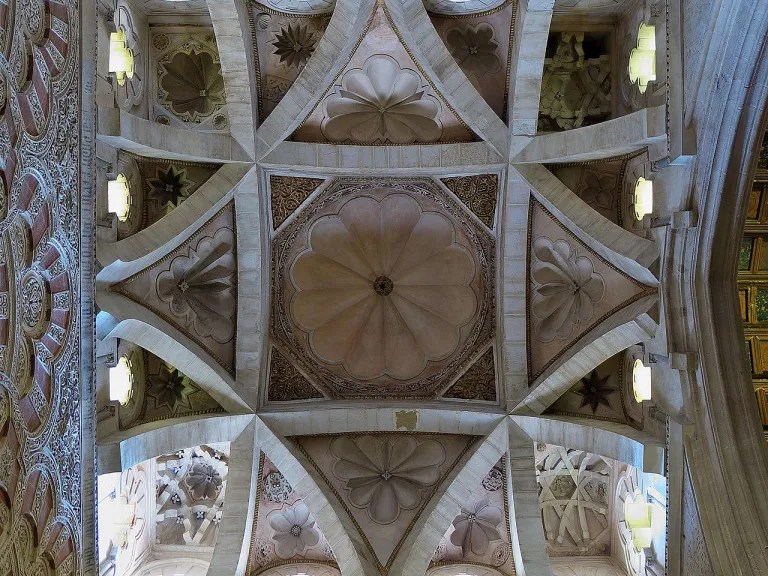
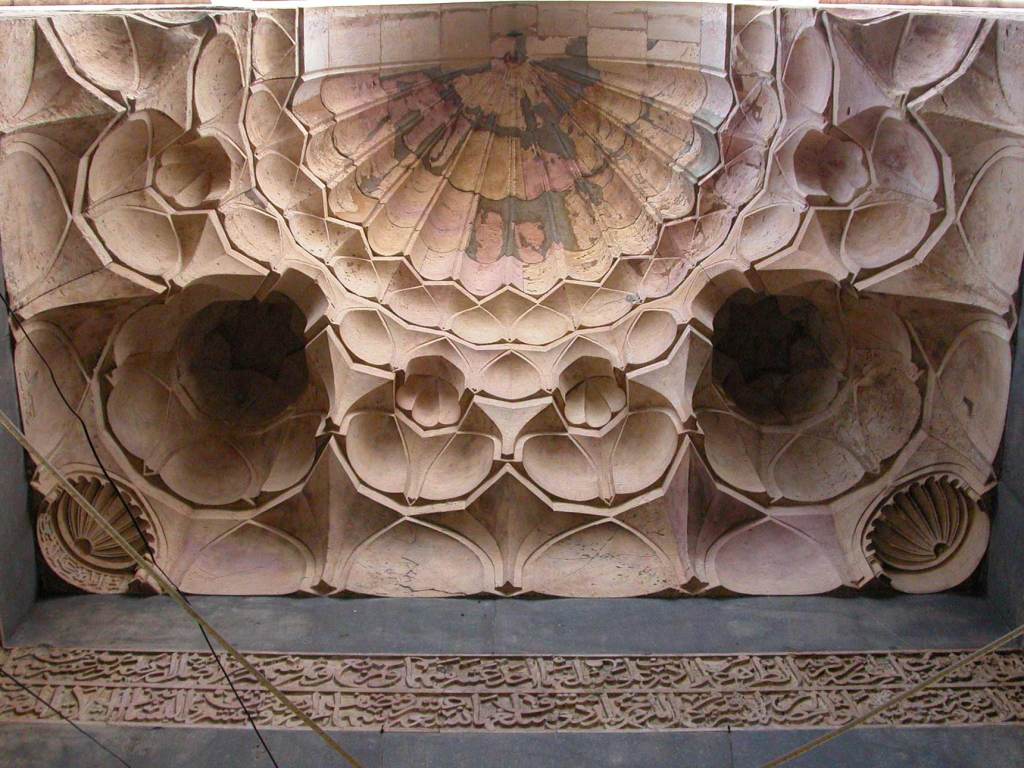
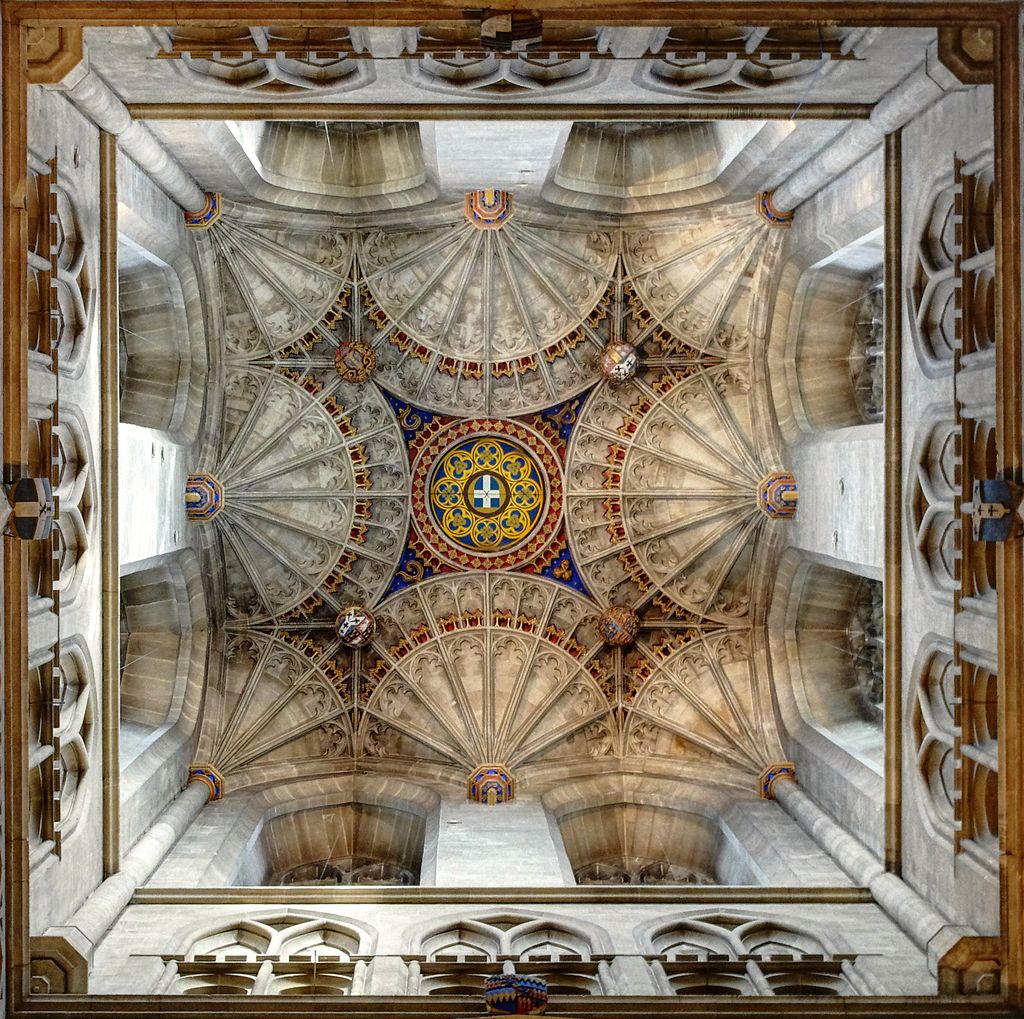
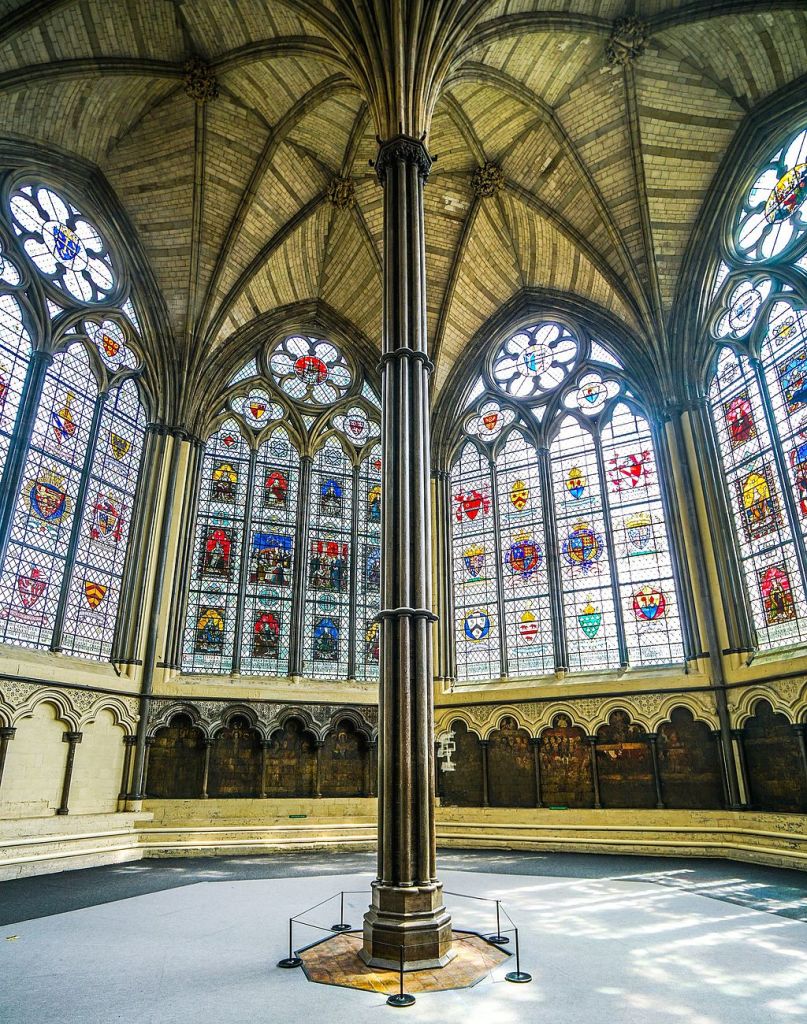
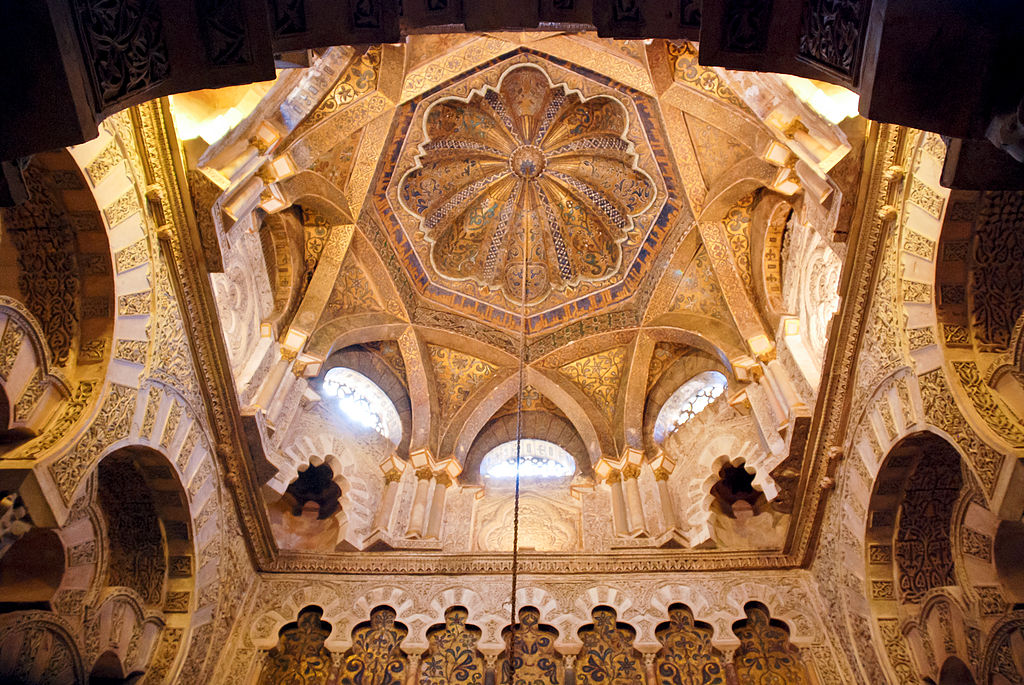
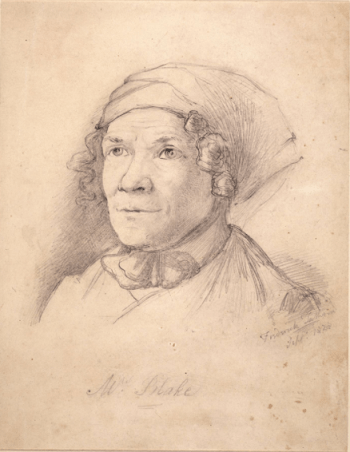
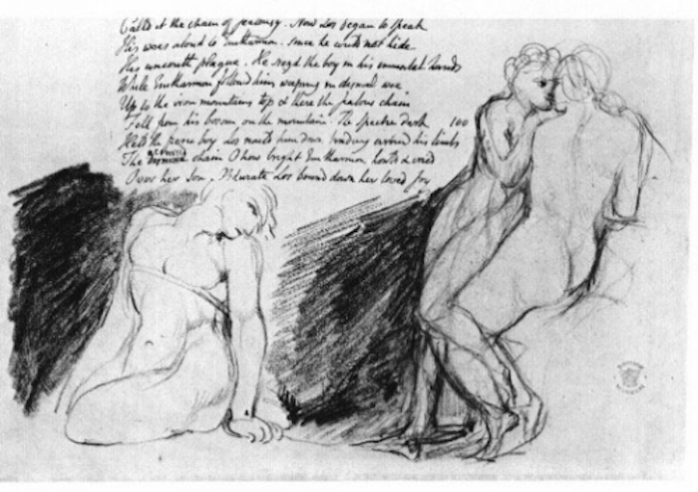
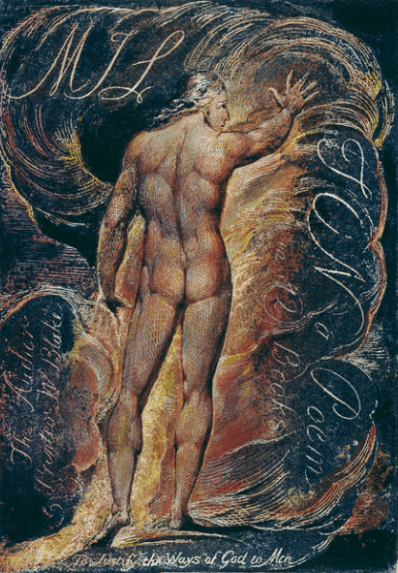
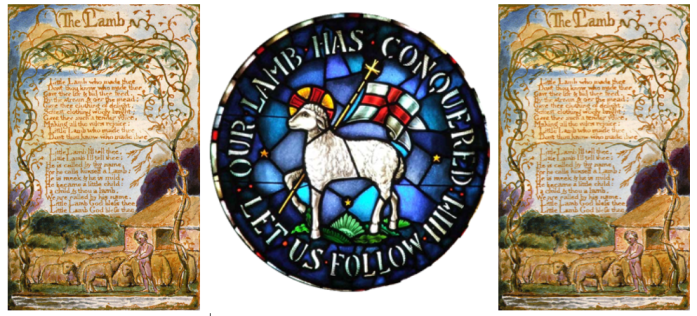
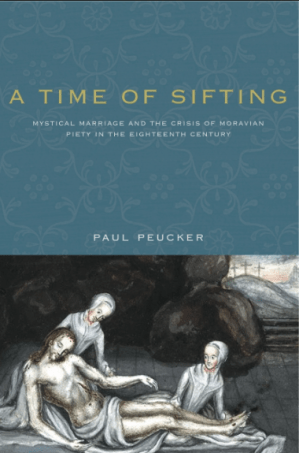
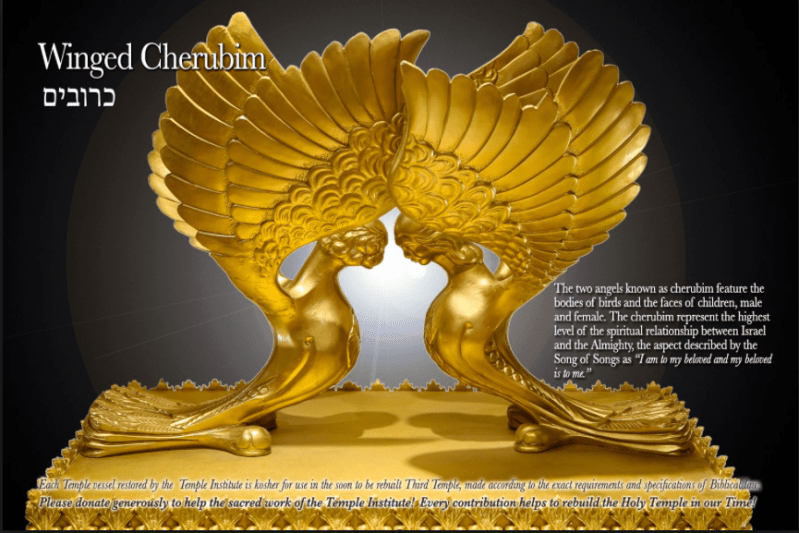
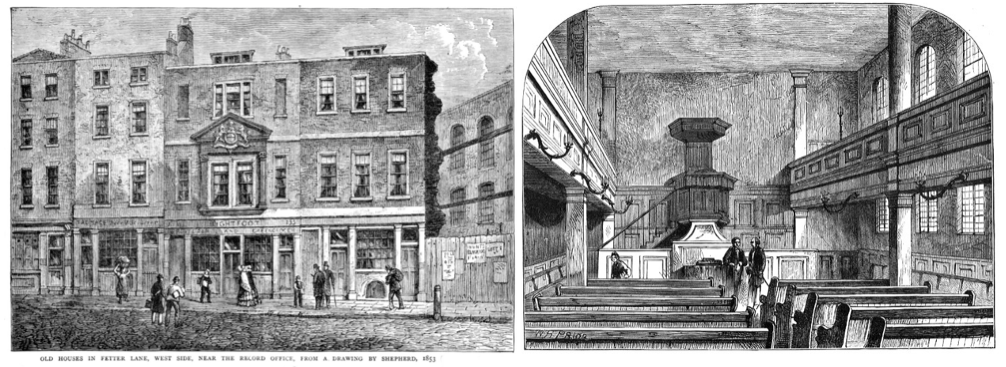
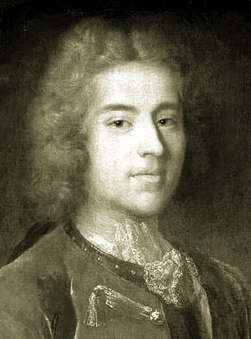
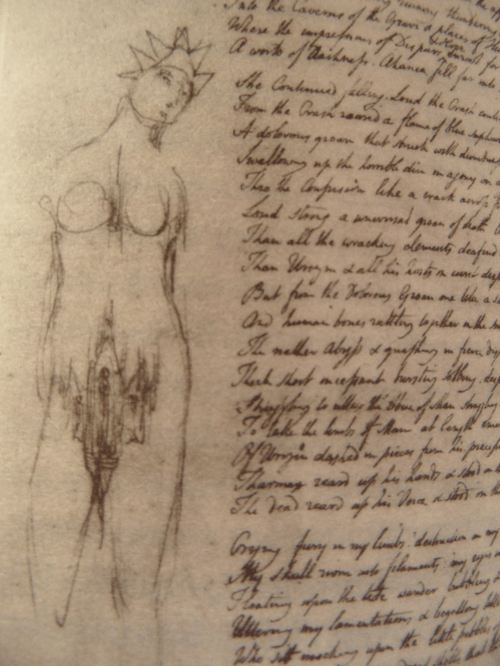
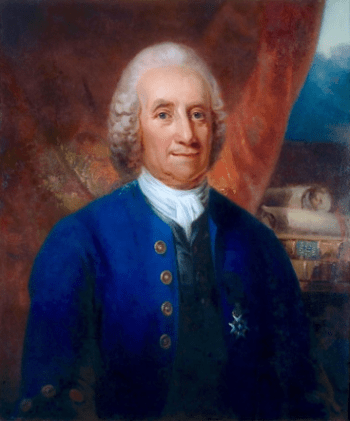
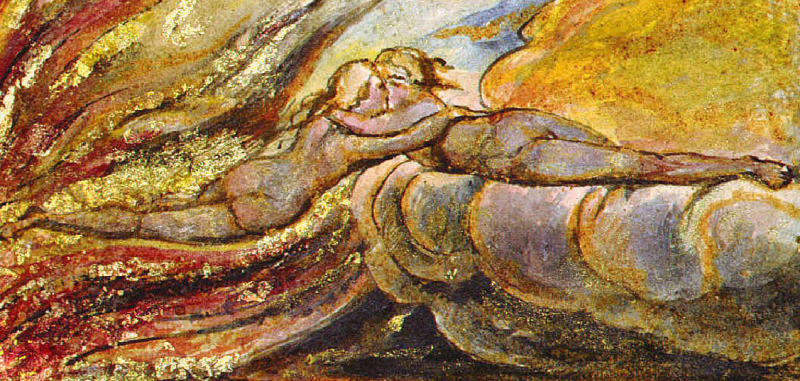
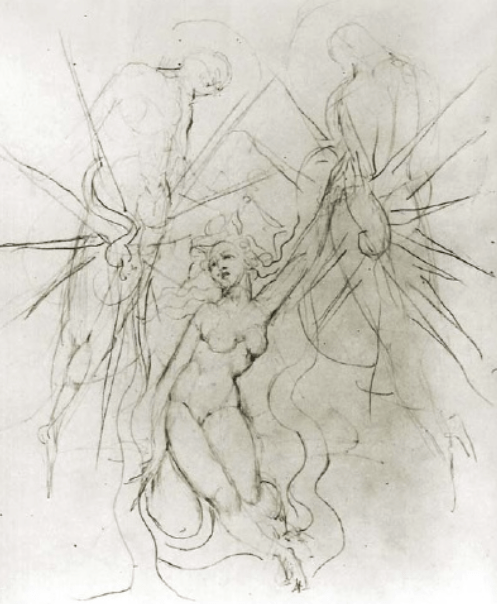
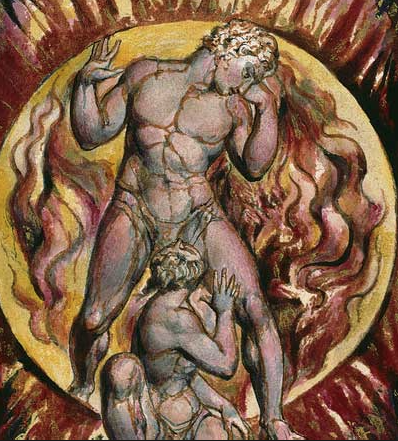
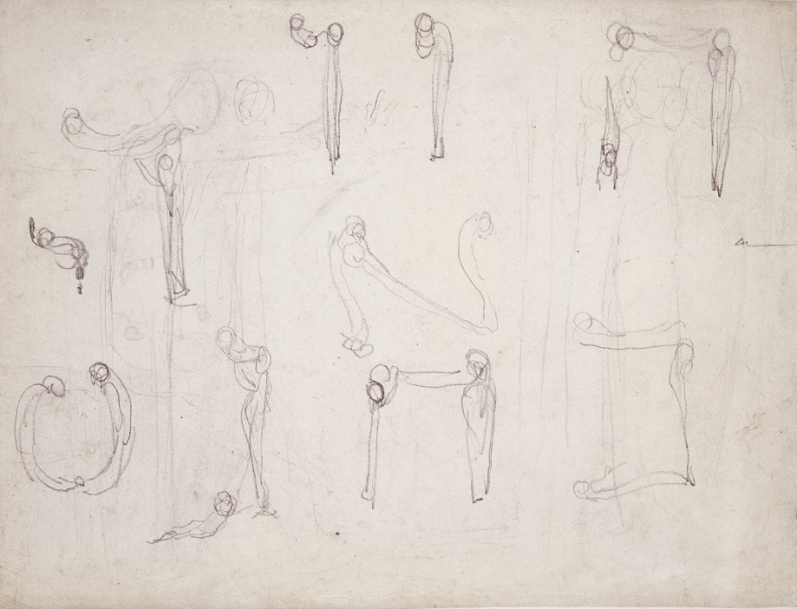
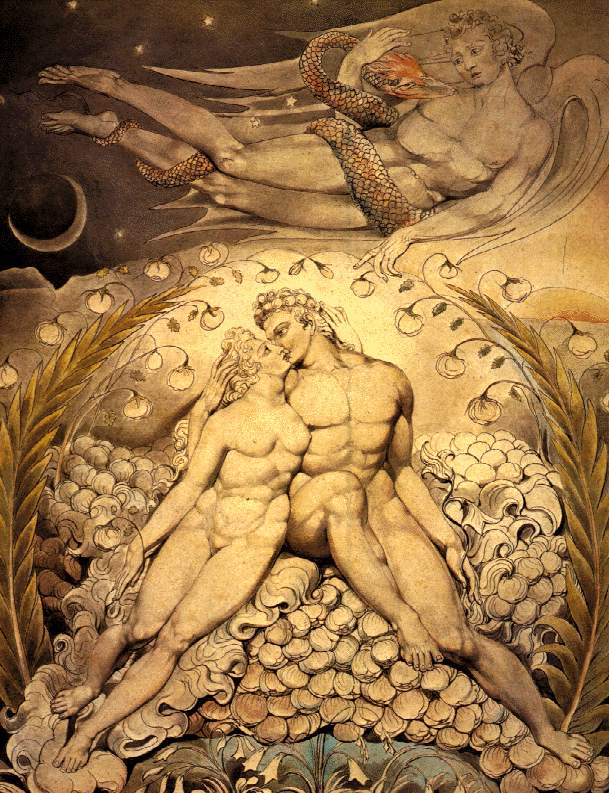
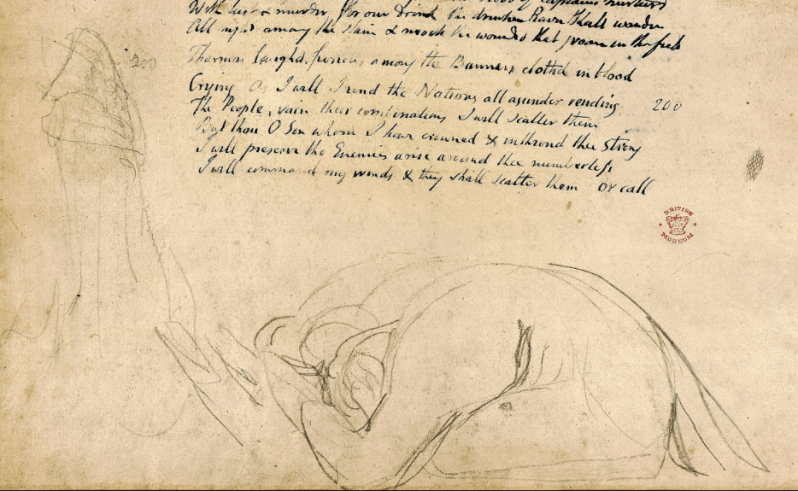
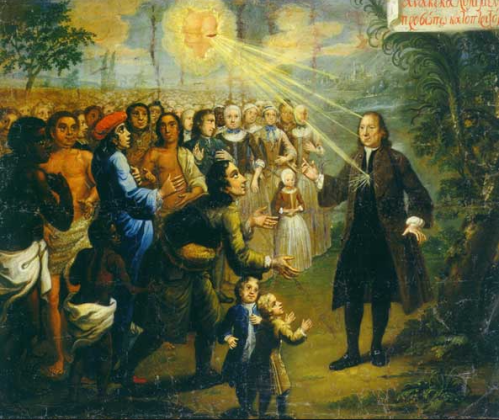
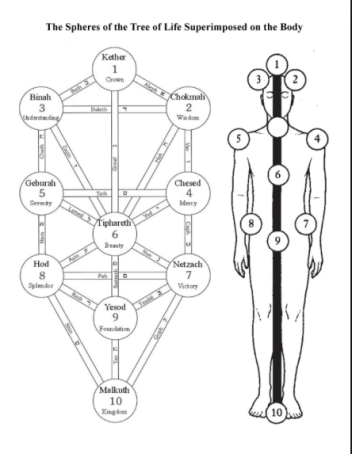
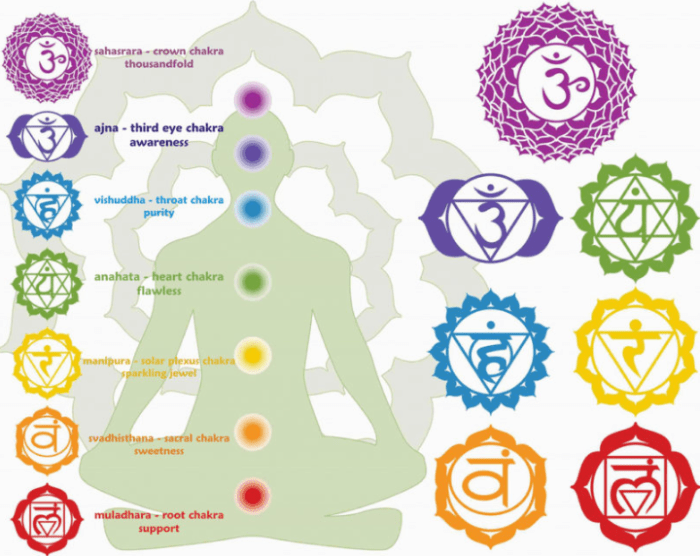
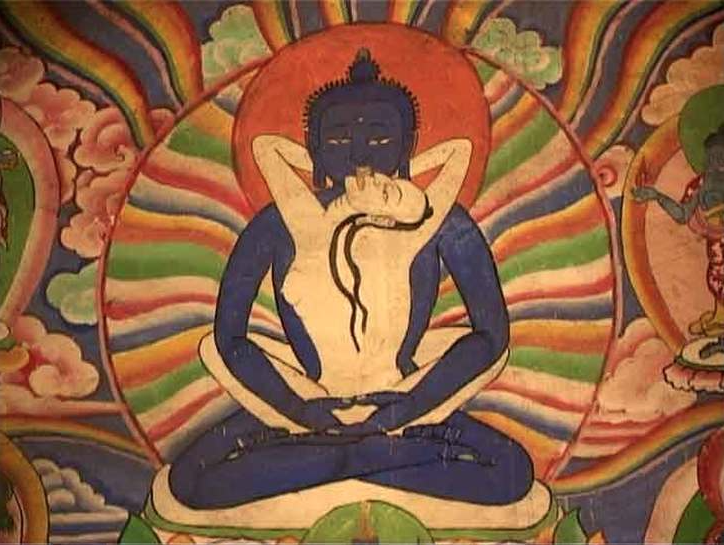
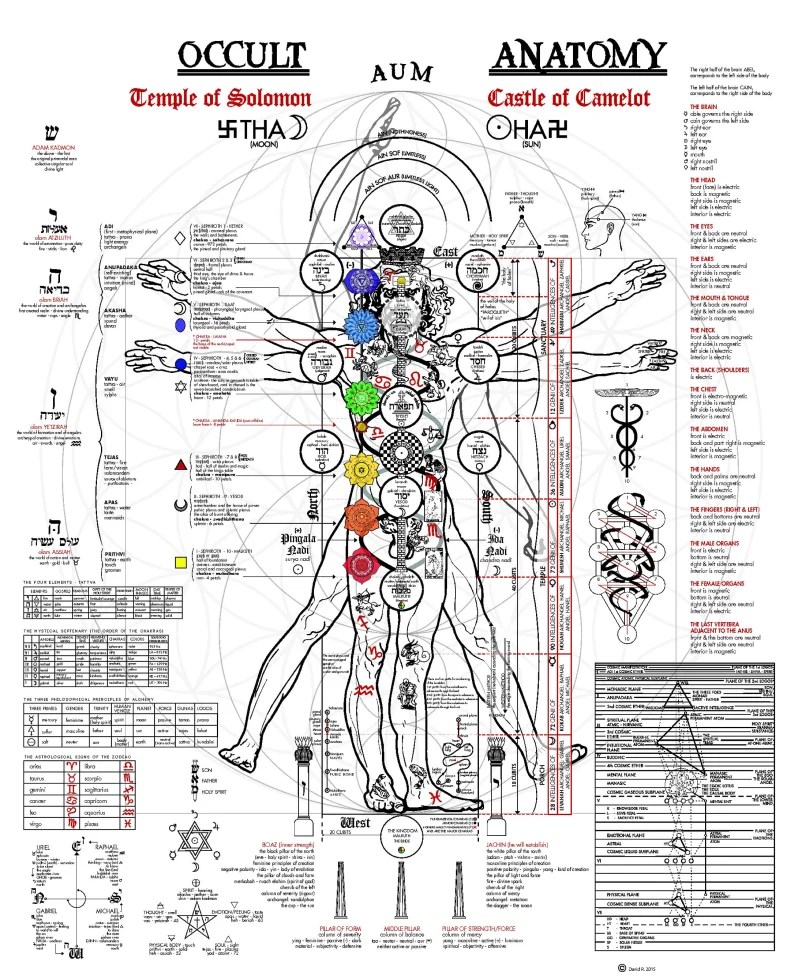
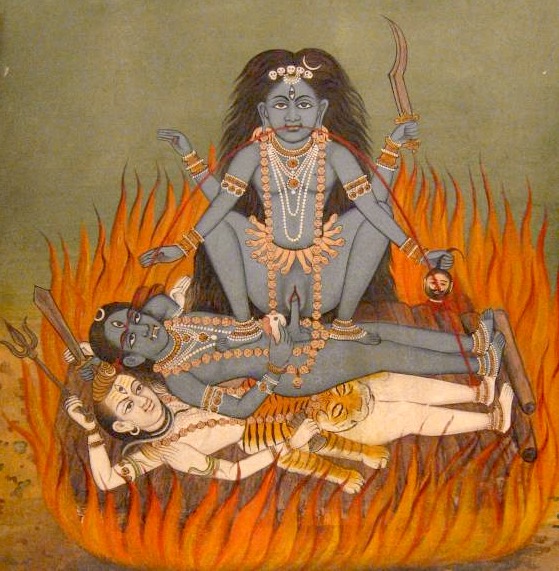
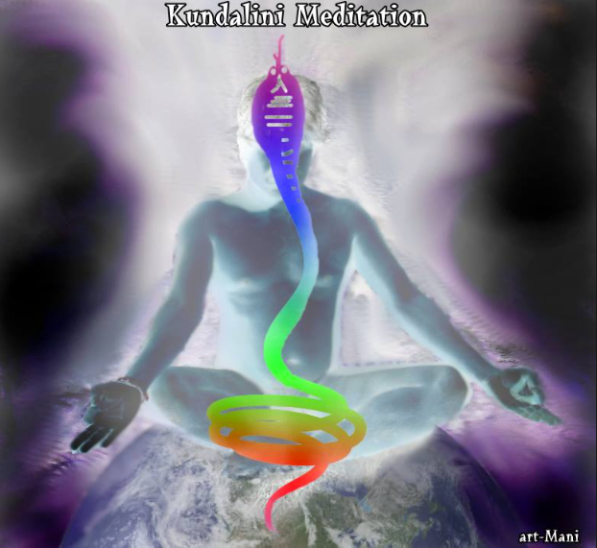
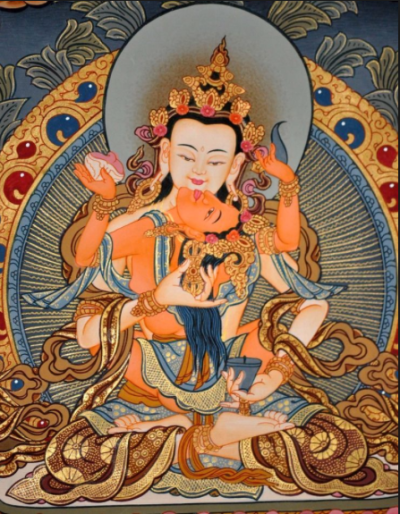
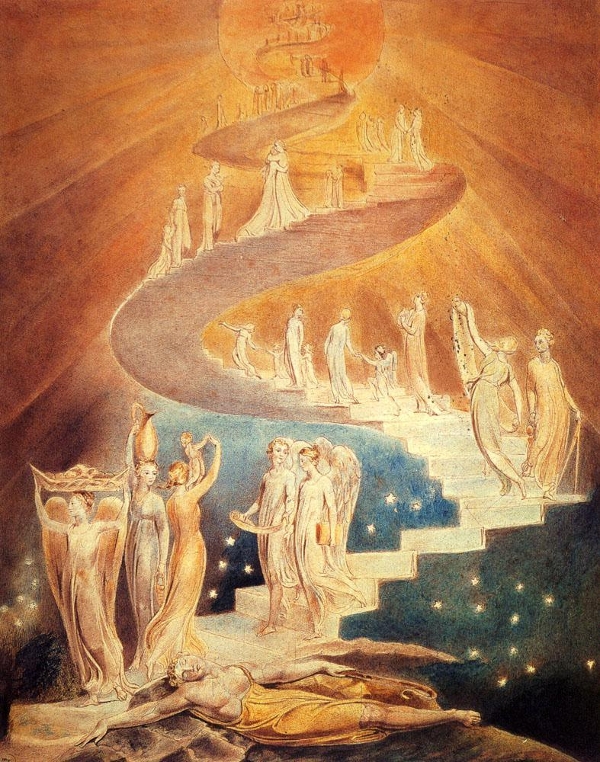
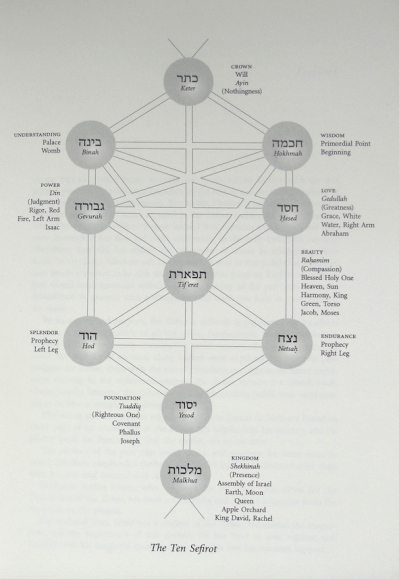
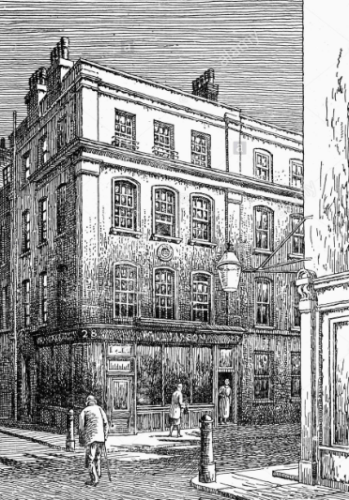

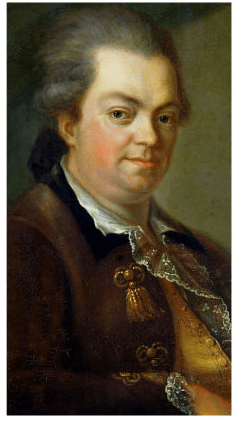
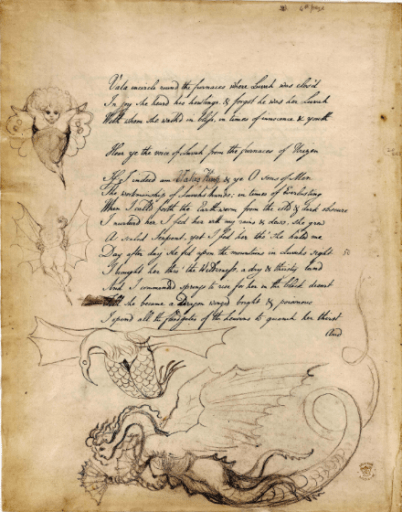
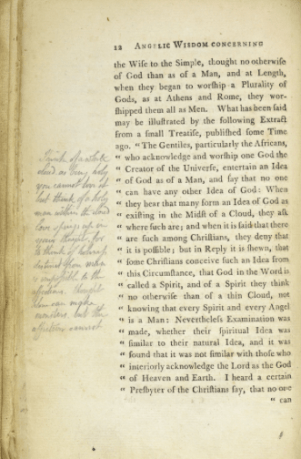
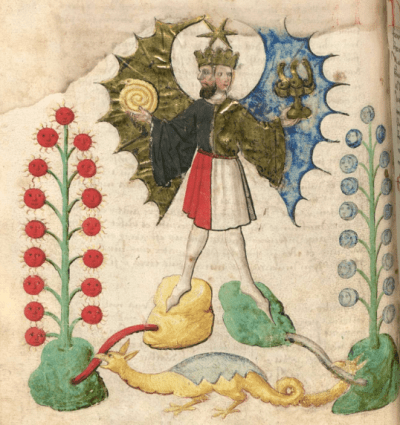
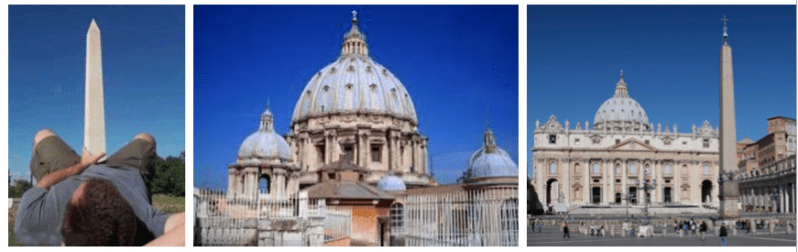
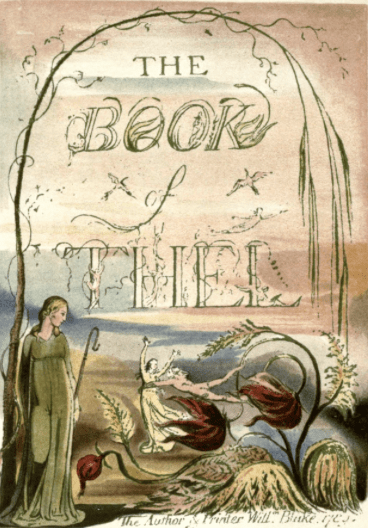
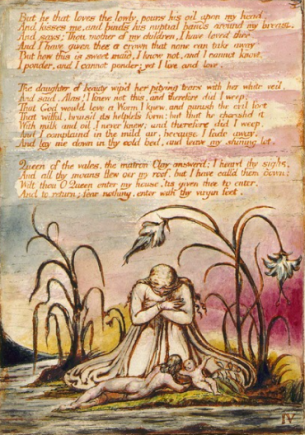
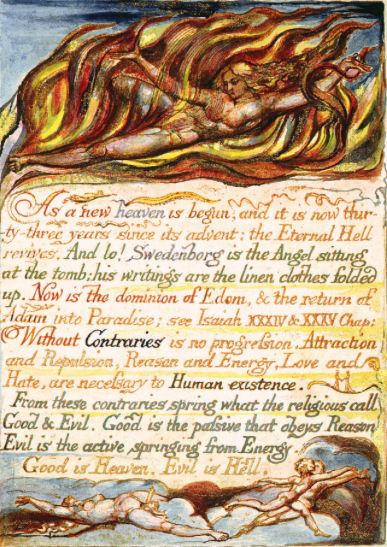
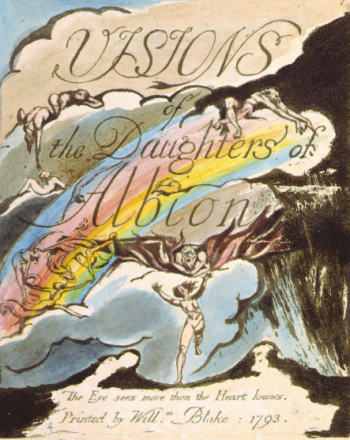
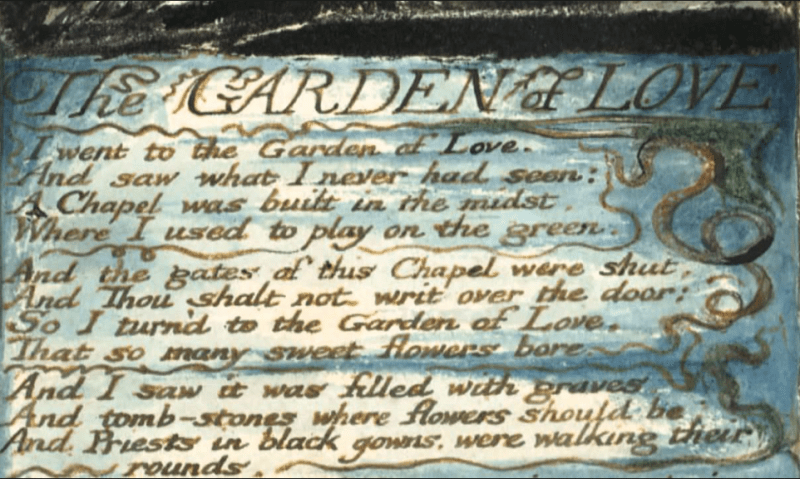
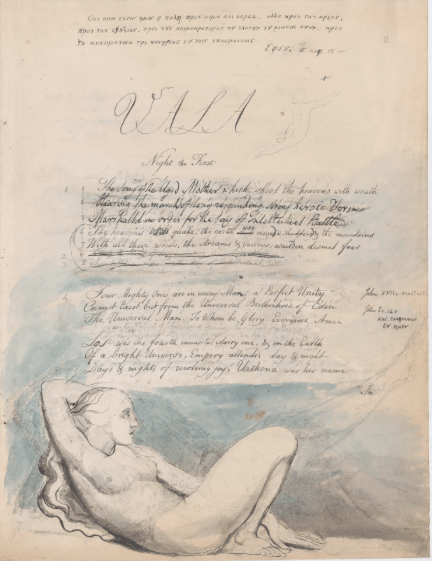
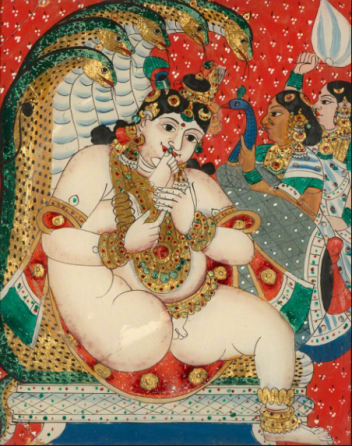
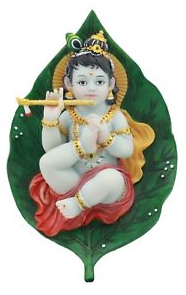
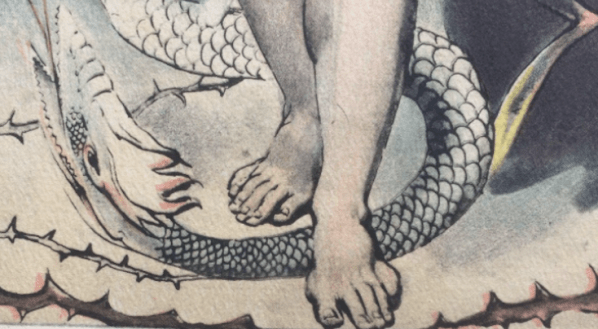

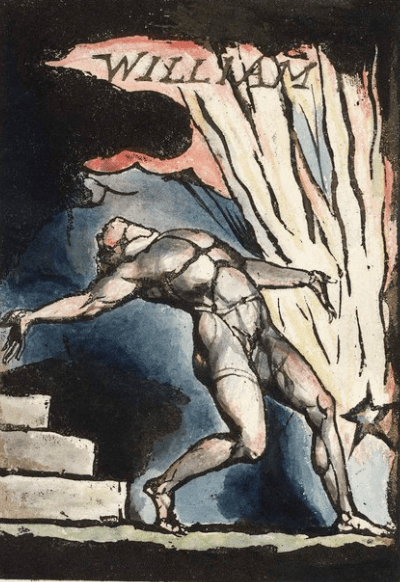
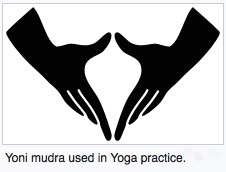
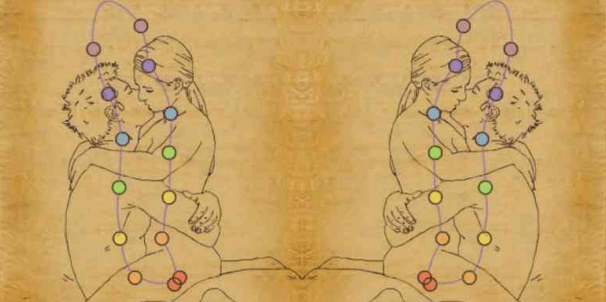
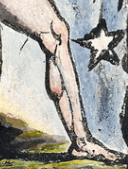
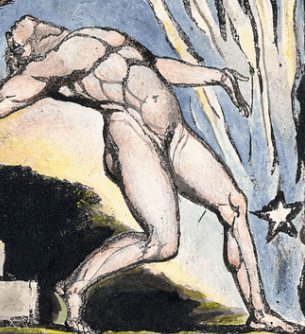
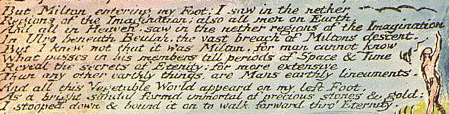
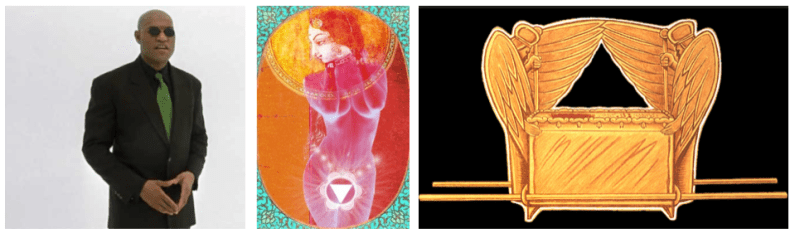
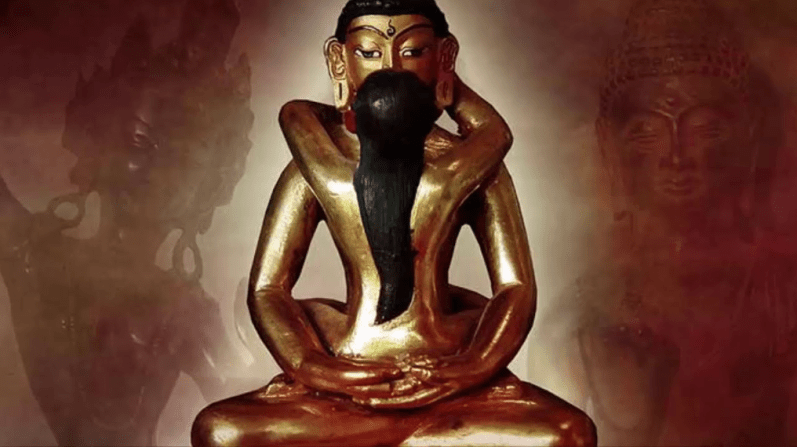
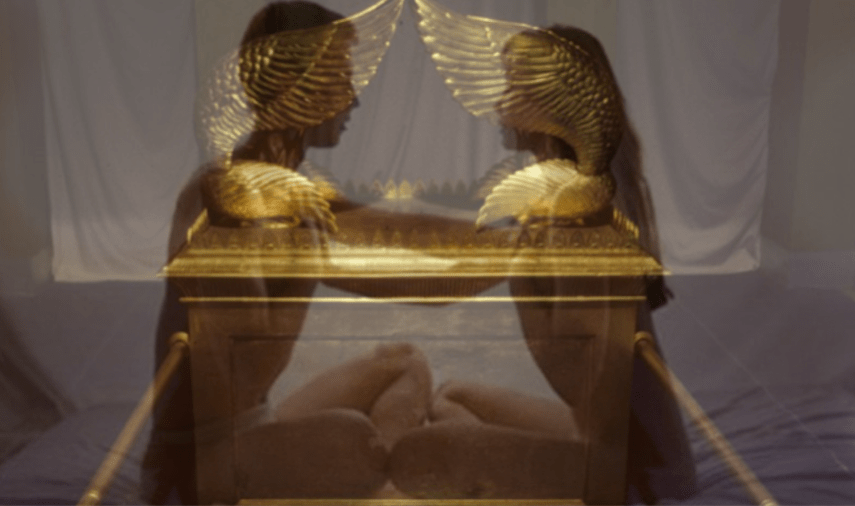
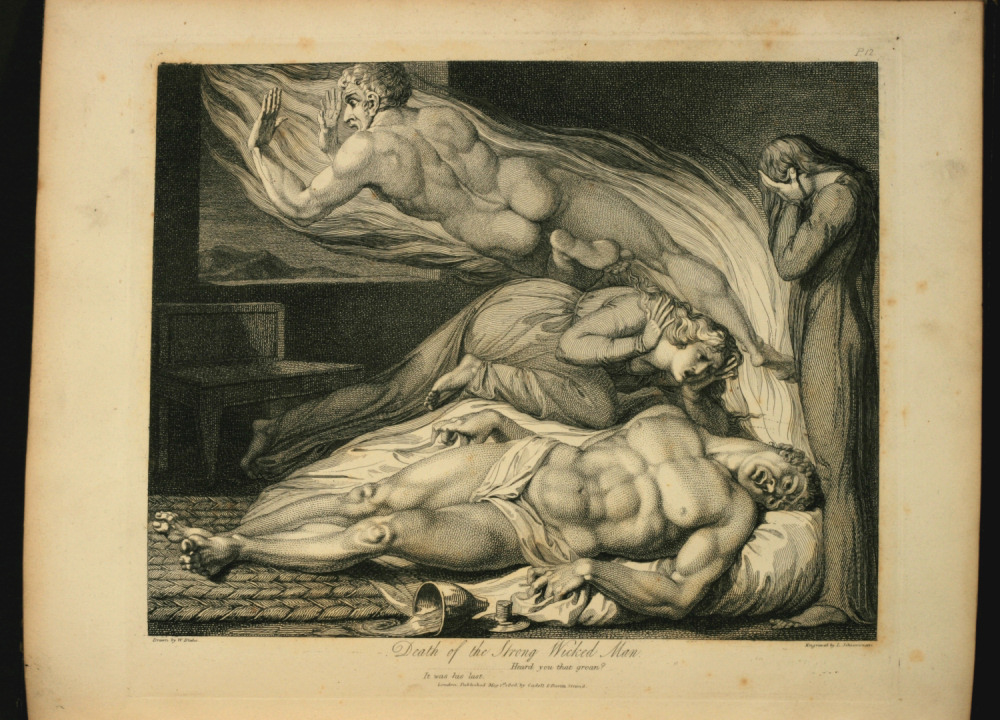
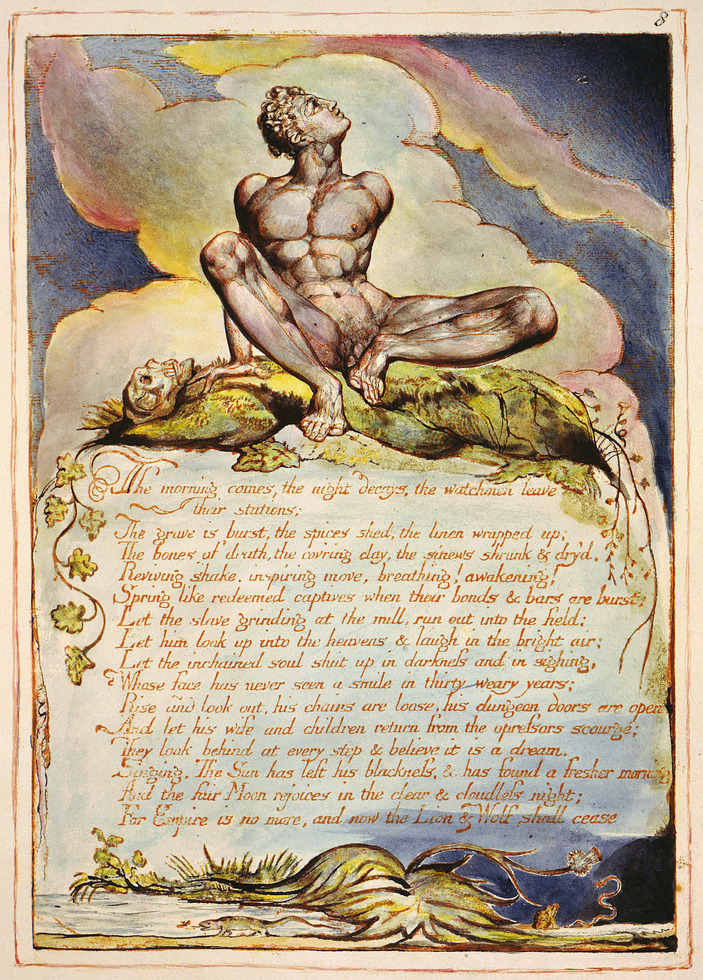
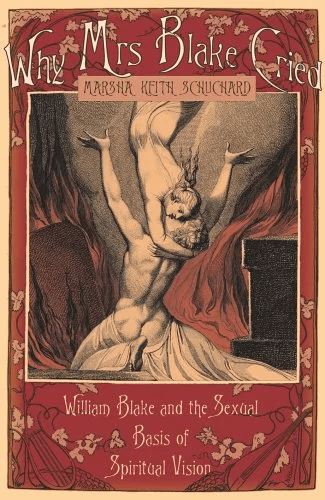
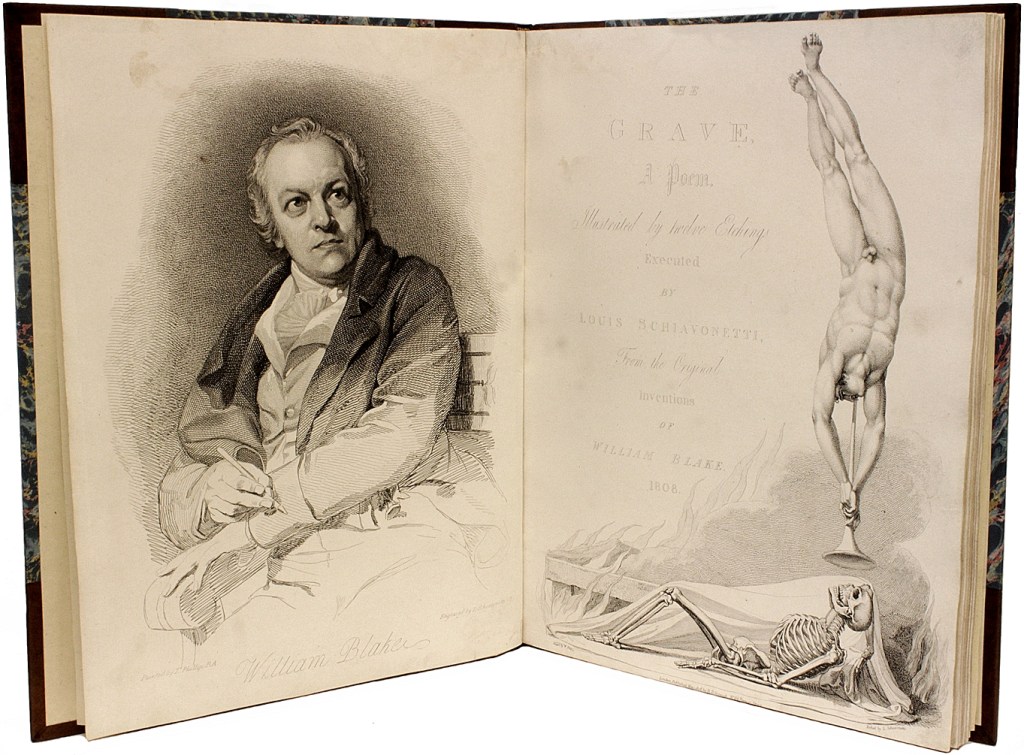
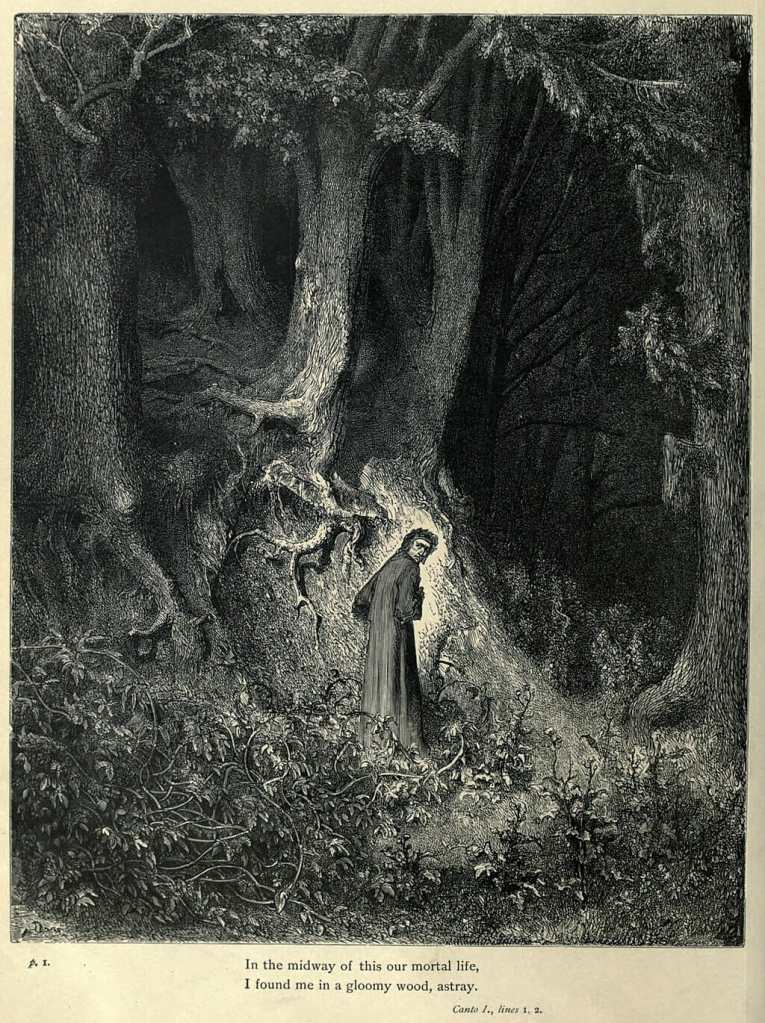
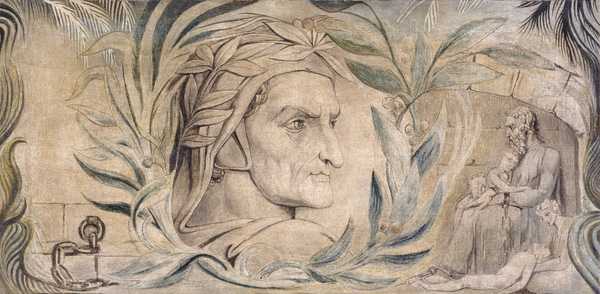
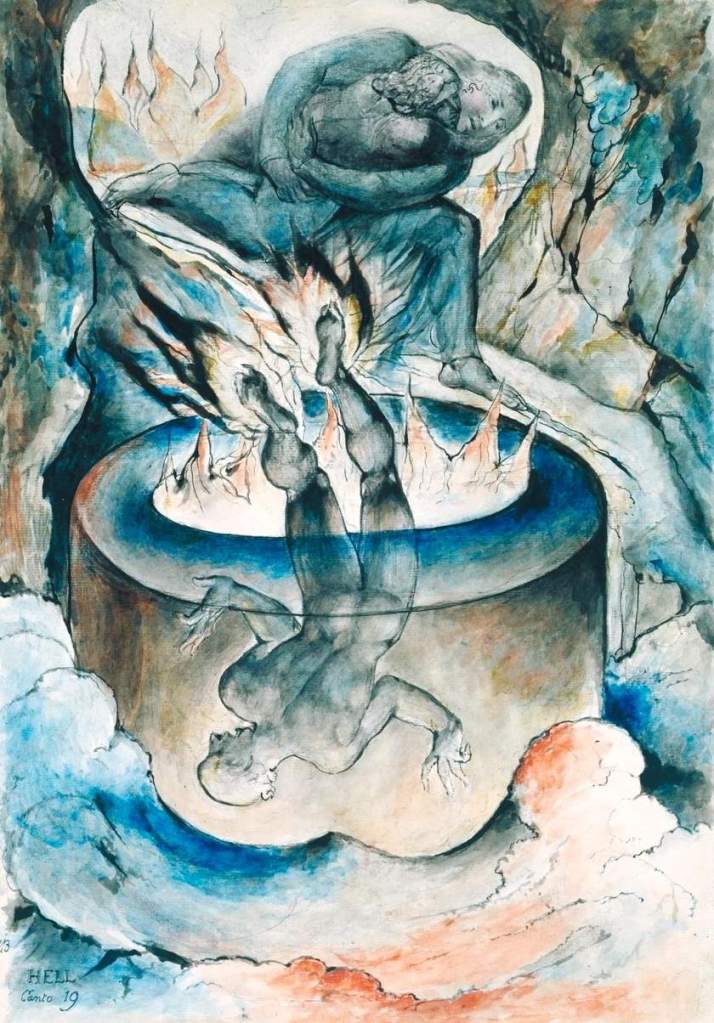


 Where Jesus arose from the tomb and ascended into heaven by his own power, Mary’s body was taken up to heaven by the power of her Son.
 In this icon, as in the sacred map of reality, a ‘diminished’ spiritual center is shown surrounded by the human or, more broadly, material cosmic nature which externally ‘surpasses’ this center, is ‘predominant’ compared to it, and is ‘bigger’ than it is.
 The depiction of Christ holding the infant Virgin in his arms describes the true proportions of the spiritual world in which the Center, the Pole of Being, the God-Word is presented not as diminished, but in its full metaphysical extent.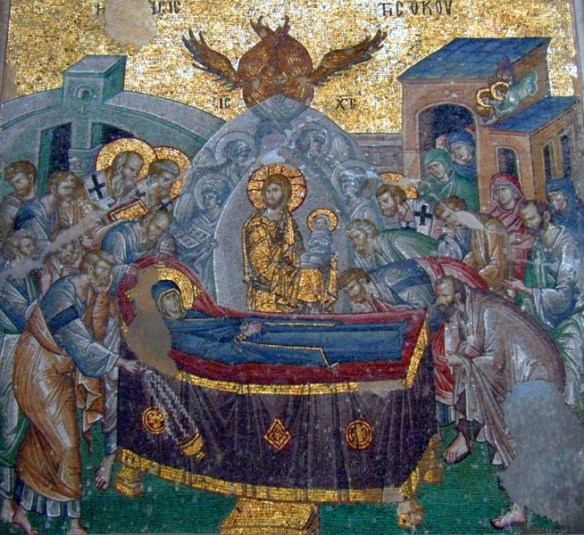
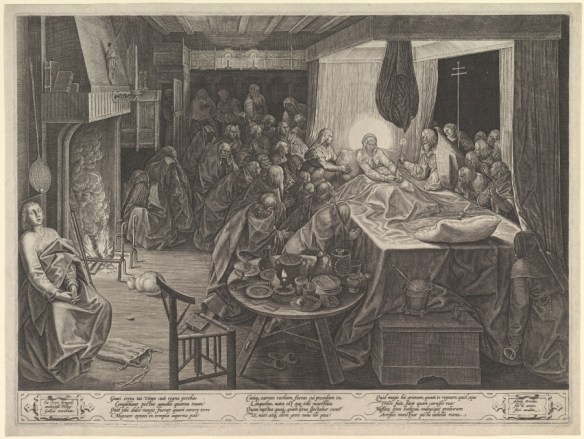
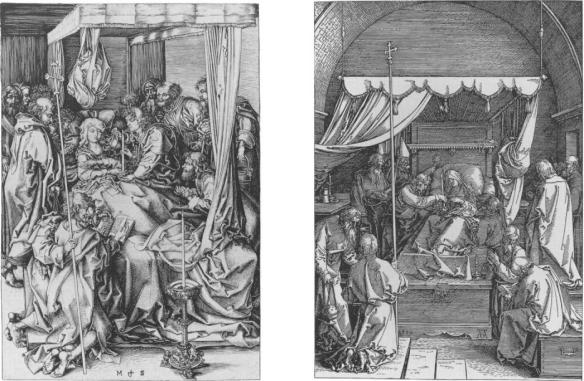

 The only inexplicable detail in his composition is the sleeping man in the left foreground. He is generally considered to be John the Evangelist, although there is no evidence to confirm this identification, nor has anyone yet convincingly accounted for why he is so conspicuously sleeping at the verg moment of the Virgin’s death.
 Only by killing earthly wisdom and the lusts and properties in his soul would man enable Christ to be reborn within himself and be united with God, thereby restoring that `oneness’ referred to at the beginning of the



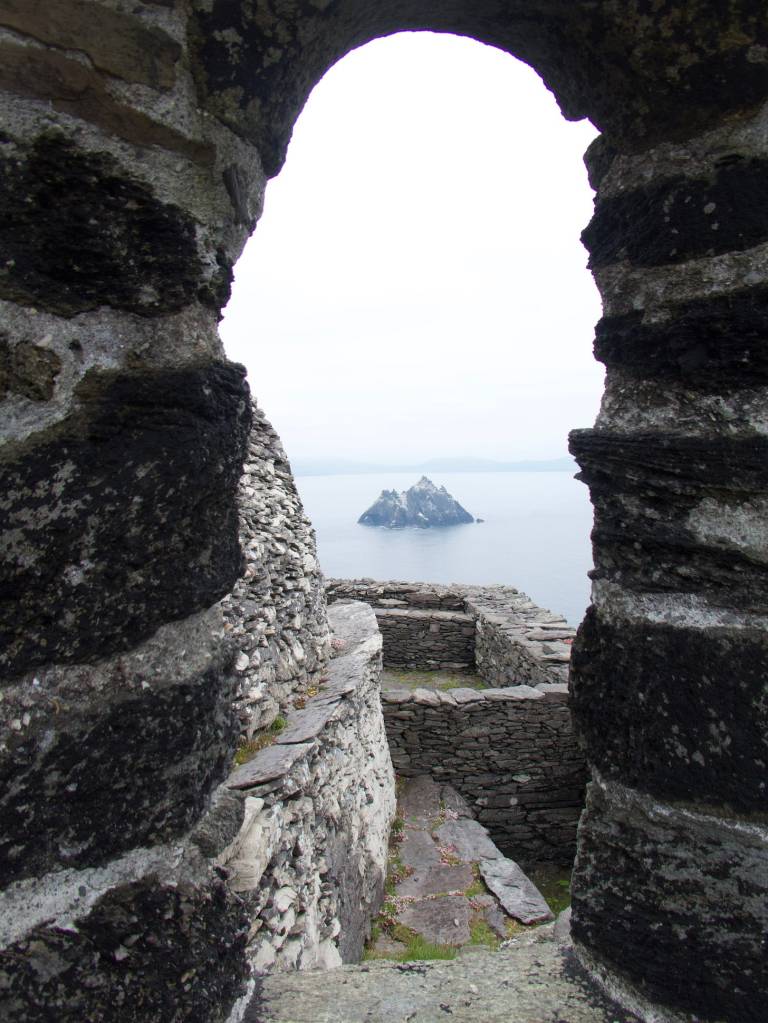
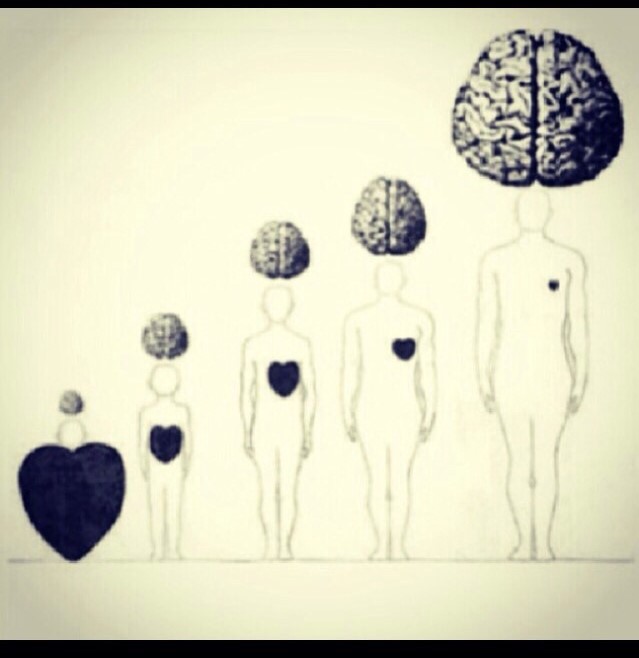
 Path to the Maypole of Wisdom