This soul whom his Lord thus addresses, describing him as “pacified, approving and approved,” He commands him – and this command is in fact an authorization, a permission and a mark of honor – to enter among His servants, those whom he expressly attributes to Himself, who have been chosen by Him. These are those who know their true relationship to servitude and Lordship, that is to say, those who know that in naming the “servant” one does not designate anything other than a particular manifestation of the Lord such as conditioned by the characteristics of the servant: the essential Reality is “Lord”, the external form is “Servant”. The servant is a “Lord” manifested in the form of a “Servant” and, in the appearance of the worshipper, it is He Himself who worships Himself.
The entrance into His paradise ( fi jannatihi ) consists for the servant [in accordance with the meaning of the root JNN] in occulting himself ( ijtinan ) in His Essence. He who achieves this has passed through the veils of creatures and divine Names. For him the illusory creaturely determinations which have reality only at the level of sensible perceptions have vanished. Were it not for these perceptions, there would be only pure, absolute Being.
Then, the creature being “enveloped” by God, its ipseity disappears – in terms of its existential status, but not in terms of permanent reality. On the contrary, when the divine Ipseity is “enveloped” by the creature, it remains in its immutable transcendence and is never affected by any change.
This divine challenge and command, however, only comes to the soul when it has passed beyond the stage of the “science of certainty” to that of the “reality of certainty,” thanks to authentic spiritual experience and perfect unveiling, and this in connection with two things.
First, this soul must have the certainty that God is a free Agent who does, in accordance with His science and wisdom, what is appropriate, as is appropriate, to the appropriate extent, at the appropriate time; with the consequence that, in whatever respect or from whatever point of view, there can be no act more perfect and wise than that, and that if the servant had access to divine Wisdom and to the knowledge of what circumstances require, he would not choose to perform any other act than that. Once the soul possesses this certainty, it reaches the station of “pleasure” with the will of Allah, it is “pacified” and the accomplishment of the divine decrees does not shake its immutable serenity.
Secondly, it must have the certainty, based on spiritual experience and intuitive revelation, that God is the sole Agent of all that proceeds from His creatures without any exception. Whether the creature plays, in relation to a given act, the role of cause, condition or impediment, it is in reality God who “descends” from the degree of His absoluteness – without ceasing to be absolute – into this form which is called condition, cause or impediment. He does what He does by means of this form. He could do without it if He wished to act without it, but such is His free choice and such is His wisdom. The act is therefore attributed at first sight to this form, whereas it really belongs only to Him, alone, without associate.
Then the soul will be “accepted” with its Lord, since from it no act can proceed, and consequently nothing can cause it to cease to be accepted. The pleasure and love of Allah for His creatures constitute the original state. It is through them that He has brought them into existence and they are the cause of this existence. He who knows that he has neither being nor doing, he finds himself in this original state of pleasure and divine love.
May Allah, by His grace and generosity, place us and our brothers among those who are included in the call of this verse! So be it!
When the soul turns to the qibla to perform the ritual prayer, he sees that the one who is directed is God, and that the one to whom he is directed is God too. When he gives alms, he sees that the giver is God, and that the receiver is God too… When he recites the Quran, he sees that the one who speaks is God, and that the one to whom he is spoken is God too. When he listens to the Quran, he sees that the Word is God, and that God is the Hearer. When he looks at something, he sees that the one looking is God and that the one looking at is God.
48- Allah is He Who sends the winds, so they raise clouds, and spread them along the sky as He wills, and then break them into fragments, until you see rain drops come forth from their midst! Then when He has made them fall on whom of His slaves as He will, lo! they rejoice!
49- And verily before that (rain), just before it was sent down upon them, they were in despair!
50- See, then, the tokens of Allah’s Mercy: how He revives the earth after it is dead. Verily He is the One Who will revive the dead. He has power over everything.
“Justice is blind.” We have all heard this phrase before, and seen the iconic representation: the blindfolded Lady Justice.
That blindfold is supposed to symbolize impartiality. It represents our strict subscription to the notion that impartiality and objectivity are the principles upon which our system is built and by which it is protected. This notion that justice is blind is one rooted in equality.
But justice should not always be blind. Rather than prioritizing equal treatment, sometimes justice demands that we treat individuals differently to ensure equal outcomes. This notion of justice is rooted in the principle of equity.
Put simply, equity takes fairness as its aim. Where equality entails the equal (i.e., impartial) treatment of individuals, equity demands a nuanced approach to ensure equal outcomes.
The Inluence of the Egyptian Feather of Ma’at on Amerind Spirituality as an Outcome of Ancient Transoceanic Voyages by Judith Mann: Read here
Allegorical images of Justice, historians of iconography tell us, did not always cover the eyes of the goddess, Justitia. In its earliest Roman incarnations, preserved on the coins of Tiberius’ reign, the woman with the sword in one hand, representing the power of the state, and the scales in the other, derived from the weighing of souls in the Egyptian Book of the Dead, was depicted as clear-sightedly considering the merits of the cases before her . Medieval images of justice based on figures of Christ, St. Michael, or secular rulers likewise provided them with the ability to make their judgments on the basis of visual evidence.
But suddenly at the end of the 15th century, a blindfold began to be placed over the goddess’s eyes, producing what has rightly been called »the most enigmatic of the attributes of justice.« Perhaps the earliest image showing the change is a 1494 wood engraving of a Fool covering the eyes o fju stice, illustrating Sebastian Brant’s Narrenschiff (Ship of Fools], which was rapidly reproduced in translations throughout Europe.
The ship of fools is an allegory, originating from Book VI of Plato’s Republic, about a ship with a dysfunctional crew. The allegory is intended to represent the problems of governance prevailing in a political system not based on expert knowledge. Benjamin Jowett’s 1871 translation recounts the story as follows, and it is still important in our times to consider:
“Imagine then a fleet or a ship in which there is a captain who is taller and stronger than any of the crew, but he is a little deaf and has a similar infirmity in sight, and his knowledge of navigation is not much better. The sailors are quarrelling with one another about the steering — every one is of opinion that he has a right to steer, though he has never learned the art of navigation and cannot tell who taught him or when he learned, and will further assert that it cannot be taught, and they are ready to cut in pieces any one who says the contrary. They throng about the captain, begging and praying him to commit the helm to them; and if at any time they do not prevail, but others are preferred to them, they kill the others or throw them overboard, and having first chained up the noble captain’s senses with drink or some narcotic drug, they mutiny and take possession of the ship and make free with the stores; thus, eating and drinking, they proceed on their voyage in such a manner as might be expected of them. Him who is their partisan and cleverly aids them in their plot for getting the ship out of the captain’s hands into their own whether by force or persuasion, they compliment with the name of sailor, pilot, able seaman, and abuse the other sort of man, whom they call a good-for-nothing; but that the true pilot must pay attention to the year and seasons and sky and stars and winds, and whatever else belongs to his art, if he intends to be really qualified for the command of a ship, and that he must and will be the steerer, whether other people like or not, the possibility of this union of authority with the steerer’s art has never seriously entered into their thoughts or been made part of their calling. Now in vessels which are in a state of mutiny and by sailors who are mutineers, how will the true pilot be regarded? Will he not be called by them a prater, a star-gazer, a good-for-nothing?
The concept makes up the framework of the 15th-century book Ship of Fools (1494) by Sebastian Brant, which served as the inspiration for Hieronymus Bosch’s painting, Ship of Fools: a ship—an entire fleet at first—sets off from Basel, bound for the Paradise of Fools. In it, Brant conceives Saint Grobian, whom he imagines to be the patron saint of vulgar and coarse people. In literary and artistic compositions of the 15th and 16th centuries, the cultural motif of the ship of fools also served to parody the “ark of salvation”, as the Catholic Church was styled.
Initially, as this engraving suggests, the blindfold implies that Justice has been robbed of her ability to get things straight, unable to wield her sword effectively or see what is balanced on her scales. Other medieval and Renaissance allegories of oceluded vision, such as those of Death, Ambition, Cupidity, Ignorance orAnger, were, in fact, uniformly negative.
The figure of the nude child Cupid, as Erwin Panofsky pointed out many years ago, was depicted blindfolded not merely because love clouds judgment, but also because »he was on the wrong side of the moral world.« By 1530, however, this satirical implication seems to have lost its power and the blindfold was transformed instead into a positive emblem of impartiality and equality before the law. Perhaps because of traditions transmitted by Plutarch and Diodore of Sicily from ancient Egypt that had depicted judges as blind or handless, the blindfold, like the scales, came to imply neutrality rather than helplessness.
According to the French scholar Robert Jacob, the explanation may also have something to do with the reversal of fortunes experienced by the symbol of the Synagogue in medieval Christian iconography. Traditionally shown as blindfolded – as well as with a broken lance – to symbolize her resistance to the illumination of divine light, the Synagogue was negatively contrasted with the open-eyed Church as in the famous early fourteenth-century statue on the south gate of Strasbourg Cathedral.
Since the 16th century, Lady Justice has often been depicted wearing a blindfold. The blindfold was originally a satirical addition intended to show justice as blind to the injustice carried on before her,[5] but it has been reinterpreted over time and is now understood to represent impartiality, the ideal that justice should be applied without regard to wealth, power, or other status. The earliest Roman coins depicted Justitia with the sword in one hand and the scale in the other, but with her eyes uncovered.[6] Justitia was only commonly represented as “blind” since the middle of the 16th century. The first known representation of blind Justice is Hans Gieng’s 1543 statue on the Gerechtigkeitsbrunnen (Fountain of Justice) in Bern.[7]
Instead of using the Janus approach, many sculptures simply leave out the blindfold altogether.
For example, atop the Old Bailey courthouse in London, a statue of Lady Justice stands without a blindfold; the courthouse brochures explain that this is because Lady Justice was originally not blindfolded, and because her “maidenly form” is supposed to guarantee her impartiality which renders the blindfold redundant.
Another variation is to depict a blindfolded Lady Justice as a human scale, weighing competing claims in each hand. An example of this can be seen at the Shelby County Courthouse in Memphis, Tennessee.
Justice as a Sign of the Law: The Fool Blindfolding Justice
The first image, known as “The Fool Blindfolding Justice” from Sebastian Brant’s Ship of Fools, comes from the 1497 Basel edition and is sometimes attributed to Albrecht Dürer. The 1509 London edition offers a close copy. The woodcut was one of a hundred illustrations for this popular book, subsequently printed in many languages.
The scene is one of the earliest known to show a Justice with covered eyes. The deployment is derisive, evident not only from the fool but from the chapter that the illustration accompanied, which was entitled “Quarreling and Going to Court.” Brant, a noted lawyer and law professor, prefaced the book with a warning against “folly, blindness, error, and stupidity of all stations and kinds of men.” The 1572 version is all the more insistently negative; in this rendition, the fool has pushed Justice off her throne as he covers her eyes.
However, a blindfolded judge was not a symbol of impartiality then, but rather, of a not very bright judge. A person who couldn’t or wouldn’t see reality was not one in a position to make wise judgments. Indeed, the blindfolded person was a symbol of a fool. A 1497 edition of Sebastian Brant’s ShipofFools depicts a court jester, a fool, blindfolding Lady Justice, bringing her down to his level. A 16th century work concerning the criminal law and municipal ordinances for the city of Bamburg takes the image a step further. In this book, a woodcut entitled TheFoolBlindfoldingJustice depicts four blindfolded judges, wearing jesters’ caps, with the caption, “Out of bad habit these blind fools spend their lives passing judgments contrary to what is right.”
Blind Justice Was Not Always Just – An Exhibition at the Yale Law Library
Still, it was during the 16th century that we began to see blind justice as representing honesty and impartiality, rather than stupidity and corruption. Andrea Alciati’s 1582 Operaomnia shows the central figure at a tribunal as blindfolded, apparently representing fairness. Interestingly, his colleagues are without hands, to show they have received no bribes. This nice touch for showing honesty never caught on. Perhaps one Venus de Milo is enough. By the 18th century, the modern interpretation of blind justice fully takes hold. The pieces displayed in this exhibition run from the negative of Brant’s ShipofFoolsin 1497 through 1788. By then, the images have reversed their meaning. The exhibit is curated by Judith Resnik (Arthur Liman Professor of Law), Dennis Curtis (Clinical Professor of Law Emeritus), Allison Tait (Postdoctoral Associate) and Mike Widener (Rare Book Librarian). It will be held in the Rare Book Exhibition Gallery of the Lillian Goldman Law Library of the Yale Law School.
— Behind the Picture: Sol Justitiae by Albrecht Dürer
Albrecht Dürer, Sol Justitiae (or The Judge), 1499, 4.25 x 3,” Engraving.
Nearly every era, including our own, has its share of apocalypse theories and end-of-days false alarms. But amidst the death and disease of the Middle Ages and early Renaissance, it’s easy to imagine how tangible worldwide mortality must have felt to the general public. As a result, Judgement Day is a prominent motif in art of the period. This engraving by Albrecht Dürer, acquired by Josef Glimer Gallery from a private collection in Austria, marks one of the artist’s many explorations of the world’s end. It was created in 1499, the year all Jews— a perpetually-massacred scapegoat for the Black Plague— were expelled from Dürer’s hometown of Nuremberg. It was also the year the Emperor’s army was defeated in the Swiss War and the year that astrologers, perhaps responding to all the tumult, convinced many to move to high ground with predictions of an apocalyptic deluge.
Despite its small size, leading Dürer scholar Erwin Panofsky deemed Sol Justitiae one of the artist’s most impressive creations.The engraving is inspired by this caption from Petrus Berchoius’ Repertorium Morale, a Biblical-moral reflective text intended for preachers, given to Dürer by his godfather:
“The Sun and Righteousness shall appear ablaze when he will judge mankind on the day of doom, and he shall be burning and grim. For, as the sun burns herbs and flowers in the summertime when he is the Lion, so shall Christ appear as a fierce and lion-like man in the heat of Judgement and shall wither the sinners.”
Dürer’s engraving creatively combines pagan, astrological and Biblical symbols. The central figure sitting on a lion is at once Christ, the Roman goddess of justice Justitia, and the ancient sun god, called Helios by the Greeks and Sol by the Romans. He holds Justitia’s scales and a double edged sword, but unlike the traditionally blindfolded goddess, his eyes— wide and confrontational— see all. His legs are crossed, the customary sitting position for judges in ancient law books and a stance adopted in many other Renaissance depictions of leaders. His mask is composed of three prongs of flame. While this number suggests the Christian Trinity, its beaming rays are a strong gesture toward Sol.
The duality of the Christ figure in this piece may also be influenced by ancient Roman coins, which sometimes featured overlapping profiles of emperors and gods to convey the idea that the emperor could become geminatapersona—”human by nature and divine by grace.”
The lion not only suggests biblical excepts comparing Christ to a lion but also Leo, the sign of the zodiac for July, when the sun is at its most intense. Berchorius suggests that the justice of Christ on Judgment Day will be as powerful as the July sun.
The fabulous history of the linden tree
It’s a tree. But not just any tree. It is the linden tree, a sacred and universal tree.
Revered since ancient times, used for centuries, loved throughout the world, the linden tree is par excellence the tree of abundance, the most beneficent tree in existence. This universality is no accident. This tree that wishes us well has lived with mankind since time immemorial, and its history is as rich and abundant as its virtues. Its benefits spread like no other on the mind, body and skin, and its fragrance is a real feast for the senses. So much so that mythology and literature have taken hold of this soothing colossus with exceptional longevity. Read here more
Sacred Trees of Slavs: Linden
Slavs know linden as a tree that absorbs curses sent by women towards men; that’s why in some areas it is believed to be a cursed and unlucky tree; however, in other places it is considered to be a gentle tree that would listen to all your troubles. Ukrainians plant it near fences so that it would absorb jinxes and curses. If linden tree by the house dried out, people expected bad news for the house and the family. The one that cuts down a linden tree would definitely get lost in the woods.
Linden blossom is widely used in love and healing magic (it is a natural fever reducer). In folk medicine, linden blossoms were used to treat cold and cough, fevers, kidney and bladder inflammations, stomach spasms, and neurosis. Linden leaves applied to the head treat headaches. Powdered leaves and seeds of linden help stop bleeding. Fresh leaves and buds soothe burns and mastitis. Linden blossoms are added to aromatic baths. Blond hair shines if rinsed with infusion of linden blossoms. Collect it on Waxing Moon, at noon.
The Slavic name for linden “lipa” derives from the word “lipnut”, i.e. to stick, for its juice was known for being sticky. Linden was associated with femininity and softness, qualities opposite to the ones of the “masculine” oak. Aside from its association with women, Slavs honored linden as “mother of trees”, giver of life – for linden bark could be used to make shoes and ropes, its wood is good for making household objects, and honey that bees make out linden flowers is believed to have healing properties as linden blossoms help reduce fever and induce sweating. Linden is frequently associated with qualities of Goddess Lada. In Russian folk art and lore beautiful linden was a lover of oak or maple (both symbols of masculinity).
In Slavic Christianity, linden was believed to be the tree of Mother Mary. People thought that whenever Mother Mary descends from Heavens upon earth, she rests upon a linden tree. Icons and holy images were hung upon this tree; according to Christian legends, the miracle-making icons most frequently appeared upon lindens. One version of a legend of Mother Mary’s and baby Christ’s escape to Egypt states that it was linden that hid the Holy Virgin and Her Child with its branches.
All Slavs considered linden a “holy”, “blessed” tree. Southern Slavs constructed their churches and temples near linden trees, or alternatively, planted a tree nearby once the church was built. These old large lindens served as courthouses and places of public gatherings and celebrations. Ritual processions stopped under linden trees, ritual feasts were held there, as well.
Linden was considered a lucky tree that people grew near their homes and planted at the graves. Sleeping under a linden tree was considered beneficial. However, in Ukraine, old lindens with many “knobs” on the trunk were avoided for contact, as the “knobs” were believed to appear from wives’ cursing their husbands. Linden’s power to absorb curses and protect men deemed it to be a good tree to grow near the property fence, but not extra-close to the house – so that the curses it absorb would not fall on the heads of people that lived in the house. By growing near a fence, the linden was also believed to absorb the ill wishes towards the family from people who happened to walk by. Linden branches were also never used to whip the domestic animals – they would die from that.
One of the reasons for sacredness of linden is common use of its dry wood to start a “living fire”, i.e. fire produced by rubbing two dry sticks. In this way, fire had been annually renewed in village hearths.
Harming a sacred linden in any way was a taboo: the tree or its branches could not be cut; people could not even “take care of their natural needs” under such tree. It was believed that the one who breaks a branch of linden would lose a horse to illness; however, the horse would recover, if the wrongdoer returned the branch. Poles did not cut lindens down out of fear of death to the one who cut the tree or one of his family members.
Linden was used as a protective charm. All Slavs believed that lightning could not strike linden and were not afraid to hide beneath its branches during a thunderstorm. Russians hung linden crosses around a neck of a person suffering with delusions. In Russia, linden branches were also stuck in the middle of the pasture while the cattle was grazing, so that the cows would not wonder off or be killed by wild animals. All Russians, thought that a witch loses her power of shapeshifting if one hits her hard with a linden branch. At the same time, Ukrainians believed that witches transform themselves into animals and objects by jumping through a circle woven out of linden bark. A swipe of a linden branch was considered to ward off a persistent demon (Chort). In Herzegovina, a branch of linden was held over the heads of the newlywed at a wedding ceremony for protection. Linden branches adorned houses and corrals on Yurii’s Day (St. George’s Day) and on Trinity Day.
As many other trees, linden was important for healing and folk medicine: various illnesses were transferred upon it. For this, bits of clothing from the ailing person, his or her hair and nail trimmings were tucked or nailed into its trunk. Sick people and cattle were censed with smoldering basswood. Linden blossoms (see above) are used in many fever-reducing teas.
A linden dying in the garden is considered a bad omen. It would not be surprising, for people thought with its death, they would lose their protection, as well as the source of many useful materials, medicinal aid, and food (linden honey).
Lime tree in culture and Justice
“Under the Village Linden Tree” a 16th century engraving by Kandel
Originally, local communities assembled not only to celebrate and dance under a linden tree, but to hold their judicial thing meetings there in order to restore justice and peace. It was believed that the tree would help unearth the truth. Thus the tree became associated with jurisprudence even after Christianization, such as in the case of the Gerichtslinde, and verdicts in rural Germany were frequently returned sub tilia (Unter der linden) until the Age of Enlightenment.
Slavic mythology
In old pagan Slavic mythology, the linden (lipa, as called in all Slavic languages) was considered a sacred tree.[1] Particularly in Poland, many villages have the name “Święta Lipka” (or similar), which literally means “Holy Lime”. To this day, the tree is a national emblem of the Czech Republic, Slovakia, Slovenia, and Lusatia.[citation needed]Lipa gave name to the traditional Slavic name for the month of June (Croatian, lipanj) or July (Polish, lipiec, Ukrainian “lypen’/липень”). It is also the root for the German city of Leipzig, taken from the Sorbian name lipsk.[2] The former Croatian currency, kuna, consisted of 100 lipa (Tilia). “Lipa” was also a proposed name for Slovenian currency in 1990, however the name “tolar” ultimately prevailed.[3] In the Slavic Orthodox Christian world, limewood was the preferred wood for panel icon painting. The icons by the hand of Andrei Rublev, including the Holy Trinity (Hospitality of Abraham), and The Savior, now in the State Tretyakov Gallery in Moscow, are painted on linden wood. Its wood was chosen for its ability to be sanded very smooth and for its resistance to warping once seasoned. The southern Slovenian village of “Lipica” signifies little Lime tree and has given its name to the Lipizzan horse breed.[4]
Baltic mythology
In Baltic mythology, there is an important goddess of fate by the name of Laima /laɪma/, whose sacred tree is the lime. Laima’s dwelling was a lime-tree, where she made her decisions as a cuckoo. For this reason Lithuanian women prayed and gave sacrifices under lime-trees asking for luck and fertility. They treated lime-trees with respect and talked with them as if they were human beings.
Originally, local communities assembled not only to celebrate and dance under a linden tree, but to hold their judicial thing meetings there in order to restore justice and peace. It was believed that the tree would help unearth the truth. Thus the tree became associated with jurisprudence even after Christianization, such as in the case of the Gerichtslinde, and verdicts in rural Germany were frequently returned sub tilia (Unter der linden) until the Age of Enlightenment.
In the Nibelungenlied, a medieval German work ultimately based on oral tradition recounting events amongst the Germanic tribes in the 5th and 6th centuries, Siegfried gains his invulnerability by bathing in the blood of a dragon. While he did so, a single linden leaf sticks to him, leaving a spot on his body untouched by the blood and he thus has a single point of vulnerability.
The most notable street in Berlin, Germany, is called Unter den Linden, named after the trees lining the avenue. It leads from the center of Berlin to Potsdam, the country residence of the Prussian kings.
Homer, Horace, Virgil, and Pliny mention the linden tree and its virtues. As Ovid tells the old story of Baucis and Philemon, she was changed into a linden and he into an oak when the time came for them both to die.
The Scythian diviners take also the leaf of the linden tree, which, dividing into three parts, they twine round their fingers; they then unbind it and exercise the art to which they pretend.[5]
Philyra, mother of the centaur Chiron, turned into a linden tree after bearing Chiron.
In northern China
For a long time, in northern China, because there is no Bodhi tree, the sacred tree of Buddhism, and the leaf shape of the “椴樹/Tilia” tree is similar to that of Bodhi tree, it was planted in temples to replace the sacred Bodhi tree. They are also often called Bodhi trees, just like the two Tilia trees next to the 英華殿/Yinghua Dian – the place where the empress dowager, empress and concubines worship Buddha – in the Forbidden City in Beijing, planted by Empress Dowager Li, the biological mother of Wanli Emperor about five hundred years ago.[6]Qianlong Emperor of the Qing dynasty even wrote two poems for them: “菩提树诗/The Poem of the Bodhi Tree (in the Yinghua Dian)” and “菩提树歌/The Song of the Bodhi Tree (in the Yinghua Dian)”, and carved them on stone tablets and placed them in the stele pavilion in front of the Yinghua Dian.[6]
The Virgin Mary is often represented asThe woman clothed with the sun, and with the moon under her feet in Chapter 12 of Revelation. As Bruegel and the Family of Love see it: She is the love of God. We find her often associated with the Lime tree.The lime tree was traditionally a sacred and magical tree. Lime trees were often found at three-way junctions. Mostly these places were old cult places that later became Christianized and in which a little chapel was hung.In other places one finds the lime as a court tree, the tree under which the Vierschaar sat.
A Vierschaar is a historical term for a tribunal in the Netherlands. Before the separation of lawmaking, law enforcement, and justice duties, the government of every town was administered by a senate (called a Wethouderschap) formed of two, three, or sometimes four burgomasters, and a certain number of sheriffs (called Schepenen), so that the number of sitting judges was generally seven. The term Vierschaar means literally “foursquare”, so called from the four-square dimensions of the benches in use by the sitting judges. The four benches for the judges were placed in a square with the defendant in the middle. This area was roped off and the term vierschaar refers to the ropes. Read also Cornersone and Arkan by Rene Guenon
The Dutch expression “vierchaar spannen” refers to the tightening or raising of these ropes before the proceedings could begin. (Accompanied by the question whether the sun is high enough, ‘hoog genoeg op de dag‘, since the practice stems from the Middle Ages when these trials were held outdoors.) Most towns had the Vierschaar privilege to hear their own disputes, and the meeting room used for this was usually located in the town hall. Many historic town halls still have such a room, usually decorated with scenes from the Judgment of Solomon.Later it has been tranmsformed in great and impressive buildings as The Palace of the Dam in Amsterdam
The lime tree was the symbol of civil liberty and often we see lime trees as liberty trees in the village centers.We know from the annals that the dukes of Brabant took their oath under a lime tree.
The lime leaf represents truth and sincerity and many countries have a linden tree or linden leaf in their shield.This is the case, for example, in the Czech Republic. In former Prussia, the lime blossom was the national flower. Linden was also known as a witch tree. In the popular belief, witches, nymphs and ghosts hid in the bark and in the armpits. It was considered dangerous to go past old lime trees during the night, because then one could be ridden by a witch.That is why they used to hang chapels and they became “chapel trees” that the evil powers no longer had any control over. In chapel trees, deceived girls came knocking nails while under the effigy of the Blessed Virgin pampering and blaming their ex-lovers. This form of fetishism is called “nailing”.
As the oak is the symbol of strength, courage and fame, the linden symbolizes desire, love and tenderness. It is therefore not difficult to understand that the linden tree is the Mary tree par excellence and so many statues of Mary and Mary shrines are situated in or in the vicinity of a linden tree.
It is not just that this chapel is called “Our Lady under the Linden”. The linden is a sacred tree associated with the goddess. In the Dutch language, linden is female. Strangely enough, this is also the only tree that is female with us. Anyway, in Norse mythology, the linden tree was dedicated to the goddess Freya (there is a reason that there is a linden tree on the Kattenberg in Heiloo) and among the Slavic peoples to the love goddess Krasogani. In legends and fairy tales, the lime tree is considered to be the home of the white or wise woman. Romantic poets felt that this tree once had a religious significance. Often a lime tree stood near a well in the middle of a village. It was once the center of folk festivals. Many madonna statues are made of the soft lime wood. Sometimes Mary figurines are attached to a lime tree. So the linden is connected to Mary, our Lady, with the Goddess.
This custom is still alive as we see in Uden ( the Netherlands)
“Onze Lieve Vrouw ter Linde” –Our Dear Lady under the Linden in Uden ( the Netherlands)
“Our Lady of the Linden returns to its roots in Uden. Next month, a lime tree will be planted near the Crosier Chapel in Uden, depicting Mother Mary. Just like before”. May 2019
With the tree and the statue, the chapel community honors the basis of the Maria worship in Uden. This is exactly where the centuries-long worship of Mother Mary in Uden started. As early as the thirteenth century, a Virgin’s chapel stood here. Initially no more than a statue in or near a lime tree – hence the lime tree – but documents from 1358 show that there is already an Osse pastor who keeps this chapel. Pilgrimage: The worship of Mary really takes off when the Kruisheren are driven from Den Bosch and in 1648 decide to build a monastery in Uden. Initially this is on the Veghelsedijk, the monastery where the Birgittinesses still live, later they move to what is now the Kruisheren chapel and the monastery.Centuries ago people from all over the country go on a pilgrimage to Uden:People from all over the country, as far as Amsterdam, go on a pilgrimage to Uden. In its heyday, there are seventy processions per year, in 1786 30.000 pilgrims are given Holy Communion. The fact that at least nine miracles are attributed to OL Vrouw ter Linde will certainly have contributed to this. The annual holiday of OL Vrouw ter Linde is on October 23.The original statue of OL Vrouw ter Linde is housed at the Museum of Religious Art in Uden for security reasons. That is the famous wooden, gold-colored statue from circa 1520. The museum also shows all kinds of gifts that pilgrims have given to Mary over the centuries. The stone statue of OL Vrouw ter Linde, dating from 1400-1500, is located in the vault of the Heritage Center of Dutch Monastic Life in Sint Agatha.
Bruegel Dulle Griet: the lime tree is burning
With the tree and the statue, the chapel community honors the basis of the Maria worship in Uden. This is exactly where the centuries-long worship of Mother Mary in Uden started. As early as the thirteenth century, a Virgin’s chapel stood here.In the time of Bruegel the Lime tree was branding:In 2019 the Lime Tree and The Virgin Mary as Love of God come again to live!Prior to the blessing, there was a celebration of the Eucharist in the chapel that revolved around the great importance of Mary as a “humble but strong woman.” Everybody was happy with the return of the tree as it stood in front of the chapel for centuries and which resulted in well-attended pilgrimages to Uden. The new tree is the great achievement of artist Ine van Grinsven. She also made replicas of the famous statue of the Virgin Mary. One was placed at the roots of the tree when it was planted in February. The other is attached to the trunk and, if it is good, will be absorbed by the trunk as ever, the original. The tree of faith, a 50-year-old lime tree, is made up of three layers: the bottom layer symbolizes all people together, the second layer the group of leaders – from politicians and artists to priests – and in the top God the almighty.
From the time human society first began and peaceful co-existence was seen as essential, laws were created to safeguard the rights and privileges of individuals. These laws were a system of rules of conduct and rights recognised by family, tribe, or community and prescribed by the authority within the group structure. As human society evolved and developed, the rules of conduct expanded to distinguish between what is permitted and what is prohibited. This process of formulating laws continued and eventually led to the formation of the court system, which dates back to around 4000 BC in Egypt. Under this system, the word of the king or ruler was the absolute authority and the law. The palaces were centres of law with judges administering justice. The oldest written code of law is that of Hammurabi, compiled in approximately 2100 BC. It controlled commerce, family, criminal and civil law.
It was in the first century BC that the Romans took over the legal system. When the Roman Empire conquered new nations, it introduced to them a unified code of law which extended from England to Egypt. The laws of this code were cast in bronze plaques and were attached to platforms in public places in order that all citizens might read and understand them.
The development of this legal system in the successive centuries created what is today known as civil law and common law. It is interesting to note that, according to Abdu’l-Bahá’s testimony, Muslim theologians were instrumental in the development of the present day law governing European nations. That law has been directly influenced by Islamic Laws and ordinances.
“…. the laws and principles current in all European countries are derived to a considerable degree and indeed virtually in their entirety from the works on jurisprudence and the legal decision of Muslim theologians.”
The influence of religious thought and doctrines on the establishment of law and order for the administration of the affairs of society is clearly apparent in the teachings of different religions. It should be noted that certain features of the various religious dispensations have been markedly different. For example, the special sphere of emphasis by some of the religious founders are known to be as follows:
Moses is known as the law giver and the divine laws released by him greatly influenced the community of the faithful for many centuries.
Buddha was a promoter of spirituality with special reference to prayer and meditation for the transformation of humankind. Even now the followers of Buddha put their energies into prayer and meditation as the means of spiritual enrichment.
Christ encouraged love among the believers and the thrust of His mission was individual salvation. Probably that is one of the reasons for the deeply seated love of Christians for the figure of His Holiness Jesus Christ.
Muhammad considered justice the fundamental pre-requisite and means of keeping order amongst the faithful. Hence he revealed His Book of Laws (Quran). Throughout the Islamic dispensation the Muslims rallied around the content and laws of Quran more than the personage of the prophet himself.
The question remains: What is the reason the weighty laws, injunctions, ordinances, guidelines and teachings which constitute divine law and lead nations and societies to the height of their administrative power, and which are effective, just and instrumental in the rise of civilisations, cannot sustain their momentum and subsequently make inevitable the fall of these world renowned civilisations? The study of the failure of these civilisations indicates that almost invariably their collapse was initiated from within. Great external forces of opposition could not weaken the momentum of these civilisations. Opposition, in fact, vastly strengthened their bonds and they further expanded. But then they collapsed suddenly from internal disintegrating forces. The reason for the failure of civilisations in these instances was that the believers began to disobey religious laws and eventually lawlessness became a pronounced feature of their religious communities.
It also must be understood that with the coming of new Messengers from God the laws of the preceding religion became inoperative. One notes that at these times in history many governments abandon religious laws in favour of civil and man-made ordinances.
In the midst of conflicting opinions, humanity is trying to find answers to such issues as capital punishment, abortion, homosexuality, treatment of criminals, premarital sexual relationships, use of hallucinogenic drugs, and the destruction and pollution of the environment. People suggest vastly different remedies to these problems. A fundamental difficulty in offering solutions is that the problems are basically global in principle while almost exclusively the solutions are regional or national in scope. It seems that what is needed in this age, or for that matter in any era, is the existence of an undisputed standard, firm benchmark or authority which is wholeheartedly accepted by all. History shows that one such standard is repeatedly established by the undisputed authority of the messengers of God for the period of their successive dispensations.
The significance of the Divine Law may be best demonstrated by the study of the existing state of the society and comparison of some of the features of the Divine Law to that of civil or sectarian law. Sin or wrongdoing is not the speciality of our time. Throughout history, man has committed sins and will continue to attempt to do so in the future. If we examine the community around us we find that the general mentality of many people is that nothing is illegal until one gets caught. Offenders are not penalised if not caught when breaking the laws. In fact, the praiseworthy attitude that “the means justify the end” is substituted by the well known phrase “the end justifies the means”. Many people are willing to commit any act of wrongdoing in the course of their endeavours to achieve their materialistic goals in life. One reason for this type of attitude may be the fact that our society is fundamentally governed by man-made laws and principles. These are always open to dispute and debate in the light of the lack of authoritative Divine Laws and in view of the fact that there is no unique value system imposed. It is often found that the implementation of the law is exercised with varying degrees of severity for a similar wrong doing. The basic problem is that what one person considers illegal, another considers perfectly legitimate. That is why we find society, including our law makers and law enforcement agencies, in the midst of confusing dilemmas about the proper treatment of certain issues. One nation advocates capital punishment, another opposes it; one nation legalises homosexuality, another abhors it; one country encourages abortion, another prevents it; one society accepts euthanasia, another rejects it; and so on and so forth. These contrasting opinions result in the continuous and repeated confrontation between enforcement agencies and the public all over the world. This trend of behaviour has created chaos in the world. That chaos is often associated with destruction and damage to property, criminal acts and world-wide dissatisfaction of citizens. How can we make this world a better place to live with this kind of value system? There are several aspects of man-made laws which make them inadequate for the regulation and control of order in the society; namely:
Lack of absolute and unquestionable authority.
Dependence largely on external agencies for enforcement.
The absence of a unique value system.
Territorial nature of laws while facing global problems.
Limitation and constraints by the dimension of time – laws generally based on past experiences.
Lack of spiritual values – the spiritual dimension and its contribution is not considered when formulating laws.
Secular laws are determined through a debate process rather through a single absolute authority.
Laws are fundamentally based on punishment alone rather than on both reward and retribution.
Man-made laws are enforced with compromise. Some even advocate education rather than punishment.
The Divine Law on the other hand avoids all of the above deficiencies. It has on the contrary the following strengths:
It enjoys the authority of God Himself.
It enshrines the enforcement factor within it.
It introduces a uniform and unique value system and establishes the standard or benchmark.
It is universal in nature – it applies everywhere equally.
It contains a vision of future and experience of the past, because of the all-encompassing knowledge of God.
It is endowed and revealed with a special spiritual potency and significance.
The authority of Divine Law is a single unerring source which flows through the channel of the Manifestation of God and not through debate and man’s logic.
Acceptance and obedience to the Divine Law insures reward, spiritual as well as material, and its rejection warrants punishment in both worlds.
Divine laws are applied with justice and are entirely free of compromise.
Lime Tree of Wisdom and justice in our time
The seeds sown by the Renaissance, and the Scientific Revolution culminated in the Enlightenment project. The warning of The ship of fools is an allegory, originating from Book VI of Plato’s Republic, about a ship with a dysfunctional crew. The allegory is intended to represent the problems of governance prevailing in a political system not based on expert knowledge. This warning is still very important for our times.
The Renaissance have contributed to a deracinated psychology of being that has rendered human beings one-dimensional. The bifurcation of the inner and outer facets of the person has produced a fissure in consciousness, thus divorcing the soul from its transpersonal center. Furthermore, the denial of our tripartite nature as Spirit, soul, and body has proven profoundly traumatic to the psyche. To heal this scission, there is an urgent need to return to a metaphysical framework that integrates diverse modes of knowing and healing, with a view to gaining a deeper understanding of mental health and justice. Without an ontological foundation rooted in the spiritual traditions of humanity, the quest for an effective “science of the soul” that can cure the ills of the spirit will remain elusive.
Modern man suffocates and cries: “i can’t breathe” , because a human without “the living Breath” is always dying. It is his only certainty in life, man shall once die and all traditions in the world teach us to take care of our Soul, our “Living Breath”, always in our daily life, but sure at the moment when we are dying. Modern man is the only one of all the traditions of the world who dares to think that he is right to live without his soul and without his “Living Breath”. What an arrogance and Vanity! But remember Vanity is the quality of being vain, something that is vain, it is always empty, or valueless.
The Reign of Quantity gives a concise but comprehensive view of the present state of affairs in the world, as it appears from the point of view of the ‘ancient wisdom’, formerly common both to the East and to the West, but now almost entirely lost sight of. The author , Rene Guenon, indicates with his fabled clarity and directness the precise nature of the modern deviation, and devotes special attention to the development of modern philosophy and science, and to the part played by them, with their accompanying notions of progress and evolution, in the formation of the industrial and democratic society which we now regard as ‘normal’. Read more here
A prolific writer and author of over 24 books, Rene Guenon was the founder of the Perennialist/Traditionalist school of comparative religious thought. Known for his discourses on the intellectual and spiritual bankruptcy of the modern world, symbolism, tradition, and the inner or spiritual dimension of religion, this book is a compilation of his most important writings. A key component of his thought was the assertion that universal truths manifest themselves in various forms in the world’s religions and his writings on Hinduism, Taoism, and Sufism are particularly illuminating in this regard.
According to the experts of standard cosmology, we live in a universe which is uniformly egalitarian — a meaningless homogeneous mass of subatomic particles — and this so-called “cosmological principle,” we are told, holds true from the furthest observable reaches of the universe to the ordinary moment of lived experience. For over 35 years Wolfgang Smith has been gradually chipping away at this cosmological impasse, and his project has reached its zenith in Physics and Vertical Causation: The End of Quantum Reality (Angelico Press, 2019) — the latest and likely final work of the author, whose life and thought is the subject of the Initiative’s upcoming documentary film, The End of Quantum Reality. In many ways the true sequel to the author’s paradigm-shifting 1995 monograph, The Quantum Enigma: Finding the Hidden Key— picking up precisely where the latter left off, namely the discovery of “vertical causality” — Physics and Vertical Causation explores the presence of this hitherto unrecognized form of causality with respect to several spheres of inquiry. While it may not be readily apparent by its title, this work is fundamentally a study in cosmology; the title is simply a recognition of whence cosmology must, in our time, take its point of departure. And if, as the author maintains, quantum mechanics is the foundational science — physics, as it were, “come into its own” — then our entire cosmological vision is necessarily affected by how we interpret quantum theory. Indeed, Smith’s interpretation has implications for every domain of science. … ( see Wolfgang-Smith-Science-Myth )
What constitutes perhaps the most astonishing realization — especially to those unschooled in metaphysics and classical philosophy — is the author’s analysis and appropriation of what he calls the “tripartite cosmos,” manifested, in its respective ways, in both the macrocosm and the microcosm. His analysis of the “cosmic icon” (shown on the book cover) presents us with a symbolic depiction that effectively encapsulates the author’s entire cosmological vision. The magisterial final chapter (“Pondering the Cosmic Icon”) brings into full view this fecund symbol to which he has referred several times in his previous works as a kind of primordial archetype whose presence reverberates throughout the history of traditional cultures, but whose meaning and import has apparently not been articulated in any surviving sources.
The decoding of the cosmic icon constitutes the rediscovery of the “integral cosmos,” a conception which vanished from the Occidental worldview centuries ago. Basing himself upon traditional sources, Smith maintains that the cosmos consists of three tiers, or domains — the corporeal, the intermediary, and the spiritual.
What differentiates these domains are their “bounds”:
whereas the corporeal world is manifestly subject to the conditions of space and time,
the intermediary is subject to time alone,
while the spiritual is subject to neither space nor time. And one should note well that the corporeal domain in its entirety constitutes but the lowest stratum of the tripartite cosmos.
This paradigm proves to be the key to the major worldviews of antiquity, what some refer to as the cosmologia perennis. The author strenuously contends — not only in the present work but ever since his 1984 classic, Cosmos and Transcendence— that it is high time to break through the barriers of our contemporary prejudices, our intellectual “provincialism.”
For what actually confronts us in the architecture of the cosmic trichotomy are rudiments of a long-forgotten wisdom, a higher knowledge which is, in a sense, not man-made — truths which, since the advent of the so-called Enlightenment, have been decried as mere vestiges of “prescientific superstition.”
The blame for this predicament, of course, falls upon us: for inasmuch as we have reduced all causation to its horizontal — and in fact its lowest — mode, the traditional cosmology has become incomprehensible to the contemporary mind. We need to realize that our vaunted differential equations simply do not apply above the corporeal plane, for the simple reason that they presuppose the spatial bound. Whereas vertical causality acts from the highest reaches of the ontological hierarchy, physics — by virtue of its modus operandi — is restricted to what might be dubbed the “lower third” of the integral cosmos. …
In 1824, Blake’s friend the artist John Linnell, commissioned him to make a series of llustrations based on Dante’s Divine Comedy. Blake was then in his late sixties. A contemporary account informs us that he designed 100 watercolours of this subject ‘during a fortnight’s illness in bed.’
Here you’ll find seven illustrations from Hell, Purgatory and Paradise. Each picture is accompanied by an explanation from the 1812 translation of Dante that Blake himself used when making his designs. So this is your chance to learn not just about Blake, but also about the Florentine poet Dante Alighieri (1265–1321).
HELL, CANTO 1
Dante running from the Three Beasts 1824–7
…My weary frame After short pause recomforted, again I journey’d on over that lonely steep, The hinder foot still firmer. Scarce the ascent Began, when, lo! a panther, nimble, light, And cover’d with a speckled skin, appear’d; Nor, when it saw me, vanish’d; rather strove To check my onward going; that oft-times, With purpose to retrace my steps, I turn’d.
The hour was morning’s prime, and on his way Aloft the sun ascended with those stars, That with him rose when Love Divine first moved Those its fair works: so with joyous hope All things conspired to fill me, the gay skin Of that swift animal, the matin dawn, And the sweet season. Soon that joy was chased. And by new dread succeeded, when in view A lion came, ’gainst me as it appear’d, With his head held aloft and hunger-mad, That e’en the air was fear-struck. A she-wolf Was at his heels, who in her leanness seem’d Full of all wants, and many a land hath made Disconsolate ere now. She with such fear O’erwhelm’d me, at the sight of her appall’d, That of the height all hope I lost.
The Divine Comedy opens with Dante lost in a dark wood in a fearful valley. Finally he sees a hill on which the sun is shining, and his heart fills with hope. But as he starts his climb, he is confronted by three beasts.
First comes a leopard, that, while not really frightening him, does block his path. Then comes a ferocious, ravenous lion followed by a she-wolf. Dante is terrified and is losing all hope of climbing the hill when a man appears. It is Virgil, the Roman epic poet. He has been sent by Beatrice (the woman Dante loved and who inspired him to write) to lead him on a journey of discovery through Hell, Purgatory and Paradise.
To explain the allegory: Dante, busied about the affairs of the world, has wandered from the path of righteousness. He tries to find the path back but is diverted by worldly pleasure (the leopard), worldly ambition (the lion), and by avarice (the she-wolf). Virgil, who represents reason, has come to lead Dante to Beatrice, who represents Divine revelation and the state of grace.
Notice the Christ-like pose and appearance (diaphanous robes, flowing locks) of Virgil, and the exaggerated ‘terror pose’ of the fleeing Dante. Notice also that the three beasts hardly look terrifying at all. Blake, in fact, seemed to have difficulties depicting wild animals.
HELL, CANTO 3
The Inscription over the Gate (1824–7)
Through me you pass into the city of woe: Through me you pass into eternal pain: Through me among the people lost for aye. Justice the founder of my fabric moved: To rear me was the task of Power divine, Supremest Wisdom, and primeval Love. Before me things create were none, save things Eternal, and eternal I endure. All hope abandon, ye who enter here.
Such characters, in color dim, I mark’d Over a portal’s lofty arch inscribed.
Dante is being led by Virgil, the Roman poet, through Hell, Purgatory and Paradise. Here they are shown entering the Gate of Hell. Once inside, they shall first pass through the region where the souls of the uncommitted (those who lived their lives without doing anything notably good or bad) reside. They shall then be ferried by Charon across the river Acheron into Hell proper. Virgil is the right-hand figure in blue, Dante the left-hand one in grey.
Notice how the greenery framing the outside of the gate contrasts with the bleak panorama of fire and ice inside. If you look carefully you can see tiny figures in torment on the hills. These successive hills represent the different circles of hell, where the souls of people guilty of different sins are punished in an appropriate manner. Those guilty of the sin of lust, for example, are buffeted about by the winds of passion and desire in the second circle.
HELL, CANTO 5
The Circle of the Lustful: Francesca da Rimini (‘The Whirlwind of Lovers’) (1826–7
…Into a place I came Where light was silent all. Bellowing there groan’d A noise, as of a sea in tempest torn By warring winds. The stormy blast of Hell With restless fury drives the spirits on, Whirl’d round and dash’d amain with sore annoy. When they arrive before the ruinous sweep, There shrieks are heard, there lamentations, moans, And blasphemies ’gainst the good Power in Heaven. I understood, that to this torment sad The carnal sinners are condemn’d, in whom Reason by lust is sway’d.
In this circle people guilty of the sin of lust are whirled round and round in an unending storm. The storm, of course, represents irresistible passion. Among those being blown about are mythic and historical queens such as Helen of Troy and Cleopatra of Egypt. Dante, however, chooses to speak to Paolo and Francesca, famous lovers from Rimini.
Francesca had been married to the brave, but physically deformed Gianciotto. She was reading an Arthurian romance with his better-looking brother, Paolo, when passion got the better of them. Gianciotto, enraged, murdered them both, for which he was consigned to the deepest circle of Hell (where Dante shall later meet him).
Dante is so moved by this romantic tale that he faints, hence his position flat on his back. Notice that above Virgil’s head a sun-like disc contains a sketch of a couple embracing, while the wind-blown lovers themselves seem to be flying up and out of the picture to freedom. Blake disapproved of Dante for depicting God as a vengeful judge, whose role was to inflict ingenious punishment (similar to his own Urizen), and these details are his subtle protest. As we can see in poems such as The Garden Of Love, Blake himself believed that suppressing desire was a far worse crime than yielding to it.
HELL, CANTO 6
Cerberus (1824–7)
Cerberus, cruel monster, fierce and strange, Through his wide threefold throat, barks as a dog Over the multitude immersed beneath. His eyes glare crimson, black his unctuous beard, His belly large, and claw’d the hands, with which He tears the spirits, flays them, and their limbs Piecemeal disparts. Howling there spread, as curs, ~ Under the rainy deluge, with one side The other screening, oft they roll them round, A wretched, godless crew.
Cerberus is a monstrous three-headed dog who stood guard over Hades, the Hell of classical mythology. Here in the Divine Comedy he stands guard over the third circle of Hell. He is always hungry, and will only allow Dante and Virgil to pass after they have placated him by throwing earth into his three mouths. It is the gluttons who are punished in this circle. Their fate is to lie wallowing in the mud like pigs, pelted by an endless storm of hail and snow, in the very opposite of luxury.
…From out the mouth Of every one emerged a sinner’s feet, And of the legs high upward as the calf. The rest beneath was hid. On either foot The soles were burning; whence the flexile joints Glanced with such violent motion, as had snapt Asunder cords or twisted withes. As flame, Feeding on unctuous matter, glides along The surface, scarcely touching where it moves; So here, from heel to point, glided the flames.
Simony is the sin of exploiting one’s position in the church to make money, and the eighth Circle of Hell is a chasm containing the popes guilty of this sin. Their punishment is to be thrust upside down in a stone hole, with the soles of their feet on fire.
This picture depicts Pope Nicholas III. Dante has just been ranting against the corruption of the church, and against Nicholas in particular. In response, Pope Nicholas has writhed in anger, causing an alarmed Dante to leap into Virgil’s arms.
Notice how Dante seems to have literally shrunk from fear. Notice also the blue-lighting that gives an atmosphere of unworldly horror to this dynamic picture.
PURGATORY, CANTO 29
Beatrice Addressing Dante from the Car 1824-7 William Blake 1757-1827
A car triumphal: on two wheels it came, Drawn at a Gryphon’s neck; and he above Stretch’d either wing uplifted…So beautiful A car, in Rome, ne’er graced Augustus’ pomp, Or Africanus’: e’en the sun’s itself Were poor to this; that chariot of the sun, Erroneous, which in blazing ruin fell At Tellus’ prayer devout, by the just doom Mysterious of all – seeing Jove. Three nymphs, At the right wheel, came circling in smooth dance: The one so ruddy, that her form had scarce Been known within a furnace of clear flame; The next did look, as if the flesh and bones Were emerald; snow new – fallen seem’d the third.
In this picture Dante (standing in the right hand corner) finally meets Beatrice, who is the crowned figure on the chariot. Beatrice was the love of Dante’s life, and was the subject of his first collection of poems, Vita Nuova. She died when she was only 25 years old – hence her presence in the afterlife as the central figure of The Divine Comedy.
Anxious that Dante had gone astray after her death, it was Beatrice who, in the scheme of the poem, arranged for Virgil to guide him through Hell and Purgatory. She is veiled but Dante nonetheless senses who she is and begins to tremble. Beatrice, however, represents more than love. In the scheme of the poem she is divine revelation and grace.
The rich and bright colours used here express Dante’s double delight. He is reunited with his lady-love, and at the same time is experiencing a revelation of the divine.
PARADISE, CANTO 28
The Deity, from whom proceed the Nine Spheres (illustration to the Divine Comedy, Paradiso XXVIII), 1824–7
Musing awhile I stood: and she, who saw My inward meditations, thus began: “In the first circles, they, whom thou beheld’st Are Seraphim and Cherubim. Thus swift Follow their hoops, in likeness to the point, Near as they can, approaching; and they can The more, the loftier their vision.
In Paradise Beatrice has replaced Virgil as Dante’s guide. They are now close to God, and so nearly at the end of their journey.
This picture shows the angels arranged in concentric circles of light around the deity. Beatrice explains to Dante that the closer to God they stand, the brighter and the more powerful they are. God at the center is depicted as a bearded old man resembling Urizen. The angels (somewhat like the staff in the hierarchy of a Japanese company) grow older as they get closer to God, although immediately beside Him are the younger Cherubim and Seraphim.
Blake died while working on this commission, so this picture, which comes from the end of Dante’s trilogy, remains an unfinished sketch. The loss is less than it might be since Blake (like Gustave Dore and other artists who have illustrated Dante) found that Purgatory and Paradise offer much less interesting subject matter than Hell with all its perverse and bizarre punishments.
Anti-Tradition—secularism and materialism—opposes religion; Counter-Tradition inverts it; and the esoteric essence of Counter-Tradition is the Counter-Initiation.
Charles Upton expands on this concept, recognizing the action of the Counter-Initiation in such areas as the politicizing of the interfaith movement, the anti-human tendencies in the environmental movement, the growing interest in magic and sorcery, the involvement of the intelligence communities in the fields of UFO investigation and psychedelic research, the history of Templarism and Freemasonry, and the de-Islamicization of the famous Sufi poet, Jalaluddin Rumi.
Vectors of the Counter-Initiation is conceived of as a sequel to The System of Antichrist: Truth and Falsehood in Postmodernism and the New Age [Sophia Perennis, 2001].
The Counter-Initiation has six main features: syncretism; inverted hierarchy; deviated esoterism; the granting of the temporal transmission of spiritual lore precedence over the vertical descent of Revelation; the reduction of religion to utilitarianism (magic) and esoterism to a purely technical knowledge (Promethean spirituality); and the mis-application of the norms of the individual spiritual Path to the supposed spiritual evolution of the collective.
The Counter-Initiation is the ego’s idea of spirituality. It appears in the Old Testament as the Serpent in the garden, in Cain’s murder of Abel, as the “sons of God who looked upon the daughters of men and found them fair,” in the Tower of Babel, in the degeneration of Sodom, and in the magicians of Pharaoh whom Moses defeated.
In the New Testament it is personified by Judas, and in the Qur’an by the figure of as-Samiri, who forged the Golden Calf, and the angels Harut and Marut—testers of man by God’s design—who taught magic to the human race in Babylon. For both traditions, it is destined to culminate in Antichrist.
This book brings together two schools of thought: the Traditionalists or Perennialists (writers on comparative religion and traditional metaphysics) and the conspiracy theorists who are investigating the origin, nature, and plans of the New World Order. The NWO researchers can throw a penetrating light on the social and political dangers presently threatening the Perennialists, while the Perennialists can provide these researchers with a deeper and wider spiritual context for their vision of human evil.
In Guénon’s time the Counter-Initiation appeared in terms of this or that secret society operating in the shadowy underworld of European occultism; it has now come up into the open, and moved inexorably toward the centers of global power. In the words of American Eastern Orthodox priest Seraphim Rose, “in our time Satan has walked naked into human history.”
Charles Upton Answers
1 – First of all, how would you define what is a traditional viewpoint on the world ?
Tradition is the generation-to-generation transmission of the knowledge of the unchanging metaphysical principles upon which the universe is founded, and the Way by which the human race may actualize these principles, from the beginning of the human race to the present day, periodically enlivened by providential vertical descents of Revelation emanating directly from the Absolute. It is not primarily a nostalgia for past ages since the Truth has in fact been transmitted and is available even now. An appreciation for Tradition may include a secondary nostalgia for times when this Truth was more universally understood, but this in no way implies that it would be either desirable or possible to “return” to these times, seeing that the identical Wisdom has its unique and incomparable task to perform in every age, as well as in each moment.
2 – Are there any spiritual movements today that are in accordance with Primordial Tradition ?
No movement or individual can be in line with the Primordial Tradition today without accepting one of the revealed religions. The attempt to return to the Primordial Tradition apart from orthodoxy simply creates heterodox movements, the New Age, Neo-Paganism, etc. One could certainly say that the Traditionalist or Perennialist School, the followers of Guénon, Coomaraswamy and Schuon, are in line with the Primordial Tradition insofar as they accept the need for not simply a perfunctory but a sincere and complete adherence to the orthodoxy of a particular revelation, but I do detect an unacknowledged but definite drift among certain members of Schuon’s branch of the School toward a “generic metaphysics” they see as superseding the revealed traditions. One member told me that he did not accept Titus Burckhardt’s explicit requirement that anyone wishing to follow the path of traditional esoterism must adhere to one of the revealed faiths; another was willing to apply the term “Tradition” only to exoteric religion, not to “quintessential esoterism” as Schuon taught it. And the powers that be have not been slow to pick up on this chink in the Perennialist armor. In a 2010 episode of a BBC detective mystery (Inspector Lewis, “The Allegory of Love”), a young detective, during an interview with a Muslim professor at Oxford, remarks that the professor has a volume in his bookshelves by Titus Burckhardt, and goes ahead to briefly explain the Primordial Tradition without reference to any of the revealed faiths. Then a brief, nearly subliminal image is shown of the “Traditionalist diagram”, used by Schuon’s followers, of a series of concentric circle with radii; no explanation of it is given. And neither of these events have any necessary relationship to the story-line. So it is clear to me that certain entities able to influence the content of BBC-possibly Prince Charles, who has openly patronized Perennialism, or the Tavistock Institute of Human Relations, which some have called the major center for social engineering in the Western world and which reputedly has a certain amount of control over BBC programming-have adopted Perenialism as a “meme” in their campaign to break down traditional society and reform it according to globalist norms. The same episode attacks Christianity more or less in the name of Islam, which is right in line with my perception that Perennialism is more and more being defined as a school within Islam. The powers that be undoubtedly want to use Perennialism to undermine traditional Islam even as they are employing it to reduce Christianity to a mere “parochialism” in comparison with the Primordial Tradition. (The same episode presents the Inklings-the highly influential group of Christian writers at Oxford which included C.S. Lewis, J.R.R. Tolkien, Charles Williams and Dorothy Sayers-with no reference to their Christianity at all, placing them instead in the same category of “fantasy writers” as J.K. Rowling, author of the wildly successful Harry Potter books and motion pictures, which are clearly designed to interest the young in magic and witchcraft.)
The Primordial Tradition is the root of all the religious revelations, which are its branches. The nourishing fruit of Tradition, however, grows on the branches, not the trunk. When the Primordial Tradition was first in force, particular revelations were not needed in the face of the “mass theophanic consciousness” of the Golden Age. But since the fall of the Tower of Babel, the Primordial Tradition has expressed itself only in terms of discrete religious “dialects”. The Tower itself represented a false attempt to re-establish the Primordial Tradition as it was in the Golden Age by power alone, and thus foreshadowed the One World Religion presently in the research and development stage in various globalists think-tanks. I can only hope that the Perennialists will wake up in time, and not allow themselves to be used in this campaign, the final fruit of which will be the regime of al-Dajjal.
Within Christianity, the Eastern Orthodox are clearly in line with the Primordial Tradition (although, since they lack the dialectical precision of the Latin mind, they are poorly defended against the infiltration of modernist ideas), and we must certainly include the Traditional or sede vaccantist Catholics. The larger Novus Ordo Catholic Church, however, was destroyed by the modernist/Masonic/crypto-Marxist revolution known as the Second Vatican Council; see The Destruction of the Christian Tradition by Rama. P. Coomaraswamy. It is now a seed-bed of counter-tradition; Pope Benedict XVI, in his recent encyclical Caritas in Veritate, has come out in support of One World Government, and dedicated his church to its service. Within Islam, any Muslims who have resisted both modernism and the Wahhabi/Salafi reaction against it, and any Sufi orders possessing valid silsilahs (chains-of-transmission) who are neither seeking globalist patronage nor allying themselves with the Islamicist militants (though they must be allowed the universal right to fight to defend their homes), are definitely in line with the Primordial Tradition, as are traditional Hindus and Buddhists.
Restoring the Temple of visions
This text seeks to uncover the early Jewish, Scottish and Stuart sources of “ancient” Cabalistic Freemasonry that flourished in “Ecossais” lodges in the 18th and 19th centuries. Drawing on architectural, technological, political and religious documents, it offers real-world, historical grounding for the flights of, accomplished through progressive initiation, are found in Stuart notions of intellectual and spiritual “amicitia”. Despite the expulsion of the Stuart dynasty in 1688 and the establishment of a rival “modern” system of Hanoverian-Whig Masonry in 1717, the influence of “ancient” Scottish-Stuart Masonry on Solomonic architecture, Hermetic masques, and Rosicrucian science was preserved in lodges maintained visionary Temple building described in the rituals and symbolism of “high-degree” Masonry. The roots of mystical male bonding by Jacobite partisans and exiles in Britain, Europe, and the New World. Read Here
Why Mrs Blake Cried: William Blake and the Sexual Basis of Spiritual Vision
Written by a leading William Blake scholar, this is an intriguing and controversial history of the poet and artist, which reveals a world of waking visions, magical practices, sexual-spiritual experimentation, tantric sex and free love. Read here
Emanuel Swedenborg, Secret Agent on Earth and in Heaven: Jacobites, Jews and Freemasons in Early Modern Sweden
Drawing on unpublished diplomatic and Masonic archives, this study reveals the career of Emanuel Swedenborg as a secret intelligence agent for Louis XV and the pro-French, pro-Jacobite party of Hats in Sweden. Utilizing Kabbalistic meditation techniques, he sought political intelligence on earth and in heaven. Read Here
Freemasonry, Secret Societies, and the Continuity of the Occult Traditions in English Literature
This dissertation examines the role of Freemasonry and related secret societies in the transmission of the occult traditions in English literary history from the seventeenth to twentieth centuries. The study draws upon recent Renaissance and Hebrew scholarship to define those elements of vision-inducement and magical theories of art which were developed into the syncretic Renaissance tradition of Cabalistic and Hermetic symbolism. After the publication and subsequent suppression of this occult tradition during the Rosicrucian agitation in Germany, Rosicrucianism was assimilated into the secret traditions of Freemasonry in England in the mid-seventeenth century. Many English literary figures, such as John Dee, Francis Bacon, Elias Ashmole, and John Milton, were involved in this theosophical, millenial reform movement. Read here
3 – According to Indian cosmology, the Kali Yuga is presently ending and we are inescapably heading to a final dissolution. To you, what could be the nature of this dissolution ?
In material terms it could entail the destruction of all life on earth, or all human life, or simply the breakup of civilization and the serious degradation of the ecosystem, leading to ages of chaos; I think the later more likely, though the first two are certainly possible. In spiritual terms, it will be the dissolution of the revealed traditions, which will it itself usher in material destruction, since the revelations are the spiritual pillars of the world, including the psychic and the material domains. This late in the cycle our spiritual orientation, if it is still viable, begins to turn toward the advent of the eschatological Savior-the Kalki Avatara, Maitreya Buddha, the Prophet Jesus, the eschatological Christ. To the degree that the coming Savior is real to us, we will see, first that the Antichrist is nothing but the resistance of the collective ego to his inevitable advent, and secondly, in the words of the Holy Qur’an, that all is perishing but His face (“His” meaning God’s, which is only applicable to the Savior per se in Christian and Hindu terms, not in Islamic or Buddhist ones). The spiritual use of the sense that all things in the world of form are passing away is to learn how to let them pass, and thereby unveil the face of Eternity. Martin Lings said that the sight of one’s world in chaotic ruins may for many of us promote the development of apatheia and spiritual detachment to a degree possible, in earlier ages, only to heroic sanctity; in this sense (among others) the downward course of the cycle is providential. And those who are able to let go of temporality and realize Eternity in the face of impending apocalypse will form the nucleus, the seed, of the next cycle of manifestation. This nucleus will not be historical, however, though it will enter history at one point as a seed to fertilize the next cycle. Before then it will take its place above time, in the “barns” where the Almighty stores up the living potentials by which He creates the worlds.
4 – And if there is a cyclic determinism, does it mean that any act of resistance is vain ? Why is it notwithstanding necessary to inform against the counter-initiation of « the System of Antichrist » even though, as René Guénon asserts it in TheReignofQuantityandtheSignsoftheTimes, this process of dissolution is inexorable and is part of the divine plan (Guénon says this process « must be carried right to the end, so as to include a development of the inferior possibilities of the “dark age” ») ?
It is necessary in order to save our souls, and to give others more of an opportunity to save theirs. Things have now become so politicized and so collective in nature that “saving the world” has effectively replaced the idea of saving one’s soul-which is unfortunate, since the world is ephemeral and the soul eternal. We can’t imagine “resistance” as anything other than making a supreme effort to save the macrocosm by reversing the flow of time, by (as it were) repealing the Second Law of Thermodynamics, which is obviously impossible. And if we can’t see any to way to triumph in this endeavor, we often give up hope-which means that our hope has already become attached to a false object. But if we understand “resistance” as resistance to being spiritually destroyed by the darkness of the postmodern world, then resistance is certainly not vain; it is required, indispensable, and it promises success-if we stay the course-because God is on our side. And one of the necessary elements in this resistance to the world is insight into what the world is up to. The counter-initiation, the System of Antichrist is a temptation, an attempt by the powers of darkness to appropriate and pervert our idealism through false hope, to attach our hope and spiritual aspiration to false objects, and thus make us servants of illusion and evil. This is the possibility that, by the Grace of God, can and must be resisted.
As for whether or not action to deal with outer circumstances is still possible or justifiable, given the inevitable downward arc of the Yuga, that depends entirely upon the nature of the occasion, of one’s personal dharma, and of whether or not God commands such action. In 2010, in relation to the controversy in New York City over the plan to build a mosque at the site of the destruction of the Twin Towers, I was moved to contact some Muslim friends of mine, suggesting that Muslims support the reconstruction of St. Nicholas’ Greek Orthodox Church, which was destroyed on 9/11 and to the rebuilding of which the City of New York is throwing up roadblocks, while expediting the construction of the mosque. I felt that this would be a good way of defusing interfaith tensions. I gathered expressions of support for St. Nicholas from a few Muslims and provided them to the ecumenical office of the Greek Orthodox Archdiocese of America, and to the imam of the proposed mosque, Feisal Abdul Rauf. Then I withdrew from the controversy. Sometimes, if you still owe some karmic dues to al-Zahir, the Outer, it’s a good idea to pay them quickly, since this frees you concentrate more deeply upon al-Batin, the Inner. The only spirit in which such action can profitably be performed is that of karma-yoga as presented in the Bhagavad-gita, where Krishna says, “Act, but dedicate the fruits of the action to Me“- the same spirit that led the Prophet Muhammad to say, “Even if you know that the world will end tomorrow, plant a tree.”
5 – According to Revelation 20-7, an angel locked Satan into the Abyss and bound him for a thousand years. And when the thousand years are over, Satan will be loosed out of his prison. Is that God who releases Satan ? Even if we can’t know the exact reason for this release, have you got any idea about it ?
God releases Satan in the sense that the inevitable downward course of cyclical conditions, which is in line with God’s will, weakens the bonds that restrain the Adversary: the orthodox revelations. In Christian terms, it was Christ and His Church who restrained Satan in the western world by overturning a degenerate Paganism that had become Satanic. The Islamic revelation extended this overturn of Paganism to the hinterlands of the Roman Empire, and farther, and stabilized the world after the Christian revelation (which left to itself would have ushered in Apocalypse long before now) by basing itself more directly on the Primordial Tradition as represented by the Prophet Adam, and secondarily, the Prophet Abraham, than on the unique theophany that was Jesus Christ, and by consequently introducing a spacial quality as against Judeo-Christianity’s more temporal/historical drive, thus moderating the destructive effects of cyclical degeneration. And the Church, by prolonging Christ’s power into the historical dimension, also stood against the downward flow of the Yuga.
Satan is the agent of God’s justice; the greatest punishment visited upon the primordial rebel is that he must serve God whether he likes it or not; as Frithjof Schuon put it, “Satan is the enemy of man, not the enemy of God.” Certainly the Christian and Islamic revelations did not entirely restrain human evil, but they did restrain transpersonal, demonic evil. As they weaken, such evil is released. And is there any doubt that Satan has been released already? His signs are everywhere in the demonic audacity of scientism and the uniformly sinister quality of popular culture, two things that Christianity while it was still strong was able to restrain. As Eastern Orthodox priest and writer Seraphim Rose said, “In our time, Satan has walked naked into human history”. The Eastern Orthodox see the “thousand-year reign of peace” that Christ brings as the church age, which is now over. Satan must be loosed because evil must constellate so as to confront the soul with the ultimate choice between Truth and illusion on every possible level.
6 – Referring to Frithjof Schuon’s doctrine and Ibn al ‘Arabi’s principles, you talk about « the transcendent unity of religions ». However, don’t you think, as Jean Borella states it, that « Just as there are different levels in light intensity, Revelatory Word can more or less explicitly express the divine Mystery ?
Each revelation is pre-eminent in its own terms, which means that each concentrates more fully than the others on a particular aspect of the Absolute in its relationship with humanity. Christianity, in its trinitarian doctrine of the One God, more perfectly reveals man within God and God within man than does Islam; Islamic “trinitarianism” appears in Ibn al-‘Arabi’s Fusus al-Hikam, but not as a central doctrine. Islam reveals more perfectly the Unity of God and the intrinsic submission of all things to Him, which is why it rejects the polytheistic/Manichaean tendency to portray Shaytan as the literal enemy of God. Hinduism more perfectly unveils the doctrine of the atman, the Absolute Indwelling Witness, which Christianity and Islam only allude to when St. Paul says “it is not I who live, but Christ lives in me” and the Prophet Muhammad, “he who knows himself knows his Lord”. And Buddhism reveals more perfectly the Divine Immanence, since it starts and ends with it, as well the dangers of obscuration through the literalization of metaphysical ideas-though Dionysius the Areopagite in his Mystical Theology speaks of the transcendence of doctrinal forms in very Buddhist terms, while some of the other Greek Fathers describe the natural world as being the equivalent of an inspired scripture, while Islam defines the natural world as composed only of the signs of God, only of the Truth. But each tradition contains all that is needed for salvation and Liberation, sometimes explicitly, sometimes only in implicit terms. The spiritual justification for “comparative religion” is that the study of religions other than our own may illuminate true aspects of our own religion that we hadn’t noticed before, or sufficiently understood. Consequently it ought to work against the tendency to think one’s own religion is deficient in some way and needs to be supplemented by elements from another. Unfortunately, comparative religion often has the opposite effect, giving rise to the error that each religion has part of the truth, which means that only an amalgam of all of them can deliver the whole truth. The fact is, however, that each religion-if it is a true and revealed religion, that is, not a generic metaphysical system or a “psychic technology”-embraces the whole truth, though each possesses that truth in a different form and with a different emphasis.
7 – You who took the « road » of the sixties counter-culture and saw many of your travelling companions get lost in their quest, how do you consider this period now ? Do you think that there were two types of rebellion in the sixties ? A spiritual kind of rebellion, reacting against the birth of the consumer society and which could have nset up a path to Tradition, and another rebellion, seeking for a purely immanent joy and which used revolution to rapidly get rid of the ancient values to finally be able to drown into a frenzied consumerism with no taboos ?
That’s a very good characterization of the period. The rebellion of the 60’s was against everything that represented the status quo: both established religion and secularism, both the social mores and the political and economic structure. This included a “spiritual revolution”, one that made the doctrines and practices of the Eastern Religions and the mystical or esoteric dimensions of the Abrahamic religions available to the public as never before. But this revolution was polluted at the outset by incursions of every pseudo-initiatory and counter-initiatory “spirituality” imaginable, both newly conceived and of ancient pedigree, including outright Satanism; by the use of psychedelics; and by the identification of mystical ecstasy with self-indulgence. The simple fact is that an interest in the mysticism and esoterism of the world’s religions could never have become an element of mass consciousness if it hadn’t been portrayed as “great fun”! The first book on comparative mysticism I ever read was given to me by an amphetamine addict. Allen Ginsberg’s poem Howl, which was highly influential upon my generation, is a perfect image of the blend of mysticism, sexual indulgence, drug use and madness that characterized the hippies. It is the quality of Bohemias that they will pick up all the interests and tendencies excluded by the dominant society, no matter how intrinsically incompatible they may be. (See Doctor Faustus by Thomas Mann for a good picture of artistic/spiritual/political underworld of the first third of the 20th century in Germany, filled with the percolating seeds of Nazism, where proto-Nazis, Goethean idealists and heterodox Jews partied together at the soirées.) As hippies we could read the Tibetan Book of the Dead and Mao’s Little Red Book, practice yoga in hopes of gaining Enlightenment, cast a magic spell to attract a lover, withdraw from the world into a mountain retreat and dedicate ourselves to overthrowing the government, all in the space of a month or two! You could find hippies who wanted to live almost like the Mennonites-except for sex, drugs and rock-and-roll! The counterculture certainly established non-Judeo-Christian religions and the esoterisms of the Abrahamic faiths as viable spiritual alternatives, but only for the few. And in so doing, along with Vatican II (another 60’s phenomenon), it essentially completed the destruction of Christendom in the western world, the final phase of which destruction began in 1914, thus ushering in immense social and moral nihilism and chaos. We still have Christianity, but Christendom is a thing of the past. President Sarkozy sees Islam as opposed to good French secularism; what he doesn’t realize is that it was precisely secularism, insofar as it deconstructed Christendom in Europe, that opened the door of Europe to Islam. Humanity needs a religion, a way to God. If we don’t see any ultimate, eternal significance to human life, we will live only to fulfill our desires and alleviate our fears, and this will ultimately decrease the birth-rate; if we live only for ourselves, and if we know that the government will take care of us in our old age, then why have children? Islam is being drawn into the spiritual and demographic vacuum left by the fall of Christendom, but I do not believe that it is spiritually and culturally strong enough to replace Christianity, since Islam too is on its last legs. It is blundering, blindfolded, into a Neo-Pagan continent haunted by the ghost of Christ, completely oblivious to the forces of spiritual degeneracy that it is being exposed to. And simply prohibiting the Muslim veil will not restore what Europe threw away.
8 – Does Freudian psychoanalysis belong to « the System of Antichrist » ? If it does, what is its role in this system ? In other respects, you seem to reproach Jung, despite his dissidence towards Freudian school, for being a « false traditionalist » and for serving the cause of the satanic parody, can you tell us more about that ?
Freudian psychoanalysis (which is more-or-less passé in North America) is in a certain sense a counterfeit of the guru-chela relationship that pertains, under different names, in every spiritual tradition, sometimes universally, sometimes only in the esoteric dimension. The idea that it is possible to deal with the psyche without reference to the Spirit is destructive in many ways. First, it replaces salvation of the soul with “social adjustment”, this deifying the world and denying God. Secondly, it may open up the infra-psychic underworld in the absence of any traditional spiritual safeguards in such a way that the client may become demonically obsessed or possessed. This is not to say that Freudian analysis is entirely false or may not have positive results on some occasions, only that if Christian society had been capable of and willing to provide true spiritual direction to the mass of believers in Freud’s time, his theories would never have become current because they would not have been necessary. Freudianism may thus be seen as one more a decay-product of Christian society. When the System of Antichrist becomes fully established Freud probably won’t play a very prominent role; but be that as it may, he has already done his damage in heralding that regime. The three pillars of Modernism-Freud, Marx and Darwin-were essentially anti-traditional; they were not yet truly counter-initiatory. But now that we are in Postmodern times, truely Luciferian “spiritualities” are readily available which, in their ability to devastate the soul and place it under spiritual bondage, put Freud to shame.
On the other hand, Whitall Perry, in his article “The Revolt against Moses: A New Look at Psychotherapy”, from his book Challenges to a Secular Society, speaks of Freud’s interest in demonology and his tendency to speak highly of the Devil (whom he didn’t believe in), and cites David Bakan’s Sigmund Freud and the Jewish Mystical Tradition to the effect that psychoanalysis was based in part upon an inversion of the Kabbalah. Perry sees the antinomianism of heterodox Jewish leaders Jacob Frank and Shabbetai Zevi as a major influence upon Freud’s doctrine that it is not sin that needs to be overcome, but guilt for sin. The “false Messiah” Shabbetai Zevi, a bipolar psychotic who galvanized international Judaism in the 17th century before he converted, rather disappointingly, to Islam, based his doctrines on Isaac Luria’s notion of the “restoration” or tikkun of the vessels of the seven lower sefiroth of the Kabbalistic Tree of Life, whose “shattering” constituted the Fall. Zevi reinterpreted this restoration in historical rather than strictly esoteric terms; thus we can conjecture that his influence might well have contributed to the general progressivism of the 18th century “Enlightenment” and ultimately to the inverted messianism of Karl Marx, whose “classless society”, the product of class struggle leading to the dictatorship of the proletariat, was seen in part as a restoration of “primitive communism”. Thus a case could be made that an inverted Kabbalism influenced both Marx and Freud, two of the three pillars of the modernist deviation.
A physician of my acquaintance recently unpacked for me the main skeleton in the closet of Sigmund Freud, based on certain papers he discovered in his U.S. archives. Early in his medical training Freud had come across many corpses of children in the Vienna morgue that showed signs of physical and sexual abuse. And when he began his career as a psychoanalyst, he heard a lot of stories from upper middle class ladies of incest and sexual abuse of children. But when he presented his findings to his professional association, he was booed off stage; he career was almost destroyed. After a long depression during which he became reclusive, he emerged with a new theory: that it was really the children who wanted to seduce the parents. This theory was accepted enthusiastically by his colleagues, and his career was made. In other words, Freud’s whole theory of the Oedipus and Electra complexes was based on a self-interested coverup of child abuse.
—————————————————–
Note :
Ben: Sonship and Jewish Mysticism
Moshe Idel increasingly is seen as having achieved the eminence of Gershom Scholem in the study of Jewish mysticism. Ben, his book on the concept of sonship in Kabbalah, is an extraordinary work of scholarship and imaginative surmise. If an intellectual Judaism is to survive, then Idel becomes essential reading, whatever your own spiritual allegiances.”-Harold Bloom, Sterling Professor of Humanities, Yale University While many aspects of sonship have been analyzed in books on Judaism, this book, Moshe Idel’s magnum opus, constitutes the first attempt to address the category of sonship in Jewish mystical literature as a whole. Idel’s aim is to point out the many instances where Jewish thinkers resorted to concepts of sonship and their conceptual backgrounds, and thus to show the existence of a wide variety of understandings of hypostatic sons in Judaism. Through this survey, not only can the mystical forms of sonship in Judaism be better understood, but the concept of sonship in religion in general can also be enriched. Read here
Studies in Ecstatic Kabbalah
This book presents important topics regarding the more mystical trend of Kabbalah–the ecstatic Kabbalah. It includes the mystical union, the world of imagination, and concentration as a spiritual technique. The emphasis in the text is on the interaction between the “original” Spanish stage of Kabbalah and Muslim mysticism in the East, mainly in the Galilee. The influence of the Kabbalistic-Sufic synthesis on the later developments of Jewish mysticism is traced, thereby providing a more precise understanding of the history of Kabbalah as an interplay between the theosophical and ecstatic mystical experiences. Read here
Golem: Jewish Magical and Mystical Traditions on the Artificial Anthropoid
Idel’s thesis is that the role of the golem concept in Judaism was to confer an exceptional status to the Jewish elite by bestowing it with the capability of supernatural powers deriving from profound knowledge of the Hebrew language and its magical and mystical values.
This book is the first comprehensive treatment of the whole range of material dealing with creation of the golem beginning with late antiquity and ending with modern time. The author explores the relationship between these discussions and their historical and intellectual framework. Since there was in the medieval period a variety of traditions concerning the golem, it is plausible to assume that the techniques for creating this creature developed much earlier. This presentation focuses on the precise techniques for creating an artificial human, an issue previously neglected in the literature.
A complete survey of the conceptions of the golem in North European and Spanish literature in medieval times, allows not only better understanding of the phenomenon, but also of the history of Jewish magic and mysticism in the Middle Ages. The Jewish and Christian treatments of the golem in renaissance are explored as part of the renaissance concern for human nature. Read here
——————————————————-
As for Carl Jung, he was an important figure to many of my generation, especially the poets. In the poetry scene of 1970’s San Francisco, he almost held the position of Chief Hierophant, guide to all the mysteries of the Unconscious. In the 1970’s, the counterculture, and progressively the entire culture of the U.S., was living through an Age of Mythopoesis. Jung and his followers were being read; Joseph Campbell (who ended up as “mythic adviser” to George Lucas for his Star Wars movies) was becoming known; and poet Robert Bly and others were laboring to bring the mysteries of Jungian psychology and mythopoetic literature to the masses. At the same time, Jung was exerting a powerful and destructive influence upon the Catholic Church which-having been all but abolished in its traditional form by the Second Vatican Council-was groping for some way to relate to its own rich mythopoetic heritage, so much so that Jungian psychology almost replaced the Church Fathers as the golden key to scriptural exegesis for Novus Ordo Catholics. This was also the Age of the Goddess, when western civilization, in the process of its own deconstruction, was processing great waves of “matriarchal” material liberated from its repressed collective memory. While the Leftist/Feminists were pressing for women’s rights, deconstructing the family and destroying any viable social role that a man as man, or woman as woman, could base his or her life upon (this being an expression of the anti-sexual Puritanism that hid under the so-called “sexual revolution”), the tender-minded among us, both men and women, were deliquescing in the murky “feminine” waters of the Collective Unconscious. And it is certainly true that Jung’s greatest followers of the second and third generations were mostly women: Esther Harding, Marion Woodman, and especially Marie-Louise Van Franz.
The best critique of him from a Traditionalist/Perennialist perspective is to be found in the essay “Modern Psychology” by Titus Burckhardt, which appears, among other places, in the anthology Every Branch in Me: Essays on the Meaning of Man, edited by Barry McDonald for World Wisdom Books. Jung seems to have a more metaphysical approach to the psyche than Freud, but this is not really the case. He “officially” denied the existence, or at least the psychological relevance, of the Transcendent (though it appears that he believed in God), and defined his “collective unconscious” as intrinsically incapable of being perceived as it is, being detectable only by the reactions it provokes; he saw it as based on residues of ancestral experience reaching back even to the animal level, residues which are presently mediated by the structure of the brain as it has evolved over the aeons. Thus Jung effectively deified the sub-human, by misrepresenting the psychic reflections of the Archetypes of the Intelligible Plane he encountered in his own psychic experience and that of his patients as the upsurgings of various primitive emotional/cognitive reactions. Consequently his goal of “individuation” simply mimics, and may in many cases block and subvert, the traditional goal of self-actualization, seeing that there can be no self-actualization without self-transcendence, no ordering of the psychic subjectivity except in reference to, and by the power of, a Spiritual objectivity that transcends it, witnesses it, and by the Grace of which it may be instructed, saved and healed.
What interests me about Jung is not his theoretical structure, which is both erroneous and subversive, but the various psychic phenomena he encountered in his researches. “Archetypes” such as the Ego, the Persona, the Shadow, the Anima, the Animus and the Self seem to me to be true psychic traces or reflections of metaphysical principles-or of the egoic subversion of these principles-which might be capable of providing both valid intimations of celestial realities and various perspectives on the “fall” of the human psyche into egotism and identification with the material world. The canny “hands-on” expertise that Jung showed in his dealing with these manifestations, when it was not vitiated by his “Jungianism”, undoubtedly gave him the ability to act as a true psychopomp from time to time, at least on certain levels. (The same can certainly be said of his disciple Marie-Louise Von Franz.) But he was in no way a spiritual master, and his strictly psychic approach to the psyche may have effectively blocked the further spiritual development even of those he was able to help. Suffice it to say that Jungianism is filled with errors and dangers, and consequently can be of no real help on the spiritual Path-until, that is, someone definitively criticizes it according to metaphysical principles, rejecting whatever is clearly erroneous and recasting the rest in solidly metaphysical terms-presuming that such a radical revision is even possible.
What did I learn from the Jungians? I learned that dreams are of great import, that they are a language of symbols, and that I knew how to read that language; I learned that psychic experience, if correctly understood and responsibly related to, is a necessary element of the spiritual Path, and that such understanding can throw a valuable light on life as a whole; and I learned (though this lesson derived as much if not more from the writings of Ananda Coomaraswamy and René Guénon as it did from the Jungians and various writers influenced by them, such as Joseph Campbell) that mythopoesis-poetry, folklore, fairy tales, folk songs, scripture, myth per se, as well as most or all of the pre-modern arts taken in their symbolic or “didactic” aspect-concealed and revealed profound mysteries, so much so that it was correct to say that myths were often simply metaphysics told as symbolic narrative, while much of metaphysics was nothing less (as with Plato) than the discursive exegesis of myth. All these lessons suffered, however, from lack of a traditional, objective context that could unpack their riches and protect those studying them (including myself) from the intellectual errors and psychic glamours that unprepared excursions into the underworld of the “collective unconscious” (often aided, in my generation, by psychedelic drugs) inevitably carried in their train. I ultimately found that context, thank God, in the writers of the Traditionalist/Perennialist School and the lore and practice of Sufism. When Huston Smith first showed me Guénon’s Symbols of Sacred Science, I said to myself: “This is what I was looking for in Robert Graves’ The White Goddess but never found”.
9 – To what extent can our sensory experience of the tangible world play a part in our encounter with the Spirit ? Is Sufism a mystical path or a gnosis ?
Religion / Islam.
Basmala (First phrase “In the name of God, Most Gracious, Most Merciful”), surah of a Qu’ran manuscript in the shape of a hoopoe.
18th Century.
Either Fariddudin Attar (author of the Parliament of the Birds) or the Argentinian writer of metaphysical enigmas, fables and satires, Jorge Luis Borges, authored the following lines (Borges attributed them to Attar): “The Zahir is the shadow of the Rose/And the rending of the veil”. The Zahir is a Name of God which means “the Outward”. If we under the Spirit as transcending the sensory world, and come into a deep enough relation to It, then the sensory world will become transformed from a veil into a theophany; it will present us with a vision of the Divine Immanence. The Zahir is certainly a “shadow of the Rose”, of the celestial order; but if we can witness the celestial even in the terrestrial, then this most certainly will be “the rending of the veil”. An appreciation for the beauties of Virgin Nature and sacred art, if our sensibilities are sufficiently free of psychological and materialistic glamours, can be definite supports for contemplation. But this will only be true if we are subject neither to the tendency to see the material world on the one hand as self-created, a closed system, or on the other as the romantic and/or terrifying realm of the Great Goddess-unless, that is, we recognize her in her true form as the Creative Maya of the Absolute.
Guénon’s hard and fast distinction between “mysticism” and “esoterism” is not entirely helpful in my opinion, unless one takes the 16th century Spanish mystics, for example, as representing mysticism per se. According to Guénon, esoterism is initiatory, active and systematic, while mysticism is non-initiatory, passive and sporadic; also, mysticism tends to be generally emotive, and more centered upon ecstasis than realization. Mysticism is a gift; esoterism is a path. Defined in this way, Sufism is more an esoterism than a mysticism. However, according to the way the word “mysticism” is used in the English-speaking world-to denote any approach to or incidence of the direct experience of God-Sufism may certainly be characterized as “Islamic mysticism.”
In Sufism, gnosis or ma’rifa is central, but such ma’rifa does not take place in the absence of mahabbah or the love of God. Love delights to dwell upon its object and comes to know it intimately. And one might say that Sufism embraces mysticism as one of its aspects, since it also recognizes spiritual states (ahwal) as gifts of God, often unexpected, not as acquisitions. It is not strictly a path of “spiritual achievement”; if it were, it would be inherently false. However, since it is also a path of spiritual stations (maqamat), where the potentials inherent in spiritual states are realized and confirmed in a stable way, through spiritual effort, as knowledge and virtue, it goes beyond the “passivity” of mysticism (in Guénon’s definition of the term) and becomes supremely active. The activity in question is not, however, Promethean; it is not the heroic individual’s conquest of his freedom and the higher worlds of reality, as Julius Evola would have it. It is rather the activity of obedience to religious norms and to the directives of one’s shaykh, as well as the development of the kind of “active receptivity”-poles apart from passive resignation-that keeps constant vigil, waiting at attention for the next thing that God will do or command. And ultimately the path of tasawwuf is supremely active because the only one acting is God, who, in the words of Thomas Aquinas, is “pure Act”. As Javad Nurbakhsh put it (in my paraphrase), “If at the beginning of the Path you attribute your actions to God, you are an unbeliever; the responsibility to fulfill your duties and avoid transgressions is yours alone. But if at the end of the Path you attribute any action whatsoever to yourself, not to God, then you are equally an unbeliever; the realized Sufi knows that no-one acts but Allah.”
10 – What is the biggest threat which hangs over Islam today ?
Islam is being attacked by both military force and cultural subversion. The agenda of the U.S. Government and the globalist powers behind it is nothing less than to destroy Islam by setting the batinis and the zahiris, the “tolerant Muslims” (as defined by them-mostly Sufis) and the “Islamicist/fundamentalists” (as defined by them, some of whom are undoubtedly being deliberately provoked and sometimes covertly funded, trained and directed by them) at war with each other, just as they set the Sunnis and the Shi’a at war in Iraq. The U.S. government and the military, unless they are totally out of touch with reality, know very well that they cannot eliminate the Iraqi insurgents, or the Taliban, or those groups who have adopted the name “al-Qaeda” (which, I am told, was the name of the C.I.A.’s terrorist database), whether they be groups clandestinely formed by the Western powers-as we know the Taliban was founded by the C.I.A. as a counter-Russian insurgency-or are ignorantly imitating that highly influential and largely misrepresented, if not mostly fictitious, organization. (Benazir Bhutto, in a David Frost interview, spoke of “the man who killed Bin Laden” This was deleted from the televised version but I am told that the original cut is available on YouTube.) What they do believe they can do however, by openly supporting the “good Muslims” while covertly provoking or funding the “bad Muslims”, is create the kind of chaos that will destroy traditional dar al-Islam; up to now they have obviously been quite successful at this. Their method is “divide and conquer”: set the Sunnis against the Shi’a, the Sufis against the Salafis, and (in the U.S.) the Muslims against the Christians, through their patronage of the highly inflammatory Ground Zero Mosque for example (whose Imam, Feisal Abdul Rauf, is a member of the Council on Foreign Relations)-because it’s quite clear to me that they also want to limit religious freedom in the U.S. and destroy any form of Christianity that they can’t control. The Bin Laden family, remember, had and probably still has close ties with the Bush family, whose paterfamilias is both an ex-U.S. president (as his son was) and ex-director of the CIA, and the major Muslim ally of the U.S. in the Middle East is Saudi Arabia, the stronghold of the Wahhabis from whom many if not most of today’s Muslim terrorists developed.
One goal of these forces is to groom Sufism as an alternative to “fundamentalist” Wahhabi/Salafi Islam, an alternative that will hopefully be more passive to control by the West and/or the Globalists. Jalaluddin Rumi, for example, is being presented both as the patron of Turkey’s entry into the European Union and the poster-boy of the Iranian opposition, as well as appearing on the website of the Pakistani Security Forces as a representative of traditional Sufism, since in Pakistan the West is trying to enlist the Sufis against the Taliban, who are in the habit of blowing up the shrines of Sufi saints-if these aren’t simply false flag operations carried out by western agents and then blamed on the Taliban. UNESCO even designated 2007 as “The International Year of Rumi”. And the Interfaith Movement in the U.S., which is in many ways a vector for U.S./globalist control of the religions, has adopted him as a representative of interfaith unity and global peace, even though Rumi himself said:
When has religion ever been one? It has always been two or three, and war has always raged among coreligionists. How are you going to unify religion? On the Day of Resurrection it will be unified, but here in this world that is impossible because everybody has a different desire and want. Unification is not possible here. At the Resurrection, however, when all will be united, everyone will look to one thing, everyone will hear and speak one thing. [Jalaluddin Rumi, Signs of the Unseen (Fihi ma-Fihi),
Certain Sufis may naively think that there is nothing wrong with playing the role of “good, tolerant Muslim” for their globalist patrons; after all, haven’t they been long oppressed by these fundamentalist/Islamicists? And aren’t they now collecting powerful allies at last? Success! It is unfortunately the case, however, that certain Islamicist groups are also being infiltrated and/or supported by the West and the Globalists, whose support and funding of Sufism is more-or-less open (except for their CIA contacts and things of that nature), and whose support for Islamicist groups clandestine. Why would the powers that be support both sides? The question is not hard to answer: the powers that be always attempt to control both sides so they can “play both sides against the middle”, the middle in this case being traditional Sufism and traditional Islam. The West and the Globalists are dedicated to deconstructing dar al-Islam, both by military force and by cultural/spiritual infiltration. They want to destroy Islam as a religion because it is one of the main obstacles to their plans for a One World Government. And they have realized that the best way to do this is to separate batinis and zahiris and set them at war. The more violent the Islamicist terrorists become, the more vulnerable the Sufis become to co-optation and control by those forces who oppose the Islamicists on one level, attempt to control them on another level, and are actually behind some of them on a third. The co-optation of tasawwuf, the spiritual heart of Islam, by these forces leaves the remaining zahiri Islam that much more vulnerable to radicalization; if hearts are veiled from true remembrance of God, all that people can see any more is al-dunya, the world of politics and its “imperatives”. This is why those Sufis who have sufficient insight and courage to resist co-optation must do their best to form an Islamic “remnant”, in line with the hadith of Muhammad, “Islam began in exile and will end in exile; blessed are those who are in exile!”



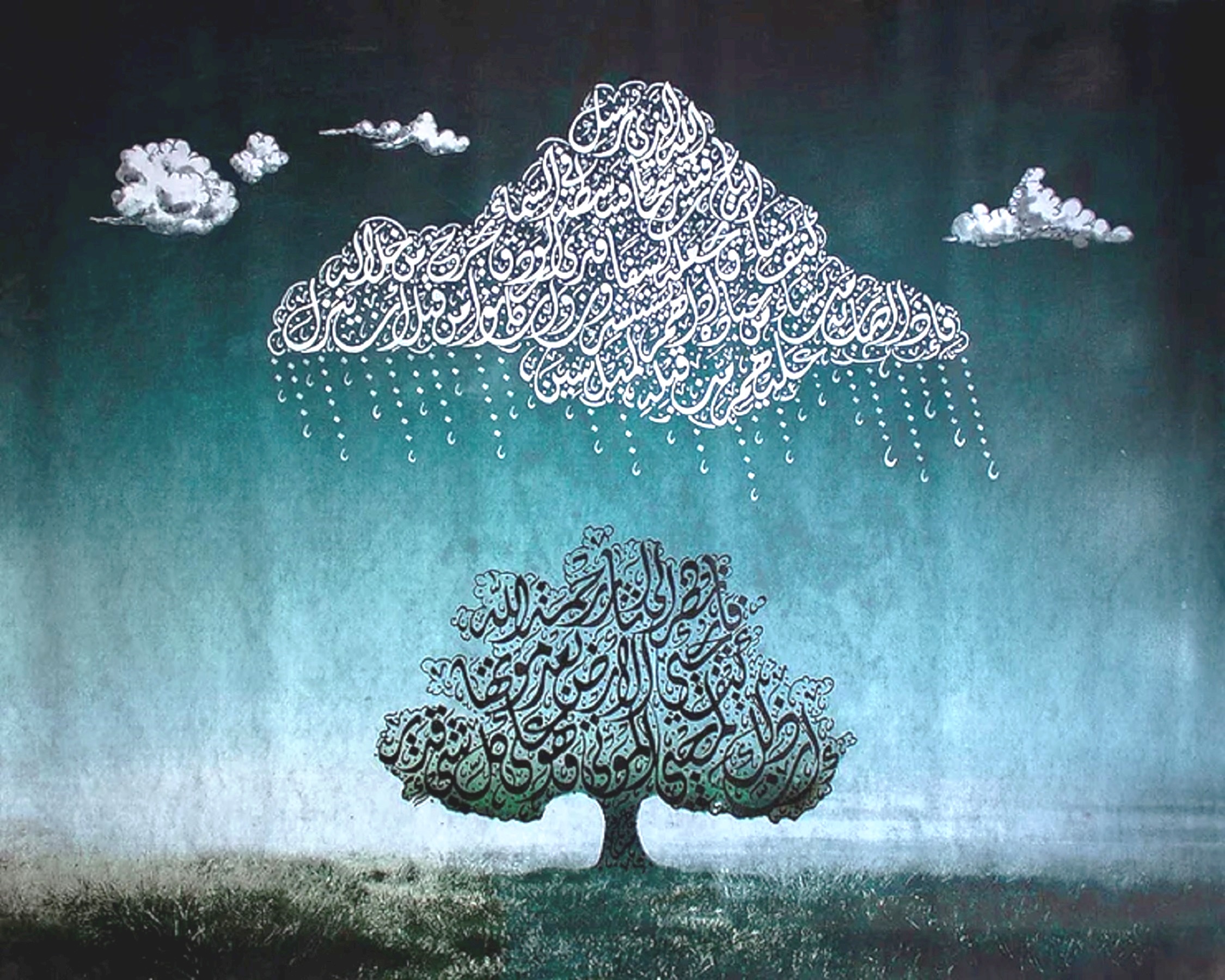


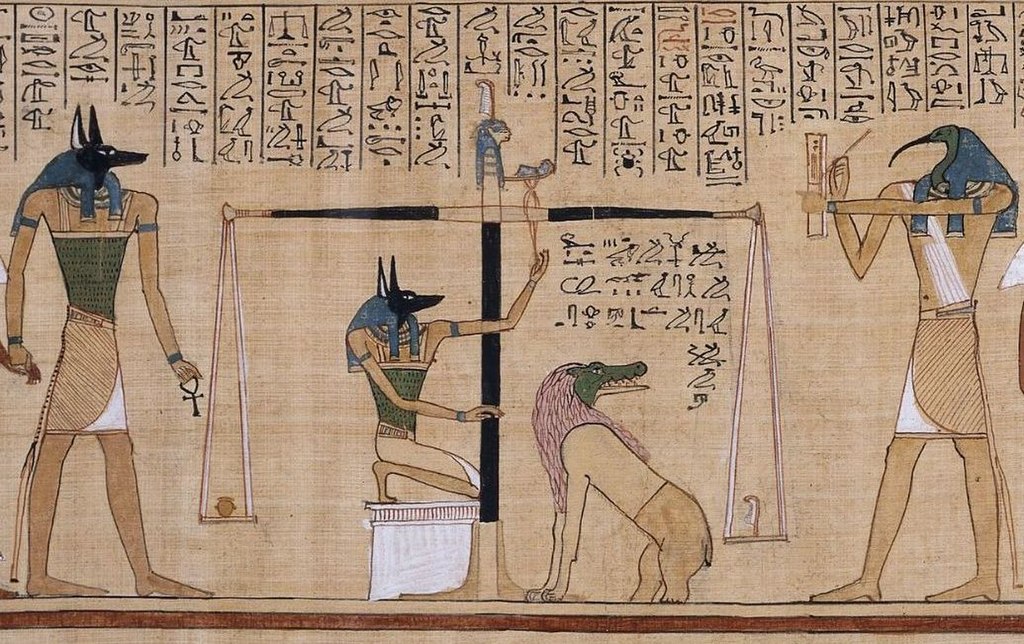
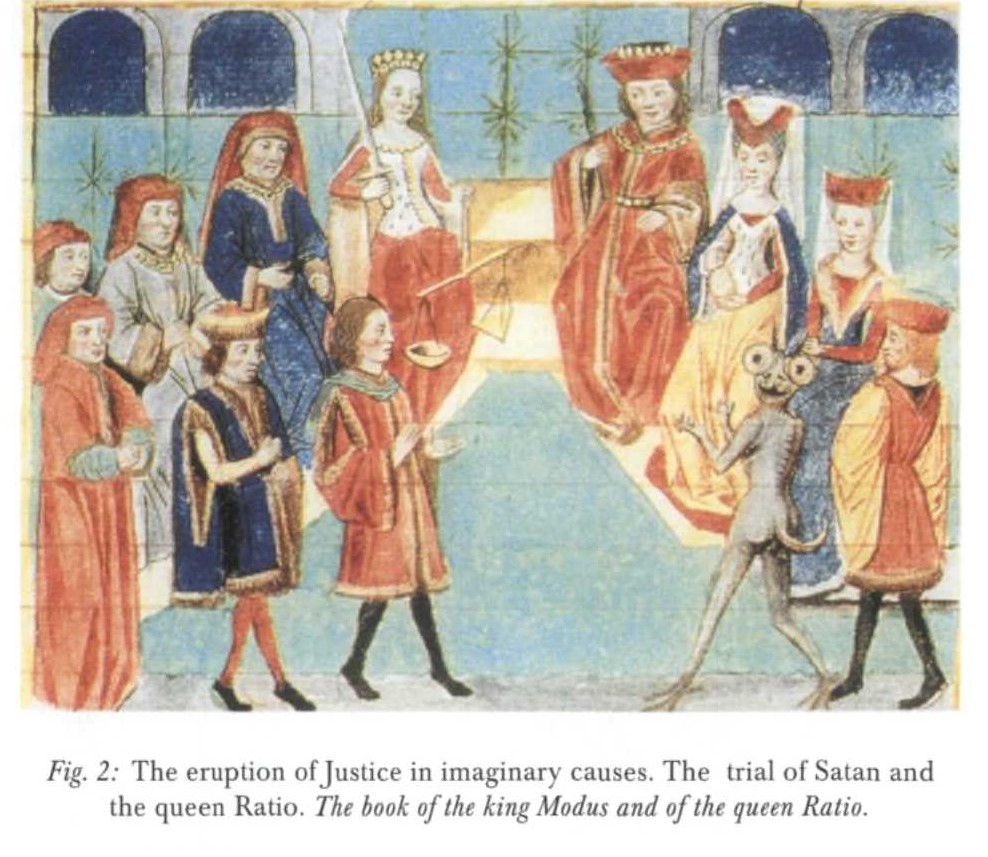
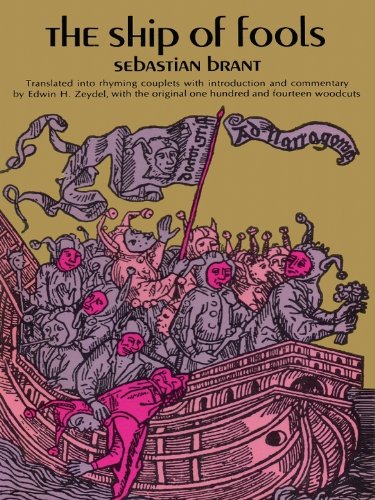
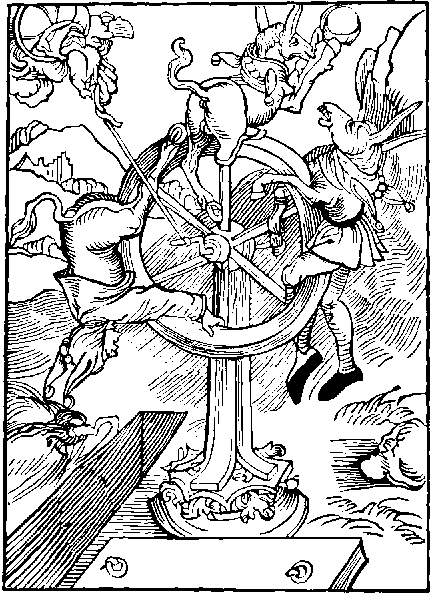
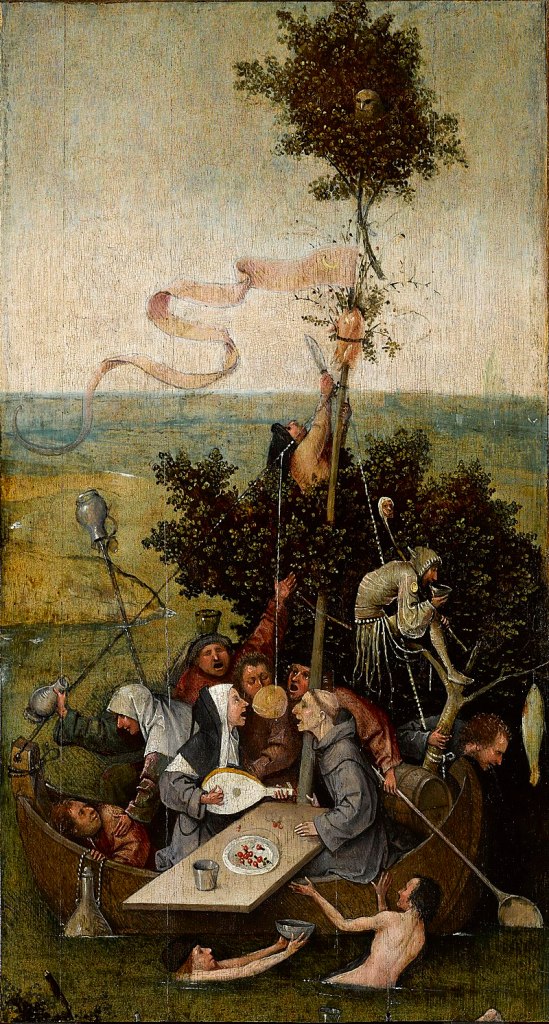
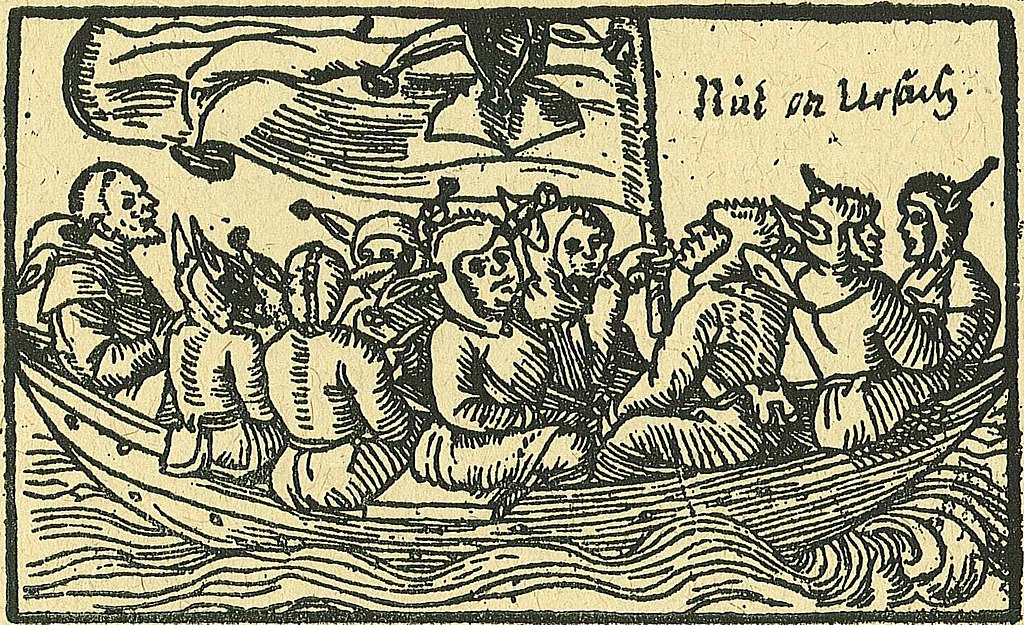
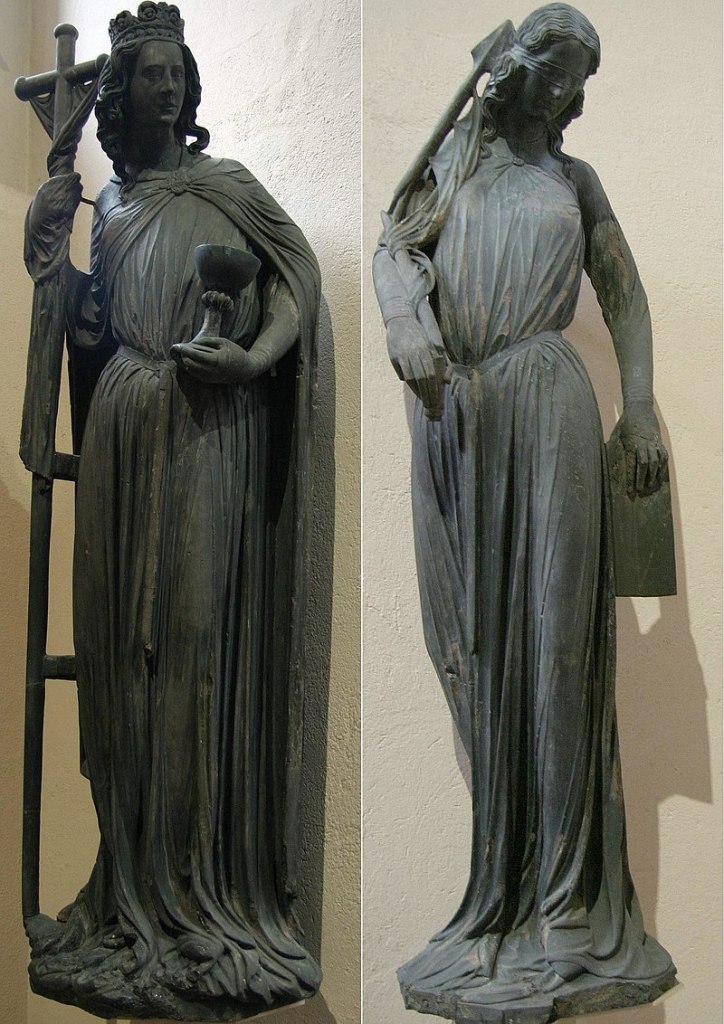
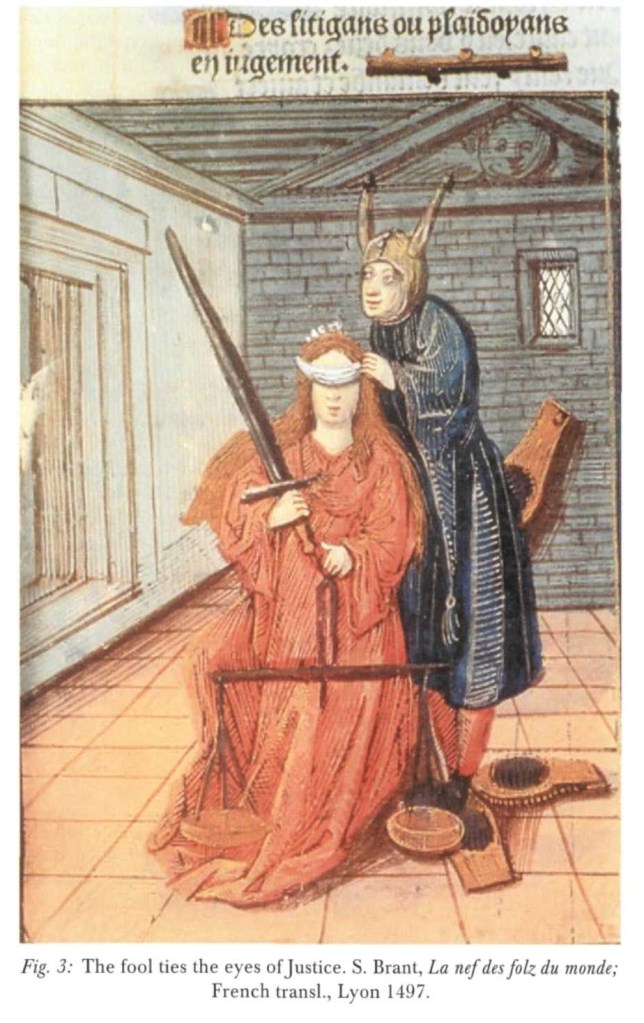
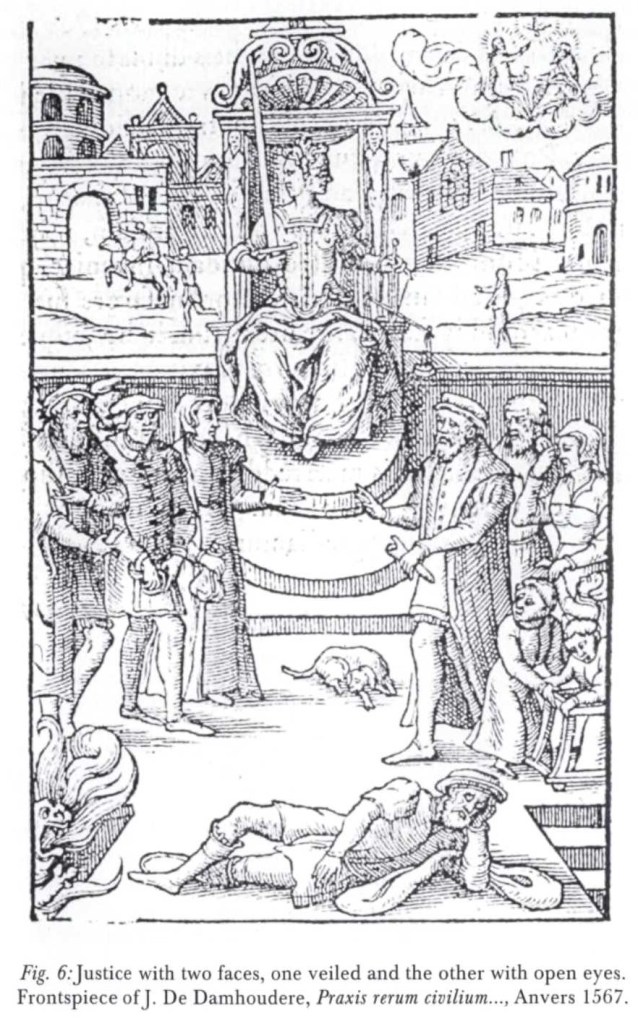

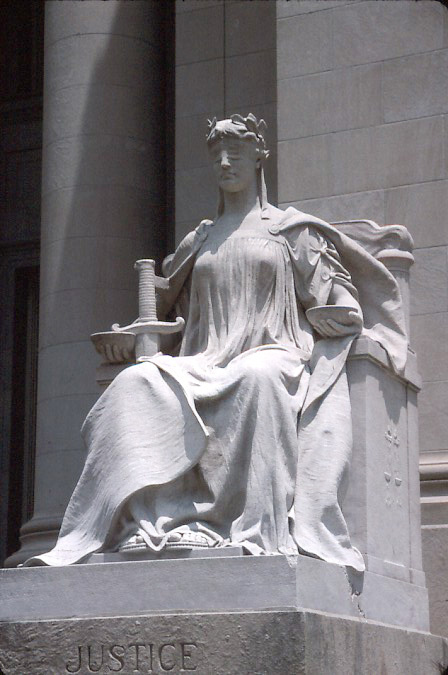
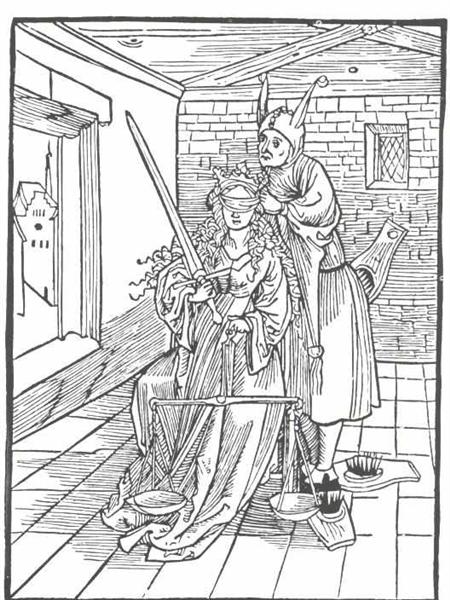
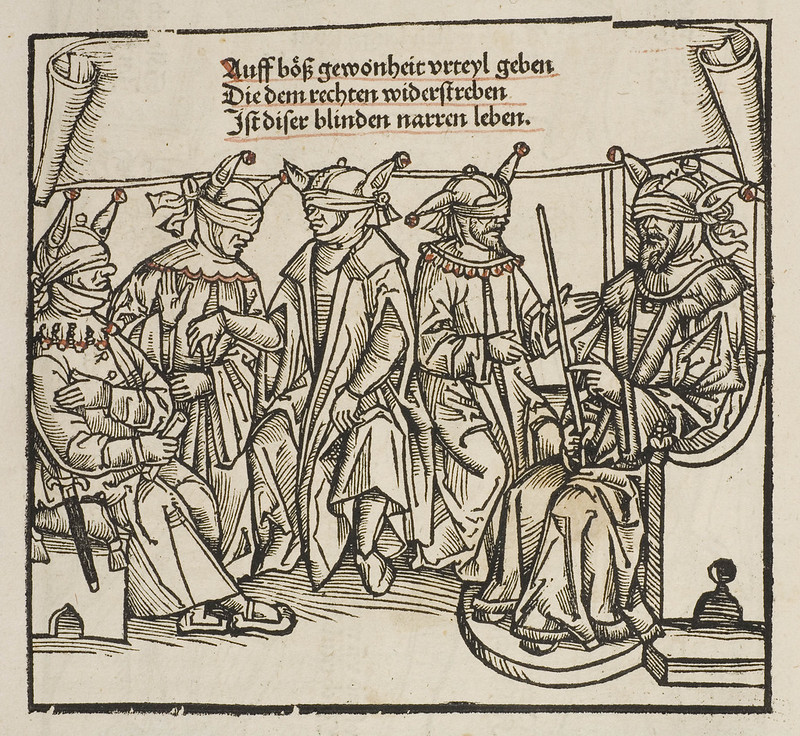
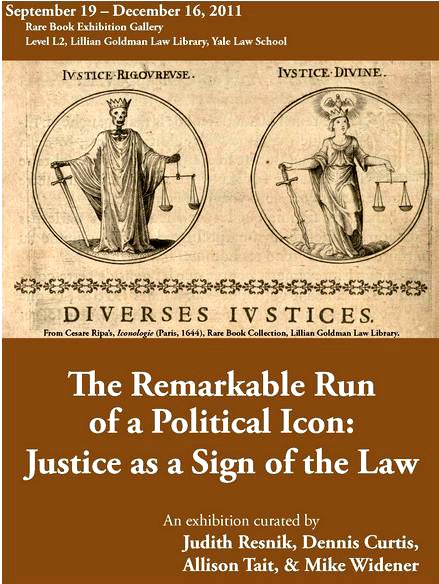
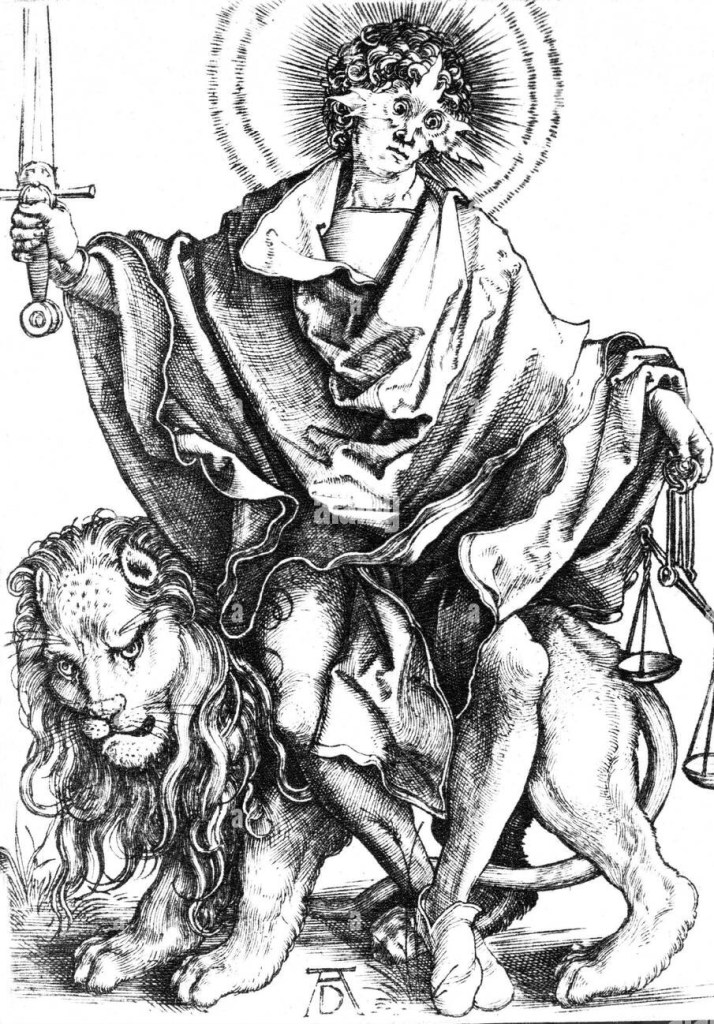
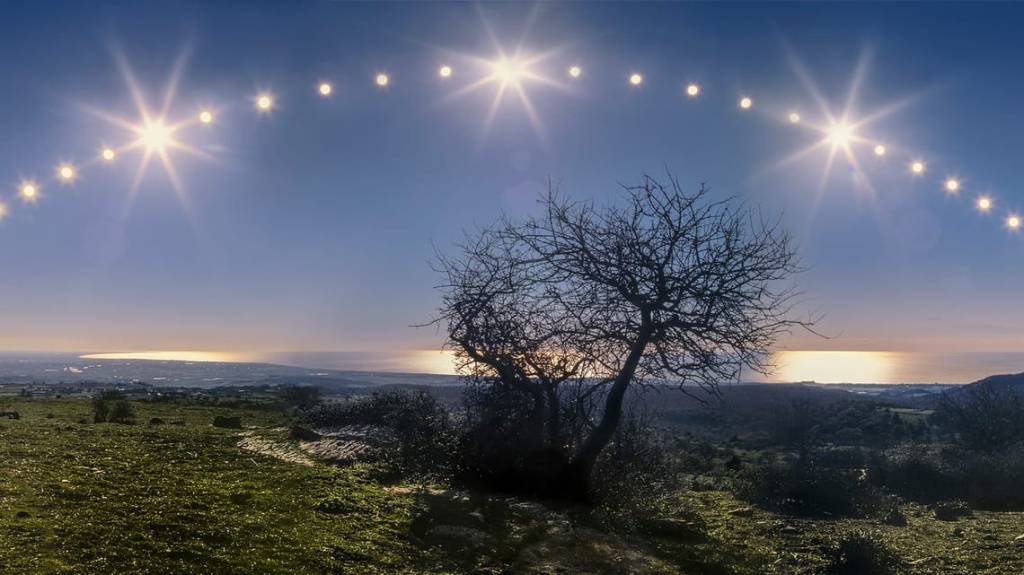
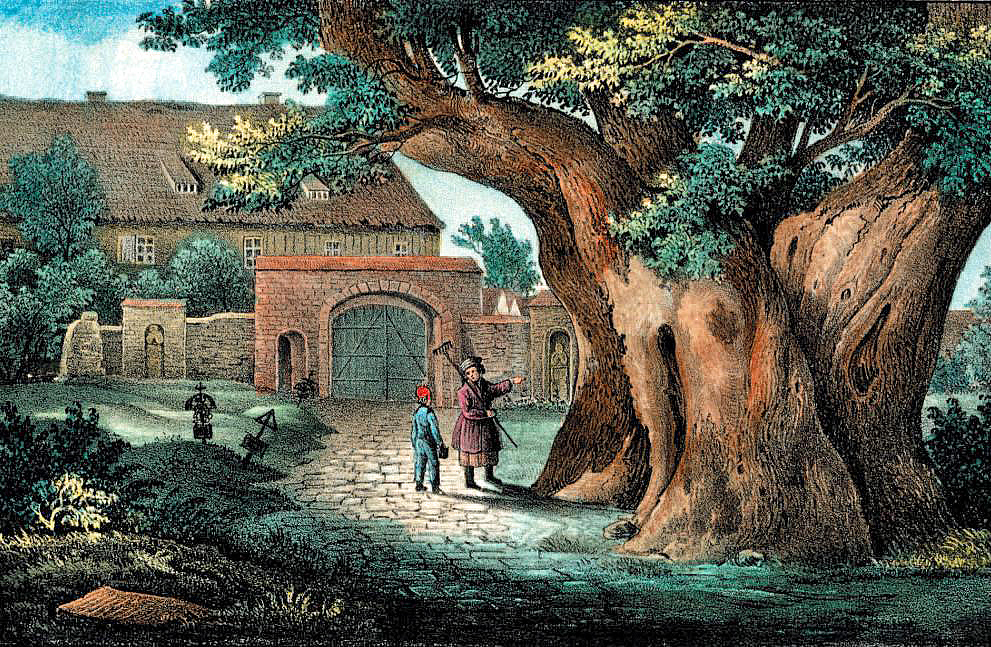


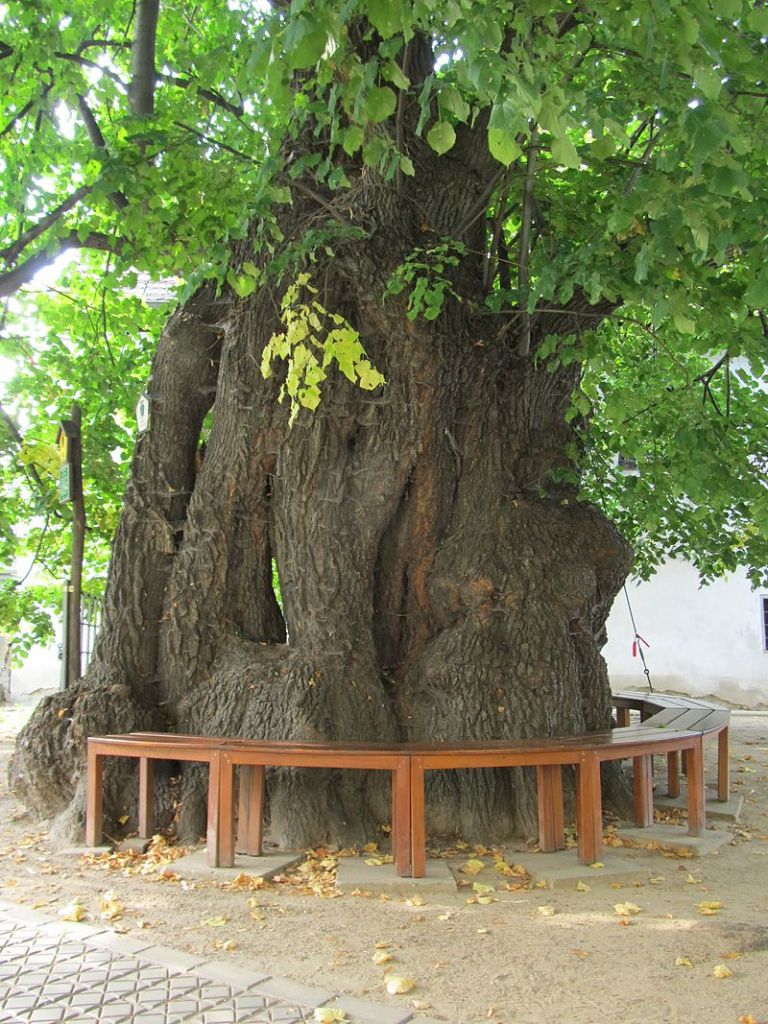


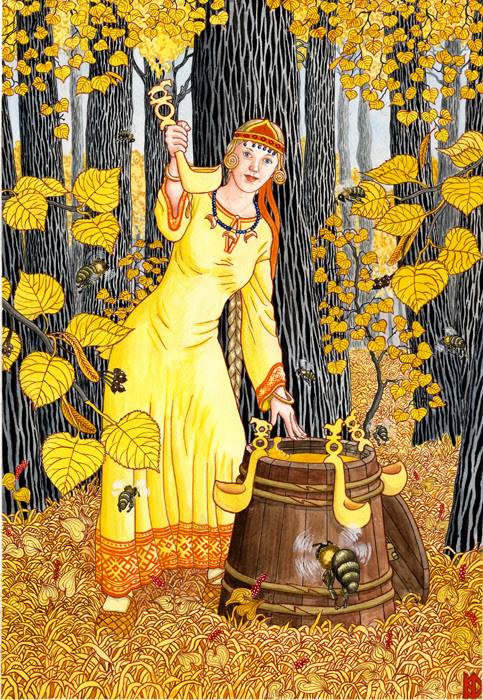

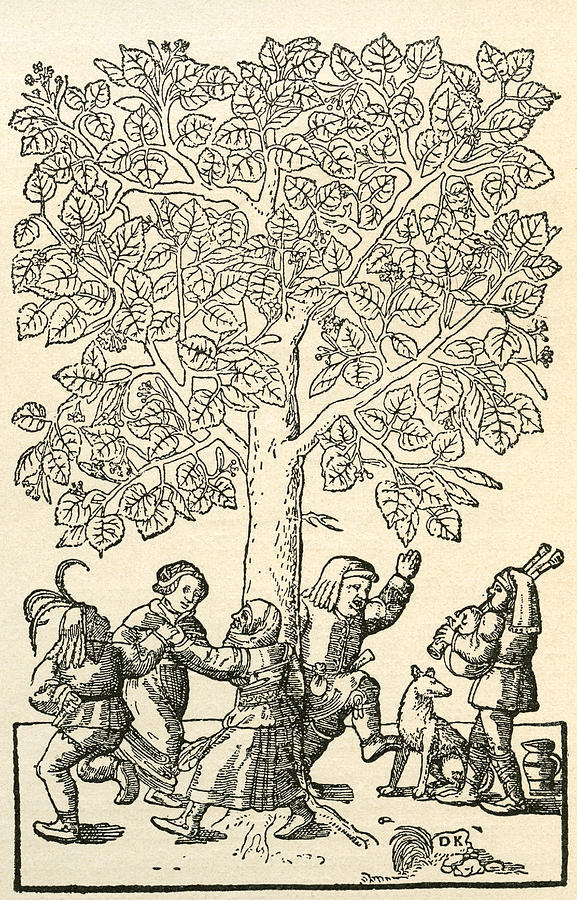
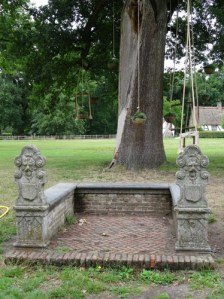
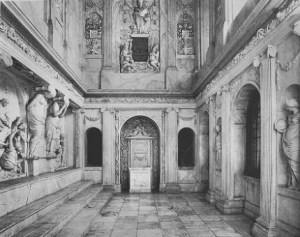

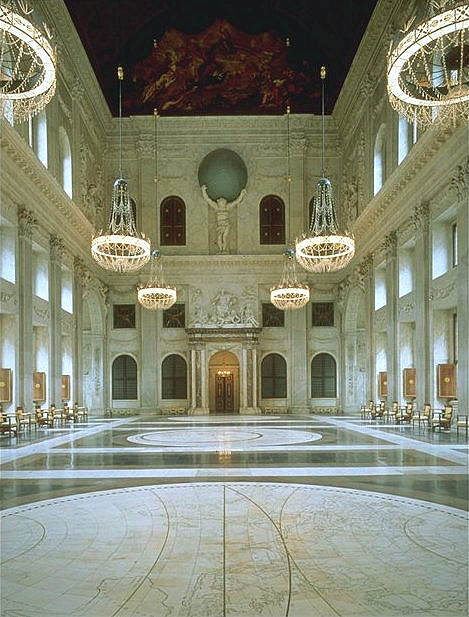

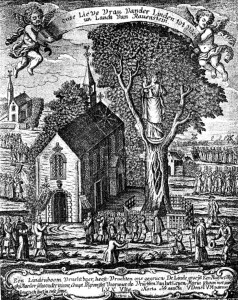
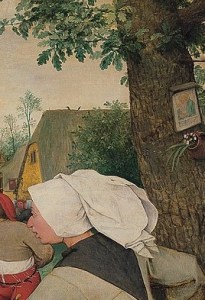
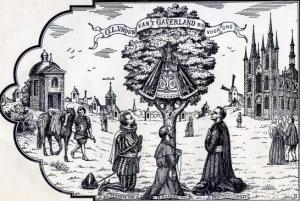
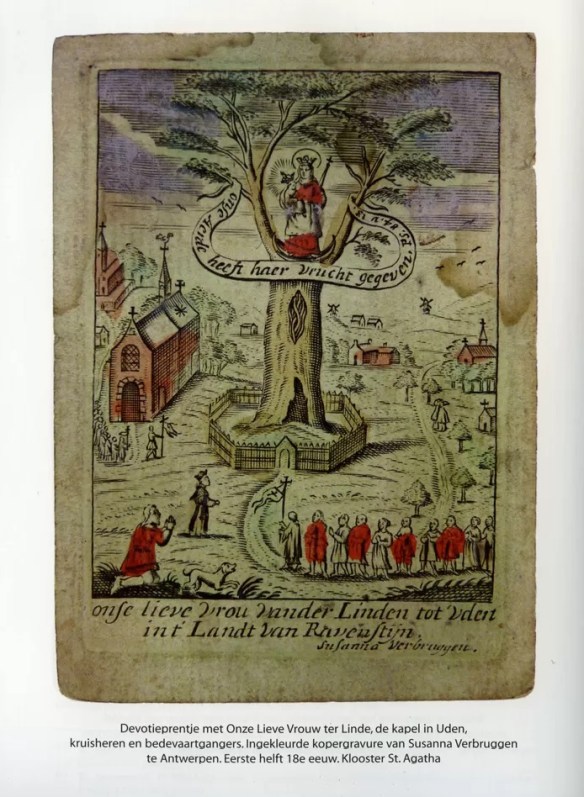
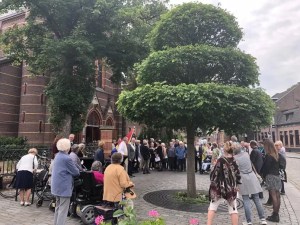
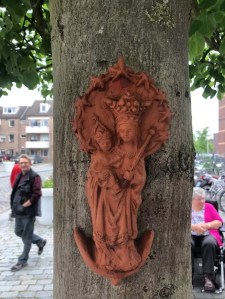
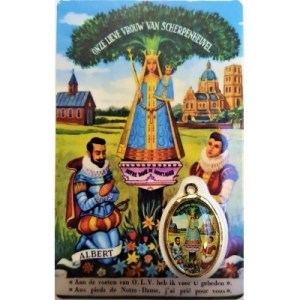
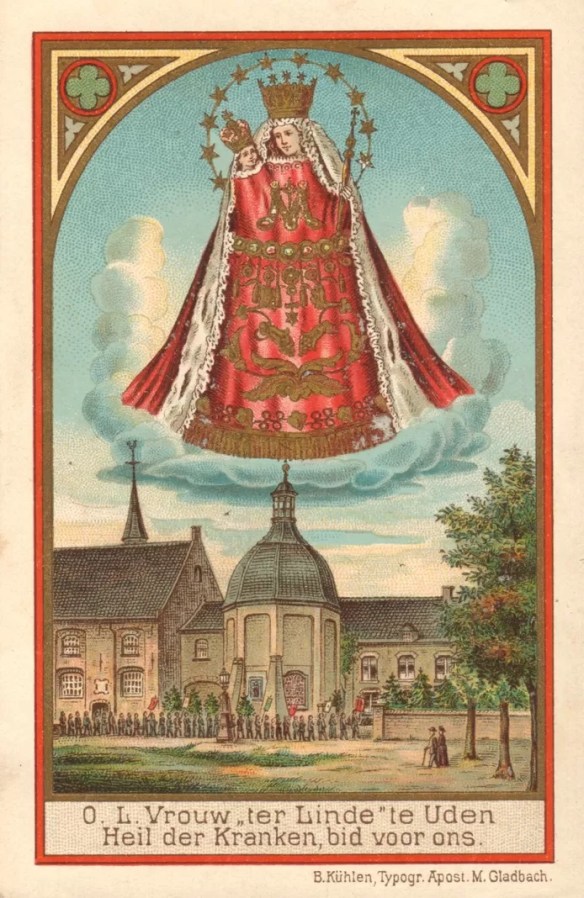
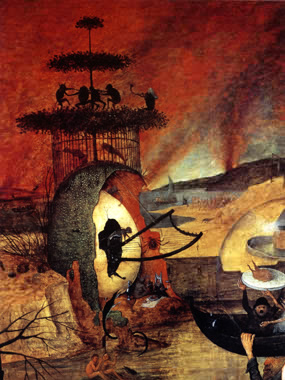

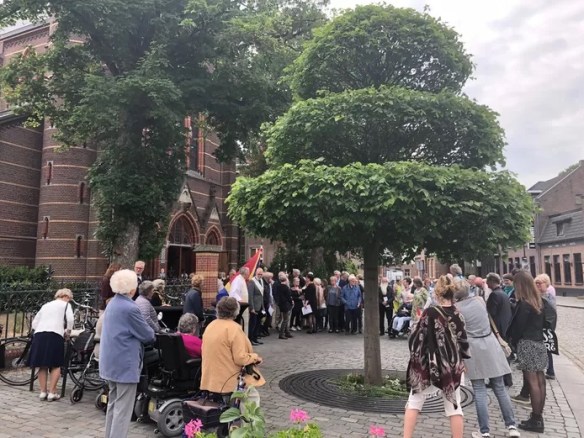 In the time of Bruegel the Lime tree was branding:In 2019 the Lime Tree and The Virgin Mary as Love of God come again to live!Prior to the blessing, there was a celebration of the Eucharist in the chapel that revolved around the great importance of Mary as a “humble but strong woman.” Everybody was happy with the return of the tree as it stood in front of the chapel for centuries and which resulted in well-attended pilgrimages to Uden.
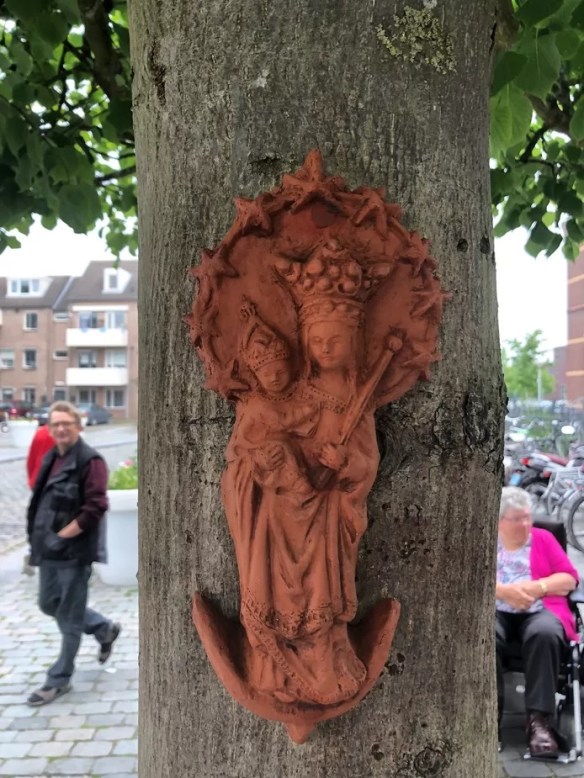 The new tree is the great achievement of artist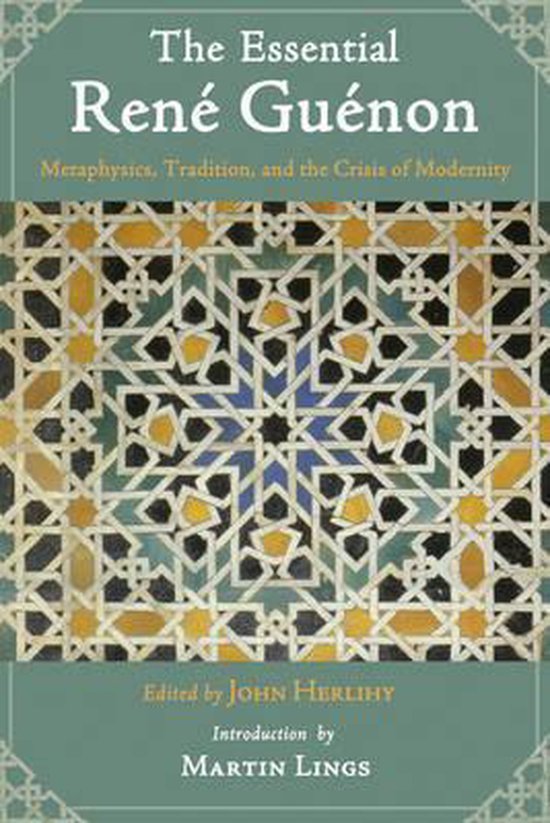

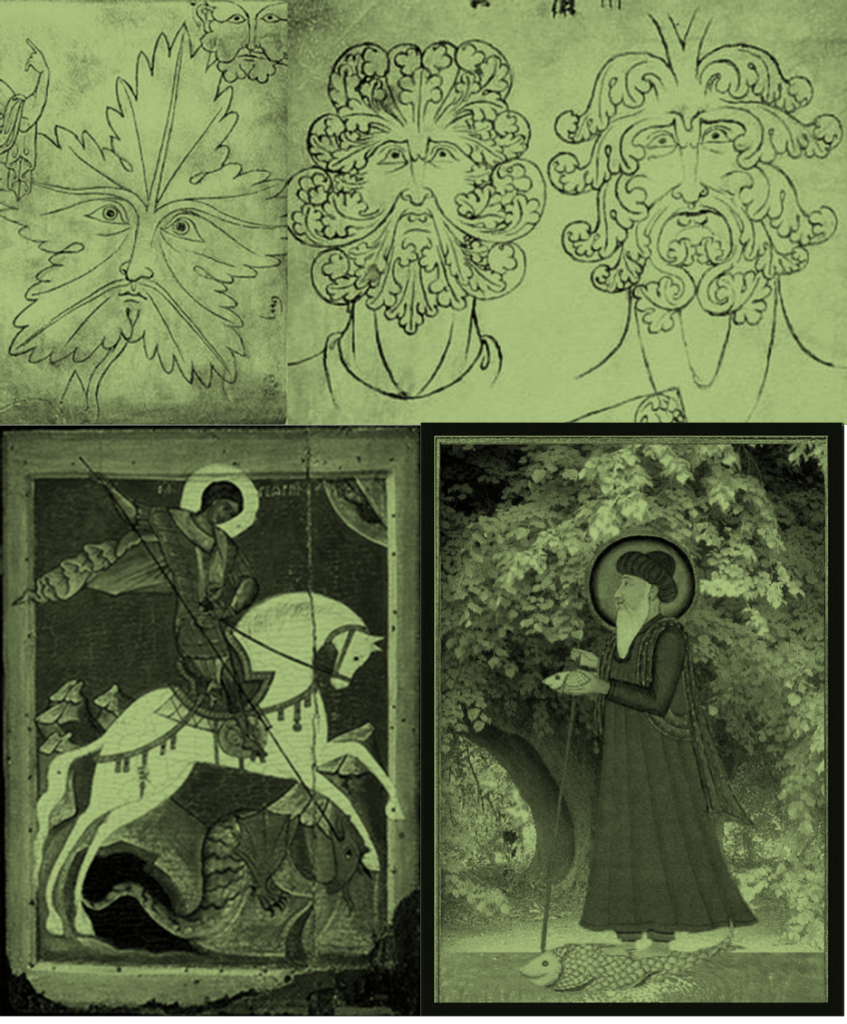
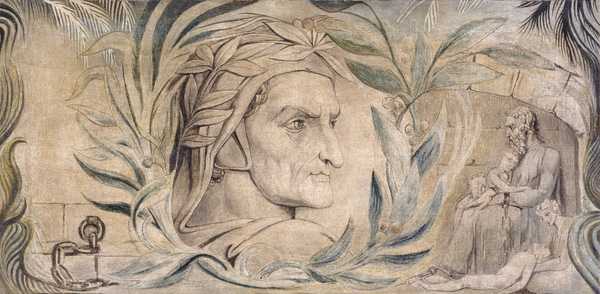


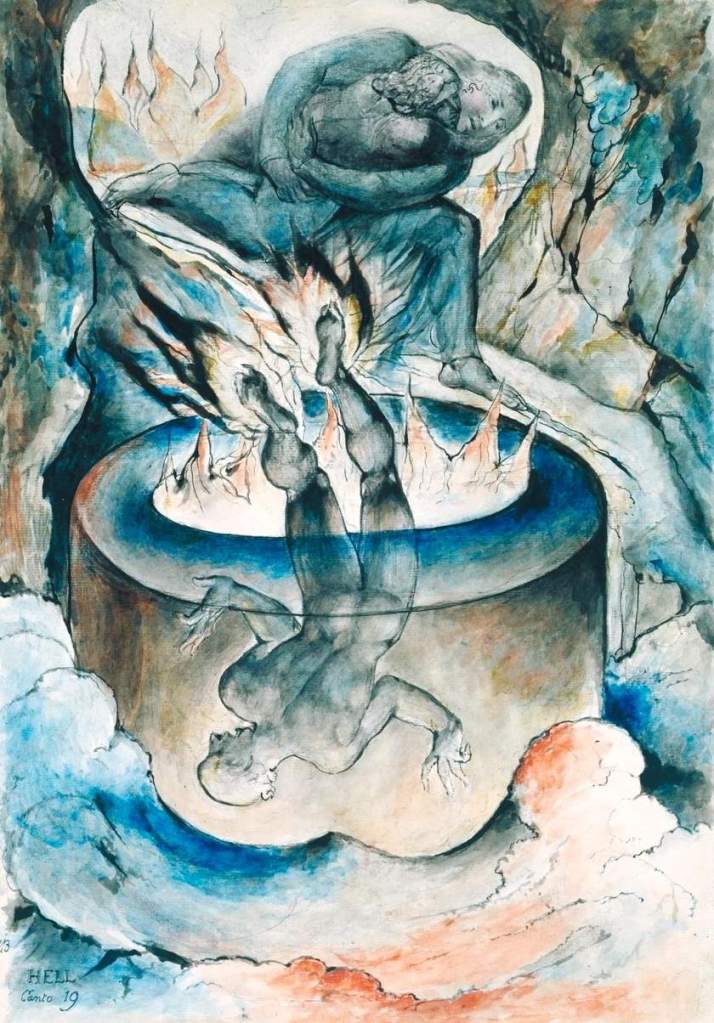
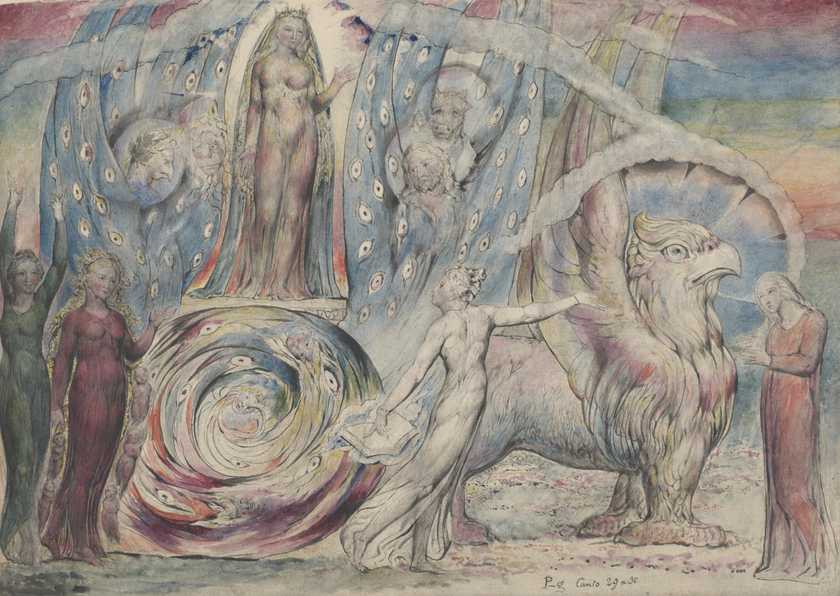
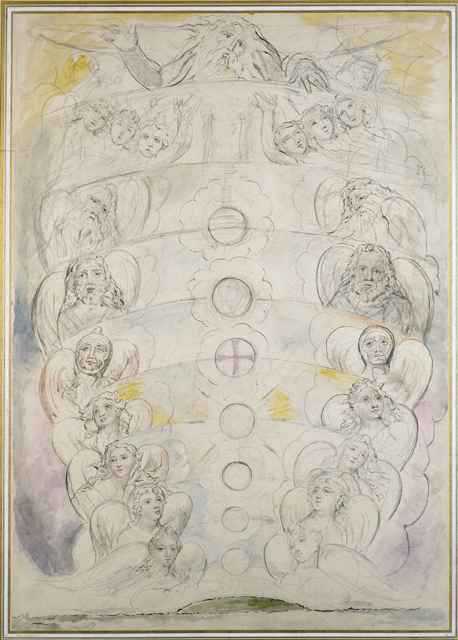

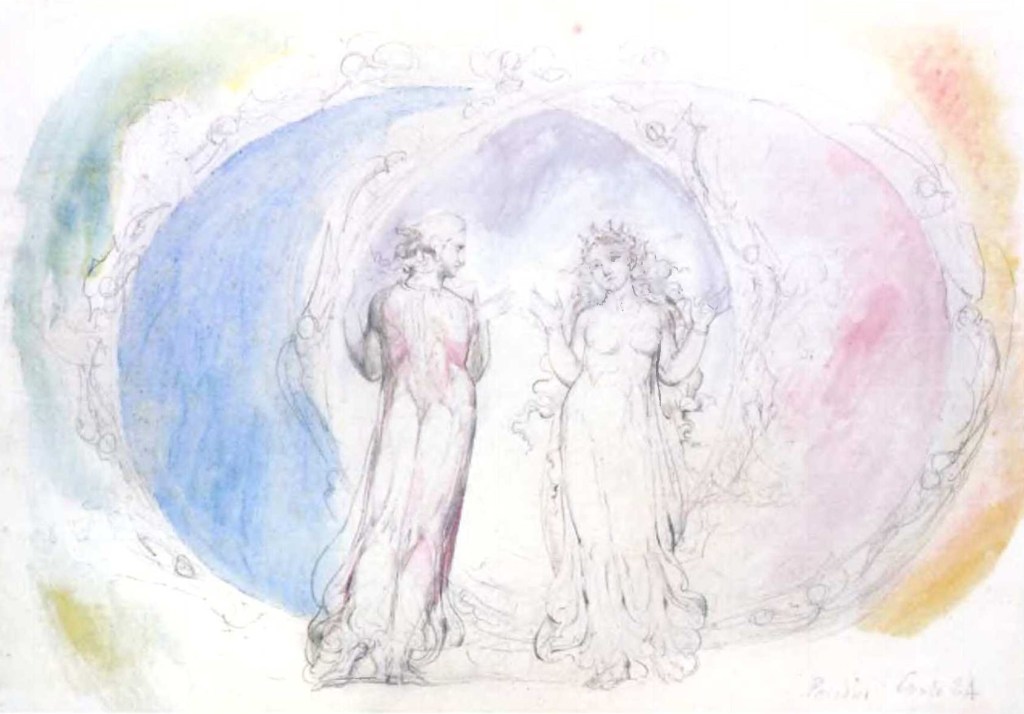
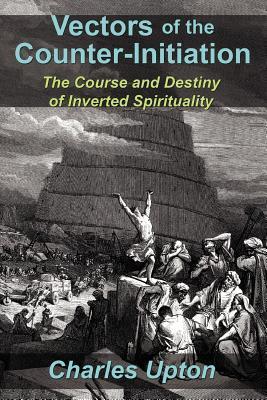
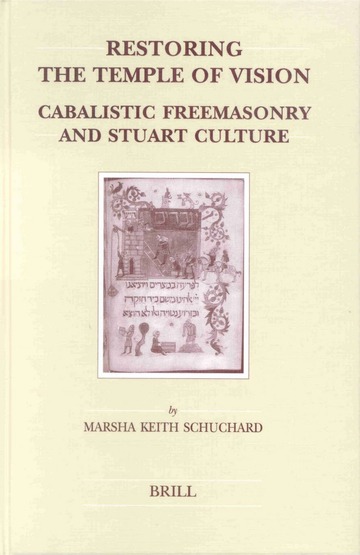

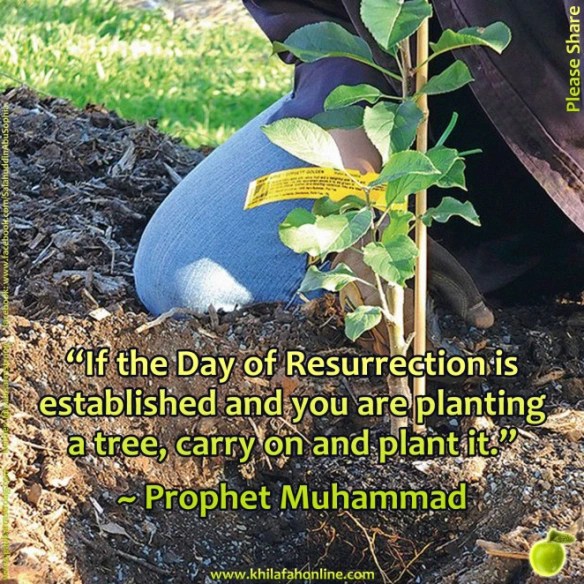


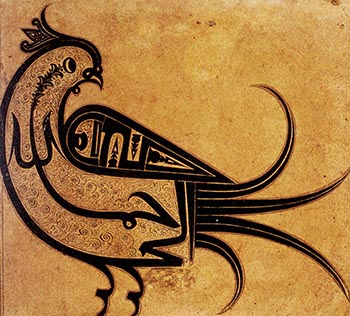

 Path to the Maypole of Wisdom