The Rothschild Canticles is the name of a lavishly illuminated manuscript of Franco-Flemish origin, produced at the turn of the fourteenth century. “A potpourri of biblical verses, liturgical praise, dogmatic formulas, exegesis, and theological aphorisms, . . . the manuscript leads its user step by step through meditations on paradise, the Song of Songs, and the Virgin Mary to mystical union and, finally, contemplation of the Trinity,” describes Barbara Newman in her excellent essay “Contemplating the Trinity: Text, Image, and the Origins of the Rothschild Canticles.” It’s a diminutive little book, with a trim size of just four and a half inches by about three and a quarter.
ACCORDING to Jeffrey Hamburger this florilegium is deliberately arranged to facilitate meditation on stages of spiritual progress according to the three traditional mystical levels of:
[1] ascetical purification;
[2] meditative-contemplative illumination (contemplation of creation); and
[3] union with God and knowledge of the mysteries of the Blessed Trinity. See more here
The manuscript lacks any provenance before 1856, but Newman proposes that it was made at the Benedictine abbey of Bergues-Saint-Winnoc in Flanders, located at what is today the northern tip of France. The compiler of its texts, she suggests, was probably the same person who designed its remarkable images—most likely a monk of Saint-Winnoc, who probably employed a professional lay artist from Saint-Omer to execute the designs. The book’s patron was probably a canoness at the nearby abbey of Saint-Victor. It is now preserved at the Beinecke Rare Book and Manuscript Library at Yale University in New Haven, Connecticut. All photographs in this post are courtesy of the Beinecke. Click here to page through the fully digitized manuscript.
The most extraordinary section of the book is a florilegium (collection of literary extracts) on the Trinity, which comprises folios 39v–44r and 74v–106r and draws especially on Augustine’s De Trinitate. Within these pages are nineteen full-page miniatures that exhibit “the most stunning iconographic creativity, . . . bearing witness to a distinctive Trinitarian theology.”
The representation of the Holy Trinity poses one of the most difficult iconographic problems in Christian art. How is one to portray three distinct, divine persons who share one essence? Historical attempts have included the following:
Three identical Christomorphic men (this one is relatively rare)
Three mystically conjoined faces, or three separate heads sharing one body (nicknamed the “monstrous Trinity” and condemned by the Roman Catholic Church)
The Gnadenstuhl (Throne of Mercy, or Throne of Grace), in which the Father is shown holding a crucifix or, in a later variation known as the Mystic Pietà, his slumped Son, while the Holy Spirit in the form of a dove hovers between them
Triangles, trefoils, triquetras, or other abstract geometric designs that suggest Three-in-Oneness
In the Eastern Orthodox Church, the Holy Trinity is represented by three angels seated at a table. These are the three mysterious visitors of Abraham in Genesis 18, believed to be a theophany (visible manifestation of God).
The artist of the Rothschild Canticles relies on none of these conventions, inventing instead an almost wholly original visual language to express the rich yet daunting doctrine. In contrast to other depictions of the Trinity, in the Rothschild Canticles we find, says Newman,
a playful, intimate approach to the triune God, marked by spontaneity rather than solemnity, dynamism rather than hieratic stasis, wit rather than awe. There is no hint of narrative, but something more like an eternal dance. . . . The divine persons are caught up in an everlasting game of hide-and-seek with humans while they enact among themselves, in ever-changing ways, that mutual coinherence that the Greek fathers called perichoresis—literally “dancing around one another.” (135)
Jongleurs (itinerant medieval entertainers proficient in juggling, acrobatics, music, and recitation), angels, and various pointing figures play the role of implied viewers and manifest a joyous attitude. For example,
on fol. 79r a celestial percussionist attacks a row of bells with mallets; on fol. 84r, angels in the upper left and right play a game of ring toss; on fol. 88r, musicians . . . strum whimsically shaped zithers embellished with animal heads. . . . In the lower right corner of fol. 96r, an elfin figure bends over backward to play an instrument whose pinwheel shape mimics the great solar wheel behind which divine Wisdom hides. Four characters in the corners of fol. 98r stretch their arms as if to join hands in a cosmic dance, while on fol. 100r, three spectators raise their hands in wonder beneath a divine apparition, imitating the stunned postures of Peter, James, and John at the Transfiguration. . . . Collectively, they seem to proclaim that the reader need not be ashamed or afraid, even though all human attempts to comprehend the Trinity are comically inept. Nonetheless, she can merrily follow the Lord of the Dance. (135–36)
The quirkiness is so endearing!
Newman continues,
In the Rothschild Canticles, coinherence is the dimension of Trinitarian theology to which the artist seems most profoundly committed. The complex relationality of the three persons is conveyed through the delicate interplay of touch, gesture, and changing positions. Sometimes the Father and Son join hands; on fol. 104r they touch feet behind the wheel they hold. Sometimes they grasp the sides, wings, or talons of the dove, and sometimes they unite around a fourth figure representing the Divine Essence. (143–44)
Moreover,
the artist invented some simple devices to keep the paradox of triunity before the mind’s eye at all times. For example, a prime signifier of divinity—the golden sun with its waving, tentacle-like rays—is sometimes single (fols. 44r, 81r, 88r, 90r), sometimes triple (fols. 40r, 83r, 94r). Elsewhere the artist complicated this formula. On fol. 79r, three small suns for each person are superimposed on one large sun; fols. 92r and 100r insert a smaller sun inside a bigger one; and on fol. 96r, two suns interlock to form a double wheel with spokes radiating both inward and outward. (141)
I particularly like fol. 94r, where the three persons of the Godhead wear the sun like a collar. And fol. 100r, where we see just three feet and three hands, each belonging to a different person, peeping out from behind a giant sun disc!
Another recurring and versatile motif in the Trinity cycle is the veil, which signifies both God’s presence and God’s hiddenness. Sometimes it forms a hammock in which the Trinity rests, partially covered (fols. 75r, 88r); or is braided in an enclosing circle, dangling down for humans to touch (fol. 81r); or is looped about the Father, Son, and Spirit, nestling them snugly (fol. 84r); or is knotted and clutched (fol. 92r); or is draped over bands of cloud (fol. 106r). In this artistic program, veils both conceal and reveal, communicating the paradoxical nature of God who is ensconced in mystery—incomprehensible—and yet accessible, wanting to be known.
Notably, the profusion of Trinitarian imagery is supplemented in the manuscript with textual reminders of the limitations of images. In De Trinitate 8.4.7, for example, Augustine says that all manmade images of God are false, and yet, he says, they are useful insofar as they help the mind cling to the invisible reality to which they point.
Below is a complete compilation of Trinity miniatures from the Rothschild Canticles, reproduced in the order they appear in the manuscript. I have prefaced most with one or more of the quotations that appear on its facing page (thanks to Newman’s identifications) so that you can see how intricately text and image relate. If you wish to reproduce any of these images singly, I suggest the following credit:
Trinity miniature from the Rothschild Canticles (MS 404, fol. _), made in Flanders, ca. 1300. Beinecke Rare Book and Manuscript Library, Yale University, New Haven, Connecticut.
“Dominus in orisunte eternitatis et supra tempus” (The Lord is on the horizon of eternity and beyond time):
folio 40folio 42folio 44
“Tu es vere Deus absconditus” (Truly you are a hidden God) (Isa. 45:15):
“Bene ergo ipsa difficultas loquendi cor nostrum ad intelligentiam trahit, et per infirmitatem nostram coelestis doctrina nos adjuvat: ut quia in Deitate Patris, et Filii, et Spiritus sancti nec singularitas est, nec diversitas cogitanda, vera unitas et vera Trinitas possit quidem simul mente aliquatenus sentiri, sed non possit simul ore proferri.”—Pope Leo I, Sermo 76.2
(“This difficulty in expressing clearly by speech draws our hearts to the power of discerning, and, through our weakness, the heavenly doctrine helps us, that, because of the divinity of Father, Son, and Holy Spirit, neither singularity nor diversity is to be considered. The true unity and true Trinity can be apprehended ‘at the same time’ by the mind, but cannot be produced at the same time by the lips.” Trans. Jane Patricia Freeland, CSJB, and Agnes Josephine Conway, SSJ)
folio 75
“Pater complacet sibi in Filio et Filius in Patre, et Spiritus sanctus ab utroque” (The Father is well pleased in the Son, and the Son in the Father, and the Holy Spirit is from both):
folio77folio 79
“Dicebat enim intra se si tetigero tantum vestimentum eius salva ero” (She said within herself, if I touch the hem of his garment, I will be healed) (Matt. 9:21):
folio 81
(Also illustrated on fol. 81r is the Holy Spirit as the person “qui facit ex utroque unum” [who makes both one; cf. Eph. 2:14], as cited on the facing page. Notice the shared halo.)
“Trinus personaliter et unus essentialiter” (Three in persons and one in essence):
folio 83
“Dominus Deus noster Deus unus est” (The Lord our God is one God) (Mark 12:29):
folio 88
“Ita et singula sung in singulis, et omnia in singulis, et singula in omnibus, et omnia in omnibus, et unum omnia. Qui videt hec vel ex parte, vel per speculum et in enigmate, gaudeat cognoscens Deum.”—Augustine, De Trinitate 6.12
(“They are each in each and all in each, and each in all and all in all, and all are one. Whoever sees this even in part, or in a puzzling manner in a mirror [1 Cor. 13:12], should rejoice at knowing God.” Trans. M. Mellet, OP, and Th. Camelot)
folio 90
“Sapientia sua, que pertendit a fine usque ad finem fortiter et disponit omnia suaviter” (His wisdom, which reaches from end to end mightily and orders all things sweetly) (Wis. 8:1):
folio 92
“Tres vidit et unum adoravit” (He saw three and worshipped one), a liturgical verse referring to the Trinitarian epiphany in Genesis 18:1–3, in which Abraham saw three men, fell down in worship, and then addressed his divine visitors in the singular:
folio 94
“Gyrum caeli circuivi sola et in profundum abyssi penetravi et in fluctibus maris ambulavi” (I [Wisdom] have circled the vault of heaven alone) (Ecclus. 24:8):
folio 96folio 98
“Abscondes eos in abdito faciei tuae” (Thou hidest them [the saints] in the covert of thy presence) (Psa. 30:21):
folio 100
“Optime et pulcrius loquitur qui de Deo tacet” (He speaks best and most beautifully who is silent about God):
folio 102
“Centrum meum ubique locorum, cirumferentia autem nusquam” (My center is in all places, my circumference nowhere). Also, “Quod Deus est, scimus. Quid sit, si scire velimus, / Contra nos imus. Qui cum sit summus et imus, / Ultimus et primus, satis est; plus scire nequimus.” (We know that God is; if we wish to know what he is, / We go against ourselves. That he is the highest and the lowest, / The last and the first, is enough; we can know no more.) And another: “Deus fuit semper et erit sine fine; ubi semper fuit, ibi nunc est. / Et ubi nunc est ibi fuit tunc.” (God always was and shall be without end; where he always was, there he is now. And where he is now, there he was then.)
folio 104
(I love this detail of the Father and Son touching feet behind the wheel to brace themselves up! And the implosion of the sun.)
And lastly, the final text page in the Trinity cycle, which faces a nonfigural miniature of concentric rings of fire and cloud, contains this unidentified apophatic dialogue:
—Domine, duc me in desertum tue deitatis et tenebrositatem tui luminis, et duc me ubi tu non es. —Mea nox obscurum non habet, sed lux glorie mee omnia inlucessit. —Bernardus oravit: Domine duc me ubi es. —Dixit ei: Barnarde, non facio, quoniam si ducerem te ubi sum, annichilareris michi et tibi.
(—Lord, lead me into the desert of your divinity and the darkness of your light; and lead me where you are not. —My night has no darkness, but the light of my glory illumines all things. —Bernard prayed, Lord, lead me where you are. —He said to him, Bernard, I will not, for if I led you where I am, you would be annihilated both to me and to yourself.)
folio 106
My hope is that pastors, theologians, seminarians, and Christians in general spend time studying, meditating on, and delighting in these artworks, which present profound theological content in a compact and sensory format. Visual theology at its best.
Though our efforts to visualize the Trinity will always be clumsy and imperfect, I do think the Rothschild Canticles artist has been more successful than anyone before or since. His miniatures convey, with whimsy and warmth, the eternal relationship of love at the heart of the universe.
Contemplating the Trinity: Text, Image, and the Origins of the Rothschild Canticles
!is article revisits the Rothschild Canticles, speci”cally the Trinity cycle, through a close study of the Latin text. It identi”es previously unknown sources, demonstrating the compiler’s wide frame of reference and con”rming that the most recent texts date from the 1290s. Further, it argues that the Trinity painter developed a vocabulary of apophatic literalism to give visual form even to such unlikely statements as “Truly you are a hidden God” and “My center is everywhere, my circumference nowhere.” !e intimate link between text and miniatures suggests that the designer of these paintings was a seasoned contemplative, almost certainly a monk. In its second section, the article considers the collaboration of compiler, artist, and scribe, proposing that the compiler himself designed the miniatures, although they were executed by a professional artist from Saint-Omer. Another perplexing feature lies in the scribe’s carelessness and failure to understand the material. !e essay asks why and where such a sophisticated painter would have collaborated with a minimally competent scribe. Finally, it turns to one extremely rare text, tracing it to a hagiographic work by the eleventh-century monk Drogo, unknown outside his abbey of Bergues-Saint-Winnoc. On this ground it argues that the compiler was a monk of Saint-Winnoc, where the manuscript was produced—possibly for a canoness at the local abbey of Saint-Victor. That Bergues was not known at this time for professional book production could explain the inexpert scribal work. A postscript seeks to identify the coat of arms on fol. 1 Read here
Gendered and Ungendered Readings of the Rothschild Canticle by Sarah Bromberg
The early fourteenth-century manuscript known as the Rothschild Canticles exhibits many images of the Sponsa or of monks and clerics in the presence of Christ. The following article will consider the ways in which viewers fashioned their relationship to God through these figures. In his 1990 monograph on the Rothschild Canticles, Jeffrey Hamburger provided many iconographic parallels to the manuscript’s enigmatic imagery and uncovers many sources for its varied texts. Madeline Caviness’s semantic triangle provides a conceptual framework for my analysis which seeks to expand upon the method employed by Hamburger, which limits itself to historical explanations. I will therefore add the “critical theories” side of the triangle by invoking contemporary gender, film and queer theory. Further, I want to rebuild Hamburger’s historical side of the triangle by utilizing other medieval histories of gender and sexuality. Two separate triangulation processes will reveal the multivalent attitudes towards gender expressed in the Rothschild Canticles’ illuminations. First I shall consider a male reader’s process of identifying with the Sponsa. Second I shall reconsider the binary system of gender upon which my initial analysis of readership and imagery depends. In some cases, my different readings will contradict each other, but my intention is not to invalidate one reading with another, nor to privilege one interpretation over another. Rather, I wish to demonstrate that multiple possibilities of understanding coexist. Read here
The Transfiguration of the Human Being by Samuel Bendeck Sotillos
Men die but live again in the real world of Wakan-Tanka [Great Spirit], where there is nothing but the spirits of all things; and this true life we may know here on earth if we purify our bodies and minds, thus coming closer to Wakan-Tanka, who is all-purity. Black Elk
Your glory lies where you cease to exist. Ramana Maharshi
While living / Be a dead man. Bunan Zenji
The kingdom of God is for none but the thoroughly dead. Meister Eckhart
He has died to self and become living through the Lord. Rumi
Perhaps the most beneficial way to prepare for death is to recognize that we are in fact going to die. Although we cannot deny this fact, we can selectively defer thinking about death; yet the dilemma is that the overarching reality of death is always there side-by-side with life itself. Despite this ubiquity, ‘Man was created alone and he dies alone’.
Dance of Death
Since the most remote times there has been a practice of continuously living with the awareness of death in one’s consciousness. The words of the adage Memento mori, Latin for ‘Remember that you are mortal’, encapsulate this practice. All the saints and sages speak in unanimity of identification with the empirical ego or separate self as the source of all human suffering. As Sri Ramakrishna (1836–1886), the Paramahamsa of Dakshineshwar, a spiritual luminary, powerfully expressed the need to die to our lower nature: ‘When “I” is dead, all troubles cease.’ An essential element in the world’s religions is the injunction that finds expression, for instance, in the well-known words of the Prophet of Islam: ‘Die before ye die’ (mutu qabla an tamutu). Correspondingly within the Hindu tradition there is the concept of being ‘twice-born’ (dvija): our initial birth into terrestrial existence is one type of birth, the second birth that the religions refer to is an initiation into the spiritual path.
Vanitas-
This alchemical and transformative psycho-spiritual process of dying before dying reoccurs in a myriad diverse forms and descriptions throughout the spiritual traditions, yet we can observe the myriad points of convergence. Just how universal this transformative process is has been underscored by the philosopher Frithjof Schuon (1907–1998): ‘every complete tradition postulates in the final analysis the “extinction” of the ego for the sake of the divine “I.”’ The French metaphysician René Guénon (1886–1951) also confirms the universal nature of the doctrine of mystical death and resurrection: ‘The idea of a “second birth”, understood in a purely spiritual sense, is indeed common to all spiritual doctrines.’
At the heart of every integral psychology or ‘science of the soul’ is the recognition of psycho-spiritual transformation or metanoia, which is inseparable from metaphysics and integral spirituality. This perennial psychology that is an application of the perennial philosophy discerns between the horizontal dimension consisting of the empirical ego, and the vertical dimension that pertains to the transpersonal Self. The horizontal and vertical dimensions are interdependent, and are both required for the human realm and the realm of the Spirit. However, it is essential to bear in mind that the vertical dimension precedes the horizontal and that the horizontal is reliant on the vertical dimension and not the other way around. As we recall, ‘To deny the spiritual is to deny the human.’
In what follows, we will explore psycho-spiritual integration and the symbolic meaning behind mystical death and resurrection, as found in the universal and timeless wisdom found around the world. Human consciousness is always ruminating on eschatological questions about our final ends, whether we are aware of it or not. What does it mean to be born, to live, and to die? And who is it that is born, lives, and dies? These questions, although asked since time immemorial, hold as much importance today as they did in the past and remain equally perplexing because they illuminate the mystery of existence and the limits of human knowledge. Whitall N. Perry (1920– 2005) writes:
There are two historical moments in the life of every person on earth which are inexorably real and yet totally outside the reach of empirical consciousness: the moment of birth, and the moment of death. These two decisive events occur moreover exactly once, over the entire lifespan of the individual, and scarcely enter into his reflections at all—everything else considered.
At the intersection of the horizontal and vertical dimensions, time and the temporal are juxtaposed with the timeless and Eternal. Through metaphysics we can make sense of the strange and enigmatic logic of death and dying and its transformative process. While birth and death occur at opposite ends of a human lifetime, they are inextricably interconnected and intersect each other. They are both fundamentally linked to the sacred and originate from this common transpersonal source. Chuang Tzu makes a thoughtprovoking observation about the phenomenon of birth and death, alluding to what is beyond them both: ‘Birth is not a beginning; death is not an end.’
As it has been affirmed: ‘From the “point of view of eternity” birth and death are one.’The interconnected essence of birth and death has been recognized everywhere since the most remote past: ‘Life and death, then, are considered not as two separate stages of completing mankind’s temporal and post-earthly existence, but as complementary phases in an ever-recurring cycle.’ For this reason, the well-known teacher of Zen Buddhism, Shunryu Suzuki (1904–1971), clarifies: ‘Our life and death are the same thing. When we realize this fact we have no fear of death anymore, and we have no actual difficulty in our life.’ Roshi Philip Kapleau (1912–2004) asserts a similar point: ‘Living is thus dying, and dying living. In fact, with every inhalation you are being reborn and with each exhalation you are dying.’
Seen in the light of Ultimate Reality or the Absolute, as articulated through the doctrine of non-duality, both birth and death are unreal and therefore illusory, as even these dichotomies need to be transcended. The Tibetan Buddhist tradition maintains that: ‘Ultimately, there is nothing that dies, since neither self nor mind have true existence.’ This is exemplified in the Heart Sutra (Prajñaparamita-hr. daya-sutra): ‘Form is emptiness; emptiness is form.Emptiness is not other than form; form is not other than emptiness.’
The mutual interconnectedness of all phenomena applies not only to the world of appearances of samsara, but also to the mutuality of samsara and nirvana and life and death—akin to the Taoist metaphysical and cosmological concept of yin-yang where all dualism is nonexistent. At the core of this psycho-spiritual transformation which provides integral health and well-being in divinis is not a socially adjusted ego, but rather what transcends the empirical ego itself. The secret of the Prophetic Tradition that is affirmed by Muhammad’s injunction ‘Die before ye die’ is a call for self-effacement before the Divine in order to be reabsorbed in the Divine. The spiritual path requires detachment from worldliness and sentimentality, In order to “live” inwardly one must “die” outwardly.’
By dying to the outer limitations, the human being is born into the unlimited and transpersonal dimension: ‘The Divine requires both a ritual and moral preparation whereby the aspirant learns to “die” spiritually.’ Hence, it is essential to position oneself in this very life and to localize oneself in this ontological and existential context, to face one’s mortality and examine one’s life. Through this process, we can see and understand human existence in its most expansive and complete context: The experience of death is rather like that of a man who has lived all his life in a dark room and suddenly finds himself transported to a mountain top;
there his gaze would embrace all the wide landscape; the works of men would seem insignificant to him. It is thus that the soul torn from the earth and from the body perceives the inexhaustible diversity of things and the incommensurable abysses of the worlds which contain them;
for the first time it sees itself in its universal context, in an inexorable concatenation and in a networkof multitudinous and unsuspected relationships, and takes account of the fact that life has been but an ‘instant’, but a ‘play’. Projected into the absolute nature of things, man will be inescapably aware of what he is in reality; he will know himself, ontologically and without any deforming perspective, in the light of the normative proportions of the Universe. Through this ontological and existential positioning that continually keeps death in the foreground of consciousness, the attachment to the world of appearances gradually loosens its hold and gives way so that the reliance on the Divine alone can occur. Read more here…
What has an esoteric theory about the differing functions of the two hemispheres of the brain got to do with everyday politics, or science, or arguments on Twitter? Potentially, rather a lot.
Dr Iain McGilchrist is a neuroscientist and philosopher who has amassed a huge following since the publication of The Master and his Emissary (2009), which sets out the idea that our society has become dominated by narrow left-brain thinking, while the wiser right-brain should properly be in charge.
Dr McGilchrist visited the UnHerd Club last week. Below is an edited transcript of his conversation with Freddie Sayers.
Freddie Sayers: Let’s start at the beginning. What is the difference between the Left-brain and the Right-brain?
Iain McGilchrist: You may think, if you know anything about hemisphere difference, that the left hemisphere is boring but reliable — like a decent accountant, it keeps good records but is not actually great company. And that the right hemisphere is this flighty thing that is given to fits of passion and painting. This is not a good way to think about it at all.
The brain is billions of neurons — nerve cells that connect — and its power consists in those connections. So why would nature have endowed us with a brain that has a whopping divide down the middle, with just a small connection between the two? The world around us doesn’t divide neatly into a left world and a right world, so why would the brain?
What my research over 30 years — and my collaboration with John Cutting in the initial phases of that — reveals is that these two manners of being in the world are to do with the way in which we attend. Now, that may not sound very exciting. In fact, when I first realised that the basic thing here was attention, the penny didn’t immediately drop. What’s special about attention? Well, attention is actually how our world comes into being. If you attend to something in one way, you see one thing. If you attend to it in another, you’ll see something quite different.
These two kinds of attention came about for an evolutionarily important reason. Every creature has to solve this conundrum: how can I eat and yet stay alive? That doesn’t sound difficult, but if you think back: for most of history, a creature has to be able to target something, follow it with its eyes, and get it very accurately. To do that it has to have very narrow attention. But if that’s the only attention it is paying, it won’t last very long, because he won’t see the predator overhead, it won’t see its mate and its offspring that also need feeding. So there needs to be two kinds of attention, and so different are these kinds of attention that they can only come about by having two centres of awareness.
The left hemisphere has a very narrow beam, targeted on a detail which it can see very precisely. It fixes it and grabs it (and the left hemisphere controls the right hand with which most of us do the grabbing and the getting). Whereas the right hemisphere has a broad, open, sustained vigilant attention, which is on the lookout for everything else without preconception. So on the one hand you’ve got an attention that produces a world of tiny fragments that don’t seem connected to one another — a bit here a bit there, a bit elsewhere — that are decontextualised, disembodied. Whereas with the right hemisphere we see that nothing really is completely separated from anything else — that ultimately, all this is on some level seamlessly interconnected, that it’s flowing and changing rather than fixed and static. Uniqueness is something the right hemisphere sees, while the left hemisphere sees just an example of something that it uses or needs. The right hemisphere is the world in which we live; the left hemisphere’s world is, if you like, a map, a schema, a diagram, a theory — something two dimensional. So we’ve got this one world, which is composed of things that are mechanical, useful, inanimate, reducible to their parts, abstracted, decontextualised, dead; and another world, which is flowing, complex, living, changing and has all the qualities that make life worth living.
IM: Things work well as long as the left hemisphere is carrying out work it’s deputed to do by the right hemisphere. Rather like we use a computer. The computer doesn’t really understand the data we draw from the complexity of life. That’s not its job: its job is to process data very fast, and hand us back some that we then make sense of.The Greek and the Roman civilisation began with a sudden outburst of flourishing in which the two sides worked very well together. Then over time, they moved more and more towards the left hemisphere’s point of view. I think this is because civilisations tend to overreach themselves. They tend to amass an empire, and then everything has to be administered: there are rules and procedures, and everything is rolled out under a bureaucracy. And what this privileges is a simple, sequential, analytic way of understanding, rather than the more complex, holistic understanding that is required and is provided by the right hemisphere.What I think happened during the Renaissance was this sudden flowering in which there were great steps forward in so many aspects of life — a great richness. (This is not about the humanities versus the sciences by the way, nor is it true that the humanities are somehow right hemisphere and sciences somehow left hemisphere; good science and good reasoning involve the right hemisphere as much as the left.) Then towards the end of the 17th century came a sense that science had solved all our problems and we were beginning to understand how to control everything ourselves.Unfortunately, we now believe that if we just had a little bit more power (which is the raison d’etre of the left hemisphere: to grasp, to get) — if only we could do a bit more manipulation — we would solve everything. But at the same time, we’re making an unholy mess of the world in so many respects. We’re destroying nature, we’re destroying humanity. We’re certainly destroying this civilisation. I’d say we’re taking a sledgehammer to it. And so, this is a very sad outcome for this know-it-all left hemisphere.There are several reasons why I think the left hemisphere has become more potent. One is that it’s the one that makes you rich. It’s the one with which you do the grabbing and getting. Another is that it’s much easier to explain the left hemisphere’s point of view: “If we do this, it leads to that.” When you start to openly analyse what your civilisation is about, rather than getting on with it, then you lean more and more into this left hemisphere point of view. A.N. Whitehead, who I consider one of the all-time greatest philosophers, said: “A civilisation flourishes until it starts to analyse itself.” And that’s remarkable because Whitehead was a mathematician and a physicist, but he was able to see the limitations of science and reason.I happen to believe our science is not scientific enough. It’s too dogmatic. I happen to believe our reason is not reasonable enough, it’s too dogmatic — and it’s dogma that’s always the problem. We need science, we need reason, but we also need to see that they can’t answer all our questions. Love is very real. Anyone who’s experienced it knows that it’s one of the realest things that can happen to you — but according to science, for it to be real, you’ve got to be able to see it in the lab, measure it, manipulate it.And then you start thinking about all the other amazing things that we experience. Music: it’s wonderful, it can change your life, but it’s just notes. What is the note? Absolutely nothing? Thirty thousand nothings make up Bach’s B minor Mass, one of the most powerful things you can hear. How did that happen by amalgamating so many nothings? It’s because it’s all in relation. What I’m suggesting is that relationships are primary. The things we notice only become what they are because of the relationships.
FS: You kicked off with the Enlightenment. Is that where it all went wrong? Have we become gradually more and more left-brained, or are there particular points when the left brain has been dominant?
IM: There have been movements back and forwards, corrections at various times. After the Enlightenment came Romanticism — the name “Romantic” seems to imply that it’s not serious or important, but in fact, the thinking and the art that came out of the period is very great indeed. There was a correction. But then the power of the Industrial Revolution led to this machine-like way of thinking about living things, and we’ve never really lost that.There are great artists in Modernism and Postmodernism. But it’s interesting: the ways of seeing the world that normally would only happen to somebody who had an injury in the right hemisphere began to be represented in the visual arts in the 20th century. There’s a wonderful book called Madness and Modernism about this topic, showing how things you find in schizophrenia are now happening, and are being portrayed in our culture.It’s not that we’ve all got schizophrenia — of course we haven’t — but what I think is that we’re all neglecting the right hemisphere. Schizophrenia is a case in which the left hemisphere has gone into overdrive, and the right hemisphere has been wound down or is not really being listened to, and this leads to delusions and hallucinations. I think we are now in a world which is fully deluded. We’re all fairly reasonable people, but now it’s quite common to hear people say — and for them to go completely unchallenged — things that everybody knows are completely impossible. They don’t have any science behind them. There are aspects of our culture that have become very vociferous and very irrational, and very dogmatic and very hubristic. “This is right, and anyone who says otherwise is wrong.” That’s the way the left hemisphere likes to be. Cut and dried, black and white. But the right hemisphere sees nuances, gradation: there’s good and bad in almost everything.
FS: Do you think we have ever been in a moment as left-hemisphere-dominated as we are now?
IM: No, I think this is hitherto unseen.
FS: Do you think technology has something to do with that?
IM: Definitely. I’d like to make a distinction, by the way, between what I would call a rationalistic approach and being reasonable. Being reasonable was something I remember from when I was growing up. There were reasonable people and they were admired. The idea of education was to make you reasonable. But now, that has been supplanted by something quite different: a rationalising framework such as a computer could follow. So we’ve been pushed by the increasing sophistication of machines — the intoxicating feeling that we have power over the world — into viewing the world in this reductionist, materialist way. And the trouble with power is that it’s only as good as the wisdom of the person who wields it. And I don’t notice that we’re getting wiser. In fact, I think that would be an understatement. So it’s rather like putting machine guns in the hands of toddlers and then hoping there’s going to be a happy outcome.
FS: So we’re not living in an age of reason, after all?
IM: We’re living in an age of rationalising and reductionism in which everything can be taken apart. I suppose there was an almost equivalent period — it was very short lived — of Puritanism, when it was absolutely not tolerated for you to disagree with a certain way of thinking — which was, in fact, a very dogmatic, reduced, abstracted way of thinking. But I think at that point, we hadn’t reached the stage that we’re at now. Because at that time in history, people lived close to nature. Most people belonged to an inherited culture, a coherent culture. Art had not been turned into something conceptual, but was visceral and moving. Religion had not been presented as something that only a fool or an infant would believe. These are all very arrogant positions that we now hold.We know that some things are key to human flourishing: proximity to nature; a culture; some sense of something beyond this realm. They make people healthier, both physically and mentally. We’ve done away with that and now all we’re left with is public debate.
FS: Those people who do dissent in this rationalist framework are often demonised as kooks. It’s a very heretical thought: that they may actually be the wiser ones in our society. How can we distinguish between those alternative voices that are actually wise, versus the ones that are kooks?
IM: Just having a differing point of view doesn’t mean you’re necessarily wise. You could be kooky. But nonetheless, I think those who are wise do have a position very different from the one that is now instilled in us in schools and through the media and so forth — which is, in fact, a very impoverished vision of life. It’s lost all its beauty, its richness, its complexity and become very simple, sterile, repellent. And so, I think, if we could begin to suspend our judgments, we’d be making steps forward.I would say that a civilisation cannot thrive if differing points of view cannot be heard. Hannah Arendt, one of the greatest philosophers of the last 100 years, who was herself a German Jew and experienced Nazism, said that: “Once something can’t be said, you’re already in a tyranny.” So, it is indisputable that we are all now living, in Britain, in 2023, in a tyranny, because there are people who say, “You can’t say these things and there will be terrible consequences if you do.”
FS: You’re a big advocate of science, but you’ve written that you feel as if it’s taking a wrong turn. When does science become scientism?
IM: When it quite simply says that science can answer all of our questions — even though science is only supposed to admit things which can be proved to be the case, and it cannot be proved that science can answer all our questions. So it’s not a scientific assumption, it’s an assumption of faith. Scientism is a faith. Much as there are religious fundamentalists, which I very much regret, there are fundamentalist atheists, who I regret just as much. I think a reasonable person is somebody who has an open mind. It’s rather like a figure of fun in earlier philosophy called Simplices, who wants to learn to swim. And so, he just sits on the bank, and he reads about how to swim, but in fact, you can’t learn how to swim until you get into the water.I think there are good scientists — and there are now, at last, good life scientists: biologists who are being imaginative and talking in a holistic way. They’ve got a long way to go to catch up with physics: I find that the scientists who are most interested in my work are actually physicists. Because these two different hemispheres are rather like the differences between the wave and the particle: the one is specifiable here, exactly at this moment in time, and the other is actually existent over a broader area and is not certainly specified.
FS: You had an appendix in the first volume, entitled “Why we should be sceptical of public science”. Tell us about that.
IM: Public science is not the same as science. Public science is run by administrators. And they have various bees in their bonnet — about how we should all do this and that in order to be healthy. Usually, when you come to examine the science, it’s much more complicated than that.There’s also a problem with peer review. Peer review is the basic idea of science — you send it to another scientist. What do they think about it? There are all kinds of pitfalls in this. It can be corrupted. In order to have a career as a scientist you have to have published, but one of the problems for many scientists is finding anyone who’s willing to publish what they’ve done. And there are now journals, a lot of them based in China, that will basically publish anything as long as you pay them. You’d be very credulous to believe that everything that is said to be science is science.So, I’m not attacking science, I’m just saying that science is not immune from all the problems that go with being a human being. It’s practised by humans, with all their greed, their ambition, their competitiveness. And so it’s a minefield — you have to use your discrimination. When people say something, look it up.
FS: The world you describe has gone very wrong. But do you have hope that this can be fixed, that this civilisation can be righted? Or do you think now is the time just to withdraw and hope for the best?
IM: I think it is extremely unlikely that this civilisation will survive, but most civilisations have not lasted for more than a few 100 years. I think life will go on, but it won’t be life as we know it. None of us is going to live forever. We’re all only here for a while and we enjoy the gift we’ve been given. And then the world moves on and something else will come and they will have their gifts and their problems.Trust is crucial here. You can’t trust when you’re in a virtual sphere of billions of people. Trust is the most important thing for civilisation. If we can trust one another, we can honourably work together with much simpler needs, closer to the earth — not the extravagant and fantasy lives that we now lead.What can we do now? We can begin the work of limiting the damage we do to nature. I think we also need to reestablish some sense of who we are and what we’re doing here. Although we’ve got all this power, and machines that can “think”, they can’t think at all, they can only process information extremely rapidly. We’re not really wise.One of my answers, when people say, “What should we do?”, is pray. And by that, I don’t mean, as Heidegger said, “Only God can save us now.” I don’t mean that God will suddenly come down with his divine hand, sort everything out, and it’ll all be okay. That’s not going to happen. What I mean is that we adopt a different, less arrogant, less hubristic attitude to the world; that we have some humility; that we re-kindle in ourselves a sense of awe and wonder, in this beautiful world, and with it bring some compassion to our relations with other people. Not shouting them down, vilifying them, telling them they’re frightful, but reasonably talking and saying, “Okay, you disagree with me. I’m interested, explain your point of view.” What we mustn’t do is follow the strident shrieking voices, whatever they may be saying
.FS: That is a wonderful moment to take some questions.
Question One: Is there a difference between the male and female brain?
IM: Yes. This question always comes up. And the trouble is that, to answer it in a sensitive way, I’d have to spend quite a lot of time answering it. To put it very simply: I think it’s certainly not true that the right hemisphere is somehow female, and the left hemisphere male. If anything, it’s the opposite. For example, what’s established beyond doubt is women’s excellence lies in skills that are often linguistic. Whereas men may be much less linguistic, but more able to manipulate things in space. That is a right hemisphere property largely, and linguistic fluency is largely a left hemisphere property.
In utero, it is testosterone that causes the right hemisphere to expand. Women’s hemispheres are more similar to one another. I think it’s pretty indisputable that male brains are more specialised, the left and right. Whereas in female brains, there’s more overlap between the left and right. So there’s more of the right about the left and more of the left about the right than there is in a man. And this means that if a woman has a stroke on one side, she’s more likely to be able to recover using the other hemisphere than a man. Neither is better. It’s just different ways of being.
Question Two: I’m thinking about how we’re moving towards the left. Do you think that it has anything to do with language and speech? In a podcast with Sam Harris, you were saying speech comes from the left side of the brain. And so speech inherently has to be limiting; it has to break things down in order to communicate.
IM: Yes, undoubtedly one of the big developments of the human brain is language and speech. And 97% of speech, in most right handers, is in the left hemisphere. In the case of left handers, it’s 60% in the left hemisphere, 40% in the right, but I don’t think we should get over-excited about that. The point that you’re making, I think, is that the business of being able to articulate something in language requires a certain degree of analysis and categorisation, and that the really important things in life don’t lend themselves to this process — the divine, love, music, all these things I keep coming back to. These things are enormously limited if I’m trying to do them in language, unless that language is poetry.
I see poetry as a way of language undercutting itself — doing something that ordinary language can’t do. And the interesting thing about poetry is that it’s very much right hemisphere dependent, because it involves all these implicit things like metaphors and tone. The right hemisphere is much better at this; the left hemisphere can read a repair manual for a lawn mower. There’s a difference between certain kinds of language. But broadly speaking, yes, the advent of language, and particularly speech, favoured the left hemisphere over the right.
FS: And so the left-hemisphere-dominated culture will see a decline in literature, in poetry and imagery?
IM: And creativity in general, because it’s so dependent on the ability to hold many things together that may not look like they gel, rather than collapsing them into certainty. We know from accounts of creativity that the important thing is not to say, “Oh, I see what it is.” Because as soon as you’ve done that, you’ve plonked it into a left hemisphere box with a label on it. You have to resist that and allow the thing to come into being and then it will be a true poem, not just a piece of verse.
The postmodern thing is a disaster, it’s basically collapsing into: “There is nothing really there, we make it all up.” I accept that in intellectual history, there has been a shift away from a narrowly analytic way of thinking, but I’d say that’s only in pockets within academia. And what is much more common is this post-structuralist, post-modernist, anything goes attitude in which everything is equally true. Well, if everything is equally true, why don’t we all just cut our throats now?
I believe there is such a thing as a truer view, a truer pronouncement. But it’s not that there’s something out there that we have to get to by a chain of reasoning. It’s something that we have to feel our way towards and have a sense of, and then it comes more and more into being. There aren’t any rules for defining what exactly is true. You see, because we idolise rules and procedures, we think that if there aren’t rules and procedures for something, then it can’t be real. But all of the really real things are not susceptible to this proceduralisation.
One of the problems with universities now, as with schools, as with the medical profession, and with the whole of life, is the sudden explosion of bureaucratic procedures and thinking. There are manuals upon manuals that you’re supposed to read and observe and follow. And then we’re surprised that professionals, who are skilled people who have learned things through experience, want to leave the profession because they’re effed off with the way in which they’re cheated by managers. I had a very, very distinguished colleague — a professor of neuro-psychiatry at the Maudsley — and he was queried by a manager about why he’d sent a patient for a scan. And he said, when I have to explain to a manager why I’ve sent a patient for a scan, it’s time for me to leave the profession. And he did.
Question Three: Could we say that we’re living in a world where the very reasons for doubting are doubted and there is this crusade for certitude?
IM: Absolutely. One of the first things that differentiates the hemispheres is that the left hemisphere has to have certainty. There’s a famous picture used by Wittgenstein, which is actually taken from a Victorian children’s comic, which shows either a duck or a rabbit depending on how you look at it. The right hemisphere is able to hold those two images together without collapsing them, but the left hemisphere is unable to. It’s either a duck or it’s a rabbit. It’s black and white, dogmatic thinking. Whereas the right hemisphere is the devil’s advocate. It was so called by V.S. Ramachandran, a very great neuroscientist. It’s the one that says, “Yeah, but maybe not.” And if only we had more of that voice, we wouldn’t be in the mess we’re in.
FS: The one area that we haven’t spent much time on is the sacred. Do you think this must be part of the story: that the need for certainty is also an insecurity because there is an absence which religion used to fill?
IM: I think to some extent, although I would say that any religion that peddled certainties was not a religion, properly speaking. It was a dogma or doctrine. Not that there’s no reality about it, but there is no single way of thinking about this or realising it or seeing it. Everybody has to make their own way there.
I wouldn’t like to say exactly what I believe in religious terms, but what I definitely believe is that all the great religions — and the great mystical traditions of Buddhism and Taoism — have central truths that they hold in common, and that these are a kind of wisdom that is not appreciated unless one is brought up in a tradition that helped one see them. And our tradition is dead against seeing them. It’s much simpler just to say, “Oh, it’s all nonsense, because I can’t see any of this. I can’t measure any of it.” But I don’t think that is reasonable; I’d be much more cautious. I think I have had experience of such a realm — in my appreciation of the beauty of the world. It spoke to me and still speaks to me of something beyond this realm. When I first heard the great polyphony of Renaissance, I thought, yes, it can move the emotions, but it’s not primarily either intellectual or emotional. In fact, it’s spiritual.
“To thine own self be true” is a well-known Shakespearean quote. It is found in Hamlet in Act I, Scene 3, and is spoken by the King’s advisor, Polonius.
E.g. Polonius advises his own son, “tothine own self be true,” and yet does not himself follow that advice, betraying his morals with his actions.
The quote is one of the best-known excerpts from the play, and one of the most commonly used today. But, it reveals a great deal more about the character who speaks it, Polonius, than comes through in contemporary contexts. Polonius is a scheming, backstabbing, hypocritical character who eavesdrops and gets himself killed. He provides his son with the advice included in the long monologue below but does not follow it himself.
Scholars have often connected Polonius’ feigned morality with Hamlet’s feigned madness. Both characters (although Hamlet’s true sanity is questionable) are pretending to be something they aren’t.
“To thine own self be true” Meaning:
The quote “to thine own self be true” means that one should be true to their principles and who they are. They should not strive to please other people by changing what they believe in or acting in any way that is outside what they really want to do.
Shakespeare used this quote within Polonius’ speech in order to later emphasize the characters’ hypocritical nature. Polonius gives his son, Laertes, all of this information about how to behave but he doesn’t follow it himself. For example, he spies on Hamlet, lies, conceals himself, eavesdrops, and more. Eavesdropping eventually gets him killed, something that perhaps proves the importance of taking his own advice.
How is Hamlet not true to himself?
Hamlet is untrue to himself in several ways. First, he spends much of the play pretending (to an extent) to be “mad.” He lies and tricks in order to try to get information and revenge on his Uncle Claudius. Hamlet is conflicted about his desire to kill his uncle, his belief in the ghost, and how he treats other people.
King Charles Coronation : “To thine own self be true”
A 14-year-old choirboy plays a prominent role in the Coronation when he greets King Charles inside Westminster Abbey. He welcomes the monarch as he moves through the body of the church to the Chairs of Estate. He says: “Your Majesty, as children of the kingdom of God we welcome you in the name of the King of Kings.”
The King replies before the service begins with the Recognition: ” In the name of God and after His exampIe, I come not to be served but to serve”.
The Kingdom of God is not a place, but a way of being – a reign of justice, mercy, and love which Jesus came to bring (Mark 1.15). ‘King of Kings’ is a title that is given to Jesus in the Bible (Revelation 19.16). Christians profess the belief that He reigns for ever as King of Kings and Lord of Lords. In this greeting, His Majesty’s reply echoes the truth of Jesus Christ who came, not to wield power by force, but to show the power of love (Matthew 20.28).
– Cosmati Pavement:
The great pavement in front of the High Altar of Westminster Abbey is a unique and remarkable object. The complexity and subtlety of the design and workmanship can be seen nowhere else on this scale.
Westminster Abbey contains the only surviving medieval Cosmatesque mosaics outside Italy. They comprise: the ‘Great Pavement’ in the sanctuary; the pavement around the shrine of Edward the Confessor; the saint’s tomb and shrine; Henry III’s tomb; the tomb of a royal child, and some other pieces. Surprisingly, the mosaics have never before received detailed recording and analysis, either individually or as an assemblage. The proposed publication, in two volumes, will present a holistic study of this outstanding group of monuments in their historical architectural and archaeological context. The shrine of St Edward is a remarkable survival, having been dismantled at the Dissolution and re-erected (incorrectly) in 1557 under Queen Mary. Large areas of missing mosaic were replaced with plaster on to which mosaic designs were carefully painted. This 16th-century fictive mosaic is unique in Britain.
At the center of the sanctuary is a Medieval treasure in the form of its Cosmati Pavement, and it is upon this floor that the coronation of the monarch is traditionally performed. The name “Cosmati” refers to a family of Italian craftsmen renowned for the type of geometric mosaic work represented upon the floor at Westminster.
Such mosaics are comprised of small triangles and rectangles of glass and colored stones which were often incorporated from ancient monuments. As part of his Gothic renewal of Westminster, King Henry III brought Italian craftsmen to England especially for this work, and the pavement’s position within the floorplan indicates that the king intended for it to be the setting for royal ceremony. Nevertheless, this intricate masterpiece has rarely been seen in modern times, and has even been covered during previous coronations, including that of HM Queen Elizabeth II. In a study attempting to evaluate the pavement’s meaning, art historian Richard Foster ends up posing the question, “did hiding it from public view mean that its significance was too great to be an open secret?”
A cryptic inscription on it even predicts the end of the world, claiming it would last 19,683 years, with a riddle adding together the life spans of different animals including dogs, horses, men, stags, ravens, eagles and whales. Read more here
Coronation Chair and Stone of Scone or Stone of Destiny:
The Stone of Scone (Gaelic: Lia Fail), also known as the Stone of Destiny or Coronation Stone, is a block of sandstone associated with the coronation ceremonies of the medieval monarchs of Scotland. These ceremonies were held at Scone, a prehistoric site in Perthshire, although the precise use of the stone is not known.
A replica of the Stone of Scone (aka Stone of Destiny) at Scone, Perthshire, Scotland. The stone was used in the coronation ceremonies of Scottish medieval kings before its transferral to Westminster Abbey in 1297 CE. The original stone was returned in 1996 CE and is today in Edinburgh Castle.
In a deliberate act of political propaganda, the Stone of Scone was removed from Scotland by Edward I of England (r. 1272-1307) who made it a part of the English Coronation Chair in Westminster Abbey. The stone was finally returned to Scotland in 1996 and now resides in Edinburgh Castle.
The Stone of Scone is a rectangular slab of yellow sandstone which most likely is Scottish in origin, perhaps from the Lower Old Red Sandstone rocks in the region of Perthshire. It measures approximately 66 cm x 28 cm (26 x 11 in) and weighs around 152 kg (336 pounds). The stone is plain with the exception of a single carved Latin cross. Today it resides in the Crown Room of Edinburgh Castle alongside other items of the Scottish regalia.
Myths & Legends For a rather nondescript slab of sandstone, the Stone of Destiny comes with a remarkable baggage of myth and folklore. According to the legend, the stone was the very one which Jacob – the ancestor of the people of Israel – used as a pillow when he was in Bethel (a city north of Jerusalem) and experienced a vision of angels ascending and descending a celestial ladder to heaven.
legend grew that only where the Stone of Destiny was located would Scottish kings rule.
The stone then enjoyed an extraordinary Mediterranean tour which saw it move from the Middle East to Egypt, Sicily, and Spain. Finally, the stone arrived in Ireland around 700 BCE where it was set up at the Hill of Tara, the Neolithic site in County Meath where tradition has it the ancient kings of Ireland were acclaimed. In some sources, it was then the legendary Irish ruler Fergus Mor who brought the stone to Scotland around 500. In another version of the legend, the stone was brought from Ireland to Scotland by Princess Scota, the daughter of an Egyptianpharaoh. There is also some confusion as to whether the present Stone of Destiny is the same stone as the one related to these legends because some early medieval chroniclers describe it as a carved stone throne. Alternatively, the present stone may once have been a part of this more elaborate throne.
The stone’s new home in Scotland was either Dunstaffnage Castle on the western coast or, more likely given its history, the nearby island of Iona, part of the Inner Hebrides group. Iona was an ancient holy site for the Christian ascetics known as the Culdees, and it became the traditional burial ground for Scottish monarchs. Indeed, the site has a very long history with its prehistoric barrows and monuments.
The stone remained at Iona for the next 350 years, and a legend grew that only where the Stone of Destiny was located would Scottish kings rule. The author Sir Walter Scott (1771-1832 CE) claimed that a piece of metal was once attached to the stone which carried the following engraved verse:
Relocation by Kenneth MacAlpin: The Celtic king Kenneth MacAlpin (also spelt Cinaed mac Ailpin or mac Ailpein, r. c. 842-858) ruled the Kingdom of the Scots or Alba as it is sometimes known. Kenneth is credited with taking the Stone of Destiny to Scone in Perthshire around 843, perhaps as a symbol of his subjugation of the Picts who may have used the stone for their own coronation ceremonies. It was used in the ceremonies held at Scone to inaugurate Scottish kings thereafter. Lords and bishops gathered at Scone, and later at Scone Abbey, to witness their king being acclaimed and to swear oaths of loyalty. The king’s long genealogy was also proclaimed to the gathered dignitaries. Scottish kings were, as yet, not crowned or anointed with holy oil – this form of coronation ceremony would only take place from the 14th century onwards. The king did not perhaps sit on the stone either but, rather, it was used as an altar during the ceremony and set upon the small artificial mound known as Moot Hill or the ‘Hill of Belief’. Alternatively, the stone may have been used in different ways over the centuries as, in a detailed description of the ceremony of Alexander III of Scotland (r. 1249-1286), it is stated by John of Fordun that Alexander did sit on the stone.
In removing the Stone of Scone, Edward I was effectively declaring that Scotland was no longer a kingdom but a mere province of England.
If the king was married, then the queen received her inauguration service after her husband. By the 12th century, Scottish kings were given familiar symbols of power such as a sword, sceptre, rod, and orb. In addition, the ancient sacred site of Scone was given its own monastery c. 1115 by Alexander I of Scotland (r. 1107-1124). The monastery, first a priory and then, later, a full abbey, was founded by Augustinian canons from Nostel Abbey in Yorkshire.
Removal By Edward I The Stone of Scone’s destiny was about to be changed by an Englishman, one of Scotland’s greatest ever enemies. Edward I of England adjudicated over who became the successor of Alexander III of Scotland, an event often termed as the Great Cause. Top candidates were the powerful nobleman John Balliol and Robert Bruce (b. 1210 and grandfather of his more famous namesake). In 1292, Edward plumbed for Balliol, perhaps because he was the weaker of the two and so could be more easily manipulated. John was to be the last medieval Scottish king to be crowned on or near the Stone of Scone on 30 November 1292. As it turned out, the Scots themselves grew tired of Balliol’s ineffective responses to Edward’s domination, and open rebellion was in the air. In 1295 Scotland formally the English king allied itself with France – the first move in what became known as the ‘Auld Alliance’ – a step too far for.
King Edward I of England
Edward I then invaded Scotland, personally leading an army of 25,000-30,000 men. The king thus earned his nickname as ‘the Hammer of the Scots’, and he was intent on total conquest. Balliol surrendered after the Battle of Dunbar in 1296, and three English barons were nominated to rule Scotland. Always with an eye for dramatic gestures regarding enemy cultures, Edward stole the Scottish monarchy’s regalia and the Stone of Scone, relocating it to Westminster Abbey in 1297. There it was placed under the seat of the purpose-built English Coronation Chair, often called St. Edward’s Chair because Edward I dedicated his prize to the English king and saint, Edward the Confessor (r. 1042-1066). In this act of removal, Edward I was effectively declaring that Scotland was no longer a kingdom but a mere province of England.
There was a legend that the wily Scots had given Edward a substitute stone and kept the real one safe on the Isle of Skye, but the truth of that is unlikely ever to be substantiated, and there is no evidence that Edward did not get his hands on the original. In any case, Scotland was never quite subdued, and more rebellions followed, notably the 1300 uprising led by William Wallace (c. 1270-1305). Edward II of England may have been prepared to return the stone (r. 1307-1327) as part of a peace treaty with Scotland agreed in 1328. However, it seems that the Abbot of Westminster Abbey refused to give it up. Consequently, the Stone of Scone remained in England for the next seven centuries. On 25 March 1306, Robert the Bruce (r. 1306-1329) was the first Scottish king to be crowned without the stone, although the ceremony was held as usual in Scone Abbey.
Later History & Return to Scotland: As fate would have it, a Scottish king did eventually get to be crowned while sitting on the Stone of Scone. This was James VI of Scotland (r. 1567-1625) who also became James I of England CE (r. 1603-1625) when he was crowned in Westminster Abbey in 1603. This happened because his predecessor Elizabeth I of England (r. 1558-1603) had died without children, and James, Elizabeth’s closest relative, was invited by the nobles of England to take the throne. James was of the Stuart line, and that house would rule England until 1714, all of its monarchs taking their place above the Stone of Scone in their coronation. The Scots had finally turned the tables on the English after Edward I’s theft 300 years earlier, and the legend of the stone had proved correct: a Scottish king now ruled where the stone resided.
From the 19th century, the Stone of Scone became a potent national symbol for the Scots, and there were repeated calls for the stone’s return. In 1950 a group of Scottish nationalists managed to break into Westminster Abbey on Christmas Day of all days. They grabbed the stone and took it back to Scotland, but it was recovered by the authorities and returned to Westminster four months later. The stone was finally and this time officially returned to the people of Scotland in 1996, appropriately enough, on 30 November, Saint Andrew’s Day, which honours the patron saint of Scotland. There was one catch which illustrates the continuing power of the stone in the imaginations of the peoples on both sides of the border: the stone must be returned to Westminster Abbey on the occasion of a coronation ceremony of a British monarch.
The Anointing Ceremony
The most mysterious and sacred centre of Charles’ coronation is the Anointing. In this ceremony, which dates back to the Old Testament, Charles will remove his robes of state. Dressed in a simple white shirt, he will be anointed by the Archbishop of Canterbury with oil of chrism, made on Jerusalem’s Mount of Olives and blessed in a special ceremony by the Patriarch of Jerusalem.
The millions watching the Coronation won’t see any of this. Our screens will see only the anointing screen: an elaborate tapestry embroidered by the Royal School of Needlework, depicting every nation in the Commonwealth as leaves on a tree. Behind this, the Archbishop will pour the oil into an ornate silver-gilt spoon, the only surviving relic of the pre-Civil War coronation regalia, and anoint Charles on the hands, chest and head: a moment traditionally seen as between the sovereign and God, and thus closed to public view.
The Anointing Screen
The Anointing Screen which has been designed and produced for use during the Coronation Service on 6th May at Westminster Abbey has been blessed at a special service of dedication at the Chapel Royal, St James’s Palace.
The Anointing Screen has been designed and produced for use at the most sacred moment of the Coronation, the Anointing of His Majesty The King. The screen combines traditional and contemporary sustainable embroidery practices to produce a design which speaks to His Majesty The King’s deep affection for the Commonwealth. The screen has been gifted for the occasion by the City of London Corporation and City Livery Companies.
The Anointing Screen was designed by iconographer Aidan Hart and brought to life through both hand and digital embroidery, managed by the Royal School of Needlework. The central design takes the form of a tree which includes 56 representing the 56 member countries of the Commonwealth. The King’s cypher is positioned at the base of the tree, representing the Sovereign as servant of their people.
The design has been selected personally by The King and is inspired by the stained-glass Sanctuary Window in the Chapel Royal at St James’s Palace, which was gifted by the Livery Companies to mark the Golden Jubilee of Queen Elizabeth II in 2002.
The Anointing Screen is supported by a wooden pole framework, designed and created by Nick Gutfreund of the Worshipful Company of Carpenters. The oak wooden poles are made from a windblown tree from the Windsor Estate, which was originally planted by The Duke of Northumberland in 1765. The wooden poles have been limed and waxed, combining traditional craft skills with a contemporary finish.
At the top of the wooden poles are mounted two eagles, cast in bronze and gilded in gold leaf, giving the screens a total height of 2.6 metres and width of 2.2 metres. The form of an eagle has longstanding associations with Coronations. Eagles have appeared on previous Coronation Canopies, including the canopy used by Queen Elizabeth II in 1953. Equally, the Ampulla, which carries the Chrism oil used for anointing, is cast in the shape of an eagle.
The screen is three-sided, with the open side to face the High Altar in Westminster Abbey. The two sides of the screen feature a much simpler design with maroon fabric and a gold, blue and red cross inspired by the colours and patterning of the Cosmati Pavement at Westminster Abbey where the Anointing take place.
Design Process
The screen has been gifted for the Coronation by the City of London Corporation and participating Livery Companies, the City’s ancient and modern trade guilds. His Majesty The King is a keen advocate and supporter of the preservation of heritage craft skills, and the Anointing Screen project has been a collaboration of these specialists in traditional crafts, from those early in their careers to artisans with many years of experience.
The individual leaves have been embroidered by staff and students from the Royal School of Needlework, as well as members of the Worshipful Company of Broderers, Drapers and Weavers.
As well as heritage craft, contemporary skills and techniques have formed part of this unique collaboration. The outline of the tree has been created using digital machine embroidery by Digitek Embroidery. This machine embroidery was completed with sustainable thread, Madeira Sensa, made from 100% lyocell fibres.
The threads used by the Royal School of Needlework are from their famous ‘Wall of Wool’ and existing supplies that have been collated over the years through past projects and donations. The materials used to create the Anointing Screen have also been sourced sustainably from across the UK and other Commonwealth nations. The cloth is made of wool from Australia and New Zealand, woven and finished in UK mills.
It is also inspired by the Tree of Life. As the tree of live of the Warlis people from India, it is a recurring motif in many arts, including in the folk arts of India. They contain deep symbolism, being embodiments of celestial and vital energies. The stylisations are many and specific to each craft. As many trees are represented, from the real to the mythical, from the ashwattha to the kalpataru, the divine tree that grants wishes. Some ancient Indian texts look at creation itself as a tree. But even without the complex layers of symbolism, it is always heartening to see this motif. The tree, whatever else it is, is a giver of life. A beautiful thing to be celebrated and give gratitude for.
The script used for the names of each Commonwealth country has been designed as modern and classical, inspired by both the Roman Trojan column letters and the work of Welsh calligrapher David Jones. Also forming part of the Commonwealth tree are The King’s Cypher, decorative roses, angels and a scroll, which features the quote from Julian of Norwich (c. 1343-1416): ‘All shall be well and all manner of thing shall be well’.
This design has again been inspired by the Sanctuary Window in the Chapel Royal, St James’s Palace, created for Queen Elizabeth II’s Golden Jubilee in 2002. At the top of the screen is the sun, representing God, and birds including the dove of peace, which have all been hand embroidered by the Royal School of Needlework.
The dedication and blessing of the Anointing Screen took place earlier this week at the Chapel Royal, St James’s Palace, where it was officially received and blessed by the Sub-Dean and Domestic Chaplain to The King, Paul Wright, on behalf of The Royal Household.
King Charles and Sufism: Defender of Truth
This is a transcript of a TV interview given by Sheikh Mohammed Nazim al Haqqani, Mufti of Turkish Cyprus and Grandsheik of the Most Distinguished Naqshabandi Order of Sufis, in Cyprus Jan. 24, ’94.
We’ve been waiting a long, long time… “ABOUT HRH PRINCE CHARLES” RIP Queen Elizabeth; God Save Our King.
Bismillah hirRohman ni rRahim/In the Name of God, Almighty, All Merciful, O Our Lord, O Allah, we are asking your support for speaking about Reality.
Today TV stations are coming for recording an interview with me and they are interested to hear about the Crown Prince of England, Prince Charles, and the Crown Prince of Great Britain, especially Turkish people from every level of society. They are really interested in Prince Charles, wondering if he really embraced Sufism or not, and if he is accepting Sufism from me and is going to be my follower in Sufi ways. Every TV station is always coming and asking about that, because common people are surprised and wonder how it can be–that a crown prince, who is going to be the King of England in the future, embraced Sufism? And top-level people in Turkey are also shocked by this news, shocked that it can actually be true.
Therefore they were trying to say this news is something inaccurate about the Prince, and based on their imagination they are trying to say, “he is not sincere about his accepting Sufism. Maybe he is going to cheat you, or maybe he is wishing to get some benefit from the Arabs, or maybe he wants to get he support of Arab countries when he becomes king.” In this way, they are speaking nonsense about Prince Charles’ accepting of Sufism.
And I was saying to them that everything they imagine is only that, it is from them, it is not real. Whoever is always cheating people thinks that the Prince is also going to cheat people–no, never. He is now a real sincere Sufi Moslem showing love and praise for Sufism and Islam. If I as a mufti and sheik were to praise Christianity, what would you understand about me? It is very clear.
And what about Prince Charles’ coming to Turkey and going to ancient centers of worship, visiting the holy graves of the Prophet’s Disciples, and visiting the Sufi saints in Istanbul and Konya and his studying the Sufi Moslem communities, looking at the Ottoman Civilisation, praising it and saying it is so good, so perfect?
Still they are saying about him that he is cheating people and he is not liking or accepting Sufism which is the true Islam. But I think that… (bring it to me), what is written here? It says, “Text of Address Given by his Royal Highness the Prince of Wales, Patron of the Oxford Centre for Islamic Studies.” This speech is a proof, an evidence that Prince Charles really embraced Sufism and Islam, in his heart. But now many people are attacking him, those who are declare their belief only with their tongues, not through their hearts.
In England, at Oxford University, he stood up and made a lecture about the perfection and beauty of true Islam. How are we able to say that he has not accepted it or that he is not sincere? But now Eastern Moslems, fundamentalist Moslems mental capacity has just reached the level of zero, and those fundamentalist and overly rigid Moslems have left most of the beautiful and lovely characteristics of true Islam and only have bad characteristics of Satan. They are not looking with sincerity or expecting a good result –therefore whatever they are expecting, that is what they are seeing –only suspicions and bad intentions.
And God Almighty promised to His Prophets (peace be upon them), “I am going to keep on you, O Earth, 124,000 saints, each one representing one of my Prophets. And there should also be one representing and inheriting from my Beloved Servant, the Seal of Prophets, Mohammed, peace be upon him.” Messengers and Prophets inform about the coming days of the future.
Every Prophet must be able to inform about the future if he is really a Prophet. If they are not able to tell about the coming days of the world they are not Prophets. A Prophet must know about future of this world, when it is going to end and how and also exact details of what should happen. They must inform their followers of every news about the Last Days, as well as before and after the Last Days.
One of the spiritual inheritors of the Prophet Mohammed (peace be pon him) was titled the Greatest Sheik. He was a grand sheik among Sufi saints. His name was Muhiyiddin ibn ‘Arabi, May God bless him, a Sufi saint, as well as the Inheritor of the Seal of Prophets, Muhammad, peace be upon him and on all Prophets. God Almighty took away the veils from the eyes of his heart, and he was looking at the Preserved Tablet, looking and seeing what is going to happen up to end of this world, what is going to be in the Last Days and even after the Last Days.
He was one of the most famous Sufi saints, Sheik Muhiyiddin ibn ‘Arabi. He has described some information about the Last Days and news about the nations. He was saying that when the Last Days approach, at the time of https://en.wikipedia.org/wiki/Ibn_ArabiImam Mahdi, peace be on him, seven great nations will enter into true Islam, and the first of them will be England. English people are the first ones who are going to become Sufi Moslems, then Germans, then five more great Western countries.
All of them are going to be Sufi Moslems. And now is the time which Muhiyuddin ibn ‘Arabi informed us would be real and would appear. Therefore, it began with the future King of England accepting and embracing Sufism which is true Islam, Islam which means peace, Islam which stands for love and harmony among all people, without discrimination between believers and non-believers, between white or black or yellow or red.
That is the first and strongest evidence of what Muhiyiddin ibn ‘Arabi was saying about the English nation entering Islam. And now some people are asking, “Why he is not saying it openly, directly?” And I say to them, “you people, can’t you understand anything?” They are not looking at the conditions that he is in; his position within his country, England. His situation does not allow Prince Charles to declare his Sufi beliefs openly. And we do not need him to say it directly. But what he said about Sufism is enough to signify his accepting those beliefs sincerely.
We have a saying, “if a pot is made of clay, whatever you put in it the same will come out of it.” If you put vinegar in it, you will get vinegar out, if you put oil in, you will get oil out. It is enough that Prince Charles praised true Islam, the Sufi Islam that is based on love, tolerance, humbleness, respect and peace. That means what was in his heart appeared on his tongue. God Almighty is accepting. It is not necessary for him to stand up in Trafalgar Square and say, “La ilaha illa Allah Mohammadun Rasulullah, I just accepted Sufism and Islam, as I accept all religions, without discrimination. ” If he does that, perhaps people will throw stones, eggs, tomatoes, and onions at him. But he is clever and protected and he is also blessed. He going to meet the Mahdi, the Guided One who is coming before the return of Jesus, peace be on them, and he is going to become one of his ministers.
At the time of Mahdi and of Jesus, every king will accept the beliefs of true Islam, which are the same as those of true Christianity and true Judaism. And perhaps before the next century, every king who was exiled from his homelands, or from his kingdom, by whatever means, by fundamentalists or fanatics or tyrants, should return to his throne. They should once again be kings with full authority and power. Now the parliamentary system of democracy is going to end, and all of them should come back to the throne, everywhere.
Now kings, they are very few. At the beginning of the century there were about 140 kings yet in our days there are only 20 or 25 kings left. Most of them were thrown down from their thrones and exiled. Whichever people have the honor to have a king, they should give thanks and praise to God for their kingship. God Almighty is going to give them back their full rights. Therefore perhaps before the year 2000 every king that lost their power and their royal rights should gain them given back. And every one of them is going to be a minister of Mahdi, the Guided One (peace be on him), and a supporter of Jesus when he returns and one of them that is going to be given authority, is Hussein Charles, Prince Charles.
And that is the reason God Almighty is preparing Prince Charles for that purpose. Mahdi, is coming with his spiritual power, to prepare the way for the return of Jesus, peace be upon him. Before his coming the Prince is being prepared for Mahdi. We believe Mahdi, the Guided One is coming very soon, and then Jesus should appear, God-willing before the end of this century. So he should be with us, God-willing, before we reach the year 2000, before the 20th Century ends. This is understood by scholars of Scriptures and Traditions of the Last Days and many saints have also predicted this. Especially this is the understanding that God sent to the heart of the Sufi saint, Muhyideen Ibn ‘Arabi, the Greatest Sheik. Scholars of Sufism and saints are expecting the Mahdi during the Great Pilgrimage. Now we hope it is going to be before 2000, and that Jesus should appear soon after that, coming in Damascus, peace be upon him. I hope before then will be Hajj ul-Akbar, the Great Pilgrimage, and if he is not reaching before then, we hope he will reach soon after that year. And from God is all success.
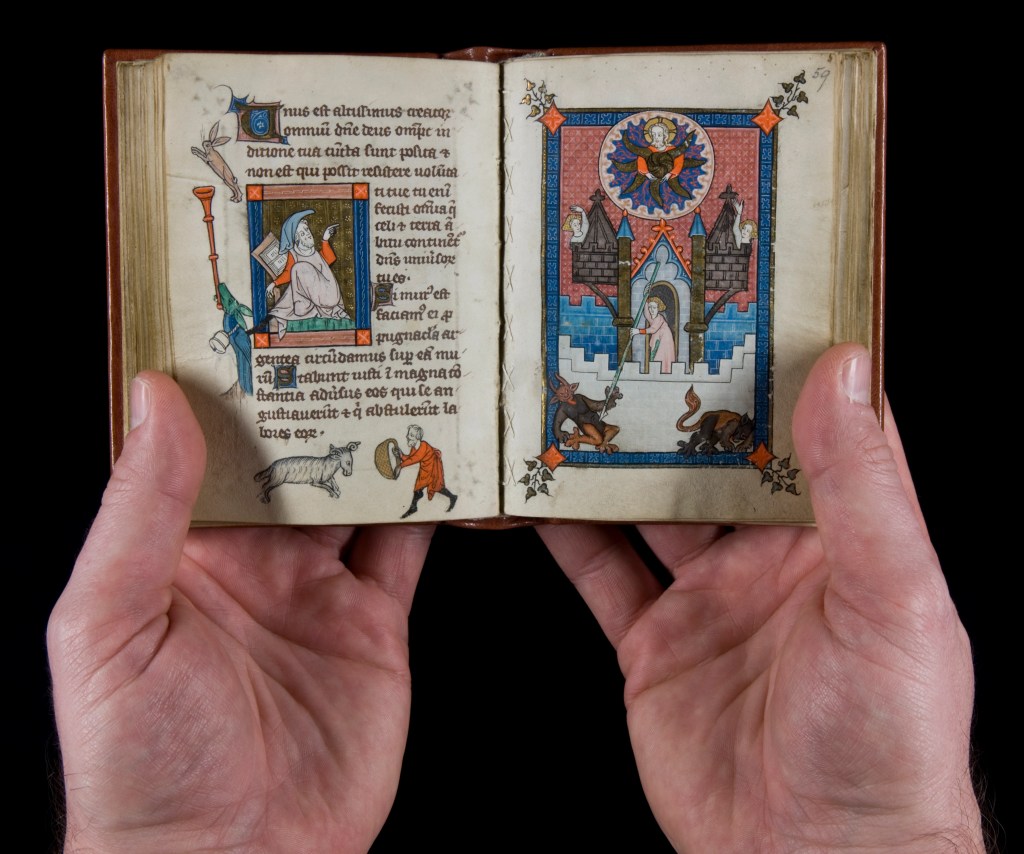

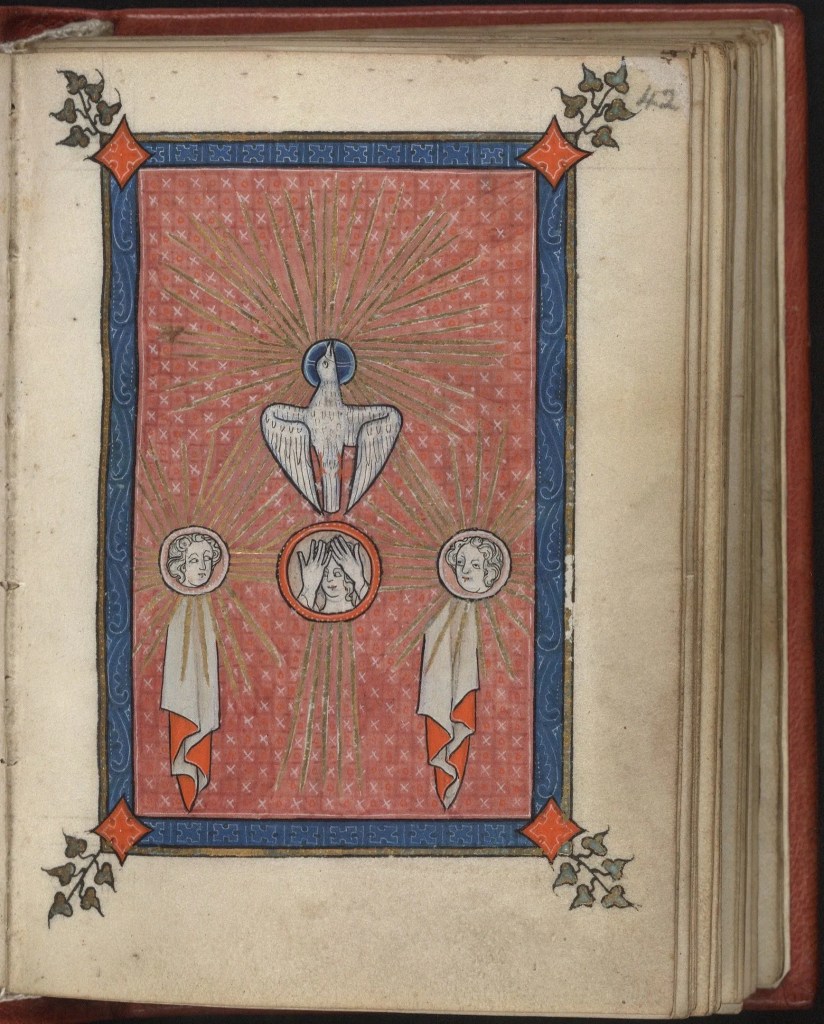

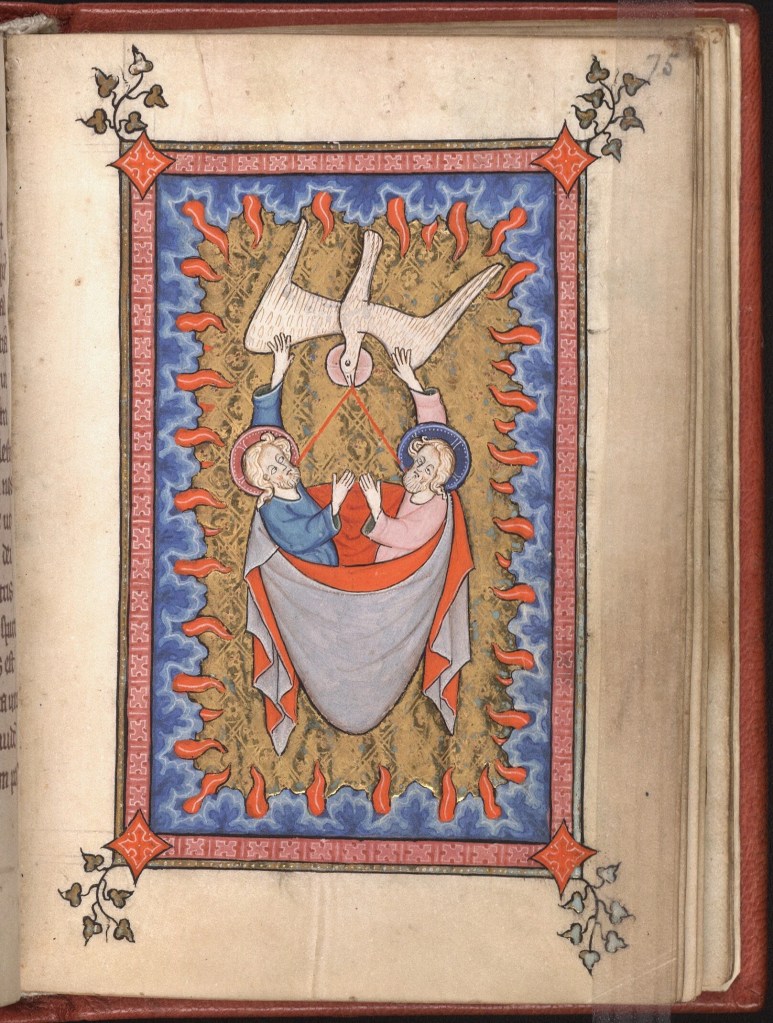


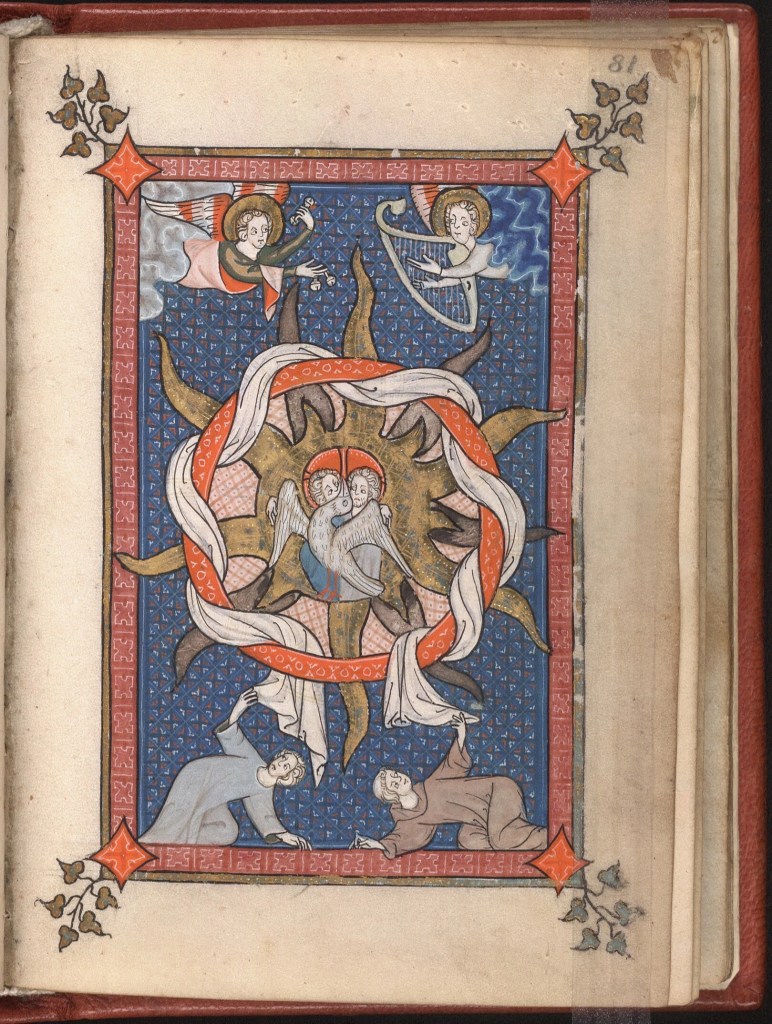


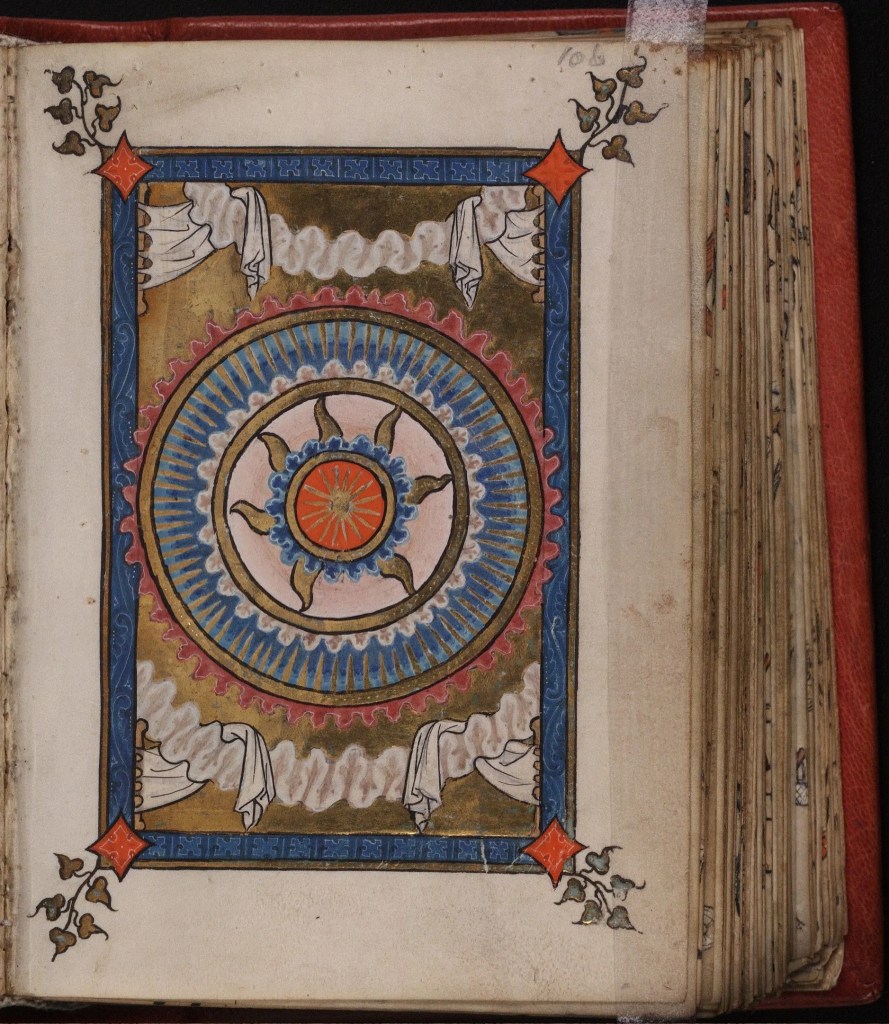


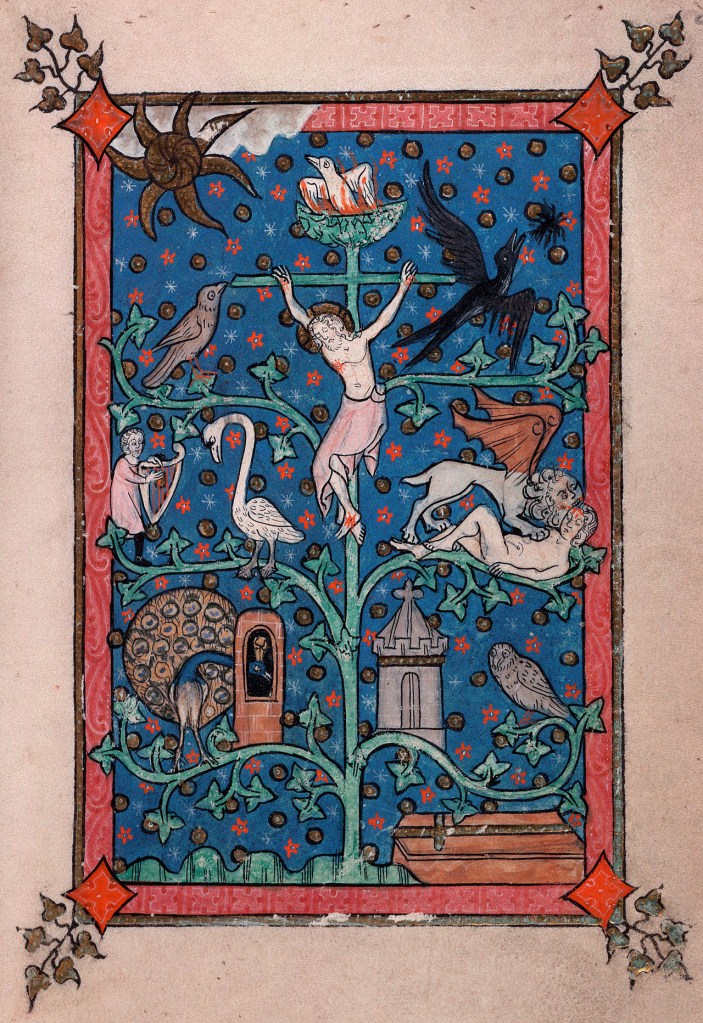
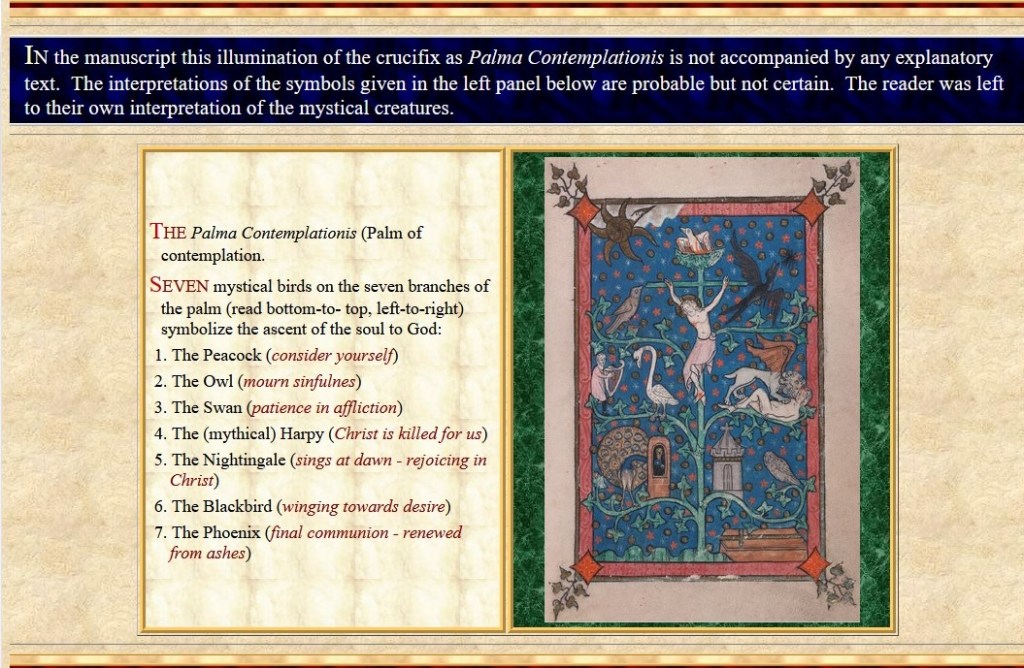
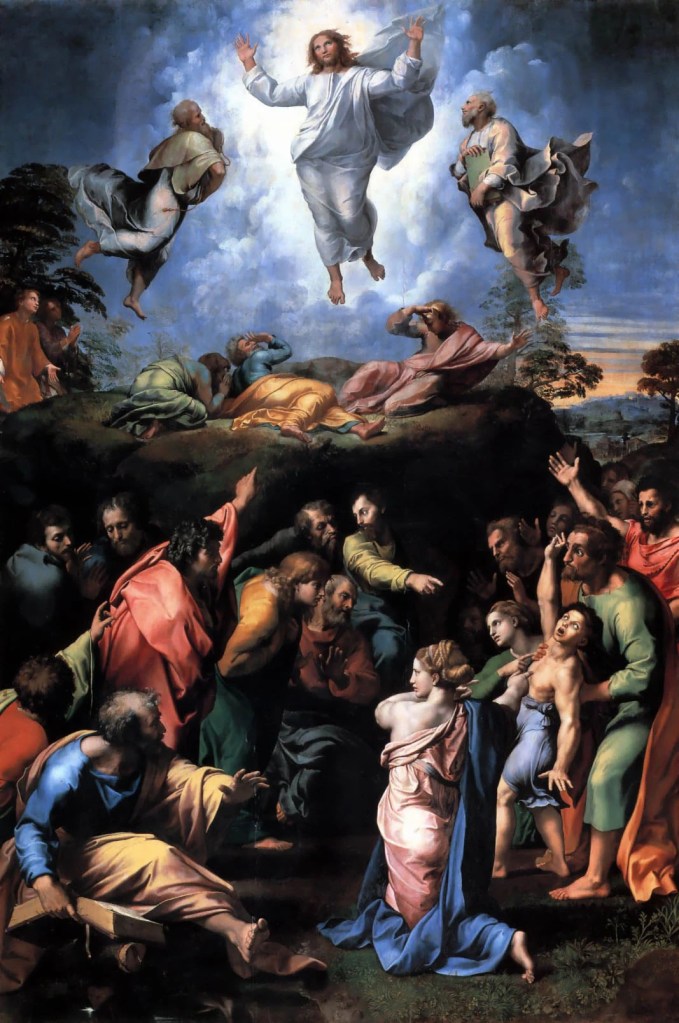

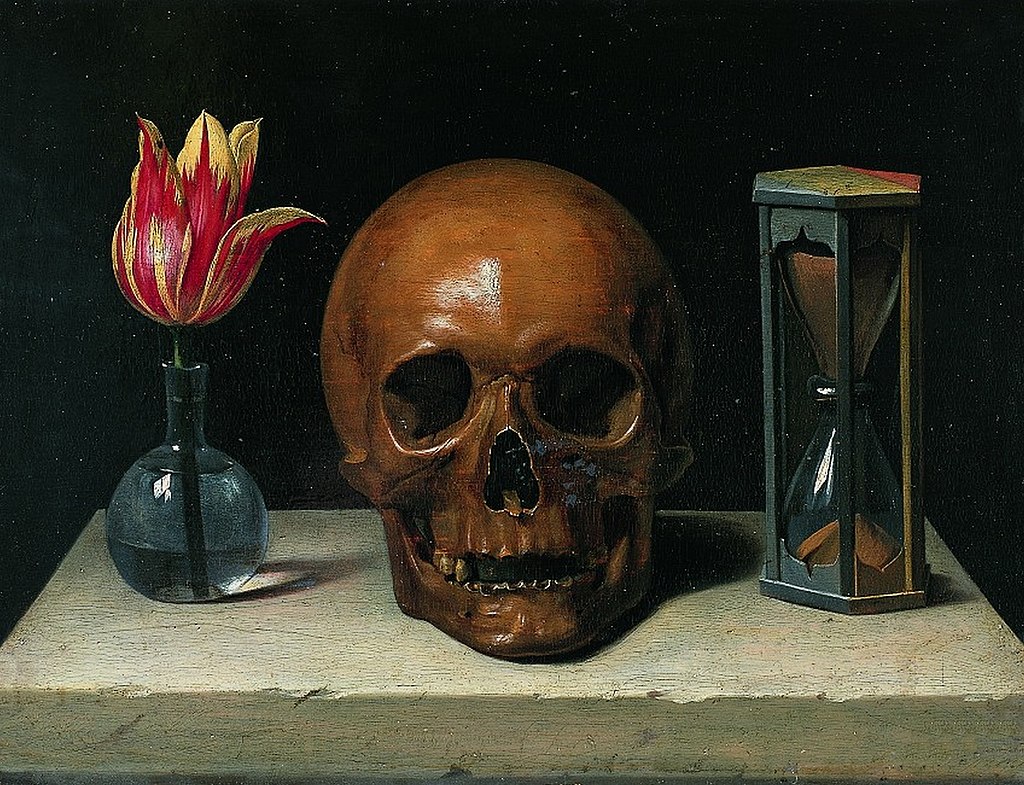
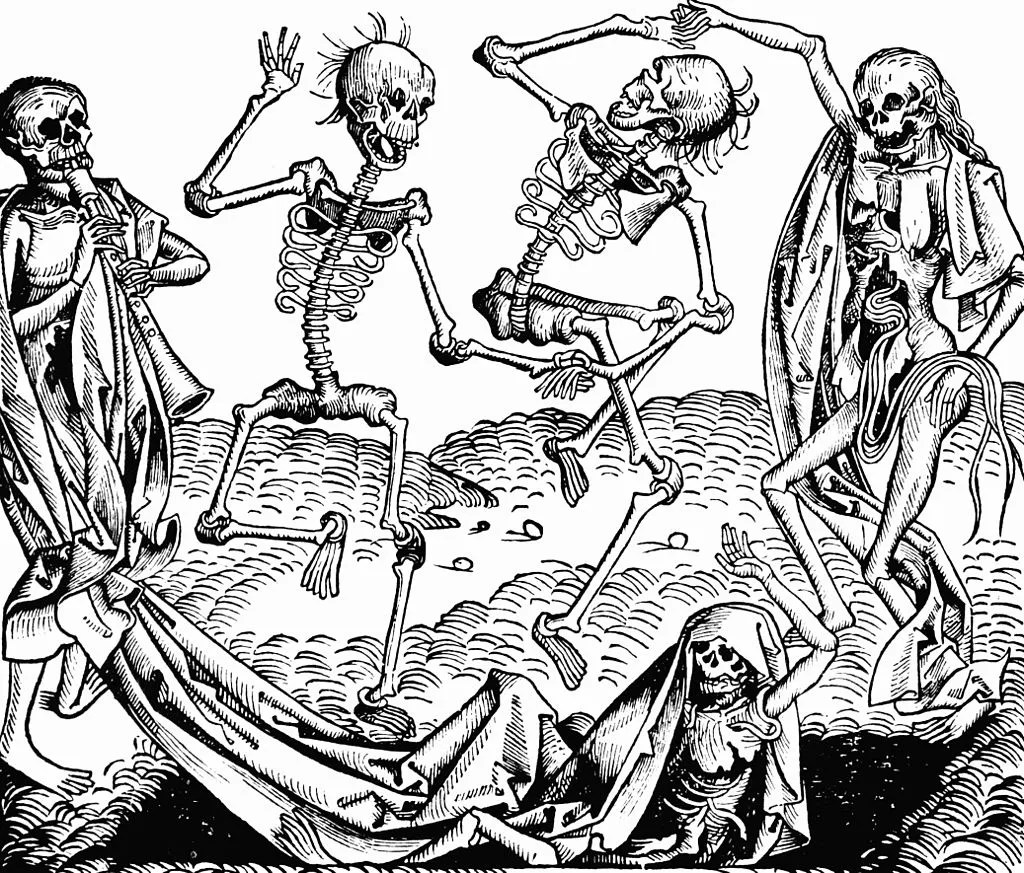
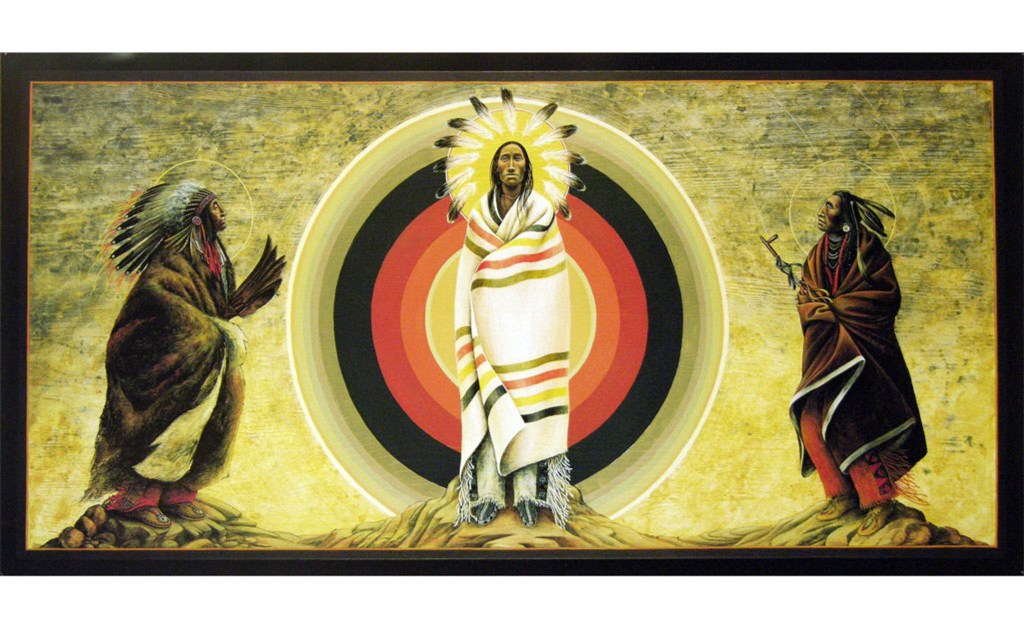

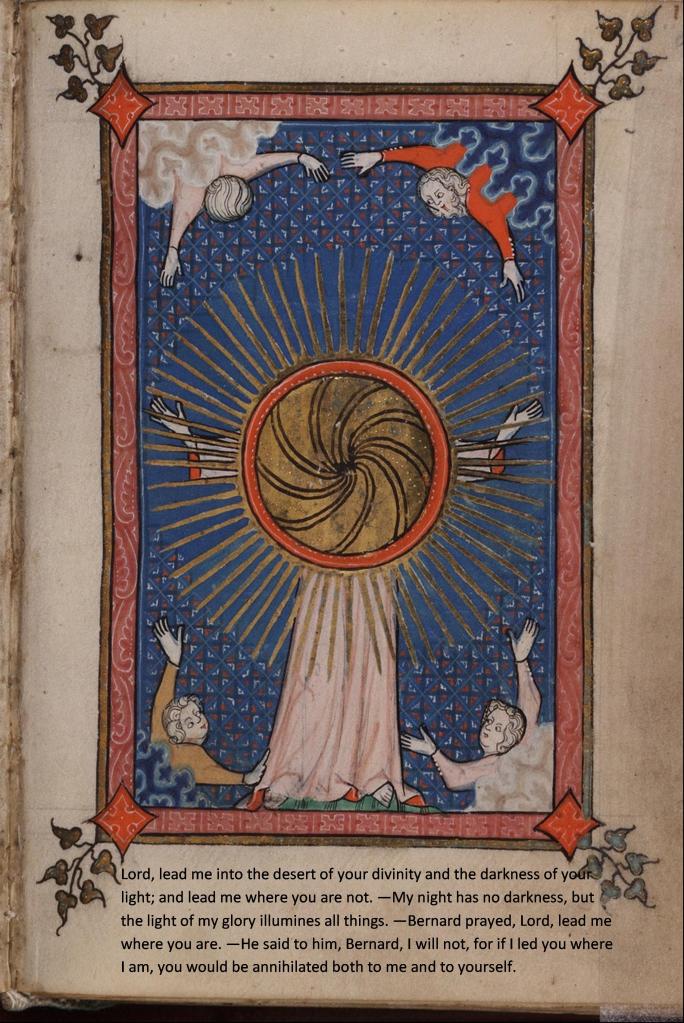
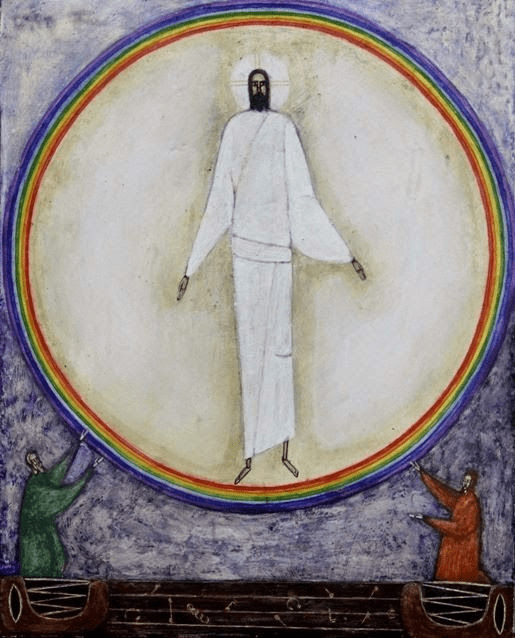

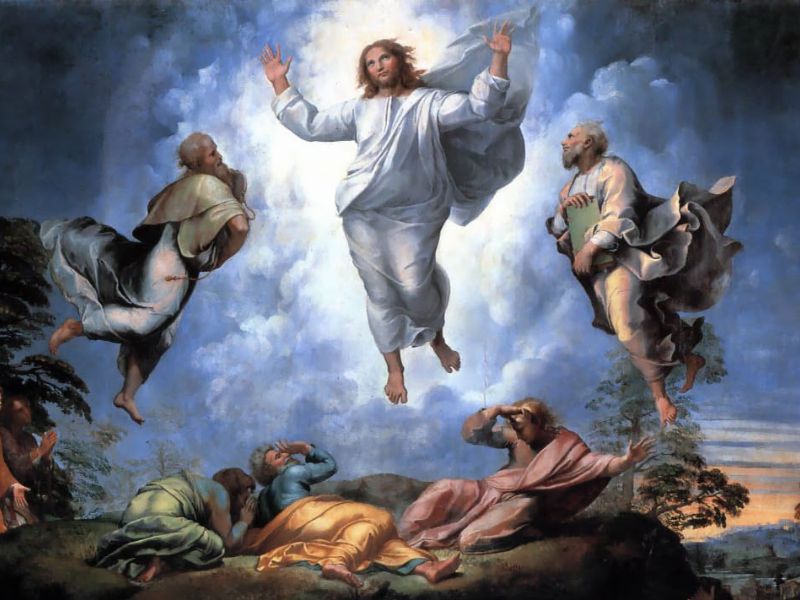

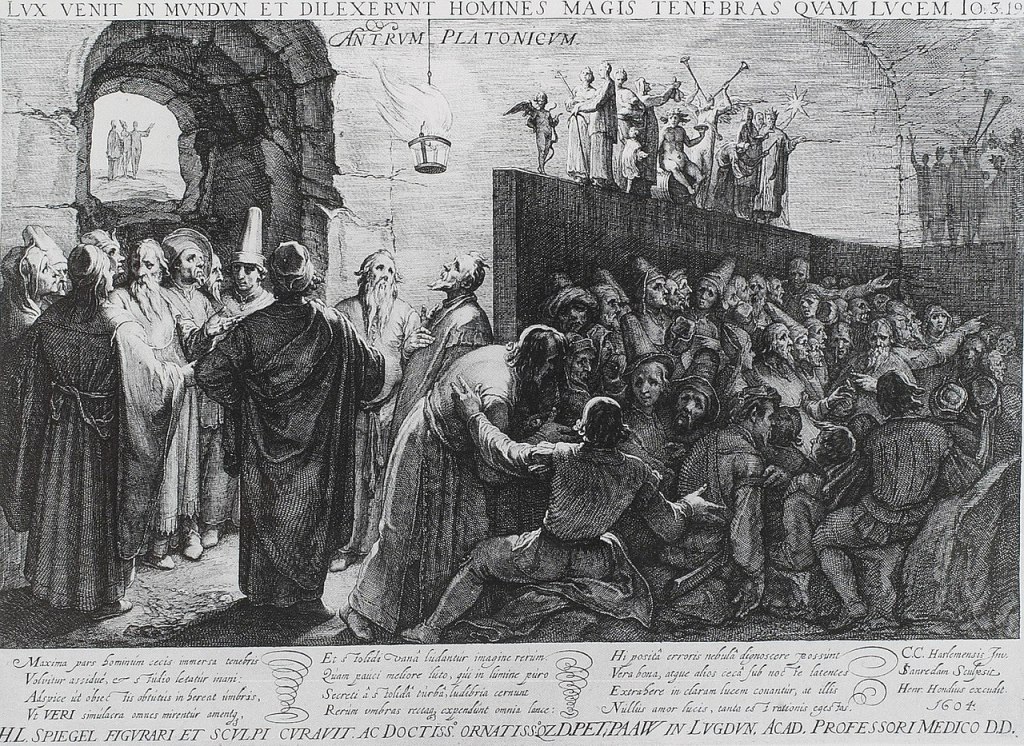
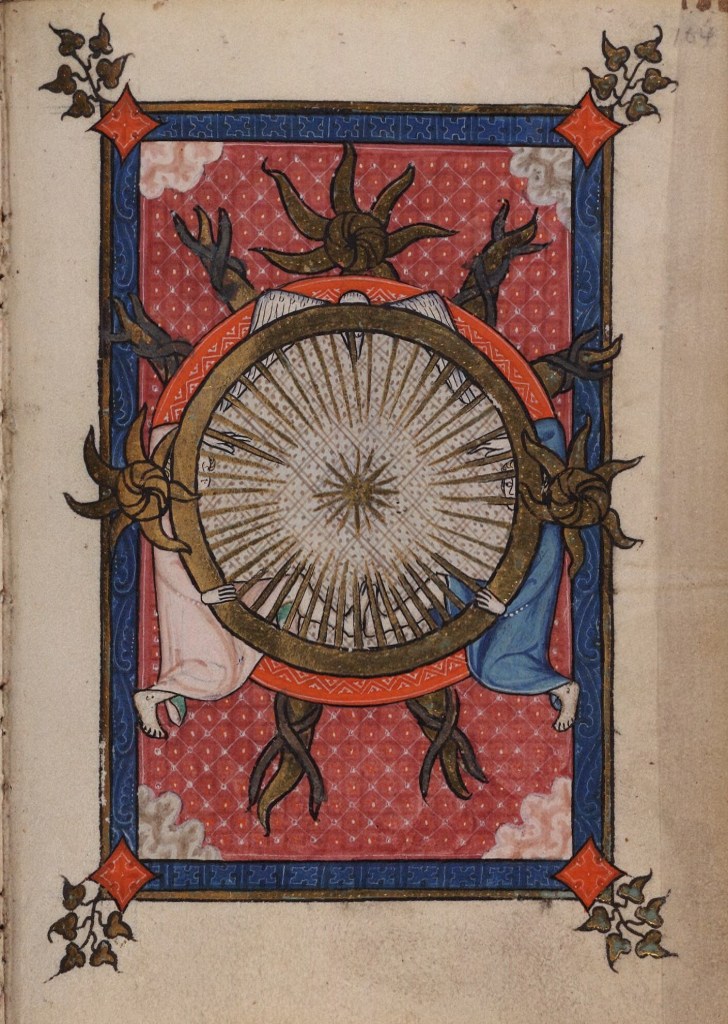

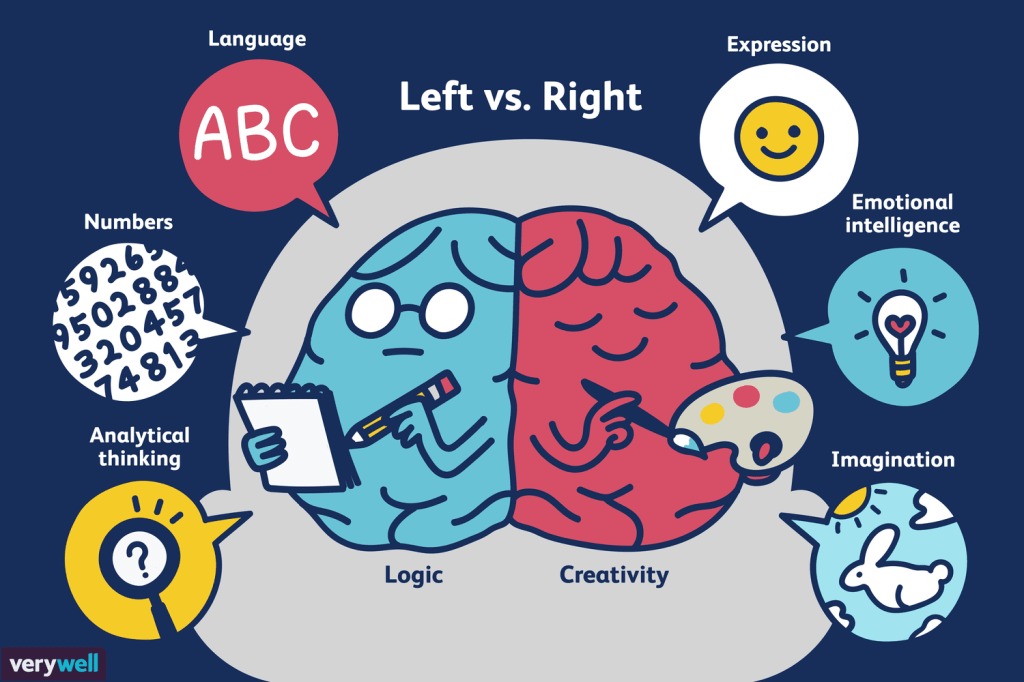
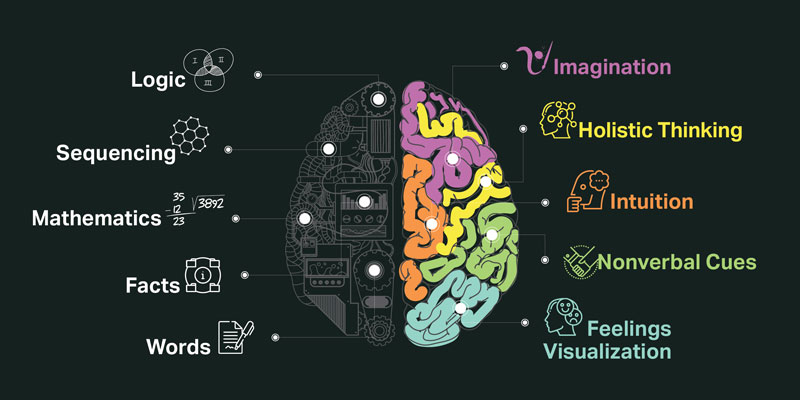
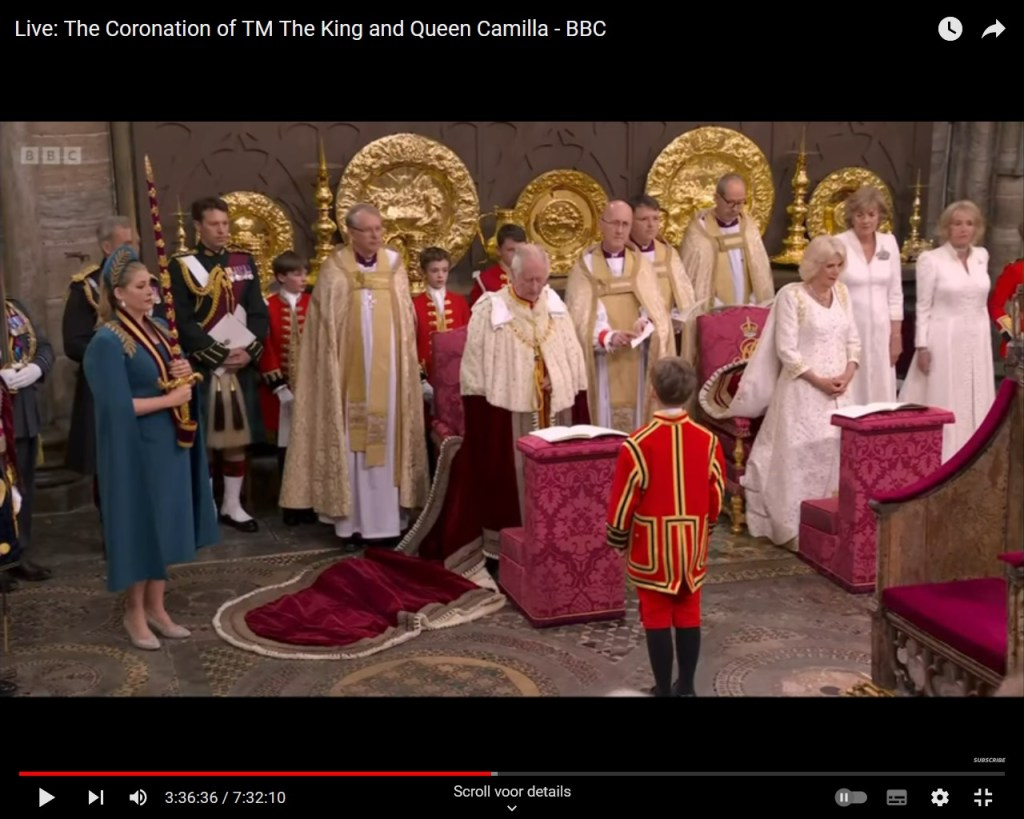
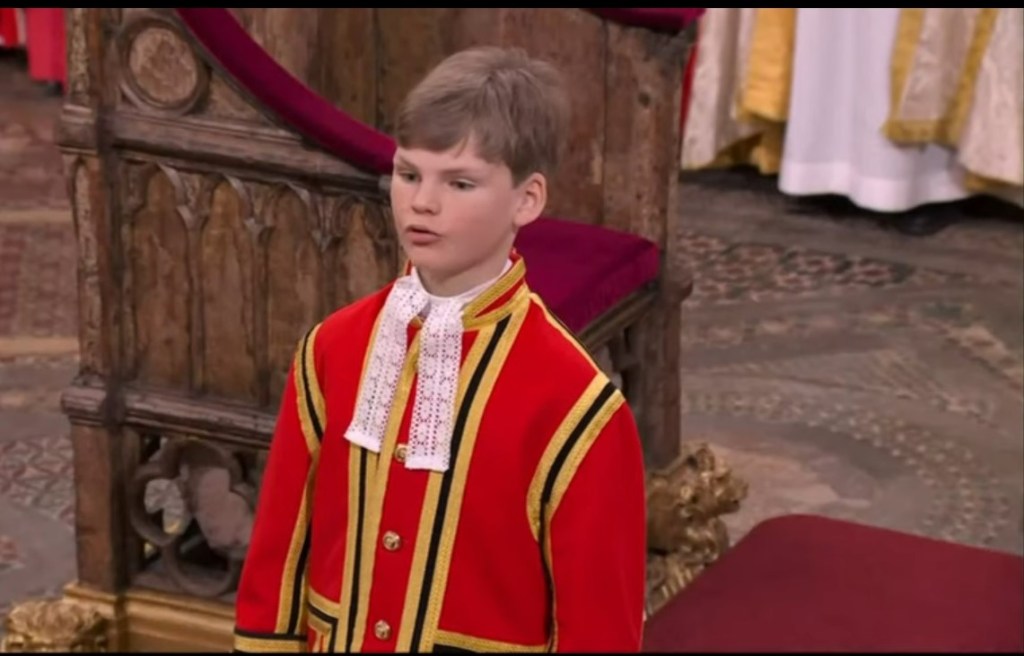
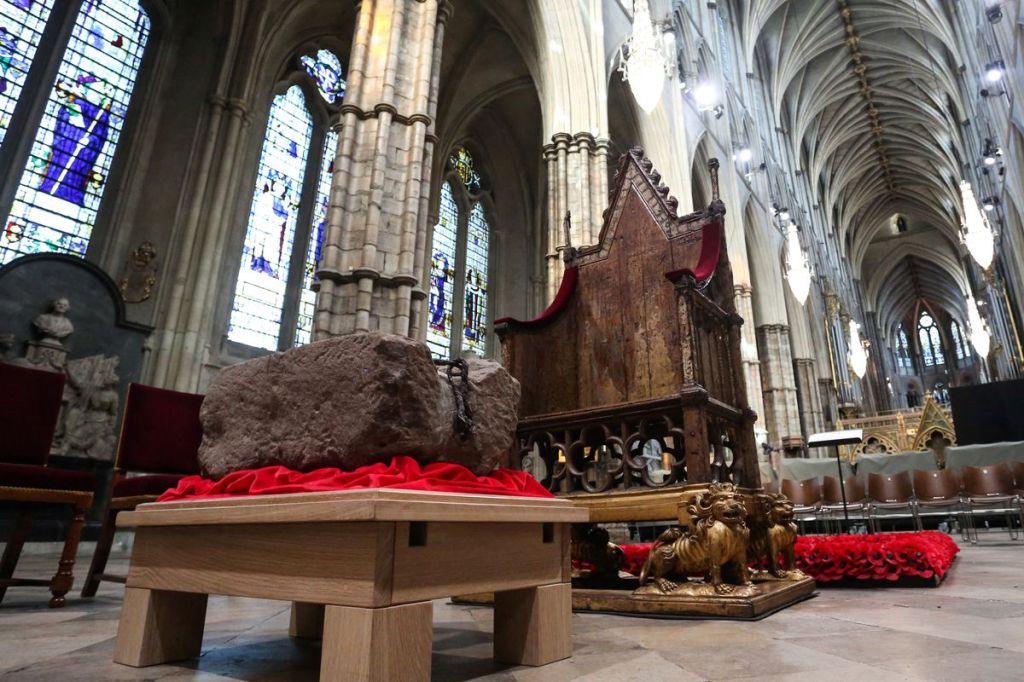
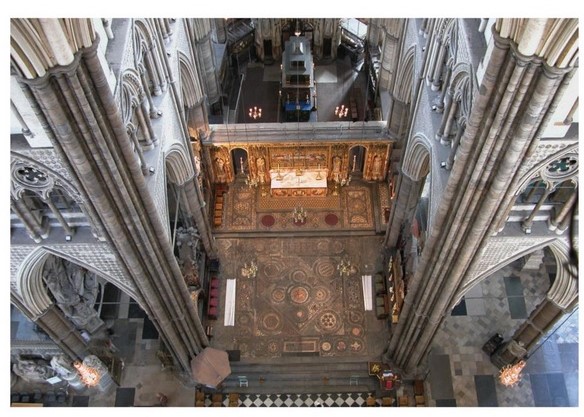
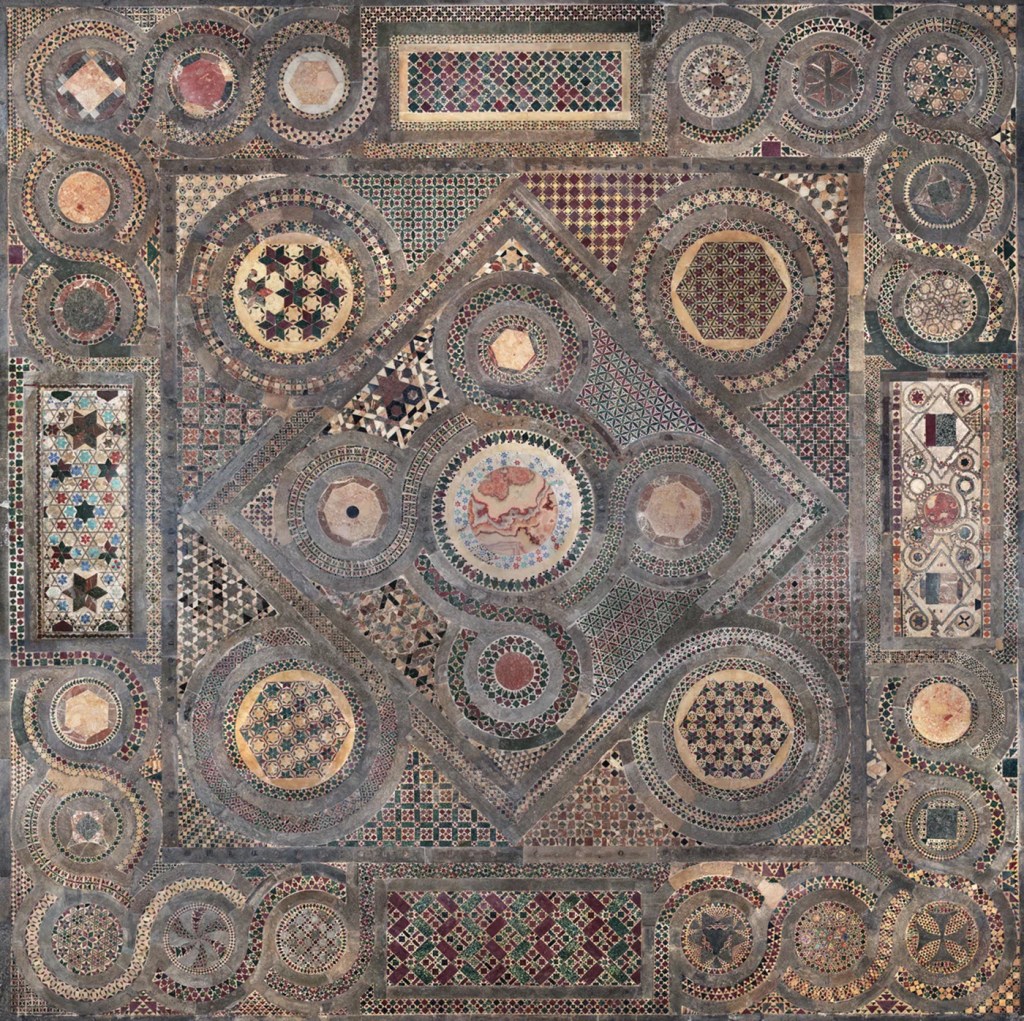
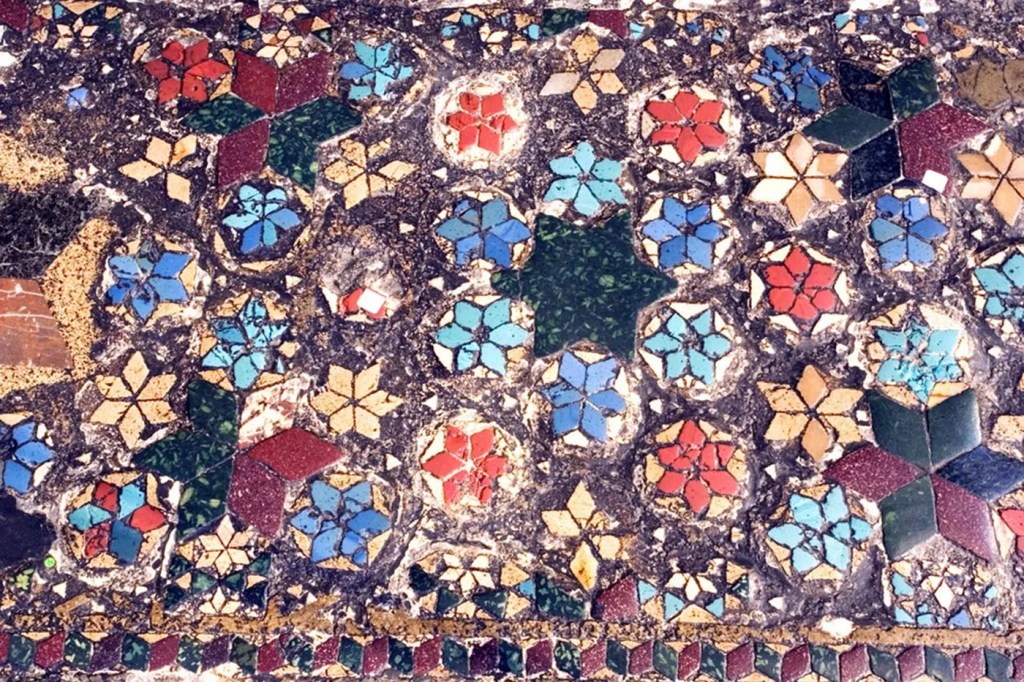
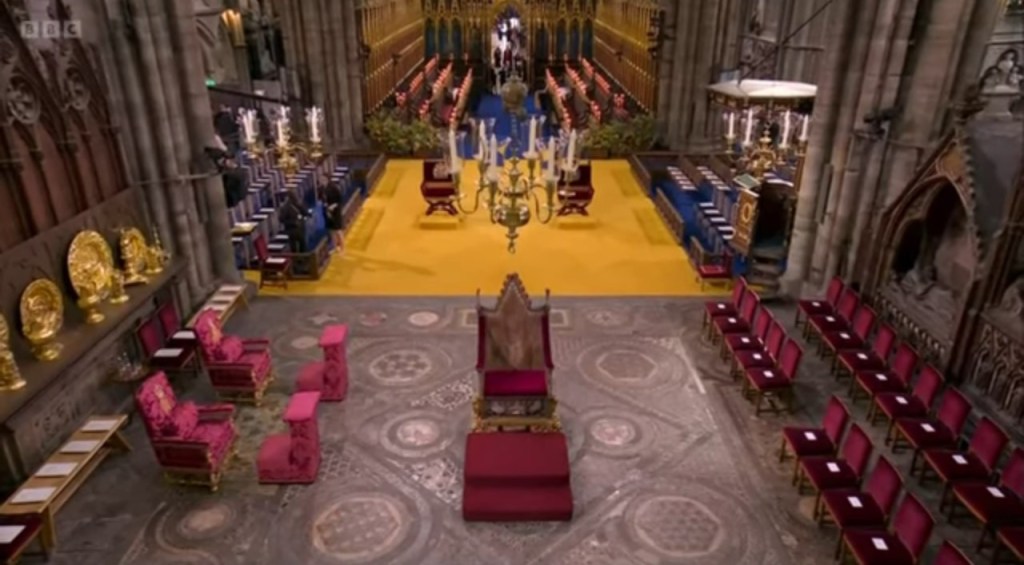
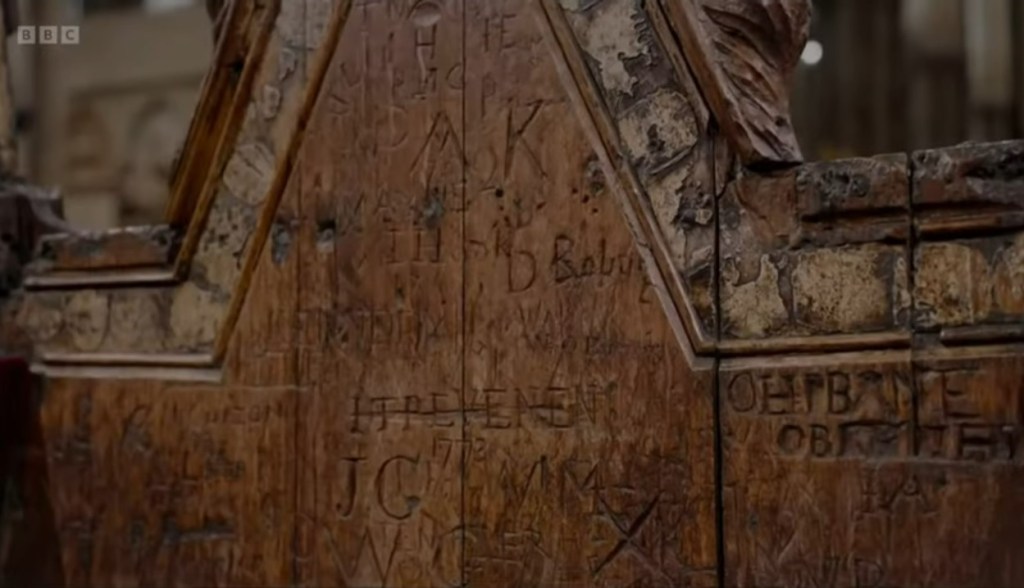
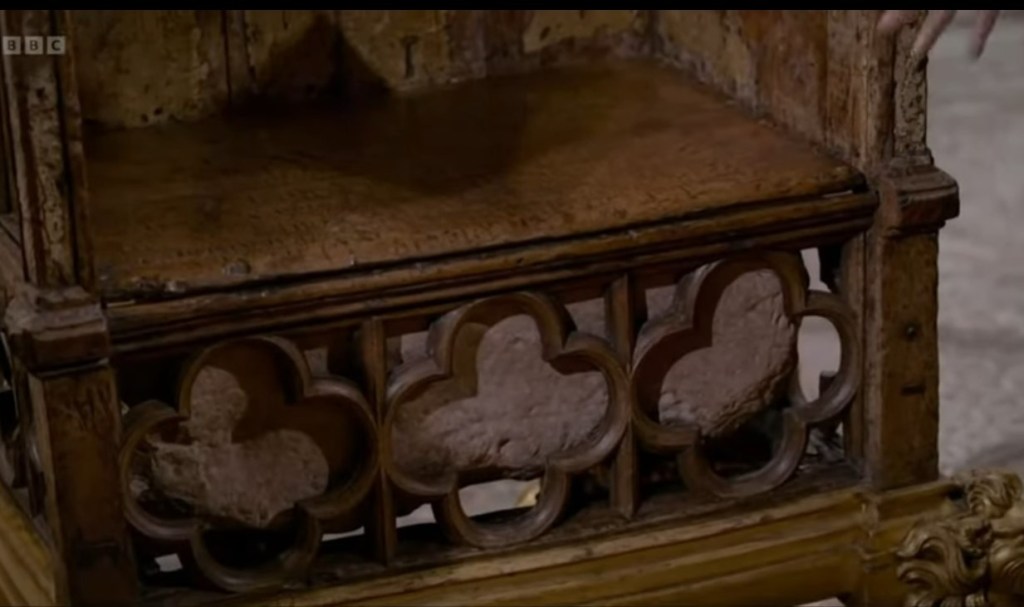
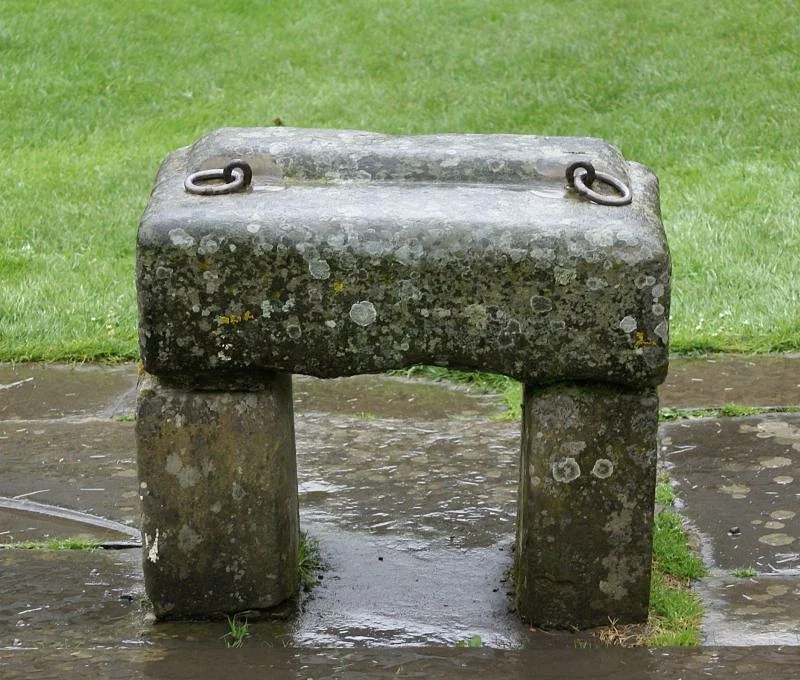
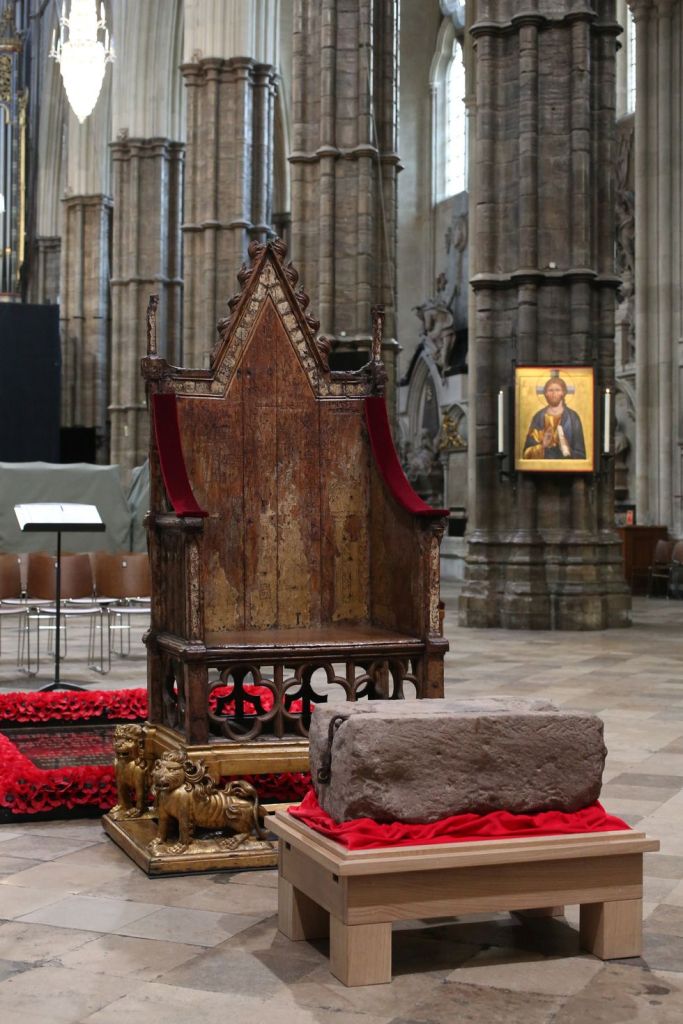
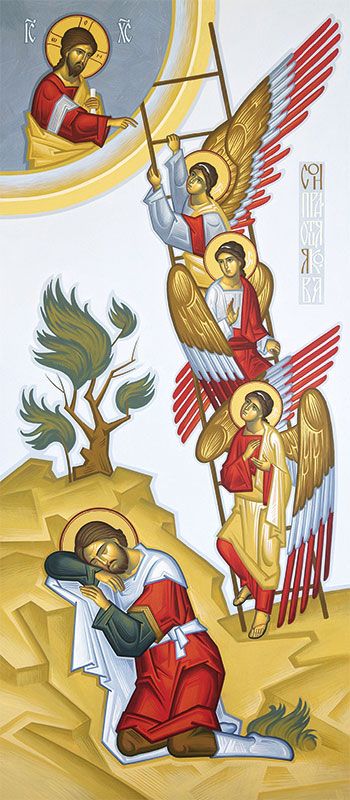
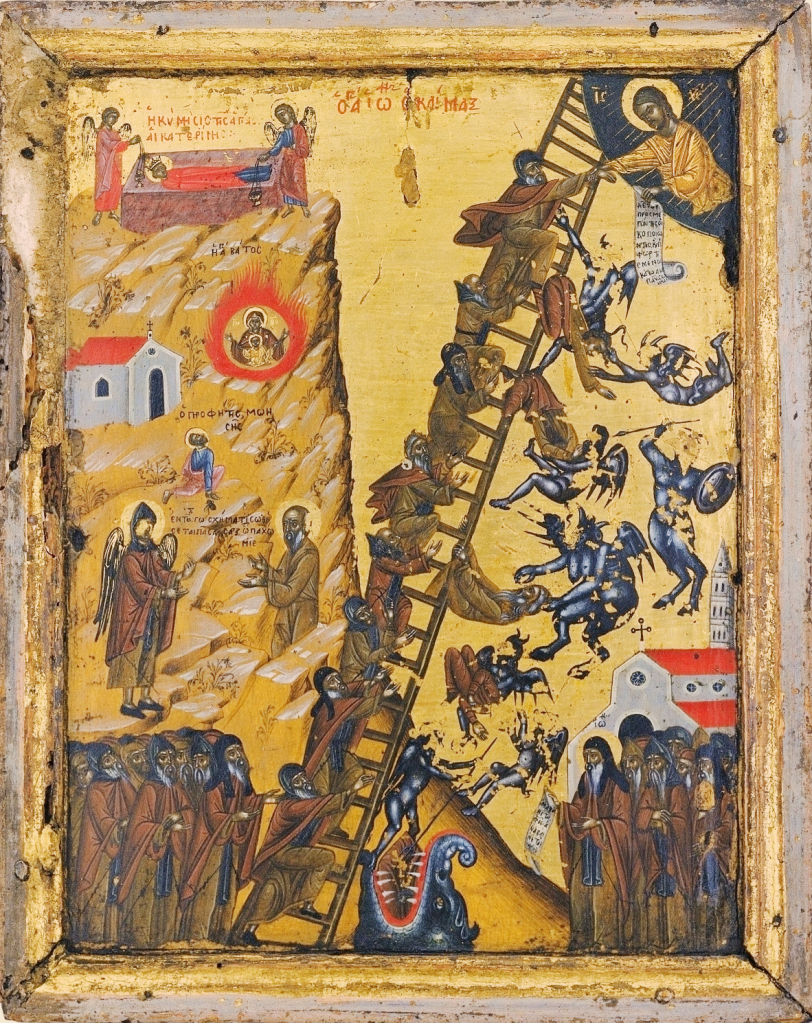
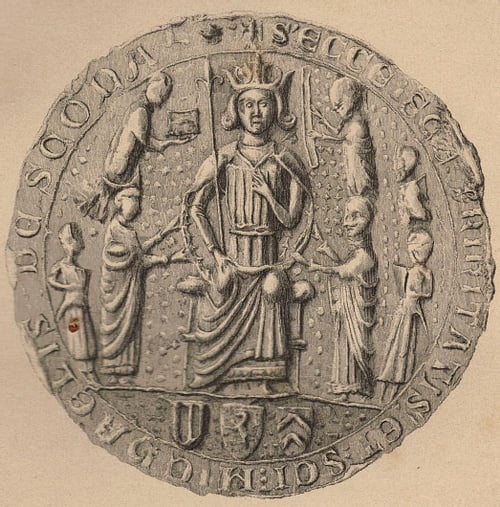
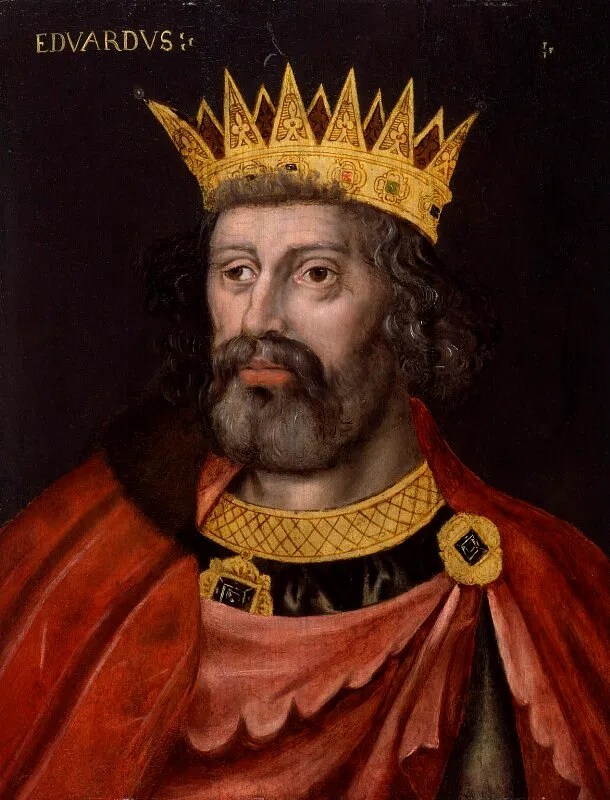
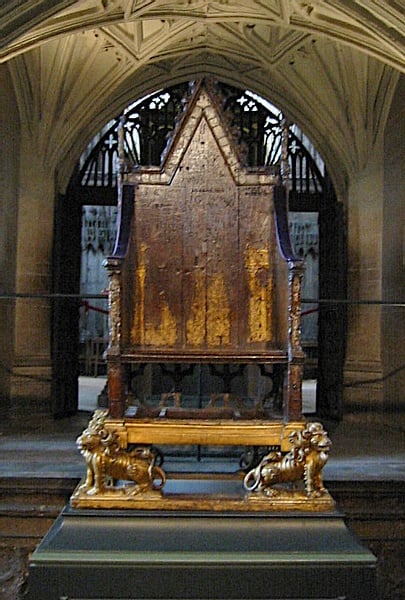
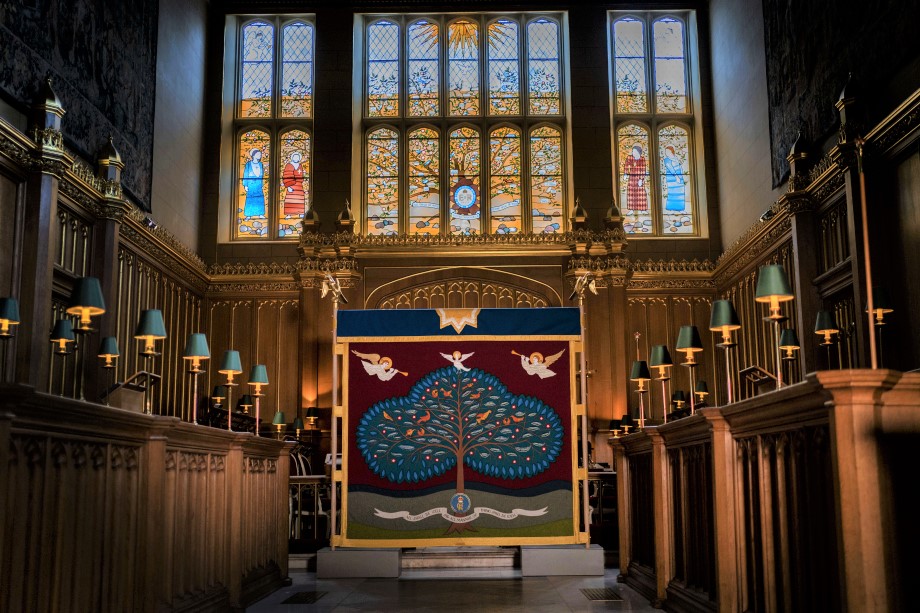
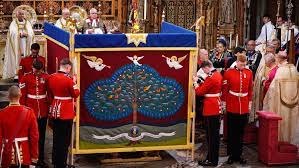
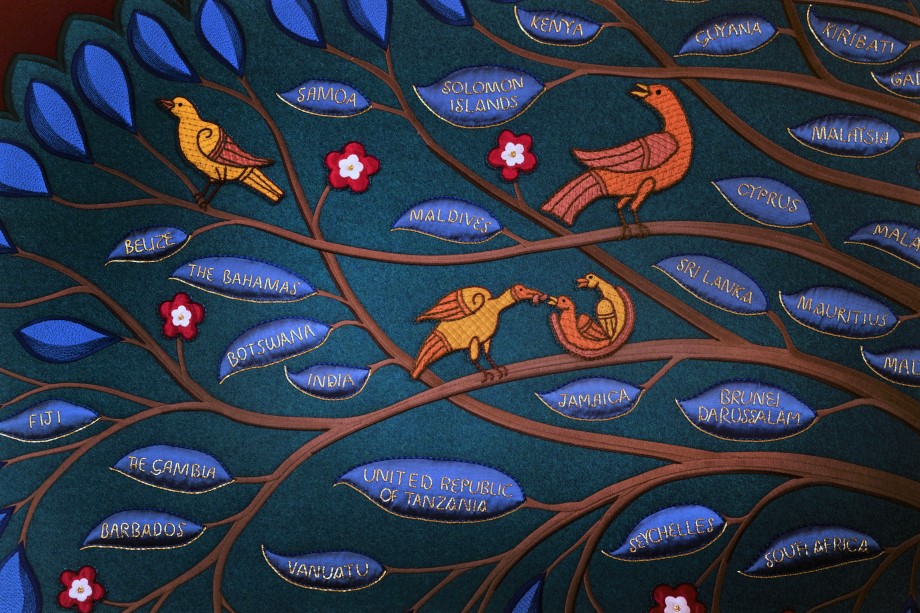
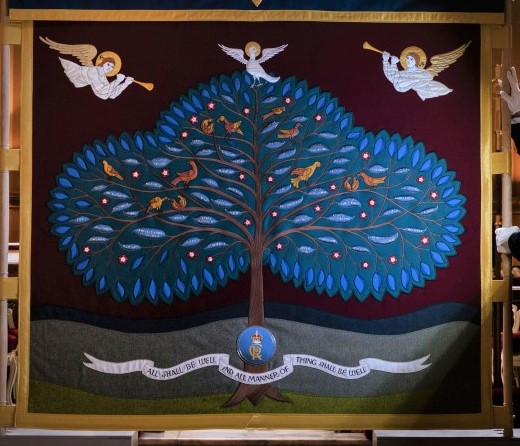
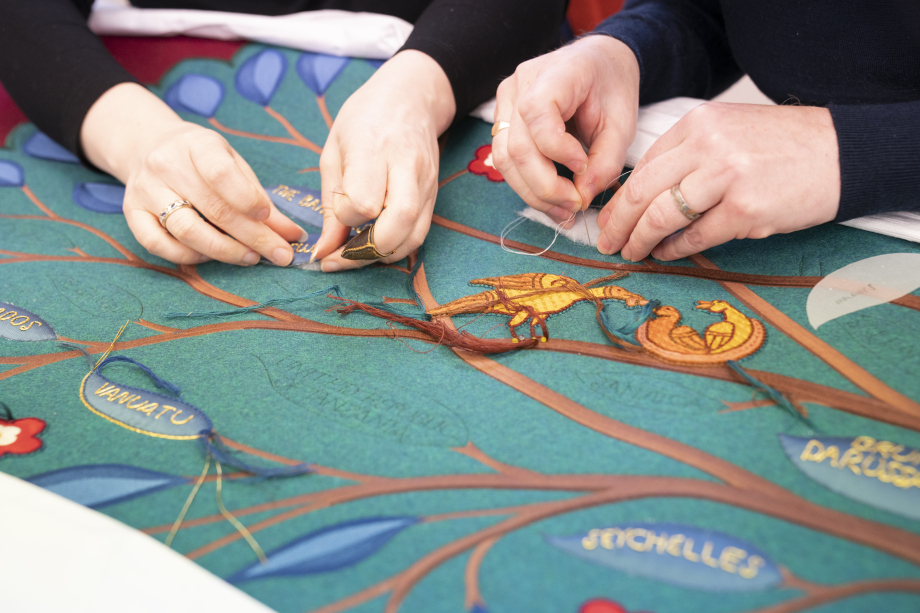
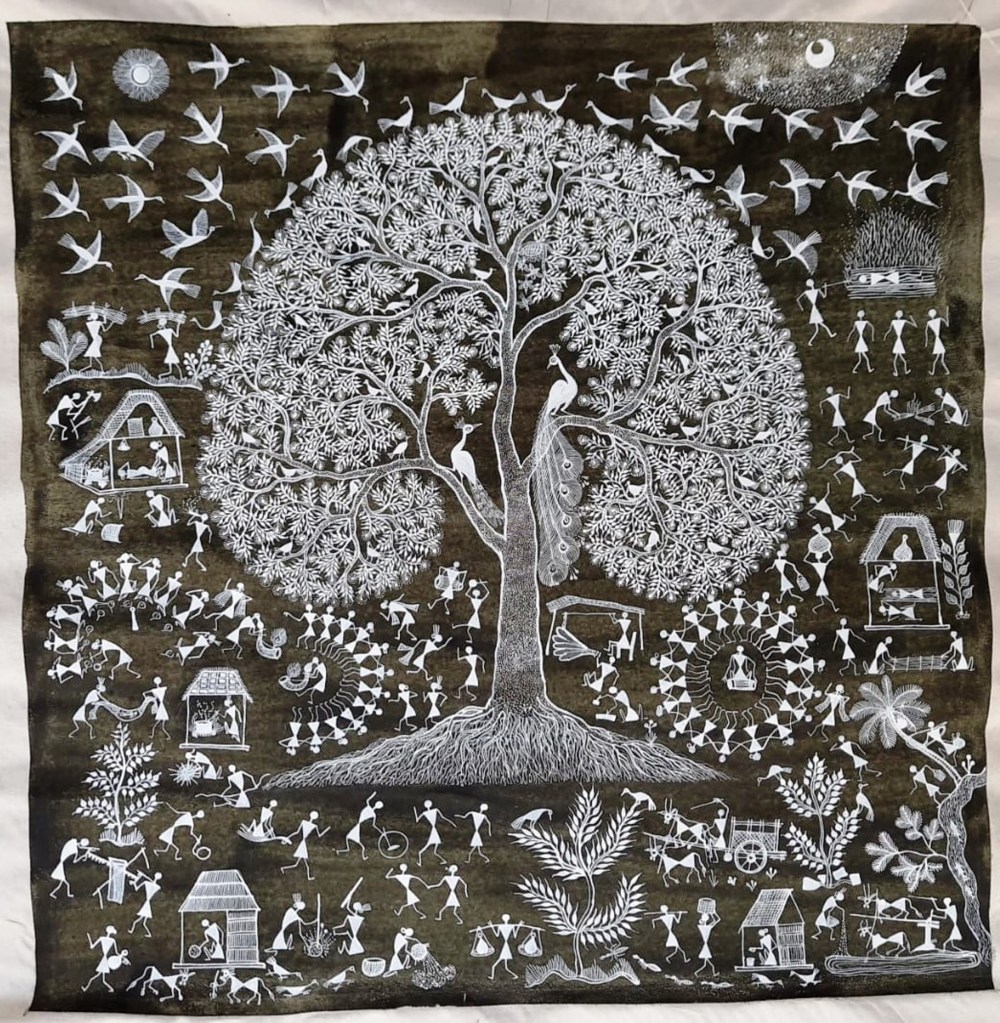
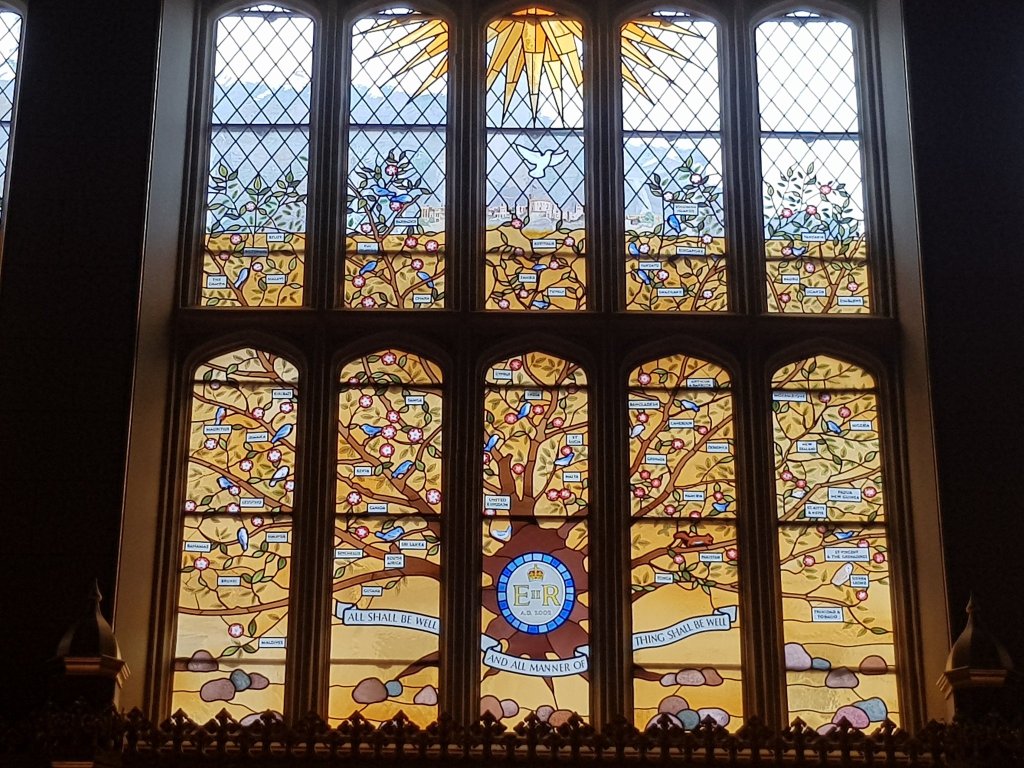
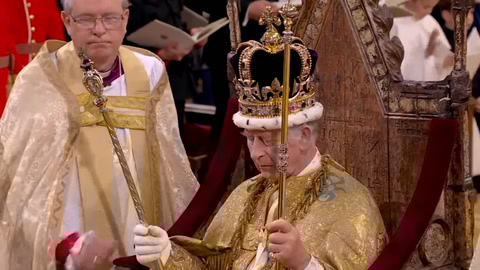
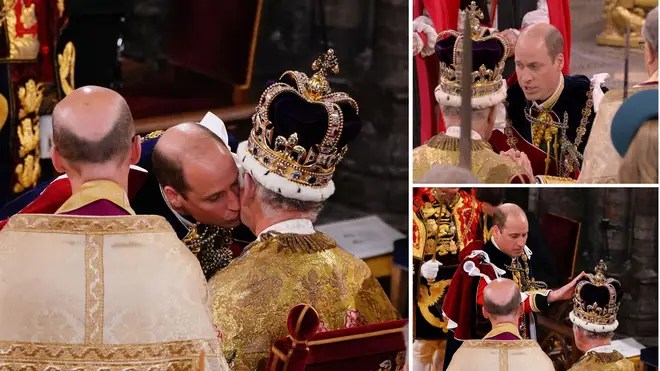
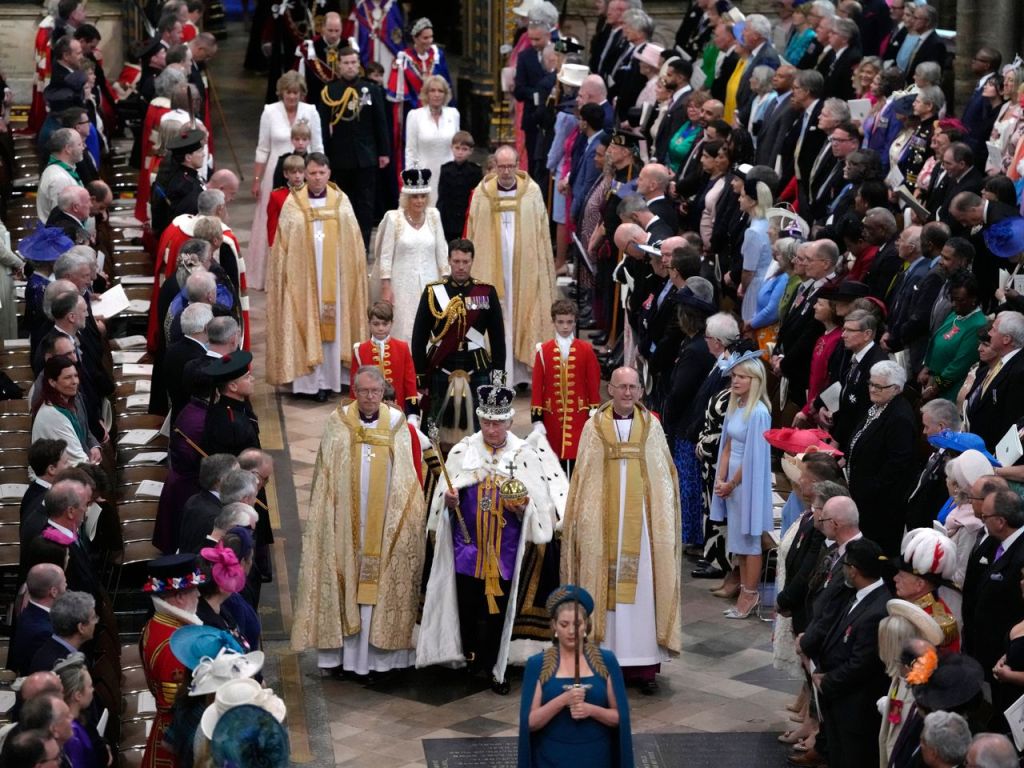
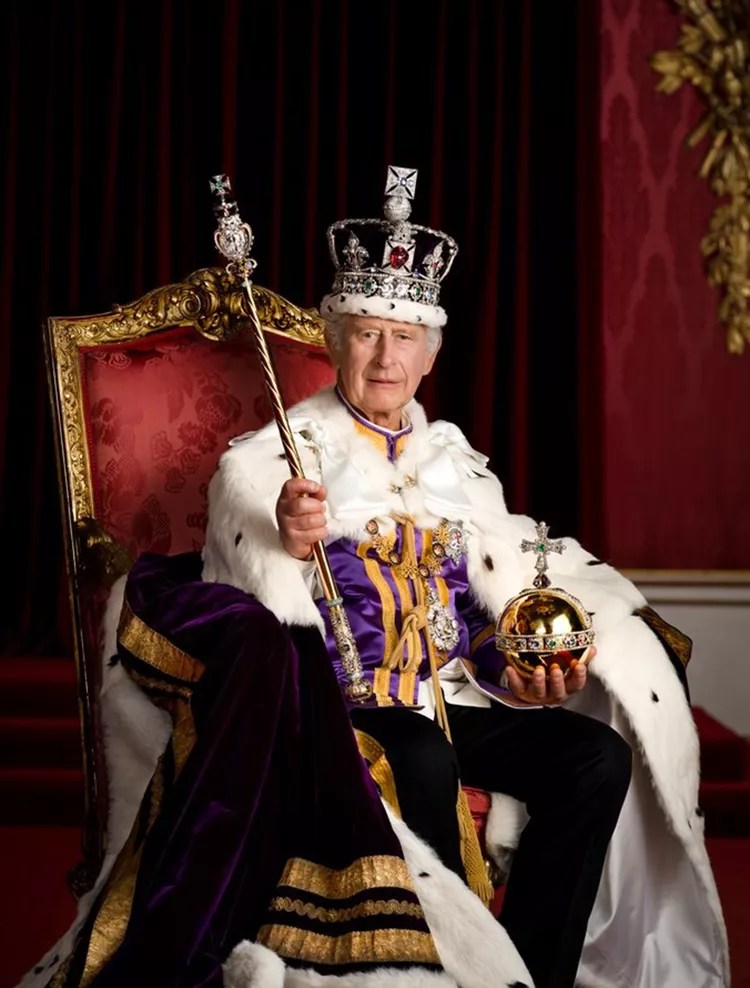
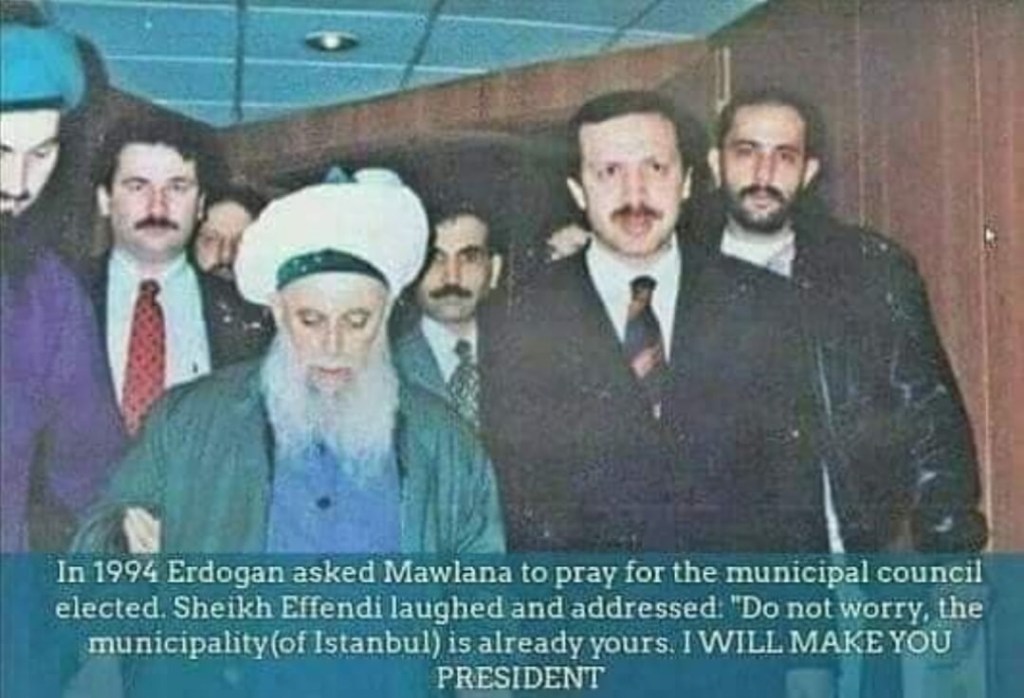
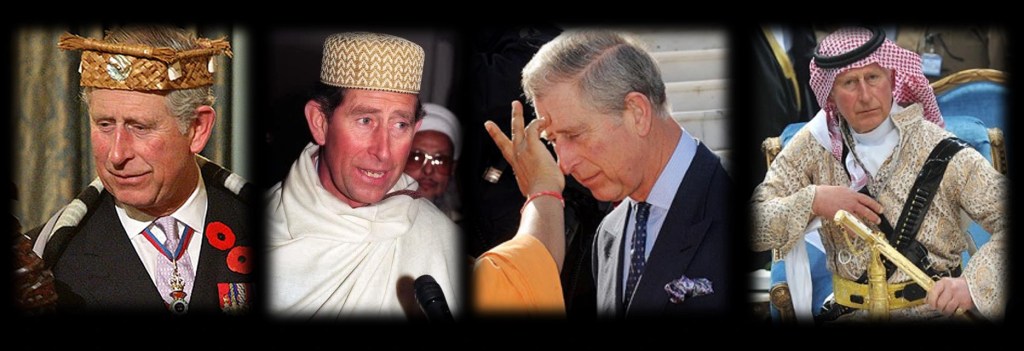
 Path to the Maypole of Wisdom