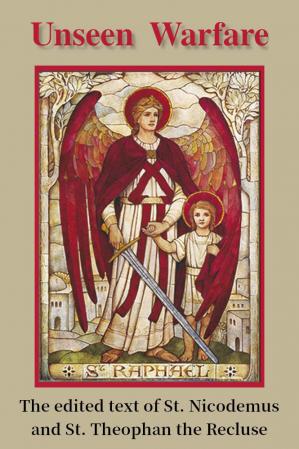
This spiritual classic, Unseen Warfare, was written by the Catholic priest Lorenzo Scupoli, then after seeing its value, later edited and revised by St. Nicodemus of the Holy Mountain and St. Theophan the Recluse. In the same spirit as the Philokalia and other writings of the Orthodox Holy Fathers, this book offers detailed guidance for anyone desiring to please God. Look also Polishing your heart, Virtues Ethic for a modern Devotion in our times
This recording is chapter 9: “On Protecting the Mind From Too Much Useless Knowledge and Idle Curiosity.” The teaching will be especially helpful for the naturally quick-witted and argumentative, those consuming news and current events, and anyone struggling to avoid distractions and submit their will to Christ. Quoting St. Basil the Great, “Let listening to worldly news be bitter food for you, and let the words of saintly men be as combs filled with honey.”
Rich in its references to the teachings of the saints and Fathers, Unseen Warfare combines the insights of West and East on that spiritual combat which is the road to perfection and the stripping away of all that militates against it. St. Theophan wrote in his foreword, “the arena, the field of battle, the site where the fight actually takes place is our own heart and all our inner man. The time of battle is our whole life.”Read the book here
Introduction
There is a war going on outside and there is a war within. We are all tired of these wars and wish they would cease. We want the world to change. Most of us wish things around us were different and most of us wish we could change things inside of us. But how can we change ourselves so as to change the world around us? We are broken, discontent and lost. However, as God has demonstrated throughout history, He is exceedingly proficient at pulling off His will through messed up people in pretty crazy and amazing ways.
Our brokenness can be fixed. We can be healed. This can be accomplished this through learning about and practicing unseen warfare, which is ascetical theology. This is the foundation of the spiritual life which is the way to healing, and the way to healing is the path towards God. As Evagrius said, “People become better as they come nearer to God.” Therefore this is a spiritual and religious process of re-linking one’s soul to God, which ends in communion with God. Through God we can be fully restored.
Referring to the spiritual life in terms of war is a little intense for some. The modern spiritual enthusiast might prefer softer terms such as “self improvement” or “self help” or “self realization”. I prefer referring to this as unseen warfare because this explains with precision the active work that self improvement requires. It is “unseen” in that is takes place in the mind and heart of a person.
It is “warfare” because there is an intense conflict in ones thoughts, feelings, desires and urges during the process of change. It is a war, and it requires warfare—daily confrontation with the bad habits and patterns that we have established over time. This is what Jesus Christ was referring to when he said, “Think not that I am come to send peace on earth: I came not to send peace, but a sword” (Matt 10:34). It may sound like a paradox, but as Aristotle said, “we must make war so that we may live in peace.”
Here we will explore this as taught in the Holy Sccriptures and the writings of the early Church fathers, desert monks and nuns and mystics throughout the ages. We will be delving into the writing of the great early spiritual writers and ascetics from both eastern and western Christian traditions as well as some more modern theologians and philosophers.
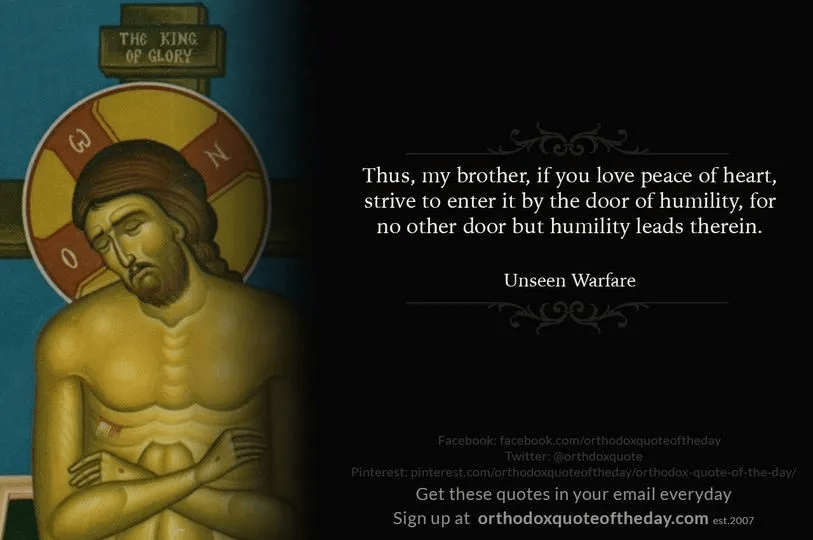
“You must never be afraid, if you are troubled by a flood of thoughts, that the enemy is too strong against you, that his attacks are never ending, that the war will last for your lifetime, and that you cannot avoid incessant downfalls of all kinds. Know that our enemies, with all their wiles, are in the hands of our divine Commander, our Lord Jesus Christ, for Whose honor and glory you are waging war. Since He himself leads you into battle, He will certainly not suffer your enemies to use violence against you and overcome you, if you do not yourself cross over to their side with your will. He will Himself fight for you and will deliver your enemies into your hands, when He wills and as He wills” — Unseen Warfare, Lorenzo Scupoli (16th century)
Through the course of this website you will be learning the basics of spiritual warfare. Some will be theoretical but much will be practical. We will be learning about the following topics: the Goal of unseen warfare, who the enemy is, the location of the battlefield (the soul), the anatomy of the soul, the passions, how to overcome bad habits with good habits, the virtues and the vices (the long lists), how to think straight and overcome destructive thoughts, self examination, self control & self denial. We will also cover a brief survey of illumination & perfection which will include contemplation, uncreated light, hesychasm, dispassion & theosis, most of which may be largely out of the reach of us who live not in a cave.
The aim of this endeavor, that is undertaking unseen warfare, is not to find happiness or consolation in this life, nor is it to be viewed as a “self help” system. Although these are the natural outcome of success in spiritual warfare, they are not the actual end game in victory. As C.S. Lewis said,
“I didn’t go to religion to make me happy. I always knew a bottle of Port would do that. If you want a religion to make you feel really comfortable, I certainly don’t recommend Christianity.”
–C.S. Lewis
The goal of unseen warfare is to reconnect with God. As outlined in the scriptures, this is a road of affliction and suffering. After all Jesus said that this for the modern American. Therefore, wanting to do this is a bit crazy. You have to be nuts to be excited about wanting to destroy yourself and all your desires. The American way is, “you deserve it” or “just do it!” or “You can do anything you want as long as it doesn’t hurt requires each of us to bear our own cross. This includes dying to our self and also rising again as a new man in Him.
The early Greek philosophers, and later, the Church saints and mystics, knew that desire and pleasure do not produce happiness, but instead produce suffering. So the ascetic is embracing suffering and even uniting it to Christ to overcome suffering. This makes no sense to the world. As stated eloquently by St. John Climacus in the Ladder of Divine Ascent:
“All who enter upon the good fight, which is hard and close, but also easy, must realize that they must leap into the fire, if they really expect the celestial fire to dwell in them.”
–St John Climacus
When choosing to engage in any level of ascetic practice, one thing is for certain. We will be challenged, tested and we will fail. In fact, we will fall on the battlefield very often–even daily and even multiple times a day. Failure is a major component of this battle. And because the culture and world we live in is going in the opposite way of asceticism, the battle is all the more difficult, and at times may seem impossible. But be of good cheer, because the Church Fathers knew it would be difficult for us. Here is an entry from the Arena, by the Russian mystic, St. Ignatius Brianchaninov. I’m pretty sure this is describing our time.
“Once the holy fathers of the Egyptian Skete were talking prophetically about the last generation. ‘What have we done?’ they said. One of them, the great Abba Ischyrion replied: ‘We have carried out the Commandments of God.’ They asked him: ‘And what will those who come after us do?’ Abba replied: ‘They will do half as much as we have done.’ They again asked him: ‘And what will those who come after them do?’ Abba Ischyrion replied: ‘They will not have any monastic activity whatever, but they will be permitted to have troubles and afflictions, and those of them who persevere will be superior to us and our fathers.’”
— St. Ignatius Brianchaninov
This website of teachings and quotes is a warriors manual or field guide that can be referenced for inspiration. The quotes from the scriptures, saints and mystics herein quickly empower and inspire. Their words are like swords that cut through the modern worldview of materialism, relativism and individualism. By God’s mercy and grace, we can destroy our broken self and build up a new person in Christ. This is the way of true purpose, peace and contentment that is only fully realised when a soul is purified and united to the Godhead.
“Finally, my brethren, be strong in the Lord, and in the power of his might. Put on the whole armor of God, that ye may be able to stand against the wiles of the devil. For we wrestle not against flesh and blood, but against principalities, against powers, against the rulers of the darkness of this world, against spiritual wickedness in high places. Wherefore take unto you the whole armor of God, that ye may be able to withstand in the evil day, and having done all, to stand. Stand therefore, having your loins girt about with truth, and having on the breastplate of righteousness; and your feet shod with the preparation of the gospel of peace; Above all, taking the shield of faith, wherewith ye shall be able to quench all the fiery darts of the wicked one. And take the helmet of salvation, and the sword of the Spirit, which is the word of God: Praying always with all prayer and supplication in the Spirit, and watching thereunto with all perseverance and supplication…”
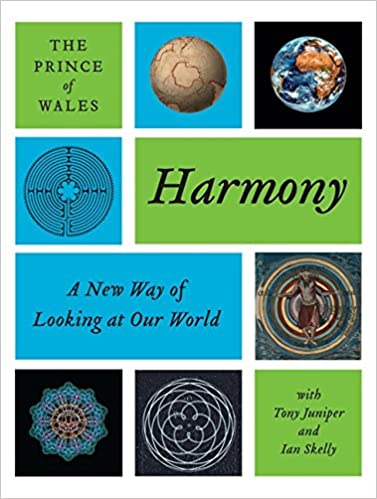
For the first time, His Royal Highness King Charles III, shares his views on how mankind’s most pressing modern challenges are rooted in our disharmony with nature. In the vein of Al Gore’s An Inconvenient Truth and Van Jones’ Green Collar Economy, Prince Charles presents the compelling case that solutions to our most dire crises—from climate change to poverty—lie in regaining a balance with the world around us. Here download
Sacred Web Conference 2006
The theme of the Conference was introduced by HRH The Prince of Wales in a 16-minute long, specially-videotaped address for the Conference. The video and text of the address are found here: Prince Charles’ speech and Prince Charles’ video
King Charles on his relation with Martin Lings (courtesy of a facebook friend):
“One of the great privileges of my life has been to know Dr. Martin Lings, whom I first met through my Patronage of the Temenos Academy which, in turn, came about through an introduction to Dr. Kathleen Raine by Sir Laurens Van der Post. See SAN PEOPLE: THE WORLD MOST ANCIENT RACE.
All three of these remarkable people have provided untold inspiration and support not only to myself, but to many others besides. Thus their absence from the scene makes the world a poorer place – poorer for the fact that they constantly reminded us of that invisible dimension in our existence which forms the underlying pattern of all manifestation and which has been so cruelly and brutally abused in our age.
In Dr Lings’ case, he saw beneath the surface of things and helped us to penetrate the veil behind which lies the sacred meaning to so many of life’s mysteries. He helped us to look beyond the literal and to comprehend that there are many layers of meaning within the hidden universe – something which science is now at last beginning to recognize through the acknowledgement of an inherent order and harmony to the world about us and within us.
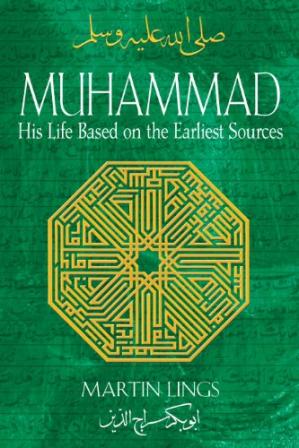
I used to look forward so much to what became an annual visit from Martin Lings when I had a chance to explore with him some of his inner discoveries, whether in the world of Shakespeare or of Sufism. One of Martin Lings’ greatest legacies – apart from his insights into the true significance of many of Shakespeare’s plays and his remarkable biography of the Prophet Muhammad – must surely be his timely reminder to us that Sufism, of which he was such a distinguished proponent, has always been at the spiritual heart of Islam, constantly reiterating the unshakable and sacred truths of love, compassion and forgiveness which seem to lie at the very sources of the light that lightens our darkness and which, if it illuminates our hearts, can engender that peace we all seek. It is an illuminated peace which I pray is now enfolding the departed spirit of dear Martin Lings.”
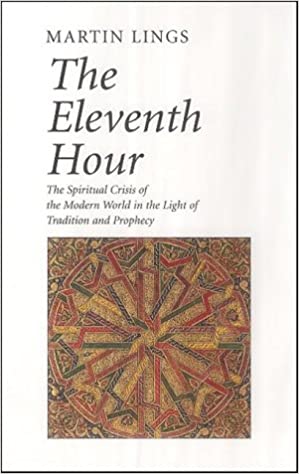
Martin Lings gives us from the outset powerful reasons for believing that we have now reached a point in time from which the end — whatever that may mean — is already in sight without being immediately imminent. In other words, we are now at an hour which is neither the tenth nor the twelfth. He argues that what Judaism, Christianity and Islam call the end of the world can be understood in the same non-absolute way. The concept of the Millenium, which is clearly the equivalent of the new Golden Age of the next cycle of time, is to be found in all three monotheistic religions, bringing them into line, in this respect, with Hinduism, Greco-Roman antiquity, and Buddhism.
Monarchies are Supported by Heavens, By Mevlāna Shaykh Nazim, discourse on January 1st, 1997
Respect Her Majesty the Queen. We are happy to be here in England. It is a blessed place. Every kingdom is blessed, a republic never can be. This is why I am happy to be here. I ask Allāh the Almighty to bless the Queen and her Royal Family, especially His Royal Highness Prince Charles. We support everyone who is trustworthy and asks for the Truth.
All curses come from those who run after devils and give their support to them. Respect and support the true ones. Find them and support them. When the elections come look for the honest and true ones who are supporting Her Majesty. Whoever is against Her Majesty will not be supported by Heavens. Don’t think that those who have bad intentions concerning Her Royal Majesty will be successful in the long run. Never! They will never be able to get rid of the monarchy because the monarchy is supported by Heavens.
“My birthday (1922) and her birthday (The Queen of England, 1926) are on the same day, April 21st. She became a queen and I became nothing!”
– Mawlana Shaykh Muhammad Nazim Adil Al-Haqqani ق
In 1953 Mawlana Shaykh Nazim ق was 31 years old. He was invited to attend the coronation of H.M. Queen Elizabeth II. He accepted and he attended. On June 2nd, 2003, on the occasion of the 50th anniversary of the coronation Mawlana was narrating the story.
Only God knows what kind of blessings were bestowed upon Queen Elizabeth II and what kind of responsibility was assigned to the monarchy.
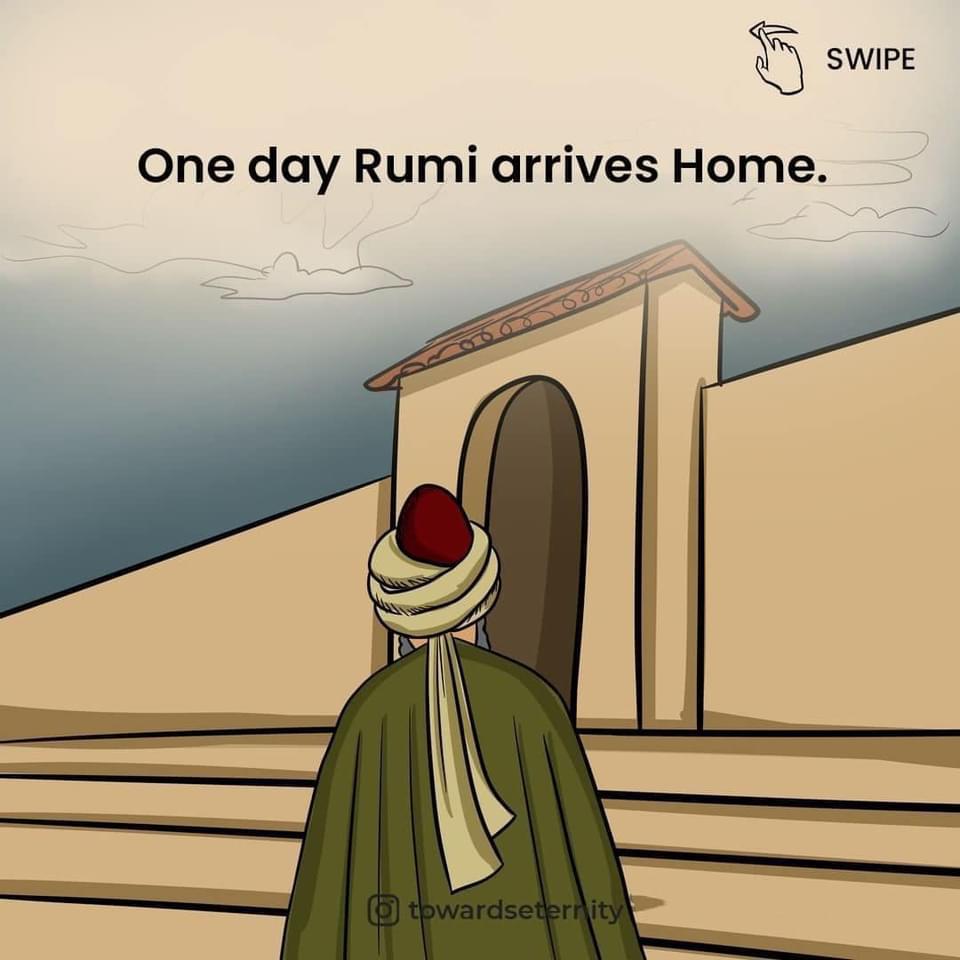
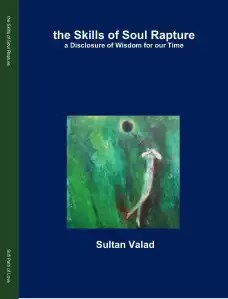
Who better than Sultan Valad could explain to us the teachings of his father? Rumi’s eldest son was his intimate friend and confidant. For seventy years, says Aflaki, he illuminated the words of his father and master, miraculous, eloquent, in deciphering the mysteries and interpretation. The Master awakens the sleepy soul of the student and allows him to climb the ascending steps to Paradise. He describes us the Skills of Soul Rapture. Mawlana Rumi himself says: “I have studied a lot of science and have worked hard to offer rare and valuable things to researchers and scientists who come to me, it is God the Supreme who has decided so”. He said also to his son: “O Bahâ-ud-Din, my coming into this world has come to prepare yours, for all the words that I say are speeches, but you, you are my action.” It is a message for all times, a revelation of wisdom for our time. free download
Introduction
Sultan Valad (1226-1312) was the son of Jalal ad-Din Rumi. Jalal ad-Din Rumi was born in Balkh in Khorasan in 1207. Rumi was himself the son of an eminent teacher, Baha-ud-Din Valad, who was also called “the Sultan of the scholars”. It is in his memory that his grandson, Sultan Valad, was also called Baha-ud-Din.
In 1219, Rumi’s father had to flee from Khorasan because of the Mongol invasion. The family ended up settling down in Anatolia, at Konya, capital of the Seljuk Empire. This is where Jalal ad-Din Rumi succeeded to his father as the head of a theology college. He taught there until his death in 1273.
Jalāl ad-Dīn Rumi composed a considerable work, which includes the Mathnawi, the Diwan of Shams of Tabriz, Ruba’iyat, and Fihi-ma-fihi. Fihi-ma-fihi is a series of conversations of Rumi with his disciples and friends that was collected by Sultan Valad.
This book was originally called Maarif, which literally translates as Gnosis of better The Skill of Soul’s Rapture. It is a Persian prose work in a style approaching the spoken language and containing accounts of Sulṭān Walad’s thoughts and words. It is composed of lectures given to his students explaining and reflecting his father’s material. The tone and material is very much like his father’s material collected in Fihi-ma-fihi, but Maarif is less spontaneous, more elaborate, more explicit and less dense. Its form is less diversified as it includes only a few interlocutors, discussions and questions. It is obvious that, in Kitab al-Maarif, Sultan Valad reflected on his father’s teaching and expanded on what he thought to be especially important. It is also interesting to note that Maarif was also the title of the book by Sultan Valad’s grandfather – who was his namesake. This book was recently translated into English under the title The Drowned Book: Ecstatic and Earthy Reflections of Bahauddin, the Father of Rumi by Coleman Barks and John Moyne.
Nobody was able to transmit the essence of Rumi’s teaching better than Sultan Valad. He was not only Rumi’s elder son; he was also his dearest confidant. From six years old he would attend Rumi’s meetings with disciples. When people desired a favor from Rumi, they would ask Sultan Valad to be their intercessor. In his various writings and lectures, Valad ciphered many of cryptic symbols of his father’s behavior, actions, hints and indications. He also explained many of his father’s mysteries. This was carried out throughout his life in the forms of prose, poetry and discourses for his disciples. Valad was also familiar with Shams Tabrizi (Rumi’s beloved mentor) and used to associate with him regularly.
It is said that one day Rumi was speaking to his visitors about Moses’ stick. According to the Koran, the stick swallowed up the creations of the Pharaoh’s magicians, while the length of the stick neither augmented nor decreased by a single atom. Rumi asked, “How could I explain this incomparable parable so people can understand it?” And, turning toward Sultan Valad, he asked him to comment on the verse. Sultan Valad bowed and said, “This parable is like a man who has an extremely big palace that is in complete darkness. Suddenly, someone brings a torch and its presence lights up the palace. The torch neither diminishes nor augments, but the darkness disappears.” Rumi congratulated him and said he was delighted with the answer.
Once Rumi told his son, “O Bahâ-ud-Dîn, my coming into this world happened to prepare yours; for all the words I say are discourses, but you, you are my action.”
The text of the original Maarif is taken from the Persian collection by Najib Mayel Heravi, who compared, collected, and compiled five different editions of the book. The version that we used is the smallest in size of the 5 editions, and has the most in common with all of the other versions. The French and Spanish translations have also been used in the preparation of the present edition. Every effort has been made to preserve, in its unattainable form, the teaching that it contains.
In Sufism, ma’rifa describes the mystical intuitive knowledge of spiritual truth, or better the skill of soul “rapture”achieved through ecstatic experiences, rather than revealed or rationally acquired.
A seeker of ma’rifa is called ‘arif’, the one who “knows”.
In one of the earliest accounts of the Maqamat-l arba’in (“forty stations”) in Sufism, sufi master Abu Said ibn Abi’l-Khayr ma’rifa lists as the 25th station: “By all creatures of the two worlds, and through all people, they see Allah, and there is no accusation of their perception. “
A metaphor for explaining the meaning of ma’rifa is to collect the pearl. Shari’a is the boat; tariqa is represented by the rowing of the pearlman; haqiqa is the pearl; and ma’rifa is the ability to see the difference between real and false pearls.
Introduction of Sultan Valad
Bismillah ir Rahman ir Rahim
In the name of God, the Most Gracious, the Most Merciful.
All the Prophets and Saints are known and distinguished by virtue of the miracles and prodigies that they perform. The Sages and the Seekers of Truth say that God has bestowed a specific grace upon each one of them. What He has granted to one, He has not granted to another. He has given to each a different dominion, a separate world. My grandfather used to say that each Prophet was capable of performing any miracle, and that they possessed all powers. But God conceded to each one an Attribute according to the needs of the moment to satisfy a specific need or desire. For instance, a sage may know medicine, astronomy and other sciences: but when he treats a patient, we cannot affirm that he only knows the art of medicine. According to the circumstances he will show one aspect of his knowledge that he has mastered. Or, if a person who is concurrently an expert goldsmith, cobbler and tailor is sewing garments, we cannot say that he only knows that specific craft. Or still, if a river powers a water-mill, a sensible person would not say that it is the only function of the river; it is capable of many other things such as washing clothes, refreshing, turning gardens green again, and contributing to the growth of plants and flowers. But in that specific instance, it is necessary to move the wheel of the mill; and in a garden or field it could be seen to provide other services.
Therefore, each Prophet is capable of accomplishing any miracle, but he performs miracles and prodigies according to the needs of his people.
The prophets are manifestations and instruments of God. They are extinguished and annihilated in Him. Through them God shows everything. Therefore, how is it possible to assert that God is not capable of doing everything? God is the active principle; the Prophets are like a pen in the hand of the writer. Each mark that the pen draws is, in fact, written by the writer. They are like the bow and the arrow. It is not the bow that shoots the arrow, but the archer. That is why God, the Most High, has said: “When you slew, it was not you who slew, but God.”
God is literally saying: “Mohammad, that arrow that you shot, it is Us who shot it not you. Everything you do is by the commandment and mandate of God. What then is your role? Since it is Us who Act and everything is done through Our Desire and Will, he who fights and struggles against you, fights and struggles against Us; he who follows you and acts upon your commands and manifests friendship and love for you, has done those things toward Us.”
Action
Someone said, “The most important is action; words are not important.” I said, “I too would like to find someone who knows what action is and can see, so that I can show him action.” Now, you like words. One can converse with you since you are not a man of action. How could you comprehend what action is? As action you only understand prayers, fasting, reading spiritual texts, pilgrimage, alms, meditation, and devotion. But all these are not action. These are the means to reach true Action. It is possible that when you perform these activities they exert some influence over you and transform you in relation to what you were before. For example, prayer allows one to distance oneself from sin and error. Action, on the other hand, purifies your faults. When you are in a state of impurity you have not accomplished the prayer.
So all these different forms and modes do not constitute Action. Action is the transmutation of the heart, passing from one state to another. Like the seminal liquid and the embryo passing from one state to another in the mother’s womb; first a clot of blood, then a fetus, then the face of a man who is endowed with life, enters the world and grows up. This transformation and growth is action and ascension.
The meaning of Miraj (Mohammad’s journey to heaven) is the same as we have just mentioned. The seeker passes from one internal state to another. The second state is higher than the first; the third is higher than the second, ad infinitum.
Anyone who, in the bazaar of this world – because “This world is the field which is reaped in the other world” – remains two days in the same state suffers a loss. Day by day, second by second, it is necessary to rise and advance. This is the reality of action. Who perceives such action? With the exception of God, no one knows it or can see it. “My saints are under my dome; except I, no one knows them.”
In a word, knowledge is closer to real action than personal effort and corporal practices such as prayer, fasting, and the rest. Since it is possible for knowledge to be separated from action and be rendered useless, it is even more possible that personal effort and corporal practices, since they are further away from real action, are rendered even more useless. Hypocrites perform external practices such as prayer and fasting, but cannot traverse the path of faith and declare the existence of God. If they possessed the knowledge and ability they would not be miscreants. Therefore, everything that was said and indicated concerning the different modes and ways, gestures and devotions that are practiced and recognized are the means of real action, but not action itself.
Iblis (The primary name of Satan in Islam) performed practices of devotion in heaven for thousands of years. If his external practices had been real, he would have behaved differently when God ordered him to prostrate himself before Adam.
Jesus did not perform external acts, but practiced true action in such a way that he was able to evolve from a state of spiritual infancy to spiritual maturity. What Jesus declared in the cradle( “Truly I am the servant of God; He has given me the Book and has made me a prophet.” (Sura 19, verse 30, Mohammad achieved it when he was forty years old
Thus, the reality of action resides in your transformation and progress at each instant. When the philosopher’s stone grazes copper, it is the transmutation of copper into gold that constitutes real action. A piece of copper may be hammered, boiled or extended, but it will still remain copper. Those who are not capable of recognizing gold and perceive the external form of practices say, “If gold exists in the world, it is that which has been hammered and has become wide and long.” But he who knows gold examines the metal with the touchstone and will not buy it, even for half a cent, if it is not pure gold.
I, who am God, do not look at your faces, or your behavior or your words, but I set my eyes upon your hearts in order to know the degree of love you have for me.
For a wise man, one indication is sufficient. Or put in other words, “if there is someone home, only one word will suffice.”
Friends of God
The Friends of God are the Attributes of God and His chosen ones (These Attributes are such things as All-Seeing, All-Hearing, All-Powerful. All together there are 99 of them, commonly referred to as the 99 Names of God) ; not God himself, but they are the Secrets of God. Knowledge and awareness of God is easier than the knowledge of his Secrets. Likewise, if you wish to know someone, you get acquainted and spend some time with him. This desire to know him can be accomplished with little effort. But if you desire to gain the inner secrets of his heart, greater efforts would be needed. We may conclude that it is easier to learn appearances than to obtain inner secrets.
If someone wishes to visit a Master and be received by him, after a few attempts and with some effort, he may succeed. But if he wishes to have access to the knowledge of the Master, then he must dedicate many years and much effort to gain a piece of this treasure.
In a city, there are one hundred thousand God-believing people. All of them crave that God grant them their desires. They consider God to be the Unique, the Almighty, the Generous, the Teacher, the Guide, He who forgives and He who punishes. They submit to Him with sincere heart and soul and worship Him. In general, they are like this: some are strong in action, some are weak; some have little knowledge of God and some have much. But among these hundred thousand people, only a small community incline toward a true Saint. Among that small community, only one or two truly know that Saint.
After this discussion, it is clear that worship and knowledge of God is common. In general, everyone, without exception, can follow the Path of Knowledge. Even the heedless worship God.
Impiety and faith, both travel His Way saying, “He is Unique, the One without associates.”
Men worship God in various forms, practices and languages. But worship is not exclusive to man. Even the heavens, the sun, the stars, the moon, the earth, minerals, mountains, stones, dust, air and fire – everything worships and praises Him in a language that you do not know or understand.
To ensure that not everyone will pray to God or return to Him, all created beings are the screens and courtiers of God. The exquisite delicacies, silk garments, beautiful women, and other riches of this world prevent the elect from serving and seeing God. These things are like highwaymen to the seekers and those who are on the path – until by means of lamentation, prayers and remembrance – some of them escape from the brigands, and successfully bring the loads and garments of the seeker to acceptance and submission to God. But it is God who guards the Saints of God, and makes it impossible for everyone to find or recognize them, because it has been said that “my Saints are under my dome; Except I, no one knows them.” That is, my Saints and my friends are concealed under the dome of My Jealousy, in order that no one, other than I, can see them or know them. As in this world, when the great kings sit on the throne of justice, receiving both noblemen and commoners in their courts; hearing each desire and granting requests according to rank. Still, these people never see the sons and daughters of the king. And the man who asks to become the confidant and companion of the king risks his head – unless the king, by his own volition and knowing the loyalty and faith of the person, makes him his confidant.
Ungodly obstacles or brigand-like demons and devils can be chased away by means of recitation and remembrance. But with which recitation or which remembrance could we chase God away? Therefore it is obvious that finding Friends of God and knowing them is much harder than knowing God. Whoever knows a Friend of God knows God, but the reverse is not true. Knowledge of God does not necessarily lead to knowledge of the Friends of God, since there are many people who recognize and submit to God but cannot know and understand the Truth. Even when they see a Friend of God, they make enemies of him and reject him.
Some sages, like Junaid(Junaid of Bagdad -d. 9107) and Shibli (Junaid’s disciple -d. 945), rejected Mansur el-Hallaj because of his seemingly blasphemous outcry “I am the Truth” – and decided to spill his blood . They unanimously released an edict allowing the hanging of this unique and precious man. After his body was taken down from the gallows, it was burnt and his ashes dispersed on the river so that no trace of him would remain in this world. It is told that, regardless of what was tried, the ashes would arrange themselves on the surface of the river to form the words “I am the Truth”. They were all filled with rue after witnessing this wonder.
Likewise for Moses, who was one of the Prophets and Messengers of God. Despite his knowledge and greatness, Moses sought to know Khidr (a mysterious character in the Islamic tradition who was the guide of Moses, and often called ”The Green One” Also thought to be the Prophet Elijah) and implored God to be able to meet him. After many prayers and lamentations, his supplication was granted. God said, “Start a journey and seek Our pure servant so that you may find him.” He found Khidr at the seashore. His eyes and his heart were enlightened by this encounter, and he achieved many goals from this single meeting. For, “God, the Most High, has servants. When they gaze upon the other servants, they cover them with the mantle of prosperity.” One glance of Khidr invested Moses with such robes of honor and so much blessing that, “the eye has not seen, the ear has not heard, and nothing has passed through the heart.” (Hadith of the Prophet).
Desire for the friendship and company of Khidr sprung in Moses, without ever seeing him or experiencing his presence:
You have not been visible to us, So we are in this state.
Woe to us, if You became visible.
Khidr said, “O Moses, be satisfied with everything you have seen in us and leave, for sharing the road with us is dangerous. It would be better that you did not take the risk, because there are many dangers.” But Moses complained with sincerity and love. After they were together for some time on their route, they found a ship on the seashore. The ship had no equal in its beauty and craftsmanship. However, Khidr made a hole in it so that it became unusable. Moses said, “What you have done is not right, since it is contrary to wisdom and to the law. If the touchstone of justice was applied, this act would not be found of good value, and on the scale of fairness and the law it would reveal itself as wrongful.”
Khidr answered, “Did I not warn you that you should not disagree with me?”
Moses apologized, “I have forgotten our pact. It is my first fault, but forgiveness is better.” And he wept much until Khidr forgave him.
After some time had passed, they arrived on an island. Among the children of that island there was a beautiful, graceful and sweet child. Khidr gently took the child’s hand and walked away with him. Moses was puzzled and followed Khidr and the child. When they arrived at a solitary place and out of the sight of people, Khidr put the child under his foot and slit his throat. Moses protested vehemently and cried out, “Where is the fairness in ending the life of a pure and innocent child?”
Khidr answered, “Did I not tell you to turn away and not come with me because you would not have endurance to witness or understand my actions?”
Moses came back to his senses and said, “I committed a fault; forgetfulness overcame me.”
Khidr said, “You are so impertinent! Each time you question my acts, then you say that you have made a mistake, and that forgetfulness has overcome you.”
Moses said, “For Love of God, forgive me once again, for it is customary to forgive three times. If I argue again, do not accept my excuses.”
If a fault again you see in me, Do not aid in my adversity.
Khidr excused Moses a second time under the condition that, if he should commit a third fault, they would part regardless of any pretext or excuse. They traveled together for some time. By chance it happened that they did not find any food for several days and were close to dying of starvation. In this state of deprivation, they came upon a vast island where they saw a large city and a large crowd of people. They noticed a wall on the verge of collapse due to a hole in it. Khidr repaired and rebuilt the wall.
When Moses saw what had happened, he was sure that finally, after so much misery and hunger, food, gifts and money would soon come to them in great quantities. But Khidr took Moses by the hand and walked away. Moses lost his patience and cried out, “O, Khidr! We are hunger-stricken. You raised a wall that nobody could repair, and the owner of this house is extremely rich. At least you could have asked for a wage which would have allowed us to eat for a few days. Even if you had renounced everything you could have asked for a piece of bread so that we could eat. Your action is contrary to law and justice and none could agree with it.”
Khidr said, “O Moses! You have committed three faults. However, I will explain to you the three cases that provoked your protests so you may know that these actions were worthy of approval rather than condemnation. Otherwise, I would not have done them.”
“The reason I made a hole in the ship, even though it belonged to poor and decent people, was that I saw with my inner eye that tyrants had the intention of taking the ship and using it to attack good men. Therefore, I destroyed the ship and rendered it unusable.”
“The reason for the murder of the child was that in later life, the boy, who was ill natured, would have behaved in such a way that his parents would have failed in the way of God. I wanted his parents to be able to attain the perfect end and not go astray because of their son. It is like a gardener who prunes the diseased branches so that the other branches may acquire strength.”
“I restored and straightened the wall that was ruined to the point of collapse. The wall belonged to rich orphans. I did not ask for money or recompense because their father was a Servant of God.” The commentators of this story note that in the seventh generation of those orphans there was a righteous man. Others assert that there was a good man in the seventieth generation. Thus, a man like Khidr – to whom belongs not only the treasure of the other World, but who is himself a source of generosity – acts to benefit the ancestor of the seventh or the seventieth generation. Out of respect for the descendants, he performed an extraordinary service that no one else could have done. Although he himself was in great need and difficulty, he did not accept any compensation.
Khidr explained the essence of the wisdom of these three secrets to Moses – and they parted.
A descendant of Ali (Ali was the cousin and son-in-law of the Prophet) fell drunk in the bazaar in the city of Tabriz. His head, face and beard were soiled with vomit and dust. A devout dervish, who saw him in this state, insulted him and spat on him. That same night, the Prophet appeared to the dervish in a dream, “You allege to be at my service, following and submitting to my tradition, hoping to be among those who will enter paradise. But when you saw me covered with vomit in the middle of the bazaar, why did you not wash my filth and lay me down as expected from the servants who attend their master? Not only did you not serve me, but your heart allowed you to spit upon me.”
At this moment, the dervish said to himself, “When did I do these things to the Prophet?” The Prophet immediately answered, “Do you not know that our children are our most precious possessions? If it was not so, how could they inherit the possessions of their father?” The dervish awoke with a start and set out to search for the man. He brought him to his home and gave him his house and half of his possessions. While he lived, he remained at his service and attended him with great respect.
In emphasis of the preceding, it is told that one sufi said to another, “Each day, God the Most High, manifests Himself to me seventy times.” The other answered him, “If you feel so much bravery, go and see Bayazid.” After some time passed, the sufi said again, “I see God seventy times a day.” And the other repeated, “If you have so much bravery, go and see Bayazid.”
Since this affair lasted for a long time, the sufi at last decided to visit Bayazid, who was living in a forest. Bayazid intuitively knew that the dervish was coming to visit him, and came out of the forest to meet him, and next to the forest their meeting took place. At the moment the dervish perceived Bayazid and saw his blessed face, he could not bear it; at once, he gave up his soul and left this world.
Let us consider the profound meaning of the forest. The forest represents the interior of Bayazid, and the trees in the forest are the thoughts, knowledge and spiritual rank that he held in his heart. When the Sufi arrived at the place of Bayazid, how could he have entered the forest and then walked back out? Bayazid had to come out of the forest so the Sufi could see him.
Likewise, when an intelligent man speaks to a child, he must come out from the “forest” of his own intelligence and knowledge, and speak to the child accordingly. In this way the child may understand. “Speak to people according to the degree of their understanding.”( Hadith of the Prophet)
The sufi perceived God according to his own capacity. But when the Light and Splendor of God shone upon him through the dimension of Bayazid, he could not bear it and was annihilated.
Gabriel received the Light of Divine Radiance and obtained his sustenance from it. He was, like a fish, eternally immersed in the ocean of Divine Union. When he escorted Mohammad toward God during the Mi’raj, he went together with him as high as his own rank would allow. When they arrived at this superior place, he stopped and remained immobile. The Prophet said, “Come, why do you remain there?” Gabriel answered, “I cannot go further for I am not permitted. If I advance a single step more I will be burnt.”
The Prophet continued alone and contemplated Divine Beauty with the inner eye.
Anyone who sees God, from an ant to Solomon, sees Him according to his own capacity. All things are nurtured by God, and all life and existence derive from the Manifestations of God. But where are the manifestations of Solomon or the ant?
A master has ten slaves. One of the slaves is five years old, another is ten, another is thirty, another is fifty, and yet another is sixty years old. All of them are at the service of the master and show him submission. However, the service of some is superior to the service of others. The master talks to each of them, but in accordance with their capacity he maintains a different relationship with each of them. If he would behave in the same way with the youngest as with the oldest, the youngest could not endure it.
The garment is tailored to fit the man.
Equally, God manifests himself to the believers and the Saints in accordance with their spiritual rank. The Light of God descends upon them in a manner that they are able to endure. When a man wants to unite with fire, he heats up water in a bath. He unites himself with the fire through the intermediary of the water. If he were to walk directly into the fire, he would be burned. However, the Perfect Man finds himself in the fire like a fish in the water. The other seekers and believers lack the necessary strength to benefit from the fire without the intermediary.
What we are saying here is that it is easier to recognize and know the Friends of God than to know God without their intermediation. It does not mean that the Friends of God are different from God; such an allegation would be erroneous. But you cannot see God with the same power as that with which the Friend of God contemplates Him. Therefore, go and seek the Friend of God, so that through his intermediary, you may see what he sees – and God knows best.
Who better than Sultan Valad could explain to us the teachings of his father? Rumi’s eldest son was his intimate friend and confidant. For seventy years, says Aflaki, he illuminated the words of his father and master, miraculous, eloquent, in deciphering the mysteries and interpretation. The Master awakens the sleepy soul of the student and allows him to climb the ascending steps to Paradise. He describes us the Skills of Soul Rapture. Mawlana Rumi himself says: “I have studied a lot of science and have worked hard to offer rare and valuable things to researchers and scientists who come to me, it is God the Supreme who has decided so”. He said also to his son: “O Bahâ-ud-Din, my coming into this world has come to prepare yours, for all the words that I say are speeches, but you, you are my action.” It is a message for all times, a revelation of wisdom for our time. free download
Habileté du Ravissement de l’Âme
Qui mieux que Sultan Valad pouvait nous transmettre l’enseignement de son père? Fils ainé de Rumi, il fut son intime et confident. Pendant soixante-dix ans, nous dit Afláki, il éclaira les paroles de son père et Maitre, miraculeux, éloquent, dans le déchiffrement des mystères et l’interprétation scripturaire. Le Maitre éveille l’âme endormie du disciple et lui fait gravir les degrés ascendants du Paradis. Il nous décrit l’Habileté du Ravissement de l’Âme. Mawlana Rumi, déclare lui-même : « J’ai étudié bien des sciences et me suis livré bien des efforts afin de pouvoir offrir aux chercheurs et savants qui viennent moi des choses rares et précieuses. C’est le Dieu Très-Haut qui en a décidé ainsi ». Un jour Rumi a dit son fils, “O Bahâ-ud-Dîn, mon arrivée dans ce monde est arrivé pour préparer le tien; car tous les mots que je dis sont des discours, mais toi, tu es mon action”. C’est un message pour tous les temps, une révélation de Sagesse pour notre Temps. Free Dowload
Het boek De kunde van Ziel’s vervoering (Kitab al-Ma’ârif) is geschreven door Sultan Valad. Sultan Valad was de zoon van Jalal ad-Din Rumi. Jalal ad-Din Rumi werd geboren in Balkh in Khorasan in 1207. Rumi was zelf de zoon van een eminente leraar, Baha-ud-Din Valad, die ook “de sultan van de geleerden” werd genoemd. Het is in zijn nagedachtenis dat zijn kleinzoon, Sultan Valad, ook Baha-ud-Din werd genoemd. Ooit vertelde Rumi zijn zoon: “O Bahâ-ud-Dîn, mijn komst naar deze wereld gebeurde toevallig om de uwe voor te bereiden; want alle woorden die ik zeg, zijn preken, maar jij, jij bent mijn daad. ” free download
The court of Kyumars, first mythical king of Iran, reigning on an Edenic land in an eternal spring.
Illustration of the Book of Ferdowsi Kings. Shâhnâmeh of Shah Tahmasp (Shahnameh of Shah Tahmasp: A Book of Illustrated Kings of the 16th Century), Tabriz, c. 1537
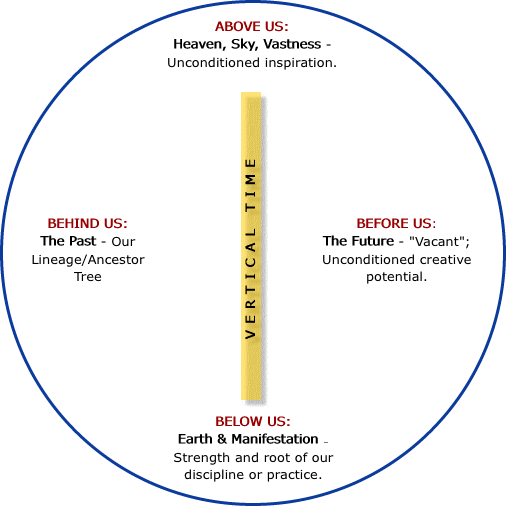
The spiritual man is one who transcends himself and loves to transcend himself;the worldly man remains horizontal and detests the vertical dimension.
Frithjof Schuon
The principle of verticality, which is a fundamental principle of traditional wisdom, is based on the affirmation of transcendence as an aspect of a comprehensive and integrated reality that is Absolute.
According to this understanding, reality has both a transcendent Origin and an immanent Center, which are one, rather than being reduced to the merely horizontal dimension of its existential or quantitative elements.
Verticality implies both Heaven and Earth, a worldview in which meaning and purpose are defined principally by both height and depth,and secondarily by breadth – that is, principally by man’s relationship to God, who is simultaneously ‘above’ and ‘within’ creation, and who there-fore governs all creaturely relationships – rather than by breadth alone –that is, solely in terms of the relationship between the subject and the world.
It also implies that the horizontal is subordinate to the vertical,that is to say, the relationship between man and the world is premised on the primary relationship between God and man: to restate this in Christian terms, the love of one’s neighbor is premised on one’s love for God. According to the traditional worldview, existence is transcended by a supreme reality, which, whether expressed in theistic or non-theisticterms, is Absolute, and which, without derogating from its unity, is si-multaneously (at the level of the primary hypostasis) expressed by the horizontal ternary, Truth or the Solely Subsistent Reality, Goodness or the Perfection and Font of all Qualities, and Beauty or Abiding Serenity and the Source of its Radiant Effulgence: in Platonic terms, the True, the Good and the Beautiful.
All creation is prefigured in this supreme reality,which projects existence out of its own Substance into a world of form (hence etymologically, ex-stare, to stand out of, or to subsist from, as the formal world of existence stands out of, and subsists from, the Divine Substance) through a vertical ternary comprising, first, the Essential or Principial Absolute (which is Beyond-Being), second, the Relative-Absolute Source of Archetypes (which is the primary hypostasis of Being), and third, the realm of Manifestation (which is Existence).
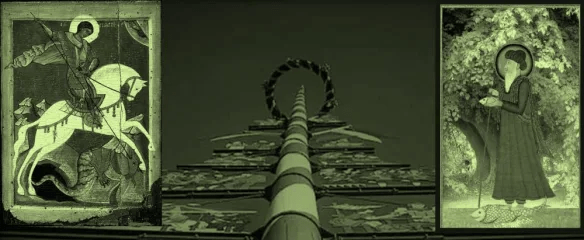
Looking to the Spiritual vertical way, as the Maypole do, gives us an opportunity of discerning an understanding between Non-Virtues and Virtues, developing Spiritual values needed in our times.
History of eight natural celebrations
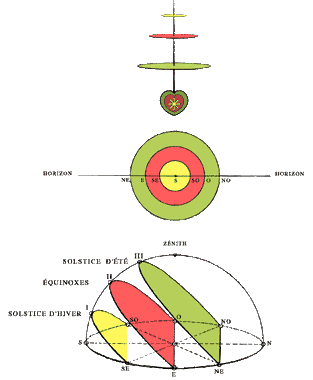
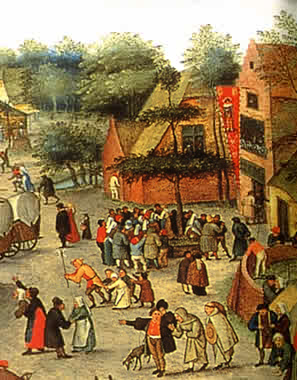
The eight traditional celebrations, most of which exist today in somewhat different form, date from time immemorial. Many European festivals date back to earliest times, pre-dating even Indo-European influences. The celebrations of different cultures often share many common points. This is because their myths and mythologies are linked to the same sources: the sky, the sun, the stars, the earth, and the rhythm of the seasons. In ancient European traditions – and in particular the Nordic and Celtic traditions – the course of the sun occupies a very important position. Our ancestors were well aware of the relationship between the sun and the rhythm of the seasons. The calendar of yearly celebrations was based on these rhythms and has continued to this day, although some name and date changes occurred as Europe was Christianised. The calendar of celebrations revolves around the Eight Nature Festivals, which have existed throughout Europe for many hundreds of years.The calendar is based on the sun’s position at various moments of the year, and on corresponding seasonal activities.This link between the sun’s course, the seasons, and the community made our ancestors feel that they were part of a long chain of living things including the earth, humankind and the heavens, which formed a coherent whole. The dance lime tree, with its three-tiered structure, forms a link between the earth and the heavens, and serves as a symbol for the order of things.
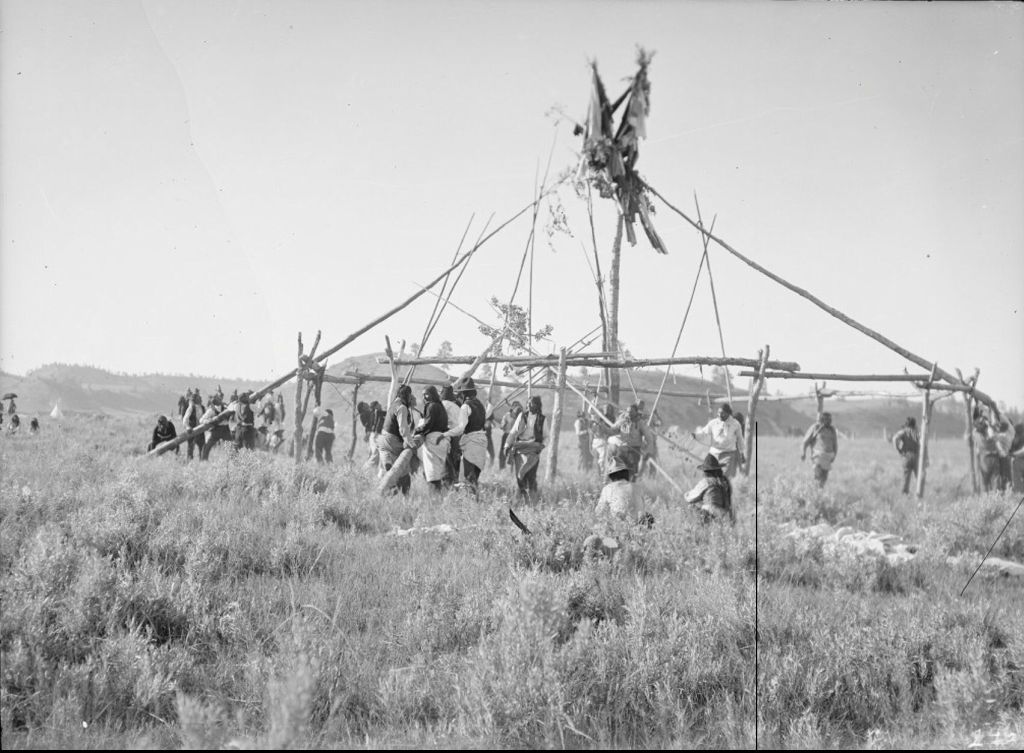
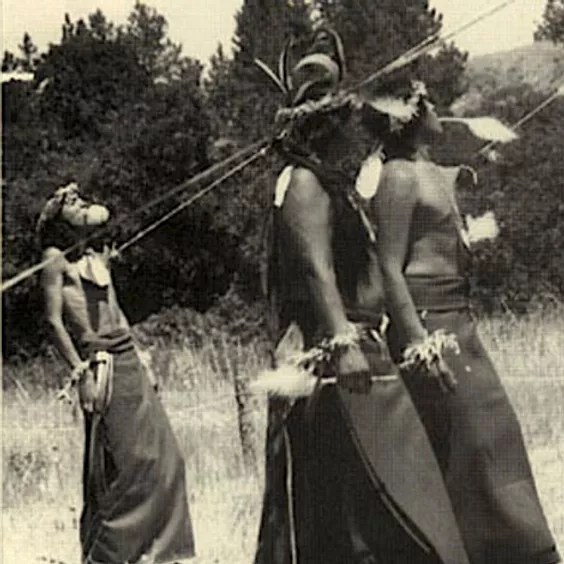
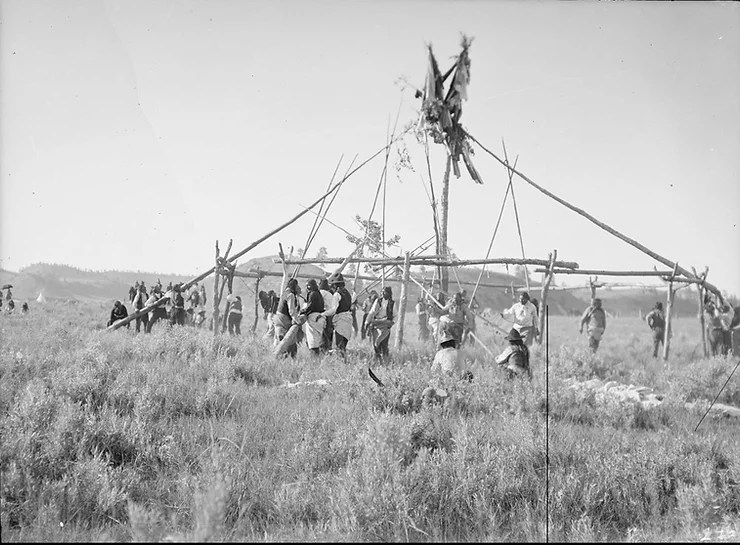
The Sun Dance is the most sacred ritual of Plains Indians, a ceremony of renewal and cleansing for the tribe and the earth. Primarily male dancers—but on rare occasions women too—perform this ritual of regeneration, healing and self-sacrifice for the good of one’s family and tribe. But, in some tribes, such as the Blackfeet, the ceremony is led by a medicine woman. It has been practiced primarily by tribes in the Upper Plains and Rocky Mountain, especially the Arapaho, Arikara, Assiniboine, Cheyenne, Crow, Gros Ventre, Hidatsa, Sioux, Plains Cree, Plains Ojibway, Omaha, Ponca, Ute, Shoshone, Kiowa, and Blackfoot tribes.
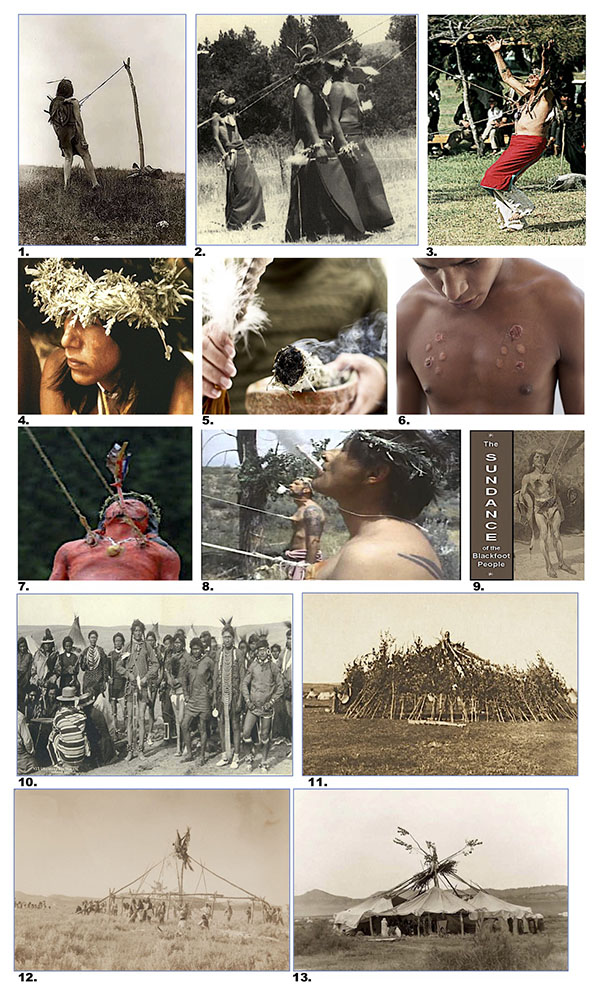
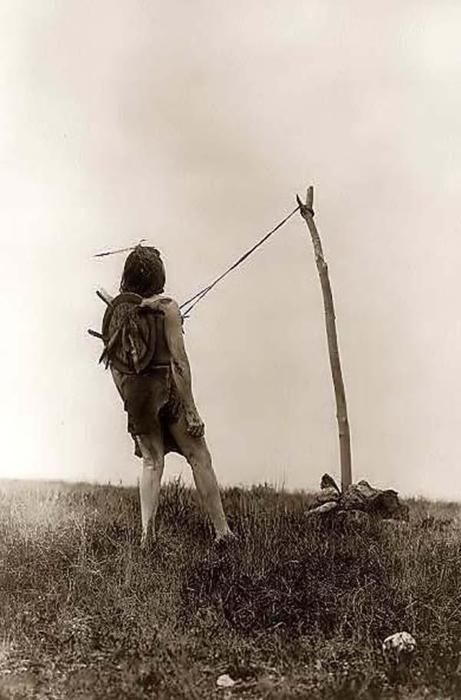
Usually the ceremony was practiced at the summer solstice, the time of longest daylight and lasts for four to eight days. Typically, the Sun Dance is a grueling ordeal, that includes a spiritual and physical test of pain and sacrifice. This ritual usually—but not always—involves piercing rawhide thongs through the skin and flesh of a dancer’s chest with wooden or bone skewers. The thongs are tied to the skewers then connected to the central pole of the lodge. The Sun Dancers dance around the pole leaning back to allow the thongs to pull their pierced flesh. The dancers do this for hours until the skewered flesh finally rips. The Sun Dance is also a rite of passage to manhood.
The dance is practiced differently by each tribe, but basic similarities are shared by most rituals. In some instances, the Sun Dance was a private experience involving just one or a few individuals. But many tribes adopted larger rituals that involved the whole tribes or sometimes many tribes gathered to celebrate the Sun Dance together. Lodges or open frames built of trees, rawhide or brush are prepared with a central pole at the center.
Though the dance is practiced differently by different tribes, the Eagle serves as a central symbol in the dance, helping bring body and spirit together in harmony, as does the buffalo, for its essential role in Plains Indian food, clothing, and shelter. Sometimes an eagle’s nest or eagle would be mounted at the top of the center pole. Holy men might also place a dried buffalo penis at the top of the pole to give the dancers virility. And buffalo skulls were placed at the perimeter of the lodge to honor their power and courage. (Some dancers choose to have their flesh pierced through their backs and the rawhide ropes from the skewers are attached to the heavy buffalo skulls. Then the dancers dance on rocks and brush as they drag the heavy skulls. This usually takes longer to rip their flesh.
Buffalo–Tatanka Tatanka are held in high regard by Native Americans. The tatanka gave up its own flesh and life to provide everything for the people. For Native Americans, the tatanka is a true relative, making life possible for them. Because of their importance, a buffalo symbol or skull is present in all sacred Lakóta rituals. The tatanka represent generosity and self-sacrifice. According to the Lakóta, to give what you have to others is one of the most highly respected way of behaving.
Dancers also blow a whistle made from the wing bone of an eagle that makes the sound of an eagle cry. The whistle is painted with colored dots and lines to represent the keen and precise perception of the eagle. There is also a beautiful eagle feather attached to the end of the whistle that blows back and forth to represent the breath of life.
In Native culture, the wanblí is considered the strongest and bravest of all birds. For this reason, its feathers symbolize what is highest, bravest, strongest, and holiest. When a feather falls to the earth, it is believed to carry all of the bird’s energy, and it is perceived as a gift from the sky, the sea, and the trees. Feathers may arrive unexpectedly but not without a purpose.
Each type of feather represents something different. The wanblí’s feather, however, is one of the most esteemed. An wanblí’s feathers are given to another in honor, and the feathers are displayed with dignity and pride.
Many tribes smoke sage and burn smudge pots of sage, which is believed to conjure spirits and help the dancers. Some tribes also wear wreaths of sage on their heads and wrists. Ancient dances and songs passed down through many generations are offered accompanied by traditional drums, smudge pots of sage are burned over a sacred fire.
The entire tribe prepares for a year before the ceremony and the dancers fast for many days in the open before the dance. The Sun Dance ceremony involves all the tribe. Family members and friends (only Native people are allowed to attend) gather in the surrounding camp to chant, sing and pray in support of the dancers.
If sun dancers have not released themselves from their bloody tethers by sundown, holy men remove the skewers and reverse the piercings to help rip the flesh. In the 1918 definitive book, “The Sundance of the Blackfoot People,” by leading American anthropologist Clark Wissler, he states: “When all thongs are torn out, the lacerated flesh is cut off as an offering to the sun… The author has seen some men extremely scarred from repeated Sun Dance ceremonies…The offering of flesh is called the Blood Sun Dance.” Exhausted dancers would be cared for afterward in a medicine lodge, where holy men and women sung and prayed above them.
The ceremony was extremely arduous and not without its risks. Clark Wissler also wrote: “It is said that all who take this ceremony die in a few years, because it is equivalent to giving one’s self to the sun. Hence, the sun takes them for its own.”
In 1883, the U.S. Secretary of the Interior and the Bureau of Indian Affairs criminalized the Sun Dance and other sacred religious ceremonies in an effort to discourage indigenous practices and enculturate Native Americans into white society. The prohibition was renewed in 1904 and remained illegal until 1934 when Franklin Delano Roosevelt’s new administration reversed the decision. During the fifty years the Sun Dance was prohibited, many native tribes defied the law and continued to perform their most sacred dance, usually as part of Fourth of July celebrations!
A golden eagle was often used on the banner of the Achaemenid Empire of Persia. Eagle (or the related royal bird vareghna) symbolized khvarenah (the God-given glory), and the Achaemenid family was associated with eagle (according to legend, Achaemenes was raised by an eagle). The local rulers of Persis in the Seleucid and Parthian eras (3rd-2nd centuries BC) sometimes used an eagle as the finial of their banner. Parthians and Armenians used eagle banners, too.[1]
Falconry as a Transmutative Art: Dante, Frederick II, and Islam
The imperial eagle – notably, in the form handed down by the Romans to later generations of European rulers – is the hypostasis of an absolute power conceived as “naturally” divine in origin. In contrast, the tamed falcon, at rest on the emperor’s fist or being offered to him by his falconers, became for Frederick II the emblem of an acquired form of wisdom – of a nobility, that is, which must be educated so that its inborn aggressiveness may be restrained and redeployed under the superior command of reason. The falconer thereby becomes the image of the ideal sovereign, he who succeeds in controlling the instinctual aggressiveness of humankind by way of his “taming power.” He is at one and the same time the self-aware and responsible repository of natural law and the guar- antor of positive law, that is, of justice. The study and practice of falconry were therefore for Frederick II the best and noblest ways for the sovereign to deepen his understanding of the laws of the natural and of the human realm; to him they were indispensable tools in his honorably dispatching his mission as universal sovereign….
….If the objective of the Commedia is to save humankind from itself and principally from its self-imposed rapaciousness, then we can usefully ask ourselves which figurative means Dante could call upon to evoke a process of taming and conversion that by its very nature aims at transmuting the individual’s instinctive ego-grasping into an artfully acquired – but nevertheless also gracefully received – form of absolute surrender and self-sacrificeto the highest manifestation of selflessness and boundless love.
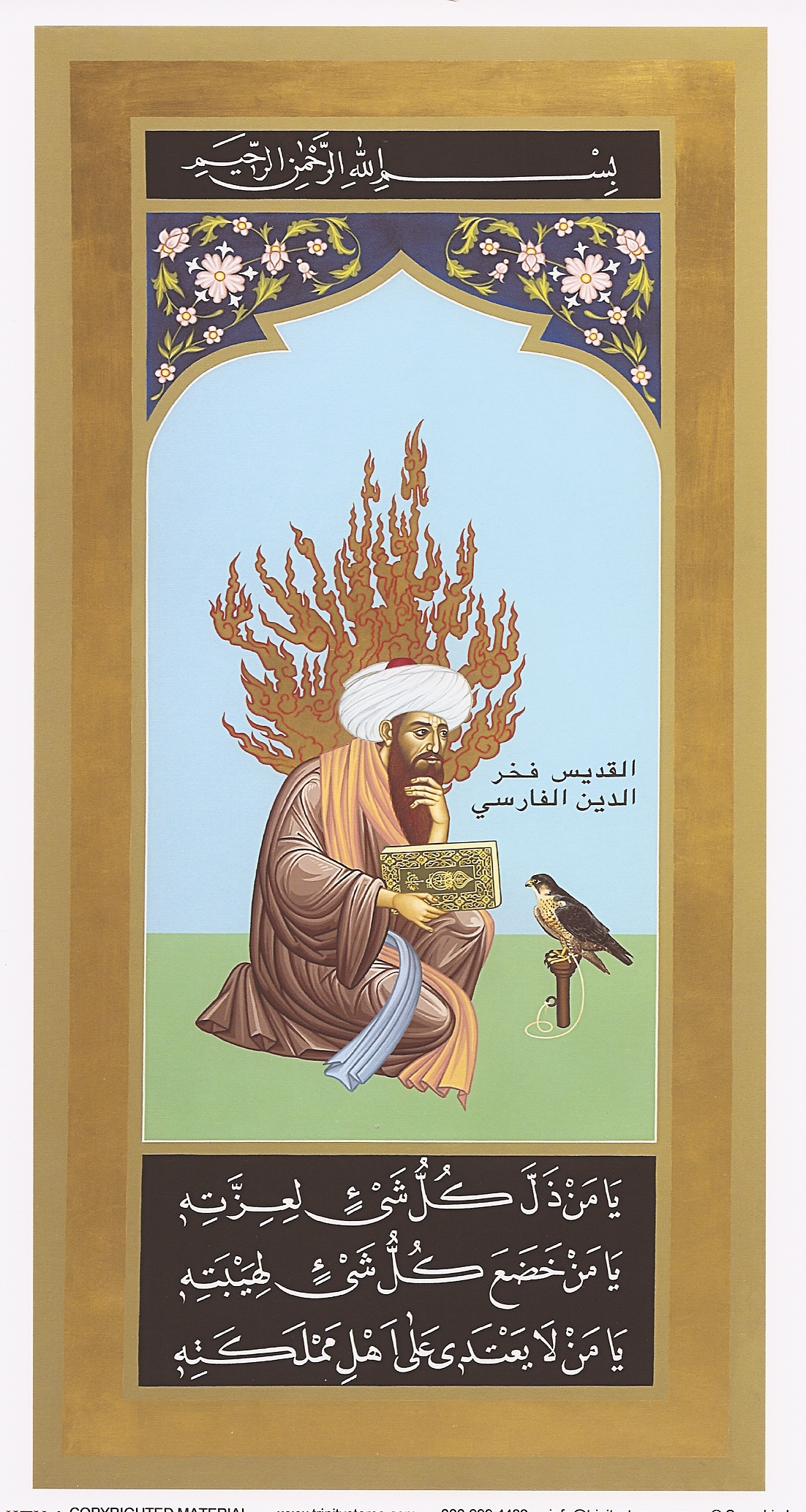
How are we to visualize the very nature of a learning process that must be experiential if it is to become effective? Such is, after all, the goal of the Commedia as a whole – in direct opposition, that is, to the treacherous attempts at rational grappling with reality, which leave human pride misleadingly in charge of transcendent affairs. While in our postmodern world of con- cept-based existence there seems to be little or nothing to call upon in order to suggest such a salvific becoming, I hope to have shown persuasively that Dante saw in falconry the art most apt to express that process of surrender and taming of an individual’s own nature, in the form of a return to that very “hand” on whose universal fist the whole world is unknowingly perched. For Dante, no art better than falconry could convey the sense of that sacrificial inner transmutation necessary for human consciousness to awaken to the vision of itself as a pure reflection of the transcendental source of all-encompassing love.
No other art could as powerfully express the potential for universal salvation inscribed within a process meant to make human consciousness cognizant of its own divine origin – of its own participation in, and belonging to the very substance offered by the falconer to the falcon as its only rightful meal, as that “bread of angels” already evoked in the Convivio: purely celestial food, on which life itself unsuspectingly keeps feeding. …. Read the complete paper Falconry as a Transmutative Art: Dante, Frederick II, and Islam
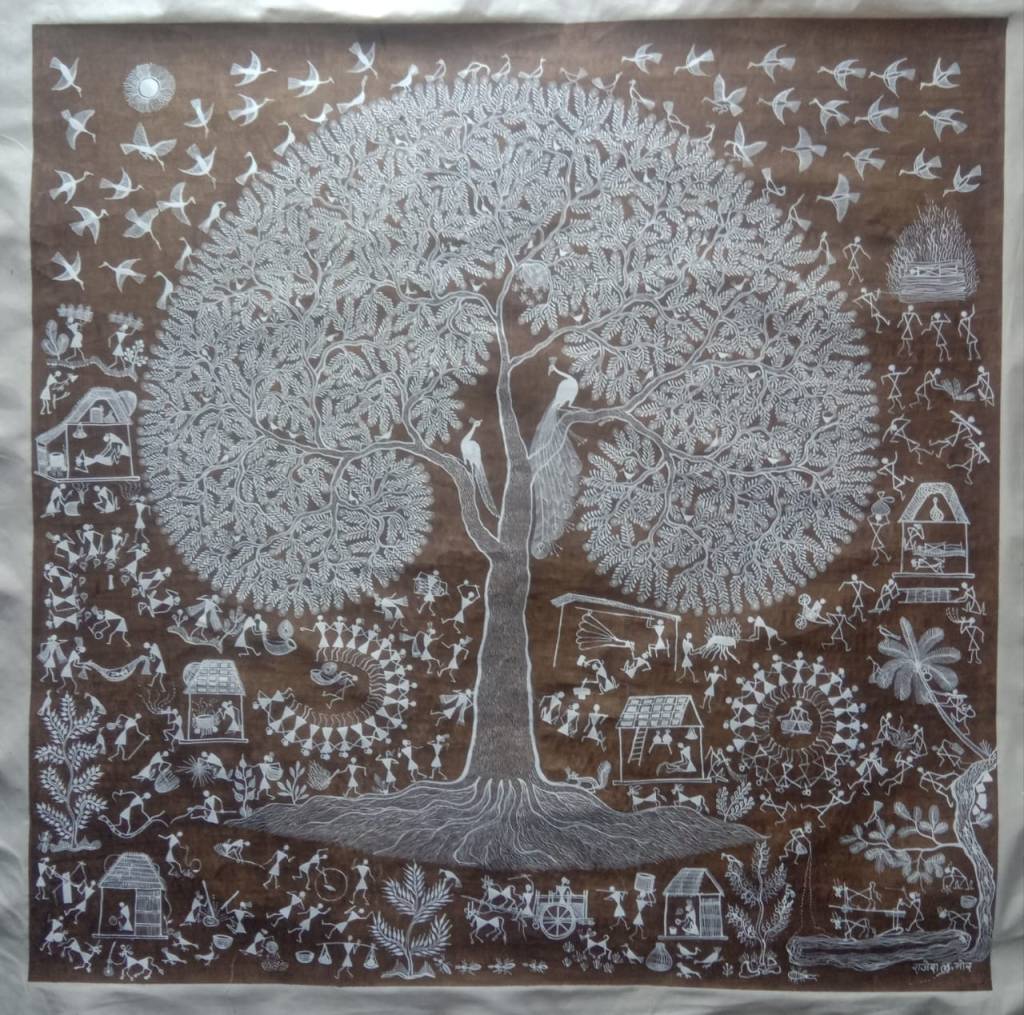
The Warlis are an aboriginal tribe living at the foothills of the Sahyadris in western India. Warlis were hunters and gatherers living in the forest. With time, they were forced to settle down at the base of the hills, and so, they adopted an agro-pastoral lifestyle. Waral is brushwood which the original settlers had to clear in order to settle down. Warul also refers to the brushwood used to burn on the fields as Rab. This could be the origin of the name of their tribe- Warli
n the book The Painted World of the WarlisYashodhara Dalmia claimed that the Warli carry on a tradition stretching back to 2500 or 3000 BCE. Their mural paintings are similar to those done between 500 and 10,000 BCE in the Rock Shelters of Bhimbetka, in Madhya Pradesh.
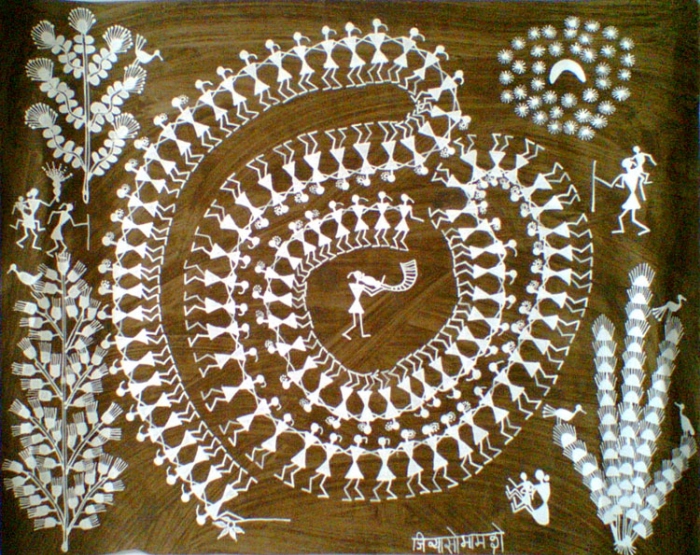
Their extremely rudimentary wall paintings use a very basic graphic vocabulary: a circle, a triangle and a square. Their paintings were monosyllabic. The circle and triangle come from their observation of nature, the circle representing the sun and the moon, the triangle derived from mountains and pointed trees. Only the square seems to obey a different logic and seems to be a human invention, indicating a sacred enclosure or a piece of land. So the central motive in each ritual painting is the square, known as the “chauk” or “chaukat”, mostly of two types: Devchauk and Lagnachauk. Inside a Devchauk, we find Palaghata, the mother goddess, symbolizing fertility.[3] Significantly, male gods are unusual among the Warli and are frequently related to spirits which have taken human shape. The central motive in these ritual paintings is surrounded by scenes portraying hunting, fishing and farming, festivals and dances, trees and animals. Human and animal bodies are represented by two triangles joined at the tip; the upper triangle depicts the trunk and the lower triangle the pelvis. Their precarious equilibrium symbolizes the balance of the universe, and of the couple, and has the practical and amusing advantage of animating the bodies.
The pared down pictorial language is matched by a rudimentary technique. The ritual paintings are usually done inside the huts. The walls are made of a mixture of branches, earth and cow dung, making a Red Ochre background for the wall paintings. The Warli use only white for their paintings. Their white pigment is a mixture of rice paste and water with gum as a binding. They use a bamboo stick chewed at the end to make it as supple as a paintbrush. The wall paintings are done only for special occasions such as weddings or harvests. The lack of regular artistic activity explains the very crude style of their paintings, which were the preserve of the womenfolk until the late 1970s. But in the 1970s this ritual art took a radical turn, when Jivya Soma Mashe and his son Balu Mashe started to paint, not for any special ritual, but because of his artistic pursuits. Warli painting also featured in Coca-Cola’s ‘Come home on Diwali’ ad campaign in 2010 was a tribute to the spirit of India’s youth and a recognition of the distinct lifestyle of the Warli tribe of Western India.[4]
Tribal Cultural Intellectual Property
Warli Painting is the cultural intellectual property of the tribal community. Today, there is an urgent need for preserving this traditional knowledge in tribal communities across the globe. Understanding the need for intellectual property rights, the tribal non-profit Organisation “Adivasi Yuva Seva Sangh” initiated efforts to start a registration process in 2011. Now, Warli Painting is registered with a Geographical Indication under the intellectual property rights act. With the use of technology and the concept of social entrepreneurship, Tribals established the Warli Art Foundation, a non-profit company dedicated to Warli art and related activities.
Culture
Warli legends say that the Gods went to the potter fly or Gungheri Raja to ask for balls of mud to make the earth which was flooded with water. Read here the Mystical World of Warli
Tradition
The Warli Painting tradition in Maharashtra are among the finest examples of the folk style of paintings. The Warli tribe is one of the largest in India, located outside of Mumbai. Despite being close to one of the largest cities in India, the Warli reject much of contemporary culture. Warli paintings of Maharashtra revolve around the marriage of God Palghat.The style of Warli painting was not recognised until the 1970s, even though the tribal style of art is thought to date back as early as 10th century A.D.[1] The Warli culture is centered on the concept of Mother Nature and elements of nature are often focal points depicted in Warli painting. Farming is their main way of life and a large source of food for the tribe. They greatly respect nature and wildlife for the resources that they provide for life.[2] Warli artists use their clay huts as the backdrop for their paintings, similar to how ancient people used cave walls as their canvases.
Jivya Soma Mashe, the artist in Thane district has played a great role in making the Warli paintings more popular. He has been honoured with a number of national and central level awards for his paintings. In the year 2011, he was awarded Padmashree.
A tarpa player c.1885
These rudimentary wall paintings use a set of basic geometric shapes: a circle, a triangle, and a square. These shapes are symbolic of different elements of nature. The circle and the triangle come from their observation of nature. The circle represents the sun and the moon, while the triangle depicts mountains and conical trees. In contrast, the square renders to be a human invention, indicating a sacred enclosure or a piece of land. The central motif in each ritual painting is the square, known as the “chauk” or “chaukat”, mostly of two types known as Devchauk and Lagnachauk. Inside a Devchauk is usually a depiction of palaghat, the mother goddess, symbolizing fraternity.[3]
Male gods are unusual among the Warli and are frequently related to spirits which have taken human shape. The central motif in the ritual painting is surrounded by scenes portraying hunting, fishing, and farming, and trees and animals. Festivals and dances are common scenes depicted in the ritual paintings. People and animals are represented by two inverse triangles joined at their tips: the upper triangle depicts the torso and the lower triangle the pelvis. Their precarious equilibrium symbolizes the balance of the universe. The representation also has the practical and amusing advantage of animating the bodies. Another main theme of Warli art is the denotation of a triangle that is larger at the top, representing a man; and a triangle which is wider at the bottom, representing a woman.[4][better source needed] Apart from ritualistic paintings, other Warli paintings covered day-to-day activities of the village people.
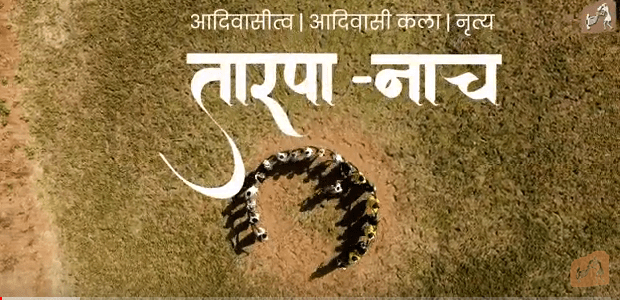
One of the central aspects depicted in many Warli paintings is the tarpa dance. The tarpa, a trumpet-like instrument, is played in turns by different village men. Men and women entwine their hands and move in a circle around the tarpa player. The dancers then follow him, turning and moving as he turns, never turning their backs to the tarpa. The musician plays two different notes, which direct the head dancer to either move clockwise or counterclockwise. The tarpa player assumes a role similar to that of a snake charmer, and the dancers become the figurative snake. The dancers take a long turn in the audience and try to encircle them for entertainment. The circle formation of the dancers is also said to resemble the circle of life.
The simple pictorial language of Warli painting is matched by a rudimentary technique. The ritual paintings are usually created on the inside walls of village huts. The walls are made of a mixture of branches, earth and red brick that make a red ochre background for the paintings. The Warli only paint with a white pigment made from a mixture of rice flour and water, with gum as a binder. A bamboo stick is chewed at the end to give it the texture of a paintbrush. Walls are painted only to mark special occasions such as weddings, festivals or harvests. They make it with a sense that it can be seen by future generations.
In contemporary culture
The lack of regular artistic activity explains the traditional tribal sense of style for their paintings. In the 1970s, this ritual art took a radical turn when Jivya Soma Mashe and his son Balu Mashe started to paint. They painted not for ritual purposes, but because of their artistic pursuits. Jivya is known as the modern father of Warli painting. Since the 1970s, Warli painting has moved onto paper and canvas.[5]
Coca-Cola India launched a campaign featuring Warli painting in order to highlight the ancient culture and represent a sense of togetherness. The campaign was called “Come Home on Deepawali” and specifically targeted the modern youth.[6] The campaign included advertising on traditional mass media, combined with radio, the Internet, and out-of-home media.
Traditional knowledge and intellectual property
Warli Painting is traditional knowledge and cultural intellectual property preserved across generations. Understanding the urgent need for intellectual property rights, the tribal non-governmental organization Adivasi Yuva Seva Sangh[7][8] helped to register Warli painting with a geographical indication under the intellectual property rights act.[9] Various efforts are in progress for strengthening sustainable economy of the Warli with social entrepreneurship.[10]
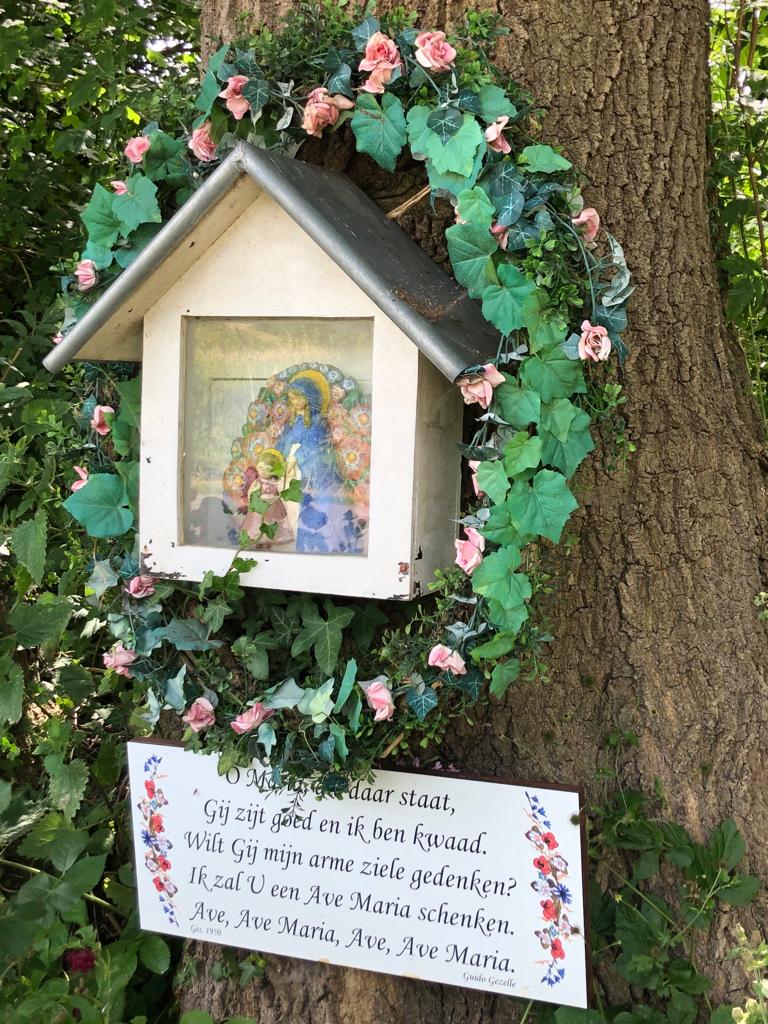
Oh Mary standing there You are good and i am evil will You remember my poor soul I will bestow You an Ave Maria Ave, Ave Maria, Ave Ave maria
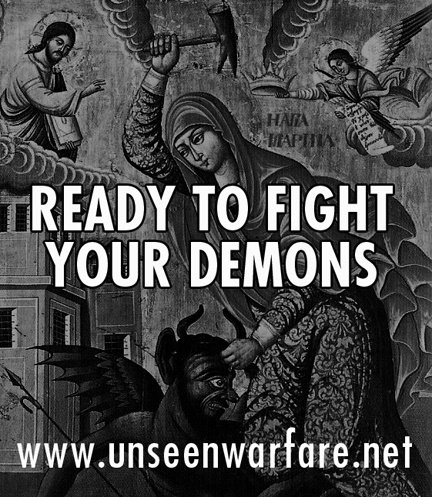
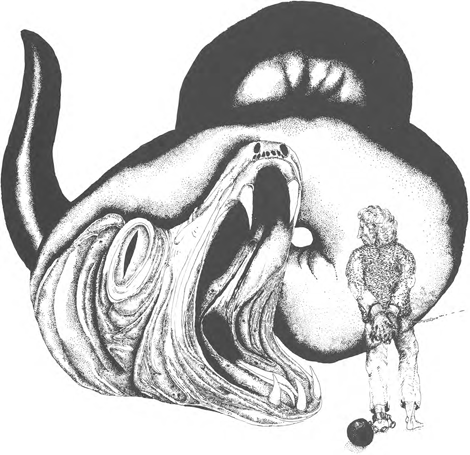
Kill your Dragon
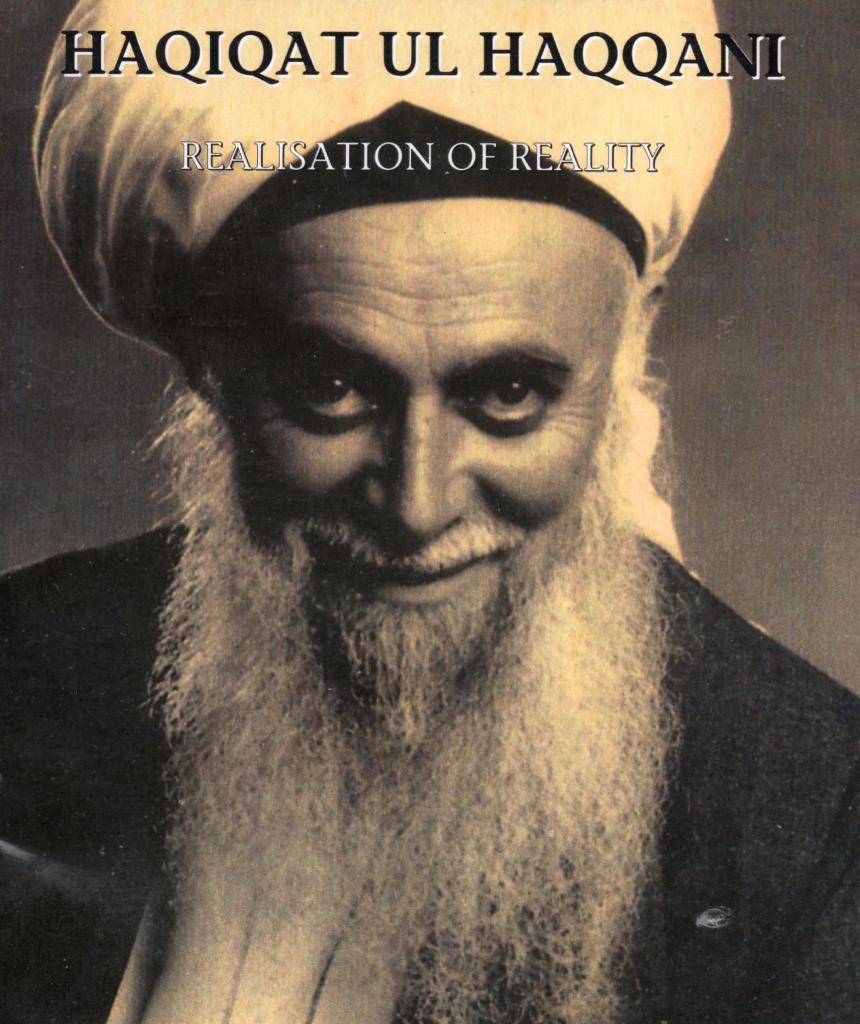
“Our only purpose is to give our love, respect and service to God but if given the opportunity every person would be a pharaoh. His ego would declare itself the highest lord. We must kill the dragon that is our ego and then we will find Allah with us and around us and within us” Sheikh Nazim al Haqqani
Looking to the Spiritual vertical way, as the Maypole do, gives us an opportunity of discerning an understanding between Non-Virtues and Virtues, developing Spiritual values needed in our times :. Read here: Maypole the Principle of verticality
Ash-Shams (Arabic: الشمس, “The Sun”) is the 91st surah of the Qur’an, with 15 ayat or verses.
BY the Sun, and its rising brightness[18] by the moon when she followeth himby the day, when it showeth its splendorby the night, when it covereth him with darknessby the heaven, and him who built itby the earth, and him who spread it forthby the soul, and him who completely formed itand inspired into the same its faculty of distinguishing, and power of choosing, wickedness and piety: now is he who hath purified the same, happybut he who hath corrupted the same, is miserable.
1-That just as the sun and the moon, the day and the night, the earth and the sky, are different from each other and contradictory in their effects and results, so are the good and the evil different front each other and contradictory in their effects and results; they are neither alike in their outward appearance nor can they be alike in their results.
2-That God after giving the human self powers of the body, sense and mind has not left it uninformed in the world, but has instilled into his unconscious by means of a natural inspiration the distinction between good and evil, right and wrong, and the sense of the good to be good and of the evil to be evil.
3-That the future of man depends on how by using the powers of discrimination, will and judgement that Allah has endowed him with, he develops the good and suppresses the evil tendencies of the self. If he develops the good inclination and frees his self of the evil inclinations, he will attain to eternal success, and if, on the contrary, he suppresses the good and promotes the evil, he will meet with disappointment and failure. Sahl al-Tustari (d. 896), a Sufi and scholar of the Qur’an, mentions, “By the day when it reveals her [the sun],He said:This means: the light of faith removes the darkness of ignorance and extinguishes the flames of the Fire.[20][21]
More than four others – Frisian Folkstale
At that time there lived in the Grinzer Pein (Friesland) a young man who was called out that he was not afraid of anything. When a ferry had to be dug, he got a job there. He joined the team with twenty westerners. Those twenty westerners were as lazy as duckweed. They wanted him to do the work, so he got into trouble with them. Then they said, “If you don’t work, we’ll cut you in pieces.” But the young man laughed and said, “You should try that first.” And then those twenty westerners came up to him with open knives , but he knocked them down one by one, for he was not afraid. And that same evening, near the new ferry, one of the Westerners was found cut into strips. But that joung man had not done that, his own comrades wanted to get rid of that westerner. And because the young servant had fought with him, they thought, he will be blamed.
That turned out to be the case, because the nineteen westerners testified that he must have been the murderer of their comrade. He went to court, and because he would not confess, he was put on the rack, but he maintained his innocence, for he was not afraid of anything, not even the pain. Desesperate, they called a wizard, a real wizard. He had to scare him so he confessed. The wizard had him tied on a chair; then he was powerless. But they had tortured him so much that he could hardly speak.
And then he was given a cup of warm milk to drink. The magician looked straight at him and said, ‘Look at the ground in front of you!’ And then the young man noticed that his ten toes had turned into ten snakes. They grew out of his toes, they grew bigger and bigger and came closer and closer to his head. But he made those snakes drink one by one from the hot milk from the cup he had in his hands. The snakes writhed together again and fell asleep at his feet.
The wizard asked, “Aren’t you scared yet?” But he replied, “You haven’t got any of those beasts yet, because my cup isn’t empty yet.” Then the wizard turned the boy’s hair into flames and said that he would be consumed by these flames. But the young man asked: ‘Do you have tobacco in your pocket? I don’t have any tobacco with me, but my pipe does. Stop it in front of me for a moment, so I can at least light it on the flames and don’t have to use a match’.
And the third was that the sorcerer sat before him and said: If you will not confess, you will be sent to hell. ‘But the young servant laughed, for he was not afraid. The wizard looked straight at him and then the young man noticed that his body was turning into a skeleton. The magician said:
“Aren’t you scared yet? Remember – this is how you go to hell and stay there!” “Oh,” he said, “why should I be afraid? Such an old charnel house as I am now – there is no one in hell who knows me.” And he did not bow the neck.
However, he was sentenced to death. The executioner appeared and he was to be cut into four. He was already on the block to be chopped in four, then they asked him if he wasn’t scared yet. “No,” he said, “why should I be afraid? Our father always said I was worth more than four others. And if you cut me in four here, you’ll be dealing with not one, but four men in a minute.’ And he was not quartered, but they took him back to the cell.
That same night the devil came to him and left nothing to frighten him. He told him the most horrible stories and transformed himself into the most horrible forms. The devil became an old woman, with teeth as large and as sharp as razors, and threatened to bite his throat. The devil became a dragon with seven heads that spewed fire at him. He became a very large snake, with a mouth so wide that it could eat it in one sitting. But the young servant was not afraid. Only when the devil finally asked him if he felt any fear at all did he say, “No, I don’t, but you do!
And he began to tease him so furiously, he made such hideous noises, and he drew such crooked faces, that even the devil became frightened and threw himself to the ground and blew the retreat.
The judges came to the conclusion that a person that even the devil fears can never be a murderer. And he was acquitted…
Ash-Shams (Arabic: الشمس, “The Sun”) is the 91st surah of the Qur’an, with 15 ayat or verses.
BY the Sun, and its rising brightness[18] by the moon when she followeth himby the day, when it showeth its splendorby the night, when it covereth him with darknessby the heaven, and him who built itby the earth, and him who spread it forthby the soul, and him who completely formed itand inspired into the same its faculty of distinguishing, and power of choosing, wickedness and piety: now is he who hath purified the same, happybut he who hath corrupted the same, is miserable.
1-That just as the sun and the moon, the day and the night, the earth and the sky, are different from each other and contradictory in their effects and results, so are the good and the evil different front each other and contradictory in their effects and results; they are neither alike in their outward appearance nor can they be alike in their results.
2-That God after giving the human self powers of the body, sense and mind has not left it uninformed in the world, but has instilled into his unconscious by means of a natural inspiration the distinction between good and evil, right and wrong, and the sense of the good to be good and of the evil to be evil.
3-That the future of man depends on how by using the powers of discrimination, will and judgement that Allah has endowed him with, he develops the good and suppresses the evil tendencies of the self. If he develops the good inclination and frees his self of the evil inclinations, he will attain to eternal success, and if, on the contrary, he suppresses the good and promotes the evil, he will meet with disappointment and failure. Sahl al-Tustari (d. 896), a Sufi and scholar of the Qur’an, mentions, “By the day when it reveals her [the sun],He said:This means: the light of faith removes the darkness of ignorance and extinguishes the flames of the Fire.[20][21]




























 Path to the Maypole of Wisdom