The Ottomans: A Cultural Legacy

A hundred years after the abolition of the Ottoman sultanate on November 1, 1922, enough time has passed to reexamine the Ottomans and reassess their legacy.

This illustrated volume, by critically acclaimed author Diana Darke, explores their unique achievements in architecture, cuisine, music, science, and medicine, as well as the political challenges they met. The Ottoman Empire faced issues shared by modern European and Middle Eastern countries: how to maintain a balance between religious ideology and secular politics and how to promote fairness and equality among citizens in a multicultural society.

While many still equate the Ottomans with the decadence of Istanbul–extravagant architecture, harems, and hookahs–they are unaware that the secrets of Ottoman success lay in a disciplined bureaucracy and a standing army that both awed and seduced its opponents. The Ottomans harnessed the talents of their diverse populations and quickly buttressed the crumbling edifice of Byzantine Christianity. Their dynamism and resilience helped fuse the cultures of Asia, Europe, and Africa, from the Himalayas to the Sahara, absorbing whatever impressed them, from Mongol armor to Persian tile work. Alongside their essential rigor, they enjoyed the finer aspects of life: in music, cuisine, and art, unafraid, even as rugged fighters, to display their love of flowers and gardens, especially tulips and roses. Behind the fine robes, carpets, and ceramics on display today in their great architectural monuments, Istanbul’s Topkapi Palace and Hagia Sophia, lie centuries of migration, trade, and struggle. In this original and beautifully illustrated book, Darke reveals a radically new picture of the Ottoman Empire

The Ottoman Empire: The Classical Age 1300-1600

A preeminent scholar of Turkish history vividly portrays 300 years of this distinctively Eastern culture as it grew from a military principality to the world’s most powerful Islamic state. He paints a striking picture of the prominence of religion and warfare in everyday life, as well as the traditions of statecraft, administration, social values, financial, and land policies. Free download

Daily Life in the Ottoman Empire

The Ottoman Empire was an Islamic imperial monarchy that existed for over 600 years. At the height of its power in the 16th and 17th centuries, it encompassed three continents and served as the core of global interactions between the east and the west. And while the Empire was defeated after World War I and dissolved in 1920, the far-reaching effects and influences of the Ottoman Empire are still clearly visible in today’s world cultures.

Daily Life in the Ottoman Empire allows readers to gain critical insight into the pluralistic social and cultural history of an empire that ruled a vast region extending from Budapest in Hungary to Mecca in Arabia. Each chapter presents an in-depth analysis of a particular aspect of daily life in the Ottoman Empire. Free Download

The Janissaries

From the fifteenth to the sixteenth century, the janissaries were the scourge of Europe. Their ferocious spirit allowed their masters to extend their conquests from the Danube to the Euphrates. Their power was such that even sultans trembled.

But by the end of the eighteenth century, they were more interested in trade than war. Ill-disciplined and arrogant, both rulers and ruled turned against them. Yet their political power was so extensive it took years before they could be suppressed. Here Download

Useful Enemies: Islam and The Ottoman Empire in Western Political Thought, 1450-1750
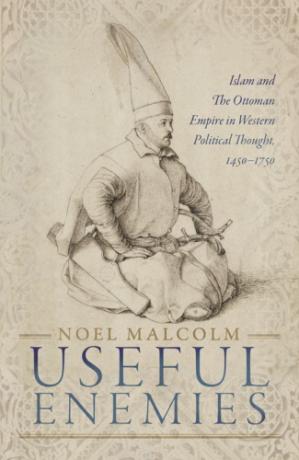
From the fall of Constantinople in 1453 until the eighteenth century, many Western European writers viewed the Ottoman Empire with almost obsessive interest. Typically they reacted to it with fear and distrust; and such feelings were reinforced by the deep hostility of Western Christendom towards Islam. Yet there was also much curiosity about the social and political system on which the huge power of the sultans was based. In the sixteenth century, especially, when Ottoman territorial expansion was rapid and Ottoman institutions seemed particularly robust, there was even open admiration.

In this path-breaking book Noel Malcolm ranges through these vital centuries of East-West interaction, studying all the ways in which thinkers in the West interpreted the Ottoman Empire as a political phenomenon – and Islam as a political religion. Useful Enemies shows how the concept of ‘oriental despotism’ began as an attempt to turn the tables on a very positive analysis of Ottoman state power, and how, as it developed, it interacted with Western debates about monarchy and government. Noel Malcolm also shows how a negative portrayal of Islam as a religion devised for political purposes was assimilated by radical writers, who extended the criticism to all religions, including Christianity itself.

Examining the works of many famous thinkers (including Machiavelli, Bodin, and Montesquieu) and many less well-known ones, Useful Enemies illuminates the long-term development of Western ideas about the Ottomans, and about Islam. Noel Malcolm shows how these ideas became intertwined with internal Western debates about power, religion, society, and war. Discussions of Islam and the Ottoman Empire were thus bound up with mainstream thinking in the West on a wide range of important topics. These Eastern enemies were not just there to be denounced. They were there to be made use of, in arguments which contributed significantly to the development of Western political thought. Free Download

Look also: SUFI ORDERS AND POPULAR CULTURE and

SUFISM, MUSIC AND SOCIETY IN TURKEY AND THE MIDDLE EAST
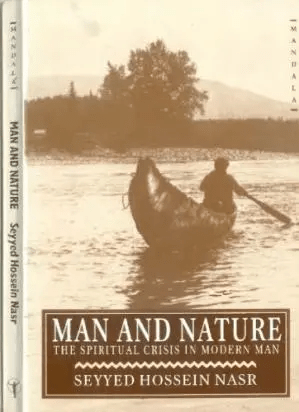
Man and Nature: The Spiritual Crisis of Modern Man

This work from one of the world’s leading Islamic thinkers,Seyyed Hossein Nasr, is a spiritual tour de force which explores the relationship between the human being and nature as found in many religious traditions, particularly its Sufi dimension. The author stresses the importance of a greater awareness of the origins of both the human being and nature as a means of righting the imbalance that exists in our deepest selves and in our environment. Free download here

The underlying religion

The underlying religion: An introduction to the perennial philosophy.


‘‘There is…one sole religion and one sole worship for all beings endowed with
understanding, and this is presupposed through a variety of rites’’ – Nicholas
of Cusa


Due to the pivotal function of the perennial philosophy within both transpersonal and humanistic psychology this volume will be of paramount interest to researchers and practitioners and belongs in every library of transpersonal and humanistic psychology.
This recent anthology was compiled by Clinton Minnaar and the late Dr. Martin Lings (1909–2005), one of the leading perennialist authors of the XXth century, who was the Keeper of Oriental Manuscripts and Printed Books at the British Museum.
This anthology is organized into seven themes, each theme having its corresponding essays:


I. ‘TRADITION AND MODERNITY’, describes the hiatus that divides the sacred orientation of the traditional world from that of the secular and progress driven modern and post-modern world.
Nothing and nobody is any longer in the right place; men no longer recognize any effective authority in the spiritual order or any legitimate power in the temporal; the ‘‘profane’’ presume to discuss what is sacred, and to contest its character and even its existence; the inferior judges the superior, ignorance sets bounds to wisdom, error prevails over truth, the human supersedes the divine, earth overtops heaven, the individual sets the measure for all things and claims to dictate to the universe laws drawn entirely from his own relative and fallible reason. ‘‘Woe unto you, ye blind guides,’’ the Gospel says; and indeed everywhere today one sees nothing but blind leaders of the blind, who, unless restrained by some timely check, will
inevitably lead them into the abyss, there to perish with them. (pp. 317–318)

II. ‘TRADITIONAL COSMOLOGY AND MODERN SCIENCE’ underscores the implicit limitations of modern science, its failures and destructive tendencies for not receiving its directives from divine principles utilized since time immemorial in both East and West.
At the heart of the traditional sciences of the cosmos, as well as traditional anthropology, psychology, and aesthetics stands the scientia sacra which contains the principles of these sciences while being primarily concerned with the knowledge of the Principle which is both sacred knowledge and knowledge of the sacred par excellence, since the Sacred as such is none other than the Principle. (p. 117)
III. ‘METAPHYSICS’ gives a clear exposition on what is and what is not integral metaphysics according to the perennial philosophy which has nothing to do with ‘‘New Age’’ spiritualities.
[I]n truth, pure metaphysics being essentially above and beyond all form and all contingency is neither Eastern nor Western but universal. The exterior forms with which it is covered only serve the necessities of exposition, to express whatever is expressible. These forms may be Eastern or Western; but under the appearance of diversity there is always a basis of unity, at least, wherever true metaphysics exists, for the simple reason that truth is one. (p. 95)
IV. ‘SYMBOLISM’ contextualizes symbols outside the pale of modern psychology or that of the ‘‘unconscious’’ which they are commonly thought to originate rather than that of their true origin in divinis as are ‘‘archetypes’’. The answer to the question ‘What is Symbolism?’, if deeply understood, has been known to change altogether a man’s life; and it could indeed be said
that most of the problems of the modern world result from ignorance of that answer. As to the past however, there is no traditional doctrine which does not teach that this world is the world of symbols, inasmuch as it contains nothing which is not a symbol. (Lings, 1991, p. vii)
V. ‘THE PERENNIAL PHILOSOPHY’ provides a revision and an expansion, mutatis mutandis of what has been commonly attributed and often wrongly so as the perennial philosophy or the ‘transcendent unity of religions’. It is through the perennial philosophy that true and authentic
interfaith dialogue can precede for both the differences and similarities are taken into account without compromising the integrity of each tradition. Ibn ‘Arabi writes:

My heart is capable of every form: it is a pasture for gazelles
and a convent for Christian Monks,
And idol-temple and the pilgrim’s Ka’ba [Mecca],
And the tables of the Torah and the book of the Koran:

I follow the religion of Love, whichever way his camels take;
my religion and my faith is the true religion.

(Ibn ‘Arabi, quoted in Lings & Minnaar, p. 224

VI. ‘BEAUTY’ makes it clear that it is incumbent upon anyone on a spiritual path to live within a context of beauty for spiritual support vis-a` -vis highlighting the inherent the dangers and pitfalls of not having such an integral milieu.
‘‘It is told that once Ananda, the beloved disciple of the Buddha, saluted his master and said: ‘‘Half of the holy life, O master, is friendship with the beautiful, association with the beautiful, communion with the beautiful.’’ ‘‘Say not so, Ananda, say not so!’’ the master replied. ‘‘It is not half the holy life; it is the whole of the holy life.’’ (p. 249).
VII. ‘VIRTUE AND PRAYER’ provides important notes on spiritual guidance, complementing the previous chapters dealing predominantly with that of traditional doctrine. All great spiritual experiences agree in this: there is no common measure between the means put into operation and the result. ‘‘With men this is impossible, but with God all things are possible,’’ says the Gospel. In fact, what separates man from divine Reality is but a thin partition: God is infinitely close to man, but man is infinitely far from God. This partition, for man, is a mountain; man stands in front of a mountain which he must remove with his own hands. He digs away the earth, but in vain, the mountain remains; man however goes on digging, in the name of God. And the mountain vanishes. It was never there. (p. 308)
The Afterword entitled ‘The Revival of Interest in Tradition’ written by the late perennialist Whitall N. Perry (1920–2005), provides a condensed overview of the formative figures of the perennialist or traditionalist school and their unique contributions.

The underlying religion: An introduction to the perennial philosophy. Here free download